
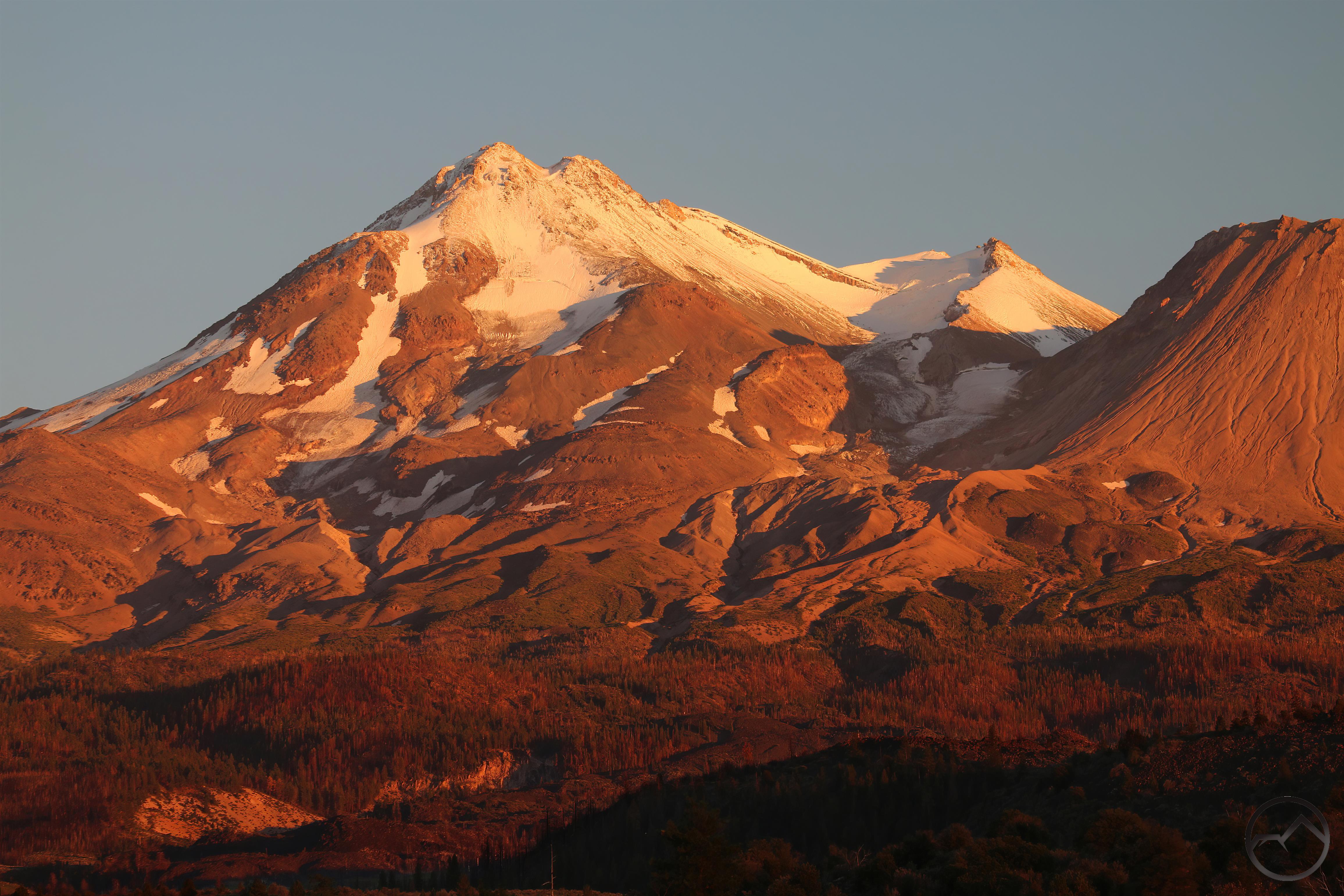
Fresh August snow lingers at Mount Shasta’s higher elevation.
This past week California experienced some unusual weather conditions. As most likely know, Hurricane Hilary slammed ashore in southern California and proceeded to pierce into the heart of the Great Basin, bringing torrential rain. The powerful rain resulted in shattered records, flooding and mudslides as well as other damages. Little did we anticipate that this was true for Mount Shasta too.
Here in Mount Shasta, the forecast predicted that the storm would weaken once it made landfall and then head straight north, across the Mojave Desert and then north, through the Great Basin. Some predictions called for a year’s worth of precipitation to fall in this single storm in some areas. It was time to batten down the hatches and wait and see what would happen.
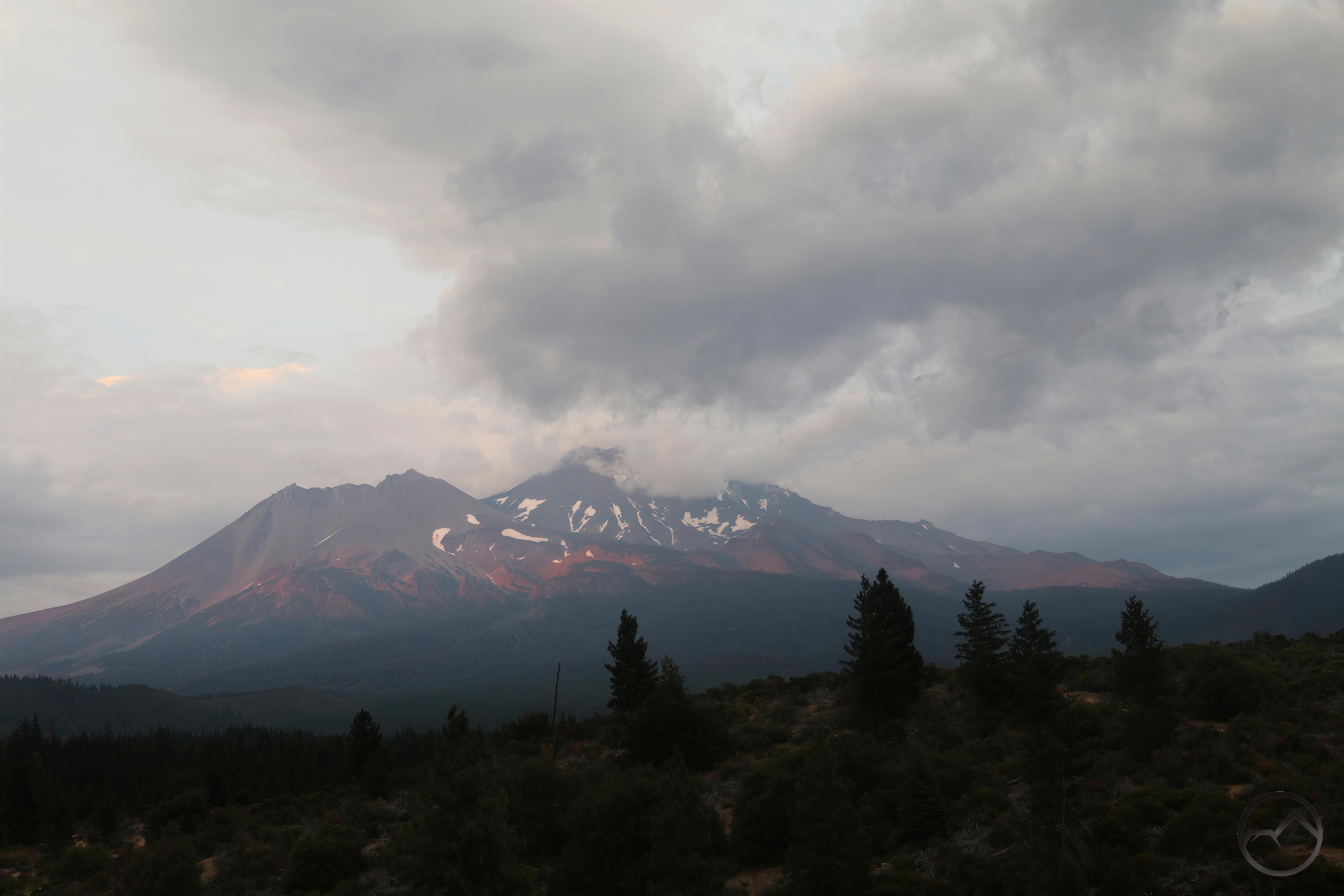
A streak of alpenglow lights up treeline on Mount Shasta.
Prior to the storm’s arrival the Mount Shasta area had been hot, with temps in the low 90’s. The heat held but the day before the storm arrived the clouds began to gather. We were only to get hit by the outer flanks of the storm. Any further west and there wouldn’t be much precipitation. Around the mountain, a little less than 0.7 inches was called for. As the clouds coalesced, I made sure to try to capture the sunset, as it would be the last for a day or two. The mountain was partially obscured but the light still hit the mountain at the tree line. Nothing fancy, but still a beautiful sunset.
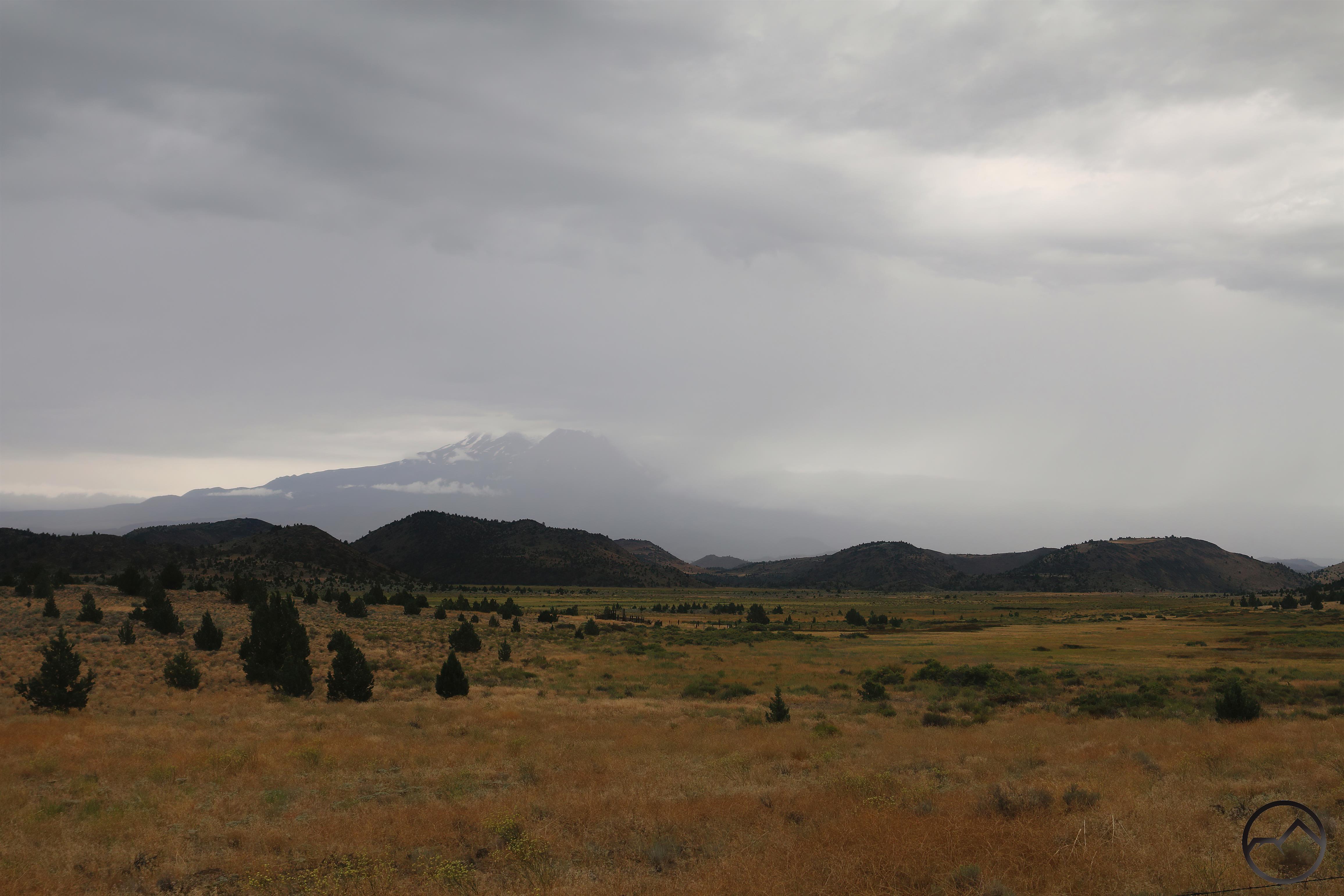
Mount Shasta holds back the storm.
The day of the storm I headed up to Yreka in the afternoon. As is typical, though raining hard in Mount Shasta, the precipitation came to a screeching halt when I reached the edge of the Shasta Valley. Further north, I could look south and see the mountain pushing up into the clouds, with only its final 1,000 feet or so obscured by the storm. It always amazes me how much weather Mount Shasta holds back and it makes sense why the valley is a desert.
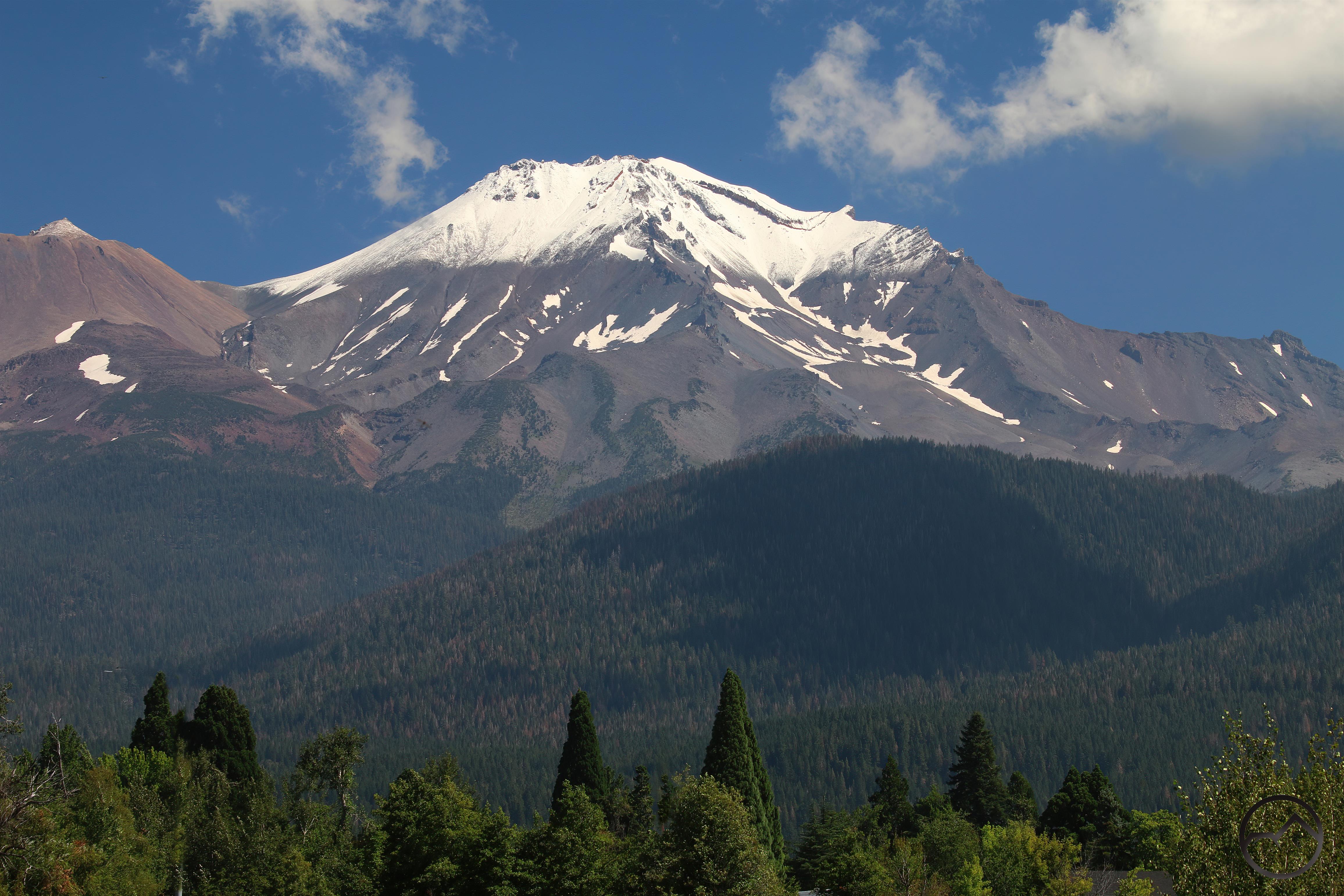
Even the summit of Shastina received a little snow.
Though the storm definitely cooled things off (in town it felt downright cold), it was warm enough that new snow only fell at the highest elevations on the mountain, where the summit was covered by cloud. While it hasn’t been the rare year like last year where it snowed on Mount Shasta every month of the year, seeing a decent layer of fresh snow in August is still pretty impressive.
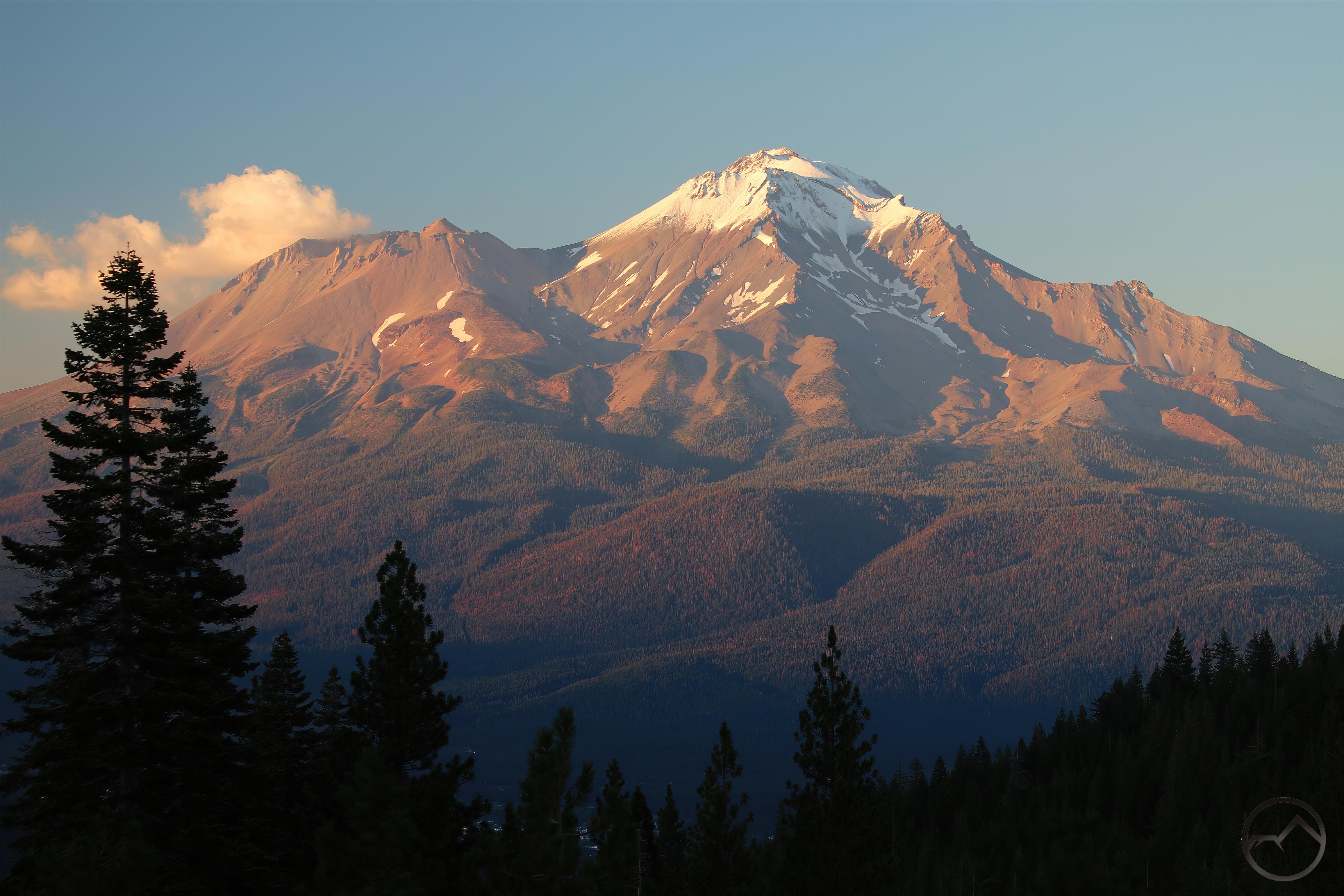
Evening light and summer snow on Mount Shasta.
While the snow on the mountain was a fantastic touch, it drew the eye away from the deep channels cut into Mount Shasta by the storm’s runoff. Moreover, it gave little indication to the mess at the mountain’s foot in the wake of the degrading hurricane.
What transpired at the foot of Mount Shasta was an unusual event, one that seemingly only happens on rare occasions once in a generation or so (truth be told, I have no idea of the frequency, but it seems to be rare in living memory). Though no longer graded as a hurricane, the storm was still strong enough to bring a healthy dose of warm rain in the middle of summer. With last year’s long winter, there was still a fair amount of snow lingering on Mount Shasta and when the rain hit it, it began melting rapidly. This led to extremely heavy runoff pouring down the side of Mount Shasta. In particular, the numerous large patches of snow on the mountain’s west face are all above Hidden Valley. The drainage for this area is funneled into the single channel of Cascade Gulch.
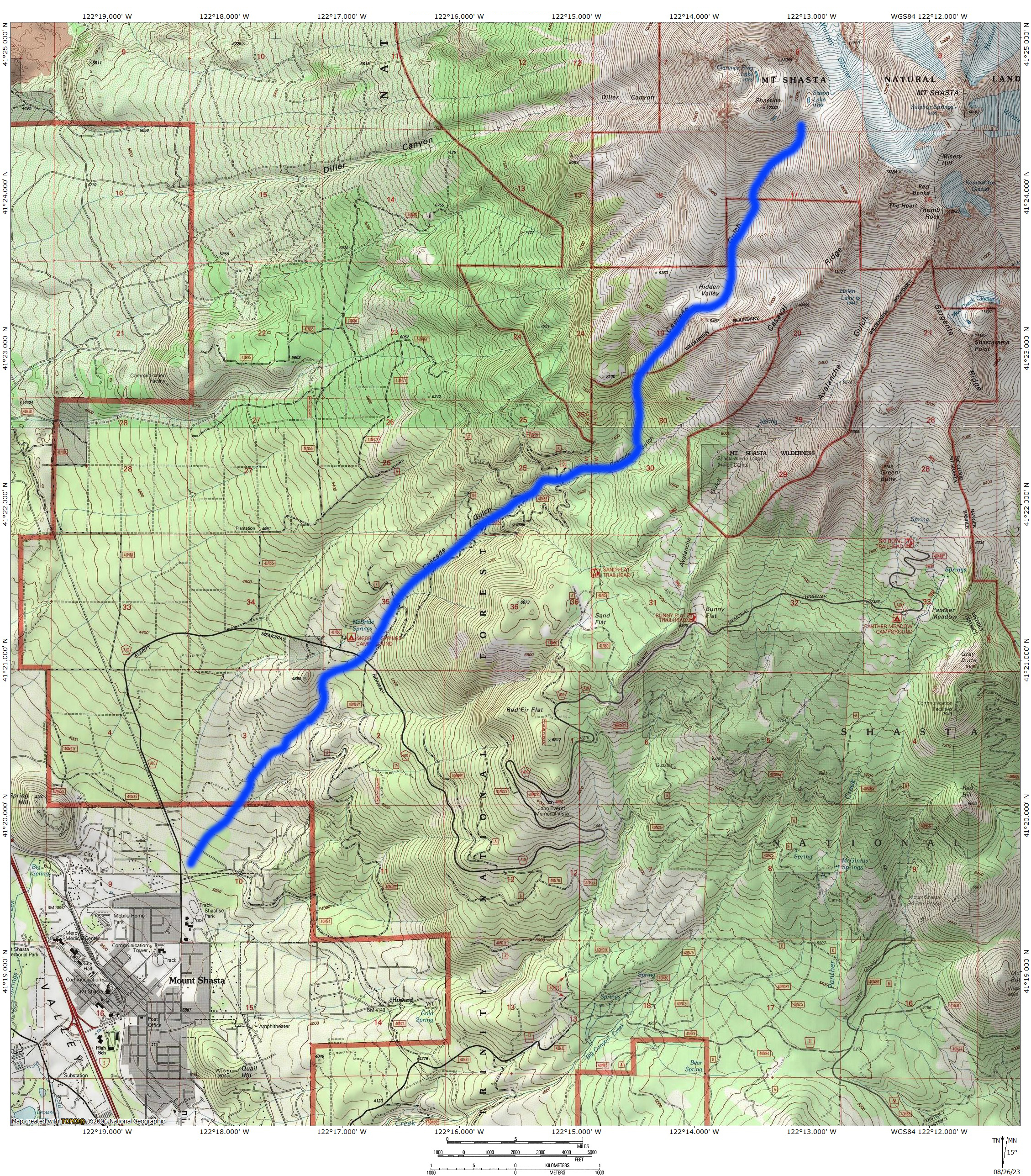
Cascade Gulch on Mount Shasta.
Cascade Gulch begins on the saddle between the summits of Mount Shasta and Shastina. It flows approximately 7.4 miles, descending about 8,000 feet before dissipating on a dispersal fan.
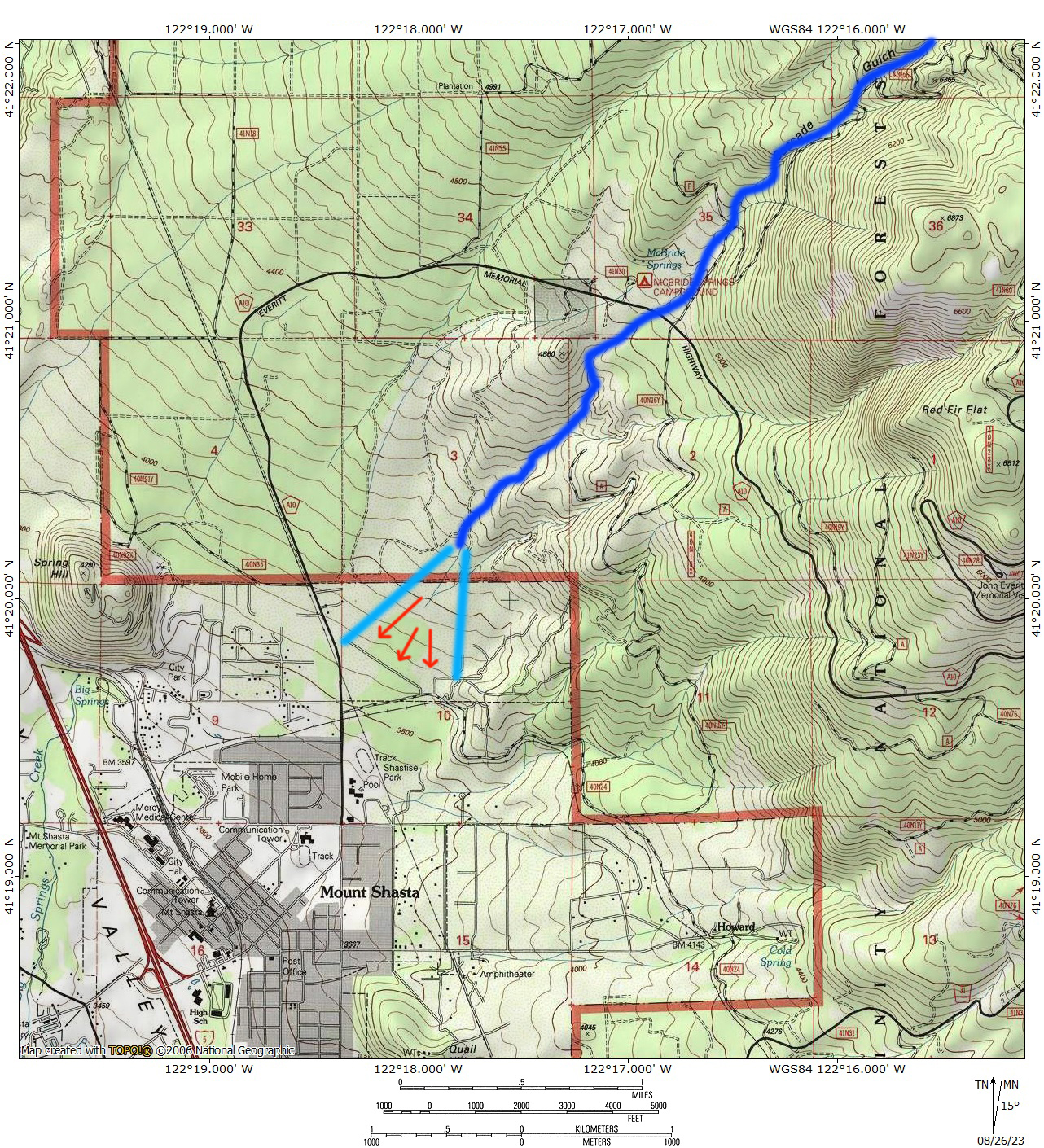
The flow down the gulch is relatively small and rarely reaches the final dispersal area. This year, with the heavy snowpack, saw the lower channel fill with water for the first time in quite a while. However, this flow fed by snowmelt was nothing compared to the runoff from the storm. While the rain itself was steady, it was never extremely heavy. Nonetheless, the steady downpour with warm temperatures melted the snowpack swiftly and the runoff from the snow was far, far heavier than anything the storm produced. So powerful was the runoff that it rapidly transcended a simple runoff event. The force of the water over Mount Shasta’s loose volcanic terrain turned the running water into a roiling mudslide, churning down the side of the mountain and into Mount Shasta City itself.
By nightfall, the storm had produced steady mudflow into the head of Mount Shasta City. The video begins facing the high school and national guard armory. As it pans, the view turns south, looking down Lake St toward downtown. The mud in the street is nearly 2 inches deep. The water flow is in addition to that.
In the past, this kind of event would have still experienced a natural dissipation on the dispersal fan at the base of Cascade Gulch. Perhaps not all of the mud and runoff would have spread out there but the force and urgency of the flow would have lessened considerably. It was for this reason (full disclosure: I have been told this from a resident, though this is unsubstantiated) that development of the property where the dispersal fan is located was protracted. Zoning was delayed because of the known danger of the flood plain. To compensate for this when the property was developed, a series of large concrete blocks were laid out, stacked two high, to act as a barrier against a future flood event. In theory, this would divert the flood away from the new development. As there is a tendency to occur, nature often has different ideas.
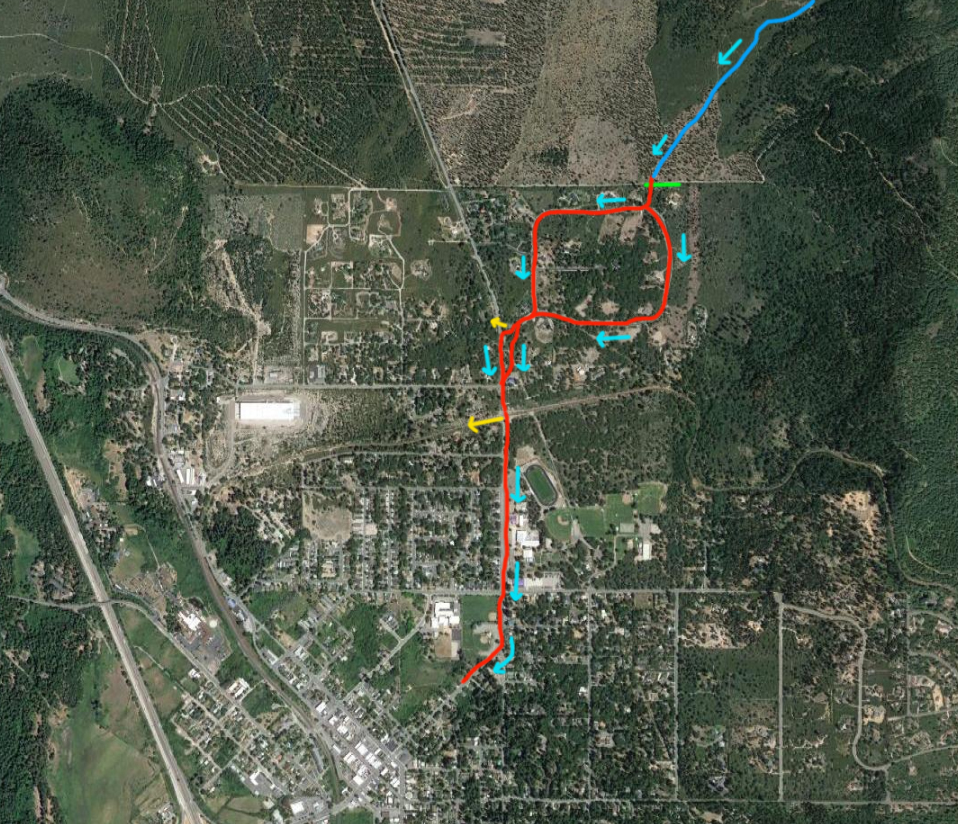
The green line marks the concrete blocks. The red line indicates the path the water and mud traveled, as shown with the light blue arrows. The yellow areas show where additional flooding traveled.
In this instance, the enhanced runoff from the storm and snowmelt traveled down Cascade Gulch. Just above the concrete blocks the flood began to fan out, as nature intended. In so doing, it crossed over a wide gravel road that is a main artery of the Gateway Trail network. However, once it hit the concrete blocks on the other side of the road, it was initially held back but soon overwhelmed them, traveling through gaps in the wall and over the tops of them in some places. Mud rapidly built up on the north side of the wall and then flowed into the new housing development. Fortunately, the development’s loop road is lined with ditches and while they were generally inadequate for handling the flow, it did manage to generally channel the water away from the houses. The drainage ditches all reconvened at the entrance, where the flood partially flowed down Everitt Memorial and partially cut through large brush fields until it too intersected Everitt Memorial.
The water then flowed down the road and past the high school. It crossed Rockfellow, flowed down Washington and then followed the contour of the road onto Lake Street. As the water and mud traveled down the road, it poured into storm drains and channels leading down into Sisson Meadow. Finally, on Lake Street, the flood had subsided enough that it disappeared altogether down one final storm drain, about 0.25 miles from the main part of downtown. All in all, it was an impressive display of power that began with a hurricane passing through the Mount Shasta area.
Click to enlarge:
-
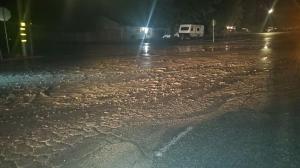
- Mudslide at night.
-
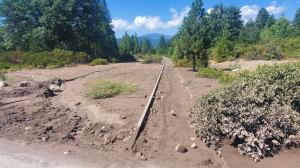
- During the day, the water and mud had initially traveled down the old train tracks. Some diversion work occurred but that led to the water running further down Everitt Memorial.
-
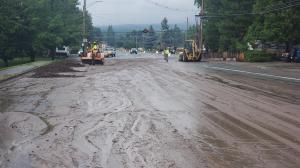
- Clean up in the morning.
-
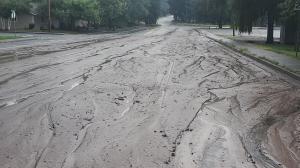
- Look down Washington to Lake Street. The road is covered with mud.
-
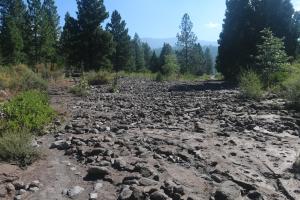
- The remains of the Forest Service road. Rock and mud are pretty deep.
-
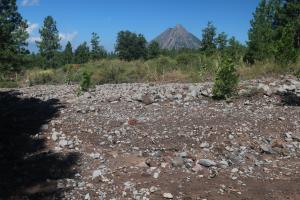
- Black Butte is visible above the slide-covered roadbed.
-
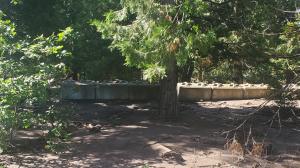
- Looking south from the gravel road to the wall of concrete blocks. Note the bottom layer is buried.
-
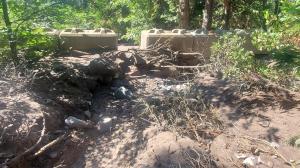
- A closer view of mud and debris built up behind the concrete wall.
-
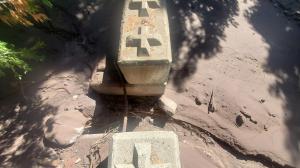
- The gaps in the wall were rapidly exploited by the flood.
-
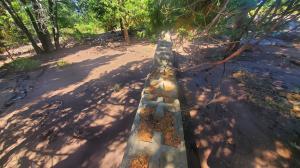
- Mud on both sides of the wall, though the north (right) side is twice as deep.
-
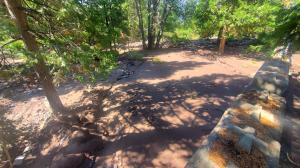
- Downstream from the concrete wall.
-
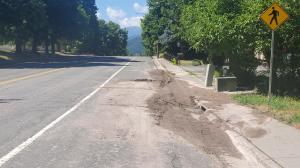
- The final storm drain where the flood came to an end.
While Mount Shasta City was unexpectedly subjected to a muddy inundation, Mount Shasta itself also experienced some significant alterations due to the passing storm’s fury. Several places, particularly on the mountain’s west side, several drainages were significantly enlarged and massive mudslides occurred even at higher elevations.
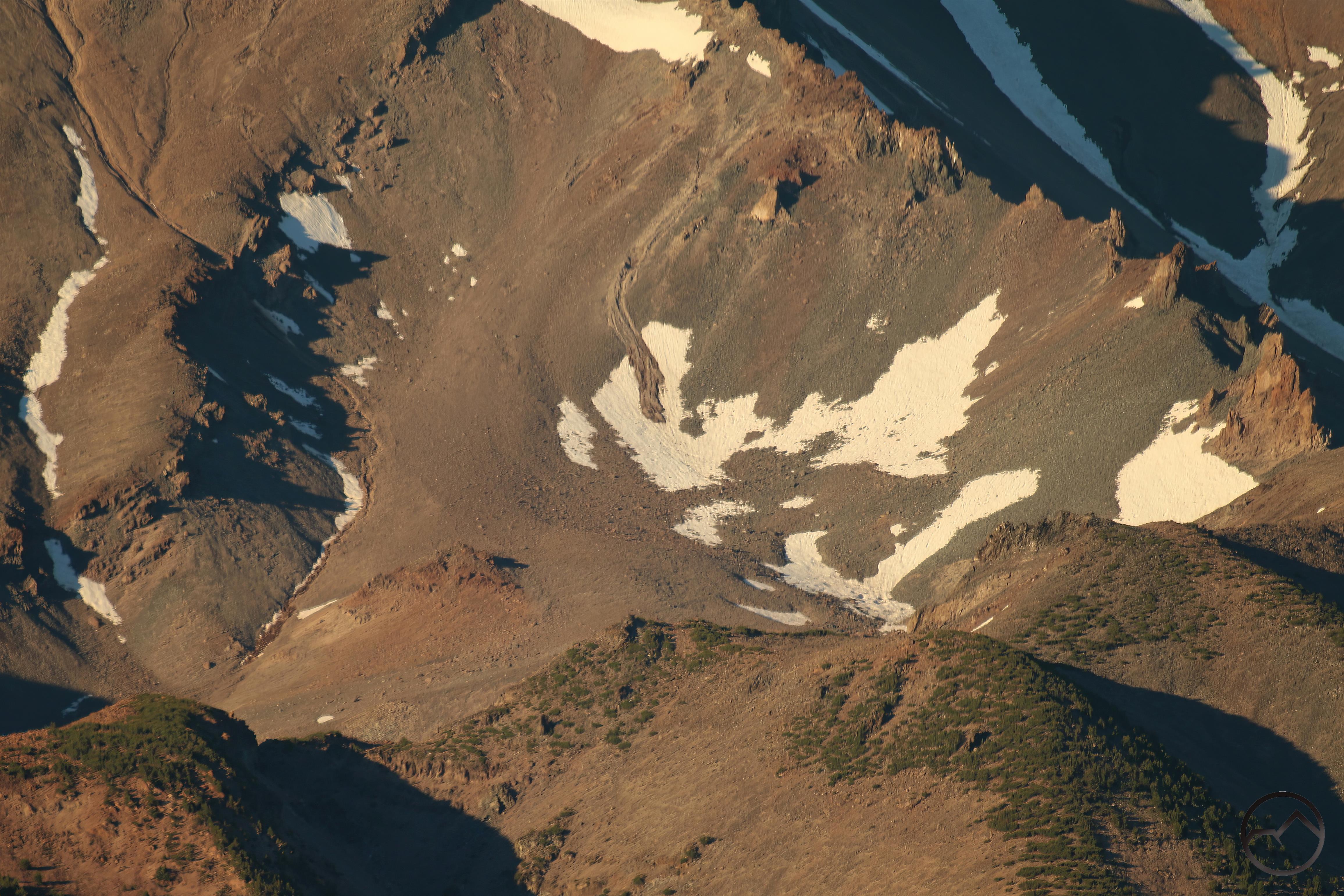
Note the substantial mudslide that partially covered the large patch of snow.
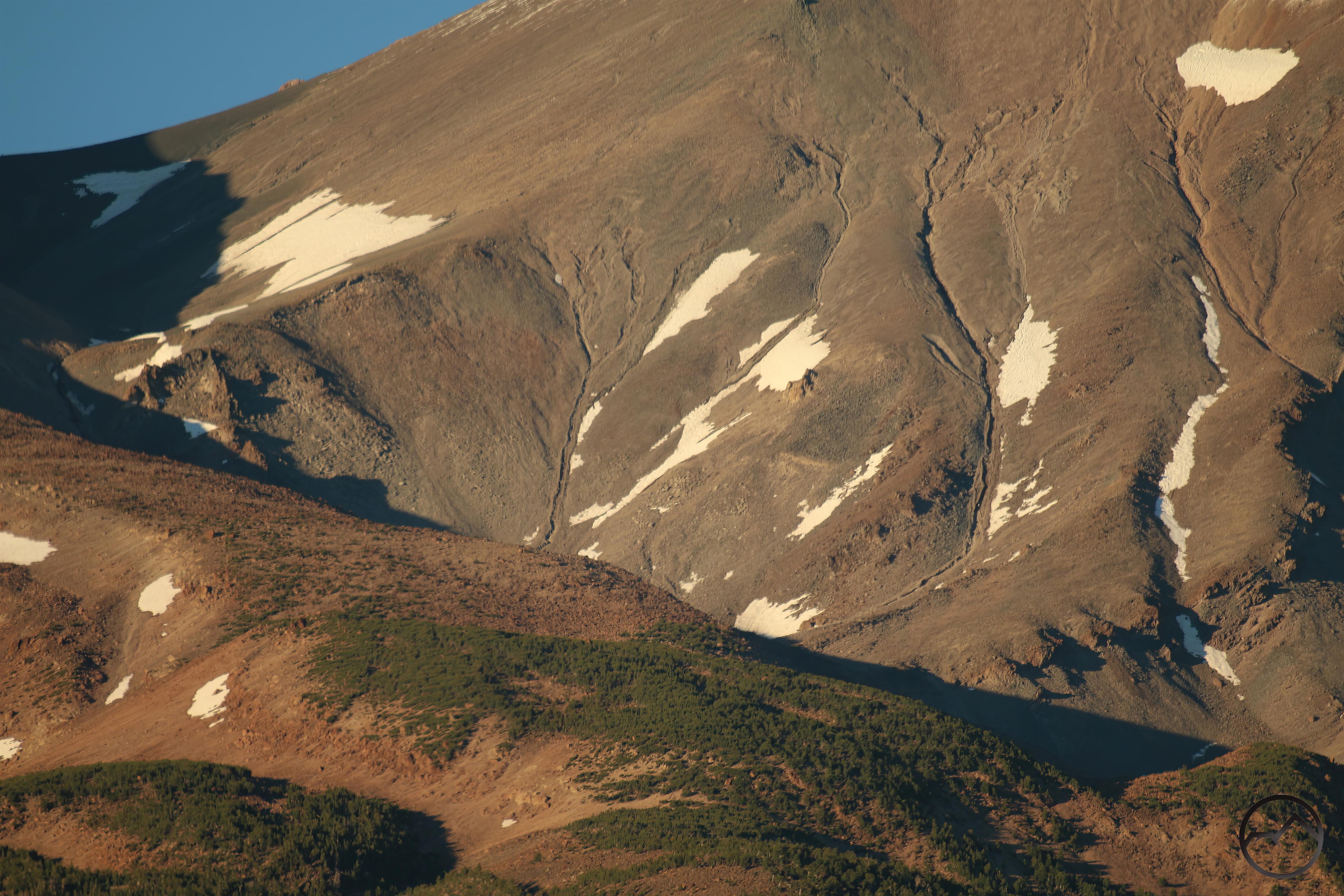
Several gulches were deepened by the massive runoff on Mount Shasta.
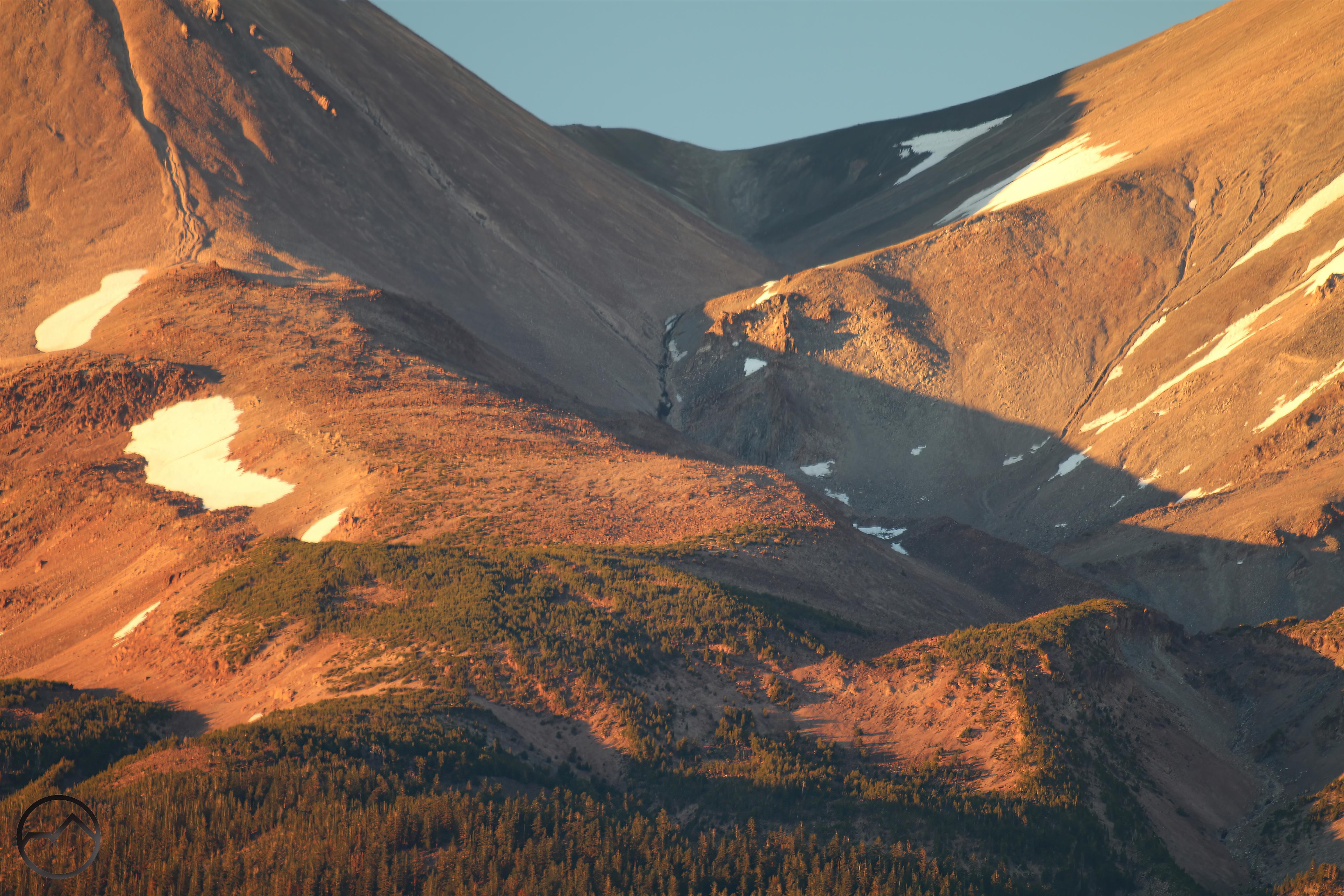
The uppermost part of Cascade Gulch was cut into a deeper channel by the storm.
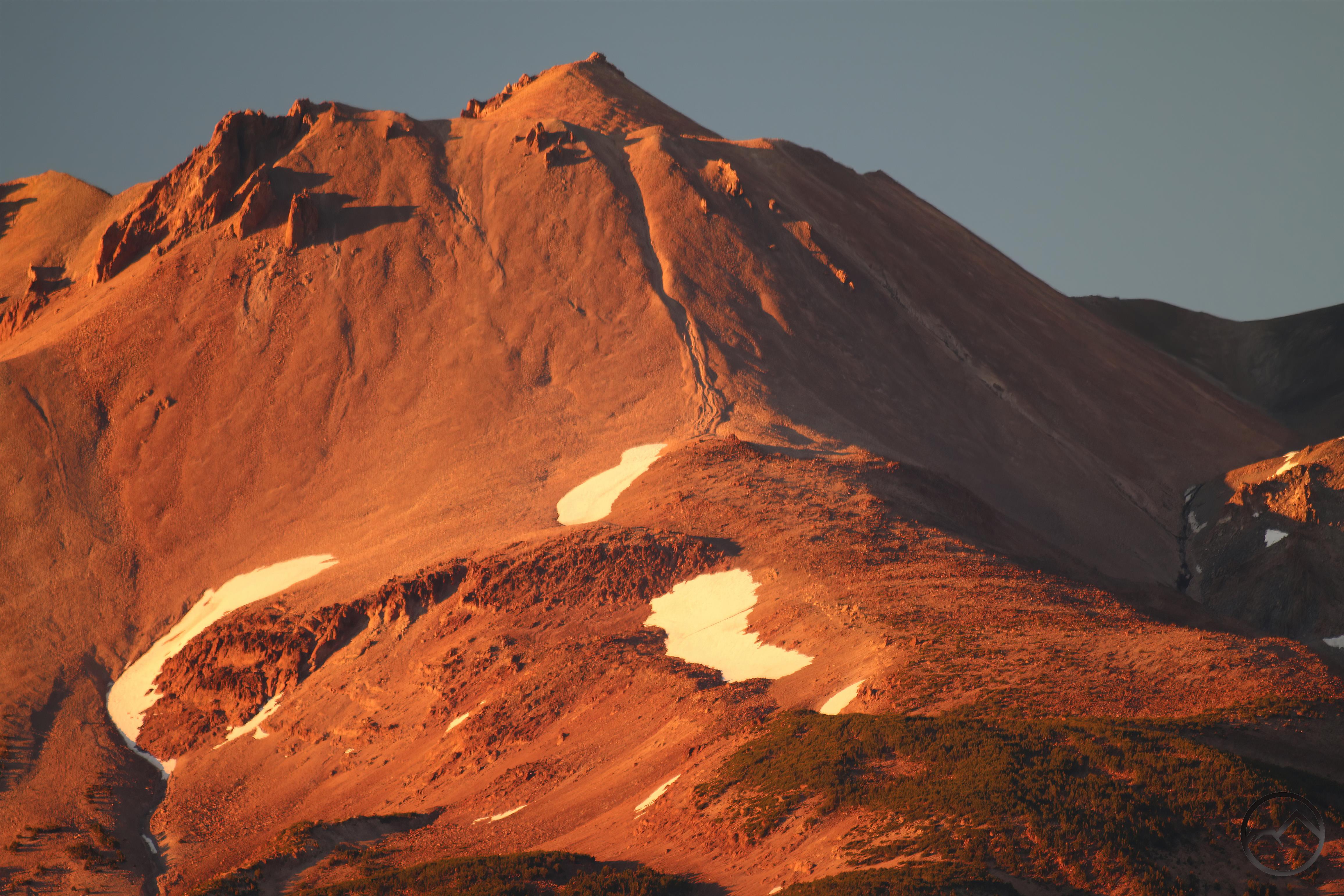
A large mudslide that flowed off the south flank of Shastina.
While these are immediately obvious from down below, these are significant alterations to Mount Shasta’s appearance. It is difficult to apply scale to these changes but suffice to say, they are really big. I confess that I do not understand how these mudslides occurred at higher elevations even though the amount of precipitation was not especially heavy. The lower elevation flooding was the result of melting snow but such an explanation is inadequate for the higher events. I await an explanation from those far more knowledgeable than I.
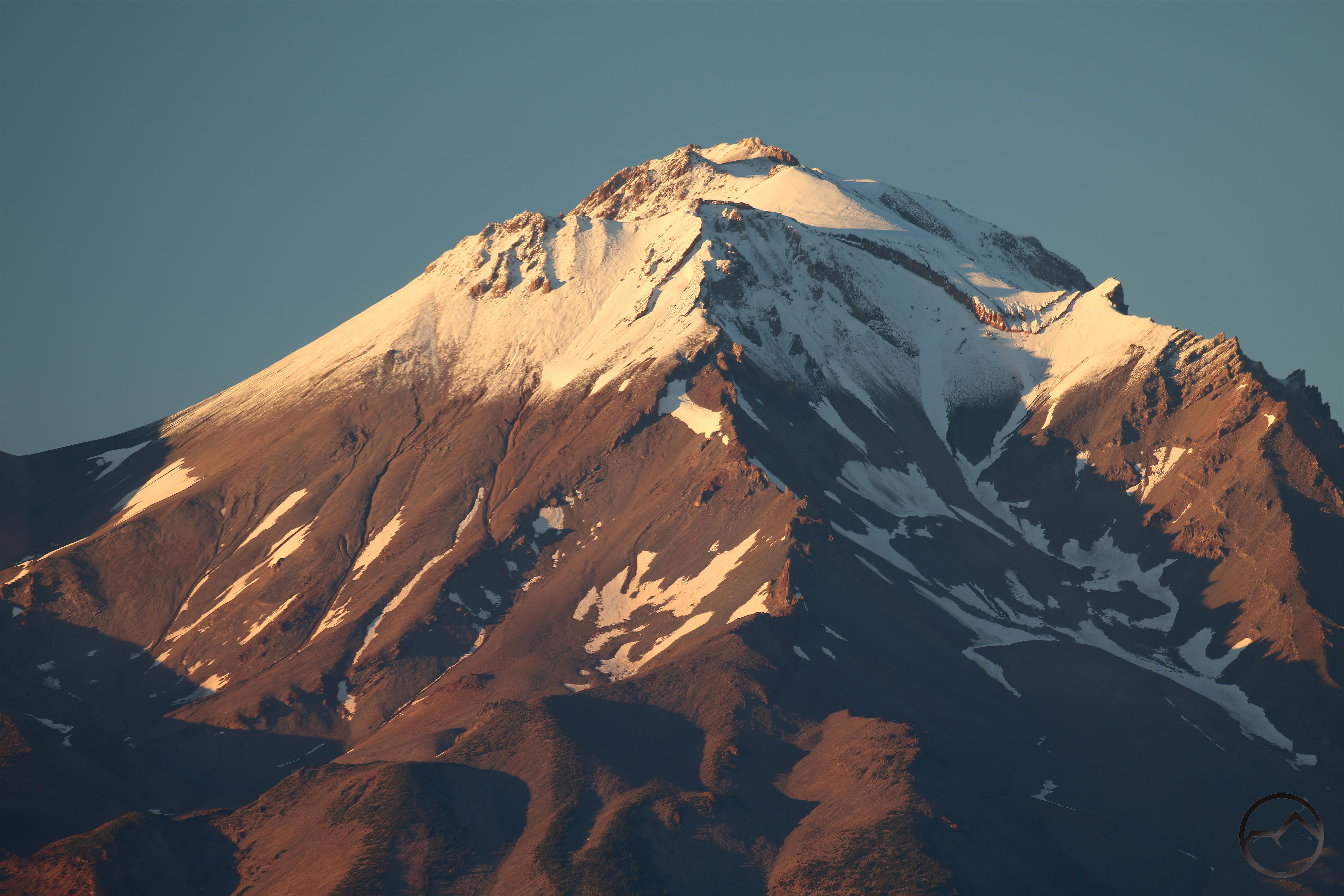
Fresh summer snow and new alpine mudslides are all bathed in alpenglow on Mount Shasta.
In the end, this is another reminder that nature in general, and Mount Shasta in particular, is very dynamic. The mountain is constantly in flux, in ways both large and small. This time was a significant series of changes. Of course, it sill amazes me that I can say that Mount Shasta City was inundated with a mudslide that was caused by a hurricane. Strange but true.
 Hike Mt. Shasta
Truly amazing! Your photos and diagrams are fascinating documentation, too. I guess the mountain is a bit less is total mass now. 😉 And where is all that mud and debris being dumped after it is cleared from streets?
Also, I love that top picture especially, showing the mountain in its beautiful red tones.
I’m not positive what caused the high elevation mudslides but I would guess that higher elevations rarely get that much rain. There are winter storms that drop more precipitation but it falls as snow and slowly melts and the typical summer thunderstorm is too short lived to drop that much rain. The warmest winter storms have snow levels of 9,000 to 9,500 feet and those mudslides look like they occured at 10,000 to 12,000 feet. Also its possible that there is some permafrost up there and the rain melted the permafrost causing the soil to settle.
All your points are excellent. The storm itself did not drop a significant amount of rain compared to other storms but it was sustained and at elevations that don’t normally get that amount. I think your permafrost speculation is good but I am willing to bet that there was also just ground that was “waiting” to settle when conditions were right. Those conditions were manifest and things broke loose. These were just really odd circumstances.
Pingback: Of Mudflows And Summer Snows | Hike Mt. Shasta
Pingback: Mount Shasta 2023 – A Year In Images | Hike Mt. Shasta
Pingback: Avalanches And Auroras | Hike Mt. Shasta
Pingback: Rocket’s Red Glare And Smoke In The Air | Hike Mt. Shasta