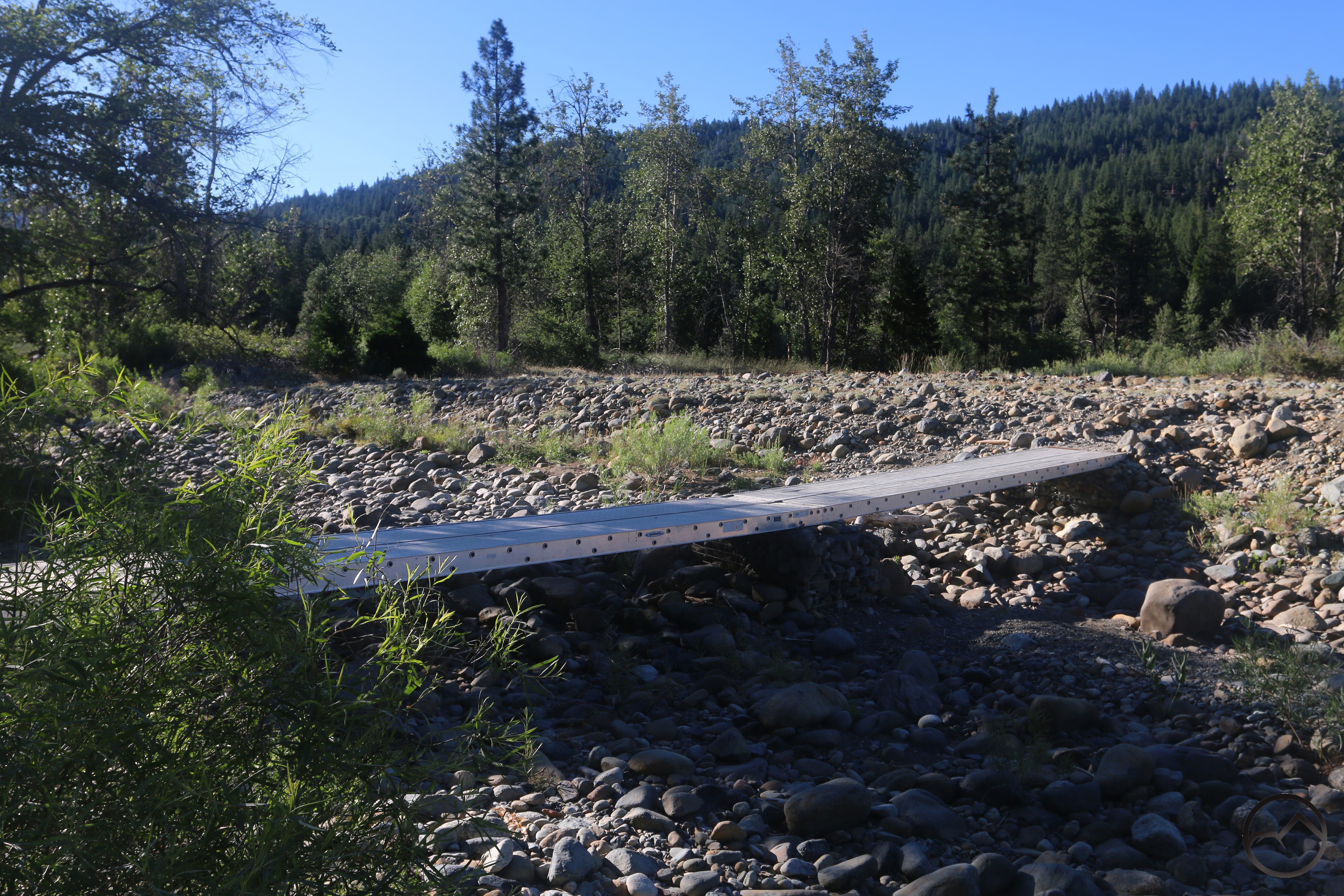
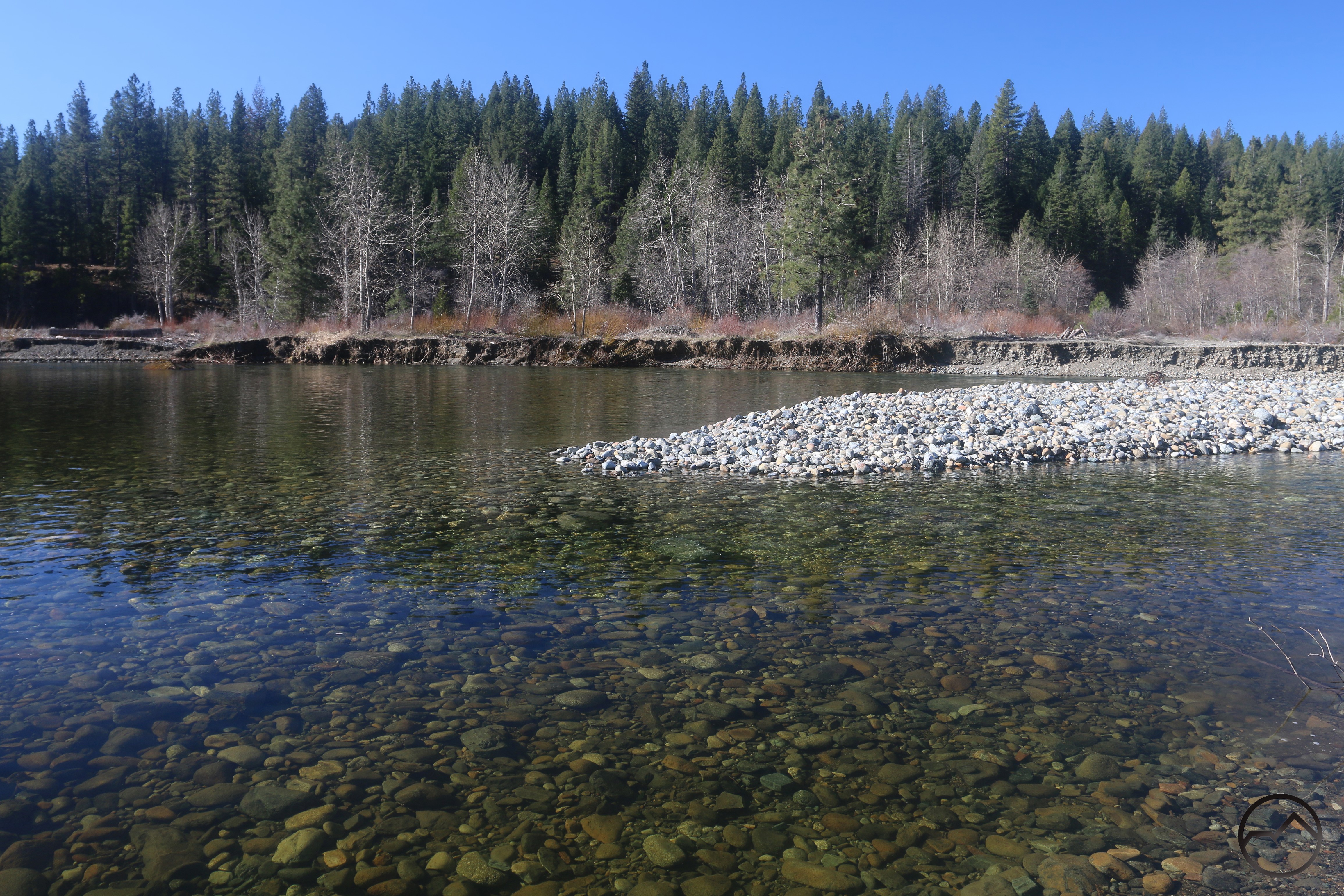
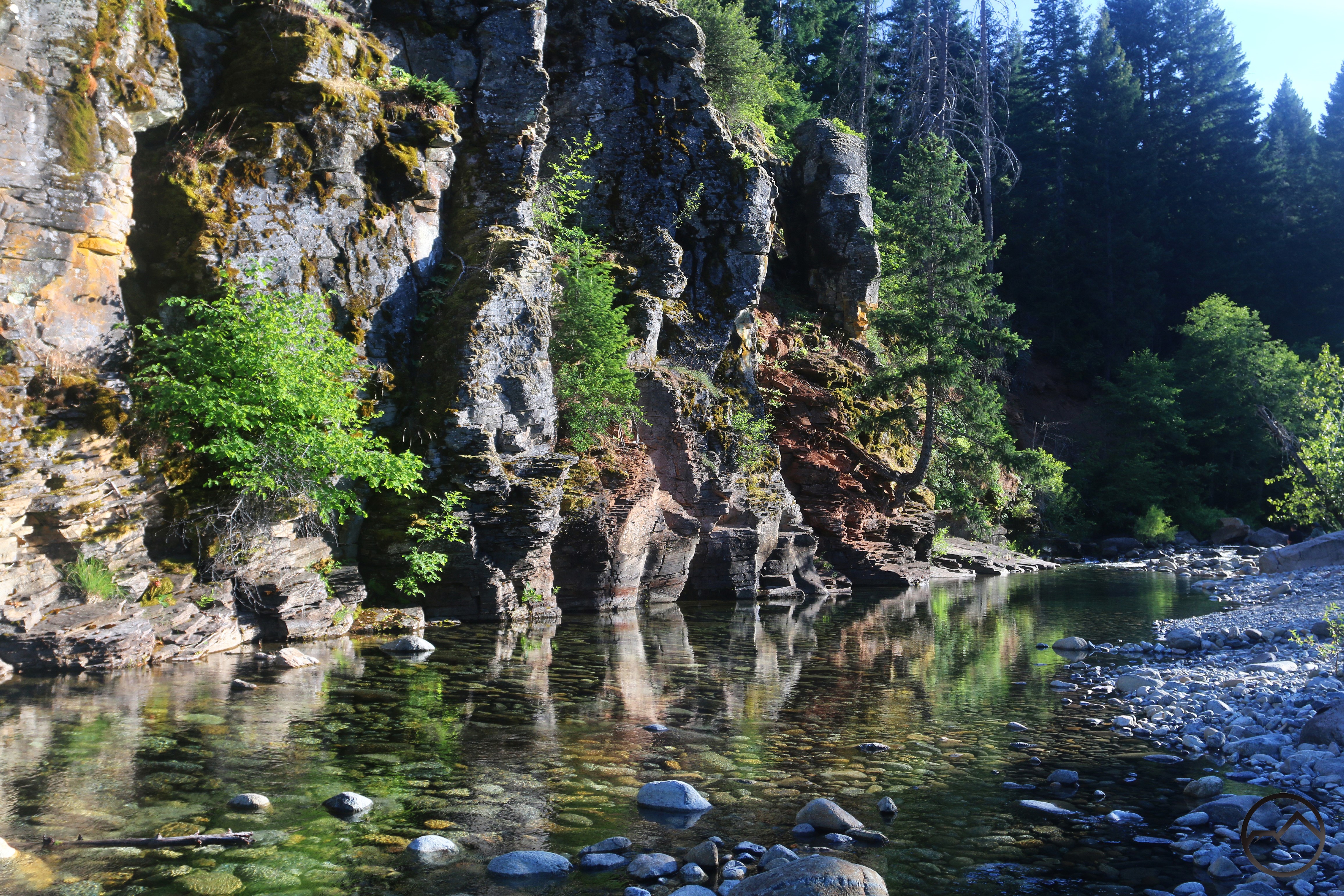
Hike Mt. Shasta

Exploring the Mount Shasta Region

  • Home
  • Trails
    • Mount Shasta Trails
      • Brewer Creek Trail
      • Clear Creek Trail
      • Gray Butte Trail
      • Green Butte Ridge Trail
      • Horse Camp Trail
      • North Gate Trail
      • Old Ski Bowl Trail
      • Panther Meadow Trail
      • South Gate/Squaw Meadow Trail
      • Whitney Falls Trail
    • Trinity Divide Trails
      • Blue Divide Trail
      • Castle Lake Trail
      • Castle Lake Shore Trail
      • Cliff Lake Trail
      • Deadfall Lakes Trail
      • Gray Rock Lakes Trail
      • Gumboot Trail
      • Heart Lake Trail
      • Porcupine & Toad Lakes Via Pacific Crest Trail
      • Seven Lakes Basin Via Pacific Crest Trail
      • Sisson-Callahan Trail
      • Soapstone Trail
      • South Mumbo Scramble
      • Tamarack Lake Trail
      • Toad Lake Trail
    • Castle Crags Trails
      • Burstarse Falls Via Pacific Crest Trail
      • Castle Dome Trail
      • Flume Trail
      • Lower Castle Crags Via Pacific Crest Trail
      • Root Creek Trail
    • Scott Mountains Trails
      • Bluff Lake & Cement Bluff via Pacific Crest Trail
      • Caldwell Lakes Trail
      • China Mountain Scramble
      • Cory Peak and Bull Lake via Pacific Crest Trail
    • Cascade Crest
      • Ash Creek Butte Scramble
      • Goosenest Trail
      • Juanita Lake Trail
      • Orr Lake Trail
    • Mount Shasta City Area Trails
      • Black Butte Trail
      • Box Canyon Trail
      • Gateway Trail
      • Lake Siskiyou Trail
      • Mount Shasta City Short Trails
      • Ney Springs Canyon Trail
      • Spring Hill Trail
    • Shasta Valley Trails
      • Black Lava Trail
      • Haystack Trail
      • Lake Shastina Trail
      • Pluto Cave Trail
      • Trout Lake Trail
      • Yellow Butte Trail
    • Sacramento River Trails
      • Dunsmuir Trail
      • Hedge Creek Falls Trail
      • Sacramento River Trail
      • Sims History Trail
    • McCloud River Trails
      • Ash Camp To Ah-Di-Na Via Pacific Crest Trail
      • McCloud River Falls Trail
      • McCloud River Preserve Trail
      • Squaw Valley Creek Trail
      • McCloud River Trail: Algoma Camp to Nitwit Camp
      • McCloud River Trail: Nitwit Camp to Cattle Camp Swimming Hole
      • McCloud River Trail: Cattle Camp Swimming Hole to Camp 4
      • McCloud River Trail: Camp 4 to Upper McCloud Falls
      • McCloud River Trail: Pine Tree Hollow Loop
    • Trails Further Afield
      • Trinity Alps Trails
        • Bear Lakes Trail
        • Billys Peak Trail
        • Boulder Creek Lakes Trail
        • Boulder Lake Trail
        • Canyon Creek Trail
        • Caribou Lakes Trail
        • East Boulder Lake Loop
        • East Weaver Lake Trail
        • Four Lakes Loop
        • Granite Peak Trail
        • Grizzly Creek Trail
        • Gulch Lakes Loop
        • Hidden Lake Trail
        • South Fork Lakes Trail
        • Stoddard Lake Trail
        • Stoney Ridge Trail
        • Tangle Blue Lake Trail
      • Warner Mountains
        • Emerson Creek Trail
        • Highgrade Trail
        • Patterson Lake Via Warner Summit Trail
        • Pine Creek Trail
        • Squaw Peak Trail
  • Articles
    • Trails By Area
      • Mount Shasta
        • Vistas, Meadows And Waterfalls: Three Best Hikes On Mount Shasta
        • The End Of The Road: Three Hikes In The Old Ski Bowl Area
        • Two Trails From Bunny Flat
        • Three Trails On Mount Shasta’s East Side
        • Mount Shasta’s Hummingbirds
      • Trinity Divide
        • Great Lakes: Top Five Lake Basins In The Trinity Divide
        • The Headwaters Of The South Fork Of The Sacramento River
        • Neglected Headwaters: Two Lesser Lake Basins On The South Fork
        • Gumboot Saddle: Two Hikes On The PCT
        • Descent Into Mystery: The Sisson-Callahan Trail
        • Mumbo Basin – Overlooked On The West Side
        • The Headwaters Loop: A Proposed Backpacking Loop In The Trinity Divide
      • The McCloud River
        • The McCloud River Trail
      • Shasta Valley
        • Jewels In The Desert
      • Scott Mountains
        • Great Scott! Two Scott Mountains Hikes On The PCT
      • Trinity Alps
        • Carubou Lakes: Trinity Alps On A Grand Scale
        • Switchbacks To Heaven: The Trinity Alps’ Stoney Ridge Trail and Four Lakes Loop
        • Trinities In Proximity: Two Trinity Alps Trails With Easy Access From Mount Shasta
        • Trails in the Carter Meadows Area
        • Trinity Alps Views of Mount Shasta
        • The Psychological Value Of The Trinity Alps
    • Waterfalls
      • Three Waterfalls On Mount Shasta
      • McCloud River Waterfalls
      • Sacramento River Waterfalls
      • Trinity Divide Waterfalls
      • Trinity Alps Waterfalls
      • Avoiding A Dry Whitney Falls
    • Off Season Trails
      • Three Winter Hikes Near Mount Shasta City
      • Winter Hikes In Shasta Valley
      • Winter Hiking In The Shasta Valley Wildlife Refuge
      • Winter Hikes On The Sacramento River
      • Winter Hikes On The Lake Siskiyou Trail
      • Spring Hikes In The Castle Crags
      • Spring Hikes On the Upper McCloud
      • Spring Hikes On The Lower McCloud River
    • Points Of Interest
      • Mount Eddy: Overshadowed, Underrated
      • Black Butte: Hiding In Plain Sight
      • Castle Dome: Steadfast And Staggering
      • Mount Shasta Hoodoos
      • Sacramento Scrambling
      • The Shasta River
      • The Castle Creek Watershed
      • Mount Shasta East Side Glacier View
      • 5 Fantastic Mount Shasta Vistas
      • 5 Highest Peaks Around Mount Shasta
      • 5 Best Hikes On Creeks And Rivers
      • 5 Interesting Footbridges
      • Three Spectacular Drive-To Sunset Vistas
    • North State Geography
      • Introduction
      • Seven Major Regions
      • The California Cascades
      • Klamath Mountains Pt. I
      • Klamath Mountains Pt. II
      • The Great Canyons Of Mount Shasta
      • Mount Shasta, Timberline, And The Relative Size Of Cascade Volcanos
      • Four Eruption Cones Of Mount Shasta
      • Mount Shasta’s Medial Moraine
    • Northern California Review
      • North Table Mountain
      • Lakes Basin Recreation Area
      • Eastern Sierra Fall Color
      • Sonoma County
      • Central Sierra Nevada
      • Orland Buttes
    • Seldom Seen
      • Ash Creek Falls
      • Mud Creek Canyon
      • Lower Mud Creek Canyon
      • Diller Canyon
      • Lower Cascade Gulch
      • The Grey Rocks
      • Castle Creek
      • Upper Wagon Creek
      • Fawn Creek Canyon
      • Confluence of the Sacramento River and Castle Creek
      • Upper Klamath River Canyon
      • Hole In The Ground Geologic Area
      • Ash Creek Butte Fossil Rock Glacier
    • Mount Shasta History
      • Vantage Lost: The Everitt Memorial Vista
      • A Yosemite-Mount Shasta Connection
      • Whitney – What’s In A Name?
      • Mount Shasta Area and the 1838 Exploring Expedition
      • A 19th Century Engraving Of An Epic Mount Shasta Vista
      • Vintage 1907 Color Photos
      • A Misleading Painting
      • A Mysterious Painting
      • A Mysterious Painting Pt. II
      • Stereographic Mt. Shasta
      • Year One Of Hike Mt Shasta
      • Year Two Of Hike Mt Shasta
      • Year Three Of Hike Mt Shasta
      • Year Four Of Hike Mt Shasta
      • Year Five Of Hike Mt Shasta
      • Year Six Of Hike Mt Shasta
      • Year Seven Of Hike Mt Shasta
    • Image Galleries
      • Mount Shasta Trails Gallery
      • Mount Shasta Sunrise Gallery
      • Mount Shasta Sunset Gallery
      • Lenticular Cloud Gallery
      • Mount Shasta NON-Lenticular Clouds
      • Mount Shasta Reflection Gallery
      • Telephoto Gallery
      • Mount Shasta Area Fall Color
      • Castle Crags Gallery
      • Waterfalls Gallery
      • Trinity Divide Lakes Gallery
      • Mount Shasta Area Rivers Gallery
      • Shasta High Desert Gallery
      • Mount Shasta GIF Gallery
    • Random Notes
      • Revew: Three Mount Shasta Trail Maps
      • A Mount Eddy Wilderness?
      • New Land Additions For The Castle Crags
      • Book Plug: Mount Shasta Area Rock Climbing
      • Exile: How I Came To Love Wilderness
  • Mt. Shasta Trail Map
  • Blog
  • About/Contact
  • Links
  • Truchas Ridge

Lava Fire – Five Years Later

Posted by bubbasuess on August 2, 2026
Posted in: Cascade Range, Desert, Hiking, Mount Shasta. Tagged: Lava Fire. Leave a comment

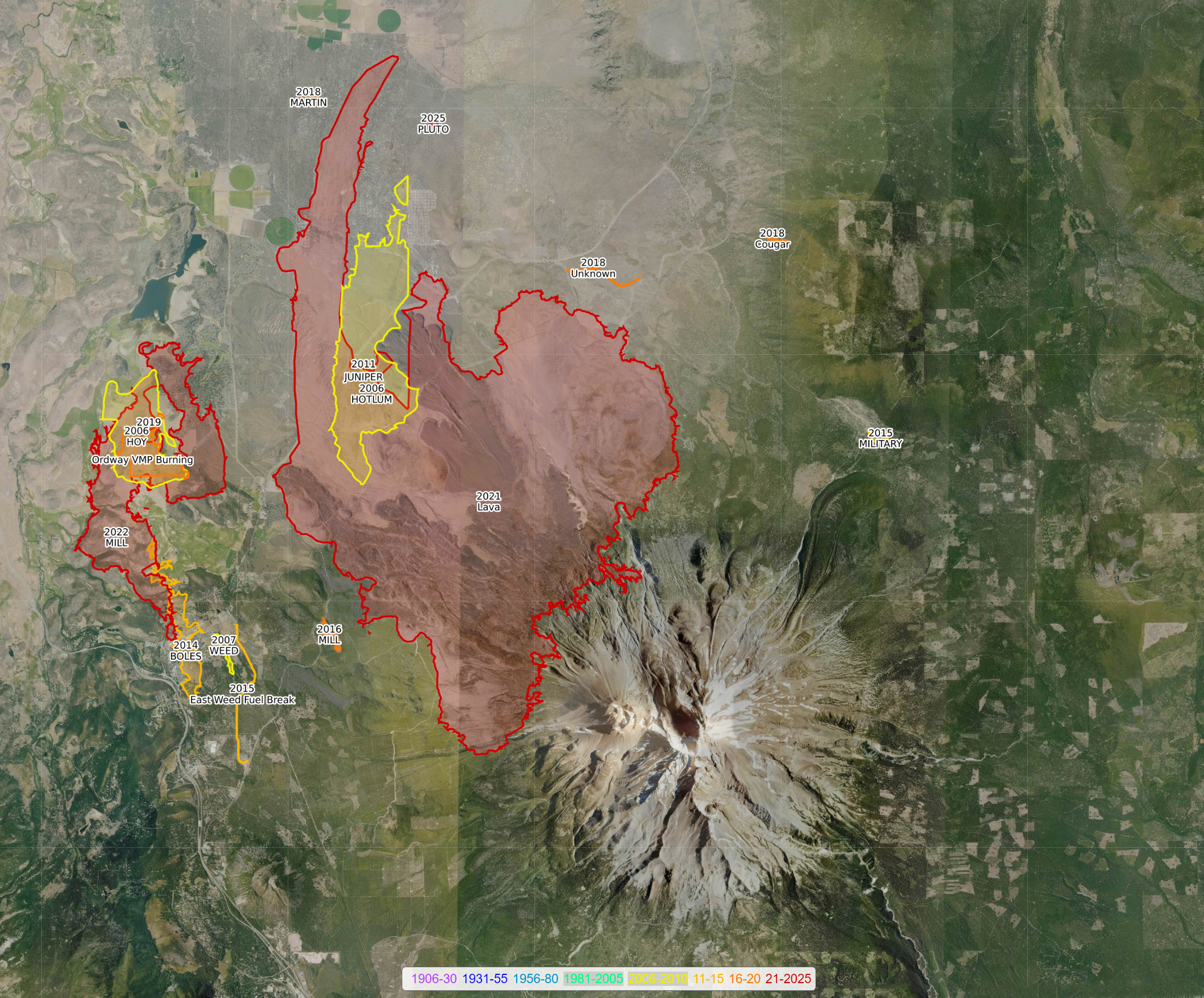
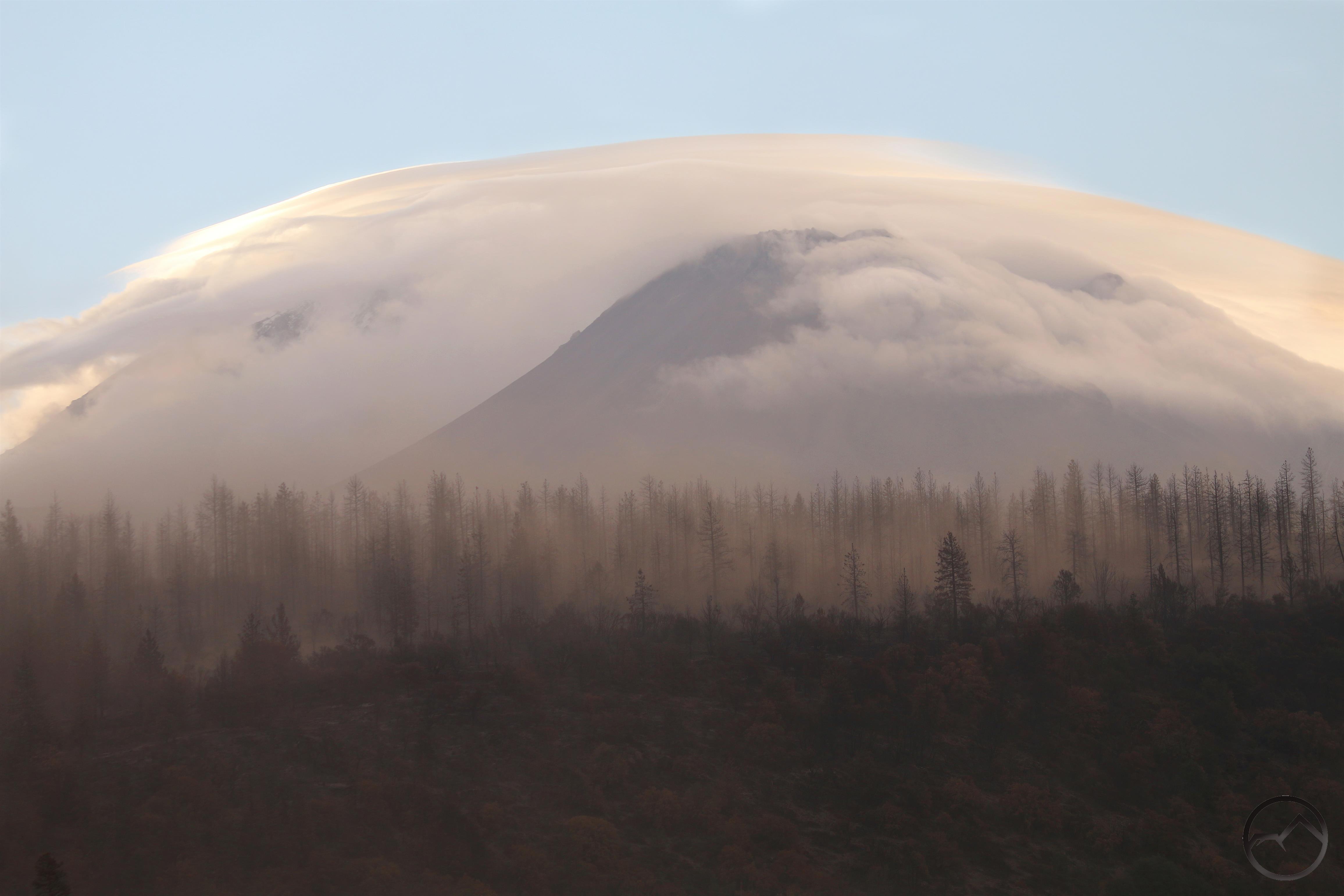
On Jun2 25th, 2021, the Lava Fire began on the northwest corner of Mount Shasta. Though not large by current wildfire standards, it was the most recent catastrophic event in the history of a mountain formed of catastrophic events, a reminder that nature in general, and Mount Shasta in particular, is an entity that remains in flux. From our mortal perspective Mount Shasta may seem unchanging but whether the constantly falling rock in Mud Creek Canyon, the grinding of the ice under the Whitney Glacier or the the alteration of the landscape caused by the Lava Fire, the mountain belongs to Heraclitus and is never quite the same mountain twice. It has now been five years since the Lava Fire and that marks a good opportunity to remember the fire and observe how the recovery process is progressing.

The fire began with a lightning strike near the town of Weed. It was allowed to smolder for a couple days. However, by the third day it had claimed over 1,500 acres. The next day it grew even more rapidly, incinerating over 13,000 acres and the next day burning another 10.000 on top of that, reaching close to 24,000 acres by that point. Though not officially contained, the rate of growth slowed considerably, with the fire claiming only 2,000 more acres over the next 2 months before the weather turned and finally put the conflagration out for good.

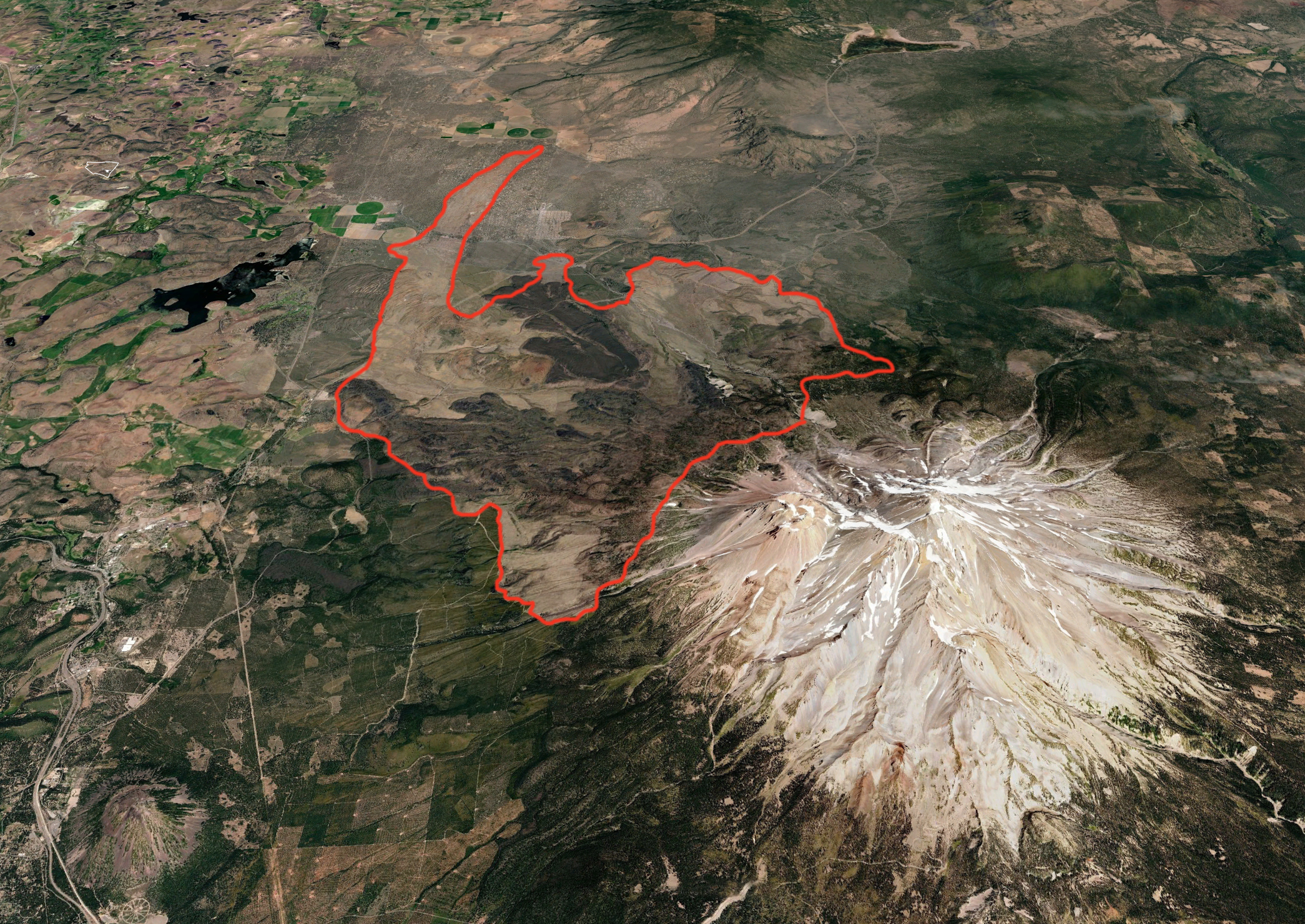
There were a number of tense moments among the community while the fire burned during those days of wild expansion. The most memorable was when the fire made a run to the south, breaching the containment lines during the night and burning to the south side of Diller Canyon. This meant it was only 5.5 miles away from Mount Shasta City and the flames could be seen on Mount Shasta’s flanks from in town. An evacuation order seemed imminent but it never came. The other tense moment occurred when the fire jumped Highway 97 and made a sprint through Juniper Valley, incinerating some of the abominable pot farms that tarnish that area. This created an oddly shaped finger that protruded north of the fire out into the flats of the Shasta Valley. The run north was finally stopped at A-12, the cutoff road that forms the hypotenuse between Interstate 5 and Highway 97.

When the fire was finally completely out in September, the Lava Fire had burned 26,409 acres. Though this was small compared to other nearby fires that burned concurrently like the Antelope Fire (145,632), River Complex (199,343) and the ghastly Dixie Fire (963,309), it was big enough and devastating enough and it was on Mount Shasta, forever altering the mountain’s appearance. While each of those devastated beautiful areas, including Antelope Creek Basin, Lassen National Park and the Trinity Alps, the damage wrought on Mount Shasta was harder to take, in part because it is so personal and in part because it is so visible. Yet, five years on, the damage done to Mount Shasta seems to have healed more than those other areas that burned and thankfully so.

The Fire

When the fire began, I was camping with the Boy Scouts at Camp Fleischmann, located between Lassen National Park and Lake Almanor. Two weeks after I left that camp, the Dixie Fire would overrun it, destroying it forever. When I got back to Mount Shasta, the fire was just beginning its explosive growth. It was not the relaxing return I had been anticipating. It was compounded by caring for covid-afflicted parents and sick kids as well. Needless to say, it was a stressful week.

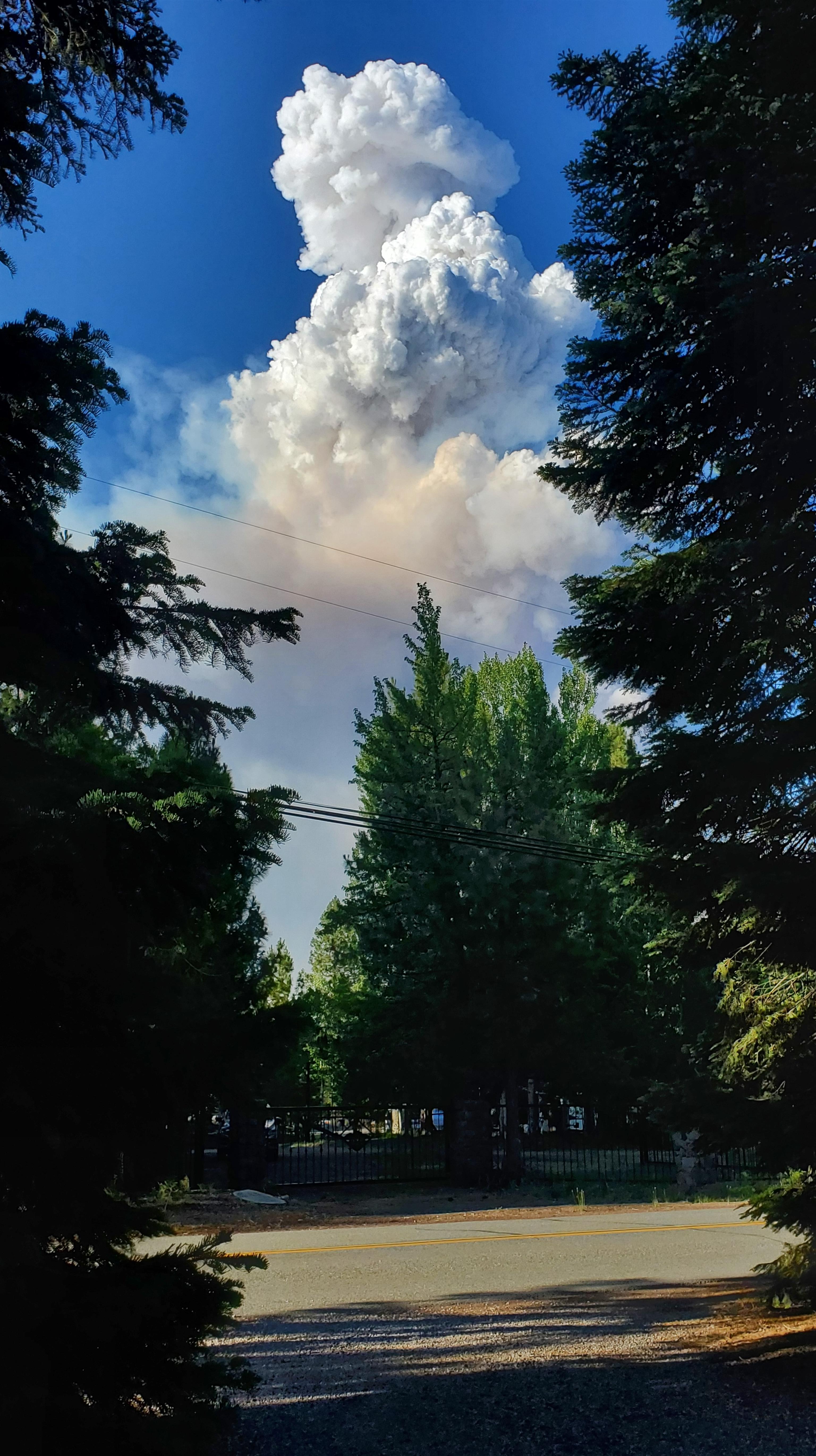
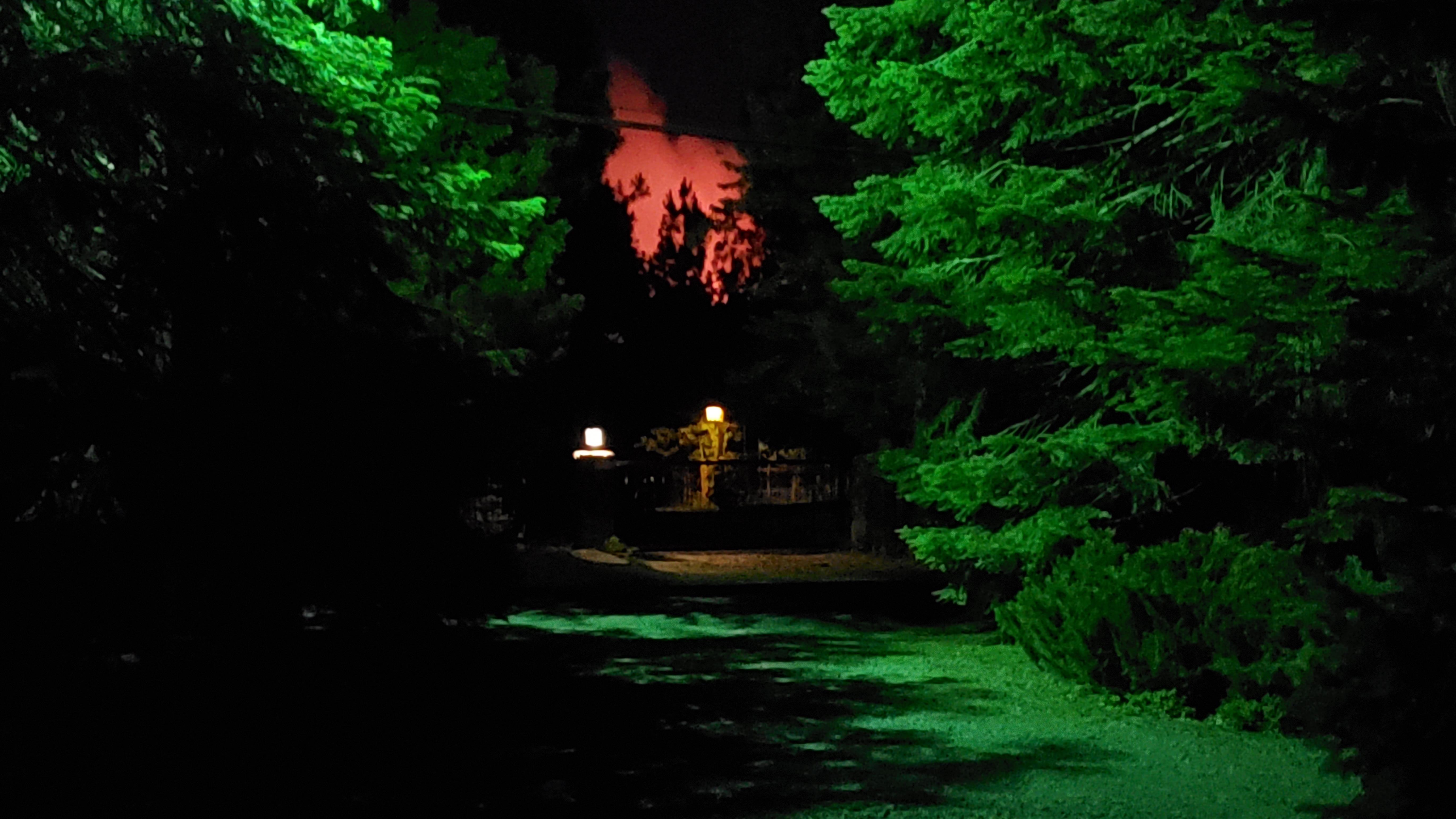
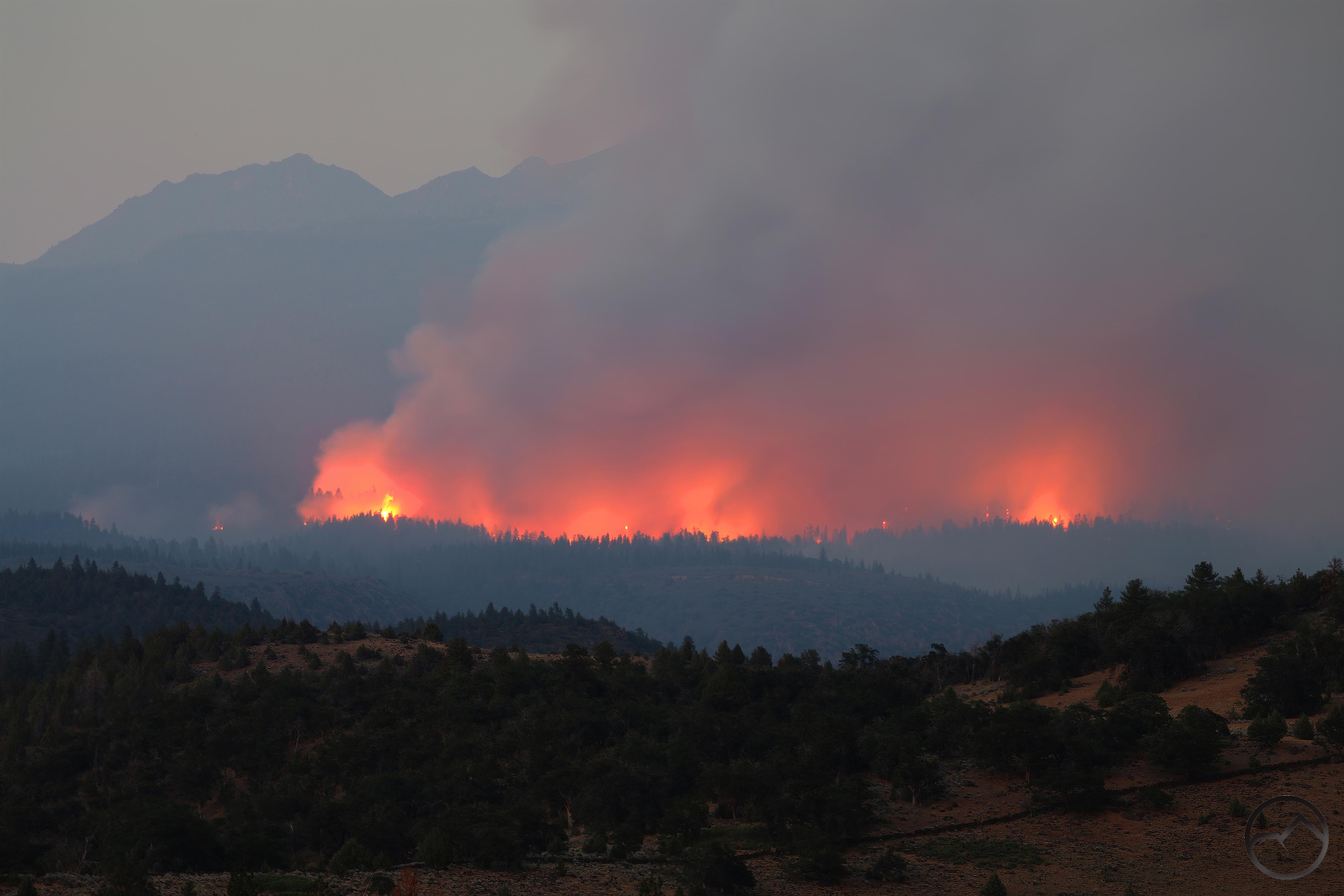
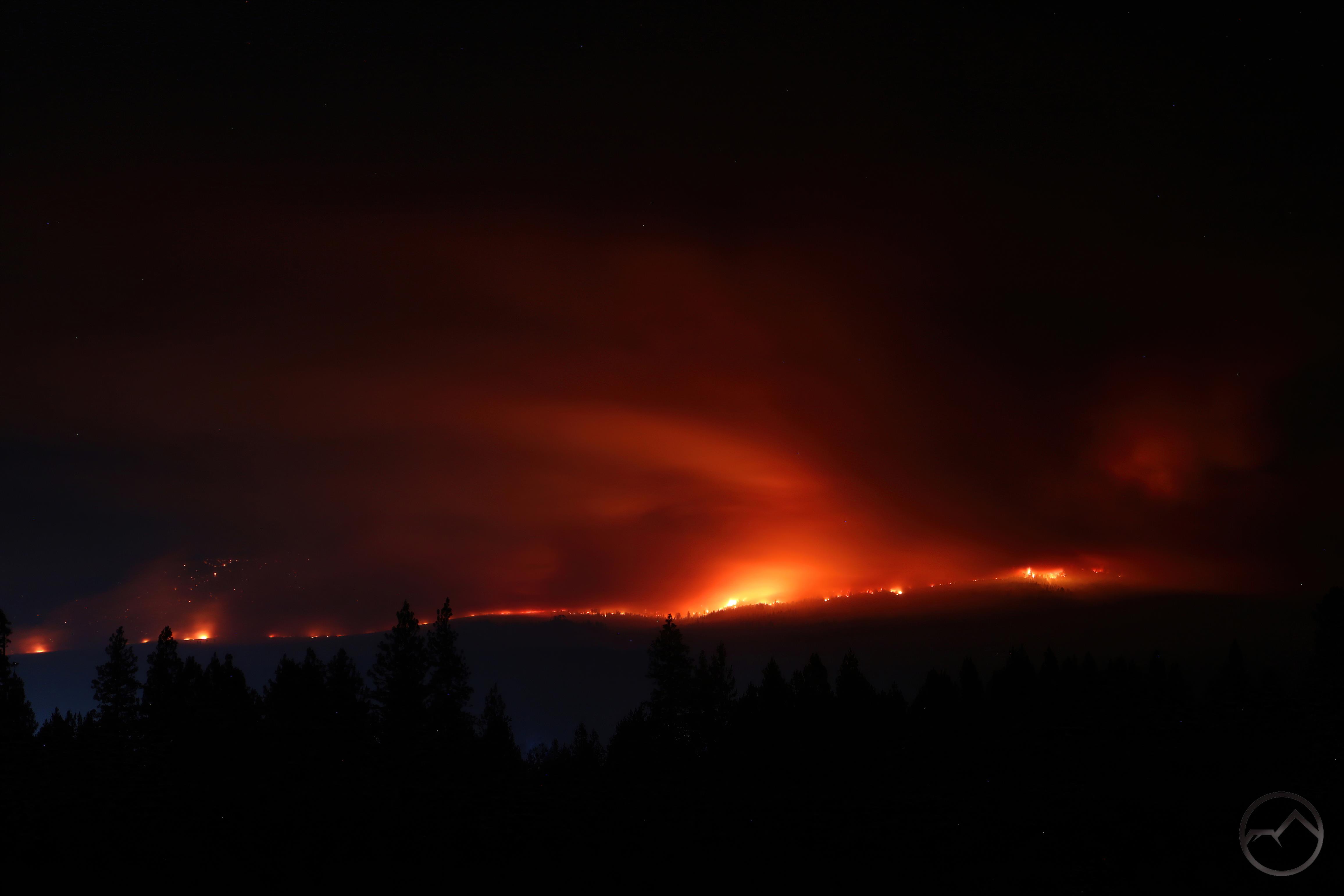
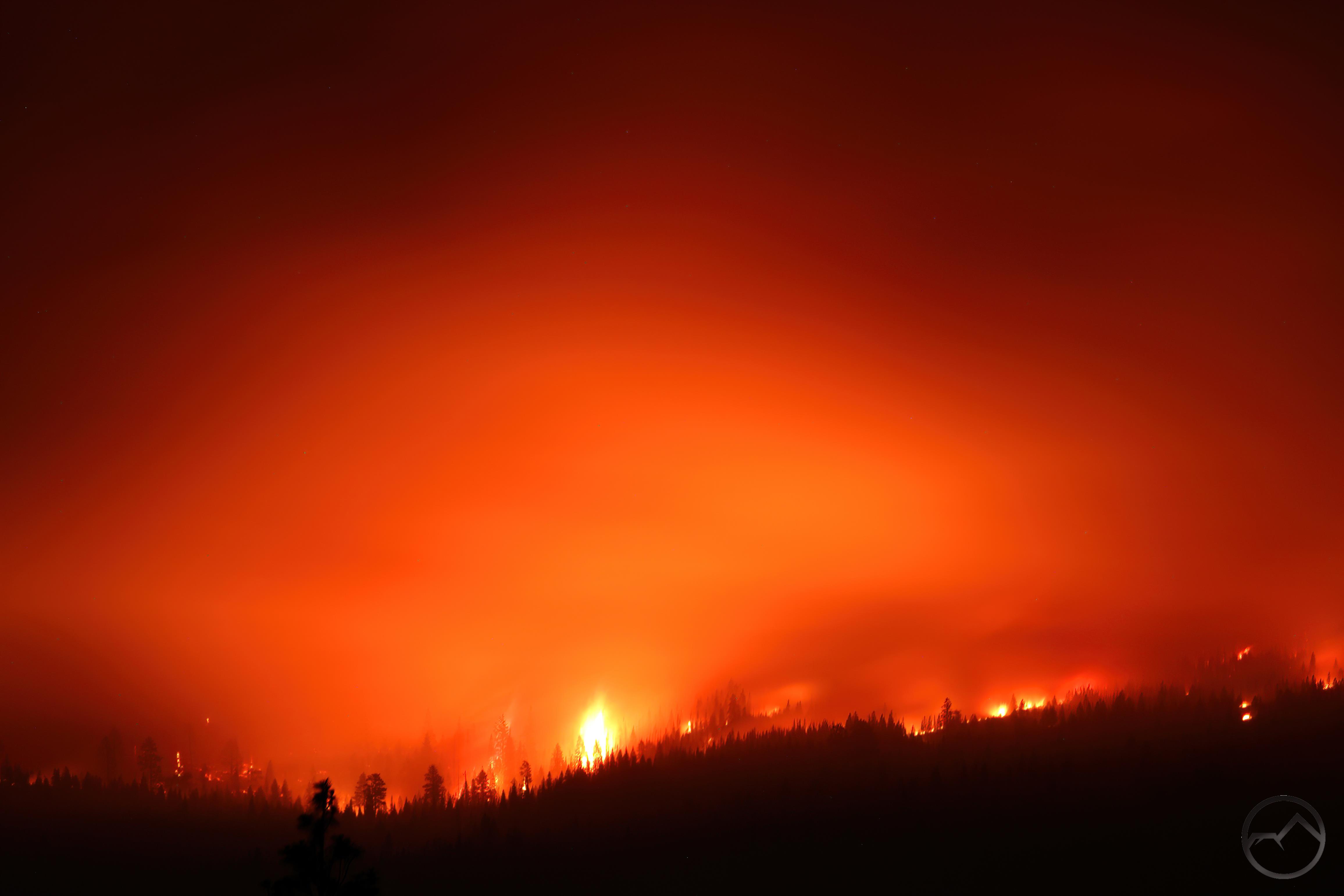
From my house, I could see the pyrocumulus cloud rising ominously overhead. At night, it glowed red, an awful indicator that the fire did not rest while we were trying to. The fire was only a few miles from my house.

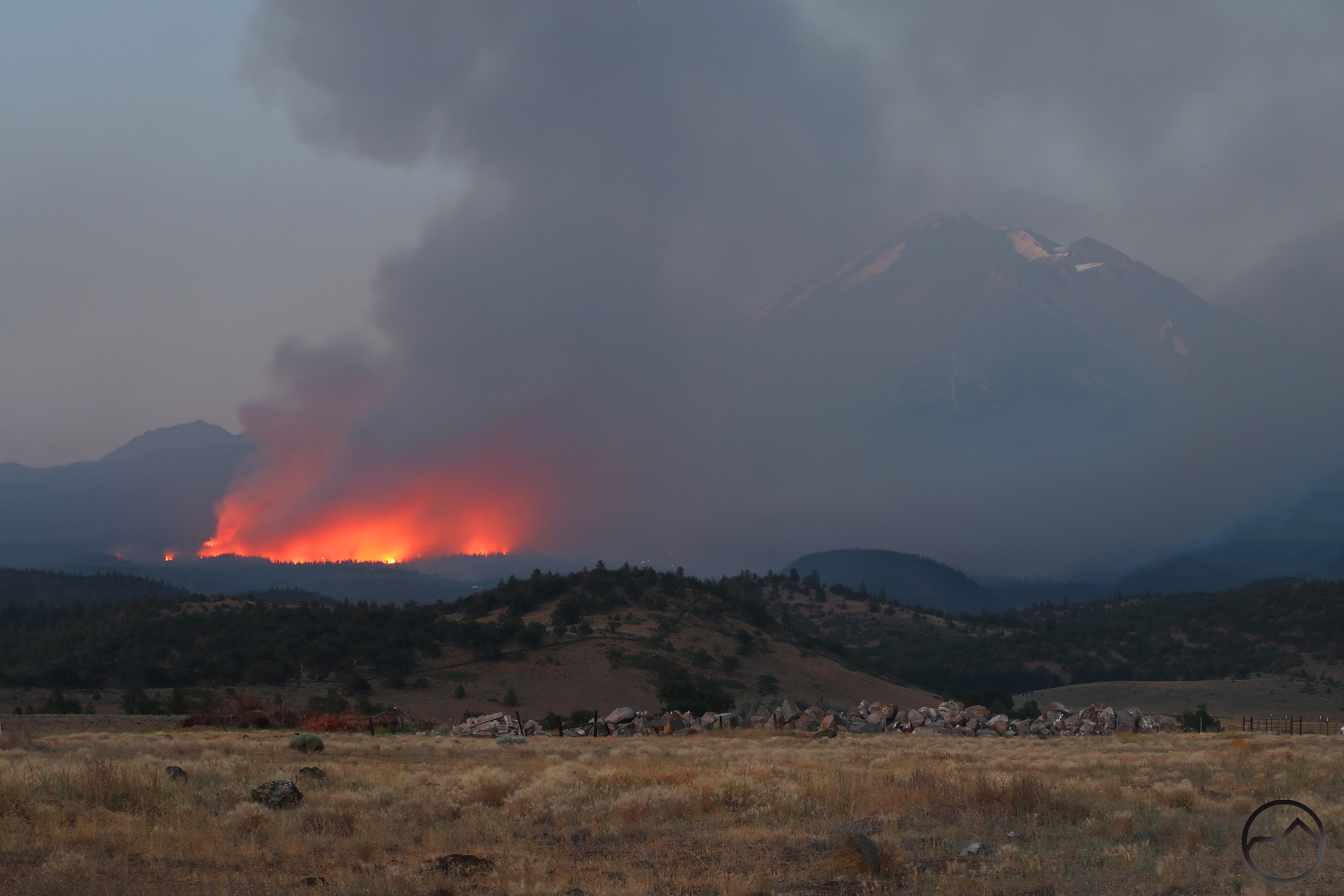
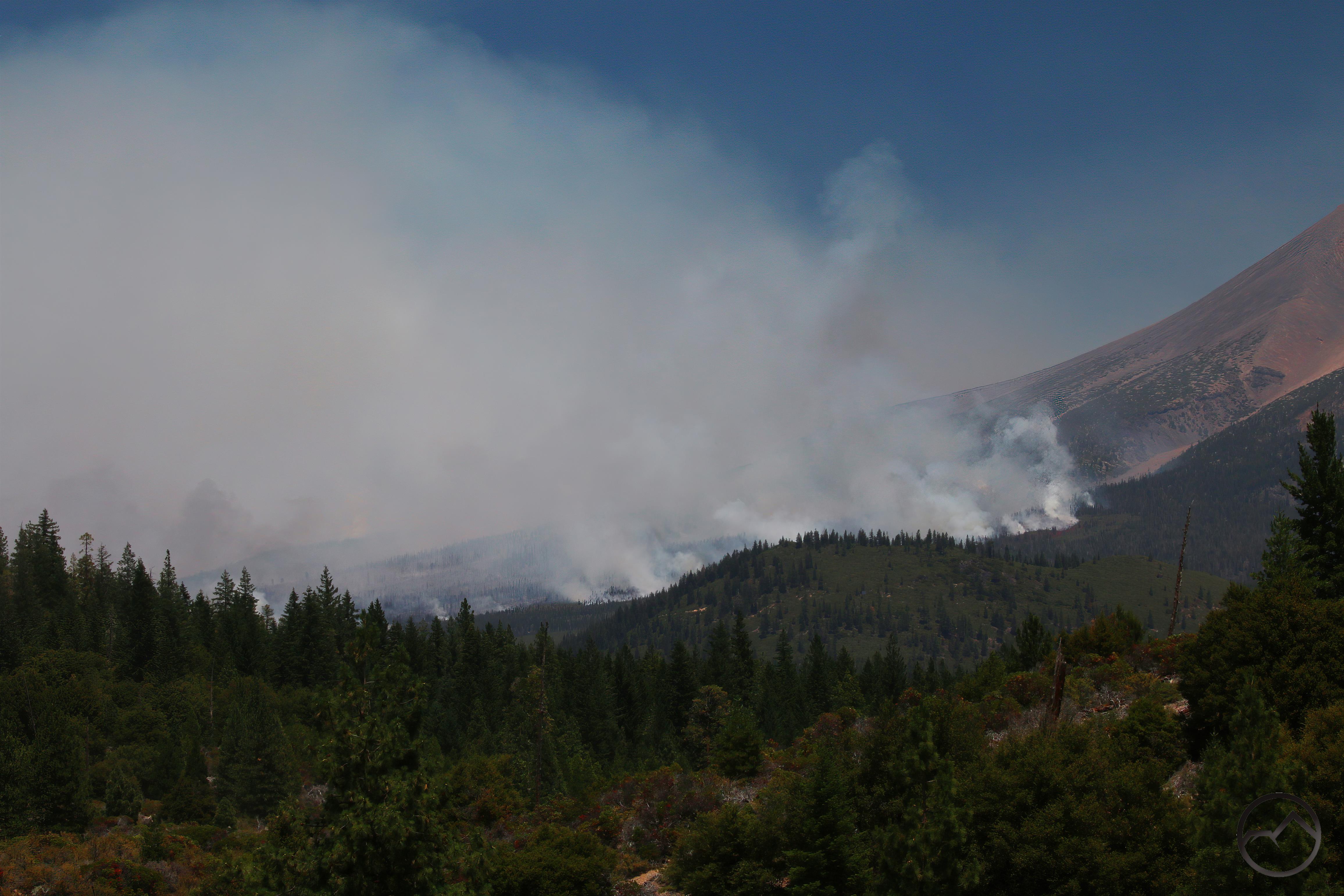
From the Shasta Valley, it was too easy to just stop and watch the flanks of Mount Shasta burn. Old growth forests that grew in ancient lava flows and the rare, isolated aspen groves that dotted the northern side of Mount Shasta were all burning at this time.

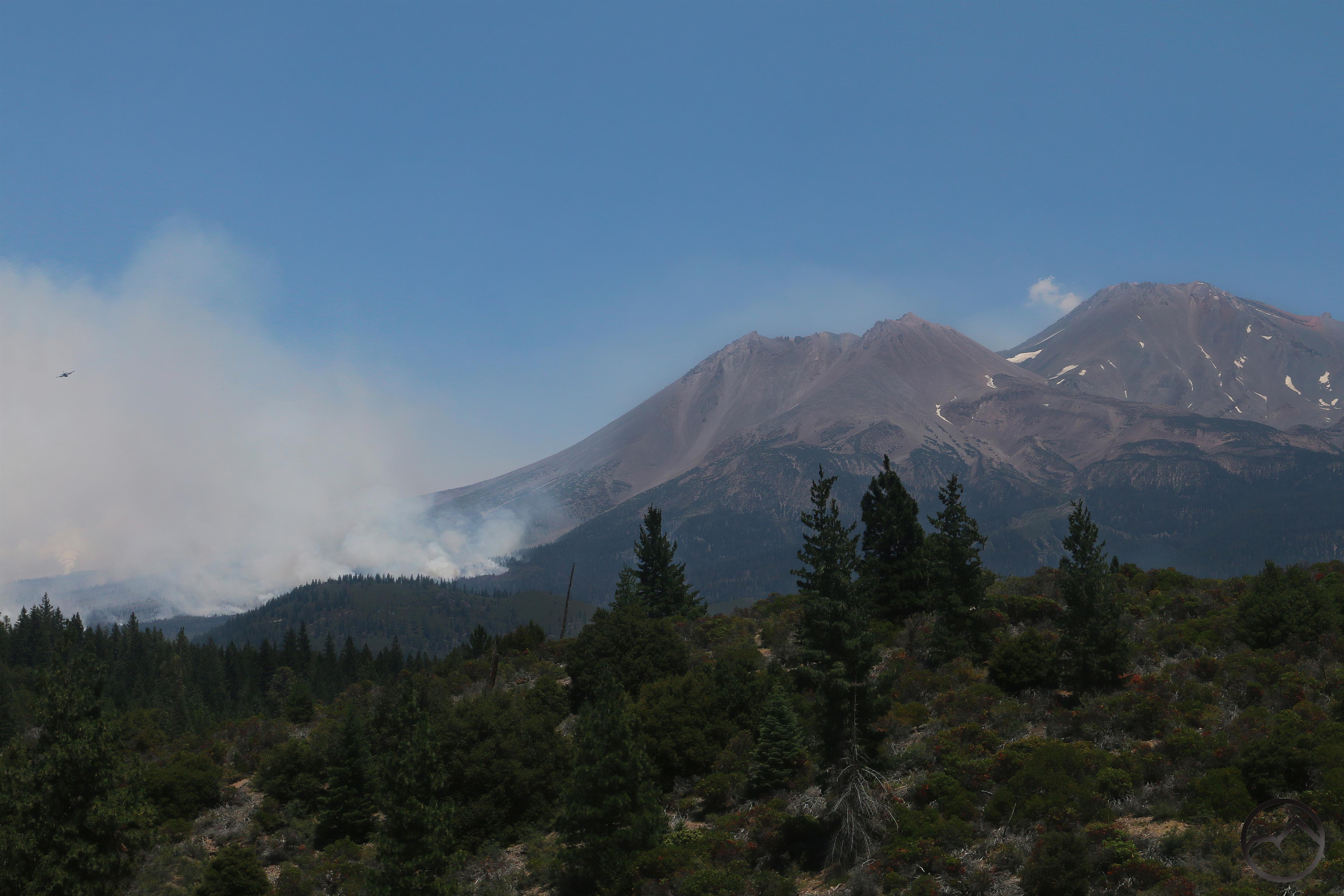
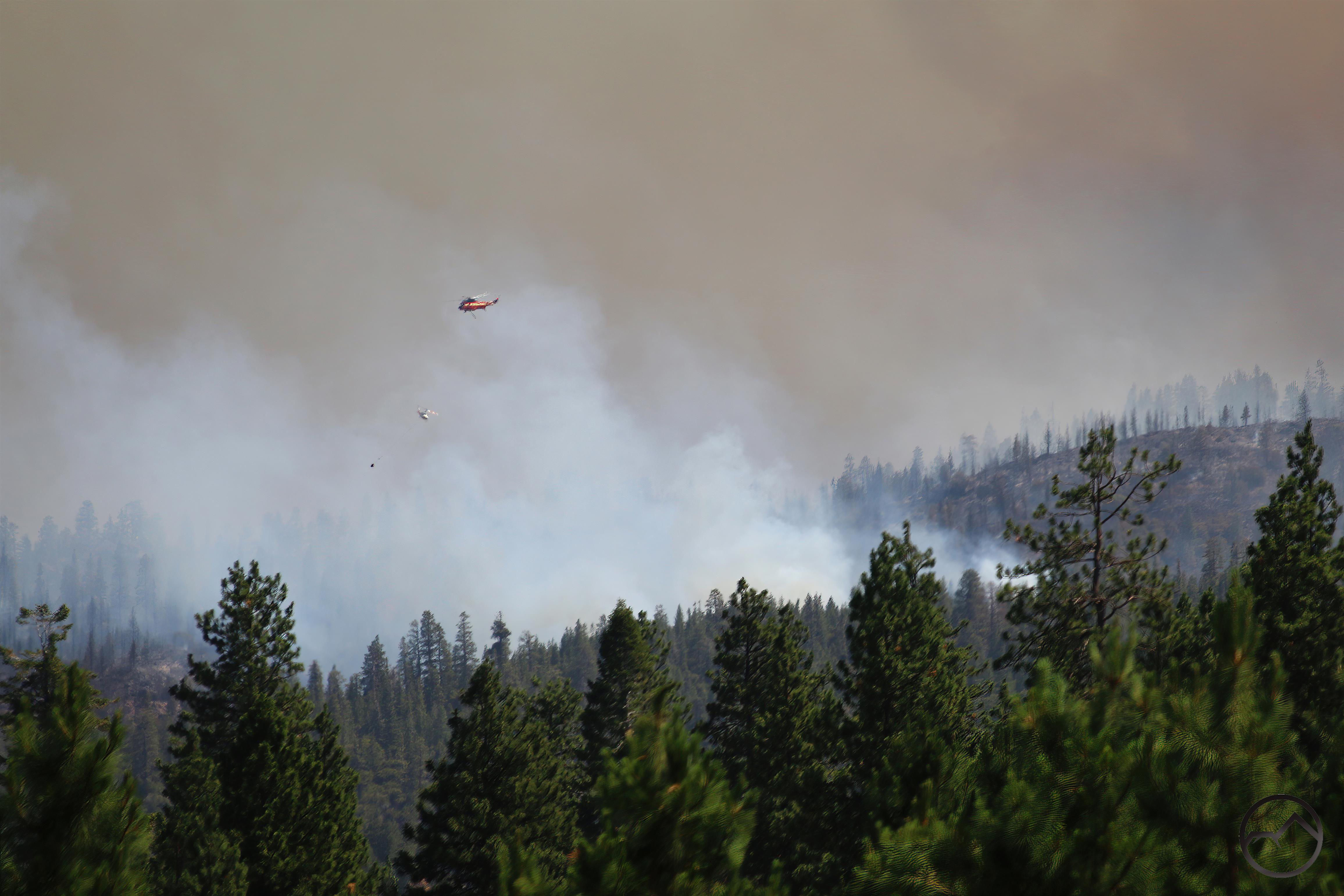
One could watch the aerial resources combat the fire from almost anywhere, including the grocery store parking lot. It was strange engaging in normal life and shopping while just a mile or so away there was a war being fought.

The night the fire made its run on Diller Canyon was the worst. Between sick family and a fire that seemed to be pressing in on the community, everyone was on edge. I filled up the gas tank in our car in case we were going to have to evacuate. While doing so myself and two other men had to forcibly stop a homeless person from building a fire in the woods near the gas station. We had to restrain him until the sheriff arrived. All this, while the fire raged above us on Mount Shasta.

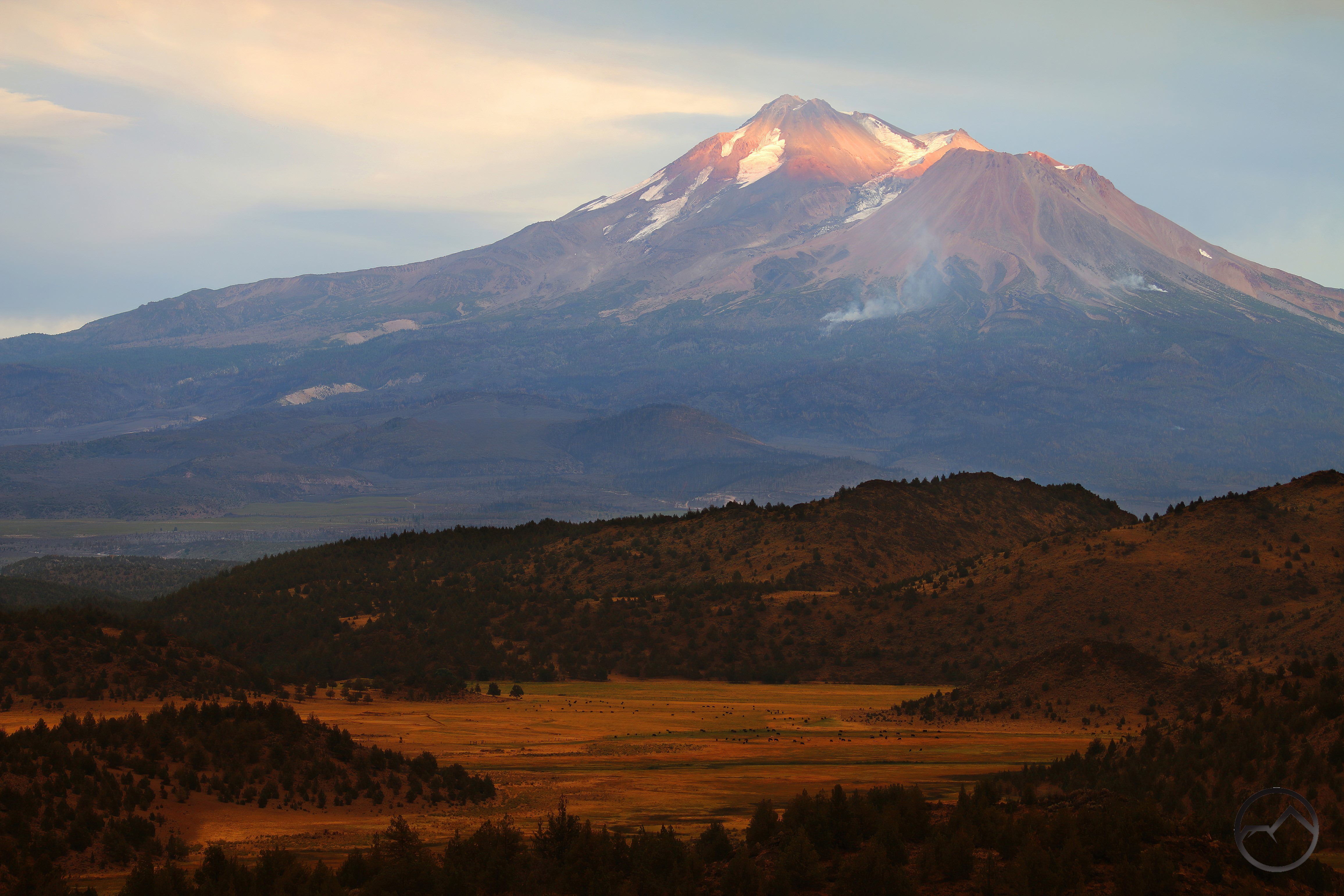
Eventually the fire was contained along the lower flanks and was left to burn itself out at the upper elevations. It eventually reached just up to the treeline, where there is an obvious and natural fire break. Smoke, and at times flames, was visible from these small fires long after the rest of the fire was over.

Aftermath

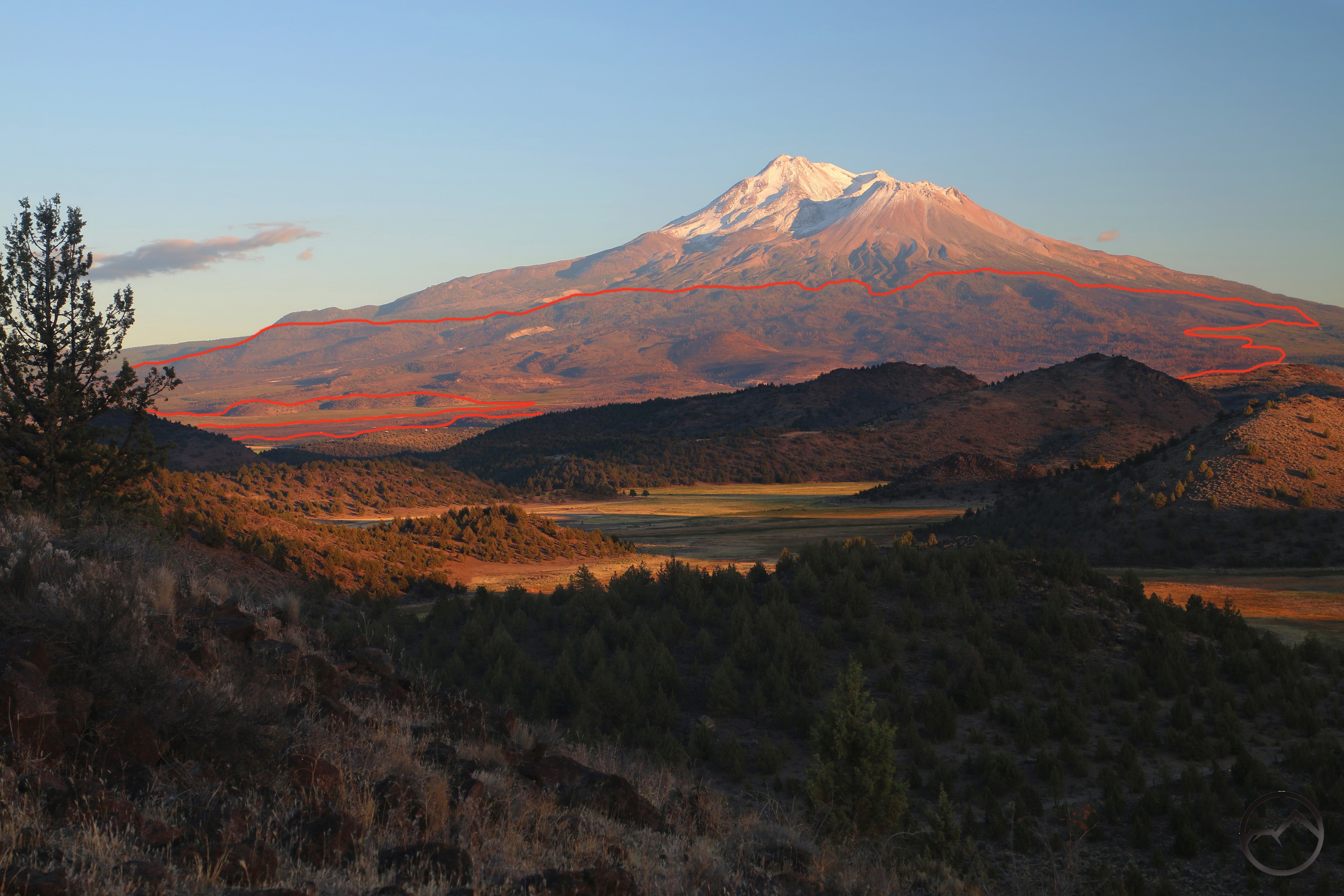
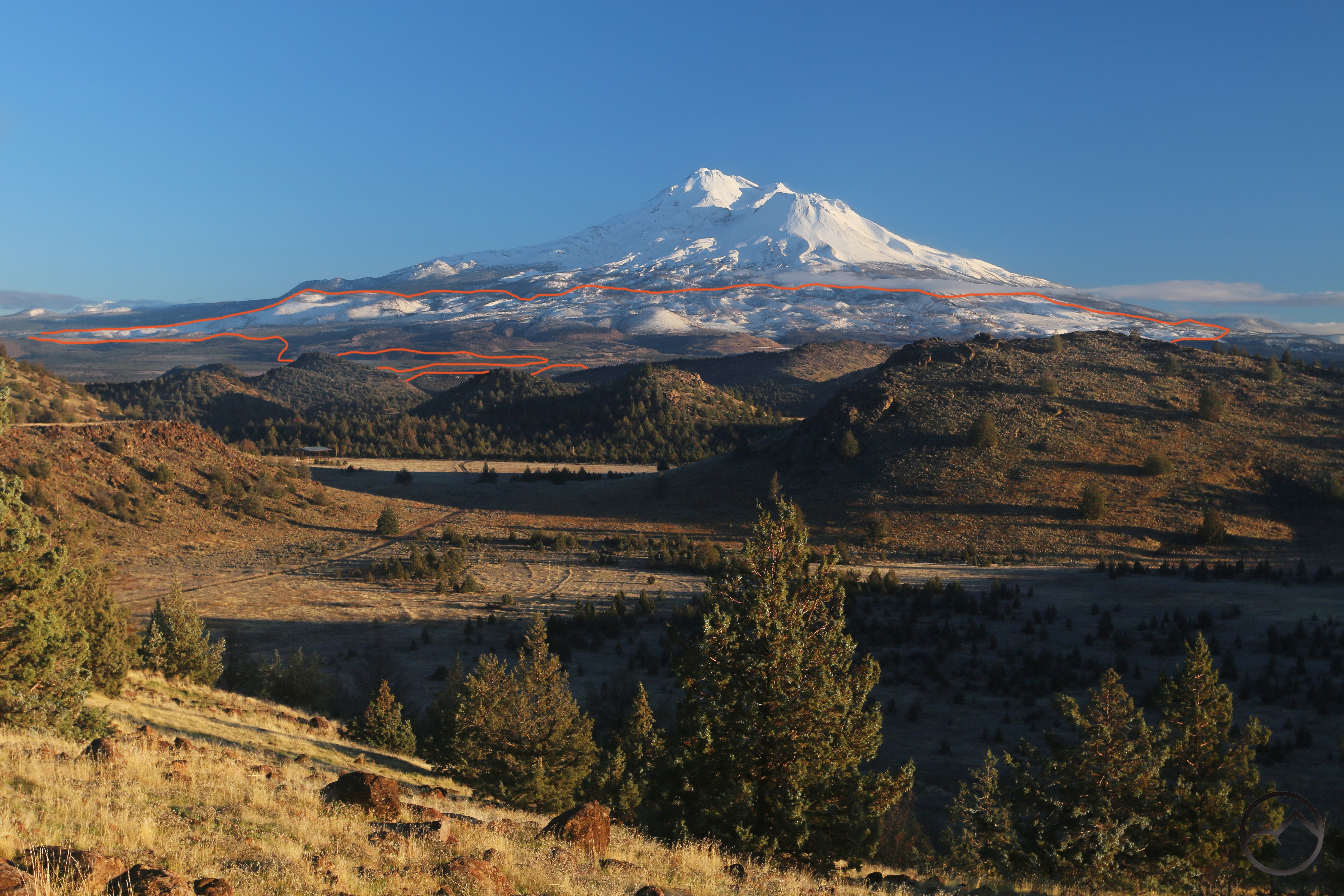
When it was all over, the fire had burned its way across most of Mount Shasta’s northern flank. It burned from Diller Canyon on the west side to the lower North Gate Buttes (Points 6700 and 6859). This was a arc of nearly 10 miles. It burned in areas near the krummholz trees at the treeline all the way down into the high desert junipers of the Shasta Valley. That represents and elevation differential that ranges from about 8,500 feet to 3,000 feet and all the commensurate forest ecosystems to be found in that kind of elevation strata.

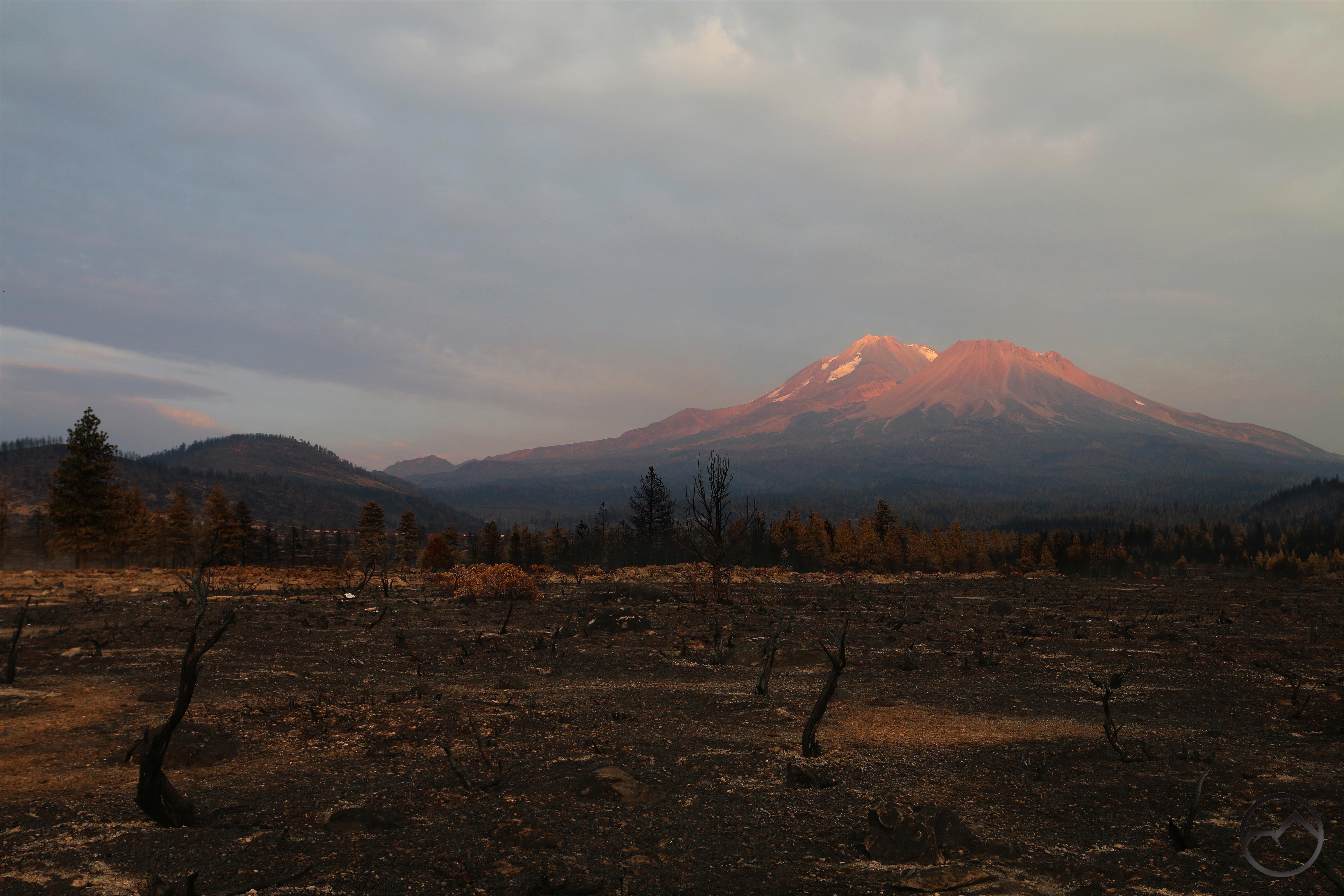
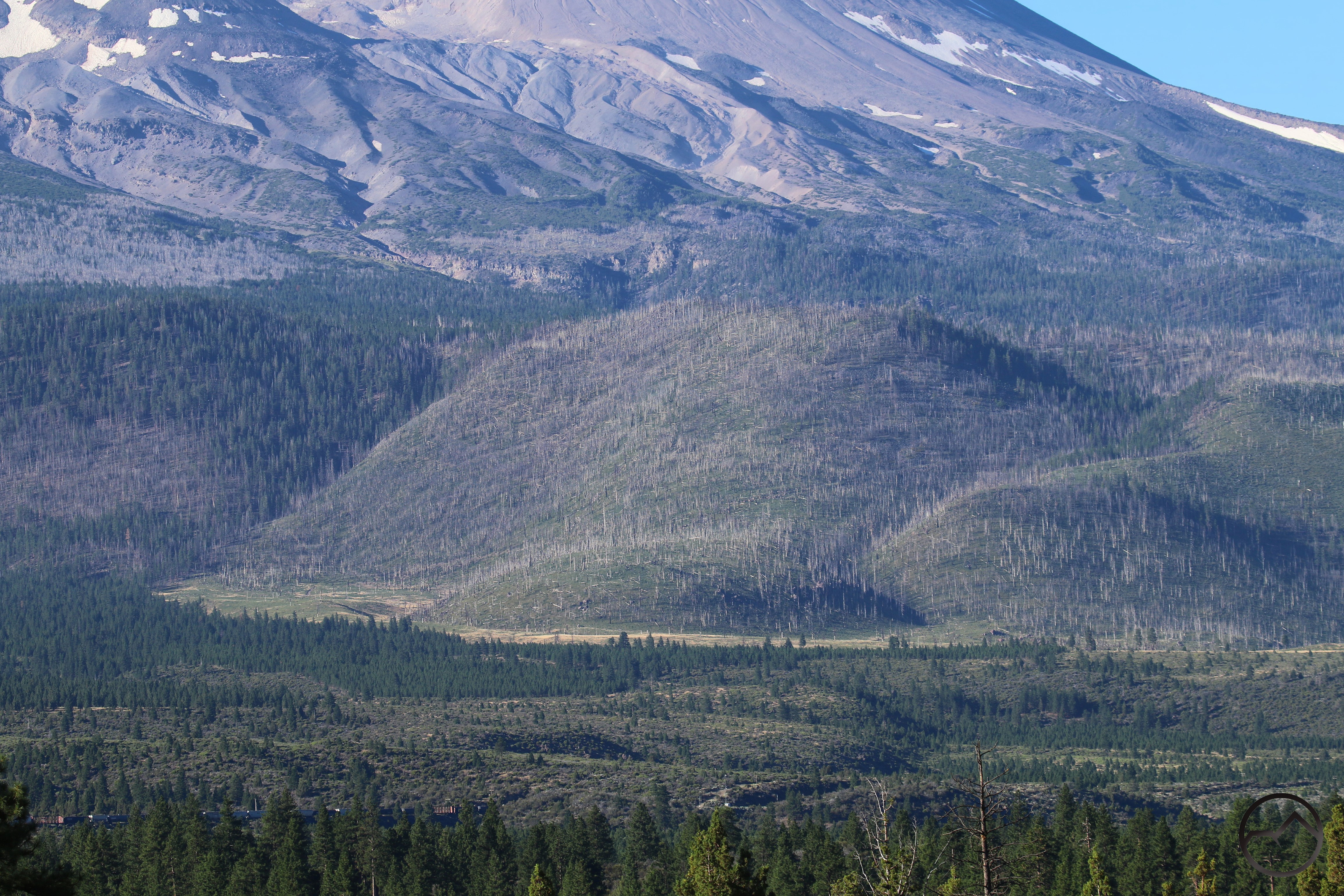
As anticipated, the landscape was devastated. Vast swaths of trees were burned, the thick brush of the lower elevations was incinerated and the deep duff that covered the forest floor was annihilated. It was tragic to witness. Dust from the burn areas became a problem and the ghost forests, the innumerable trees standing naked of needles were haunting reminders of that had been and now what the future of the area augured.

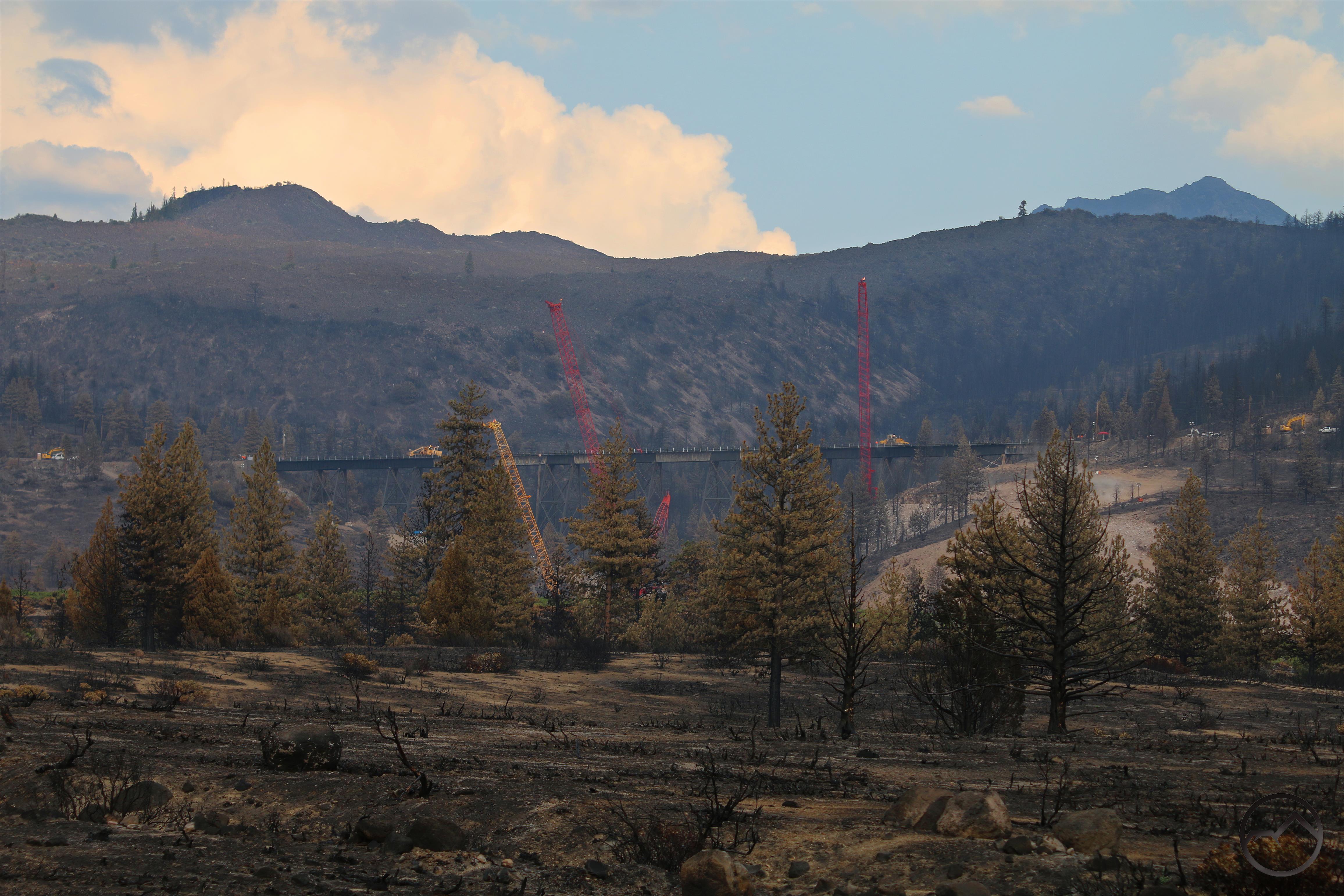
Besides the natural aspect of the region, the human geography was impacted as well. The fire burned all around the Union Pacific’s Dry Canyon Bridge, damaging parts of it and necessitating repairs before train traffic could resume. The repairs began instantly, while smoke still rose from smoldering fires. It was eerie in town with no trains passing through. Rail traffic had to be routed east, along the BNSF’s right of way.

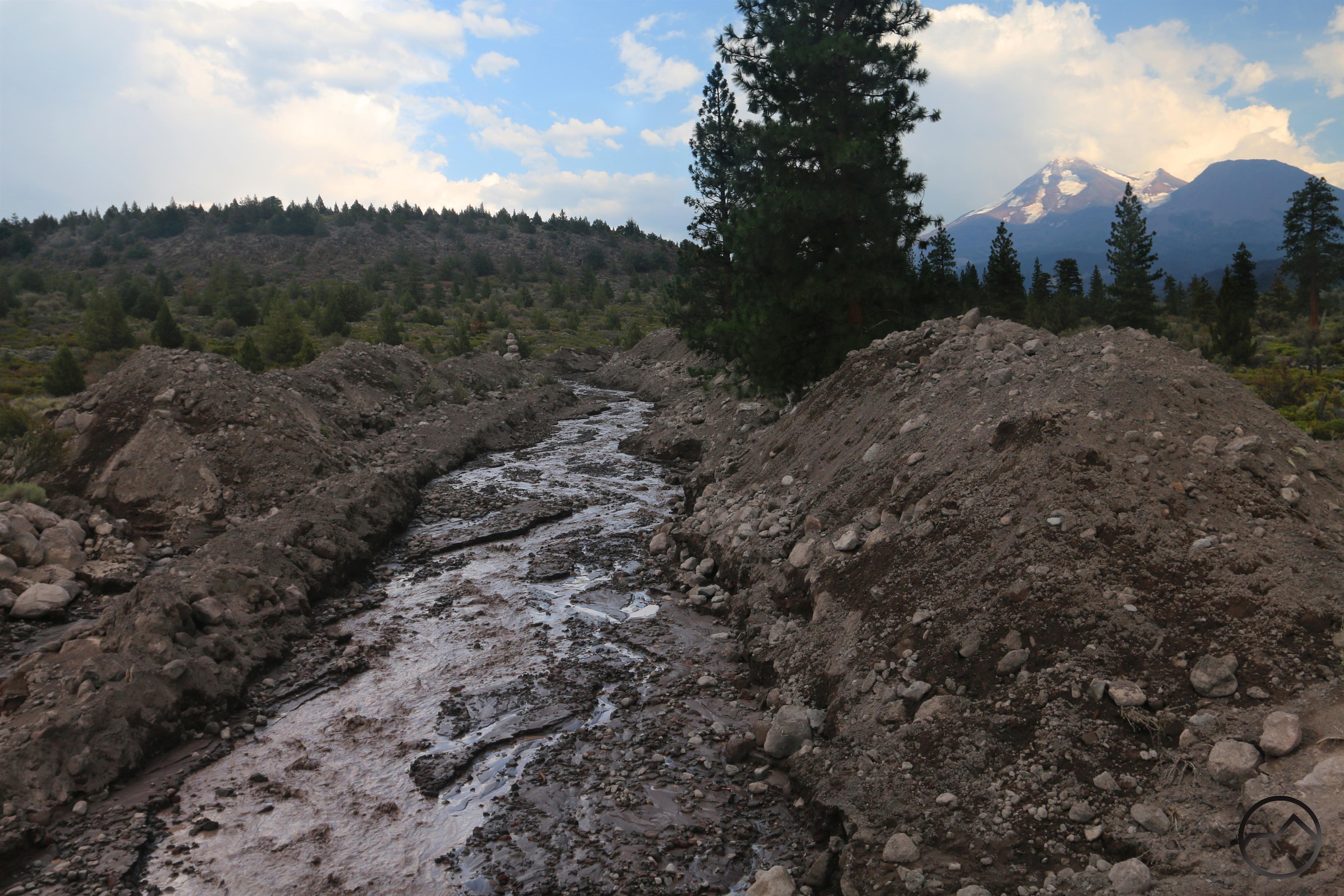
Transportation was further complicated by the activity of Whitney Creek. The creek has historically been unstable at times, with large mud flows erupting when the massive Whitney Glacier has occasional, summer outbursts. Now, with the summer heat and the burned soil, the creek’s watershed was even more susceptible to erosion. Consequently, the creek overwhelmed the drainage under Highway 97 and spilled out onto the roadway, burying it in mud. Heavy equipment was brought in to excavate the impoundment and to dig out the creek’s channel so that water could pass through more readily. This section of the creek as been permanently altered by this process.

As sad as it was, dwelling on the events of the fire did not help and we moved on, accepting the new normal that had been inflicted upon the mountain.

Five Years Later

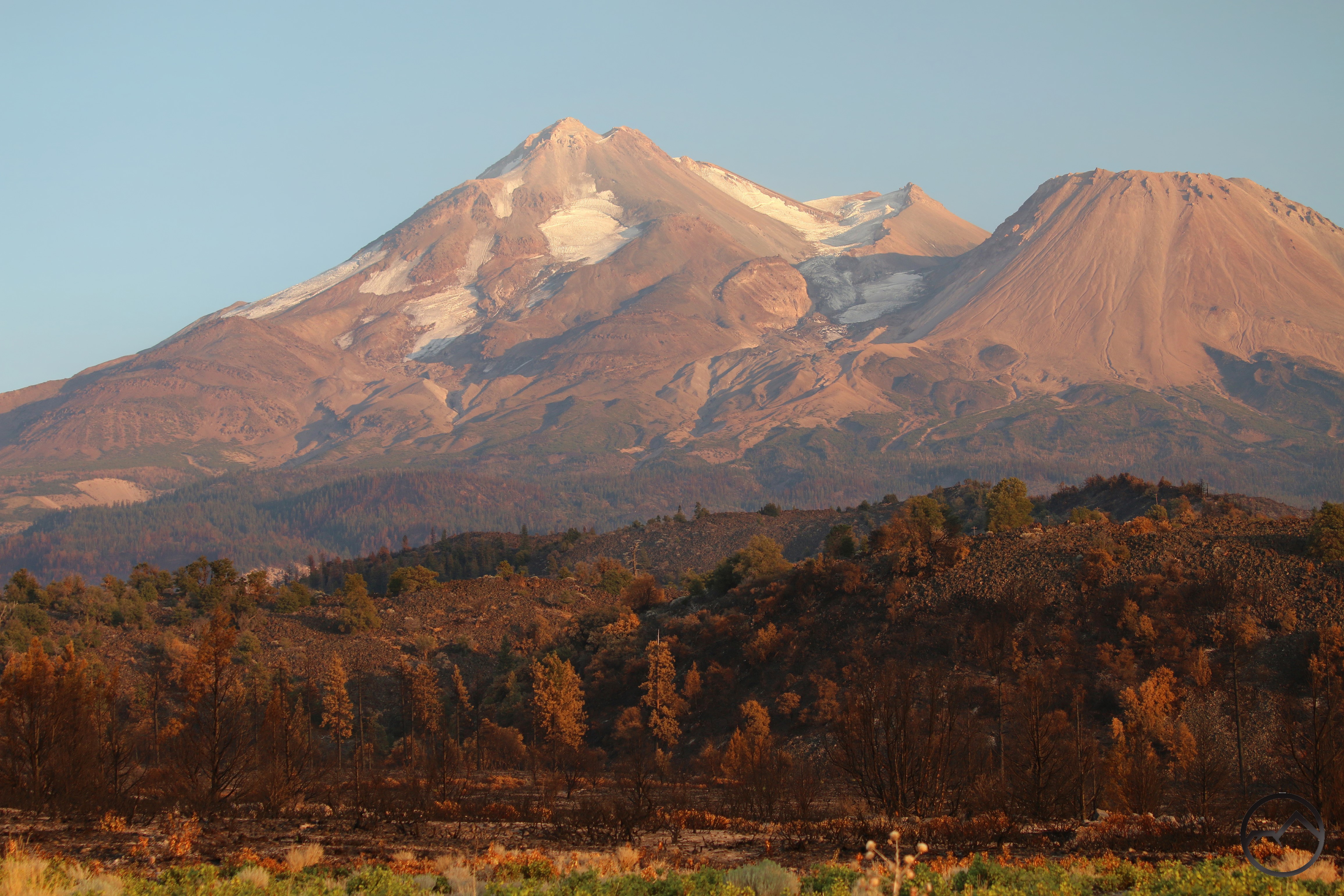
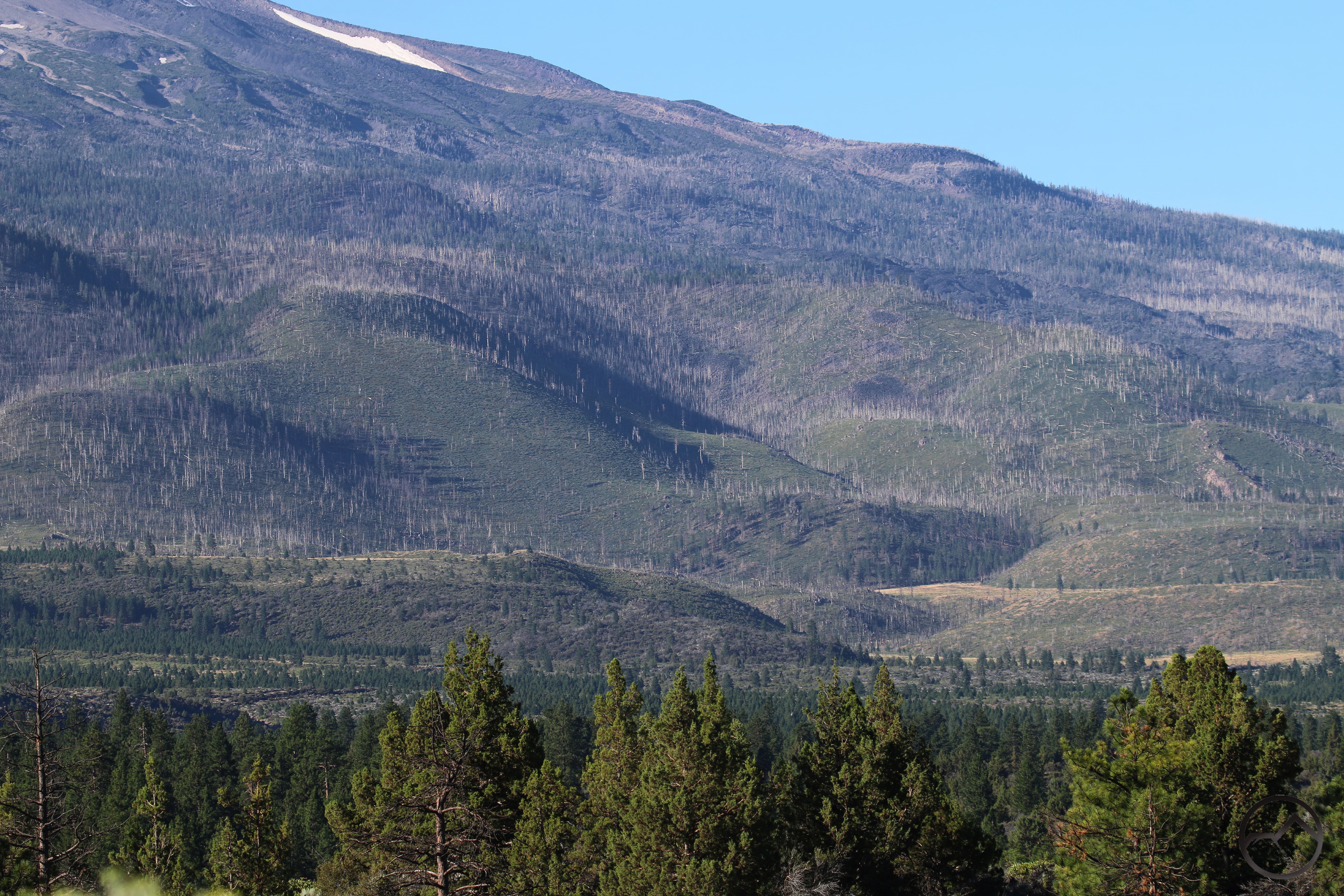
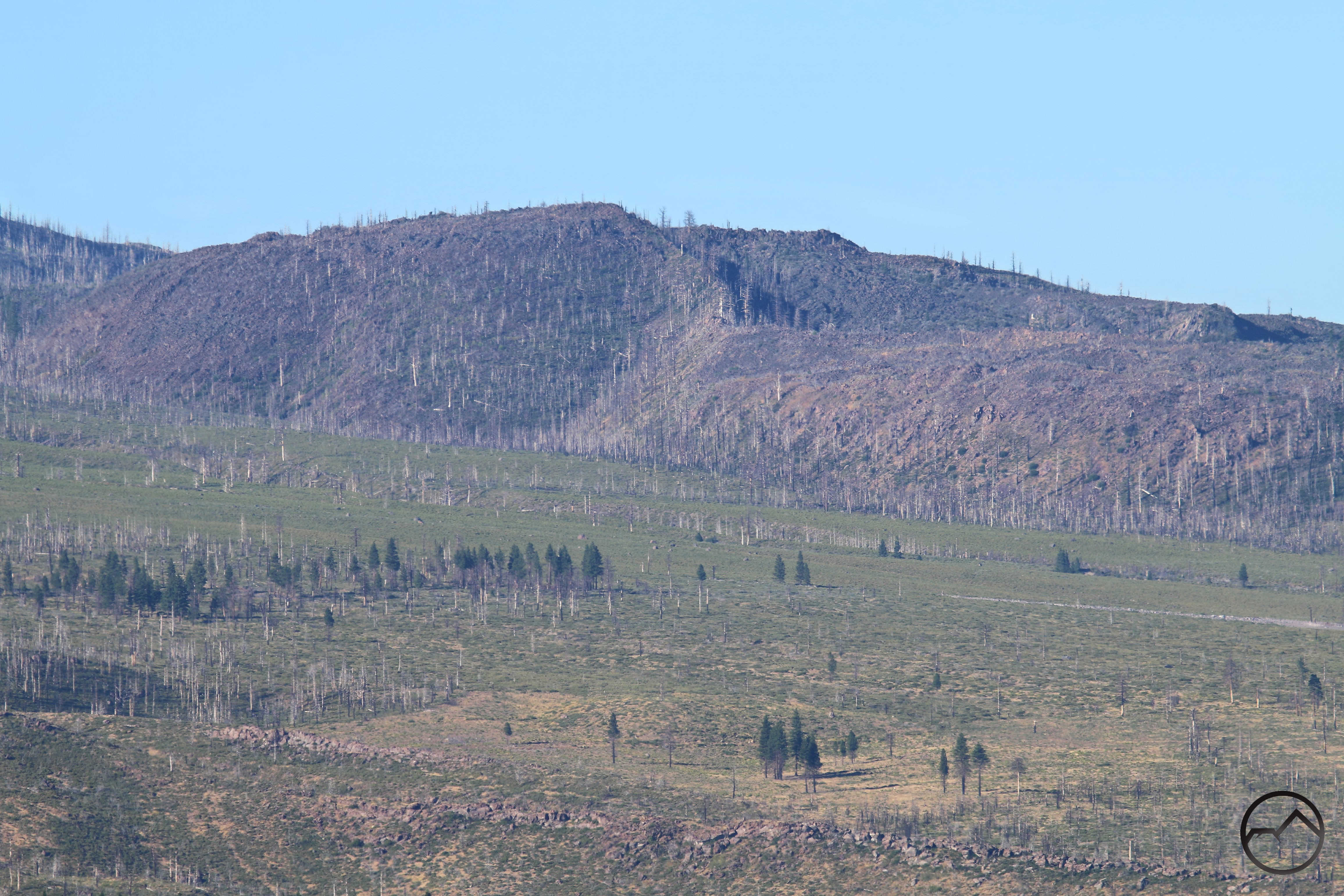
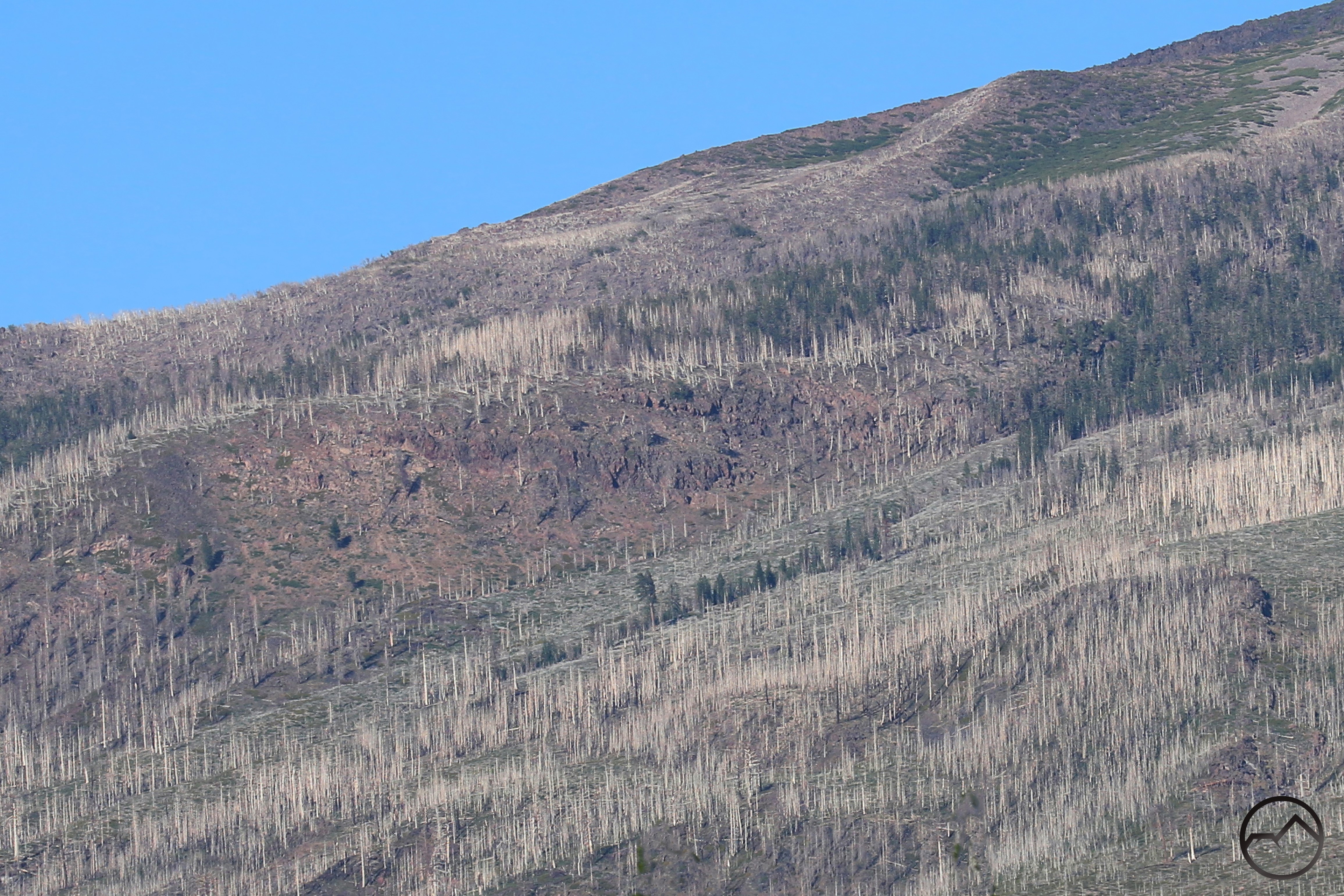
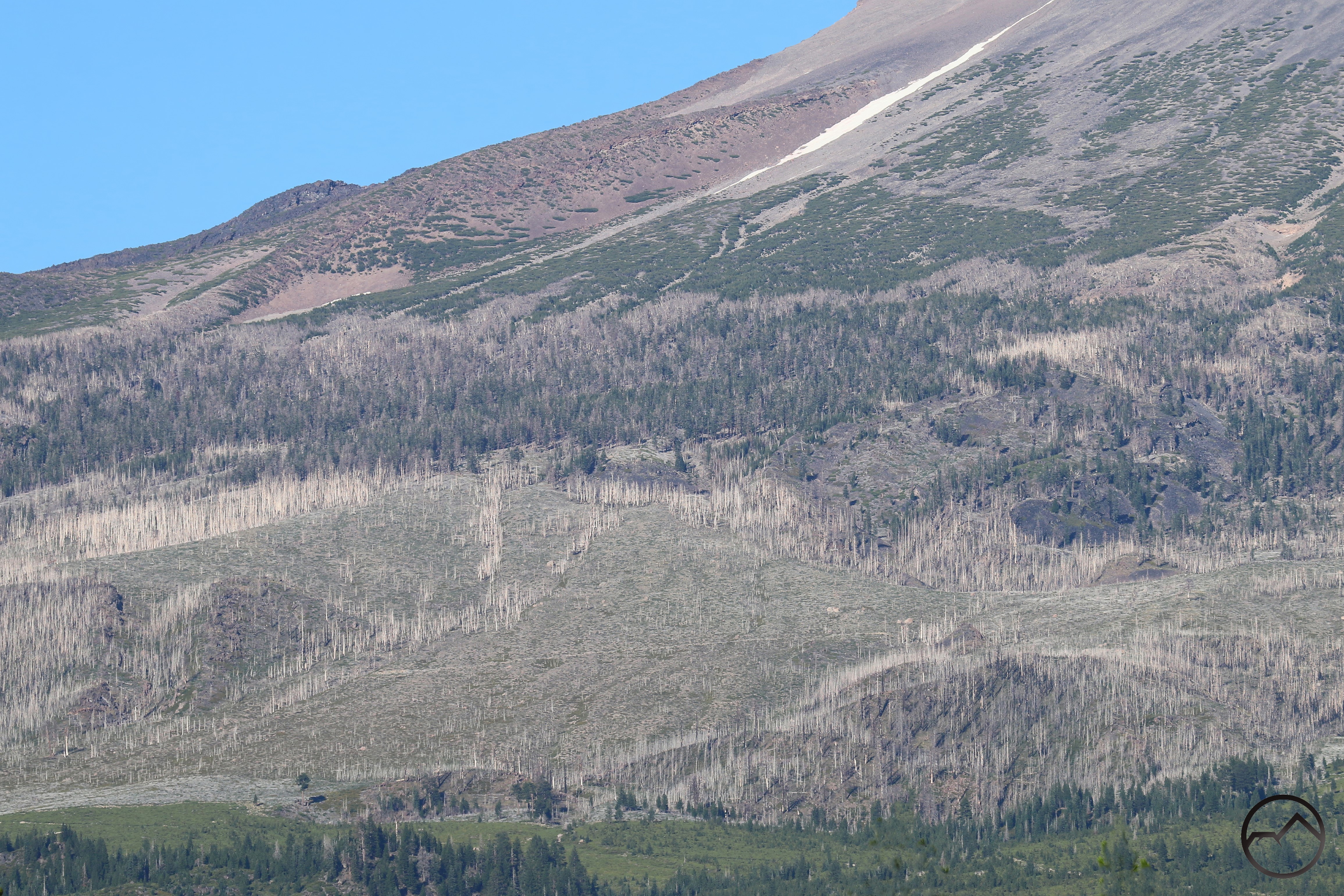
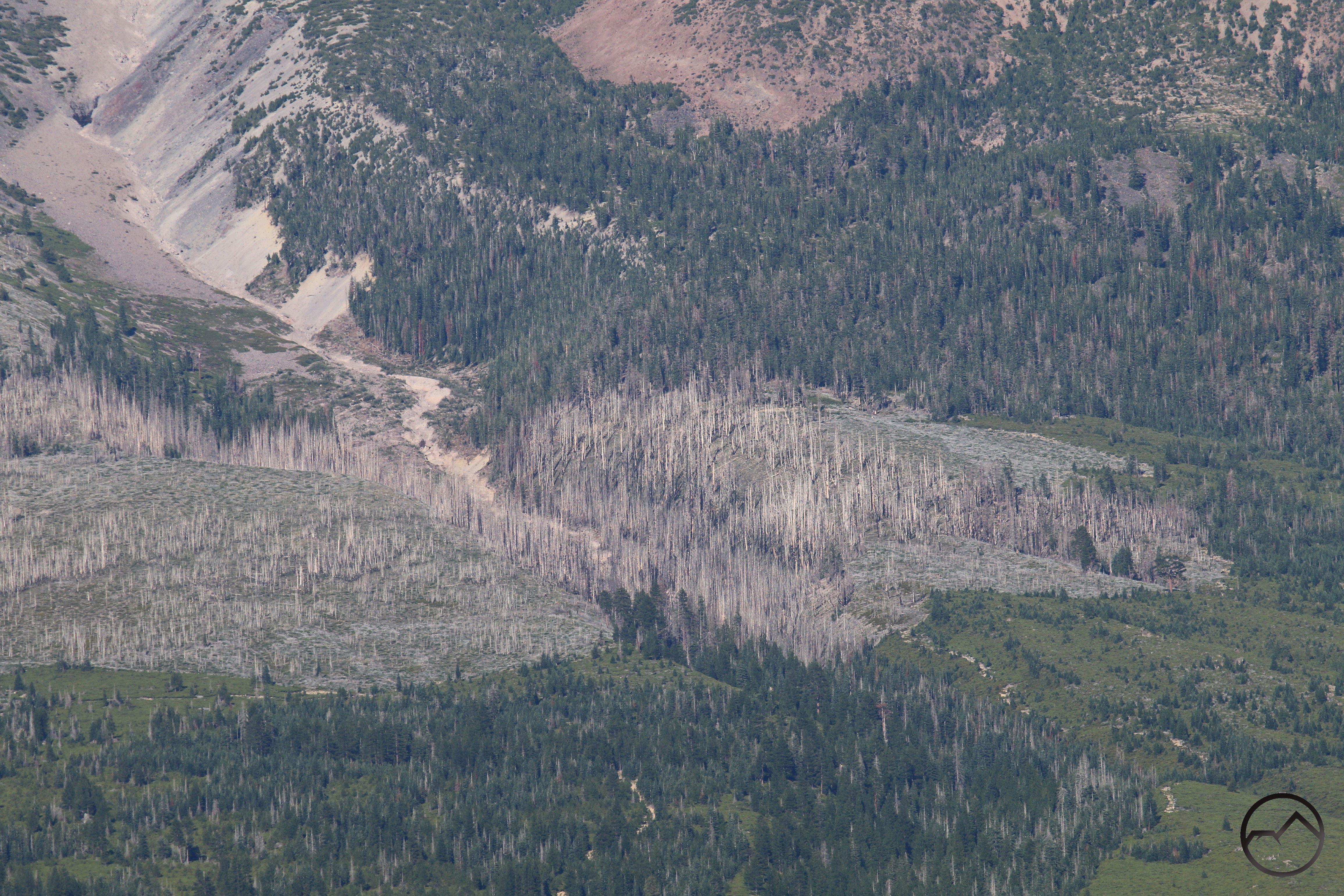
Now 5 years have passed sense the Lava Fire. Mount Shasta has joined the sad ranks of other Cascade giants like Adams, Hood and Jefferson that have all had similar scars left on their mighty flanks. Fortunately, nature immediately set out doing what it does best – it heals. The first year things look pretty rough but by the second green was returning to the landscape in abundance. The vast ghost forests of burned snags remain, but the heavy snow load, especially in 2023, seemed to shear a lot of the branches off of many of them. I am always of the opinion that the stark white truck, sans branches, always look better than the snarled remains of burned trees that have retained their branches. From the base of the mountain, this has improved the look of things significantly.

Healing is more than simple appearance however. Restoration takes time and effort from people as well. The USFS has contributed to this by planting over 1.4 million seedlings on Mount Shasta, most of them in lower elevation areas on the sides of the large Graham Lava Flow. This consists of ponderosa and Jeffrey pines. This is an excellent contribution to the reforestation process. I hope similar efforts, even if smaller, can help jumpstart the red fir and white bark pines that burned at higher elevations, as well as restarting some of the aspen groves that grew on the mountains north side.

These are excellent developments and I am optimistic about Mount Shasta’s future in these burned areas. And yet the scars of the fire remain:

One can observe that the burned areas are already filling in with brush. Trees will follow. In 30 years, these areas will look quite different. In fifty, it will be hard to tell there was a fire. In 100, It will be overgrown. Such is the way of recovery.


For now, I am grateful for the 5 years of healing we have already had. It is getting better. I have not been able to bring myself to visit the Whitney Falls or Black Lava trails. I think the time is right to return and see how the land has fared. I will report if I do.

So five years have passed since the Lava Fire. Devastation was wrought, lands were changed. I pray we have no more fires like that on Mount Shasta, or anywhere else. 2021 was a bad year for fires. May it remain in the worst. Now Mount Shasta still stands alone and mighty, and like the rest of us, it bears the marks of the vicissitudes of a fallen world. Yet it remains beautiful and wonderful.

Mount Shasta’s Staggering Run Of Summer Sunsets

Posted by bubbasuess on July 17, 2026
Posted in: Cascade Range, Desert, Echo Point, Hiking, Mount Shasta, sunset, Truchas Ridge. 3 Comments

There has been a run of magnificent sunsets around Mount Shasta the last few days. It is fairly unusual to get a cluster of beautiful days that yield great sunsets this time of year. Summer is often the most boring season of the year to photograph Mount Shasta. With the exception of its annual snowpack, the mountain is unchanging and, as grand as it is, it is the conditions around the mountain that really make the scene memorable (this is said with full knowledge that seeing the mountain every day can make one complacent). Thus, summer and its high temperatures, often clear skies and harsh light, can be a season of lower expectations when it comes in interesting meteorological circumstances.
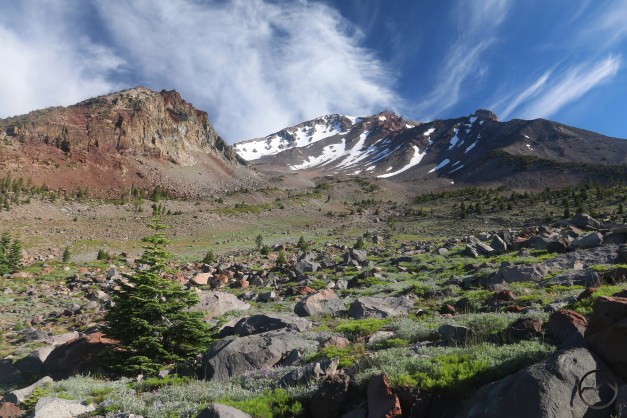
This is not necessarily a bad thing, since summer is the time to be on the mountain, rather than looking up at it. Either that, or over in the Trinity Divide’s high country, hiking the trails there and enjoying the awesome views. This is made even better now that Independence Day is past and the Old Ski Bowl has opened up. I headed up there Saturday morning to check the conditions. The temperature was perfect, the grass was green and the lupine was just starting to come out. In a week or two, it is going to be spectacular. It’s time to start heading up to the springs…

The sky that morning was filled with the kind of gauzy clouds that I really like. Other than lenticulars and big thunderheads, these are my favorites since break up the blue sky with interesting shapes and catch the light well. I knew I had to catch the sunset and little did I know this was just the beginning of a four day run of incredible summer sunsets.
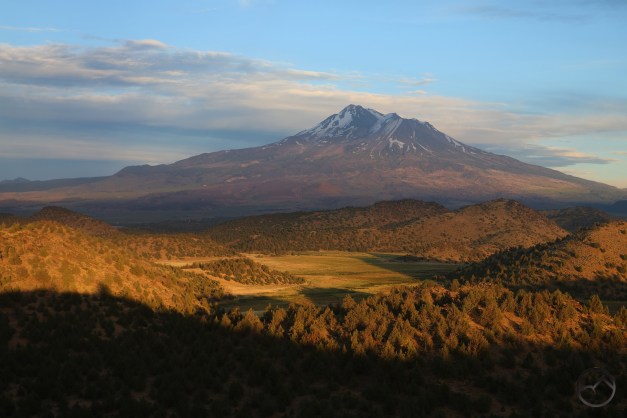
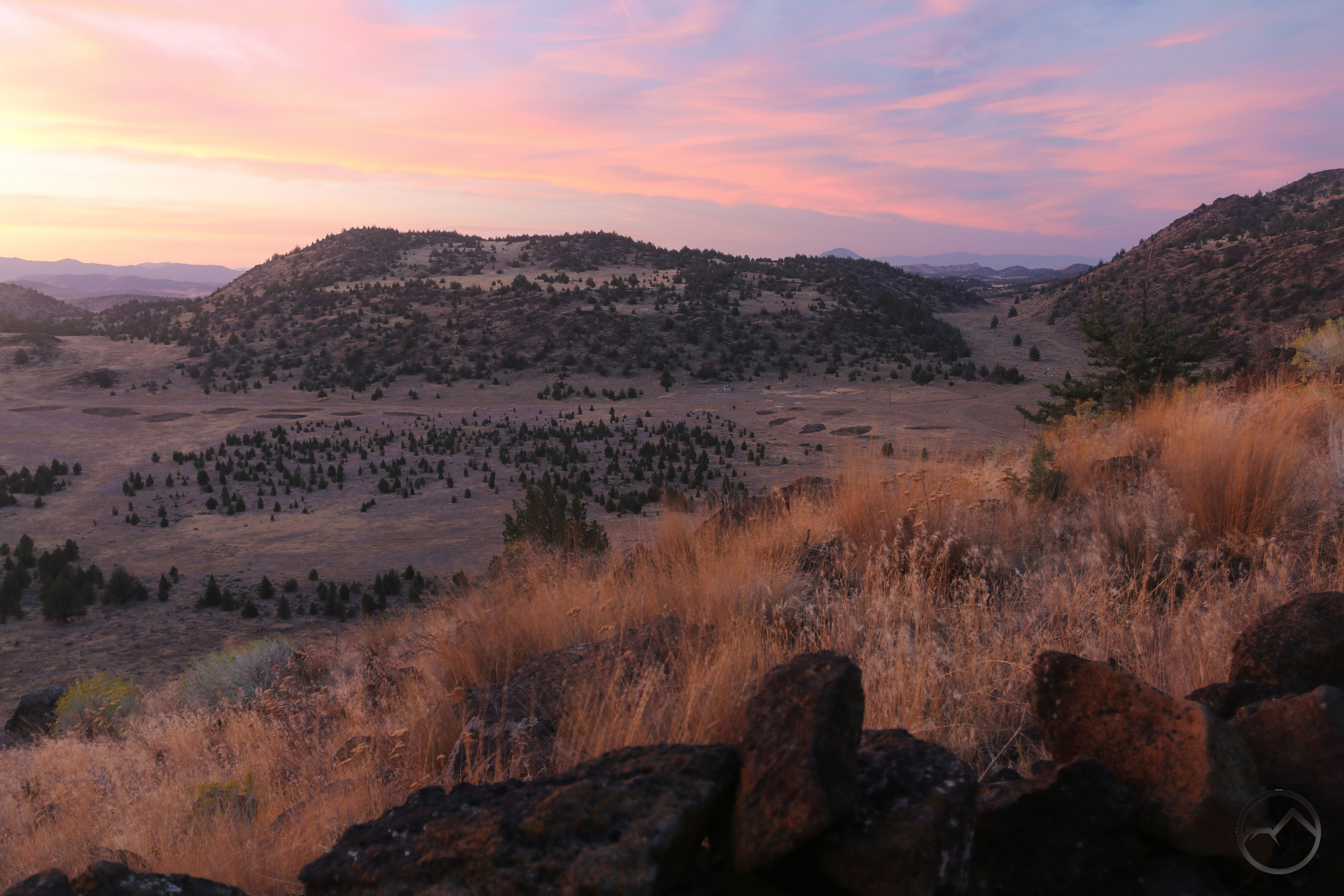
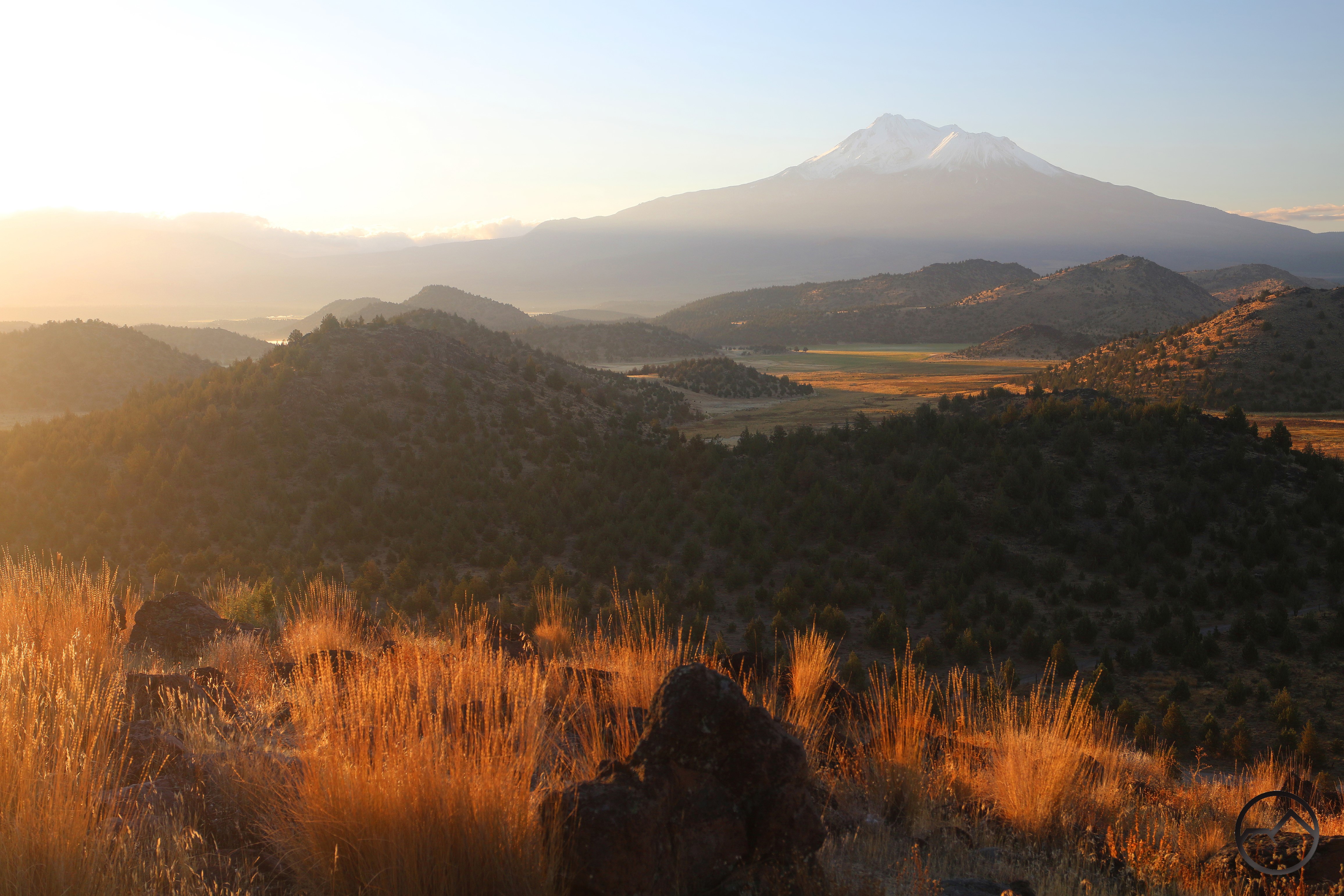
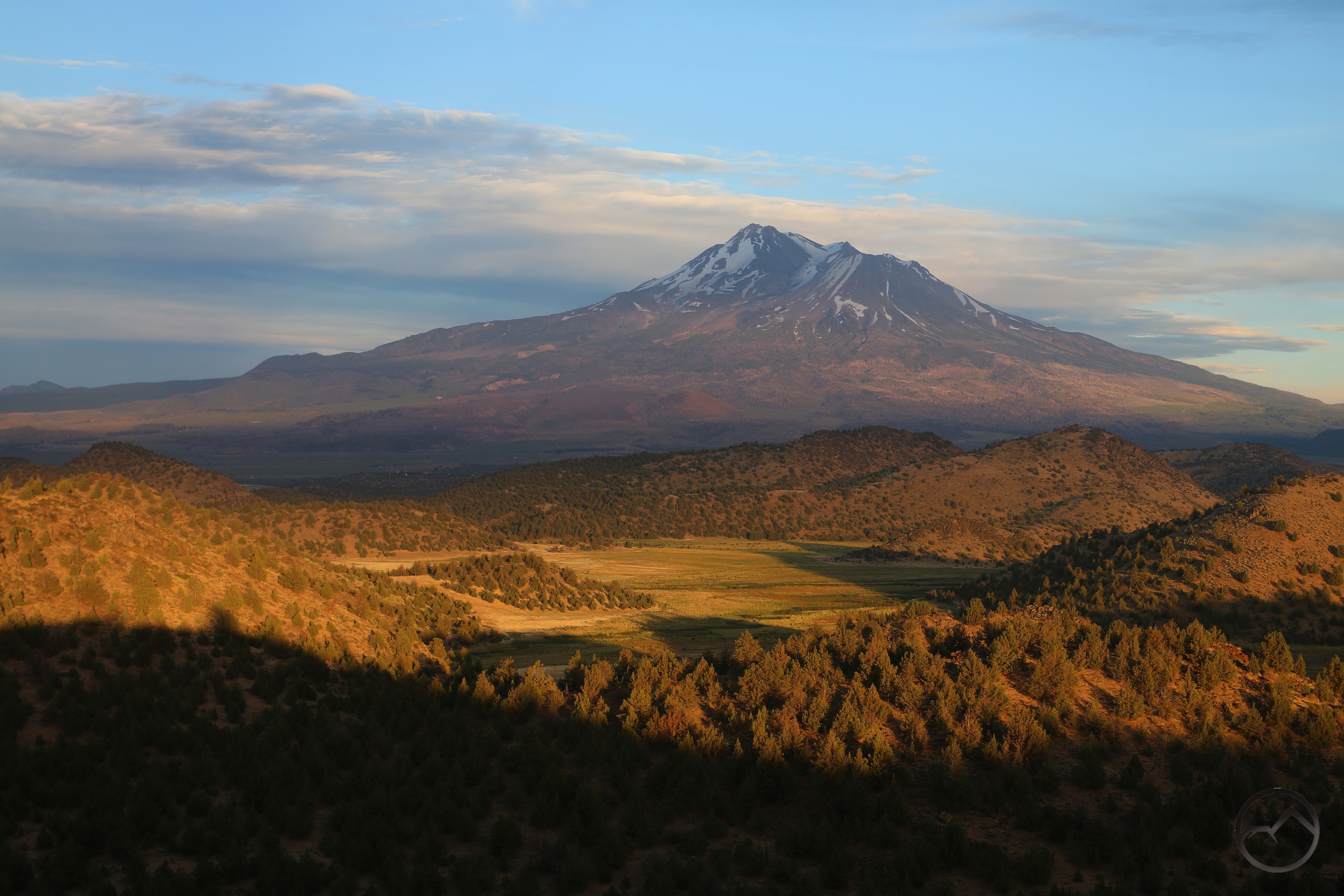
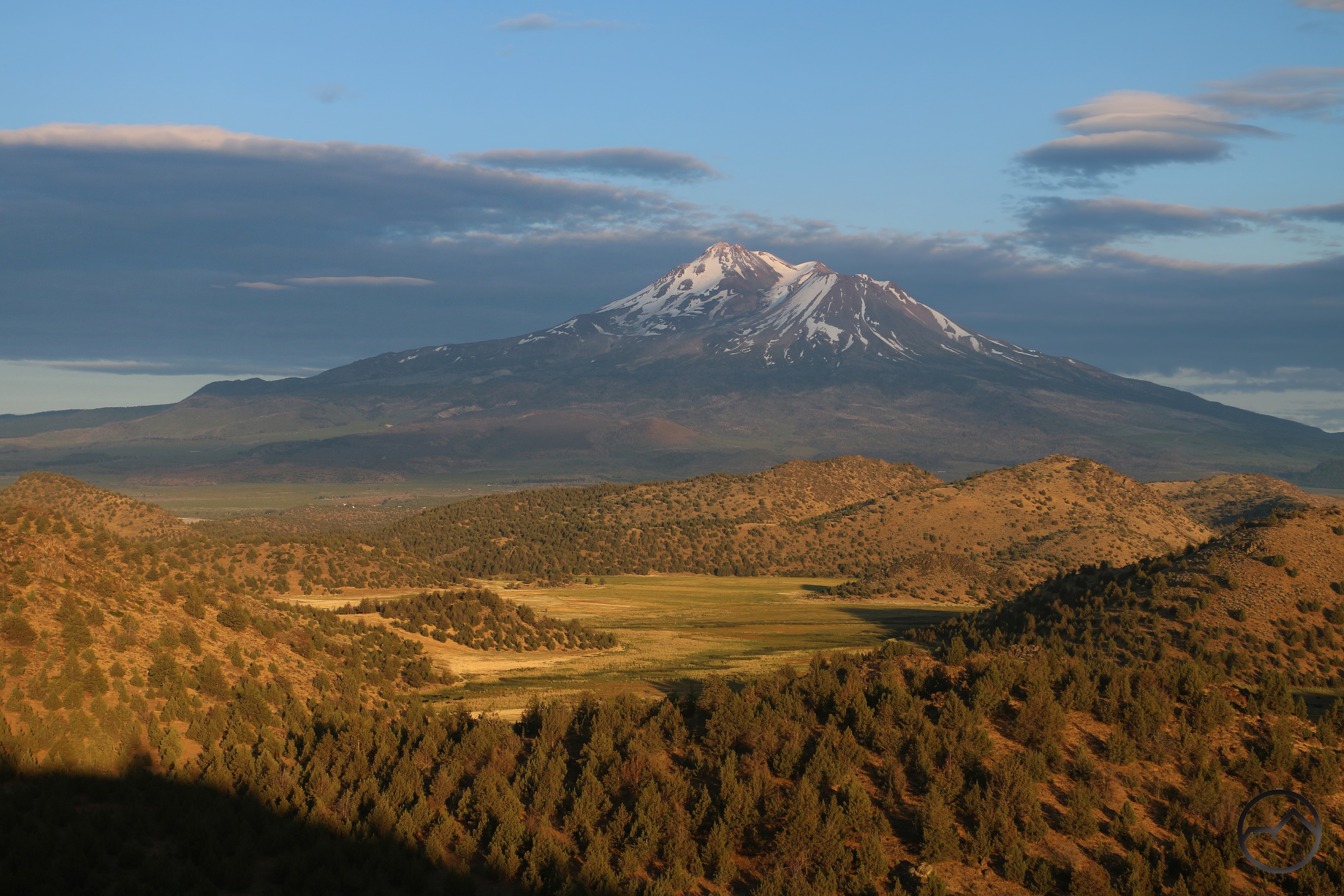
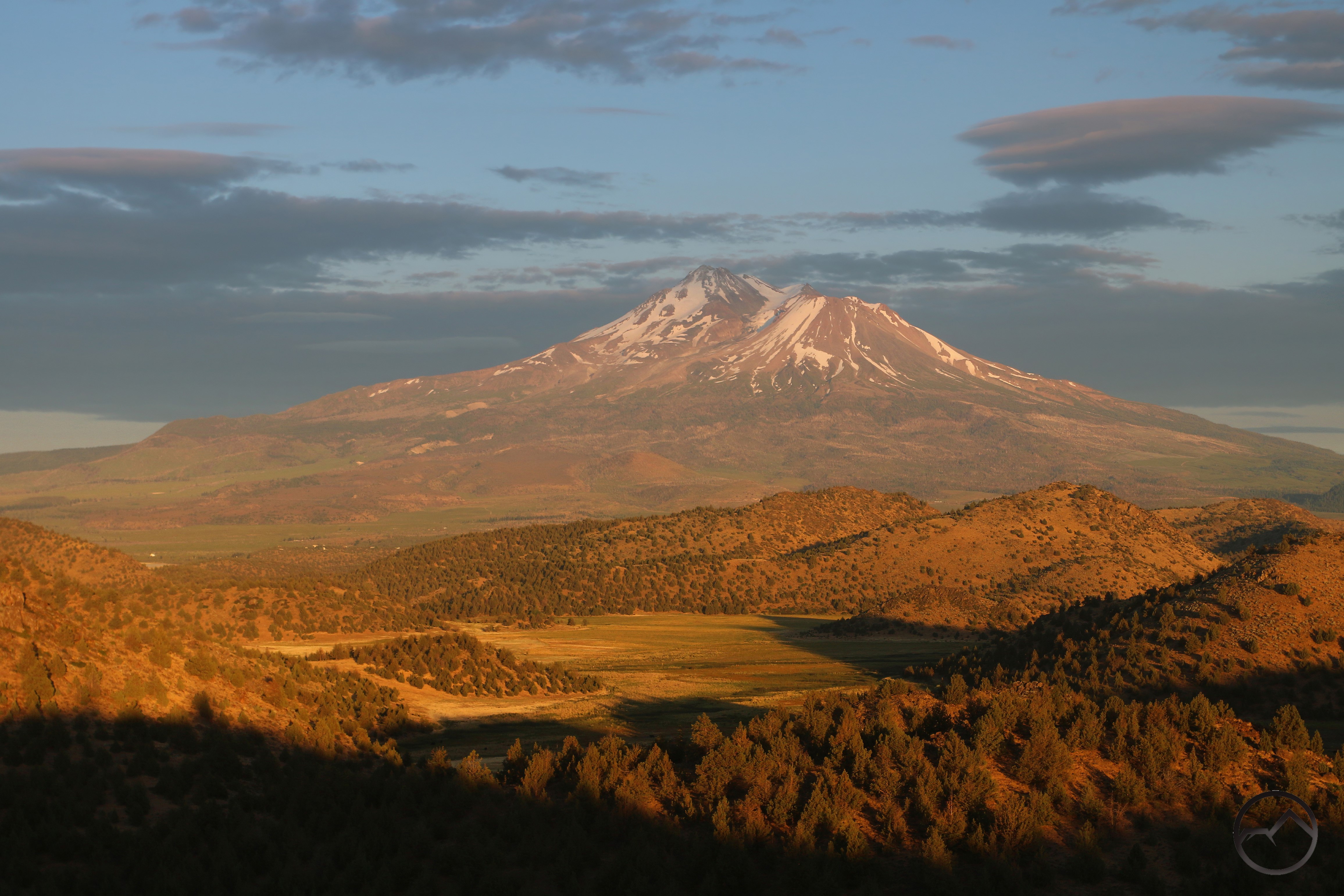
My family accompanied me to Truchas Ridge hoping to catch a great show. The clouds had not persisted the way I had hoped but the light was interesting and partially filtered by layers of haze to the west. While the vale beneath us was brightly lit, the mountain itself was in shadow. This was not dismaying, since this permutation of illumination often sees the light move to, and then up, Mount Shasta as the sun sets.
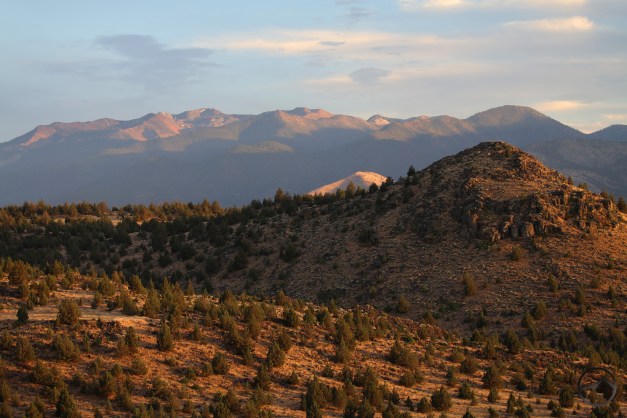
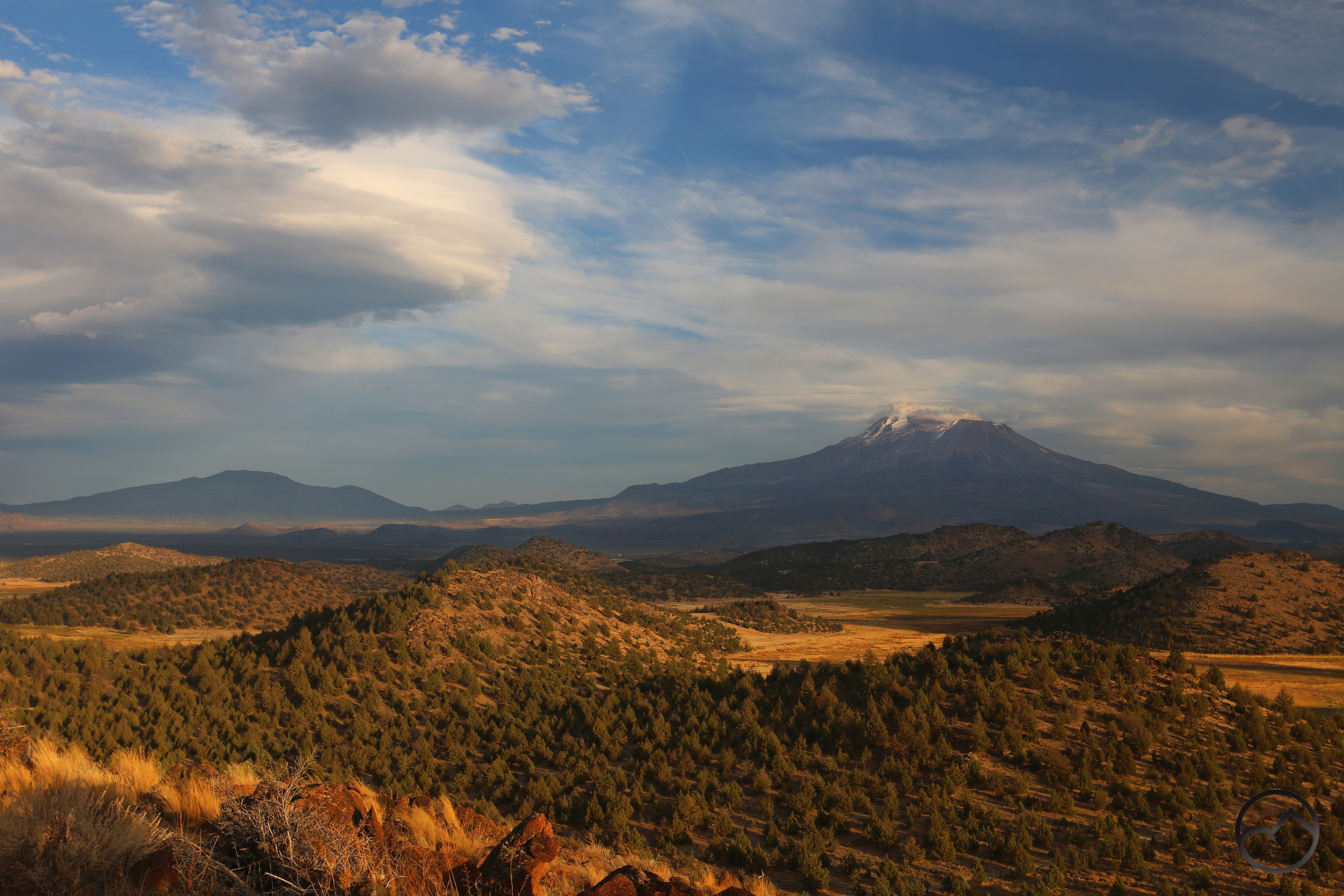
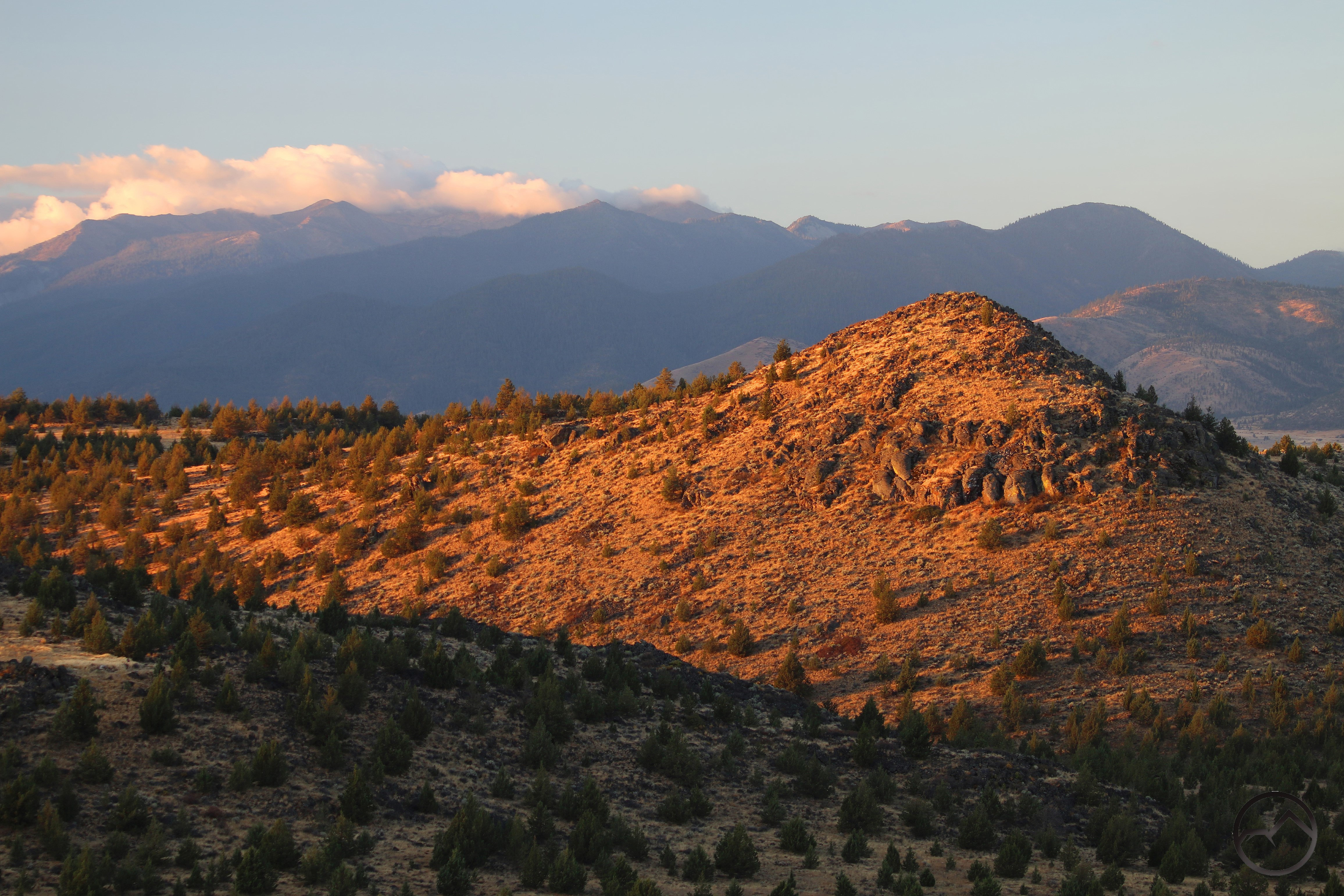
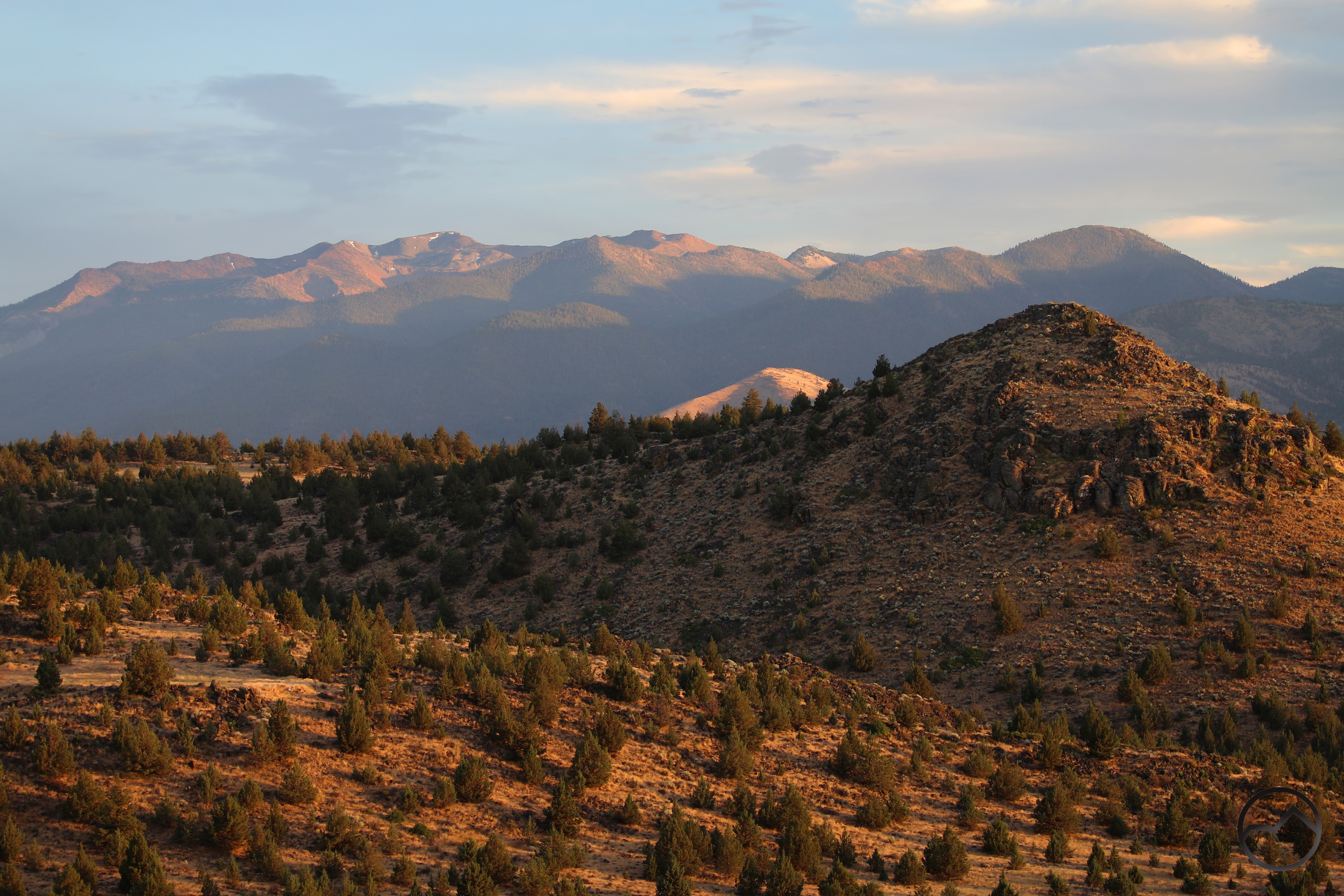
In the meantime, the large massif of Mount Eddy was getting great evening light. While spectacular (especially when hiking on it) Mount Eddy can be frustratingly difficult to capture in photographs because its lines often block the most interesting parts. From Truchas Ridge, it does present an appealing visage but still fails to impress like it does when actually on it.
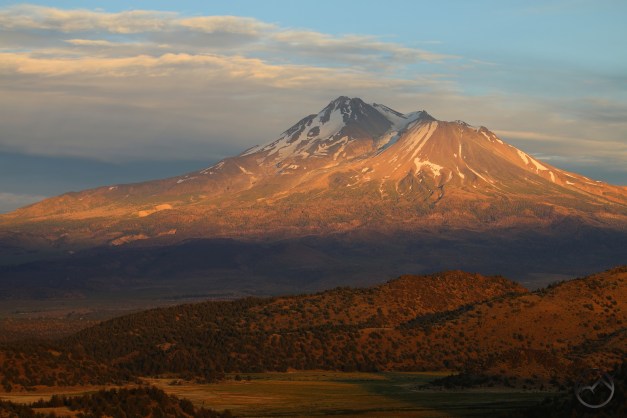
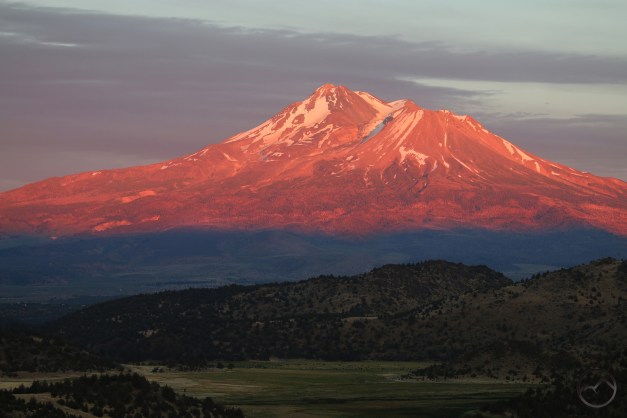
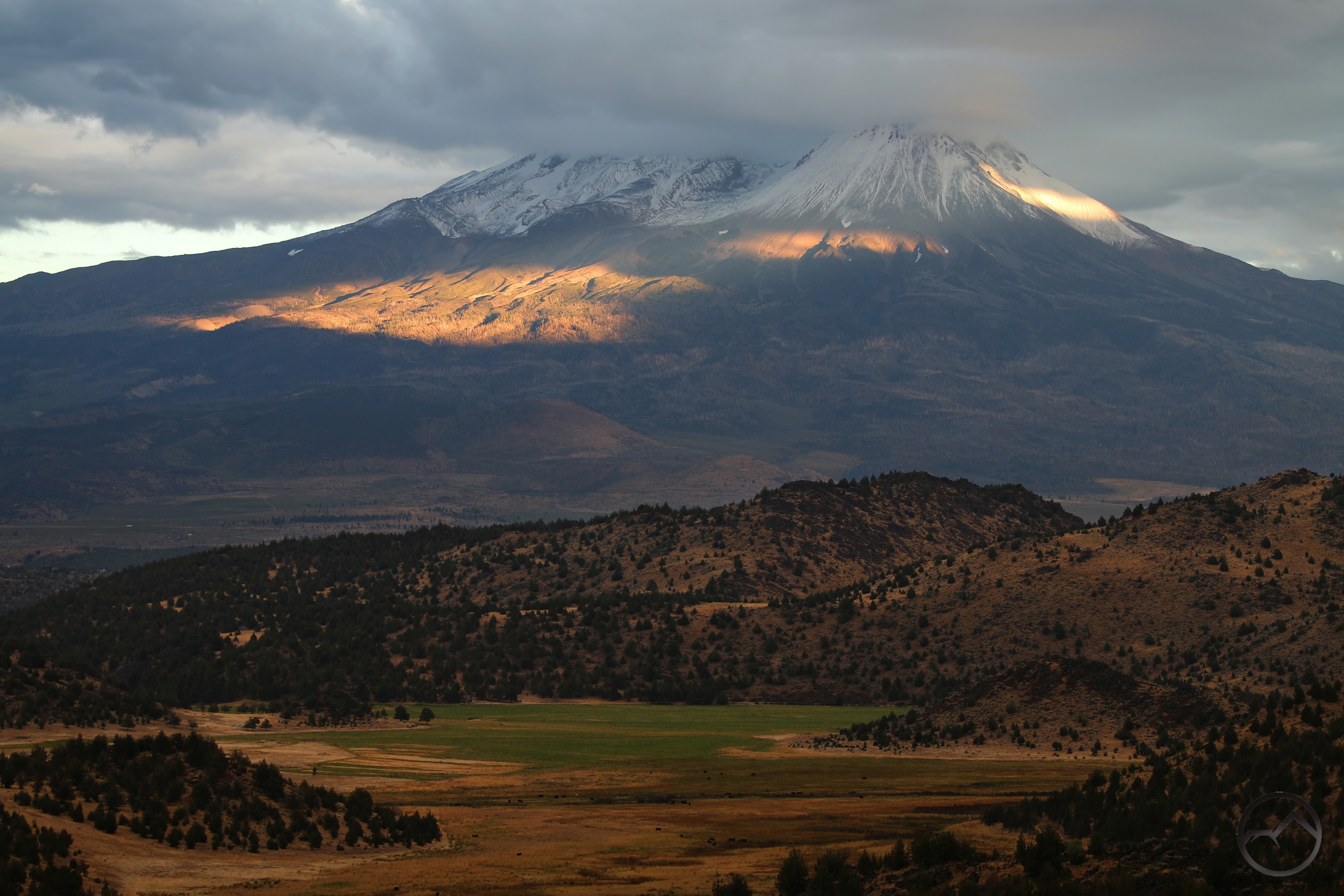
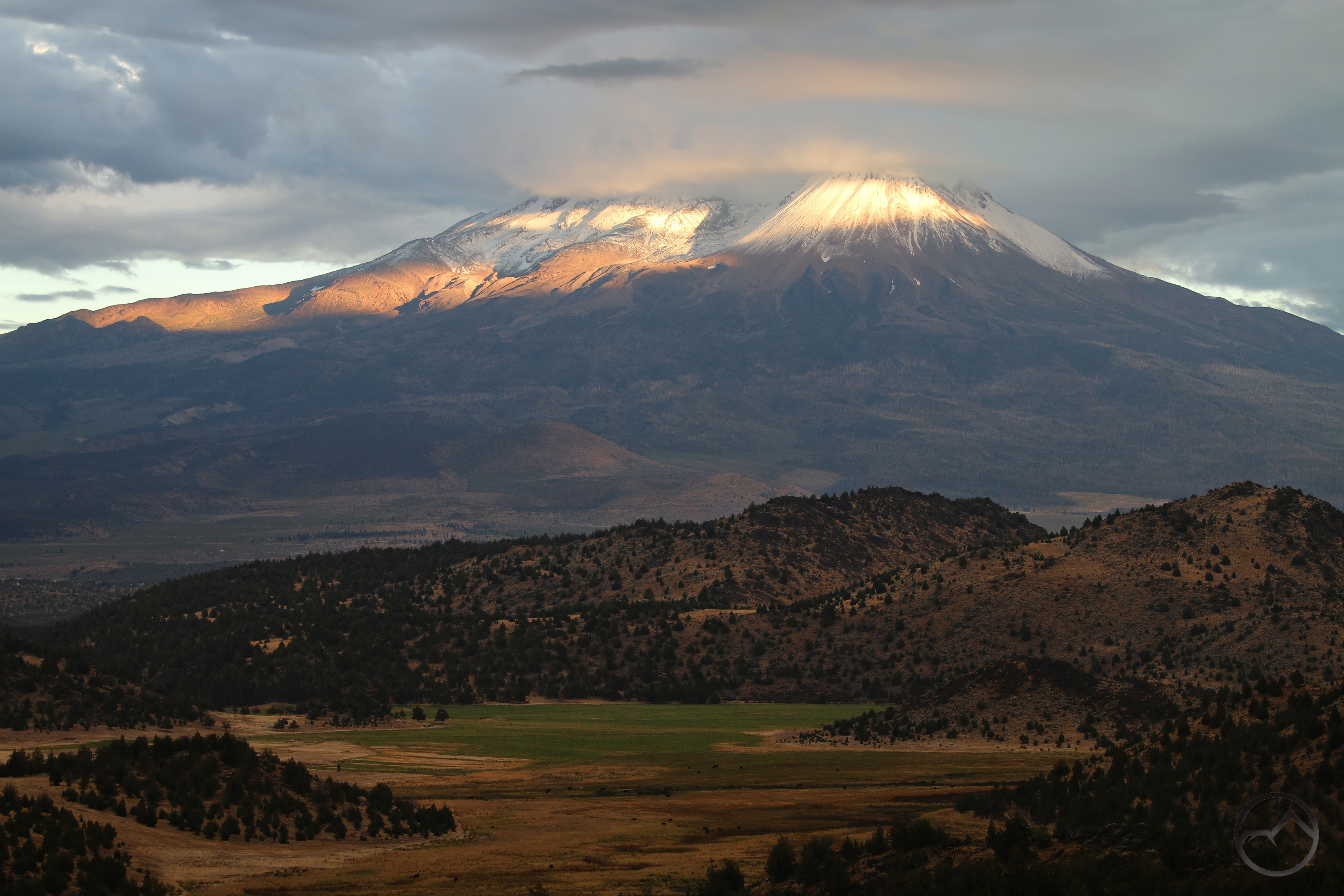
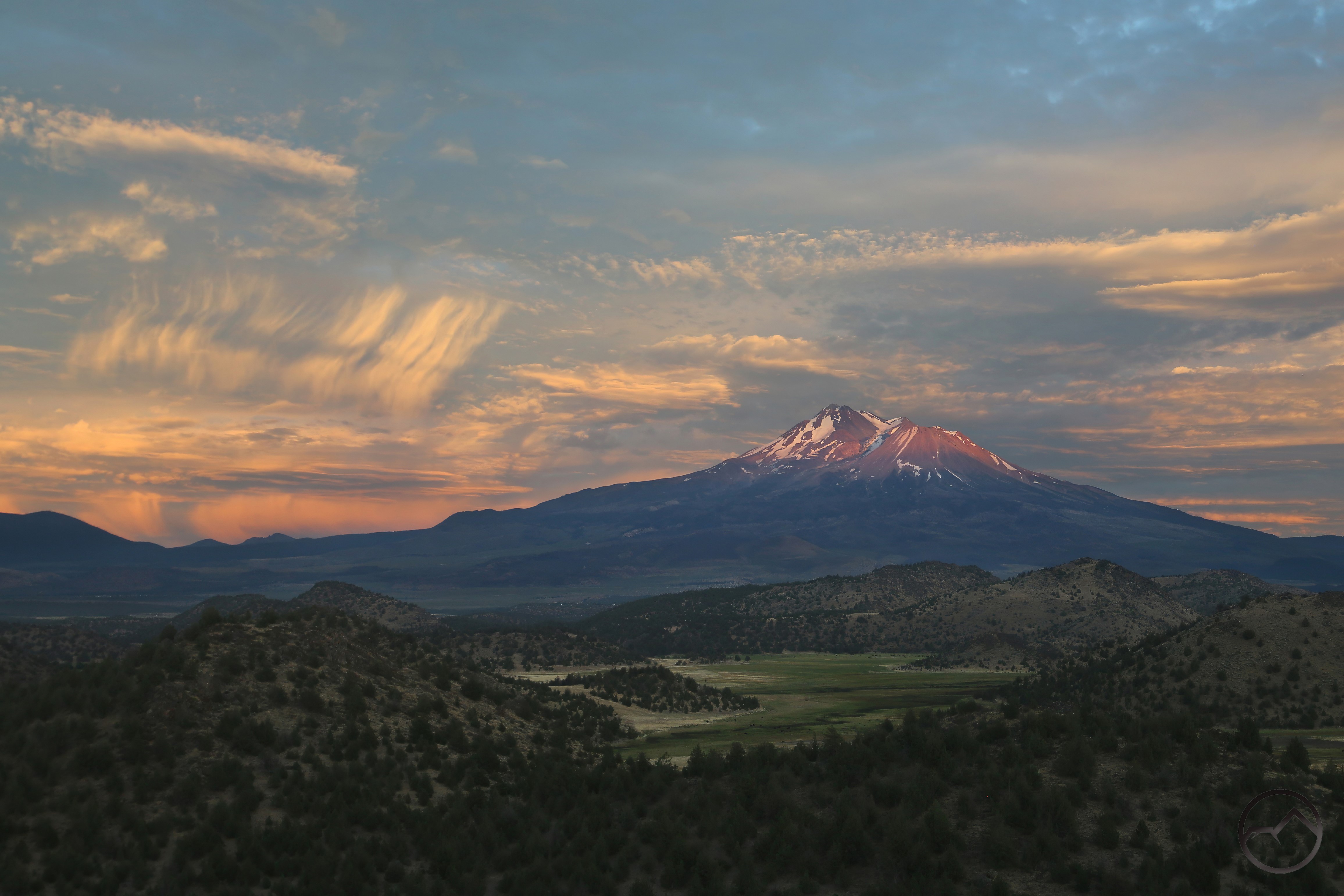
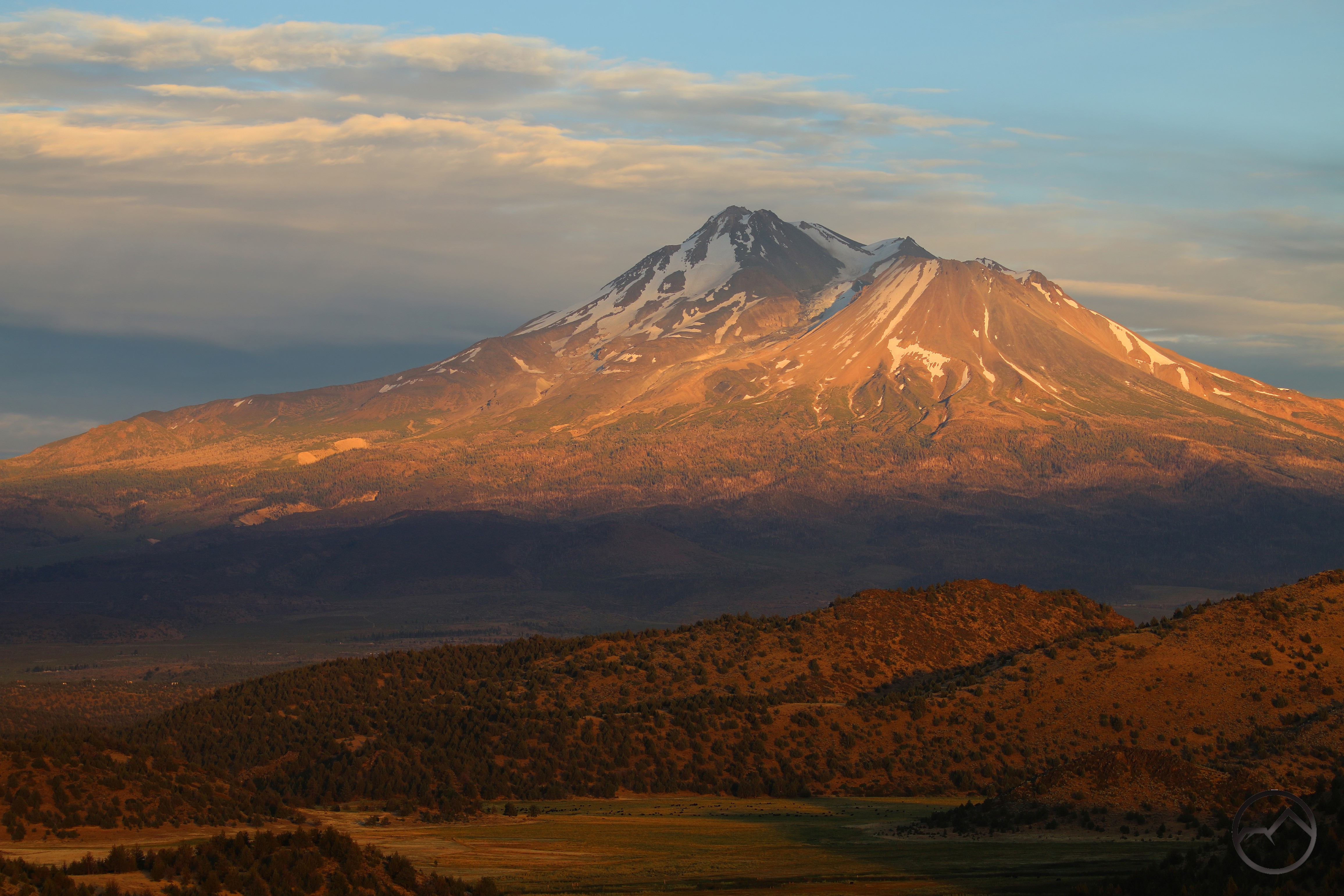
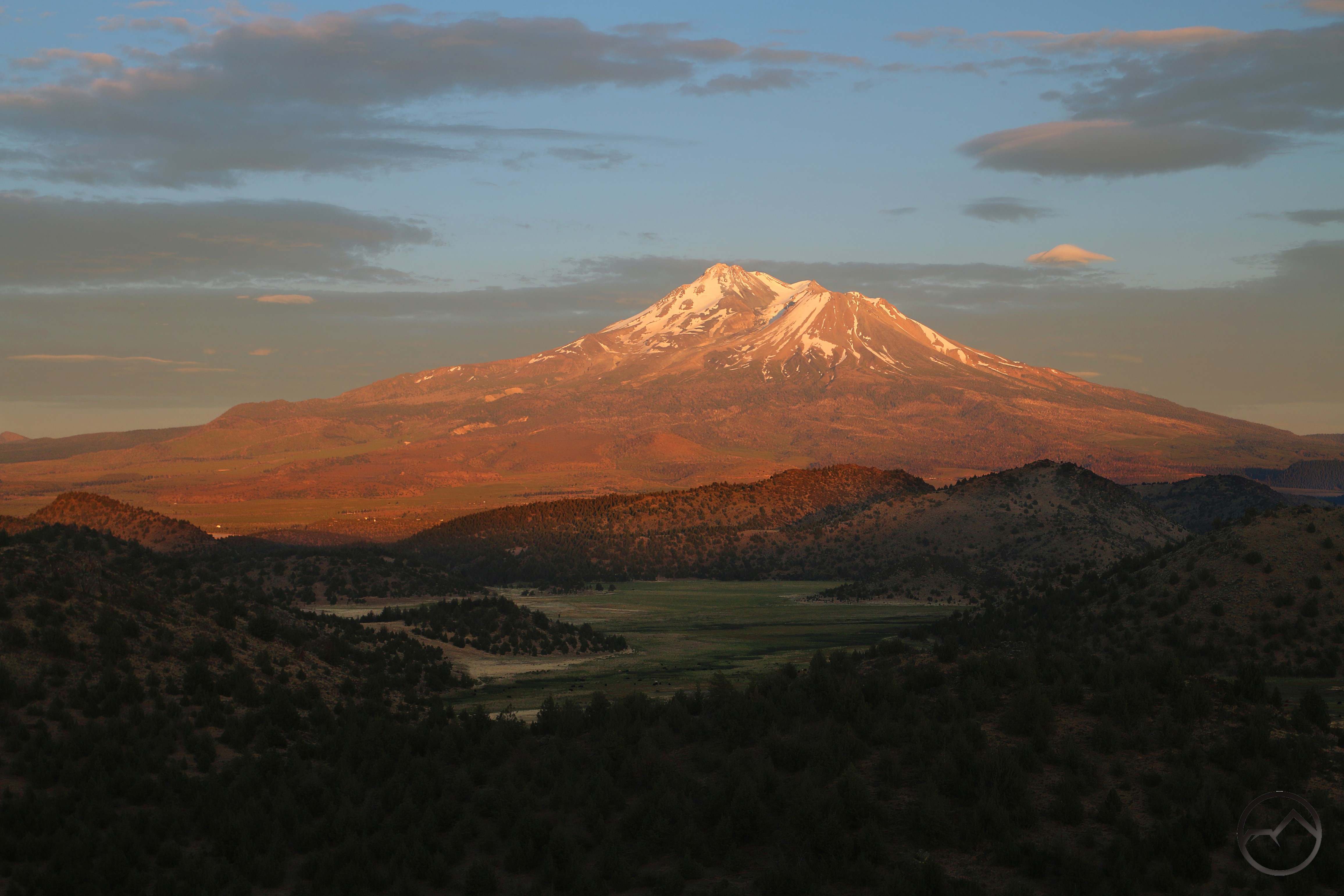
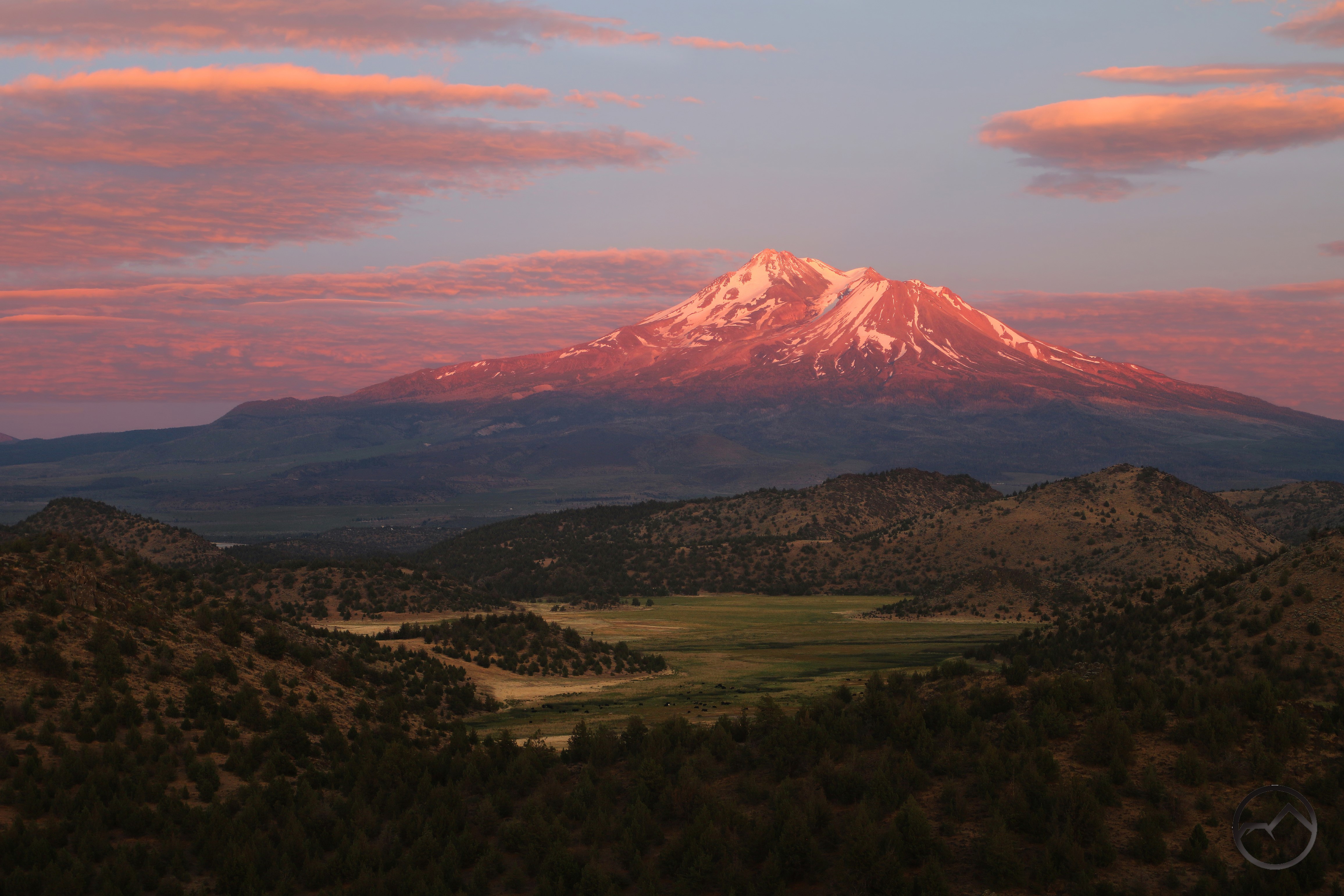
The light finally crept its way over to Mount Shasta, lighting it up with the evening light. However, this did not last long before the alpenglow set in. What was bright with hints of gold light suddenly turned bright red. Set against the dark landscape below the mountain, the alpenglow was particularly intense. It seemed particularly intense contrasted against the dark hills of the valley and the un-illuminated sky.
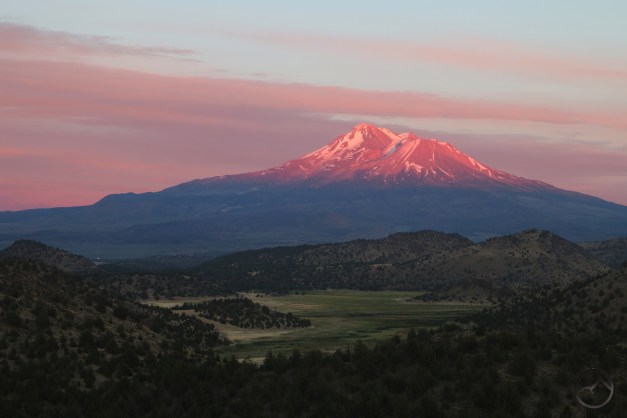
The clouds finally picked up some color, but they had sailed south, beyond Mount Shasta, leaving the overarching scene a little underwhelming. Nonetheless, this had been a fantastic sunset. Little did I know it was the first of a run of four!
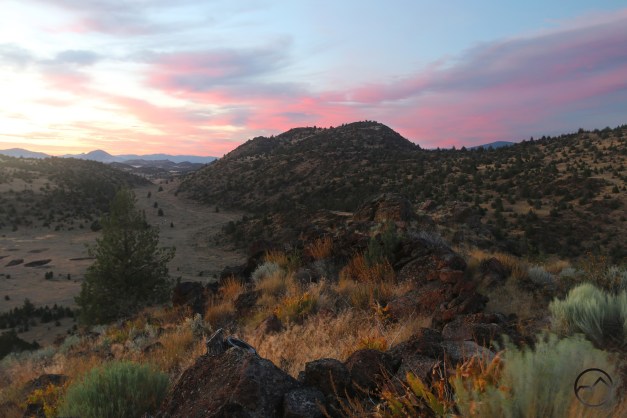
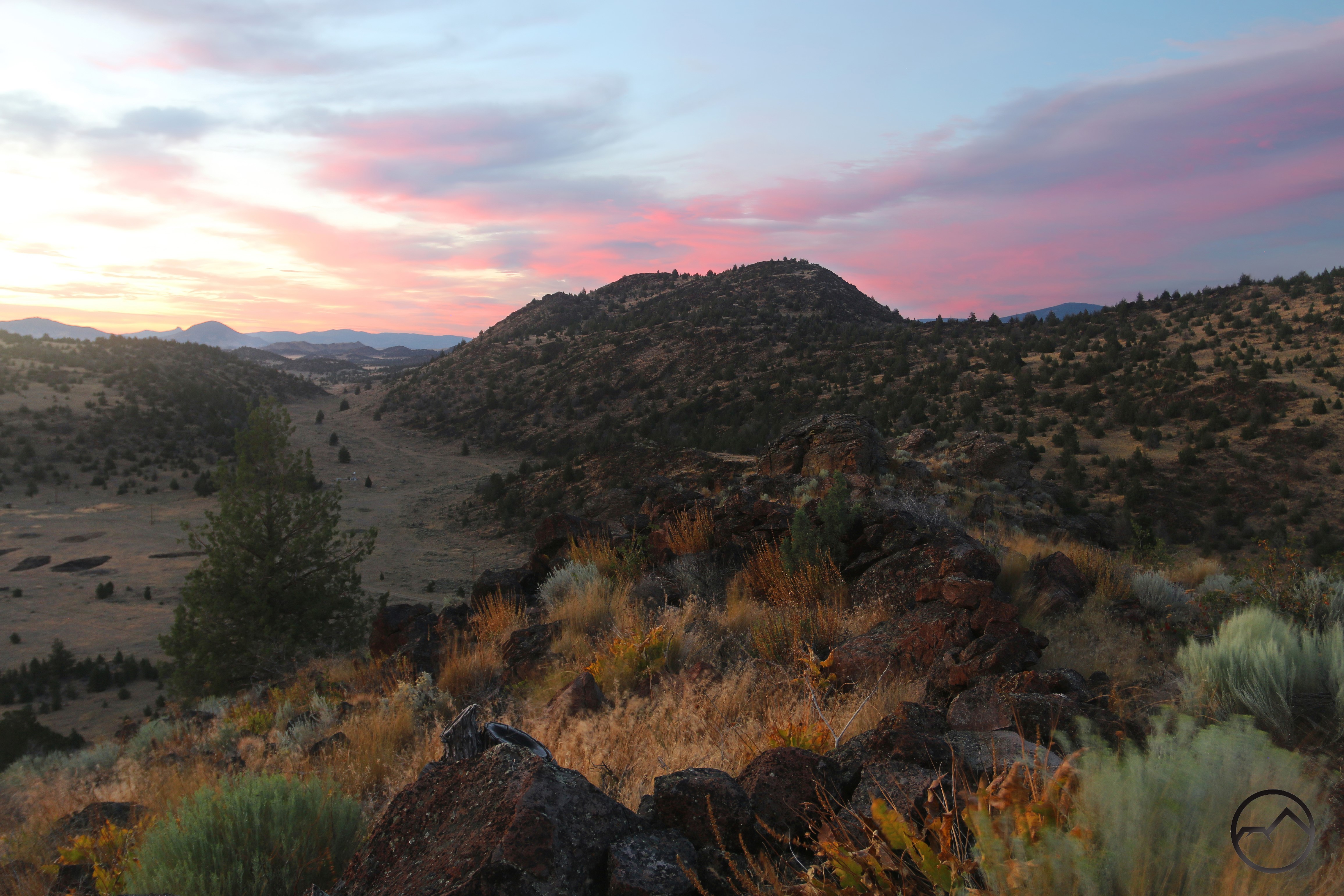
Before leaving the ridge, I made the short jaunt to the summit of Truchas Ridge. The wind was blowing powerfully and the sky still had color in it to the north and west. Far to the north on the horizon, Black Mountain and the Oregon summits Pilot Rock and Soda Mountain were visible. The 360 vista from the summit is top tier and a great final spectacle to end a great evening.
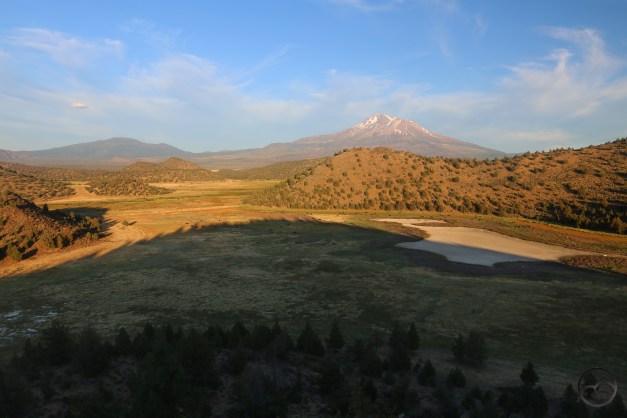
The following day the clouds had a similar form so I headed out to Truchas Ridge again. This time, however, I ended up at Echo Point. The lake in Echo Basin has dried up, which it does in years following a light winter but the view is still awesome. However, rather than going to the highest point, I made my way to a lower bench below the spot where we are going to build a campsite. It’s not a bad view to have from the opening of a canvas tent! The point’s shadow was already stretching across the basin by the time I got there. I anticipated the conditions would improve as the sun sank to the west.
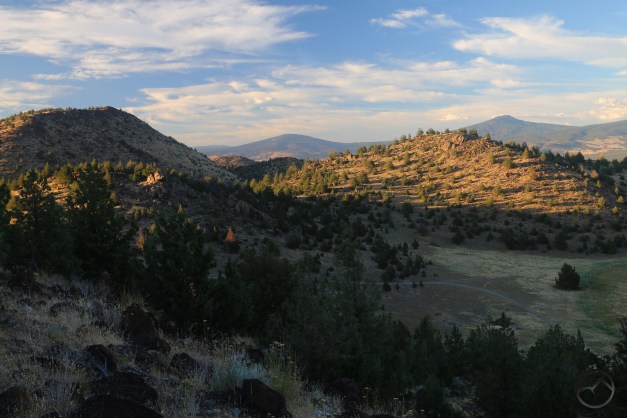
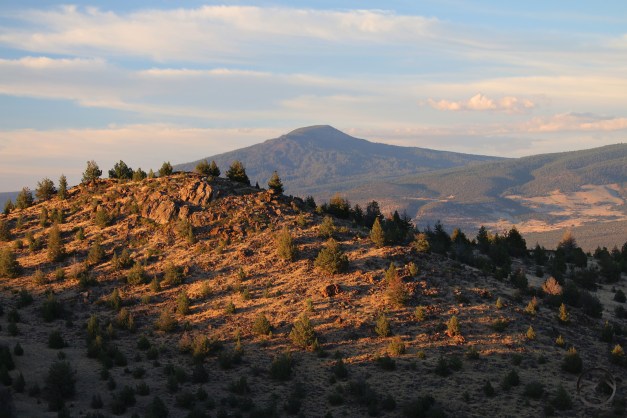
While I waited for the sun to set, I enjoyed views other than that of Mount Shasta, in particular the view east, toward the Goosenest. The rocky hills the surround Echo Point make great foreground and offer excellent exploration potential. The crags are great for scrambling and each ridge and summit has a slightly different perspective on Mount Shasta and other landmarks. The Goosenest is a criminally underrated mountain. Boasting a great summit crater, loads of black lava and a chance to observe the exceedingly rare Baker Cypress. It is also the sixth highest summit in the Mount Shasta area and would be the 28th tallest peak in the state if it were located in Oregon. It also features a seldom hiked trail to its summit!
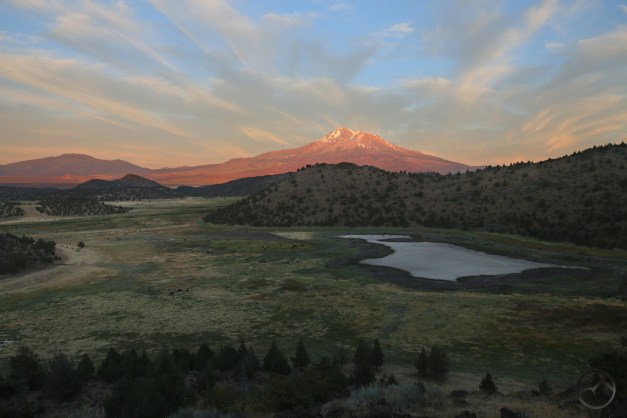
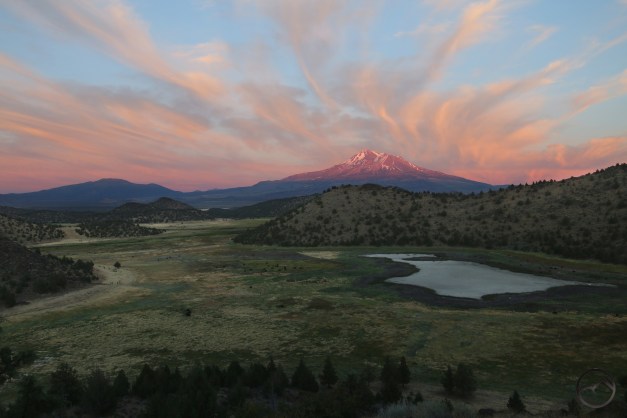
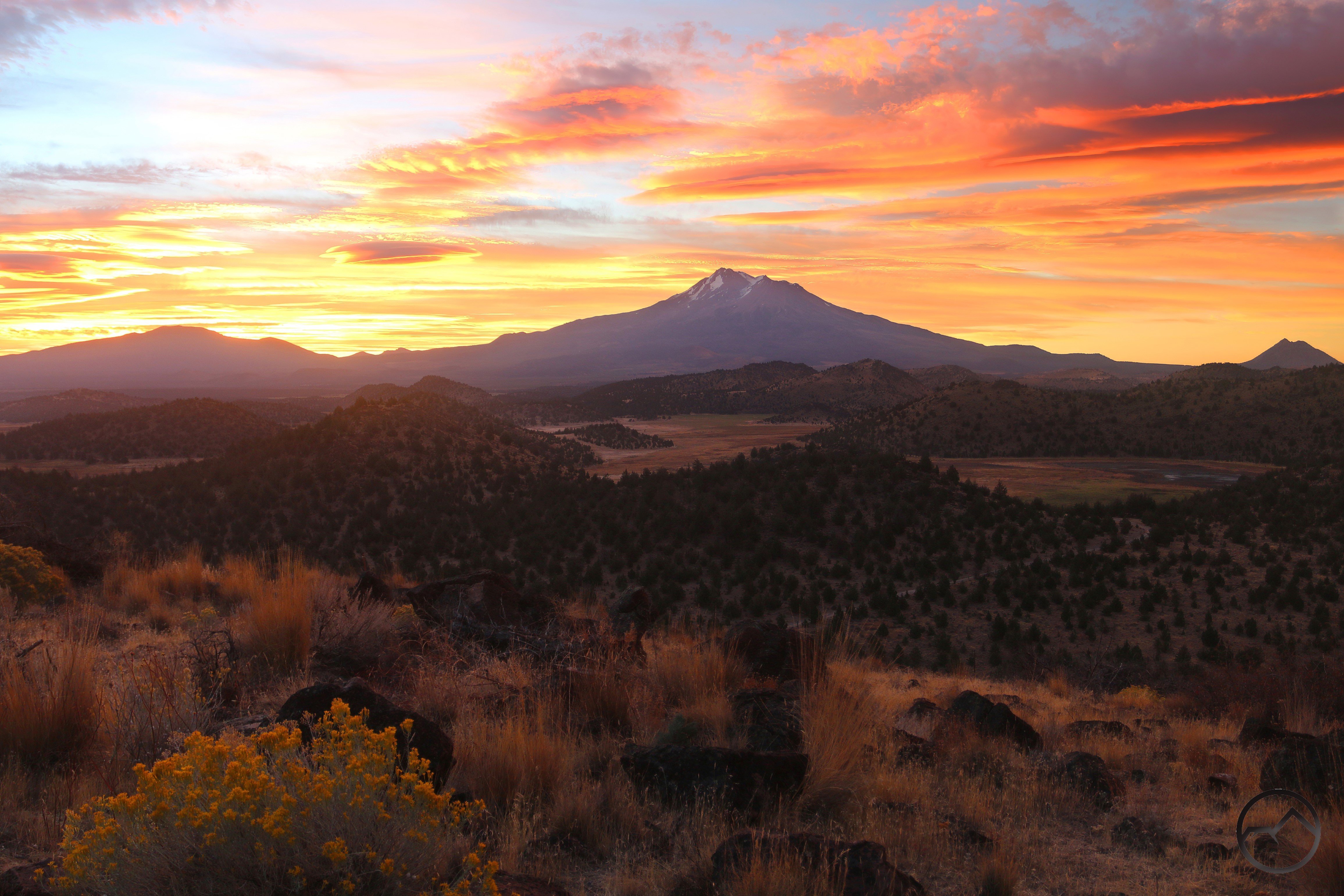
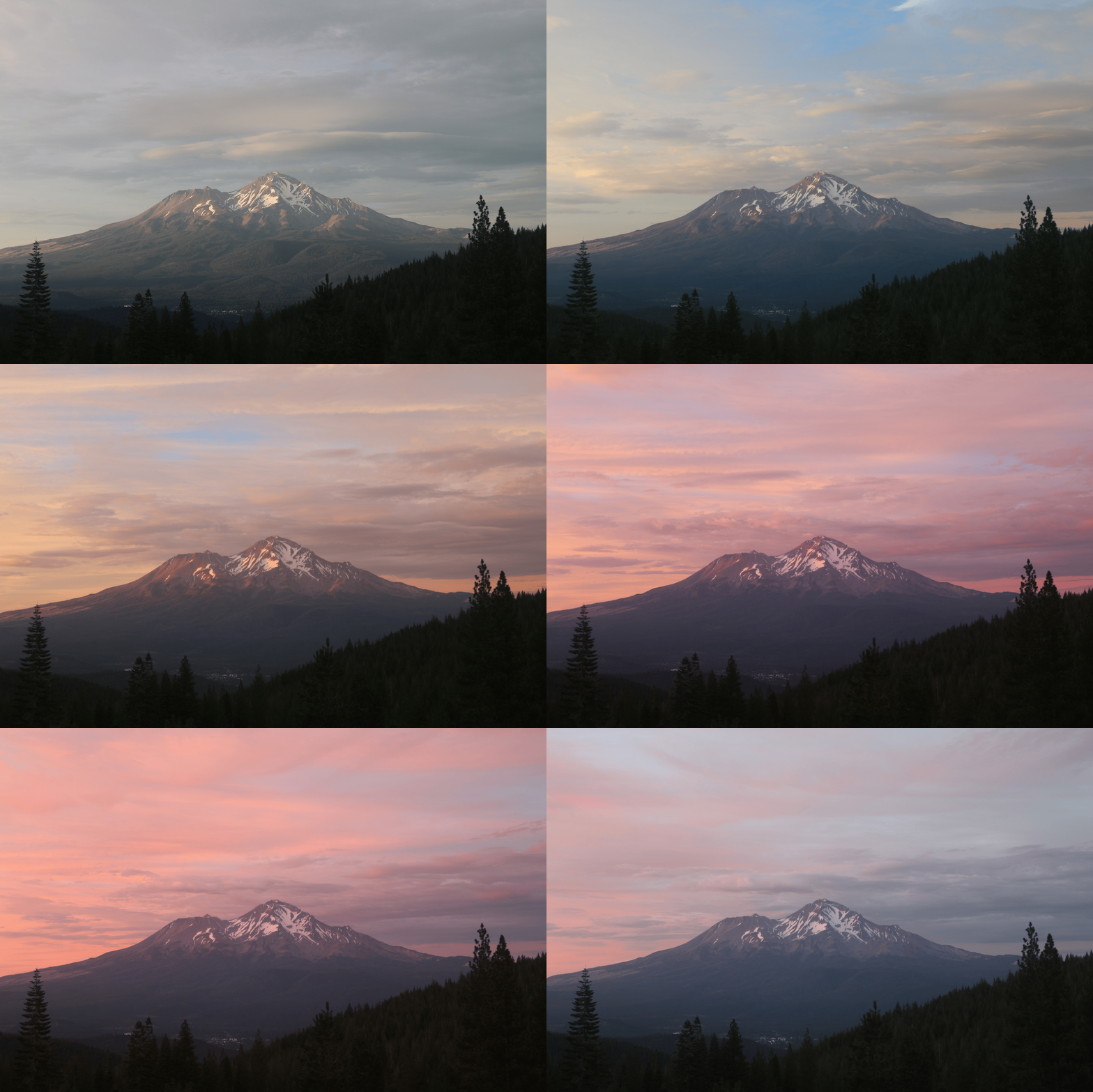
The sun finally set and the sky erupted into a burning panoply of fiery clouds radiating out from Mount Shasta. This was the kind of sunset I was hoping for the previous night. Truth be told, it was the best sunset I had seen in quite a while. Though the basin was in shadow, the fiery sky more than made up for it and the alpenglow on the mountain wasn’t too shabby either! As the light faded, I reckoned that was it and the summer weather would bring clear skies once again. Little did I suspect it was only halfway through an incredible series of spectacles.
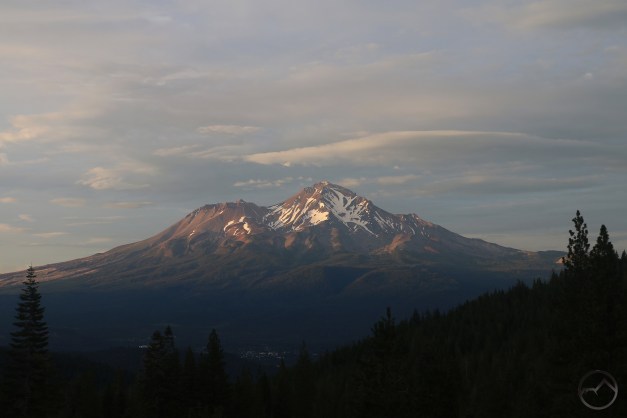
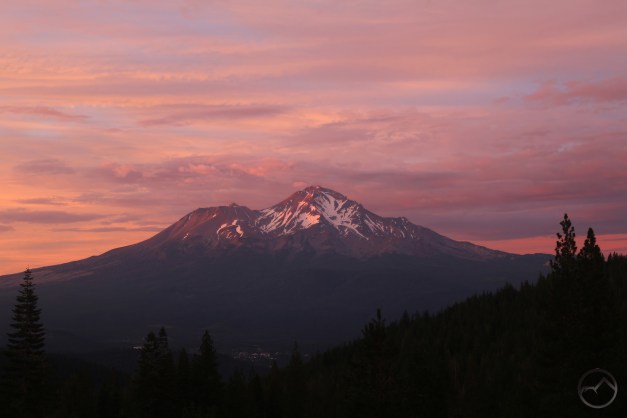
The next day was another beautiful day in Mount Shasta, with small lenticulars scattered across the northern sky. When sunset neared and I had finished all my tasks for the day, I headed out once again, since it seemed Mount Shasta wasn’t done with it’s pyrotechnics. This time, however, I headed up toward Castle Lake. It seemed a better perspective to capture the lenticulars than Truchas Ridge would have been. By them time I got up there the lenticulars had mostly faded but the light was great. The sunset was more than ample compensation for missing the lenticulars, as the sky once again scorched by the sunset and pulsed with pinks and purples. Mount Shasta itself radiated warm light as the sun made its final descent.
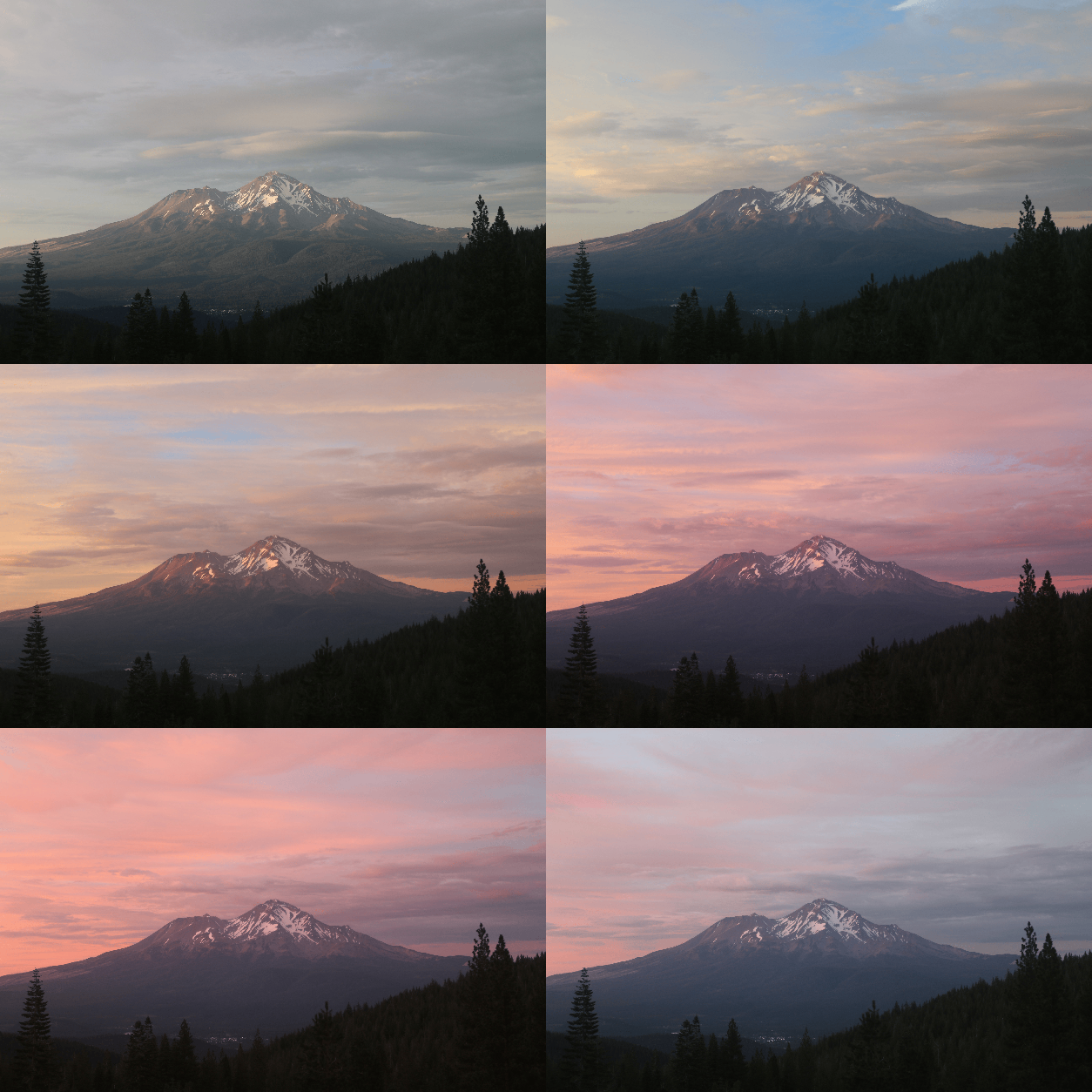
One thing about this perspective that always effects me is the sight of Mount Shasta City lying at the foot of the mountain. I am always struck by what an incredible location for a town it is. Indeed, all the communities around the foot of the mountain are in enviable positions. Another things that is striking about this perspective is the town’s elevation, which is approximately 3,500 feet above sea level. At 14,179 feet, Mount Shasta rises over 10,500 feet above the city. This is over 1,000 feet more of vertical relief than it is from Yosemite Valley to the top of Mount Lyell, the highest point in Yosemite National Park. That is dramatic topography!
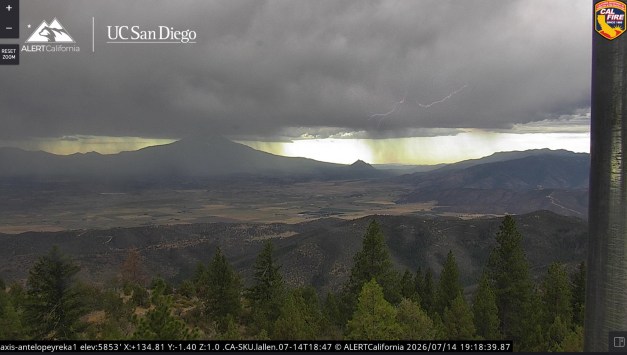
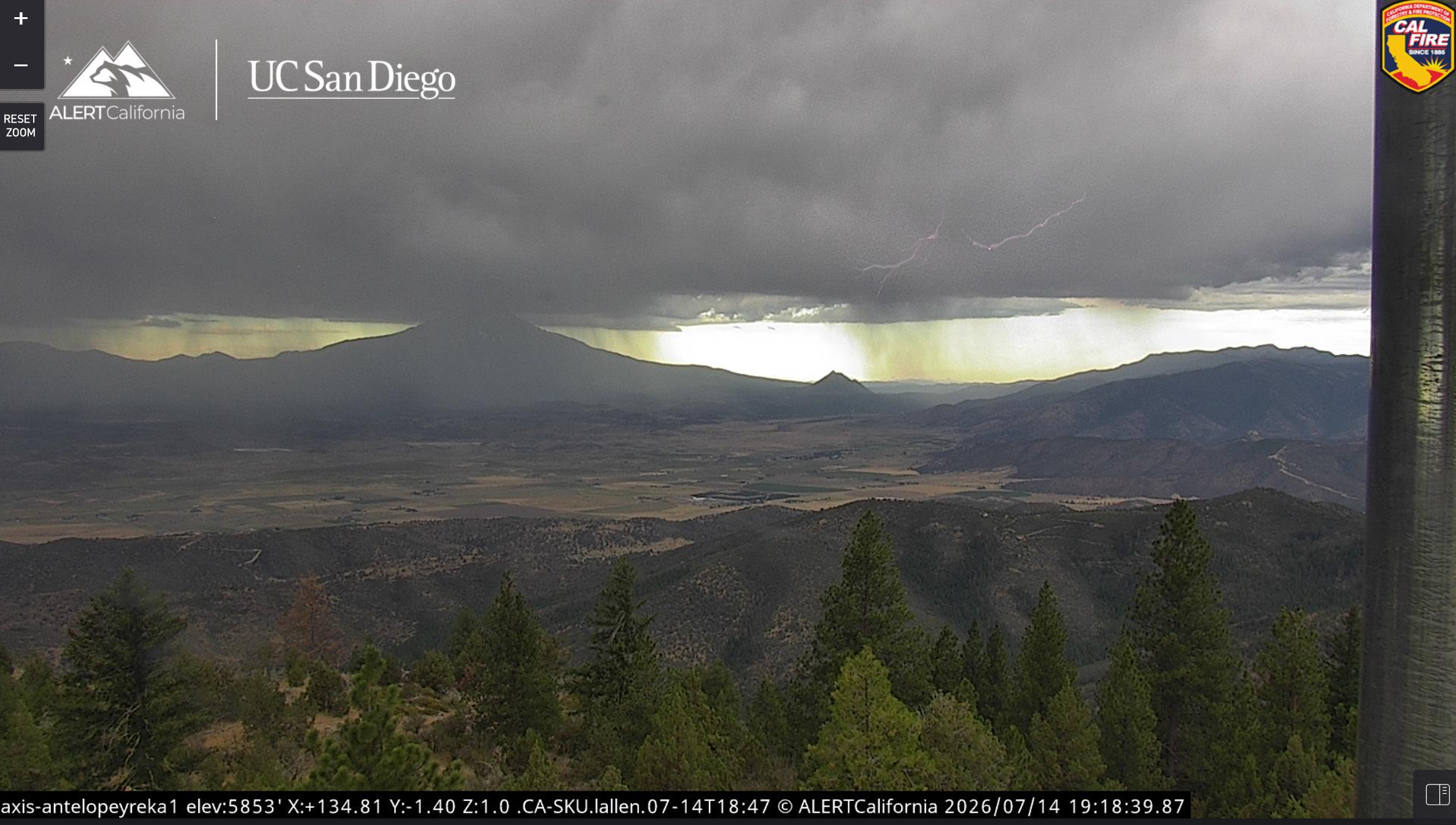
After three days in a row of great sunsets, I would have been right to assume that the weather system had sun its course but, in fact, it saved the best for last. All through the day I saw thunderclouds building over Mount Shasta and by evening I could hear distant thunder. I checked the webcam to see the situation in the valley and as it updated (every minute or so), the newest image featured a bolt of lightning ripping through the sky. What timing! On the webcam it was evident that rain was pouring down throughout the Shasta Valley. That was definitely the place to go!
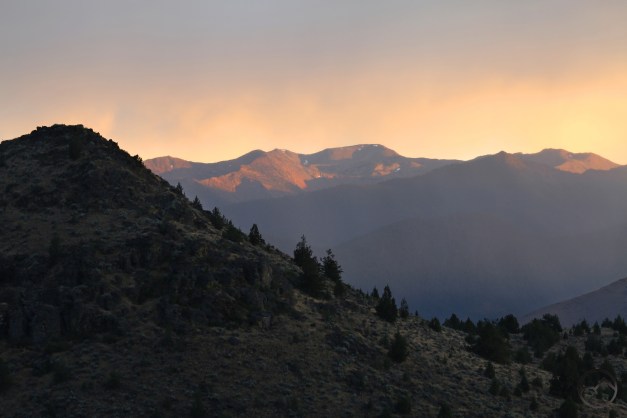
My wife and I met at the Ridge and we hiked out to one of the vista points. Much of the valley was in shadow  as the sun sank behind clouds to the west. It didn’t seem like there was going to be much light for a sunset but I was hopeful. I have found that during the thunderstorms, if the clouds are heavy, there are times when the sun sinks just below the cloud layer as it sets and for just a minute or two the whole landscape lights up. I was hopeful that would be the case on this occasion. The first indication that my hope was not in vain was off to the west, where Mount Eddy was bathed in warm sunset light.
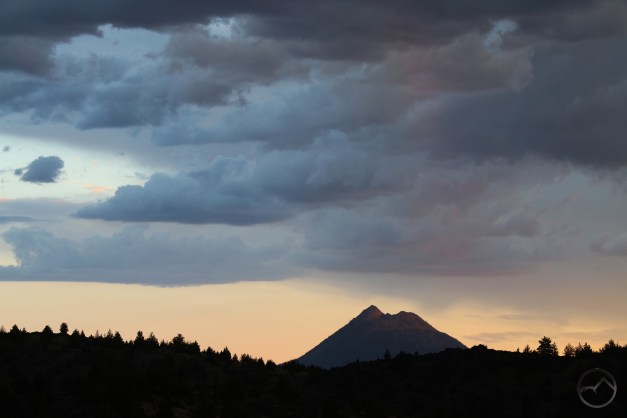
Further to the south, a very faint rainbow appeared directly over Black Butte. It was difficult to make out but the color strata were just discernable against the dark clouds. The summit of Black Butte was picking up a little light as well. While this was nice, I have seen (better) rainbows in this area before around sunset and nothing really came of it.
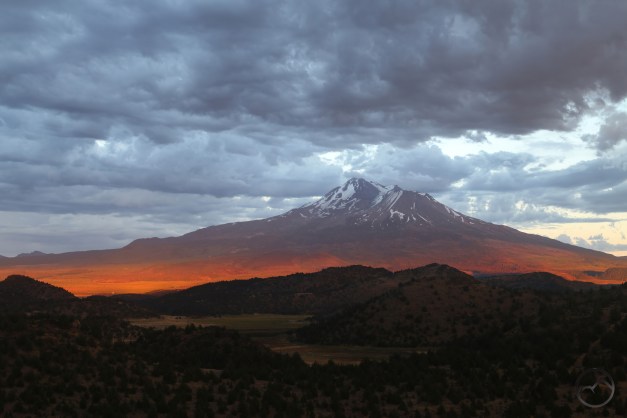
Suddenly, the base of Mount Shasta was aflame with a deep red glow. This was the sun’s light hitting the mountain as it sank into the clouds to the west. Just a narrow plane of light was able to make it through the clouds but it was rich and awesome. I knew that as the sun got lower and dropped behind the horizon the light would travel upward on Mount Shasta. I didn’t know what the overall conditions would be but I was certain the mountain itself was going to get lit up.
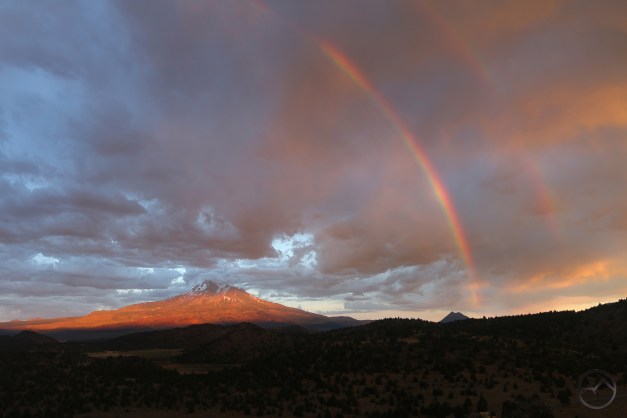
Suddenly, as Mount Shasta was enveloped in alpenglow, the rainbow over Black Butte burst across the sky. I have seen a lot of rainbows around Mount Shasta but this was by far one of the best, in the best conditions and from the best perspective. Now this was an awesome sunset! Soon the rainbow was joined by a fainter twin. I could not believer my fortune, catching a double rainbow from this perspective!
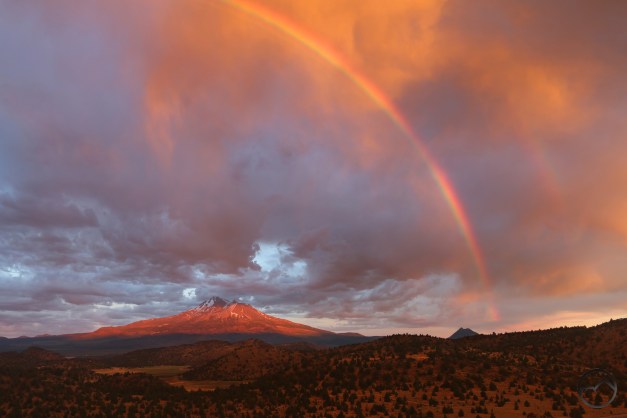
At this point, a fantastic sunset became an epic one. The alpenglow on Mount Shasta, the light in the clouds and the rainbow all intensified. The second rainbow grew a little fainter but was still visible. Now the hills of the Shasta Valley, indeed the land and rocks I was standing on, all now glowed as the sunset’s light reflected off the clouds and the whole area seemed to hum red. It was absolutely incredible but even on top of this dazzling sight, the sounds of the blowing wind, occasional peels of thunder, howling coyotes and the peent and “sonic boom” of the diving nighthawks. This was one of the richest pallets my senses had experienced. It was one of the greatest sunsets I have ever seen.
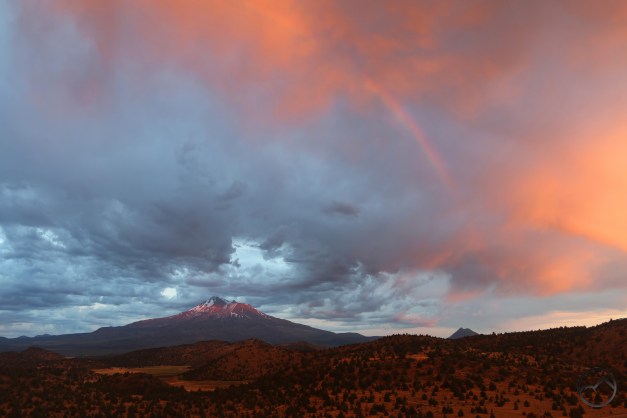
Eventually the strong light began to creep away from Mount Shasta. Even so, the mountain retained a vestige of alpenglow. The rainbow hung on tenaciously in the still illuminated clouds. The ground was still red as well. The contrast of the lighted areas with the light and dark of the unlit areas was actually quite beautiful and made the fading grandeur of the rainbow sunset a little easier to endue. We hung on to soak as much of the magic up as we could. Even though it is “never enough”, we were satisfied.
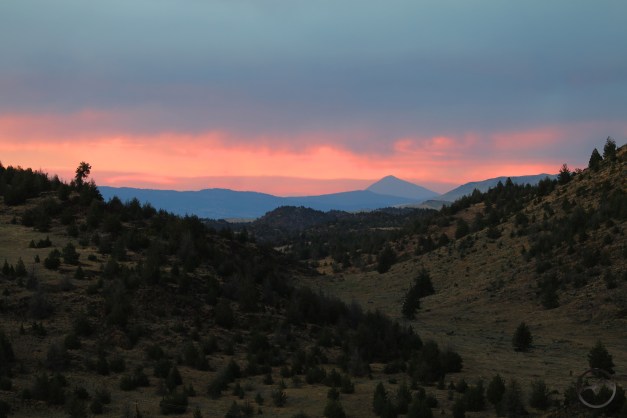
Looking north, I could see the light still hanging on so I hurried over to a vista point where Mount McLoughlin, southern Oregon’s tallest peak, is visible. Across the valley from Truchas Ridge, the Hawkmoon Tree made an odd silhouette against the red sky. This tree is one of the most interesting junipers in the Shasta Valley and is home to one of the largest hawk nests I have seen in the area. The light finally faded away completely and my wife and hiked back to the trailhead at our picnic area. We were thrilled with the magnificent experience we had just had.

Thus ended the run of four beautiful summer sunsets. The thunderstorm broke the weather system and the clouds retreated from the sky. Now, a few days after the final, glorious scene, I am still energized by the entire series but the final, greatest one in particular. I have been blessed with many amazing sunsets but that ranked among the most amazing I have experienced. Thank you Lord for that profound opportunity.

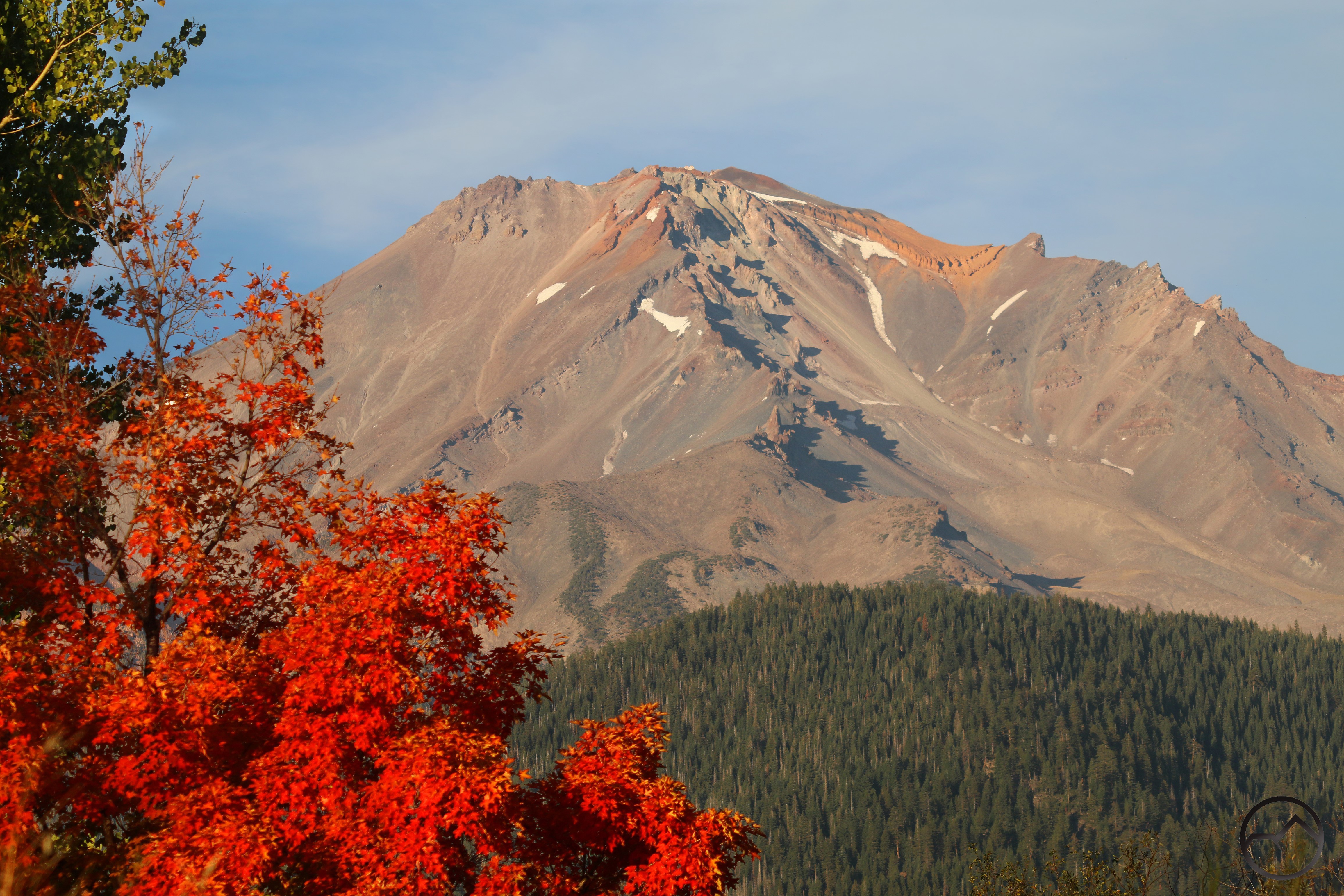
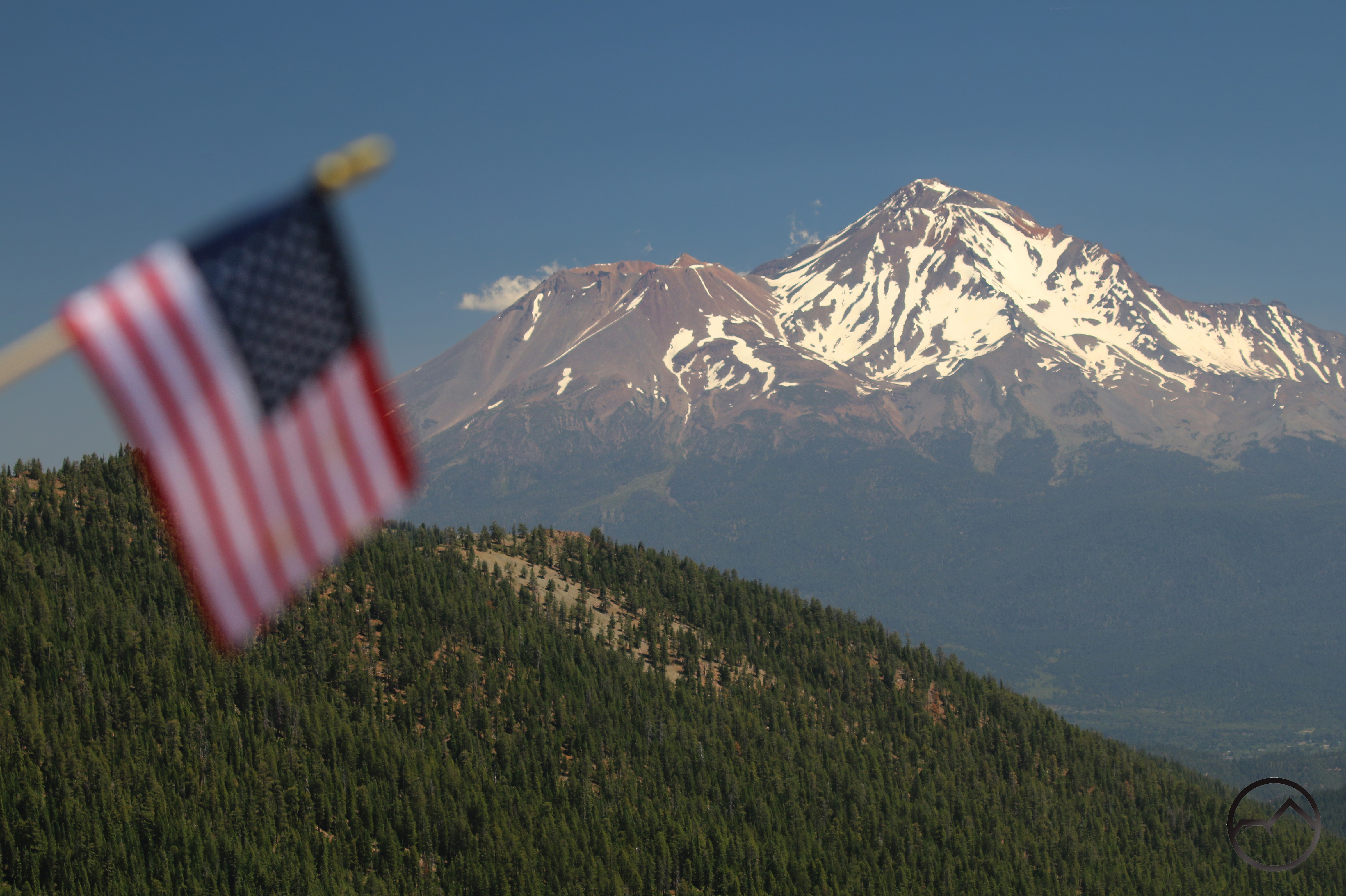
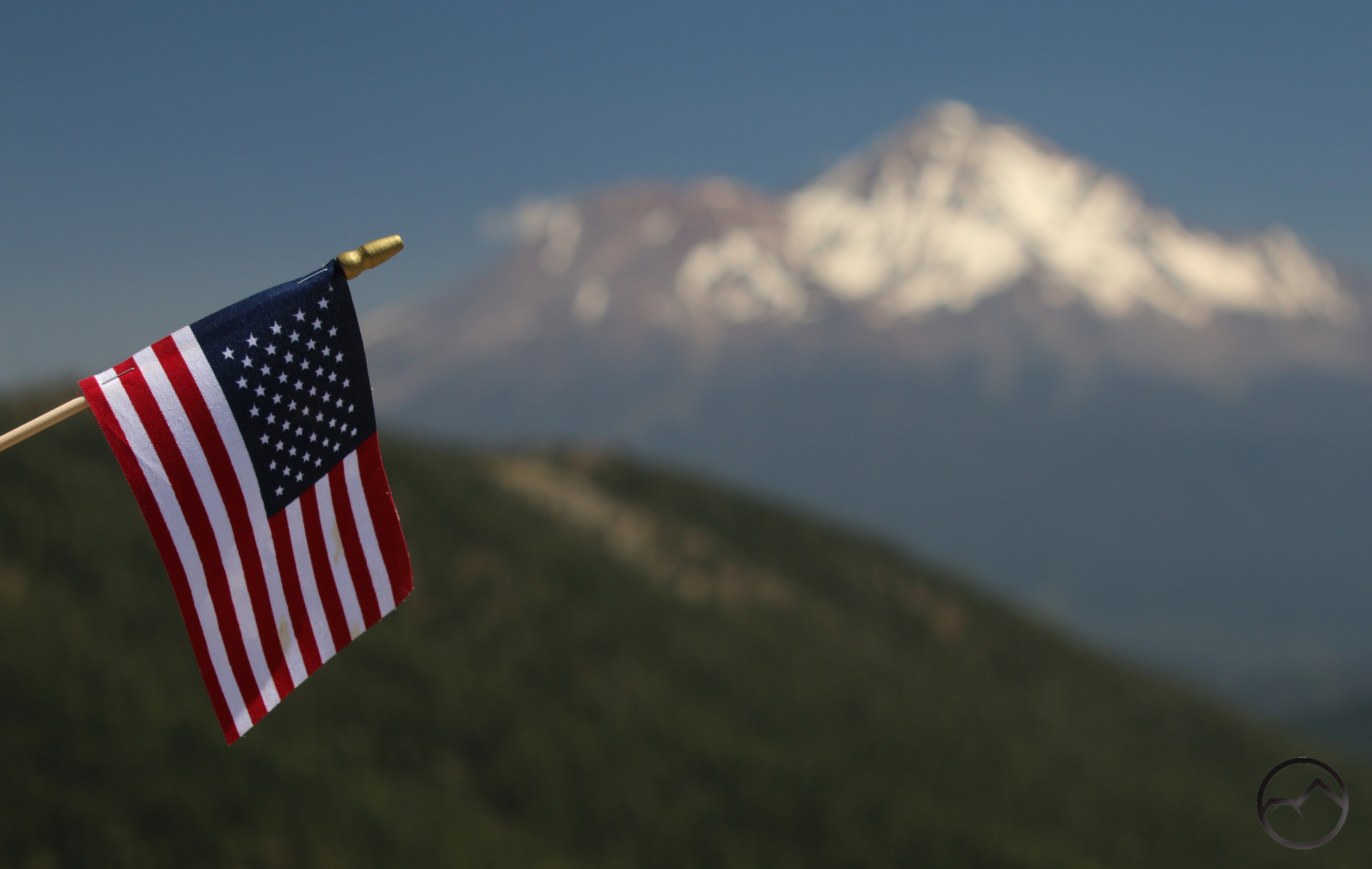
250th Independence Day, Mount Shasta

Posted by bubbasuess on July 4, 2026
Posted in: Cascade Range, Hiking, Mount Shasta. 1 Comment

I hope everyone had a blessed Independence Day. It is sobering to think that our republic has survived 2 and a half centuries, weathering many terrible crises but always pushing toward the realization of its founding principles. While imperfect and imperfectly in pursuit of those ideals, America is still the greatest and freest place on earth. May it remain so.

As we often do, my family took time to escape the crowds that descend on Mount Shasta (and being immersed in them for 15 hours while volunteering at the 4th of July Walk/Run) and head up to the Pacific Crest Trail for a hike out to one of the magnificent vista points. We kept it short today but it was still satisfying to hike this spectacular section of trail.


Seeing the incredible scenery and the vast expanses of wilderness makes me all the more grateful that American has become a civilization capable of preserving its wilderness character. I am reminded of the epigraph at the beginning of Lonesome Dove:

“All America lies at the end of the wilderness road, and our past is not a dead past, but still lives in us. Our forefathers had civilization inside themselves, the wild outside. We live in the civilization they created, but within us the wilderness still lingers. What they dreamed, we live, and what they lived, we dream.”

I hope we have the fortitude to preserve these things henceforth.


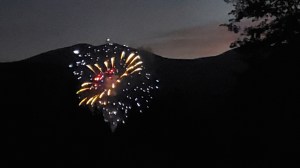
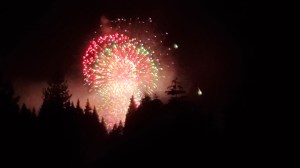
After a wonderful meal, we finished the day taking in the fireworks over Lake Siskiyou. It was a great day commemorating a great event. God bless America.

Truchas Bookends For June

Posted by bubbasuess on June 30, 2026
Posted in: Cascade Range, Desert, Hiking, Mount Shasta, Truchas Ridge. Leave a comment

In keeping with what has been a developing trend, I have a collection of images for the month. So far in 2026 my time has been such that I have been reduced to one summary post per month. Of course, I finally bucked that in June with 2(!) posts, this being the second. I also managed to get a review of how the Sacramento River has continued to reshape the inlet at Lake Siskiyou. It’s hard to believe that was the latest installment in a series, but after a nine year hiatus.

All that being said, I still have some images of Mount Shasta that are worth sharing. Not surprisingly, the month essentially began and ended at Truchas Ridge. There is so much to be done out there but it is satisfying work, as being out there feeds me.

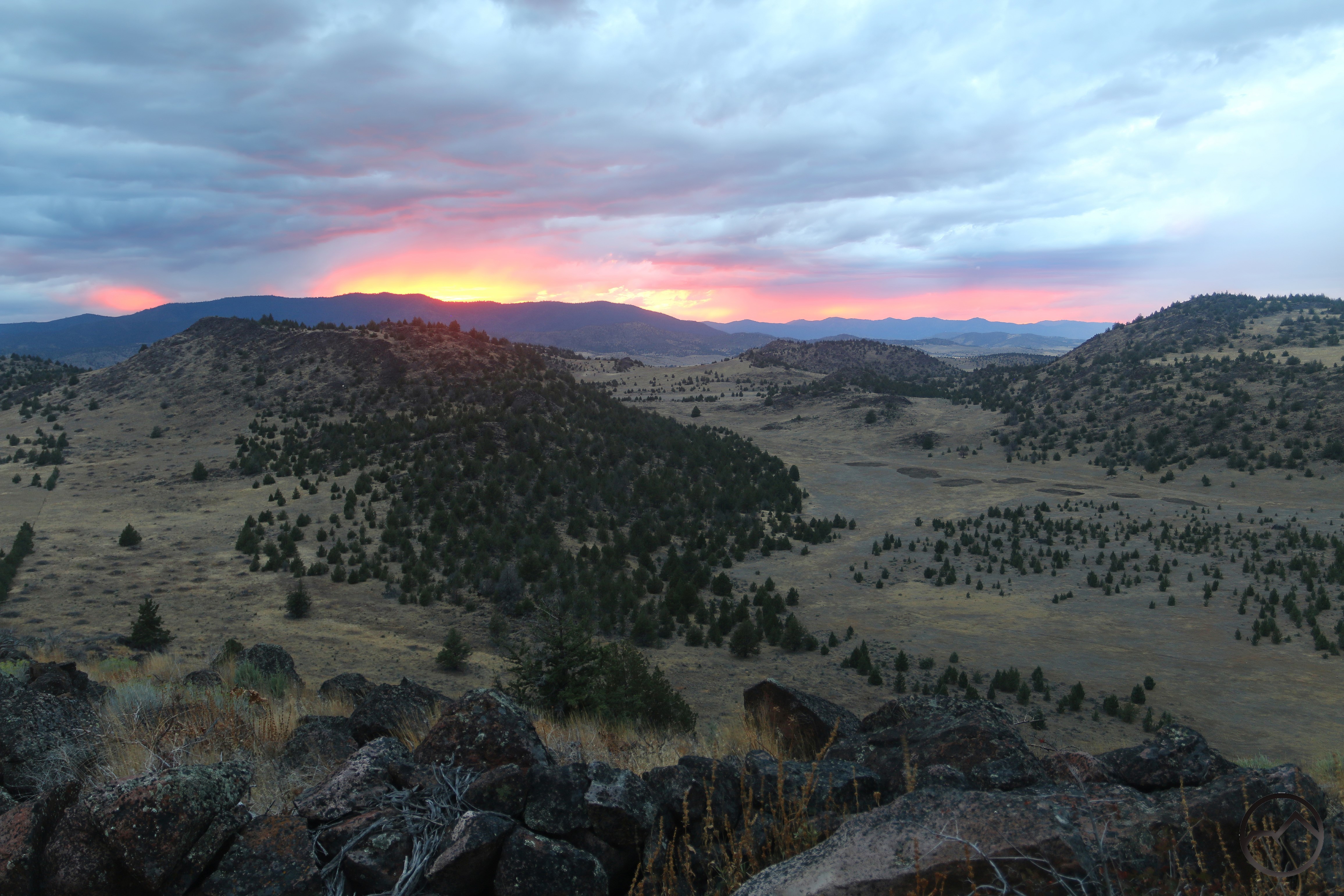
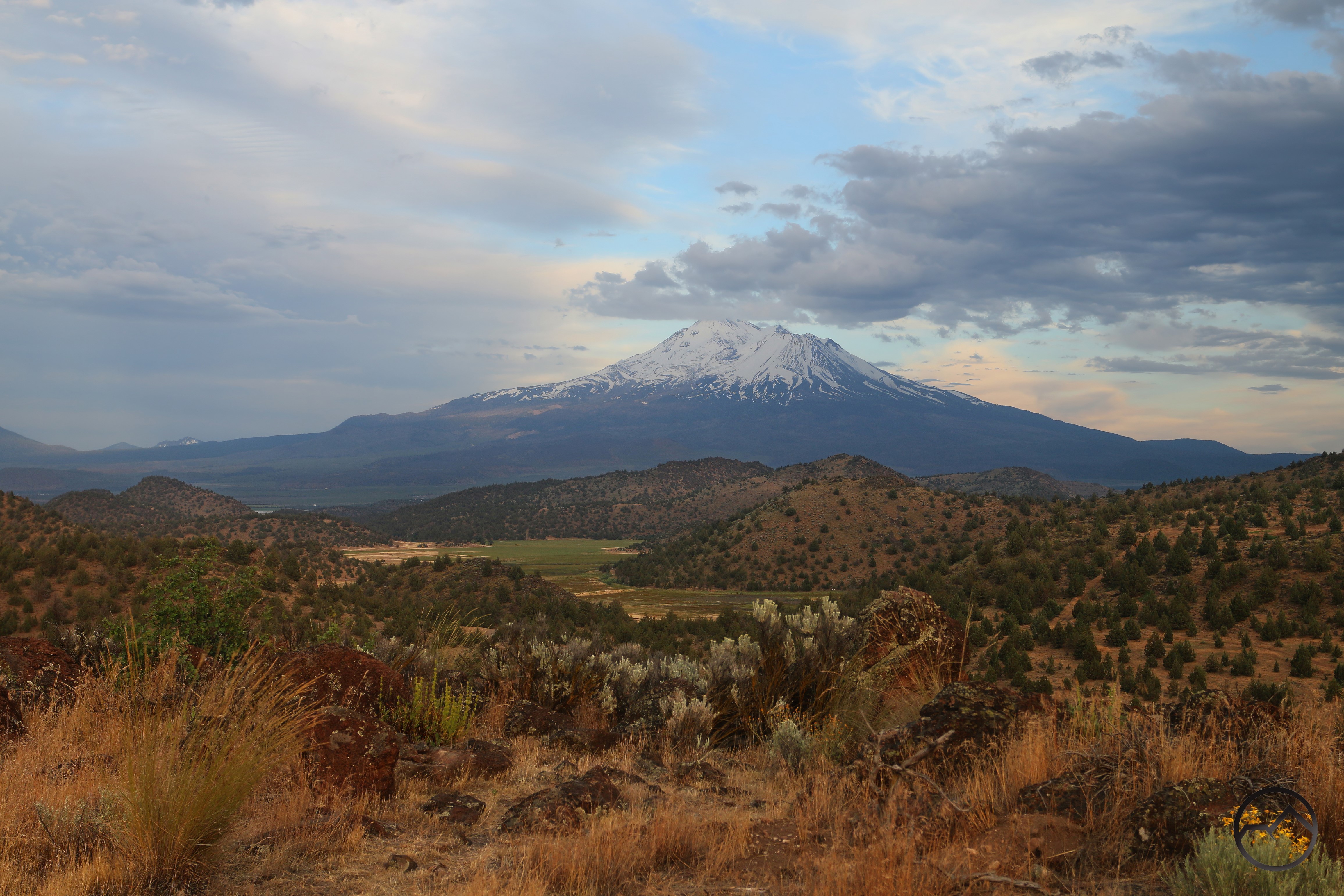
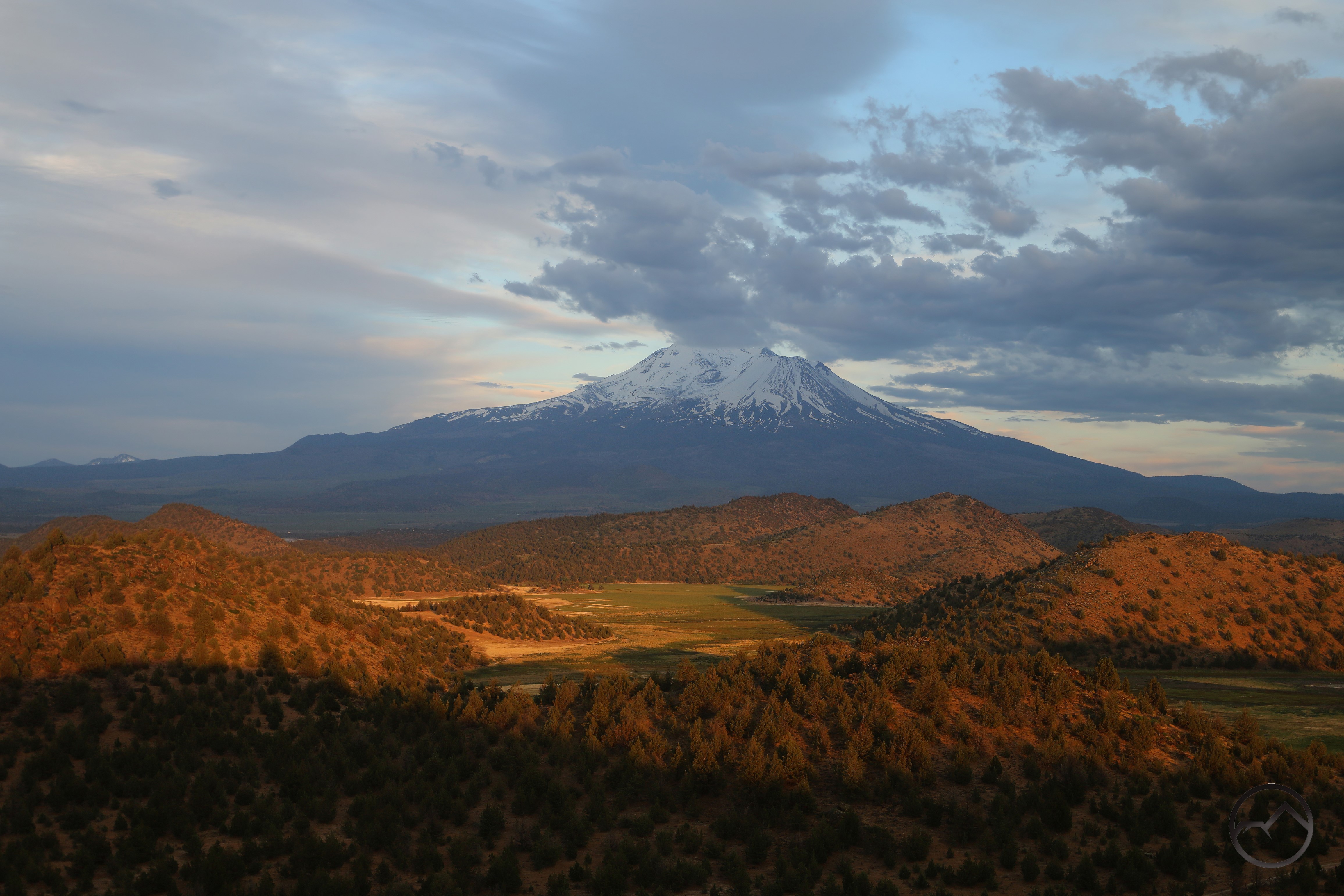
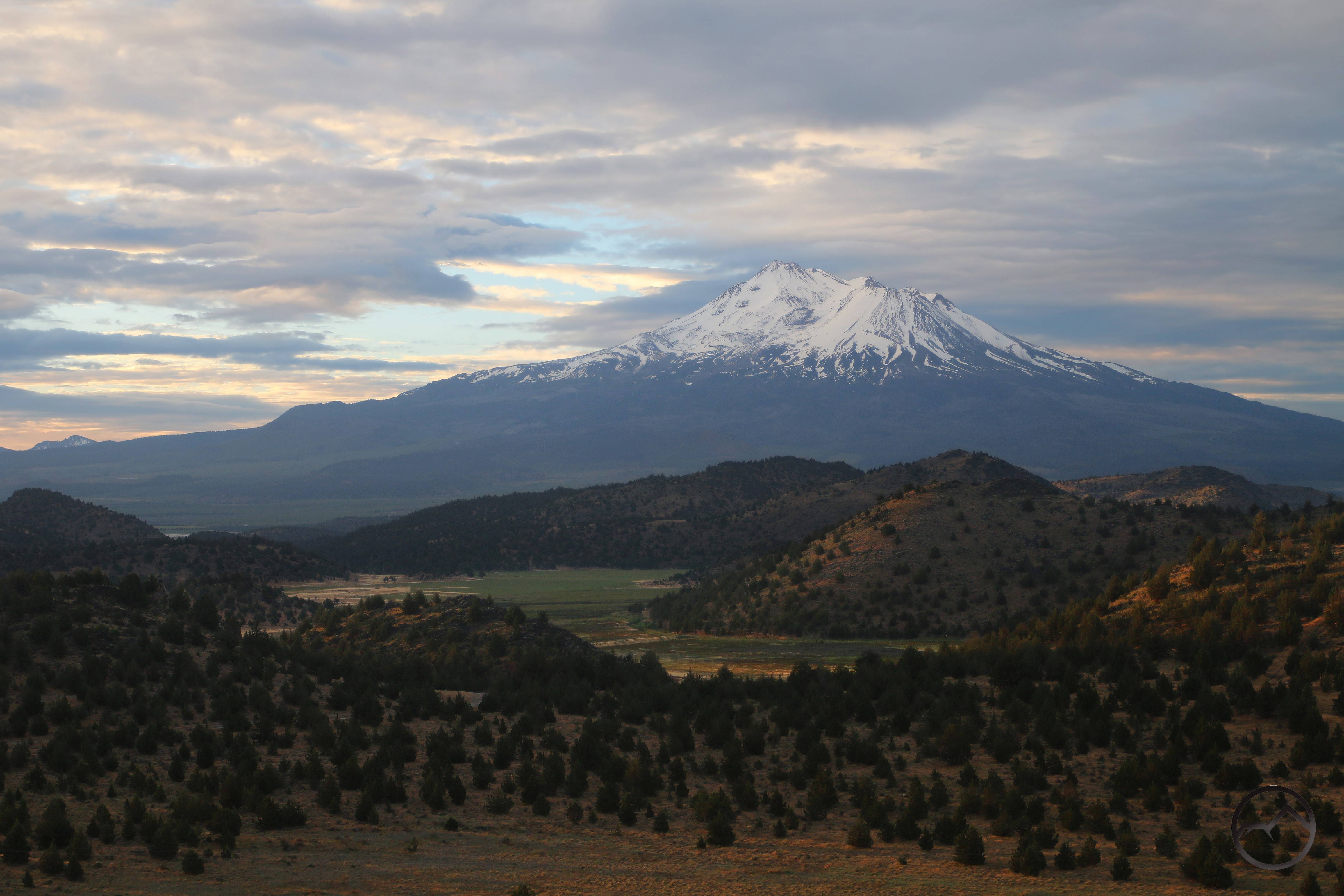
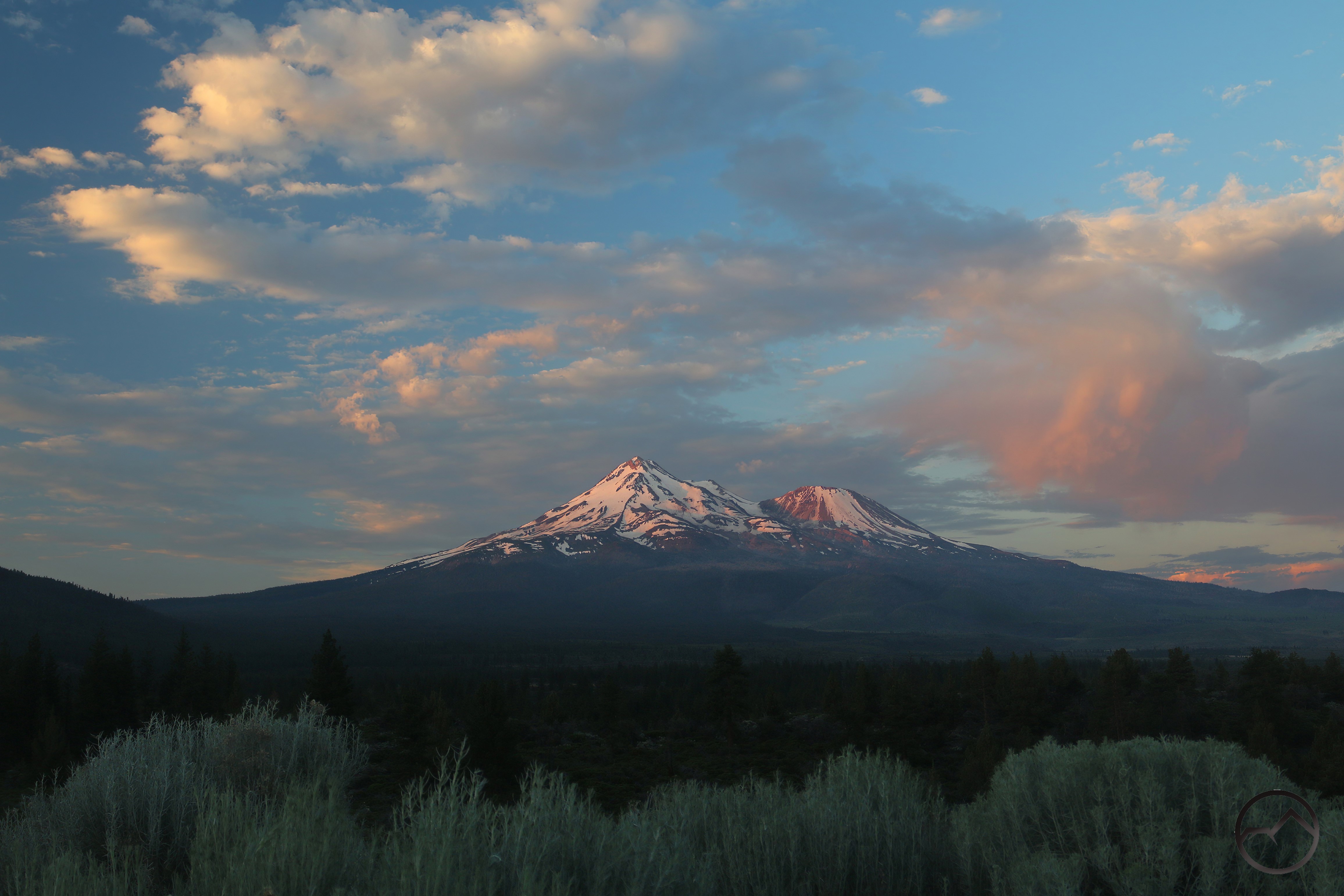
June basically began the way May ended, out at the Truchas Ridge. After doing some trail work, I set up my camera for the sunset. With an abundance of clouds, I was hoping for something interesting to happen. Alas, the clouds were too much and the sunlight was muted, save for a brief burst of color on the interwoven hills that unfolded between the ridge and Mount Shasta. Brief as it was, it was beautiful.

I hope the clouds would improve for the sunrise, but I was skunked again, as there was almost no color once again. The hills were barely illuminated by the rising sun. Though a “bust”, how can one argue with such a view?

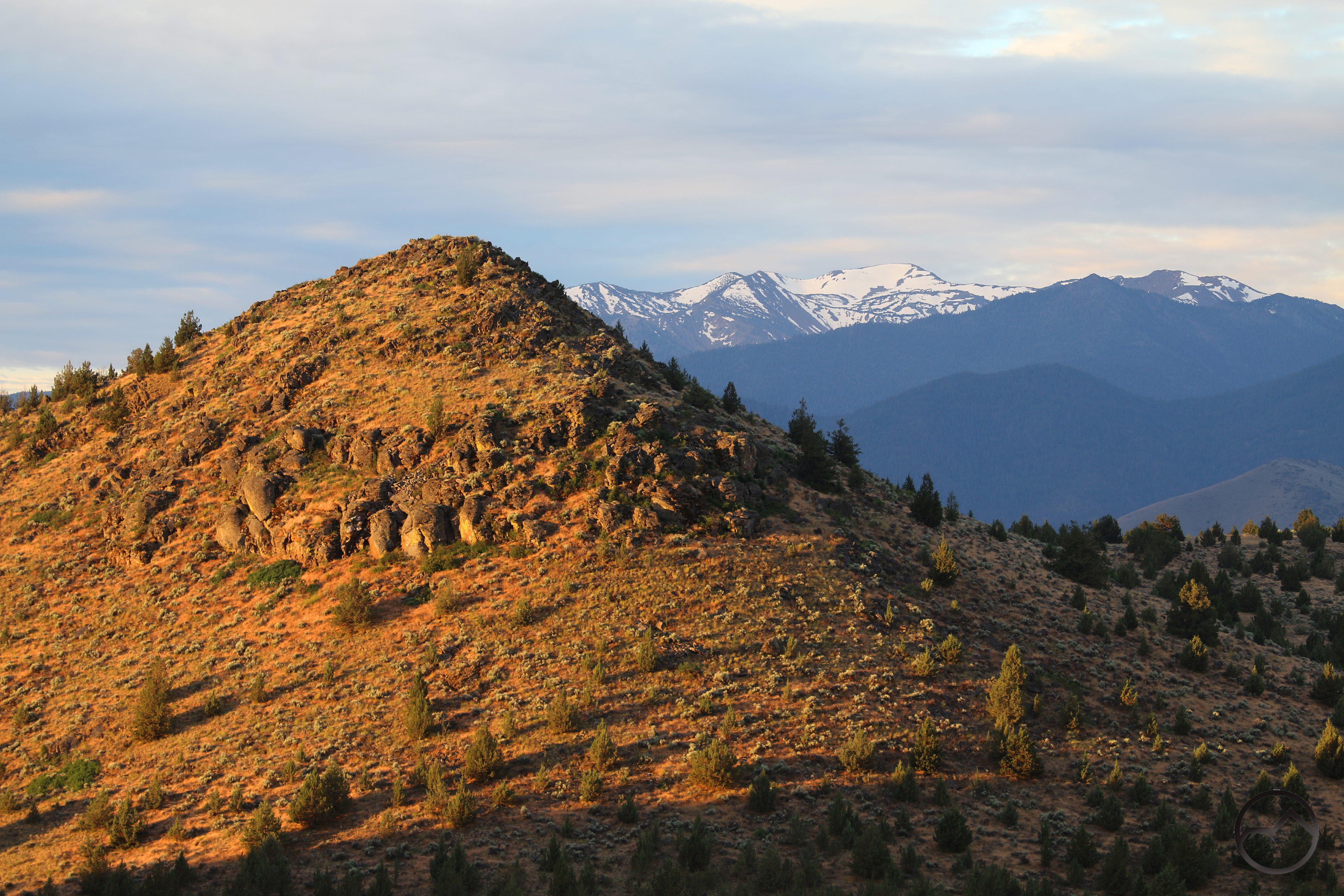
It is easy for me to forget the other landmarks around Truchas Ridge because Mount Shasta dominates the horizon, but other mountains, near and far are still incredible. In the case of this early June morning, the peak I call Cabezon (after a prominent peak in New Mexico) made a glowing frame of Mount Eddy. If Eddy were not forever stuck beneath Mount Shasta’s overwhelming shadow, it would be a well-known landmark in its own right.

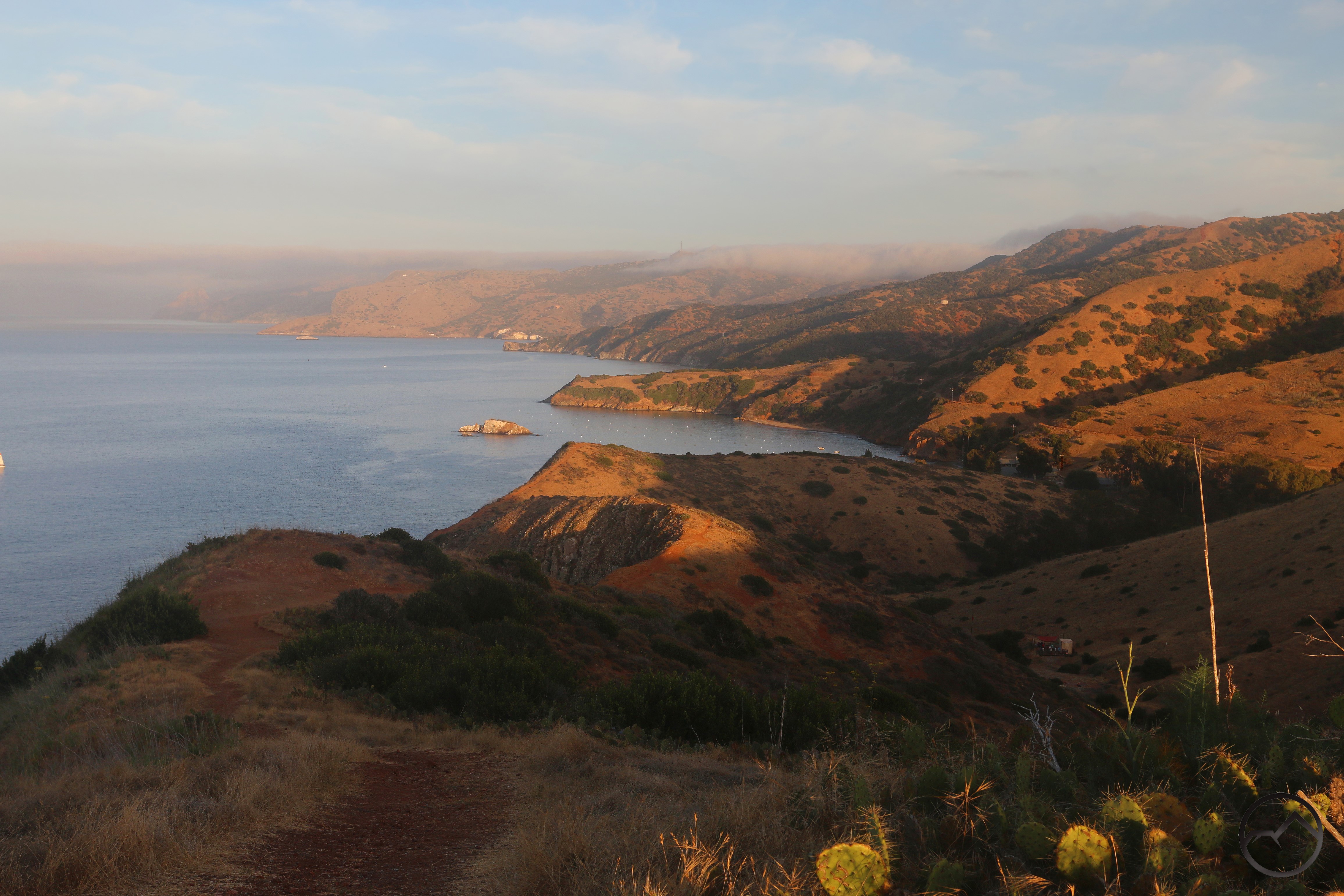
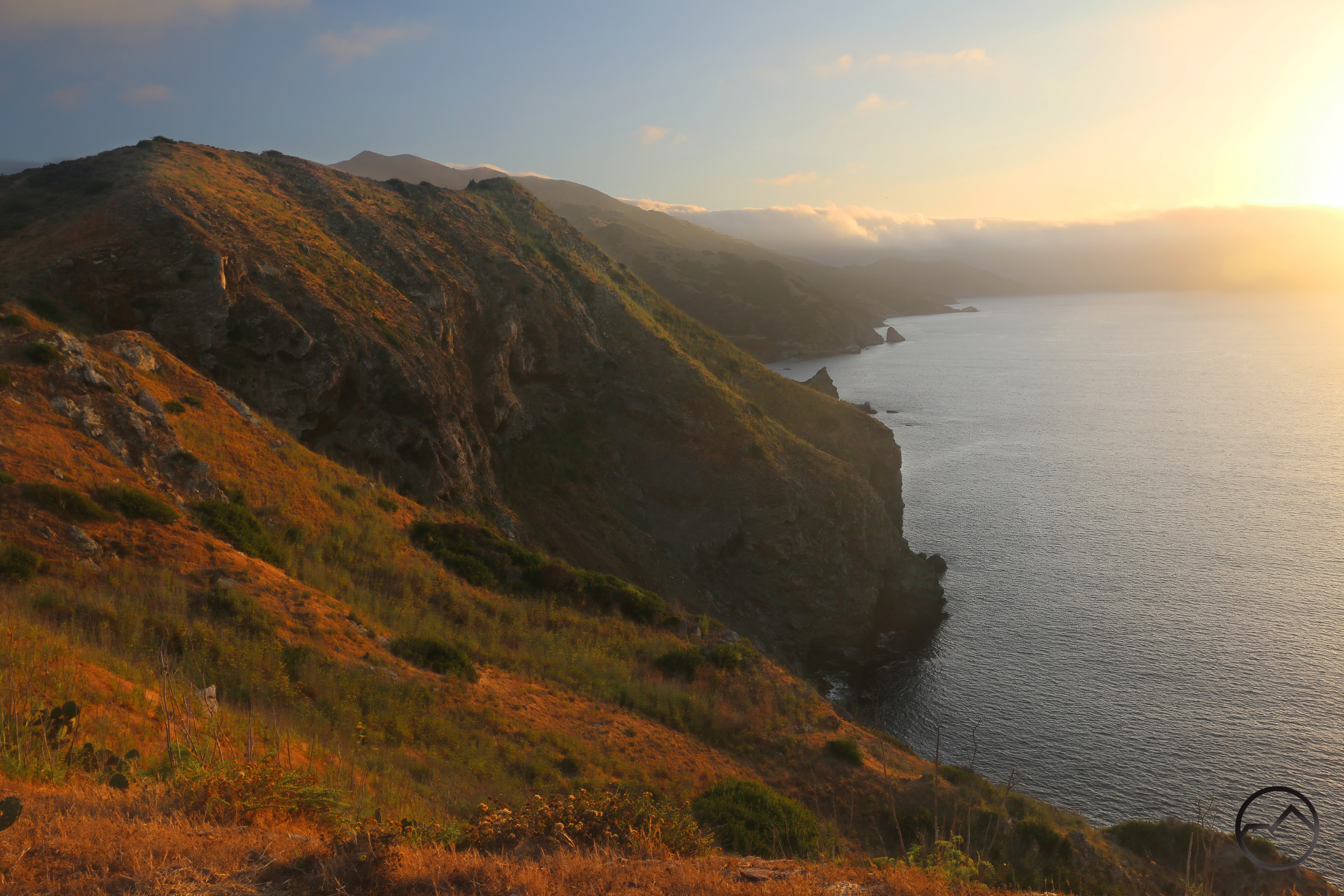
Then it was off to the northwest corner of Santa Catalina, taking the boy scout troop to camp for a week of scuba and other marine activities. The location of this camp is second to none. Absolutely spectacular.

Upon returning to Mount Shasta, the weather took a turn, from hot to the first summer thunderstorm. The coming storm did not yield any lenticulars but it did offer a beautiful sunrise. Just as before though, the colors were not as strong as I had hoped. The clouds continued to filter the light just enough to mute things.

Still, it is always a great morning when the rugged east face of Shastina is lit up by the rising sun. All the other sides of this massive sub-peak of Mount Shasta are composed of talus and scree but the east side, undercut and scraped clean by the awesome Whitney Glacier, is the exception to the rule. The scree has long been transported down the side of the mountain by the glacier and the rocky strata at the heart of the peak is exposed.

Not surprisingly, the thunderstorm yielded some fresh snow on the summit of Mount Shasta. Seeing this kind of deposit on the mountain reminds me of 2022, when fresh snow was dropped on Mount Shasta every single month of the year.

The fresh snow was still present on the day before the equinox. The colors were once again muted but it was a warm and windy summer evening, a perfect time to be outside enjoying the vistas.

The cooler weather of the last week of June has brought a few more colorful sunsets and some mild lenticular activity. At times, little clouds gathered and dissipated, flirting with the possibility that something interesting might happen. At the same time, the colors were getting a bit richer, giving me hope that a good sunset might yet happen.

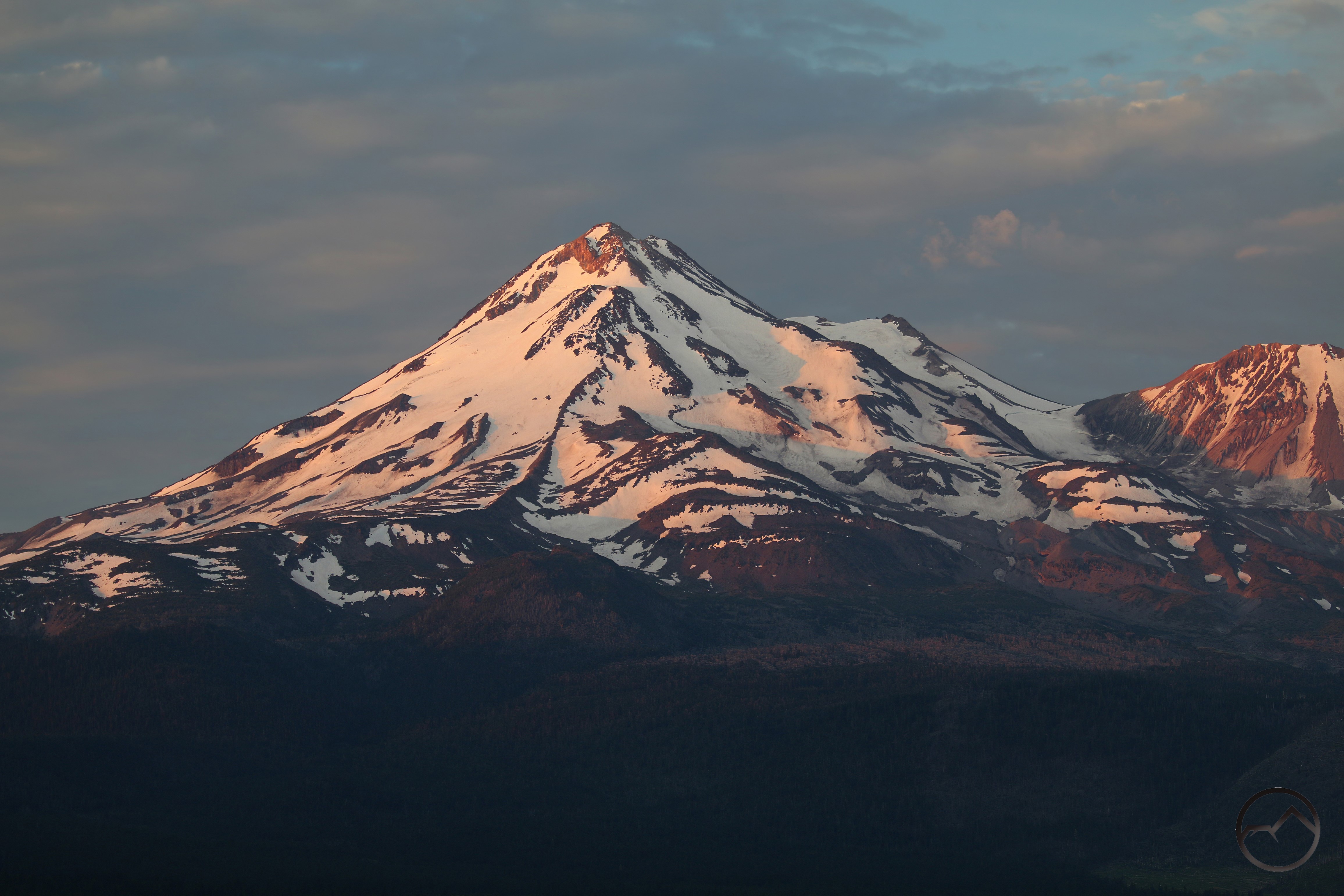
My hopes were finally rewarded on the second to last sunset of the month. Naturally, I was out at Truchas Ridge, just as the month began but this time I was not to be denied: the colors were magnificent. There were even a few small stacks of clouds that kept forming and then vaporizing but overall, the sunset was absolutely magnificent. What a grand way to end the month! Thank you Lord!

Checking In On The Sacramento River Inlet

Posted by bubbasuess on June 29, 2026
Posted in: Hiking, Mount Shasta, Rivers. Tagged: Siskiyou River Trail. 2 Comments

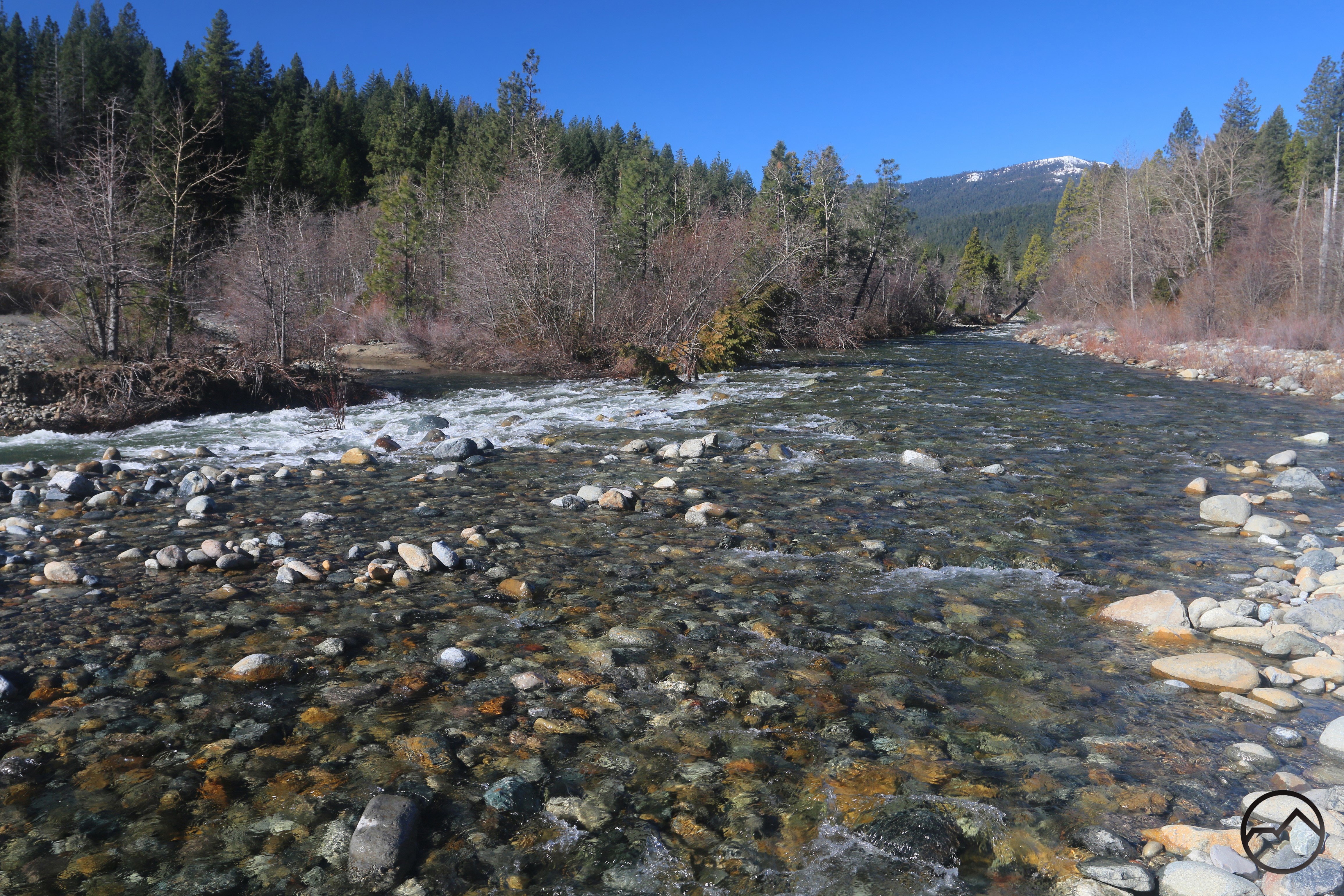
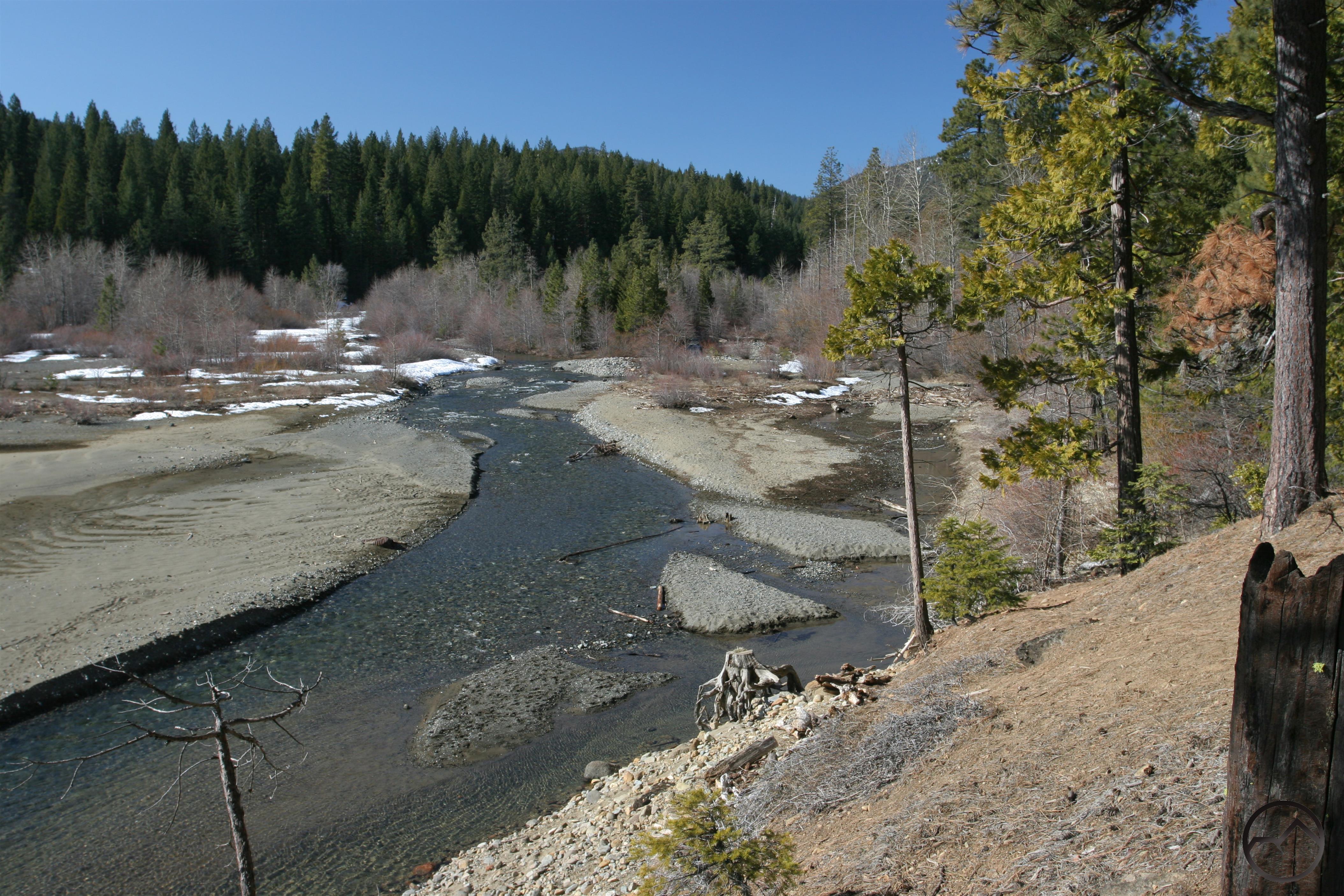
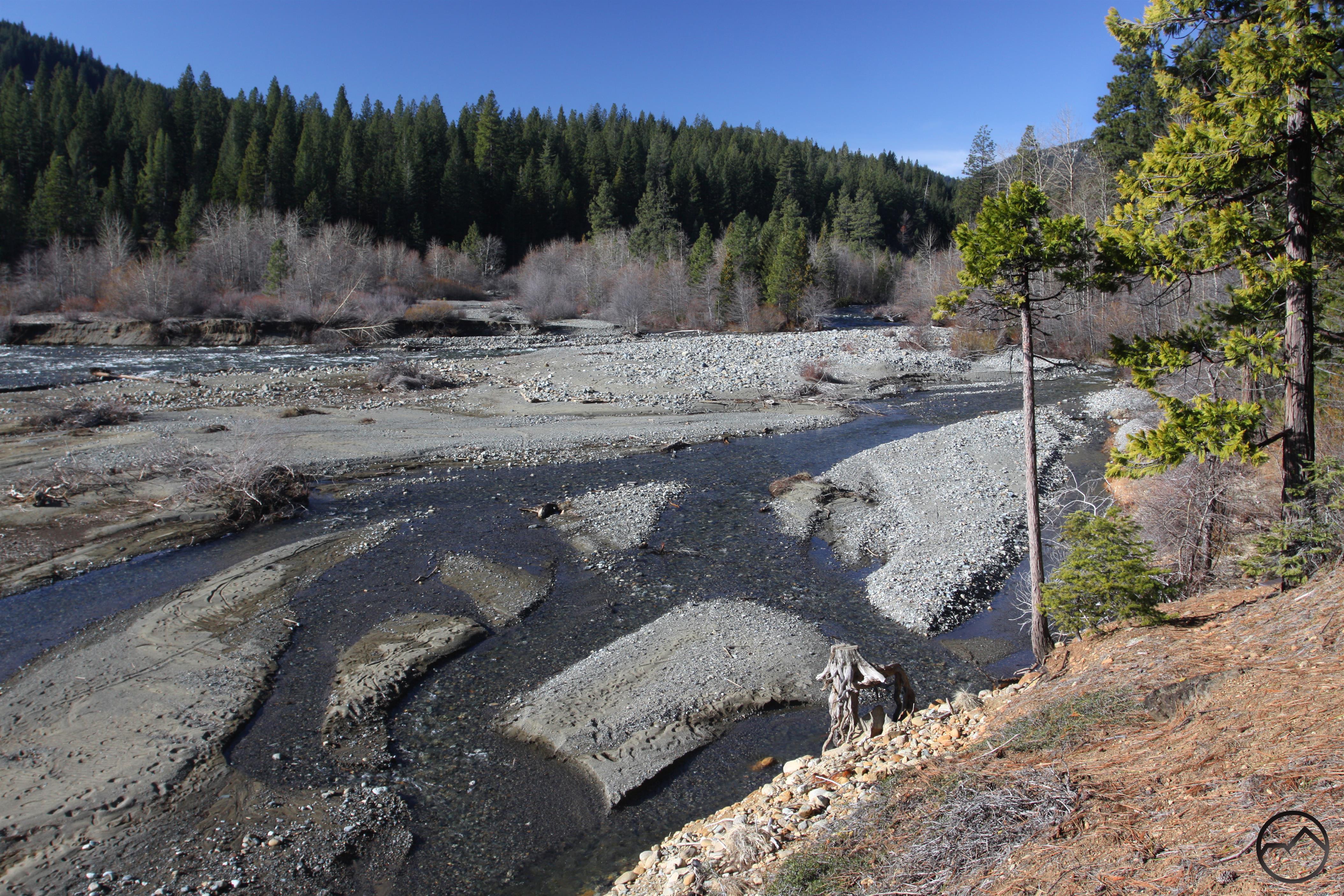
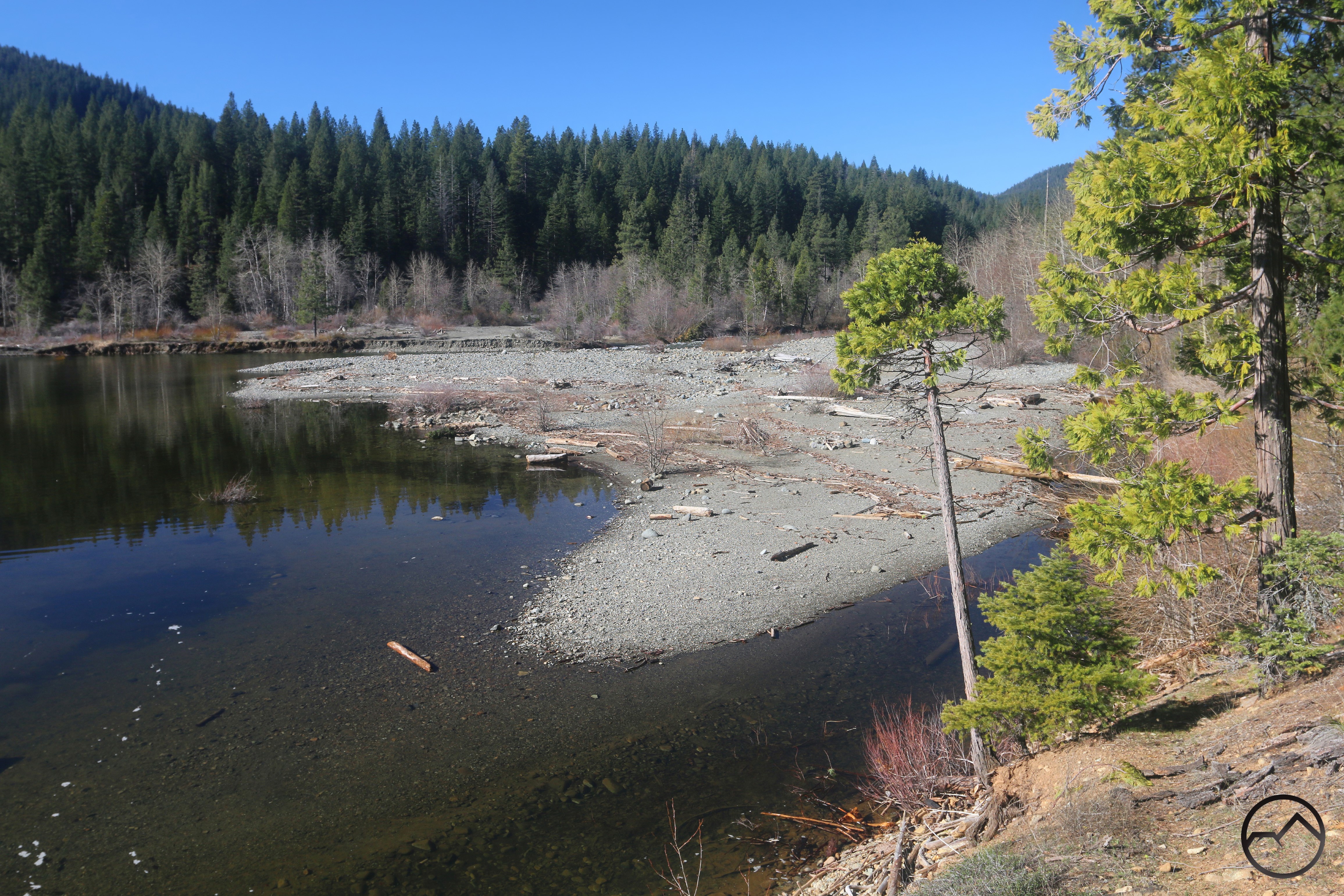
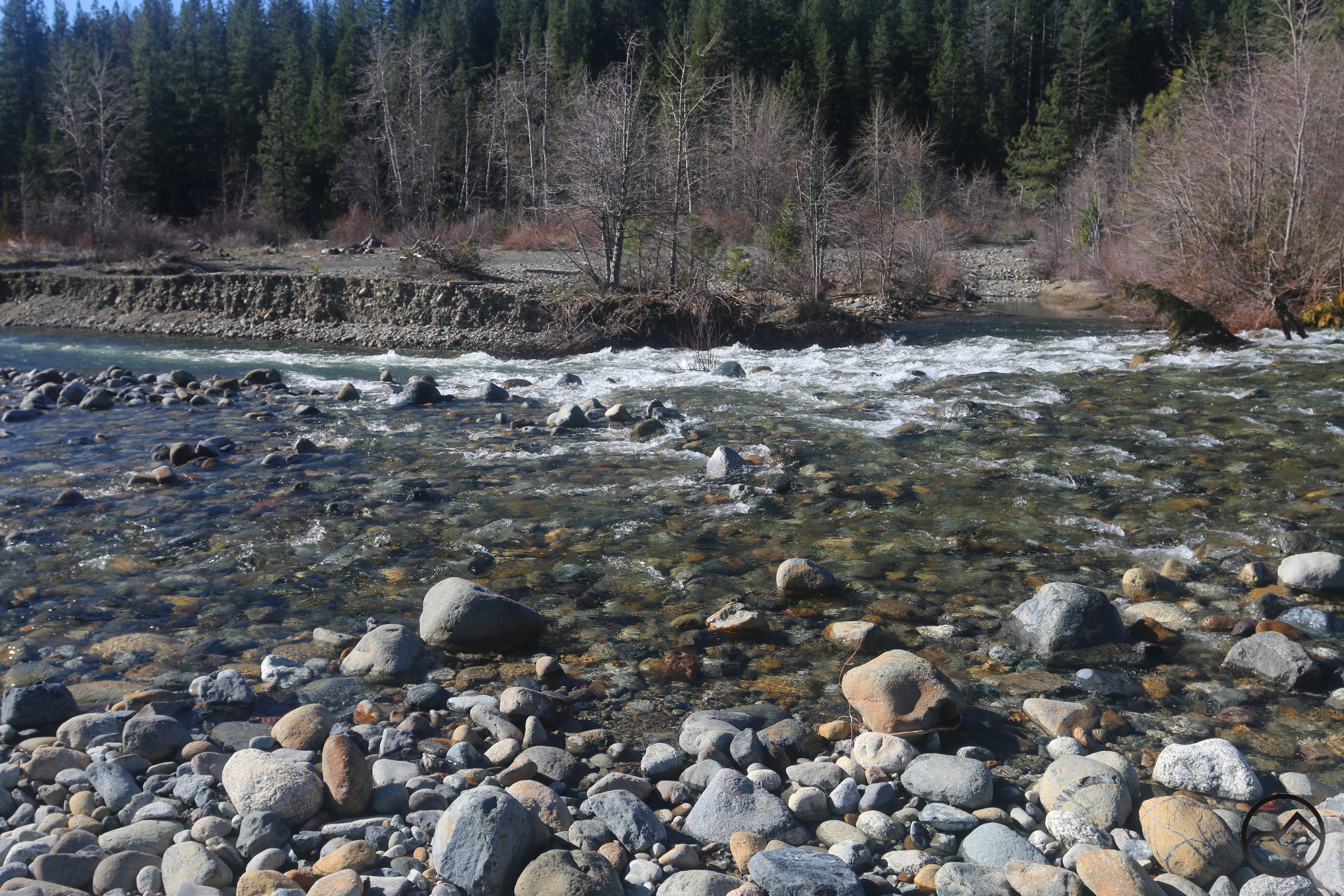
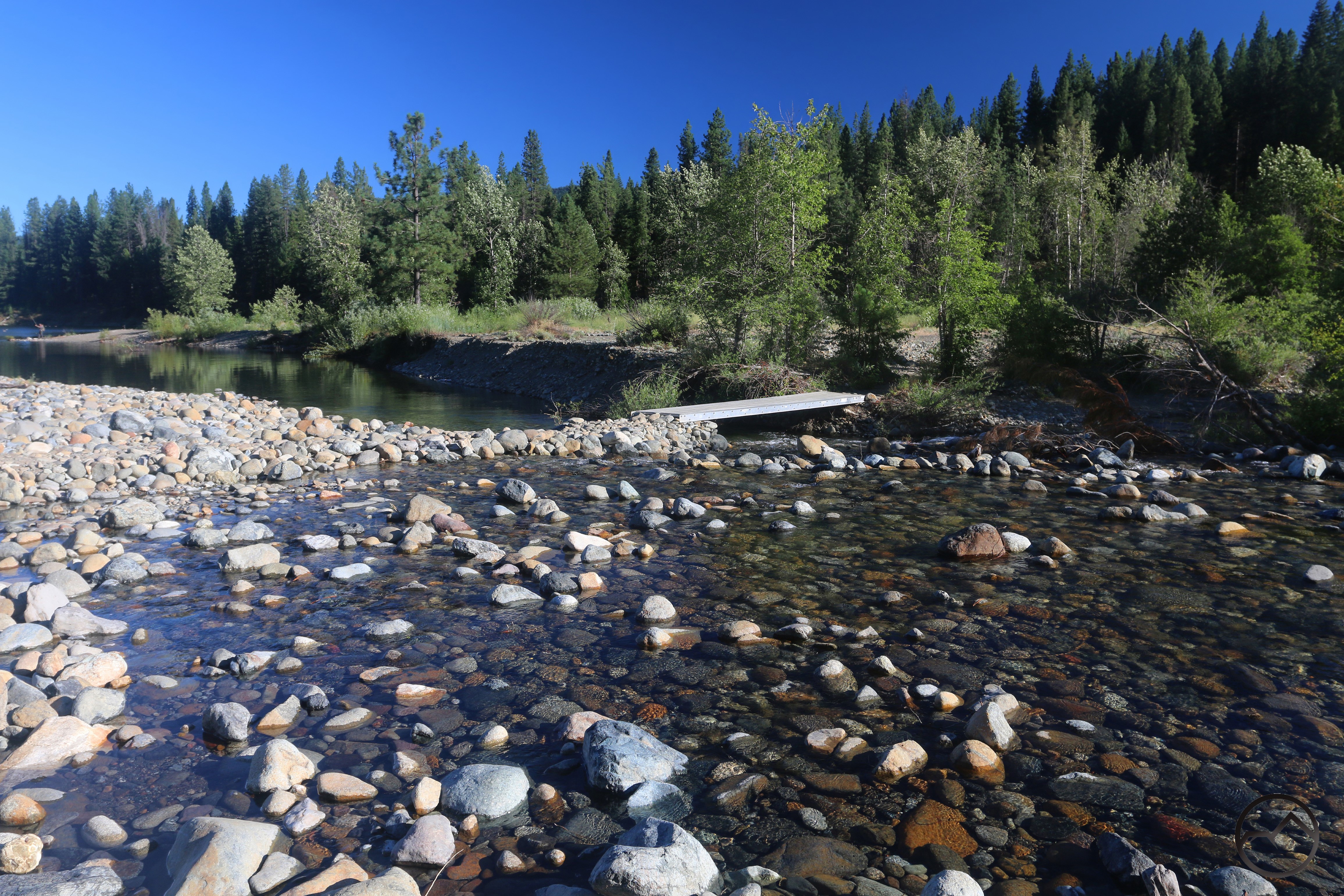
The Sacramento River flows vigorously just before entering Lake Siskiyou.

There was a season on this blog that I followed the changing conditions at the Sacramento River’s inlet into Lake Siskiyou. A number of flood events in steady succession repeatedly altered the layout of inlet landmarks. In particular, this had bearing on the position of the Lake Siskiyou Trail, which, each spring, has temporary bridges put out over the river in order to complete the loop around the lake. With the changing landscape, the trail was forced to alter course from year to year. It was fascinating to watch the river shape the land through which it flowed (Some posts can be found here, here, here, here and here).

It is hard to believe that it has been nearly 10 years since I have posted on this. My goodness have I been doing this for a long time…

This spring I decided to check in on the inlet with the intent of examining the route of the river’s flow and observing how the river may have changed its course over the last several years.

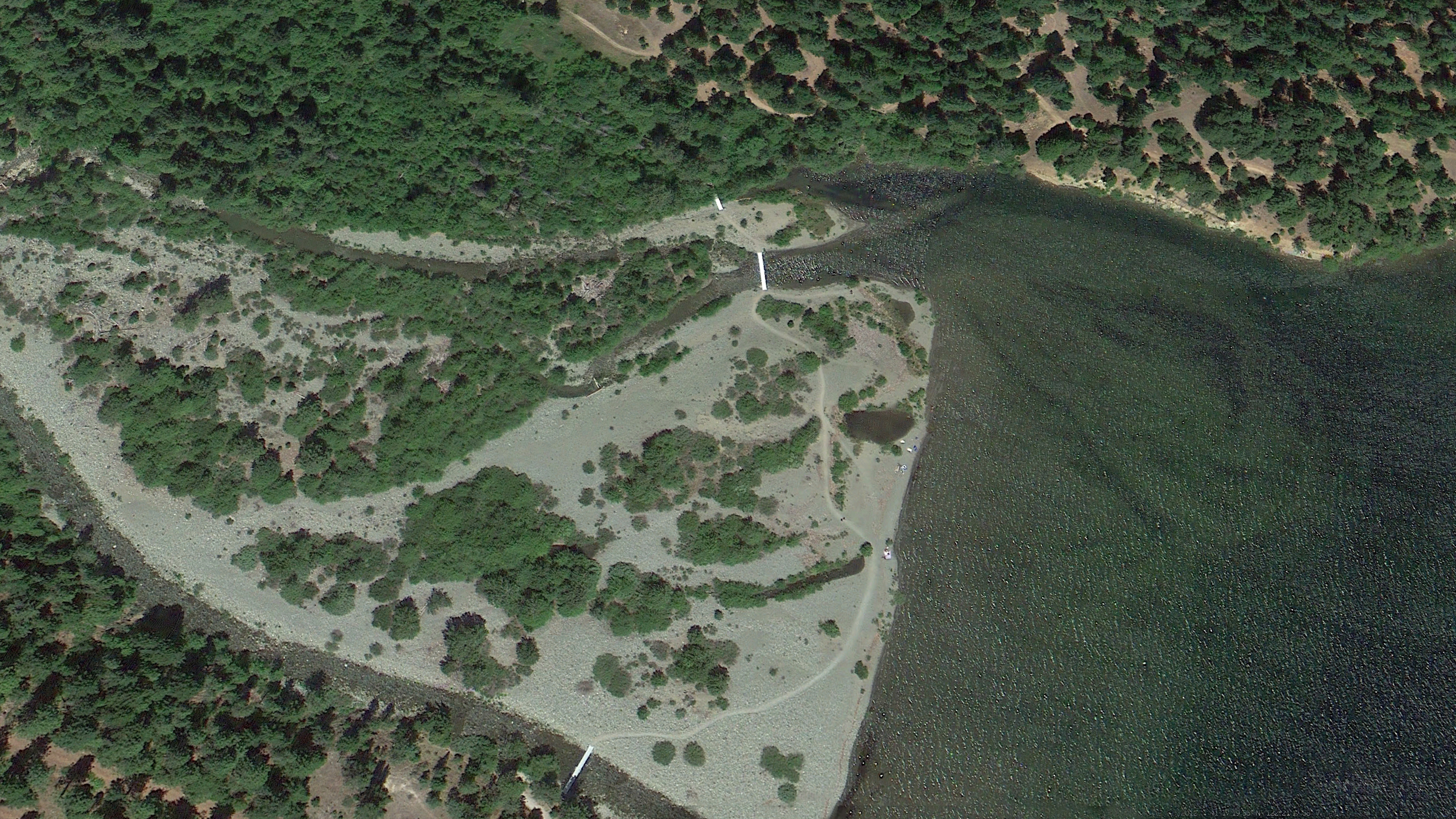
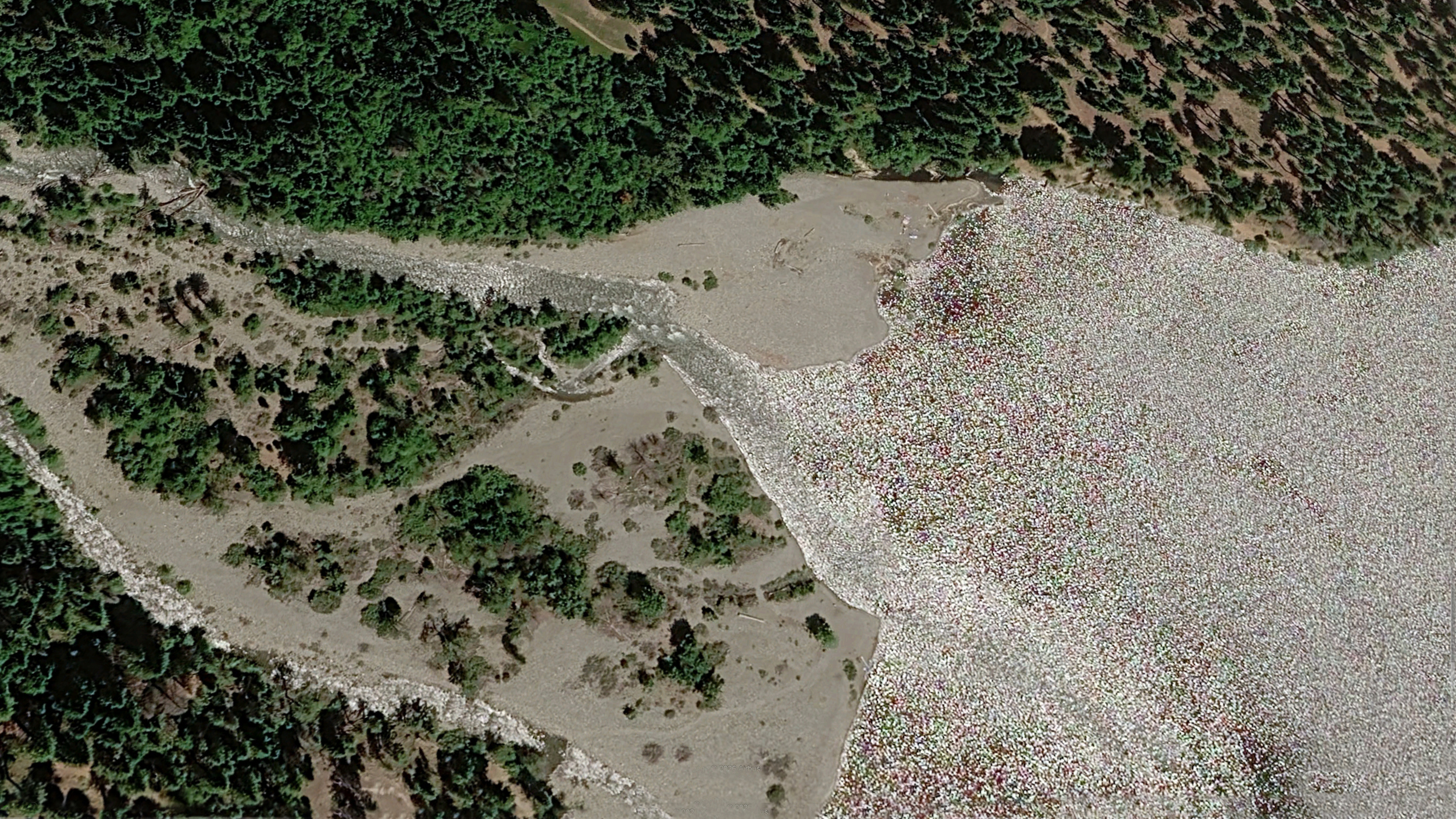
The first thing I did was get on Google Earth and examine the satellite imagery. It was obvious that trends that had begun over 10 years ago have continued. The process may have slowed somewhat but it has certainly not stopped.

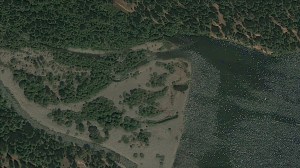
The above image is from 2012, one of the last years the inlet had this particular configuration. I can say from both experience and observation that the inlet area had been like this for several years without significant change. I basis this statement on both my personal observation, beginning in 2007 and also from the fact that there was abundant plant and tree growth dispersed throughout the inlet area. If significant changes had taken place, this growth would not have been able to grow to the extent that it did. The ability to scale Google Earth’s image dates confirms this as well, showing little change as far back as 1998. Thus, it can be asserted that there was a certain amount of stability at the inlet for several years.

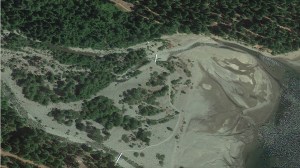
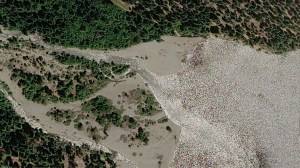
This image above is from 2026. It makes clear that the Sacramento River has both altered its course and washed away significant portions of the inlet area. In particular, the north channel has gradually shifted southward. Where it once entered the lake while hugging the low cliffs that hemmed in the flood plain, the north channel now enters the lake in the center of the inlet area. Measurements on Google Earth indicate the north channel’s point of entry into Lake Siskiyou has shifted 176 yards to the south over the last 13 years. Moreover, much of the plant community has been washed away, leaving the vari-hued river rock of the Sacramento the dominant feature of the area.

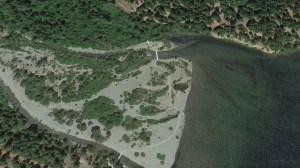
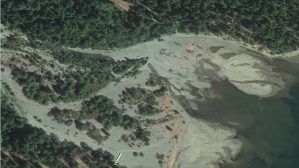
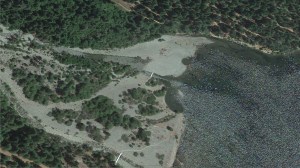
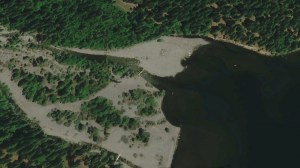
Below are a progression of images of the north channel area as it flows into the lake from 3 different years. Note how the river initially flows right up against the cliffs and then moving southward, cutting a deep channel into the rocky floodplain. The channel then recedes further south as the river erodes the loose rock strata:

2013

2016

2026

This does, of course, have an impact on the Lake Siskiyou Trail’s route over the river once the seasonal bridges are put out. The particular issue is the constantly moving south bank of the north channel. The loose strata of river rock makes placing the bridge securely a challenge. In 2012 seemingly permanent construction of gabions put the crossing in a permanent position. It was just a year or two later that the river began to alter its course, the gabions were washed out and the evolution of the area began.


In March of 2026, the river was wide and it was difficult to determine where the bridge might be placed.

By June 2026, a large causeway composed of river rock had been constructed in order to elevate the foundation of the north side of the bridge as well as close the gap over the river so that it can be crossed in a single span. This level of construction was in no way necessary several years ago. Also noteworthy is that in 2012, the original iteration of the bridges across the north channel had a short span at the edge of the flood plain and then a second crossing that required two spans bridging a series of gabions. Now only the single span is needed due to the causeway.

A lot has changed at this area. It is fascinating to observe just how much the river channel, lake shoreline, and trail have all been shaped by the river’s flooding.

2010
2012

2014
2016

2017
2020

2021
2026

Note how in all those images, the south channel and its span have remained constant. Though there was one year where the river shifted its primary flow into the south channel, the following year it was back to emptying the majority of its water into the lake through the north channel.

Remarkably, the bridge over the south channel still rests on the original gabion that was put in place in 2011-2012. As is often the case, the south channel dries up early in the season, leaving the north channel the only one that needs the bridge.

Though I have gone to the inlet many times over the last many years, it has been a good exercise to go back and evaluate it critically with an eye toward the changes that continue to take place. It makes me wonder if the north will eventually push all the way to the mouth of the south channel and they will merge, creating an island in the river, rather than one formed partially by the lake. Time will tell.

Of course, the river upstream has many other beautiful spots that tend to draw my attention more these days. It is amazing how many beautiful spots continue to go unnoticed. At least some of these won’t just erode away as the river flows.

Four Sunsets From Truchas Ridge

Posted by bubbasuess on May 31, 2026
Posted in: Cascade Range, Desert, Hiking, Mount Shasta, sunset, Truchas Ridge. 1 Comment

Another month has rocketed by and, sadly, the remodel is not yet completed. A couple more weeks, I think and we will be just about done. In the mean time, the only outside time I have had has been spent out at Truchas Ridge. It is hard to believe that it has been 3 years since “The Incident” and a rapid reduction in our activity out there. We are nearing the end of the subsequent legal process and I will probably write a lot more about the ridge and what happened out there once things have been worked out. Hopefully by the end of summer it will finally be done!

In the meantime, I have been working out at Truchas Ridge for the first time in 3 years. I used to have a trail out there but the fallow time has caused it to completely revert back to nature, except for the rock steps I built. Fortunately I had put out cairns to help mark the route as well. Now, since I had to start over, I have been able to reroute a lot of the path, making it a bit more interesting and less rocky in some areas. I have also added 2 loops, forming something of a figure eight.

I have actually been out there for a number of sunsets this month but between working on the trails or clouds obscuring the mountain, I have only recorded 3 sunsets. None of them had particularly great light or interesting clouds but the scenery is nonpareil and just being out there with the wind blowing, the nighthawks diving and the magnificent mountain all lit up was its own reward and worth documenting.

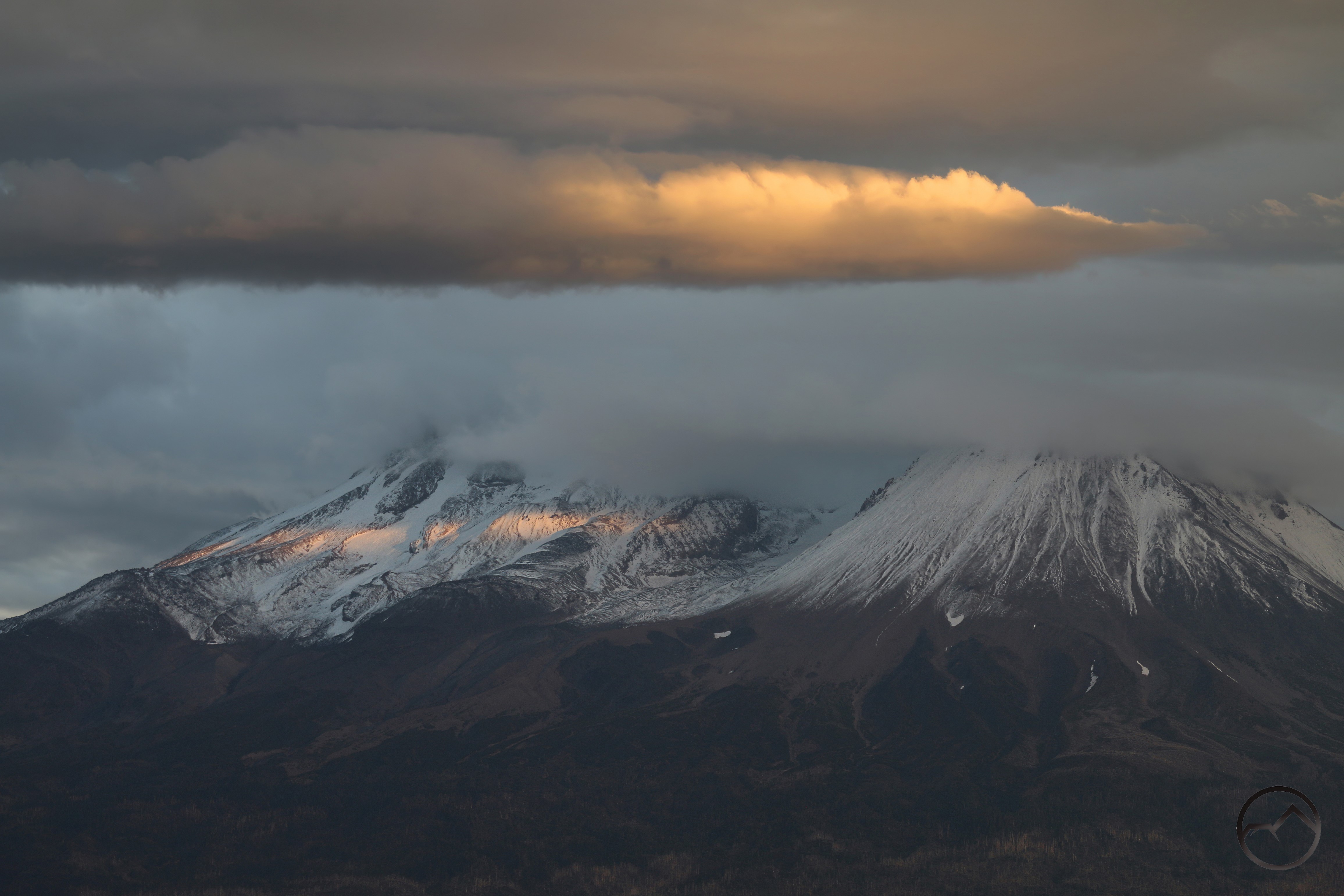
The first sunset was the second day of May. A storm was looming and a lenticular-like cloud hung over the valley. While it didn’t coalesce into well formed event, it did cast an ominous pall over the hills and heightened the anticipation of the coming storm. The clouds still let the light through and the alpenglow on Mount Shasta was terrific.

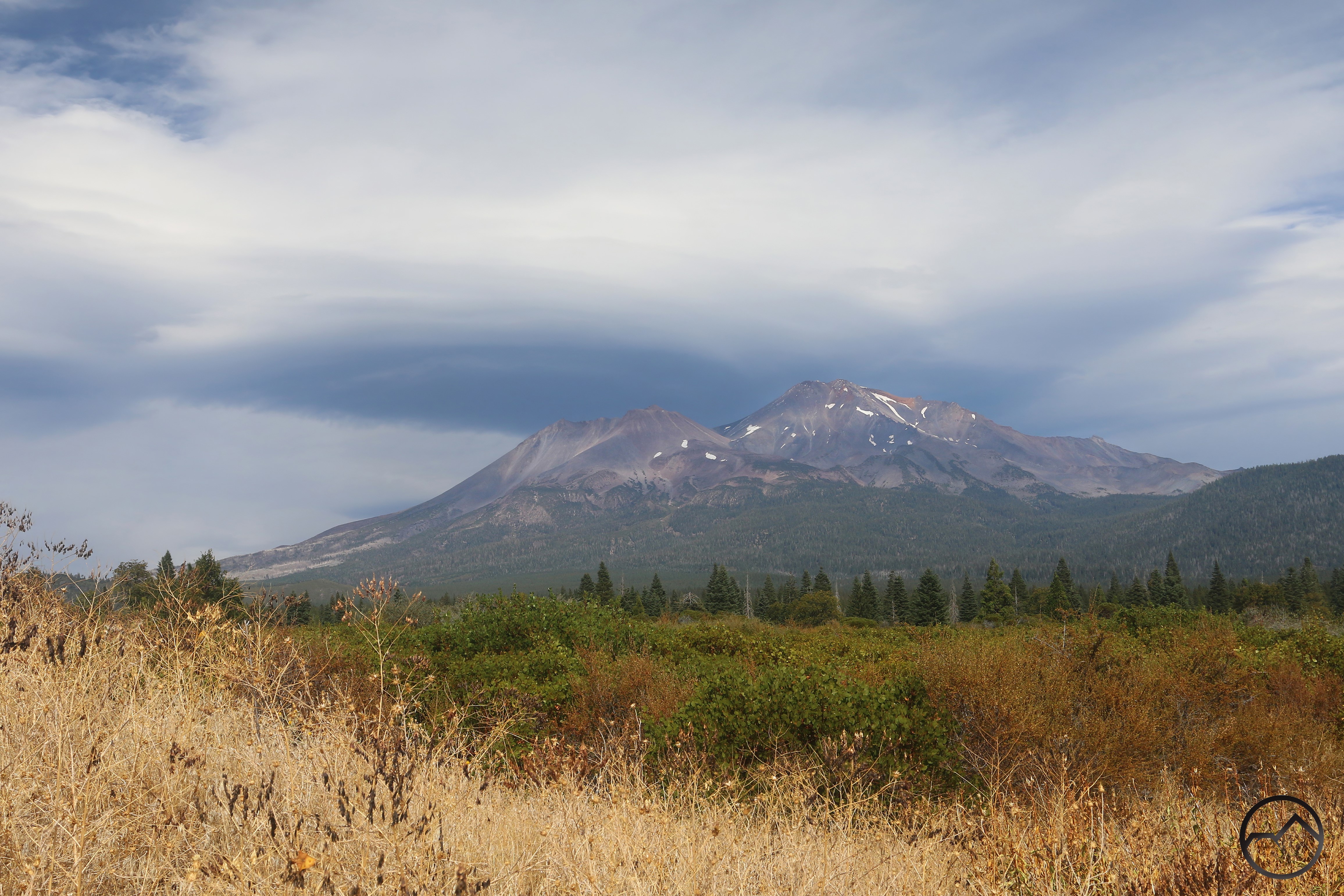
The second sunset began an interesting trend in the month of May. For whatever reason, the clouds consistently obscured Mount Shasta on the north side. At times the clouds were thick, others they were light but they regularly blocked the summit from view. Nonetheless, the sunset still illuminated the landscape and the scenery was stunning, regardless of whether one could see the summit.


The third sunset I recorded was especially memorable because I was absolutely beat. I had been clearing the path and moving large rocks for the trail, but had still managed to haul my camera and tripod along with the tools I was using. Once again, clouds blocked the summit, though it did manage to pop out from time to time. This was probably the prettiest sunset I took in from the ridge in May, 2026.


It has been gratifying to get the trail into such good shape. In the past it has only been an out and back but now it is something of a figure eight – 2 loops connected by a short path. The above images are all from the original out and back, though all of the refurbished path in May. After a little more work, I may post some of the other loops and their vistas, of which there are some grand ones.

The last sunset happened to be the last one of May. I headed over to the Keyhole at Pecos Point. This area is a family favorite though I have written about it little or shown very many images from here. The Keyhole is a pretty cool rock formation with brilliant green lichen on it. My kids like to climb the rocks in this area, having spent countless hours doing so over the years. The views from this area are jaw-dropping.

After the Keyhole, I headed to the summit of Truchas Ridge and then over to New Artists Point. The clouds that had surrounded Mount Shasta earlier were now entirely gone but the alpenglow was marvelous.

I am grateful to be back out working on Truchas Ridge again after so many years. We have a lot of plans out there and I am sure I will be writing about it more as we work them out. In the mean time, May has gone and June is now here. Hopefully I can get more than one post out…

April Flew By…Again

Posted by bubbasuess on April 30, 2026
Posted in: Cascade Range, Hiking, Lenticular Clouds, Mount Shasta, Truchas Ridge. 3 Comments

Another month has come and gone and I am barely getting a post out before change the page on the calendar. I have an excuse this time though. Not only has all the usual stuff been swirling around but a major renovation has been afoot in our house. Both bathrooms are being redone at once, as well as all (yes, all) the plumbing under the house. Add it all up and I have barely had time to do anything outside, let alone get any good pictures of Mount Shasta. Fortunately, just going about my business affords a seemingly endless stream of opportunities to appreciate the spectacle that is Mount Shasta and it’s surrounding mountains.

The remodel is a bit behind schedule, but we are progressing faster now. If you look just above the shop vac, you can see that the bottom of the wall is torn off and the outside is visible. The house has been stripped down to almost nothing and the experience certainly makes one appreciate things like plumbing.

I did manage to get out for one sunset at Truchas Ridge. The interesting clouds that had persisted all day dissipated but it was still a beautiful sunset. I am hoping to get out there more often over the rest of the spring.

There has been a fair amount of rain this April, which means the mountain has gotten some fresh snow. The banners have been magnificent at times. I love the morning light illuminating the billowing plumes of ice. It is so dynamic and serene at the same time.

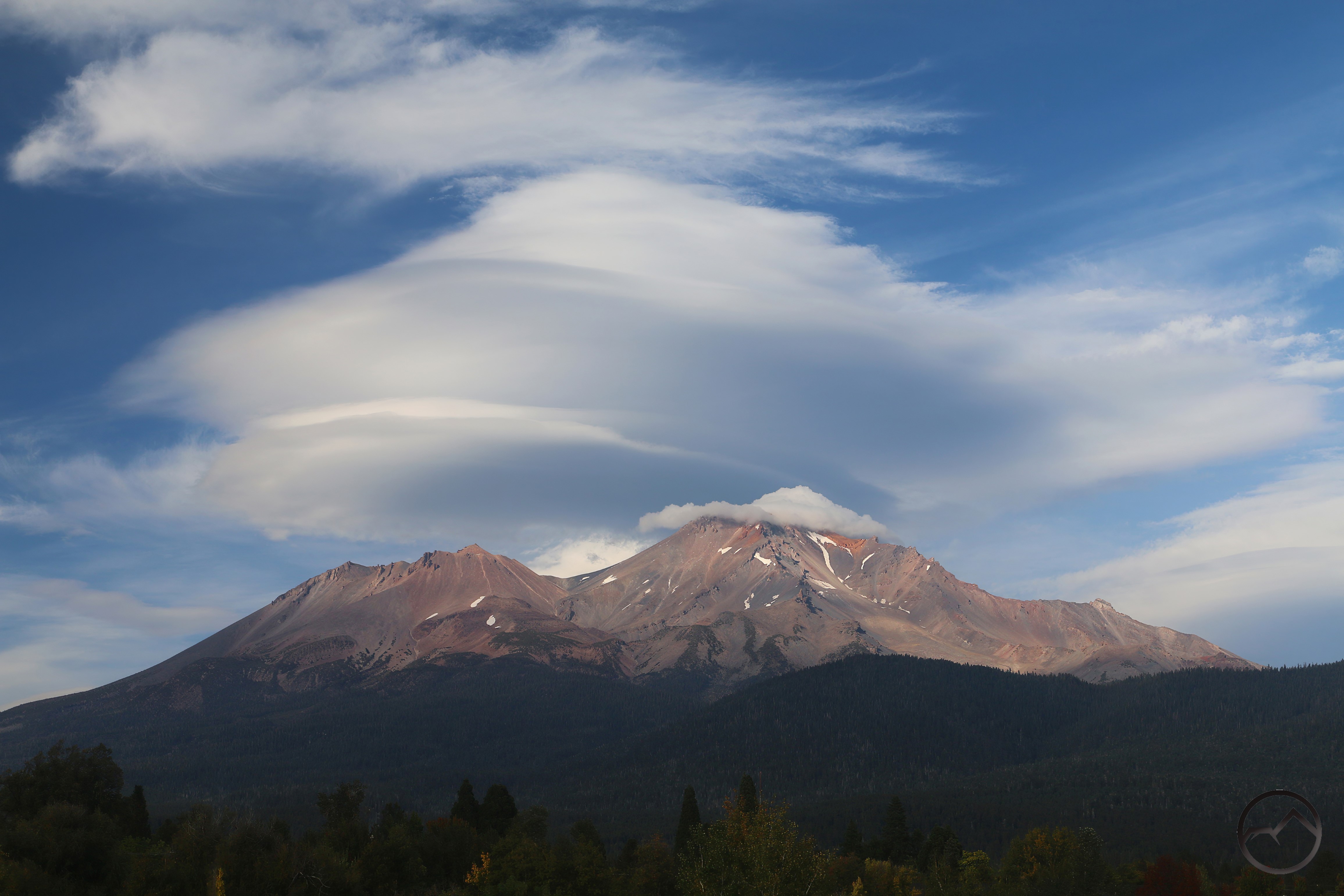
The most memorable event of the month was a mammoth lenticular cloud. It kept growing throughout the day and taking on more layers. By sunset it was absolutely massive. While the overcast sky did prevent good color from lighting it up, it was still an epic event to witness.

And that was pretty much it for the month, other than business and baseball games. Hopefully next month I can actually get outside.

Light In The Layers

Posted by bubbasuess on March 31, 2026
Posted in: Cascade Range, Hiking, Lenticular Clouds, Mount Shasta. 2 Comments

This post is weeks overdue. Things were just busy at the beginning of March and then got worse when we left for Utah to spend a week camping in the Moab and Capitol Reef areas. As they say, not time away goes unpunished, on top of which we had  my younger son’s birthday and baseball and my daughter’s musical. It all gets…complicated.

At the beginning of the month, there were a number of small lenticulars, but never much great color. However, with the hues of sunrise and sunset lacking, the morning light still lit the clouds up and made the layers of the clouds glow. The addition of fresh snow billowing off the upper elevations of the mountain made the scene even more beautiful.

The best specimen had a lot going on. It had some very delicate layers in a fine stack over the summit when I first pulled my camera out. However, the sight that really caught my interest was the light and shadows passing through the Windows on Casaval Ridge. The light that cut through the crags then illuminated the wispy clouds sailing around the mountain. It was entrancing and I could have watched it for far longer than I did. Eventually the cloud on the summit became less defined but picked up a nice touch of cloud iridescence.

A few days later, I made it up to Echo Point at Truchas Ridge for sunset. There was yet another small lenticular on the summit. After this, we headed off to Utah. It was warm out there but it was fantastic. I love the Colorado Plateau. The day after we got back from Utah, a small wedding party headed up to Echo Point for an intimate ceremony with the point’s phenomenal view highlighting their union. I was glad to be able to give them the opportunity. I never thought something like that would happen up there!
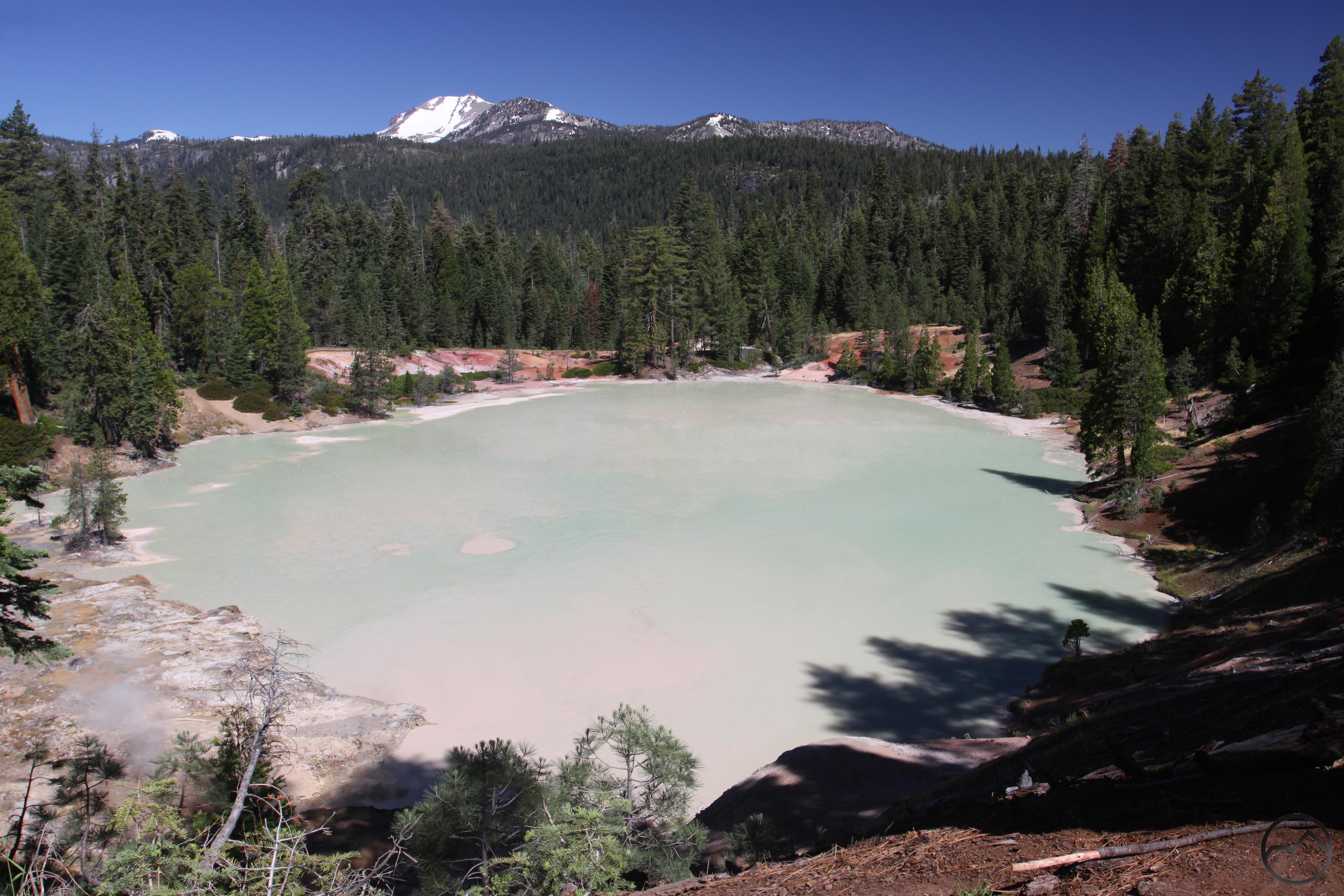
A couple days later, there was one more summit lenticular on Mount Shasta again, once again with the morning light pulsing through the layers. It was another great moment on the mountain.

Now spring is in full swing here in Mount Shasta. The grass is green, the trees are blossoming and the temperatures are warm (except tonight, of course). I have never seen spring come this early here. A few years ago, we were still getting 20-30 inches of snow at this time. Everything in cycles, I guess. Hang on, it’s going to be an interesting summer…

Winter Shows Up When It Will

Posted by bubbasuess on February 28, 2026
Posted in: Cascade Range, Hiking, Lenticular Clouds, Mount Shasta, Shasta Valley. 2 Comments

Fresh snow blankets Mount Shasta at sunset.

Another month has sailed past and I have not had much time to post anything, so this is going to be just a quick collection of pictures and conditions, most of which I have been able to capture as I have been going about my life. My apologies for the paucity of words. I do have two posts in the works that are neither weather related nor just a bunch of pictures. Hopefully I can get one of them done before I head off to Utah.

February started off with a little drama in the sky. The beginning of the month was a carry over from the exceedingly dry January we had. I go the above image while driving my son up to Klamath Falls for his hockey game. Hockey and a sunrise like that – it was a great day!

The dry month allowed Truchas Ridge to dry out a bit. It wasn’t a complete mudfest like what I got myself into in January. The day looked like the sunset could be magnificent but as has so often been the case, the sky just cleared out before sunset. A beautiful time to watch the mountain nonetheless!

I tried a few more times from the valley over the next few days, but conditions never just got to that point where it was truly astounding. It was only just…mildly astounding. I guess that means it was still pretty great. Even a lackluster sunset on Mount Shasta is still pretty incredible.

With a big storm finally careening through the region, I headed back to the same spot, hoping to capture Mount Shasta during a lull before the clouds overtook it again. I was too late, but it was great to finally be getting a lot of rain and snow.

We got quite a bit of snow though not as much as predicted. Still, it made for the whitest scene we have had all winter. It was peaceful the morning after snow tapered off.

The roads, however, where anything but peaceful. They were a downright disaster. The above image was outside our animal hospital. The freeways were loaded with accidents and the ski park highway was particularly bad. There were over half a dozen people off the road. Needless to say, the ski park was a zoo. I am not sure why so many people were have difficulty driving. I have seen the roads far, far worse but this seemed to catch drivers during a fit of complacency.

As the storm weakened, I headed out into the valley again. It seemed as though the clouds were clearing just enough for Mount Shasta and its off lenticular to get some light. I almost gave up when it suddenly turned bright pink. The light was gone nearly as quickly as it came but I had my camera ready and was able to capture one quick shot of the pink mountain.

The mountains always look terrific when they are textured with fresh snow. The waves in the ice etched by the wind, the frosted trees and the glittering crags all juxtapose to present a vision of icy glory. Add to that the blue sky and one has the perfect winter vision.

Thus the mountain was covered with a fresh new layer of snow. It looks fantastic right now. The image above was taken while dropping my son off at a friends house. With alpenglow drenching the mountain, how can I night set my tripod up in the middle of the street? Cars? What cars?

More rain has come this weekend. It was heralded by a brief lenticular display on the mountain. It began as a classic little wispy wave over the mountain, catching the morning light. It was obvious this one was not going away quickly.

The little lenticular wave continued to grow. Initially forming a ragged lens shape over the mountain, it expanded for hours until it covered the entire sky. There was not to be a lenticular sunset with this specimen. Nonetheless, it was a grand morning and the subsequent rain has been most welcome.

Now March is upon us. Will it bring a final, massive storm or will it go out quietly. The snowpack is hoping for the former. So am I.


January Rolled By With Mud, Then Very Dry

Posted by bubbasuess on January 31, 2026
Posted in: Cascade Range, Desert, Echo Point, Hiking, Lenticular Clouds, Mount Shasta, Truchas Ridge. 3 Comments

Here we are at the end of January and things have been unseasonably warm and dry. Strangely enough, though the month has felt more like March or the end of April, the dryness has not struck a perceptibly ominous chord at this point. Thankfully, we got a lot of rain in November and December (and a decent snow storm on Christmas Day). That, and the solid winters we have had the last few years, has meant that the overall water situation remains pretty good, despite the lack of a deep snowpack.

Even Shasta Lake is looking good. The lake has been drawing down to make room for more water should the weather turn more precipitous. The same is true for Lake Siskiyou, which would be full if not for the intentional draw down. With February, March and April yet to go, I am confident we will need the extra room in the reservoirs.

I can look back to previous years where January was drier and warmer than typical and those winters, particularly January 2011, still turned out rather well. That year the month was completely dry and the temperatures were in the low 60’s. Nonetheless, the storms came in February and then with even greater force in March. The latter half of that month saw the second largest storm I have ever experienced in Mount Shasta, leaving upwards of 6 feet of snow. Four feet fell the first night. Of course, this is all just recollection.

In the years subsequent to 2011, I began this website and can track the weather a little more concretely. In particular, the winters beginning in 2014 and 2015 were exceedingly dry winters overall, not just in January. Articles referencing the dry conditions for 2014 can be read here and here, while 2015 conditions can be read here. The former is interesting because we didn’t get any snow at all until April!

Despite the dry conditions, the month was still beautiful, with a host of interesting conditions.

The most spectacular event of the month came 4 days after the New Year. Incredible lenticulars formed all around Mount Shasta. In hindsight, I think this was the breaking of the wet weather that had been common over the previous couple of months and the coming of the dry weather system. It sure made for some special scenes in the sky.

Naturally, I wanted to document the spectacle from Truchas Ridge, so I headed up to Echo Point. It was a great view, though the light and clouds weren’t quite as grand as I had hoped they would be.


I had been up there a few times over the previous month but that typically been when the ground was frozen. I didn’t think that the warmer, thawed conditions might mean. It meant mud and a lot of it. The mud on the ridge is a special thing.

In the middle of the month, we took the boy scout troop camping at Orr Lake. The conditions were gorgeous, but it sure was cold. We could hear the wolves from the Whaleback Pack howling. Orr Lake is such an underrated destination. There should be more trails out in that neck of the woods.

Overall, the month was beautiful. It can be easy to slip into complacency and not appreciate the incredible beauty of this land but sometimes I just get overwhelmed with a sense of awe and the need to respond accordingly. I try to preserve that state with my camera, however inadequately. Psalm 19 comes to mind.

At the end of the month, there was one, intense burst of rain that lasted for a few hours. Though midwinter and cool, it still felt almost like a summer thunderstorm in its fury. There were, of course, some lenticulars leading to the build up of the storms power. Sense then, the sky has most been relatively sedate. As of the writing of this post, the weather seems to be holding for another week before some precipitation finally sets in. Lets hope the snow comes after the rain and the rest of the winter yields a decent snowpack.

__________________________________________________________________

Incidentally, today marks the 13th anniversary of the launching of this website. This year also marks the 10th year sense I hike all the trails for my Northern California book. There’s been a lot of changes since, both in life, in the land and in how I have written the blog on this website. I hope to spend the year sporadically reflecting on some of those things. Thanks to everyone who has been reading it, whether from the very start or who just subscribed last month. It’s been a lot of fun keeping this things going.

Posts navigation

← Older Entries
    • Recent Posts

      • Lava Fire – Five Years Later
      • Mount Shasta’s Staggering Run Of Summer Sunsets
      • 250th Independence Day, Mount Shasta
      • Truchas Bookends For June
      • Checking In On The Sacramento River Inlet
      • Four Sunsets From Truchas Ridge
      • April Flew By…Again
      • Light In The Layers
      • Winter Shows Up When It Will
      • January Rolled By With Mud, Then Very Dry
    • Enter your email address to follow Hike Mt Shasta and receive notifications of new posts by email.

    • Archives

      • August 2026
      • July 2026
      • June 2026
      • May 2026
      • April 2026
      • March 2026
      • February 2026
      • January 2026
      • December 2025
      • November 2025
      • October 2025
      • September 2025
      • August 2025
      • July 2025
      • June 2025
      • May 2025
      • April 2025
      • March 2025
      • February 2025
      • January 2025
      • December 2024
      • November 2024
      • October 2024
      • September 2024
      • August 2024
      • July 2024
      • June 2024
      • May 2024
      • April 2024
      • March 2024
      • February 2024
      • January 2024
      • December 2023
      • November 2023
      • October 2023
      • September 2023
      • August 2023
      • July 2023
      • June 2023
      • May 2023
      • April 2023
      • March 2023
      • February 2023
      • January 2023
      • December 2022
      • November 2022
      • October 2022
      • September 2022
      • August 2022
      • July 2022
      • June 2022
      • May 2022
      • April 2022
      • March 2022
      • February 2022
      • January 2022
      • December 2021
      • November 2021
      • October 2021
      • September 2021
      • August 2021
      • June 2021
      • May 2021
      • April 2021
      • March 2021
      • February 2021
      • January 2021
      • December 2020
      • November 2020
      • October 2020
      • September 2020
      • August 2020
      • July 2020
      • June 2020
      • May 2020
      • April 2020
      • March 2020
      • February 2020
      • January 2020
      • December 2019
      • November 2019
      • October 2019
      • September 2019
      • August 2019
      • July 2019
      • June 2019
      • May 2019
      • April 2019
      • March 2019
      • February 2019
      • January 2019
      • December 2018
      • November 2018
      • October 2018
      • September 2018
      • August 2018
      • July 2018
      • June 2018
      • May 2018
      • April 2018
      • March 2018
      • February 2018
      • January 2018
      • December 2017
      • November 2017
      • October 2017
      • September 2017
      • August 2017
      • July 2017
      • June 2017
      • May 2017
      • April 2017
      • March 2017
      • February 2017
      • January 2017
      • December 2016
      • November 2016
      • September 2016
      • August 2016
      • July 2016
      • June 2016
      • May 2016
      • April 2016
      • March 2016
      • February 2016
      • January 2016
      • December 2015
      • November 2015
      • September 2015
      • August 2015
      • July 2015
      • June 2015
      • May 2015
      • April 2015
      • March 2015
      • February 2015
      • January 2015
      • December 2014
      • November 2014
      • July 2014
      • June 2014
      • May 2014
      • April 2014
      • March 2014
      • February 2014
      • January 2014
      • December 2013
      • November 2013
      • October 2013
      • September 2013
      • August 2013
      • July 2013
      • June 2013
      • May 2013
      • April 2013
      • March 2013
      • February 2013
      • January 2013
    • Categories

      • Boy Scouts
      • Cascade Range
      • Castle Crags
      • Desert
      • Echo Point
      • Glaciers
      • Hiking
      • How things came to be…
      • Klamath Mountains
      • Konwakiton Outdoor Designs
      • Lakes
      • Lenticular Clouds
      • Maps
      • Marble Mountains
      • Meadows
      • Mount Eddy
      • Mount Shasta
      • Mount Shasta History
      • Napa County
      • Off Season Trails
      • Pacific Crest Trail
      • Peaks
      • Rivers
      • Rock Climbing
      • Scott Mountains
      • Seldom Seen
      • Shasta Valley
      • Sierra Nevada
      • Siskiyou Mountains
      • Sonoma County
      • Spring Trails
      • sunrise
      • sunset
      • Trinity Alps
      • Trinity Divide
      • Truchas Ridge
      • Uncategorized
      • Water
      • Waterfalls
      • Wilderness
      • Wildflowers
      • Wine Country
      • Winter Trails
      • Yosemite
    • Meta

      • Create account
      • Log in
      • Entries feed
      • Comments feed
      • WordPress.com
    • Copyright © 2013-2024 by Bubba Suess

      DISCLAIMER: Any use of the information contained in this site by any and all persons is done at their own risk. The operator of this site shall be held harmless from any and all alleged claims, demands, causes of action, liability, loss, damage and/or injury to property or persons whether brought by an individual or other entity. This indemnification applies, without limitation, to all actions by an individual or other entity as a result of their use of information contained in this site.
    Blog at WordPress.com.
    Hike Mt. Shasta
    Blog at WordPress.com.
    • Subscribe Subscribed
      • Hike Mt. Shasta
      • Join 965 other subscribers
      • Already have a WordPress.com account? Log in now.
      • Hike Mt. Shasta
      • Subscribe Subscribed
      • Sign up
      • Log in
      • Report this content
      • View site in Reader
      • Manage subscriptions
      • Collapse this bar
    Loading Comments...