Hike Mt. Shasta

Exploring the Mount Shasta Region

  • Home
  • Trails
    • Mount Shasta Trails
      • Brewer Creek Trail
      • Clear Creek Trail
      • Gray Butte Trail
      • Green Butte Ridge Trail
      • Horse Camp Trail
      • North Gate Trail
      • Old Ski Bowl Trail
      • Panther Meadow Trail
      • South Gate/Squaw Meadow Trail
      • Whitney Falls Trail
    • Trinity Divide Trails
      • Blue Divide Trail
      • Castle Lake Trail
      • Castle Lake Shore Trail
      • Cliff Lake Trail
      • Deadfall Lakes Trail
      • Gray Rock Lakes Trail
      • Gumboot Trail
      • Heart Lake Trail
      • Porcupine & Toad Lakes Via Pacific Crest Trail
      • Seven Lakes Basin Via Pacific Crest Trail
      • Sisson-Callahan Trail
      • Soapstone Trail
      • South Mumbo Scramble
      • Tamarack Lake Trail
      • Toad Lake Trail
    • Castle Crags Trails
      • Burstarse Falls Via Pacific Crest Trail
      • Castle Dome Trail
      • Flume Trail
      • Lower Castle Crags Via Pacific Crest Trail
      • Root Creek Trail
    • Scott Mountains Trails
      • Bluff Lake & Cement Bluff via Pacific Crest Trail
      • Caldwell Lakes Trail
      • China Mountain Scramble
      • Cory Peak and Bull Lake via Pacific Crest Trail
    • Cascade Crest
      • Ash Creek Butte Scramble
      • Goosenest Trail
      • Juanita Lake Trail
      • Orr Lake Trail
    • Mount Shasta City Area Trails
      • Black Butte Trail
      • Box Canyon Trail
      • Gateway Trail
      • Lake Siskiyou Trail
      • Mount Shasta City Short Trails
      • Ney Springs Canyon Trail
      • Spring Hill Trail
    • Shasta Valley Trails
      • Black Lava Trail
      • Haystack Trail
      • Lake Shastina Trail
      • Pluto Cave Trail
      • Trout Lake Trail
      • Yellow Butte Trail
    • Sacramento River Trails
      • Dunsmuir Trail
      • Hedge Creek Falls Trail
      • Sacramento River Trail
      • Sims History Trail
    • McCloud River Trails
      • Ash Camp To Ah-Di-Na Via Pacific Crest Trail
      • McCloud River Falls Trail
      • McCloud River Preserve Trail
      • Squaw Valley Creek Trail
      • McCloud River Trail: Algoma Camp to Nitwit Camp
      • McCloud River Trail: Nitwit Camp to Cattle Camp Swimming Hole
      • McCloud River Trail: Cattle Camp Swimming Hole to Camp 4
      • McCloud River Trail: Camp 4 to Upper McCloud Falls
      • McCloud River Trail: Pine Tree Hollow Loop
    • Trails Further Afield
      • Trinity Alps Trails
        • Bear Lakes Trail
        • Billys Peak Trail
        • Boulder Creek Lakes Trail
        • Boulder Lake Trail
        • Canyon Creek Trail
        • Caribou Lakes Trail
        • East Boulder Lake Loop
        • East Weaver Lake Trail
        • Four Lakes Loop
        • Granite Peak Trail
        • Grizzly Creek Trail
        • Gulch Lakes Loop
        • Hidden Lake Trail
        • South Fork Lakes Trail
        • Stoddard Lake Trail
        • Stoney Ridge Trail
        • Tangle Blue Lake Trail
      • Warner Mountains
        • Emerson Creek Trail
        • Highgrade Trail
        • Patterson Lake Via Warner Summit Trail
        • Pine Creek Trail
        • Squaw Peak Trail
  • Articles
    • Trails By Area
      • Mount Shasta
        • Vistas, Meadows And Waterfalls: Three Best Hikes On Mount Shasta
        • The End Of The Road: Three Hikes In The Old Ski Bowl Area
        • Two Trails From Bunny Flat
        • Three Trails On Mount Shasta’s East Side
        • Mount Shasta’s Hummingbirds
      • Trinity Divide
        • Great Lakes: Top Five Lake Basins In The Trinity Divide
        • The Headwaters Of The South Fork Of The Sacramento River
        • Neglected Headwaters: Two Lesser Lake Basins On The South Fork
        • Gumboot Saddle: Two Hikes On The PCT
        • Descent Into Mystery: The Sisson-Callahan Trail
        • Mumbo Basin – Overlooked On The West Side
        • The Headwaters Loop: A Proposed Backpacking Loop In The Trinity Divide
      • The McCloud River
        • The McCloud River Trail
      • Shasta Valley
        • Jewels In The Desert
      • Scott Mountains
        • Great Scott! Two Scott Mountains Hikes On The PCT
      • Trinity Alps
        • Carubou Lakes: Trinity Alps On A Grand Scale
        • Switchbacks To Heaven: The Trinity Alps’ Stoney Ridge Trail and Four Lakes Loop
        • Trinities In Proximity: Two Trinity Alps Trails With Easy Access From Mount Shasta
        • Trails in the Carter Meadows Area
        • Trinity Alps Views of Mount Shasta
        • The Psychological Value Of The Trinity Alps
    • Waterfalls
      • Three Waterfalls On Mount Shasta
      • McCloud River Waterfalls
      • Sacramento River Waterfalls
      • Trinity Divide Waterfalls
      • Trinity Alps Waterfalls
      • Avoiding A Dry Whitney Falls
    • Off Season Trails
      • Three Winter Hikes Near Mount Shasta City
      • Winter Hikes In Shasta Valley
      • Winter Hiking In The Shasta Valley Wildlife Refuge
      • Winter Hikes On The Sacramento River
      • Winter Hikes On The Lake Siskiyou Trail
      • Spring Hikes In The Castle Crags
      • Spring Hikes On the Upper McCloud
      • Spring Hikes On The Lower McCloud River
    • Points Of Interest
      • Mount Eddy: Overshadowed, Underrated
      • Black Butte: Hiding In Plain Sight
      • Castle Dome: Steadfast And Staggering
      • Mount Shasta Hoodoos
      • Sacramento Scrambling
      • The Shasta River
      • The Castle Creek Watershed
      • Mount Shasta East Side Glacier View
      • 5 Fantastic Mount Shasta Vistas
      • 5 Highest Peaks Around Mount Shasta
      • 5 Best Hikes On Creeks And Rivers
      • 5 Interesting Footbridges
      • Three Spectacular Drive-To Sunset Vistas
    • North State Geography
      • Introduction
      • Seven Major Regions
      • The California Cascades
      • Klamath Mountains Pt. I
      • Klamath Mountains Pt. II
      • The Great Canyons Of Mount Shasta
      • Mount Shasta, Timberline, And The Relative Size Of Cascade Volcanos
      • Four Eruption Cones Of Mount Shasta
      • Mount Shasta’s Medial Moraine
    • Northern California Review
      • North Table Mountain
      • Lakes Basin Recreation Area
      • Eastern Sierra Fall Color
      • Sonoma County
      • Central Sierra Nevada
      • Orland Buttes
    • Seldom Seen
      • Ash Creek Falls
      • Mud Creek Canyon
      • Lower Mud Creek Canyon
      • Diller Canyon
      • Lower Cascade Gulch
      • The Grey Rocks
      • Castle Creek
      • Upper Wagon Creek
      • Fawn Creek Canyon
      • Confluence of the Sacramento River and Castle Creek
      • Upper Klamath River Canyon
      • Hole In The Ground Geologic Area
      • Ash Creek Butte Fossil Rock Glacier
    • Mount Shasta History
      • Vantage Lost: The Everitt Memorial Vista
      • A Yosemite-Mount Shasta Connection
      • Whitney – What’s In A Name?
      • Mount Shasta Area and the 1838 Exploring Expedition
      • A 19th Century Engraving Of An Epic Mount Shasta Vista
      • Vintage 1907 Color Photos
      • A Misleading Painting
      • A Mysterious Painting
      • A Mysterious Painting Pt. II
      • Stereographic Mt. Shasta
      • Year One Of Hike Mt Shasta
      • Year Two Of Hike Mt Shasta
      • Year Three Of Hike Mt Shasta
      • Year Four Of Hike Mt Shasta
      • Year Five Of Hike Mt Shasta
      • Year Six Of Hike Mt Shasta
      • Year Seven Of Hike Mt Shasta
    • Image Galleries
      • Mount Shasta Trails Gallery
      • Mount Shasta Sunrise Gallery
      • Mount Shasta Sunset Gallery
      • Lenticular Cloud Gallery
      • Mount Shasta NON-Lenticular Clouds
      • Mount Shasta Reflection Gallery
      • Telephoto Gallery
      • Mount Shasta Area Fall Color
      • Castle Crags Gallery
      • Waterfalls Gallery
      • Trinity Divide Lakes Gallery
      • Mount Shasta Area Rivers Gallery
      • Shasta High Desert Gallery
      • Mount Shasta GIF Gallery
    • Random Notes
      • Revew: Three Mount Shasta Trail Maps
      • A Mount Eddy Wilderness?
      • New Land Additions For The Castle Crags
      • Book Plug: Mount Shasta Area Rock Climbing
      • Exile: How I Came To Love Wilderness
  • Mt. Shasta Trail Map
  • Blog
  • About/Contact
  • Links
  • Truchas Ridge

Mount Shasta Area Waterfalls Gallery

Posted by bubbasuess on April 4, 2015
Posted in: Uncategorized. Tagged: Hiking, Mount Shasta, Waterfalls. 7 Comments
Ash Creek Falls on Mount Shasta

Ash Creek Falls on Mount Shasta

While some of the waterfalls around Mount Shasta are well known, the greater area is not usually thought of as a destination for great waterfalls. The truth is, outside of Yosemite National Park, the Mount Shasta region has one of the finest collections of waterfalls in the American West. Whether looking for wild, glacier-fed plunges on the slopes of the mountain itself or massive cataracts on beautiful rivers, you will discover excellent specimens throughout the area. Many of the best falls are found on Mount Shasta, Ash Creek Falls and Mud Creek Falls being among the best plunges found in the state. The McCloud River is famous for its trio of magnificent waterfalls. The Trinity Divide while not often thought of as a destination for finding great falls shelters many spectacular cataracts. Click to enlarge

Mount Shasta and Ash Creek Falls.
The view from the east side across the widest section of Mud Creek Canyon.
Mud Creek Falls

A look up above Mud Creek Falls into the middle portion of Mud Creek Canyon.
The lowest of the large waterfalls on Mud Creek Canyon.
Mount Shasta peeks out above the lowest section of Mud Creek Canyon.

Konwakiton Falls

The summit of Mount Shasta and the broad north face of Shastina are seen above Whitney Falls and the head of Whitney Creek Canyon.
A closer view of Shastina and Whitney Falls

Mossbrae Falls

Lower Burstarse Falls
Faery Falls at high water.
Box Canyon cascade
Hedge Creek Falls

Behind Hedge Creek Falls
Sweetbriar Falls
Caldwell Basin cascade
A section of the surging Wagon Creek cascades.

Upper Wagon Creek Falls
The top of Wagon Creek Falls
Wagon Creek Falls
Cascade on the South Fork of the Sacramento

Lower McCloud Falls
Lower McCloud Falls
Middle McCloud Falls

Upper McCloud Falls
Upper McCloud Falls
Lakin Dam
Large cataract on the McCloud River

Squaw Valley Creek Falls
Somewhere in the Shasta Valley.

Breaking Down The North State: The California Cascades

Posted by bubbasuess on March 26, 2015
Posted in: Hiking, Mount Shasta. Tagged: Caribou Wilderness, Hat Creek, Ishi Wilderness, Klamath River, Lassen Cascade, Medicine Lake, Pit River, Shasta Cascade, Southern Oregon Cascades, Thousand Lake Wilderness. 7 Comments
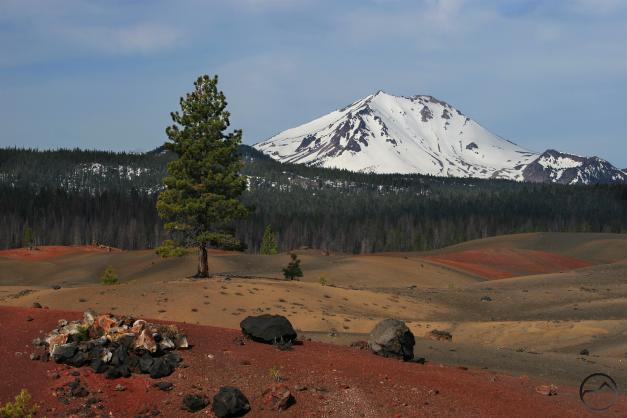
Lassen Peak viewed from the Painted Dunes

Lassen Peak viewed from the Painted Dunes

The Cascade Range is one of the great mountain ranges of North America. It stretches from southernmost British Columbia in Canada to just south of Lassen Peak in California. Populated with spectacular, glacier-clad volcanoes, vast forests, plunging waterfalls, and vast expanses of wilderness, the Cascades are one of the great mountain ranges of the American West. While it is natural to think of the states of Oregon and Washington when considering the Cascade Range, it would be an unfortunate mistake to omit the portion of the Cascades that extend southward into California.
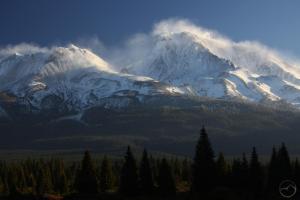
Cascades, Mt. Shasta - Nov2013 004_edited-2 (Custom)

Icy Mount Shasta

When describing the Cascade Range, it is common for most people to envision the black lava fields and expansive forests of Oregon and the deep river valleys and rugged mountains of Washington. The lush Columbia River Gorge and the volcanic wasteland around Mount St. Helens go hand in hand with the icy towers of Mount Rainier and Mount Hood. Yet, while these are deservedly iconic images, it is an incomplete image of the mountain range as a whole. The southernmost portion extends over 130 miles into California. This part of the Cascade Range includes the second and third highest summits in the range as well as some of the most recent and dramatic volcanic activity. Like the Cascades further to the north, the area is defined by towering, glacier-laden volcanoes, vast forests, dark lava flows and wild rivers.

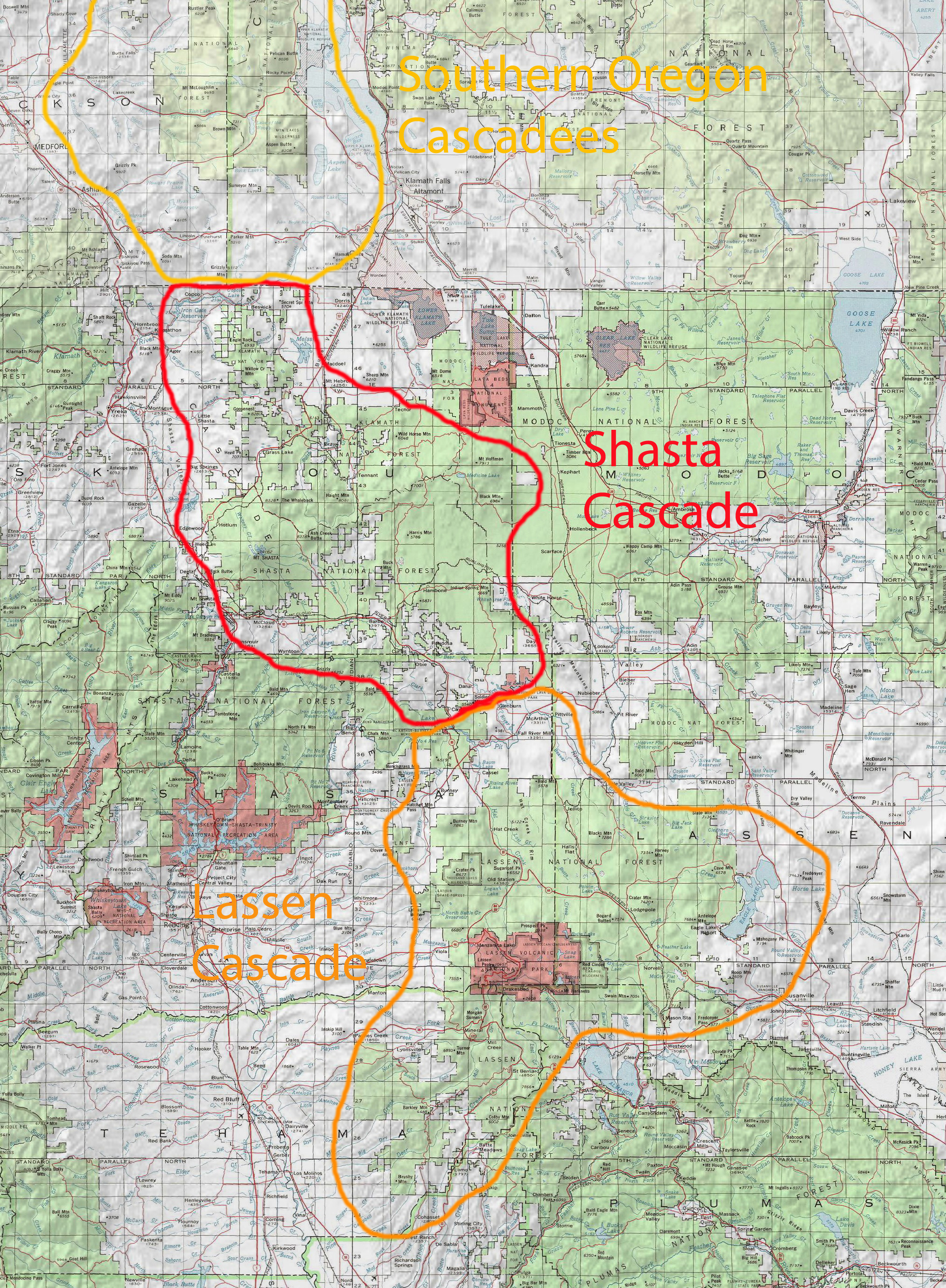
The California Cascades can be broken up into two major sections. At the southernmost end of the range is the Lassen Cascade, centered on Lassen Peak and Lassen Volcanic National Park. North of this area is the Shasta Cascade, which is naturally dominated by magnificent Mount Shasta. However, the mountain is only a significant part of a larger volcanic complex, much of which is underappreciated. Running between these two regions is the Pit River, which conveniently divides the Cascades in California.
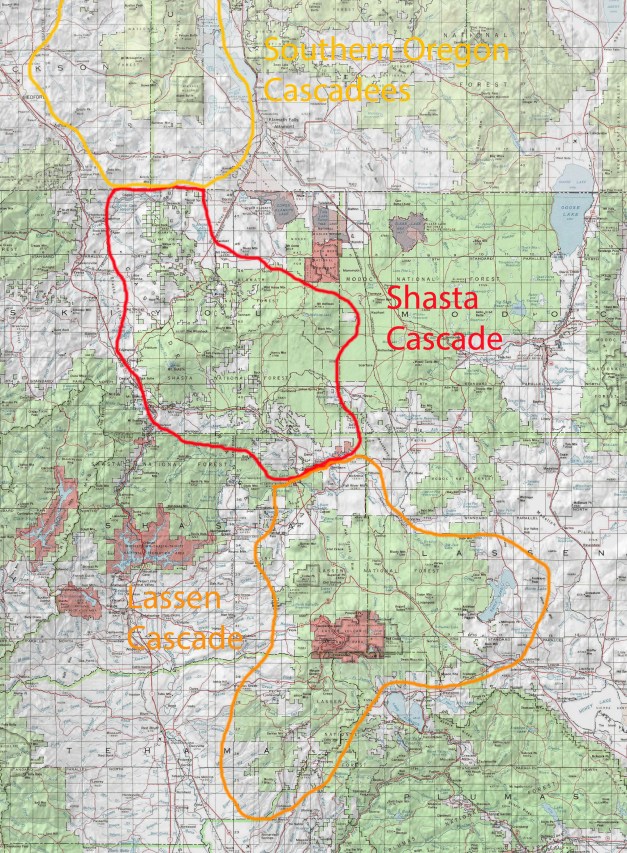
North State Map

The Pit River Area

Cascades, Harmony Weekend - Nov06 036 (Custom)

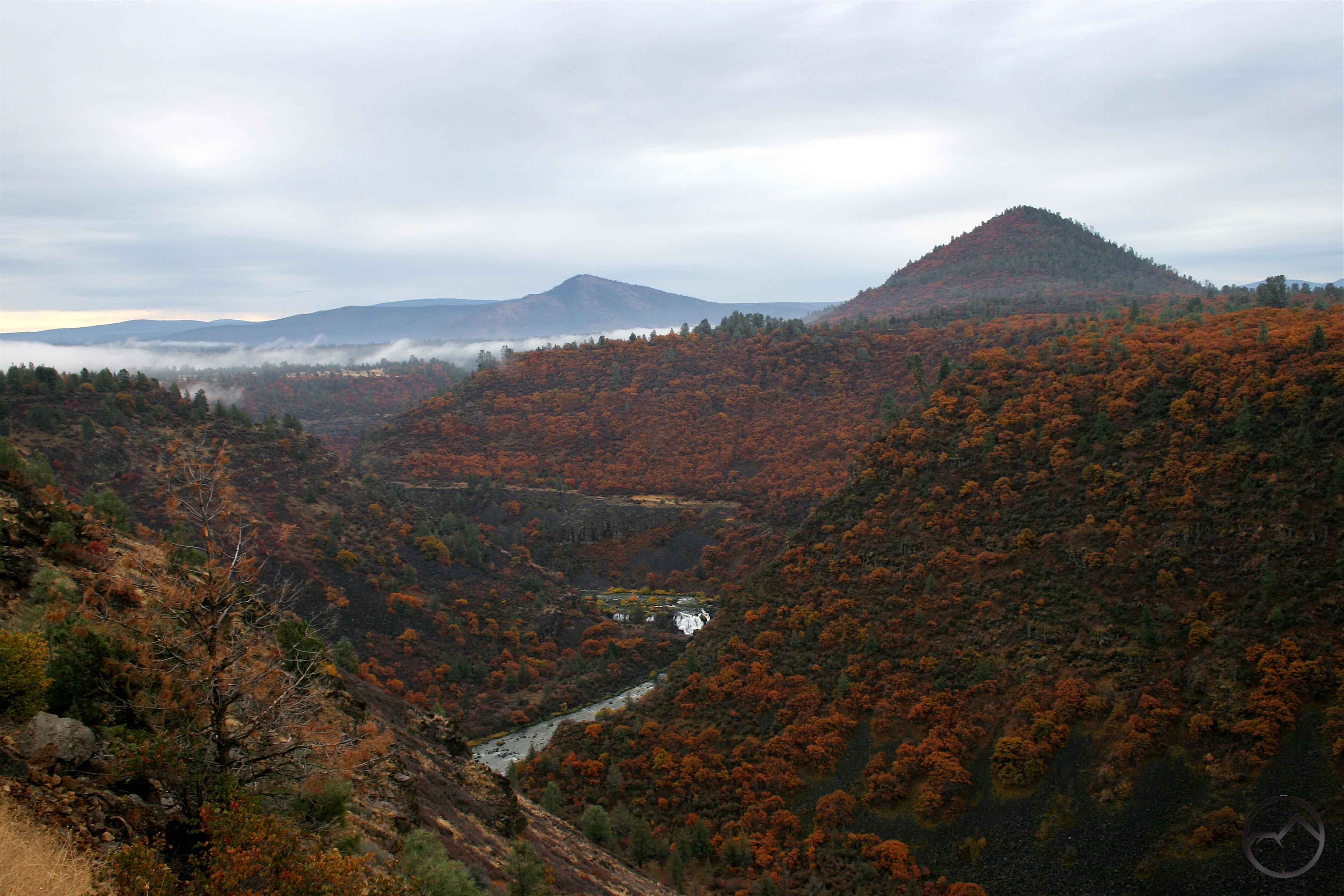
The Pit River Canyon

One of the largest rivers in Northern California, the Pit passes through the heart of the California Cascades. Its passage through the mountains does not receive much fanfare but it is noteworthy for several reasons. Chief among them is the fact that it is unusual for a river to rise on one side of a mountain range and then carve a path through the heart of the range, rather than flowing around. For example, no river begins on the east side of the Sierra Nevada and manages to find its way to the Pacific. Instead, the eastern rivers all flow into the Great Basin and evaporate in large sinks. The Pit River manages to buck this trend and carve through the Cascades in order to link up with the Sacramento River. Interestingly, the Pit’s journey through the Cascades is the southernmost of three such occurrences. Just to the north the Klamath River accomplishes a similar feat near the Oregon border. The most dramatic example of this is the Columbia River’s passage through the Columbia River Gorge. This is essentially a sea level pass through a major mountain range, something almost unheard anywhere else.

While the Pit River’s bisection of the California Cascades is not nearly as spectacular as the Columbia’s, it is not without its own scenic beauty. More importantly, it marks the border between to the two major zones in the California Cascades: the Shasta Cascades and the Lassen Cascades. To the north of the Pit, most of the major geologic features are related to Mount Shasta and the creeks and rivers are part of the Sacramento River and Klamath River watersheds. South of the Pit River, the geology is oriented toward the remains of Mount Tehama and the rivers and creeks flow into the Pit River and Feather River watersheds. The division of the California Cascades by the Pit River makes a convenient distinction between the Cascade’s two major regions in California.
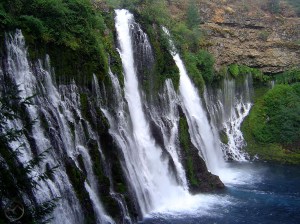
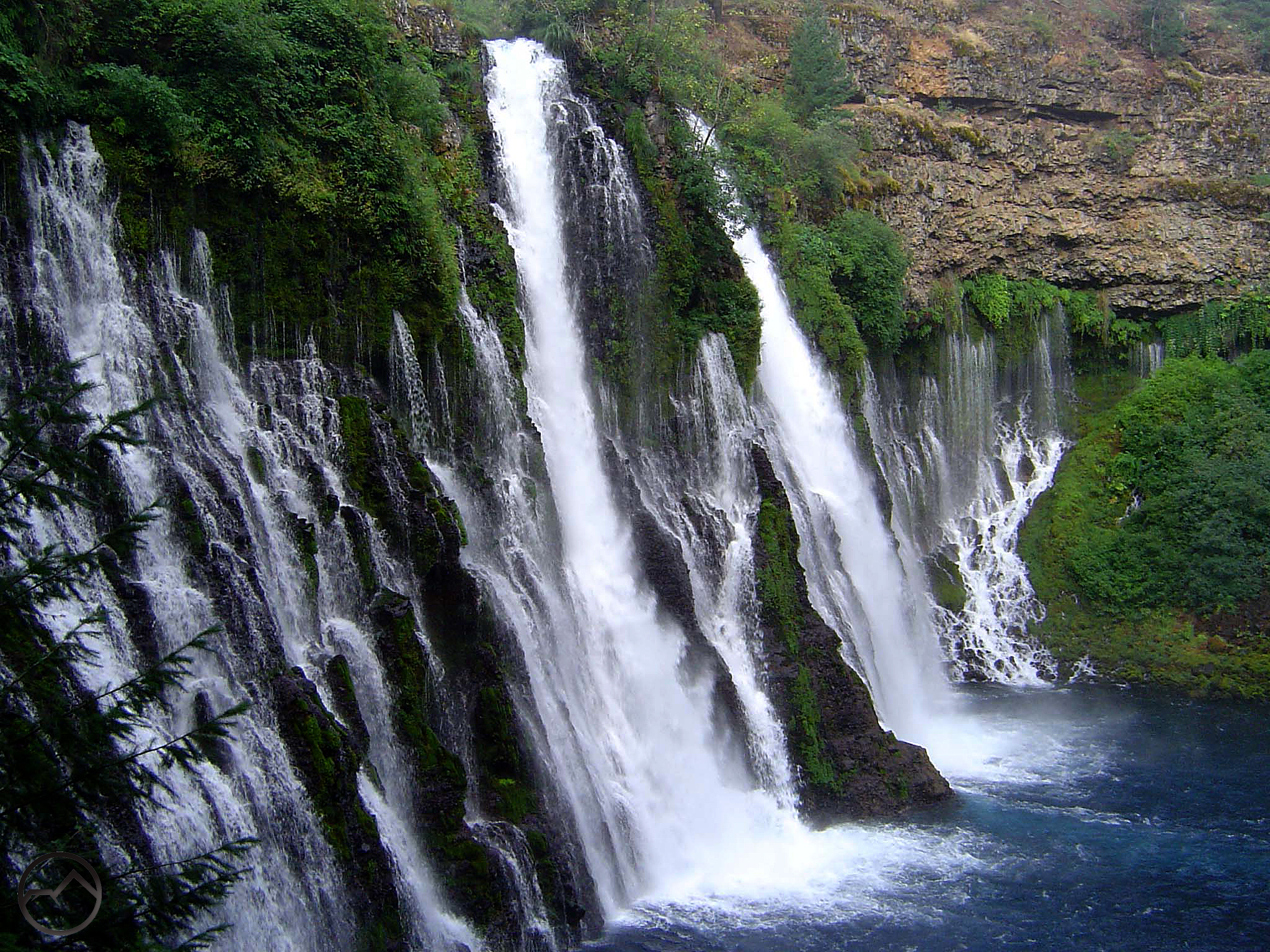
Burney Falls

Burney Falls

In addition to dividing the California Cascades into two primary areas, the Pit River area, which is also referred to as the Intermountain Area, is also a very scenic area in its own right and filled with numerous recreational opportunities. The most popular spot is gorgeous Burney Falls, one of the most unique and spectacular waterfalls in California. Nearby Lake Britton is a significant impoundment of the Pit, which facilitates a substantial hydroelectric operation. The lake also offers numerous aquatic activities. Upstream from Lake Britton is the Pit River Canyon, where the river cuts a deep gorge through the heart of the Cascade Range. The volcanic history of the region is evident in the layers of lava flows that are revealed where the river has eroded away its impressive channel. The layered appearance is reminiscent of the canyons of the Palouse and the numerous cut lava canyons of southern Idaho. The highlight of the canyon is awesome Pit River Falls, a easily viewed cataract that deserves more renown that it receives. Even further upstream, more volcanic features are visible just north of the Pit River at Ahjumawi Lava Springs. Fascinating remnants of Native American culture can also be found in this remote and wild area.

The Lassen Cascade

South of the Pit River is the southernmost extension of the Cascade Range. The high point of the area, both figuratively and literally, is the ruined remains of prehistoric Mount Tehama, crowned by the rugged heights of Lassen Peak. Mount Tehama once rose to icy heights in this area much like Mount Shasta. However, massive eruptions obliterated the mountain long before people arrived in the area. Remnants of the old stratovolcano now form some of the tallest mountains in the California Cascades. Lassen Peak itself is a plug dome volcano that has pushed up over the old eruption point, much like Wizard Island in Crater Lake and the cone that continues to grow inside Mount St. Helens’ crater.
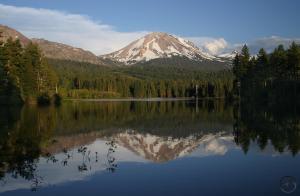
Lassen Peak reflects in Manzanita Lake

Lassen Peak reflects in Manzanita Lake

The Lassen Peak area rises just north of Lake Almanor. The valley occupied by this lake constitutes the dividing line between the southern end of the Cascade Range and the mighty Sierra Nevada, which stretches 400 miles to the south. The heart of the Lassen Peak area is encompassed in Lassen Volcanic National Park. This area is covered in vast expanses of virgin timber and dotted with numerous beautiful glacial lakes. The centerpiece of the park is Lassen Peak itself. At 10,457 the mountain is the second highest mountain in the California Cascades and the southern most major volcano in the entire Cascade Range. The peak erupted continuously for many years early in the 20th century that included a major eruption in May of 1915. Geothermal activity continues at numerous sites scattered around the base of Lassen Peak and other parts of the ruins of Mount Tehama.
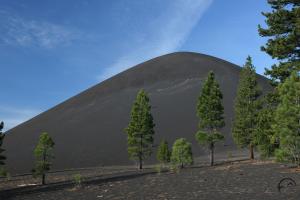
The Cinder Cone

The Cinder Cone

Lassen Volcanic National Park is a fantastic hiking destination. Trails crisscross the 106,452 acre park. In addition to exploring the geothermal features, the trails lead to crystalline lakes, beautiful waterfalls, lush meadows and alongside clear, swift-running creeks. The west side of the park is the most mountainous and is centered on the remnants of Mount Tehama. The central portion of the park features more subdued terrain, vast virgin forests and scattered lakes. The far eastern end of the park features more volcanic peaks as well as cinder cones, lava flows, pumice dunes and a series of extremely large lakes. About 70% of the park is wilderness, meaning that these features are all preserved in their primeval state, ready for hikers and backpackers to enjoy.
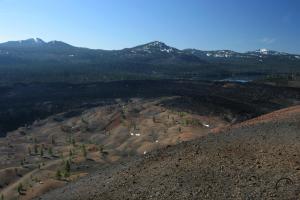
Looking east towards the high peaks of the Caribou Wilderness

Looking east towards the high peaks of the Caribou Wilderness

Immediately east of Lassen Volcanic National Park lies a broad, heavily wooded plateau, much of which is contained in the 20,546 acre Caribou Wilderness. This area contains numerous lakes as well as high volcanic cones. Like the national park, this area is accessed by numerous intersecting trails and is a great destination for hikers. Further east the Cascade Range consists of a series large shield volcanoes of modest elevation. Between these peaks lie wide, grass covered valleys. Marking the eastern boundary of the Lassen Cascade is large Eagle Lake. Within a closed basin, the lake has no outline and is alkaline. Nonetheless, it is the second largest natural lake entirely within California. The endemic Eagle Lake trout has adapted to survive the high alkalinity of the water. The area around the lake exhibits a greater degree of aridity than the higher parts of the Lassen region, indicative of decreased rainfall as the climate transitions to the dry Great Basin Desert.
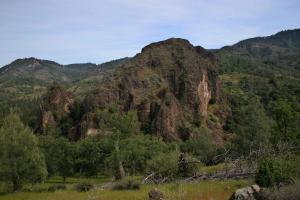
The Black Rock, on the edge of the Ishi Wilderness

The Black Rock, on the edge of the Ishi Wilderness

The lands to the west of Lassen Volcanic National Park are quite different from those on the east side. The mountains fall away fairly swiftly to a series of large plateaus that are cut by deep canyons. Large creeks fed by the abundant snowfall of the Lassen area charge through the gorges. This is a remote, rarely traveled place. It was here where Ishi, the last known Native American living independently of the modern world. Today this area is preserved in the fantastic 41,339 acre Ishi Wilderness. This seldom-traveled, wild land is a fantastic escape for hikers and backpackers who want a spectacular, low-elevation adventure in the winter or spring. Indeed, with its roaring creeks, green fields and awesome wildflowers, spring is a paradise here.
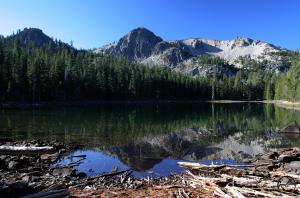
Everett Lake in the Thousand Lakes Wilderness

Everett Lake in the Thousand Lakes Wilderness

North of Lassen Peak, the land is dominated by the long Hat Creek Valley. Hat Creek begins on the flanks of Lassen Peak and flows north, into a its namesake valley. Here there are numerous volcanic features including lava flows, lava tubes and cinder cones. Though this area has recently been ravaged by fire, it remains a beautiful destination for hikers and anglers. Towering above the west side of Hat Creek Valley is the crest of the Cascade Range. It extends north, toward the Pit River. Here are found other major, volcanic peaks, particularly the remnants of the Thousand Lakes Volcano and Burney Mountain. The former, protected as part of the 16,335 acres Thousand Lakes Wilderness. This slice of alpine heaven is classic Cascade terrain, with a towering, crater capped volcano, lava flows, secondary volcanic peaks, cinder cones, virgin forests and glacial lakes. While there may not be one thousand lakes in the Thousand Lakes Wilderness, there are still a few gems worth visiting, especially awesome Everett and Magee Lakes. These are two of the finest lakes to be found in the Lassen Cascade.

The Shasta Cascade
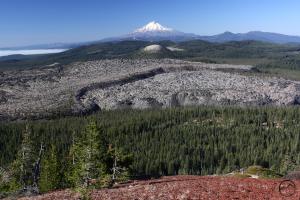
Mount Shasta rises above Little Glass Mountain

Mount Shasta rises above Little Glass Mountain

To the north of the Pit River is the Shasta Cascade. Though the region takes its name from its most obvious and dominant landmark, the geomorphology of the region is much more ambiguous than that of the Lassen Cascade. The obvious crest of the Cascades exhibited in the Lassen area is much more subdued north of the Pit. Indeed, the area seems pulled between two massive poles. At the far west lies mighty Mount Shasta. Vying for supremacy with the ice-clad giant is the massive Medicine Lake Caldera. While its size is not readily apparent, it remains the largest volcanic feature in the entire Cascade Range, along with the equally massive Newberry Caldera near Bend, Oregon. Between these two fiery behemoths, lies a seemingly unending collection of smaller volcanic peaks blanketed by vast forests. Despite the decentralized nature of the Shasta Cascade, it does the single crest does manage to reemerge at Ash Creek Butte and extend northward along a narrow line of high peaks toward the Klamath River and the Oregon border, where the California Cascades come to an end.
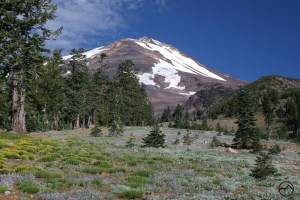
Cascades, Mt Shasta, Clear Creek - Aug2012 091 (Custom)

Hiking the Clear Creek Trail on Mount Shasta

Despite being the obvious focus of the California Cascades, Mount Shasta is actually an outlier on the far western edge of the range. Rising thousands of feet above the surrounding landscape, it is the most dominant and commanding mountain in all of California. Mount Shasta is so large, it almost seems like a mountain range unto itself. It is home to numerous secondary peaks and rock formations including the staggering sub-peak Shastina, which is the third highest summit in the Cascade Range. Other major peaks include Thumb Rock, Shastarama Point, Green Butte, Red Butte, Gray Butte and the North Gate Plugs. Mount Shasta is also home to California’s largest glaciers. The mountain is home to some of the most spectacular hiking trails in California. These explore the vast, wild flanks of the mountain near timberline and lead hikers to verdant meadows, magnificent waterfalls, awesome canyons and unparalleled views.
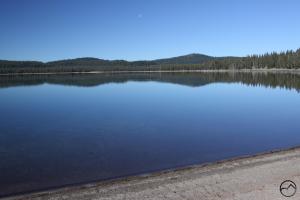
Medicine Lake

Medicine Lake

To the east of Mount Shasta are the Medicine Lake Highlands, which compose the large Medicine Lake Caldera. This giant volcano is now silenced and its yawning crater is home to serene Medicine Lake. While the volcanic activity in the crater has ceased, the fiery origins of the highlands are revealed in the extensive lava flows that surround the lake. Chief among these flows is stupendous Glass Mountain and Little Glass Mountain. These lava flows produced vast amounts of obsidian. The Medicine Lake area has also attracted the geothermal industry. Though no power plants have been built, the volcanic conditions make the area suitable for large scale electrical generation. Wells have been drilled to test steam production but the future of geothermal power generation in this area remains uncertain. This leaves the area free to be a haven for campers and anglers. There are only a few developed hiking trails in this area, notably around the north shore of Medicine Lake and along nearby lava flows. It should be noted that for the purposes of this taxonomy, the Lava Beds area, which lies north of Medicine Lake, has been categorized as part of the Modoc Plateau/Klamath Basin and will not be examined here.
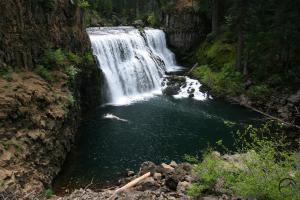
Middle McCloud Falls

Middle McCloud Falls

South of Medicine Lake and Mount Shasta are the McCloud Flats. This vast, relatively level area is smothered in forest. While it lacks significant topography, it is especially notable for the passage of the McCloud River along its southern border. The river is one of California’s great mountain waterways. It is particularly notable to anglers for its native trout that are endemic to the river. However, while the fishing on the McCloud is great, the river is probably most famous for its trio of awesome waterfalls. Each waterfall exhibits volcanic geologic features. Though the falls are obvious highlights, the entire length of the river is quite scenic. It is possible to explore it via the McCloud River Trail, which runs parallel to the river for 15 miles.
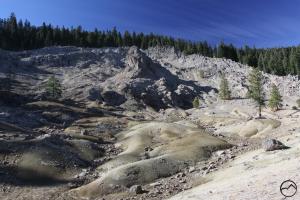
The Hole In The Ground Geologic Area

The Hole In The Ground Geologic Area

To the north of Mount Shasta, the Cascade Crest is clearly distinguishable. Formed of a line of tall, volcanic peaks, the crest begins at Ash Creek Butte and runs north all the way to the Klamath River at the Oregon border. Notable peaks aside from Ash Creek Butte are the Whaleback, the Goosenest and Willow Creek Mountain. All are extinct volcanoes. While this area boasts awesome scenery, it has very few developed trails. The best are found on the Goosenest and at little-used Orr Lake, which lies on the dry, east side of the crest. Despite the lack of developed recreational opportunities, this area has much to offer those who are prepared to hunt for them. The most notable is the mysterious Hole In The Ground Geologic Area. The hole is actually the remnants of an unusual volcanic eruption. While its nature is not entirely understood, it is a fascinating and beautiful reminder of the region’s violent past.

Onwards, To The North
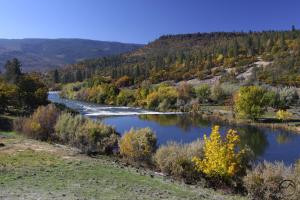
The Klamath River Canyon

The Klamath River Canyon

Beyond Willow Creek Mountain, the California Cascades subside down toward the mighty Klamath River. While solitary Secret Springs Mountain boasts an impressive crater, there are few volcanic peaks along the river. Instead, the Klamath passes through a deep canyon, which is occasionally punctuated by large, rocky outcroppings. Like the Pit River, the Klamath River makes a complete bisection of the Cascade Range. The river’s headwaters are deep in central Oregon, where the Sprague and Williamson Rivers drain large, volcanic uplands on the east side of the Cascades. These rivers combine and then flow into Upper Klamath Lake. The Klamath River begins at the outlet of the lake and promptly begins its passage through the Cascades. While the canyon is spectacular, very little of it is open to the public due to hydroelectric activity. The river canyon to the east of Copco can be accessed via a good dirt road and there are public access points along the river for fishing. Short walks are also possible here. A primitive BLM campground is located right on the state line, for those motivated to explore this exceptional place.
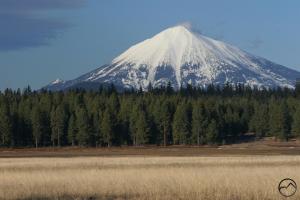
Southern Oregon's Mount McLoughlin

Southern Oregon’s Mount McLoughlin

Beyond the Klamath River, the Cascades enter Oregon, a state well known for dramatic volcanoes and other volcanic features. While the Oregon section of the range is initially composed of gentle, rolling fills with vast forests, it quickly begins to thrust upward again. One of the first notable features is tall Brown Mountain and its dark lava flows. A little further north is towering Mount McLoughlin, the highest peak in southern Oregon. While it is nowhere near as tall or as large as Mount Shasta, Mount McLoughlin is an awesome mountain. The peak is prominently visible from many places in the California Cascades and it presides beautifully over the area immediately around it. The peak anchors the southern end of the Sky Lakes Wilderness, which is the first in a long string of semi-contiguous blocks of wilderness areas that stretch north along the spine of Oregon toward Mount Hood and beyond, into Washington.

Off Season Trails: Spring Hiking In The Lower McCloud River Area

Posted by bubbasuess on March 20, 2015
Posted in: Hiking, Mount Shasta, Off Season Trails, Rivers. Tagged: McCloud River, Squaw Valley Creek. 11 Comments
Large cataracts are common on the lower part of the McCloud River

Large cataracts are common on the lower part of the McCloud River

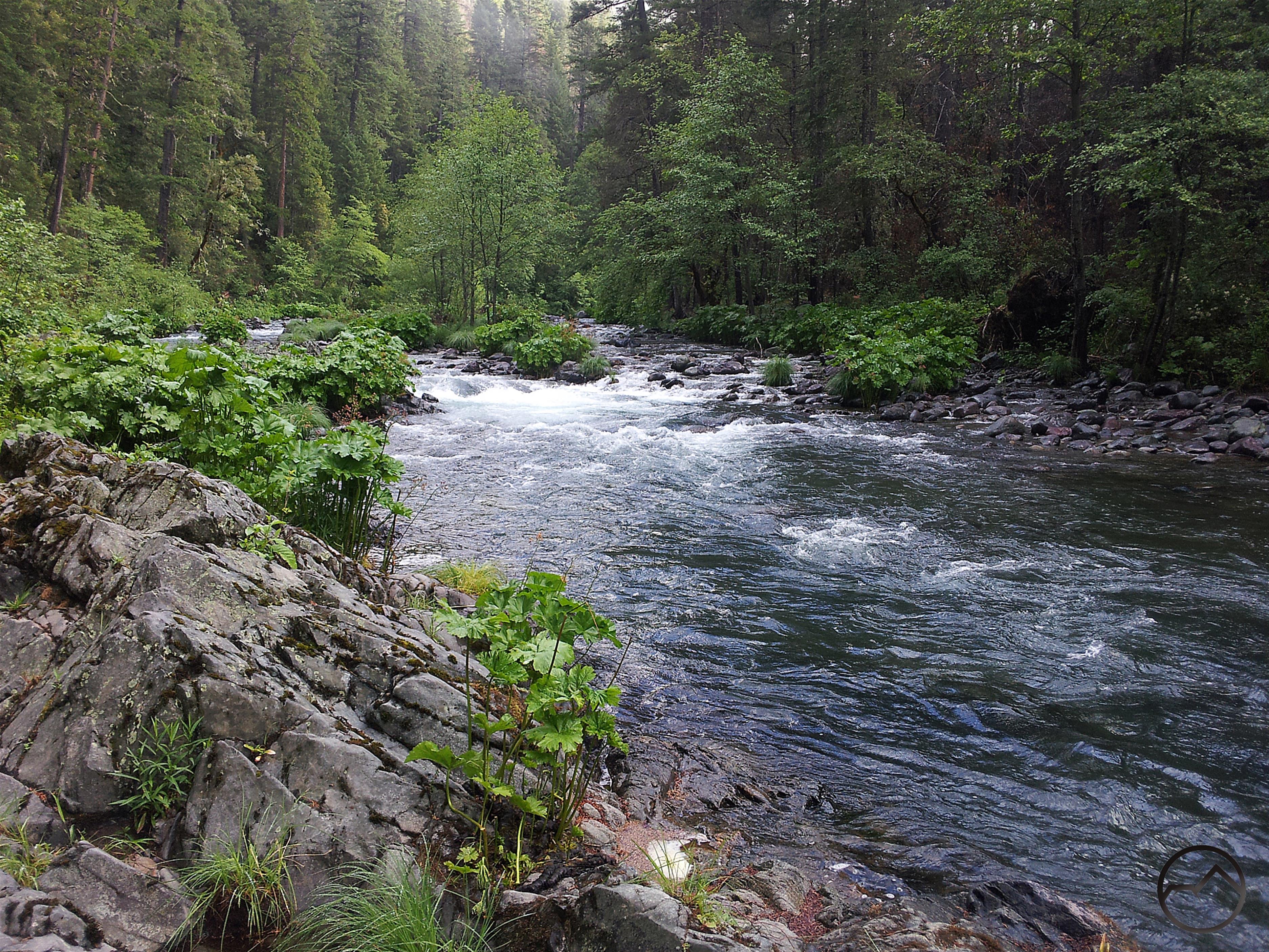
The McCloud River is one of the Mount Shasta region’s premier attractions. The river travels through scenic volcanic features, over spectacular waterfalls and through deep river canyons. Although the McCloud is a popular destination, one of its major physical distinctions often escapes notice. A quick study of the California Geologic Survey’s geologic map reveals that the river travels through two very distinct geologic regions. The upper section, which lies above the McCloud Reservoir, travels through volcanic terrain that includes features like columnar basalt and lava flows. Below the reservoir, the Lower McCloud enters a deep canyon which is cut into mountains that form a nameless outlier of the vast Klamath Mountains. Due to the disruption of the reservoir, the shift in the area’s geologic composition tends to go unappreciated. The change in geology creates two very different river environments. The upper section is identified by past volcanism. The lower section is defined by the exposed bedrock of the Klamath Mountains along the river, the steep walled canyons cloaked in old growth forests and numerous small creeks flowing into the McCloud.

A small waterfall on Squaw Valley Creek

A small waterfall on Squaw Valley Creek

While the upper part of the McCloud along the falls is very popular with hikers, the section of the river below the McCloud is more remote and lacks the major draw of the upper portion’s waterfalls. Consequently, the Lower McCloud River is a treat for hikers looking to immerse themselves in isolation. While the remote location of the trails along the lower part of the river does not make these trails good options for winter hiking because of the snow, in spring access is generally good. Indeed, spring is particularly attractive here. The river is engorged with snowmelt, the trees are leaving and wildflowers are blooming. The distinct geology and the isolation give this area a primeval feeling despite the presence of historic ruins and other man-made structures. The sense of being cut off from the outside world that permeates the Lower McCloud is especially welcome in the spring. After months of snow (theoretically, of course!) and trails near town, this part of the river presents an excellent opportunity to escape into the dark folds of the unnamed mountains south of Mount Shasta.
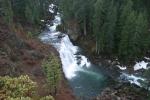
Three trails are found around the Lower McCloud River. Two follow the river itself and a third follows Squaw Valley Creek, a major tributary of the McCloud that begins at beautiful South Gate Meadow, high on the flanks of Mount Shasta.

Squaw Valley Creek Trail

Squaw Valley Creek

Squaw Valley Creek

Despite not being on the McCloud River, the trail along Squaw Valley Creek has most of the essential qualities that define the trails along the Lower McCloud. It winds through a lonely canyon cut into rugged mountains, has lush riparian landscapes, and has great exposure to one of the region’s beautiful waterways. Squaw Valley Creek is large and swift moving. In the first few miles of the trail it charges through narrow rock gorges and plunges over a pair of small waterfalls. The trail maintains a constant, parallel course to the water and many short side trails provide access to the creek bank. Of the three trails in the Lower McCloud area, the Squaw Valley Creek Trail is the easiest to access. Consequently the trail receives somewhat heavier use than the other two paths. This should not be a deterrent, since the trail still receives light use. Another feature that sets it apart from the other Lower McCloud trails is the fact that it can be hiked as a loop by combining the Squaw Valley Creek Trail, the PCT and a dirt road that travels through a dark, secluded canyon.

Pacific Crest Trail from Ash Camp to Ah-Di-Nah

PCT view of the McCloud River

PCT view of the McCloud River

The Pacific Crest Trail, traveling from the border with Mexico all the way to the Canadian border travels only a few miles along the McCloud River. Due to the rugged nature of the canyon, the river stays high above the water, following a path that is slung across steep slopes. It is the trail’s separation from the river that has likely caused this section of the PCT to largely escape the notice of local hikers. Despite the lack of proximity to the river, hiking this trail has much to recommend it. There is good river access at the trailhead and great views of the McCloud at the beginning of the hike as the trail crosses a large footbridge. After that, even though the river and trail do not come close to each other, there are still plenty of opportunities to observe the water as it races through its boulder choked course. For those intent on enjoying the McCloud up close, there are several side trails that descend down to the riverbank. Some of these offer great views of awesome cataracts. The PCT eventually veers away from the river. Here hikers can continue on a dirt road a short distance to the remote Ah-Di-Na campground, where there is lots of great river access as well as historical ruins of a former fishing camp.

McCloud River Preserve Trail

The McCloud River flows through its preserve

The McCloud River flows through its preserve

The McCloud River Preserve is located far to the south of Mount Shasta, in the vast, seemingly unexplored mountains that lie between the mountain and Lakehead, where Shasta Lake begins. The preserve began as a private fishing club but was donated to the Nature Conservancy in the 1970’s. The preserve has one trail, which parallels the McCloud River through the heart of a deep, wild canyon. This is one of the most remote trails in the Mount Shasta area. The long, bumpy drive to the trailhead gives a good indication just how far off the beaten place this is. The trail is a fantastic riverside path. With only a few short exceptions, it runs right along the water its entire length, skirting ancient forests and cutting across large sections of exposed bedrock. This part of the McCloud is very different from it more famous upstream section where the falls are located. It is much wider here and dotted with boulders. In contrast to the flat terrain of the falls area, the depth of the McCloud’s canyon is evident along the Preserve Trail. When the route finally peters out, the river continues its journey to south, into the rest of California.
A Spring Backpacking Trip?

The rugged canyon of the Lower McCloud

The rugged canyon of the Lower McCloud

One interesting opportunity that this area presents is the possibility of spring backpacking. Starting at Ash Camp, hikers can make the trip down to Ah-Di-Na and set up camp. From there it is another mile walk down the dirt road to the McCloud River Preserve trailhead. The preserve would make a great day hike before returning to camp. It is possible to return to Ash Camp the next day or spend another day at Ah-Di-Na enjoying the river and exploring the ruins. Some years the route of this hike would be free of snow before the long bumpy road into the campground is open. This means that backpackers could enjoy Ah-Di-Na and have the campground to themselves, further adding to the area’s sense of isolation.
Hoodoos On Mount Shasta: Mysterious and Magnificent

Posted by bubbasuess on February 26, 2015
Posted in: Cascade Range, Hiking, Mount Shasta. Tagged: Hoodoos. 8 Comments
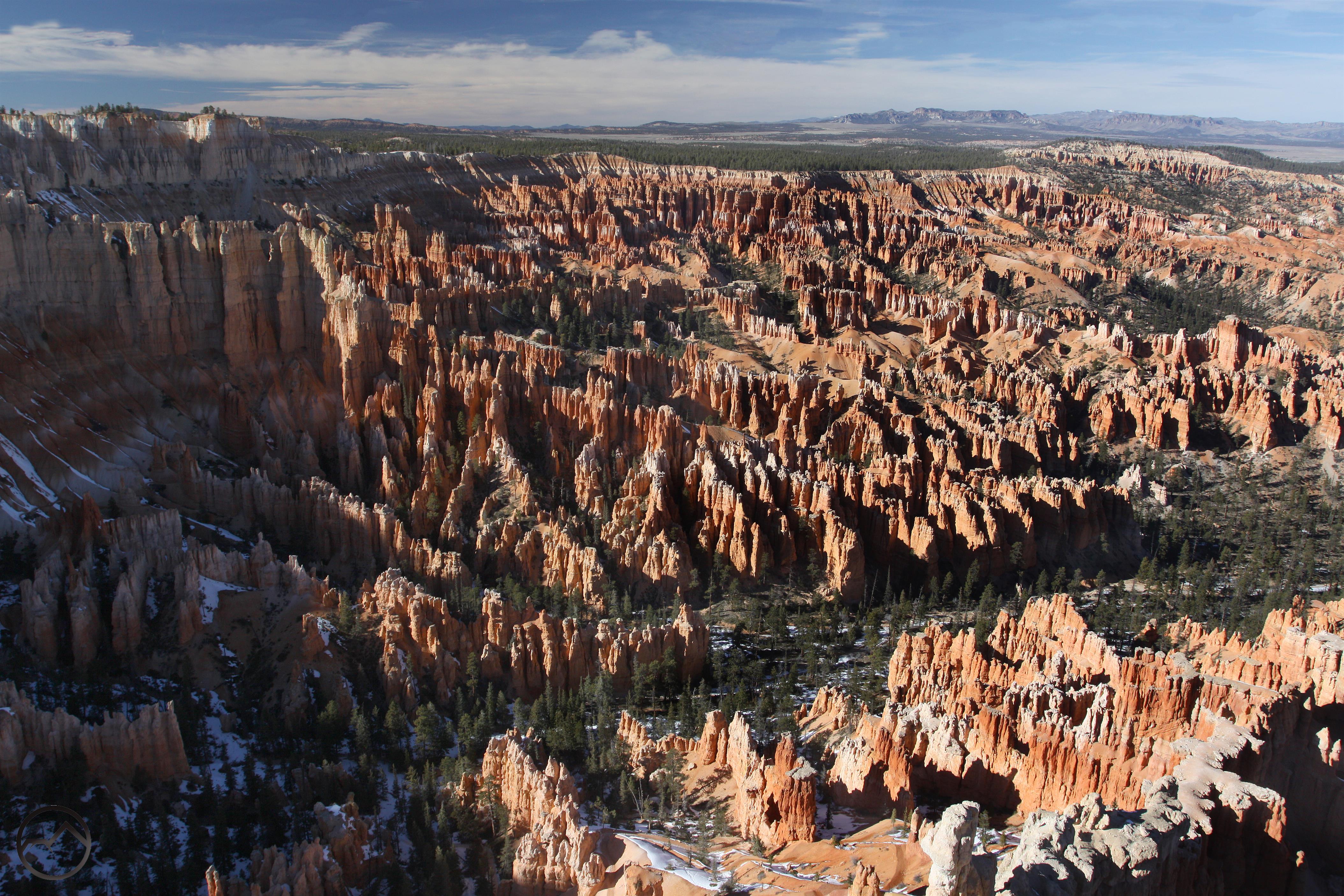
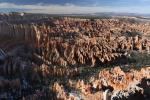
Nowhere in the world are their more or finer hoodoos than Bryce Canyon in Utah.

Nowhere in the world are there more or finer hoodoos than Bryce Canyon in Utah.

Bizarrely twisted and thrusting prominently upward, hoodoos are among the most fascinating features found in the western United States. While these curious formations occur throughout the world, the West has an extremely high and diverse concentration of them. They are found across the High Plains, from North Dakota (from Canada, actually) all the way down to the Llano Estacado in Texas. They also appear frequently higher in the mountains, especially in the southern Rocky Mountains. The diversity of hoodoos around the west is astounding. Their varied compositions include sedimentary layers, sandstone, limestone and volcanic materials like rhyolite and tuff. The disparate formations means that hoodoos yield a remarkable visual feast to enjoy.

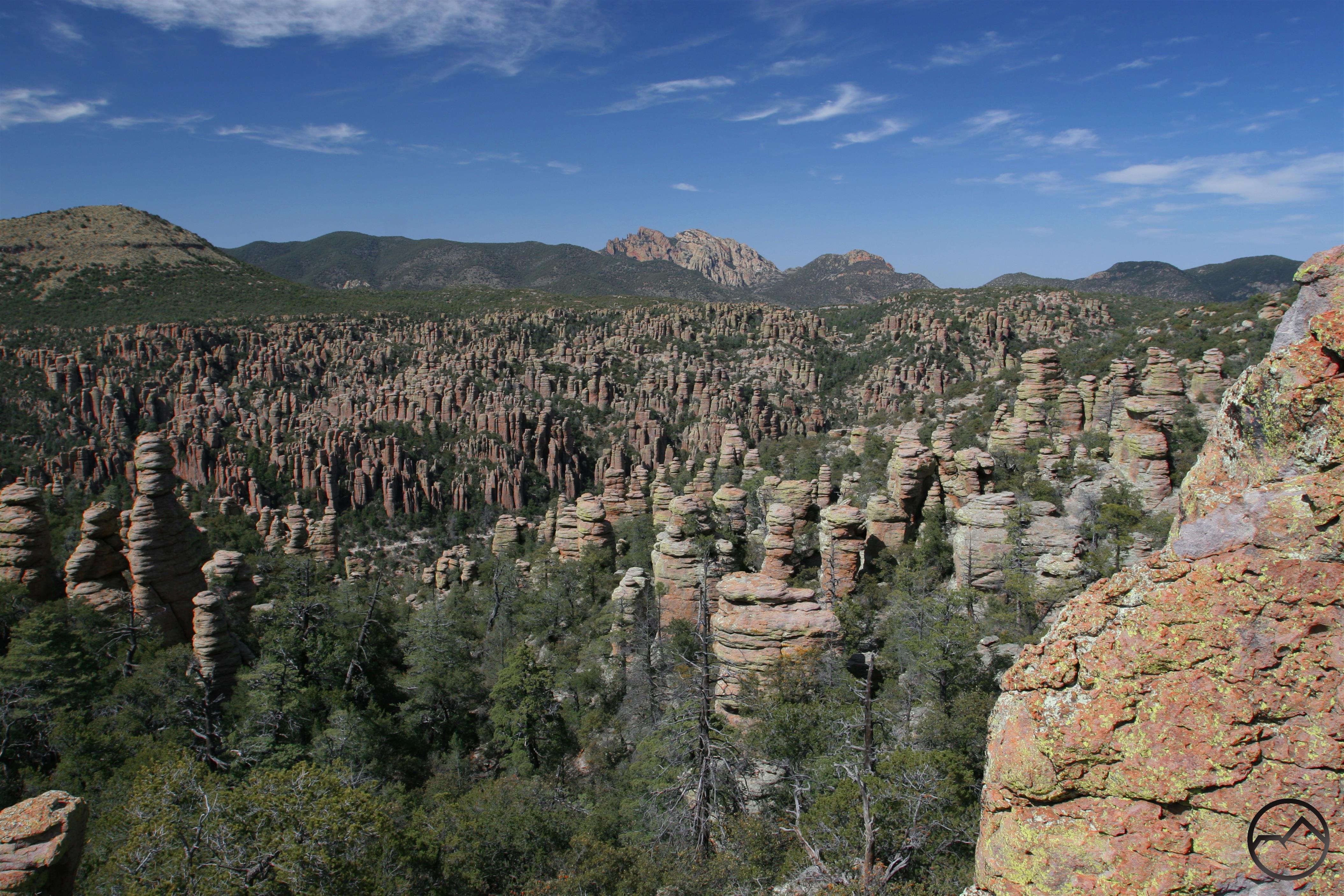
Chiricahua2 (Custom)

The hoodoos of the Chiricahua Mountains

What exactly is a hoodoo? These unusual natural structures are rocky towers, typically consisting of various strata composed of softer materials capped by a harder rock. This arrangement sometimes makes hoodoos look like balanced rocks. Other times the hoodoos appear as slender, striated and weathered pinnacles. The forces that shape these strange pillars usually involve a combination of wind erosion, rain erosion and the freezing expansion of water. The softer materials that compose many hoodoos expedite the erosion of the area beneath the dense cap stone. The resulting towers are among some of the most unusual, spectacular and beautiful landscapes.

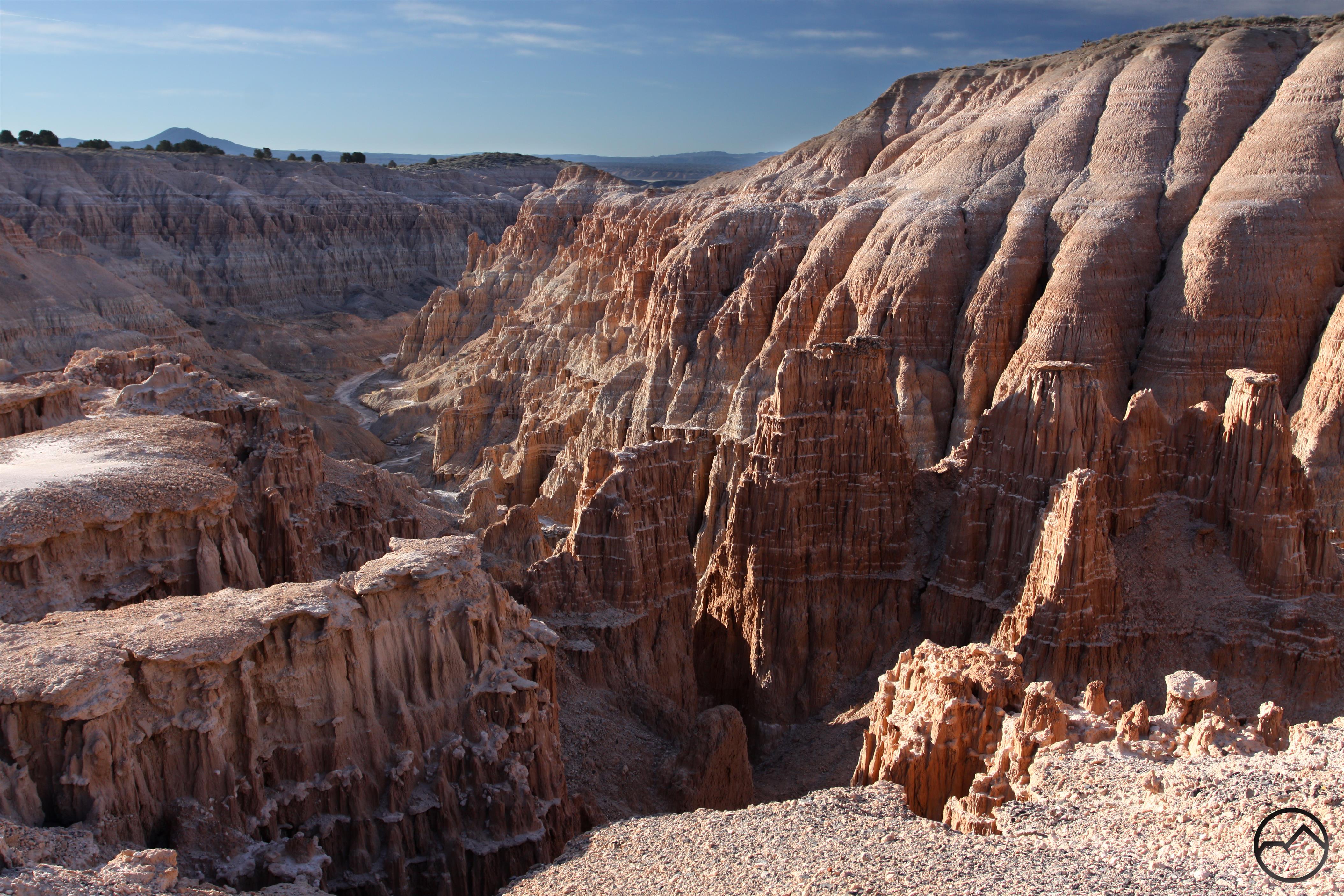
CathedralGorge (Custom)

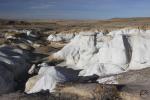
Hoodoos in the midst of badlands in the Cathedral Gorge

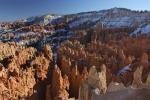
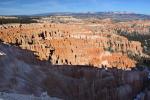
Western North America has an unusually high occurrence of hoodoos, some of which are iconic sites. Though by no means the sole factor, the west’s defining trait of aridity is certainly one of the reasons for this. The most magnificent and famous is Bryce Canyon National Park in Utah. More hoodoos occur here than anywhere else in the world. The vast array of orange and pink pillars is as awesome as it is unforgettable. Less well known but nearly as impressive are the rhyolite hoodoos of the Chiricahua Mountains in Arizona. Despite the perception that they are oppressively flat, the High Plains have an extensive collection of hoodoos stretching from Alberta all the way down to Texas. Areas where badlands are prominent also tend to have numerous hoodoos. The erosion of the poor soils that make up badlands is a natural environment for hoodoo formation. Volcanic areas, where layers of ash have been built up and then covered by denser rocks, also boast numerous odd hoodoos.

A Hoodoo Gallery (click to enlarge)

Garden of the Gods in Colorado
Chiricahua hoodoos
The great hoodoos of the Chiricahua Mountains

Incomparable Bryce Canyon
Fantastic hoodoos of Bryce Canyon
Bryce Canyon’s hoodoos

Paint Mines, Colorado
The Lighthouse, in Texas (note person for scale)
South Prong Mitten, in Texas

Hoodoos and badlands in the Cathedral Gorge, Nevada
Rhyolite hoodoos along the West Fork of the Gila River, New Mexico
Gila River hoodoos, New Mexico

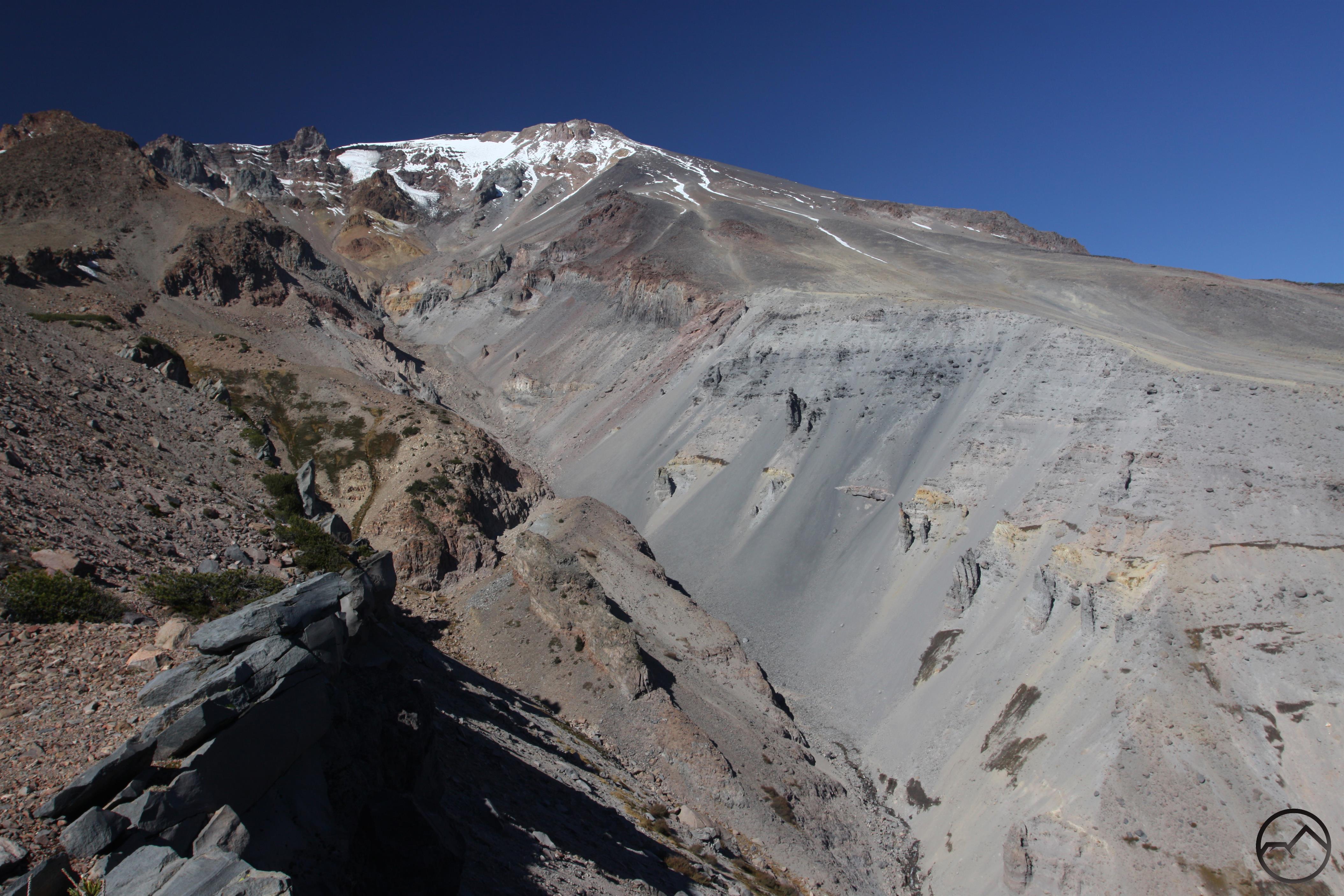
All of this leads to the compelling presence of hoodoos on Mount Shasta. While there are a few small occurrences of these strange formations on the mountain, none are as awesome as the giant spires that thrust upward from the hellish scree fields of upper Mud Creek Canyon. Hidden away in a rarely observed corner of Mount Shasta, these hoodoos are unnamed, unloved, and completely unappreciated. Nonetheless, they are among the most impressive hoodoos to be found anywhere. Due to their remote location, access to them is limited. It is nearly impossible to actually reach the hoodoos due to the depth of the canyon and the loose decries that forms the canyon wall. The best place to observe these dramatic towers is from the west rim of the canyon. Even from this distance, the hoodoos are impressively large.

Epic view of Mount Shasta and Mud Creek Canyon.

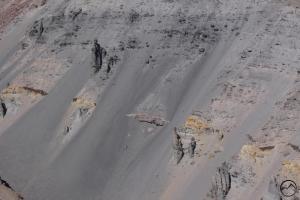
Hoodoos line the side of Mud Creek Canyon.

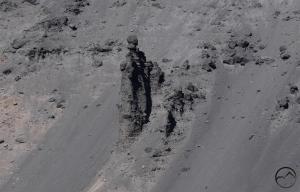
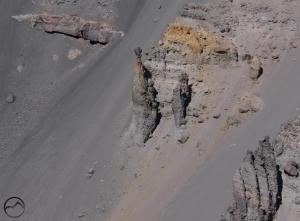
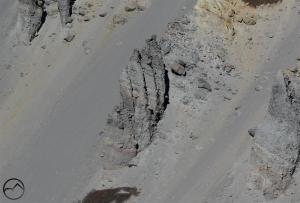
There are over a dozen large hoodoos that can be seen defiantly jutting upward out of the canyon wall. However, there are three particularly noteworthy hoodoos. The most impressive are a pair of soaring towers that must be over a couple hundred feet high. These are considerably higher than most hoodoos but considering the great depth of the canyon this seems like an accurate gauging of their dimensions. Both pinnacles are composed of compressed layers of ash and tuff (this is a guess, but seems logical based on Mount Shasta’s composition and the visual similarity to other volcanic hoodoos) capped by large boulders balanced on the top. The first time I saw them, I was instantly reminded of Bryce Canyon’s most famous hoodoo, Thor’s Hammer. Based on this similarity, I dubbed them Thor’s Twins (the name obviously comes from the fictitious undersea landmarks off the coast of Iceland in The Hunt For Red October). The other particularly noteworthy hoodoo in Mud Creek Canyon is a cluster of nearly symmetrical towers located just below the lower hoodoo of Thor’s Twins. Though some of these hoodoos have balanced rocks on their summits, they are considerably smaller than the rocks on the twins. Nonetheless, the odd arrangement and immense size makes these unusual and beautiful hoodoos. In keeping with the Norse theme of Thor’s Twins, I dubbed this cluster of hoodoos the Valkyries.

Click to enlarge:

The higher of Thor’s Twins
The lower of Thor’s Twins

The Valkyries
Mud Creek Canyon

Mount Shasta has many hidden secrets and awesome places that are as anonymous as they are unappreciated. One never knows what new gem may be uncovered. This is one of the things that make exploring the mountain so exciting. With all of the glaciers, waterfalls, canyons, springs and numerous other features, it was thrilling (though it should not have been surprising given that it IS a volcano) to discover some massive hoodoos sequestered in one of the least traveled and most majestic parts of was very gratifying. I hope others are able to find their way to the rim of Mud Creek Canyon and observe the towering hoodoos.

The McCloud River Trail

Posted by bubbasuess on February 21, 2015
Posted in: Hiking, Mount Shasta, Rivers. Tagged: McCloud River, McCloud River Trail. 11 Comments

McCloud RIver (1) (Custom)

The McCloud River is one of the premier attractions in the Mount Shasta area. The river is famous with anglers, waterfall aficionados and those who generally love beautiful mountain rivers. The vast preponderance of users justifiably head to the three falls on the river. The trail to the three cataracts is easy, gorgeous and has major payoff for little effort expended. What most hikers do not realize is that the McCloud River Trail is much longer than the section by the waterfalls. It begins many miles upstream, deep in the forests of the McCloud Flats. The trailhead is located at the Algoma Campground, which is only 2.5 miles west of the small outpost of Bartle. From Algoma, the trail runs parallel to the river for 15 miles, passing through shallow canyons, meadows, old growth forests and along basalt gorges, deep swimming holes and beautiful waterfalls.

Since it is unlikely that hikers will tackle the whole trail all at once, the trail description has been broken up into digestible chunks that make up good day hikes. However, it is useful to pull all the parts together and try to provide an overview of the entire trail. Here are some basic statistics:

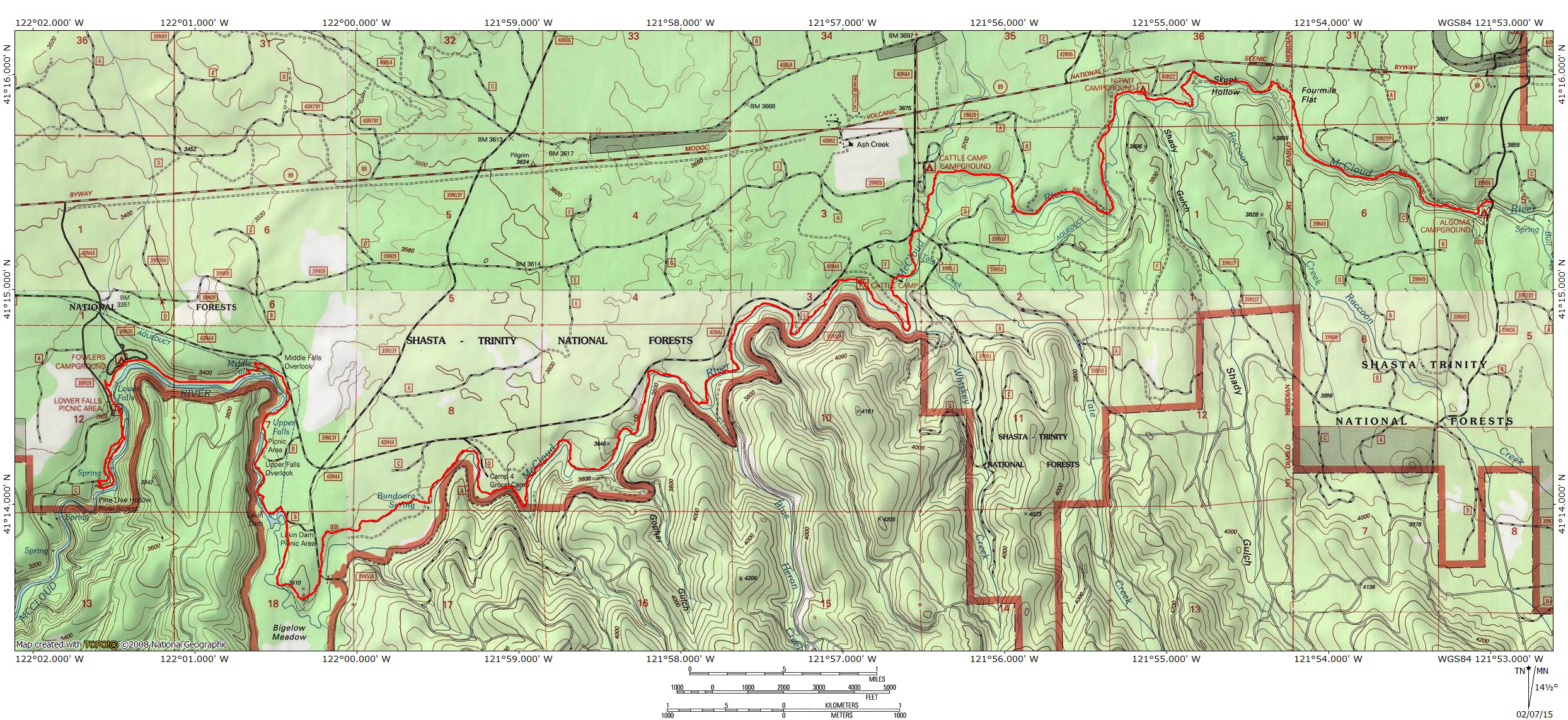
Length: 15.5 miles (one way)
Elevation gain: minimal
Season: all year (access roads to Algoma and the falls area are not plowed and may be covered in snow at times during winter but other sections of the trail are easily reached directly off of Highway 89.

McCloudRiverTrail

Like the descriptions of the trail segments, this overview will begin at the Algoma trailhead and recount the entire journey to the end of the Pine Tree Hollow Loop.

Algoma To Nitwit Camp

Cascades, McCloud River - Sept2013 009 copy (Custom)This is one of the prettiest sections of the McCloud River Trail. Beginning at the bridge over the river that lies adjacent to the Algoma Campground, the trail quickly enters a shallow canyon and follows the river as it races through a swift moving section. This part of the trail feels far removed from civilization because it is the furthest section from McCloud but also because the canyon shields it from outside intrusion. The canyon eventually comes to an end and the river flows through a broad flood zone that is choked with brush. The water is not visible from some sections of the path but the sound of rapids is still visible. The river and the trail rejoin just before arriving at the Skunk Hollow Campground. This primitive area has campsites right next to the McCloud River. The hike continues a short distance past Skunk Hollow before arriving at the Nitwit Campground, another primitive campsite. This is a good place to turn around and return to Algoma.

Nitwit Camp To Cattle Camp Swimming Hole

Cascades, McCloud River - April2014 043 copy (Custom)This is one of the least interesting sections of the McCloud River Trail, but this does not mean that it lacks beauty. The culprit for the trail’s lack of interesting features is a large flood area. The path is routed well away from the river to avoid flood damage. Consequently, there is extended passage through forest that is typical of the McCloud Flats. While this is beautiful in its own way, hikers are understandably eager to return to the river. Despite this, there are still some noteworthy features along this part of the hike. After departing from Nitwit Camp, there is a wonderful and remote swimming hole. This is one of the best swimming spots along the entire River Trail. The highlight, however, is the trail’s end at the Cattle Camp Swimming Hole. Here there the water rushes through a small basalt gorge, flanked by short cliffs. The swimming hole itself is a large, deep pool, emerald pool.

Cattle Camp Swimming Hole To Camp 4 Group Camp

Cascades, McCloud River - April2014 049 copy (Custom)The section of the McCloud River Trail that connects the Cattle Camp Swimming Hole with the Camp 4 Group Camp is one of the trail’s least used segments. What it lacks in use it makes up for in beauty. Beginning at the scenic swimming hole, the path weaves through another shallow canyon for several miles, following the contours of the river as it races over numerous small rapids. The canyon is narrow enough for fallen trees to span the river comfortably, providing opportunities to walk out over the water. This section ends at the Camp 4 Group Camp, a seldom used campground with tall trees set amidst a small grassy meadow. The sunshine at the meadow is a pleasant change after hiking along the river in dense forest.

Camp 4 Group Camp To Upper Falls

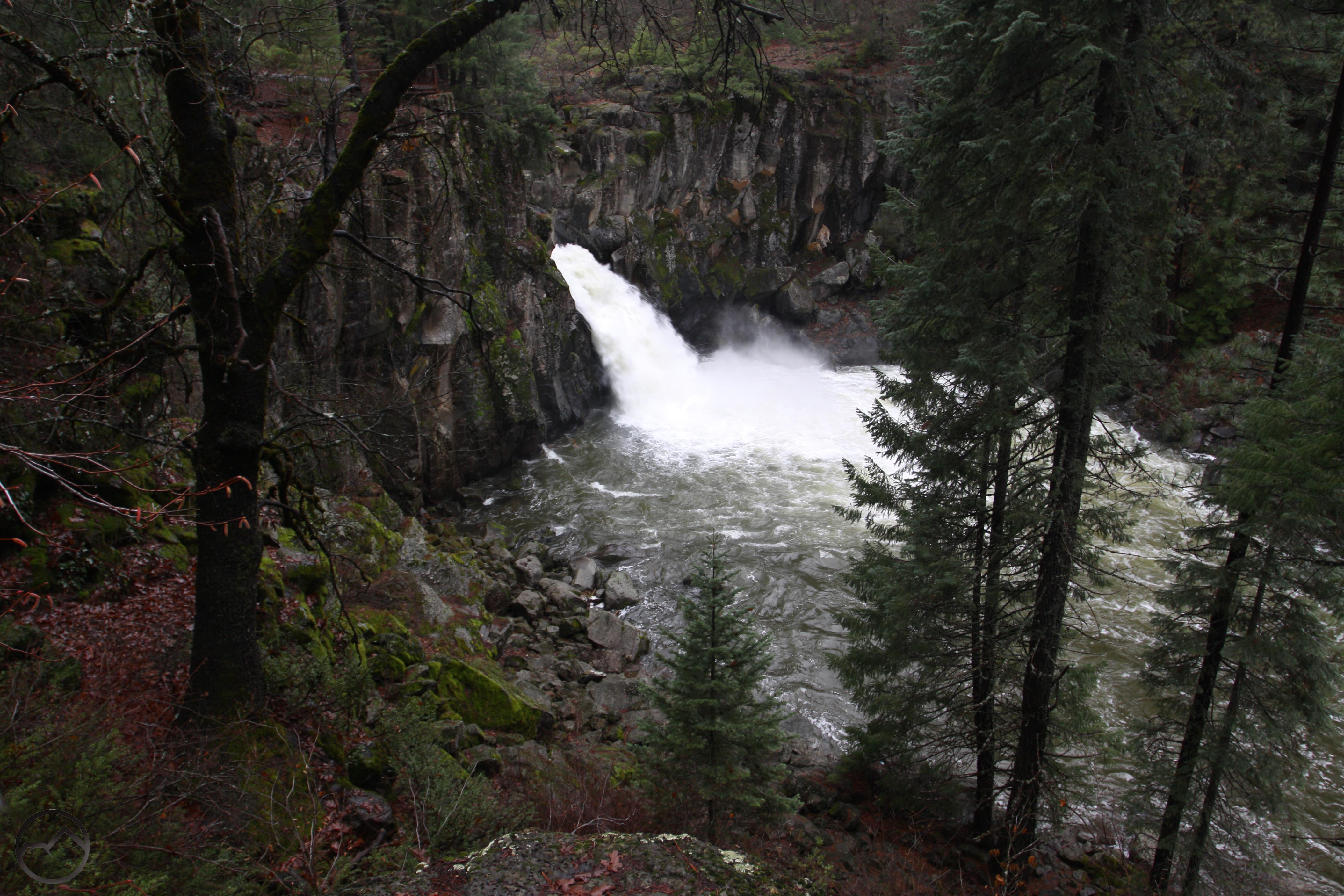
Cascades, McCloud River - June2014 013 copy (Custom)The hike from Camp 4 to Upper Falls is one of the most diverse portions of the McCloud River Trail. The path initially follows the river as it winds through the forest. It soon veers away from the water as the McCloud enters another broad flood zone. When the trail and river meet again, the path crosses over a dirt road. Following the road to the left for a few yards leads to the Bigelow Bridge, a gated road bridge over the river. Below the bridge is a large, lovely swimming hole flanked by beaches. It is a great spot to enjoy a dip in the river. Once across the road, the trail resumes and follows the McCloud a little further before arriving at a large bayou-like area where the river flows through many channels that cut through large clumps of brush and trees. The bayou area is formed by the Lakin Dam. This was originally built to impound the river for diversion to the sawmill in McCloud. The water is no longer diverted but the dam remains. The water cascades over it in a small waterfall. Beyond the dam the McCloud becomes swifter and volcanic geography becomes more pronounced in the form of basalt outcroppings and lava flows. This section of the trail ends at the Upper Falls, the uppermost of the McCloud’s famous trio of cataracts.

Upper Falls To Lower Falls

Cascades, McCloud River 008 (Custom)The hike connecting the three waterfalls on the McCloud River is one of the most popular hikes in the Mount Shasta area. Hikers typically start at the Lower Falls and turn around after enjoying the Upper Falls. The hike can easily be done in reverse order if so desired. It begins with a bang as the river shoots through a deep, rocky sluice before hurtling through a notch in a large basalt cliff, plunging down into a deep pool. Past Upper Falls, the path skirts the edge of a deep canyon, arriving at awesome Middle Falls in short order. The most impressive of the three waterfalls, the cataract is wide and tall. After descending a set of wooden stairs and some switchbacks, the River Trail finally returns to the river. The route continues downstream through the canyon. Large boulders litter the path and occasional collapsed areas mark the cliffs on the opposite side of the river. The trail passes the Fowlers Campground just before arriving at the Lower Falls, which has a large picnic area. It is a spectacular section of trail.

Pine Tree Hollow Loop

Overlooked by most hikers who begin hiking at Lower Falls, the one mile long Pine Tree Hollow Loop is the most scenic stretch of the entire McCloud River Trail, aside from the superlative section along the falls. The loop initially follows the rim of the canyon above the river. Small sections of columnar basalt can be seen in the canyon walls. The trail eventually descends down into Pine Tree Hollow, a large flat area hemmed in by cliffs on three sides and the McCloud River on the fourth. The trail then bends back upstream and runs parallel to the rushing water. Large boulders dot the river’s path, which makes the water’s journey quite raucous. A short series of switchbacks lead the trail back up to the canyon rim, where it is just a short walk back to the Lower Falls. If beginning the hike along the waterfalls at Upper Falls, this loop makes a great addition to the trip or it can be enjoyed on its own.

A McCloud River Gallery (beginning at Algoma and following the trail west):

At Algoma campground.
Between Algoma and Skunk Hollow.

Between Algoma and Skunk Hollow.

Near Skunk Hollow.
Near Nitwit Camp.
Near Nitwit Camp.

Basalt gorge at Cattle Camp Swimming Hole
Basalt gorge on the McCloud River
Cattle Camp Swimming Hole

The McCloud River downstream from Cattle Camp.
Approaching Camp 4.
Approaching Camp 4.

Bigelow Bridge area.
Near Lakin Dam.

Near Lakin Dam.
Lakin Dam
Lakin Dam

Between Lakin Dam and Upper Falls.
Basalt chute above Upper Falls.

Upper McCloud Falls
Upper McCloud Falls
McCloud River from the top of Middle Falls

Middle McCloud Falls
Between Middle and Lower Falls

Between Middle and Lower Falls
Lower McCloud Falls
Lower McCloud Falls

Rim view of columnar basalt along the McCloud River

Pine Tree Hollow Loop

Mount Shasta Sunset Gallery

Posted by bubbasuess on February 1, 2015
Posted in: Hiking, Mount Shasta. Tagged: alpenglow, sunset. 7 Comments

“I consider the evening twilight on Mt. Shasta one of the grandest sights I have ever witnessed.”

-Theodore Roosevelt

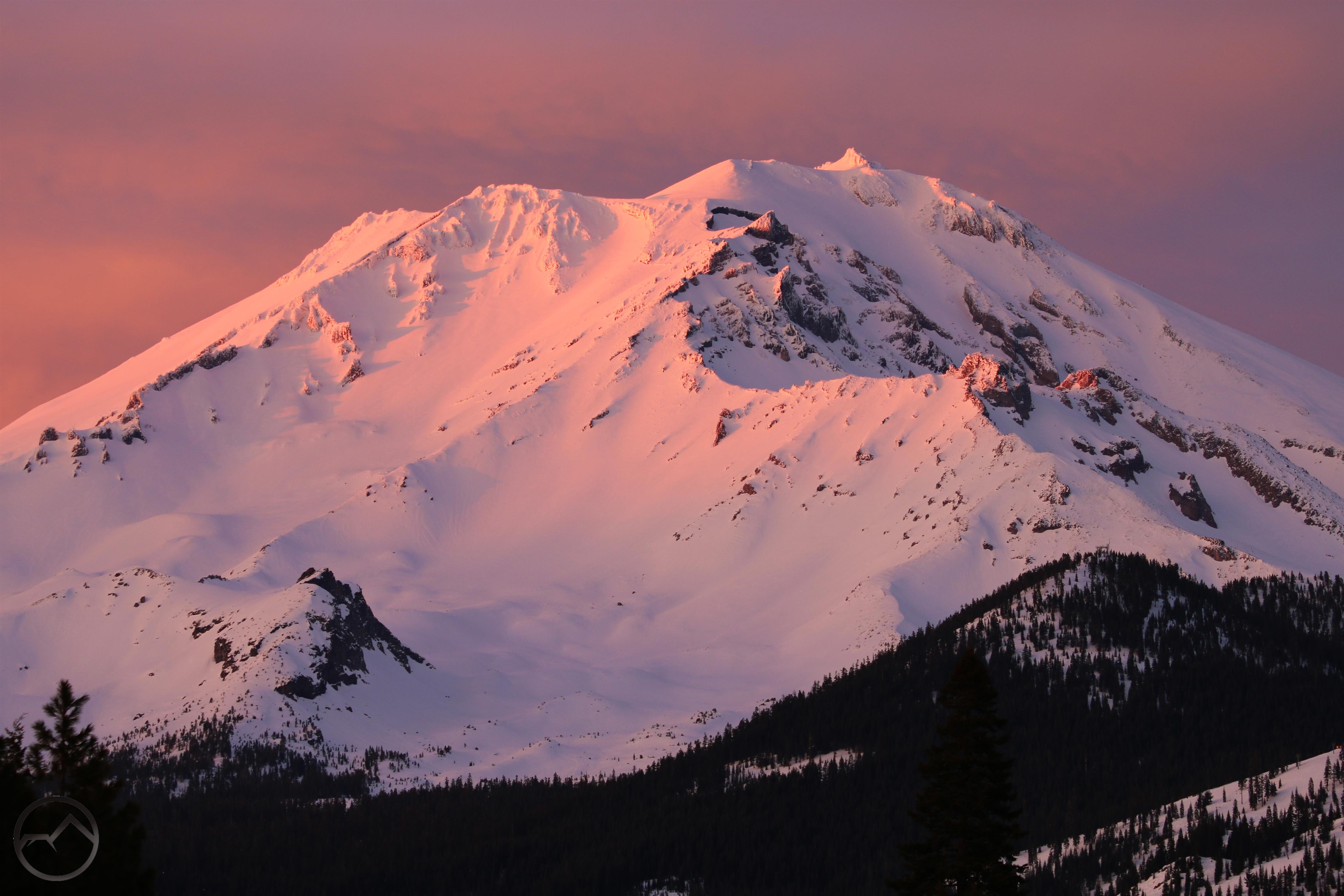
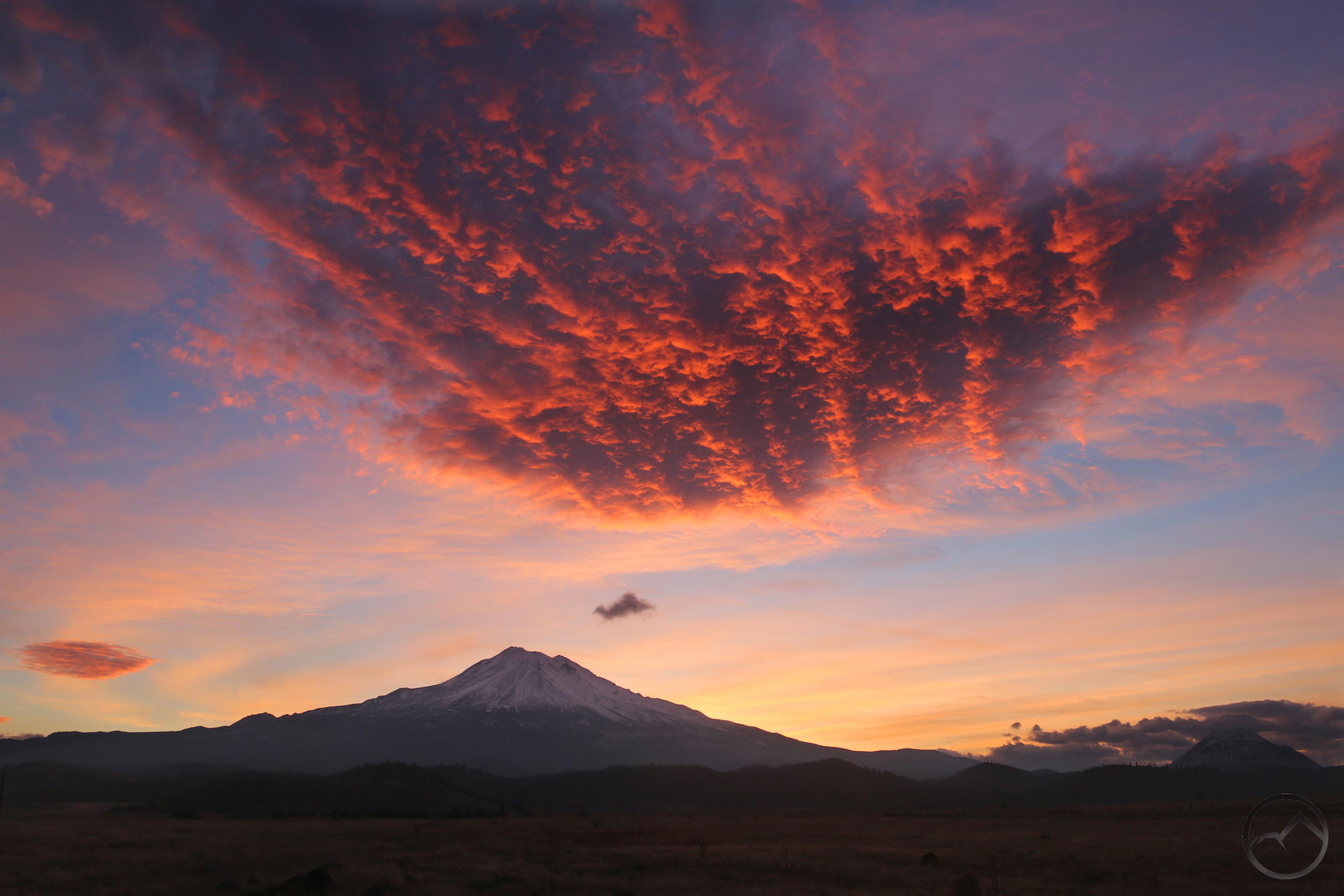
It is unkind to overuse a single quote but in this case it is utterly appropriate. Sunset on Mount Shasta is indeed a grand sight. The enormous, solitary mountain glows in shades of purple, red, pink and orange when all else have fallen into darkness.  The sunset light gives Mount Shasta a beautiful, otherworldly feel. However, unlike sunrise, the sunset is visible from the south, west and north. These sides are the most populated areas around the foot of the mountain, making it easy to enjoy the awesome spectacle. Whether in McCloud, downtown Mount Shasta or in the wind-swept Shasta Valley, you are guaranteed a first-rate seat. It is even possible to ascend one of the peaks that lie to the west and witness the evening show. If lenticular clouds are present the show is made even more magnificent. The opportunity for a variety of ways to enjoy the sunset on Mount Shasta. Wherever you are, a grand sunset on the mountain is a vision that lingers long afterward. Click to enlarge


October
December


December


February
November


February


Coming Soon: Hike Mt Shasta, The Book (and a bonus book too!)

Posted by bubbasuess on January 31, 2015
Posted in: Hiking, Mount Shasta. 19 Comments

Mount Shasta

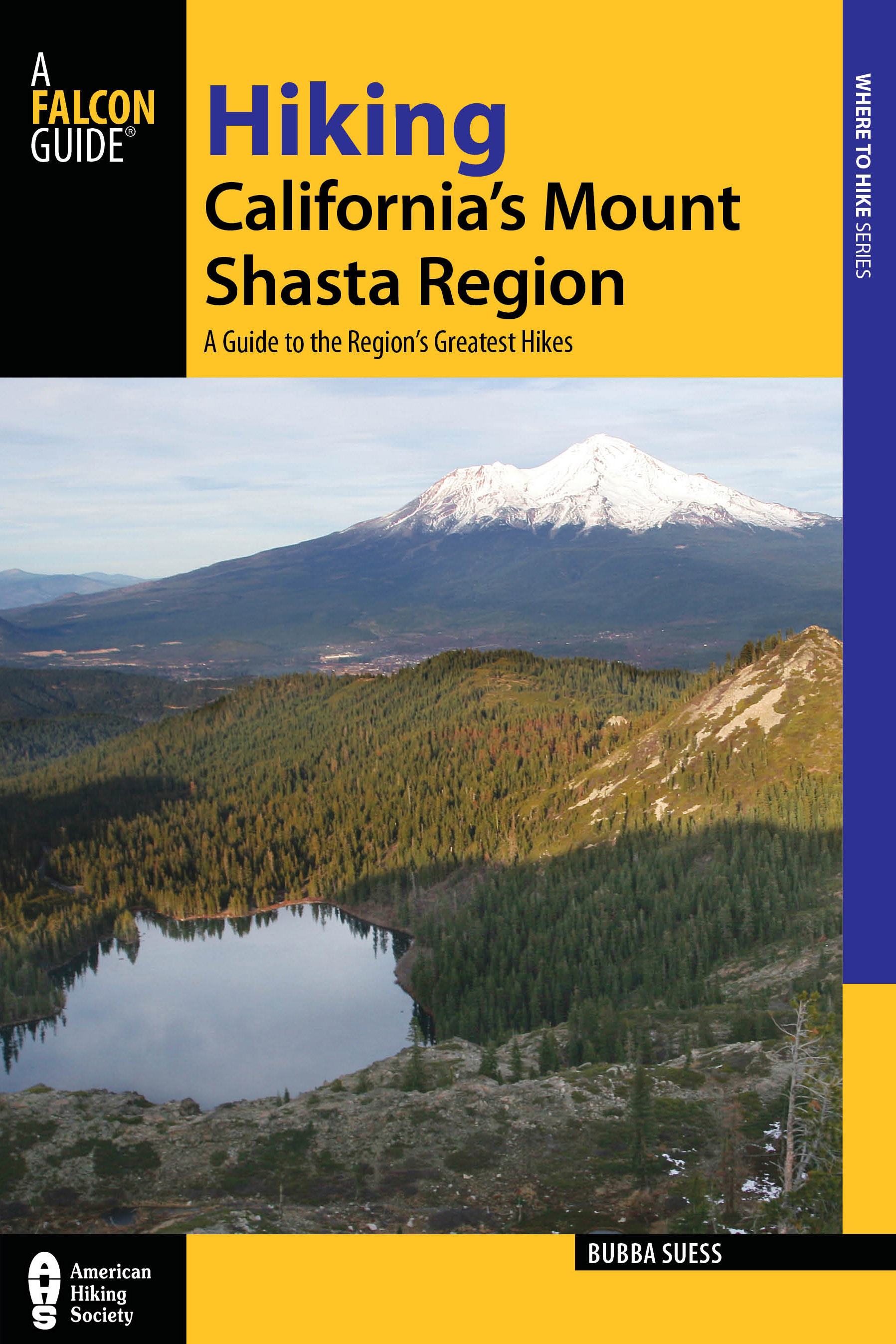
For a little while now I have been hinting at some books I have had in the works. I have not given too many specifics on what they entail, mostly because I am not the type of person who likes to count their chickens before they hatch. However, after many, many months of work, the books are finally nearing publication and are now available for presale on Amazon. The first book, officially called “Hiking California’s Mount Shasta Region“, has 55 trails in the Mount Shasta area. Needless to say, I am really excited that all the work is finally going to be realized in what is, in effect, a hard copy of this website.

It has been a long road to getting this book published. In some ways, it began back when I was in graduate school in Dallas. Having spent much of my time out there exploring the Wichita Mountains in Oklahoma, I felt that a good guidebook would have been a useful tool for hikers in that part of the country. At the same time I joined Summitpost.org, a user driven mountaineering website. After lurking for a time, I began contributing content. Many years of writing for that site finally led me to want to do things my own way and to cater specifically to the interests of hikers in the greater Mount Shasta area. I finally launched Hike Mt Shasta two years ago. A lot of the initial content was transferred over from Summitpost, but I soon began developing things solely for Hike Mt Shasta.

Things took a big leap forward in March of 2014, when I was approached by an editor at Falcon Guides. He inquired whether or not I would be interested in converting the website into a printed guidebook. To be perfectly honest, I had wanted to work with Falcon Guides for years. Their style had great appeal to me and it really fit with the way I envisioned a book of my own being done. I even had printed out their book proposal documents and had them sitting on my desk when the editor contacted me. Naturally I jumped at the chance to author the book. At that point the work of transforming the digital site into a print edition began. This continued right up until mid-December, when I finally finished all the necessary elements of the book. It was then sent off to layout and cartography, where the maps and the book itself are all made.

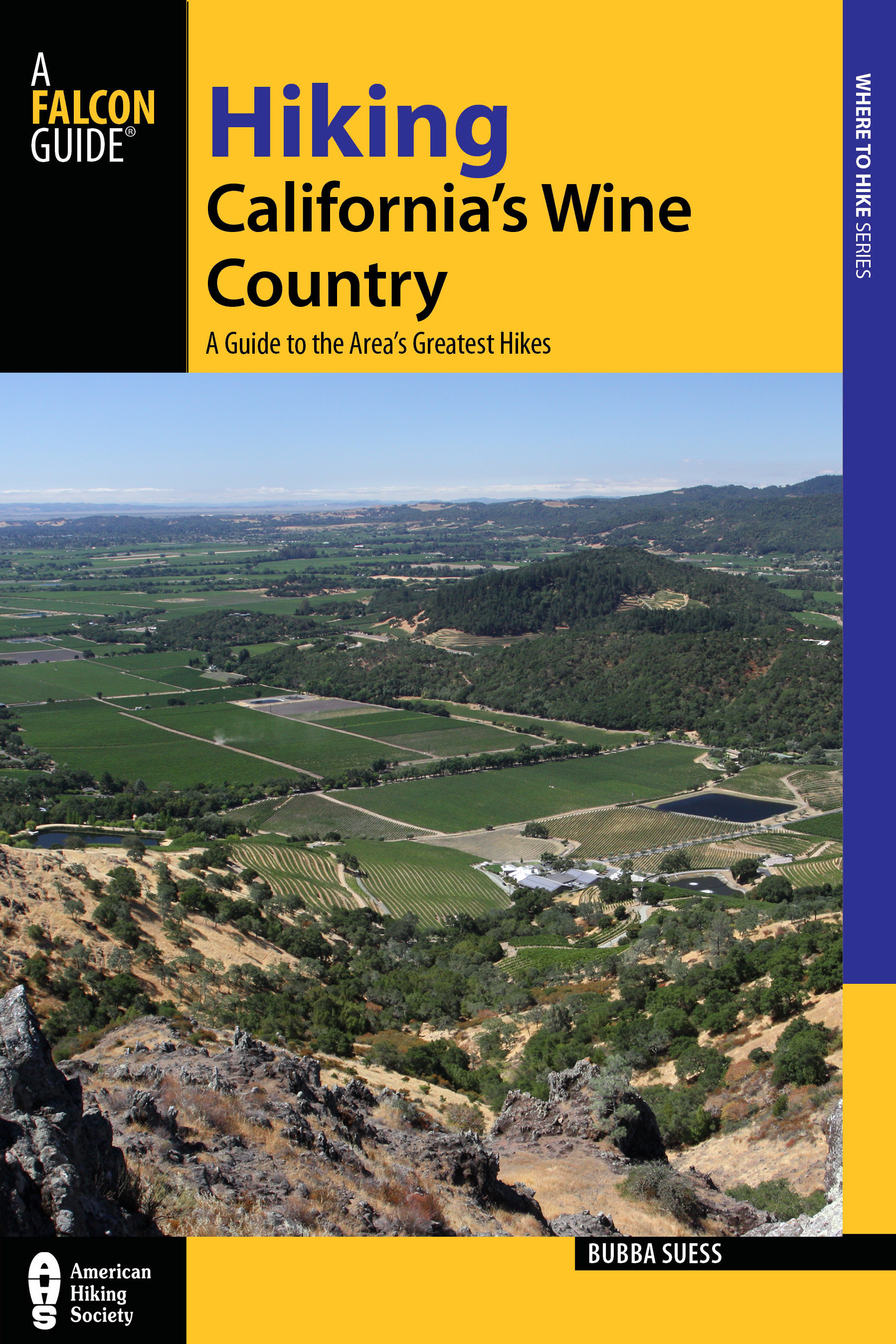
Of course, it did not take me the better part of a year to put together a single book that was, in some respects, already written. There was certainly a lot of work left to do (a lot more than I anticipated!) but it was not enough to cause me to push back all the work until December. Having just been given the opportunity to work with Falcon Guides, I figured I ought to pitch another project to them. I was raised in Sonoma County and grew up hiking and backpacking the trails in that area. It always surprised me that there were so few guide books for such a popular area. I pitched the idea of a guide book for the wine country and they accepted it enthusiastically! Thus began work for “Hiking California’s Wine Country“.

Wine Country


From April through August, I made monthly trips back down to Sonoma County and began hiking a lot of the trails that I had grown up exploring, as well as a host of fantastic new trails. Needless to say, it was not a bad way to spend the summer. I am not sure exactly how many miles I hiked but it was a lot. It was also a really gratifying experience to rediscover my hometown anew and gain a different and deeper appreciation for how amazing that part of California is. The wine country book contains 75 trails spread around Sonoma, Napa and southern Lake Counties. It has hikes through vineyards, along coastal bluffs, next to beautiful creeks,beneath towering redwoods, deep into vast wild areas and to the summits of tall mountains with amazing views (though none are nearly as tall as Mount Shasta, of course!). Even though I knew and loved the trails in this area, I gained a new appreciation for just how much of a first rate hiking destination the wine country is. Here are a few images that will be in the book, to give an idea of the kinds of places the trails journey through:

Click to enlarge

East County – Burned
East County
East County
South County


Both books are going to be released in the next couple of months but they are available for presale on Amazon right now. Some of the details on the Amazon pages like page count, the number of hikes and (hopefully) the release date are inaccurate and will be updated soon. Of course, once the book is in print, some changes will necessarily be made to the Hike Mt Shasta website. What exactly this will entail and how much content will need to be removed remains to be seen. I hope to leave as much beta as possible on the site, but some aspects will have to be altered. Despite this, the blog will continue to be published. For those looking for a Mount Shasta fix or some good discussion of the area’s virtues, there will still be plenty of that on this site.

Thanks to everyone who has read Hike Mt Shasta and been supportive of this effort. I really appreciate it and I sincerely hope that what I have written about the Mount Shasta area has been edifying, helpful and encouraging.

It seems my adventure writing hiking guides is just beginning. The opportunity to write many more books has been presented. Perhaps “Hiking Oklahoma” will be next!

Year Two Of Hike Mt Shasta

Posted by bubbasuess on January 30, 2015
Posted in: Hiking, Mount Shasta, Mount Shasta History, Rivers, Waterfalls, Wilderness. 4 Comments

Cascades, Mt. Shasta - Jan2015 001 (Custom)


Today marks the second anniversary of the launch of Hike Mt Shasta. It has been a fantastic year for this endeavor. Traffic was high and steady as more folks found their way here to get beta on exploring this amazing part of California. I have really enjoyed corresponding with everyone who has sent me questions and comments (though I do apologize if it takes me a little while to respond sometimes!). I hope that the information on this site continues to be useful for getting out and enjoying the beauty of Northern California. Even if we can’t be here, it is my desire that Hike Mt Shasta has enabled people to enjoy this area from afar. Wherever you are, I want my love for Mount Shasta to rub off a bit! Thanks to everyone who has given me corrective feedback, a word of encouragement or simply expressed appreciation.

However, while the site was a great success, there was even more going on behind the scenes. I was working on a pair of books and this year that took a lot of focus off of the site. There were a few months where I completely missed putting up blog posts and even one month in which I failed to take a single picture of Mount Shasta. Even though this was because I was on the road, it was a first for me. If I miss a month in the future, I had better have a dern good reason! I am pretty proud of the work I did on the books and they are going to be published soon. I plan to speak about these with a little more length in the near future, but they deserve mention here because of the way they dominated my life in 2014.

Thanks again for reading Hike Mt Shasta!

Favorite posts of 2014:

Cascades, Mt Shasta, Mud Creek - June2014 062 (Custom)Seldom Seen: Lower Mud Creek Canyon: Relatively easy to get to but lost in the vast forests on the southeast corner of Mount Shasta, the lower section of Mud Creek Canyon is a gorgeous slice of Mount Shasta’s wildlands. Hiking along Mud Creek as it continues to carve its way through the canyon is great as much for the scenery as it is for the sense of lostness and isolation. Punctuated by occasional views of the summit of Mount Shasta, the trip also enjoys tall cliffs and a old growth forests. The highlight is a nifty waterfall on Mud Creek, one that is rarely seen and little appreciated despite its beauty. Those who make the trip into the canyon are in for a real treat!

Cascades, Mt Shasta, Diller Canyon - March2014 034 (Custom)Seldom Seen: Diller Canyon: Where Lower Mud Creek Canyon is obscured by great forests on a little seen side of Mount Shasta, Diller Canyon is high on the side of the mountain, at and above treeline and clearly visible from many well-traveled places, including Interstate 5. Despite this, it maintains a relative obscurity. Even though it is easily accessed via Everitt Memorial Highway and reached by means of an easy and view-packed hike, Diller Canyon remains off the radar as a hiking destination. This certainly isn’t all bad since the few who do make the trip here can enjoy awesome views of the Trinity Divide as well as the gaping chasm of the canyon as it climbs relentlessly up the side of Shastina until it ends just below the cone’s summit. Why this is not a maintained, official trail on Mount Shasta is a mystery to me. It certainly would be easy to make it one and would no doubt be a very popular path. Even though it continues to languish in obscurity, for those who do venture to Diller Canyon, the trip is a powerful experience.

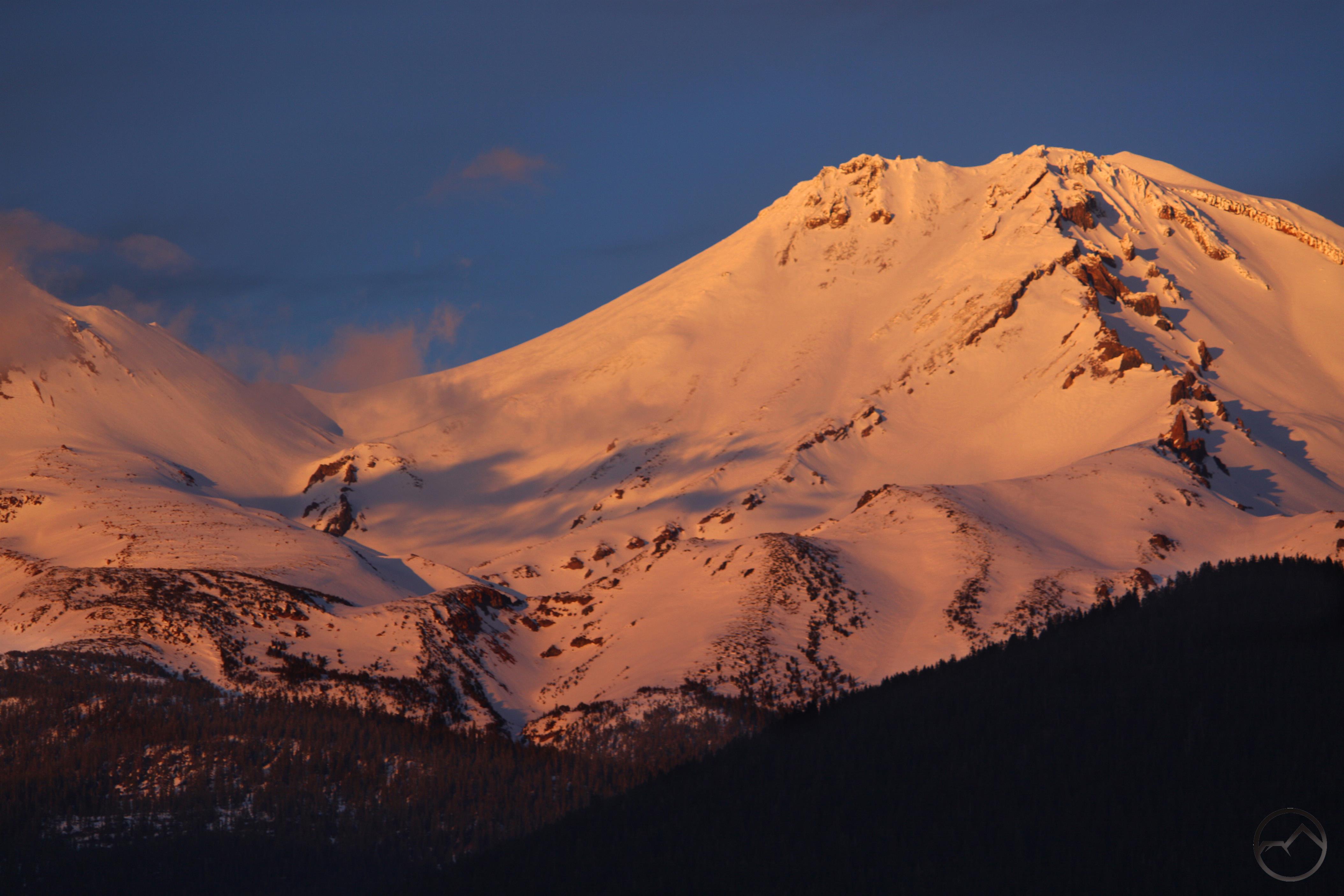
Cascades, Mt. Shasta - Feb2014 027 (Custom)A Journey Unheralded: The Shasta River: I love rivers and the stories that go along with them. Each has a collection of tales and history that give them a distinct personality. To some degree, my thoughts on this were shaped by the book “Through Time and the Valley “, which recounts the tales of the people who lived their lives along the lonely Canadian River in the Texas Panhandle. For me, the Shasta River shares many of the qualities with the Canadian River, but with a major upgrade in terms of scenery (of course, the desolate plains and badlands of the Panhandle are beautiful in their own way and are part of what gives the Canadian River its personality). I love trying to photograph Mount Shasta from the river. It is not always easy because most of the river is on private property but it is a challenge I am willing to undertake! I wish this river received more love than it does and it is my hope that folks are moved to explore it more whenever I write about it. Personally, my little part in the river’s story is one of the most tragic and unusual thus far in my life.
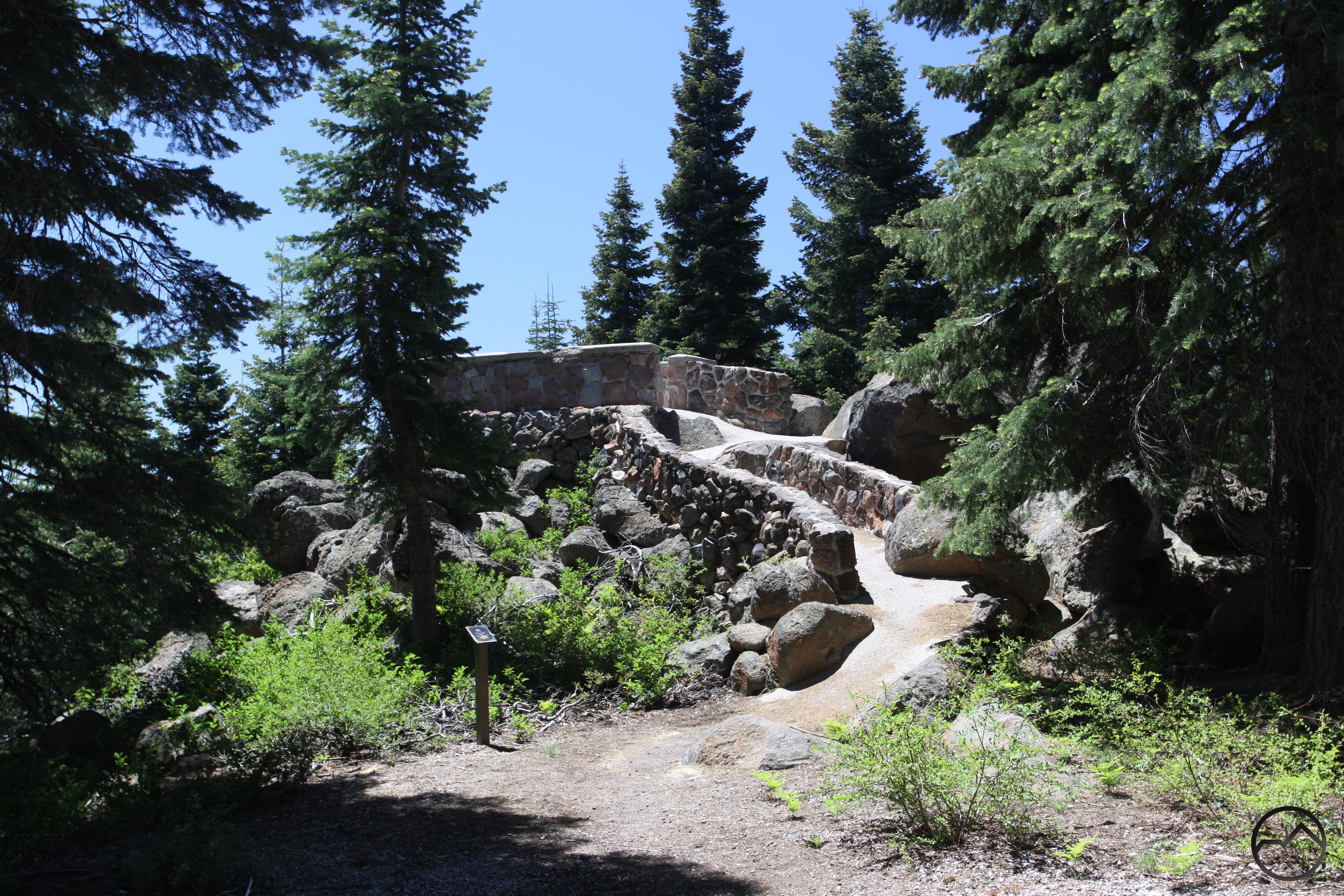
Cascades, Mt. Shasta - June2013 002 copy (Custom)Vantage Lost: The Everittt Memorial Vista: I love history and I am  a sucker for lost things. The vista platform on Mount Shasta perfectly captures my imagination. The fact that this interesting site is hiding in plain sight fascinates me and compels exploration. The story of what the memorial commemorates is sad but reminds us of the sacrifice and perseverance of our forebears. While the view has been lost, it is still an interesting place to visit and includes a short nature trail that passes through beautiful old growth red firs and passes a historic ski shelter, a remnant of earlier days of winter activity on the mountain. Even though the forest has reclaimed the view from the tower (other than a perspective of far-off Lassen Peak), there is a great view of almost the entire Trinity Divide and the distant Trinity Alps from the top of the driveway that descends down to the vista’s parking area.

Trinity Alps, Grizzly Lake - June2013 065b_edited-1 (Custom)Mount Shasta Area Waterfalls: Giants Of The Trinity Alps: Needless to say, I am a complete waterfall junkie. I was raised on the spectacular specimens of Yosemite (some might say spoiled), so while I love all waterfalls, I have a pretty high standard when it comes to what ranks as a top-tier cataract. Here in the far northern part of California, the best falls are (obviously) Burney Falls, the fantastic waterfalls on Mount Shasta itself, and the epic falls of the Trinity Alps. These last in particular have a special place in my heart, since they stand shoulder to shoulder with many of Yosemite’s best and share many of the same characteristics with them as well. White water falling of stark gray granite is possibly my favorite sight in the world and the knowledge that  some truly epic falls like this exist just a few miles to the west is a very comforting thought. Grizzly Falls in particular, is one of the most amazing waterfalls in the world, plunging hundreds of feet directly out of what might be the prettiest lake in the North State.
Short Walk At Sunset

Posted by bubbasuess on January 29, 2015
Posted in: Hiking, Meadows, Mount Shasta. Tagged: Sisson Meadow. 2 Comments
Cascades, Mt. Shasta - Jan2015 113 (Custom)

Mount Shasta viewed from Sisson Meadow

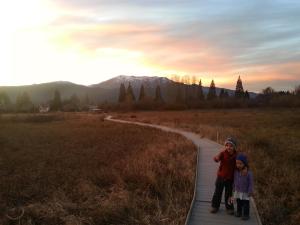
The community of Mount Shasta is blessed with incredible views of its namesake mountain from nearly every part of town. It is commonplace to see people stopped along roads and highways taking pictures, visitors to the downtown area gazing up at the towering heights and folks sitting and relaxing while enjoying the incredible views. There are many great hikes and short in and around town that can be quickly accessed from anywhere in town. One of the great pleasures of being in the Mount Shasta area is enjoying the incredible sight of the setting sun casting alpenglow on the magnificent mountain. Teddy Roosevelt once remarked “I consider the evening twilight on Mt. Shasta one of the grandest sights I have ever witnessed.”  It certainly is an incredible spectacle. One of the most pleasant places to enjoy a relaxing stroll and watch the sun set on the mountain is from Sisson Meadow. Just east of downtown, it is a beautiful meadow watered by spring-fed streams. A boardwalk winds its way through the meadow. The path is punctuated by occasional benches that are strategically located so the great views of the mountain can be enjoyed at leisure. You can read a bit more about the path here.


This afternoon I took my kids out for a walk in the meadow. They love running on the boardwalk, exploring the creeks and watching the ducks in the small pond. While we don’t always go at sunset, this seemed like a good day to watch the sun set and let the kids enjoy the crisp, cold air. As always, they had a great time. For those with little kids, the path through Sisson Meadow is a great place to get outside and enjoy some great views.

Mount Shasta Sunrise Gallery

Posted by bubbasuess on January 27, 2015
Posted in: Hiking, Mount Shasta. Tagged: alpenglow, sunrise. 11 Comments

Fiery dawn at Mount Shasta.

The glow of morning on Mount Shasta is an incredible sight. The colors cast by the rising sun drench the mountain in pinks, reds, oranges and, ultimately, white. The sunrise is fleeting but for a brief moment the solitary mountain explodes in a technicolor display of staggering beauty. While sunset on Mount Shasta is easily enjoyed from the populated areas at the foot of the mountain, it can be difficult to appreciate the morning sunlight. This is because the east side of the volcano is difficult to observe and let finding a good vantage point from which to enjoy the spectacle can be challenging. Only the town of McCloud is particularly well positioned to enjoy the morning show.  Nonetheless, for those who seek out a good vantage point, morning as an incredible time appreciate the awesome beauty of Mount Shasta.

Click to enlarge


December


December


Sunrise at Orr Lake.


Posts navigation

← Older Entries
Newer Entries →
    • Recent Posts

      • Winter Shows Up When It Will
      • January Rolled By With Mud, Then Very Dry
      • Mount Shasta 2025 – A Year In Images
      • Mount Shasta On Either Side Of Christmas
      • Adrift In An Ocean Of Fog
      • December Has Been Spectacular Thus Far Pt. II (A Magnificent Lenticular)
      • December Has Been Spectacular Thus Far Pt. I
      • Lenticular Interrupted
      • A Stormy Wave And A Truchas Sunset
      • Aurora Lenticularis
    • Enter your email address to follow Hike Mt Shasta and receive notifications of new posts by email.

    • Archives

      • February 2026
      • January 2026
      • December 2025
      • November 2025
      • October 2025
      • September 2025
      • August 2025
      • July 2025
      • June 2025
      • May 2025
      • April 2025
      • March 2025
      • February 2025
      • January 2025
      • December 2024
      • November 2024
      • October 2024
      • September 2024
      • August 2024
      • July 2024
      • June 2024
      • May 2024
      • April 2024
      • March 2024
      • February 2024
      • January 2024
      • December 2023
      • November 2023
      • October 2023
      • September 2023
      • August 2023
      • July 2023
      • June 2023
      • May 2023
      • April 2023
      • March 2023
      • February 2023
      • January 2023
      • December 2022
      • November 2022
      • October 2022
      • September 2022
      • August 2022
      • July 2022
      • June 2022
      • May 2022
      • April 2022
      • March 2022
      • February 2022
      • January 2022
      • December 2021
      • November 2021
      • October 2021
      • September 2021
      • August 2021
      • June 2021
      • May 2021
      • April 2021
      • March 2021
      • February 2021
      • January 2021
      • December 2020
      • November 2020
      • October 2020
      • September 2020
      • August 2020
      • July 2020
      • June 2020
      • May 2020
      • April 2020
      • March 2020
      • February 2020
      • January 2020
      • December 2019
      • November 2019
      • October 2019
      • September 2019
      • August 2019
      • July 2019
      • June 2019
      • May 2019
      • April 2019
      • March 2019
      • February 2019
      • January 2019
      • December 2018
      • November 2018
      • October 2018
      • September 2018
      • August 2018
      • July 2018
      • June 2018
      • May 2018
      • April 2018
      • March 2018
      • February 2018
      • January 2018
      • December 2017
      • November 2017
      • October 2017
      • September 2017
      • August 2017
      • July 2017
      • June 2017
      • May 2017
      • April 2017
      • March 2017
      • February 2017
      • January 2017
      • December 2016
      • November 2016
      • September 2016
      • August 2016
      • July 2016
      • June 2016
      • May 2016
      • April 2016
      • March 2016
      • February 2016
      • January 2016
      • December 2015
      • November 2015
      • September 2015
      • August 2015
      • July 2015
      • June 2015
      • May 2015
      • April 2015
      • March 2015
      • February 2015
      • January 2015
      • December 2014
      • November 2014
      • July 2014
      • June 2014
      • May 2014
      • April 2014
      • March 2014
      • February 2014
      • January 2014
      • December 2013
      • November 2013
      • October 2013
      • September 2013
      • August 2013
      • July 2013
      • June 2013
      • May 2013
      • April 2013
      • March 2013
      • February 2013
      • January 2013
    • Categories

      • Boy Scouts
      • Cascade Range
      • Castle Crags
      • Desert
      • Echo Point
      • Glaciers
      • Hiking
      • How things came to be…
      • Klamath Mountains
      • Konwakiton Outdoor Designs
      • Lakes
      • Lenticular Clouds
      • Maps
      • Marble Mountains
      • Meadows
      • Mount Eddy
      • Mount Shasta
      • Mount Shasta History
      • Napa County
      • Off Season Trails
      • Pacific Crest Trail
      • Peaks
      • Rivers
      • Rock Climbing
      • Scott Mountains
      • Seldom Seen
      • Shasta Valley
      • Sierra Nevada
      • Siskiyou Mountains
      • Sonoma County
      • Spring Trails
      • sunrise
      • sunset
      • Trinity Alps
      • Trinity Divide
      • Truchas Ridge
      • Uncategorized
      • Water
      • Waterfalls
      • Wilderness
      • Wildflowers
      • Wine Country
      • Winter Trails
      • Yosemite
    • Meta

      • Create account
      • Log in
      • Entries feed
      • Comments feed
      • WordPress.com
    • Copyright © 2013-2024 by Bubba Suess

      DISCLAIMER: Any use of the information contained in this site by any and all persons is done at their own risk. The operator of this site shall be held harmless from any and all alleged claims, demands, causes of action, liability, loss, damage and/or injury to property or persons whether brought by an individual or other entity. This indemnification applies, without limitation, to all actions by an individual or other entity as a result of their use of information contained in this site.

    Blog at WordPress.com.
    Hike Mt. Shasta
    Blog at WordPress.com.
    • Subscribe Subscribed
      • Hike Mt. Shasta
      • Join 985 other subscribers
      • Already have a WordPress.com account? Log in now.
      • Hike Mt. Shasta
      • Subscribe Subscribed
      • Sign up
      • Log in
      • Report this content
      • View site in Reader
      • Manage subscriptions
      • Collapse this bar
     

    Loading Comments...