Hike Mt. Shasta

Exploring the Mount Shasta Region

  • Home
  • Trails
    • Mount Shasta Trails
      • Brewer Creek Trail
      • Clear Creek Trail
      • Gray Butte Trail
      • Green Butte Ridge Trail
      • Horse Camp Trail
      • North Gate Trail
      • Old Ski Bowl Trail
      • Panther Meadow Trail
      • South Gate/Squaw Meadow Trail
      • Whitney Falls Trail
    • Trinity Divide Trails
      • Blue Divide Trail
      • Castle Lake Trail
      • Castle Lake Shore Trail
      • Cliff Lake Trail
      • Deadfall Lakes Trail
      • Gray Rock Lakes Trail
      • Gumboot Trail
      • Heart Lake Trail
      • Porcupine & Toad Lakes Via Pacific Crest Trail
      • Seven Lakes Basin Via Pacific Crest Trail
      • Sisson-Callahan Trail
      • Soapstone Trail
      • South Mumbo Scramble
      • Tamarack Lake Trail
      • Toad Lake Trail
    • Castle Crags Trails
      • Burstarse Falls Via Pacific Crest Trail
      • Castle Dome Trail
      • Flume Trail
      • Lower Castle Crags Via Pacific Crest Trail
      • Root Creek Trail
    • Scott Mountains Trails
      • Bluff Lake & Cement Bluff via Pacific Crest Trail
      • Caldwell Lakes Trail
      • China Mountain Scramble
      • Cory Peak and Bull Lake via Pacific Crest Trail
    • Cascade Crest
      • Ash Creek Butte Scramble
      • Goosenest Trail
      • Juanita Lake Trail
      • Orr Lake Trail
    • Mount Shasta City Area Trails
      • Black Butte Trail
      • Box Canyon Trail
      • Gateway Trail
      • Lake Siskiyou Trail
      • Mount Shasta City Short Trails
      • Ney Springs Canyon Trail
      • Spring Hill Trail
    • Shasta Valley Trails
      • Black Lava Trail
      • Haystack Trail
      • Lake Shastina Trail
      • Pluto Cave Trail
      • Trout Lake Trail
      • Yellow Butte Trail
    • Sacramento River Trails
      • Dunsmuir Trail
      • Hedge Creek Falls Trail
      • Sacramento River Trail
      • Sims History Trail
    • McCloud River Trails
      • Ash Camp To Ah-Di-Na Via Pacific Crest Trail
      • McCloud River Falls Trail
      • McCloud River Preserve Trail
      • Squaw Valley Creek Trail
      • McCloud River Trail: Algoma Camp to Nitwit Camp
      • McCloud River Trail: Nitwit Camp to Cattle Camp Swimming Hole
      • McCloud River Trail: Cattle Camp Swimming Hole to Camp 4
      • McCloud River Trail: Camp 4 to Upper McCloud Falls
      • McCloud River Trail: Pine Tree Hollow Loop
    • Trails Further Afield
      • Trinity Alps Trails
        • Bear Lakes Trail
        • Billys Peak Trail
        • Boulder Creek Lakes Trail
        • Boulder Lake Trail
        • Canyon Creek Trail
        • Caribou Lakes Trail
        • East Boulder Lake Loop
        • East Weaver Lake Trail
        • Four Lakes Loop
        • Granite Peak Trail
        • Grizzly Creek Trail
        • Gulch Lakes Loop
        • Hidden Lake Trail
        • South Fork Lakes Trail
        • Stoddard Lake Trail
        • Stoney Ridge Trail
        • Tangle Blue Lake Trail
      • Warner Mountains
        • Emerson Creek Trail
        • Highgrade Trail
        • Patterson Lake Via Warner Summit Trail
        • Pine Creek Trail
        • Squaw Peak Trail
  • Articles
    • Trails By Area
      • Mount Shasta
        • Vistas, Meadows And Waterfalls: Three Best Hikes On Mount Shasta
        • The End Of The Road: Three Hikes In The Old Ski Bowl Area
        • Two Trails From Bunny Flat
        • Three Trails On Mount Shasta’s East Side
        • Mount Shasta’s Hummingbirds
      • Trinity Divide
        • Great Lakes: Top Five Lake Basins In The Trinity Divide
        • The Headwaters Of The South Fork Of The Sacramento River
        • Neglected Headwaters: Two Lesser Lake Basins On The South Fork
        • Gumboot Saddle: Two Hikes On The PCT
        • Descent Into Mystery: The Sisson-Callahan Trail
        • Mumbo Basin – Overlooked On The West Side
        • The Headwaters Loop: A Proposed Backpacking Loop In The Trinity Divide
      • The McCloud River
        • The McCloud River Trail
      • Shasta Valley
        • Jewels In The Desert
      • Scott Mountains
        • Great Scott! Two Scott Mountains Hikes On The PCT
      • Trinity Alps
        • Carubou Lakes: Trinity Alps On A Grand Scale
        • Switchbacks To Heaven: The Trinity Alps’ Stoney Ridge Trail and Four Lakes Loop
        • Trinities In Proximity: Two Trinity Alps Trails With Easy Access From Mount Shasta
        • Trails in the Carter Meadows Area
        • Trinity Alps Views of Mount Shasta
        • The Psychological Value Of The Trinity Alps
    • Waterfalls
      • Three Waterfalls On Mount Shasta
      • McCloud River Waterfalls
      • Sacramento River Waterfalls
      • Trinity Divide Waterfalls
      • Trinity Alps Waterfalls
      • Avoiding A Dry Whitney Falls
    • Off Season Trails
      • Three Winter Hikes Near Mount Shasta City
      • Winter Hikes In Shasta Valley
      • Winter Hiking In The Shasta Valley Wildlife Refuge
      • Winter Hikes On The Sacramento River
      • Winter Hikes On The Lake Siskiyou Trail
      • Spring Hikes In The Castle Crags
      • Spring Hikes On the Upper McCloud
      • Spring Hikes On The Lower McCloud River
    • Points Of Interest
      • Mount Eddy: Overshadowed, Underrated
      • Black Butte: Hiding In Plain Sight
      • Castle Dome: Steadfast And Staggering
      • Mount Shasta Hoodoos
      • Sacramento Scrambling
      • The Shasta River
      • The Castle Creek Watershed
      • Mount Shasta East Side Glacier View
      • 5 Fantastic Mount Shasta Vistas
      • 5 Highest Peaks Around Mount Shasta
      • 5 Best Hikes On Creeks And Rivers
      • 5 Interesting Footbridges
      • Three Spectacular Drive-To Sunset Vistas
    • North State Geography
      • Introduction
      • Seven Major Regions
      • The California Cascades
      • Klamath Mountains Pt. I
      • Klamath Mountains Pt. II
      • The Great Canyons Of Mount Shasta
      • Mount Shasta, Timberline, And The Relative Size Of Cascade Volcanos
      • Four Eruption Cones Of Mount Shasta
      • Mount Shasta’s Medial Moraine
    • Northern California Review
      • North Table Mountain
      • Lakes Basin Recreation Area
      • Eastern Sierra Fall Color
      • Sonoma County
      • Central Sierra Nevada
      • Orland Buttes
    • Seldom Seen
      • Ash Creek Falls
      • Mud Creek Canyon
      • Lower Mud Creek Canyon
      • Diller Canyon
      • Lower Cascade Gulch
      • The Grey Rocks
      • Castle Creek
      • Upper Wagon Creek
      • Fawn Creek Canyon
      • Confluence of the Sacramento River and Castle Creek
      • Upper Klamath River Canyon
      • Hole In The Ground Geologic Area
      • Ash Creek Butte Fossil Rock Glacier
    • Mount Shasta History
      • Vantage Lost: The Everitt Memorial Vista
      • A Yosemite-Mount Shasta Connection
      • Whitney – What’s In A Name?
      • Mount Shasta Area and the 1838 Exploring Expedition
      • A 19th Century Engraving Of An Epic Mount Shasta Vista
      • Vintage 1907 Color Photos
      • A Misleading Painting
      • A Mysterious Painting
      • A Mysterious Painting Pt. II
      • Stereographic Mt. Shasta
      • Year One Of Hike Mt Shasta
      • Year Two Of Hike Mt Shasta
      • Year Three Of Hike Mt Shasta
      • Year Four Of Hike Mt Shasta
      • Year Five Of Hike Mt Shasta
      • Year Six Of Hike Mt Shasta
      • Year Seven Of Hike Mt Shasta
    • Image Galleries
      • Mount Shasta Trails Gallery
      • Mount Shasta Sunrise Gallery
      • Mount Shasta Sunset Gallery
      • Lenticular Cloud Gallery
      • Mount Shasta NON-Lenticular Clouds
      • Mount Shasta Reflection Gallery
      • Telephoto Gallery
      • Mount Shasta Area Fall Color
      • Castle Crags Gallery
      • Waterfalls Gallery
      • Trinity Divide Lakes Gallery
      • Mount Shasta Area Rivers Gallery
      • Shasta High Desert Gallery
      • Mount Shasta GIF Gallery
    • Random Notes
      • Revew: Three Mount Shasta Trail Maps
      • A Mount Eddy Wilderness?
      • New Land Additions For The Castle Crags
      • Book Plug: Mount Shasta Area Rock Climbing
      • Exile: How I Came To Love Wilderness
  • Mt. Shasta Trail Map
  • Blog
  • About/Contact
  • Links
  • Truchas Ridge

The 4 Eruption Cones Of Mount Shasta

Posted by bubbasuess on January 12, 2018
Posted in: Cascade Range, Glaciers, Hiking, Mount Shasta. 13 Comments

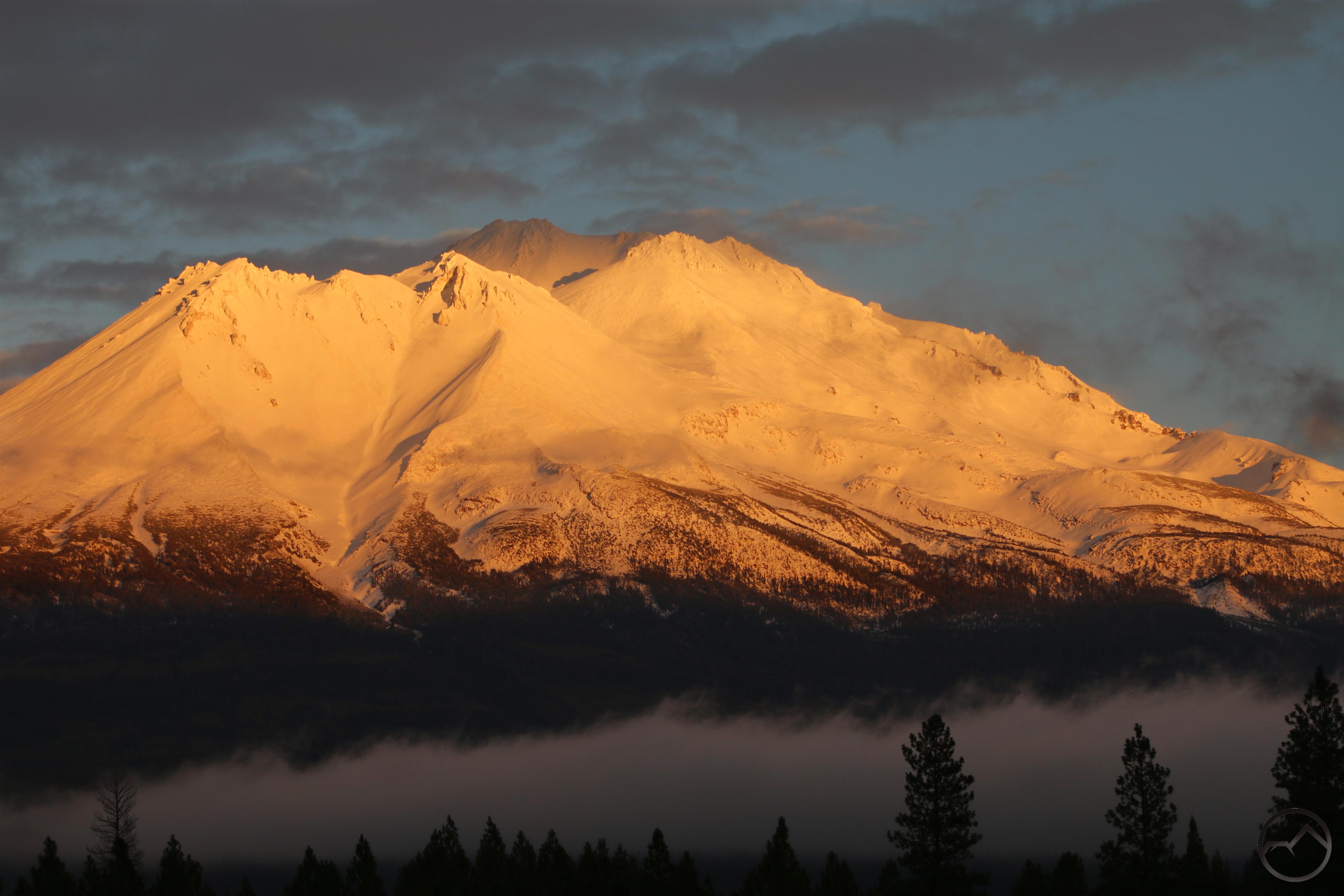
Evening light reveals the layered depth of Mount Shasta 4 eruptive cones.

The geology of Northern California is a subject of endless fascination, with its many mountain ranges, varied geologic compositions and complex associations that these create. Mount Shasta is a microcosm of many of the features, condensed down into a single mountain. While there are indeed different types of rock within the mountain, it remains relatively homogeneous in the sense that all the types are of volcanic origin. However, the volcanic genesis of Mount Shasta is, in fact far more varied than many casual observers might suspect. Yet even the quickest of surveys of the mountain cannot help but notice the mighty satellite cone of Shastina protruding abruptly from Mount Shasta’s northwest flank. This is ready evidence that there have been more than one eruptive period for California’s great volcano. Indeed, this unmissable landmark is the gateway observation to a far more complex geologic history.

Three eruptive cones viewed from the north.

A more in depth study of Mount Shasta’s geography will yield some more detailed elements of the mountain’s structure. Things worth noting are the presence of four large glaciers on the north and east sides, the presence of large, craggy ridges on the west and south sides, the absence of such ridges on the north and east and the relatively smooth curvature of the mountain’s flank on those sides. All of these elements are indicative of the complex eruptive history of Mount Shasta. Specifically, these observations are indicative of the fact that the mountain is not merely a main volcanic cone with the large Shastina a single satellite cone, but rather, a complex joining of 4 different cones, each representing a different eruptive period. 

The four eruptive cones of Mount Shasta, viewed from above.

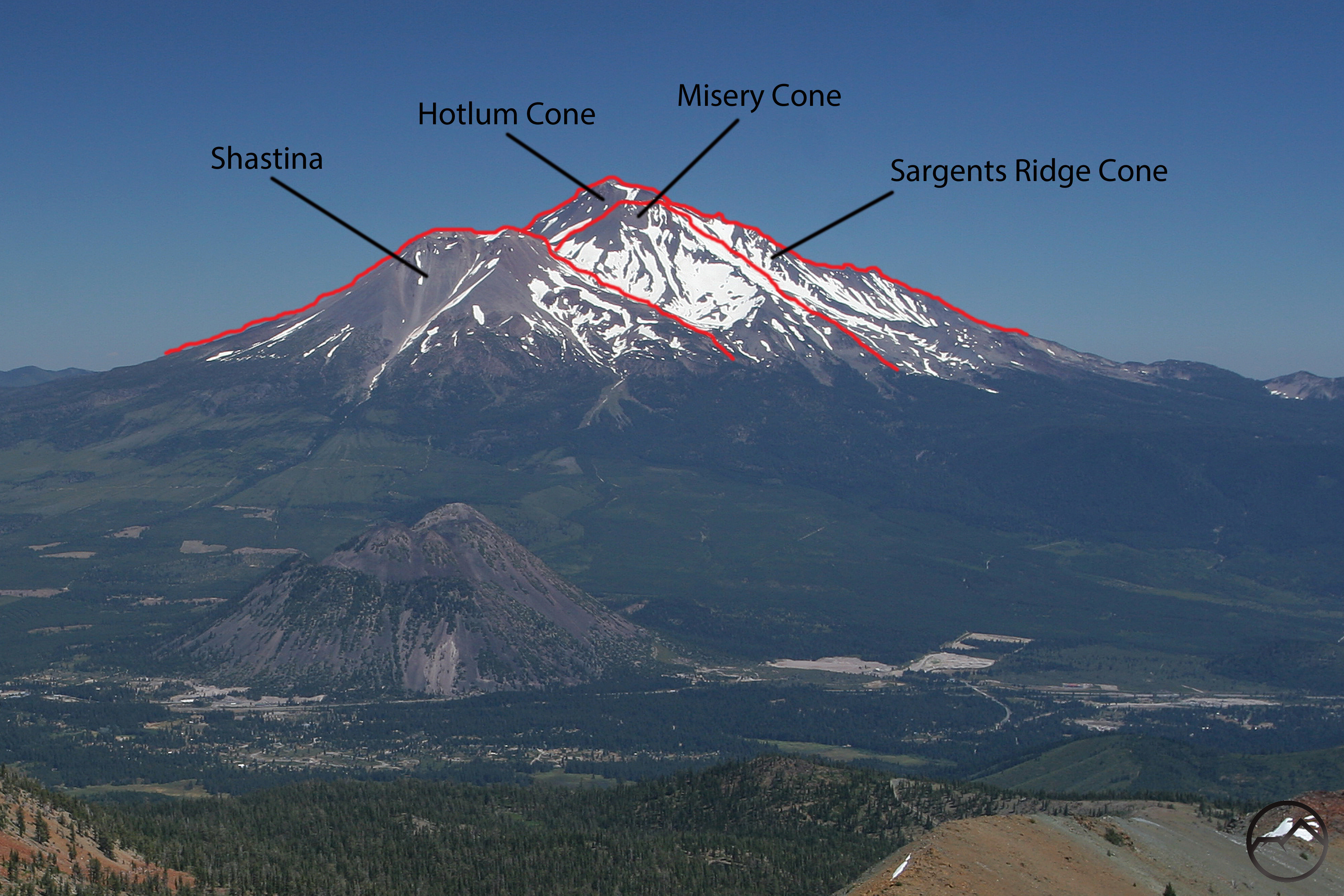
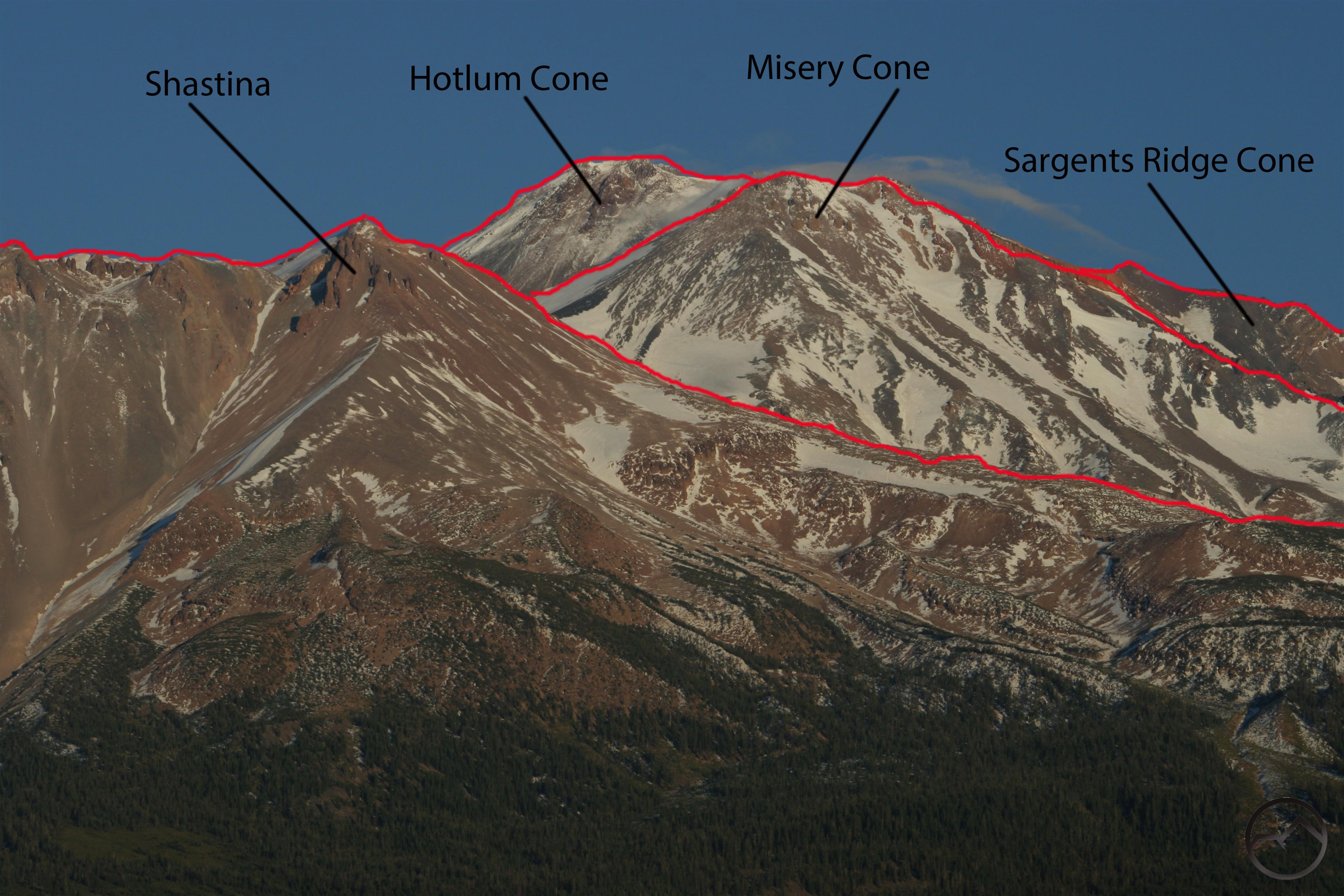
The 4 cones of Mount Shasta are, in large measure, the source of the mountain’s splendidly diverse appearance. Depending on the location from which the mountain is viewed, it can have an utterly different appearance. Much of this is due to the presence of Shastina but the arrangement of the other cones also plays an important role in the mountain’s continually changing appearance. At first glance, the other three cones seem indistinguishable. Further observation, however, may expose the truth of the matter. All three cones that compose the main part of Mount Shasta are best viewed from the west. The cones take their names from prominent features related to them. They are the Hotlum Cone, Misery Cone and Sargents Ridge Cone. The first of these is the main summit and it, by itself, makes up roughly half the mass of the entire mountain. Next, the Misery Cone, is actually prominently visible from Mount Shasta City, obscuring the actual summit and composing most of the highest visible reaches of the mountain. It takes its name from Misery Hill, which lies just west of the actual summit and torments climbers exhausted from the ascent of Avalanche Gulch. The final cone, the Sargents Ridge Cone, is the oldest part of Mount Shasta. Its rugged striations seen above Avalanche Gulch and even more prominently at the head of Mud Creek Canyon are a mosaic of the detritus of past eruptions.

The following illustrations make the distinction between the cones more obvious:

When viewed from the east, only the Hotlum Cone is visible, making Mount Shasta appear as a more typical, conical volcano.

Thumb Rock at the head of Mud Creek Canyon.

Of the four cones, Sargents Ridge Cone is the oldest. Features like Thumb Rock are the necks of old volcanoes. Erosion and glaciers have cut away at this ancient volcano and exposed the convoluted innards of the old giant. Mud Creek Canyon is often described as being a part of prehistoric Mount Shasta. This is because it formed on the oldest part of Mount Shasta and may have predated the later eruptions.  Misery Cone is the second oldest, followed by Shastina, which is believed to have formed only in the last 10,000 years. Astonishingly, Hotlum Cone, which makes up the bulk of Mount Shasta, is the newest, formation, having pushed up through all the other eruption cones. Though it dominates the mountain now, it is a recent addition to the neighborhood. Though they may have emerged at separate times, the four cones together combine to make Mount Shasta an utterly awe-inspiring mountain.
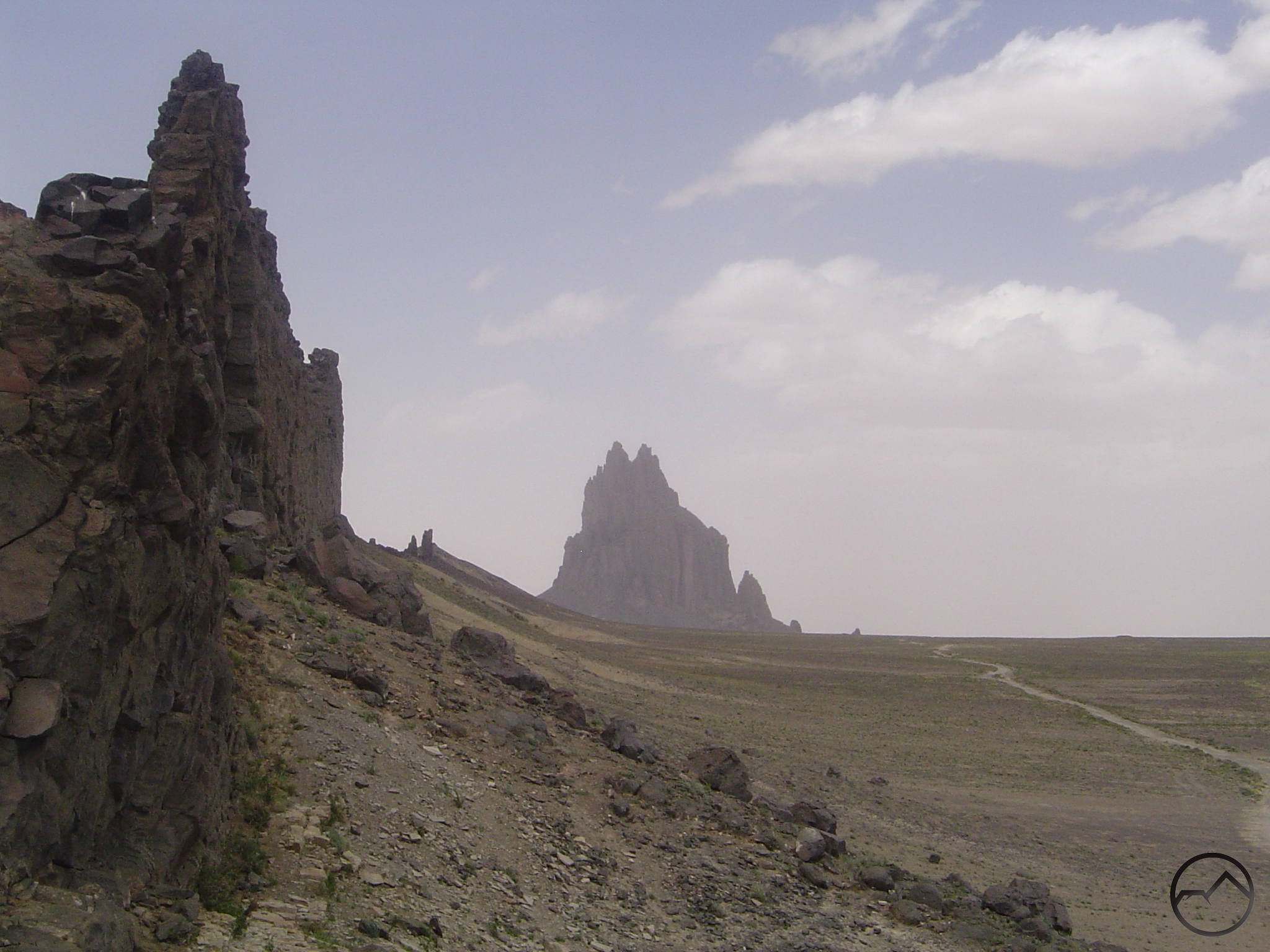
A large dike radiates from Shiprock.

Once one perceives the existence of the four different cones, an interesting possibility emerges. The rugged ridges that extend from eruption points seem like they may in fact be magmatic dikes. These formations occur when magma emanating internally from a volcano intrudes into a crack or fissure. The magma then cools and is exposed via erosion. The way that these features radiate out from the center point of the old eruptions, as well as the ragged crest of the ridges, looks awfully similar to other, well known magma dikes. The most notable ones are those that are formed by the mysterious Shiprock in New Mexico. East and West Spanish Peaks in Colorado also have prominent dikes. In both cases, there are central eruptive cones (or their remnants, as in the case of Shiprock) from which radiate large magmatic dikes.

Observe both:
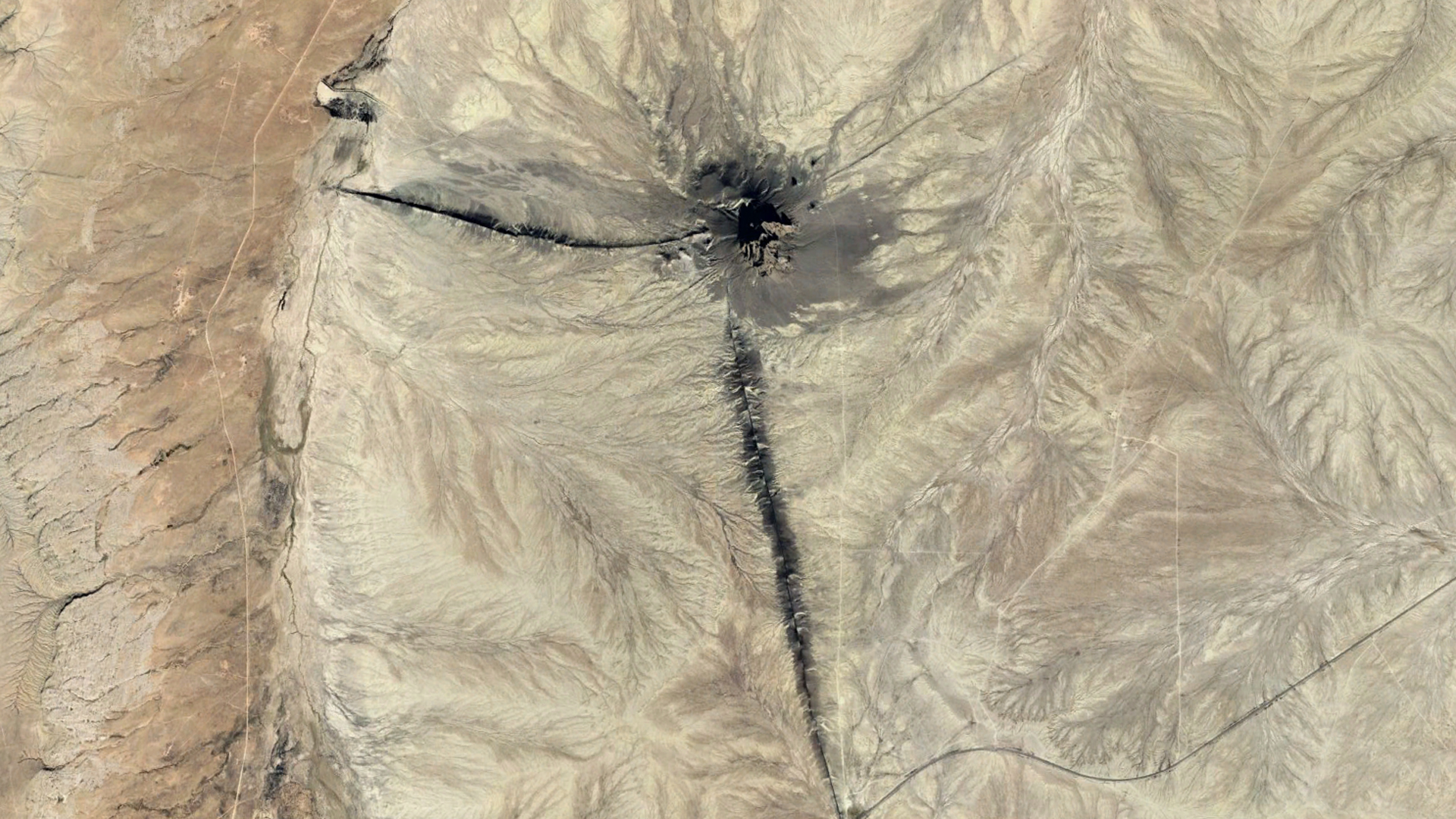
Shiprock

West Spanish Peak
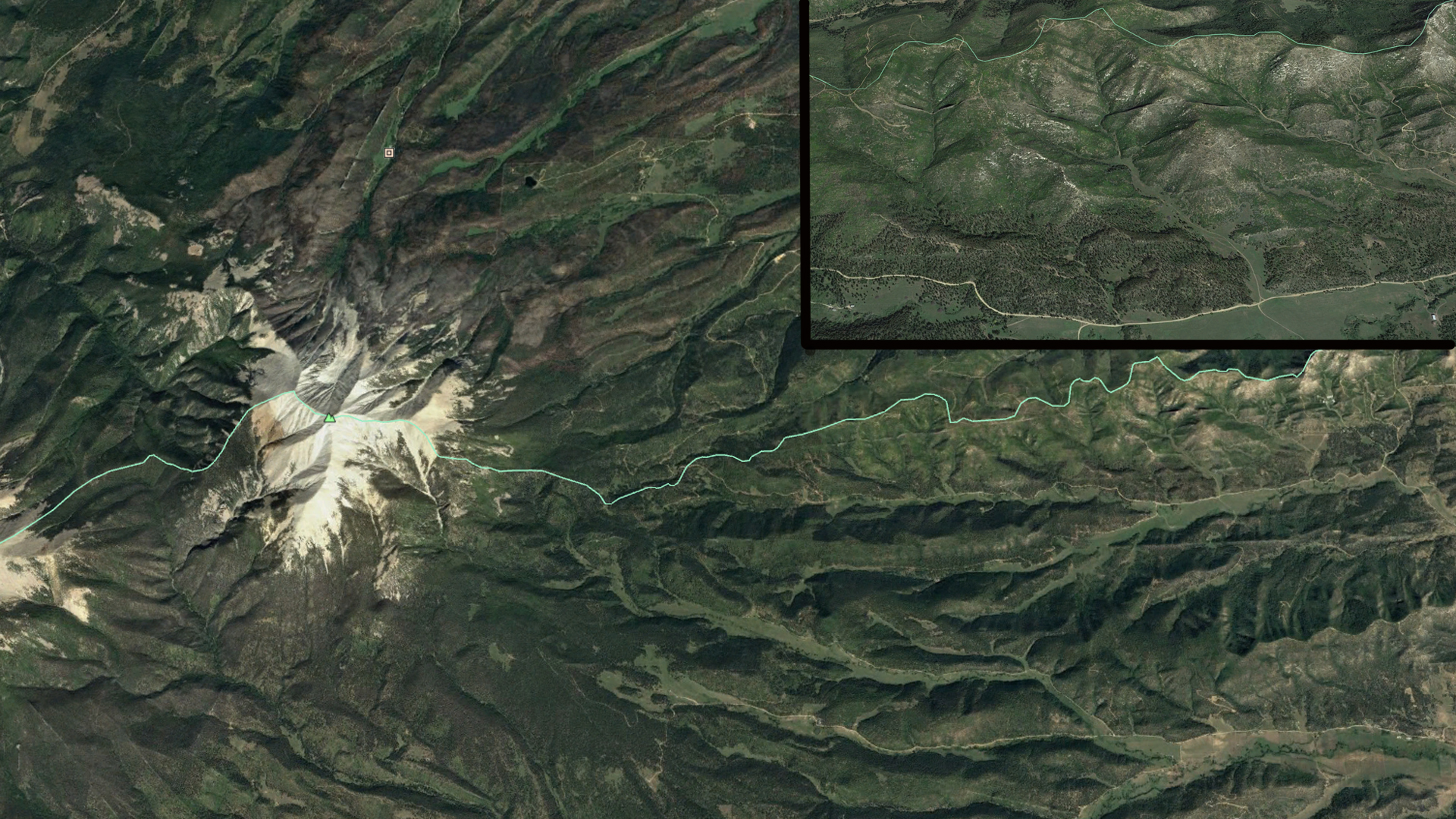
East Spanish Peak (note inlay close-up of the dikes in upper right)

Compare these formations with ridges on Mount Shasta:
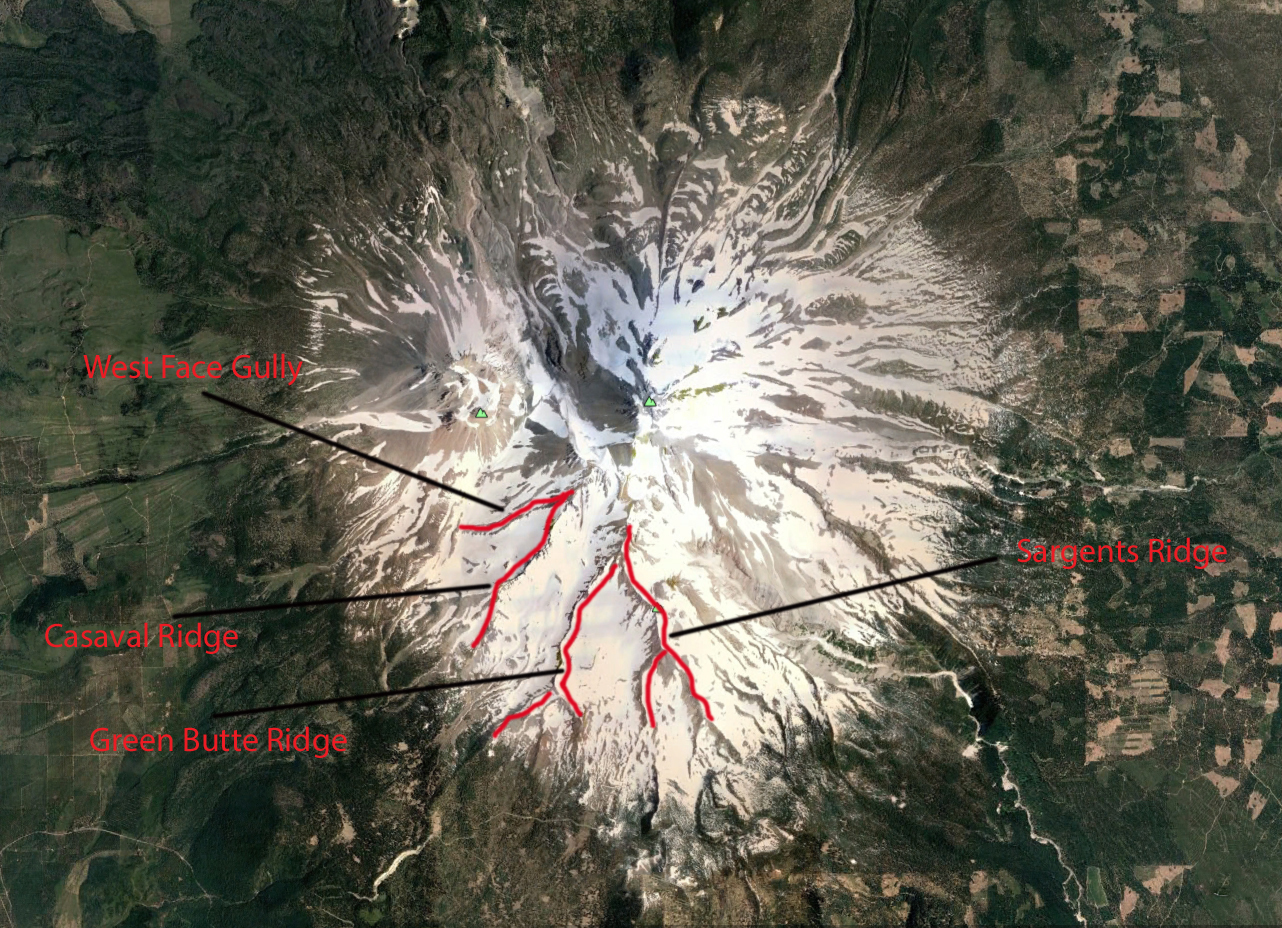

The ridges on Mount Shasta seem quite similar to the magmatic dikes present with Shiprock and the Spanish Peaks. In particular, the southern dike of Shiprock strongly resembles Casaval Ridge on Mount Shasta. The way these ridges connect to the eruption areas on the cones seems to indicated that they are, in some way related to the former volcanoes, just as the dikes on the other peaks are remnants of the volcanic activity in those areas. In both cases the cooled lava has extruded from the larger mass. This would also explain why ridges are exposed on Mount Shasta’s south and west sides but not on the north and east sides. The older volcanoes, Misery Cone and Sargents Ridge Cone, were already formed during the Ice Age and were consequently heavily glaciated. The large rivers of ice cut away at the mountain and made apparent the dikes formed during ancient eruptions. Conversely, Shastina and the Hotlum Cone are believed to postdate the Ice Age and, therefore, have not had glaciers open the mountain up and declare the volcanic dikes that may be present. Of course, Hotlum Cone is currently experiencing the ministry of the Whitney, Bolam, Hotlum and Wintun Glaciers, so the possibility of dikes or rugged ridges being revealed in the future remains. Of course, this is all speculation, but the appearance of the formations seems to fit the theory.

Hopefully the recognition of the various eruption cones on Mount Shasta will help admirers identify and distinguish landmarks on the mountain. The mountain’s geography demands to be studied and everyone who admires the Mount Shasta appreciates the combined beauty of the 4 cones.

Share this:

  • Click to share on Facebook (Opens in new window) Facebook
  • Click to share on X (Opens in new window) X
  • Click to share on Pinterest (Opens in new window) Pinterest
Like Loading...

Related

Posts navigation

← Mount Shasta 2017: A Year In Images
One Year Ago, We Were Not Waiting For Snow →

13 comments on “The 4 Eruption Cones Of Mount Shasta”

  1. Peter's avatar
    Peter on January 14, 2018 at 4:55 pm said:

    Great blog. I’ve always found Mt. Shasta an interesting place and love how you explore it in detail

    Reply
  2. Pingback: Avalanches In Avalanche Gulch | Hike Mt. Shasta

  3. Pingback: A Mount Shasta Reader | Hike Mt. Shasta

  4. Pingback: Hike Mt. Shasta

  5. Pingback: Mount Shasta, The Castle Crags And The 1838-42 Unite States Exploring Expedition | Hike Mt. Shasta

  6. Pingback: Gazing Into The Heart Of Mount Shasta | Hike Mt. Shasta

  7. Pingback: Appreciating Mount Shasta’s Stunning Whitney Glacier Icefall | Hike Mt. Shasta

  8. Pingback: Memorial Day on Mount Shasta, May 2019 | inthegooey

  9. Pingback: Palisades At Daybreak | Hike Mt. Shasta

  10. Pingback: Cut Into The Heart Of The Mountain: The Great Canyons Of Mount Shasta | Hike Mt. Shasta

  11. Pingback: Mount Shasta Geography Articles | Hike Mt. Shasta

  12. Pingback: Mount Shasta, California, USA |

  13. Pingback: Icy Heights And Chaotic Skies | Hike Mt. Shasta

Leave a comment Cancel reply

    • Recent Posts

      • December Has Been Spectacular Thus Far Pt. II (A Magnificent Lenticular)
      • December Has Been Spectacular Thus Far Pt. I
      • Lenticular Interrupted
      • A Stormy Wave And A Truchas Sunset
      • Aurora Lenticularis
      • Fog Redux: Getting It Right This Time
      • Swallowed By Fog
      • Autumn Is Upon Us
      • 2 Days Of Fire Near The Castle Crags
      • Parks Creek: An Underappreciated Shasta Gem
    • Enter your email address to follow Hike Mt Shasta and receive notifications of new posts by email.

    • Archives

      • December 2025
      • November 2025
      • October 2025
      • September 2025
      • August 2025
      • July 2025
      • June 2025
      • May 2025
      • April 2025
      • March 2025
      • February 2025
      • January 2025
      • December 2024
      • November 2024
      • October 2024
      • September 2024
      • August 2024
      • July 2024
      • June 2024
      • May 2024
      • April 2024
      • March 2024
      • February 2024
      • January 2024
      • December 2023
      • November 2023
      • October 2023
      • September 2023
      • August 2023
      • July 2023
      • June 2023
      • May 2023
      • April 2023
      • March 2023
      • February 2023
      • January 2023
      • December 2022
      • November 2022
      • October 2022
      • September 2022
      • August 2022
      • July 2022
      • June 2022
      • May 2022
      • April 2022
      • March 2022
      • February 2022
      • January 2022
      • December 2021
      • November 2021
      • October 2021
      • September 2021
      • August 2021
      • June 2021
      • May 2021
      • April 2021
      • March 2021
      • February 2021
      • January 2021
      • December 2020
      • November 2020
      • October 2020
      • September 2020
      • August 2020
      • July 2020
      • June 2020
      • May 2020
      • April 2020
      • March 2020
      • February 2020
      • January 2020
      • December 2019
      • November 2019
      • October 2019
      • September 2019
      • August 2019
      • July 2019
      • June 2019
      • May 2019
      • April 2019
      • March 2019
      • February 2019
      • January 2019
      • December 2018
      • November 2018
      • October 2018
      • September 2018
      • August 2018
      • July 2018
      • June 2018
      • May 2018
      • April 2018
      • March 2018
      • February 2018
      • January 2018
      • December 2017
      • November 2017
      • October 2017
      • September 2017
      • August 2017
      • July 2017
      • June 2017
      • May 2017
      • April 2017
      • March 2017
      • February 2017
      • January 2017
      • December 2016
      • November 2016
      • September 2016
      • August 2016
      • July 2016
      • June 2016
      • May 2016
      • April 2016
      • March 2016
      • February 2016
      • January 2016
      • December 2015
      • November 2015
      • September 2015
      • August 2015
      • July 2015
      • June 2015
      • May 2015
      • April 2015
      • March 2015
      • February 2015
      • January 2015
      • December 2014
      • November 2014
      • July 2014
      • June 2014
      • May 2014
      • April 2014
      • March 2014
      • February 2014
      • January 2014
      • December 2013
      • November 2013
      • October 2013
      • September 2013
      • August 2013
      • July 2013
      • June 2013
      • May 2013
      • April 2013
      • March 2013
      • February 2013
      • January 2013
    • Categories

      • Boy Scouts
      • Cascade Range
      • Castle Crags
      • Desert
      • Echo Point
      • Glaciers
      • Hiking
      • How things came to be…
      • Klamath Mountains
      • Konwakiton Outdoor Designs
      • Lakes
      • Lenticular Clouds
      • Maps
      • Marble Mountains
      • Meadows
      • Mount Eddy
      • Mount Shasta
      • Mount Shasta History
      • Napa County
      • Off Season Trails
      • Pacific Crest Trail
      • Peaks
      • Rivers
      • Rock Climbing
      • Scott Mountains
      • Seldom Seen
      • Shasta Valley
      • Sierra Nevada
      • Siskiyou Mountains
      • Sonoma County
      • Spring Trails
      • sunrise
      • sunset
      • Trinity Alps
      • Trinity Divide
      • Truchas Ridge
      • Uncategorized
      • Water
      • Waterfalls
      • Wilderness
      • Wildflowers
      • Wine Country
      • Winter Trails
      • Yosemite
    • Meta

      • Create account
      • Log in
      • Entries feed
      • Comments feed
      • WordPress.com
    • Copyright © 2013-2024 by Bubba Suess

      DISCLAIMER: Any use of the information contained in this site by any and all persons is done at their own risk. The operator of this site shall be held harmless from any and all alleged claims, demands, causes of action, liability, loss, damage and/or injury to property or persons whether brought by an individual or other entity. This indemnification applies, without limitation, to all actions by an individual or other entity as a result of their use of information contained in this site.

    Blog at WordPress.com.
    • Comment
    • Reblog
    • Subscribe Subscribed
      • Hike Mt. Shasta
      • Join 981 other subscribers
      • Already have a WordPress.com account? Log in now.
      • Hike Mt. Shasta
      • Subscribe Subscribed
      • Sign up
      • Log in
      • Copy shortlink
      • Report this content
      • View post in Reader
      • Manage subscriptions
      • Collapse this bar
     

    Loading Comments...
     

      %d