
Over the last couple of weeks the Mount Shasta area has hosted a series of heavy storms that have left a heavy deposit of snow. After the exceedingly dry January, this has been a welcome and necessary change of pace. What really set the storms apart, however, was the amount of precipitation that fell in the high desert of the Shasta Valley. It’s not unusual to see rain fall in this arid area. That happens a few times each winter. It is not unheard of for snow to fall in the valley. That seems to occur every few years, though the snow is light and fleeting. What is unusual is for a winter storm to dump deep snow and for it to remain cold enough for the snow to stick around for days. This is what precisely happened and the conditions were such that thick fog shrouded the magically white land, cloaking the snowy landscape in mystery. The conditions left by the most recent storm in the Shasta Valley were rare indeed.
Naturally, I need to get out there to see it for myself and there was not question that my destination was Truchas Ridge. I have been trying to photograph this area in the snow for a few years now. The closest I have come was in February 2023. The valley got a couple inches of snow but by the time the sky cleared and Mount Shasta was visible, the snow had melted off most areas and only the northern exposures and the far west side of the valley (where the shade of the Scott Mountains keeps it cooler). While beautiful, it was still not quite what I was hungering for. This time would be a bit different.
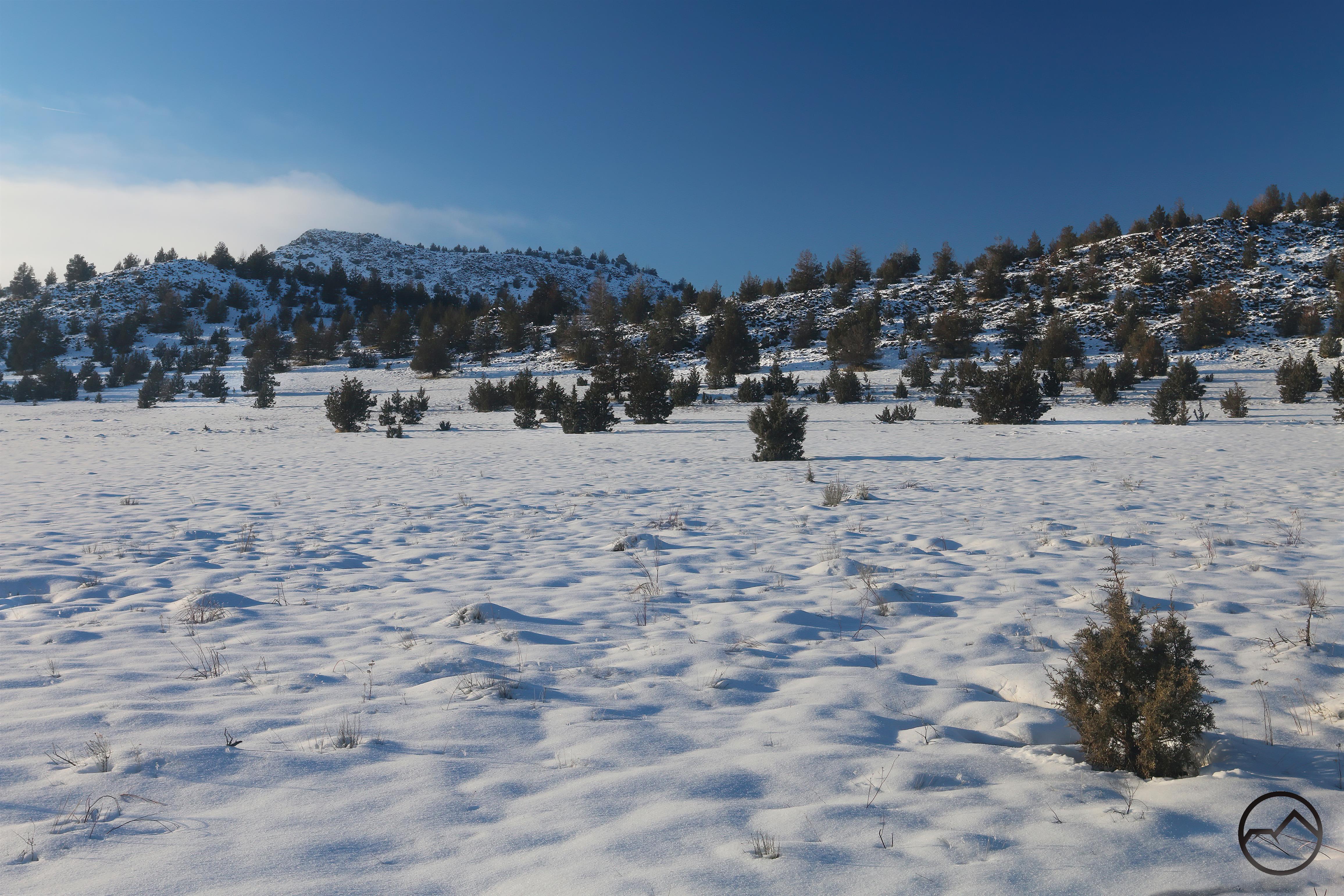
Cerro Pedernal rises behind a snowy Truchas Ridge. The fog is creeping back into the valley…
Heading toward the preserve, the snow was thick and the road was really, really muddy. I was guessing there would be 4-6 inches tops. It looked about right on the broad flat areas and the southern exposures. The northern side of the hills looked deeper. After surveying the situation, I decided to head up to Echo Point, which is not on Truchas Ridge proper. It does have “easier” access and the view from there is epic. I knew I had to hurry though, as the fog which had blanketed the valley was creeping back in and my opportunity to get a view of Mount Shasta was slipping away.
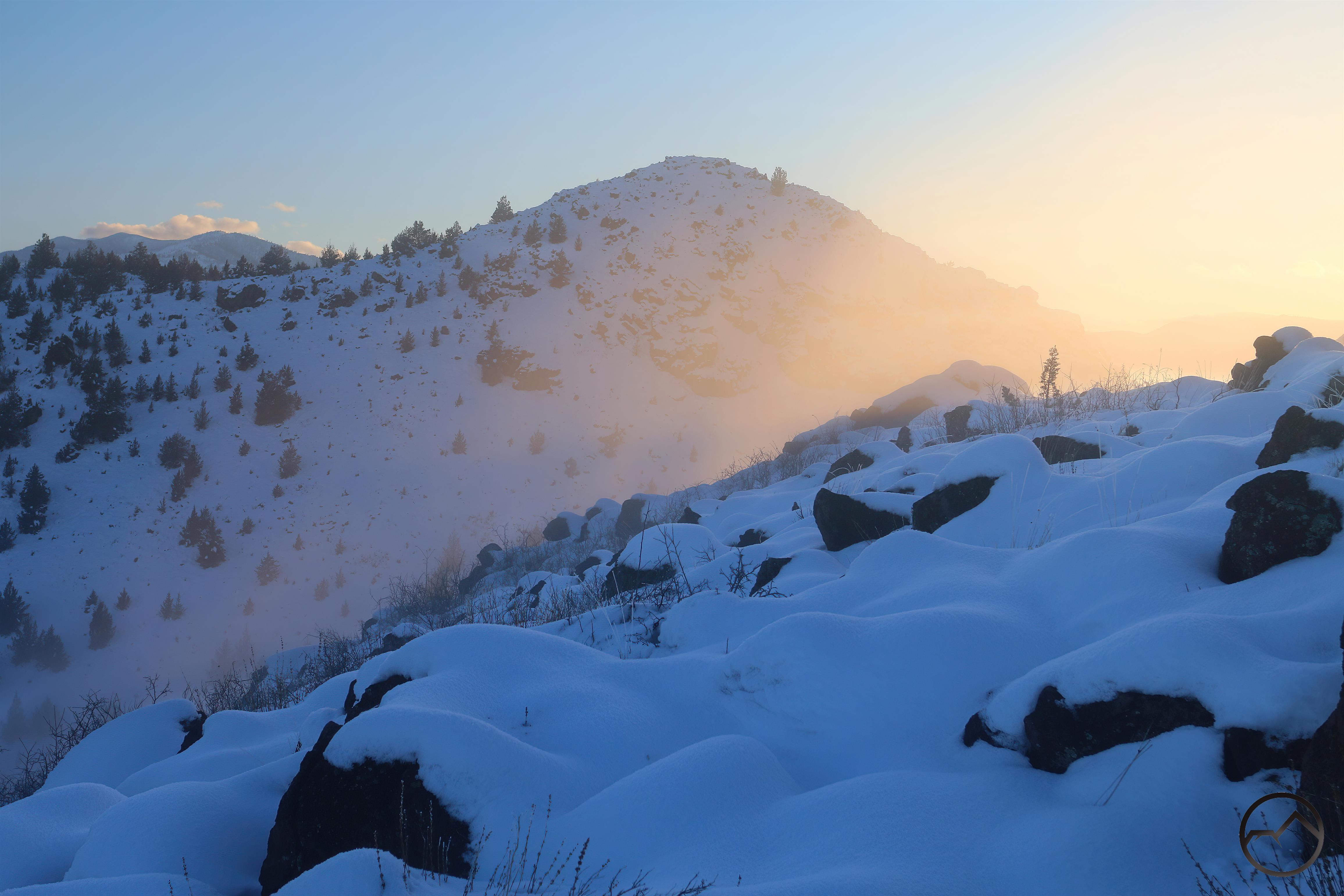
Getting up to Echo Point proved to take longer than I expected on account of the snow being 14 inches deep. I could see the northern exposures were snowier but I was not expecting that much show. It had never even occurred to me to bring snowshoes but now I was wishing I had. When I finally got to the summit, the fog was sailing over my head, but it had not obscured the view yet, thankfully. The light of the setting sun was hitting the mist as it filled the gap between Echo Point and Cabezon. The flowing glow filling the gap was magnificent and was worth the climb all on its own.
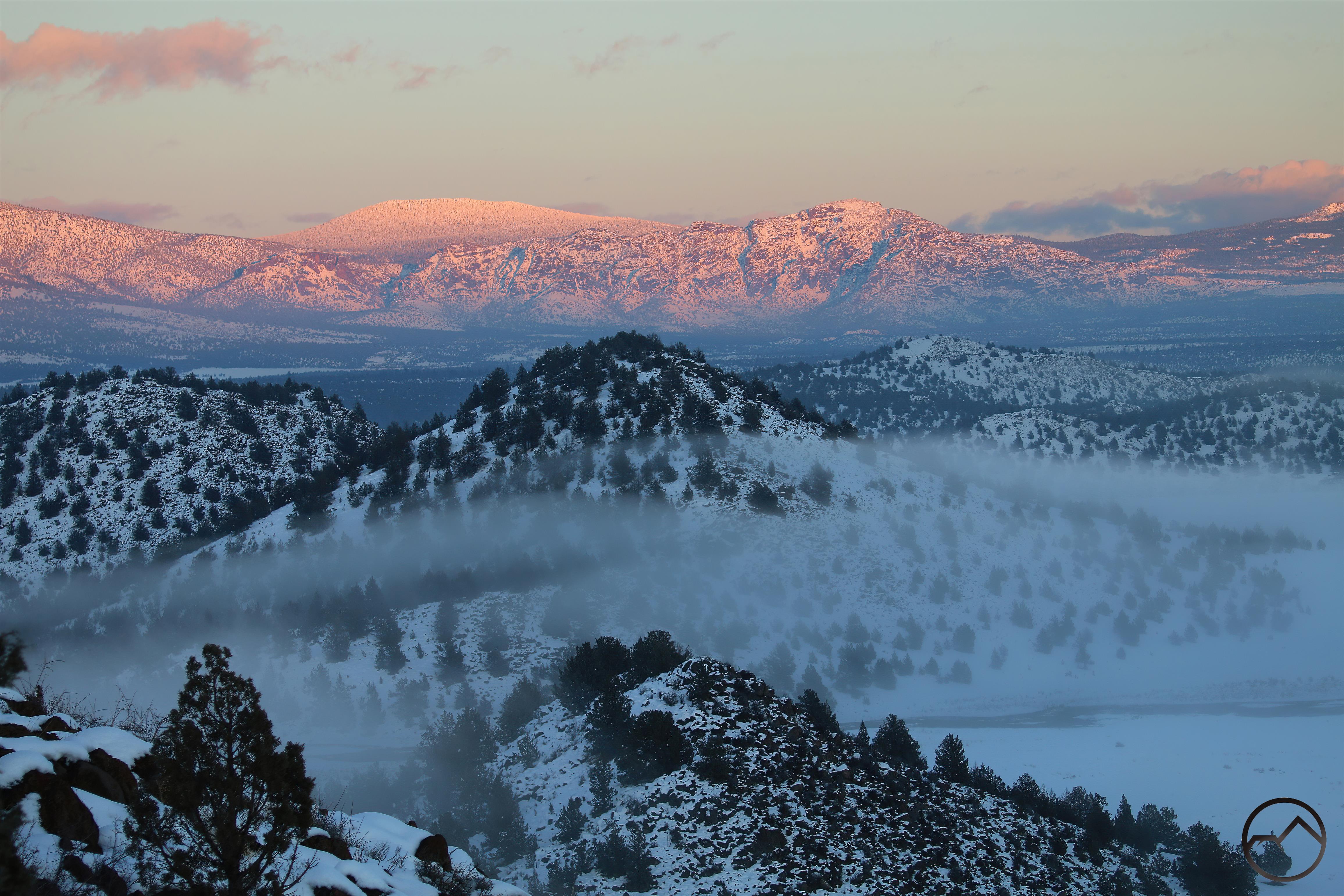
The rest of the view of the Shasta Valley was incredible as well. Most of the clouds had cleared but the fog was racing in. The setting sun was drenching the peaks around the valley in alpenglow. Ice-encrusted Sheep Rock was a spectacular snare for the pink light, highlighting the crags and canyons of that underappreciated set of cliffs. Even Deer Mountain, normally an assuming hump on the horizon was now a crystalline dome pulsating with light. What a scene…
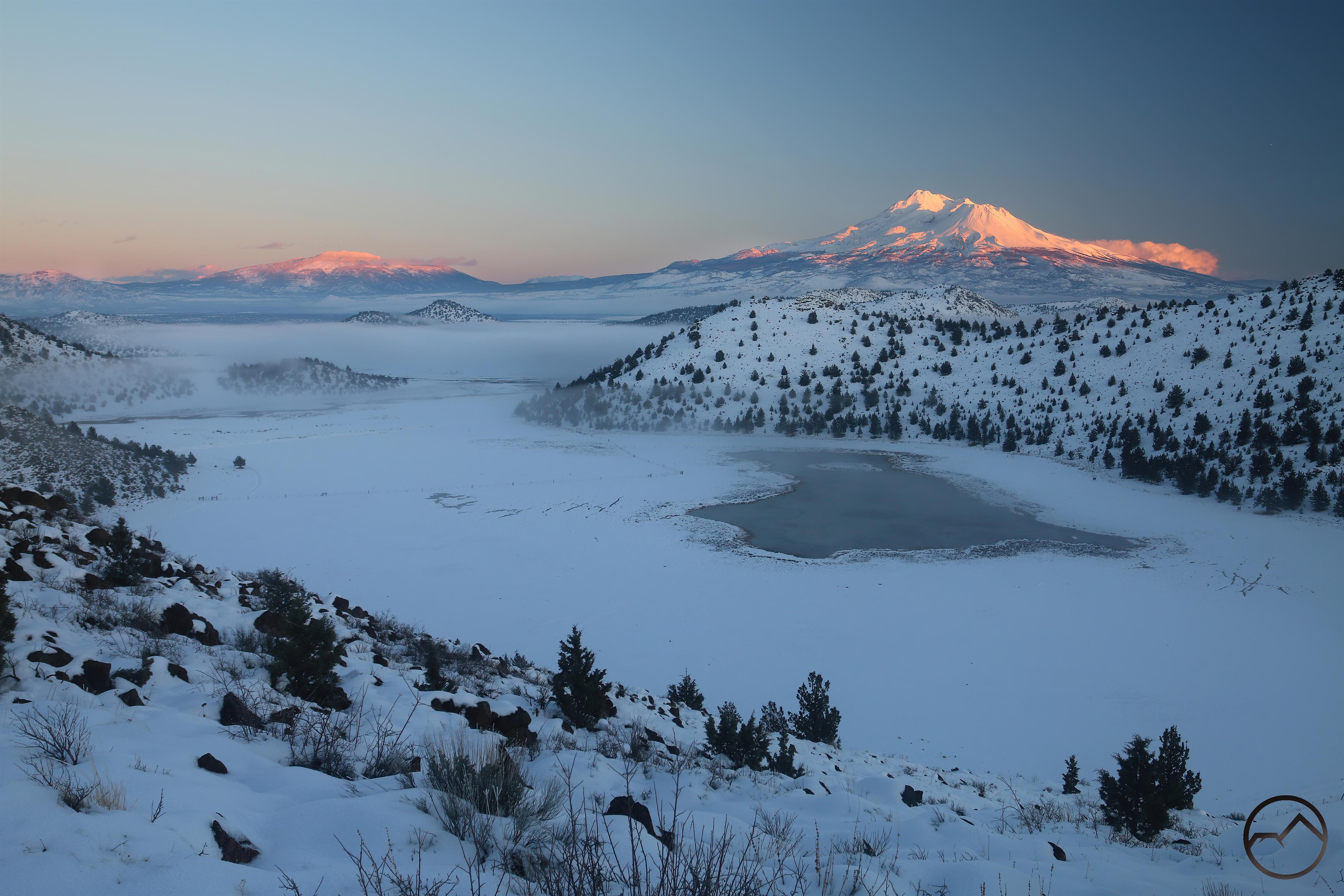
Without question, the greatest spectacle of all was Mount Shasta rising magisterially above the valley. The snow was thick in Echo Basin, though the lake was frozen and not offering a reflection. The fog flowing in gave the entire area an ethereal atmospheric. With the snow and fog on the ground and the darkening sky, it seemed the land and sky were merging. Only along the horizon, where the alpenglow burst on the flanks of Mount Shasta and the Whaleback did a different array of colors break up this most spectacular of sights. This was the snowy view I had long been after. Finally.
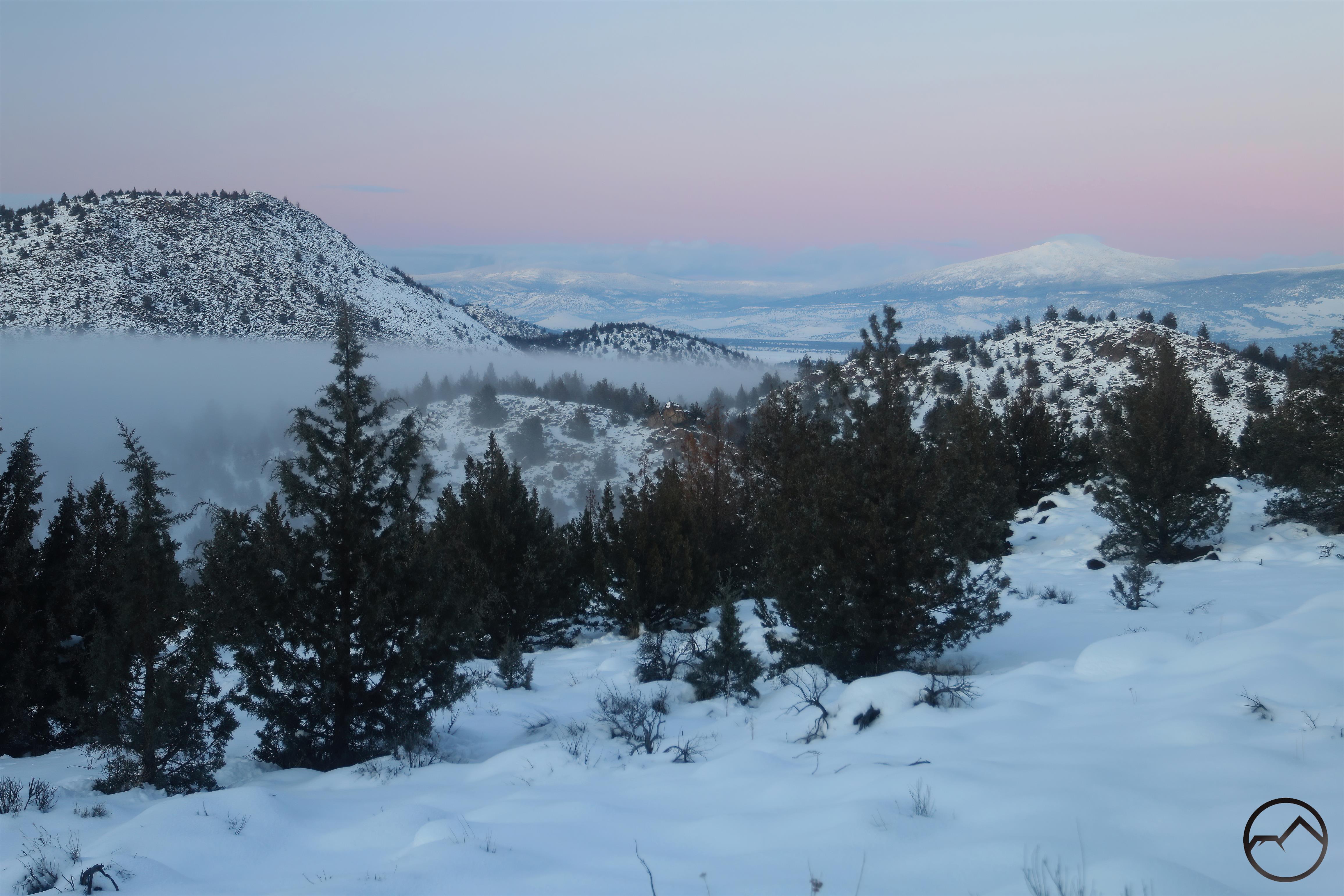
Heading back, the beauty of this magic land remained unrelenting. The alpenglow was fading but purple lingered in the sky and reflected off the snow. Looking out over the snowy domes at the distant peaks that lined the eastern side of the Shasta Valley, I was struck how in these conditions the Goosenest (at just 8,294 feet, one of the tallest peaks around the foot of Mount Shasta) is a really impressive mountain. With its upper flanks frozen in ice, it seemed more immense than it usually does.
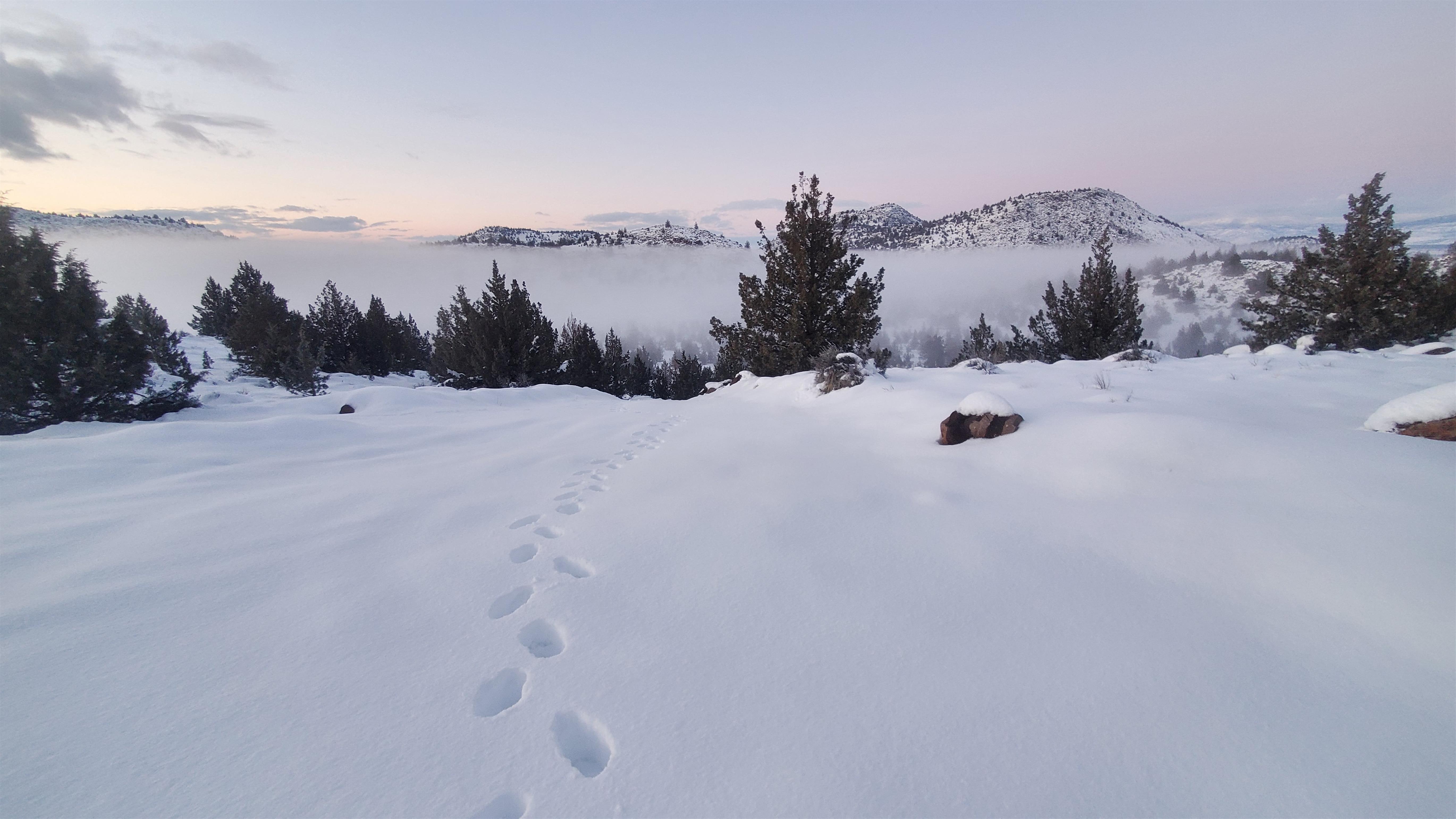
While I was up on Echo Point, the fog had really taken over in the lower parts of the valley. Heading back now, it was getting noticeably thicker. I retraced my steps through the deep snow on the northside.
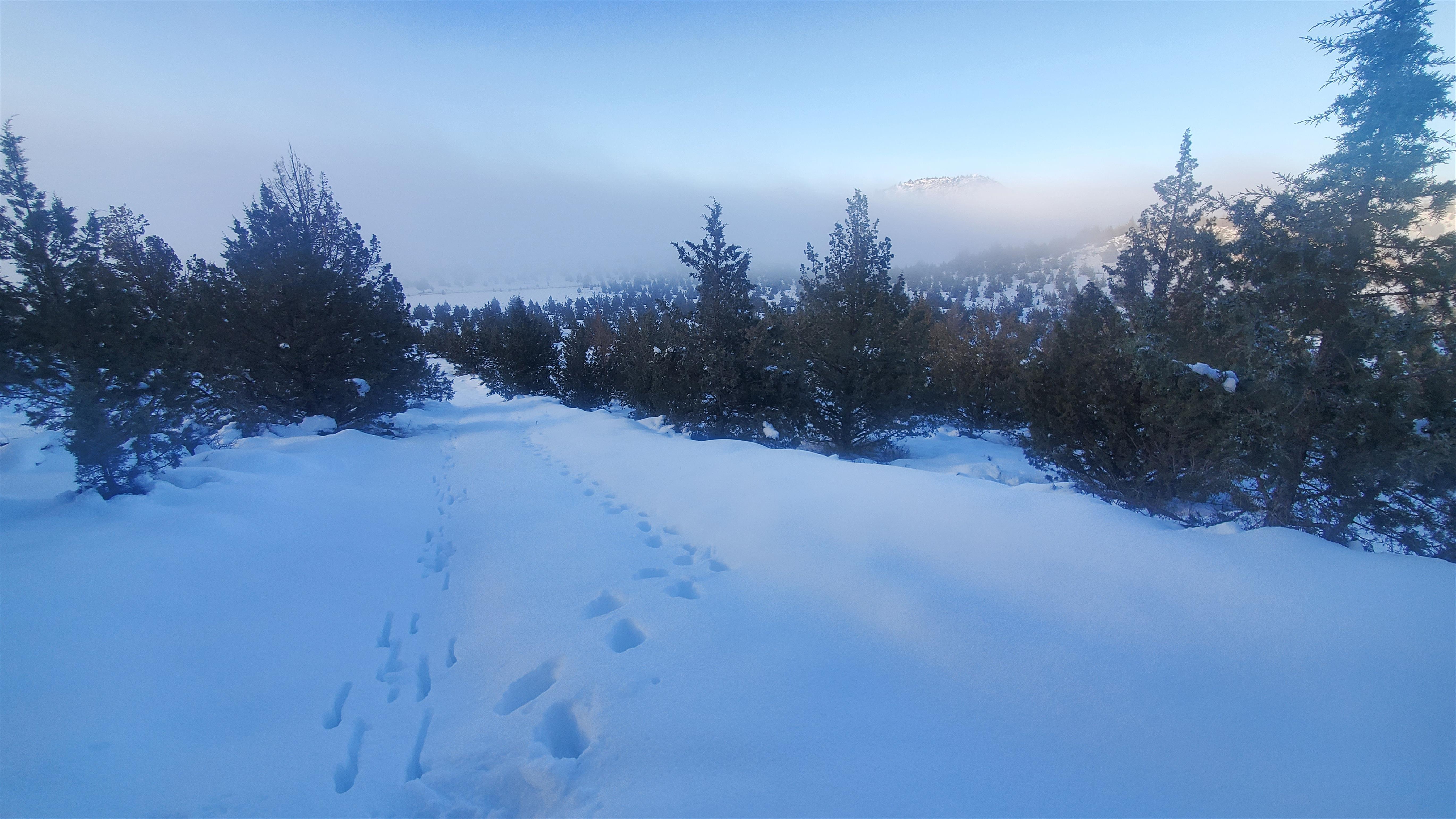
Following my path back, my tracks ran parallel to those of a coyote. I knew I was not alone out there. At least, based on the size of the footprint, I am assuming it was a coyote. I had seen a wolf not far from here so it could have been that canine neighbor instead. There is a wolfpack up around Goosenest and Whaleback and they do come into the Shasta Valley at times. I knew they were out there, but I had never seen one around Truchas Ridge. It was a nice finish to an incredible sunset. Thank you Lord!
The next few days were busy and I had no time to make a serious attempt out in the valley again. I felt a certain amount of urgency, since the snow was bound to melt at some point and the this rarest of opportunities would be gone. Fortunately, the fog continued to be thick and the temperatures were frigid. At my house it got down to 1*, the coldest I have ever seen it there.
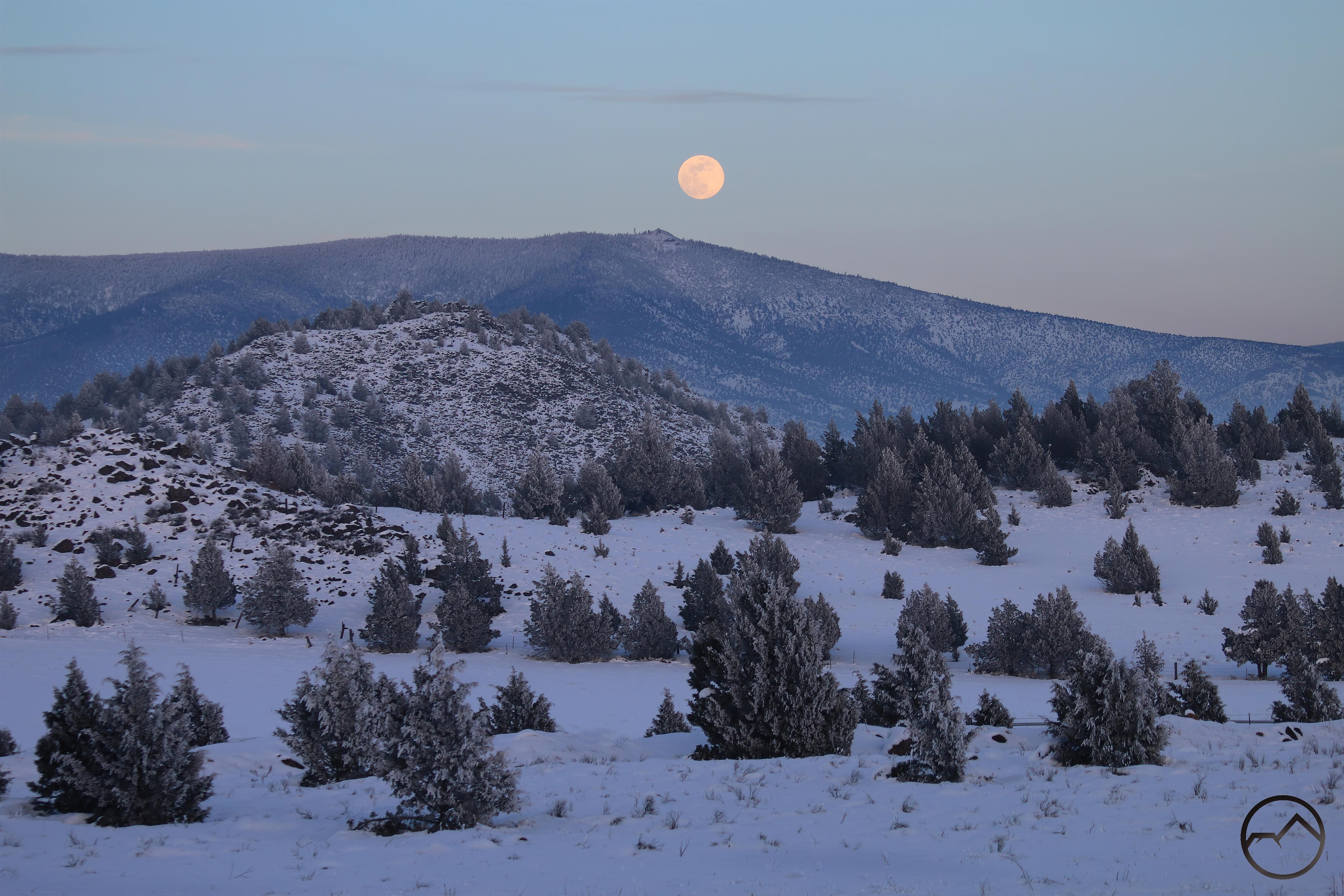
This meant that not only was the snow lingering in the valley, thanks to the fog and low temps, the junipers were laden with rime ice. At the next clearing of the skies I was ready to take another bite at the apple. I was headed out to the valley again but not with plans to climb Echo Point. Time demanded I head to and easier vista but I was not complaining. From there the sight of the moon rising over Herd Peak was terrific and the trip more than worthwhile.
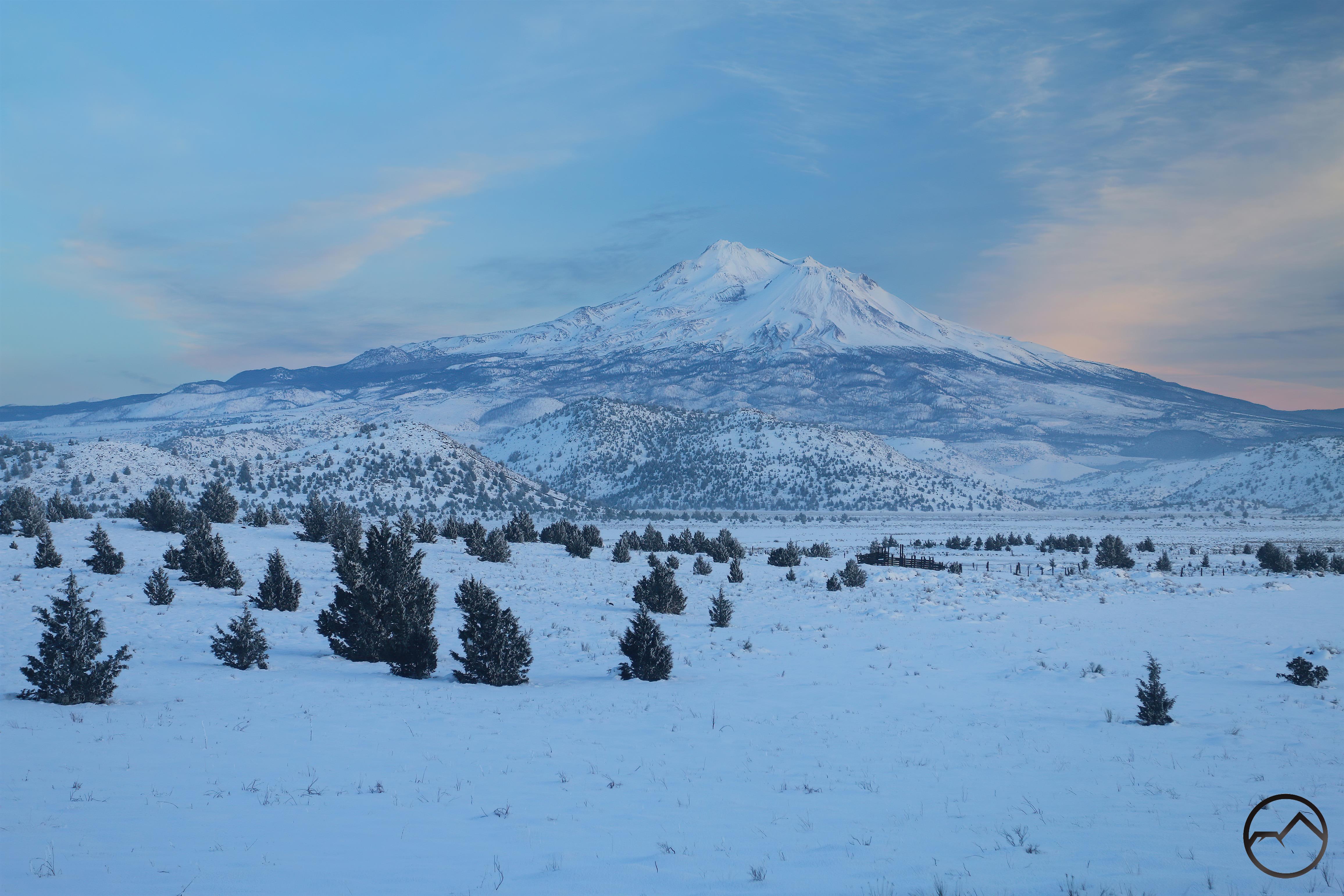
At the same time, the view south of a winter scene was also grand. Low clouds to the west kept the light off of the landscape and even the high flanks of Mount Shasta but the entire scene was still strangely soothing. Only the clouds offered a colorful break to the blue sequence. It was strange but comforting.
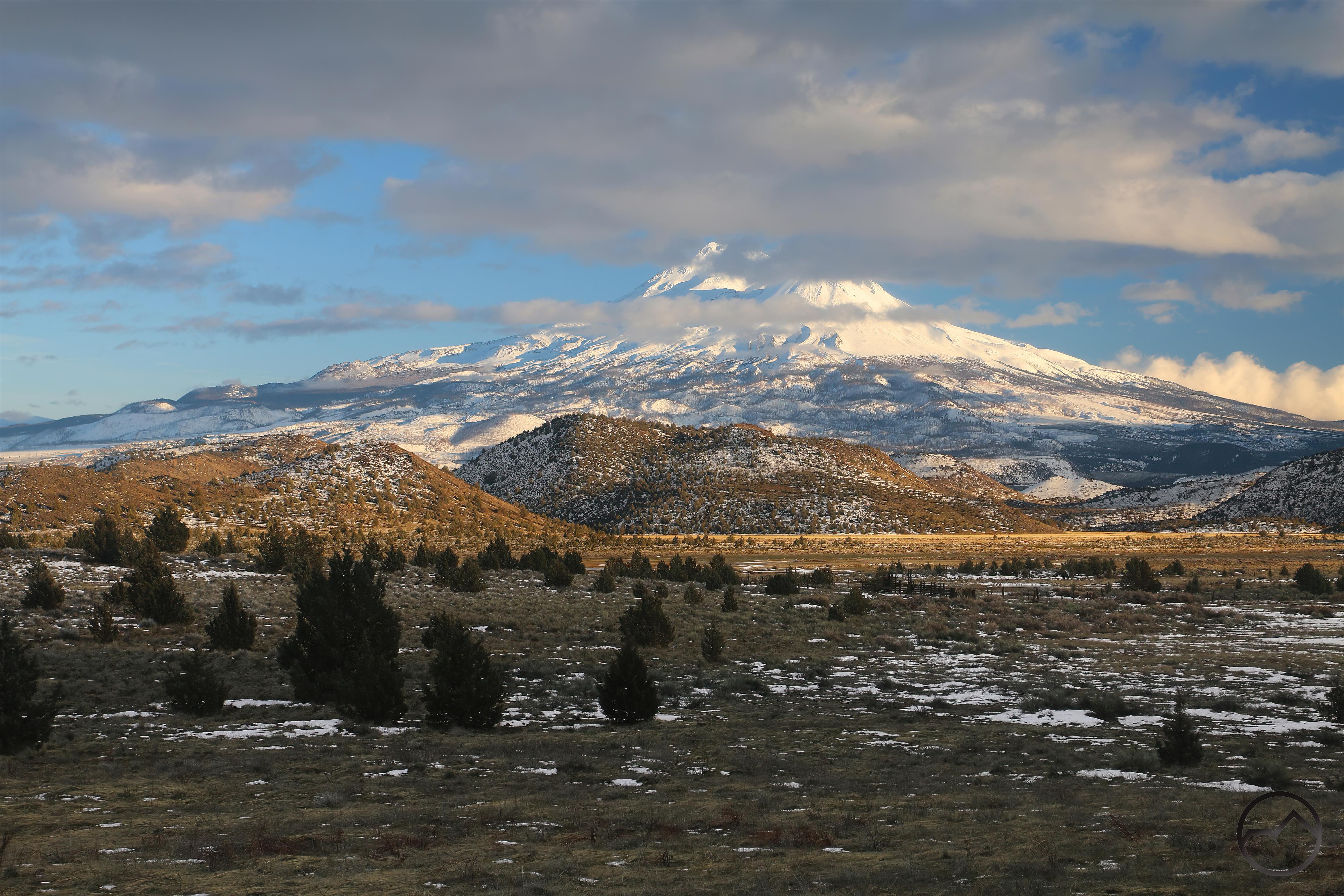
By the end of the week it had warmed considerably and I knew the snow was melting. I decided to much the apple core and head out one more time. The magic had passed. The snow was going fast and clouds were blocking the mountain. The generational snow event in the Shasta Valley was past.
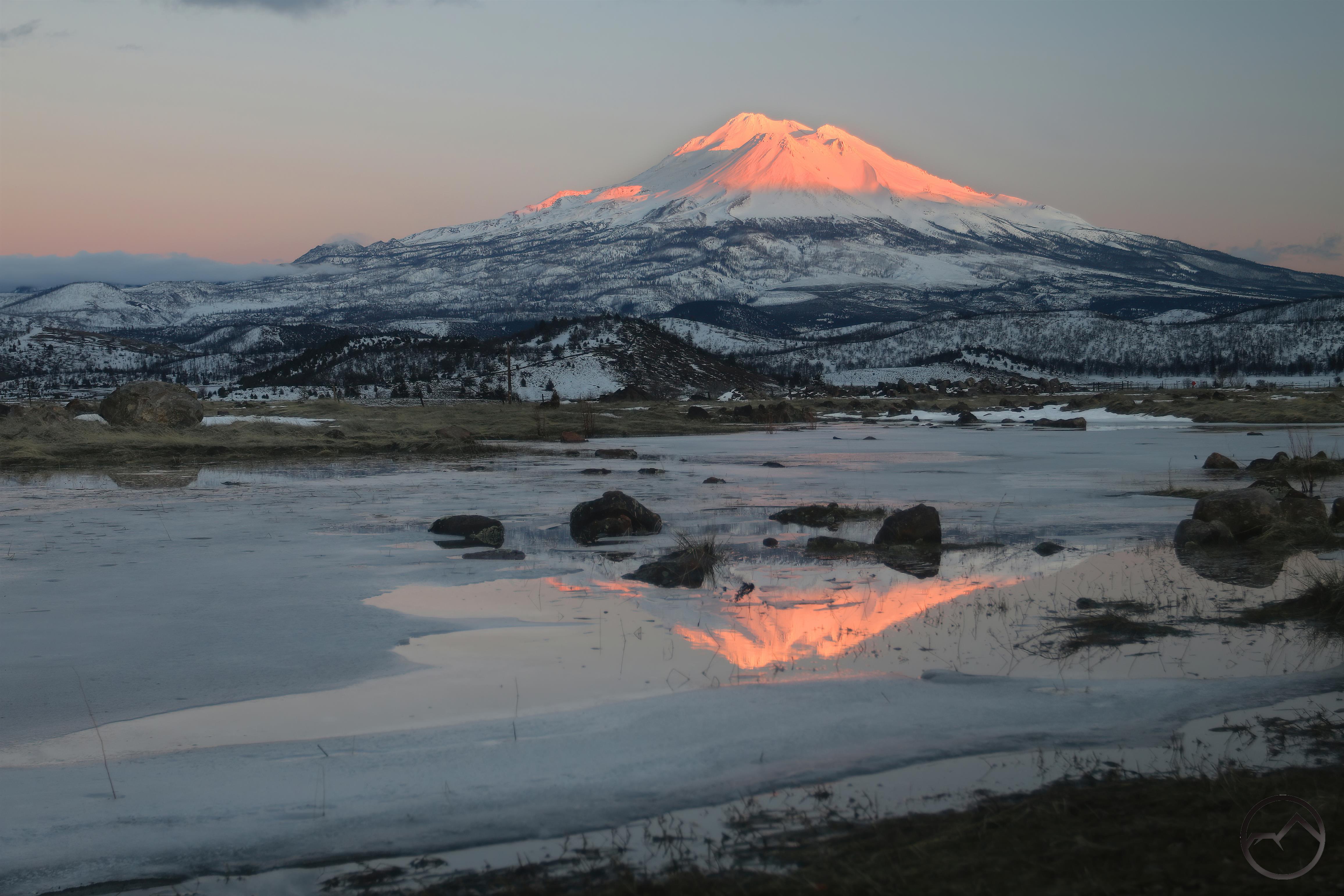
Heading home, I stopped at my favorite pools to see their scope after the storm. As expected, they were very large but very frozen. Small openings in the ice gave me a bit of a reflection of Mount Shasta aflame. I couldn’t resist pulling my camera out one last time. I never can resist, really.
 Hike Mt. Shasta
What a spectacular journey to places I didn’t know even existed! Your words and photography are inspiring and transporting. Thank you for taking us along.
What a beautiful reflection. I was following you for a while, and it is always a gift.
What a beautiful reflection. I was following you for a while – always a gift
“I never can resist, really.” An emotion we share. Beautiful. No more boring. Grin.
Just stunning!
Beautiful set, Bubba!
Thanks Jackson! It may never look like that again…
Beautiful pictures and writing. What an amazing event to witness.
Pingback: Blooming But Burning In Mount Shasta | Hike Mt. Shasta