Hike Mt. Shasta

Exploring the Mount Shasta Region

  • Home
  • Trails
    • Mount Shasta Trails
      • Brewer Creek Trail
      • Clear Creek Trail
      • Gray Butte Trail
      • Green Butte Ridge Trail
      • Horse Camp Trail
      • North Gate Trail
      • Old Ski Bowl Trail
      • Panther Meadow Trail
      • South Gate/Squaw Meadow Trail
      • Whitney Falls Trail
    • Trinity Divide Trails
      • Blue Divide Trail
      • Castle Lake Trail
      • Castle Lake Shore Trail
      • Cliff Lake Trail
      • Deadfall Lakes Trail
      • Gray Rock Lakes Trail
      • Gumboot Trail
      • Heart Lake Trail
      • Porcupine & Toad Lakes Via Pacific Crest Trail
      • Seven Lakes Basin Via Pacific Crest Trail
      • Sisson-Callahan Trail
      • Soapstone Trail
      • South Mumbo Scramble
      • Tamarack Lake Trail
      • Toad Lake Trail
    • Castle Crags Trails
      • Burstarse Falls Via Pacific Crest Trail
      • Castle Dome Trail
      • Flume Trail
      • Lower Castle Crags Via Pacific Crest Trail
      • Root Creek Trail
    • Scott Mountains Trails
      • Bluff Lake & Cement Bluff via Pacific Crest Trail
      • Caldwell Lakes Trail
      • China Mountain Scramble
      • Cory Peak and Bull Lake via Pacific Crest Trail
    • Cascade Crest
      • Ash Creek Butte Scramble
      • Goosenest Trail
      • Juanita Lake Trail
      • Orr Lake Trail
    • Mount Shasta City Area Trails
      • Black Butte Trail
      • Box Canyon Trail
      • Gateway Trail
      • Lake Siskiyou Trail
      • Mount Shasta City Short Trails
      • Ney Springs Canyon Trail
      • Spring Hill Trail
    • Shasta Valley Trails
      • Black Lava Trail
      • Haystack Trail
      • Lake Shastina Trail
      • Pluto Cave Trail
      • Trout Lake Trail
      • Yellow Butte Trail
    • Sacramento River Trails
      • Dunsmuir Trail
      • Hedge Creek Falls Trail
      • Sacramento River Trail
      • Sims History Trail
    • McCloud River Trails
      • Ash Camp To Ah-Di-Na Via Pacific Crest Trail
      • McCloud River Falls Trail
      • McCloud River Preserve Trail
      • Squaw Valley Creek Trail
      • McCloud River Trail: Algoma Camp to Nitwit Camp
      • McCloud River Trail: Nitwit Camp to Cattle Camp Swimming Hole
      • McCloud River Trail: Cattle Camp Swimming Hole to Camp 4
      • McCloud River Trail: Camp 4 to Upper McCloud Falls
      • McCloud River Trail: Pine Tree Hollow Loop
    • Trails Further Afield
      • Trinity Alps Trails
        • Bear Lakes Trail
        • Billys Peak Trail
        • Boulder Creek Lakes Trail
        • Boulder Lake Trail
        • Canyon Creek Trail
        • Caribou Lakes Trail
        • East Boulder Lake Loop
        • East Weaver Lake Trail
        • Four Lakes Loop
        • Granite Peak Trail
        • Grizzly Creek Trail
        • Gulch Lakes Loop
        • Hidden Lake Trail
        • South Fork Lakes Trail
        • Stoddard Lake Trail
        • Stoney Ridge Trail
        • Tangle Blue Lake Trail
      • Warner Mountains
        • Emerson Creek Trail
        • Highgrade Trail
        • Patterson Lake Via Warner Summit Trail
        • Pine Creek Trail
        • Squaw Peak Trail
  • Articles
    • Trails By Area
      • Mount Shasta
        • Vistas, Meadows And Waterfalls: Three Best Hikes On Mount Shasta
        • The End Of The Road: Three Hikes In The Old Ski Bowl Area
        • Two Trails From Bunny Flat
        • Three Trails On Mount Shasta’s East Side
        • Mount Shasta’s Hummingbirds
      • Trinity Divide
        • Great Lakes: Top Five Lake Basins In The Trinity Divide
        • The Headwaters Of The South Fork Of The Sacramento River
        • Neglected Headwaters: Two Lesser Lake Basins On The South Fork
        • Gumboot Saddle: Two Hikes On The PCT
        • Descent Into Mystery: The Sisson-Callahan Trail
        • Mumbo Basin – Overlooked On The West Side
        • The Headwaters Loop: A Proposed Backpacking Loop In The Trinity Divide
      • The McCloud River
        • The McCloud River Trail
      • Shasta Valley
        • Jewels In The Desert
      • Scott Mountains
        • Great Scott! Two Scott Mountains Hikes On The PCT
      • Trinity Alps
        • Carubou Lakes: Trinity Alps On A Grand Scale
        • Switchbacks To Heaven: The Trinity Alps’ Stoney Ridge Trail and Four Lakes Loop
        • Trinities In Proximity: Two Trinity Alps Trails With Easy Access From Mount Shasta
        • Trails in the Carter Meadows Area
        • Trinity Alps Views of Mount Shasta
        • The Psychological Value Of The Trinity Alps
    • Waterfalls
      • Three Waterfalls On Mount Shasta
      • McCloud River Waterfalls
      • Sacramento River Waterfalls
      • Trinity Divide Waterfalls
      • Trinity Alps Waterfalls
      • Avoiding A Dry Whitney Falls
    • Off Season Trails
      • Three Winter Hikes Near Mount Shasta City
      • Winter Hikes In Shasta Valley
      • Winter Hiking In The Shasta Valley Wildlife Refuge
      • Winter Hikes On The Sacramento River
      • Winter Hikes On The Lake Siskiyou Trail
      • Spring Hikes In The Castle Crags
      • Spring Hikes On the Upper McCloud
      • Spring Hikes On The Lower McCloud River
    • Points Of Interest
      • Mount Eddy: Overshadowed, Underrated
      • Black Butte: Hiding In Plain Sight
      • Castle Dome: Steadfast And Staggering
      • Mount Shasta Hoodoos
      • Sacramento Scrambling
      • The Shasta River
      • The Castle Creek Watershed
      • Mount Shasta East Side Glacier View
      • 5 Fantastic Mount Shasta Vistas
      • 5 Highest Peaks Around Mount Shasta
      • 5 Best Hikes On Creeks And Rivers
      • 5 Interesting Footbridges
      • Three Spectacular Drive-To Sunset Vistas
    • North State Geography
      • Introduction
      • Seven Major Regions
      • The California Cascades
      • Klamath Mountains Pt. I
      • Klamath Mountains Pt. II
      • The Great Canyons Of Mount Shasta
      • Mount Shasta, Timberline, And The Relative Size Of Cascade Volcanos
      • Four Eruption Cones Of Mount Shasta
      • Mount Shasta’s Medial Moraine
    • Northern California Review
      • North Table Mountain
      • Lakes Basin Recreation Area
      • Eastern Sierra Fall Color
      • Sonoma County
      • Central Sierra Nevada
      • Orland Buttes
    • Seldom Seen
      • Ash Creek Falls
      • Mud Creek Canyon
      • Lower Mud Creek Canyon
      • Diller Canyon
      • Lower Cascade Gulch
      • The Grey Rocks
      • Castle Creek
      • Upper Wagon Creek
      • Fawn Creek Canyon
      • Confluence of the Sacramento River and Castle Creek
      • Upper Klamath River Canyon
      • Hole In The Ground Geologic Area
      • Ash Creek Butte Fossil Rock Glacier
    • Mount Shasta History
      • Vantage Lost: The Everitt Memorial Vista
      • A Yosemite-Mount Shasta Connection
      • Whitney – What’s In A Name?
      • Mount Shasta Area and the 1838 Exploring Expedition
      • A 19th Century Engraving Of An Epic Mount Shasta Vista
      • Vintage 1907 Color Photos
      • A Misleading Painting
      • A Mysterious Painting
      • A Mysterious Painting Pt. II
      • Stereographic Mt. Shasta
      • Year One Of Hike Mt Shasta
      • Year Two Of Hike Mt Shasta
      • Year Three Of Hike Mt Shasta
      • Year Four Of Hike Mt Shasta
      • Year Five Of Hike Mt Shasta
      • Year Six Of Hike Mt Shasta
      • Year Seven Of Hike Mt Shasta
    • Image Galleries
      • Mount Shasta Trails Gallery
      • Mount Shasta Sunrise Gallery
      • Mount Shasta Sunset Gallery
      • Lenticular Cloud Gallery
      • Mount Shasta NON-Lenticular Clouds
      • Mount Shasta Reflection Gallery
      • Telephoto Gallery
      • Mount Shasta Area Fall Color
      • Castle Crags Gallery
      • Waterfalls Gallery
      • Trinity Divide Lakes Gallery
      • Mount Shasta Area Rivers Gallery
      • Shasta High Desert Gallery
      • Mount Shasta GIF Gallery
    • Random Notes
      • Revew: Three Mount Shasta Trail Maps
      • A Mount Eddy Wilderness?
      • New Land Additions For The Castle Crags
      • Book Plug: Mount Shasta Area Rock Climbing
      • Exile: How I Came To Love Wilderness
  • Mt. Shasta Trail Map
  • Blog
  • About/Contact
  • Links
  • Truchas Ridge

A Morning And Evening Around Mount Shasta

Posted by bubbasuess on April 26, 2018
Posted in: Cascade Range, Hiking, Lenticular Clouds, Mount Shasta. 1 Comment

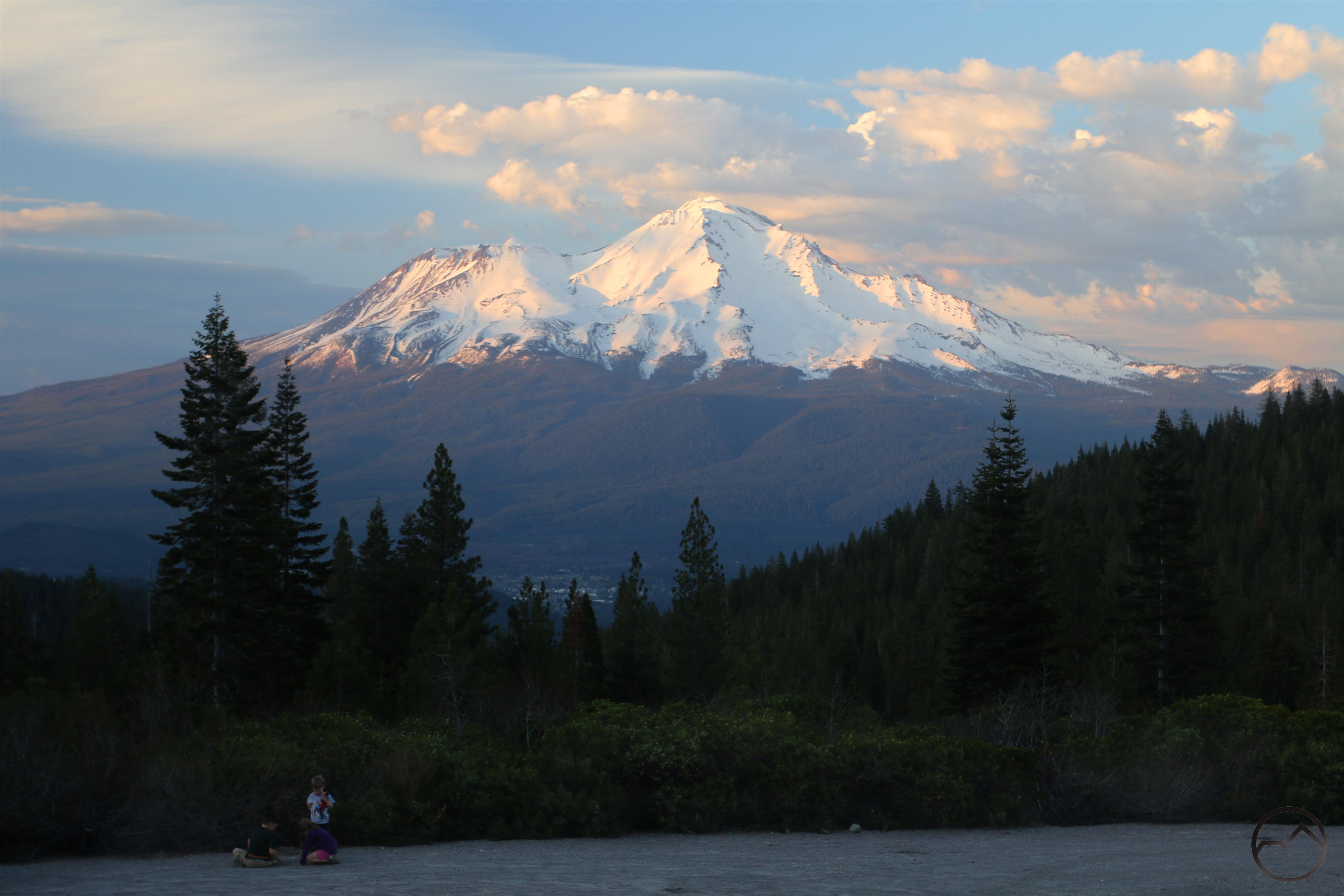
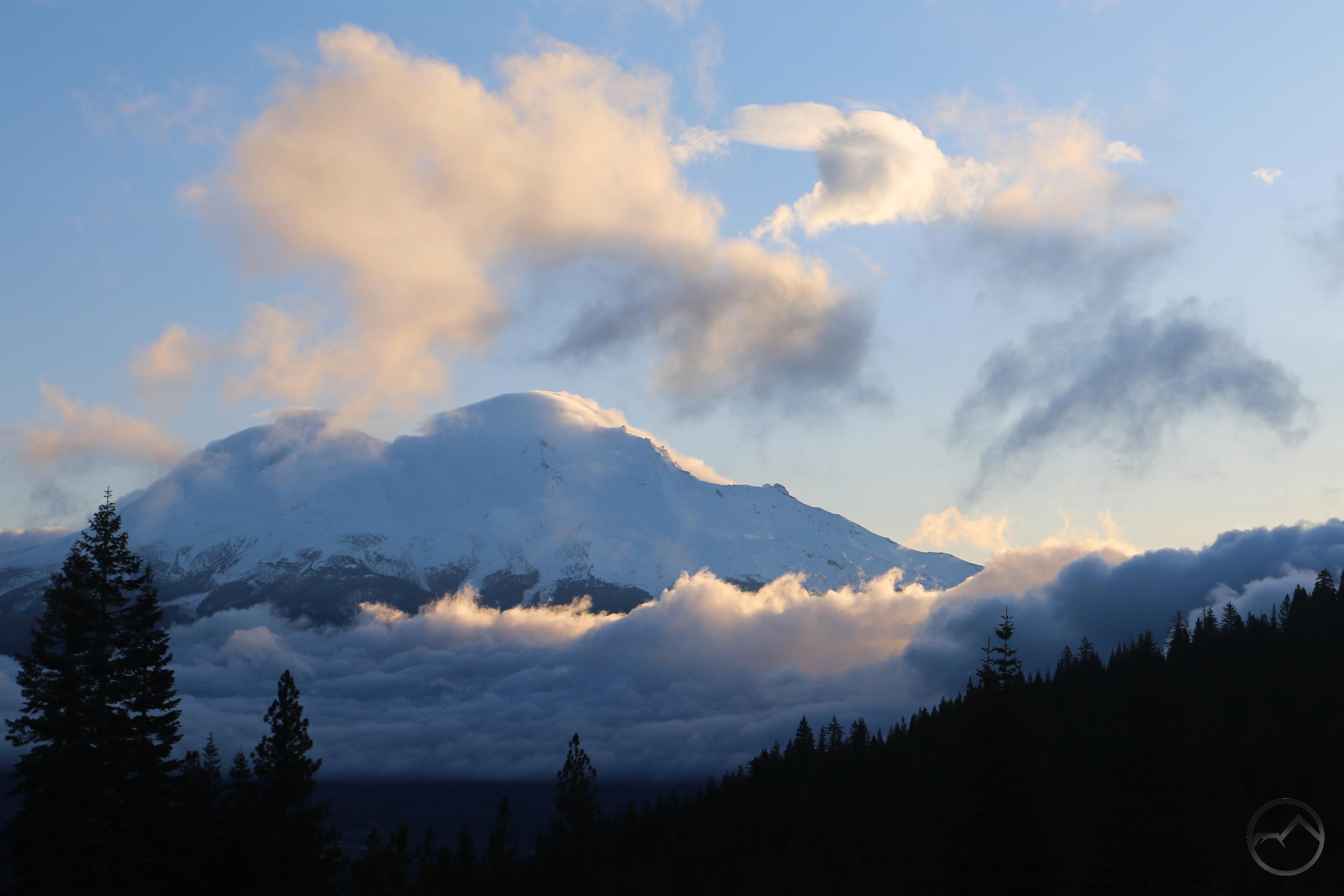
 A variety of cloud formations cluster around Mount Shasta sunset.

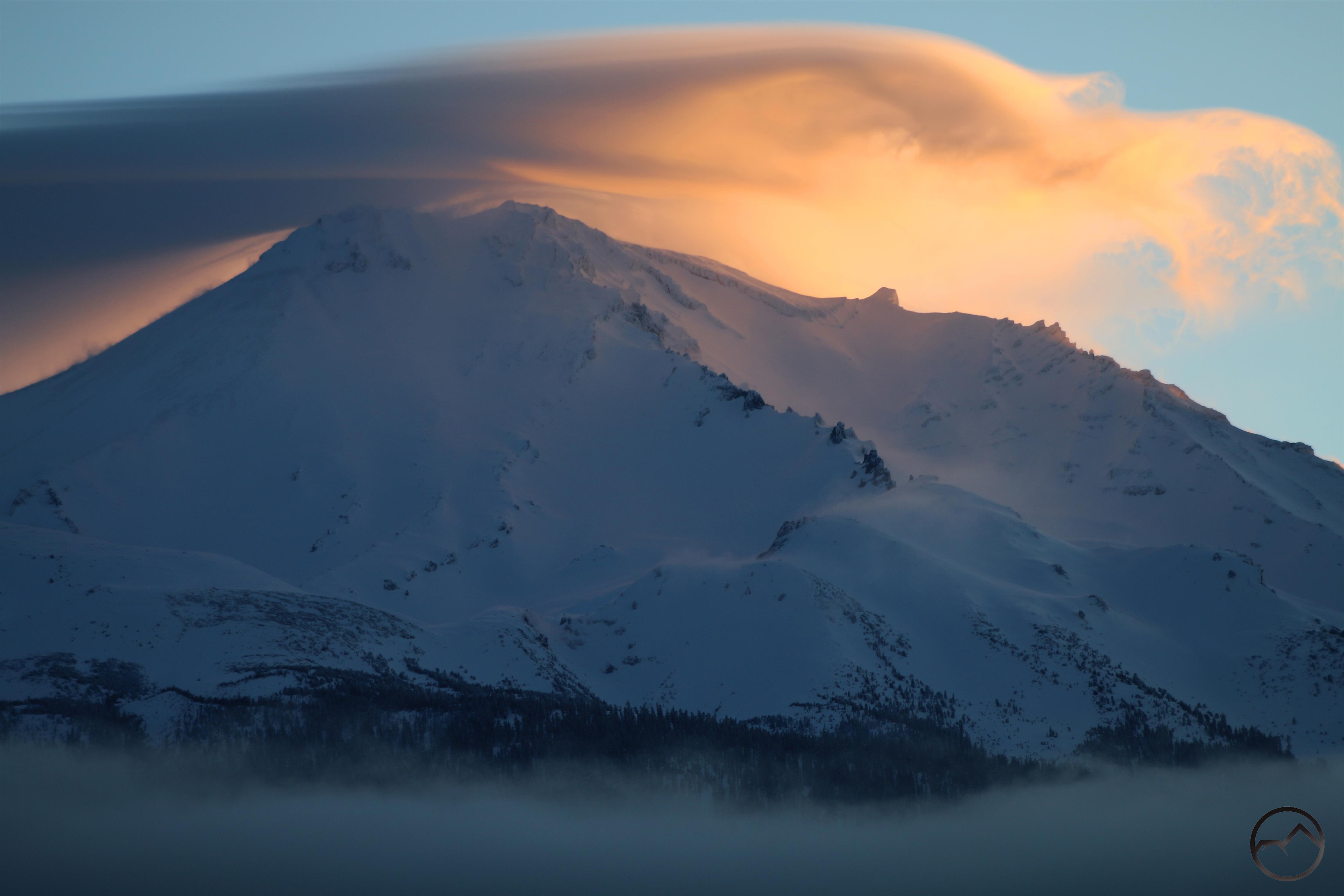
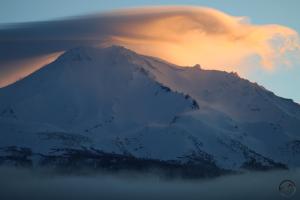
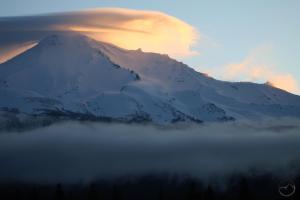
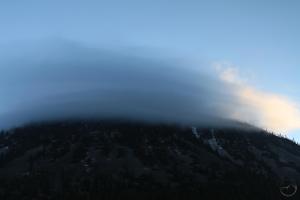
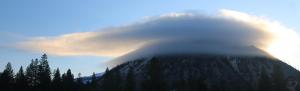
I got up much later than I normally do Thursday morning, only to find that there was a fine set of lenticular clouds in the sky on the north side of Mount Shasta. Of all the mornings to sleep later than normal, I had to miss the lenticular at sunrise. Not to be defeated, I headed to the southern side of the mountain, in the hopes of getting the clouds in the frame alongside Mount Shasta. The view from the south was as impressive as I anticipated it would be. I managed to capture a couple of interesting shots of the mountain with the cloud formations and then I headed back into town. Once there, I got one more shot to show a different perspective on the most distinct disk in the group. These clouds seemed rather stable so I planned to head out in the evening and try to get pictures of them at sunset.

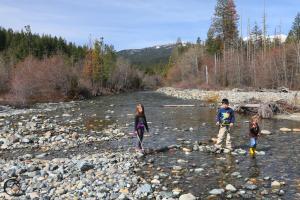
As I suspected, the lenticular cluster lasted through the day, but right as the sun began to set, the distinct shapes began to dissipate. One of the lenticulars seemed to have caught a wind current and stretched out across the sky as a rather dramatic spread. I had taken my three kids with me after dinner and they scrambled on the rocks at Castle Lake before I got into position for the sunset. As happens frequently, they played contentedly while I played with the camera. Of course, they practically ignore the magnificent sunset taking place right behind them, instead being quite focused on the rock obstacle course they set up for their cars. These kids really have no idea how fortunate they are. In the end, it was another stunning sunset. It may have lacked the great lenticulars that were present in the morning but the unusual clouds and great light made for a memorable evening nonetheless.

Click to enlarge:


Nevermind the sunset, there’s rocks to play with!


2018 Spring Hiking Round Up

Posted by bubbasuess on April 22, 2018
Posted in: Cascade Range, Hiking, Mount Shasta, Off Season Trails, Spring Trails. Leave a comment

A spectacular spring sunrise on Mount Shasta.

After the long winter, spring is finally upon us. Warmer weather is taking hold, the snow is melting, trees are coming back to life and flowers are beginning to emerge. This is the time to head out and enjoy the great bounty that the Mount Shasta area holds for hikers looking to stretch their legs, enjoy the natural world and feel the warm sunshine once again. Though the winter threatened to be a bad one in terms of snow, March came through and delivered a fair amount of precipitation, including a few feet of snow at the lower elevations. This means that the high country trails are still inaccessible, for the most part, though they should largely open up earlier than usual (or at least much earlier than last year!). In the mean time, we have a host of great trails in the low lands that are prime hiking areas. The best spots to explore this time of year are along the McCloud River and in the Castle Crags. Despite the lower elevation, they still offer great mountain experiences. The high desert of the Shasta Valley is another great place to explore right now. Of course, all the other areas usually considered good winter destinations are also fantastic places to hike right now. Summer may be coming but the time to get out and hit the trail is now!

Spring Hikes In The Castle Crags

The Castle Crags are one of the most majestic mountain features in California. However, their lower elevation means they are often accessible when higher terrain is still smothered in snow. Still, the granite spires and great rock walls stand shoulder to shoulder with some of the most rugged terrain in the state. Though best hiked in spring, when the creeks are gushing and the weather, especially on the south side where most trails are found, is perfect, the winter may still be a good time to get out and enjoy this gorgeous mountain playground. Read more here.

Spires of the Crags
Mount Shasta seen from the Castle Crags

Spring Hikes On The Upper McCloud River

The McCloud River is one of the great attractions of the Mount Shasta area. With great fishing, a trio a awesome waterfalls, and beautiful forest surroundings, it is a popular destination. The waterfall along the river is a great hike and ought to be considered during winter if the access road is open. However, the McCloud River Trail follows the river for 15 miles and any section of this makes a great hike as long as snow is not covering the ground. Read more here.

Basalt gorge on the McCloud River
The McCloud River downstream from Cattle Camp.
McCloud River from the top of Middle Falls
Middle McCloud Falls

Spring Hikes On The Lower McCloud

The Lower McCloud River sees far less activity than the upper section. Separted by Hearst property and the McCloud Reservoir, the two areas are strikingly different. The upper section flows through volcanic terrain while the lower part passes through an outlier of the Klamath Mountain. The terrain is very rugged and can be difficult access during winter. However, when it can be reached, solitude a beautiful scenery await! Read more here.

Large cataract on the McCloud River
The McCloud River from the PCT crossing.
In the McCloud River Canyon
Squaw Valley Creek Falls

Spring Hiking At Orr Lake

The area around Orr Lake is a mix of high desert and ponderosa pine forest, surrounding a large, lush meadow fed by remote Butte Creek. It’s higher in elevation than the high desert of the Shasta Valley, which means it is often not a good place to go in winter. However, in spring, it is ideal. The lake is full, the creek is running strong and Mount Shasta, visible beyond the lake, is white. Other than portions of the trail being closed at times for nesting birds, it is a great place to get outside in the months before summer. Read more here.

Mount Shasta rises above Butte Creek
The distant Goosenest seen from Butte Creek.
Orr Mountain seen beyond the Orr Lake meadow.

Spring Hikes In The Shasta Valley

North of Mount Shasta, the desert landscapes of the Shasta Valley offer a strikingly different environment than what is found along most trails in the region. The only conifers here are junipers and sagebrush is ubiquitous. For those that like the desert, the beauty of this area needs no explanation. For those less familiar, there is ample wildlife, beautiful rock formations and magnificent 360 degree views, crowned by some of the best views of Mount Shasta to be found anywhere. Read more here.

Mount Shasta rises above Yellow Butte
Herd Peak, Sheep Rock and Yellow Butte
Pluto Cave
Mount Shasta rises above Pluto Cave

Spring Hikes In The Shasta Valley Wildlife Refuge

At the northern end of the Shasta Valley lies a large parkland administered by the State of California. The Shasta Valley Wildlife Refuge was once a working ranch but is now a haven for a variety of wildlife, especially birds. It is also a refuge for hikers looking for incredible vistas. Though it can be closed at times during winter, there are still opportunities to explore it and once it is reopened completely, it is a place of great beauty, beckoning to be explored! Read more here.

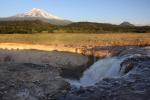
Mount Shasta reflects in a pool by Steamboat Mountain.
Looking north toward the Siskiyous
The Cascade Crest seen from Trout Lake
Mount Shasta looms far beyond Trout Lake

Three Spring Trails Near Mount Shasta City 

Mount Shasta City is blessed with a number of great paths within and just outside of its city limits. Three of the best are the Box Canyon, Ney Springs and Spring Hill Trail. These offer solitude, Mount Shasta Vistas, unique history, spectacular geography and even some excellent waterfalls. These all lie just minutes outside of town. Also, don’t forget that Mount Shasta City has some great short trails right in town! Read more here.

Box Canyon of the Sacramento River.
Inside the Box Canyon of the Sacramento
Faery Falls at high water.
Rocky Point on the Spring Hill Trail.

Spring Hikes On The Lake Siskiyou Trail

The Lake Siskiyou Trail is an incredible recreational resource just a couple minutes outside of Mount Shasta City. During the summer and fall, a loop trail encircles the lake. However, in winter the seasonal bridges over the Sacramento River are removed. While the loop can’t be hiked without fording the river (extremely dangerous after storms and during high runoff), several sections of the trail still make great out and back hikes. They feature beautiful forests, the lake itself and incredible views. Due to the relatively light winter, the bridges should be places over the Sacramento sooner rather than later this year. Read more here.

Mount Eddy at the Sacramento River inlet.
Hiking along South Shore
Views from North Shore.

Spring Hikes On The Sacramento River

Most people in California think of the Sacramento River as the wide, winding waterway that lazily flows through the Central Valley. Here just below the headwaters, however, it is a swiftly flowing mountain river. Deep in its canyon, the lower elevation means it is often free of snow and the trails are easily accessed. Hiking along the river in winter is a treat that offers a taste of wild mountains for minimal effort. Read more here.

Hedge Creek Falls
Behind Hedge Creek Falls
Rapids Along the River Trail.
Along the Sacramento River Trail.
Northern California Review: North Table Mountain

Posted by bubbasuess on April 15, 2018
Posted in: Sierra Nevada, Waterfalls, Wildflowers. Tagged: North Table Mountain, Wildflowers. 2 Comments

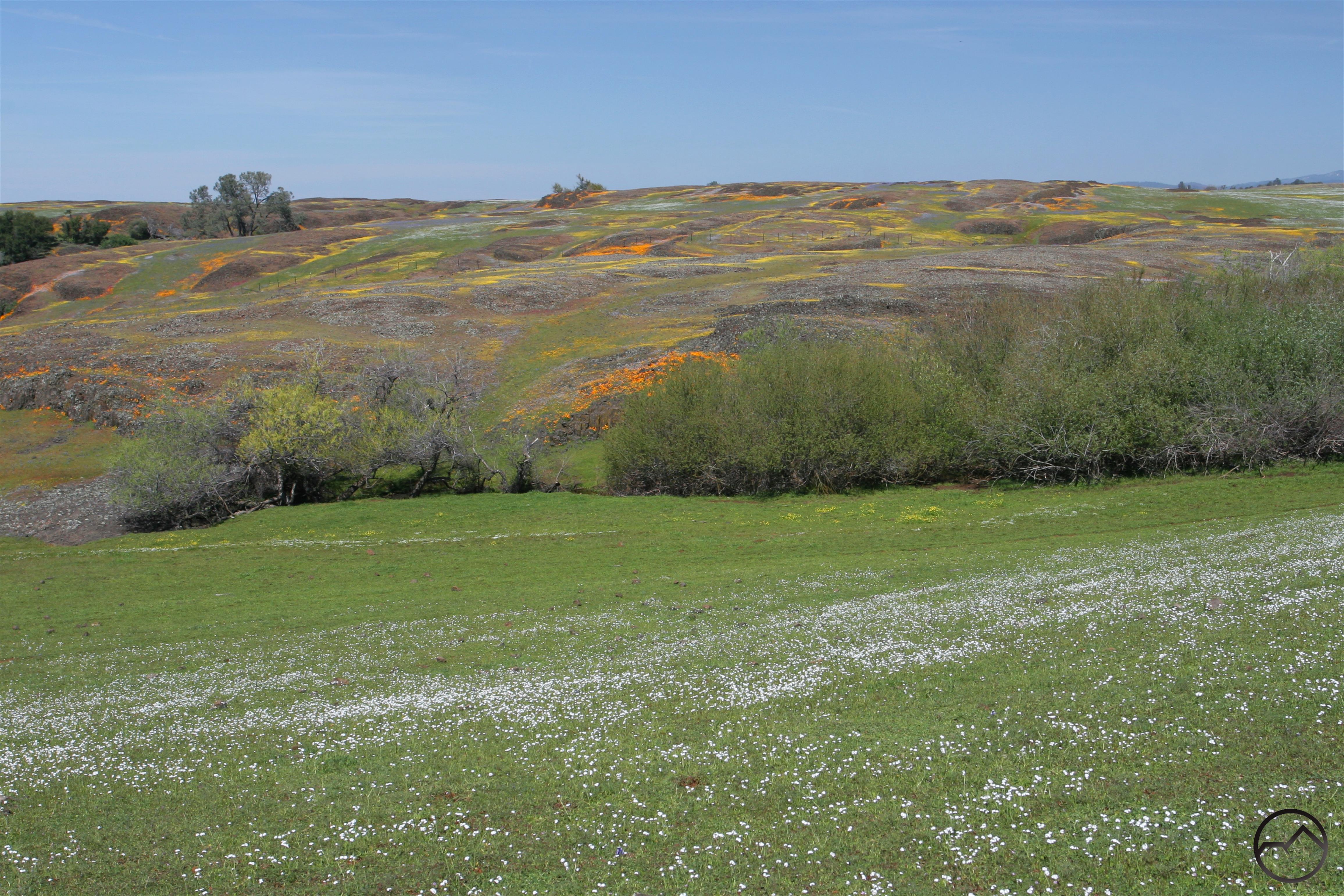
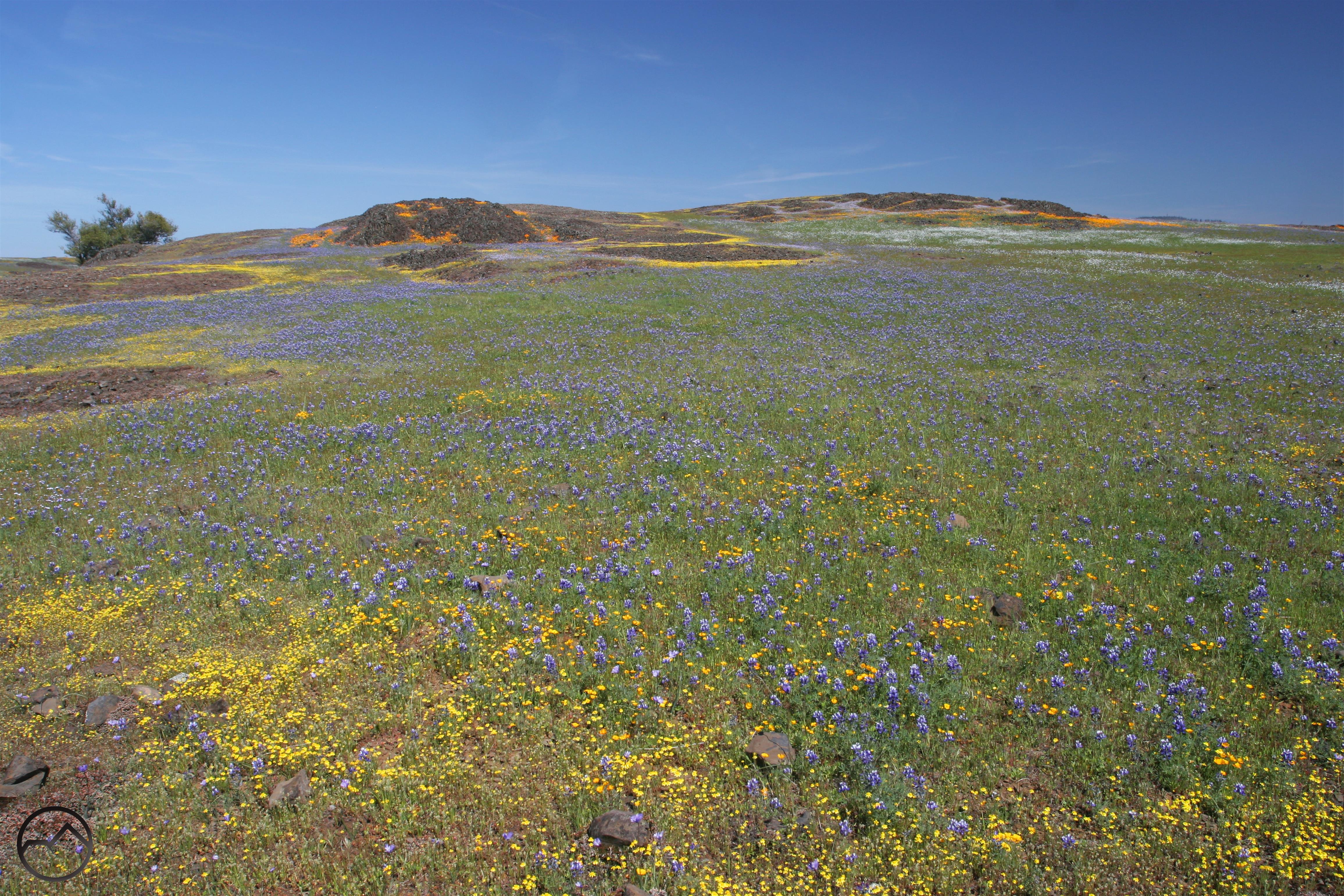
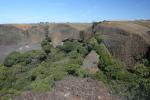
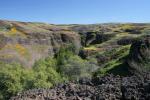
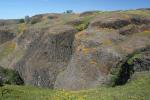
An intense display of wildflowers highlights basalt outcroppings on North Table Mountain.

This is the first post in the Northern California Review, a new series I am kicking off that highlights other natural areas around our great state. I don’t intend these to be trail guides, but rather an opportunity to focus a little light on a particular area and why it is special. Subjects like geology, hydrology and history are the kinds of things I want to discuss. Often times I will draw attention to how they relate back to Mount Shasta, if in some way they do. In no way is this broader scope of areas covered by my blog intended to lessen the focus I will give to Mount Shasta on this site. Rather, it is my hope that I will place Mount Shasta in the broader context of the state and showcase how many excellent destinations we are blessed with. I hope everyone enjoys this journey…

When spring arrives in Northern California, there are few places as marvelous to behold as North Table Mountain. Located in the foothills of the northern Sierra Nevada just north of the town of Oroville, North Table Mountain is a spectacular combination of wildflowers and waterfalls. With dark rocky outcroppings, lush grass, swirling riots of wildflowers and a number of surprisingly impressive waterfalls, the landscape on North Table Mountain’s summit plateau is a colorfully surreal delight after many long months of winter. Indeed, the wildflowers on the mountain are easily the best in this part of the state and rival anything else found in the rest of California.

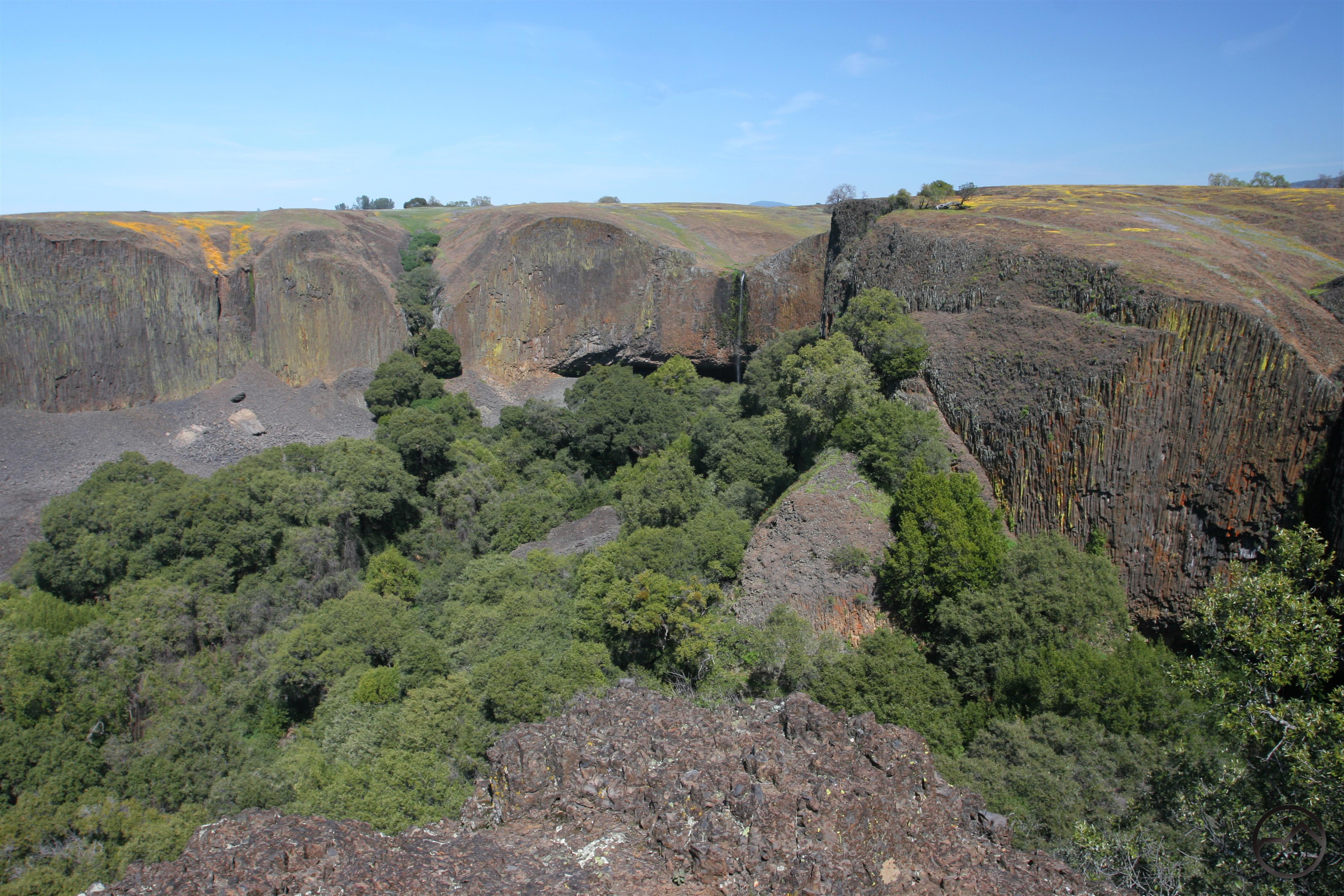
North Table Mountain is volcanic in origin, the result of substantial lava flows that covered much of the northeast corner of California’s great Central Valley. These flows are related to the geology of the entire northeast corner of the state, which is entirely volcanic in nature. Studying the geologic map of California, one notices that North Table Mountain (and adjacent, though much smaller, South Table Mountain) form the southernmost extent of the ancient volcanic activity. Beyond this point, the sedimentary rocks and punctuated granite plutons typical of the northern Sierra become the dominant landscape. The basalt rock, remnants of ancient lava flows, gives North Table Mountain its beautifully unusual rock protrusions. It has also been heavily weathered along the fringes of the large mesa. Large blocks of basalt have given way, exposing impressive canyons as well as columnar basalt formations.

A section of the geologic map of California. The brown light orange colors indicate the areas the experienced volcanic activity.

Wildflowers smothering North Table Mountain.

While the geology may be fascinating, it is the wildflowers that dominate the summit plateau in spring that are the most memorable feature of North Table Mountain. An extremely rare ecosystem identified as “northern basalt flow vernal pools” is found on top of the mountain. The vernal pools are formed in depressions where the basalt is less permeable. Water collects in the depressions and forms small ponds. The combination of these seemingly-out-if-place pools of water, along with volcanic soils, has allowed an unusual plant community to flourish. The unique environment is vividly manifested in the form of wildflowers. Many varieties are found here, but lupine, poppies, monkey flower and owl’s clover seem to be the most common. It is not so much the numerous varieties that make the flower displays so stunning but rather their terrific abundance. When the wildflowers reach their peak, spirals of color in bright orange, pink, yellow and white contrasted against dark purple and green blanket the entire summit plateau. It is a visual banquet, waiting for hikers to enjoy.

Coal Canyon and Phantom Falls.

Despite their overwhelming presence, the wildflowers are not the only fascinating feature on North Table Mountain. The geology of the mountain is also deserving exploration. The formation is the remnant of an ancient lava flow that once washed down into the Central Valley. Most of the flow has since eroded and washed away, but the mesa that remains offers a chance to peak into the interior of these once vast flows. This is best done along the western rim, where the basalt layers are evident. This can also be observed along the rim of two large canyons that have cut into the western side of North Table Mountain. The northern canyon, Coal Canyon, is the larger and more easily accessible of the two. In addition to the rugged geology, it exhibits some weathered columnar basalt formations. Beatson Hollow lies further to the south and offers more solitude and a narrower chasm. Both are worth exploring and quite beautiful.

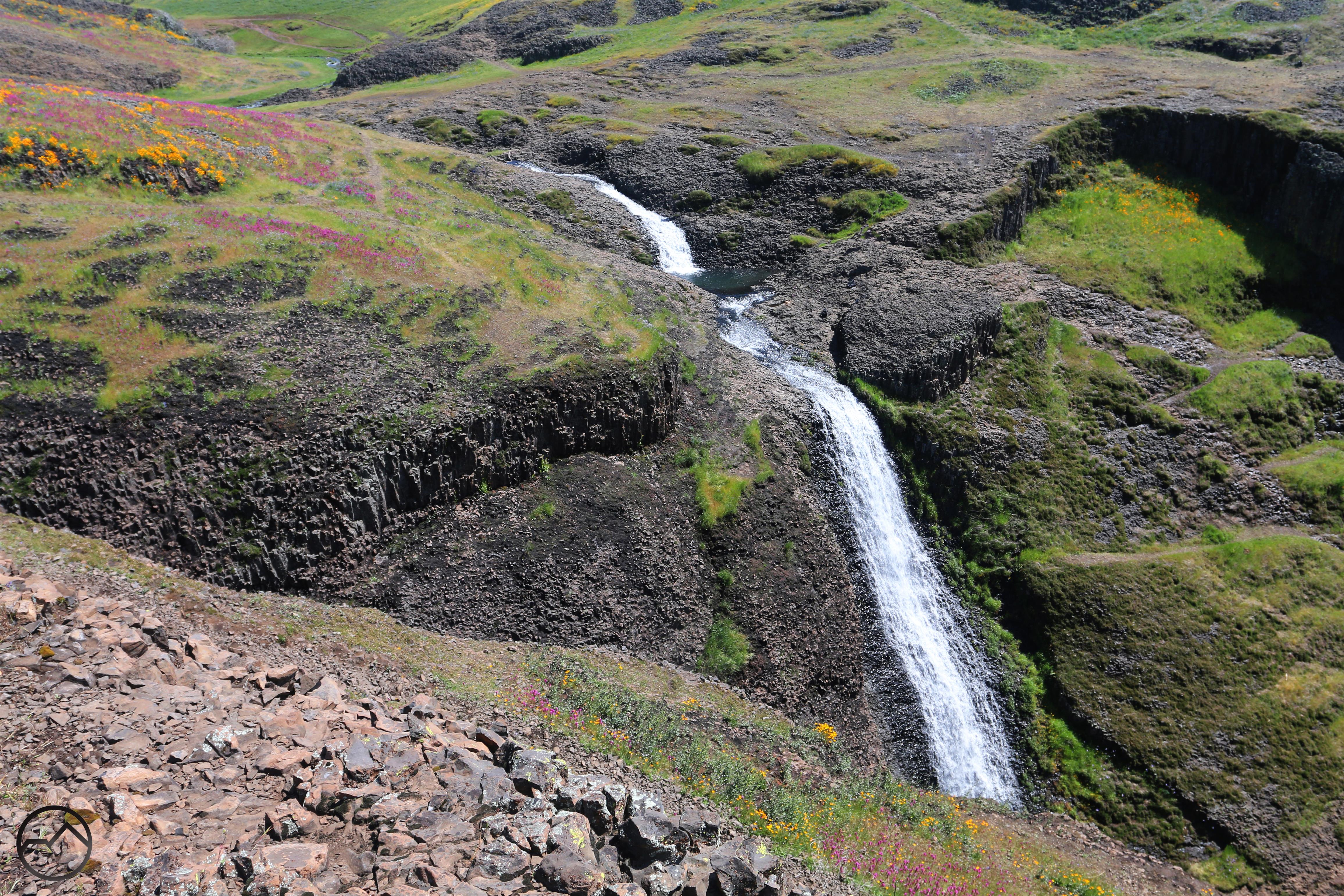
Hollow Falls

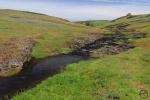
The presence of canyons is cause for the other spectacular feature of North Table Mountain. A surprising number of awesome waterfalls are found amongst this seemingly flat landscape. After the wet winter and the spring rains, numerous small streams develop on the eastern side of the summit plateau, flowing westward. Subterranean waters also rise to the surface and add to the volume as the streams flow. When the water reaches the western rim of the plateau, or the edges of the canyons, the water tumbles beautifully off the vertical cliffs. Although there are numerous beautiful cataracts along these streams, there are a few particularly notable waterfalls on North Table Mountain. These include Phantom Falls, Ravine Falls, Hollow Falls and Beatson Falls. These range from 165 feet to 70 feet high. All of them are beautiful and easily accessible to hikers.

The North Table Mountain Ecological Preserve. Parking is marked with “P”.

All of these spectacular features are contained within the North Table Mountain Ecological Preserve, which is administered by the California Department of Fish and Wildlife. The preserve is open to the public, though new in 2018, all Cal DFW lands require a day pass to enter. These are not available on site but can be purchased anywhere where fishing licenses are sold. There are few amenities at the preserve and all trails are unofficial. However, the paths to Hollow Falls and Coal Canyon are well-established and easy to follow. While these trails are useful, one of the great delights of North Table Mountain is the ease with which it can explored. While the summit is “flat” there are numerous small gullies lined with basalt outcroppings through which flow small streams. These just beg to be explored and, being lined with wildflowers, make lovely pathways. The wildflower blooms have gotten popular, so the peak times in spring have gotten very busy and if hiking around others is unwelcome, then the corridor between the parking area and Hollow Falls can be unwelcome. the rim of Coal Canyon sees a number of visitors as well. However, venturing away from these areas, even on peak weekends, will leave almost all the other hikers behind and solitude and beauty abound. Don’t let the potential for crowds stop an attempt to visit North Table Mountain. The combination of beautiful spring weather, staggering wildflower displays, interesting geology and lovely waterfalls is too great a combination to avoid. It is worth seeing no matter what and solitude is still to be had here.

Northern California is one of the most beautiful and spectacular corners of our great planet and home to many iconic landscapes. North Table Mountain may not immediately come to mind when thinking about the great scenes we are blessed with here, but for a few weeks in Marcha nd April, it stands shoulder to shoulder with world-renowned hiking destinations and beckons winter-weary hikers to come and delight in the apogee of the joys of spring.

North Table Mountain Gallery (click to enlarge):


Hollow Falls


Coal Canyon and Phantom Falls.


Winter Reappears (And An Update)

Posted by bubbasuess on April 12, 2018
Posted in: Cascade Range, Hiking, Lenticular Clouds, Mount Shasta. 7 Comments

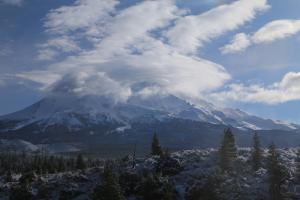
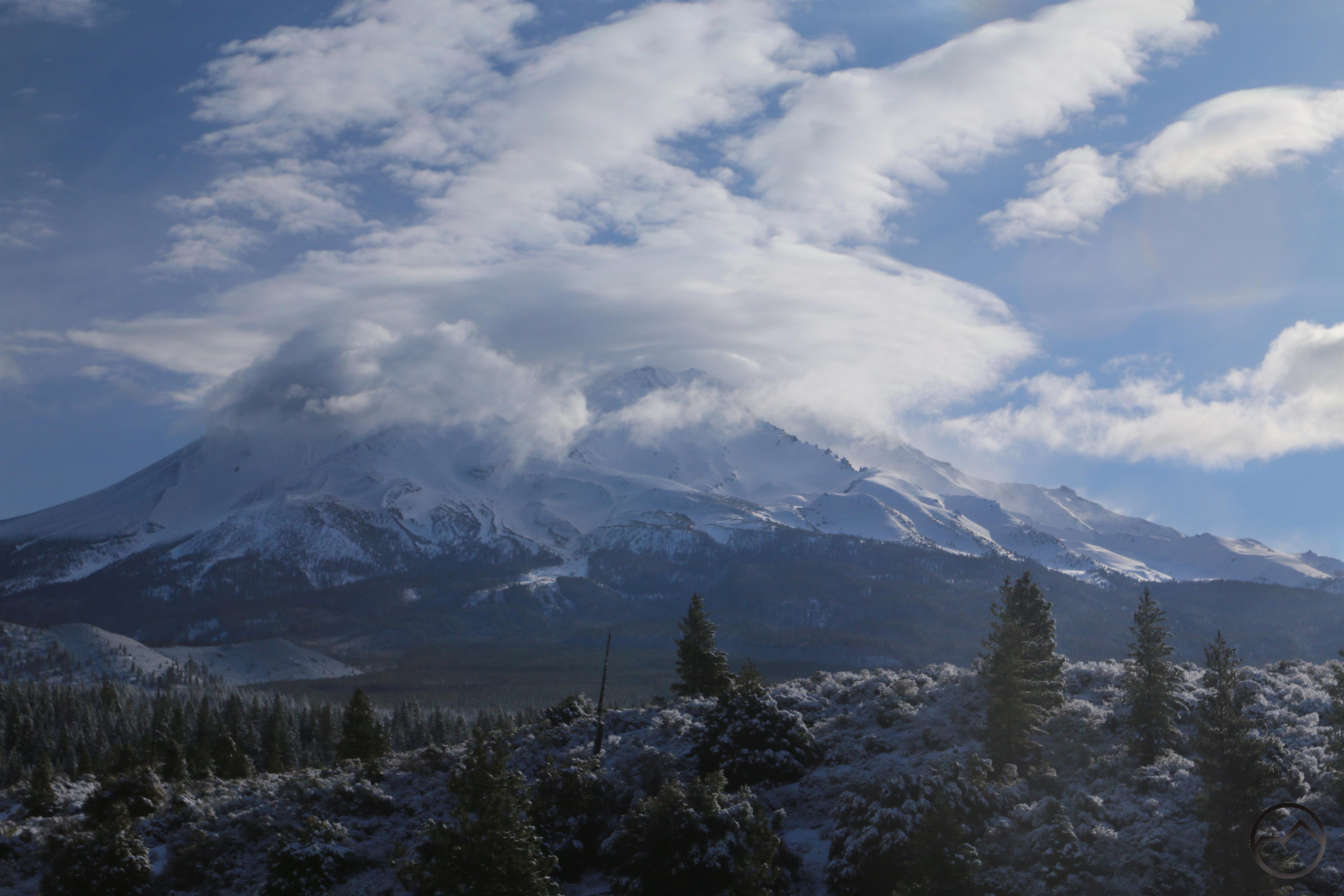
A lenticular-like cloud swirls around Mt. Shasta and lots of fresh snow.

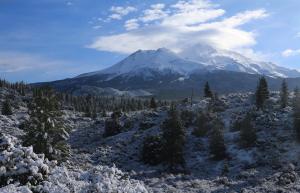
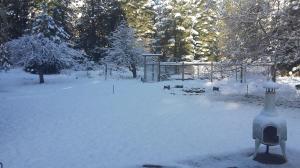
Well, I have to confess this was a bit of a surprise. With the temperatures warming, we ended up getting doused with a few inches of snow! I had seen snow in the forecast, but had ignored it, as I figured it would not get cold enough to stick to the ground. The truth was that it did indeed get cold enough to stick and we ended up getting about 3 inches around my house. It is still pretty cold outside so the snow is sticking around for a little while. I reckon most of it will be gone by the end of the day though. Of course, with clearer skies and fresh snow, I had to head out and check out Mount Shasta. There was a “lenticulish” cloud on the mountain, making for a typically spectacular scene that was only enhanced by the presence of fresh snow covering the landscape. It was nice to be reminded of one of the good aspects of winter on an unexpected bluebird morning.

On a side note, I am planning on debuting a new blog series this weekend. I know this site is supposed to be about the Mount Shasta area, but after 5 years, I want to stretch my wings a little bit and cover other parts of Northern California (and possibly southern Oregon too). I have really been itching to do this ever since the publication of my Northern California guidebook. The focus of the blog and the site will still be on the Mount Shasta area, but there are so many other amazing areas that I want to write about, I think that the time is right to spread out a little. It is my intent to keep the writings about areas away from Mount Shasta seasonally appropriate, so they are accessible or at peak beauty when I write about them. I hope nobody minds this new project!

So, that being said, here are a few images of the unexpected winter that passed through the area last night!

Click to enlarge:


The Sacramento River Causes Little Change At Lake Siskiyou

Posted by bubbasuess on April 1, 2018
Posted in: Hiking, Mount Shasta, Rivers. Tagged: Lake Siskiyou, Lake Siskiyou Trail. 2 Comments
Snowy Mount Eddy is visible beyond the Sacramento at the inlet to Lake Siskiyou.

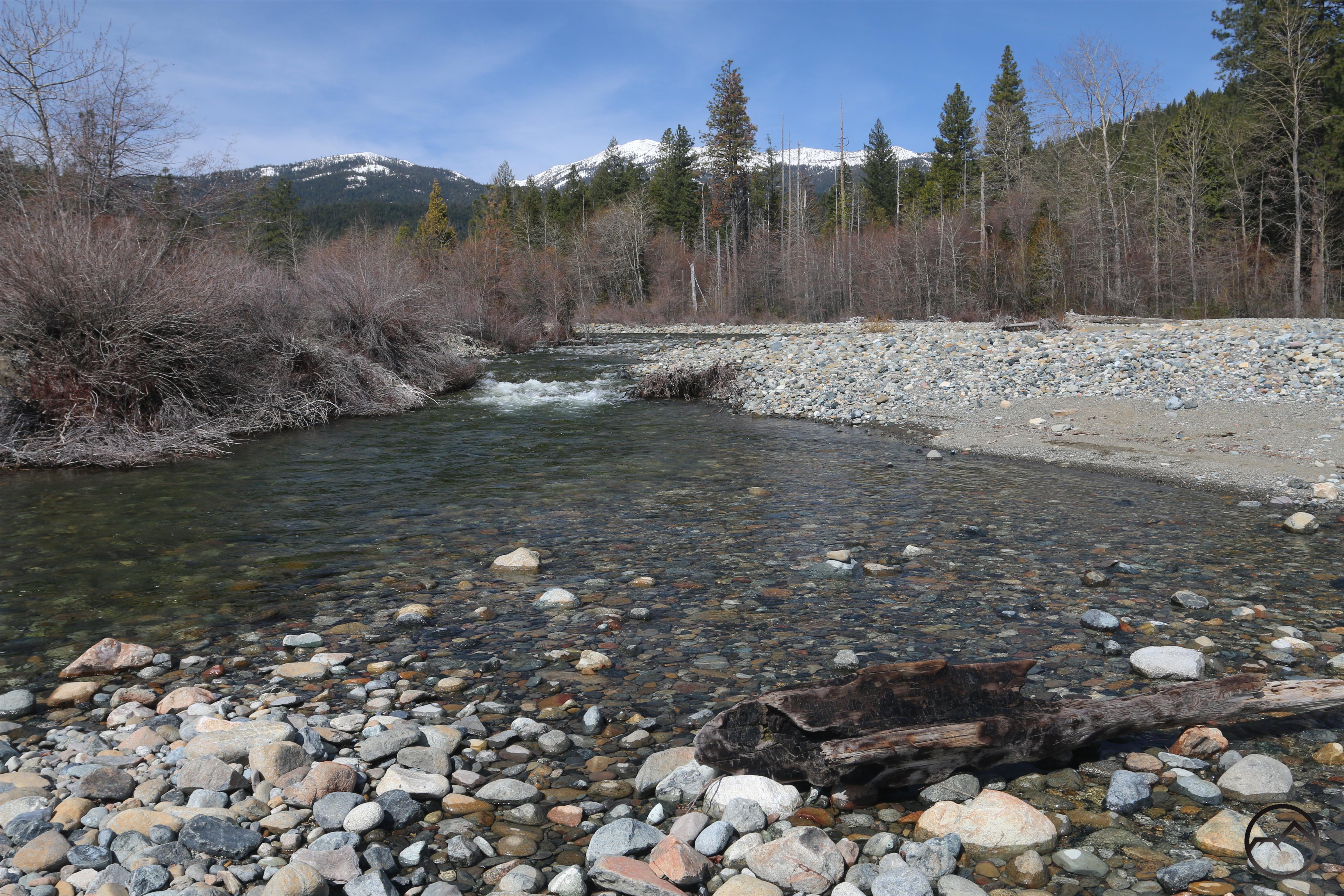
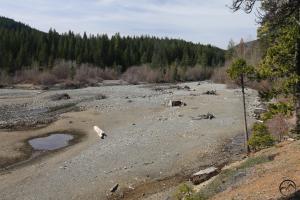
The last several years have not been kind ones to the section of the Lake Siskiyou Trail that crosses over the Sacramento River as it flows into the lake. Even though severe drought had stricken Northern California, powerful rainstorms and last year’s deep snowpack managed to create river flows heavy enough to wash away significant portions of the lake shore and cause the river to close and open various channels within the river’s floodplain. This past winter was fairly mild, but was significantly wetter than the drought winters of a few years ago. Consequently, this is the first winter in many years that no significant alterations to the shoreline have taken place.

April 2015

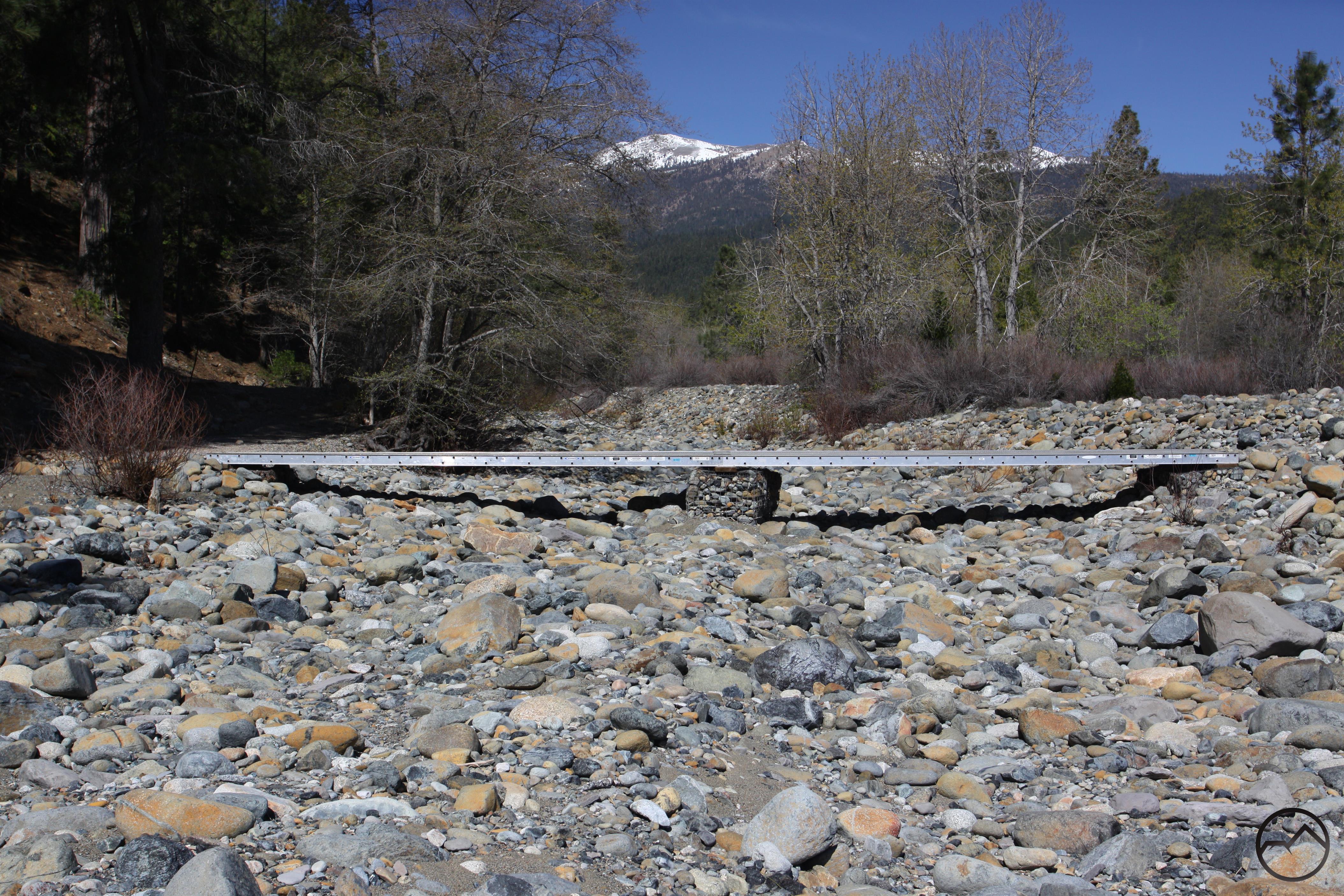
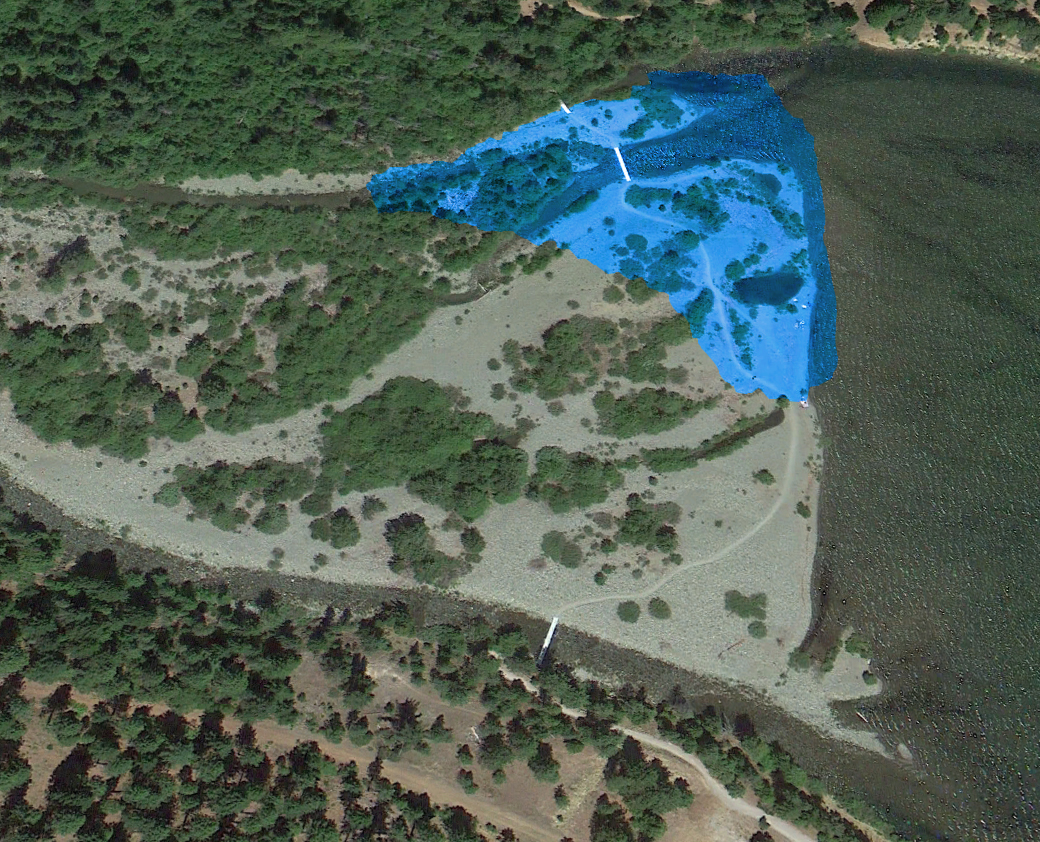
In 2014, the trail was a well-built, well-marked path along the shoreline, crossing seasonal bridges that allowed hikers and bikers to travel the entire circumference of the lake. The trail, passing through a rocky flood plain, had been cleared of large stones, making for an semi-cobbled route. It was a scenic section of trail. However, things began to change early in 2015 when a sudden storm brought enough debris downriver that the south channel, one of the Sacramento River’s two primary channels, was plugged up. All the water that had originally run through there was diverted into the north channel and the increased volume of water resulted in much of the northern half of the inlet area being washed out. This included the loss of the seasonal bridge and much of the trail. In an interesting twist, the southern channel remained completely dry and the bridge totally unaffected.
Following the initial flood that significantly altered the landscape in 2015, the two subsequent winters saw further erosion of the inlet area. Though small amounts of water resumed flowing in the southern channel, the northern channel continued to carry the vast majority of the Sacramento’s water. The course of this channel changed significantly during these three winters, ultimately wiping out two bridges and approximately 550 feet of trail.
Reviews of the damage up to last year can be read here, here and here.

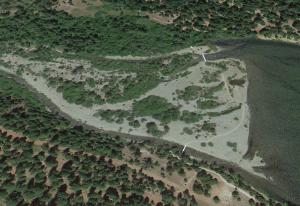
Inlet area circa July 2012
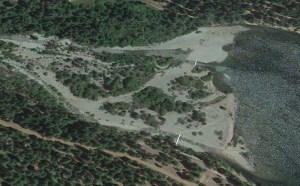
Inlet area circa July 2017

Both of these images were taken when Lake Siskiyou was at capacity. In the picture on the right, note the missing vegetation, increased size of the northern channel, the missing lagoon and the large, rocky flood plain that has developed. Significant amounts of rock were deposited by the Sacramento River while it was in flood stages.

Original inlet condition circa 2013. All the areas subsequently washed away are highlighted in blue.

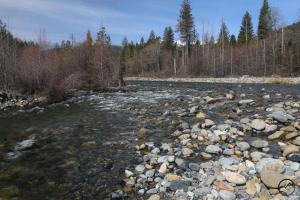
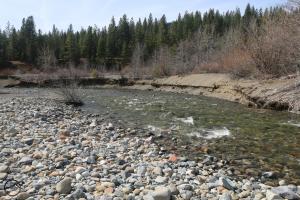
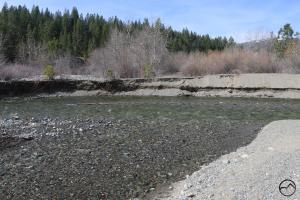
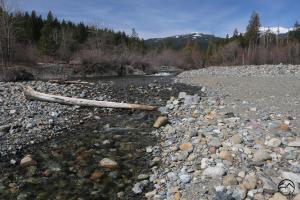
All this leads up to the current condition of the inlet area. For the first time in at least the last three winters, not significant changes have occurred along the Sacramento River. The route of the northern channel is essentially the same this year as it was last year. The final section right as it reaches the lake’s high water mark has deepened and some rock has built up alongside the channel but the path is largely the same as it was last year. This means that, for the first time in the last several years, no improvements will have to be made to make the Lake Siskiyou Trail complete when it is time to place the seasonal bridges. While the changes wrought by the river are fascinating, the relatively intact conditions of the trail are a positive development. Perhaps the river has finally stablized its route and work can be done to improve the trail once again…with the understanding that all trailwork may be fleeting, since the river reserves the right to alter anything that lies along its path.

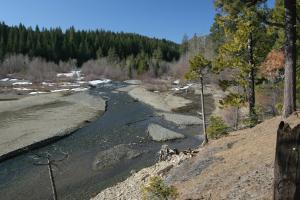
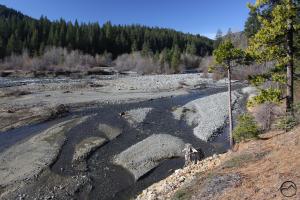
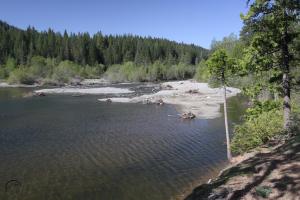
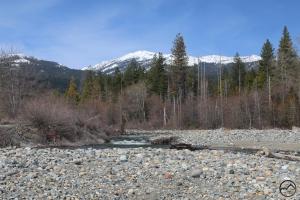
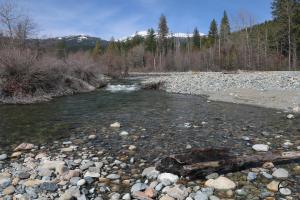
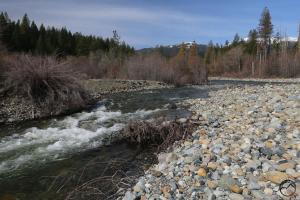
Below are a series of images taken from the north side of the inlet over the course of the last 6 years. Note how the course of the river has shifted south. It makes the area appear as though the lake is really low when in reality, the area directly below the vantage has been built up with stone from further upstream. This, with the course of the river shifting north has really altered the area’s appearance (and granted, the lake was really full after the substantial precipitation that fell in 2017).

Click to enlarge:

2013
2016

2017
2018

Ultimately, I think the best course of action is the construction of a permanent bridge further upstream, where the river’s flood plain constricts. Until then, it is a positive development to see the river achieve some sort of equilibrious…even if it is fleeting.

Current conditions at the inlet (click to enlarge):


Spectacular Mount Shasta Morning Ushers In Spring Weather

Posted by bubbasuess on March 26, 2018
Posted in: Cascade Range, Hiking, Lenticular Clouds, Mount Shasta. 1 Comment

A fiery lenticular cloud floats above Mount Shasta.

This week is kicking off in fine form. With the forecast giving us sunny days and temps in the mid-60’s, it looks to be a beautiful beginning to spring. We are even heading outside to get our garden prepped. Of course, Mount Shasta had to get in on the action and put on a great lenticular display this morning. It was not the kind of overwhelmingly spectacular performance with grand clouds and amazing and unusual formations. Instead, this morning saw a nicely formed cloud flowing across Mount Shasta’s summit and catching the light from the rising sun. It was a gorgeous sight, once again making me thankful to be able to witness such a sublime scene. What made this morning all the more interesting was the amount of secondary lenticular activity there was. Even Black Butte was able to get in on the activity for once. None the the clouds were grand on their own but together, they made for a wonderful spectacle. Spring is here. I guess I will have to get to work on writing my spring hiking round up!

I won’t go into detail here, but I will give a few thoughts in the captions for each image below.

Click to enlarge: 

As the sun came up, the cloud’s shape really began to fluctuate.
A nice wave formed to the south, above Spring Hill. Though it was gone by the time the sun came up, it was a constant presence throughout most of the sunrise.
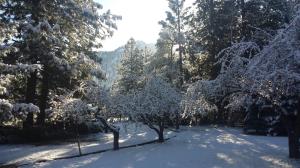
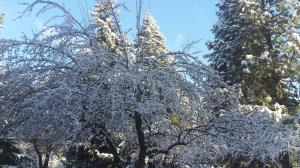
As I was shooting the lenticular, the wind whipped up and started blowing snow off of Sargents Ridge. The airborne snow then picked up the dawn glow too.

Black Butte had a large lenticular on it as well. It was strange to be so close to one of these formations.
The lenticular on Black Butte was impressive in its own right.

Though not a classic lenticular, even Mount Eddy had some disk-shaped clouds.

Winter’s Last Stand

Posted by bubbasuess on March 24, 2018
Posted in: Cascade Range, Hiking, Mount Shasta. 1 Comment

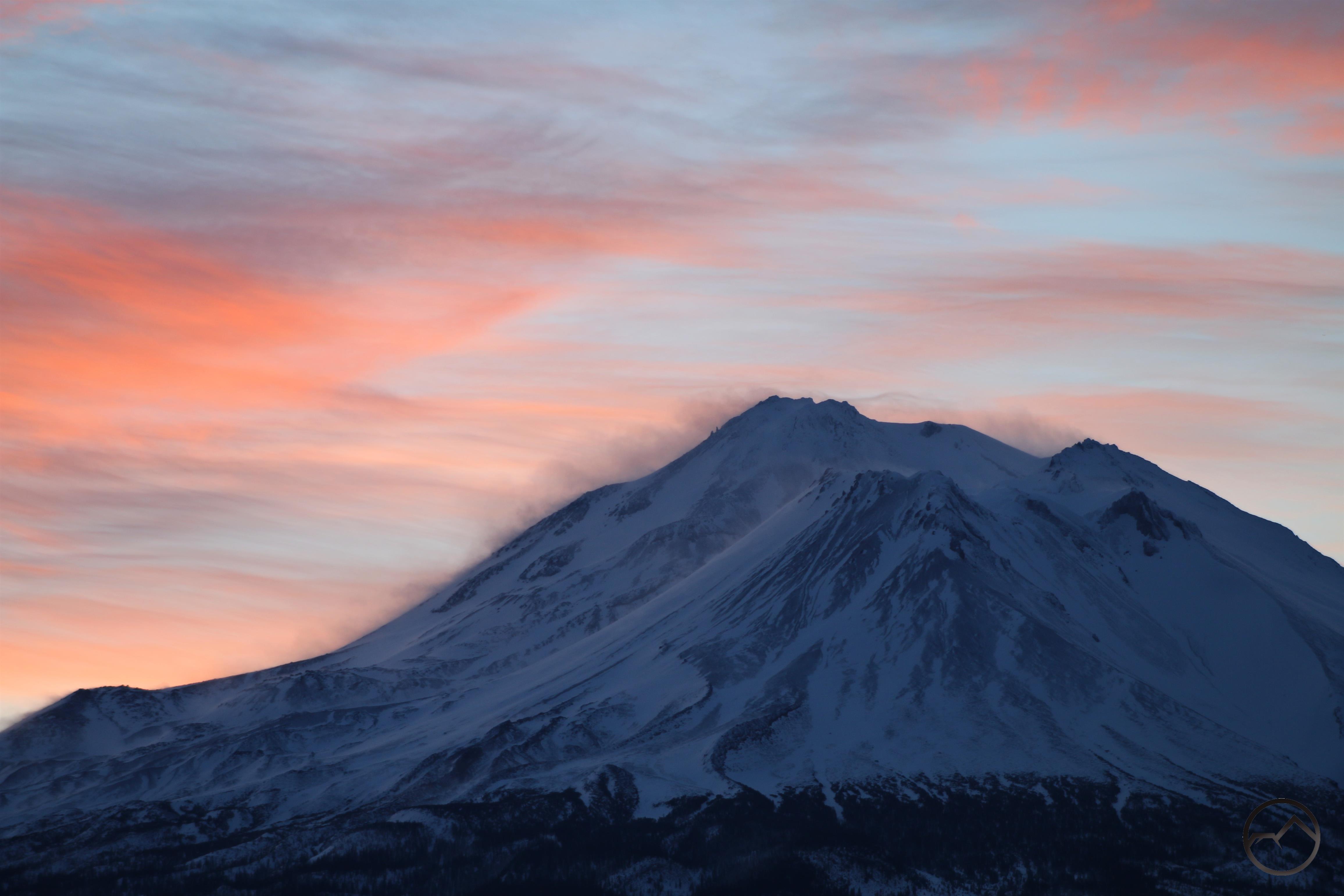
Fresh snow blows off of Mount Shasta during a winter sunrise.

I am probably tempting fate here, but I think that, with last night’s snow, we are seeing the winter of 2017-2018’s final stand here in Mount Shasta. Looking at the forecast, the temperature is going to climb up into the mid-60’s and the sky will be clear and sunny. It looks perfect. I am sure more rain will come, but the snow, such as what fell last night, may be done. This is timely, since I, my family, and most of the people I have talked to, are ready for spring, ready to get outside in warm weather, and ready to enjoy the sun again.

Last night we got about 3-4 inches of snow. I awoke early and surveyed the snow, the cloudless sky, and promptly headed out to go watch the sun come up. From the north, Mount Shasta is always cast in shadow at sunrise but if there are clouds, they catch the rising sun’s light beautifully. This morning was no different. This morning there were also plumes of snow billowing off the mountain, adding another layer of matter for the light to reflect off of. It was another morning to be thankful to witness.

Back at my house, the snow made for one more pretty winter morning. It will no doubt melt off quickly, but my family was glad to be able to enjoy it one more time.


This winter was a bit of a mixed bag. It started off fairly dry, with no snow for months. However, February and March have seen significant precipitation and one major snow storm pass through. I am not sure what the final snowpack will end up being, or how much rain fell, but the latter two months have certainly meant we have avoided disaster. It was much, much better than the winters of 2013-2014 and 2014-15. The snow last night was nearly equal to the total that fell each of those years. Those were awful.

So, though my writing this will likely prove responsible for more snow soon, I am declaring winter over and I am moving right into spring. I hope everyone has a great one!

Snowy Mount Eddy catches the rising sunlight.

Shadow And Alpenglow

Posted by bubbasuess on March 22, 2018
Posted in: Cascade Range, Hiking, Mount Shasta. Leave a comment

Late afternoon light on Mount Shasta.

The skies have been cloudy lately and we still have up to 10 inches of snow due to fall tomorrow and tomorrow night (color me skeptical). It rained hard last night and into this morning, so I was surprised when the clouds broke and Mount Shasta in all its snowy glory was revealed. It promised to be a beautiful sunset, so after dinner, I took my kids over to Sisson Meadow and let them play while I hung out by my camera. Sisson Meadow is a gorgeous slice of paradise right in the middle of Mount Shasta City. Graced with a small pond, beautiful little streams and a diminutive waterfall, it also has superlative views of the mountain from its boardwalked trails. My kids love exploring and collecting medicinal herbs (my 8 year old is obsessed with the things like teasel and yellow dock among others – go figure) and it gives me the chance to watch the clouds and wind-blown snow plumes. It isn’t the most imaginative perspective, but it works in a pinch.

This evening once again highlighted the great shadows cast by Casaval Ridge. From town, the ridge does not really look very impressive, but it is obvious from the shadow that it has immensely jagged topography. To get a better view of the pinnacles, it is necessary to head north or south or go up to Bunny Flat. From those vantages, the ragged towers are quite dramatic. This evening, the shadow cast in Avalanche Gulch showed off the sawtooth profile. The sharp edges of the towers’ shadows softened as the sun set but the weakening of the that drama was replaced by the arrival of the alpenglow. I never tire of seeing the light sweeten on the snowy cliffs of Mount Shasta, until it it finds just the right shade of pink or orange or purple. Even with a cloudless sky, not two sunsets on Mount Shasta are alike and each is to be savored.


Shasta High Desert Gallery

Posted by bubbasuess on March 16, 2018
Posted in: Desert, Hiking, Mount Shasta. Leave a comment

When most people think about Mount Shasta, the usual image that comes to mind is the towering, ice clad mountain rising high above vast conifer forests. This certainly is the classic perspective on the mountain and deservedly so. Yet, just to the north of Mount Shasta lies the large Shasta Valley, an arid land strikingly unlike the alpine areas to the south. Since the preponderance of the storms that pass through this area come from the south, the mountain strains the moisture out of the passing clouds, leaving little precipitation to fall in the areas further north. This phenomenon is known as a rainshadow. Rather than a shadow being cast by light being obstructed, precipitation is obstructed in a similar fashion. This is why the areas immediately east of the Sierra Nevada and the Cascade Range are deserts.

Though aridity may not be something we would normally consider a blessing, for those of us in the Mount Shasta area it is a great asset. Not only does the high desert of the Shasta Valley mean we have a significantly more diverse landscape to explore, it also means that sunshine and great winter hiking is not far away. Though the trails in this area are few, they can be enjoyed all year and there is also room for lots of off trail exploration. An additional feature is the absolutely spectacular views of Mount Shasta that can be found from nearly every corner of the Shasta Valley. The snowy peak rising suddenly from sage and juniper covered hills is an unforgettable sight and one not to be missed. The high desert may be an underappreciated landscape, but it is one deserving of more attention and a boon to those who explore it.


Mount Shasta looms far beyond Trout Lake
Mount Shasta reflects in a pool by Steamboat Mountain.

The Cascade Crest seen from Trout Lake

Looking north toward the Siskiyous


Mount Shasta from the Haystack.
Herd Peak, Sheep Rock and Yellow Butte


Mount Shasta rises above Yellow Butte
Yellow Butte


Lake Shastina

Lake Shastina

Mount Shasta rises above Pluto Cave
Pluto Cave


The Shasta Valley spreads out below the Goosenest

Orr Mountain seen beyond the Orr Lake meadow.
Mount Shasta rises above Butte Creek

It’s A Good Time To Check Out Hedge Creek Falls

Posted by bubbasuess on March 13, 2018
Posted in: Hiking, Mount Shasta, Waterfalls. 4 Comments

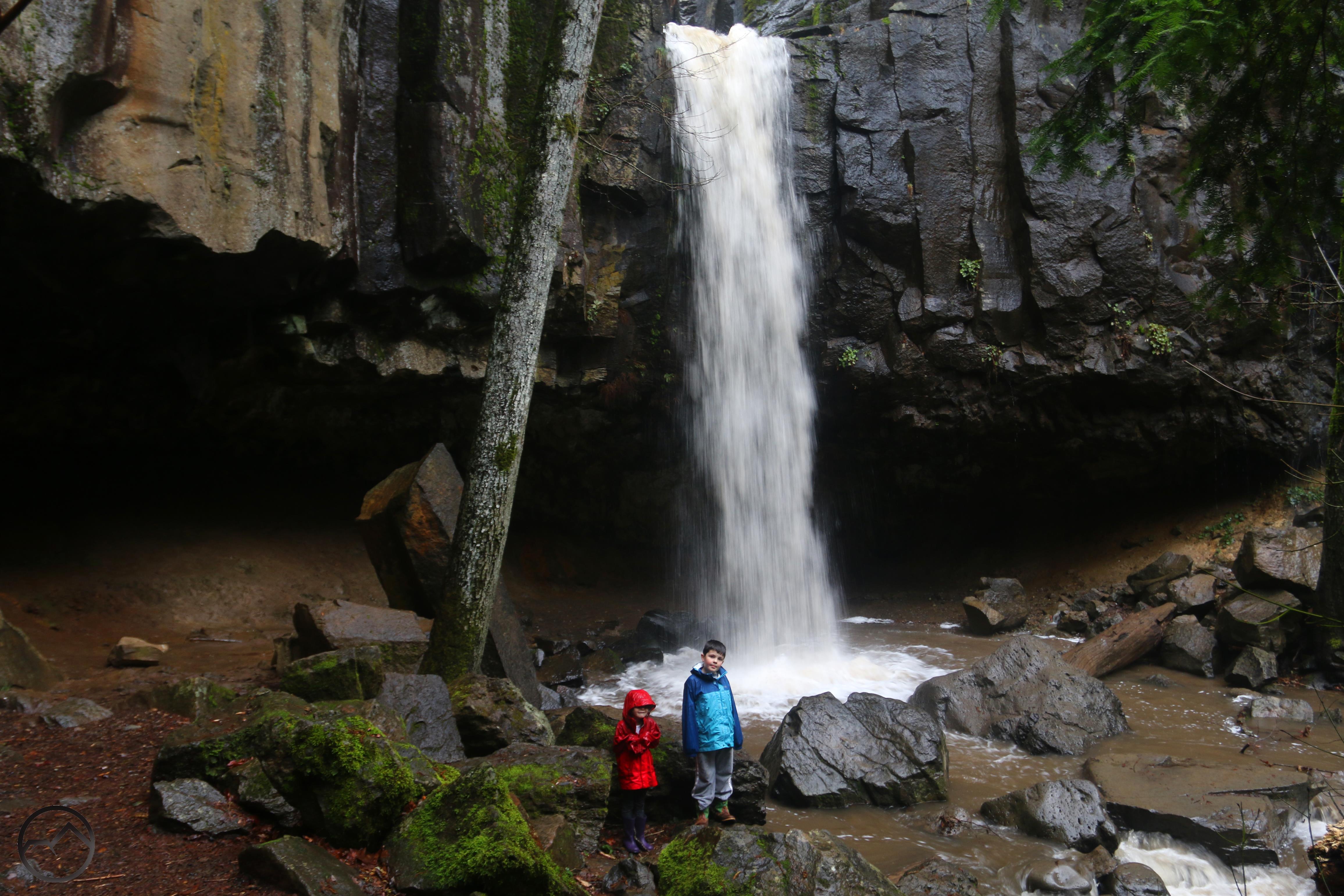
With all the precipitation we have been getting (and will continue to get for the foreseeable future) it is a good time to check out the lower elevation waterfalls in the Mount Shasta area. The easiest one to get to by far is Hedge Creek Falls in Dunsmuir. Right off the freeway but feeling a world away from the road, it is a great place to make a quick trip to check out how the weather has effected the flow. Today I picked my kids up from school, which is right on the way to the falls and within about 5 minutes we were pulling up to the trailhead. They hopped out and happily clambered down the trail to the waterfall.

Hedge Creek Falls is not a really tall waterfall, nor is it typically pretty large. Yet, when the creek is swollen from passing storms or melting snow, if makes a fine, fine waterfall. The fact that the trail passes through the cave behind the waterfall makes it a particularly memorable cataract to experience. It has shades of the awesome Trail Of Ten Falls at Silver Falls State Park in Oregon. The large chunks of columnar basalt around the falls also adds a lot of visual appeal to the scene.

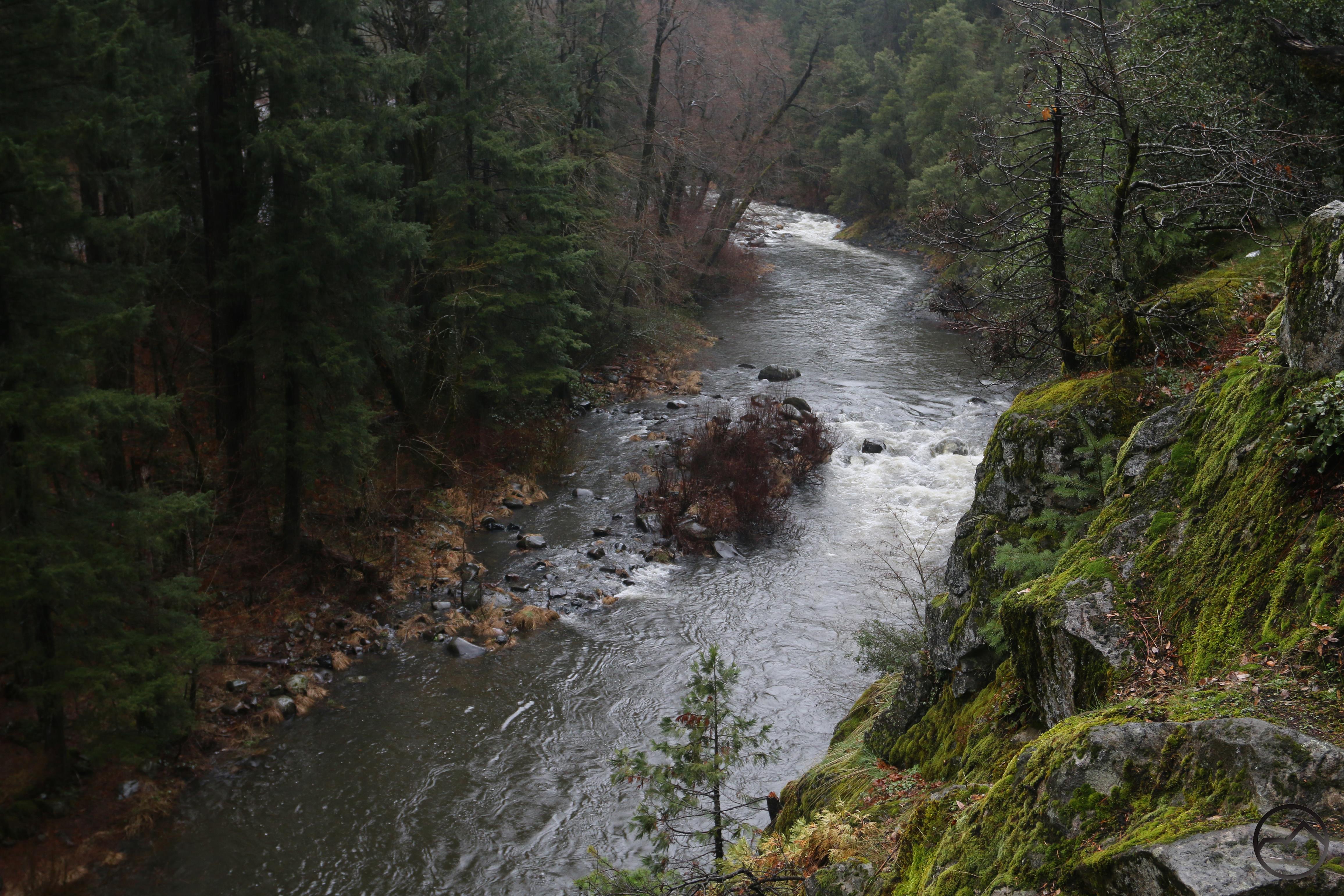
Vista point view of the Sacramento River.

From Hedge Creek Falls, the trail continues downstream on the north side of the canyon. Normally this section of the creek is fairly sedate, despite dropping down some nice cataracts. Today, however, it was flowing with a good deal of fury and the normal little rapids and plunges were tumultuous storms slamming against rocks and racing toward the confluence with the Sacramento River. There was also a substantial cascade flowing down the south side of the canyon, adding to the din and is a real highlight of the conditions around Hedge Creek Falls. Though Mt. Shasta was lost to the clouds, the view of the Sacramento River was great and it too was running very full.

The volume of water is likely to continue like this for some time, as the rain (or snow) will continue for over a week. Be sure to stop by Hedge Creek Falls at some point and see it with a strong flow!

Click to enlarge:


Vista point view of the Sacramento River.

Posts navigation

← Older Entries
Newer Entries →
    • Recent Posts

      • Winter Shows Up When It Will
      • January Rolled By With Mud, Then Very Dry
      • Mount Shasta 2025 – A Year In Images
      • Mount Shasta On Either Side Of Christmas
      • Adrift In An Ocean Of Fog
      • December Has Been Spectacular Thus Far Pt. II (A Magnificent Lenticular)
      • December Has Been Spectacular Thus Far Pt. I
      • Lenticular Interrupted
      • A Stormy Wave And A Truchas Sunset
      • Aurora Lenticularis
    • Enter your email address to follow Hike Mt Shasta and receive notifications of new posts by email.
    • Archives

      • February 2026
      • January 2026
      • December 2025
      • November 2025
      • October 2025
      • September 2025
      • August 2025
      • July 2025
      • June 2025
      • May 2025
      • April 2025
      • March 2025
      • February 2025
      • January 2025
      • December 2024
      • November 2024
      • October 2024
      • September 2024
      • August 2024
      • July 2024
      • June 2024
      • May 2024
      • April 2024
      • March 2024
      • February 2024
      • January 2024
      • December 2023
      • November 2023
      • October 2023
      • September 2023
      • August 2023
      • July 2023
      • June 2023
      • May 2023
      • April 2023
      • March 2023
      • February 2023
      • January 2023
      • December 2022
      • November 2022
      • October 2022
      • September 2022
      • August 2022
      • July 2022
      • June 2022
      • May 2022
      • April 2022
      • March 2022
      • February 2022
      • January 2022
      • December 2021
      • November 2021
      • October 2021
      • September 2021
      • August 2021
      • June 2021
      • May 2021
      • April 2021
      • March 2021
      • February 2021
      • January 2021
      • December 2020
      • November 2020
      • October 2020
      • September 2020
      • August 2020
      • July 2020
      • June 2020
      • May 2020
      • April 2020
      • March 2020
      • February 2020
      • January 2020
      • December 2019
      • November 2019
      • October 2019
      • September 2019
      • August 2019
      • July 2019
      • June 2019
      • May 2019
      • April 2019
      • March 2019
      • February 2019
      • January 2019
      • December 2018
      • November 2018
      • October 2018
      • September 2018
      • August 2018
      • July 2018
      • June 2018
      • May 2018
      • April 2018
      • March 2018
      • February 2018
      • January 2018
      • December 2017
      • November 2017
      • October 2017
      • September 2017
      • August 2017
      • July 2017
      • June 2017
      • May 2017
      • April 2017
      • March 2017
      • February 2017
      • January 2017
      • December 2016
      • November 2016
      • September 2016
      • August 2016
      • July 2016
      • June 2016
      • May 2016
      • April 2016
      • March 2016
      • February 2016
      • January 2016
      • December 2015
      • November 2015
      • September 2015
      • August 2015
      • July 2015
      • June 2015
      • May 2015
      • April 2015
      • March 2015
      • February 2015
      • January 2015
      • December 2014
      • November 2014
      • July 2014
      • June 2014
      • May 2014
      • April 2014
      • March 2014
      • February 2014
      • January 2014
      • December 2013
      • November 2013
      • October 2013
      • September 2013
      • August 2013
      • July 2013
      • June 2013
      • May 2013
      • April 2013
      • March 2013
      • February 2013
      • January 2013
    • Categories

      • Boy Scouts
      • Cascade Range
      • Castle Crags
      • Desert
      • Echo Point
      • Glaciers
      • Hiking
      • How things came to be…
      • Klamath Mountains
      • Konwakiton Outdoor Designs
      • Lakes
      • Lenticular Clouds
      • Maps
      • Marble Mountains
      • Meadows
      • Mount Eddy
      • Mount Shasta
      • Mount Shasta History
      • Napa County
      • Off Season Trails
      • Pacific Crest Trail
      • Peaks
      • Rivers
      • Rock Climbing
      • Scott Mountains
      • Seldom Seen
      • Shasta Valley
      • Sierra Nevada
      • Siskiyou Mountains
      • Sonoma County
      • Spring Trails
      • sunrise
      • sunset
      • Trinity Alps
      • Trinity Divide
      • Truchas Ridge
      • Uncategorized
      • Water
      • Waterfalls
      • Wilderness
      • Wildflowers
      • Wine Country
      • Winter Trails
      • Yosemite
    • Meta

      • Create account
      • Log in
      • Entries feed
      • Comments feed
      • WordPress.com
    • Copyright © 2013-2024 by Bubba Suess

      DISCLAIMER: Any use of the information contained in this site by any and all persons is done at their own risk. The operator of this site shall be held harmless from any and all alleged claims, demands, causes of action, liability, loss, damage and/or injury to property or persons whether brought by an individual or other entity. This indemnification applies, without limitation, to all actions by an individual or other entity as a result of their use of information contained in this site.
    Blog at WordPress.com.
    Hike Mt. Shasta
    Blog at WordPress.com.
    • Subscribe Subscribed
      • Hike Mt. Shasta
      • Join 983 other subscribers
      • Already have a WordPress.com account? Log in now.
      • Hike Mt. Shasta
      • Subscribe Subscribed
      • Sign up
      • Log in
      • Report this content
      • View site in Reader
      • Manage subscriptions
      • Collapse this bar
     

    Loading Comments...