

Mount Shasta, partially obscured by fog.
December most certainly has had the most interesting weather of the last several months in Mount Shasta. We have gone from beautiful clouds and epic lenticulars to a more mundane but intensely beautiful set of conditions: deep fog. The pea soup, interesting at first, became suffocating after a while. Not seeing more than 100 feet away and it never burning off got old fast. If it was colder and allowed the hoarfrost to develop like it did during the epic fogathon of December 2022 it would have been far more interesting. We were not so fortunate and thus left with the dreary pall. The fog was settled in the lowlands, particularly in the Shasta Valley, north of Mount Shasta. However, the it never pushed its way up toward the base of Black Butte so Mount Shasta was spared the gloom.
While dreary from the inside, it was fascinatingly beautiful from above:
I found captivating the manner in which the fog seemed to follow some kind of tidal action, ebbing and flowing back and forth across the valley (also check out Mount Shasta’s shadow cast on the foggy canvas!). At times the hills in the center of the Shasta Valley would emerge from the vapor while at other times it was overpowering, submerging them in the ubiquitous mist. The fact that the fog lapped at the edges of the higher terrain afforded the opportunity to find the fringes of the fog and to try to capture images of the fog, light and mountains all interacting together.
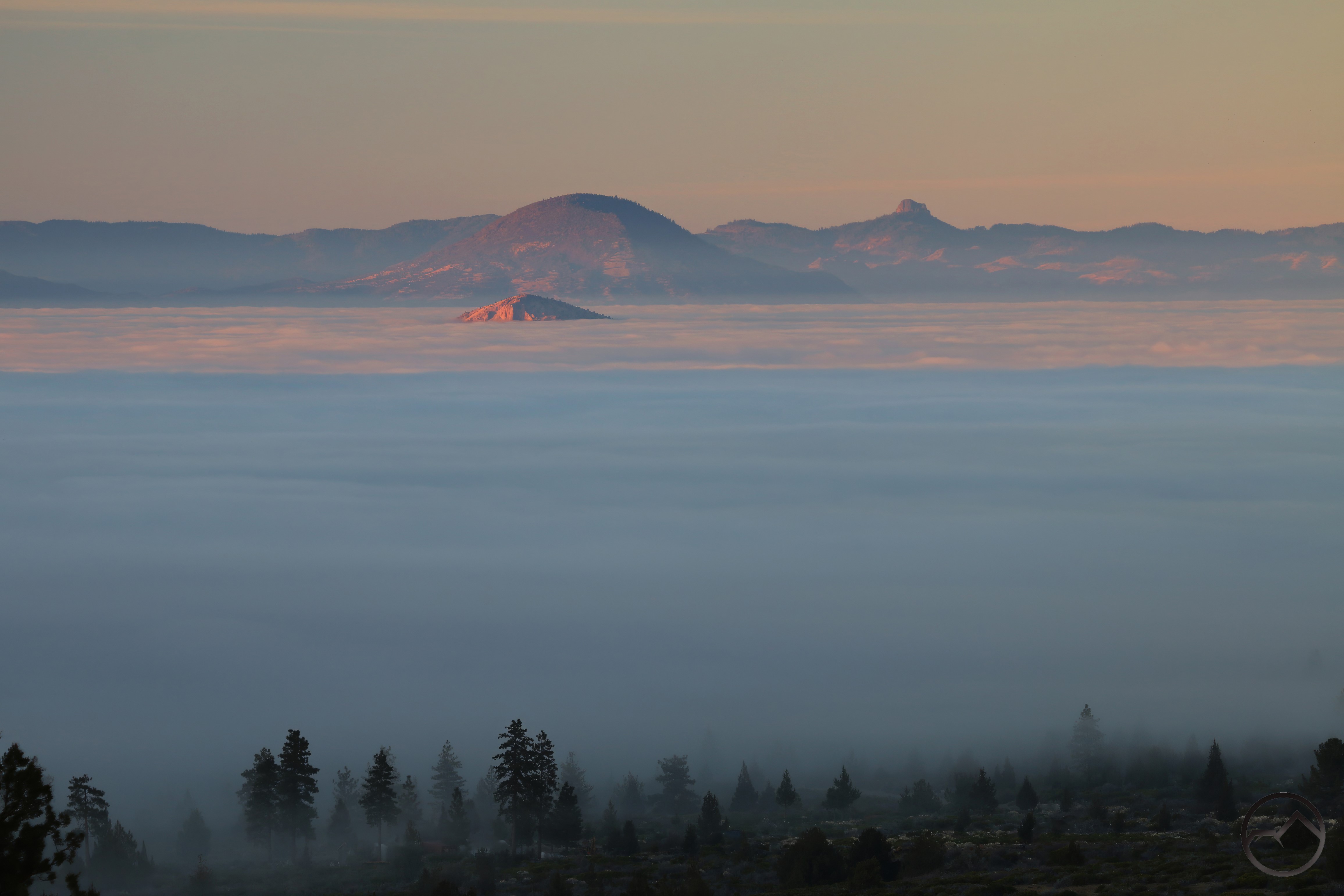
The Owls Head, the tallest of the Shasta Valley peaks, peeks through the fog while Black Mountain and Pilot Rock (in Oregon) loom in the distance.
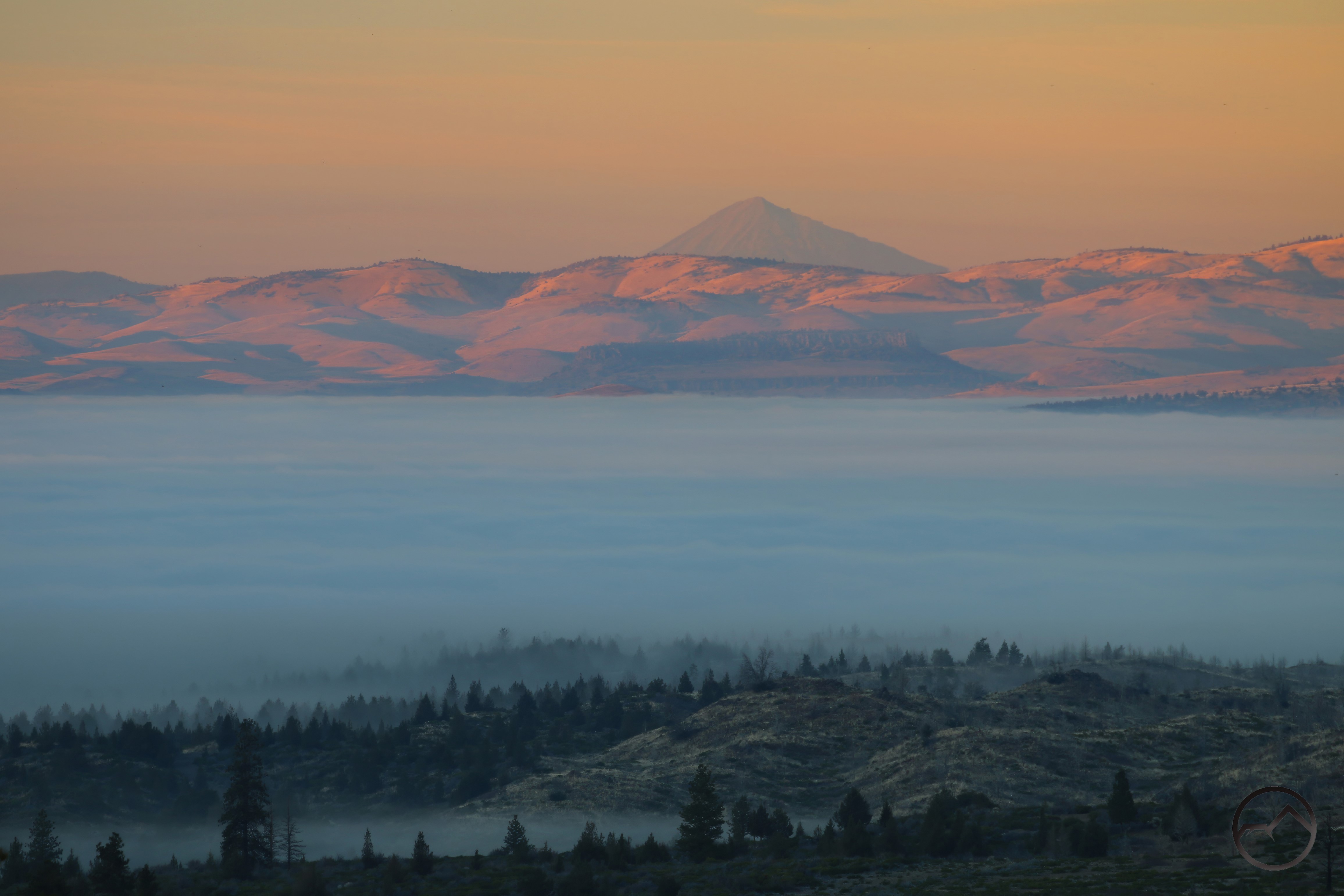
Mount McLoughlin, southern Oregon’s tallest mountain, rises beyond Bogus Mountain and Table Rock.
I went out at sunset top try to capture the alpenglow on Mountain Shasta through the mist. While I waited for the sun to set, I was able to capture some compelling images of the valley filled with fog. Without the speed of the time lapse, the respiratory nature of the fog’s movement was not discernable. What was though, was the solitary summit of the Owls Head, the only peak in the entire Shasta Valley that was coming through the fog. It’s striking isolation placed it in the company of taller peaks like Black Mountain, Paradise Craggy and Oregon’s Pilot Rock. Not the kind of company a valley hill normally keeps.
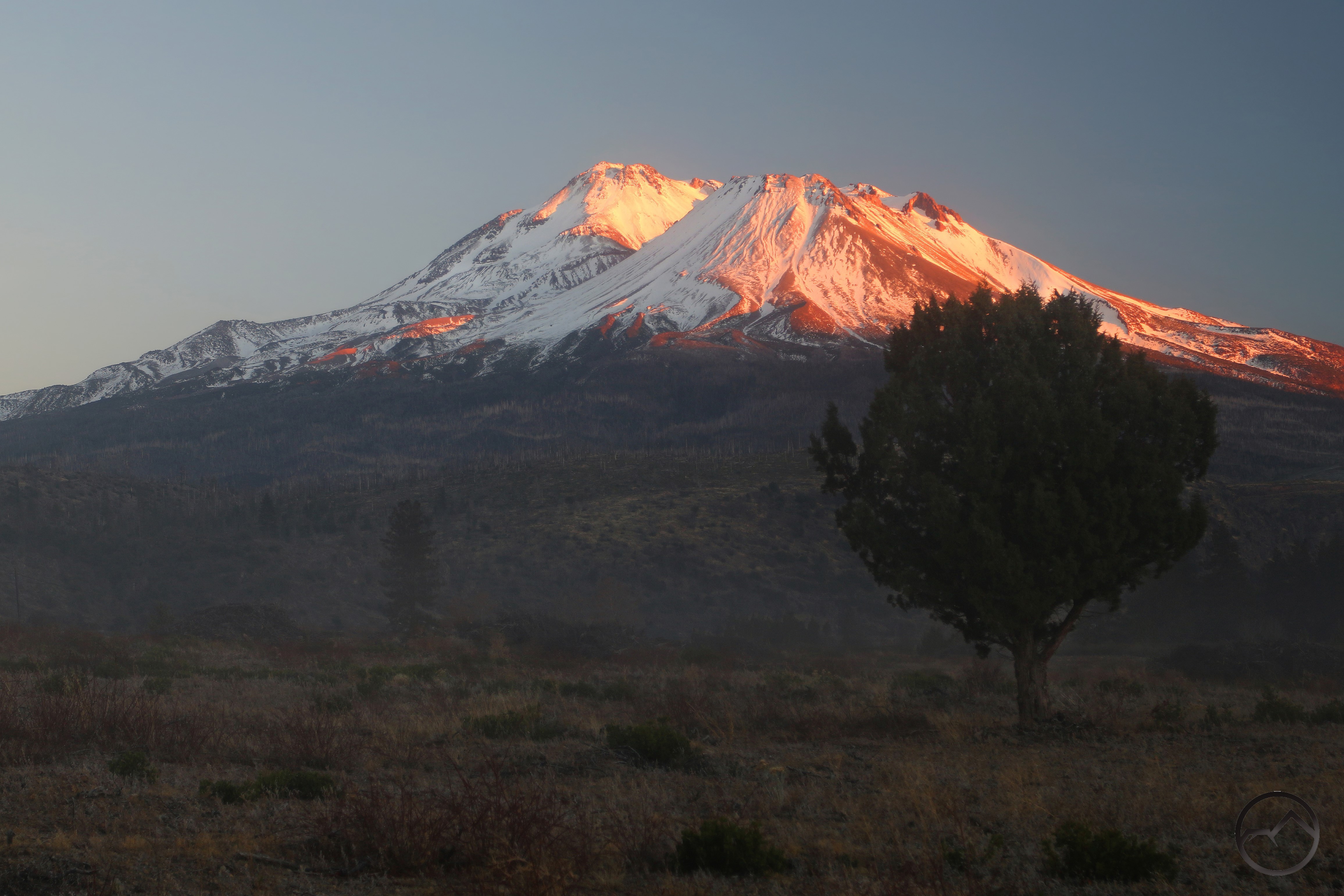
Frustratingly, right as the alpenglow intensified on Mount Shasta, the fog dissipated where I was. All the effort of finding a view of the mountain through the mist was for naught. I was left with a hazy sunset, but not much magic in the way of fog. It was fun even if it yielded nothing.

I went out the next morning and found the fog far more stratified that it had been the day before. There were several distinct layers of different consistencies. The mist was also pushing further to the south than it had as well, almost all the way to the pass at Black Butte. It was the furthest south the fog would penetrate but it set up fascinating conditions out over the Shasta Valley.

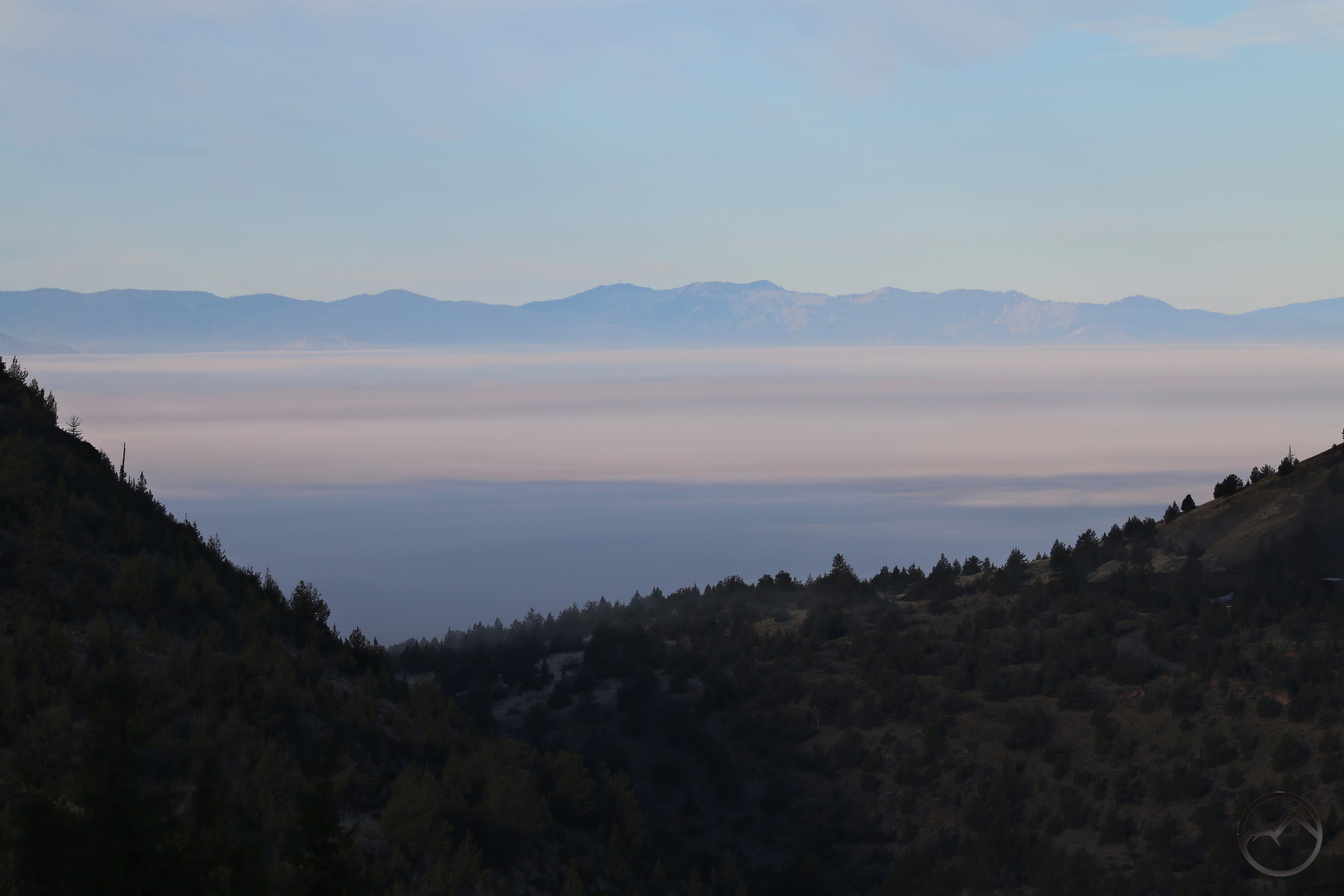

The valley was absolutely submerged in fog. The number of layers and the light of the morning sun made for an entertaining spectacle, all while highlighting some landmarks that often don’t get noticed when the Shasta Valley’s full geography is visible. In particular, Duzel Rock and Boulder Peak, the highpoint of the Marble Mountains were quite prominent.
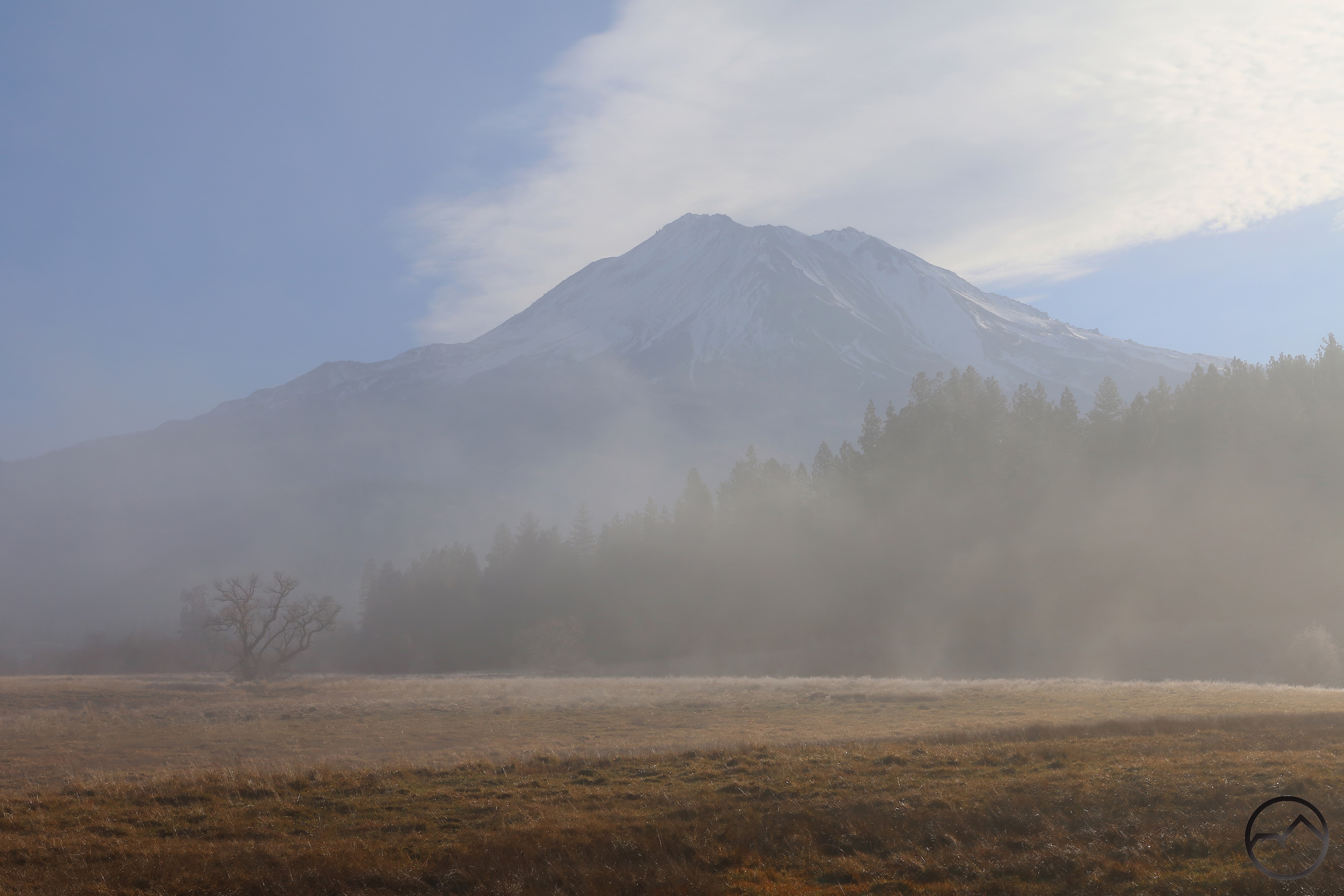
I finally found a good spot at the edge of the fog from which to observe Mount Shasta. This time I had to settle for glowing fog rather than alpenglow on the mountain, as it was the wrong time of day. Still, watching the tendrils of fog sail past while the mountain remained motionless was lovely. Mission accomplished.
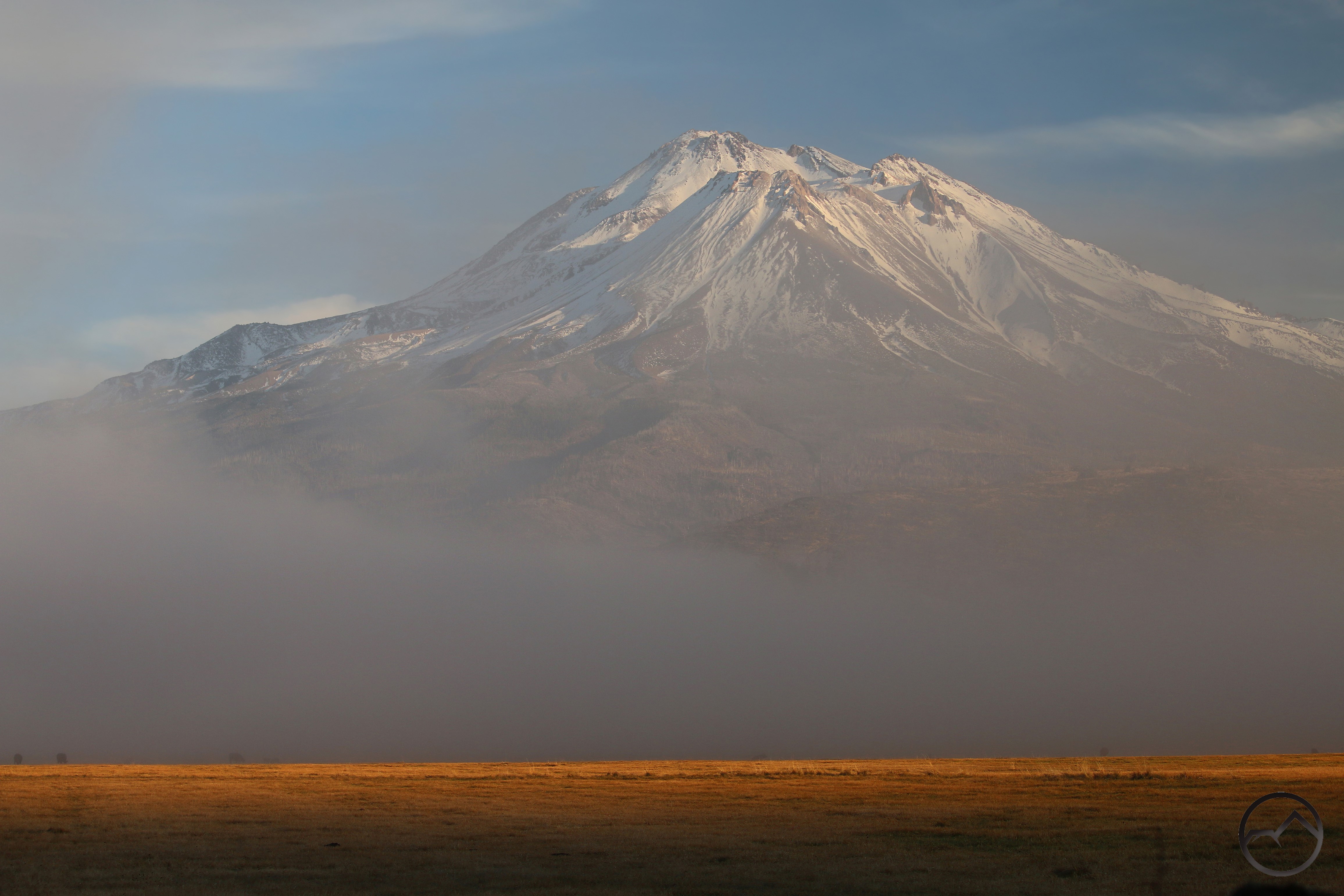
Evening brought more of the same. The fog was thick and closing in. I captured a few shots of evening light but the view was soon lost as the fog thickened as the sun set. It was the opposite problem of the night before!
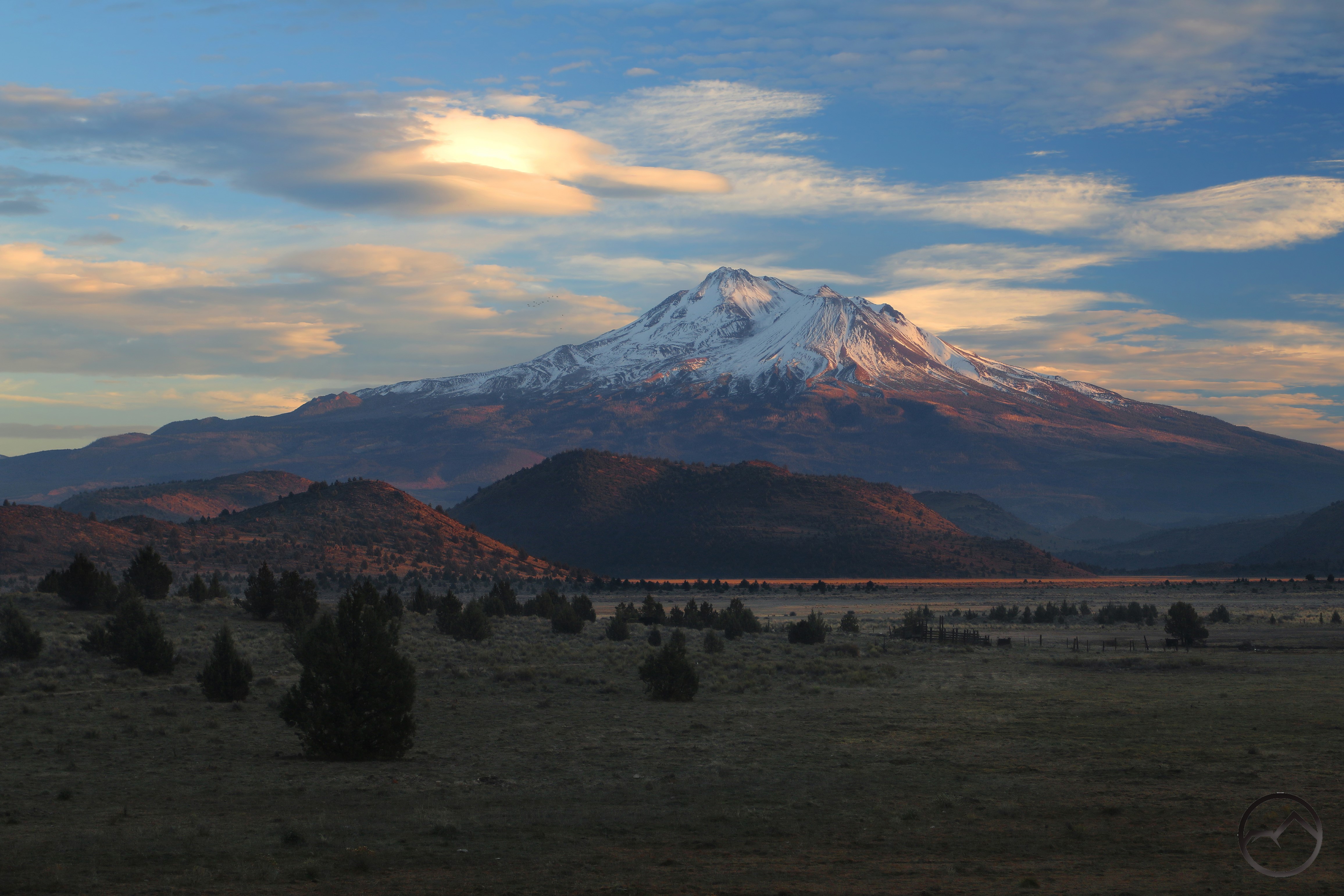
The next day brought a surprise lenticular. It did not show up until the afternoon but it was a solid formation that had many nice layers in the stack. It was similar to the ones that had formed the week prior. I was wanting to catch it midday, when its form was nice and crisp, but I was still selling Christmas trees. I headed out in the evening once the lot closed and was able to catch it at sunset. It wasn’t nearly as interesting by this point, but still a fined feature in the sky over Mount Shasta. This turned out to be the final harbinger of the change in weather patterns. The unseasonably warm December now gave way to wet weather. It was time, as we needed the surge in precipitation.

After a few days of rain, the sky cleared and there were some nice snow banners on Mount Shasta. The snow was light but it was enough to make the mountain extra white again. The crags were all encrusted in ice. The temperature was still to high and the moisture not copious enough to really cover the mountain in a deep pack yet. That is still coming…


With more, and more intense, weather coming in, I took my younger kids out to Truchas Ridge one last time before things got really stormy. The wind was incredibly powerful and sustained. If one was not careful, it could easily through you off balance on the rocky terrain. The lake in Echo Basin had not filled back up yet. I suspect that the next round of storms will go a long way to making that happen. The water table plays a roll in the lake’s size and the valley hasn’t gotten much precipitation yet. There are powerful storms approaching though. I suspect the next time I post something, things will look quite different. Merry Christmas!
 Hike Mt. Shasta