Hike Mt. Shasta

Exploring the Mount Shasta Region

  • Home
  • Trails
    • Mount Shasta Trails
      • Brewer Creek Trail
      • Clear Creek Trail
      • Gray Butte Trail
      • Green Butte Ridge Trail
      • Horse Camp Trail
      • North Gate Trail
      • Old Ski Bowl Trail
      • Panther Meadow Trail
      • South Gate/Squaw Meadow Trail
      • Whitney Falls Trail
    • Trinity Divide Trails
      • Blue Divide Trail
      • Castle Lake Trail
      • Castle Lake Shore Trail
      • Cliff Lake Trail
      • Deadfall Lakes Trail
      • Gray Rock Lakes Trail
      • Gumboot Trail
      • Heart Lake Trail
      • Porcupine & Toad Lakes Via Pacific Crest Trail
      • Seven Lakes Basin Via Pacific Crest Trail
      • Sisson-Callahan Trail
      • Soapstone Trail
      • South Mumbo Scramble
      • Tamarack Lake Trail
      • Toad Lake Trail
    • Castle Crags Trails
      • Burstarse Falls Via Pacific Crest Trail
      • Castle Dome Trail
      • Flume Trail
      • Lower Castle Crags Via Pacific Crest Trail
      • Root Creek Trail
    • Scott Mountains Trails
      • Bluff Lake & Cement Bluff via Pacific Crest Trail
      • Caldwell Lakes Trail
      • China Mountain Scramble
      • Cory Peak and Bull Lake via Pacific Crest Trail
    • Cascade Crest
      • Ash Creek Butte Scramble
      • Goosenest Trail
      • Juanita Lake Trail
      • Orr Lake Trail
    • Mount Shasta City Area Trails
      • Black Butte Trail
      • Box Canyon Trail
      • Gateway Trail
      • Lake Siskiyou Trail
      • Mount Shasta City Short Trails
      • Ney Springs Canyon Trail
      • Spring Hill Trail
    • Shasta Valley Trails
      • Black Lava Trail
      • Haystack Trail
      • Lake Shastina Trail
      • Pluto Cave Trail
      • Trout Lake Trail
      • Yellow Butte Trail
    • Sacramento River Trails
      • Dunsmuir Trail
      • Hedge Creek Falls Trail
      • Sacramento River Trail
      • Sims History Trail
    • McCloud River Trails
      • Ash Camp To Ah-Di-Na Via Pacific Crest Trail
      • McCloud River Falls Trail
      • McCloud River Preserve Trail
      • Squaw Valley Creek Trail
      • McCloud River Trail: Algoma Camp to Nitwit Camp
      • McCloud River Trail: Nitwit Camp to Cattle Camp Swimming Hole
      • McCloud River Trail: Cattle Camp Swimming Hole to Camp 4
      • McCloud River Trail: Camp 4 to Upper McCloud Falls
      • McCloud River Trail: Pine Tree Hollow Loop
    • Trails Further Afield
      • Trinity Alps Trails
        • Bear Lakes Trail
        • Billys Peak Trail
        • Boulder Creek Lakes Trail
        • Boulder Lake Trail
        • Canyon Creek Trail
        • Caribou Lakes Trail
        • East Boulder Lake Loop
        • East Weaver Lake Trail
        • Four Lakes Loop
        • Granite Peak Trail
        • Grizzly Creek Trail
        • Gulch Lakes Loop
        • Hidden Lake Trail
        • South Fork Lakes Trail
        • Stoddard Lake Trail
        • Stoney Ridge Trail
        • Tangle Blue Lake Trail
      • Warner Mountains
        • Emerson Creek Trail
        • Highgrade Trail
        • Patterson Lake Via Warner Summit Trail
        • Pine Creek Trail
        • Squaw Peak Trail
  • Articles
    • Trails By Area
      • Mount Shasta
        • Vistas, Meadows And Waterfalls: Three Best Hikes On Mount Shasta
        • The End Of The Road: Three Hikes In The Old Ski Bowl Area
        • Two Trails From Bunny Flat
        • Three Trails On Mount Shasta’s East Side
        • Mount Shasta’s Hummingbirds
      • Trinity Divide
        • Great Lakes: Top Five Lake Basins In The Trinity Divide
        • The Headwaters Of The South Fork Of The Sacramento River
        • Neglected Headwaters: Two Lesser Lake Basins On The South Fork
        • Gumboot Saddle: Two Hikes On The PCT
        • Descent Into Mystery: The Sisson-Callahan Trail
        • Mumbo Basin – Overlooked On The West Side
        • The Headwaters Loop: A Proposed Backpacking Loop In The Trinity Divide
      • The McCloud River
        • The McCloud River Trail
      • Shasta Valley
        • Jewels In The Desert
      • Scott Mountains
        • Great Scott! Two Scott Mountains Hikes On The PCT
      • Trinity Alps
        • Carubou Lakes: Trinity Alps On A Grand Scale
        • Switchbacks To Heaven: The Trinity Alps’ Stoney Ridge Trail and Four Lakes Loop
        • Trinities In Proximity: Two Trinity Alps Trails With Easy Access From Mount Shasta
        • Trails in the Carter Meadows Area
        • Trinity Alps Views of Mount Shasta
        • The Psychological Value Of The Trinity Alps
    • Waterfalls
      • Three Waterfalls On Mount Shasta
      • McCloud River Waterfalls
      • Sacramento River Waterfalls
      • Trinity Divide Waterfalls
      • Trinity Alps Waterfalls
      • Avoiding A Dry Whitney Falls
    • Off Season Trails
      • Three Winter Hikes Near Mount Shasta City
      • Winter Hikes In Shasta Valley
      • Winter Hiking In The Shasta Valley Wildlife Refuge
      • Winter Hikes On The Sacramento River
      • Winter Hikes On The Lake Siskiyou Trail
      • Spring Hikes In The Castle Crags
      • Spring Hikes On the Upper McCloud
      • Spring Hikes On The Lower McCloud River
    • Points Of Interest
      • Mount Eddy: Overshadowed, Underrated
      • Black Butte: Hiding In Plain Sight
      • Castle Dome: Steadfast And Staggering
      • Mount Shasta Hoodoos
      • Sacramento Scrambling
      • The Shasta River
      • The Castle Creek Watershed
      • Mount Shasta East Side Glacier View
      • 5 Fantastic Mount Shasta Vistas
      • 5 Highest Peaks Around Mount Shasta
      • 5 Best Hikes On Creeks And Rivers
      • 5 Interesting Footbridges
      • Three Spectacular Drive-To Sunset Vistas
    • North State Geography
      • Introduction
      • Seven Major Regions
      • The California Cascades
      • Klamath Mountains Pt. I
      • Klamath Mountains Pt. II
      • The Great Canyons Of Mount Shasta
      • Mount Shasta, Timberline, And The Relative Size Of Cascade Volcanos
      • Four Eruption Cones Of Mount Shasta
      • Mount Shasta’s Medial Moraine
    • Northern California Review
      • North Table Mountain
      • Lakes Basin Recreation Area
      • Eastern Sierra Fall Color
      • Sonoma County
      • Central Sierra Nevada
      • Orland Buttes
    • Seldom Seen
      • Ash Creek Falls
      • Mud Creek Canyon
      • Lower Mud Creek Canyon
      • Diller Canyon
      • Lower Cascade Gulch
      • The Grey Rocks
      • Castle Creek
      • Upper Wagon Creek
      • Fawn Creek Canyon
      • Confluence of the Sacramento River and Castle Creek
      • Upper Klamath River Canyon
      • Hole In The Ground Geologic Area
      • Ash Creek Butte Fossil Rock Glacier
    • Mount Shasta History
      • Vantage Lost: The Everitt Memorial Vista
      • A Yosemite-Mount Shasta Connection
      • Whitney – What’s In A Name?
      • Mount Shasta Area and the 1838 Exploring Expedition
      • A 19th Century Engraving Of An Epic Mount Shasta Vista
      • Vintage 1907 Color Photos
      • A Misleading Painting
      • A Mysterious Painting
      • A Mysterious Painting Pt. II
      • Stereographic Mt. Shasta
      • Year One Of Hike Mt Shasta
      • Year Two Of Hike Mt Shasta
      • Year Three Of Hike Mt Shasta
      • Year Four Of Hike Mt Shasta
      • Year Five Of Hike Mt Shasta
      • Year Six Of Hike Mt Shasta
      • Year Seven Of Hike Mt Shasta
    • Image Galleries
      • Mount Shasta Trails Gallery
      • Mount Shasta Sunrise Gallery
      • Mount Shasta Sunset Gallery
      • Lenticular Cloud Gallery
      • Mount Shasta NON-Lenticular Clouds
      • Mount Shasta Reflection Gallery
      • Telephoto Gallery
      • Mount Shasta Area Fall Color
      • Castle Crags Gallery
      • Waterfalls Gallery
      • Trinity Divide Lakes Gallery
      • Mount Shasta Area Rivers Gallery
      • Shasta High Desert Gallery
      • Mount Shasta GIF Gallery
    • Random Notes
      • Revew: Three Mount Shasta Trail Maps
      • A Mount Eddy Wilderness?
      • New Land Additions For The Castle Crags
      • Book Plug: Mount Shasta Area Rock Climbing
      • Exile: How I Came To Love Wilderness
  • Mt. Shasta Trail Map
  • Blog
  • About/Contact
  • Links
  • Truchas Ridge

Seldom Seen: Lower Cascade Gulch

Posted by bubbasuess on April 26, 2019
Posted in: Cascade Range, Hiking, Mount Shasta, Seldom Seen. Leave a comment

In size and scope, Mount Shasta is nearly a mountain range unto itself. Like all mountain ranges, it has numerous nooks and crannies that are well off the beaten path. Considering how much of the mountain is unexplored by trails, this means that the preponderance of the mountain is not often appreciated by hikers. Those parts of Mount Shasta that are off the trail but do see people are along the routes that lead to the summit and are all at higher elevations. This still leaves a tremendous amount of the mountain’s geography left isolated, unappreciated and seldom seen.

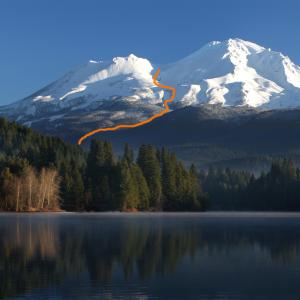
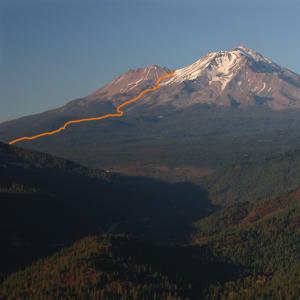
One such significant part of the mountain landscape is Cascade Gulch. This prominent canyon is easily visible from the west side of Mount Shasta, as is indicated on the Mount Shasta Landmark Locator. It begins at the saddle between Mount Shasta and Shastina, and descends steeply down into Hidden Valley. From there the gulch continues to the west, dropping steeply once again out of Hidden Valley, passing inside the tree line and then leveling off as it heads west through the dense forest of Mount Shasta’s lower elevations. The two images below illustrate its path:


Cascade Gulch, as illustrated above, comprises the upper and middle sections, both above and below the treeline. These are each worth a Seldom Seen post on their own. However, there is a third and lower section that also deserves to be noted. Surrounded by vast expanses of brush and located deep in the untraveled forest on the lower flank of the mountain, it would seem to be the least interesting part of Cascade Gulch. The reality is different however and the lower section exposes some of the most interesting geology found at the lower elevations on Mount Shasta. In particular, a side canyon connected to Cascade Gulch, which I have dubbed “Upheaval Canyon”, has fascinating rock formations and awesome views of the Strawberry Valley, Black Butte and the Trinity Divide. For the few who find their way into this seemingly lost area solitude and fascinating geology wait to be discovered.

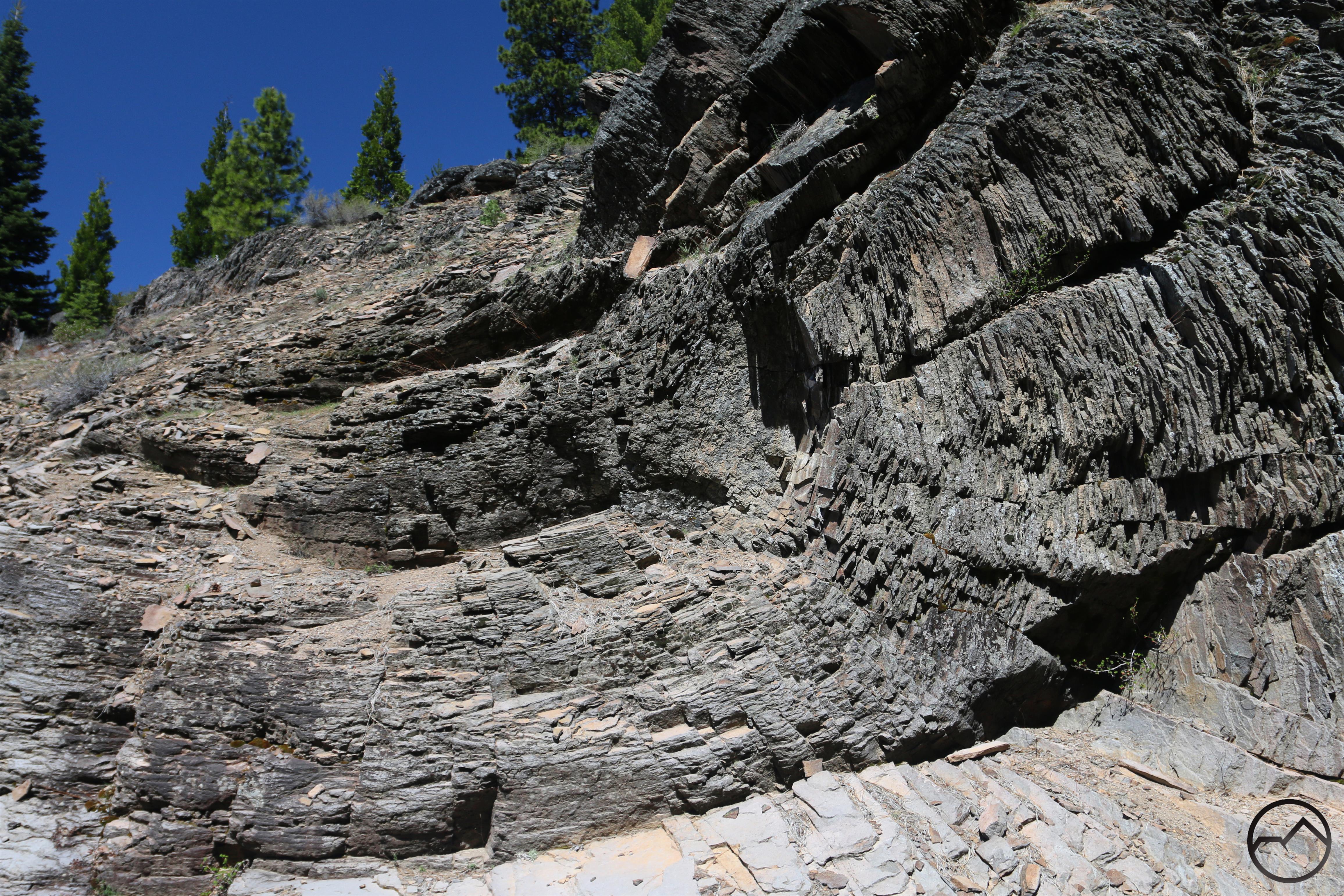
Upheaval: layers of stone bent violently upward.

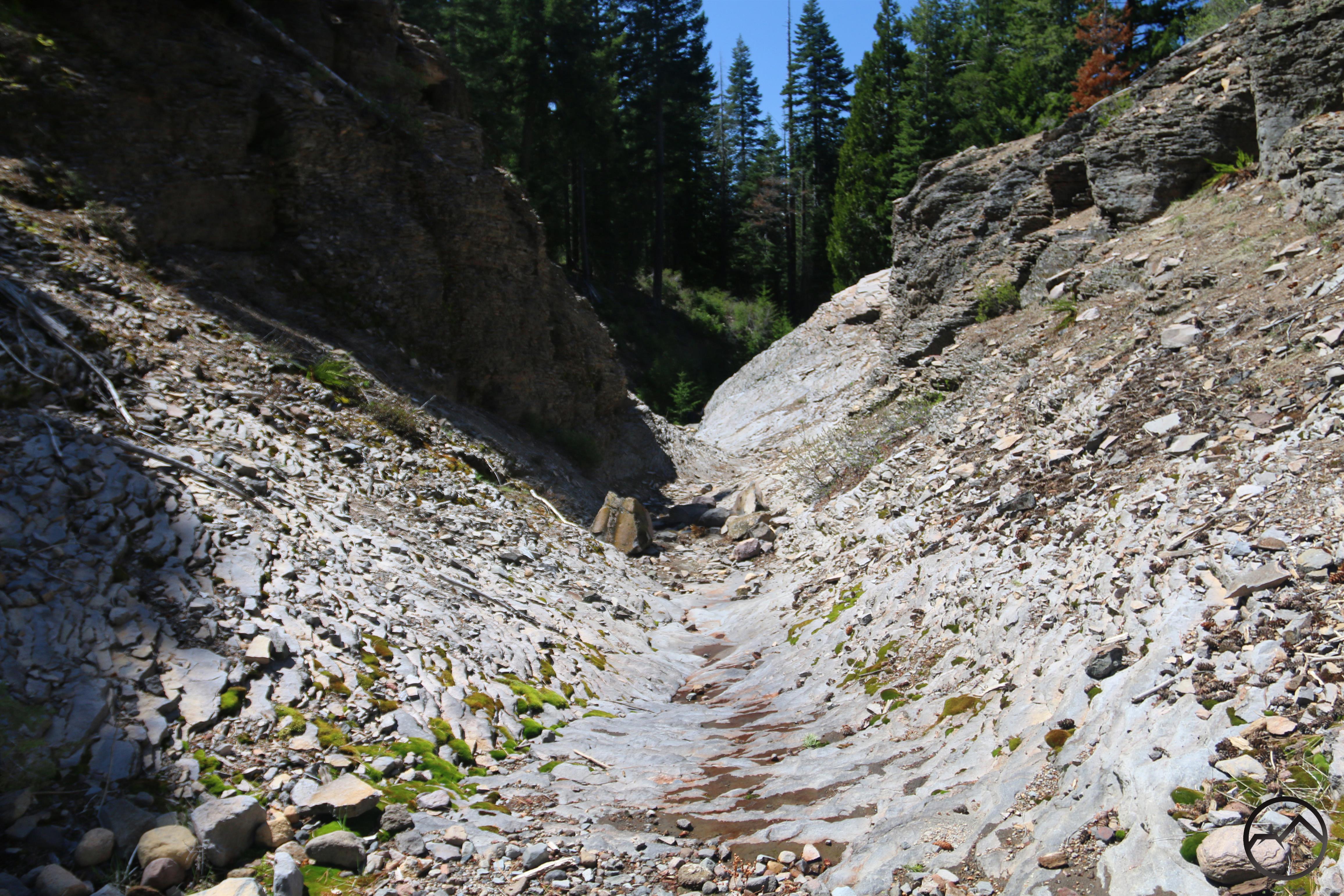
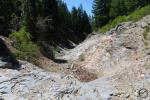
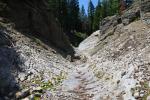
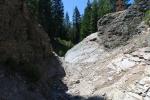
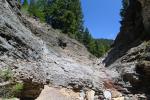
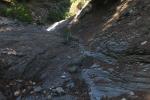
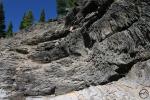
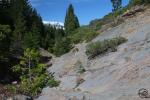
While the goal is worthy, exploring Cascade Gulch can, at times, be a frustrating proposition. The lower elevation means that it is choked with brush. Fortunately, one of the prime attractions of Lower Cascade Gulch is located just above the vast brushfields that blanket much of the area. The location of interest is a spur that branches off of the main stem of Cascade Gulch. Though it may have other unofficial names, I am not aware of them and have dubbed this spur “Upheaval Canyon”. The reason for the appellation is the found in the complex geology that shaped this unusual canyon. The rock is composed of a seemingly innumerable series of thin layers. One spot in particular exhibits the earth’s great upheaval, with the numerous strata bent upward, nearly stretching 180 degrees over on itself. It is a dramatic sight.

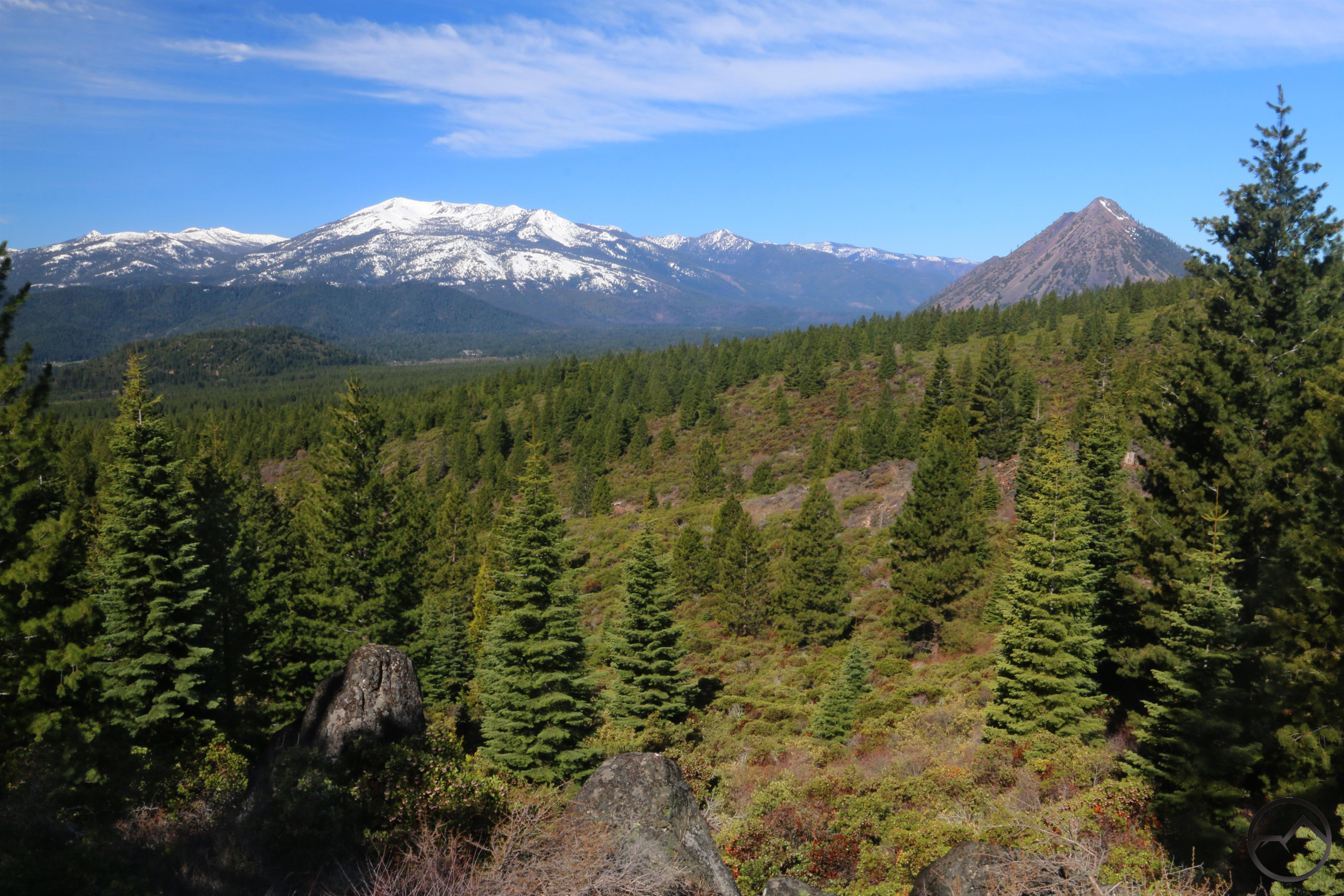
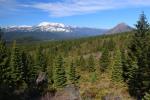
Views west from the rocky rim.

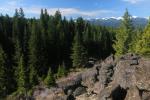
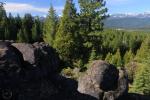
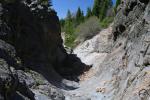
The rugged terrain of the canyon is broken into two adjacent segments. The end of each of these segments is marked by small pouroffs. Here, when the water from melting snow flows in early spring, the runoff flows off of a final, rocky lip into the sandy bed of the canyon, often disappearing swiftly into the porous land. In between these two sections the rim of the canyon is lined with large boulders and rocky outcroppings. Climbing up onto the rim yields excellent panoramic views of the Strawberry Valley, Black Butte, and the Trinity Divide, crowned by the massive bulk of Mount Eddy. There is a surprising amount of exposure on the rim, with the canyon nearly 100 feet below. Between the views and the geology, this portion of the lower Cascade Gulch area is a fantastic springtime destination.

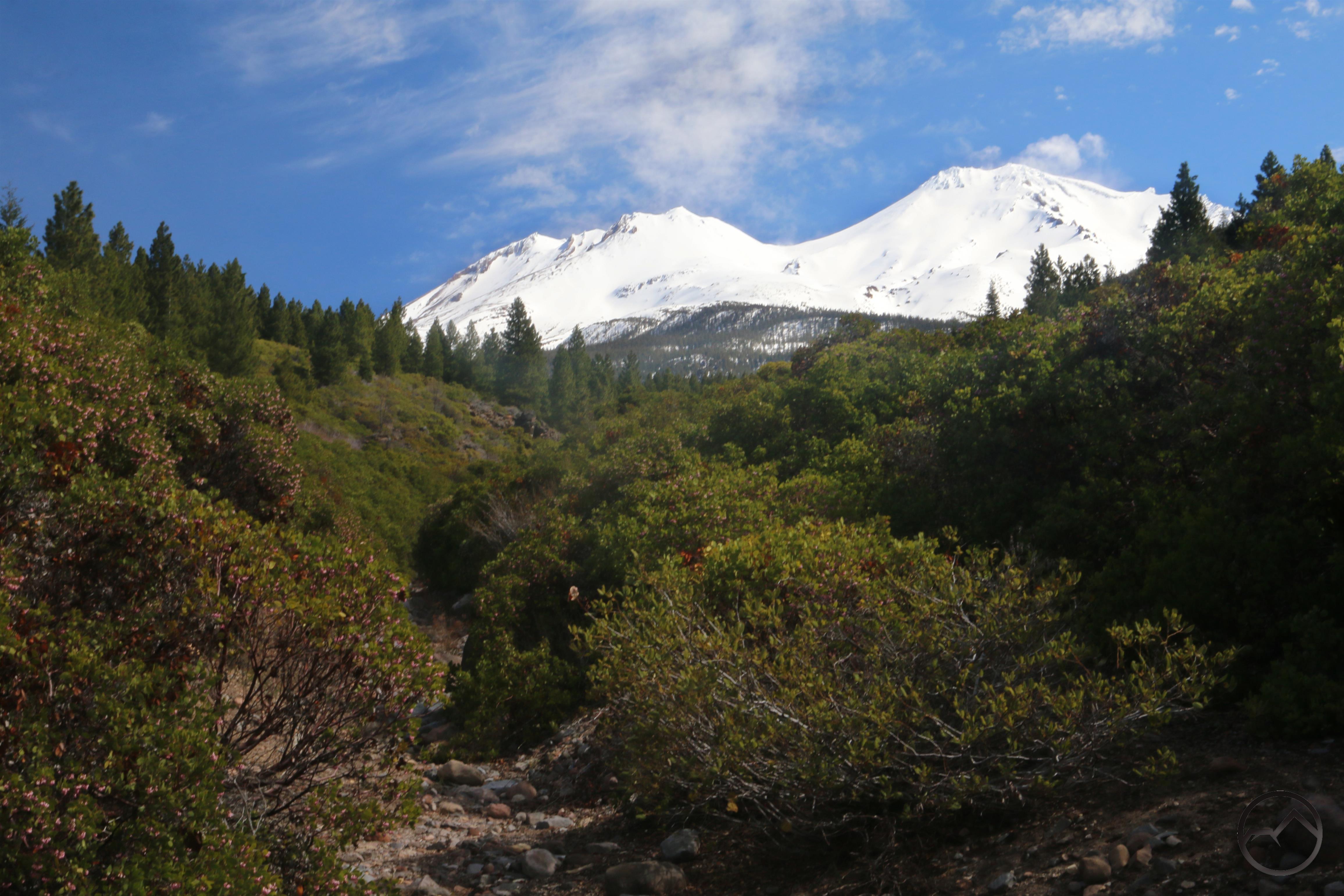
Looking up Cascade Gulch to Mount Shasta.

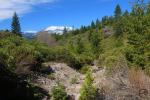
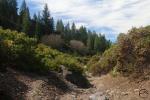
Aside from Upheaval Canyon, much of Lower Cascade Gulch is choked with brush. However, it is not difficult to navigate a route along the rocky bed of the gulch. Good views of both Mount Eddy and Mount Shasta are often enjoyed along this route. Rock outcroppings also dot the landscape, adding a significant amount of interest along the lowest segment of the gulch. In spring, the profusion of brush does have the benefit of making the air exceptional fragrant. While the smells of the forests are fixtures of trails higher up on the mountain, this is a peculiar sensory experience for hiking on Mount Shasta.

Lower Cascade Gulch is testimony to the hidden beauty found all around Mount Shasta. It may not be overwhelmingly beautiful or spectacular like many of the mountain’s grand destinations. Nonetheless, it is a worthy area to explore, boasting intriguing geology, scenic views and a sense of deep isolation. The fact that these can all be found so close to town and still be seldom seen is amazing.

Lower Cascade Gulch Gallery (click to enlarge):

At the upper head of Upheaval Canyon.
Looking downstream from the beginning of Upheaval Canyon.
Fractured strata are a highlight of the canyon.

Approaching the first pour off.
Looking back up the canyon from below the first pouroff.
Delicate strata are found throughout the canyon.

Views west from the rocky rim.
Looking across the canyon toward the Castle Crags.
Large boulders line the rim of the canyon.

Upheaval: layers of stone bent violently upward.
Approaching the second pouroff.
The walls of the canyon are narrow.

Looking back into Upheaval Canyon.
Even beyond the canyon, rock still lines the gully.
Mount Eddy seen from inside Cascade Gulch.

Looking up Cascade Gulch to Mount Shasta.
Near the final terminus of Cascade Gulch.


An April Lenticular Above Mount Shasta

Posted by bubbasuess on April 22, 2019
Posted in: Cascade Range, Hiking, Lenticular Clouds, Mount Shasta. 3 Comments

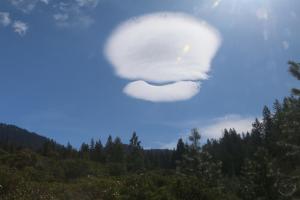
As the week following Easter began, the forecast was for comfortable, warm temperatures and partly cloudy skies. There was little indication that an impressive lenticular formation would manifest for much of the day. This was easily the best formation that had developed since the middle of March. The way its shape was altered throughout the day is a good example of the drama and spectacle that these clouds add to the majesty of Mount Shasta. April has seemed to be fairly lenticular-free in the past but given the meteorological disturbances today, it was no surprise that an impressive specimen would make an appearance.

Rather than another lengthy report, I think this cloud is best documented with images and some short descriptions. Hopefully this is not the only spring lenticular we get.

Click to enlarge:

When the lenticular began, I was exploring a remote, trail-less area on the lower flanks of Mount Shasta. With no hope of composing a good image from where I was, I documented the smiling cloud for posterity.
Mount Shasta finally made an appearance as I fought through a lot of brush. At this point, the cloud had not changed much.

When I reached more familiar terrain, the lenticular had formed a stack and then began to dissipate. The wind blew steadily. It seemed there was a good chance the cloud might reform.
April

The mountain’s airspace was not the only place interesting clouds were forming. To the north there were numerous small clouds, all indicative of a great deal of turmoil in the atmosphere.

The lenticular on Mount Shasta itself seemed stable, giving little indication it too was about to retract.

As the sun finally set, the lenticular on Mount Shasta was just vestigial. The light was odd, considering how clear it had been to the west.
The day ended with a completely different cloud arrangement over Mount Shasta. It was not as grand as the earlier lenticular spectacle but it was a beautiful sunset nonethless.

Mount Shasta Springtime Waterfall Round Up

Posted by bubbasuess on April 21, 2019
Posted in: Cascade Range, Hiking, Mount Shasta, Rivers, Trinity Divide, Waterfalls. 2 Comments

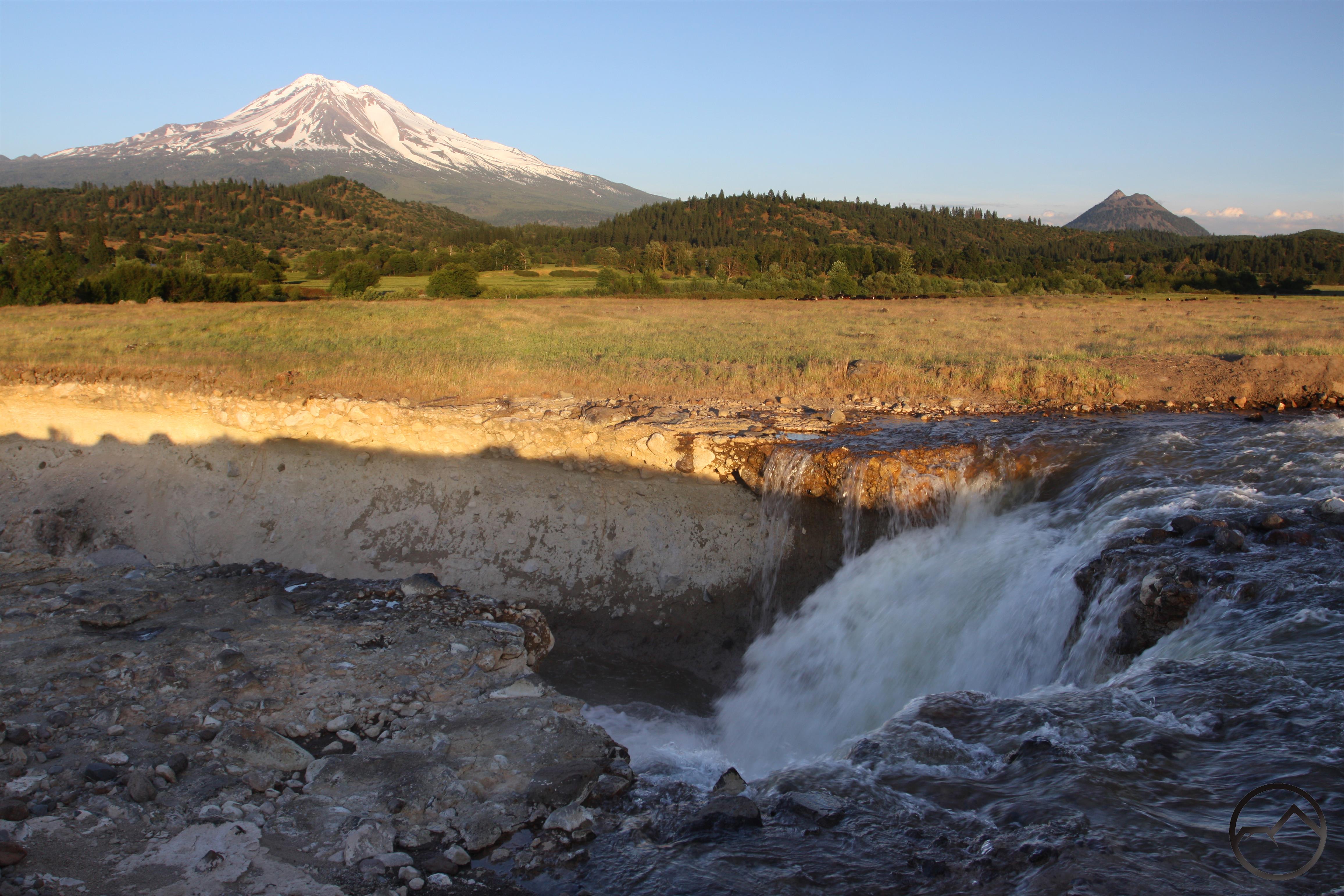
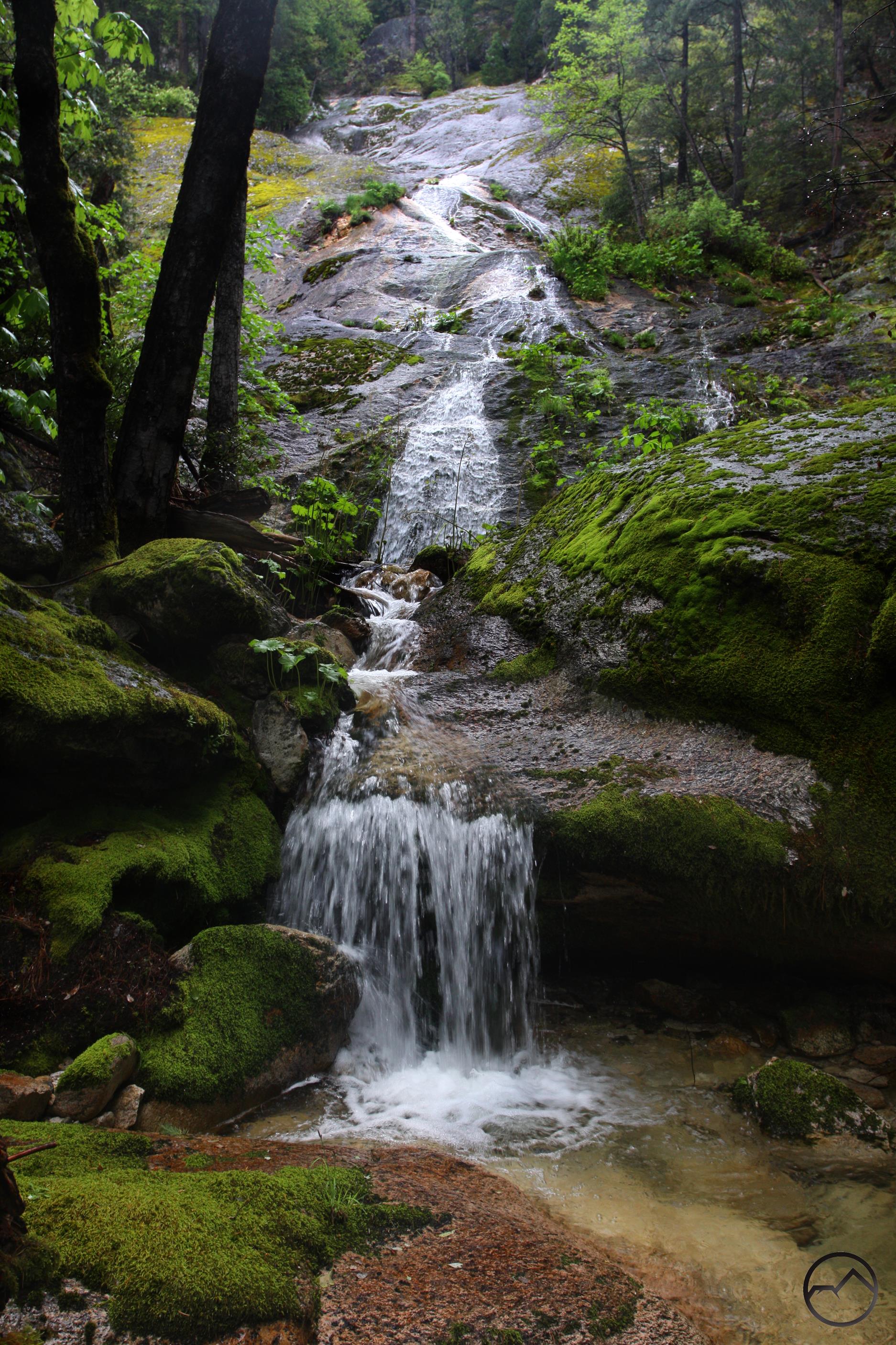
A spring waterfall somewhere in the Shasta Valley.

Since I posted my collection of Mount Shasta area waterfalls, I have received a few questions about which ones, exactly, are best right now. Given that there is a fairly clear delineation between spring and summer waterfalls in Mount Shasta due to the great differences in elevation and watersheds, I figured it might be helpful to do a post on which ones are accessible right now. It may be worthwhile to do a post latter this summer of the waterfalls found at higher elevations too.

Nearly all the accessible waterfalls this time of year are going to be found in the Castle Crags or near the McCloud and Sacramento Rivers. This makes them accessible via paved roads without particularly long hikes. The falls in the Crags require the most involved hikes of the lot, though neither of these hikes are hard.

Root Creek Falls is perhaps my favorite springtime waterfall. Nowhere else in the Mount Shasta area gives one the feel of Yosemite like the falls viewpoint. With granite cliffs, the soaring spire of Castle Dome and the multi-tiered plunges of the waterfall, it feels like sitting near the base of Snow Creek Falls in Tenaya Canyon. The Root Creek Trail can be accessed via the Soda Creek PCT trailhead or the Castle Dome trailhead.

Lower Burstarse Falls

One of the smaller waterfalls on Burstarse Creek.

While Burstarse Falls is the obvious highlight of this part of the Castle Crags, getting there requires hiking past the lower falls and a pleasing succession of small waterfalls and cascades. Hours could be spent exploring and enjoying these memorable springtime cataracts. Burstarse Creek is easily accessed via a nice hike along the PCT.

Faery Falls is a fantastic sight on Ney Springs Creek. Though having perennial flow, it is a furious torrent in the spring. The spring thaw elevates it from a pleasant little waterfall to a grand spectacle. The water pours through a narrow gap in the cliffs and then fans out over a 40 cliff. Easily reached by a short hike that passes through the ruins of the Ney Springs Resort.


Hedge Creek Falls is a classic, easy-to-reach little waterfall right at the edge of the town of Dunsmuir. The most interesting feature of the waterfall is the columnar basalt over which it flows and the cave that lies behind it. In the not too distant future this short hike will just be the beginning of the trail to nearby Mossbrae Falls. This latter waterfall has no legal access at this time but a trail will hopefully be completed this fall. Get ready for this to be the most popular trail in the Mount Shasta area!

Located in the eponymously named community just south of Castella, this small waterfall is easy to access and worth a stop while hunting for waterfalls in the Mount Shasta area. It has a very short path leading right to the base.

Not a particularly large waterfall, the cataract along Squaw Valley Creek still makes a worthwhile hike along the gorgeous creekside trail. This is not usually considered among the waterfalls in the area but ought to be. It is not flowing over boulders but a sharp precipice in the bedrock.

Upper, Middle and Lower McCloud Falls need no introduction. They are the premier waterfalls in the Mount Shasta area. While these obviously flow all year, spring is a great time to see them at the height of their power. Right now the road to the lower falls is clear of snow and the trail is open to the other two. With the warm weather, all road access will be open soon.

For those willing to get out and explore, there are a lot of other great, lesser known waterfalls accessible now. Many are in the Castle Crags, though there are some others scattered around the area. As the weather warms up, get ready to head out explore these natural riches!

Sunrise With No Sunlight

Posted by bubbasuess on April 14, 2019
Posted in: Cascade Range, Hiking, Lenticular Clouds, Mount Shasta. 2 Comments

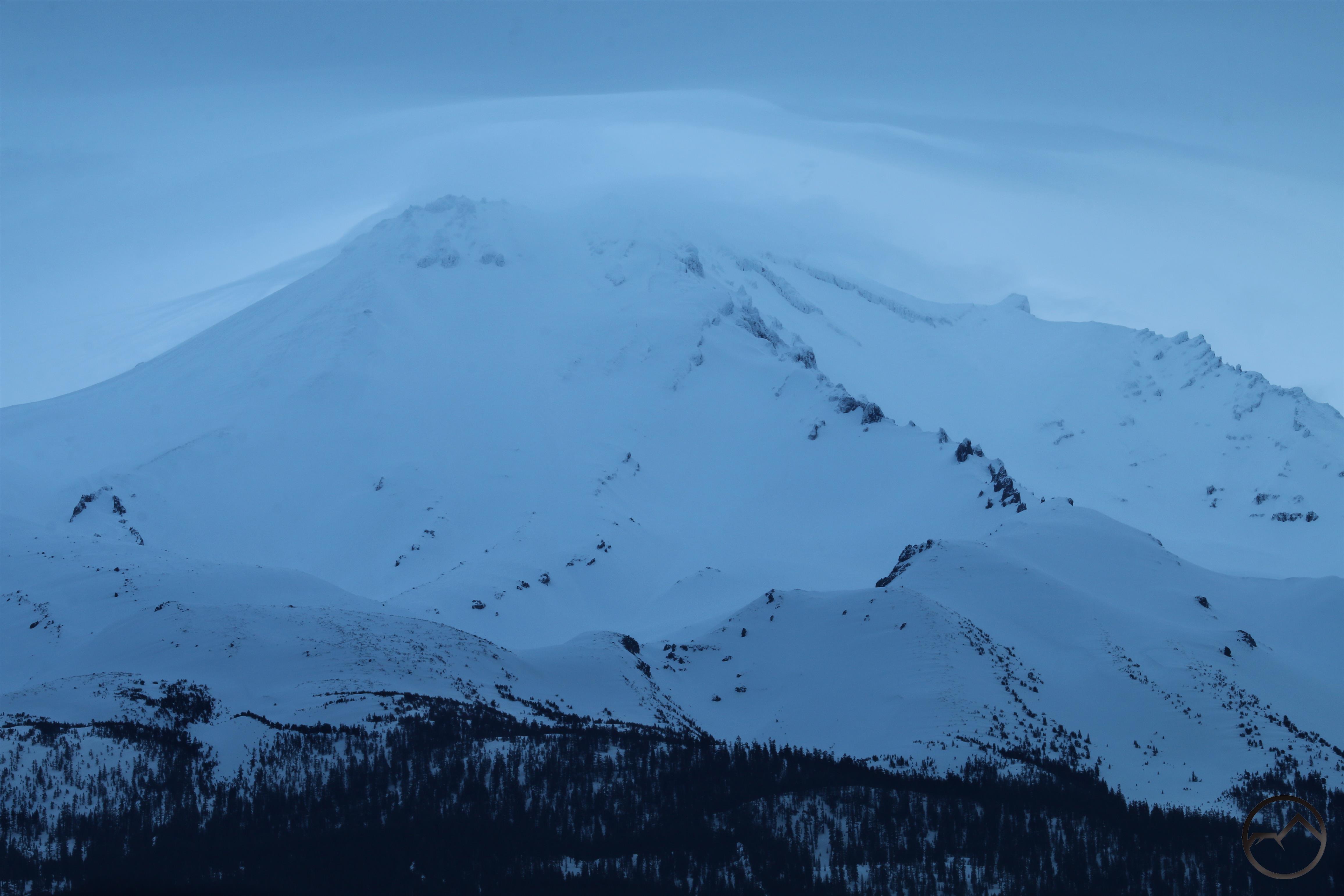
Even though the weather has been improving, it is still April and we will continue to have precipitation. Such is the case today, as the clear skies of the last couple days have gone for the moment. I got up early this morning and despite the overcast conditions, decided to head out and see how Mount Shasta looked. There was a nifty little lenticular above the mountain, akin to the currents I documented in my last post. I thought it might make a nice image if the light from the sunrise was low enough to come in under the thick clouds that covered the horizon.

As the sun rises, there are times when the first rays of light, before the disk has broken the horizon that the sunlight passes beneath the clouds and are able to illuminate the mountain. When this happens, the light and accompanying color are fleeting but beautiful. Needless to say, this did not occur this morning. The overcast conditions were sufficient to filter almost all the color out of the morning light and I was left with a blue mountain. Only the slightest hint of rose was perceptible.

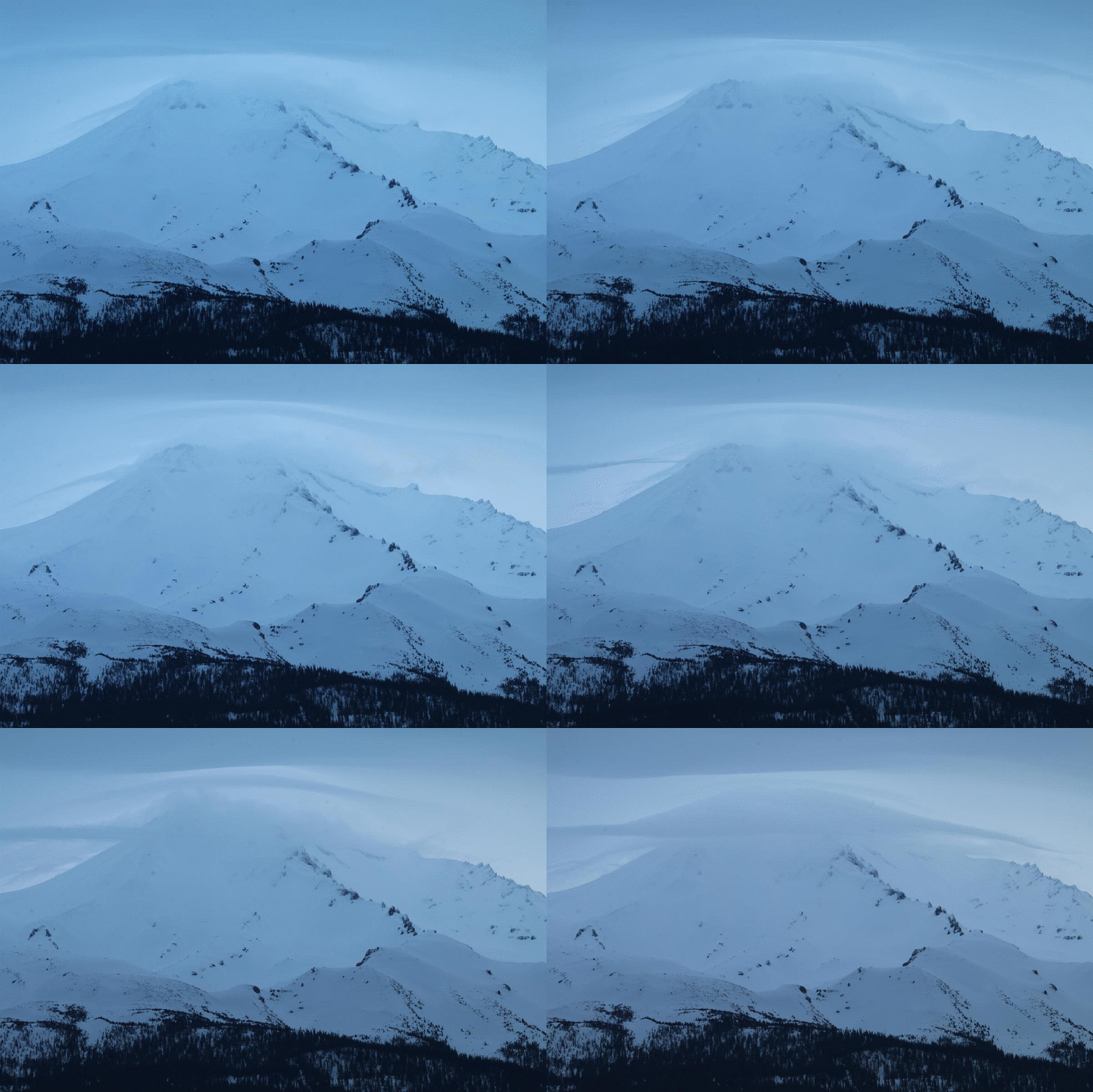
In spite of the monotone color, the little lenticular persisted, constantly changing, fluctuating and bending around the summit of Mount Shasta. I had set my camera up just in case the sunlight slipped under the clouds. That not having happened, I decided to leave my camera up to show a progression of the currents swirling around the summit of the mountain. The time lapse represents about 5 minutes of activity around Mount Shasta.

Spring is most definitely here. My lawn is finally turning green, temperatures in the low 70’s are coming at the end of the week. Spring hiking is in full swing. The area’s low-elevation waterfalls are booming. Root Creek Falls in particular is a great little hike with some powerful payoff right now. Get out and enjoy it!

Currents Over The Mountain

Posted by bubbasuess on April 13, 2019
Posted in: Cascade Range, Hiking, Lenticular Clouds, Mount Shasta. 1 Comment

Yesterday morning I had to get up early to get my son to his Friday enrichment class. Normally the kids arrive at 8:30 but this time they were leaving their school at 7:00 to head down to Redding. That meant getting there around 6:45. My son and I are both early risers, so we were out the door with no trouble. However, the time he needed to be at school just about coincided with sunrise. Just to torment me, there was a very large, well-formed lenticular disk over the mountain and as it was in view, it was catching the morning light just before the sun broke the horizon. It was awesome. I, however, was steadfast and rather than stopping I proceeded to his school…only to get there before everyone else. In retrospect, I had plenty of time to stop and grab a great shot of the sunrise. Argh!

I headed back out after dropping him off, this time to find that the clouds has totally closed in and the mountain was no longer even visible. I went north to the Shasta Valley, caught a great view of the lenticular, only to have it once again covered over by clouds before I was in a position to capture an image of it. Such is life. This time it was just not meant to be.

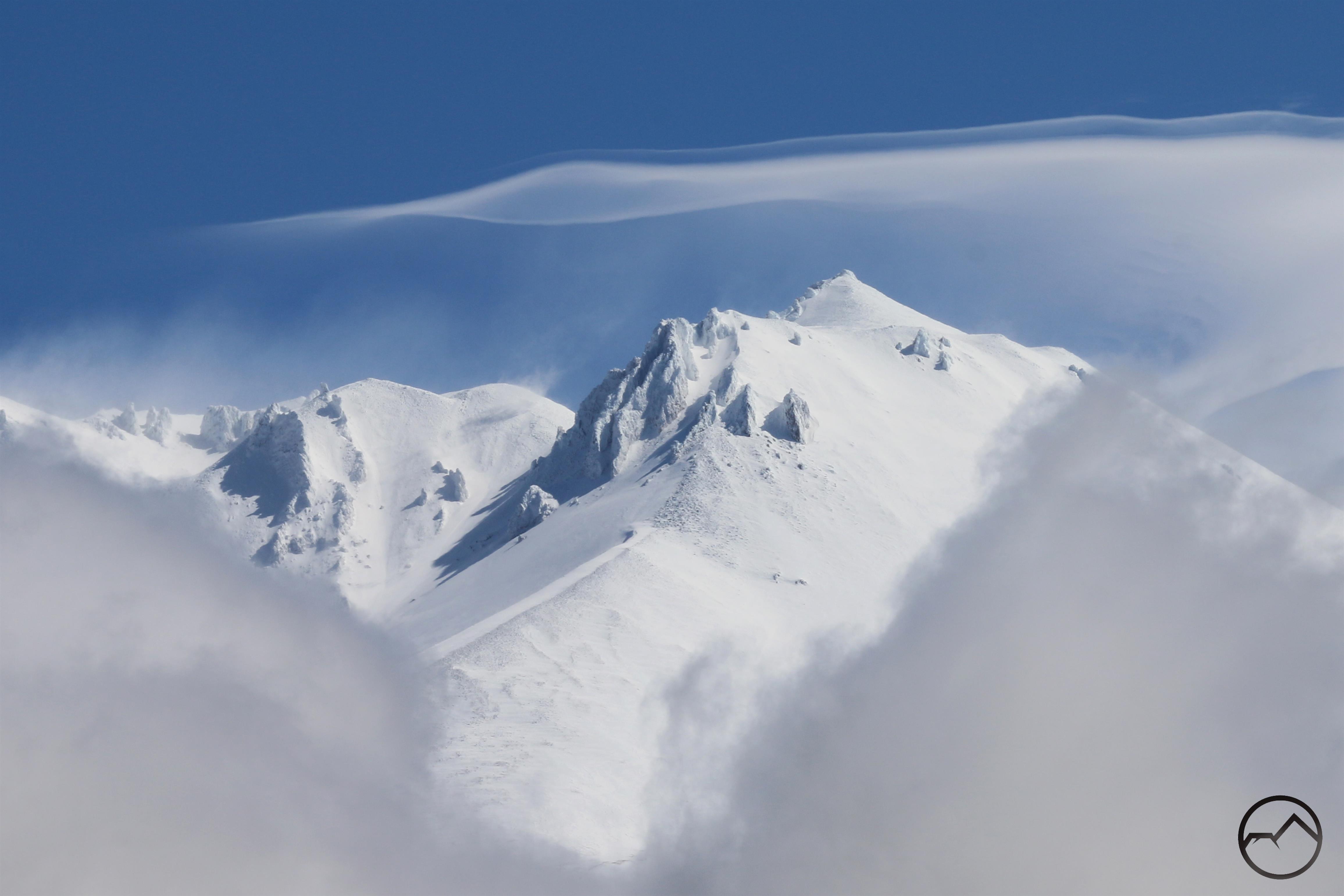
Later in the morning I was out again and I was keeping an eye on the cloud. It had collapsed into some wispy tendrils just above Mount Shasta. I figured I ought to stop an get a few images of it, suspicious that it was doomed to dissipate altogether. As I did, the cloud continuously changed as the air currents flew past the mountain’s summit. While not the great cloud from sunrise, it had its own, delicate beauty.


Northern California Review: Sonoma County

Posted by bubbasuess on March 28, 2019
Posted in: Hiking, Mount Shasta, Sonoma County. 4 Comments

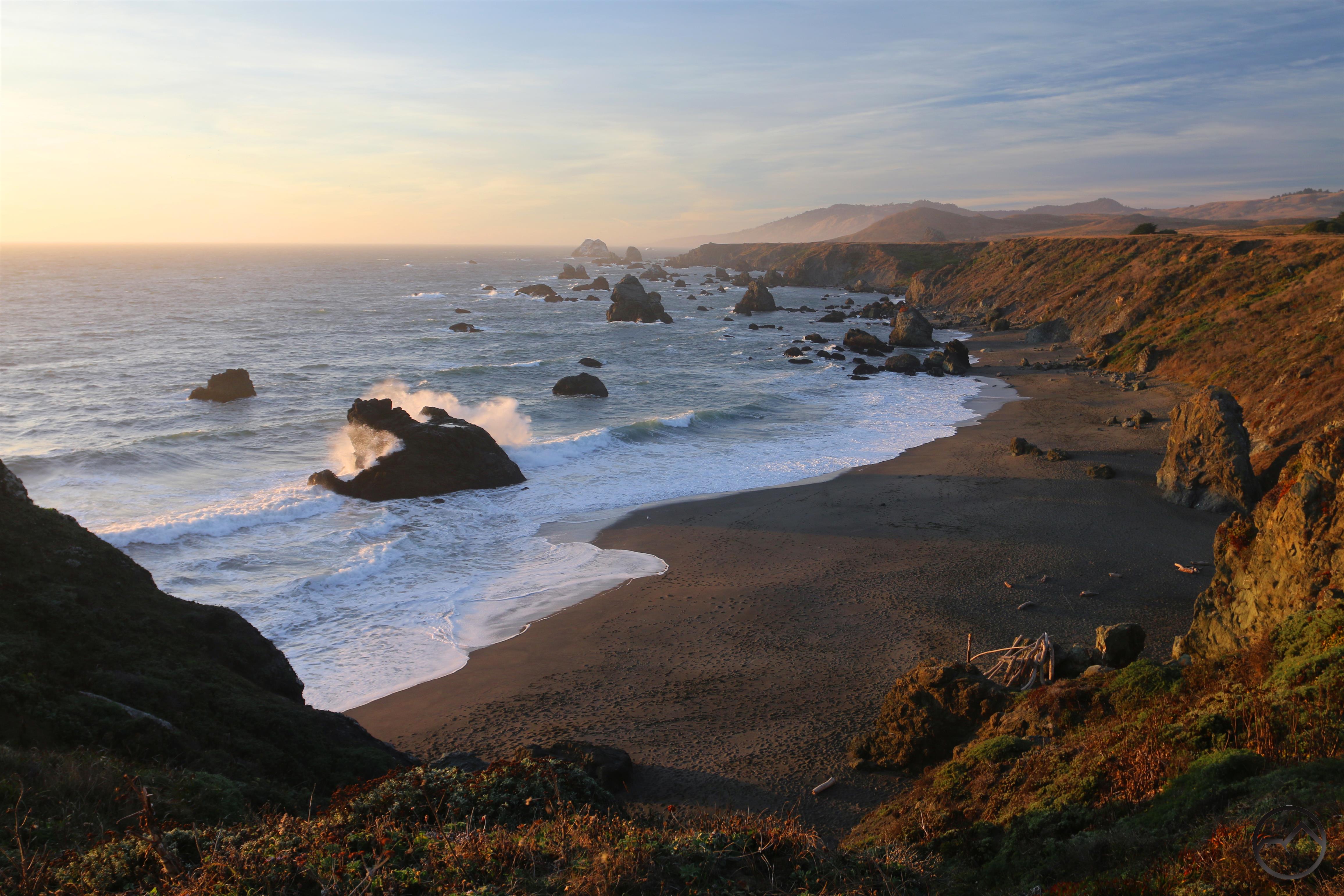
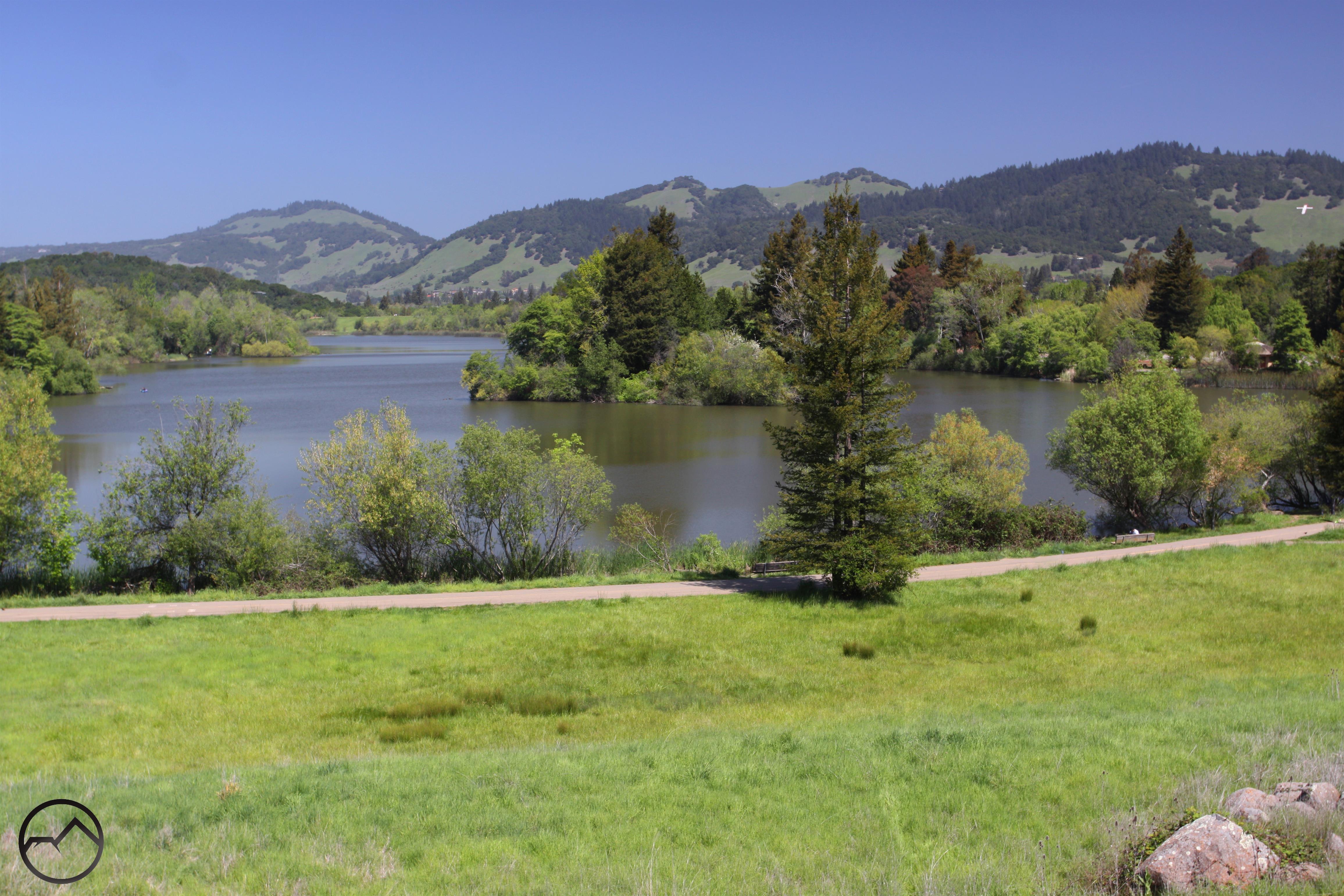
Among many other things, Sonoma County is a dramatic meeting of land and sea.

When thinking of Northern California’s great multitude of spectacular hiking destinations, Sonoma County does not often come to mind. It lacks the grand mountains of the Sierra Nevada, Cascades and Klamaths, the vast expanses of old growth redwoods of the northern coast, or the majestic coastline of Big Sur. There are no vast wilderness areas or singular geologic features that attract the seekers of beauty or the unusual. However, while these grand features may be absent, there is something else, something nearly intangible at first glance but a value that endows Sonoma County with a magic all its own.

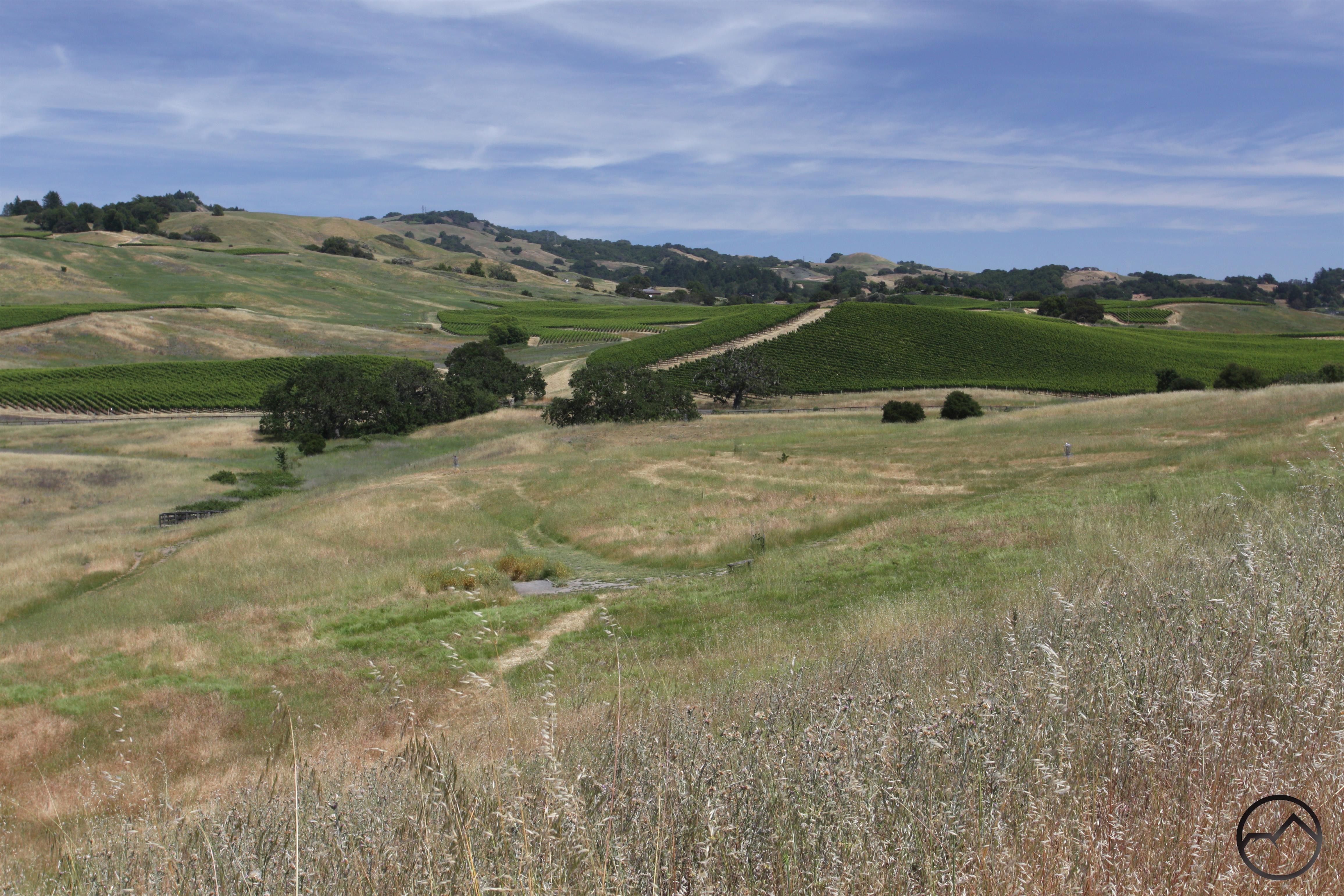
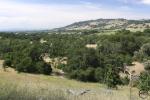
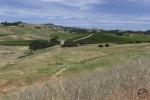
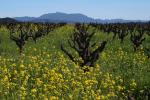
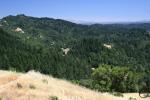
Hiking amongst the vineyards.

Obviously charm can be attributed, to some degree, to the presence of viticulture in Sonoma County. The innumerable rows of vines, the grand wineries, the rustic-yet-fine country villages all create an atmosphere that makes the area, along with neighboring Napa County, a world famous destination. However, Sonoma has something that Napa lacks (which is certainly not to say there is anything wrong with Napa!), and that is the sea, the redwoods and the pastoral culture that permeates the county’s western half. These features added to the wineries of the eastern part of the county make a unique blend that demands exploration and savoring. Add to this mix a fantastic collection of parks and trails and Sonoma is elevated to a premier hiking destination that somehow remains under the radar as such.

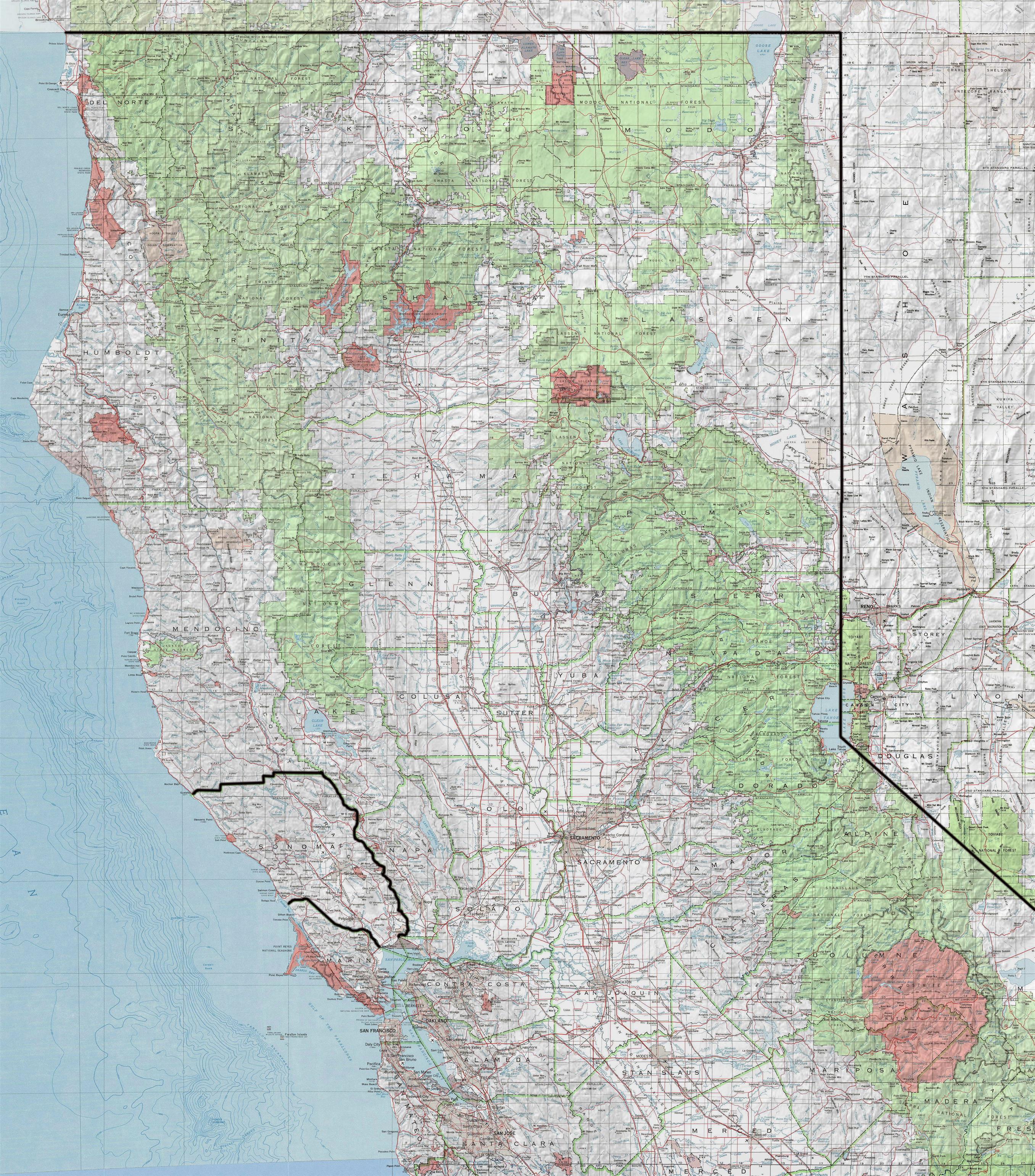
Sonoma County’s position within Northern California.

Though few ever really consider it as such, Sonoma County occupies a transitional position in California. Though its southern end touches San Pablo Bay, the northern lobe of San Francisco Bay, its northern reaches can rightly be considered the beginning of the vast, low population density region that makes up the northern third of California. Indeed, the northwest quarter of the county, an area that can roughly be called “the Cedars” is one of the most remote and difficult to access parts of the entire state, an area that can probably count its annual visitors by the tens rather than hundreds. This is despite the county as a whole being one of the largest travel destinations in the state.

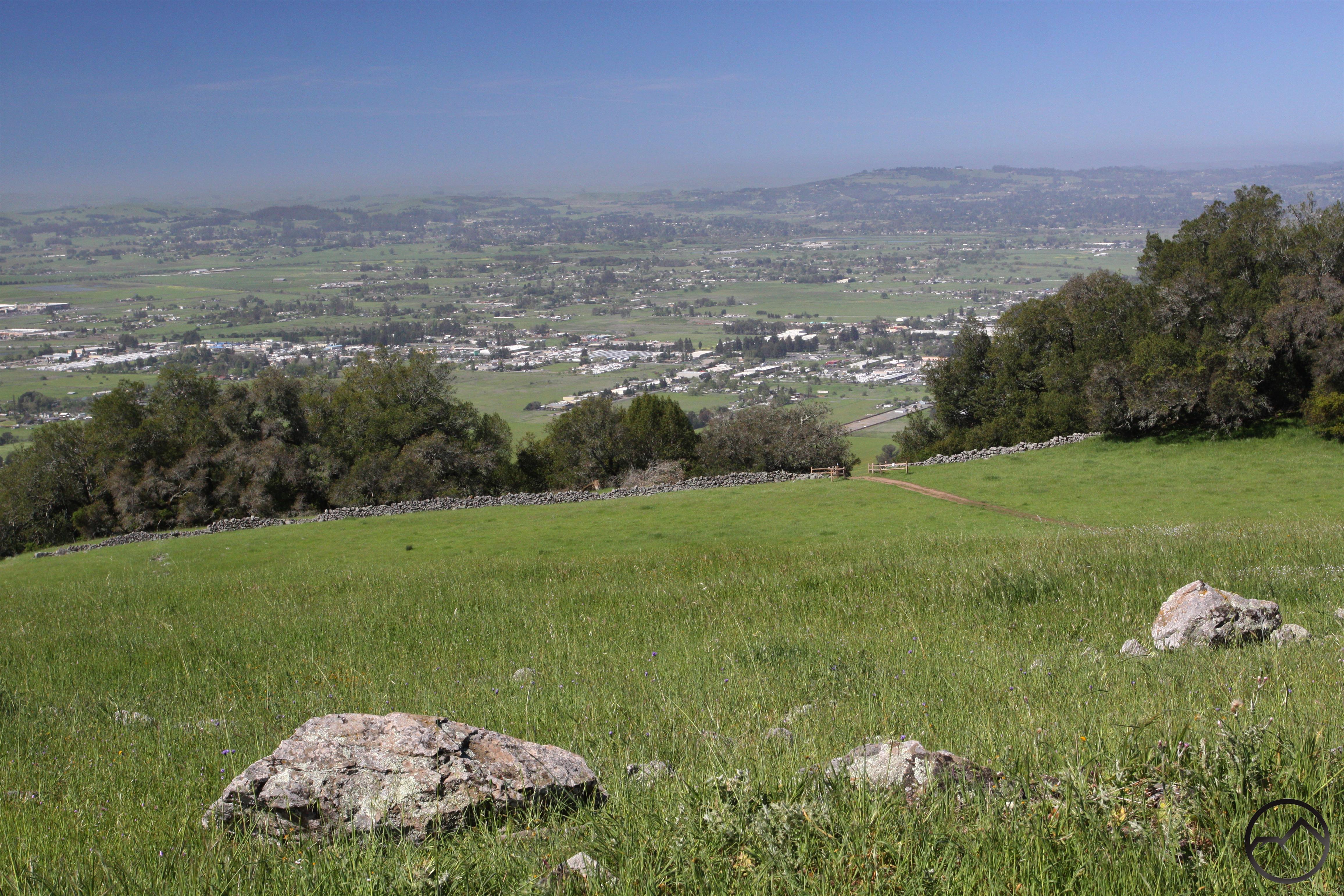
Looking down on the Laguna de Santa Rosa, an alluvial plain that drains into the Russian River.

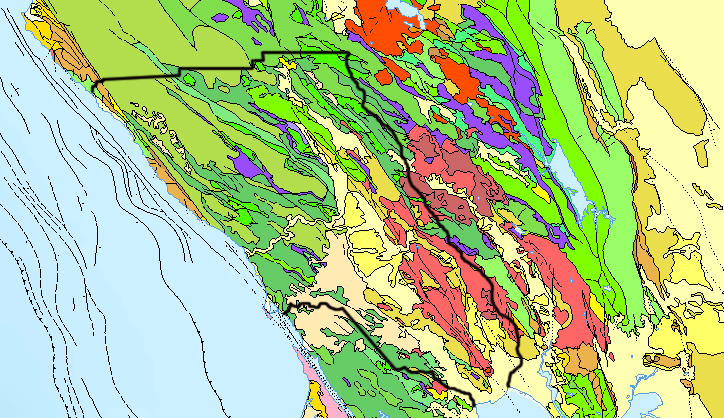
Geologically, Sonoma County can be divided into three main areas. In the west along the coast is an area of rolling hills composed of sedimentary rocks. Proximity to the coast results in far more rainfall than the eastern half of the county. Consequently, the area is lusher and is home to substantial coast redwood groves. The coast redwood is the tallest living thing on Earth. In stark contrast, the eastern half of the county is dominated by the Mayacama Mountains, which is one of the few areas in the North Coast Range, the mountains that extend along the coast northward into Oregon, that is volcanic in origin. The third and final region is the large alluvial plains that are drained by the Russian and Petluma Rivers. These flat regions are where most of Sonoma County’s population is found.

A rough outline of Sonoma County on the geologic map of California. The green areas are composed of sedimentary rock. The yellow is alluvium. The red areas are volcanic mountains.

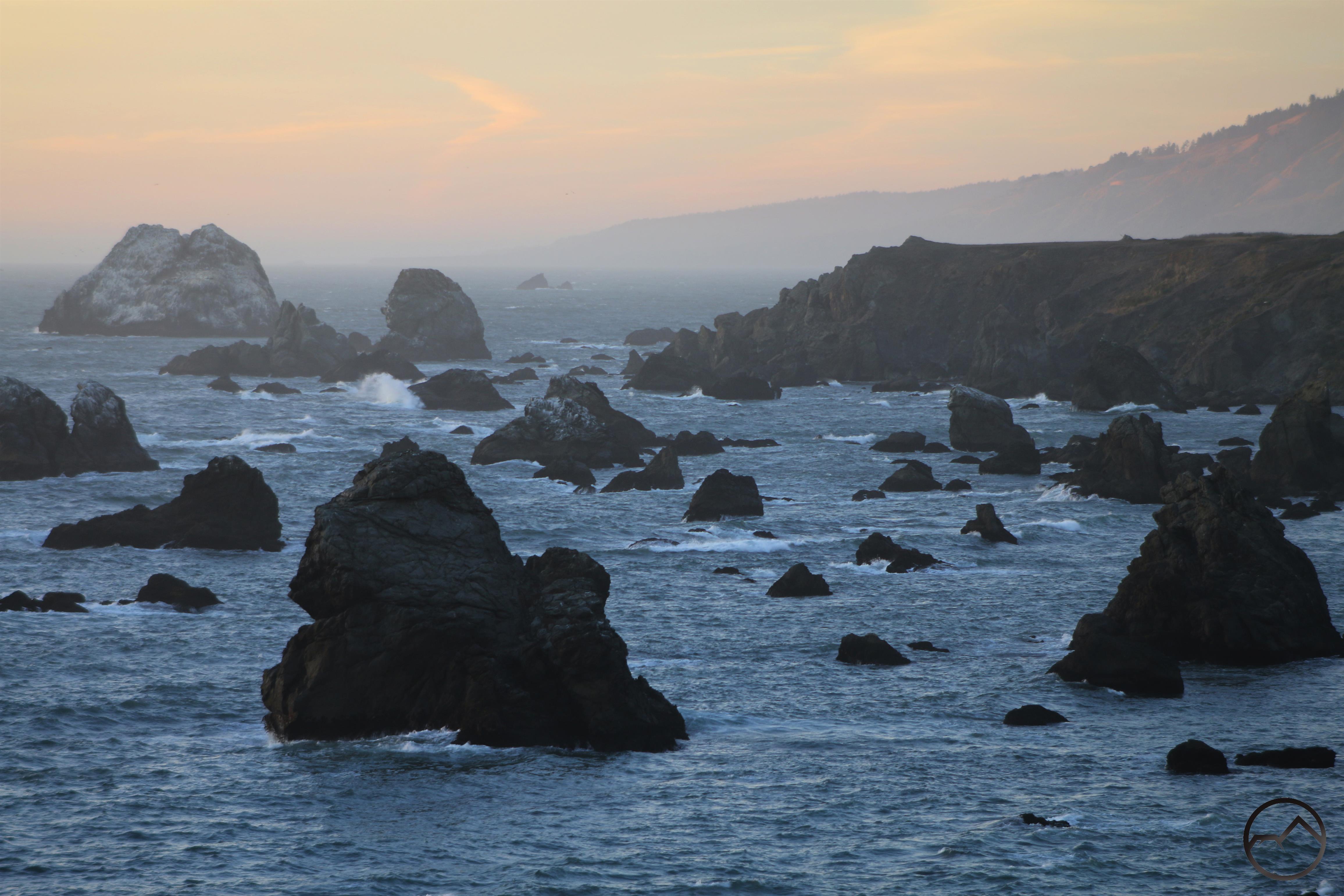
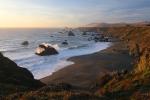
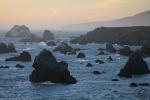
Sea stacks of the Sonoma Coast.

The coast of Sonoma County is at once subdued and spectacular. The more accessible areas lack the grand cliffs found at the Lost Coast and Big Sur but the presence of sea stacks gives it some fantastic drama nonetheless. Farther north the mountains along the shore increase in size but the number of parks and trails is fewer, though this area can still be enjoyed via Highway 1. One particularly interesting feature is Bodega Head, a large rocky finger attached to the mainland by a large sandbar. The head itself invisibly divided from the mainland by the San Andreas Fault. Consequently, the bluffs of Bodega Head are composed of granite, the only place in the entire county where such rocks are to be found in significant concentration.

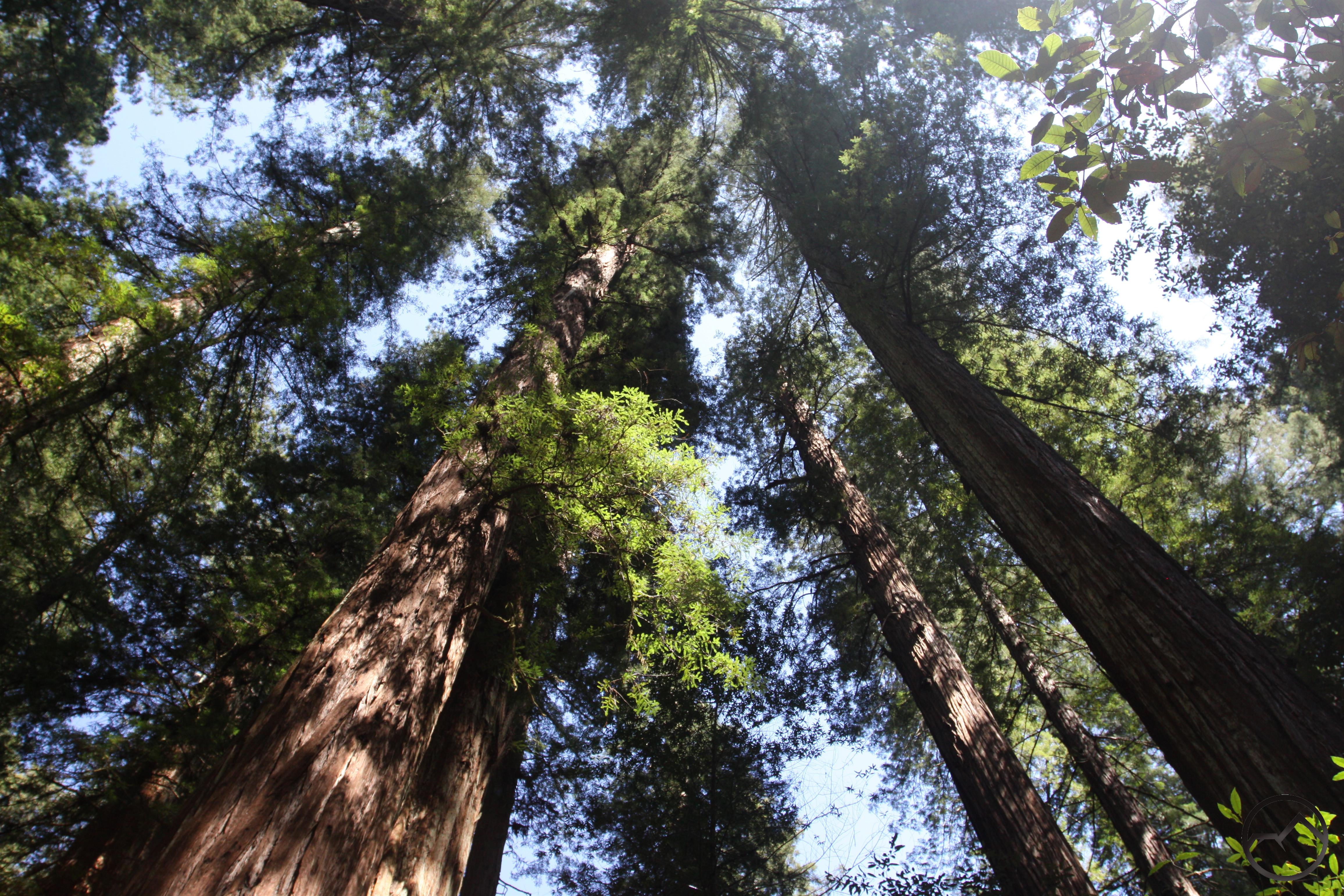
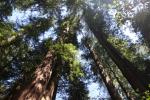
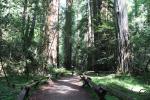
Towering redwoods.

Just inland from the coast are a collection of relatively low lying hills where pockets of coast redwoods are common. This is, in fact, the beginning of the long strand of redwoods that stretches to the northernmost part of the state and culminates in the vast old growth stands in Humboldt and Del Norte Counties. Though redwoods extend further south, they are generally only found in isolated groves rather than vast stands. Unfortunately, though western Sonoma County has many redwoods, many of them are second growth, the majority of the ancient trees having been logged over 100 years ago. Redwoods are found throughout the county but nowhere else in the county has the concentration of these incredible trees like the western part of the county.

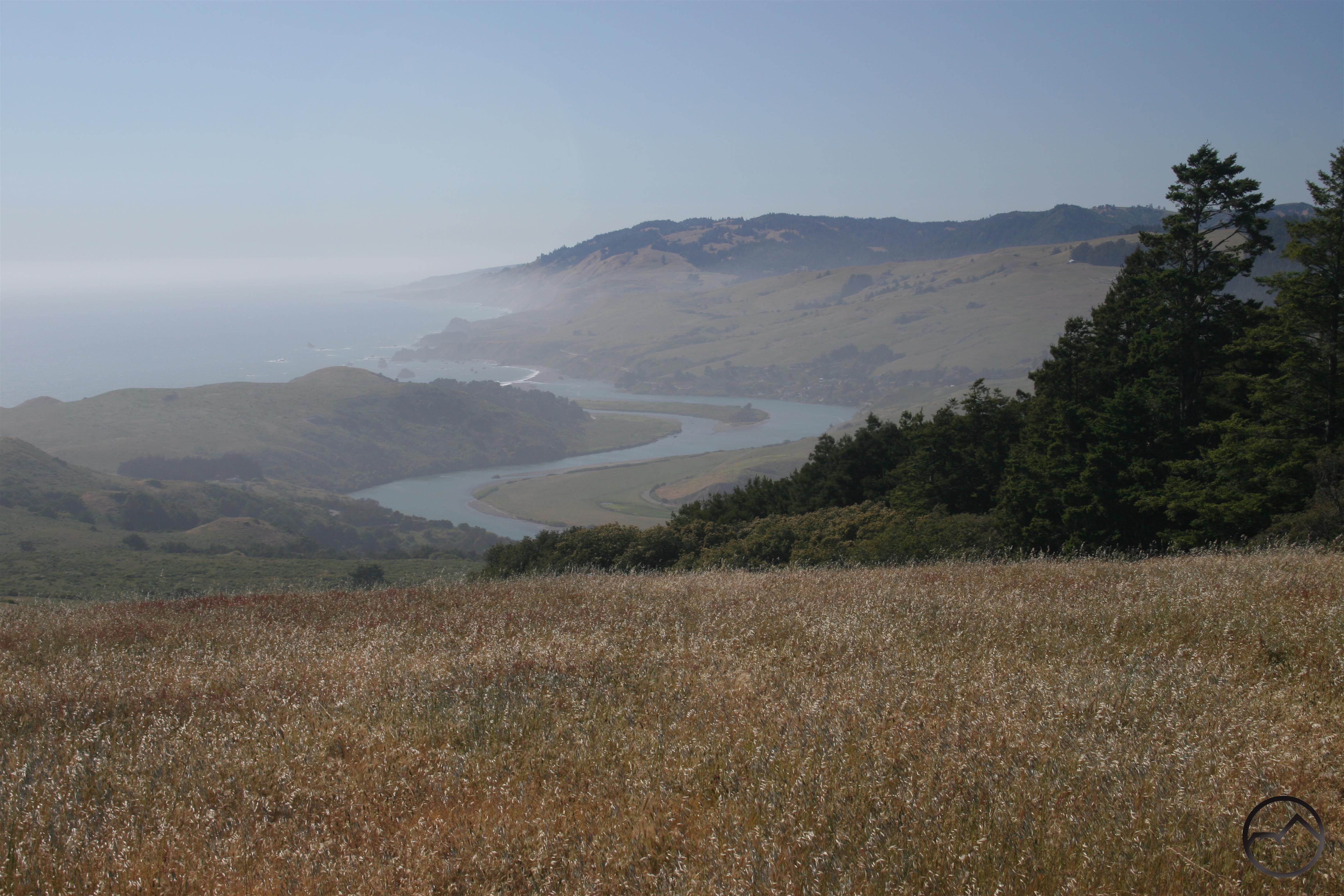
The Russian River meets the Pacific Ocean.

Running like a north-south axis through the county are the two major drainages. The northern watershed belongs to the Russian River. In truth, it is the only major waterway in the county. It begins about 65 air miles to the north, near Snow Mountain in the North Coast Range. It flows south through Mendocino County before passing through the Alexander and Russian River Valleys. These are both viticulture areas of world-renown. After passing through the valleys the river turns west, cutting through the coastal mountains before reaching the sea. The southern part of the county is drained by the Petaluma River. By every measurement this waterway is small compared to the Russian River, being little more than a glorified estuarine slough. However, unlike the its northern counterpart, the Petaluma River is navigable and sees a fair amount of boat traffic coming from San Francisco Bay. Worth noting also is Sonoma Creek, which drains the Sonoma Valley in the southeast corner of the county. However, this creek is often seasonal and does not have much watershed outside of the valley.

Mount Saint Helena dominates the horizon.

Although the county has a variety of peaks and mountains that are named as such, there are two that deserve particular attention. In the north is Mount Saint Helena. This mountain is shared with Napa County but the summit lies in Sonoma County. It is the second highest point in Sonoma but it dominates the region like no other peak in the area. Whether on coastal hills, ridges of the Mayacama Mountains or almost anywhere in the vast flood plain of the Russian River, Mount Saint Helena towers above the rest of the geography. It is quickly evident that the peak is large, especially when compared to all its neighbors. The other notable peak is Hood Mountain. Although it is over 1,000 feet lower than Mount Saint Helena, it is still one of the taller peaks in the county. However, Hood Mountain’s west face, known as Gunsight Rock, is easily the most rugged terrain in the area. The dramatic cliff towers ominously above the beautiful Sonoma Valley, making it a landmark in one the prettiest parts of the county.

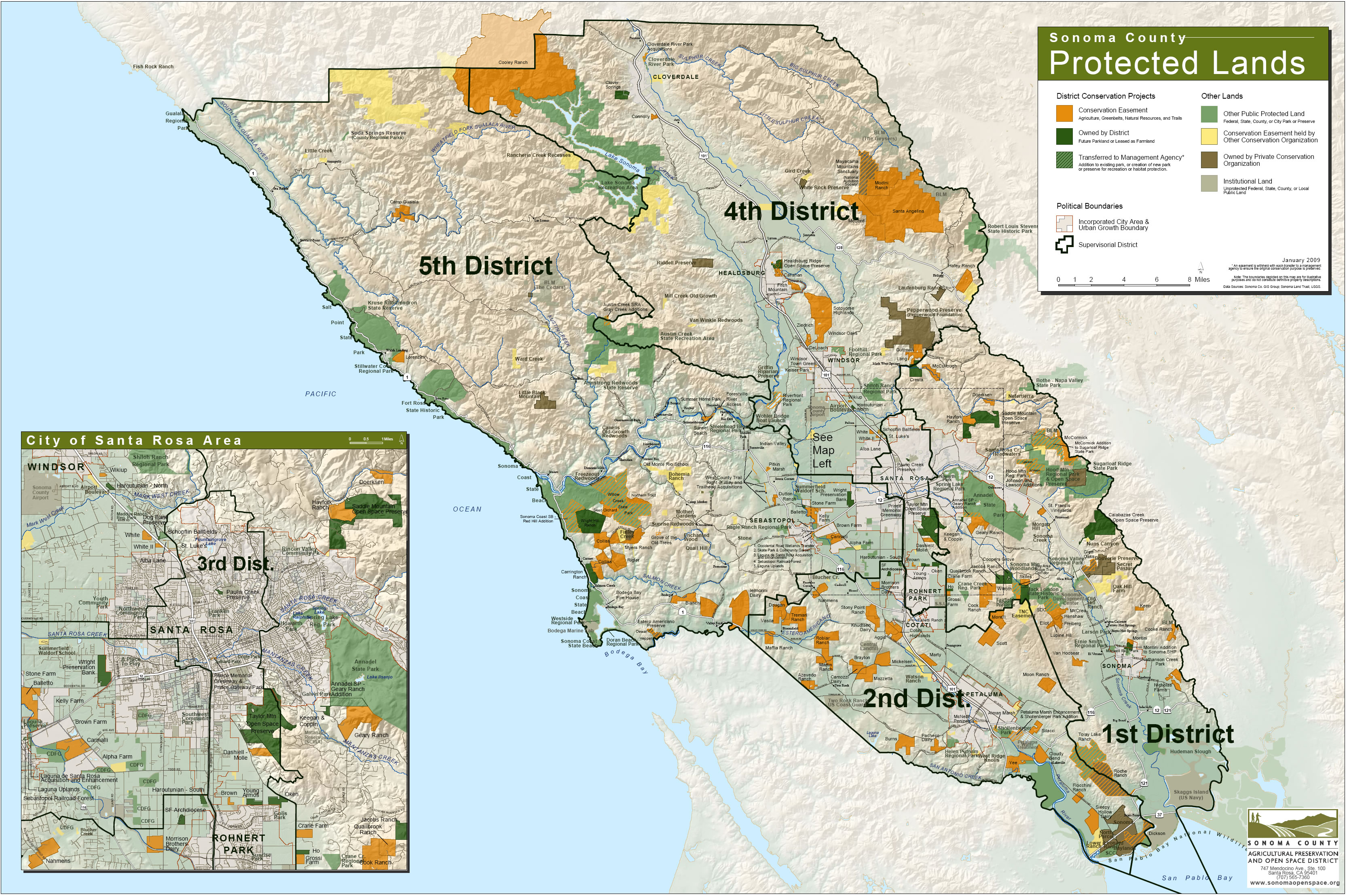
Sonoma County is blessed with a great deal of public land. Most of these are state and county parks but other agencies, both federal and local make significant contributions to the recreation potential.

What really sets Sonoma County apart from other neighboring areas is the fantastic job that has been done making the many beautiful areas in the county accessible. The centerpiece of this network parks is a handful of excellent state parks and an extraordinary county park system. The state parks feature beautiful scenery but their real benefit is their size. With a few exceptions, most of them are large, which offers the chance for hikers to immerse themselves in some surprisingly wild backcountry. In contrast, the county parks vary greatly in size. However, while the size may differ, the county has done an admirable job of developing parks in its many diverse areas. Nearly every major habitant can be explored in the county parks. Some parks are quite large and have robust trail networks that offer the potential for long day hikes and even some backpacking opportunities.

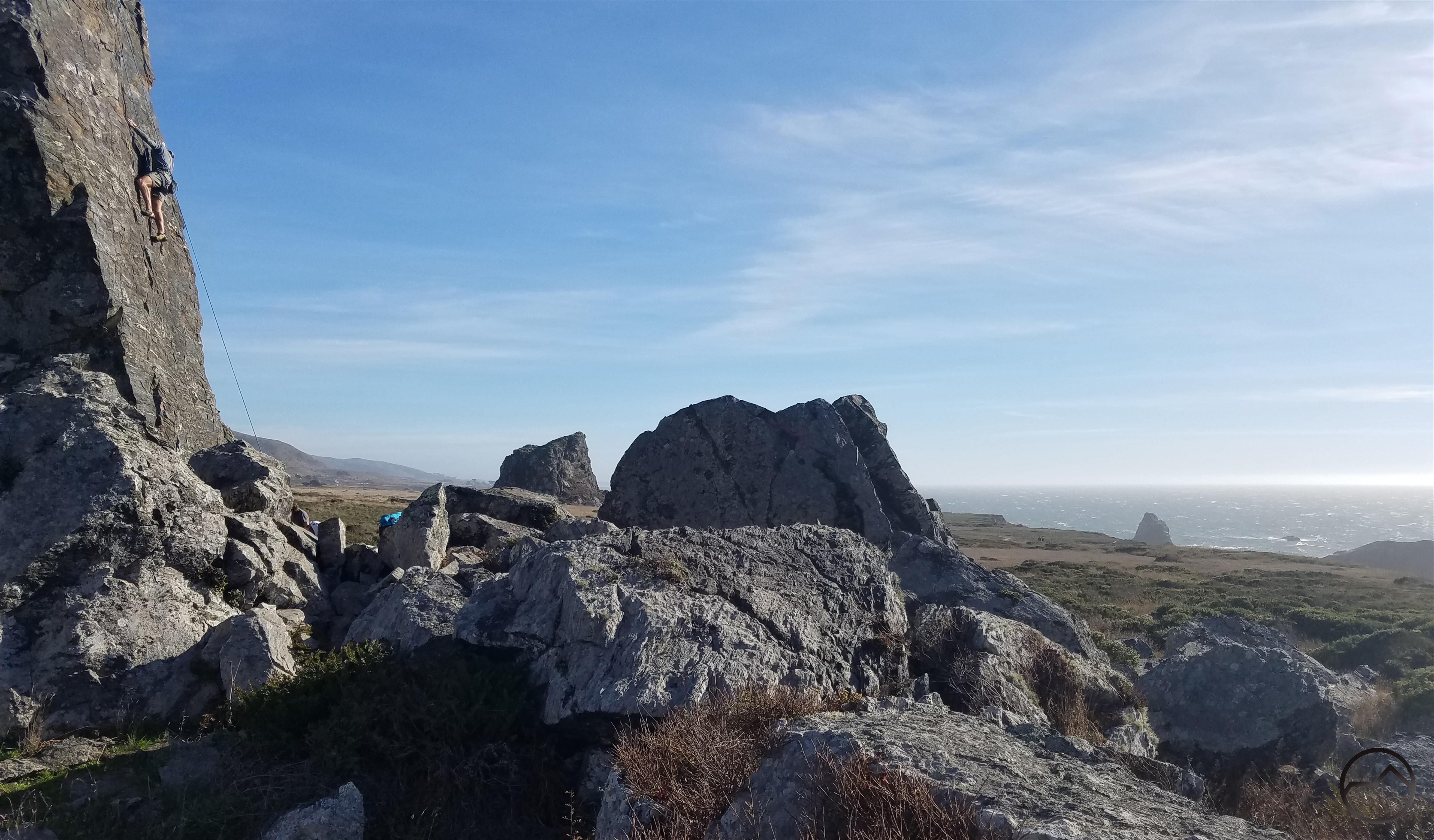
Heaven: rock climbing on crags above the surf in perfect Sonoma County weather.

Of course, Sonoma County is not just for hikers. Floating the Russian River, sipping wine, rock climbing, surfing and enjoying excellent cuisine that ranges from elite to rustic are all common Sonoma County activities. The diversity of the land yields diversity of activities.

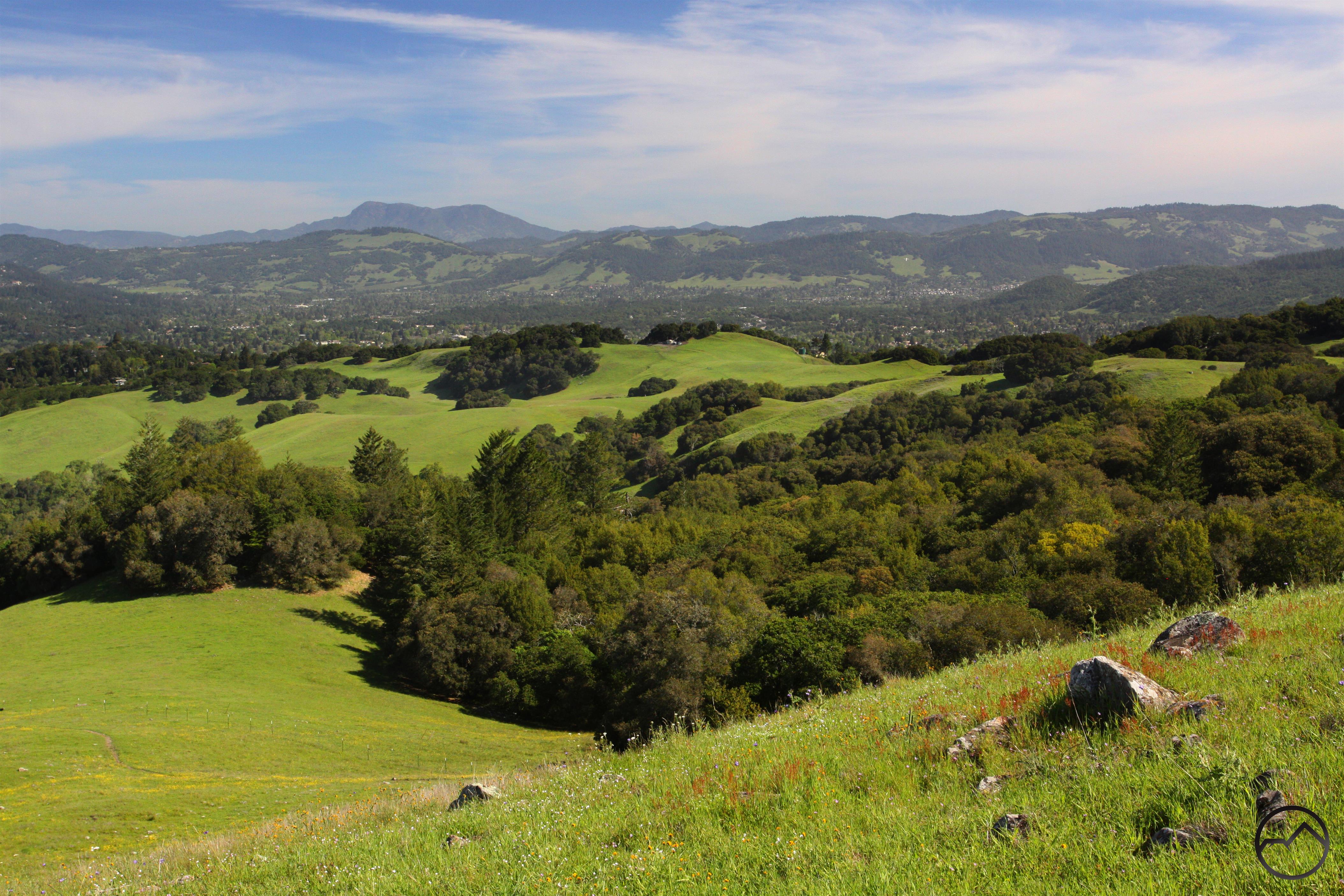
Neon green of Sonoma County Spring.

One of the greatest features of Sonoma County is the enviable climate. Temperate throughout the year, hiking is a year-round activity hear. It can be rainy at times in the winter and the interior of the county can get hot periodically during the summer. In spite of this, the trails are inviting throughout the year. Snow is almost unheard of except for the highest peaks, and only occasionally then. Even better, when California’s grand mountains are buried in winter snow or thawing out through the spring, Sonoma County is a vivid green, exploding with wildflowers and the creeks and waterfalls are flowing vigorously. It is idyllic.

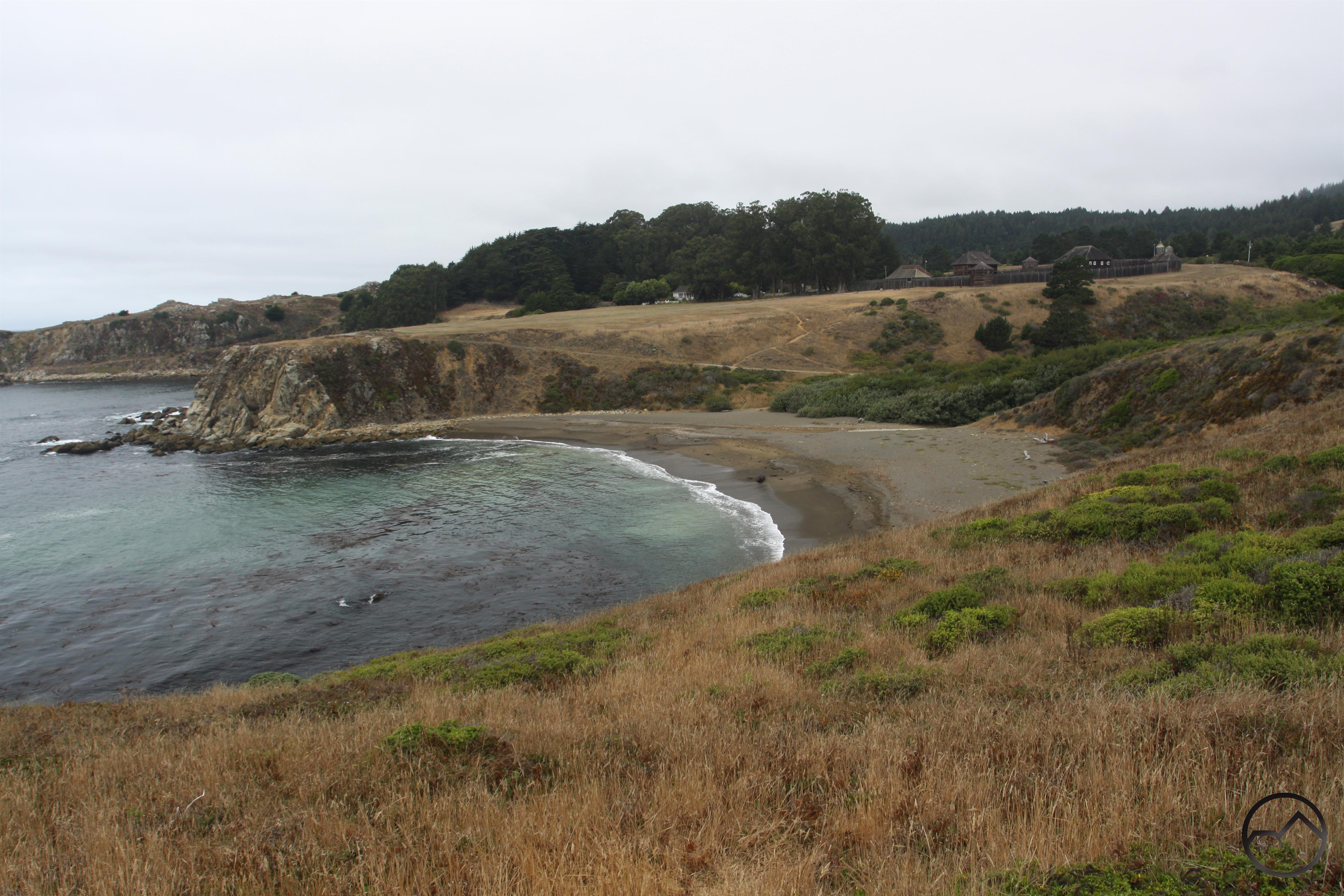
The Russian outpost of Fort Ross.

While Sonoma County is not often thought of as the keystone of California history, the county holds a critical position in the development of the state. Even more interesting, it is the site of one of the most unique events in the history of the world. The southern part of the county was home to the Sonoma mission, which was the northernmost of the 21 California missions. It was established to act as a counterweight to nearby Fort Ross, which was built by the Russians as an unlikely outpost of their possessions in Alaska. Only 30 miles apart, these two colonial bases were the only time that colonial powers established a boundary coming from opposite directions around the globe. The Spanish came west, crossing the Atlantic and North America. The Russians traveled east across Asian and the Pacific. In Sonoma County these two global empires established a boundary on the opposite side of the globe from where the mother country was located. Of course, this is not the only significant contribution Sonoma County has made to history. It was in the town of Sonoma that the Bear Flag Revolt took place. This event precipitated California leaving Mexico and eventually joining the United States.

The darkest chapter of Sonoma County’s history is its most recent. A series of fires erupted on October 8, 2017. Coalescing into three conflagrations, the Tubbs, Adobe and Nun Fires, thousands of homes and many of the county’s most beautiful parks all burned. While the fires were devastating, recovery, both human and natural, is underway. Most of the burned trails are reopened. Although the scenery has changed somewhat, beauty still awaits. Healing does as well.

Sonoma County is a special place. In the words of the illustrious botanist Luther Burbank, it is “the chosen spot of all the earth, as far as nature is concerned”. Herb Caen, San Francisco’s preeminent 20th century newspaper man, once described Heaven as “a place said to resemble Sonoma County in the spring”. For me, it is home. My wife and I grew up there and although we have put down roots in Mount Shasta, Sonoma County will always be home. Childhood for me was a time of perfectly comfortable afternoons playing in meadows, climbing through rugged creeks bathed by the ubiquitous smell of bay trees and hiding in the hollow trunks of redwoods while looking for ewoks. That time bordered on ideal, though I had little understanding of that. It took moving to Texas to realize just how much I loved my home and I am now grateful every time I return. It was an honor when I had the opportunity to write a hiking guide for Sonoma and neighboring Napa Counties. I mourned when the fires burned. My parents lost their house – my house – to the flames. A lot of suffering has been endured in Sonoma. It is my hope that this article, this love letter to my home, encourages readers to head back there, to explore, hike and enjoy this incredible place. If you do you will be glad you did.

Gallery of Sonoma County Trails

This gallery has the divided Sonoma County into quadrants for simplicity sake. Feel free to ask where any specific locations are.

Click to enlarge:

East County
East County
East County
East County

East County
East County
East County – Burned

East County – Burned
East County
East County

East County
East County
East County – Burned

East County – Burned
East County
East County

North County
North County
North County – Burned
North County

North County
North County
North County
North County

West County
West County
West County
West County

West County
West County
West County
West County

West County
West County
West County
West County

West County
West County
South County
South County

South County
South County
South County
South County


Some Old Articles On Land Acquisitions Around Mount Shasta

Posted by bubbasuess on March 24, 2019
Posted in: Cascade Range, Castle Crags, Hiking, Mount Eddy, Mount Shasta. Leave a comment

A winter view of the north side of the Castle Crags, lands newly accessible to the public. 

Last month I wrote an article detailing the significant land acquisitions in the Scott Mountains and the Trinity Divide. Click this link to read that account. After I wrote it I remembered two other articles I had written in the very early days in the blog that reported new lands in the Mount Shasta area that were acquired by the Forest Service. Some of the lands, located on Mount Eddy, were included in the report on the Scott Mountains due to their proximity. The other area, in the Castle Crags, got a little less fanfare, though it could also have a significant positive impact for hikers in the region. Since these articles were written 6 years ago, I thought I would be worthwhile to dredge them up and raise a little awareness of the potential that remains for more spectacular trails and exploration.

Sunset in a proposed Mount Eddy Wilderness.

The first article focused on lands on Mount Eddy. At the time, a pair of sections (a section is typically 1 square mile equaling 640 acres) were acquired and another pair, including one over-sized section were in negotiations. Adding land on Mount Eddy would have created a contiguous block of land where there had been a checkerboard pattern. In my imagination (and I confess to being a bit of a visionary…with poor execution skills to make my imagination become reality) I thought this would be be a fantastic opportunity to create a Mount Eddy Wilderness. Though this particular designation is unlikely to occur, the area is likely to be managed as such anyway. This means that recreation, particularly trail-based recreation will be the primary use, which is obviously a good thing for hikers.

Wagon Creek Falls

Though the wilderness area is unlikely, the reality surpassed my expectations in terms of lands acquired. In the initial deal that I reported on, 2 other critical sections were acquired on the east side of Mount Eddy. These are located in the gorgeous Eddy Bowl. Not only could these lands provide access to the frustratingly legally isolated Eddy Crater, Dobkins and Durney Lakes, but also to the Eddy Bowl itself. This large basin constitutes the headwaters of Wagon Creek, the first major tributary of the Sacramento River (this article offers good examples of Wagon Creek’s seldom seen beauty). A future trail exploring this incredible area is an exciting prospect!

The second article I wrote recounts and even more obscure land transaction that has not received a lot of fanfare. This acquisition is located down in the Castle Crags and brought to sections on the Crags’ north side under Forest Service administration. The transfer was only recently made official. These sections, formerly belonging to a timber company, include both the northern granite cliffs of the Castle Crags as well as nearly 2 miles of Little Castle Creek.

The yellow section are the new lands. The red area is the Castle Crags Wilderness. The blue areas are Castle Crags State Park. 

While these new sections are adjacent to the Castle Crags Wilderness, there inclusion in the protected area are unlikely, at least for the foreseeable future. Such designation requires and act of Congress, a process that takes a long time and effort. Perhaps that will happen in the future but in the meantime, the potential for recreation is terrific. A primary use of the land will be by rock climbers, who are naturally drawn to the towering granite cliffs of the Castle Crags. While there are already climbing routes to be found in that area, legal access and improved trails will undoubtedly bring more climbers to the Little Castle Creek side of the Crags.

Looking down on the saddle at the head of Little Castle Creek.

As far as trails, the most likely and desired addition will be a trail that ascends alongside Little Castle Creek. Discussions with members of the Forest Service indicate that a trail running parallel to the creek all the way up to the saddle at the west end of the Castle Crags is envisioned. This saddle, which lies at the headwaters of Little Castle Creek is traversed by the Pacific Crest Trail. A new trail leading down the creek would create new backpacking options and a the potential for a loop around the Castle Crags. The lands for such a loop already exist in the public domain and it would be relatively easy to connect a trail along Little Castle Creek to the Root Creek Falls Trail, thereby completely encircling the Castle Crags with trail. Whether looking for an easy creekside stroll or a demanding backpacking trip, it is hard not to be excited about the potential of the new lands here.
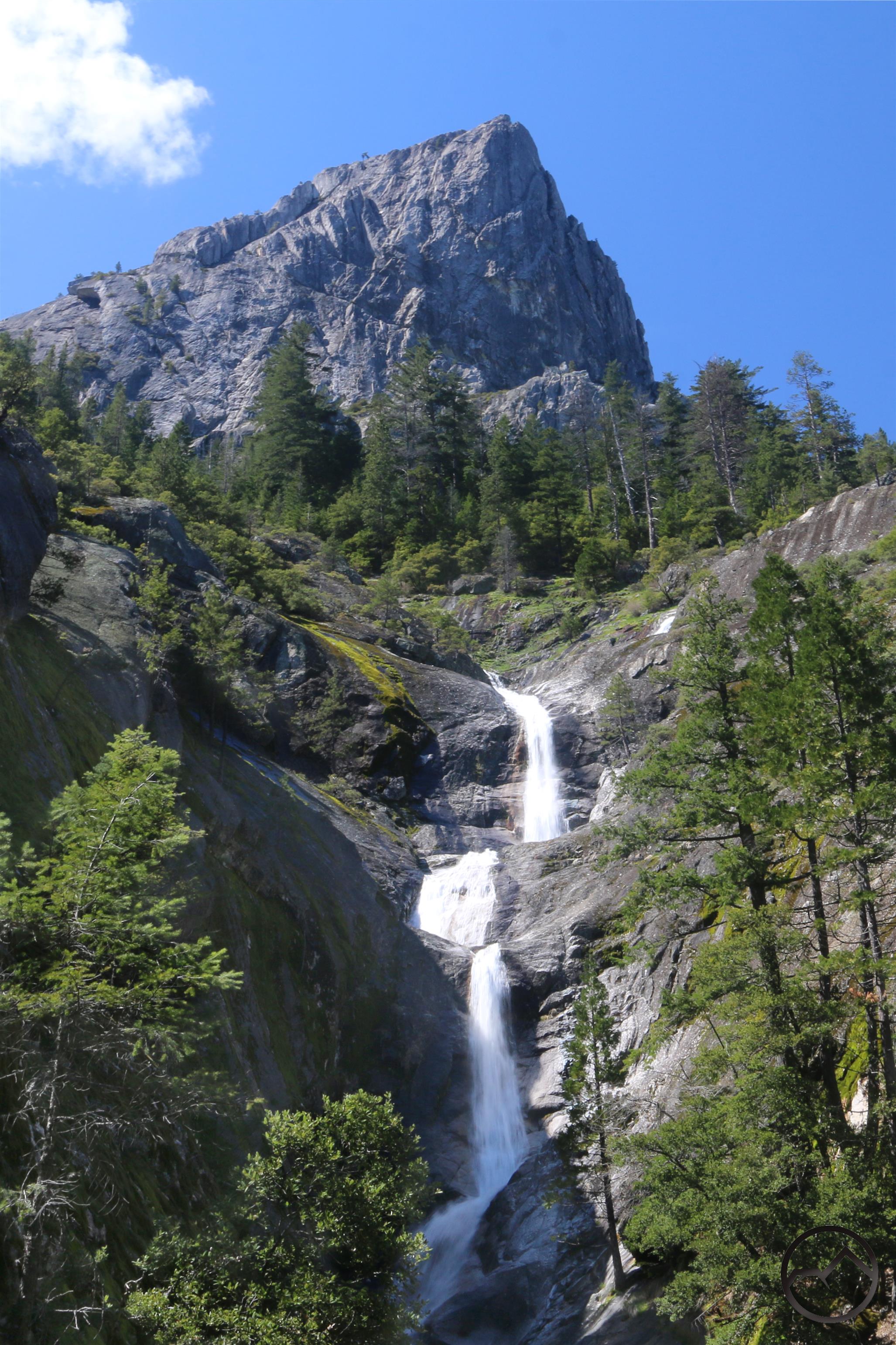
These two new areas bring a lot of potential for hikers. The fact remains that, despite the wealth of trails we have in the Mount Shasta area, there is still a tremendous amount of untapped potential. Even more amazing, if much of that potential is developed with trails, there would still be a great deal of gorgeous mountain terrain for those who prefer to explore lands where no trails go. As someone who loves both of these endeavors, I am excited about what the future holds for this region!

Mount Shasta: Three Sunrises And A Sunset

Posted by bubbasuess on March 18, 2019
Posted in: Cascade Range, Hiking, Mount Shasta, Trinity Divide. 4 Comments

Sunset glow lights up Mount Shasta.

February felt like a long, icy month in 2019 and the clouds and precipitation continued into March. However, as the natural order of things proceeds, the sky has cleared and the sun has begun to melt off all the snow. This meant that, after seemingly taking a few weeks off from getting up to watch sunrises, I could return to one of my favorite endeavors. The time spent watching the sun come up while much of the world sleeps always feels like a terrific investment. The sound of the wind, of water rushing, of creatures awakening is always rich and embellishes the spectacular scene of the sun coming up somewhere around the mountain.

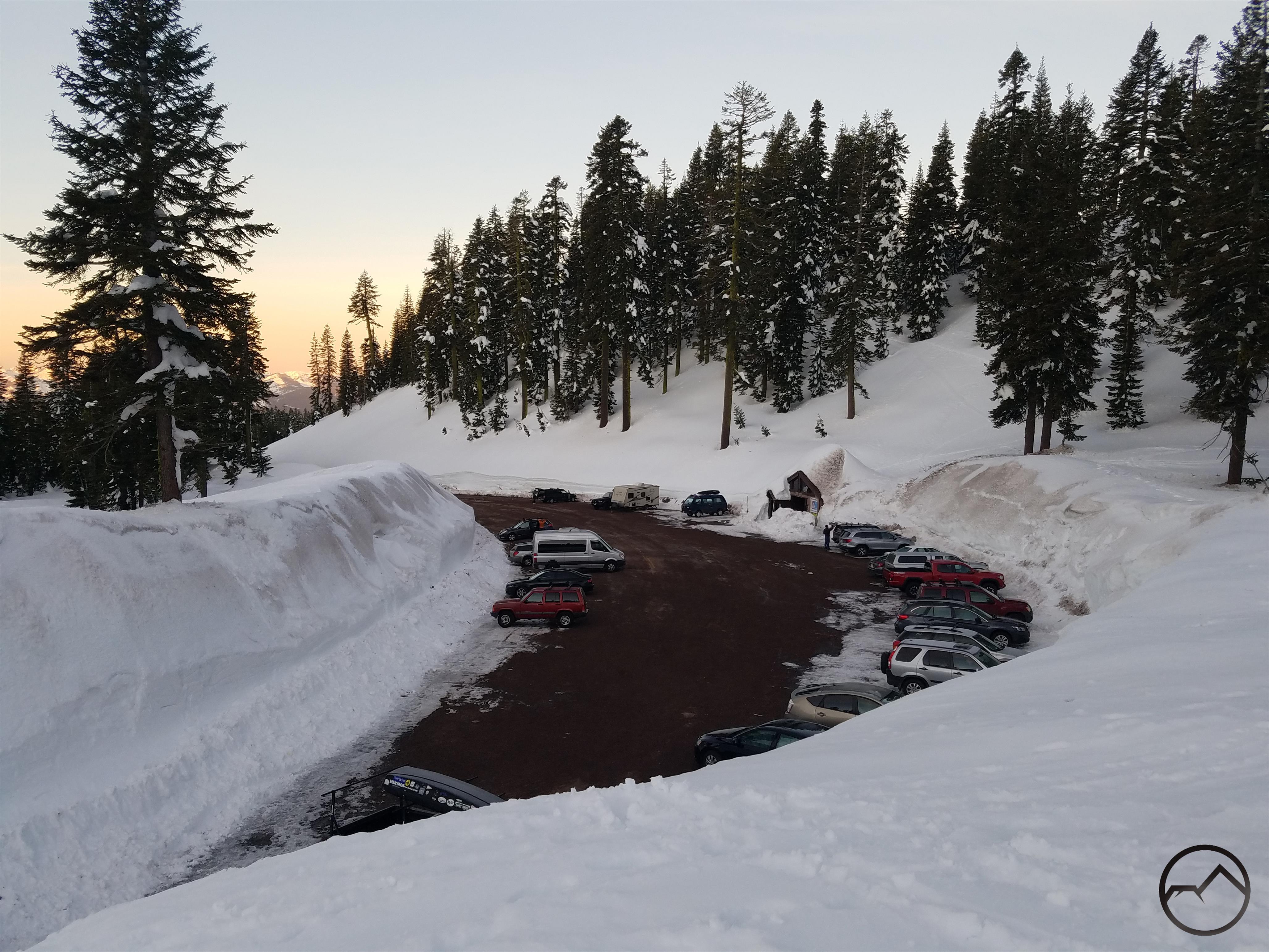
Saturday was the first day I headed out. There weren’t many clouds to speak of, which is always a bit of a disappointment, since the character of the clouds has tremendous influence on the sunrise. I decided to head up to Bunny Flat, which is in classic winter form:

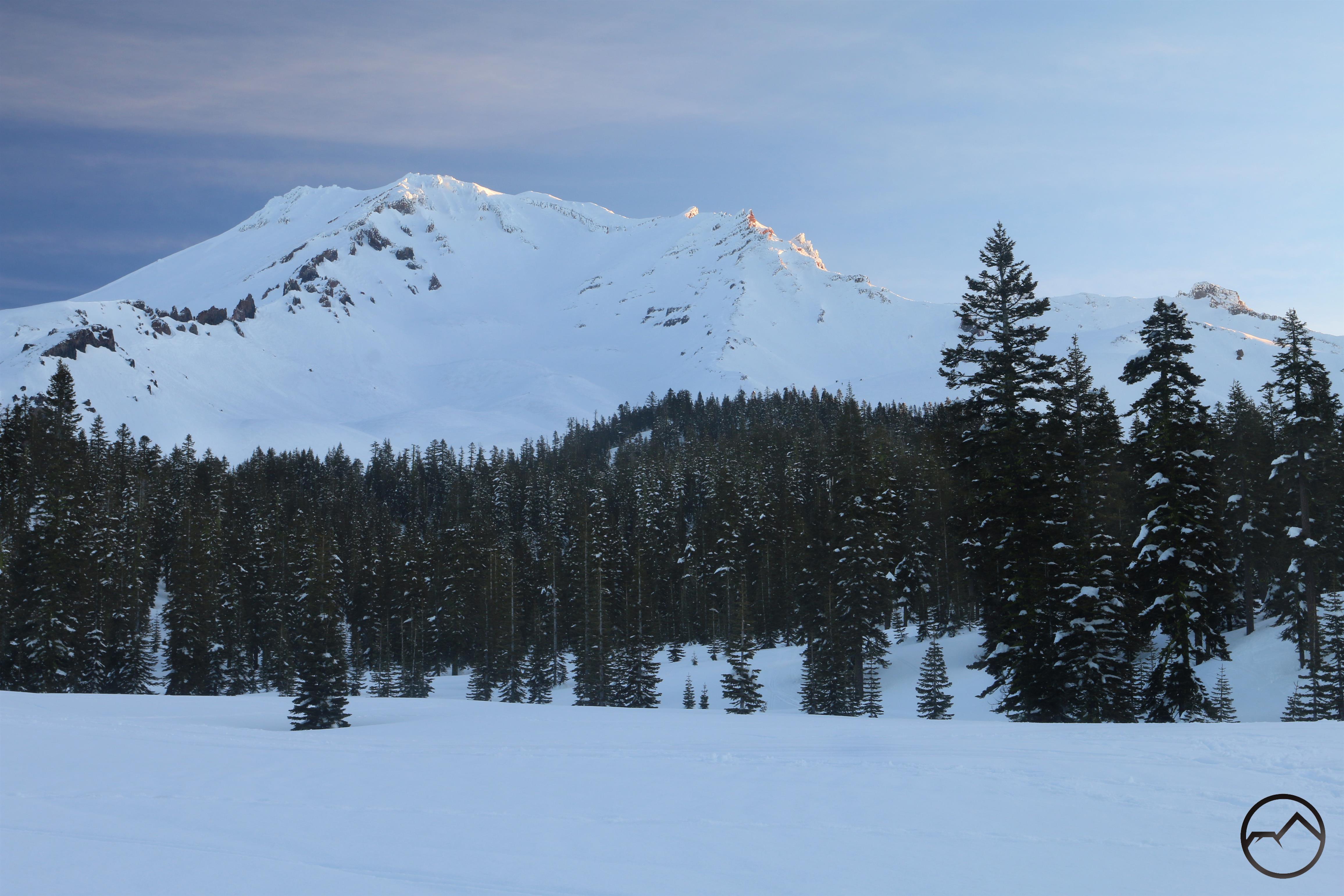
The snow is obviously deep but a path to the top has been cut in at the east end of the parking area. Despite being early in the morning, there was a fair amount of activity, as folks were preparing to head out onto the mountain for the day. I set up my camera and took in the scene as the sun came up. However, this time of year the sun is positioned in such a way that minimal sunlight actually hits the visible parts of the mountain. It was beautiful nonetheless.

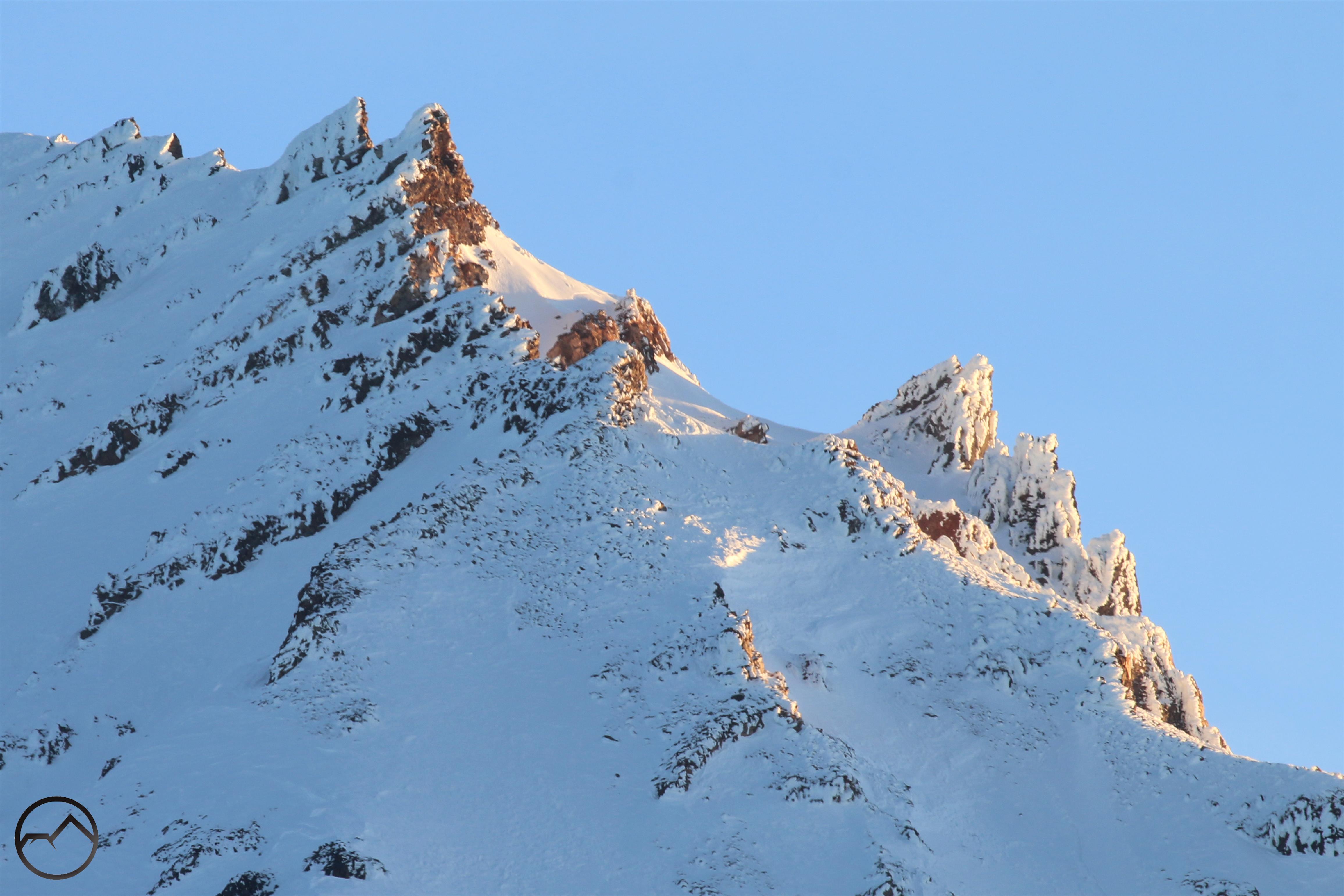
With my telephoto lens I looked up at Thumb Rock and the Crags that lie just below it. These were catching the morning light, which revealed that they were covered not with snow but with rime ice. It certainly looked cold:

Looking to the south, I observed the Grey Rocks, one of my favorite peaks in the region. These, along with Battle Rock (aka Castle Spire) were lit brightly. This is an easy scene to catch but remains one of my favorites on the mountain.

Satisfied with what I had witnessed, I headed home, ready to continue the rest of the day.

The next morning, I got up early again but I could see a large network of clouds sailing south over Mount Shasta. Given their position, I knew that north with the direction to go in. I considered heading out towards the Shasta Big Springs Ranch off of A-12 but decided to not break my habit, opting instead for my favorite reflection puddle. I figured I needed to take advantage of it while I could, before the warmer, drier weather causes it to dry up. I am glad I went this route. It was a magnificent sunrise.


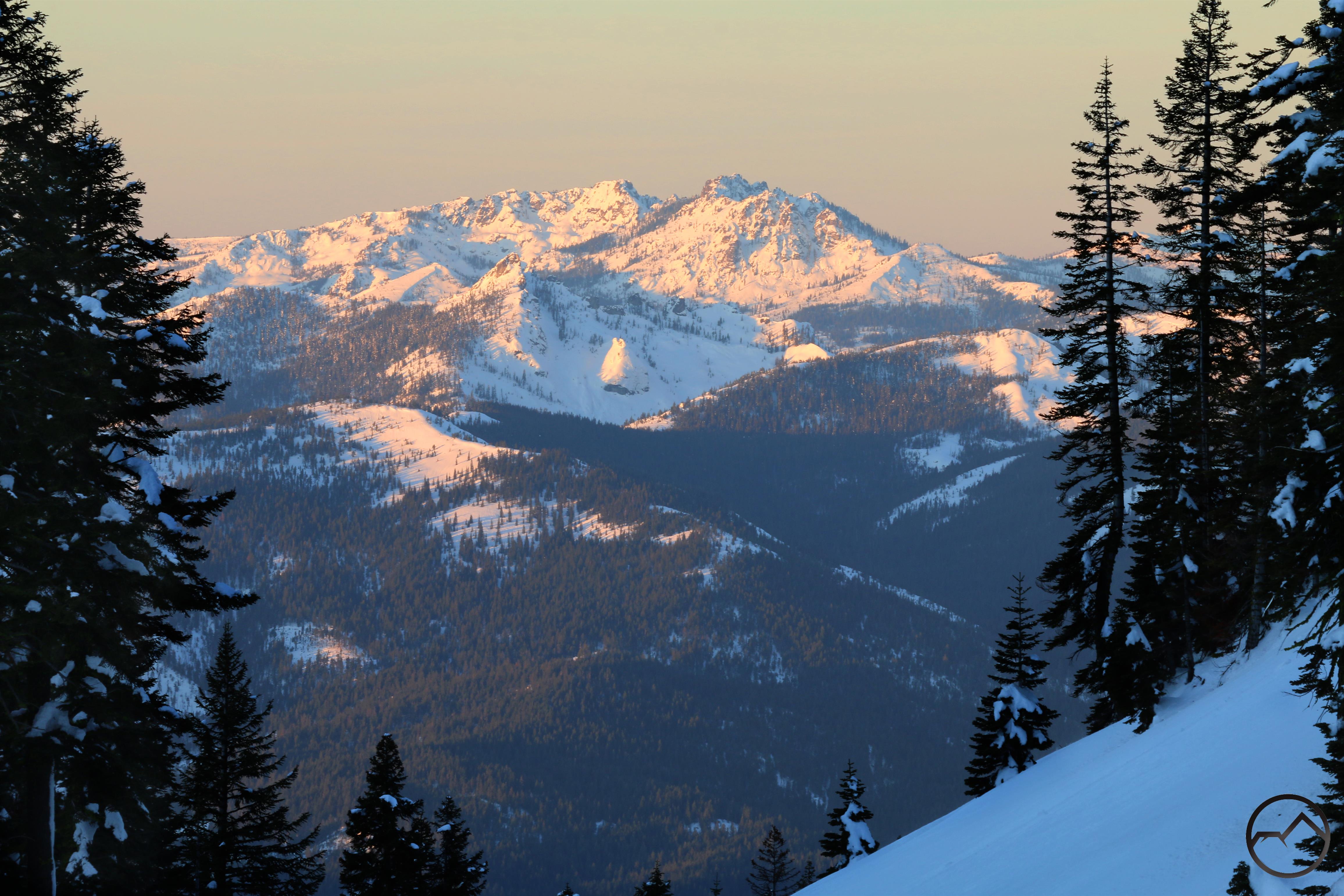
Finally, Monday morning I decided to take another stab at Bunny Flat, but as the sun came up, there were no clouds whatsoever. Disappointed I headed down the mountain. However, at the unplowed entrance to the John Everitt Lookout, I decided to stop and see what I could see of the Trinity Divide to the west. Climbing up onto the high snow wall, I was glad I did. It was a beautiful perspective on the mountains and nice to see their snowy condition.

Mount Eddy rises high above the other mountains.
A closer look at Eddy Bowl.

A great perspective on Black Butte.
Looking northwest, toward China Mountain.

Porcupine Peak and the Porcupine Lake basin.
High peaks above the Gray Rock Lakes basin.

Satisfied, I headed home once again. In the evening, my gracious wife released me to go play on the mountain once again. However, as I began the climb up to Bunny Flat, I quickly found the road gated just past McBride Springs. A sheriff and a couple of CHP vehicles blocked the road. From the officers I learned that there had been an avalanche about 30 minutes earlier that had partially covered the road. After the massive avalanche that occurred in February, this did not come entirely as a surprise, though it was intriguing.

Undeterred, I shifted gears and instead headed up toward Castle Lake, the road having just been opened. I chose this spot because I reckoned it might give me a good perspective on the avalanche. Again using my telephoto lens, I scanned the mountain, but could see no avalanche signs other than the deep trough cut by the big one from February. It turned out to be a small avalanche on the large cut along the road, just below Bunny Flat.

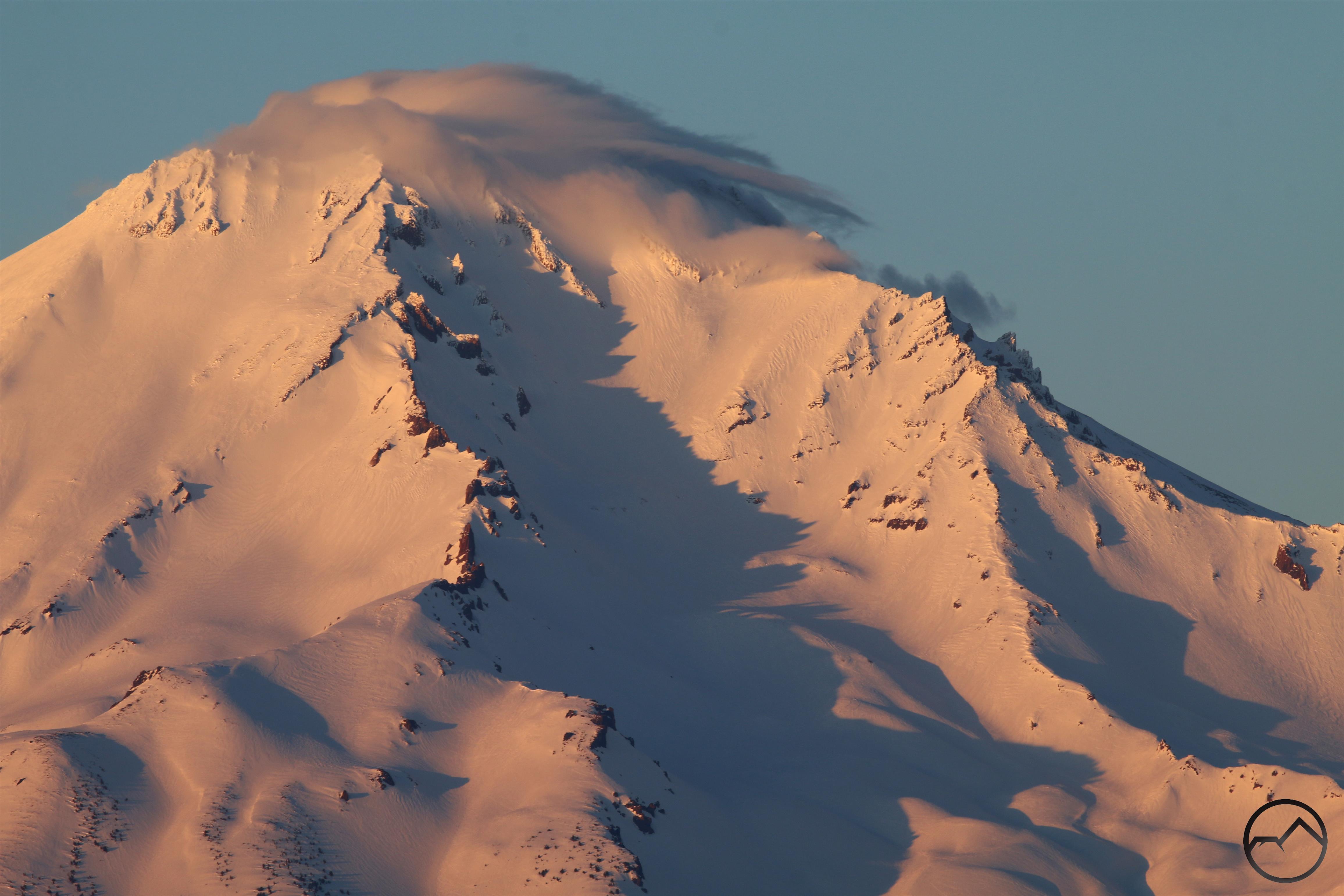
I stuck around for the sunset, which proved a little more interesting than I had anticipated. Though there were no clouds in the sky, there was one forming right on the mountain’s summit. Small satellite clouds swiftly formed and dissipated. The whole spectacle, coupled with the shrinking alpenglow, was an edifying sight.

Despite more rain arriving soon, I can feel spring coming too. The temperatures are warming and the window for fresh snow is beginning to close. While I eagerly anticipate the spring and summer, their imminent arrival makes it easier to enjoy the snow while it is here. At this point, I am thankful for the opportunity to stand on a snowbank watching the alpenglow on Mount Shasta.


UPDATE:

Of course, after writing this post up, the very next sunrise was a beautiful one. It certainly deserves inclusion!

UPDATE:

Later in the day the small lenticular seen in the morning grew just a bit:

Unfortunately, as is often the case with clouds like these, it ultimately morphed into overcast skies and is raining now. I am glad to have captured this one when I did!

There Is A Lot Of Water Around Mount Shasta

Posted by bubbasuess on March 1, 2019
Posted in: Cascade Range, Hiking, Mount Shasta. Leave a comment

Parks Creek, swollen with runoff from the rain and melting snow.

It’s no secret that we have received a lot of water this winter. February alone resulted in an estimated 18 trillion gallons being dumped  on California. Around the state, snow is piled deep, rivers are full and reservoirs are filling. The summer needs look to be well provided for in 2019. It is an auspicious beginning to the year.

Nonetheless, here in Mount Shasta, the past few storm systems have proven to be challenging in some ways, with heavy, sloppy snow and warm rains creating a quagmire in the lowlands around the mountain. Further south, especially in the area between Lakehead and Red Bluff, the surprising amount of snow felled many trees, creating a snarl of traffic on I-5 and other roads. Broken limbs and trees uprooted can still be seen in great quantities as one drives south. It is good that, with only March left to go, that the typical window for big snow storms is finally drawing to a close.

This morning, while returning from Yreka, I had the opportunity to check out Parks Creek and the Shasta River. Both were flowing heavily. It is always pleasing to me to observe these lush waterways coursing through the arid landscape of the Shasta Valley. I always enjoy those few places where the water and Mount Shasta are visible in the same frame. When I saw the creek and river today, both were flowing vigorously. It’s going to be a good spring to go kayaking on Lake Shastina.

Parks Creek flows through a semi-arid area.
Cottonwood Peak is visible in the distance beyond the Shasta River.

The Shasta River, though lovely, is small potatoes compared to the nearby Sacramento River. California’s longest and largest waterway starts just across the Strawberry Valley from Mount Shasta and flows south toward San Francisco Bay. Along the way, it is impounded with its tributaries, the Pit and McCloud Rivers, to form Lake Shasta. This is the largest reservoir in California. The volume of water in the lake is immense and how full the lake is matters a great deal to all of California that lies to the south. As noted here, the lake is only 21 feet below maximum capacity. That means that all the as yet unfallen precipitation, as well as the entirety of the spring runoff will have to fill this final 20 feet. Even accepting that the final portion of a V-shaped lake is going to take more water than the lower sections, it does not seem like it will take long for the lake to reach maximum capacity.


To make room for the coming volume, the dam is releasing a significant amount of water. According to dam personnel, the rate of release is going to be ramped up over the coming weeks to create room for more rain runoff and the water that inevitably comes from the spring thaw. The waterfall it will create will be impressive. With more precipitation imminent, this seems a prudent course of action. There is a lot of snow up in the mountains waiting to melt…

The February Storm Finally Passes

Posted by bubbasuess on February 28, 2019
Posted in: Cascade Range, Hiking, Mount Shasta. 3 Comments

Clear skies and sunrise glow on snowy Mount Shasta.

Well that was fun. Like the rest of the mountain west, the Mount Shasta area has endured another significant storm system. I like the snow and I always look forward to it. I don’t mind clearing it off driveways and walkways and such. What I do mind is when it snows a lot and then rains a lot and everything turns into a soupy, mucky mess. That, unfortunately, is what we got. Add to the unfortunate stew a long stretch with no sunlight and cold but not cold enough to keep everything frozen and you basically have the worst possible winter combination. Thank goodness that is over, for now at least.

This morning, the first with clear sky in a while, was beautiful. A string of errors kept me from getting on the east side of Mount Shasta but I was able to at least catch the glow along Sargents Ridge as the sun came up this morning. It was just nice to see the mountain, though disappointing to miss the snow flurries all lit up by the rising sun, the view that was surely to be had in McCloud. Needless to say, Mount Eddy and Black Butte were also thoroughly smothered in snow. With Mount Shasta still in shadow on the west side and no unusual clouds to highlight the mountain, these two neighbors offered the more interesting spectacle.


The warmer temps (relatively speaking, of course) of the last few days had raised the snow line and nothing below 5,000 feet seemed to have much snow on the trees. This was certainly the case on Black Butte, which seemed so be completely encased in rime ice, rather than snow.

On Mount Eddy, the snow was everywhere and it looked deep too. All the trees in Eddy Bowl were blanketed with deep snow. Some areas where deep snow had piled up, it looked as though avalanches might occur.


As I noted, this storm was a miserable one. The snow started off dry and powdery but it eventually came down like Sierra cement. When it started to rain, it all began to melt. Soon it was like living in a giant slurpee. My backyard always makes a good test for how the storms look:


The depth of the snow from this storm is a bit deceiving. We probably go 3 feet or more at our house but the intervals of rain-induced melting and the natural settling does not show quite how deep it is. The peak really occurred on Tuesday. More snow fell after that but it never quite equaled the conditions on Tuesday. For comparison, look at the progression of my backyard from the big storm back in January of 2017. That was a lot of snow and there was no rain to start it melting instantly.

Thankfully, no matter how bad the conditions got in the storm, it was usually possible to head up to the Shasta Valley and get some sunshine. Granted, it rained there too, but Mount Shasta’s rainshadow kept most of the precipitation at bay. Nonetheless, the puddles, ponds and rivers were all full. This was a particularly welcome break on Wednesday, as the stormy weather persisted to the south. A quick trip north recharged the emotional batteries to help my kids and I ride out the remainder of the storm.

The Goosenest is lost in storm clouds.
Looking east toward Herd Peak and Sheep Rock.
Typical storm view of where Mount Shasta is normally visible.

This continued to be the case Thursday. The sky was cloudy but Mount Shasta was still visible from the north. While there. The valley looked gorgeous, ringed by snow-covered mountains. It was nice to see bare earth, not covered by feet of snow. I never tire of heading into the high desert of the Shasta Valley.

A beam from Thursday’s setting sun cuts across the Little Scott Mountains and the Shasta Valley.

The forecast is currently calling for some calmer weather that, while projected to be overcast at times, will be a nice break from the last week. With March left of the really wintry season to go, I think my family is officially getting cabin fever. Though the extended forecast is calling for a couple more weeks of precipitation, I am hoping the second half of March really dries out. May it be so. Amen.

Though the clouds came back in during the afternoon but it was still possible to see the final sunset of February 2019.

Posts navigation

← Older Entries
Newer Entries →
    • Recent Posts

      • Winter Shows Up When It Will
      • January Rolled By With Mud, Then Very Dry
      • Mount Shasta 2025 – A Year In Images
      • Mount Shasta On Either Side Of Christmas
      • Adrift In An Ocean Of Fog
      • December Has Been Spectacular Thus Far Pt. II (A Magnificent Lenticular)
      • December Has Been Spectacular Thus Far Pt. I
      • Lenticular Interrupted
      • A Stormy Wave And A Truchas Sunset
      • Aurora Lenticularis
    • Enter your email address to follow Hike Mt Shasta and receive notifications of new posts by email.
    • Archives

      • February 2026
      • January 2026
      • December 2025
      • November 2025
      • October 2025
      • September 2025
      • August 2025
      • July 2025
      • June 2025
      • May 2025
      • April 2025
      • March 2025
      • February 2025
      • January 2025
      • December 2024
      • November 2024
      • October 2024
      • September 2024
      • August 2024
      • July 2024
      • June 2024
      • May 2024
      • April 2024
      • March 2024
      • February 2024
      • January 2024
      • December 2023
      • November 2023
      • October 2023
      • September 2023
      • August 2023
      • July 2023
      • June 2023
      • May 2023
      • April 2023
      • March 2023
      • February 2023
      • January 2023
      • December 2022
      • November 2022
      • October 2022
      • September 2022
      • August 2022
      • July 2022
      • June 2022
      • May 2022
      • April 2022
      • March 2022
      • February 2022
      • January 2022
      • December 2021
      • November 2021
      • October 2021
      • September 2021
      • August 2021
      • June 2021
      • May 2021
      • April 2021
      • March 2021
      • February 2021
      • January 2021
      • December 2020
      • November 2020
      • October 2020
      • September 2020
      • August 2020
      • July 2020
      • June 2020
      • May 2020
      • April 2020
      • March 2020
      • February 2020
      • January 2020
      • December 2019
      • November 2019
      • October 2019
      • September 2019
      • August 2019
      • July 2019
      • June 2019
      • May 2019
      • April 2019
      • March 2019
      • February 2019
      • January 2019
      • December 2018
      • November 2018
      • October 2018
      • September 2018
      • August 2018
      • July 2018
      • June 2018
      • May 2018
      • April 2018
      • March 2018
      • February 2018
      • January 2018
      • December 2017
      • November 2017
      • October 2017
      • September 2017
      • August 2017
      • July 2017
      • June 2017
      • May 2017
      • April 2017
      • March 2017
      • February 2017
      • January 2017
      • December 2016
      • November 2016
      • September 2016
      • August 2016
      • July 2016
      • June 2016
      • May 2016
      • April 2016
      • March 2016
      • February 2016
      • January 2016
      • December 2015
      • November 2015
      • September 2015
      • August 2015
      • July 2015
      • June 2015
      • May 2015
      • April 2015
      • March 2015
      • February 2015
      • January 2015
      • December 2014
      • November 2014
      • July 2014
      • June 2014
      • May 2014
      • April 2014
      • March 2014
      • February 2014
      • January 2014
      • December 2013
      • November 2013
      • October 2013
      • September 2013
      • August 2013
      • July 2013
      • June 2013
      • May 2013
      • April 2013
      • March 2013
      • February 2013
      • January 2013
    • Categories

      • Boy Scouts
      • Cascade Range
      • Castle Crags
      • Desert
      • Echo Point
      • Glaciers
      • Hiking
      • How things came to be…
      • Klamath Mountains
      • Konwakiton Outdoor Designs
      • Lakes
      • Lenticular Clouds
      • Maps
      • Marble Mountains
      • Meadows
      • Mount Eddy
      • Mount Shasta
      • Mount Shasta History
      • Napa County
      • Off Season Trails
      • Pacific Crest Trail
      • Peaks
      • Rivers
      • Rock Climbing
      • Scott Mountains
      • Seldom Seen
      • Shasta Valley
      • Sierra Nevada
      • Siskiyou Mountains
      • Sonoma County
      • Spring Trails
      • sunrise
      • sunset
      • Trinity Alps
      • Trinity Divide
      • Truchas Ridge
      • Uncategorized
      • Water
      • Waterfalls
      • Wilderness
      • Wildflowers
      • Wine Country
      • Winter Trails
      • Yosemite
    • Meta

      • Create account
      • Log in
      • Entries feed
      • Comments feed
      • WordPress.com
    • Copyright © 2013-2024 by Bubba Suess

      DISCLAIMER: Any use of the information contained in this site by any and all persons is done at their own risk. The operator of this site shall be held harmless from any and all alleged claims, demands, causes of action, liability, loss, damage and/or injury to property or persons whether brought by an individual or other entity. This indemnification applies, without limitation, to all actions by an individual or other entity as a result of their use of information contained in this site.
    Blog at WordPress.com.
    Hike Mt. Shasta
    Blog at WordPress.com.
    • Subscribe Subscribed
      • Hike Mt. Shasta
      • Join 983 other subscribers
      • Already have a WordPress.com account? Log in now.
      • Hike Mt. Shasta
      • Subscribe Subscribed
      • Sign up
      • Log in
      • Report this content
      • View site in Reader
      • Manage subscriptions
      • Collapse this bar
     

    Loading Comments...