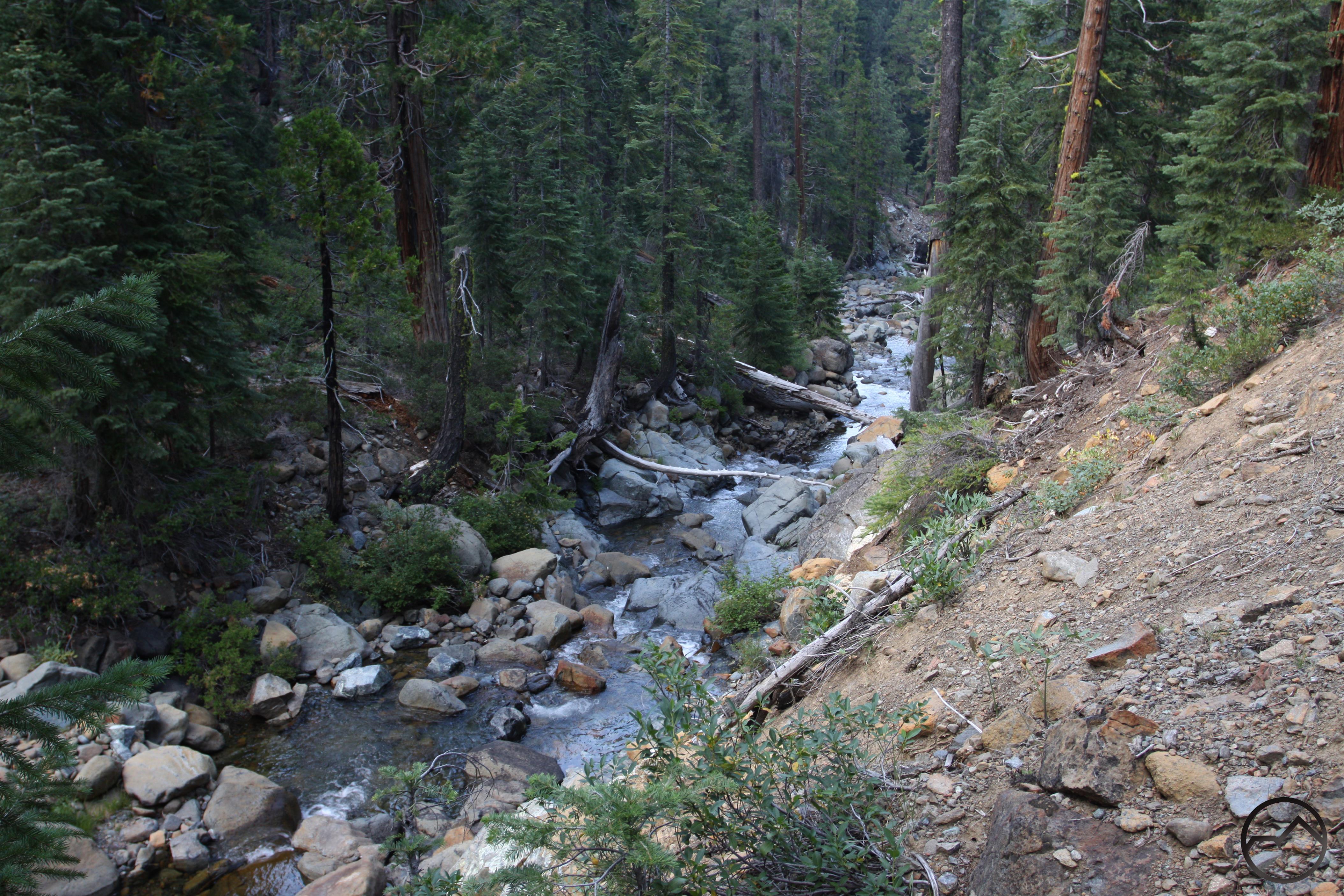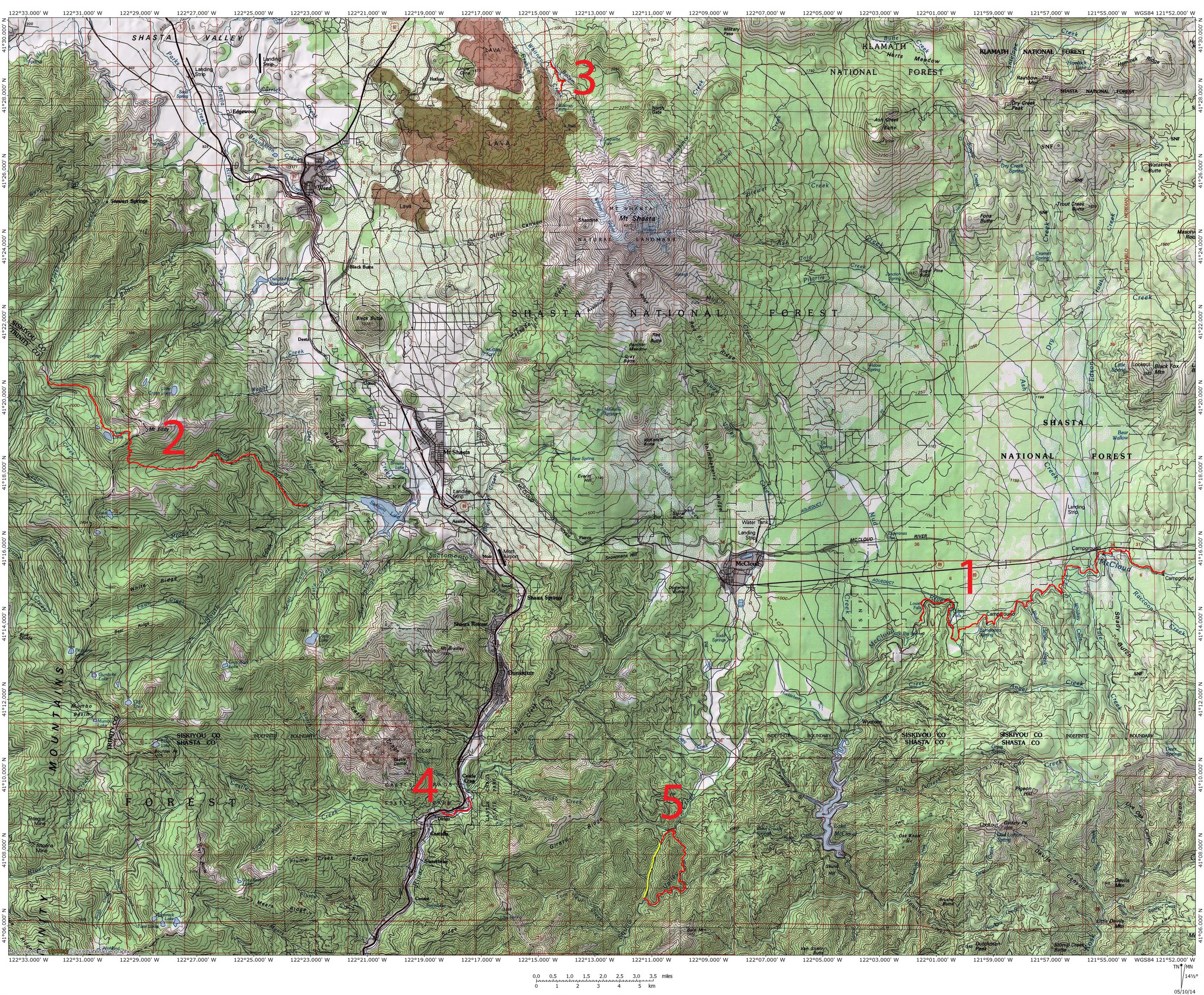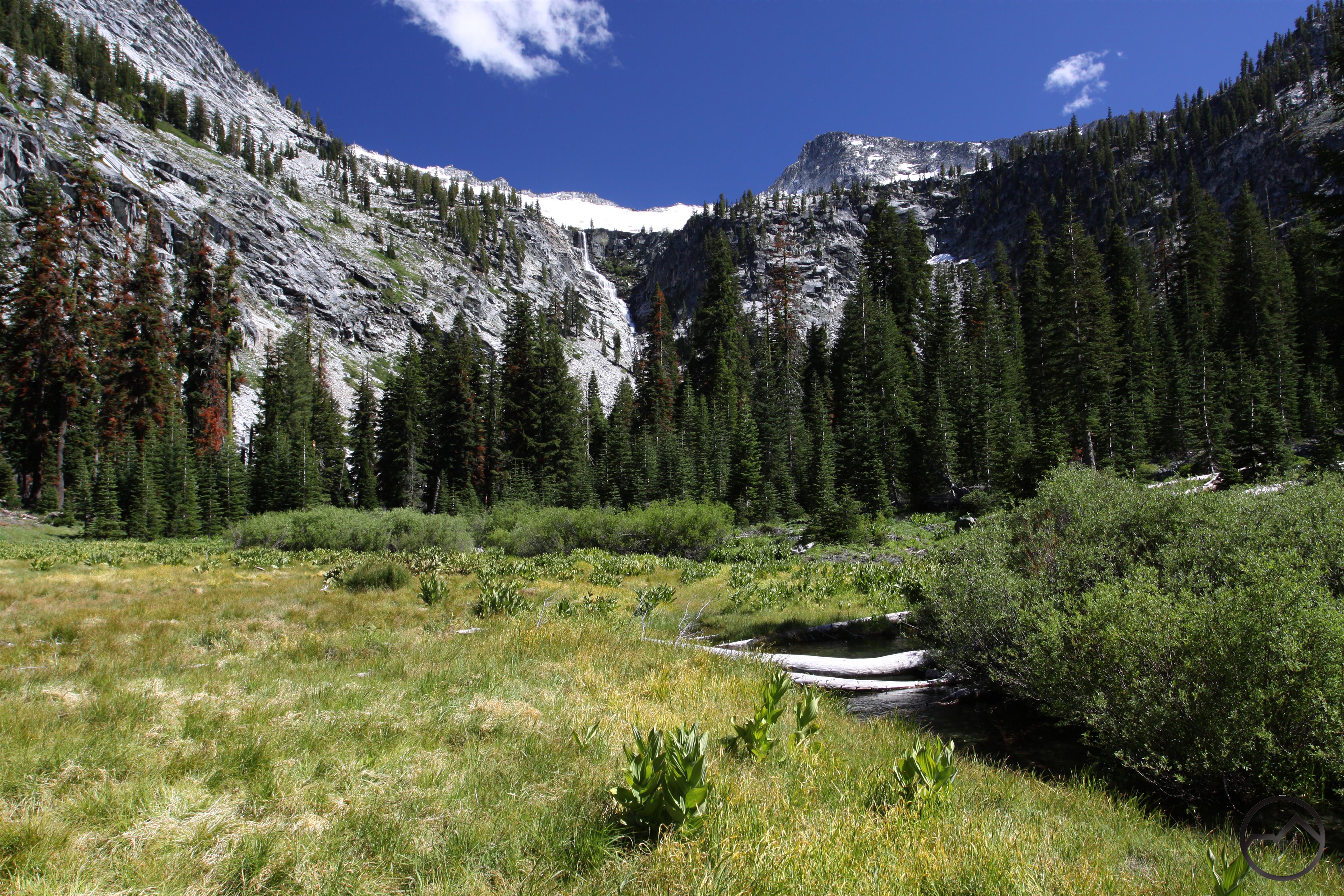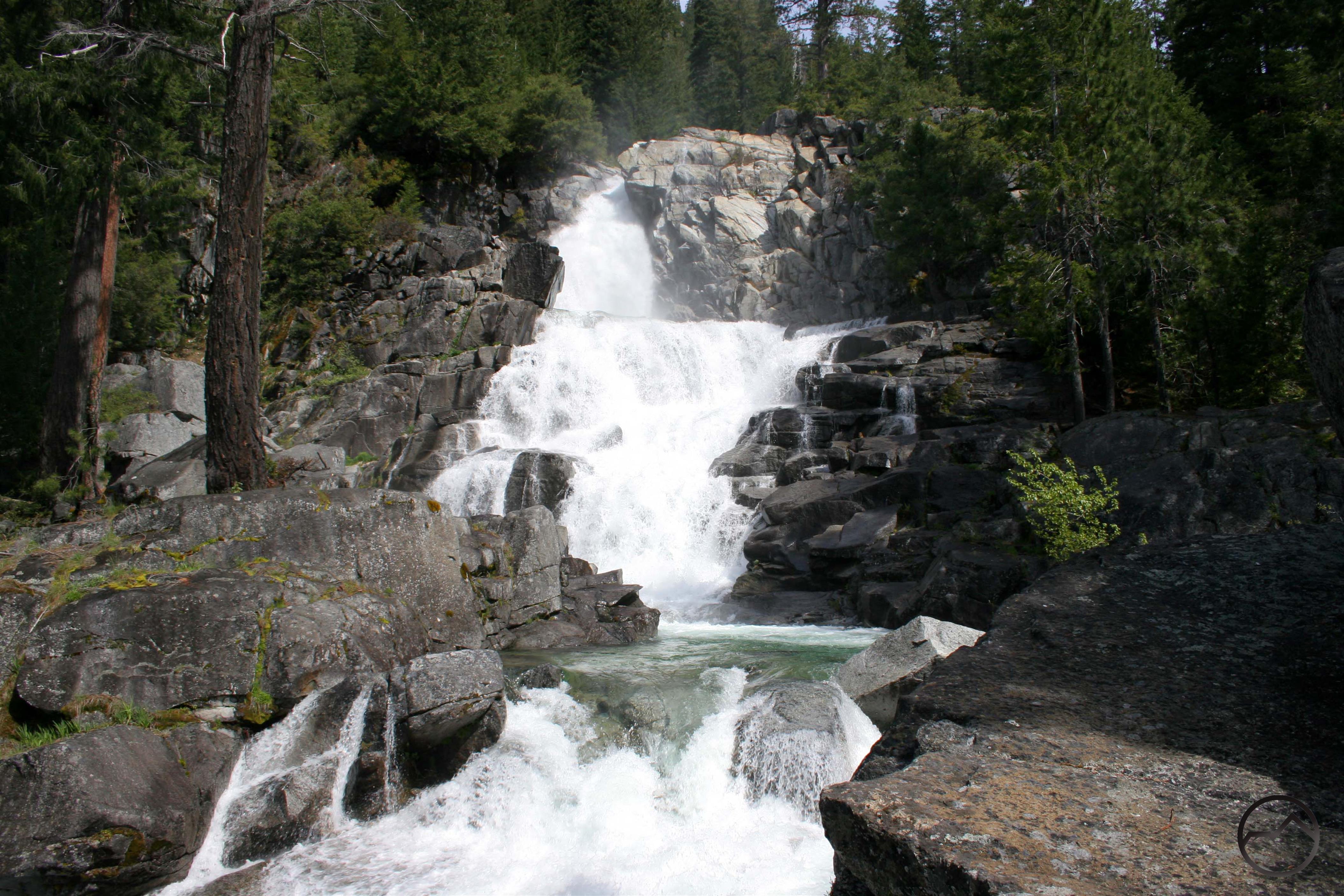
Hike Mt. Shasta

Exploring the Mount Shasta Region

  • Home
  • Trails
    • Mount Shasta Trails
      • Brewer Creek Trail
      • Clear Creek Trail
      • Gray Butte Trail
      • Green Butte Ridge Trail
      • Horse Camp Trail
      • North Gate Trail
      • Old Ski Bowl Trail
      • Panther Meadow Trail
      • South Gate/Squaw Meadow Trail
      • Whitney Falls Trail
    • Trinity Divide Trails
      • Blue Divide Trail
      • Castle Lake Trail
      • Castle Lake Shore Trail
      • Cliff Lake Trail
      • Deadfall Lakes Trail
      • Gray Rock Lakes Trail
      • Gumboot Trail
      • Heart Lake Trail
      • Porcupine & Toad Lakes Via Pacific Crest Trail
      • Seven Lakes Basin Via Pacific Crest Trail
      • Sisson-Callahan Trail
      • Soapstone Trail
      • South Mumbo Scramble
      • Tamarack Lake Trail
      • Toad Lake Trail
    • Castle Crags Trails
      • Burstarse Falls Via Pacific Crest Trail
      • Castle Dome Trail
      • Flume Trail
      • Lower Castle Crags Via Pacific Crest Trail
      • Root Creek Trail
    • Scott Mountains Trails
      • Bluff Lake & Cement Bluff via Pacific Crest Trail
      • Caldwell Lakes Trail
      • China Mountain Scramble
      • Cory Peak and Bull Lake via Pacific Crest Trail
    • Cascade Crest
      • Ash Creek Butte Scramble
      • Goosenest Trail
      • Juanita Lake Trail
      • Orr Lake Trail
    • Mount Shasta City Area Trails
      • Black Butte Trail
      • Box Canyon Trail
      • Gateway Trail
      • Lake Siskiyou Trail
      • Mount Shasta City Short Trails
      • Ney Springs Canyon Trail
      • Spring Hill Trail
    • Shasta Valley Trails
      • Black Lava Trail
      • Haystack Trail
      • Lake Shastina Trail
      • Pluto Cave Trail
      • Trout Lake Trail
      • Yellow Butte Trail
    • Sacramento River Trails
      • Dunsmuir Trail
      • Hedge Creek Falls Trail
      • Sacramento River Trail
      • Sims History Trail
    • McCloud River Trails
      • Ash Camp To Ah-Di-Na Via Pacific Crest Trail
      • McCloud River Falls Trail
      • McCloud River Preserve Trail
      • Squaw Valley Creek Trail
      • McCloud River Trail: Algoma Camp to Nitwit Camp
      • McCloud River Trail: Nitwit Camp to Cattle Camp Swimming Hole
      • McCloud River Trail: Cattle Camp Swimming Hole to Camp 4
      • McCloud River Trail: Camp 4 to Upper McCloud Falls
      • McCloud River Trail: Pine Tree Hollow Loop
    • Trails Further Afield
      • Trinity Alps Trails
        • Bear Lakes Trail
        • Billys Peak Trail
        • Boulder Creek Lakes Trail
        • Boulder Lake Trail
        • Canyon Creek Trail
        • Caribou Lakes Trail
        • East Boulder Lake Loop
        • East Weaver Lake Trail
        • Four Lakes Loop
        • Granite Peak Trail
        • Grizzly Creek Trail
        • Gulch Lakes Loop
        • Hidden Lake Trail
        • South Fork Lakes Trail
        • Stoddard Lake Trail
        • Stoney Ridge Trail
        • Tangle Blue Lake Trail
      • Warner Mountains
        • Emerson Creek Trail
        • Highgrade Trail
        • Patterson Lake Via Warner Summit Trail
        • Pine Creek Trail
        • Squaw Peak Trail
  • Articles
    • Trails By Area
      • Mount Shasta
        • Vistas, Meadows And Waterfalls: Three Best Hikes On Mount Shasta
        • The End Of The Road: Three Hikes In The Old Ski Bowl Area
        • Two Trails From Bunny Flat
        • Three Trails On Mount Shasta’s East Side
        • Mount Shasta’s Hummingbirds
      • Trinity Divide
        • Great Lakes: Top Five Lake Basins In The Trinity Divide
        • The Headwaters Of The South Fork Of The Sacramento River
        • Neglected Headwaters: Two Lesser Lake Basins On The South Fork
        • Gumboot Saddle: Two Hikes On The PCT
        • Descent Into Mystery: The Sisson-Callahan Trail
        • Mumbo Basin – Overlooked On The West Side
        • The Headwaters Loop: A Proposed Backpacking Loop In The Trinity Divide
      • The McCloud River
        • The McCloud River Trail
      • Shasta Valley
        • Jewels In The Desert
      • Scott Mountains
        • Great Scott! Two Scott Mountains Hikes On The PCT
      • Trinity Alps
        • Carubou Lakes: Trinity Alps On A Grand Scale
        • Switchbacks To Heaven: The Trinity Alps’ Stoney Ridge Trail and Four Lakes Loop
        • Trinities In Proximity: Two Trinity Alps Trails With Easy Access From Mount Shasta
        • Trails in the Carter Meadows Area
        • Trinity Alps Views of Mount Shasta
        • The Psychological Value Of The Trinity Alps
    • Waterfalls
      • Three Waterfalls On Mount Shasta
      • McCloud River Waterfalls
      • Sacramento River Waterfalls
      • Trinity Divide Waterfalls
      • Trinity Alps Waterfalls
      • Avoiding A Dry Whitney Falls
    • Off Season Trails
      • Three Winter Hikes Near Mount Shasta City
      • Winter Hikes In Shasta Valley
      • Winter Hiking In The Shasta Valley Wildlife Refuge
      • Winter Hikes On The Sacramento River
      • Winter Hikes On The Lake Siskiyou Trail
      • Spring Hikes In The Castle Crags
      • Spring Hikes On the Upper McCloud
      • Spring Hikes On The Lower McCloud River
    • Points Of Interest
      • Mount Eddy: Overshadowed, Underrated
      • Black Butte: Hiding In Plain Sight
      • Castle Dome: Steadfast And Staggering
      • Mount Shasta Hoodoos
      • Sacramento Scrambling
      • The Shasta River
      • The Castle Creek Watershed
      • Mount Shasta East Side Glacier View
      • 5 Fantastic Mount Shasta Vistas
      • 5 Highest Peaks Around Mount Shasta
      • 5 Best Hikes On Creeks And Rivers
      • 5 Interesting Footbridges
      • Three Spectacular Drive-To Sunset Vistas
    • North State Geography
      • Introduction
      • Seven Major Regions
      • The California Cascades
      • Klamath Mountains Pt. I
      • Klamath Mountains Pt. II
      • The Great Canyons Of Mount Shasta
      • Mount Shasta, Timberline, And The Relative Size Of Cascade Volcanos
      • Four Eruption Cones Of Mount Shasta
      • Mount Shasta’s Medial Moraine
    • Northern California Review
      • North Table Mountain
      • Lakes Basin Recreation Area
      • Eastern Sierra Fall Color
      • Sonoma County
      • Central Sierra Nevada
      • Orland Buttes
    • Seldom Seen
      • Ash Creek Falls
      • Mud Creek Canyon
      • Lower Mud Creek Canyon
      • Diller Canyon
      • Lower Cascade Gulch
      • The Grey Rocks
      • Castle Creek
      • Upper Wagon Creek
      • Fawn Creek Canyon
      • Confluence of the Sacramento River and Castle Creek
      • Upper Klamath River Canyon
      • Hole In The Ground Geologic Area
      • Ash Creek Butte Fossil Rock Glacier
    • Mount Shasta History
      • Vantage Lost: The Everitt Memorial Vista
      • A Yosemite-Mount Shasta Connection
      • Whitney – What’s In A Name?
      • Mount Shasta Area and the 1838 Exploring Expedition
      • A 19th Century Engraving Of An Epic Mount Shasta Vista
      • Vintage 1907 Color Photos
      • A Misleading Painting
      • A Mysterious Painting
      • A Mysterious Painting Pt. II
      • Stereographic Mt. Shasta
      • Year One Of Hike Mt Shasta
      • Year Two Of Hike Mt Shasta
      • Year Three Of Hike Mt Shasta
      • Year Four Of Hike Mt Shasta
      • Year Five Of Hike Mt Shasta
      • Year Six Of Hike Mt Shasta
      • Year Seven Of Hike Mt Shasta
    • Image Galleries
      • Mount Shasta Trails Gallery
      • Mount Shasta Sunrise Gallery
      • Mount Shasta Sunset Gallery
      • Lenticular Cloud Gallery
      • Mount Shasta NON-Lenticular Clouds
      • Mount Shasta Reflection Gallery
      • Telephoto Gallery
      • Mount Shasta Area Fall Color
      • Castle Crags Gallery
      • Waterfalls Gallery
      • Trinity Divide Lakes Gallery
      • Mount Shasta Area Rivers Gallery
      • Shasta High Desert Gallery
      • Mount Shasta GIF Gallery
    • Random Notes
      • Revew: Three Mount Shasta Trail Maps
      • A Mount Eddy Wilderness?
      • New Land Additions For The Castle Crags
      • Book Plug: Mount Shasta Area Rock Climbing
      • Exile: How I Came To Love Wilderness
  • Mt. Shasta Trail Map
  • Blog
  • About/Contact
  • Links
  • Truchas Ridge

The Perfect Weekend: Three Days In Mount Shasta

Posted by bubbasuess on July 3, 2014
Posted in: Hiking, Meadows, Mount Eddy, Mount Shasta, Rivers, Trinity Divide, Waterfalls. 6 Comments
Trinity Divide, Mt. Eddy - July2010 016 (Custom)

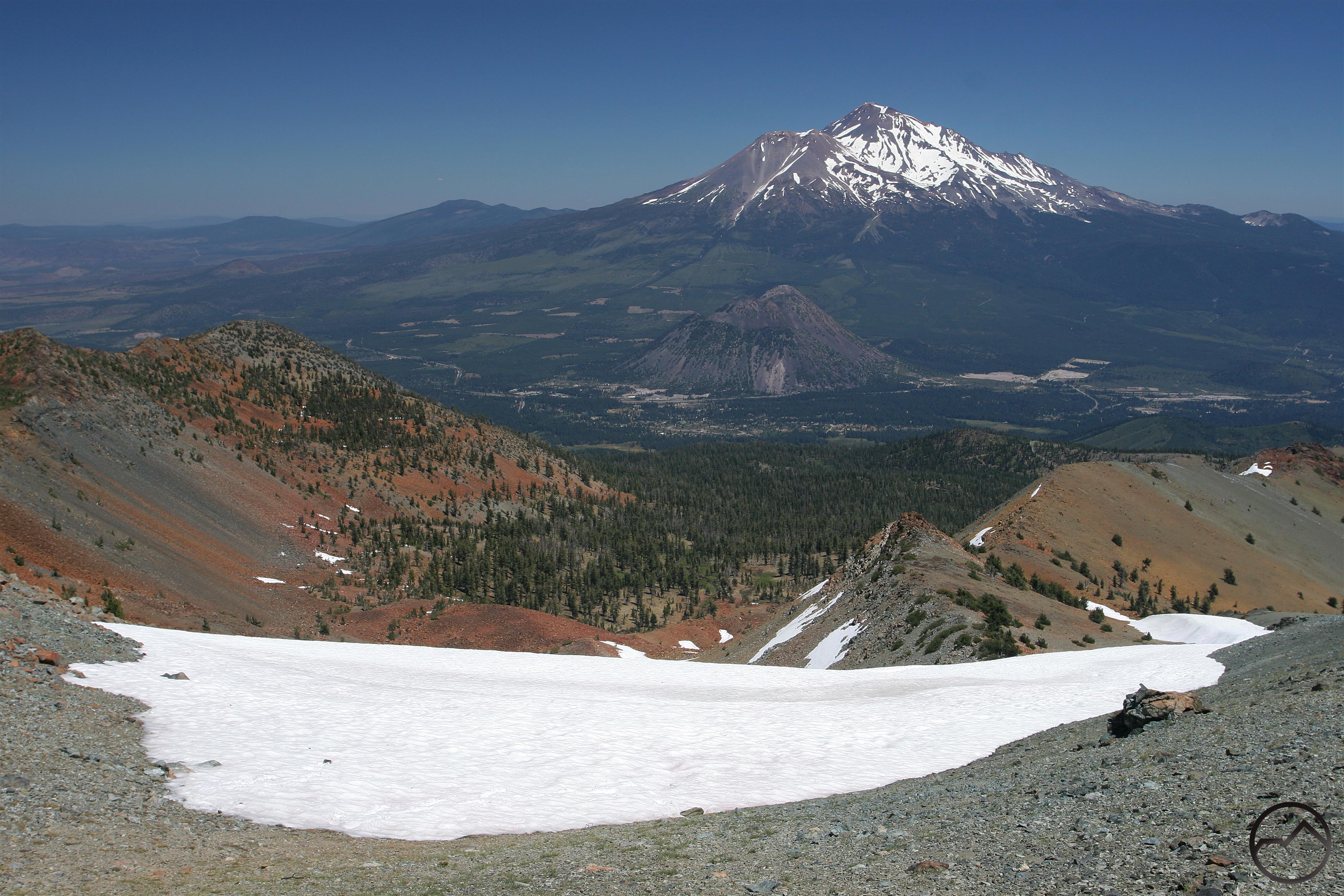
Mount Shasta presides over the view from the summit of Mount Eddy.

By any standard, Mount Shasta is a great destination for hiking trails. Whether hiking the timberline trails on the mountain itself, the alpine tracks that wind through the neighboring Trinity Divide or the refreshing paths that follow the Sacramento and McCloud Rivers, hikers are sure to find spectacular scenery. However, for those looking to enjoy the hikes around Mount Shasta, there is a bit of a quandary. The region’s unique geography means that those in Mount Shasta City are at the epicenter of a great trails system and a short drive in any direction will bring hikers to excellent trails. Mount Shasta lies to the east, the Trinity Divide lies to the west, the high desert trails of the Shasta Valley are to the north and the rivers are hidden away in canyons south (OK, southeast for the McCloud) of town. Hikers in McCloud, Dunsmuir and Weed, though not in the center of the ring, are all still only minutes away from fantastic hikes as well. Wherever one lives in the Mount Shasta area, there is a cornucopia of excellent trails to hike. On the other hand, for those visiting Mount Shasta, it can be difficult to decide which trails to hike. For many travelers, it is important to strike a balance between being active, getting the most out of the activity, and yet still finding time to relax and enjoy themselves.

Any time spent around Mount Shasta is worthwhile but to really experience the variety of the area three full days is probably the ideal minimum. This would allow for three hikes at a leisurely pace through three of the areas very different environments. This would also allow for plenty of relaxation in between stints on the trail. Although there are many great trails to hike, there are three that standout that, when combined over three days, provide the best opportunity to appreciate the incredible beauty and variety of the Mount Shasta area. These trails, the Deadfall Lakes Trail, McCloud River Falls Trail and the South Gate Meadow Trail on Mount Shasta are welcome repeats for regular visitors and a terrific orientation to the region for newcomers. More importantly, they provide some of the best scenery and vistas to be found anywhere in Northern California.
Day 1

Trinity Divide, Mt. Eddy - July2010 005 (Custom)

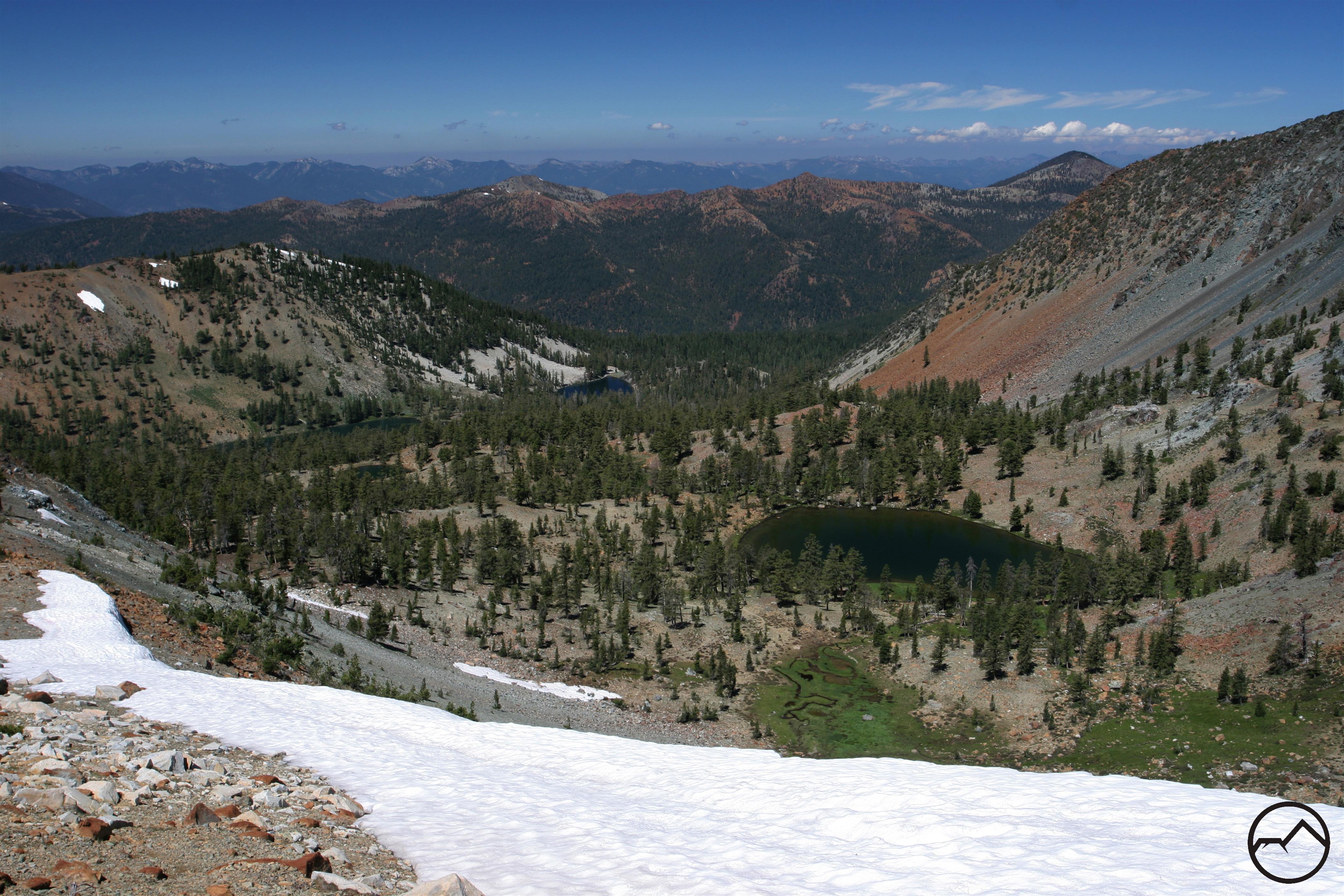
The Deadfall Lakes from Mount Eddy.

At the beginning of any endeavor it is important to orient oneself with the task at hand. When it comes to hiking around Mount Shasta, there is no better way to do this than climbing to the top of Mount Eddy. The second highest peak in the region (excluding Shastina and a few other subordinate peaks on Mount Shasta itself), the view from the summit of Mount Eddy is unparalleled. Stretching from just south of Lassen Peak to deep into southern Oregon, the vista from the top of Eddy takes in most of the North State’s most prominent landmarks including the entirety of the Trinity Divide, the Yolla Bolly Mountains, the Bully Choop area, the Trinity Alps, Russian Wilderness, Marble Mountains, the Siskiyou Wilderness, the Red Buttes, and the northernmost section of the California Cascades topped by the Goosenest. The Shasta Valley sprawls to the north, leading the eye to a host of southern Oregon landmarks including Pilot Rock, Mount McLoughlin, many of the rounded peaks of the Sky Lakes Wilderness, the ancient caldera of the Mountain Lakes Wilderness and even the rim of Crater Lake, far to the north. Of course, the looming mass of Mount Shasta dominates the view. It is a dizzying spectacle and sure to give anyone new to the area a strong sense of what is where. The stunning vista is not the only highlight of the Mount Eddy ascent. The trail to the top of the peak is tremendously scenic. Lush meadows with explosive wildflower displays, technicolor cliffs that range from orange to russet and the icy, alpine Deadfall Lakes are all featured prominently along the trail. Not only do these highlights along the trail enhance the scenery, they are also a great introduction to the unusual geology of the Trinity Divide.

Day 2

Cascades, McCloud River 008 (Custom)

Middle McCloud Falls.

After making the ascent to the summit of Mound Eddy, legs may be a little stiff so an easier hike on the second day is in order. This is a great opportunity to take a leisurely stroll along the McCloud River Falls Trail. This is one of the most popular hike in the Mount Shasta area and for good reasons. With the exception of one short, switchbacked climb near the middle of the hike, it is almost entirely level. However, an easy trail does not mean that it is slacking in terms of scenery. The trail parallels the McCloud River for its entire length. The river is swift moving and wild, carving a deep and scenic canyon through lava flows and layers of ancient tuff. As the name suggests, the river’s waterfalls are the real highlight of the hike. The McCloud pours of a trio impressive cataracts, each different from the others. The first, near the trailhead is the simplest. The river shoots over a hardened basalt lip and drops 10 feet into a deep pool. The second waterfall, in contrast, is one of the better waterfalls in Northern California. Tall and wide, Middle McCloud Falls is a blocky, rectangular drop about 50 feet high and nearly 100 feet across. It is an impressive sight and the roar of the river plunging over the precipice is nearly overpowering. The third and final waterfall is the most unique. Upper McCloud Falls shoots through a rocky gorge as it cuts through a deep basalt layer before it rockets over the edge carved into a cliff, plunging into another deep pool. There is a fantastic picnic area just above the Upper Falls and this makes a great turn around point. For those looking to hike a little more, the McCloud River Trail continues over 10 miles to the east. The next segment after the Upper Falls is among the best and makes a great add-on to the falls hike. Follow the river to the small, concrete Lakin Dam and the bayou-like marsh behind it. There is a nice little picnic area near the dam. While hikers can expect to have company on the falls trail, this area is practically abandoned and solitude come in abundance.
Bonus

Trinity Divide, Heart Lake - Nov2007 016 copy (Custom)

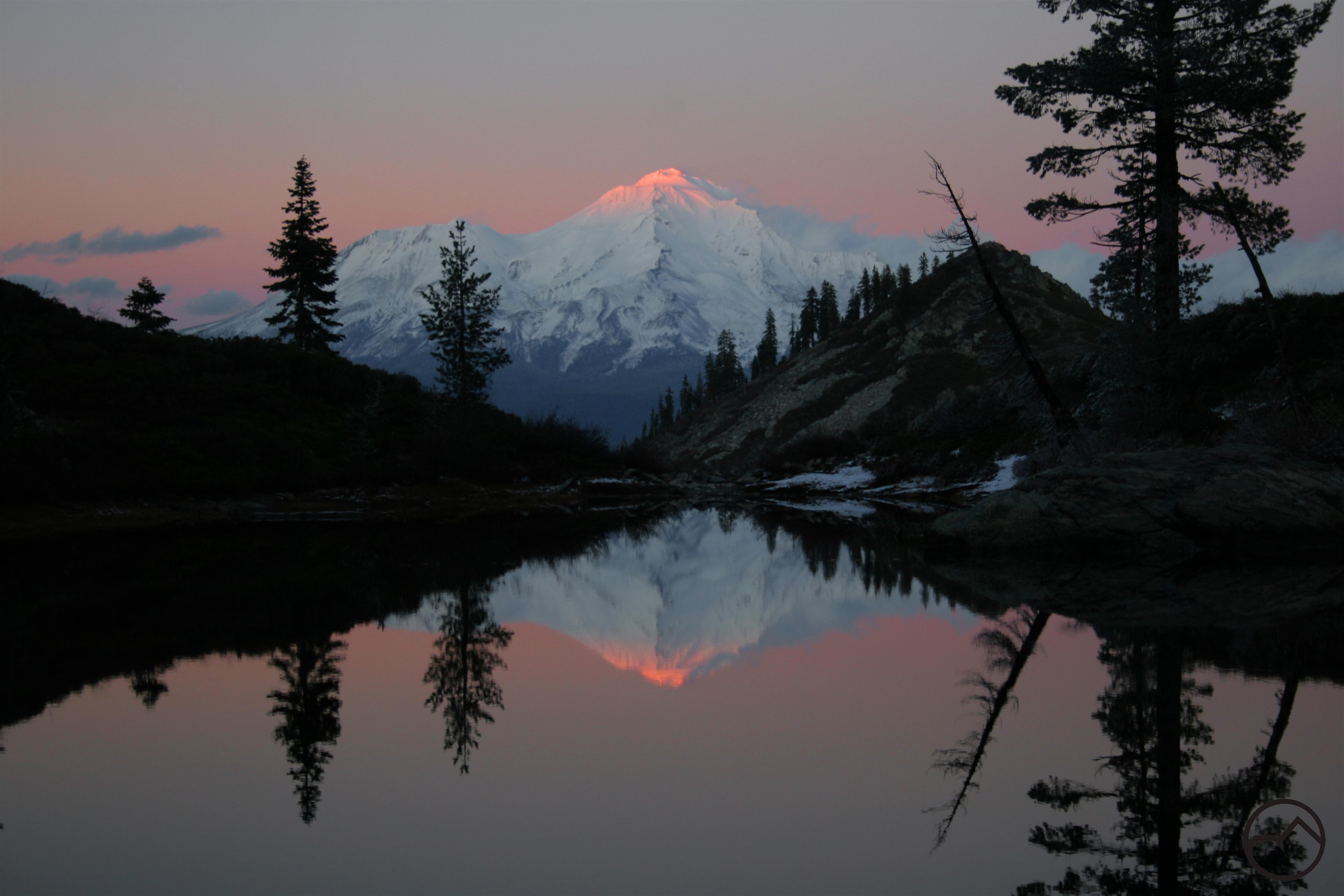
Sunset from Heart Lake.

The McCloud River Falls Trail is not necessarily an all-day affair and heading back to basecamp for some relaxation is certainly a great option. However, if hikers are more ambitious and like to maximize time on the trail, the Heart Lake Trail is a great afternoon or evening option. It is an easy drive up to the trailhead at Castle Lake, which is a worthwhile outing in its own right. From there it is only a quick but fantastically scenic hike up to tiny Heart Lake. What the diminutive tarn lacks in stature is more than makes up for in epic view. The small lake has a perfectly framed view of Mount Shasta and makes a phenomenal place to sit and watch the sunset reflect on the towering heights of California’s mightiest mountain. If the view from Heart Lake is not grand enough, an even more expansive vista can be had by climbing to the peak behind the lake. From the summit it is possible to take in much of the Mount Shasta area, including a staggering view of the rarely seen back side of the Castle Crags.  The hike back down to Castle Lake is short enough that quick hikers can complete the trip in the twilight, before darkness take hold. Otherwise, be sure to bring a headlamp.
Day 3

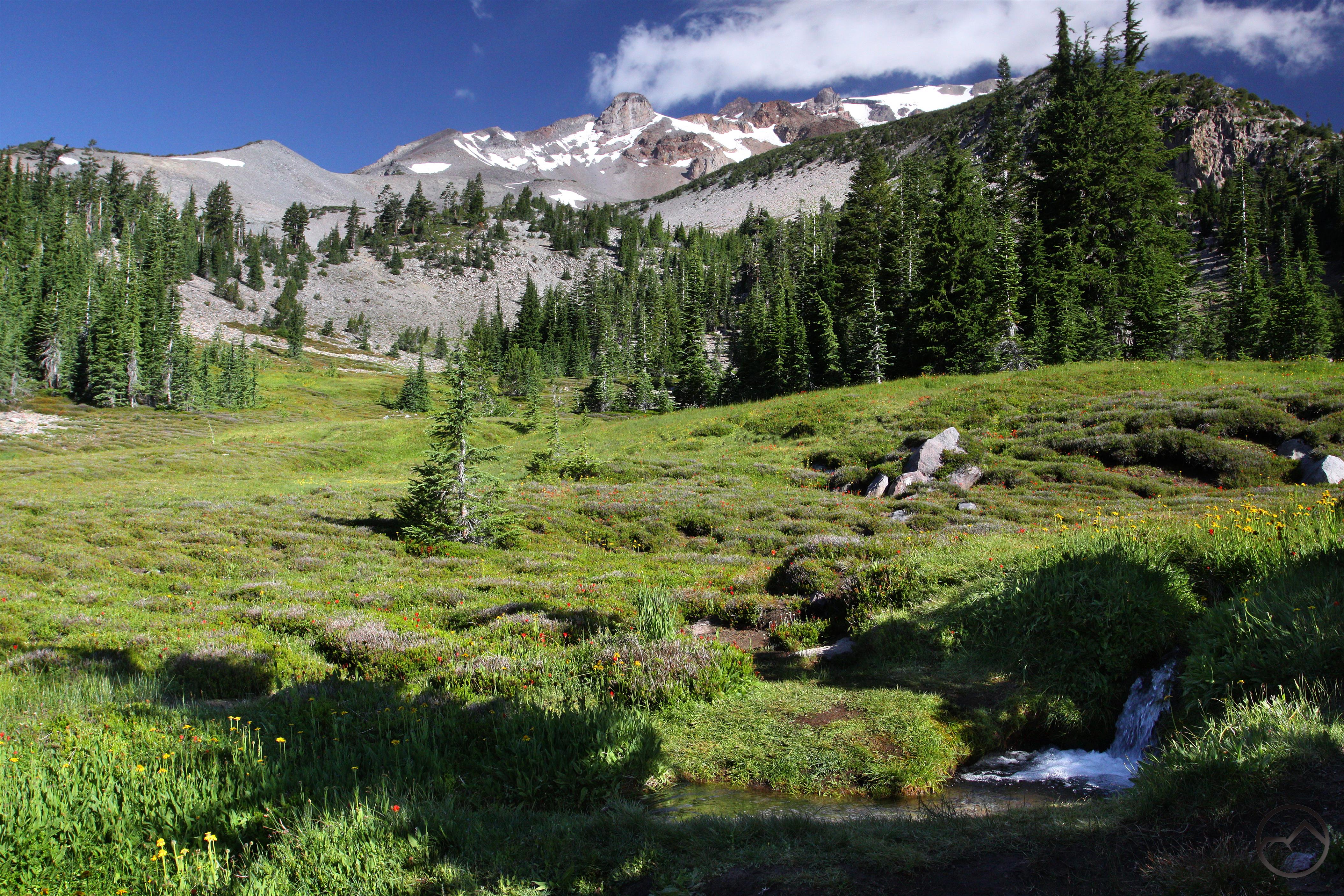
Verdant South Gate Meadow.

Verdant South Gate Meadow.

No trip to Mount Shasta is complete without a hike on the mountain itself. Of course, the best trails are not always an open to hiking, especially when the road from Bunny Flat up to the Old Ski Bowl is not open. Typically this section of the Everitt Memorial Highway is not opened until July 1st so it is not uncommon for hikes in this area to be inaccessible. If the road is open then the best hiking option on Mount Shasta is the trail to South Gate Meadows. Everything about this trail is fantastic. It has tremendous variety, it can be done as a reverse lollipop, it is fairly easy, spectacularly scenic, has excellent vistas and offers plenty of opportunity for exploration, including a chance to peer into gargantuan Mud Creek Canyon. The trail climbs through a gorgeous old growth red fir forest en route to the barren flats of the Valley of the Moon. Beyond the valley, which lies at the foot of imposing Red Butte, the trail passes through the narrow gap of South Gap. On the far side of the pass hikers only have a short distance to hike before arriving at verdant South Gate Meadows. This lush alpine garden is one of the prettiest and most serene spots on Mount Shasta. Fountains erupt surprisingly from the grasses and wildflowers grow in profusion. Behind it all rise the craggy towers of Sargents Ridge, including awesome Shastarama Point and needle-like Thumb Rock. The Konwakiton Glacier clings to the highest reaches of Mount Shasta. It is possible to hike all the way up to the springs from which spring icy streams that course through the meadow. The hike up to the source is highlighted by a tall cascade which separates the lower meadow from the upper section. For those looking to head off to the rim of Mud Creek Canyon, the cascade is near the spot where one will need to head off trail. On the return trip, the path splits just after passage through South Gate. Rather than heading back the same way, it is possible to head to the right, hike up delicate Hummingbird Meadow to a high pass with awesome views. From there, the trail drops down into the Old Ski Bowl with great views of the Trinity Divide and Trinity Alps almost every step of the way. Once at the Old Ski Bowl parking area, a use trail leads down to lush Panther Meadow and the trailhead, ending a truly spectacular hike.

Since hikers will already be up on the mountain, it is worth packing a picnic dinner or some snacks. Head back up to the Old Ski Bowl and enjoy a stunning sunset from the tables that scattered around the area. The views are epic and the landscape is gorgeous. It is the perfect end to three action-packed days in Mount Shasta.
Seldom Seen: Lower Mud Creek Canyon

Posted by bubbasuess on June 8, 2014
Posted in: Hiking, Mount Shasta, Seldom Seen, Waterfalls. Tagged: Mud Creek Canyon. 8 Comments
Cascades, Mt Shasta, Mud Creek - June2014 062 (Custom)

Mount Shasta gazes down into lower Mud Creek Canyon.

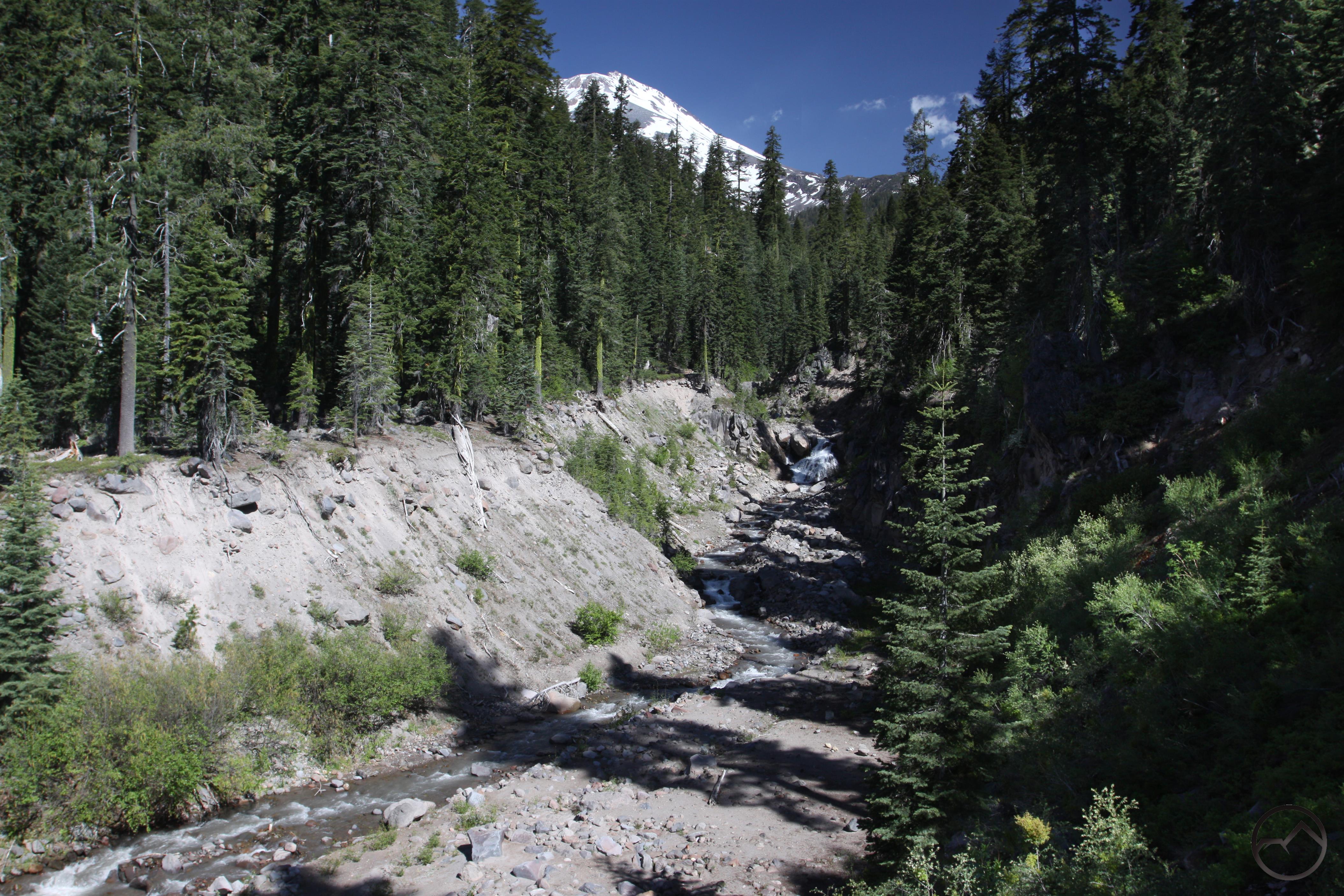
Mount Shasta is a mighty mountain with formidable geography. Its towering, icy heights soar far above everything else in its presence and much of the mighty volcano is cloaked in mystery to the average person. This is with good reason, considering the skills required to climb the high slopes. However, what comes as a surprise is the extent to which the mountain’s mystery extends to the lower flanks and obscures from view many sights that would normally attract hikers. This is the case with Ash Creek Falls, Diller Canyon and many, many other places that are quite easy to get to, if there was an awareness of their existence or their accessibility. This is the case with Lower Mud Creek Canyon, a lost gem on the southern flanks of Mount Shasta.

Cascades, Mt Shasta, Clear Creek - June2014 022 (Custom)

Epic Mud Creek Canyon.

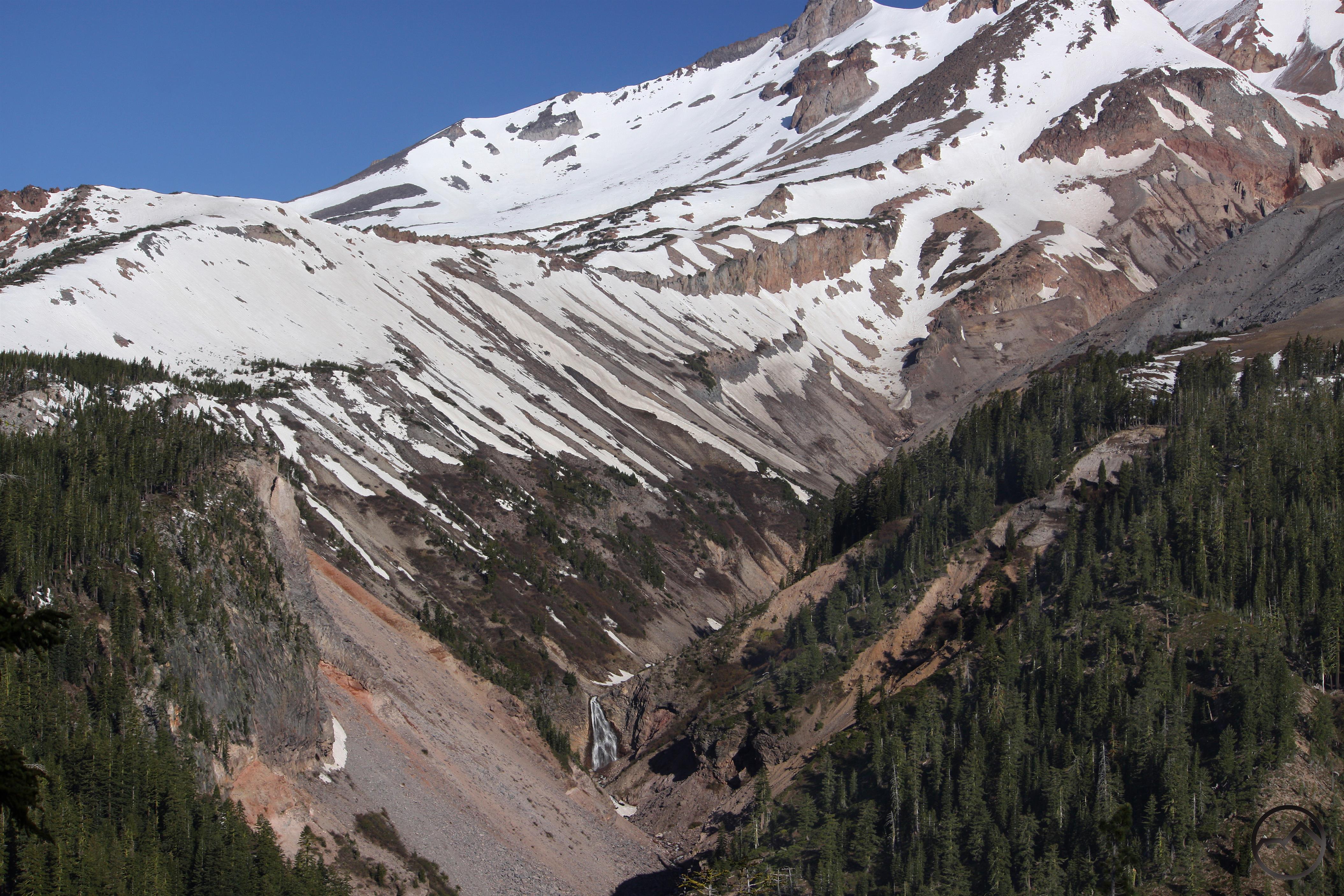
Mud Creek Canyon is easily among the most dramatic, spectacular features on Mount Shasta. If the mountain had been designated a national park as John Muir had advocated, the canyon would surely draw more attention and have achieved an iconic status. Even though Mud Creek Canyon languishes obscurity it remains one of the most staggering and stupendous natural wonders in California. Beginning high on the south side of Mount Shasta, at the foot of the Konwakiton Glacier, the canyon begins its epic descent down the flanks of the mountain. At its mouth, nascent Mud Creek pours several hundred feet over Konwakiton Falls. Below the waterfall the narrow canyon deepens considerably while the creek disappears beneath a layer of scree-encrusted ice and loose rubble. Nearly a mile below Konwakiton Falls the canyon widens and takes on the classice V-shape of the other gorges on the flanks of Mount Shasta. However, while the shape may be the same, the proportion is not. Rather than being several hundred feet deep like canyon siblings, this section of Mud Creek Canyon is well over 1,000 feet deep. Its scale is simply epic. The large V-shaped section comes to an end at an impressive band of cliffs where Mud Creek flows of its magnificent, eponymously named waterfall, the largest on Mount Shasta. Below the falls Mud Creek is joined by Clear Creek, which has just completed its own 1,400 foot descent down a series of awesome cascades. Below the confluence, the canyon takes on a more typical appearance with wooded slopes punctuated by occasional cut banks, though it is still nearly 800 feet deep. From here the canyon is lost from the public consciousness as its journey takes it beyond the sight of any trails. It does not emerge into view again until its journey is nearly complete and is crossed by Pilgrim Creek Road and Highway 89.

Cascades, Mt. Shasta, Mud Creek - June2014 037 (Custom)

Wild flowing Mud Creek.

Naturally most attention given to Mud Creek Canyon, scant though it generally may be, is lavished on the splendid upper section. The massive scale, staggering canyon and awesome waterfalls are naturally going to draw the attention of hikers. The lower canyon is utterly forsaken. Few people think to explore what possibilities it might hold and fewer still purpose to explore this lost section of canyon. What lies beyond the curtain of mystery is a fantastically scenic canyon. Mud Creek is untamed and raucous, the forests are deep and ancient and a vital sense of wilderness pervades the canyon. Surprisingly, it is not difficult to penetrate the unknown and enjoy the beautiful canyon. An old road once pushed into the wooded canyon and ran parallel to Mud Creek. The lower section of the road saw some logging activity a long time ago. Passed these areas the old run enters the Mount Shasta Wilderness and quickly degrades into what would more accurately be described as a trail. Though there are signs of recent activity they are minimal and it is obvious that the canyon has been lost to all but a mere handful of people.

Cascades, Mt. Shasta, Mud Creek - June2014 086 (Custom)

A large cut bank on Mud Creek.

Without doubt, the most interesting feature in lower Mud Creek Canyon is Mud Creek itself. The creek runs all year and is, along with Squaw Valley Creek, one of the two largest creeks that begin on Mount Shasta. Its character resembles its distant relatives, the large rivers that rise full-grown from the glaciers on the Cascade giants to the north like Mounts Rainier and Hood. On those grand mountains, rivers such as the Sandy, Zigzag, White, Cowlitz and Puyallup Rivers emerge from their similarly named glaciers and flow off their host mountain. Like those river, Mud Creek begins its journey on the Konwakiton Glacier. Also like those rivers, its channel is wide and strewn with the detritus of Mount Shasta that has been carved off by glacial activity and subsequent erosion. Also like those rivers, Mud Creek does not flow clearly and is clouded by glacial flour and other bits of Mount Shasta as it slowly grinds away at the mountain. While much smaller than the aforementioned rivers, Mud Creek is still a large creek and its channel is cut deeply into the canyon. In fact, the river has a secondary course within the primary channel. The main channel is 20-30 or more feet deep and composed of the boulders and loose silt Mud Creek has washed off of Mount Shasta’s higher flanks. Within that channel the creek winds and weaves its way through the rocks. Numerous cut banks add a rugged and evolving beauty to the creek and canyon. Mud Creek is quite wild and very attractive and its character is entirely different from the other large creeks in the Mount Shasta area. For this reason alone lower Mud Creek Canyon is worth exploring.

Cascades, Mt Shasta, Mud Creek - June2014 080 (Custom)

Lower Mud Creek Canyon’s lost waterfall.

The real highlight of journeying into the lower section of Mud Creek Canyon is the delightful waterfall hidden away in the canyon’s lost recesses. While there are several unnamed and unappreciated waterfalls on Mount Shasta, nearly all of them are at higher elevations, require long or difficult drives, cross country exploration or are simply inaccessible because of the terrain. Consequently, Mount Shasta is generally not thought of as a premier waterfall destination and several truly stunning waterfalls go unappreciated. Ironically, the waterfall in lower Mud Creek Canyon is easy to reach and, while it lacks the height of the other waterfalls on Mount Shasta, is wonderfully attractive. Pouring over a hard, erosion-resistant bench, the falls shoot through an extremely narrow section of the canyon. The top of the waterfall is constricted by a trio of boulders, forcing the water to gush through a fairly narrow slot. A pair of smaller waterfalls spill through the gaps between the three boulders. Below the narrow upper section of the falls, the water hits the dense rock and explodes into a wide fan as it crashes into the rocks at the bottom. The entire waterfall is about 25 feet or so high. Not tall, but especially scenic and made all the more so by being thoroughly unknown.

Cascades, Mt Shasta, Mud Creek - June2014 084 (Custom)

Shasta Red Firs surround Red Fir Falls.

It seems fitting that the falls should have a name. The logical choice would be Lower Mud Creek Falls but this lacks a certain `elan. This falls is also very distinct in character from its sibling further upstream and fails to take into account the possibility of additional cataracts hidden in the deep recesses of Mud Creek Canyon. In fact, considering that the lost falls is more than two miles downstream from Mud Creek Falls, the two seem to have little to do with each other except for being on the same creek. Consequently, the “lower” appellation seems all the more inappropriate. Unfortunately, there are few other names in the area that would be fitting to adapt into a name for the waterfall. The only really viable option is nearby Red Fir Ridge. The wall that forms the west side of lower Mud Creek Canyon rises over 1,000 feet to a long ridge, which is the Red Fir Ridge. The presence of excellent old growth Shasta red fir throughout lower Mud Creek Canyon and especially around the falls makes the Red Fir moniker all the more apropos. Consequently, at least for the purposes of discussion on Hike Mt Shasta, the waterfall in lower Mud Creek Canyon is dubbed Red Fir Falls.

Whether hikers are seeking solitude, a wild, boisterous creek or a great waterfall, lower Mud Creek Canyon is a fantastic destination and is begging to be explored and appreciated.

Lower Mud Creek Canyon Gallery

Lower Mud Creek Canyon

Lower Mud Creek Canyon

The lowest of the large waterfalls on Mud Creek Canyon.
Mount Shasta peeks out above the lowest section of Mud Creek Canyon.

As always, for those interested in learning the route to lower Mud Creek Canyon, send me an email and I will give directions.

Trinity Alps Trails In The Carter Meadow Area

Posted by bubbasuess on June 6, 2014
Posted in: Hiking, Lakes, Mount Shasta, Pacific Crest Trail, Trinity Alps. Tagged: Carter Meadow, Hidden Lake, Long Gulch Lake, South Fork Lakes, Trail Gulch Lake. 3 Comments
Trinity Alps, Gulch Lakes - Oct2013 104 copy (Custom)

Long Gulch Lake in the Trinity Alps.

The northeast corner of the Trinity Alps is often overlooked when it comes to hikes in the Mount Shasta area. With trailheads just a little over an hour from Mount Shasta City, this area is still well within a reasonable orbit for dayhikes from town. It is an easy, scenic drive over to Callahan and then just a few minutes from the small town to the numerous trailheads in the area. Most of the trails in the area climb up drainages in the Scott Mountains, which forms the northeast breastwork of the Trinity Alps Wilderness. This mountain range actually begins by Mount Shasta and extends westward, the western section falling into the large wilderness area that encompasses the Trinity Alps. While not as grand as the high, alpine region that lies at the granite heart of the Trinity Alps, this section of the Scott Mountains is loaded with fantastic scenery. The trails here typically run parallel to creeks as they climb up to lakes that lie at the head of their drainage. Consequently, most of the trailheads only provide access to one area. The great exception to this is the Carter Meadows area, which is the beginning to three great hikes.

Though all three trails lead to lakes, it is surprising how different they are. The first two trails, the South Fork Lakes Trail and the Hidden Lake Trail depart from a single trailhead and are both fairly short hikes. The former is a pair of small but fantastic lakes in a hidden lake basin. Rocky and vertical, the secluded basin is spectacular. In contrast, though Hidden Lake is impressive, it has an open, homey and accessible feel to it, though it is still quite scenic as well. Located just a very short drive away, the Gulch Lakes Loop is one of the best hikes in the Trinity Alps, complete with two excellent lakes and canyons with some beautiful meadows and great long-distance views sprinkled in for good measure. Though longer than the other two trails combined, the Gulch Lakes Loop is not difficult and makes for a great full day of hiking.

In between the two trailheads is the Carter Meadows campground. If making the drive from Mount Shasta (or elsewhere!) and back in the same day is unappealing, then it is possible to do all three trails in a single weekend with easy, scenic camping right by the trailhead. There is also a horse oriented campground with a corral a short walk away from the Carter Meadow campground. These facilities make the Carter Meadow area a convenient, albeit extremely scenic place to enjoy some solitude and great hiking.

South Fork Lakes Trail

Trinity Alps, South Fork Lakes - Oct2013 024 copy (Custom)

Upper South Fork Lake.

Constituting the headwaters of the South Fork of the Scott River, the South Fork Lakes, though small, are fantastically scenic. Tucked away in a high, hidden cirque at the foot of a triple divide peak, the lakes are at once remote yet quickly accessible from the trailhead. The lakes are not large by Trinity Alps standards but the upper lake’s depth of 34 feet is impressive. This is significantly deeper than other similarly sized lakes in the area. Though the South Fork Lakes are a fairly short distance from the trailhead, there is one notable obstacle that confronts hikers looking to enjoy their tranquil waters. After peeling off of the PCT, the South Fork Lakes Trail enters a large cirque with tall cliffs towering more than 800 feet overhead. To reach the lakes, it is necessary to surmount the cliffs. Fortunately the climb is made more palatable with some great views of the Scott Valley to the north and a large complex of springs. When the trail finally levels off, hikers are deposited in another large cirque lined with ragged cliffs. It is only a short jaunt to Lower South Fork Lake. It is a pretty body of water but is no match for its higher sibling. Here the cirque headwall emerges directly from the upper lake’s water and soars over 1,000 feet above. The rocky cliffs are quite dramatic and well worth the effort necessary to reach the excellent spot.

Hidden Lake Trail

Trinity Alps, Hidden Lake - Oct2013 059 copy (Custom)

Hidden Lake.

Distinctive because it is one of the shortest hikes in the Trinity Alps, the Hidden Lake Trail packs in far more scenery than its short duration would lead hikers to expect. Beginning at the same trailhead as the PCT section that leads to the South Fork Lakes Trail, the path to Hidden Lake boasts some grand scenery fairly quickly. A succession of basins and peaks extends to the west, all lining the rim of the headwaters of the South Fork of the Scott River. Hidden Lake itself is not part of the Scott River watershed. It is instead one of the initial sources of the laboriously named East Fork of the South Fork of the Salmon River, one of the large tributaries of the massive Klamath River. The trail actually climbs the divide between the headwaters of these two river systems. Beyond the views the trail climbs steeply up to the lake, where tall, dark cliffs tower over the small lake. It is hard to believe that such a fine destination is only 1 mile away from the trailhead.

Gulch Lake Loop

Trinity Alps, Gulch Lakes - Oct2013 074 copy (Custom)

Trail Gulch Lake.

Though it is tucked away in a far corner of the Trinity Alps, the Gulch Lakes Loop boasts some of the finest scenery of any of the trails located in the Trinities outer periphery. Looping through two deep canyons lined with sheer cliffs and sharp pinnacles, the trail passes through beautiful meadows and alongside raucous creeks. The Gulch Lakes, unceremoniously named Long Gulch Lake and Trail Gulch Lake, are crystalline jewels nestled at the foot of tall granite cliffs. Each lake is located at the head of their respective canyon (or gulch, as it may be) and are drained by their separate and eponymously named creeks. The loop trail is completed by climbing out of one canyon, traversing a ridge and then dropping back down into the adjacent canyon. While this does necessitate some climb, it has the bonus of adding some great long distance views to a trail that is otherwise found at the bottom of a canyon. The granite heart of the Trinity Alps is visible to the south while the large Coffee Creek drainage spreads out to the southeast. A highlight is a chance to glimpse the rarely seen rugged north face of Billys Peak, a very underrated mountain. Though the views are great and the canyons walls, meadows and creeks add a lot of interest along the trail, the true highlight of the loop is the pair of lakes. Similarly sized, both lakes rest at the foot of tall granite cliffs. One unusual feature of the hike is the opportunity to observe both lake from their shores as well as from vistas perched high overhead. It gives both a sense of limnic intimacy as well and grand proportion. Taken together, this is one of the most view-packed and scenic hikes in the Trinity Alps.

Carter Meadows

Mount Shasta Area’s Seldom Seen Round Up

Posted by bubbasuess on June 1, 2014
Posted in: Hiking, Mount Shasta, Seldom Seen. Leave a comment
Epic view of Mount Shasta and Mud Creek Canyon.

Upper section of Mud Creek Canyon on Mount Shasta.

One of the great draws the mountains have on me is the constant opportunity to discover spectacular new places and amazing new sights. Obviously it would be foolish to be under the illusion that I was the first to ever see these things but the fact remains that there are many incredible spots that simply go unappreciated. Inevitably, whether in Mount Shasta or the great national parks, it is always the same admittedly great spots that wind up getting photographed, appearing on postcards and attracting visitors. While I readily confess my appreciation for these well-traveled spots, I find myself drawn back to those places that are overlooked or forgotten yet just as amazing as the well-known locales. It is for this reason that the ongoing series examining sites that are seldom seen remains my favorite subject to write about here on Hike Mt Shasta. I have been holding back on numerous posts on this site, waiting for the warm season to arrive, the high country to open up and the trails to be open. I wanted the posts to be salient to the season. This is also true of the Seldom Seen posts. Several should appear over the course of the summer. It is my hope that writing about these incredible places and posting some interesting images will inspire folks to get out and explore the awesome natural bounty we have here in Mount Shasta.

Before diving headlong into the summer season, I thought it might be interesting to briefly review the hidden places that have already appeared in the Seldom Seen series. Most of these are accessible now and it is certainly high time to get outside and start exploring!

Ash Creek Falls

Cascades, Mt Shasta, Brewer Creek - July2012 099 (Custom)

Ash Creek Falls and Mount Shasta.

My favorite spot on Mount Shasta, Ash Creek Falls is a world-class waterfall that somehow manages to stay under the radar. It remains seldom seen despite not being entirely unknown. This is largely due to the fact that is accessed via Mount Shasta’s remotest trailhead and requires off-trail route finding across the wild flanks of the volcano. However, reaching a perch where the waterfall is visible is not particularly difficult and those who make the effort to get there are rewarded with an absolutely staggering vista. Glacier born Ash Creek races down a massive, wild canyon before reaching a band of hard rock and plunging over the cliffs. At nearly 350 feet it is an impressively tall waterfall that boasts a fairly substantial flow. It pours gracefully over the precipice and crashes and then crashes into the protruding cliff, exploding into a mighty shower before collecting again at the large pile of rocks at its base. Above all of this is mighty Mount Shasta, gazing down proudly at one of its most amazing features.

Mud Creek Canyon

Awesome Mud Creek Canyon.

Mud Creek Canyon.

Though not particularly well known, Mud Creek Canyon is one of Northern California’s most incredible landmarks. Perhaps it is overlooked because it is only part of Mount Shasta, but the fact remains that anywhere else, it would be a tremendous landmark. Cutting deeply into the side of Mount Shasta, the canyon, over 1,000 feet deep, begins near the volcano’s summit and extends nearly 7 miles to the south. Though the canyon is believed to be one of the oldest features on Mount Shasta, remnants of the primordial proto-Shasta, it is still in the process of taking shape. The canyon walls, composed of loose scree, are still seeking their angle of repose and the clatter of falling rock is consistently audible while standing on the canyon rim. The interior of the canyon is remote and nearly inaccessible. The few places where it is realistic to descend see little use, simply because few know they are there. Mud Creek, filled with glacial flour and the eroded detritus from the canyon crashes through bottom. The highlight of the scene is Mud Creek’s waterfalls. Scattered throughout the canyon, they range from wispy cataracts pouring over high cliffs just below the mountain’s summit to mighty plunges raging over cliffs deep in the chasm. The entire sight is staggering and easily one of the most magnificent features on Mount Shasta.
Diller Canyon

Cascades, Mt Shasta, Diller Canyon - March2014 034 (Custom)

Diller Canyon.

Although Diller Canyon is one of the most visible features on Mount Shasta, it is also one of the least visited. This is a bit surprising considering its easy access from Mount Shasta City and its incredible beauty. Easily visible from I-5, it is a ubiquitous sight from the foot of the mountain but is rarely appreciated from within. The canyon is located on Shastina, Mount Shasta’s mammoth secondary cone. It begins just below the summit of Shastina and is the only outlet of the crater. It is impressively wide at the top but narrows considerably as it descends the side of the mountain. An old road pushes into the canyon’s midsection and provides easy access to the interior. Though it is seldom seen, the sight of the massive canyon rising high on the mountain to the crown of rugged spires that ring the top of Shastina is a vision not easily forgotten.

The Grey Rocks

The Grey Rocks and Cerulean Lake.

The Grey Rocks and Cerulean Lake.

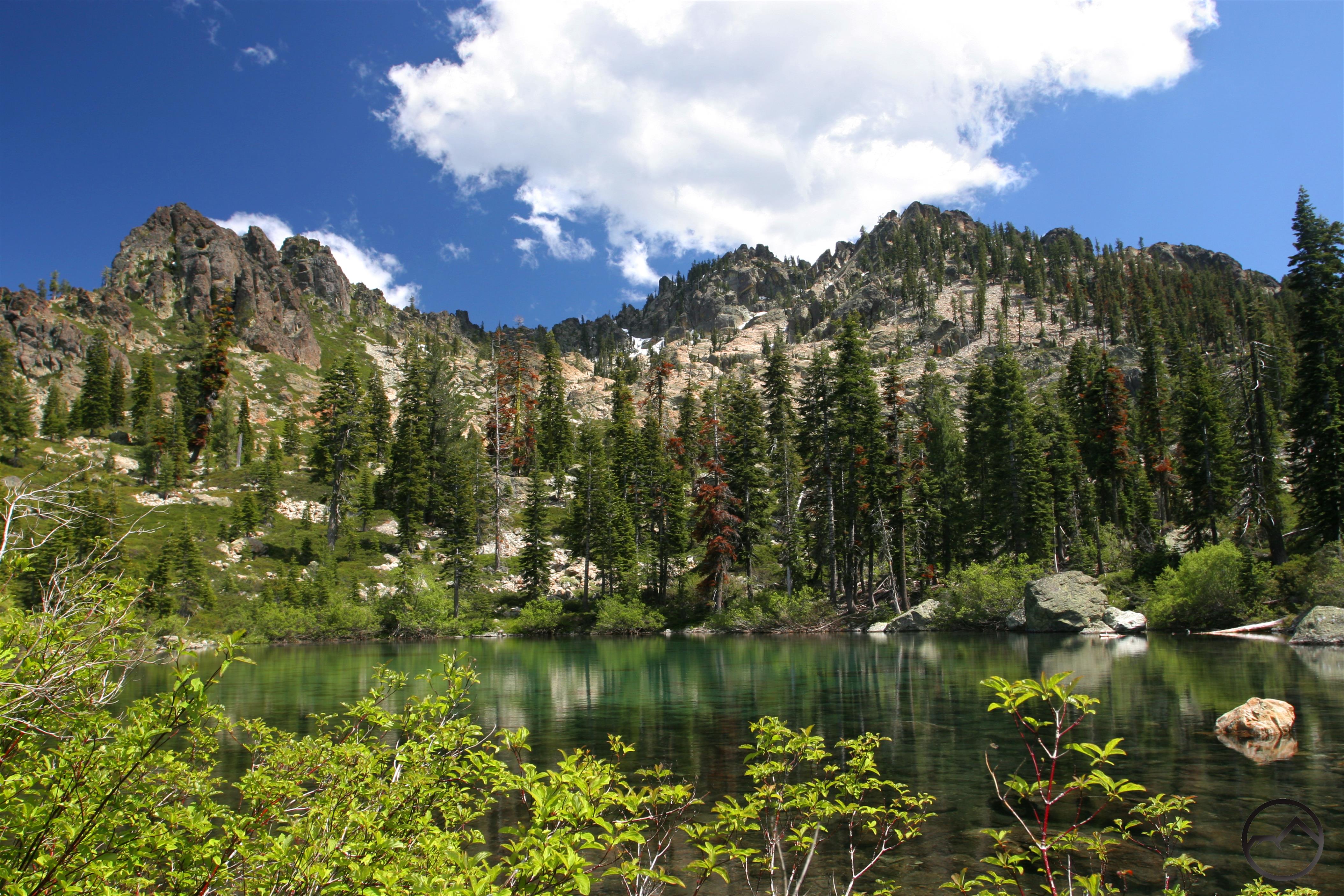
There is something mysterious about the Trinity Divide’s Grey Rocks. Almost no literature mentions them, there are no trails in them and there are not many easily accessible vantage points. Most who do set eyes on the Grey Rocks do so briefly from southbound I-5 as it drops into Castella or from the Everitt Memorial Highway, near Bunny Flat. These views reveal towering gray peaks cutting away at the sky. It is easier to observe them from trails in the Trinity Divide, where the Grey Rocks are a frequent and ominous presence. Their dark bulk is imposing even from a distance. Sadly few ever venture into the heart of the Grey Rocks and what is missed is a tremendous landscape filled with massive cliffs, meadows and crystalline lakes. It is a mountain paradise that rarely sees intrusion from the outside world.

Confluence of the Sacramento River and Castle Creek

Trinity Divide, Castle Crags - April2012 023 copy (Custom)

Confluence of Castle Creek and the Sacramento River.

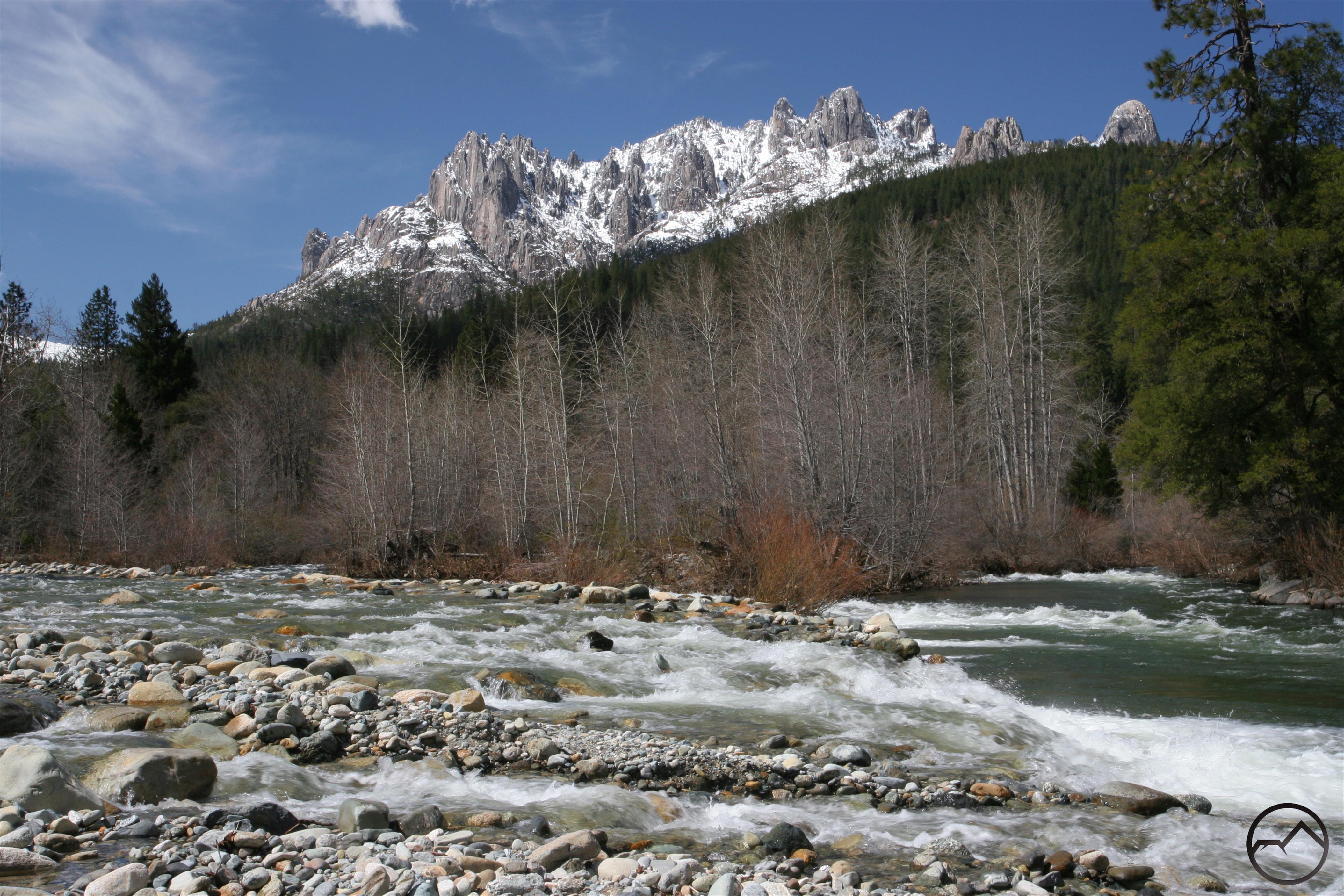
There are few things in Northern California as awesome and majestic as the Castle Crags. If not for the presence of Mount Shasta, the Crags would no doubt be a much, much larger attraction than they are. One cannot drive on I-5 and not be filled with wonder at the enormous, chaotic jumble of granite spires rising above the forest. Yet, for all of their splendor, it is often hard to appreciate the Castle Crags. Few trails penetrate the granite wonderland and, short of climbing some of the high peaks of the Trinity Divide, there are few really good vantages that really highlight how excellent this formation is. One of the best places to appreciate them is from the confluence of the Sacramento River and Castle Creek. This spot is pretty much off of the radar and very, very underappreciated. It is an epic sight. As large Castle Creeks joins the Sacramento River, it cascades down a wide, rocky embankment about 7 or 8 feet high. This noisy cataract is caught between the cacophony of the large creek and the river. The drama of the two waters joining is presided over by the transcendent Crags, looming high overhead.

Upper Klamath River Canyon

Klamath River - Oct2013 019 copy (Custom)

Upper Klamath River Canyon.

Though not as famous as many of its peers, the Klamath River is one of the great rivers of the American West. With its headwaters deep in central Oregon, it winds 263 miles to the California coast through deep canyons, high desert and dark forests. Along the way, the river cuts through the width of the Cascade Range, one of only three rivers to accomplish this feat (most famously done by the Columbia River at the Columbia River Gorge). The Upper Klamath River Canyon marks the river’s passage through the heart of the Cascades and despite the spectacular canyon and the momentous nature of its journey, this section of the Klamath River is virtually unknown outside of the immediate (and incredibly small) Copco area. Yet the river has carved an impressive canyon through the mountains and it fantastically scenic. The best time to visit is during autumn, when the fall colors are on display and the canyon becomes an amazing natural kaleidoscope.

Hole In The Ground Geologic Area

Cascades, Hole-In-The-Ground (3)

Hole In The Ground.

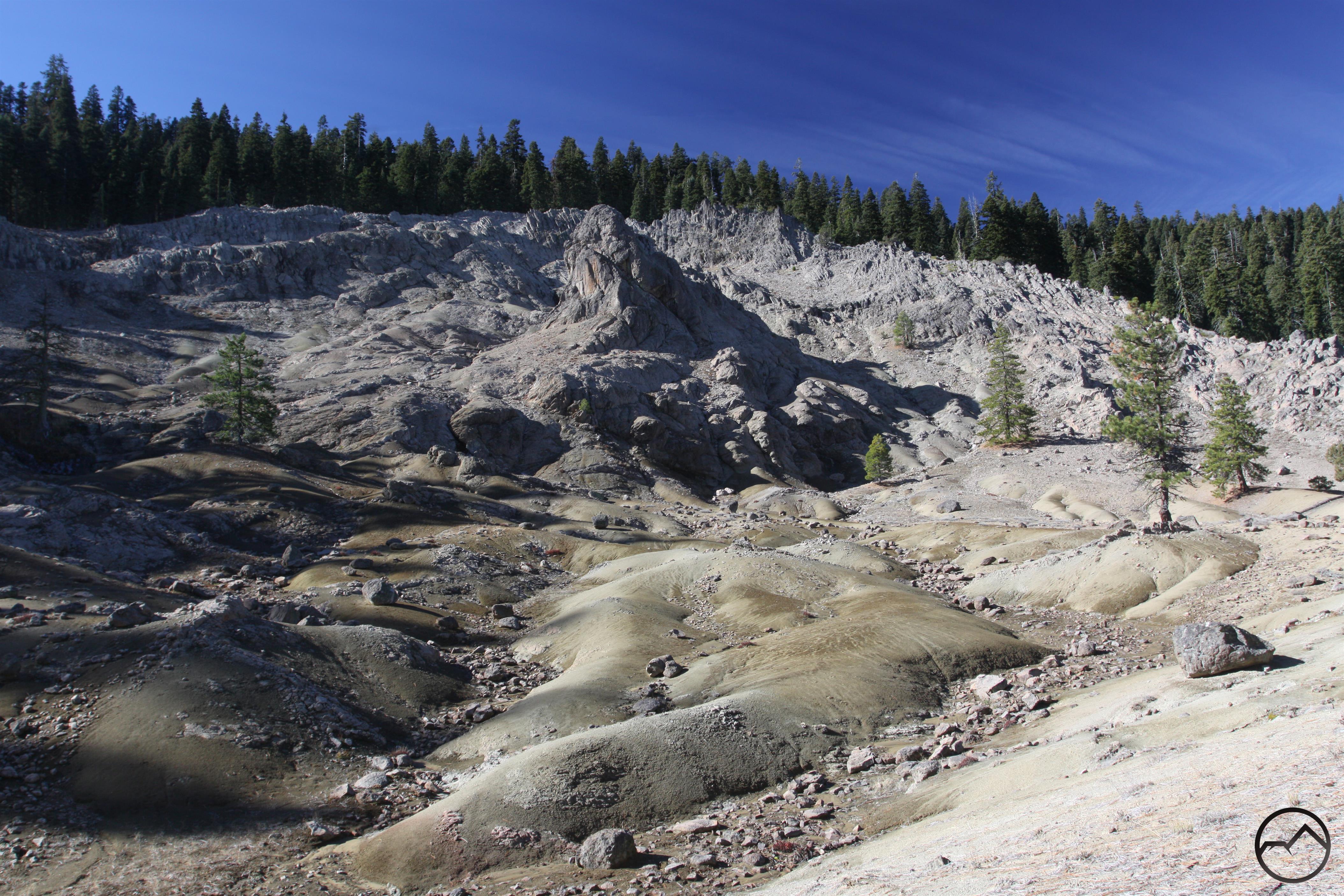
Hidden in the deep forests of the Cascades crest, the Hole In The Ground is a lost wonder that stands out as one of the most fascinating and scenic volcanic features in the Mount Shasta area. The reason for its anonymity is largely due to the fact that there is almost no development of recreational resources along the Cascade crest. Aside from two modest trails and some remote campgrounds, there are no developed destinations to attract people here. Yet this part of the Cascades is not without its sights and Hole In The Ground is an excellent example of the area’s potential. Where much of the Cascades in this area is blanketed in thick forest, the Hole In The Ground erupts from the forest dramatically. Remnants of a powerful volcanic blast, the area seems to be an old crater with a classic volcanic moonscape. Jagged rock and badlands are now found where pines and firs once stood. In the center is a tall volcanic neck, evidence that lava once flowed here. Though no trails exist here it is not difficult to find and easy to explore. Those who do venture here are sure to appreciate its stark beauty.

Neglected Headwaters: Two Lesser Lake Basins On The South Fork

Posted by bubbasuess on May 19, 2014
Posted in: Hiking, Lakes, Mount Shasta, Pacific Crest Trail, Trinity Divide, Wilderness. Tagged: Gumboot, Soapstone. 3 Comments
Trinity Divide, Gumboot Lake - June2009 006 copy

Gumboot Lake

The South Fork of the Sacramento River is the largest of the three headwater canyons of the Sacramento River. It is longer and broader than the Middle and North Forks. Notably, it also has the most lakes by a pretty wide margin. The North Fork has no lakes at all; instead the river emerges from a vast complex of meadows at the head of the canyon. The Middle Fork boasts fine limnic specimens in Porcupine and Toad Lakes as well as the diminutive and remote Chipmunk Lake. The South Fork, on the other hand, claims 11 lakes and numerous smaller unnamed tarns scattered through four lake basins. In terms of sources of water for the South Fork, these lakes are also by a large series of meadows in under-appreciated Fawn Creek Canyon. It is easy to see why the South Fork is the largest of the Sacramento River’s three forks.

Trinity Divide, Soapstone Basin - August2013 043 copy (Custom)

Rocky ridge above Soapstone Basin.

Most of the South Fork’s lakes are divided up between the Gray Rock Lakes and Cliff Lakes basins (read more about them here). These are spectacular examples of classic alpine lakes beset soaring, rocky cliffs. They are impressive destinations by any standard. The other two basins, Gumboot and Soapstone, are very different. Though there are attractive cliffs and rocky points on the ridges above the basins, they are not particularly impressive. Gumboot Basin is not very big but it does contain a pair of nice lakes. This is in noticeable contrast to Soapstone Basin. Although it is by far the largest basin along the South Fork of the Sacramento, it contains no lakes whatsoever. The only body of water present is the diminutive Soapstone Pond. Both shallow and small, the pond is ringed with dense forest and hardly makes a worthy destination for a hike. Still, Soapstone Basin itself is scenic in its own right and worth exploring. Both the Gumboot and Soapstone Basins have trails that climb up the basin headwall and eventually link to the Pacific Crest Trail. Neither trail is very long nor offers spectacular scenery, though they are still scenic enough. However, the sections of the PCT accessed by the two trails offer absolutely spectacular vistas and make awesome destinations for these two modest trails.

Gumboot Basin

Seven Lakes Basin - June2008 011_edited-2 copy

Amazing view of Mount Shasta from the PCT.

Easily the most heavily trafficked of the South Fork’s four basins, Gumboot Basin is a pretty lake basin that has all the ingredients of a classic alpine destination but lacks the scale to really elevate to the level of being spectacular. The main lake, Gumboot Lake, is a pleasant body of water set in a shallow bowl and ringed with lush meadow. A scenic bluff sits just to the southwest of the lake and makes an nice, albeit not particularly impressive, backdrop to the lake. A short distance away from the lake is its smaller sibling, Upper Gumboot Lake. Although it is easy to reach, it only gets a fraction of the attention of the larger lake, nor is it as scenic. It must be noted that Gumboot Lake is one of only two lakes in the Trinity Divide that has direct access via paved road. Moreover, there is a small Forest Service campground at the lake. Consequently it attracts a fair number of visitors. Despite the relatively high number of people in Gumboot Basin, the short trail that departs from the lake and climbs up to the Pacific Crest Trail is only moderately used at best. This is a surprise considering the trail passes a stone’s throw from Upper Gumboot Lake’s shore en route to a junction with the PCT. Once on the west’s most epic long trail, it is only a short hike away to jaw-dropping vista of the South Fork Canyon, the high peaks that line its southern ridge and mighty Mount Shasta towering majestically to the east. The combination of the modest Gumboot Trail with the excellent section of the PCT makes a surprisingly awesome hike.

Soapstone Basin

Trinity Divide, Soapstone Basin - August2013 034_edited-1 (Custom)

Stunning view of the Castle Crags along the PCT.

Far and away the most remote and wild of the South Fork of the Sacramento River’s four basins, Soapstone Basin seems to be completely ignored by hikers. This is probably due to two primary factors first, in contrast to the paved road that accesses Gumboot Basin, getting to Soapstone Basin requires driving a rough dirt road up to the trailhead. Low clearance vehicles are not advised on this road. Compound the rough access with the lack of any lakes and most hikers just skip over the basin entirely. Given that Soapstone Pond is underwhelming, it is not surprising that this area is generally a blank spot on the map to most people. Yet, that very thing gives it an element of mystery and this is itself a draw for some. Add to that the fact that, even without lakes, Soapstone Basin still boasts a real sense of wilderness that none of the South Fork’s basins, except possibly the Gray Rock Basin, can lay claim to. To is remote, rugged and forgotten and this is a fantastic quality all its own. Yet it is still quite scenic, with some attractive cliffs at the head of the basin. However, what really makes the Soapstone Trail a top-notch hike is the destination it connects to when it joins the PCT. A short distance to the east on the PCT leads to one of the most stunning views in the Trinity Divide. On a rocky bench adjacent to the PCT one can take in the awesome bulk and imposing granite towers of the Castle Crags. This is a rarely seen perspective of the massive formation and it is one of the few that gives a real sense of the size and scope of the chaotic jumble of spires. Yet the Castle Crags are only a part of this tremendous vista. Soaring high above everything else is the magnificent crown of Mount Shasta. The entire scene is truly phenomenal. Typically this view is only reserved for PCT thruhikers, since it is far from any segments of the PCT that are trafficked by dayhikers. For the few who make the journey up the Soapstone Trail, this incredible view is a spectacular reward.
DiminutiveBasins

Wild Water: The 5 Best Hikes On Rivers And Creeks

Posted by bubbasuess on May 10, 2014
Posted in: Hiking, Mount Shasta, Rivers. Tagged: Bolam Creek, McCloud River, Sacramento River, Squaw Valley Creek, Whitney Creek. 8 Comments
Cascades, McCloud River  021 (Custom)

Looking down on the McCloud River from the precipice of Middle McCloud Falls.

Running water seems to have a magical allure for people. It is not uncommon for many people’s favorite hikes to follow creeks or rivers through the mountains. This should not come as a surprise. There are few things in the world as attractive and refreshing as clear, running water. When water such as this is found in beautiful alpine places, it is a nature lover’s siren call. In many mountain regions it is typical for trails to run parallel to creeks and rivers. The paths these waterways have carved through the mountains often make the most obvious course for trails as well. The water, following the path of least resistance, has made it easier to penetrate into the heart of the mountains. This rule holds true for most of the alpine trails in Northern California. Whether in the Sierra Nevada, the Klamath Mountains or in the Cascades, this rule generally holds true. Surprisingly, the Mount Shasta area is a significant deviation from this rule. Although there are many rivers and creeks in the region, few of them can be enjoyed from trails. Rather than following the canyons carved by running water, it seems the trails in the Mount Shasta area tend to run along open ridges or simply cut through the heart of the deep forests that blanket the region. This is not to say that the trails are utterly dry and lack access to water. Instead, the trails tend to run somewhat perpendicular to creeks and rivers and, while crossing them, rarely make sustained contact.

Thankfully, there are some fantastic trails that break this pattern and allow hikers to enjoy a prolonged encounter with the clean, clear alpine water. The best of these trails are naturally going to focus on the Sacramento and McCloud Rivers. While this may suggest heavily used trails, especially along the McCloud, it is actually amazing how little use the bulk of these trails get and how deep the subsequent solitude can be. In all cases, the scenery is always excellent and the hiking extremely enjoyable.

5. Squaw Valley Creek Trail

Cascades, Squaw Valley Creek - June2013 064 copy (Custom)

Squaw Valley Creek Falls.

Following one of the McCloud River’s largest tributaries, the Squaw Valley Creek Trail actually offers the chance to hike along two distinctly different creeks. Squaw Valley Creek begins high on Mount Shasta and makes a precipitous journey south through the town of McCloud and Squaw Valley. By the time the trail begins, the creek is large and raucous and flowing through a narrow, heavily wooded canyon. The path stays near to the water and is highlighted first by some confining, rocky gorges and later by a pair of small but very scenic waterfalls. By combining a short section of the Pacific Crest Trail, hikers can also descend down a dirt road that parallels Bear Trap Creek and then return to the trailhead via the Squaw Valley Creek Trail. This is a great loop. Bear Trap Creek begins small, first as a series of seeps on a steep hillside and eventually growing into a moderately large creek by the time it arrives at its confluence with Squaw Valley Creek. The return trip along the main creek is a classic Creekside trail.

4. Sacramento River Trail

Trinity Divide, Sacramento River - Feb2014 017 (Custom)

The Sacramento River from the Sacramento River Trail.

While most Northern Californians are familiar with the Sacramento River, most probably have images of the large, lazy river meandering through the northern half of California’s great Central Valley. From Redding on south, this is a fairly accurate picture of the longest river in the Golden State. However, north of Redding, or more precisely north of the stilled waters of Shasta Lake, the Sacramento River has an entirely different appearance. Here it is a roiling mountain river, racing from cataract to riffle, through rocky gorge and deep canyon. Unfortunately, the preponderance of this section of the river is inaccessible to hikers. One significant exception to this is the Sacramento River Trail in Castle Crags State Park. Accessed by an awesome swinging bridge over the river, the trail maintains a parallel course along the Sacramento for over a mile. Initially slung on a steep wooded slope dozens of feet above the water, the path eventually drops down next to the river. This latter section offers great access to the Sacramento. Never out of sight or sound of the water, the trail is a fantastic and seldom used exposure to a wonderful river.

3. Whitney Falls Trail

810202 copy (Custom)

Mount Shasta rises high above Bolam Creek.

Mount Shasta is not known for being the source of large creeks. The southern and eastern sides of the mountain produce a handful of sizable creeks and a couple of them are large enough to sustain their flow all the way to the McCloud River. The north side of Mount Shasta also produces some glacier-fed creeks though these can often be fickle and their flow uncertain. The largest of these are Whitney and Bolam Creeks, each sourced from eponymously named glaciers. Not running constantly, their flow is strongest on hot days when the glaciers melt rapidly and the runoff surges through the north side’s deep canyons. The Whitney Falls trail parallels Bolam Creek for about a mile before making a traverse across a low rise and arriving at a vista point high above Whitney Creek. The section of trail along Bolam Creek is one of the more unique creek side hikes in the Mount Shasta area. The volcanic geology of the area is immediately evident. Rather than a normal earth and rock bound channel that is typical of most creeks and rivers, Bolam Creek races through a narrow u-shaped gully composed of loose volcanic ash and partially exposed boulders. It gives the impression that it would not take a tremendous amount of water to completely alter the course and character of the creek. Though the area surrounding Bolam Creek is wooded, it is not nearly as dense as the forests the rest of the trails on the list find passage through. Consequently the Whitney Falls Trail tends to have more views. Needless to say, if hikers are fortunate enough to time their hike on this trail when water is flowing, they will be in for a treat that is highlighted by the tremendous view of Whitney Falls crashing into its deep canyon, a spectacle further highlighted by Mount Shasta’s snowy crown.

2. Sisson-Callahan Trail

Sisson-Callahan (11)

The North Fork descends into the unknown.

Cloaked in mystery and rarely hiked, the Sisson-Callahan Trail is one of the longer hikes in the Mount Shasta area. Due to its length and its remote nature, this trail is best done as a shuttle hike that begins on the Pacific Crest Trail. Those few who make this journey are presented with the opportunity to witness the birth of the North Fork of the Sacramento River in a series of springs bursting from the high reaches of a deep canyon. From there the trail runs parallel to small streams descending down to a large meadow complex from which the North Fork emerges as a large and boisterous creek. The meadow is a vast and beautiful area. Craggy red cliffs rise high overhead and the dense stands of lodgepole pine endow the area with a high elevation alpine feel. From the meadow, both trail and North Fork makes a 6 mile descent down to the main stem of the Sacramento. Along the way the river pours over a seemingly endless series of cataracts and through numerous rocky gorges. This section of trail is extremely remote and the sense of isolation here is as real as it is pervasive. While the Sisson-Callahan Trail is not completely unknown, its length and challenge of reaching its further reaches limit the number of people who hike the trail. Those fortunate enough to explore this trail through remote country will have an intimate journey with a fantastic river.

1. McCloud River Trail

Cascades, McCloud Falls - March2014 020 (Custom)

The McCloud River runs through a basalt gorge.

It should not come as a surprise that the McCloud River Trail gets top billing on a list of the best creek and riverside trails in the Mount Shasta area. The trail is justifiably well-known for its trio of excellent waterfalls, which is one of the finest collections of waterfalls in Northern California. However, the McCloud River Trail offers much more than just the waterfalls. The section of trail that connects the falls, though heavily used, offers excellent river access, views of a gorgeous river canyon and interesting trail engineering through scenic volcanic cliffs and lava flows. However, the falls area that receives the vast majority of the visitors is only the last few miles of a long trail that maintains a close, parallel course alongside the McCloud. Though the rest of the trail lacks the deep canyon and waterfalls it is still extremely scenic. Highlights include deep swimming holes and small gorges through basalt bluffs. Though smaller than the volcanic features near the falls, these other points of interest are still quite attractive. The scenic river and lonely nature of the majority of the trail combined with the gorgeous canyon and great waterfalls make the McCloud River Trail pretty tough to beat when it comes to hikes alongside creeks and rivers.

CreeksandRivers (Custom)

Mount Shasta Area Waterfalls: Giants of the Trinity Alps

Posted by bubbasuess on May 3, 2014
Posted in: Hiking, Klamath Mountains, Mount Shasta, Trinity Alps, Waterfalls. Tagged: Canyon Creek Falls, Grizzly Falls. 6 Comments
Trinity Alps, Grizzly Lake - June2013 052 copy (Custom)

Grizzly Falls: alpine perfection.

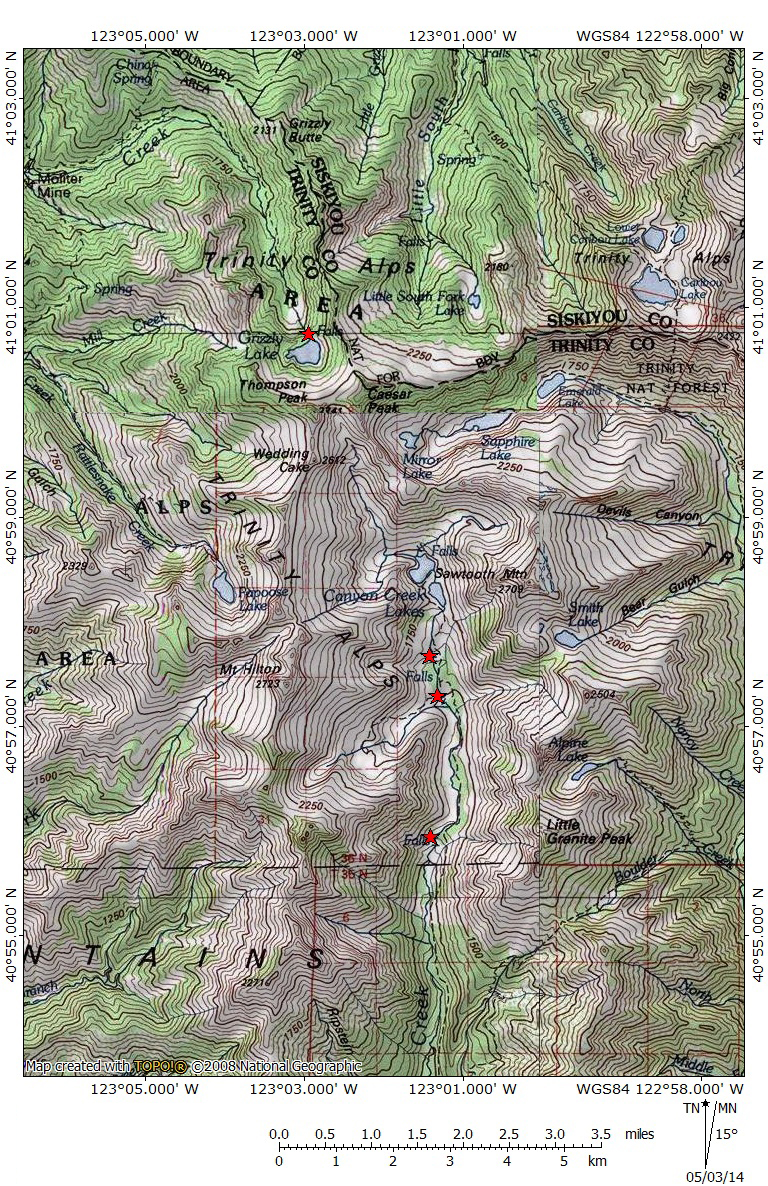
The Mount Shasta area has some of the finest waterfalls in California. From the untamed plunges high on the flanks of Mount Shasta itself to spring-fed wonders like Burney Falls, the North State is blessed with an abundance of fantastic falls. Some of these rank among the finest waterfalls in California and the U.S. Most of the well-known waterfalls in this region are in the Cascade Range’s demesnes. However, what generally escapes notice is a collection of tremendous waterfalls to the west of Mount Shasta, in the heart of the Klamath Mountains. These are found in the rugged canyons of the Trinity Alps. Boasting a seemingly limitless array of craggy towers, deep canyons and gorgeous alpine lakes, the vast Trinity Alps are the wildest corner of the North State. Though the Trinities, a sub-range of the Klamath Mountains, are composed of numerous different types of rock, it is the presence of extensive stretches of stark, white granite (and the craggy peaks composed thereof) that produced the mountains’ alluring name. Like the Trinity Alps’ geologic cousin, the Sierra Nevada, the erosion resistant granite is the perfect canvas for nature’s display of sublime waterfalls. The Trinity Alps do not disappoint in this regard (truthfully, they don’t disappoint in most regards). Although there are a number of great waterfalls scattered throughout the range, there are two areas in particular that boast waterfalls that not only rank high on lists of Northern California waterfalls but are among the finest falls anywhere in the country. The first of the two areas is Canyon Creek, which is home to a trio of awesome cataracts. While not heavily traveled by Sierra Nevada standards, Canyon Creek remains the busiest corner of the Trinity Alps. None of these falls are especially tall but their volume of water is staggering. In shape and scope, they are somewhat similar to the excellent cataracts found along the Tuolumne River in Yosemite. The Trinity Alps’ other major waterfall is epic Grizzly Falls. One of the highest waterfalls in the North State, Grizzly Falls is also one of the most magnificent waterfalls to be found anywhere. Unlike many of the falls in the Cascades, these are wilderness waterfalls (of course, the waterfalls on Mount Shasta are a significant exception to this, being found in remote, nearly inaccessible corners of the volcano). They are found in the heart of the Trinity Alps’ expansive backcountry. Consequently, they are generally only accessible to backpackers. For those who do make the journey into the deep recesses of the Trinity Alps, these excellent waterfalls are a terrific reward.

Canyon Creek Falls

11 (Custom)

Canyon Creek Falls.

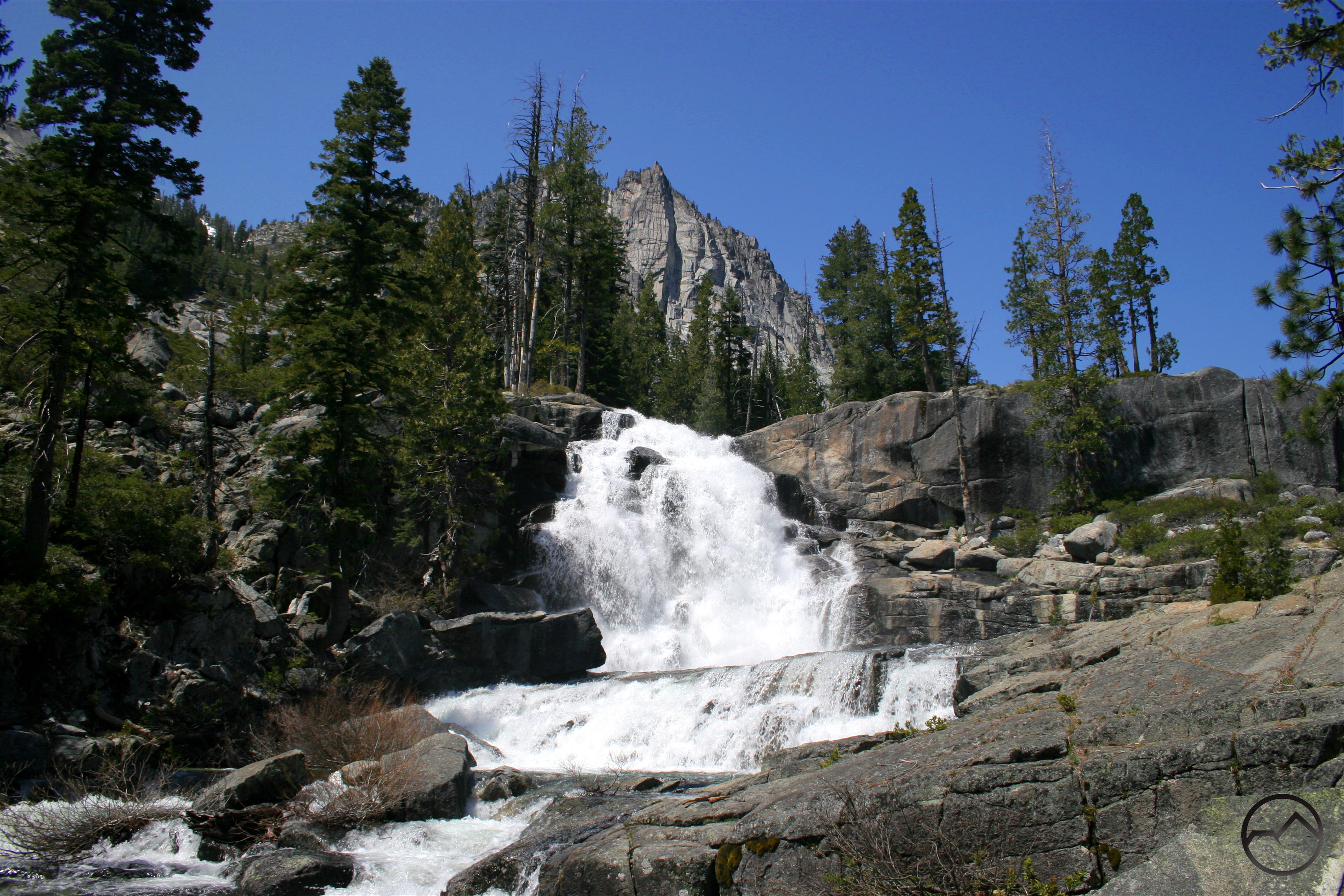
While it is generally recognized that there are three waterfalls in Canyon Creek’s spectacular canyon, an Upper, Middle and Lower Canyon Creek Falls, it is the lowest of these that is preeminent. Though it may sometimes be referred to as ‘Lower’, make no mistake, this is THE Canyon Creek Falls. The giant cataract is about 120 feet high but, while not exceptionally tall, it has a massive volume of water. It is split into two sections, the higher half funneling through a narrow trough and then rocketing out over the cliff while the second, lower, half is a wide, tall cascade down a cliff. The combination of the two varied stages of the waterfall gives Canyon Creek Falls a great deal of drama. The incredible volume of water drenches the waterfall with a sense of frightening power. It is certainly one of the most fearsomely beautiful waterfalls in Northern California. Ironically, Canyon Creek’s preeminent waterfall is typically overlooked. At one time the Canyon Creek Trail passed alongside the waterfall. Once the path was rerouted higher up on the flanks of Canyon Creek the falls were lost from the trail’s view for the most part. There is only one brief point where the perceptive hiker can observe Canyon Creek Falls. Exacerbating the problem is the presence of a smaller but still sizable and dynamic waterfall a little upstream from the main waterfall. Easily viewed from the trail, this is now often mistakenly considered Lower Canyon Creek Falls. For those hunting for the true giant of Canyon Creek, a faint trail still exists leading off of the main path to a terrific vantage of the splendid waterfall.

Middle Canyon Creek Falls

4 (Custom)

Middle Canyon Creek Falls.

While not as tall as Canyon Creek Falls, the middle waterfall of Canyon Creek’s fantastic trio is a tremendous cataract in its own right. About 100 feet high, the waterfall is nearly as wide as it is tall. This is particularly true earlier in the season when the melting snow swells Canyon Creek. When it is at full force, Middle Falls pours over the wide cliff in three large columns, each thundering down the rock face. A broad bench recollects all of the water and then funnels through a narrow gap in the rock as the raging creek once again races over another cataract. Even later in the year, when the creek’s flow has diminished, the Middle Falls is still an impressive sight. The three initial columns are reduced to only one but the drop is still impressively high. The falls are not actually visible from the Canyon Creek Trail. However, a well-established use trail branches off of the main path and leads to the base of the waterfall where the view is excellent. Scrambling up the rocky slope alongside the falls leads to large granite slabs alongside the creek with an amazing view of the Boulder Creek Lakes basin. Be sure to note the towering freefall where Boulder Creek leaps off the granite bench that holds the Boulder Creek Lakes. The waterfall is unnamed but is wonderful nonetheless.

Upper Canyon Creek Falls

12 (Custom)

Upper Canyon Creek Falls.

Unlike the other major waterfalls in Canyon Creek, there is some ambiguity as to which cataract is actually Upper Canyon Creek Falls. There are two awesome waterfalls within a short distance of each other on Canyon Creek. The downstream waterfall is the taller of the two but is more of a cascade rather than a completely vertical waterfall. Conversely, the upstream falls is not as high but is much more of a plunge. Nothing in particular seems to indicate one over the other. Both are indicated on the USGS topo map. If push were to come to shove, it seems likely that the upstream waterfall is actually Upper Canyon Creek Falls because it is much more of a plunge and still impressively high. This is also the only one of the two waterfalls that is visible from the Canyon Creek Trail. Incidentally, there is an astounding campsite located on a level section of the creek at the midpoint between the two waterfalls. Smooth sheets of water cascade over granite slabs all around the campsite, the upstream falls are visible from the site and the roar of the falling water is almost overwhelming. It is a wonderful spot.

Other Waterfalls In Canyon Creek

10 (Custom)

Lower Canyon Creek Lake’s outlet cataracts.

The three main waterfalls in Canyon Creek are not the end of the story as far as awesome falls go. Amazingly, these are only the top specimens among an impressive array of falling water. Numerous cascades pour down the granite walls of Canyon Creek’s canyon, adding a great deal of drama to the great beauty of the granite cliffs. These cascades are too numerous to identify individually. However, there are some noteworthy waterfalls on Canyon Creek that, though not as awesome as the main trio, still deserve recognition. Some of these, like the large, wide falls that are often incorrectly identified as Lower Canyon Creek Falls or the possible candidate for Upper Canyon Creek Falls have already been mentioned. Another great example is Lower Canyon Creek Lake’s outlet cataract. When the water pours out of the lake it tumbles down 300 feet over a succession of granite slabs, troughs and benches. Though not considered one of the main Canyon Creek waterfalls, if it were anywhere else in the region it would be a major waterfall.

All of these waterfalls are accessed via the Canyon Creek Trail.

Grizzly Falls

Trinity Alps, Grizzly Lake - June2013 058 copy (Custom)

Grizzly Falls.

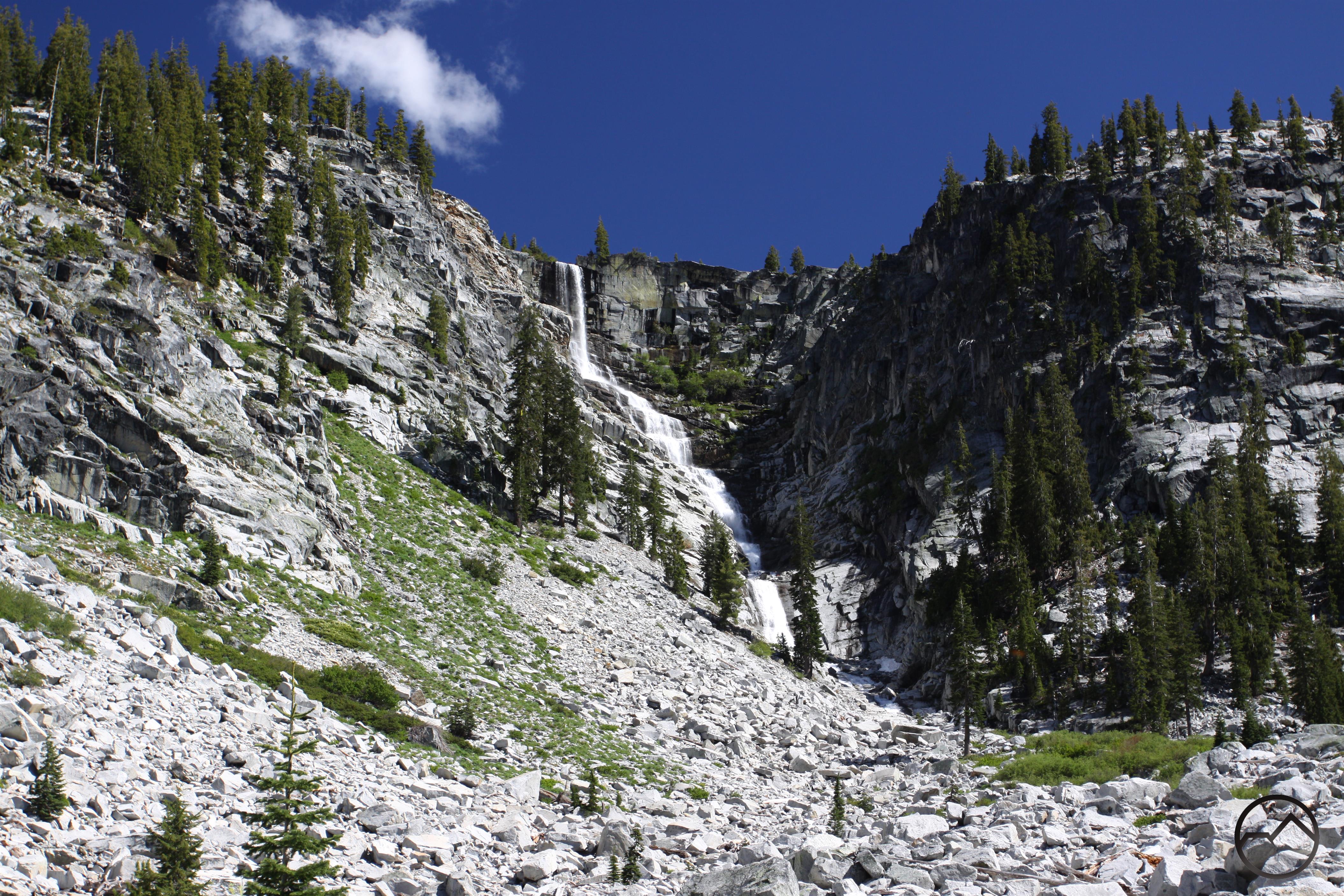
Though Canyon Creek has the highest concentration of major waterfalls, the true monarch of the Trinity Alps is stunning Grizzly Falls. Not only is it one of the highest waterfall in Northern California, it is certainly one of the most spectacular. Indeed, Grizzly Falls is one of the few waterfalls outside of Yosemite that can compete with that park’s legendary cataracts. The falls initially pours off a sheer granite cliff into a wide cleft. First drop consists of a 100 foot freefall before crashing onto a granite rib. From there the falls makes a series of leaps from one rocky bench to another. After a couple hundred feet of successive drops the falls finally pour over a vertical cascade that is nearly another 100 feet. A few more cascades with a somewhat lesser grade finally deliver the water to Grizzly creek proper…only to see it submerge beneath a vast talus field composed of bright white granite. The creek finally reemerges a couple hundred yards downstream as it enters verdant Grizzly Meadow. Taken together, the entire waterfall is somewhere around 450 feet high.

Trinity Alps, Grizzly Lake - June2013 112 copy (Custom)

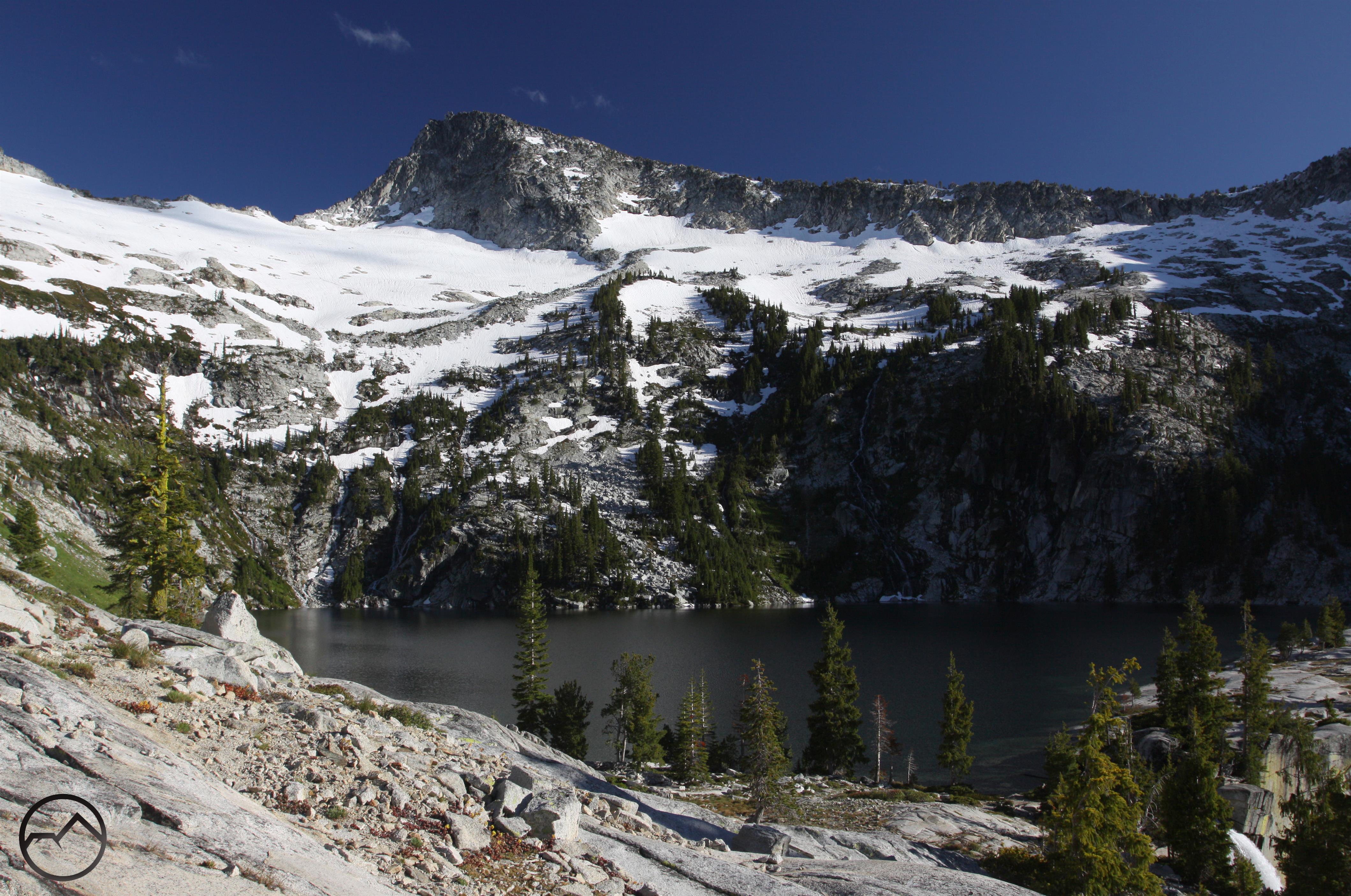
Spectacular Grizzly Lake.

However, as great as Grizzly Falls is, it is just one of many pieces that make up an unbelievably magnificent spot that must be ranked as one of the most spectacular places in all of the American West. The scene begins with Thompson Peak, the highest point in the Trinity Alps. The granite tower looms majestically over a vast basin at the head of a long canyon. Clinging to the cliffs below the peak’s summit is a surprising glacier. This is the only glacier in California that is not in the High Sierra or on Mount Shasta. At the foot of the cliffs is fantastic Grizzly Lake. The third largest and second deepest lake in the Trinity Alps, it is one of the greatest alpine lakes to be found anywhere. The entire scene of lake, cliff, glacier and peak, highlighted by over a dozen large cascades is enough to render anyone speechless at the sublime beauty. Yet all of this is capped by Grizzly Falls. While most alpine lakes have an outlet creek, where the lake’s waters discharge, Grizzly Lake’s outlet is Grizzly Falls. The waters go directly from the lake over the precipice and make their 450 drop down to Grizzly Meadows. It is a scene with no counterpart, an alpine vision nonpareil.
Trinity Alps, Grizzly Lake - June2013 065b_edited-1 (Custom)

Grizzly Falls.

Of course, such amazing beauty comes at a price. While the Canyon Creek waterfalls are all found along the easy Canyon Creek Trail, Grizzly Falls and its accompanying spectacle is remote with difficult access. To reach this sublime place one must either make a significant commitment of time and approach via the North Fork of the Trinity River or begin in the Salmon River watershed and make the grueling climb over a high canyon ridge and then descend down into Grizzly Creek’s canyon. The former option is not particularly taxing physically but it requires a significant time investment, usually around 4 days or so. The latter option can be done in a single day but exacts payment in sweat and blood. The excessively steep climb and equally vertical descent is…invigorating…to say the least. The trail is uncompromising in its climb and unforgiving as it drops. Still, whatever price that must be paid is worth it. Few places are as magnificent as the Grizzly complex.

Grizzly Falls is accessed via the Grizzly Creek Trail.

TrinityAlpsWaterfalls

A Journey Unheralded: The Shasta River

Posted by bubbasuess on April 22, 2014
Posted in: Desert, Hiking, Klamath Mountains, Mount Eddy, Mount Shasta, Rivers. Tagged: Little Shasta River, Shasta River, Shasta Valley. 7 Comments
Cascades, Mt. Shasta - Feb2014 027 (Custom)

Mount Shasta towers majestically over the Shasta River.

Northern California is known for, among other things, its plethora of wild rivers. Flowing freely through deep river canyons and racing through endless rapids, the rivers are the life blood of the region, gushing powerfully from the marrow that is the North State’s spectacular mountains. The foremost of these rivers, the Sacramento, the Klamath and the Trinity, are rivers of great renown;  even the lesser known rivers, the Salmon (often referred to as the Cal Salmon, to distinguish it from Idaho’s Salmon River, the famed River of No Return), the Scott, the McCloud and the Pit, are still held in high regard by the fishermen and rafters who frequent their remote waters. Only a handful of dams impound the waters of these exceptional rivers. Granted, the Shasta and Trinity Dams are major stoppages on the rivers’ flow, but there are only a few other small reservoirs on these rivers. Yet among these spectacular rivers there is one that is consistently overlooked, but nonetheless delivers beautiful, albeit different, scenery. The Shasta River, one of the North State’s most forgotten rivers, is an important resource to the ranchers of the Shasta Valley, but rarely attracts those in search of beauty.

Trinity Divide, Mt. Eddy - July2010 011 (Custom)

Looking down on the Shasta River watershed from Mount Eddy.

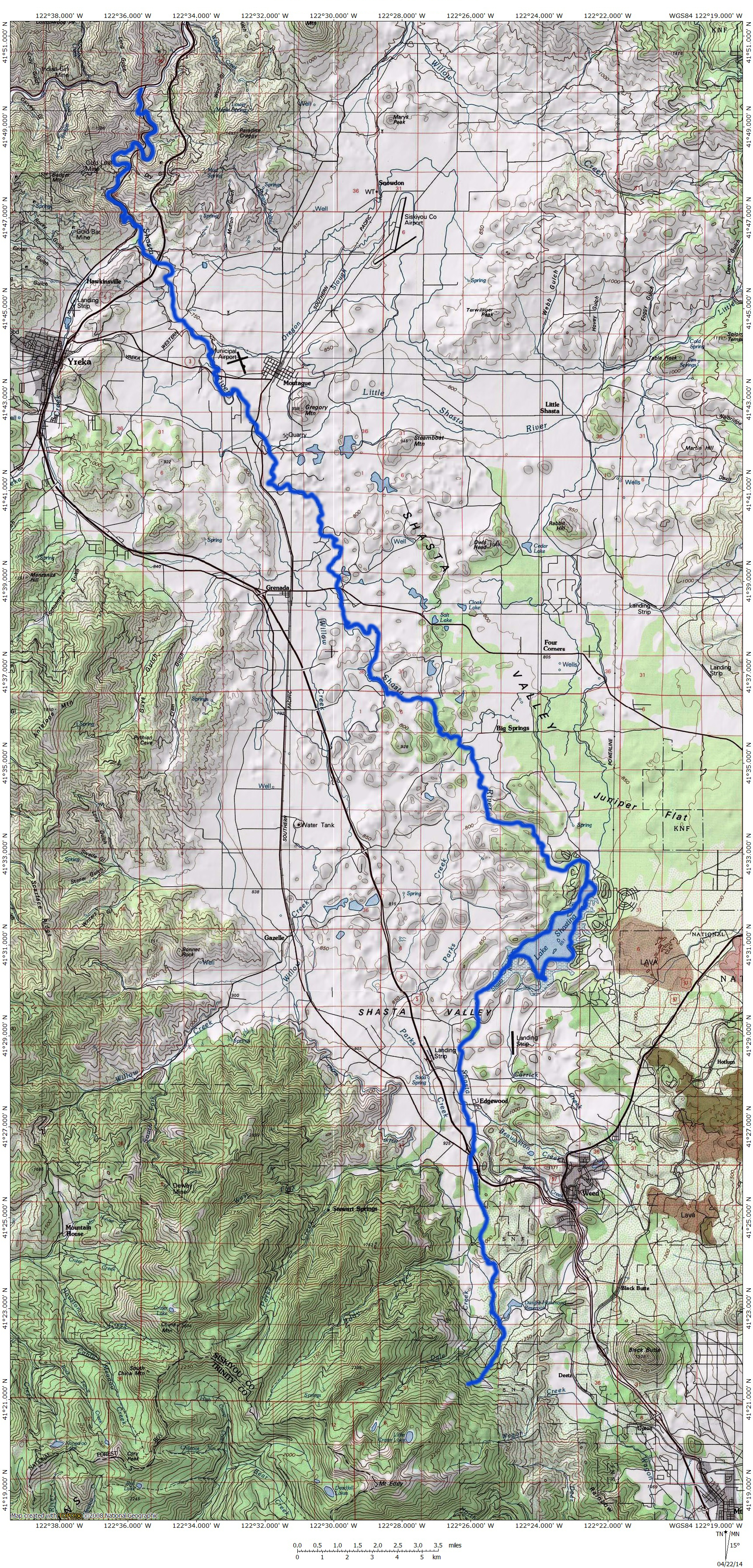
The Shasta River is the first major tributary of the Klamath River once the former has entered California from southern Oregon. It begins on the northern flanks of Mount Eddy, the second highest peak in the Mount Shasta area. It is not often noted that Mount Eddy is a triple divide peak; waters flowing off the mountain’s summit are divided into the three watersheds of the Sacramento, Trinity and Klamath Rivers. Emerging from a series of springs scattered around Mount Eddy, the Shasta River flows north, descending into the Shasta Valley. Early maps identify Dale Creek as the Middle Fork of the Shasta River. This means that Eddy Creek would be the North Fork and the South Fork would be the current branch that rises on Mount Eddy. Though the names have changed, these creeks all swell the river at the beginning of its journey.

Somewhere in the Shasta Valley.

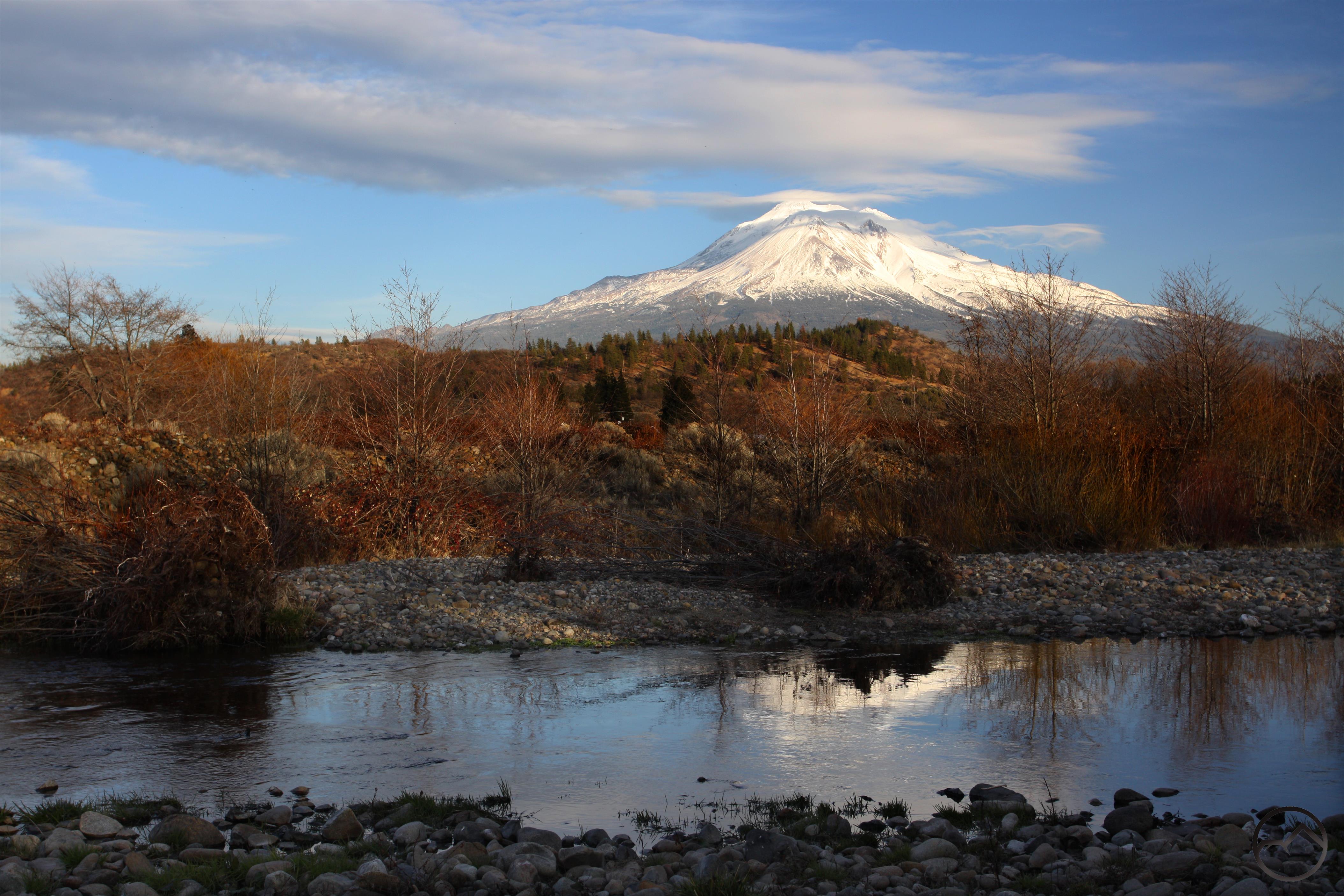
After making an unheralded passage under Interstate 5, the river flows past the small town of Edgewood and is soon stilled by the Dwinnell Dam, which forms Lake Shastina. This is the only impoundment of the Shasta River. Beyond the dam, the river meanders north, through the Shasta Valley. Unlike most rivers in the North State, the majority of the Shasta’s course is characterized as high desert. Sage and juniper are common here, where most of the other rivers have a riparian environment or a more alpine mix of pine and fir. Consequently, the arid land gives the Shasta River an atmosphere that is more akin to the northern half of the Deschutes River or the Malheur River, two of eastern Oregon’s high desert rivers. It may be a dry land but it does not lack beauty, enhanced all the more by the overwhelming presence of mighty, glacier-clad Mount Shasta. The great mountain can be seen from most of the river’s course. Ironically, the massive volcano contributes no water to the Shasta River. What little water flows north does so primarily through Whitney Creek, which typically dissipates into the parched, porous land of the Shasta Valley long before it reaches the Shasta River.
Cascades, Shasta & Gold Bluffs Beach - Feb07 045 (Custom)

Willow Creek Mountain and Table Rock, landmarks along the Little Shasta River.

While making its northward journey, the Shasta River is eventually joined by the Little Shasta River, the largest tributary of the Shasta. Although a rather diminutive waterway, the Little Shasta River makes an impressive trip of its own. With its source in the large but seldom visited Little Shasta Meadow high on the flanks of the Cascades’ Willow Creek Mountain, the river makes a steep descent down the western slope of the Cascades. It eventually enters a rugged canyon that cuts into the region between Willow Creek Mountain and the towering volcanic dome of the Goosenest. At the canyon’s outlet the Little Shasta River passes fascinating lava formations such as Solomon’s Temple and Table Rock. The Little Shasta then makes a slow, meandering push to the west, flowing through the northern Shasta Valley. Part of this section of its course enters the Shasta Valley Wildlife Refuge, one of the few publicly accessible areas in the entire Shasta River watershed. It finally arrives at its confluence with the Shasta River just south of Montague.

Klamath Mountains, Shasta River - April2014 001 (Custom)

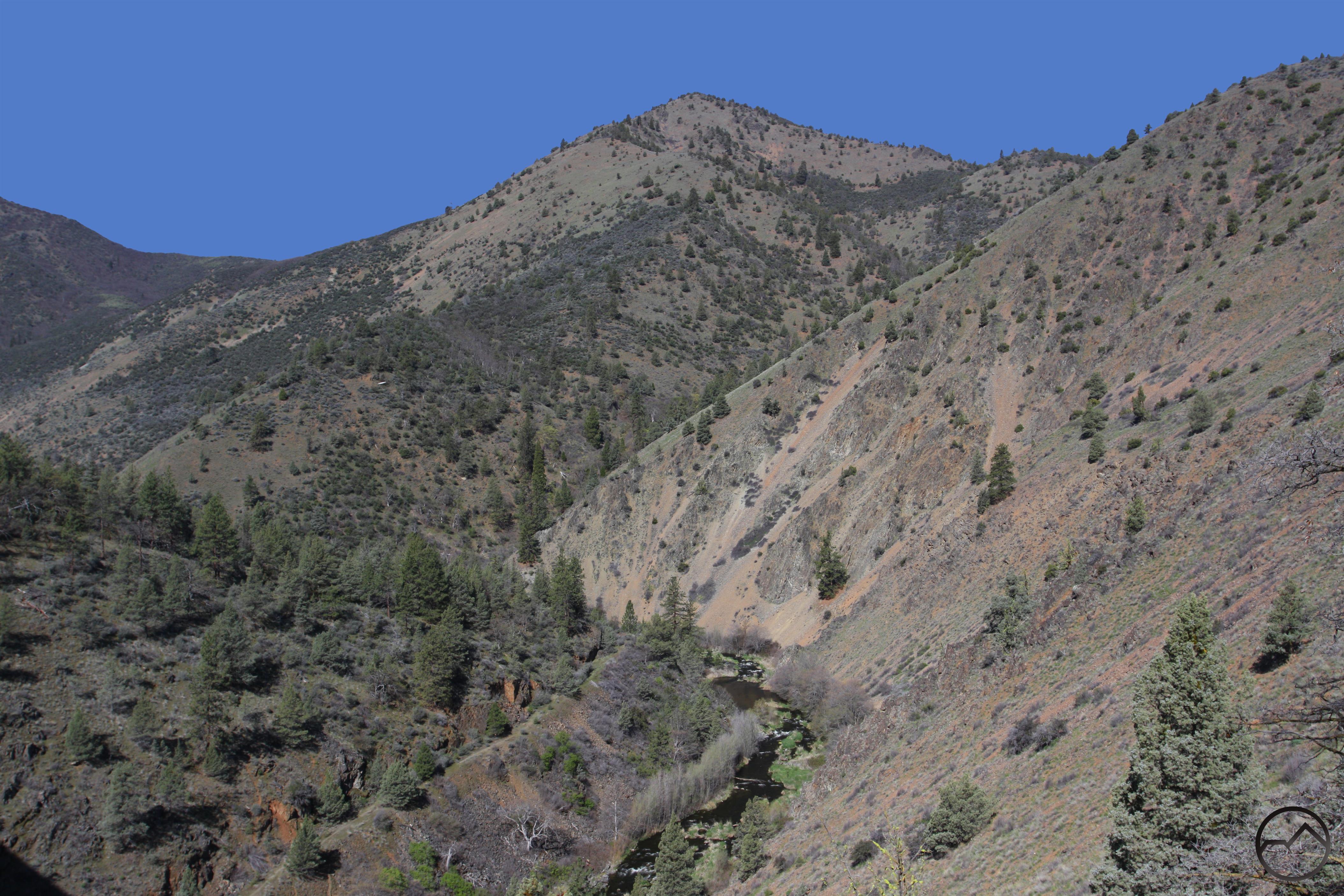
The rugged Shasta River Canyon.

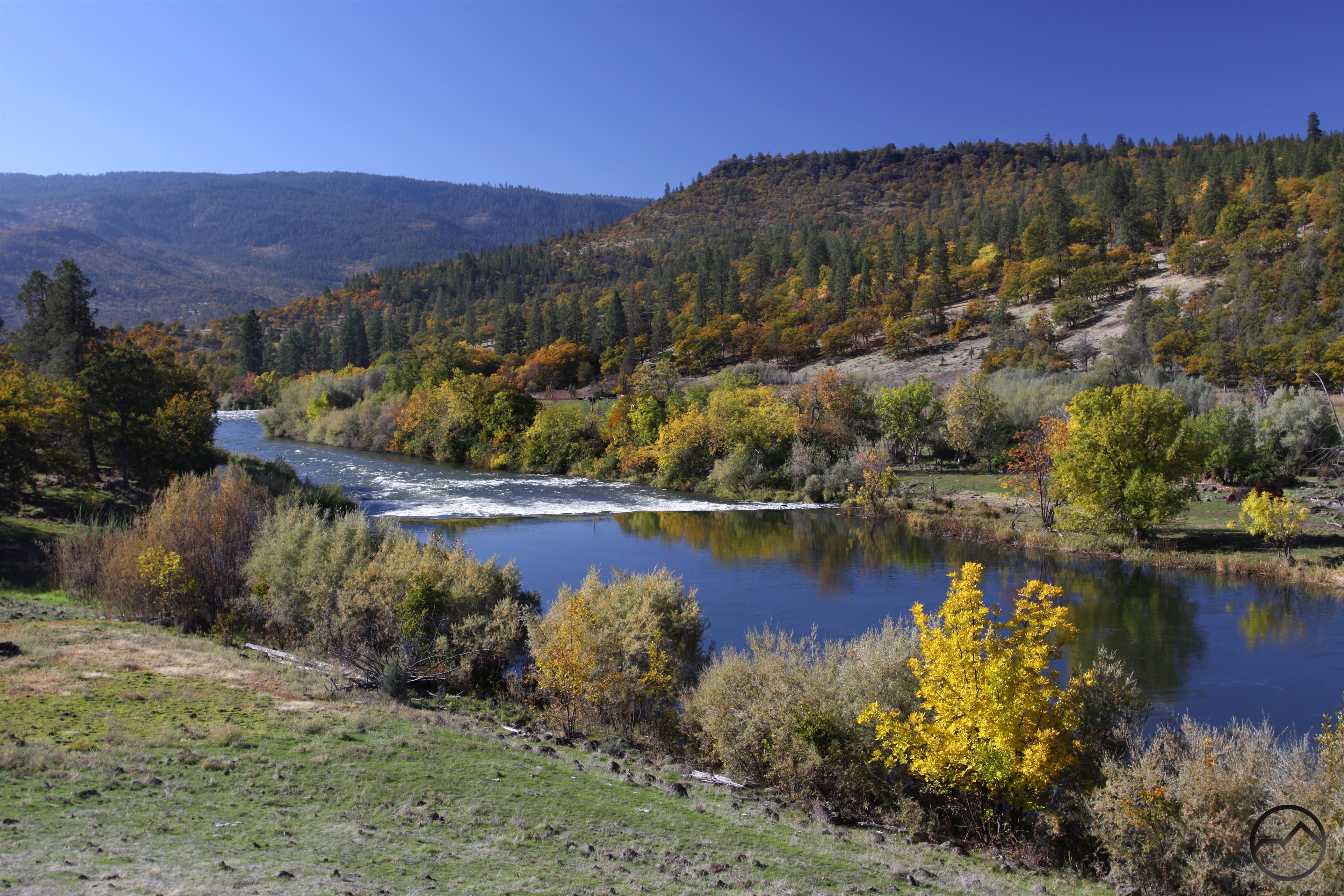
North of the two rivers’ junction the Shasta River continues to wind through the upper extremity of the Shasta Valley. After passing beneath Interstate 5 again, the river’s character changes dramatically. The surrounding land remains arid high desert, but rather than flowing through the broad Shasta Valley, it now enters the rugged Shasta River Canyon. Here the canyon walls soar over 2,000 feet above the river. The water, once a meandering waterway with occasional rapids, is now transformed into churning whitewater, twisting and turning through narrow bends and roaring through narrow, rocky gorges. It is, without doubt, the most rugged and impressive portion of the Shasta River. In the 19th century this region was mining country, and remnants of that heritage are scattered throughout the mountains in this area. The combination of mining detritus and the rugged, barren cliffs high above the swift moving river gives the area a feeling akin to the westward flowing rivers of the Sierra Nevada such as the Merced and the Tuolumne, where miners plied their trade in arid, steep-walled river canyons.

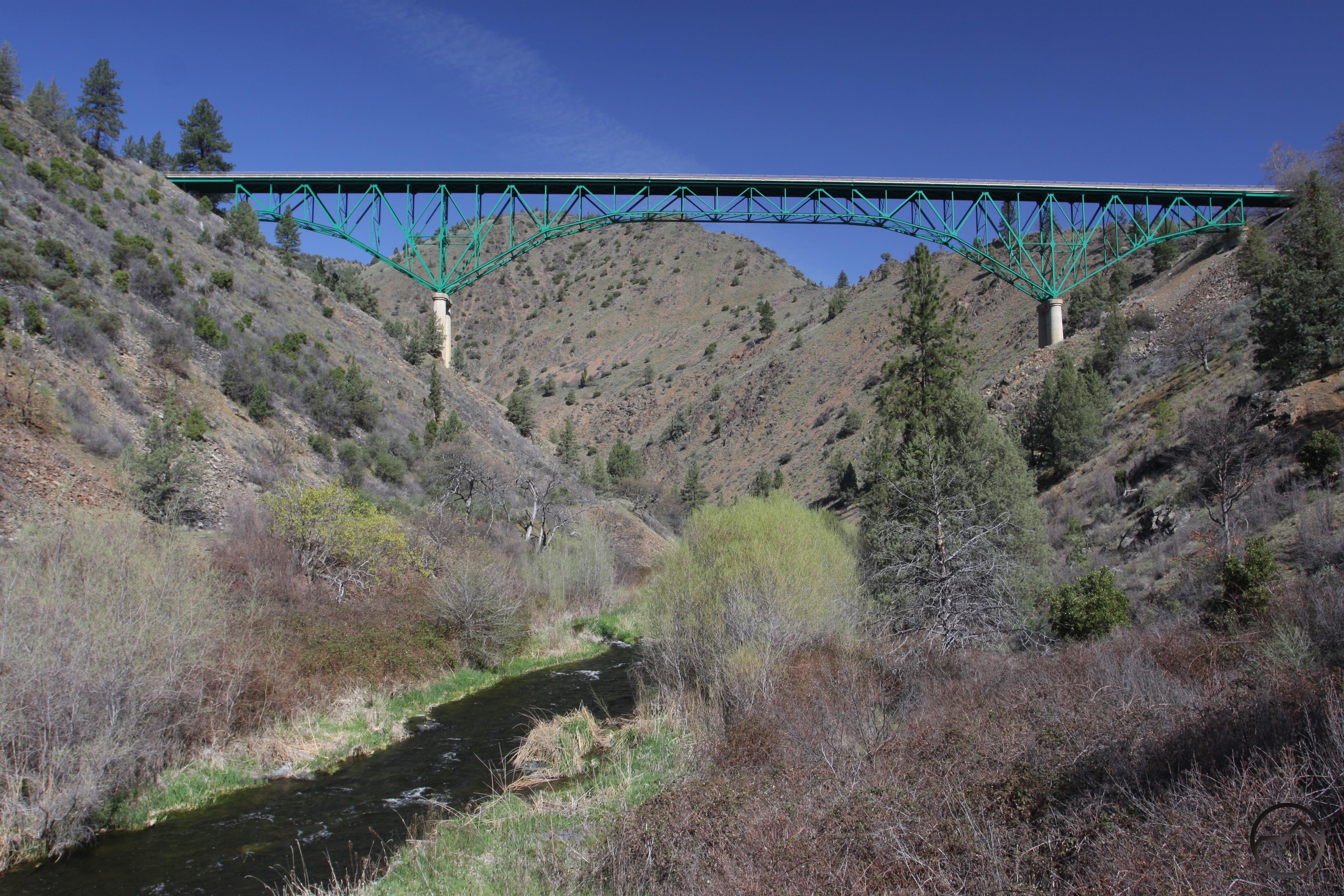
Klamath Mountains, Shasta River - April2014 007 (Custom)

The Pioneer Bridge over the Shasta River.

Enabling vehicular passage through the Shasta River Canyon marked a major achievement in road engineering. The original route connecting California and Oregon passed through the canyon on a dirt road at the bottom, alongside the Shasta River. In the late 1920’s increased automobile traffic demanded a better route and the current route through the canyon was built. Over 200 tons of TNT were used to blast out the road’s route, and four large bridges were built to straighten the highway out (one bridge is an unsung twin to the famed Bixby Bridge down in Big Sur). At one time this was the most heavily bridged section of road in California. Initially the route through the Shasta River Canyon was part of Highway 99, but the arrival of Interstate 5 relegated the spectacular road a backwater, seldom used except by locals looking to bypass the freeway. Today this section of old Highway 99 is designated Highway 263. It follows the Shasta River through its awesome canyon all the way to its rugged confluence with the mighty Klamath River.

Cascades, Mt. Shasta - Feb2014 060 (Custom)

Mount Shasta reflects in the waters of the Shasta River.

Public access to the Shasta River is unfortunately limited. Most of its course travels through private property. In the Shasta Valley, only a few isolated railroad crossings provide good access to the river. The stilled waters of the Shasta can be reached at Lake Shastina. This is best done from the public campground on the lake’s south shore. On the occasions that the lake is dry, one can hike out onto the dry lakebed and enjoy the river. One interesting feature is the Nature Conservancy’s Big Springs Ranch Preserve. Several miles of the Shasta River flow through the ranch. This area is particularly attractive, since it races through some shallow but scenic, rocky canyons. Access to these lands is limited and can only be done when the Conservancy allows guests. Hopefully the area will be made open to the public, much like the Nature Conservancy’s McCloud River Preserve is open to hikers and anglers. Further north, those motivated to enjoy the Shasta River’s wild passage through its awesome canyon are blessed with some utterly forgotten but excellent hiking options. Several miles of the river in the heart of the canyon pass through public lands, and hikers can enjoy an epic trip through a tremendous but nearly unknown river canyon…but that is a post for another day.

TOPO!map_edited-27

Mount Shasta Area Spring Hiking Round Up

Posted by bubbasuess on April 6, 2014
Posted in: Hiking, Mount Shasta, Spring Trails, Winter Trails. 3 Comments
Cascades, Mt. Shasta  - Dec2010 011 copy (Custom)

Morning reflection of Mount Shasta from the Lake Siskiyou Trail.

With the skies clearing and warm weather in the forecast, this is the perfect time to get out and enjoy the great lower-elevation trails that the Mount Shasta area offers. Even though the paths that wind through the high, alpine country are what this area is generally known for, they do not permit great hiking in the colder months when they are usually blanketed in snow. This is in contrast to the lower elevation trails, which offer great scenery throughout the year and are usually not burdened by the white stuff on the trail. These paths may lack the lakes, cliffs and alpine splendor of their high neighbors but they have delights are all their own, including roaring rivers, thundering waterfalls, views of Mount Shasta and the opportunity to find isolation in the deep forests that surround California’s most magnificent mountain. The settings of the off-season trails are also diverse. From the high desert of the Shasta Valley to the rugged towers of the Castle Crags to the surging waters of the McCloud and Sacramento Rivers, there is a surprising variety in these areas. While many other mountain regions lack good winter and early spring hiking options, the Mount Shasta area is blessed with an abundance of great opportunities.

Mount Shasta City Area Trails

The area immediately surrounding Mount Shasta City is fortunate to have such great hiking options. Whether one is looking for wild rivers and waterfalls, cool forests or great views of Mount Shasta, hikers will find wonderful trails close to town.

Three trails around Mount Shasta City

Two winter Hikes on the Lake Siskiyou Trail

Without venturing out of town there is a great trio of great short walks within town as well!

Shasta Valley Trails

The sagebrush and juniper laden high desert of the Shasta Valley stands in striking opposition the deep forests that thrive in the higher, cooler climates elsewhere around Mount Shasta. The arid environment is a fantastic change of pace with a beauty all its own and the sparse vegetation yields tremendous views of Mount Shasta.
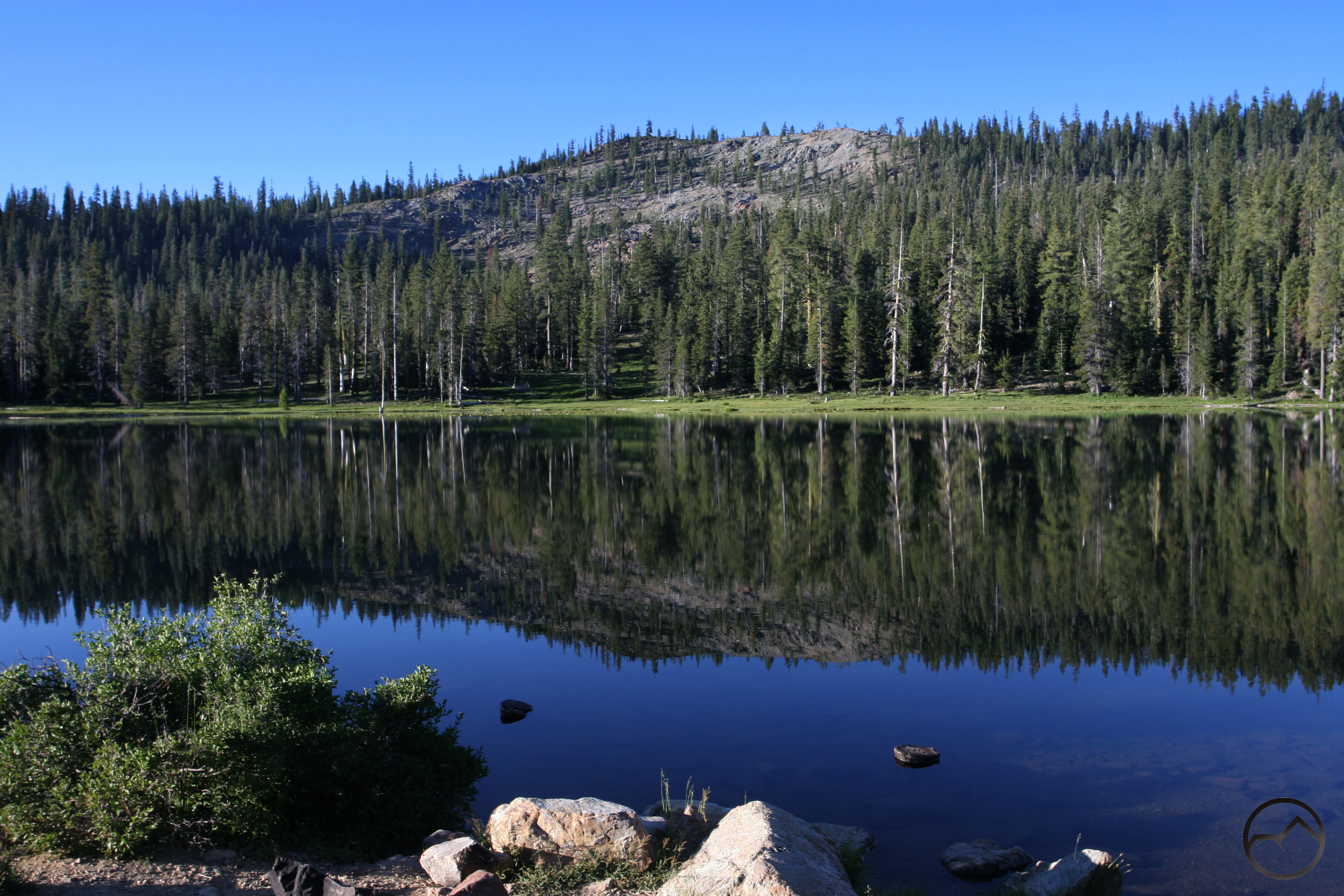
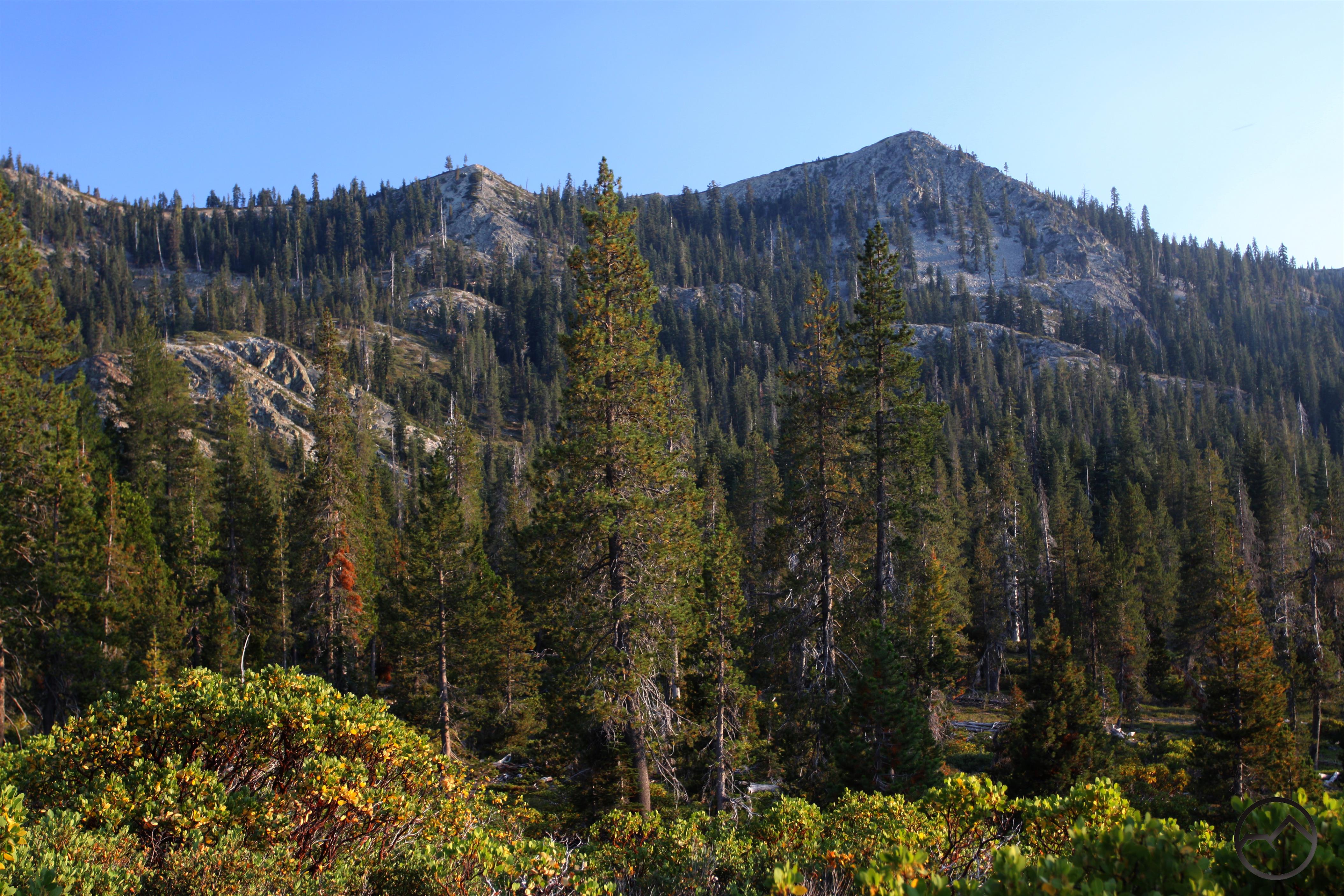
Hiking in the Shasta Valley Wildlife Refuge

Winter hiking in the Shasta Valley

McCloud River Trails

The trails along the McCloud River and its tributary Squaw Valley Creek all offer hikers the chance to enjoy the superlative McCloud River, its excellent waterfalls, and refreshing creek. For hikers who love running water, it is hard to do better than these.

McCloud River trails

Sacramento River Trails

Like the trails along the McCloud, the paths accessing the Sacramento River offer great views of California’s largest and longest river, as well as the chance to enjoy a fine waterfall and some great Mount Shasta area history.

Three trails along the Sacramento River

Castle Crags Trails

Easily the most spectacular landmark in the region after Mount Shasta, the Castle Crags offer many great spring hiking options. The granite spires of the Crags make the trails in the area seem like they are at a much higher elevation than they really are. In addition to the seemingly interminable towers the Castle Crags are also home to two of the finest waterfalls in the Mount Shasta area. Spring is the perfect time to hike these trails, when the weather is cooler and spring snow melt keeps the falls in fine form.

Spring hiking in the Castle Crags

Lofty Subjects: The Five Tallest Peaks Around Mount Shasta

Posted by bubbasuess on March 30, 2014
Posted in: Cascade Range, Glaciers, Hiking, Mount Shasta, Trinity Divide. Tagged: Ash Creek Butte, China Mountain, Mount Eddy, The Goosenest, the Whaleback. 6 Comments
Cascades, Mt. Shasta - Oct2013 019_edited-1 (Custom)

Ash Creek Butte is dwarfed by mighty Mount Shasta.
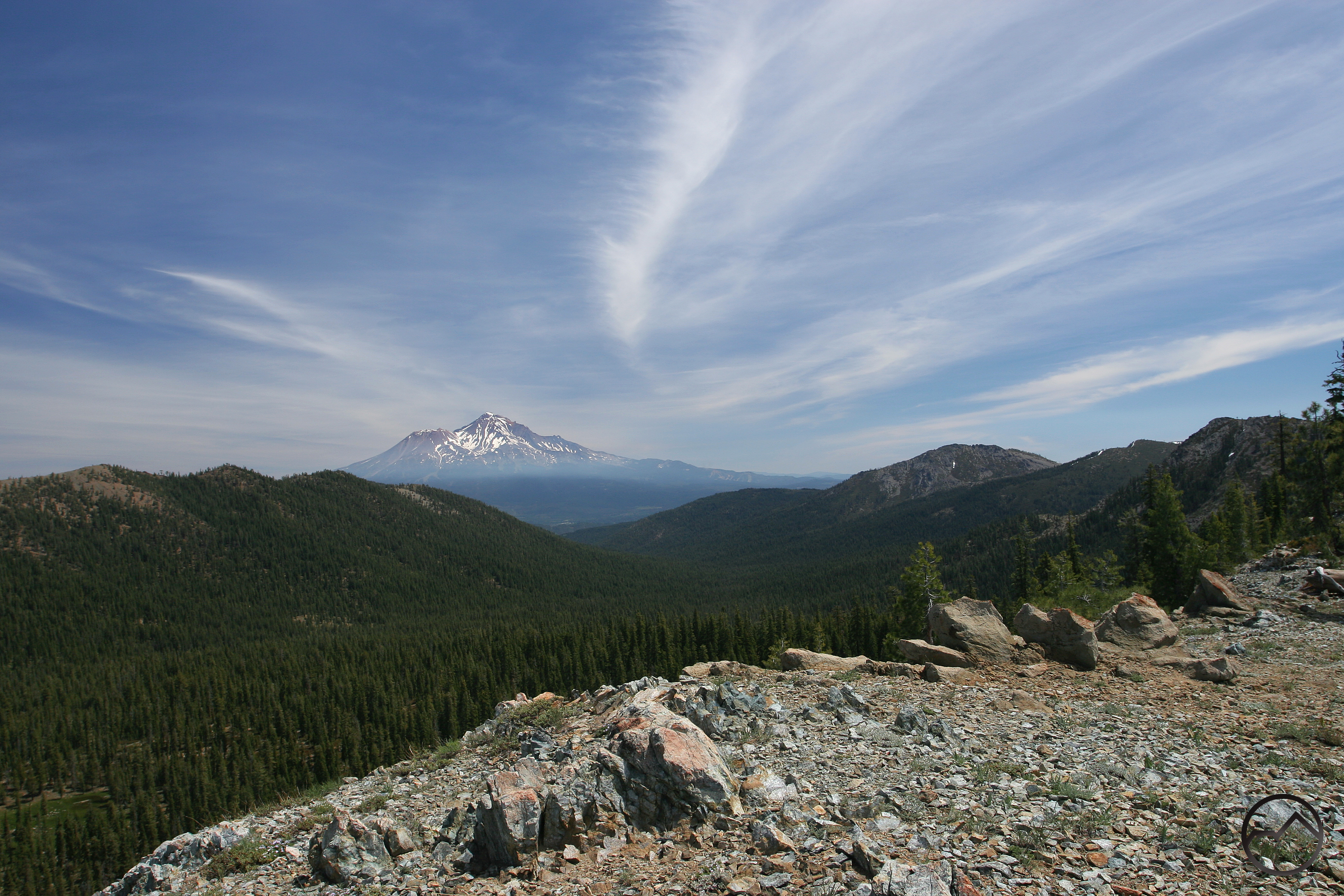
Mount Shasta is the unchallenged monarch of mountains in Northern California. No other mountain in the Golden State dominates the landscape the way it does. The mountain can be seen from well over 100 miles away in most directions. Its visibility is due in part to its unbelievably massive size and soaring height. Mount Shasta can also be seen from great distances because it towers so high above all the other mountains in the region. This is not to say that mountains that surround Mount Shasta are not high or lack impressive size in their own right. On the contrary, many of the peaks are quite remarkable on their own merits. Still few mountains can compare to the great height and incredible bulk of Mount Shasta. Being overshadowed does not mean that the lesser mountain around the mountain deserve to be cast into obscurity. They should still be appreciated for their own splendid qualities. Though they all exist in Mount Shasta’s shadow, the five highest peaks around the mountain remain extraordinary. They also represent the dramatic differences between the two mountain ranges that flank Mount Shasta. On the west side are Mount Eddy and China Mountain, both high peaks of the vast Klamath Mountains. To the east and north of Mount Shasta are the Goosenest, Whaleback and Ash Creek Butte. These three peaks are among the highest in the California section of the great Cascade Range. Not surprisingly, these peaks all have fantastic views of Mount Shasta. What are often less appreciated are the views of these high peaks from Mount Shasta itself. It should not come as a surprise that the trials on Mount Shasta yield excellent vantages from which to observe the mountains that surround Mount Shasta. Whether climbing these peaks to gain perspective of Mount Shasta or hiking on Mount Shasta and gazing down at the mountain’s neighbors, these five peaks deserve more consideration than they often get.
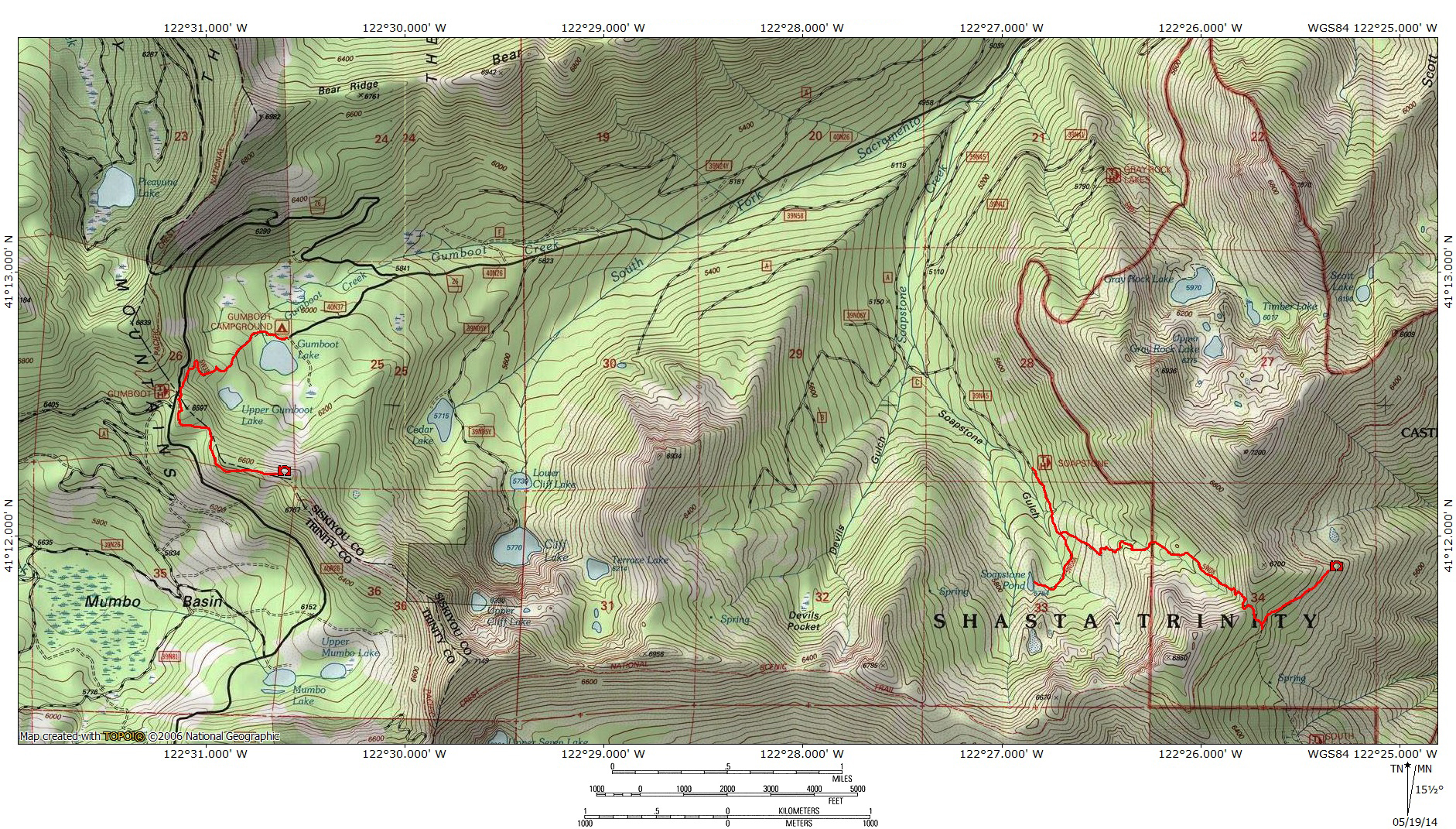
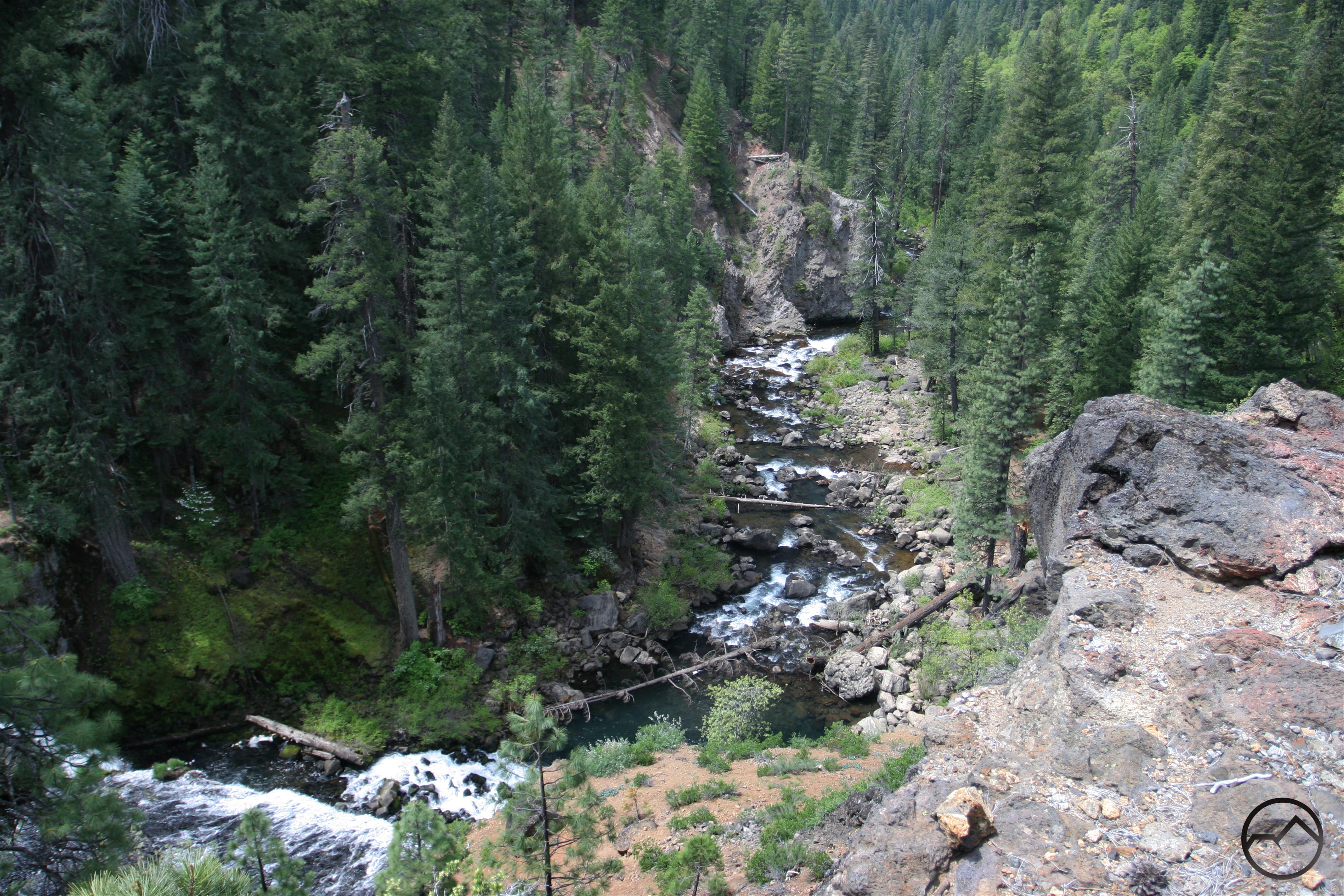
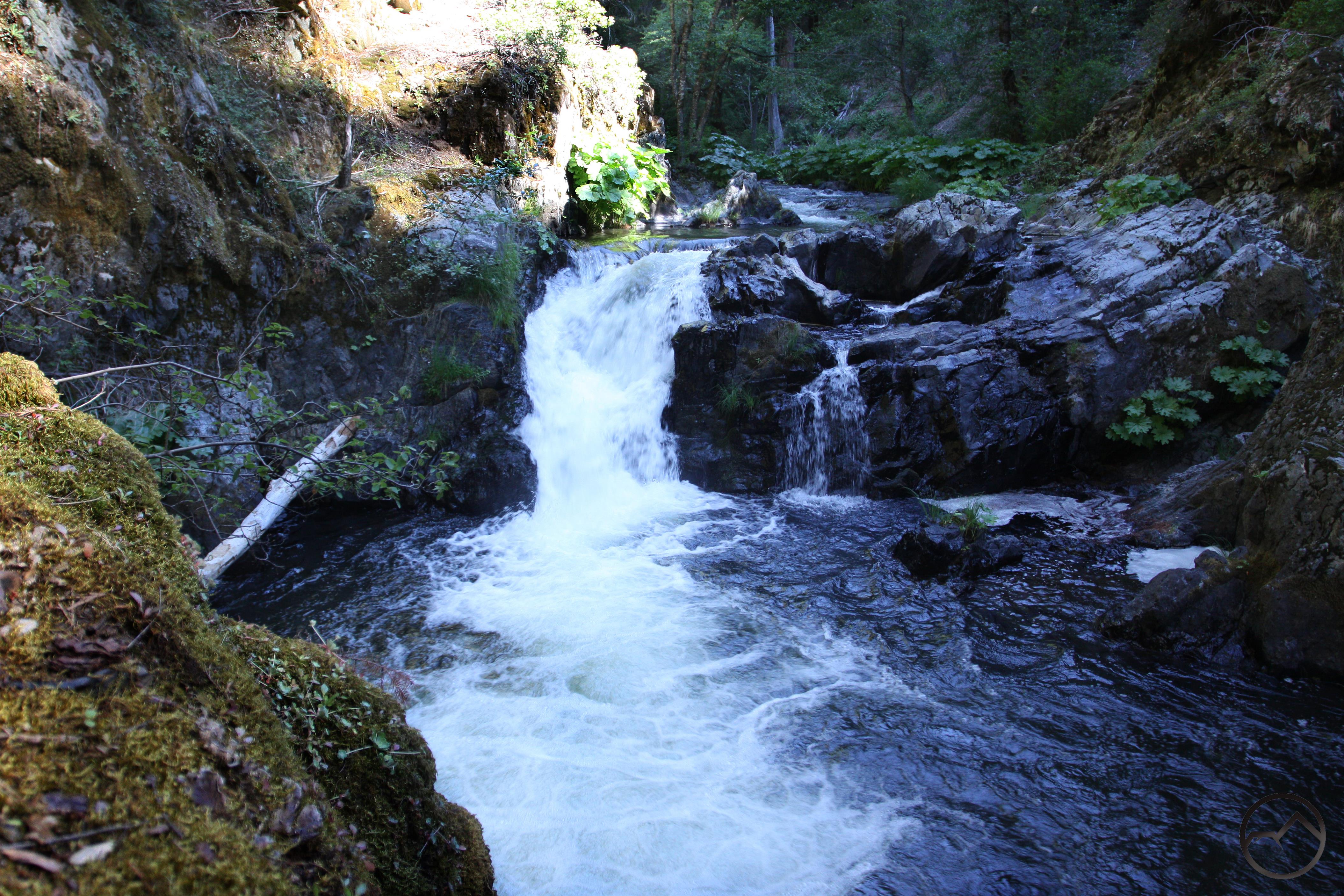
Mount Eddy (9,025)

Cascades, Mt Shasta - July2012 040 (Custom)

Mount Eddy seen from the South Gate Trail.

The highest point in both the vast Klamath Mountains range and its subrange, the Trinity Divide, Mount Eddy is a colossal mountain in its own right. Boasting an awesome array of alpine lakes and verdant meadows, Mount Eddy is almost large enough to be considered a small mountain range on its own. Composed of peridotite and serpentine, the mountain is an unusual patchwork of bright yellows and reds. It is definitely one of the more colorful mountains in the Mount Shasta area. Mount Eddy has experienced significant glacial activity in the past, as evidenced by its deep lake basins and soaring vertical cliffs. While hiking on Mount Shasta, it is difficult to miss the brooding massif that is Mount Eddy. Both the Green Butte Ridge Trail and the Old Ski Bowl section of the South Gate Meadow Trail have spectacular views of the highest mountain around Mount Shasta.
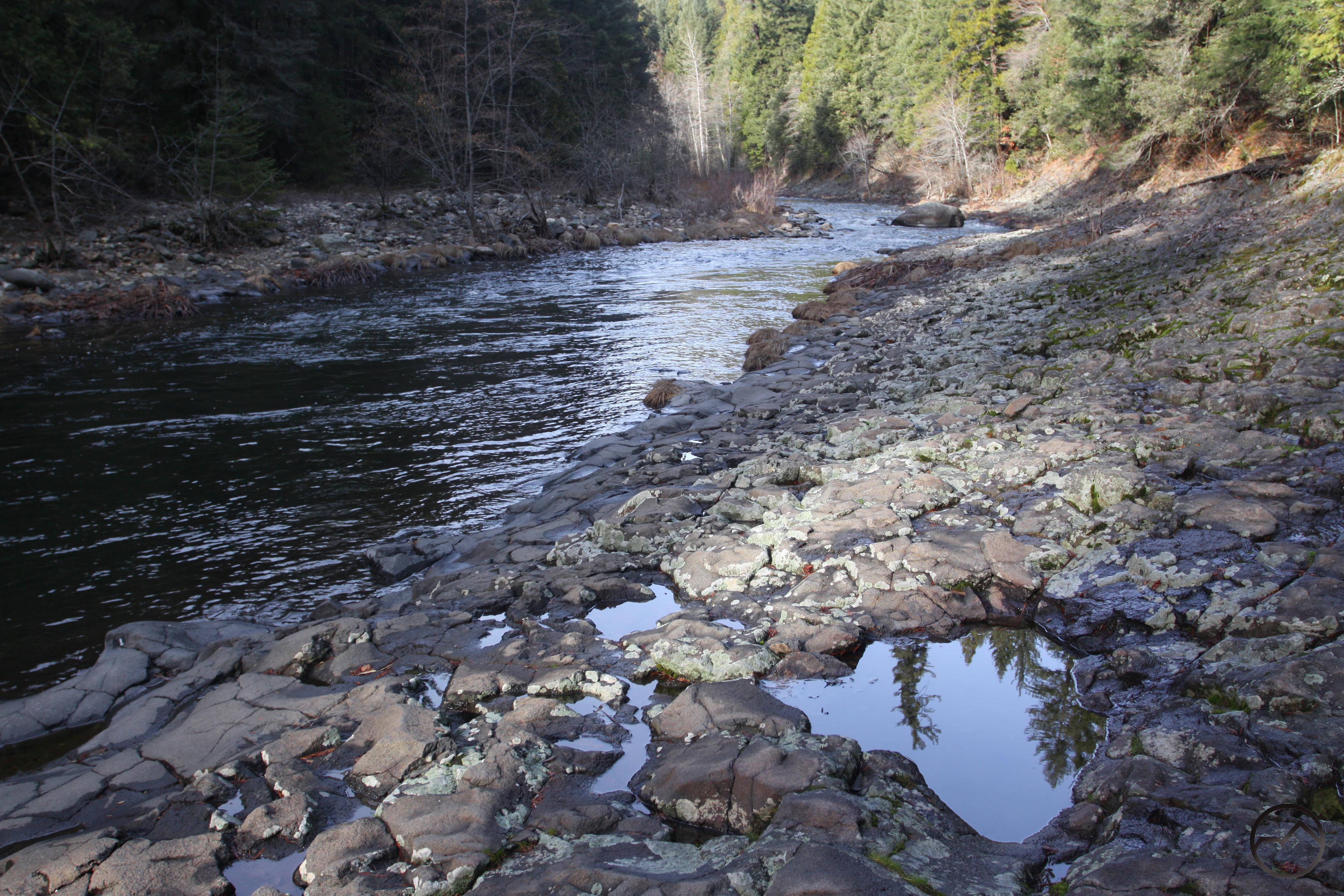
China Mountain (8,542)

Cascades, Mt Shasta, Diller Canyon - March2014 014_edited-1 (Custom)

China Mountain observed from Diller Canyon.

Easily the most obscure of the five highest peaks around Mount Shasta, China Mountain rarely ranks high on hiker’s lists of favorite mountains in the Mount Shasta region. This is unfortunate because hikers who ignore China Mountain are missing out on one of the most rugged and beautiful mountains around. Blessed with sheer cliffs and three lake basins, the China Mountain area always seems to be overlooked. Despite the obscurity, the mountain has much to offer hikers. The three lakes basins make great hiking and scrambling destinations. At the same time, because of its obscurity, China Mountain offers nature-lovers a deep since of isolation. As if reflecting the obscurity of China Mountain, no trails on Mount Shasta offer really exceptional views of the peak. However, for those explorers fortunate enough to make the journey into Diller Canyon, a tremendous view of China Mountain awaits to the west.

The Whaleback (8,528)

Whaleback (Custom)

The Whaleback viewed from the North Gate Trail.

One of the most prominently visible peaks to the north of Mount Shasta, the Whaleback gets its name because the large mountain is thought to look like the back of a diving whale. Excluding Mount Shasta, the Whaleback is the highest peak in the Cascades between Crater Peak in the Lassen area and Mount McLoughlin in Oregon. Like the vast majority of summits in the Cascades, the Whaleback was once an active volcano. A small crater is situated just below the summit. The small summit and great bulk of the mountain are typical of shield volcanos. These are formed by numerous, successive volcanic eruptions. Lava spills out layer after layer, gradually building the mountain up. The area around the Whaleback saw significant logging activity in the last century but much of the mountain is still covered in large stands of virgin timber. The heavily wooded peak, combined with the its rounded summit give the Whaleback the least rugged appearance when compared to the other high peaks around Mount Shasta. Since it is situated on the great mountains northeast side, the lonely North Gate Trail offer great views of the Whaleback is it climbs up to the foot of the North Gate plugs.
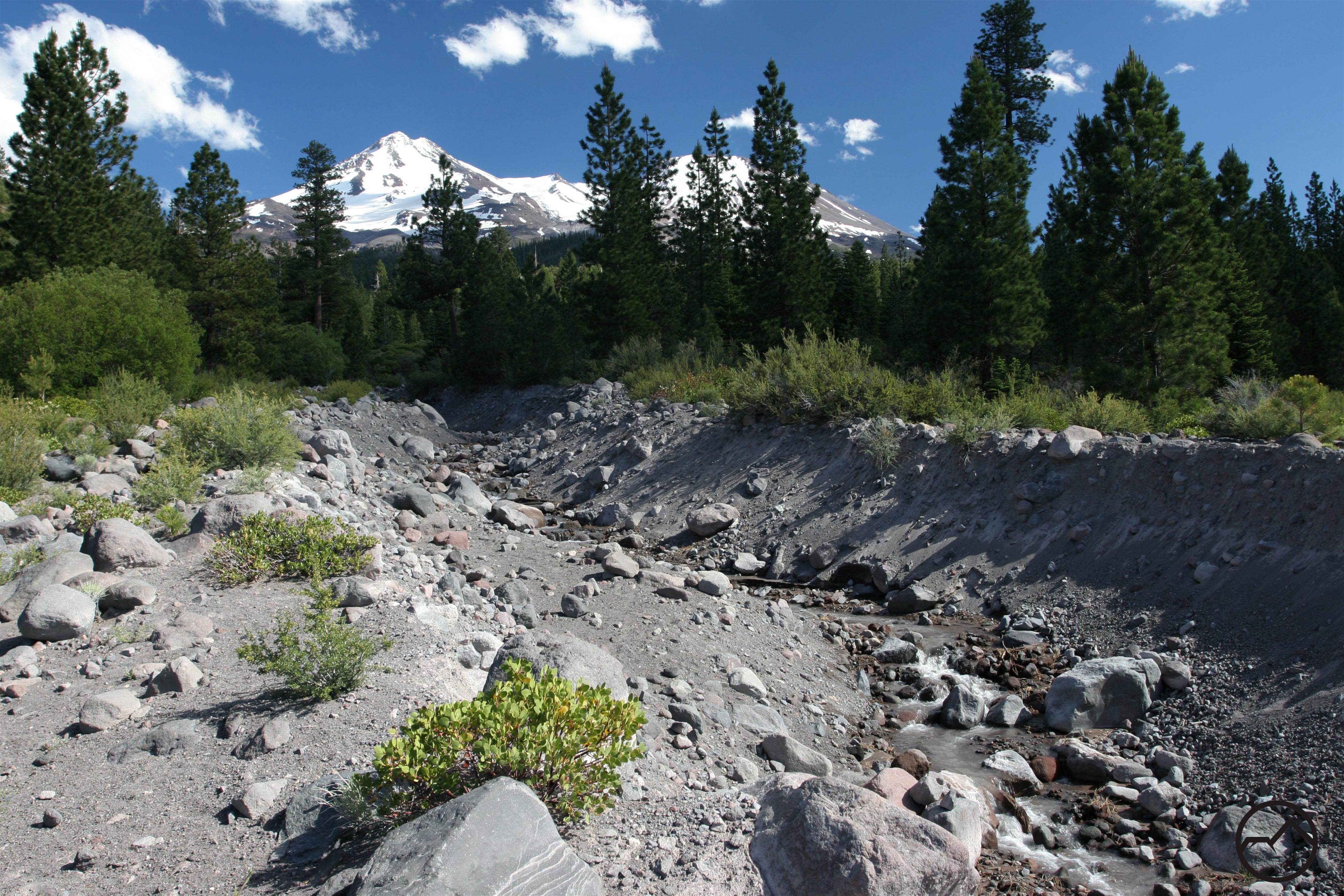
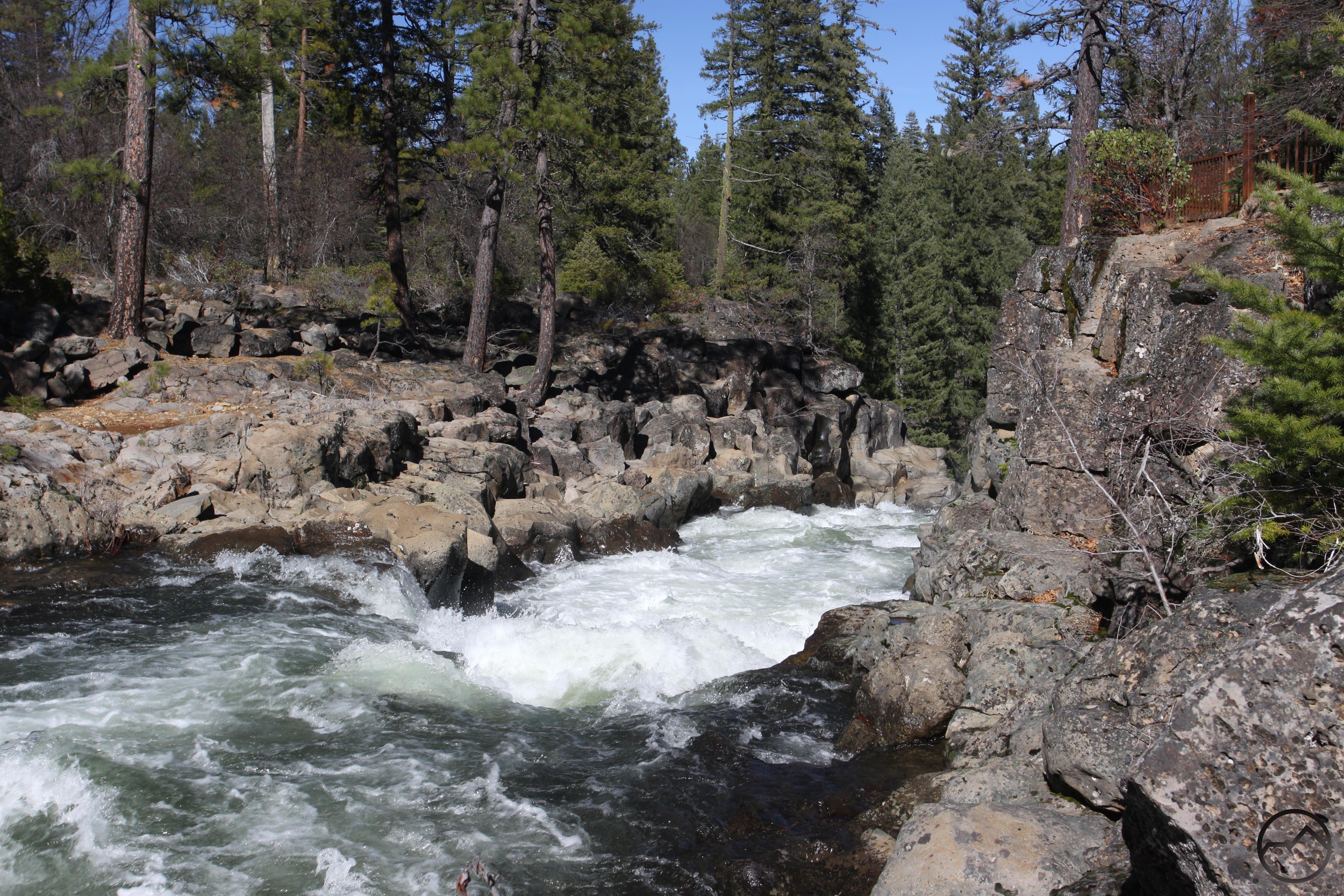
Ash Creek Butte (8,378)

Ash Creek Butte

Ash Creek Butte rises beyond Brewer Creek.

While the other Cascade peaks around Mount Shasta could be described as having rounded summits with small craters, Ash Creek Butte is a strikingly rugged and craggy mountain. Rising to a narrow, pointed summit, Ash Creek Butte exhibits significant glacial activity. At least two major glacial cirques are found on the mountain’s north side and a possible third cirque is located on its east face. The cirques were once home to large glaciers that ground the rounded, smooth-sided mountain down and exposed gaping, rocky canyons in their wake. The Surprise Basin on Ash Creek Butte’s north side is the most impressive. Though the glaciers are gone, much of their detritus remains in the form of Surprise Lake, a smaller, unnamed lake and a large fossil rock glacier. This peculiar feature was formed when portions of Ash Creek Butte collapsed after being undermined by the glacier. The collapsed debris covered the glacier, which subsequently melted away. The debris now appears like the fossilized remnant of the glacier. Of all the high peaks around Mount Shasta, Ash Creek Butte is the most isolated and least known, though it is also the most impressive in appearance, other than Mount Eddy. The best views from Mount Shasta trails are found on the equally isolated Brewer Creek Trail, particularly from Brewer Creek itself.

The Goosenest (8,280)

Goosenest (Custom)

The Goosenest rises above the Cascade crest.

Classic volcanic peak, the Goosenest is the most prominent summit on the east side of the Shasta Valley. The rounded, dome-like summit is blanketed in large lava flows. Though the woods have begun encroaching on the large flows, they are still easily discerned from far below in valley. The summit consists of a largely bare, ashy rim around a deep crater. The rounded rim is what gives the mountain its nest-like appearance. Two trails wind their way to the summit. On the north side is a maintained foot path. The south side is traversed by an old road that climbs up from an old quarry. The foot path is a much nicer climb. Despite the Goosenest’s great visibility throughout the area to the north of Mount Shasta, it is only prominent from a pair of trails, the Whitney Falls Trail and the North Gate Trail. The latter in particular has the best views since it climbs high enough on Mount Shasta to gain a perspective that shows the Goosenest rising high above the other peaks on the Cascade crest.

FiveTallesPeaks

Posts navigation

← Older Entries
Newer Entries →
    • Recent Posts

      • Winter Shows Up When It Will
      • January Rolled By With Mud, Then Very Dry
      • Mount Shasta 2025 – A Year In Images
      • Mount Shasta On Either Side Of Christmas
      • Adrift In An Ocean Of Fog
      • December Has Been Spectacular Thus Far Pt. II (A Magnificent Lenticular)
      • December Has Been Spectacular Thus Far Pt. I
      • Lenticular Interrupted
      • A Stormy Wave And A Truchas Sunset
      • Aurora Lenticularis
    • Enter your email address to follow Hike Mt Shasta and receive notifications of new posts by email.

    • Archives

      • February 2026
      • January 2026
      • December 2025
      • November 2025
      • October 2025
      • September 2025
      • August 2025
      • July 2025
      • June 2025
      • May 2025
      • April 2025
      • March 2025
      • February 2025
      • January 2025
      • December 2024
      • November 2024
      • October 2024
      • September 2024
      • August 2024
      • July 2024
      • June 2024
      • May 2024
      • April 2024
      • March 2024
      • February 2024
      • January 2024
      • December 2023
      • November 2023
      • October 2023
      • September 2023
      • August 2023
      • July 2023
      • June 2023
      • May 2023
      • April 2023
      • March 2023
      • February 2023
      • January 2023
      • December 2022
      • November 2022
      • October 2022
      • September 2022
      • August 2022
      • July 2022
      • June 2022
      • May 2022
      • April 2022
      • March 2022
      • February 2022
      • January 2022
      • December 2021
      • November 2021
      • October 2021
      • September 2021
      • August 2021
      • June 2021
      • May 2021
      • April 2021
      • March 2021
      • February 2021
      • January 2021
      • December 2020
      • November 2020
      • October 2020
      • September 2020
      • August 2020
      • July 2020
      • June 2020
      • May 2020
      • April 2020
      • March 2020
      • February 2020
      • January 2020
      • December 2019
      • November 2019
      • October 2019
      • September 2019
      • August 2019
      • July 2019
      • June 2019
      • May 2019
      • April 2019
      • March 2019
      • February 2019
      • January 2019
      • December 2018
      • November 2018
      • October 2018
      • September 2018
      • August 2018
      • July 2018
      • June 2018
      • May 2018
      • April 2018
      • March 2018
      • February 2018
      • January 2018
      • December 2017
      • November 2017
      • October 2017
      • September 2017
      • August 2017
      • July 2017
      • June 2017
      • May 2017
      • April 2017
      • March 2017
      • February 2017
      • January 2017
      • December 2016
      • November 2016
      • September 2016
      • August 2016
      • July 2016
      • June 2016
      • May 2016
      • April 2016
      • March 2016
      • February 2016
      • January 2016
      • December 2015
      • November 2015
      • September 2015
      • August 2015
      • July 2015
      • June 2015
      • May 2015
      • April 2015
      • March 2015
      • February 2015
      • January 2015
      • December 2014
      • November 2014
      • July 2014
      • June 2014
      • May 2014
      • April 2014
      • March 2014
      • February 2014
      • January 2014
      • December 2013
      • November 2013
      • October 2013
      • September 2013
      • August 2013
      • July 2013
      • June 2013
      • May 2013
      • April 2013
      • March 2013
      • February 2013
      • January 2013
    • Categories

      • Boy Scouts
      • Cascade Range
      • Castle Crags
      • Desert
      • Echo Point
      • Glaciers
      • Hiking
      • How things came to be…
      • Klamath Mountains
      • Konwakiton Outdoor Designs
      • Lakes
      • Lenticular Clouds
      • Maps
      • Marble Mountains
      • Meadows
      • Mount Eddy
      • Mount Shasta
      • Mount Shasta History
      • Napa County
      • Off Season Trails
      • Pacific Crest Trail
      • Peaks
      • Rivers
      • Rock Climbing
      • Scott Mountains
      • Seldom Seen
      • Shasta Valley
      • Sierra Nevada
      • Siskiyou Mountains
      • Sonoma County
      • Spring Trails
      • sunrise
      • sunset
      • Trinity Alps
      • Trinity Divide
      • Truchas Ridge
      • Uncategorized
      • Water
      • Waterfalls
      • Wilderness
      • Wildflowers
      • Wine Country
      • Winter Trails
      • Yosemite
    • Meta

      • Create account
      • Log in
      • Entries feed
      • Comments feed
      • WordPress.com
    • Copyright © 2013-2024 by Bubba Suess

      DISCLAIMER: Any use of the information contained in this site by any and all persons is done at their own risk. The operator of this site shall be held harmless from any and all alleged claims, demands, causes of action, liability, loss, damage and/or injury to property or persons whether brought by an individual or other entity. This indemnification applies, without limitation, to all actions by an individual or other entity as a result of their use of information contained in this site.

    Blog at WordPress.com.
    Hike Mt. Shasta
    Blog at WordPress.com.
    • Subscribe Subscribed
      • Hike Mt. Shasta
      • Join 985 other subscribers
      • Already have a WordPress.com account? Log in now.
      • Hike Mt. Shasta
      • Subscribe Subscribed
      • Sign up
      • Log in
      • Report this content
      • View site in Reader
      • Manage subscriptions
      • Collapse this bar
     

    Loading Comments...