Hike Mt. Shasta

Exploring the Mount Shasta Region

  • Home
  • Trails
    • Mount Shasta Trails
      • Brewer Creek Trail
      • Clear Creek Trail
      • Gray Butte Trail
      • Green Butte Ridge Trail
      • Horse Camp Trail
      • North Gate Trail
      • Old Ski Bowl Trail
      • Panther Meadow Trail
      • South Gate/Squaw Meadow Trail
      • Whitney Falls Trail
    • Trinity Divide Trails
      • Blue Divide Trail
      • Castle Lake Trail
      • Castle Lake Shore Trail
      • Cliff Lake Trail
      • Deadfall Lakes Trail
      • Gray Rock Lakes Trail
      • Gumboot Trail
      • Heart Lake Trail
      • Porcupine & Toad Lakes Via Pacific Crest Trail
      • Seven Lakes Basin Via Pacific Crest Trail
      • Sisson-Callahan Trail
      • Soapstone Trail
      • South Mumbo Scramble
      • Tamarack Lake Trail
      • Toad Lake Trail
    • Castle Crags Trails
      • Burstarse Falls Via Pacific Crest Trail
      • Castle Dome Trail
      • Flume Trail
      • Lower Castle Crags Via Pacific Crest Trail
      • Root Creek Trail
    • Scott Mountains Trails
      • Bluff Lake & Cement Bluff via Pacific Crest Trail
      • Caldwell Lakes Trail
      • China Mountain Scramble
      • Cory Peak and Bull Lake via Pacific Crest Trail
    • Cascade Crest
      • Ash Creek Butte Scramble
      • Goosenest Trail
      • Juanita Lake Trail
      • Orr Lake Trail
    • Mount Shasta City Area Trails
      • Black Butte Trail
      • Box Canyon Trail
      • Gateway Trail
      • Lake Siskiyou Trail
      • Mount Shasta City Short Trails
      • Ney Springs Canyon Trail
      • Spring Hill Trail
    • Shasta Valley Trails
      • Black Lava Trail
      • Haystack Trail
      • Lake Shastina Trail
      • Pluto Cave Trail
      • Trout Lake Trail
      • Yellow Butte Trail
    • Sacramento River Trails
      • Dunsmuir Trail
      • Hedge Creek Falls Trail
      • Sacramento River Trail
      • Sims History Trail
    • McCloud River Trails
      • Ash Camp To Ah-Di-Na Via Pacific Crest Trail
      • McCloud River Falls Trail
      • McCloud River Preserve Trail
      • Squaw Valley Creek Trail
      • McCloud River Trail: Algoma Camp to Nitwit Camp
      • McCloud River Trail: Nitwit Camp to Cattle Camp Swimming Hole
      • McCloud River Trail: Cattle Camp Swimming Hole to Camp 4
      • McCloud River Trail: Camp 4 to Upper McCloud Falls
      • McCloud River Trail: Pine Tree Hollow Loop
    • Trails Further Afield
      • Trinity Alps Trails
        • Bear Lakes Trail
        • Billys Peak Trail
        • Boulder Creek Lakes Trail
        • Boulder Lake Trail
        • Canyon Creek Trail
        • Caribou Lakes Trail
        • East Boulder Lake Loop
        • East Weaver Lake Trail
        • Four Lakes Loop
        • Granite Peak Trail
        • Grizzly Creek Trail
        • Gulch Lakes Loop
        • Hidden Lake Trail
        • South Fork Lakes Trail
        • Stoddard Lake Trail
        • Stoney Ridge Trail
        • Tangle Blue Lake Trail
      • Warner Mountains
        • Emerson Creek Trail
        • Highgrade Trail
        • Patterson Lake Via Warner Summit Trail
        • Pine Creek Trail
        • Squaw Peak Trail
  • Articles
    • Trails By Area
      • Mount Shasta
        • Vistas, Meadows And Waterfalls: Three Best Hikes On Mount Shasta
        • The End Of The Road: Three Hikes In The Old Ski Bowl Area
        • Two Trails From Bunny Flat
        • Three Trails On Mount Shasta’s East Side
        • Mount Shasta’s Hummingbirds
      • Trinity Divide
        • Great Lakes: Top Five Lake Basins In The Trinity Divide
        • The Headwaters Of The South Fork Of The Sacramento River
        • Neglected Headwaters: Two Lesser Lake Basins On The South Fork
        • Gumboot Saddle: Two Hikes On The PCT
        • Descent Into Mystery: The Sisson-Callahan Trail
        • Mumbo Basin – Overlooked On The West Side
        • The Headwaters Loop: A Proposed Backpacking Loop In The Trinity Divide
      • The McCloud River
        • The McCloud River Trail
      • Shasta Valley
        • Jewels In The Desert
      • Scott Mountains
        • Great Scott! Two Scott Mountains Hikes On The PCT
      • Trinity Alps
        • Carubou Lakes: Trinity Alps On A Grand Scale
        • Switchbacks To Heaven: The Trinity Alps’ Stoney Ridge Trail and Four Lakes Loop
        • Trinities In Proximity: Two Trinity Alps Trails With Easy Access From Mount Shasta
        • Trails in the Carter Meadows Area
        • Trinity Alps Views of Mount Shasta
        • The Psychological Value Of The Trinity Alps
    • Waterfalls
      • Three Waterfalls On Mount Shasta
      • McCloud River Waterfalls
      • Sacramento River Waterfalls
      • Trinity Divide Waterfalls
      • Trinity Alps Waterfalls
      • Avoiding A Dry Whitney Falls
    • Off Season Trails
      • Three Winter Hikes Near Mount Shasta City
      • Winter Hikes In Shasta Valley
      • Winter Hiking In The Shasta Valley Wildlife Refuge
      • Winter Hikes On The Sacramento River
      • Winter Hikes On The Lake Siskiyou Trail
      • Spring Hikes In The Castle Crags
      • Spring Hikes On the Upper McCloud
      • Spring Hikes On The Lower McCloud River
    • Points Of Interest
      • Mount Eddy: Overshadowed, Underrated
      • Black Butte: Hiding In Plain Sight
      • Castle Dome: Steadfast And Staggering
      • Mount Shasta Hoodoos
      • Sacramento Scrambling
      • The Shasta River
      • The Castle Creek Watershed
      • Mount Shasta East Side Glacier View
      • 5 Fantastic Mount Shasta Vistas
      • 5 Highest Peaks Around Mount Shasta
      • 5 Best Hikes On Creeks And Rivers
      • 5 Interesting Footbridges
      • Three Spectacular Drive-To Sunset Vistas
    • North State Geography
      • Introduction
      • Seven Major Regions
      • The California Cascades
      • Klamath Mountains Pt. I
      • Klamath Mountains Pt. II
      • The Great Canyons Of Mount Shasta
      • Mount Shasta, Timberline, And The Relative Size Of Cascade Volcanos
      • Four Eruption Cones Of Mount Shasta
      • Mount Shasta’s Medial Moraine
    • Northern California Review
      • North Table Mountain
      • Lakes Basin Recreation Area
      • Eastern Sierra Fall Color
      • Sonoma County
      • Central Sierra Nevada
      • Orland Buttes
    • Seldom Seen
      • Ash Creek Falls
      • Mud Creek Canyon
      • Lower Mud Creek Canyon
      • Diller Canyon
      • Lower Cascade Gulch
      • The Grey Rocks
      • Castle Creek
      • Upper Wagon Creek
      • Fawn Creek Canyon
      • Confluence of the Sacramento River and Castle Creek
      • Upper Klamath River Canyon
      • Hole In The Ground Geologic Area
      • Ash Creek Butte Fossil Rock Glacier
    • Mount Shasta History
      • Vantage Lost: The Everitt Memorial Vista
      • A Yosemite-Mount Shasta Connection
      • Whitney – What’s In A Name?
      • Mount Shasta Area and the 1838 Exploring Expedition
      • A 19th Century Engraving Of An Epic Mount Shasta Vista
      • Vintage 1907 Color Photos
      • A Misleading Painting
      • A Mysterious Painting
      • A Mysterious Painting Pt. II
      • Stereographic Mt. Shasta
      • Year One Of Hike Mt Shasta
      • Year Two Of Hike Mt Shasta
      • Year Three Of Hike Mt Shasta
      • Year Four Of Hike Mt Shasta
      • Year Five Of Hike Mt Shasta
      • Year Six Of Hike Mt Shasta
      • Year Seven Of Hike Mt Shasta
    • Image Galleries
      • Mount Shasta Trails Gallery
      • Mount Shasta Sunrise Gallery
      • Mount Shasta Sunset Gallery
      • Lenticular Cloud Gallery
      • Mount Shasta NON-Lenticular Clouds
      • Mount Shasta Reflection Gallery
      • Telephoto Gallery
      • Mount Shasta Area Fall Color
      • Castle Crags Gallery
      • Waterfalls Gallery
      • Trinity Divide Lakes Gallery
      • Mount Shasta Area Rivers Gallery
      • Shasta High Desert Gallery
      • Mount Shasta GIF Gallery
    • Random Notes
      • Revew: Three Mount Shasta Trail Maps
      • A Mount Eddy Wilderness?
      • New Land Additions For The Castle Crags
      • Book Plug: Mount Shasta Area Rock Climbing
      • Exile: How I Came To Love Wilderness
  • Mt. Shasta Trail Map
  • Blog
  • About/Contact
  • Links
  • Truchas Ridge

Distancing Pt. V: More Mount Shasta And More Waterfalls

Posted by bubbasuess on April 29, 2020
Posted in: Cascade Range, Hiking, Mount Shasta, Uncategorized, Waterfalls. 1 Comment

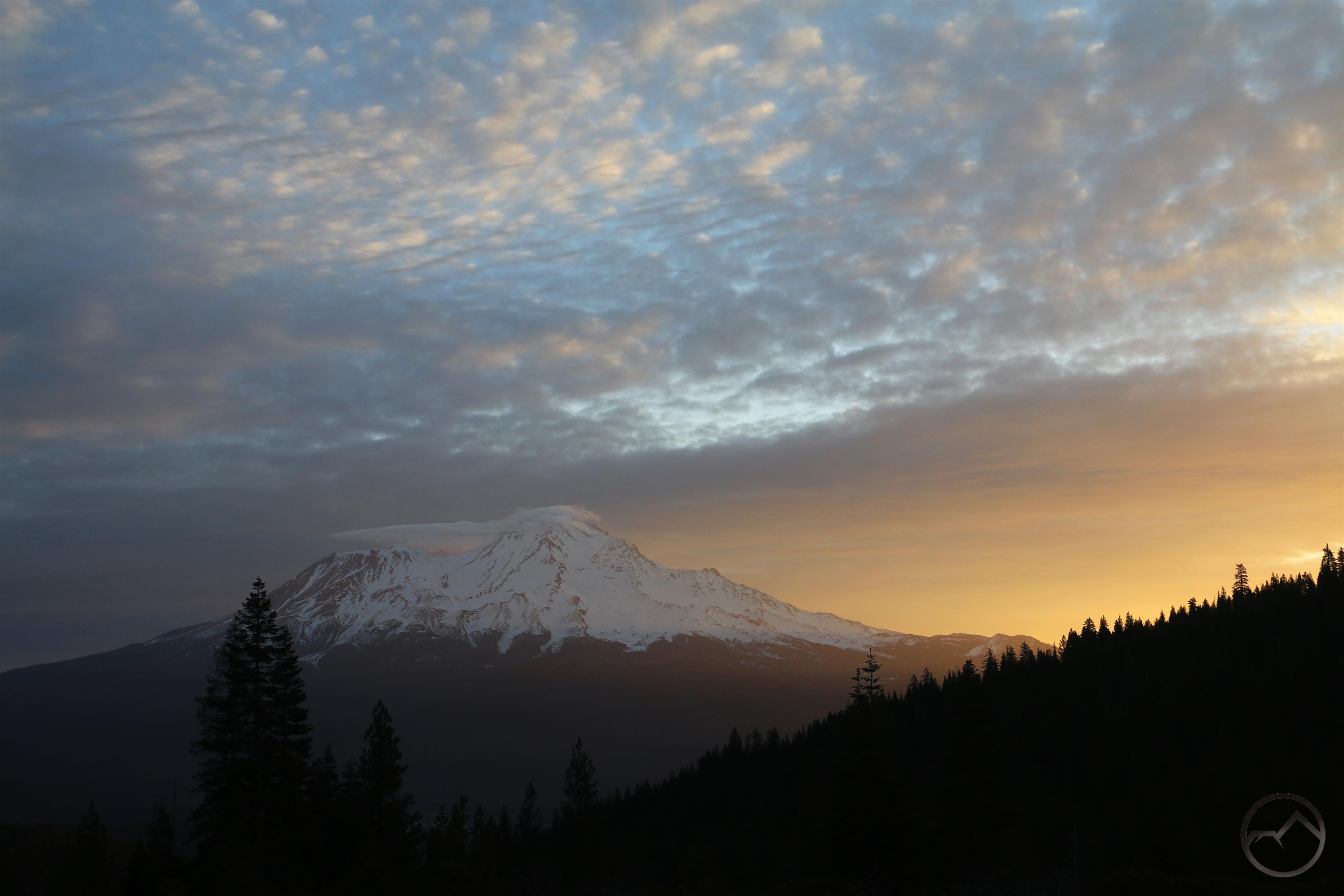
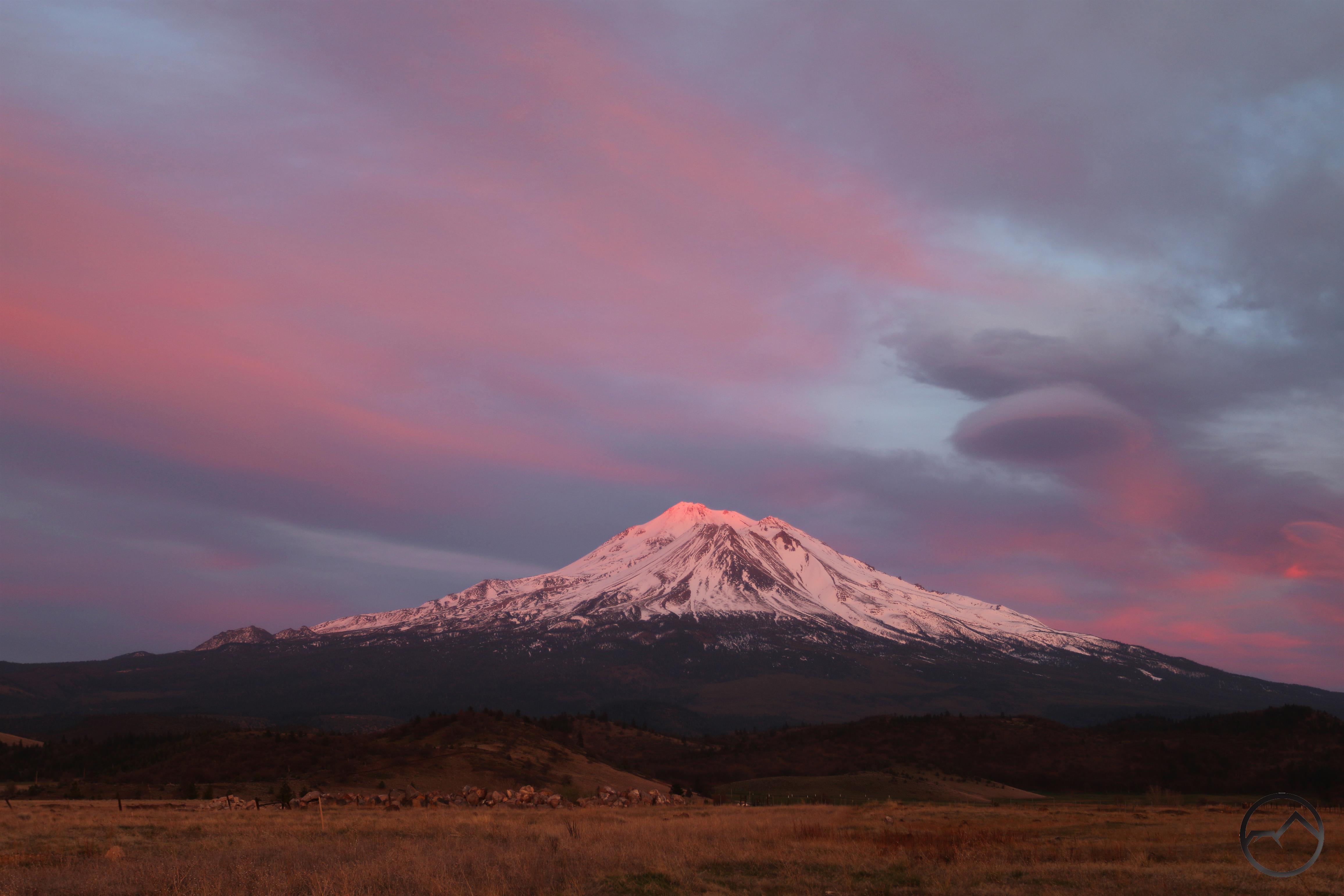
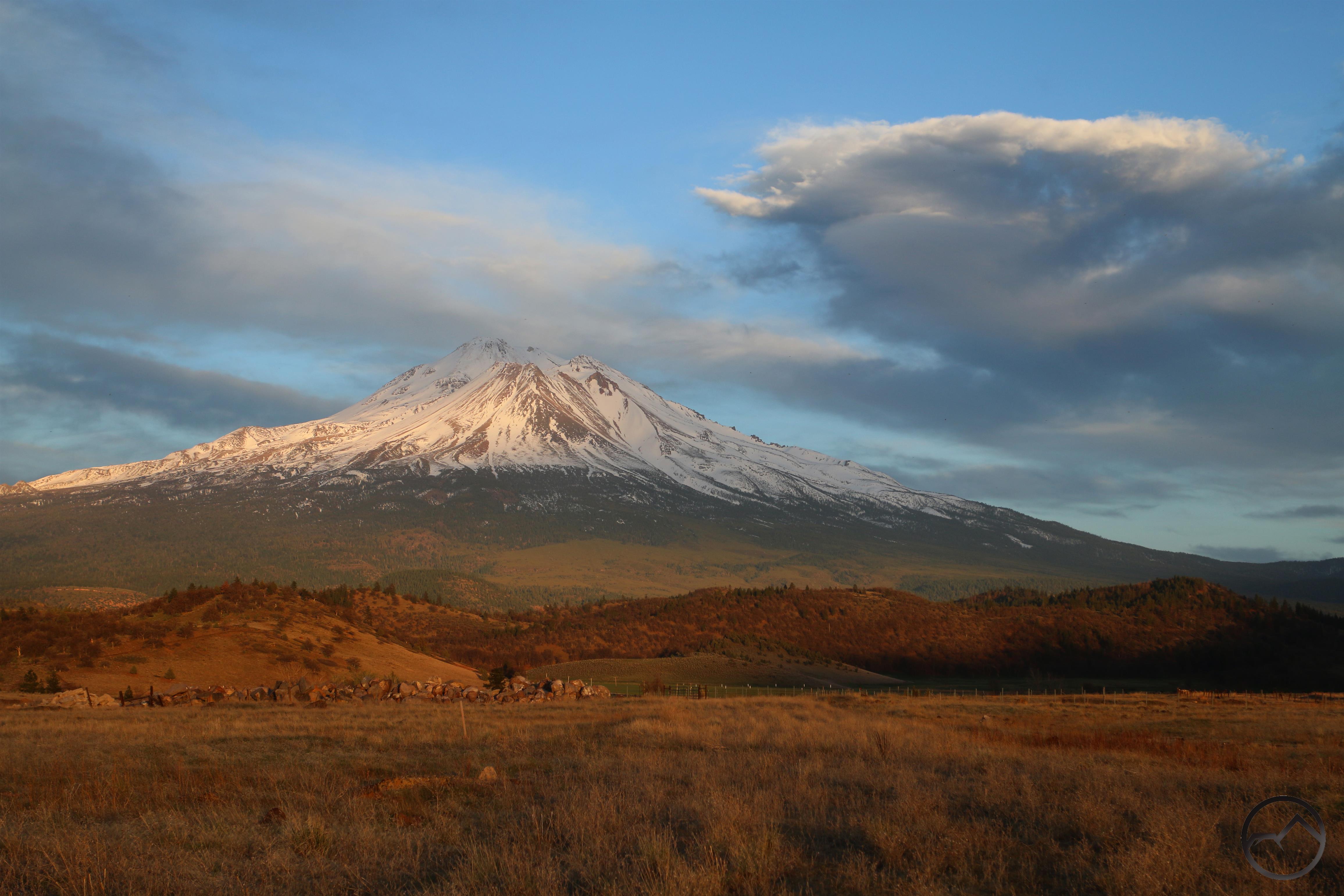
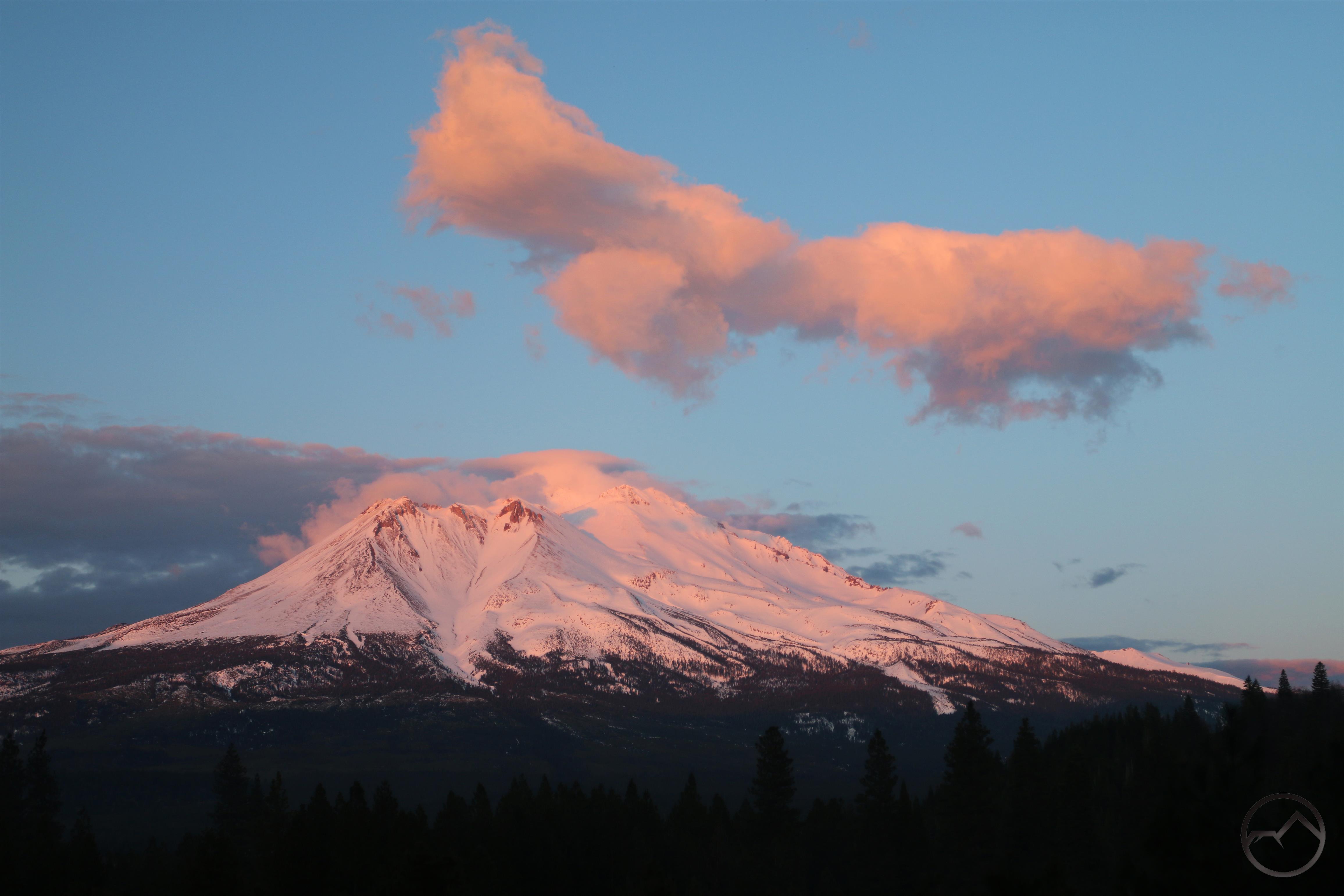
A glowing April sunrise on Mount Shasta.

It’s been another great week (plus) here in Mount Shasta and the weather and conditions in the mountains keep improving. The snow is really starting to melt out so some excellent high country destinations are starting to open up. Spring really has set in up here and, in addition to the snow melting, the trees have been turning green. If there had to be a time to be social distancing, this is certainly a choice one. I am grateful this was not imposed on us during the winter! Just as in previous weeks, the one past has focused on waterfalls and thaw-engorged creeks and rivers. The real highlight was being able to visit a “lost” waterfall as well as some excellent cascades on the headwaters of Tamarack Creek. These are both in the Scott Mountains, I really underrated mountain range that has been increasingly drawing my attention the last couple of years. I think this summer is finally the summer to focus on them. Of course, Mount Shasta will always be the focus and it has offered some memorable scenes the last few days.

Naturally, my wife and I have gotten our kids outside a lot and they have been feasting on the magnificent scenery and waterfalls. Life is hard!

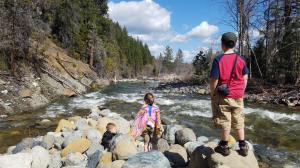
Exploring the confluence of Deer Creek and the Sacramento River.
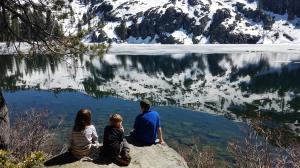
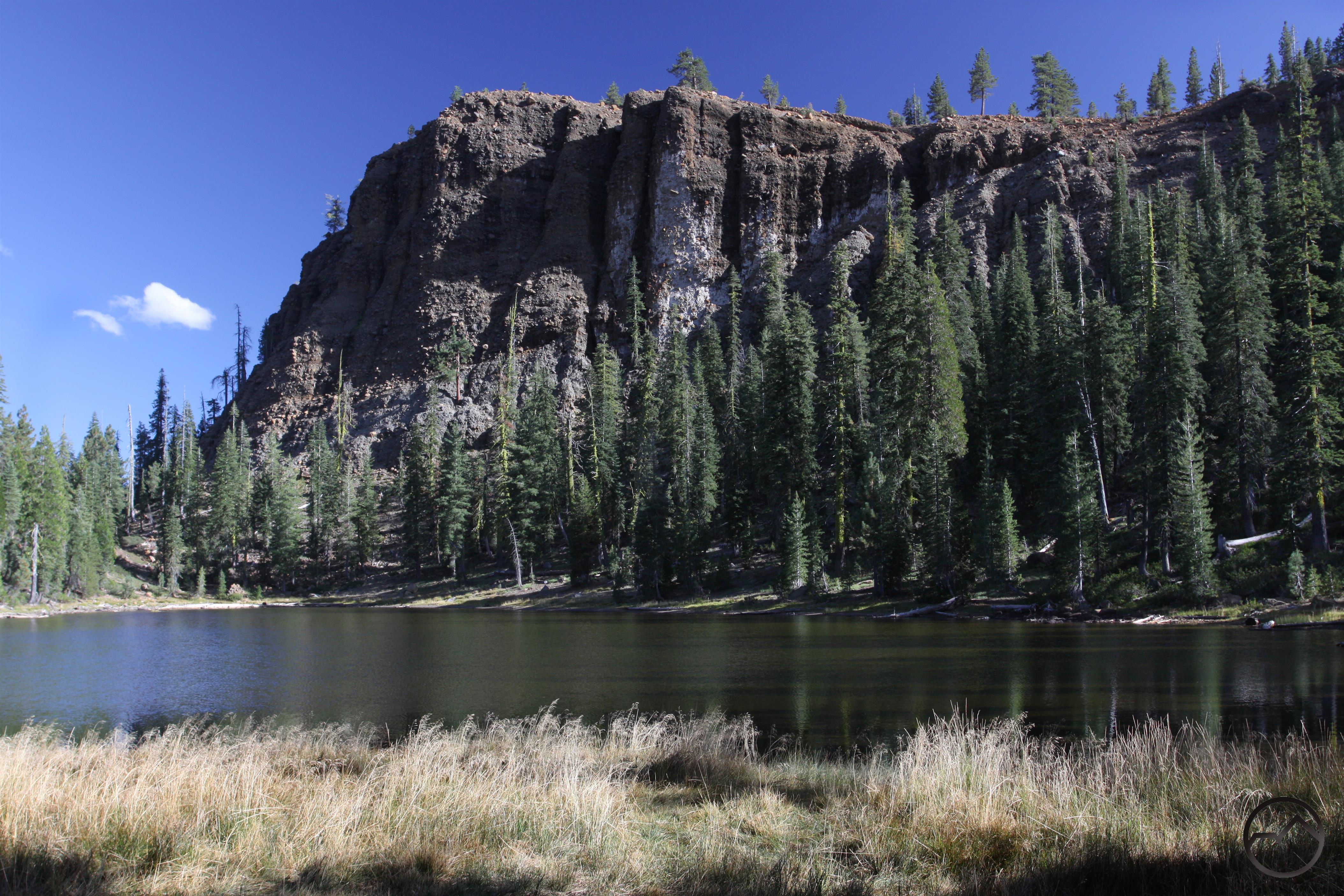
Enjoying spring at Castle Lake.

The kids like to play while dad takes pictures.
Off trail in the woods.

Ambush!
Relaxing in a hidden meadow surrounded by aspens.

It’s a fun climb along the waterfalls.
High in the snowy mountains.

A great view of Mount Shasta…
Rock scrambling is a favorite of my oldest.

My daughter looks down on the snowed-in creek.
My youngest pondering the snowy mountains.

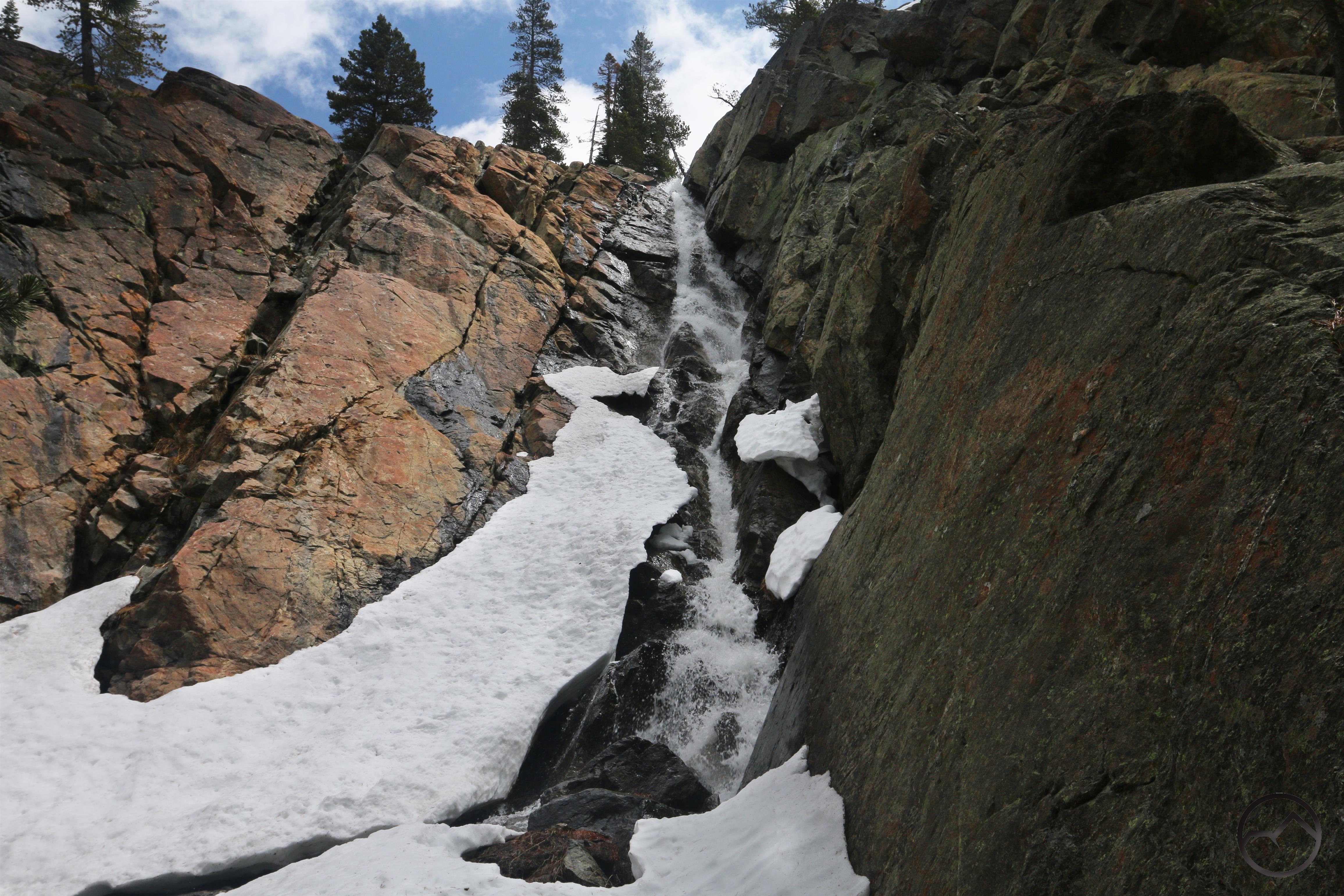
The highlight for me was the opportunity to hike with a friend to a long lost waterfall high in the mountains. I would estimate it’s height at 80 feet or so. The amazing thing, aside from the falls themselves, is that there was once a built and maintained trail leading to these falls. We found constructed trail, tree blazes and deadfall sawed and cleared off the path. This was all probably 75 years old (our guess) so it has not been maintained for a long time. The trail no longer appears on maps either.

A seemingly lost waterfall high in the mountains.

20200424_121247

20200424_121247


20200424_142406

20200424_142406

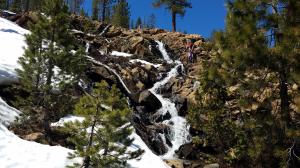
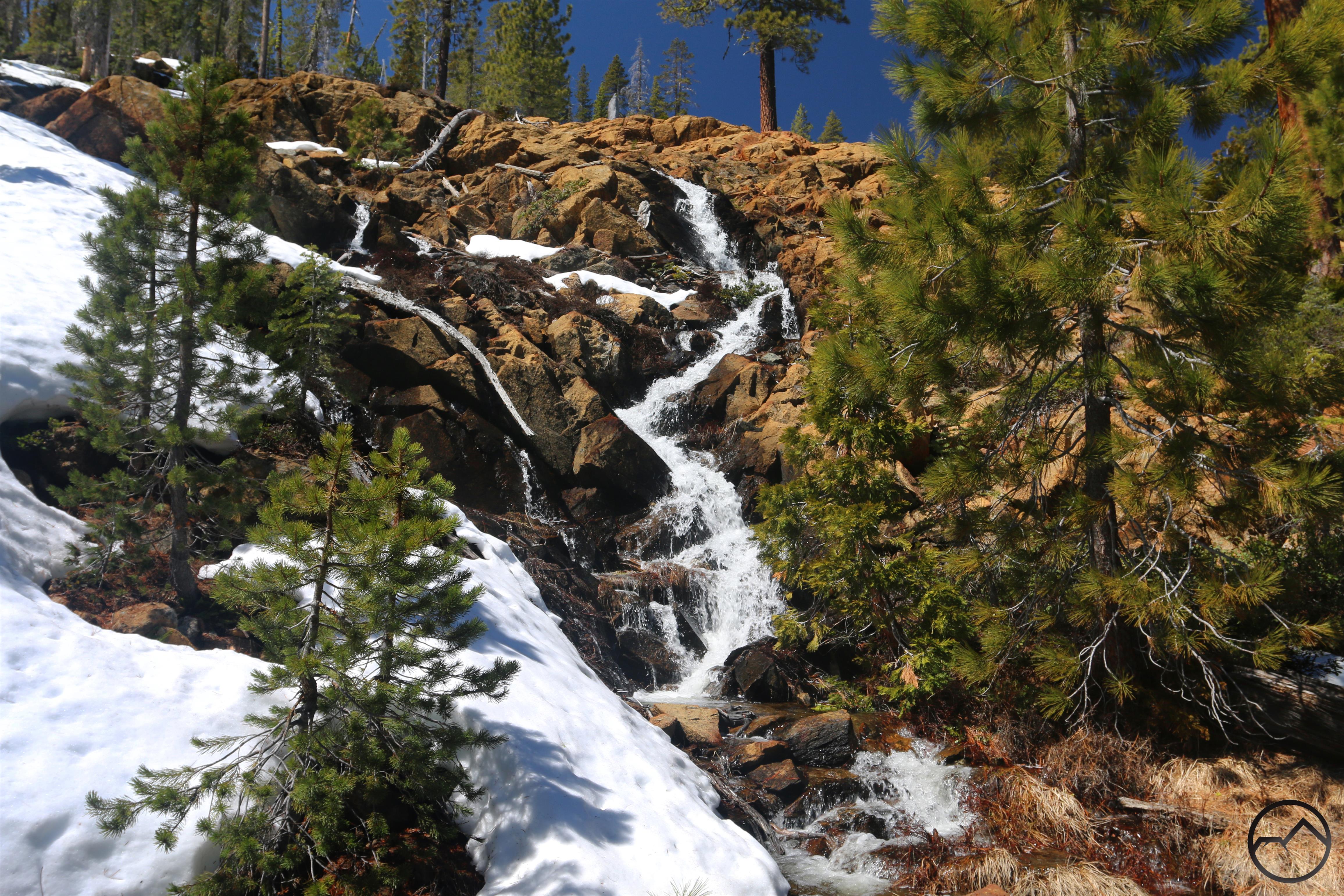
The other big waterfall destination for us was the series of cascades at the headwaters of Tamarack Creek. It is still pretty snowbound at the higher elevations but the warm weather and exposed rock meant easy climbing. The cascades drop a total of over 350 feet in a series of precipitous plunges. With waterfalls, great, superbly tractioned rocks, it is a giant playground perfect for a spring afternoon.

One of the most impressive sections of the Tamarack Creek cascades.

20200428_121328

20200428_121328


20200428_132615

20200428_132615

Another favorite spot of mine in spring is Castle Lake. I love the waterfall that pours into the lake’s southwest corner. The roar of the falls echoing through the lake’s cirque is magnificent.


The last great piece of water we explored was a rugged canyon with an energetic creek racing through the twists and turns of the narrow, rocky cliffs. This one has some nice waterfalls as well. I didn’t get good images but it will be the subject of more images and words in the near future.


All in all, it has been a fantastic week or so around Mount Shasta. The snow is melting, the water is flowing and the mountain is beautiful. Life is good, regardless of what the prevailing mood seems to be!

April
April

A look at the scale of the clouds above Mount Shasta. It was an awesome large display.
Nearby Castle Lake was gorgeous as well. Most of the lake is still covered by ice but it has melted away around the southern shoreline.

April
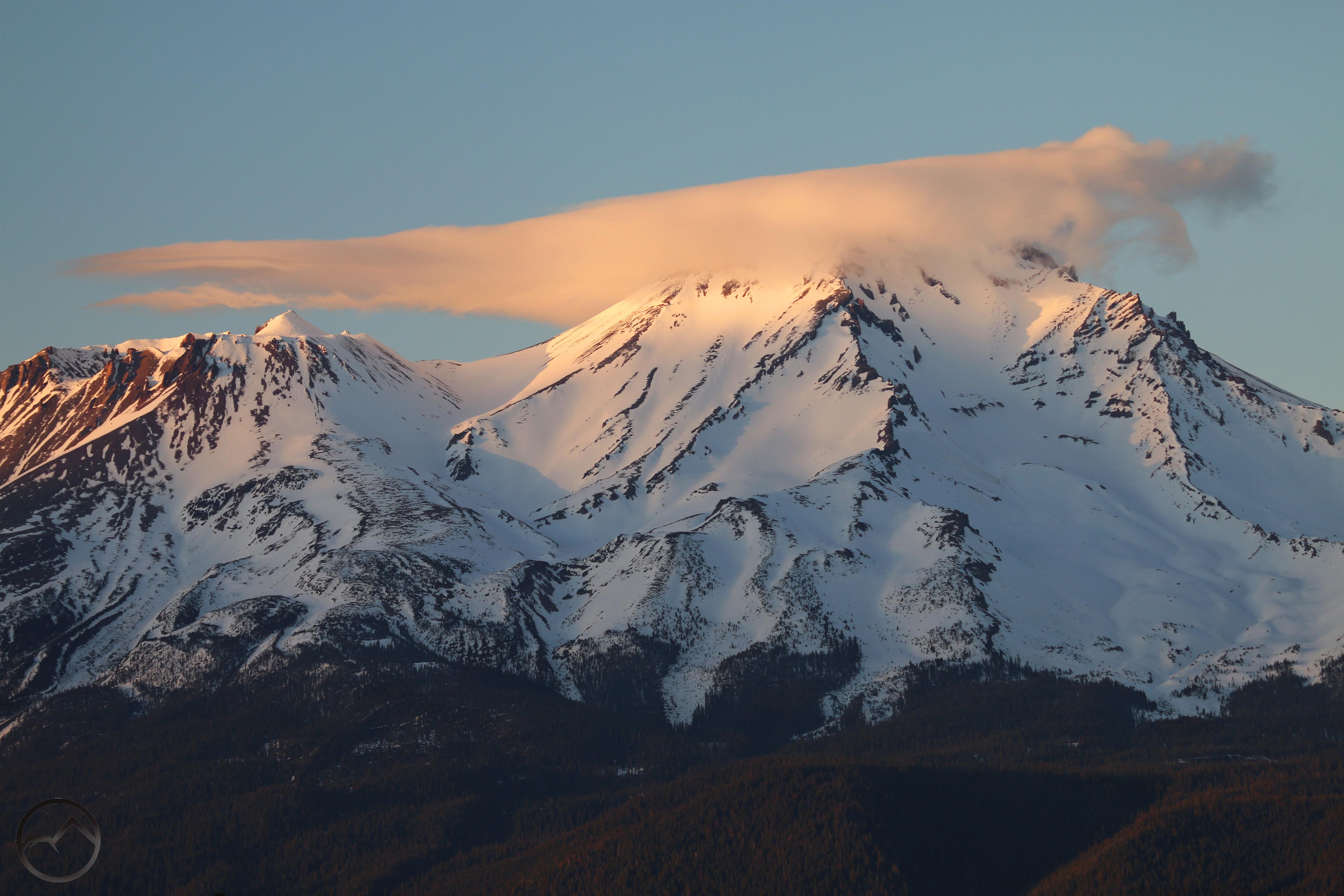
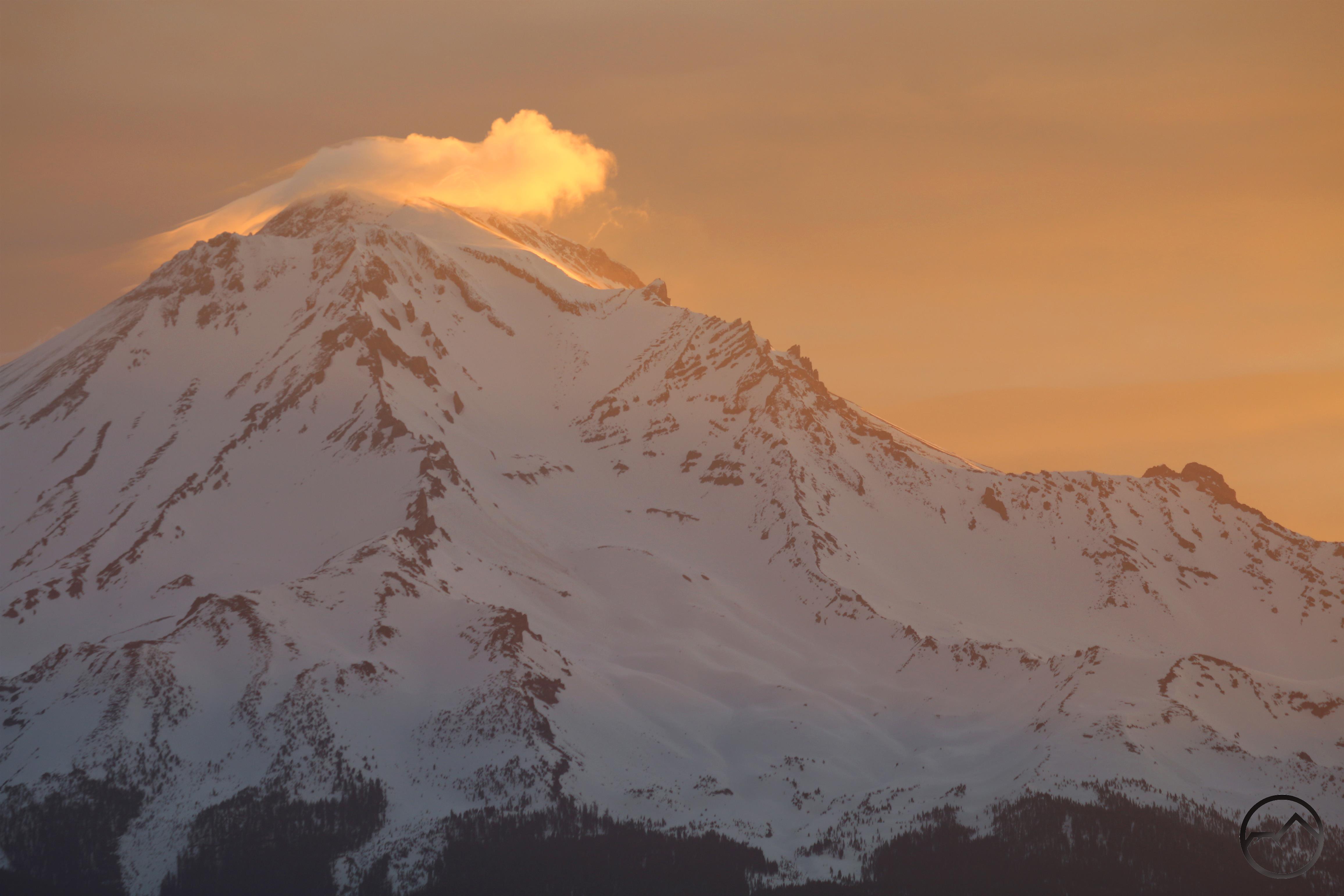
A massive cloud covers the summit of Mount Shasta at sunrise.

Strange light at sunset.
A bright morning east of the mountain.

Looking down on the confluence of Deer Creek and the Sacramento River.
A view west, to peaks from the Trinity Alps, Russian Wilderness and Marble Mountains.

A view to the top of the lost falls.
Looking down the lost waterfall.

Falls on the headwaters of Tamarack Creek.
Mount Eddy and the snowy high country of the Trinity Divide.

Willow Creek Mountain and the Goosenest are visible on the far side of the Shasta Valley.
Mount Shasta visible above Tamarack Creek.

A nice cascade over smooth rock.
More cascades on Tamarack Creek.

A Great Sunrise From Mount Shasta’s South Side

Posted by bubbasuess on April 24, 2020
Posted in: Cascade Range, Hiking, Mount Shasta. 1 Comment

Friday morning sunrise on Mount Shasta.

I am about to take off and head up to China Mountain right now so I am going to keep this short. Spring has proven to excellent this year and it was another fine 12 hours on Mount Shasta. The weather has been great and there has been just enough fluctuation in the systems to create some interesting formations over the mountain.


The first inkling I had that something interesting might happen was early Thursday afternoon when a wispy little cloud formed over Mount Shasta. It came and went and there were no other clouds in the sky. Its presence hinted at the potential for something larger to take shape later in the day.


This proved to be the case and the wisp grew at sunset. It wasn’t a really interesting cloud but the light on the mountain was good and it added a nice accent as the sun went down. It seems strange to dismiss the spectacle as uninteresting given that it is Mount Shasta and magnificent. I need to guard against complacency.


I suspected the cloud would still be present in the morning and this proved to be the case. I debated where to go to best capture it and decided to head over to McCloud. This turned out to not be the best angle on the lenticular but it was definitely the best angle to catch the sunrise light. It was another terrific show as the cloud flowed over the mountain and exploded with color just before the sun broke the horizon.

It’s going to be a good day…


Cement Banks And Flooding Rivers: A Quick Look At The Geology Of The Sacramento River

Posted by bubbasuess on April 23, 2020
Posted in: Hiking, Klamath Mountains, Mount Shasta, Rivers, Trinity Divide. Tagged: Sacramento River. 3 Comments

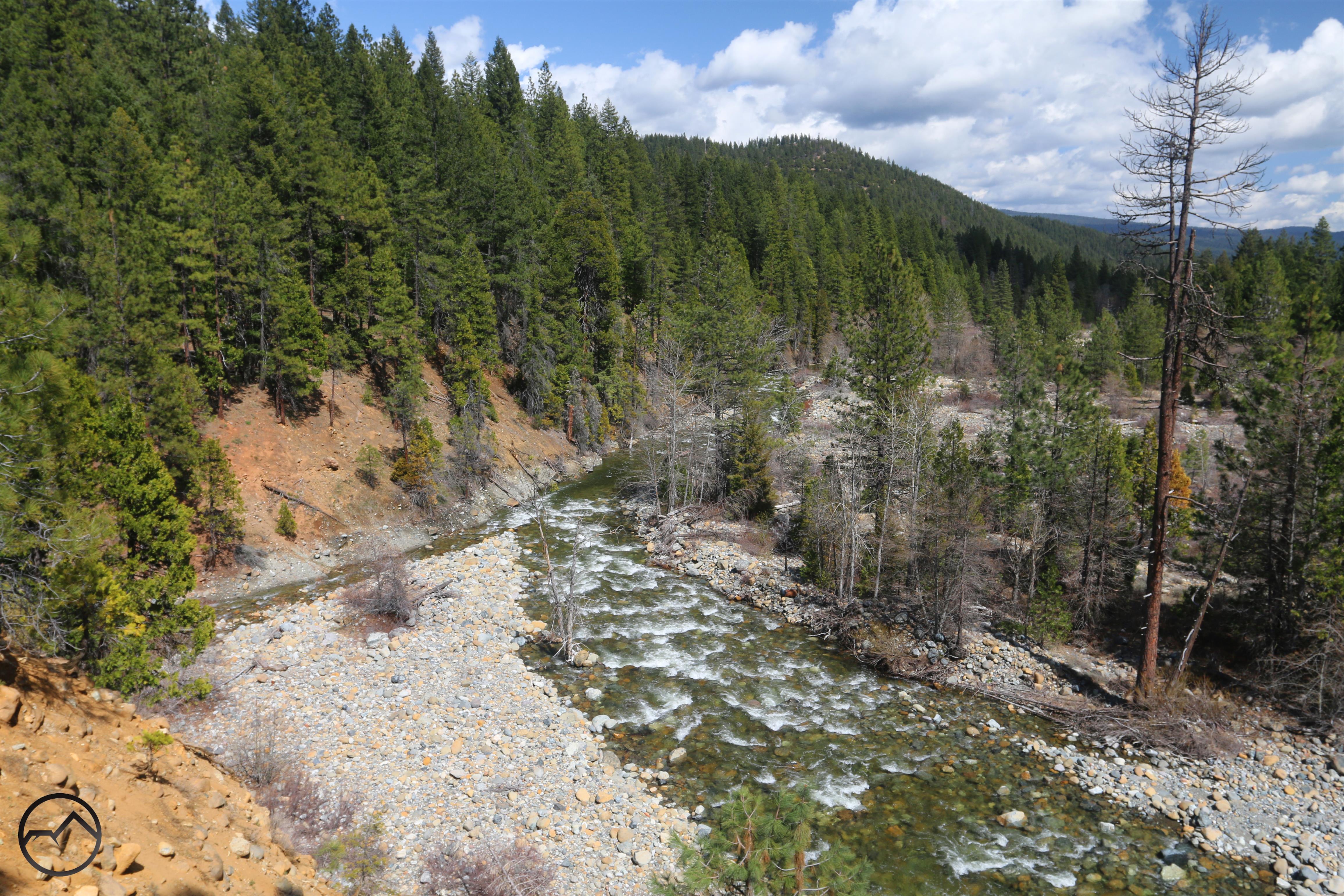
An awesome view of the confluence of Deer Creek and the Sacramento River.

The Upper Sacramento River is that part of the river that lies above Shasta Lake. This section of the river is vigorous and swift-flowing, a classic mountain river racing through a deep canyon. However, the Upper Sacramento River can be further subdivided into more parts. Below Lake Siskiyou, the lone impoundment on the Upper Sacramento the river travels through a lush, narrow canyon. Above the lake the river has a wider flood plain for a brief duration before it splits off into its nascent forks, the South, Middle and North Forks of the Sacramento. Each of these forks lead to headwater basins high in the Trinity Divide. Where they all converge, there is a brief but beautiful and fascinating stretch of river.

The short segment of river where the tributary forks converge is a classic Klamath Mountains river. It flows through a flat plane filled with large rocks of a multitude of colors, hinting at presence of serpentine and peridotite and the complex geologic composition of the Klamath Mountains. Yet, unlike other rivers in the area, some unusual geology is made manifest here that offers an intriguing glimpse into the river’s past. This is most evident at the confluence of Deer Creek with the Sacramento. At this spot the river’s north bank is nearly vertical for 40 to 80 feet, a contrast to the more gentle slope that characterizes the rest riverbank. In this vertical section, layers deposited by previous floods are exposed. It is an unusual opportunity to see the river’s history made plain in the landscape.

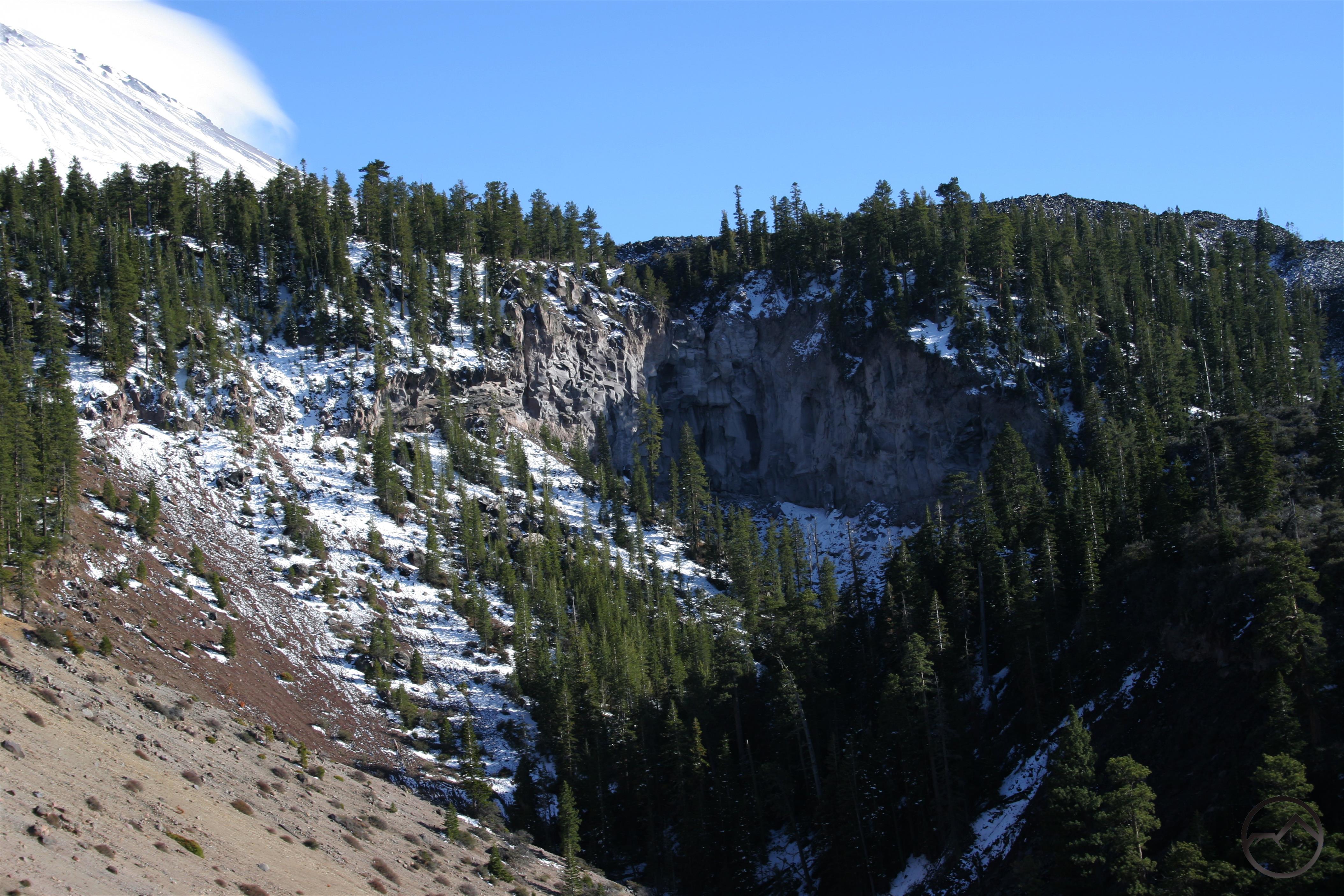
The Cement Bluff above Bluff Lake.

Some similar examples are found elsewhere in the Klamath Mountains. These formations are referred to as “cement”. Given the aggregate in each layer, I think it is an appropriate description. The two most prominent formations of this type are the Cement Banks in the Trinity Alps and the Cement Bluff in the Scott Mountains, just north of Mount Eddy. Both are far more massive than the cement formations along the Sacramento River but the one along the river is the most accessible and easiest to examine up close. The other two, larger formations are also somewhat more mysterious since they are further removed from rivers that would flood. It is likely they are the result of glaciation rather than flooding.

Regardless of how the Sacramento cement formations compare to the larger formations elsewhere in the Klamaths, the geologic layers exposed along the river are fascinating in their own right. The added benefit of the river’s presence makes this area as delightful and beautiful as it is compelling.

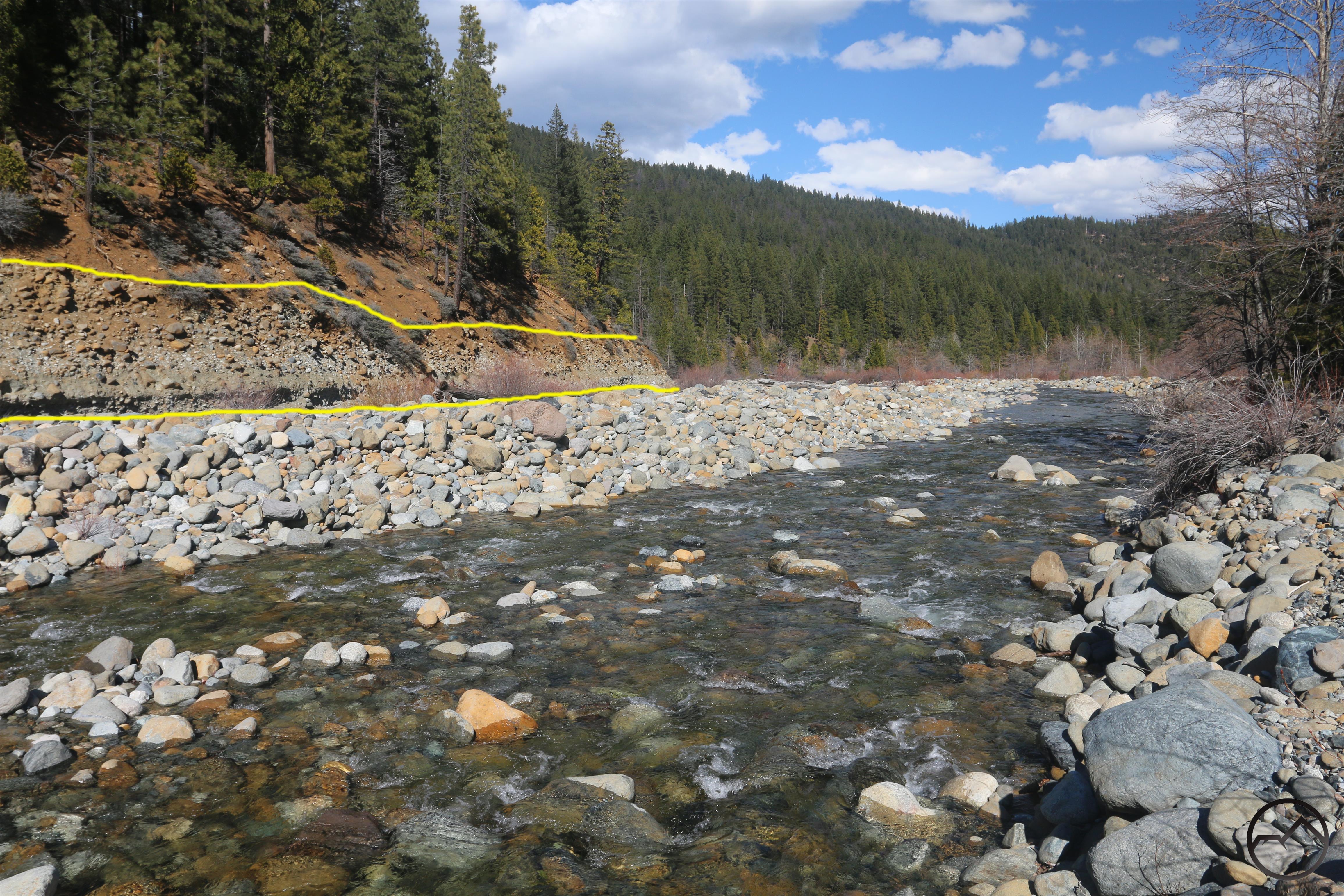
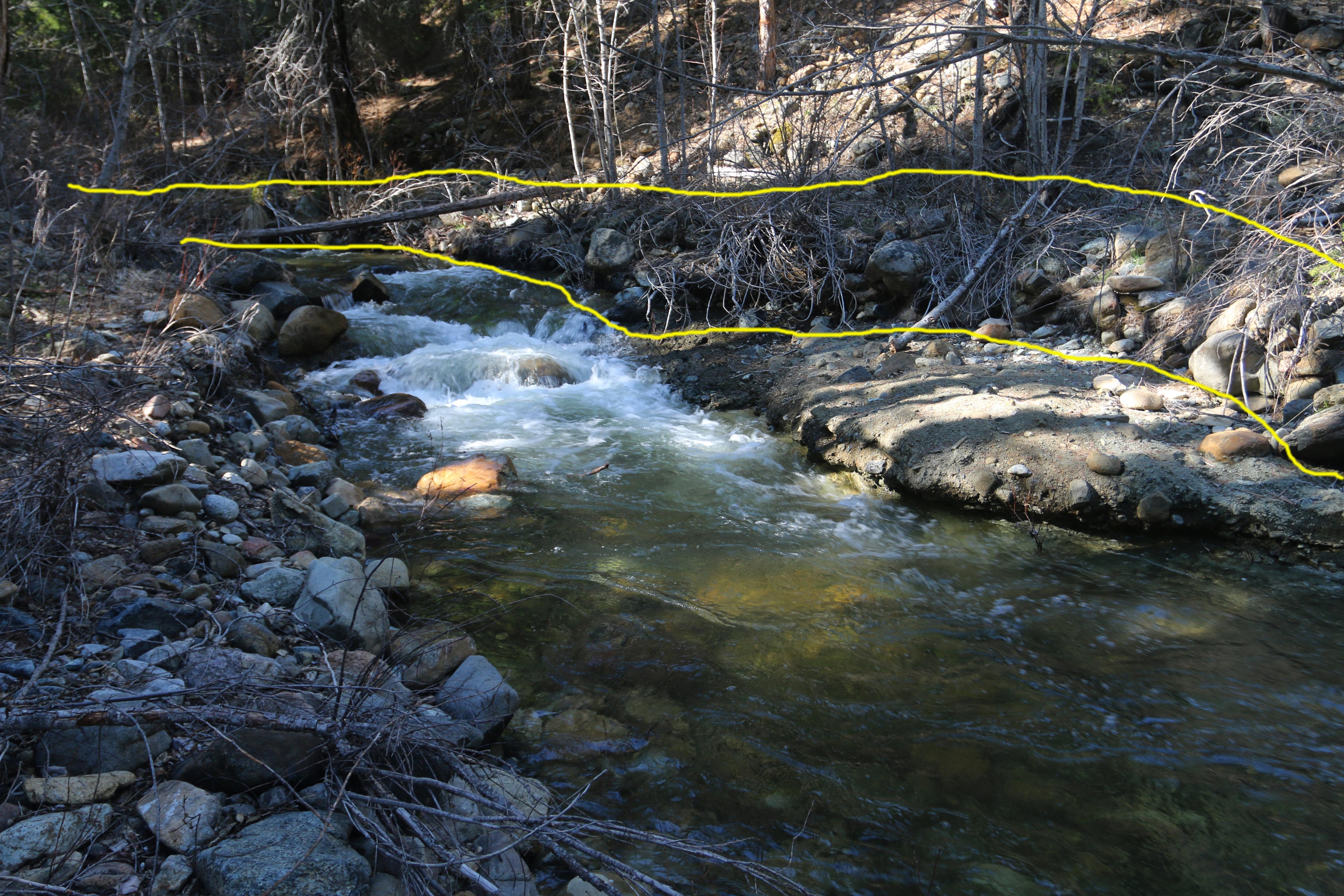
Just upstream from the confluence is a good place to see layers stacked on each other. The river currently flows through the broad, boulder-filled field. It has been slowly washing away the rocks and digging a deeper channel. Above boulders is another layer of gray sand and smaller rocks. These were deposited during a large flood at some point in the past. Above this is yet another layer of red soil and more rocks, though many of these are not rounded nor exhibit as much evidence of having been tumbled in the water.


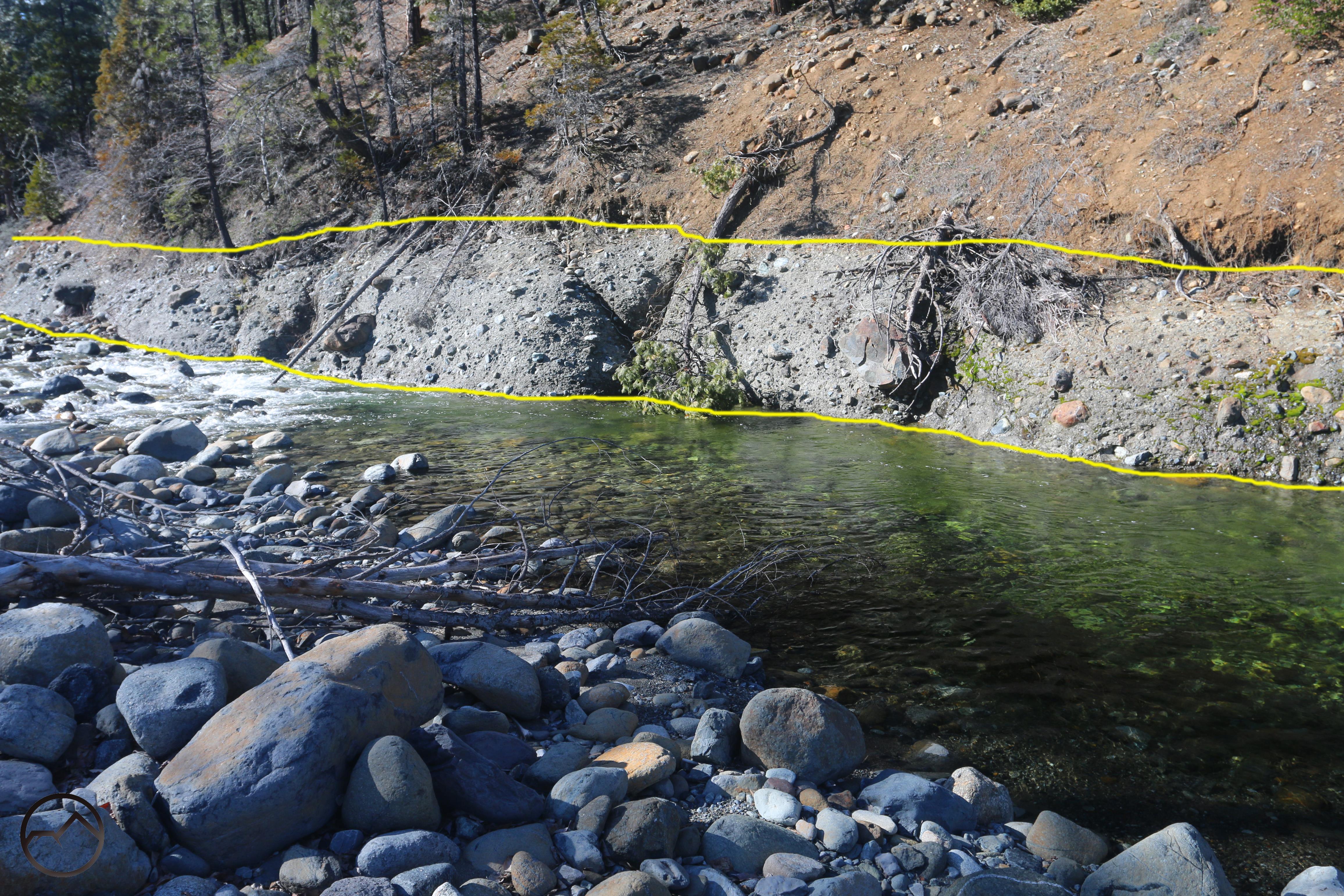
The same layers are visible just below the confluence with Deer Creek. The boulder layer is at river level while the gray and red layers are stacked above the water. Note that just above the rapids on the left, there are some larger boulders embedded in the soil.


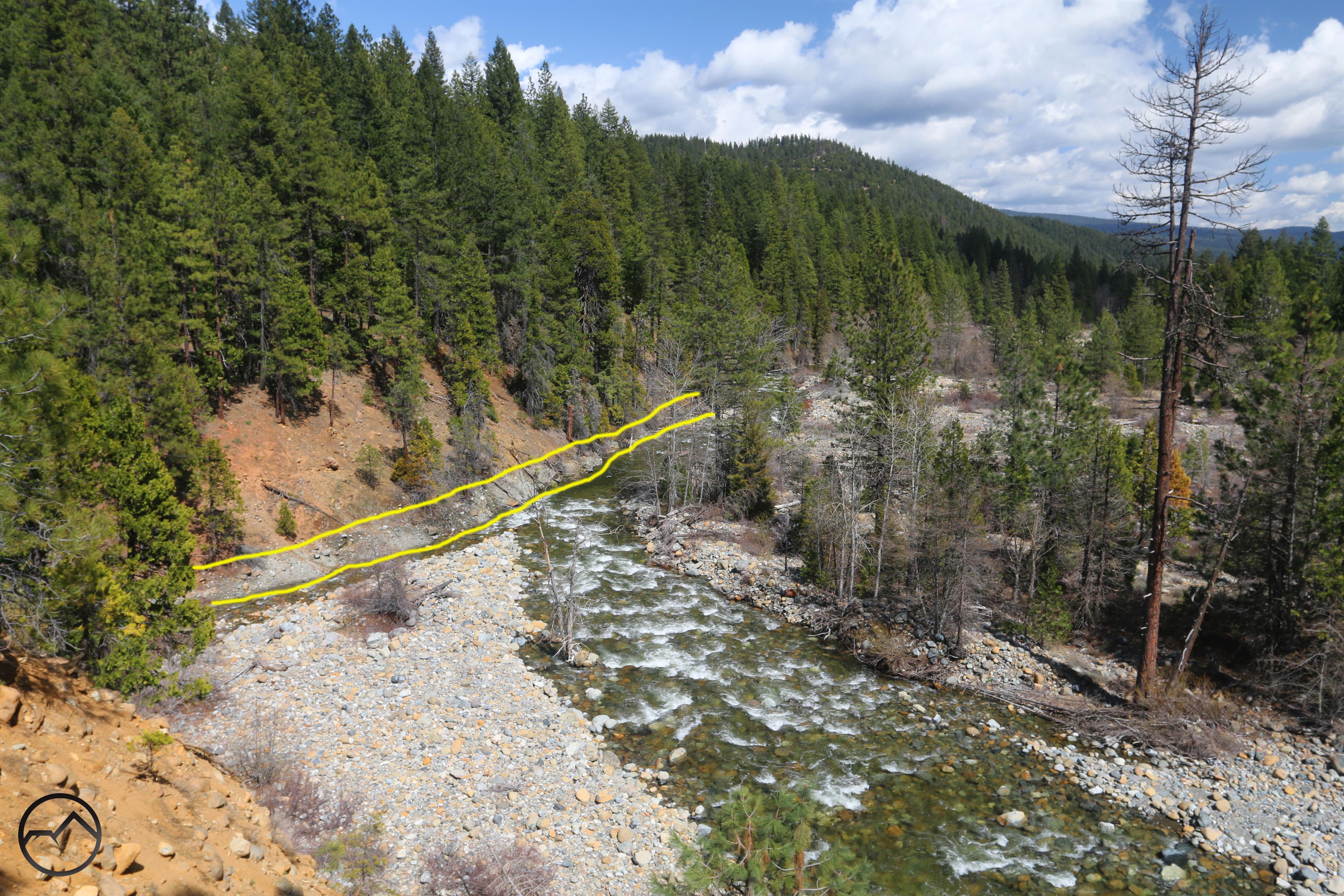
From a prominent vista point above the confluence, the layers are more obvious. The river flows through the large boulder field. The gray layer stretches out just above the water and the higher cliffs are composed of red soil.


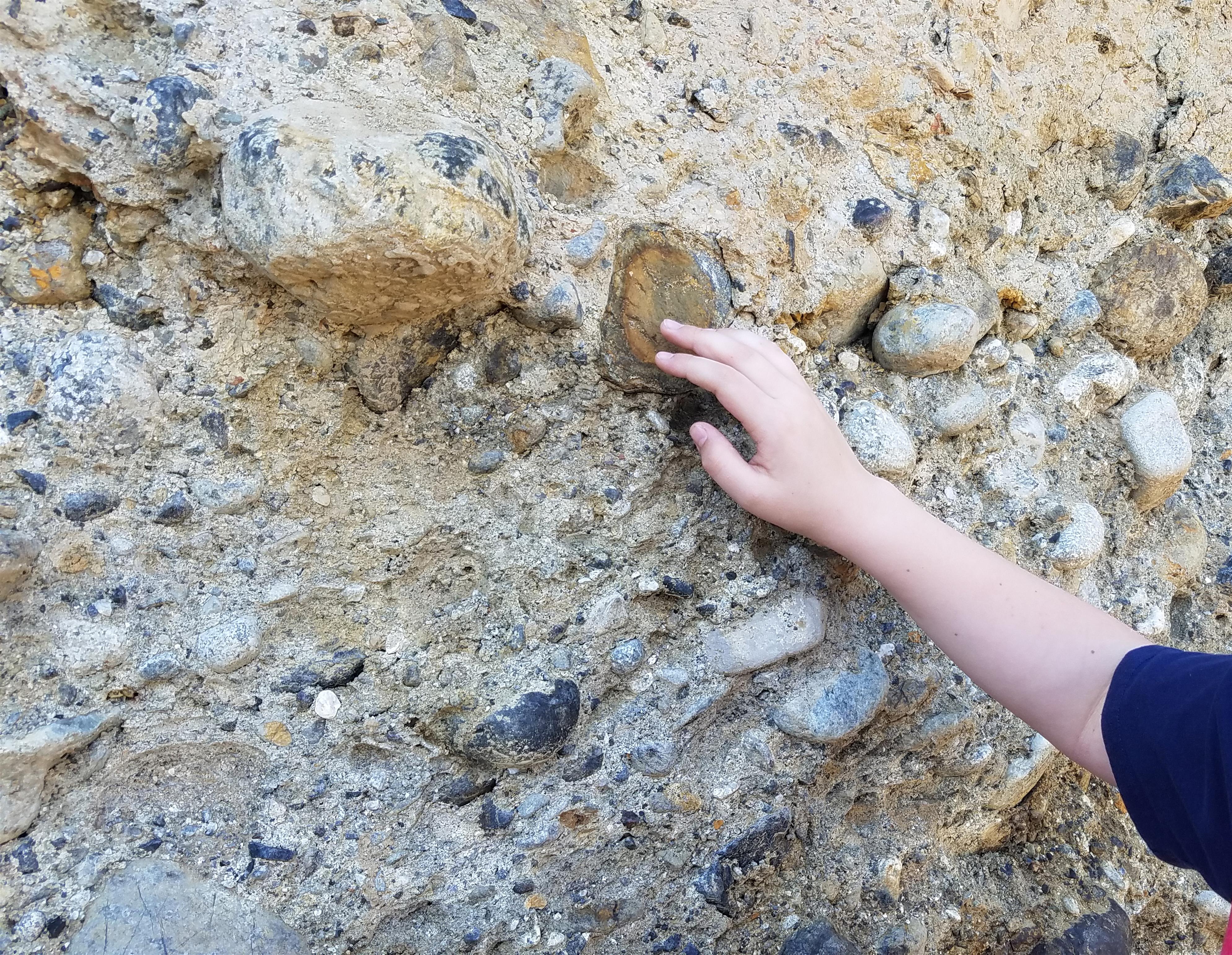
The best place to look at these layers up close is on the spit of land that lies between Deer Creek and the Sacramento. It is possible to climb up to the base of a massive cut bank and examine the rocks. Upon closer investigation one finds that the rocks are very loosely packed into the sand. They are easily removed from the aggregate layer. These rocks were washed down in a large flood and settled into the sandy deposits left behind. At a later date the red layer was deposited on top of this. I have no idea if any of these layers are a product of melting glaciers or if they were all flash floods of immense proportion at some time in the past.


Interestingly, these layers extend a short distance up Deer Creek as well. Not far upstream from the confluence, the creek flows through a small gorge it has carved through a sandy bedrock layer. Above that is the multi-colored rocks and then the red layer. Strangely, it almost appears as though the boulder layer and the gray layer have been reversed.

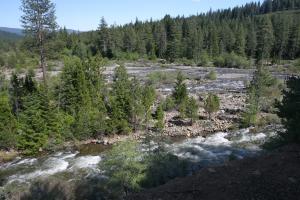
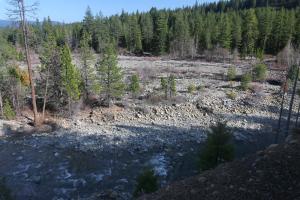
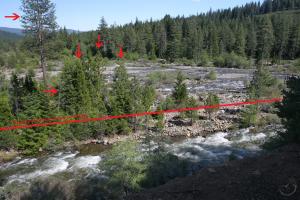
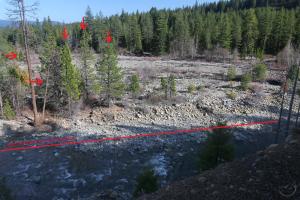
Back at the Sacramento, the process of flooding and erosion continue to shape the river’s passage. Over the last decade the river has widened it channel considerably at the confluence with Deer Creek. In June of 2011 I visited the spot and observed the massive amount of runoff from hot weather and an exceptionally deep snow pack. The river was split into 5 large channels, each of which would currently be considered the river’s full flow in its main channel. When I visited this year, I noticed for the first time that the (current) main channel was much wider and a number of trees have been washed away.

2011
2020

2011
2020

The arrows mark trees that are present in both pictures. Note the base of the dead ponderosa is adjacent to the river now but was set back quite a ways from the channel in 2011.

Note that in addition to the channel being wider and many of the trees washed away, the large ponderosa has died. I am not sure if the tree drowned or the impact of rocks washing downstream damaged its roots or if some other explanation explains its demise. It remains an intriguing landmark from which to measure the growth of the river’s channel.

This section of the Sacramento is my favorite part of the entire river. The cement formations and their corresponding layers never cease to amaze me and I love investigating the ever-changing terrain. It shocks me that there are no trails in this beautiful area, though that is not necessarily a bad thing. Nonetheless, it remains an area that warrants more exploration and offers great rewards to those who take the time to venture just a short way off the beaten path.

Mount Shasta, Luminous At Sunrise

Posted by bubbasuess on April 22, 2020
Posted in: Cascade Range, Hiking, Mount Shasta. Leave a comment

Mount Shasta glows in the early light of an April sunrise.

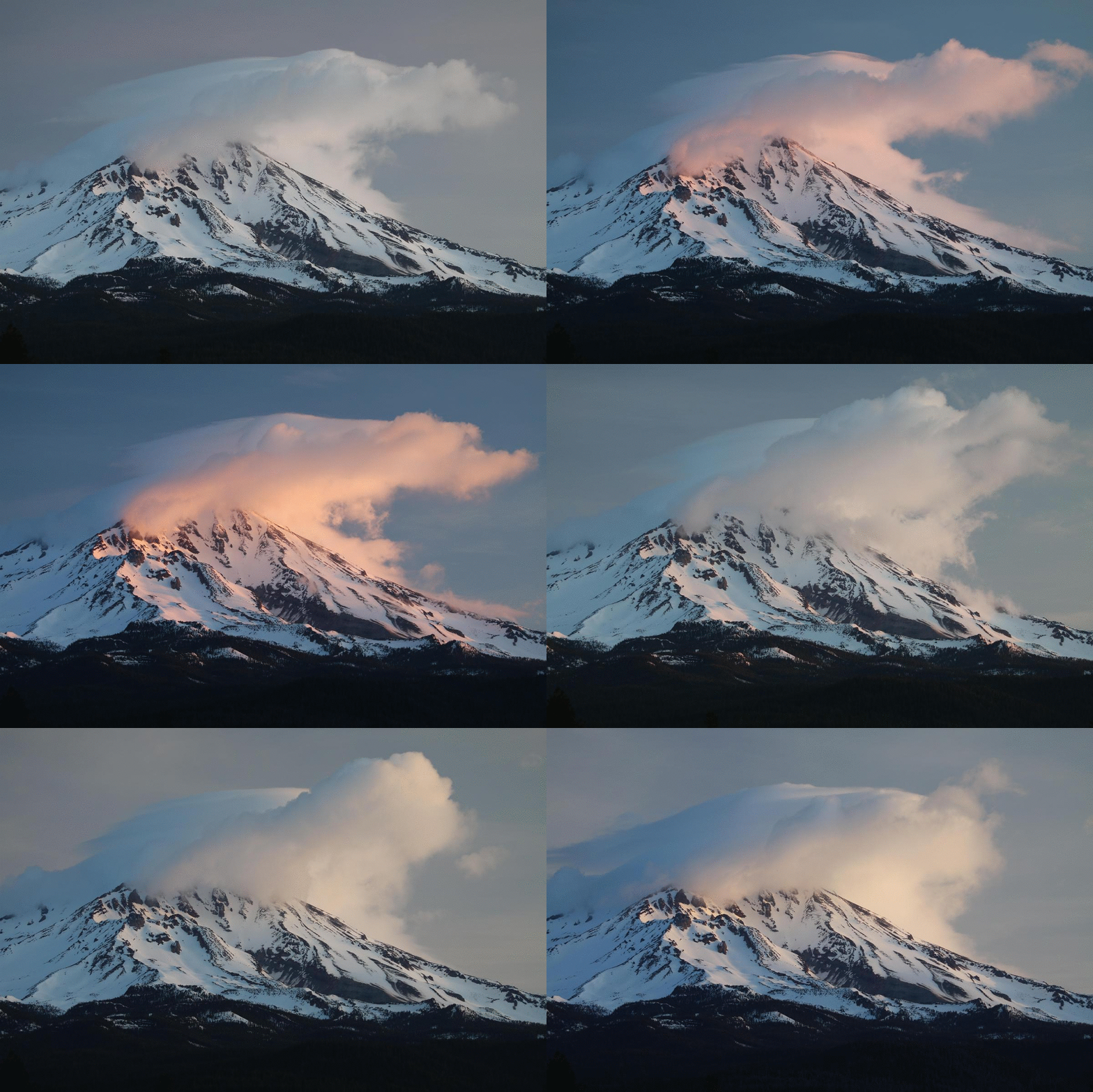
While the Great Hunkering continues, I distanced myself from everyone by heading up to the Castle Lake area before dawn. Based on the weather forecast, I had a hunch that there would be some interesting weather conditions for the sunrise. This certainly proved to be the case as the light began to improve and I could see the clouds in the sky. The light never quite lived up to my expectations before the sun came up but the light from the freshly risen sun cast a glow on Mount Shasta and everything around it. Bathed in glorious orange light, the mountain manifested a small but dynamic little lenticular. There had been some formations before sunrise but they disappeared before the sun broke across the horizon. This small, new one was radiant as it constantly changed shape.

MVI_6516_Trim

MVI_6516_Trim

While not quite the sunrise I was expecting, it was absolutely spectacular nonetheless. When I was satisfied I had seen enough (possible?) I headed up the road to Castle Lake, where there was a perfect reflection on the unfrozen part of the lake. The light of the sunrise still glowed above the lake on the upper cliffs of Castle Peak. This is a magnificent land…

Predawn, the light hinted at the possibility that something might happen.
The pinks of the early morning were gone but the intensity of the light was still improving.

April
April

A look at the scale of the clouds above Mount Shasta. It was an awesome large display.
Nearby Castle Lake was gorgeous as well. Most of the lake is still covered by ice but it has melted away around the southern shoreline.

Distancing Pt. IV: Mount Shasta and Waterfalls

Posted by bubbasuess on April 19, 2020
Posted in: Cascade Range, Hiking, Mount Shasta, Waterfalls. 4 Comments

The last light of Easter Sunday fades on Mount Shasta.

Another week of the Great Hunkering here in Mount Shasta and another week of getting my kids out exploring. The weather could not have been better and spring is erupting all around the foot of the mountain and it felt like winter’s shackles were thrown off once and for all so we determined to head out. One nice thing of the new regime of social distancing is that it is driving out activity to areas that we don’t normally go. We have really enjoyed rediscovering forgotten favorites or introducing new places to my wife and kids, thereby making new favorites. Aside from Mount Shasta itself, it seemed the best outings were focused on waterfalls and, it being warm and in spring, they were awesome. A gorgeous day and the roar and mist of a waterfall are among my most favorite things. All in all, it has been a great experience for my kids, for which I am thankful.

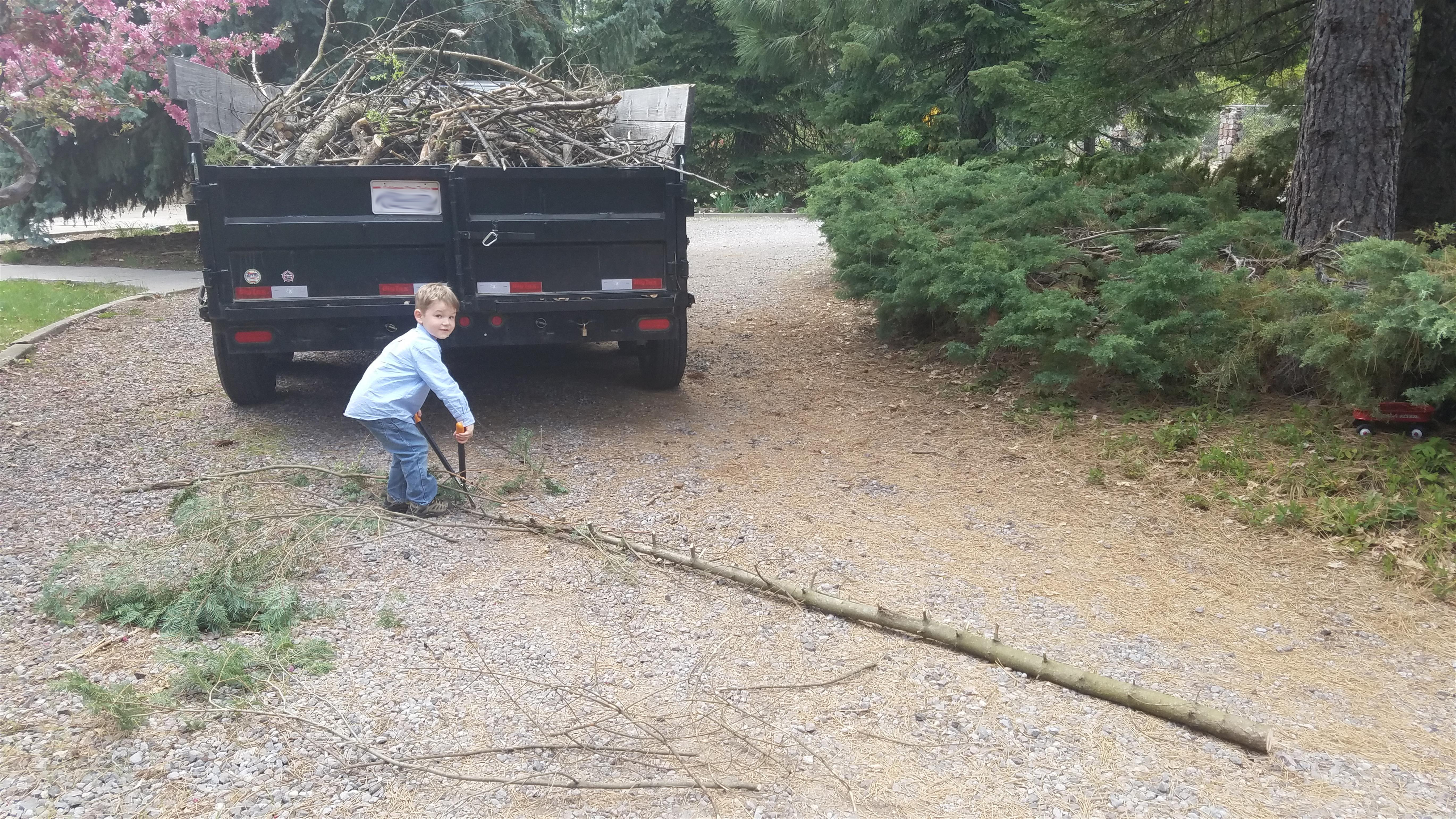
Through all of this, I have still managed to get out for a few sunrises and the conditions the last week have been gorgeous. Sunrise and sunset, it has been spectacular. There was even a very nice, very resilient lenticular during Easter that lasted for a couple days. However, after several great days spent outside, the inevitable return to Earth was necessitated and we finally turned our attention to spring cleaning that demands attention. Ho hum.

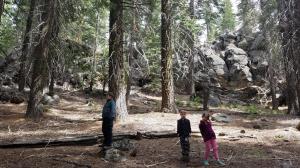
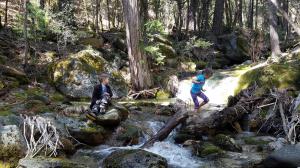
Exploring a forgotten creek in the woods.
An awesome view above the Sacramento River.

Rock scrambling at the Sisson-Callahan trailhead.
Investigating great rocks on Mount Shasta.

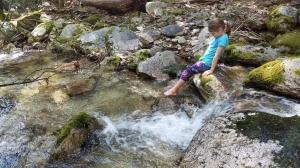
Playing by a perfect cascade.
My daughter enjoying spring.

My youngest crossing a log at the base of a waterfall.
My oldest appreciates a hidden waterfall.

Ready for adventure!
They had the falls completely to themselves!

Easter egg hunt.
Easter sunset.

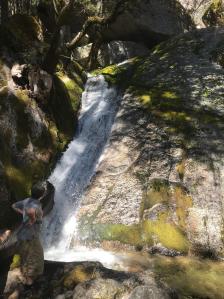
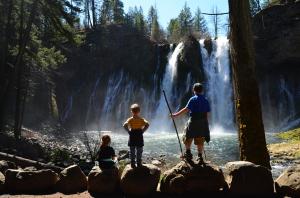
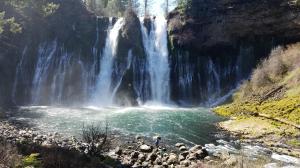
The waterfalls were a real highlight. I can’t say enough about how edifying it was to enjoy them with great weather after the long winter. Naturally, Burney Falls is famous but the other two are almost entirely unknown, save for a few rock climbers and Castle Crags savants. I think some video might help share the experience!

We call this one “Gerber Falls”. In my mind, nothing beats running water over granite.

20200410_125836

20200410_125836

This one we dubbed “Grotto Falls. This is only the lower tier. It’s a lot taller than it looks.

20200410_133632

20200410_133632

Burney Falls needs no introduction. You can see my kids wandering around at the bottom of the screen.

20200411_114947

20200411_114947

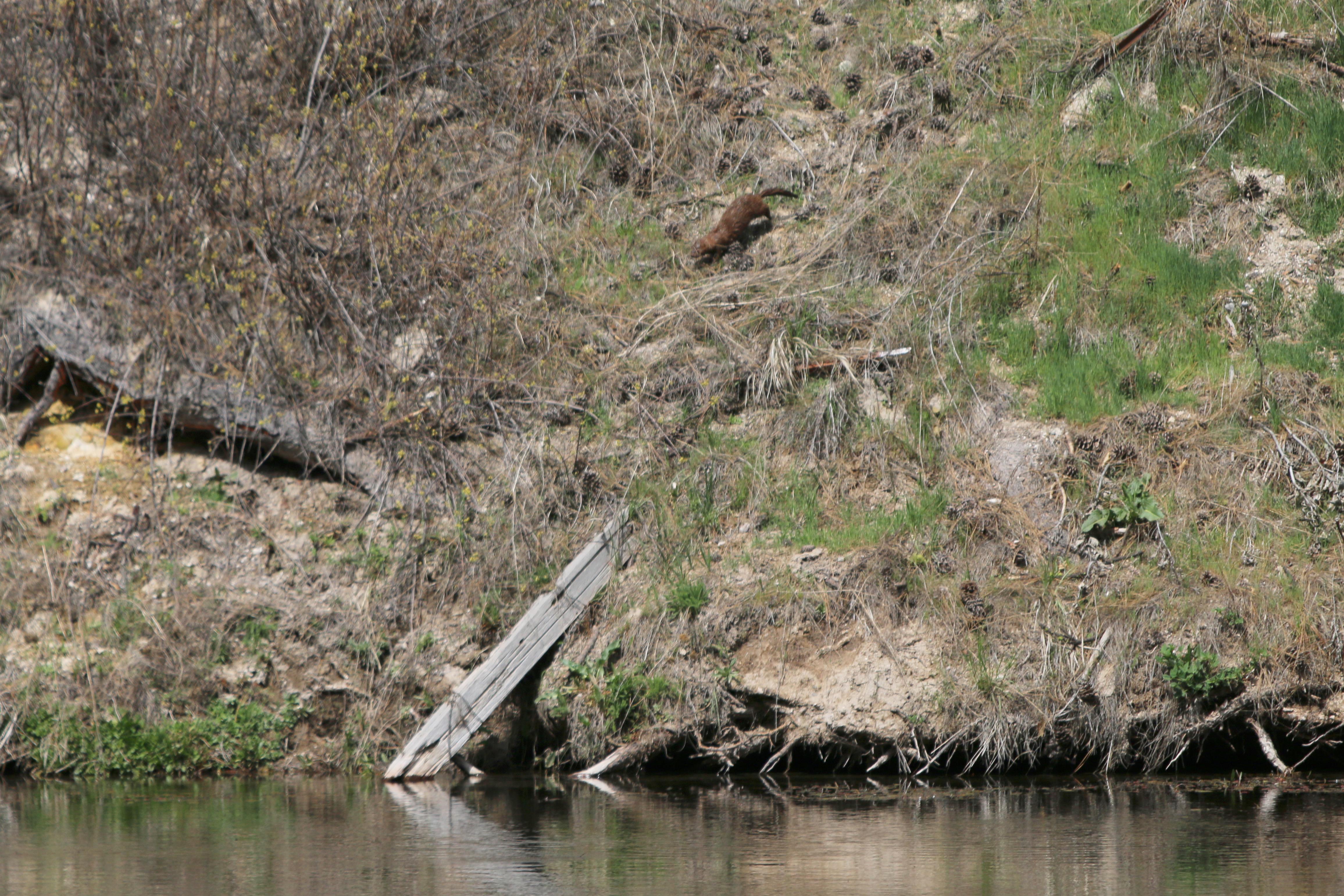
After we went to Burney Falls, we had lunch along nearby Hat Creek. While there, we had the amazing fortune to watch river otters swimming in the water while one of them kept scampering up onto the steep slope above the creek. My kids (and wife) were enthralled!

Finally, Mount Shasta has been magnificent the past week. Excellent sunrises and sunsets and the mountains around the great volcano are snowy but starting to awaken after the winter slumber. It is sublime.

A beautiful sunset amidst a busy sky.
April

April
April

A gorgeous morning from high above Sheep Rock.
Sunrise on frozen Castle Lake.

The Remarkable Resilience Of Mount Shasta’s Easter Lenticular

Posted by bubbasuess on April 14, 2020
Posted in: Cascade Range, Hiking, Lenticular Clouds, Mount Shasta. 2 Comments

The lenticular begins to reform over Mount Shasta.

This past Easter the sky over Mount Shasta saw some significant meteorological activity that yielded two spectacular sunsets and a beautiful sunrise. The clouds throughout the area were impressive, filing the sky with a variety of shapes and patterns. However, it was the presence of a persistent lenticular southeast of the mountain that proved to be the real highlight. The cloud was not present on Saturday until sunset but manifested just as the sunlight faded. It was present again in the morning, forming a nice stack not far from the summit of Mount Shasta. The disk lasted until midday when all the clouds in the sky dissipated completely. It looked as though that would be the end of the show, since no clouds appeared throughout the afternoon. However, about an hour before sunset a host of new clouds sailed in from the west, filling the sky and heralding another magnificent sunset. At first it seemed like this was unconnected with the previous weather system from Easter morning. This assumption was in error and, just as the sun was sinking down toward the horizon, the lenticular reformed, in the same spot it had occupied the previous night. It was a dramatic and memorable sunset, with awesome clouds and fantastic color!

It is fascinating how the cloud could persist in the same spot for so long. While most lenticulars tend tend to be fleeting, this one proved to be resilient, forming, dissipating and then reforming once again. It was certainly a remarkable Easter spectacle!

Click to enlarge:

A beautiful sunset amidst a busy sky.
As the sun faded the lenticulars gathered strength and coalesced into stacks.

April
Later in the morning a lot other clouds had faded but the lenticular persisted, even showing some cloud iridescence.

April
With the sun sinking quickly, the cloud began to gather itself and take on a more disk-like shape.

April

Distancing Pt. III: Another Week Around Mount Shasta

Posted by bubbasuess on April 8, 2020
Posted in: Cascade Range, Hiking, Mount Shasta. 1 Comment

Spring alpenglow on Mount Shasta.

The last week here in Mount Shasta has been an odd brew of beautiful, boring and wintry conditions. We had some clear, warm days followed by some rain and snow. It never got cold enough for the snow to accumulate more than a couple of inches but the precipitation coming hot on the heals of a couple gorgeous days made things seem considerably drearier than they really were. Several times I headed out thinking I was going to get a good lenticular image but I was repeatedly skunked all week. They formed a few times, but never anything grand. It was frustrating but I was glad to be able to get out and capture some images of the mountain nonethless.

All of this has, of course, been in the midst of the social distancing we find ourselves in. My wife and I have always homeschooled our kids so very little has actually changed for us, since her work is considered “essential”. While we have kept our distance from friends, family and such, we have continued to take the kids out on hikes. If anything has changed, we have focused our trips out on areas that are highly unlikely to see other people and thus far that has certainly been the case. They never tire of getting outside and exploring and are glad for the coming of spring and the increased frequency of the trips and the chance to enjoy this amazing, if benighted, world.

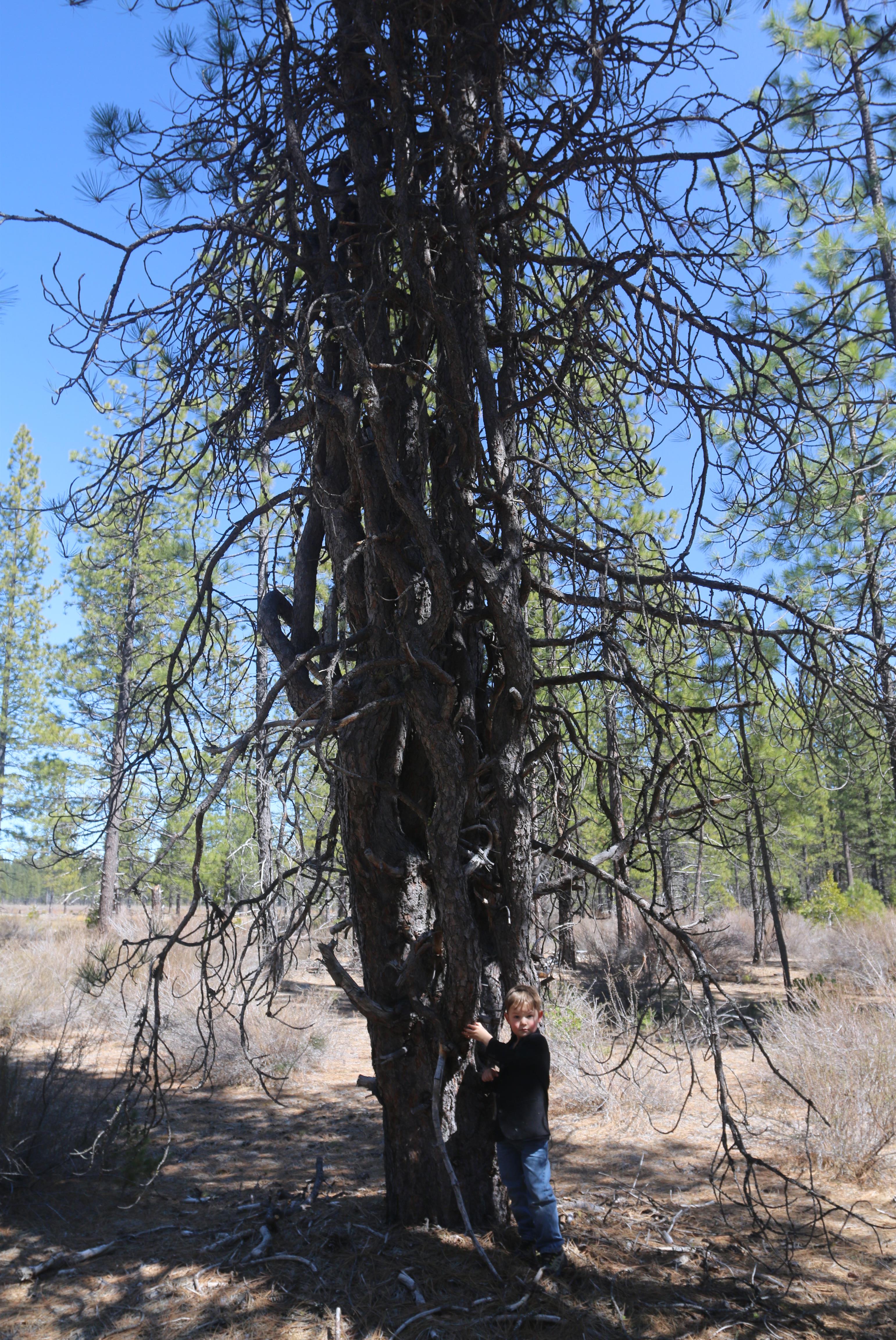
My youngest son marvels at the mysterious “Tangle Tree”. This ponderosa pine is actually alive!

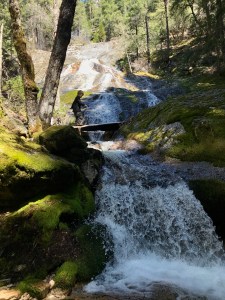
Not large, but an oft overlooked waterfall.
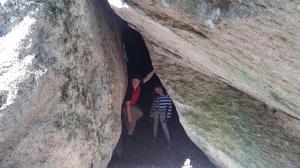
A nice cave in some boulders. It reminds me of the Indian Caves in Yosemite.

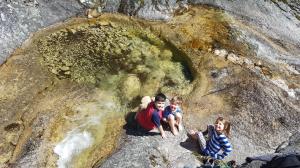
Speaking of Yosemite, you can’t beat a granite bathtub like this.

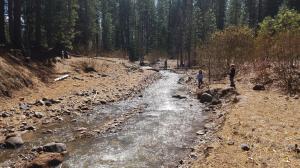
The kids enjoy exploring creeks and rivers, especially if there are no trails.
Respecting the water, even if it isn’t “nature”.

The weather itself was hit or miss during the week. The end of last week was gorgeous and the kids thrived in the warm, sunny spring weather. We had some great hikes before the weather turned. The weekend was snowy (hopefully for the last time this winter) and then the temperatures gradually climbed again. The clouds have been really hit or miss. I kept thinking we were going to get a great lenticular but, although some small ones formed, nothing was ever able to quite pull itself together. I think I am getting too picky and I ought to be grateful to just see the mountain (I am, but I am still picky!).

April Fools Day sunrise on Mount Shasta.
Looking south from Mount Shasta, the cloudy Castle Crags catch the morning light.

Cloud iridescence makes for an interesting morning on Mount Eddy.
Not a great shot, but its nice to see a very white Ash Creek Butte.

One sunset featured some interesting waves to the east of Mount Shasta.
After the rain finally went away on Monday, the evening featured a great moonrise, some nice clouds and a lenticular. Unfortunately it never quite came together for a great image.

The rising moon and the fading light on Mount Shasta.
Looking west toward the last light above the Little Scott Mountains.

I was sure Tuesday morning would feature a lenticular. I was wrong but it was still a very beautiful morning.
There may not have been any great disks above the mountain but an interesting wave formed below the summit.

Of course, there was a great, cloudy dome over Black Butte, which was pretty cool in its own right.
There was a lot of drama as the trees faded into and out of view.

Tuesday evening the clouds looked to offer a nice sunset.
Nice clouds, good color and a little lenticular formed, capping off a frustrating but very beautiful week.

In the end, it was a good week and I am glad to see us finally moving into a sustained period of warm spring weather. The current forecast has highs in the 60’s for at least the next 10 days. We’ll see what comes next! I pray that everyone continues to endure and thrive through these unusual circumstances. I suspect we are nearing the end of this!

Mount Shasta Social Distancing Hikes Part I: Waterfalls

Posted by bubbasuess on April 4, 2020
Posted in: Cascade Range, Hiking, Mount Shasta, Waterfalls. 3 Comments

Faery Falls, in lush Ney Springs Canyon.

We find ourselves in a strange limbo, quarantined and socially distant, for the sake of the community keeping our distance from our families, friends and neighbors. These certainly are strange days. However, in a stroke of good fortune, we are still able to spend some time outdoors and on the trail, so long as we maintain the necessary separation from others. It may be that time outside and on the trail may be more essential to our well being than ever, given how much time we are forced to spend at home. This being the case, the foot of Mount Shasta is a good place to be stuck, with great beauty and a plethora of trails. Yet even in that, we are in a state of limbo. The winter is passed, warmer days draw nigh but the mountain trails remain buried in snow. For the time being, the lower elevation trails will have to do.

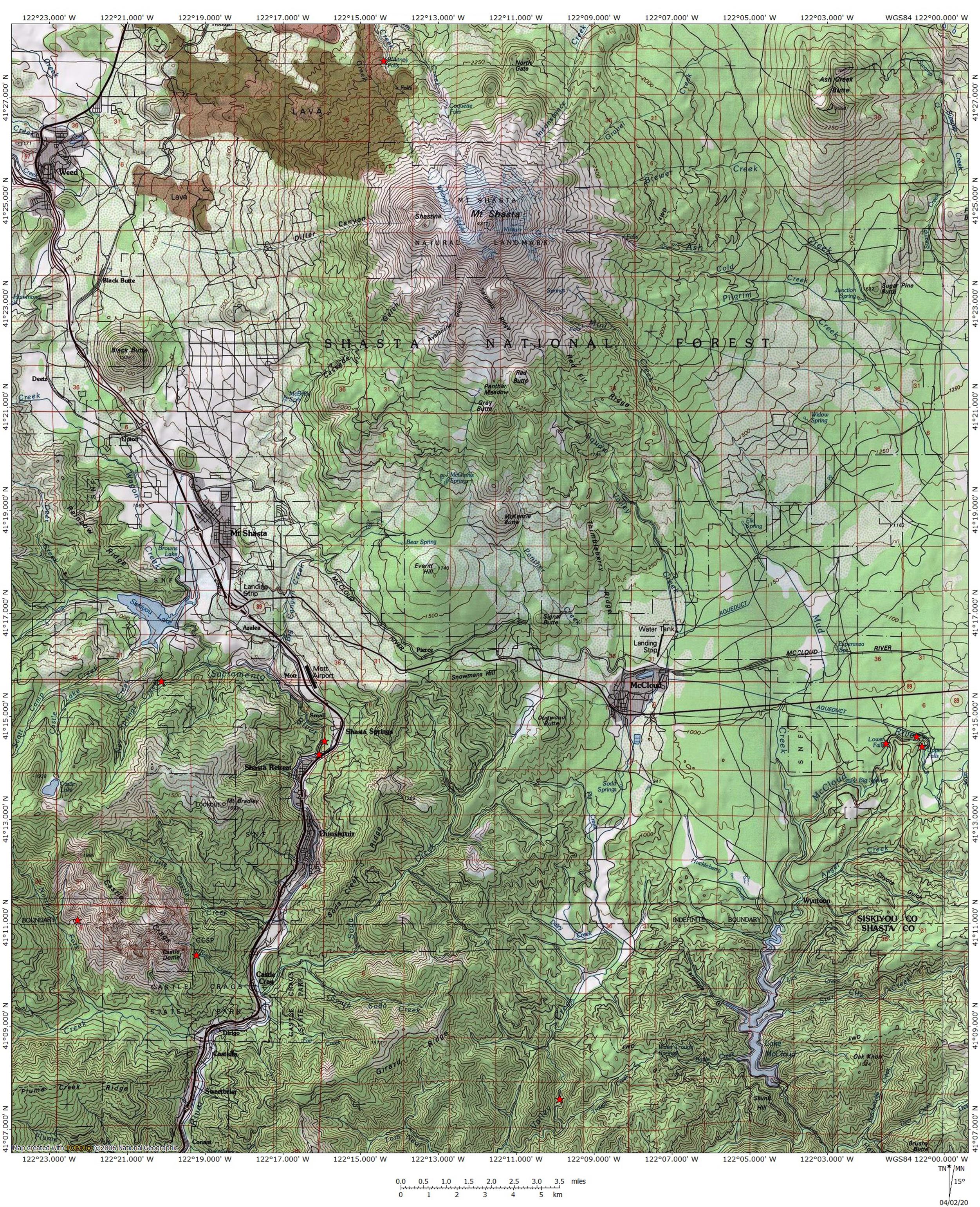
Typically, at this point I do a spring hiking round up, collecting all the trails into one post and highlighting what is open at the time. Given the unusual circumstances we are currently in, it seems more appropriate (and interesting) to divide things up and devote a little more attention to opportunities to get out. With the wetter we have had recently, waterfall hikes seem to be a good place to start. It is interesting to note that most of the lower-elevation waterfalls, which are the most readily accessible this time of year, are generally located to the south of Mount Shasta.


Click to enlarge map. Waterfalls accessible by trail marked with red stars.

McCloud River Falls

Any discussion of Mount Shasta area waterfalls naturally begins with the trio on the McCloud River. This is the premier waterfall destination for the region. The proximity of the three falls, the volume of water going over the precipice and the distinctive appearance of each of the cataracts makes the entire experience difficult to beat. Add to the natural beauty the ease of accessing them, whether by car or along the McCloud River Trail and this is an unbeatable waterfall hike. If there is a drawback, it is the falls’ popularity. Fortunately for hikers, most people visit these waterfalls by car, leaving the trails relatively uncrowded.

Upper McCloud Falls
Middle McCloud Falls
Lower McCloud Falls

Read the trail description here.

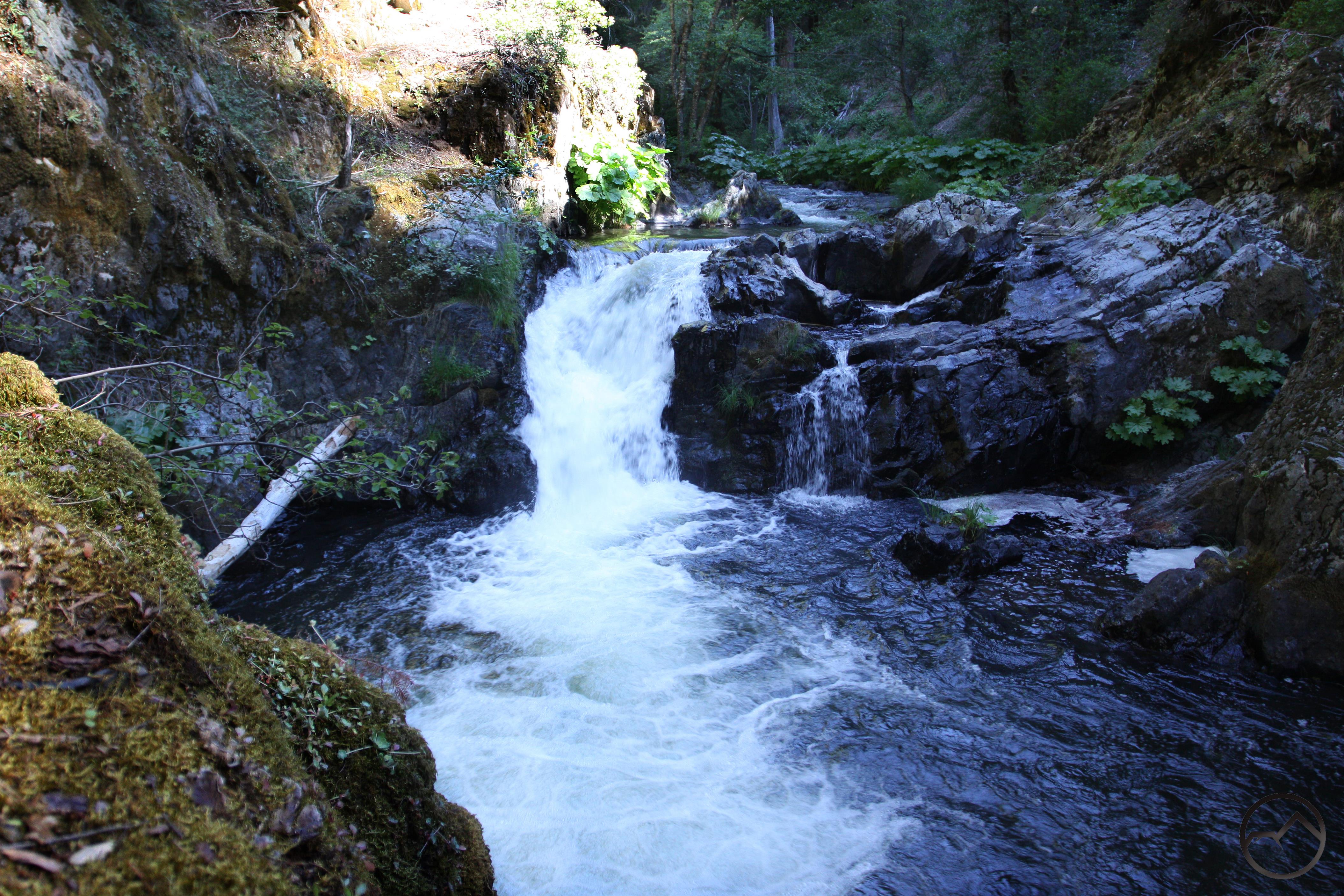
Squaw Valley Creek Falls

Squaw Valley Creek Falls

The hike along Squaw Valley Creek is not one that is known for waterfalls. Rather it is the wild creek itself, beautiful, remote forest and the rocky gorges along the first 0.3 miles of the trail that attract hikers. However, hidden along the trail, about 1.5 miles from the trailhead, the creek takes a 10 foot plunge of a bedrock escarpment. It isn’t a huge waterfall but coupled with the lovely hike through the canyon, it makes a great destination. For hikers who are interested in longer hikes, the falls make a good highlight near the end of an 8 mile loop that includes a section of the Pacific Crest Trail and a two mile decent down Bear Trap Creek on a dirt road. The road is gated and sees little travel and passes through one of the densest forest canopies I have seen in the Mount Shasta area.

Read the trail description here.

Hedge Creek Falls

Hedge Creek Falls

Perhaps the easiest Mount Shasta area waterfall to reach, Hedge Creek Falls is nonetheless an area classic. Unfortunately, ease of access means it is not the greatest destination for an isolated hike. Nonetheless, morning and evening see few people at the falls and it is well worth visiting. In some ways it reminds me of waterfalls in the Ozarks and other limestone-based destinations, where the water has worn away some of the cliff to produce a cave behind the falls. This is certainly one of the highlights of Hedge Creek Falls, since the trial passes behind the cataract and continues on to an overlook above the Sacramento River. After a rain, when the falls are really going is a great time to experience its power potential. This will soon be the most popular trail in the region, once the trail from the lookout to nearby Mossbrae Falls is completed!

Read the trail description here.

Faery Falls

Faery Falls at high water.

In many ways, Faery Falls is part of a greater whole. The entire area seems to exude a magic that the waterfall’s name implies. Near the falls are the ruins of the old Ney Springs resort. Not much is left standing but a well, some walls and a fountain but the site oozes mystery. Running past it is the highlight, which is Ney Springs Creek. Choked with house-sized boulders and numerous smaller cataracts, this one of the prettier creeks in the Mount Shasta area. The centerpiece is, of course, the falls. They are tucked back into a mossy grotto and thunder 40 feet down the cliff. The narrow space means you are likely to get heavily misted when there is a fair amount of water flowing in the creek. During the wet season Faery Falls splits into two wide drops that fan out over the rocks. It’s an awesome sight.

Read the trail description here.

Burstarse Falls

Burstarse Falls

More than any other water waterfall besides the McCloud Falls, Burstarse Creek offers more falling water for the effort. Not only is Burstarse Falls an excellent waterfall on its own, but Lower Burstarse Falls is a worthy destination on its on. Indeed, many hikers get to the lower falls and believe they have made it to the main attraction and then leave satisfied with what they have seen. In addition to the two main falls, there are numerous cascades and smaller waterfalls along the creek. Burstarse Falls itself is an 80 foot giant, surging off of a large granite cliff in the Castle Crags. Accessing the main falls is a little challenging since there is only a faint trail leading through a narrow slot canyon but with a little care it is easy enough even for children. It is most definitely worth the effort.

Read the trail description here.

Root Creek Falls

Castle Dome and Root Creek Falls

While Burstarse Falls might offer a number of cataracts for the effort, Root Creek Falls represents the opposite. There is almost no running water at all along the hike until the last 0.2 mile but the spectacle at the end is unsurpassed by any other in the Mount Shasta area this time of year. Root Creek Falls is like a slice of Yosemite splendor deposited here at the foot of Mount Shasta. The falls are a series of plunges over granite cliffs, totaling over 100 feet in height. The creek thunders from cascade to cascade through an increasingly narrow granite gorge. The falls alone are a grand sight but the scene is crowned by the mighty fang of Castle Dome jutting up into the sky directly above the falls. It really does seem like a vision from the renowned halls of Yosemite. The hike to Root Creek varies in length depending on trailhead but neither option is difficult and the reward at the end is magnificent.

Read the trail description here.

Whitney Falls

A dry Whitney Falls in spring.

It almost seems inappropriate to include Whitney Falls in this list of springtime waterfalls. It is more than likely that the falls will not be flowing during the spring. Despite the melting snow on the north side of Mount Shasta, most of the thaw runoff soaks into the porous volcanic terrain. Instead, this waterfall is fed in the summer by the melting of the massive Whitney Glacier. However, of all the main trails through the Mount Shasta Wilderness, the hike to Whitney Falls is the lowest and most readily accessible in the spring. A light winter means the trail could easily be open sometime in April. While the falls may be dry at that time, the hike itself remains a worthy one, with views of Mount Shasta, lava flows, deep canyons and far to the north across Shasta Valley and into Oregon. It is definitely a worthy hike, whether the falls are running now or not.

Read the trail description here.


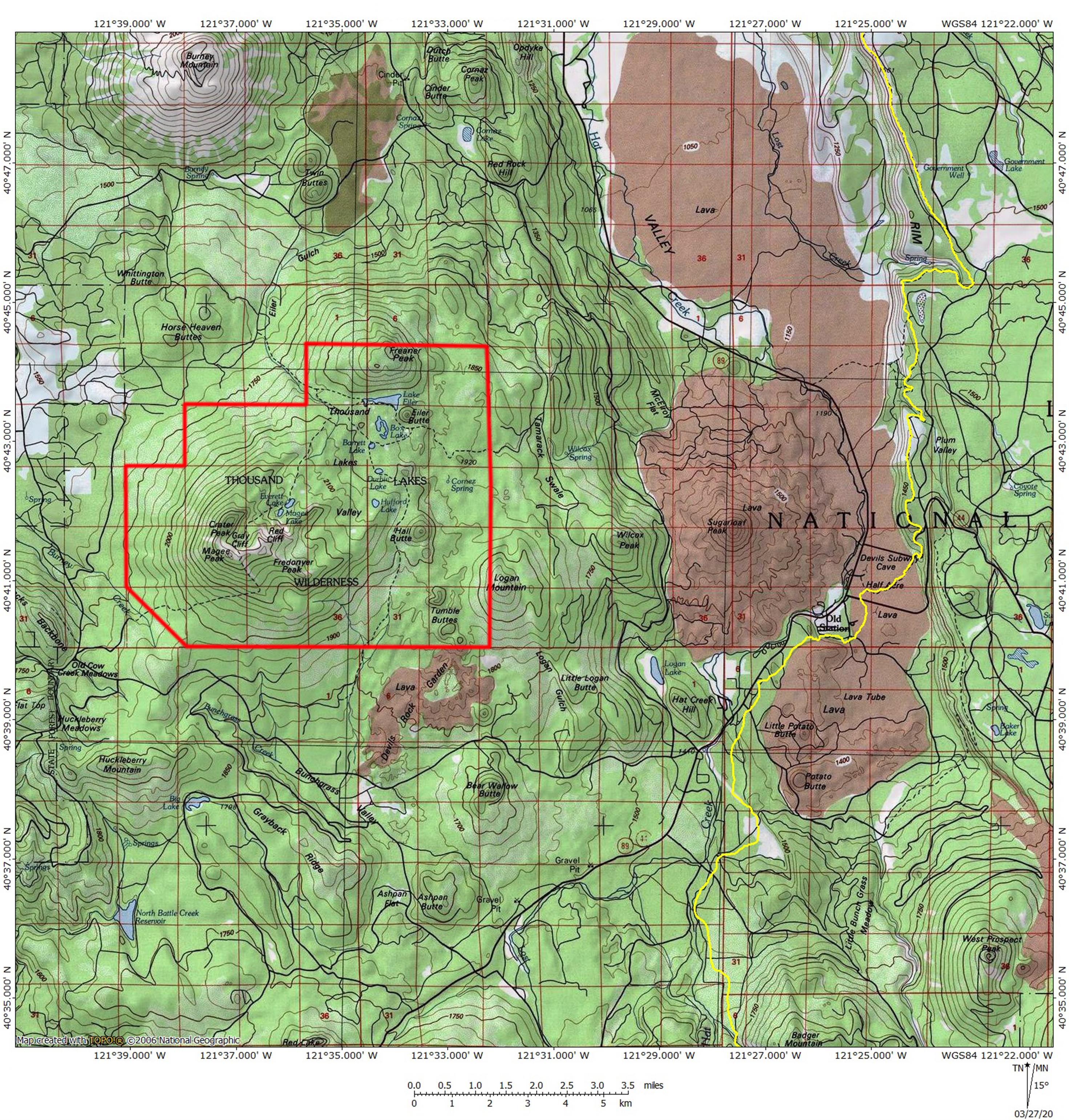
Northern California Review: Thousand Lakes Wilderness

Posted by bubbasuess on March 28, 2020
Posted in: Cascade Range, Hiking, Mount Shasta. Tagged: Thousand Lakes Wilderness. Leave a comment

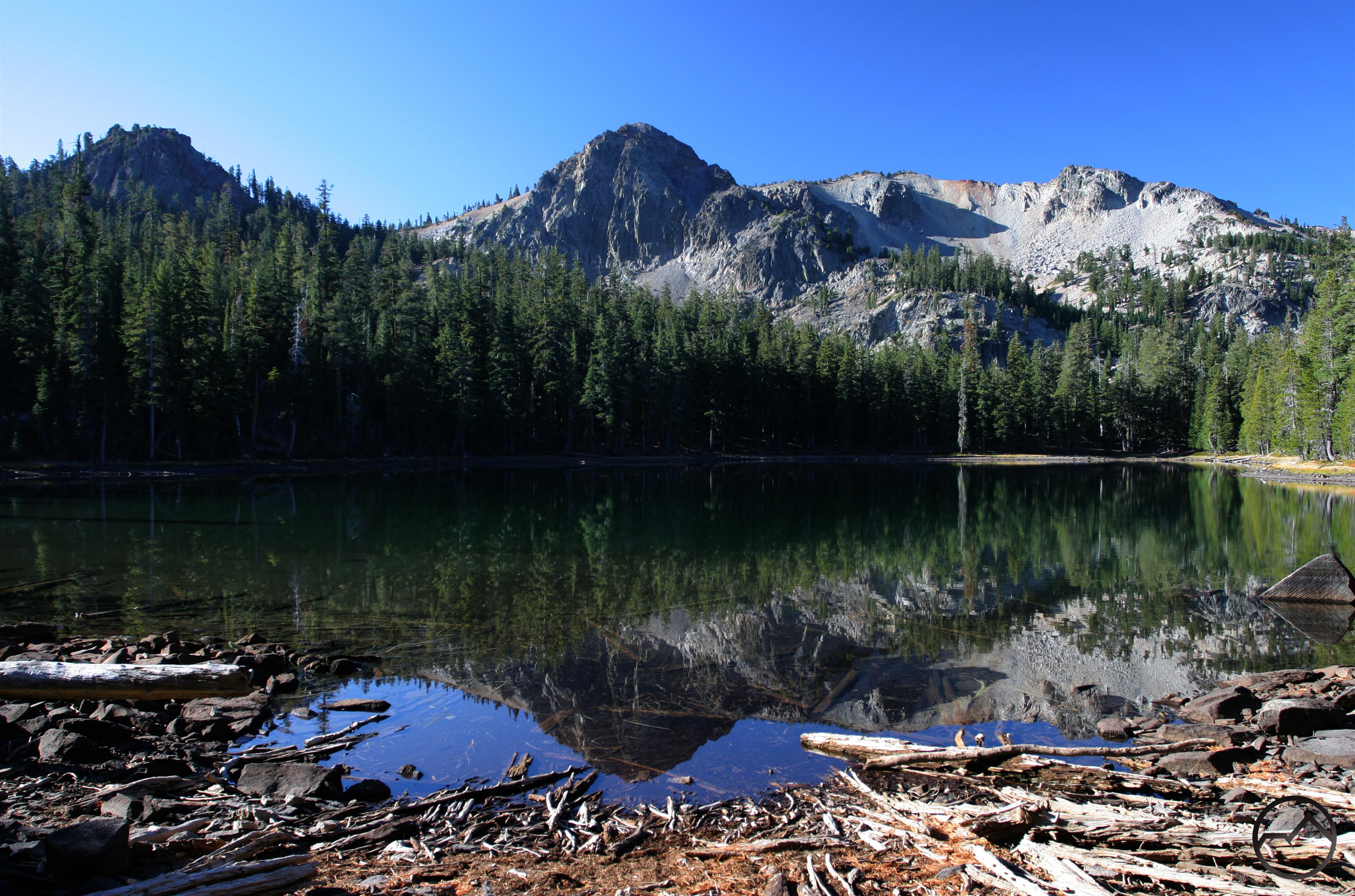
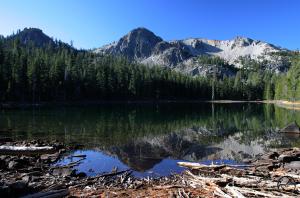
Everett Lake in the Thousand Lakes Wilderness.

Mention of the California Cascades naturally bring to mind two great landmarks: Mount Shasta and Lassen Volcanic National Park. The former is a singular, magnificent mountain while the latter also features an excellent volcano but a host of other features including lakes, cinder cones and active geothermal features. There is, however, another Cascade region that rises nearly to the level of these two excellent destinations yet manages to stay off the radar despite being prominently visible from Mount Shasta down to the Central Valley. This area, the Thousand Lakes Wilderness, also boasts a tall volcano, beautiful lakes, cinder cones and large lava flows. It is classic Cascade terrain, all bundled up in a compact package with an extensive trail network and beautiful landscapes.

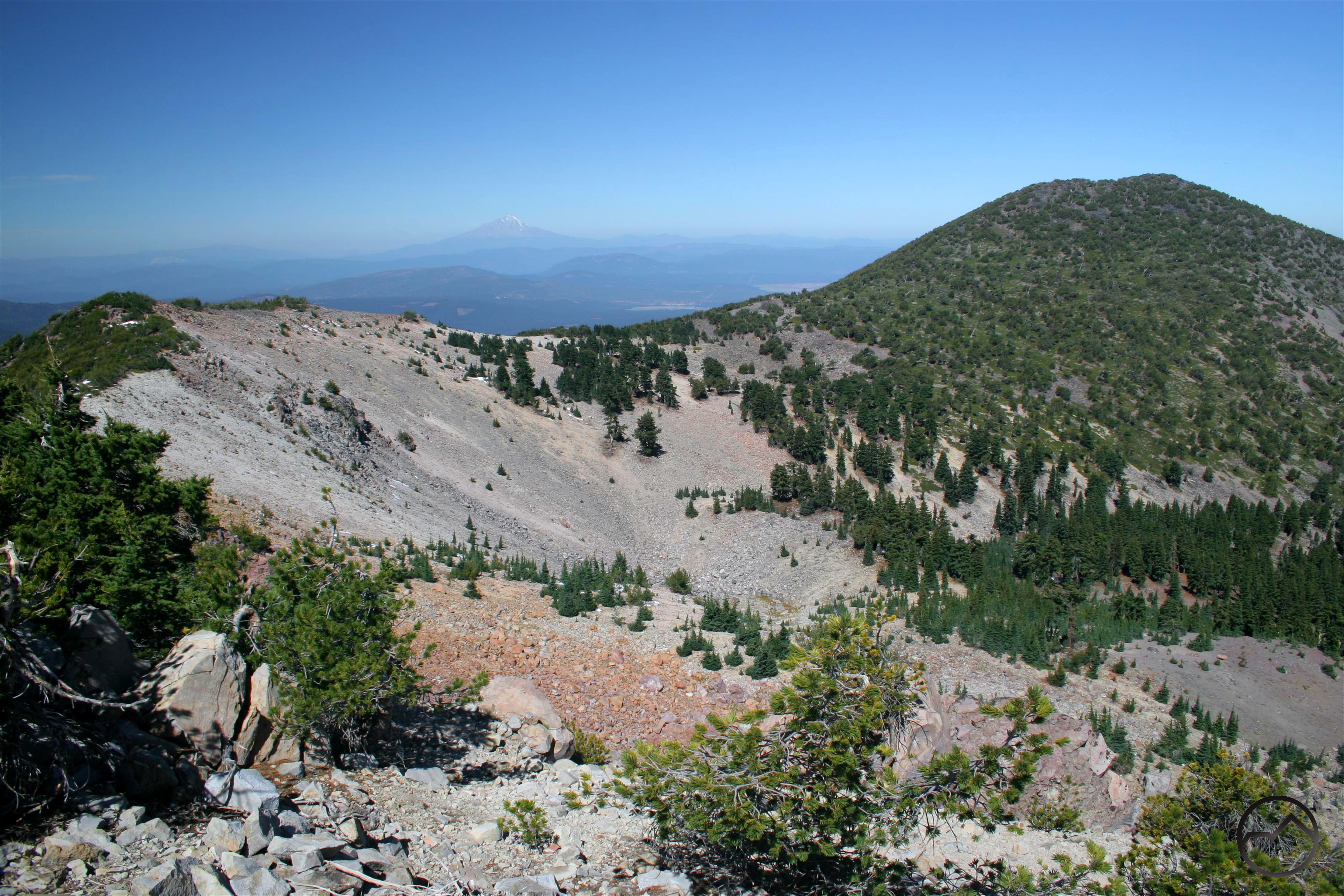
Mount Shasta and Crater Peak from Magee Peak on the crater rim.

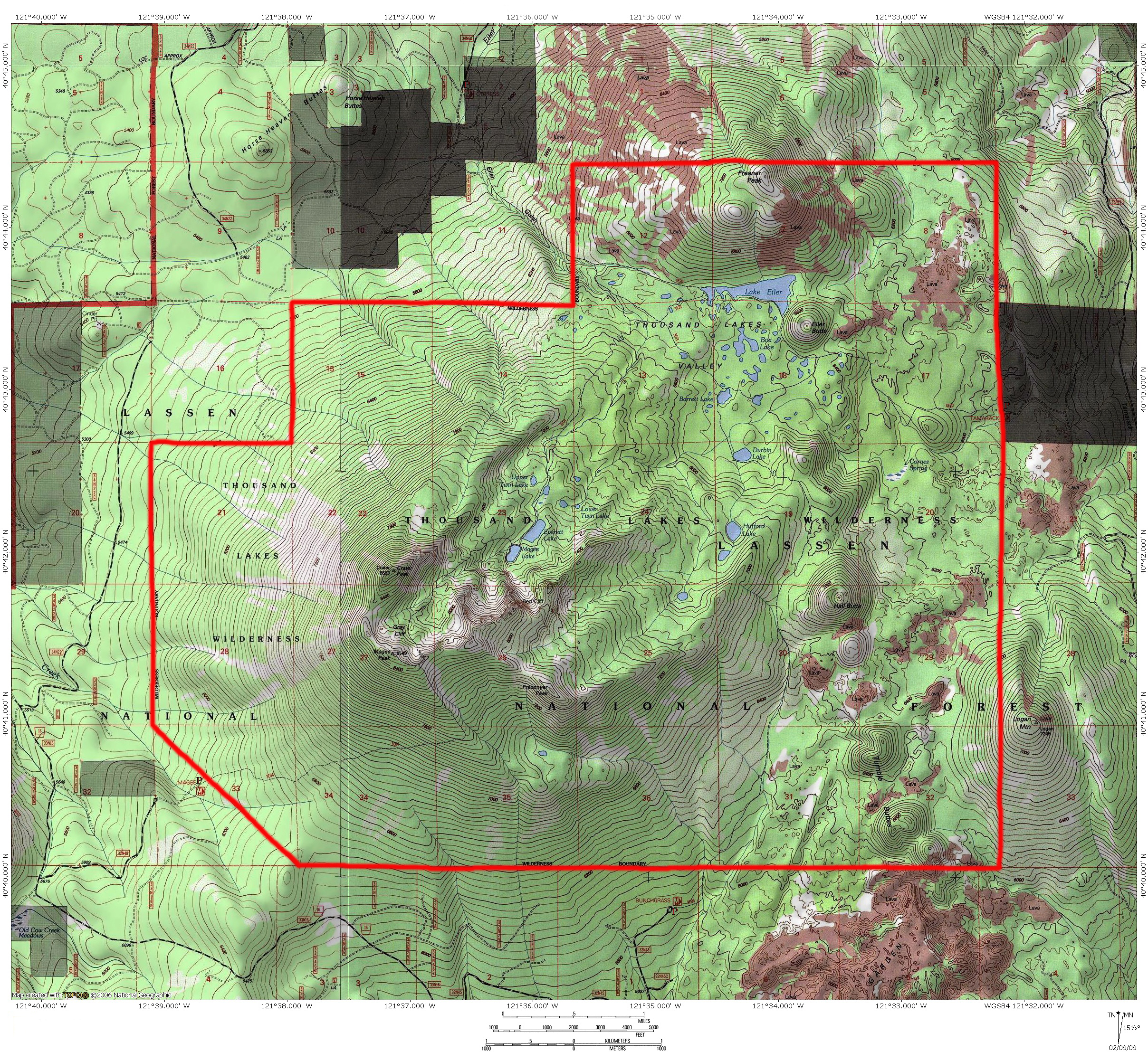
Although it is one of northern California’s smaller wilderness areas at 16,335 acres, the compact unit of protected wild land nonetheless offers an overlooked and seldom used slice of gorgeous mountain real estate. This pocket wilderness is part of the greater Lassen area, lying only 7 miles north of Lassen Volcanic National Park’s northern boundary. the true centerpiece of the Thousand Lakes Wilderness is the remnants of the Thousand Lakes Volcano. Prior to its prehistoric eruption, the peak is estimated to have been over 10,000 feet high. During its active period the volcano below its top, leaving a vast crater. In the subsequent epoch of glaciation, a large glacier formed in the crater and then began to move to the northeast. The crater rim was breached and the glacier scoured out a large valley. A smaller glacier formed to the south and followed a parallel path as the one that formed in the crater.

Freaner Peak above Eiler Lake.

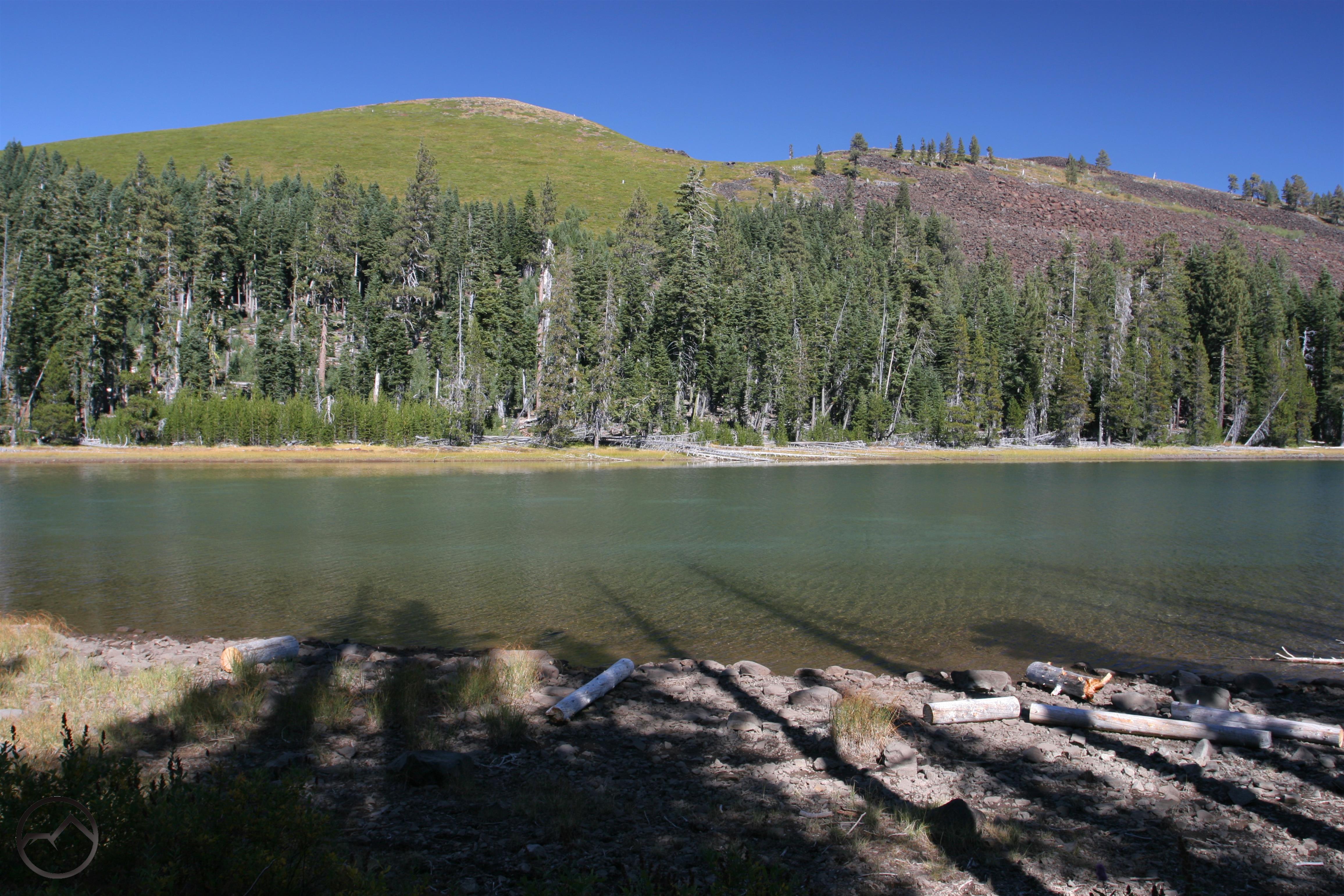
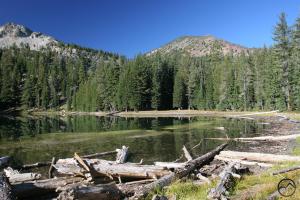
Just northeast of the volcano, lying directly in the path of the glaciers, is the Thousand Lakes Valley. Here the glaciers were hemmed in by the lava uplift of Freaner Peak. The glaciers pushed their moraines into this depression, filling it with glacial till. Eventually the glaciers melted and the valley was filled lakes. The lakes now found in the wilderness are the detritus of these glaciers. Most of them are found in the Thousand Lakes Valley, the depression lying between the Thousand Lakes Volcano itself on the west and Freaner Peak on the east. Only a few lakes, notably the best two, Everett and Magee, are not in the Thousand Lakes Valley. These two lakes are higher up, at the base of the old volcanic rim. If one is more interested in high peaks and alpine terrain than in mountain lakes, the crater rim is the part of the wilderness that will attract. Unfortunately, nothing approaching the promised tally of lakes are to be found. In fact, only 9 lakes have names, the rest of the lakes being small nameless pools. Of the 9 lakes that are named, only three, Eiler, Everett and Magee, are first rate. Nevertheless, these lakes are classic alpine pools that offer great scenery, swimming and fishing.

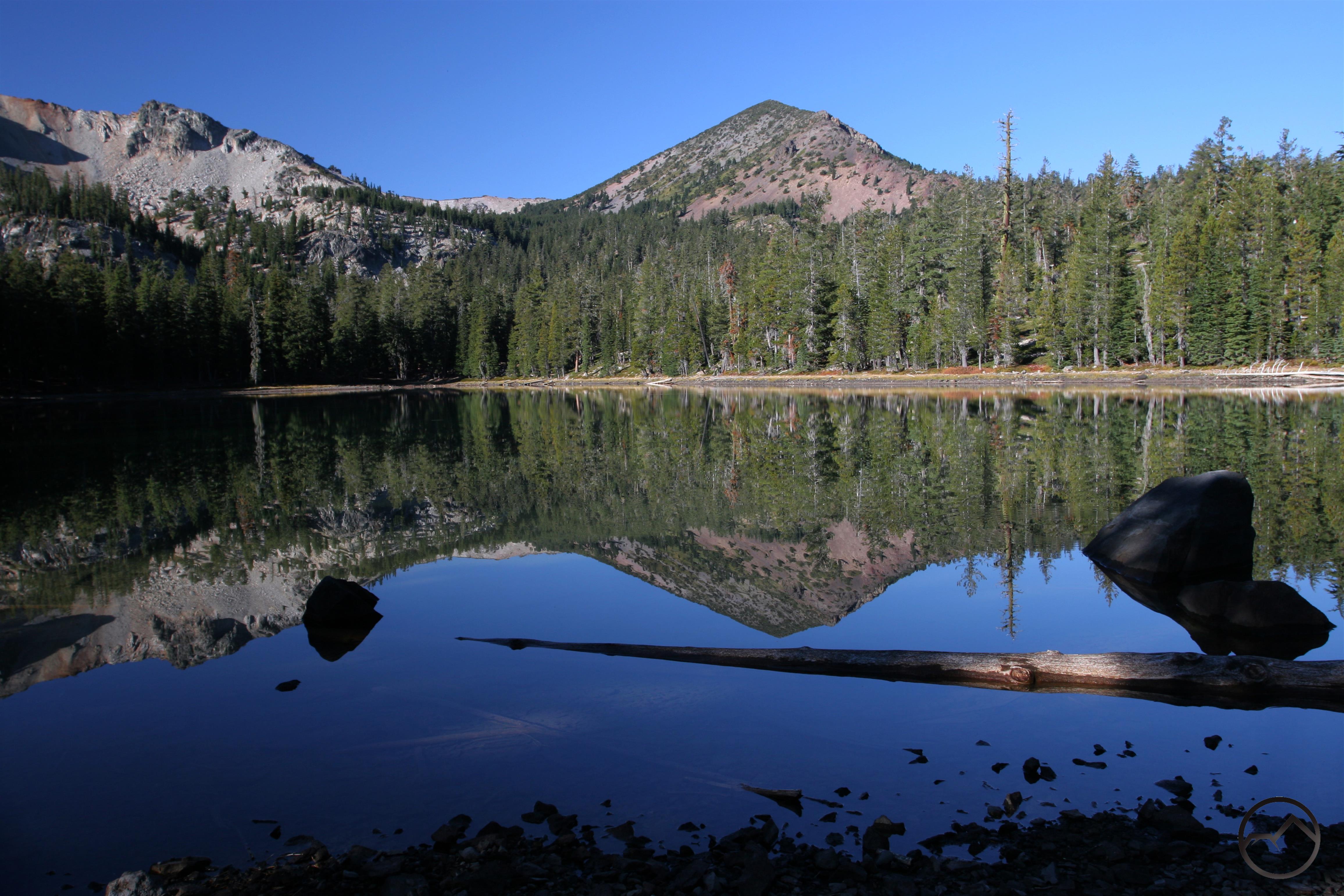
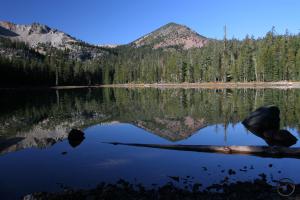
Crater Peak from Everett Lake

The highest point in the Thousand Lakes Wilderness is 8,677 foot Crater Peak. As its name implies, it is the highest point on the rim of the old volcano. Magee Peak and the Red Cliffs are also prominent points along the crater rim. Views from this slice of mountain terrain are fantastic, taking in both Mount Shasta and Lassen Peak. Other high peaks in the wilderness are Fredonyer Peak, a major spur off of the Thousand Lakes Volcano and the Red Cliffs, which anchor the eastern end of the old crater rim. Freaner Peak, a large shield volcano in the northeast corner of the wilderness is the tallest peak not connected to the Thousand Lakes Volcano. Additionally, there are a number of cinder cones, the largest of which are Eiler Butte, Hall Butte and the Tumble Buttes.

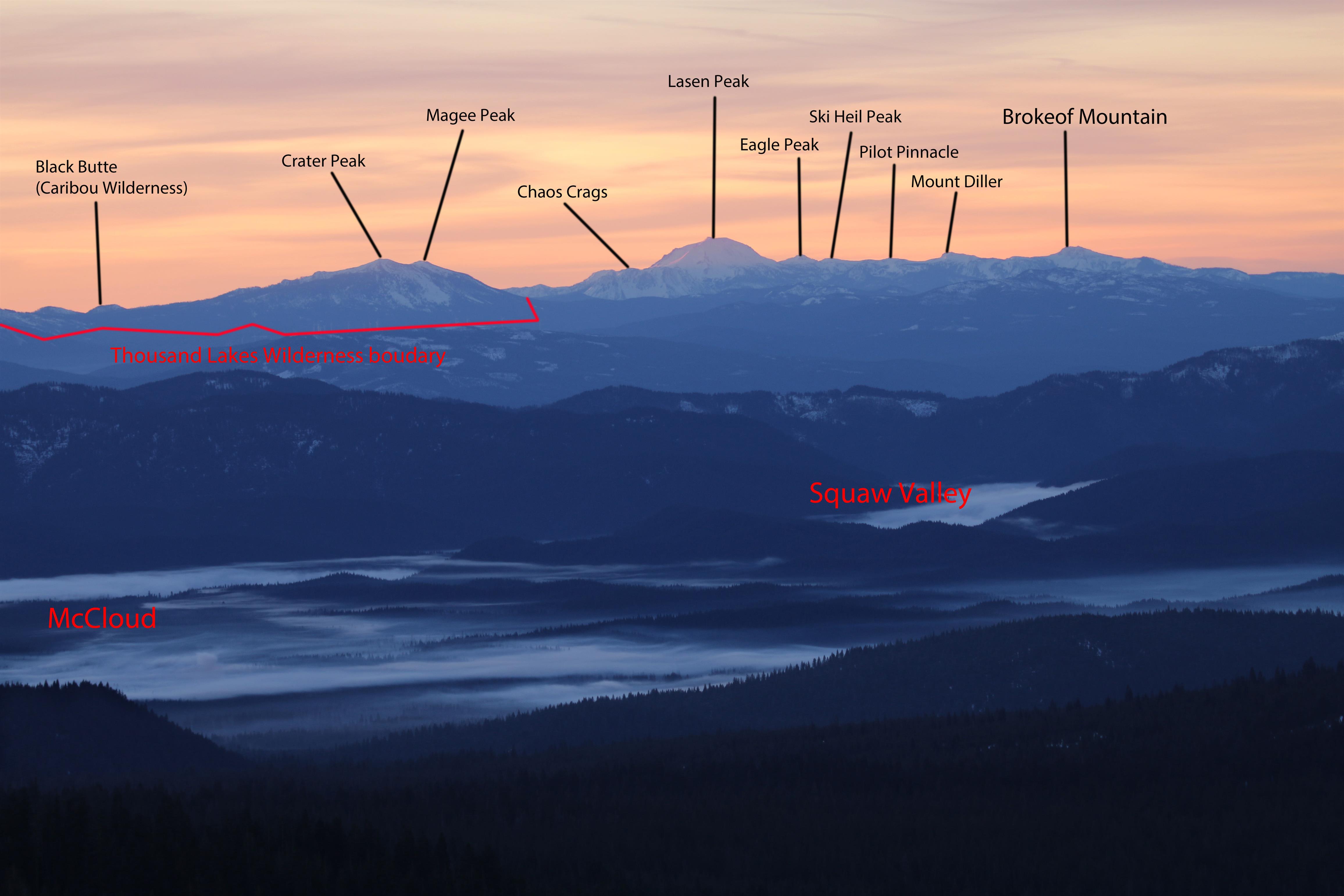
While there are numerous named peaks in the wilderness, they all are part of the remnants of the ancient Thousand Lakes Volcano. The tallest summits, Crater, Magee and Fredonyer are all prominent points on the crater rim or its spurs. It is the accumulation of these points that are visible from a distance. Despite being nearly 2,000 feet shorter than nearby Lassen Peak, the Thousand Lakes Volcano still rises prominently above the surrounding landscape.

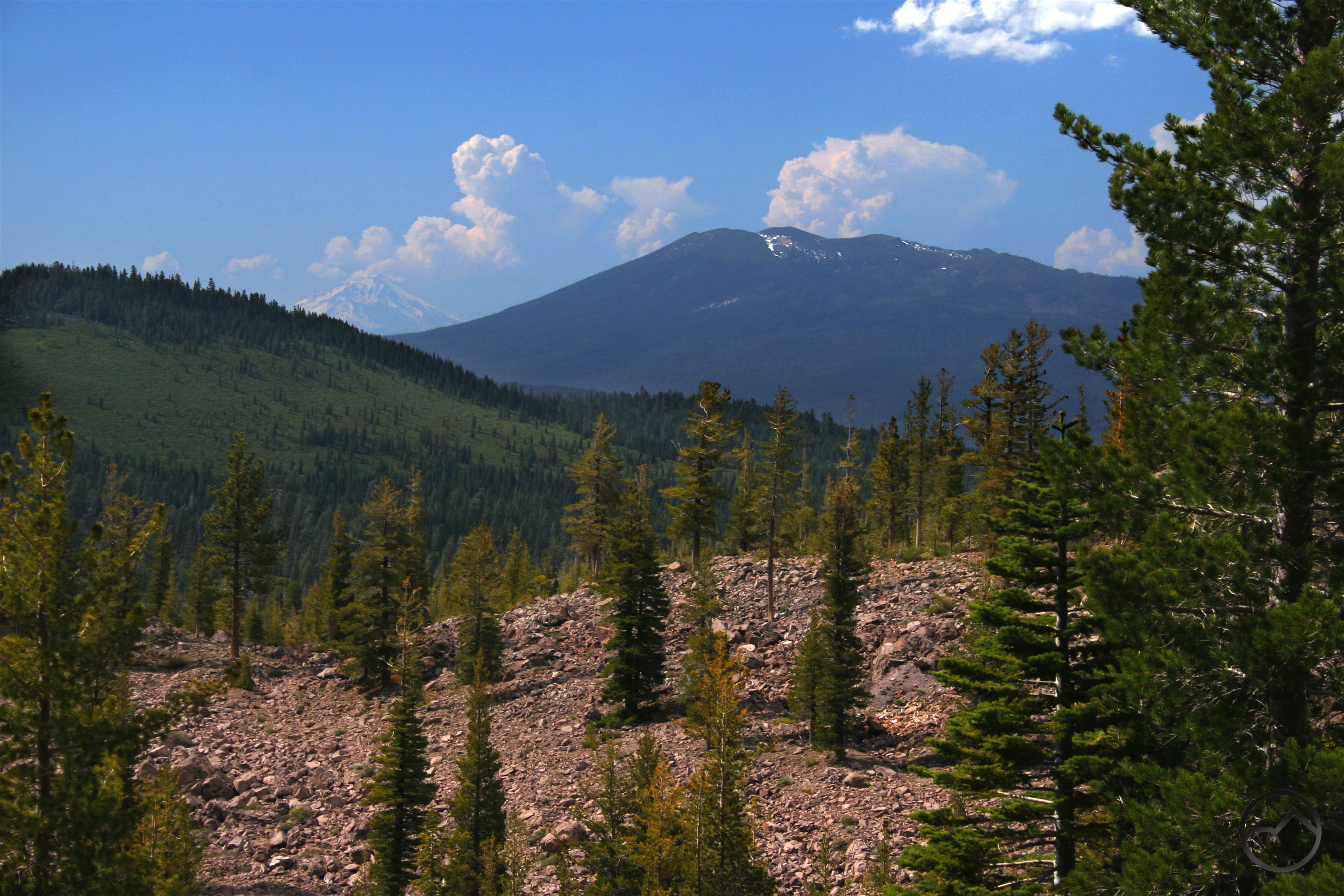
The Thousand Lakes Wilderness and the Thousand Lakes Volcano from Mount Shasta.

The Thousand Lakes volcano from the Chaos Crags in Lassen Volcanic National Park.

The broad-shoulders and crater rim of the Thousand Lakes volcano are obvious from Redding.

The Thousand Lakes Wilderness is one of the southern most areas in the Cascades Range. The Cascades stretch from southern Canada south through Washington and Oregon, all the way to Lassen Peak, which is just a few miles south of the Thousand Lakes Wilderness. Moving north through California, the Cascades begin with the Lassen area, which is encompassed in Lassen Volcanic National Park and moves north, including the Hat Creek Valley and many peaks that ring the valley, including the Thousand Lakes’ peaks, Sugarloaf Peak and Burney Mountain. It is reasonable to say that the greater Lassen area ends at the Pitt River and Burney Falls.

Beyond the Pitt, the Cascade crest is subdued and composed of scattered volcanic plugs and cinder cones before it reaches the Antelope-Butte Complex of peaks. From here the Cascade crest becomes more defined, eventually forming a single ridge moving north from Herd Peak to the Goosenest to Willow Creek Mountain then finally diving down to the Klamath River and entering Oregon. The grand peak of the California Cascades, Mount Shasta, is actually a large outlier, well west of the crest of the range. East of the crest extends the Modoc Plateau which is bounded in the east by the Warner Mountains. The pleateau is home numerous volcanic features, the most famous of which is Lava Beds National Monument.

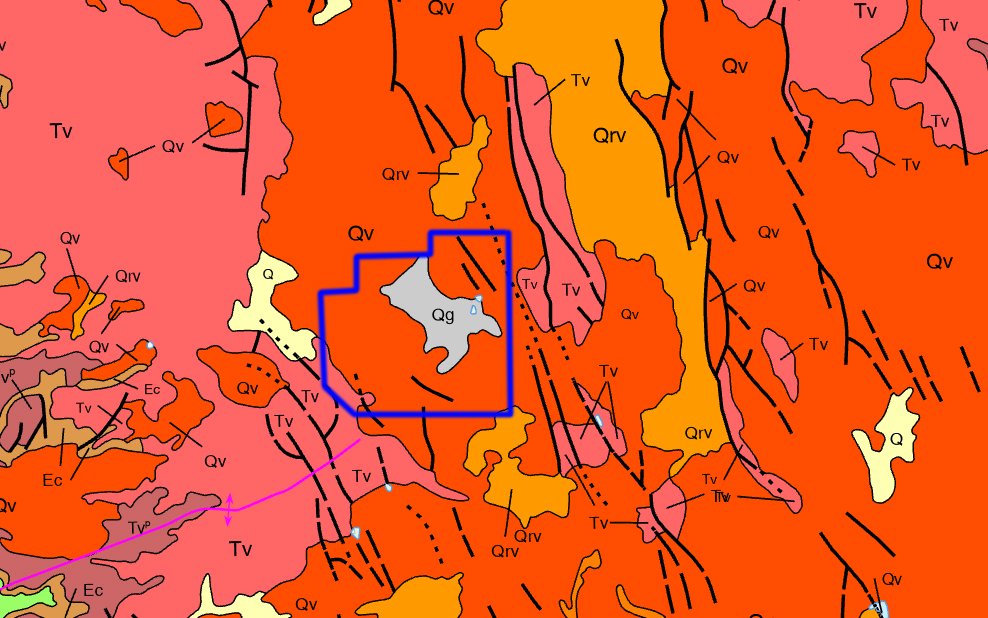
The entire region around the Thousand Lakes Wilderness is volcanic.

It is within this regional context one finds the Thousand Lakes Wilderness. Even though it is at the southern end of a massive mountain range, the compact nature of the Thousand Lakes volcano and its accompanying wilderness as well as the rugged terrain surrounding it give it a more expansive feel than one might expect from its size. Indeed, the Thousand Lake Wilderness is the crown jewel of the larger, Hat Creek Valley region. It is bounded on the south by Lassen Volcanic National Park and on the north by the Pitt River. Its eastern boundary is the Hat Creek Rim, a long series of cliffs forming a 600 foot high rampart. The western perimeter of the Hat Creek Valley is made of the Cascade Crest, composed of, as previously mentioned, a series of high peaks, including the Thousand Lakes Volcano. The whole valley nakedly exhibits its volcanic past and boasts numerous lava flows.

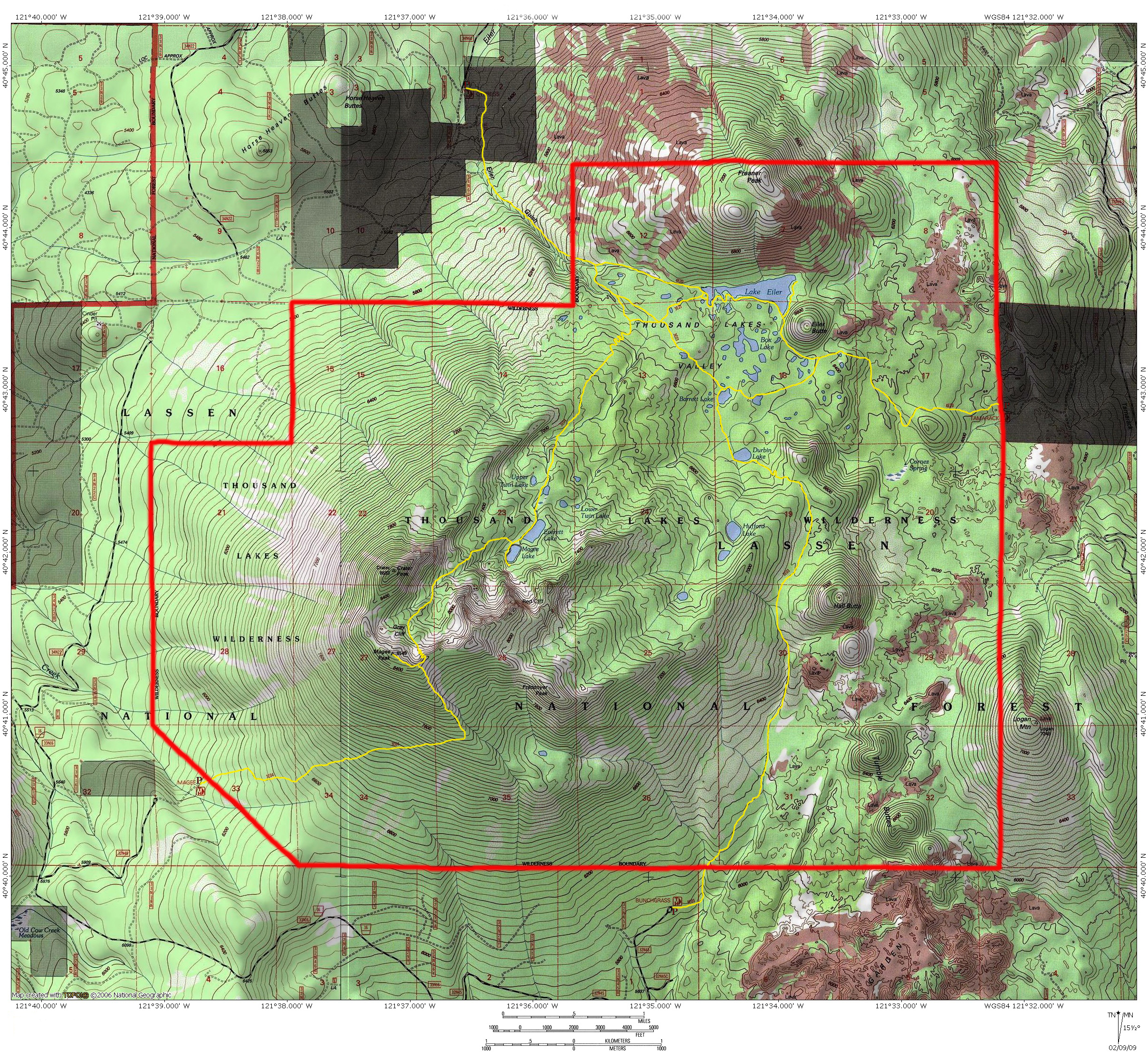
As mentioned earlier, there is a great network of trails in the Thousand Lakes Wilderness. Four trailheads, each located at one of the compass points, provide access. The hub of the network is located in the Thousand Lakes Valley and trails radiate out to the trailheads and up to the Everett and Magee Lakes and the crater rim. Note that the trail coming from the west side is still discernible and can be hiked but is no longer being maintained by the Forest Service. The best access to the crater are is from the Cypress trailhead.

Interestingly, the Thousand Lakes Wilderness is not connected to the Pacific Crest Trail, though it lies just a few miles west of this grand route. The high country of the wilderness, particularly the crater rim, is prominently visible from many sections of the PCT through this area, especially from the Hat Creek Rim. The route of the PCT through this area is a curious question. The better terrain and ample water sources lie on the west side of Hat Creek, where there are many lakes and intermittent creeks. The landscapes are more in keeping with what the trail is typically known for. The current route is notoriously dry and more in keeping with the desert terrain of southern California. However, passage through the high country would likely have necessitated more dirt road crossings and lies west of Hat Creek, making the crest of the Cascades not the true watershed divide.

The PCT is marked in yellow.

Lastly, it must be mentioned that the Eiler Fire burned a portion of the the Thousand Lakes Wilderness. However, considering the damage wrought by this conflagration and the fire’s provenance on the shores of Eiler Lake, remarkably little of the wilderness itself was damaged. Most of the destruction was to the east, in the Hat Creek Valley. There are some snags on the east end of Eiler Lake where the fire started but the rest of the wilderness, especially anywhere were trails pass, there is little indication that a large fire occurred in the region.

Thousand Lakes Wilderness Gallery:

Everett Lake in the Thousand Lakes Wilderness
Crater Peak from Everett Lake

Magee Lake
Mount Shasta and Crater Peak from Magee Peak on the crater rim.

Freaner Peak and Eiler Lake are visible through the gap in the crater rim.
The Red Cliffs anchor the south end of the crater rim.

Along the crater rim.
Lassen Peak from the crater rim.

Twin Lakes Meadow, east of the 1000 Lakes crater.
Eiler Butte view of the Thousan Lakes crater.

Barrett Lake
Looking east along Eiler Lake.

Freaner Peak above Eiler Lake.
Freaner lava flows above Eiler Lake.

Climbing up the Freaner Peak lava flows.

Distancing Pt. II: A Weekend Around Mount Shasta

Posted by bubbasuess on March 24, 2020
Posted in: Cascade Range, Hiking, Mount Shasta. 16 Comments

Unsettled weather over Mount Shasta defined the unsettling last week.

These are strange days we are living through. The world is shutting down for a time, people are uncertain and aspects of hardship are setting in for many in shuttered industries. It is cause for much prayer and consideration. Nonetheless, up here in Mount Shasta, as with my family at least, the world remains almost entirely unchanged. I work from home, my wife works in an essential business and we homeschool are kids. Other than a few of their activities, little has been different and their awareness of any changes in the world only comes from overhearing their parents discussing things. Even the “shelter in place” order means running around on acres of empty land behind our house. I am grateful that they are able to live like this.

Fortunately, the last weekend, when the social distancing and shelter in place way of life became the norm, coincided with some beautiful spring weather. We still have snow on the ground on our house from the last big storm system but it really began to melt in earnest. We took advantage of the weather and headed outside as a family and enjoyed the marvelous beauty that is the Mount Shasta area.

The first day we headed out we did a fantastic loop on the upper Sacramento River. This is a great place to hike and enjoy the river as it flows through a wild floodplain. It isn’t too far from the road but any signs of civilization seem half a world away (listening to Oasis song of the same name as I write this). The colorful rocks and crystalline water are magical and it remains one of my family’s favorites.


The next day I was off to explore the Siskiyous solo. I headed for an elusive seasonal waterfall. It takes some interesting route-finding but is not too hard to reach. Unfortunately, when I got there it was dry, despite the rain and snow that fell a few days before. Its watershed is very small but it is beautiful while running. The falls are within sight of Mount Ashland in a strangely semi-arid environment. I love that kind of landscape. The day was made even better by taking an alternative route that follows the Shasta River through its spectacular canyon. I am surprised this canyon is not more well-known.


On Sunday we headed out yet again, this time to Weed and hiked a short but scenic trail with great views.


That night we capped it off with a campfire and hot dogs. The snow had melted considerably and it was warm enough for the kids to be comfortable outside. It was a great way to finish off the weekend.

On Monday morning I was up early to checking out the sunrise. The rapidly shifting weather meant there might be a lenticular. There was indeed a disk near the mountain. I headed over to Lake Siskiyou and was pleased to see the lake relatively still. With a great sky full of clouds, I was anticipating a terrific sunrise. It was not meant be, however. Clouds far to the east filtered out a lot of the sunrise light and pink color hit only a small area for only a brief moment. Fortunately I was in position to catch it and while it was not as good as I had hoped, it was quite beautiful.

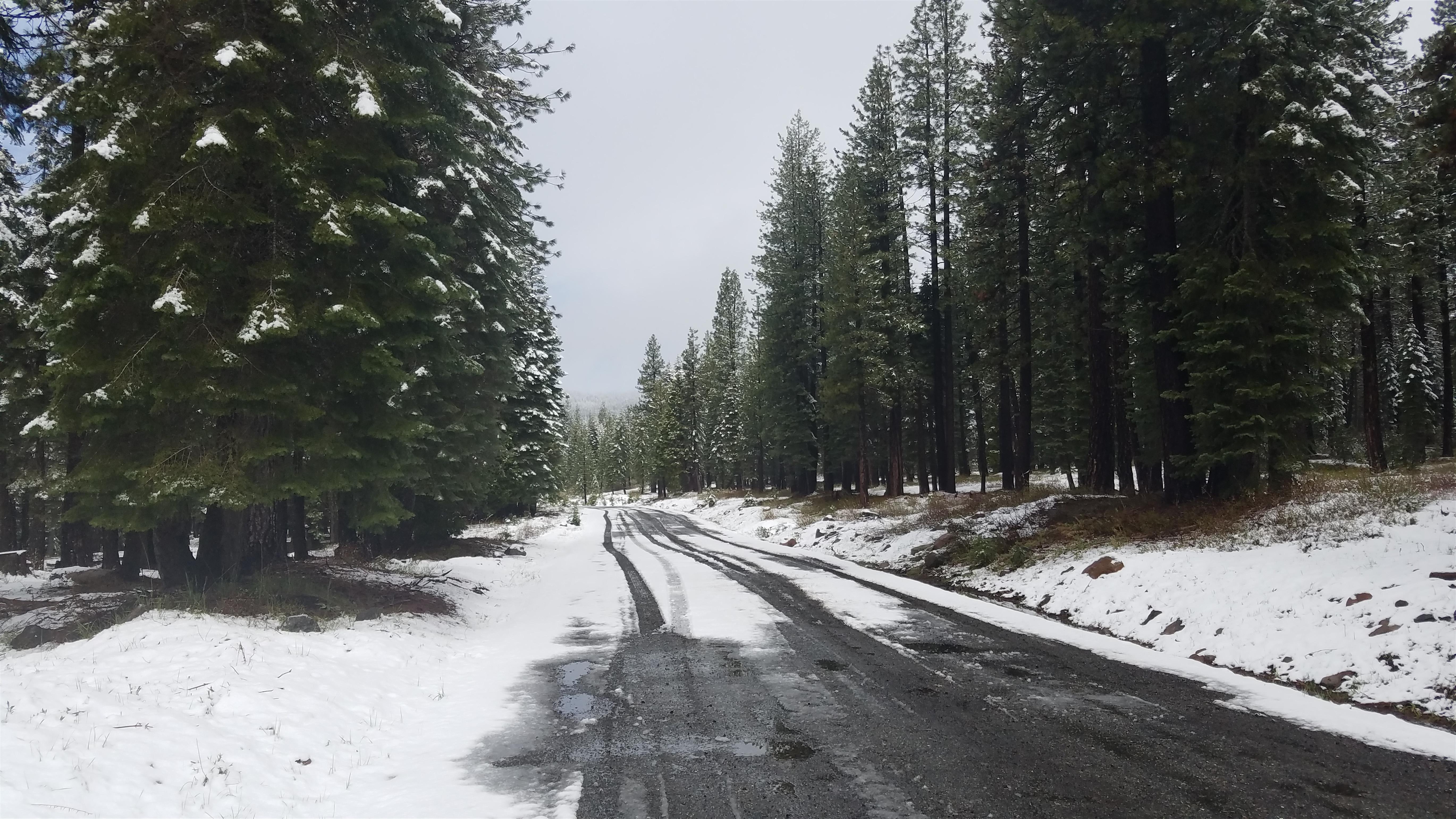
Now another we are into another week of social distancing and winter weather. It is not a great combination. As I write this it is snowing outside.

Hopefully the weather will change in a few days and we can all head back outside again.

With the new While the shelter in place order is in effect, we have been careful where we have gone outside. We picked hikes and destinations where we are confident we aren’t going to run into other people. Thus far, in all four trips out, we have had only a single encounter. One of the great things about the Mount Shasta area is how easy it is to slip out of the well-traveled corridors and enjoy the magnificent creation we are blessed with while not impacting other people. There are so many off-the-beaten-path spots around this area it is mind-boggling. My wife and I are grateful to be able to share that with our kids. Only our oldest (10) is beginning to understand his good fortune.

I am thinking that I may start a new series on the blog. I have always kept the focus on Mount Shasta and the surrounding area, rarely blogging anything about myself or other personal activities. I have put up stuff about my kids (like this post) but I have lots of other things I have wanted to write about but have intentionally stayed away from. Now, as the world has changed a bit, perhaps I ought to change the site a bit too. I am considering two new series. The first would focus on places beyond Mount Shasta and even beyond Northern California that are important to me. I love writing about places, wherever they may be and this may be a good time, while we are sheltering in place, to travel there in spirit. The second series would examine music that I have strong emotional attachments to outdoor places. I have a strong tendancy to link music with places I heard them and forever keep them linked. I’m not sure if my personal associations would be interesting to anyone, but I think examining music would be a fun vehicle to look back on things I have experienced. I am even considering shutting down HikeMtShasta as we know it and just doing things like this. That’s another conversation though. Any thoughts on which direction I should take in the short term?

Posts navigation

← Older Entries
Newer Entries →
    • Recent Posts

      • Winter Shows Up When It Will
      • January Rolled By With Mud, Then Very Dry
      • Mount Shasta 2025 – A Year In Images
      • Mount Shasta On Either Side Of Christmas
      • Adrift In An Ocean Of Fog
      • December Has Been Spectacular Thus Far Pt. II (A Magnificent Lenticular)
      • December Has Been Spectacular Thus Far Pt. I
      • Lenticular Interrupted
      • A Stormy Wave And A Truchas Sunset
      • Aurora Lenticularis
    • Enter your email address to follow Hike Mt Shasta and receive notifications of new posts by email.

    • Archives

      • February 2026
      • January 2026
      • December 2025
      • November 2025
      • October 2025
      • September 2025
      • August 2025
      • July 2025
      • June 2025
      • May 2025
      • April 2025
      • March 2025
      • February 2025
      • January 2025
      • December 2024
      • November 2024
      • October 2024
      • September 2024
      • August 2024
      • July 2024
      • June 2024
      • May 2024
      • April 2024
      • March 2024
      • February 2024
      • January 2024
      • December 2023
      • November 2023
      • October 2023
      • September 2023
      • August 2023
      • July 2023
      • June 2023
      • May 2023
      • April 2023
      • March 2023
      • February 2023
      • January 2023
      • December 2022
      • November 2022
      • October 2022
      • September 2022
      • August 2022
      • July 2022
      • June 2022
      • May 2022
      • April 2022
      • March 2022
      • February 2022
      • January 2022
      • December 2021
      • November 2021
      • October 2021
      • September 2021
      • August 2021
      • June 2021
      • May 2021
      • April 2021
      • March 2021
      • February 2021
      • January 2021
      • December 2020
      • November 2020
      • October 2020
      • September 2020
      • August 2020
      • July 2020
      • June 2020
      • May 2020
      • April 2020
      • March 2020
      • February 2020
      • January 2020
      • December 2019
      • November 2019
      • October 2019
      • September 2019
      • August 2019
      • July 2019
      • June 2019
      • May 2019
      • April 2019
      • March 2019
      • February 2019
      • January 2019
      • December 2018
      • November 2018
      • October 2018
      • September 2018
      • August 2018
      • July 2018
      • June 2018
      • May 2018
      • April 2018
      • March 2018
      • February 2018
      • January 2018
      • December 2017
      • November 2017
      • October 2017
      • September 2017
      • August 2017
      • July 2017
      • June 2017
      • May 2017
      • April 2017
      • March 2017
      • February 2017
      • January 2017
      • December 2016
      • November 2016
      • September 2016
      • August 2016
      • July 2016
      • June 2016
      • May 2016
      • April 2016
      • March 2016
      • February 2016
      • January 2016
      • December 2015
      • November 2015
      • September 2015
      • August 2015
      • July 2015
      • June 2015
      • May 2015
      • April 2015
      • March 2015
      • February 2015
      • January 2015
      • December 2014
      • November 2014
      • July 2014
      • June 2014
      • May 2014
      • April 2014
      • March 2014
      • February 2014
      • January 2014
      • December 2013
      • November 2013
      • October 2013
      • September 2013
      • August 2013
      • July 2013
      • June 2013
      • May 2013
      • April 2013
      • March 2013
      • February 2013
      • January 2013
    • Categories

      • Boy Scouts
      • Cascade Range
      • Castle Crags
      • Desert
      • Echo Point
      • Glaciers
      • Hiking
      • How things came to be…
      • Klamath Mountains
      • Konwakiton Outdoor Designs
      • Lakes
      • Lenticular Clouds
      • Maps
      • Marble Mountains
      • Meadows
      • Mount Eddy
      • Mount Shasta
      • Mount Shasta History
      • Napa County
      • Off Season Trails
      • Pacific Crest Trail
      • Peaks
      • Rivers
      • Rock Climbing
      • Scott Mountains
      • Seldom Seen
      • Shasta Valley
      • Sierra Nevada
      • Siskiyou Mountains
      • Sonoma County
      • Spring Trails
      • sunrise
      • sunset
      • Trinity Alps
      • Trinity Divide
      • Truchas Ridge
      • Uncategorized
      • Water
      • Waterfalls
      • Wilderness
      • Wildflowers
      • Wine Country
      • Winter Trails
      • Yosemite
    • Meta

      • Create account
      • Log in
      • Entries feed
      • Comments feed
      • WordPress.com
    • Copyright © 2013-2024 by Bubba Suess

      DISCLAIMER: Any use of the information contained in this site by any and all persons is done at their own risk. The operator of this site shall be held harmless from any and all alleged claims, demands, causes of action, liability, loss, damage and/or injury to property or persons whether brought by an individual or other entity. This indemnification applies, without limitation, to all actions by an individual or other entity as a result of their use of information contained in this site.

    Blog at WordPress.com.
    Hike Mt. Shasta
    Blog at WordPress.com.
    • Subscribe Subscribed
      • Hike Mt. Shasta
      • Join 983 other subscribers
      • Already have a WordPress.com account? Log in now.
      • Hike Mt. Shasta
      • Subscribe Subscribed
      • Sign up
      • Log in
      • Report this content
      • View site in Reader
      • Manage subscriptions
      • Collapse this bar
     

    Loading Comments...