Hike Mt. Shasta

Exploring the Mount Shasta Region

  • Home
  • Trails
    • Mount Shasta Trails
      • Brewer Creek Trail
      • Clear Creek Trail
      • Gray Butte Trail
      • Green Butte Ridge Trail
      • Horse Camp Trail
      • North Gate Trail
      • Old Ski Bowl Trail
      • Panther Meadow Trail
      • South Gate/Squaw Meadow Trail
      • Whitney Falls Trail
    • Trinity Divide Trails
      • Blue Divide Trail
      • Castle Lake Trail
      • Castle Lake Shore Trail
      • Cliff Lake Trail
      • Deadfall Lakes Trail
      • Gray Rock Lakes Trail
      • Gumboot Trail
      • Heart Lake Trail
      • Porcupine & Toad Lakes Via Pacific Crest Trail
      • Seven Lakes Basin Via Pacific Crest Trail
      • Sisson-Callahan Trail
      • Soapstone Trail
      • South Mumbo Scramble
      • Tamarack Lake Trail
      • Toad Lake Trail
    • Castle Crags Trails
      • Burstarse Falls Via Pacific Crest Trail
      • Castle Dome Trail
      • Flume Trail
      • Lower Castle Crags Via Pacific Crest Trail
      • Root Creek Trail
    • Scott Mountains Trails
      • Bluff Lake & Cement Bluff via Pacific Crest Trail
      • Caldwell Lakes Trail
      • China Mountain Scramble
      • Cory Peak and Bull Lake via Pacific Crest Trail
    • Cascade Crest
      • Ash Creek Butte Scramble
      • Goosenest Trail
      • Juanita Lake Trail
      • Orr Lake Trail
    • Mount Shasta City Area Trails
      • Black Butte Trail
      • Box Canyon Trail
      • Gateway Trail
      • Lake Siskiyou Trail
      • Mount Shasta City Short Trails
      • Ney Springs Canyon Trail
      • Spring Hill Trail
    • Shasta Valley Trails
      • Black Lava Trail
      • Haystack Trail
      • Lake Shastina Trail
      • Pluto Cave Trail
      • Trout Lake Trail
      • Yellow Butte Trail
    • Sacramento River Trails
      • Dunsmuir Trail
      • Hedge Creek Falls Trail
      • Sacramento River Trail
      • Sims History Trail
    • McCloud River Trails
      • Ash Camp To Ah-Di-Na Via Pacific Crest Trail
      • McCloud River Falls Trail
      • McCloud River Preserve Trail
      • Squaw Valley Creek Trail
      • McCloud River Trail: Algoma Camp to Nitwit Camp
      • McCloud River Trail: Nitwit Camp to Cattle Camp Swimming Hole
      • McCloud River Trail: Cattle Camp Swimming Hole to Camp 4
      • McCloud River Trail: Camp 4 to Upper McCloud Falls
      • McCloud River Trail: Pine Tree Hollow Loop
    • Trails Further Afield
      • Trinity Alps Trails
        • Bear Lakes Trail
        • Billys Peak Trail
        • Boulder Creek Lakes Trail
        • Boulder Lake Trail
        • Canyon Creek Trail
        • Caribou Lakes Trail
        • East Boulder Lake Loop
        • East Weaver Lake Trail
        • Four Lakes Loop
        • Granite Peak Trail
        • Grizzly Creek Trail
        • Gulch Lakes Loop
        • Hidden Lake Trail
        • South Fork Lakes Trail
        • Stoddard Lake Trail
        • Stoney Ridge Trail
        • Tangle Blue Lake Trail
      • Warner Mountains
        • Emerson Creek Trail
        • Highgrade Trail
        • Patterson Lake Via Warner Summit Trail
        • Pine Creek Trail
        • Squaw Peak Trail
  • Articles
    • Trails By Area
      • Mount Shasta
        • Vistas, Meadows And Waterfalls: Three Best Hikes On Mount Shasta
        • The End Of The Road: Three Hikes In The Old Ski Bowl Area
        • Two Trails From Bunny Flat
        • Three Trails On Mount Shasta’s East Side
        • Mount Shasta’s Hummingbirds
      • Trinity Divide
        • Great Lakes: Top Five Lake Basins In The Trinity Divide
        • The Headwaters Of The South Fork Of The Sacramento River
        • Neglected Headwaters: Two Lesser Lake Basins On The South Fork
        • Gumboot Saddle: Two Hikes On The PCT
        • Descent Into Mystery: The Sisson-Callahan Trail
        • Mumbo Basin – Overlooked On The West Side
        • The Headwaters Loop: A Proposed Backpacking Loop In The Trinity Divide
      • The McCloud River
        • The McCloud River Trail
      • Shasta Valley
        • Jewels In The Desert
      • Scott Mountains
        • Great Scott! Two Scott Mountains Hikes On The PCT
      • Trinity Alps
        • Carubou Lakes: Trinity Alps On A Grand Scale
        • Switchbacks To Heaven: The Trinity Alps’ Stoney Ridge Trail and Four Lakes Loop
        • Trinities In Proximity: Two Trinity Alps Trails With Easy Access From Mount Shasta
        • Trails in the Carter Meadows Area
        • Trinity Alps Views of Mount Shasta
        • The Psychological Value Of The Trinity Alps
    • Waterfalls
      • Three Waterfalls On Mount Shasta
      • McCloud River Waterfalls
      • Sacramento River Waterfalls
      • Trinity Divide Waterfalls
      • Trinity Alps Waterfalls
      • Avoiding A Dry Whitney Falls
    • Off Season Trails
      • Three Winter Hikes Near Mount Shasta City
      • Winter Hikes In Shasta Valley
      • Winter Hiking In The Shasta Valley Wildlife Refuge
      • Winter Hikes On The Sacramento River
      • Winter Hikes On The Lake Siskiyou Trail
      • Spring Hikes In The Castle Crags
      • Spring Hikes On the Upper McCloud
      • Spring Hikes On The Lower McCloud River
    • Points Of Interest
      • Mount Eddy: Overshadowed, Underrated
      • Black Butte: Hiding In Plain Sight
      • Castle Dome: Steadfast And Staggering
      • Mount Shasta Hoodoos
      • Sacramento Scrambling
      • The Shasta River
      • The Castle Creek Watershed
      • Mount Shasta East Side Glacier View
      • 5 Fantastic Mount Shasta Vistas
      • 5 Highest Peaks Around Mount Shasta
      • 5 Best Hikes On Creeks And Rivers
      • 5 Interesting Footbridges
      • Three Spectacular Drive-To Sunset Vistas
    • North State Geography
      • Introduction
      • Seven Major Regions
      • The California Cascades
      • Klamath Mountains Pt. I
      • Klamath Mountains Pt. II
      • The Great Canyons Of Mount Shasta
      • Mount Shasta, Timberline, And The Relative Size Of Cascade Volcanos
      • Four Eruption Cones Of Mount Shasta
      • Mount Shasta’s Medial Moraine
    • Northern California Review
      • North Table Mountain
      • Lakes Basin Recreation Area
      • Eastern Sierra Fall Color
      • Sonoma County
      • Central Sierra Nevada
      • Orland Buttes
    • Seldom Seen
      • Ash Creek Falls
      • Mud Creek Canyon
      • Lower Mud Creek Canyon
      • Diller Canyon
      • Lower Cascade Gulch
      • The Grey Rocks
      • Castle Creek
      • Upper Wagon Creek
      • Fawn Creek Canyon
      • Confluence of the Sacramento River and Castle Creek
      • Upper Klamath River Canyon
      • Hole In The Ground Geologic Area
      • Ash Creek Butte Fossil Rock Glacier
    • Mount Shasta History
      • Vantage Lost: The Everitt Memorial Vista
      • A Yosemite-Mount Shasta Connection
      • Whitney – What’s In A Name?
      • Mount Shasta Area and the 1838 Exploring Expedition
      • A 19th Century Engraving Of An Epic Mount Shasta Vista
      • Vintage 1907 Color Photos
      • A Misleading Painting
      • A Mysterious Painting
      • A Mysterious Painting Pt. II
      • Stereographic Mt. Shasta
      • Year One Of Hike Mt Shasta
      • Year Two Of Hike Mt Shasta
      • Year Three Of Hike Mt Shasta
      • Year Four Of Hike Mt Shasta
      • Year Five Of Hike Mt Shasta
      • Year Six Of Hike Mt Shasta
      • Year Seven Of Hike Mt Shasta
    • Image Galleries
      • Mount Shasta Trails Gallery
      • Mount Shasta Sunrise Gallery
      • Mount Shasta Sunset Gallery
      • Lenticular Cloud Gallery
      • Mount Shasta NON-Lenticular Clouds
      • Mount Shasta Reflection Gallery
      • Telephoto Gallery
      • Mount Shasta Area Fall Color
      • Castle Crags Gallery
      • Waterfalls Gallery
      • Trinity Divide Lakes Gallery
      • Mount Shasta Area Rivers Gallery
      • Shasta High Desert Gallery
      • Mount Shasta GIF Gallery
    • Random Notes
      • Revew: Three Mount Shasta Trail Maps
      • A Mount Eddy Wilderness?
      • New Land Additions For The Castle Crags
      • Book Plug: Mount Shasta Area Rock Climbing
      • Exile: How I Came To Love Wilderness
  • Mt. Shasta Trail Map
  • Blog
  • About/Contact
  • Links
  • Truchas Ridge

It’s Icy Up On Mount Shasta

Posted by bubbasuess on January 21, 2019
Posted in: Cascade Range, Hiking, Mount Shasta. 1 Comment

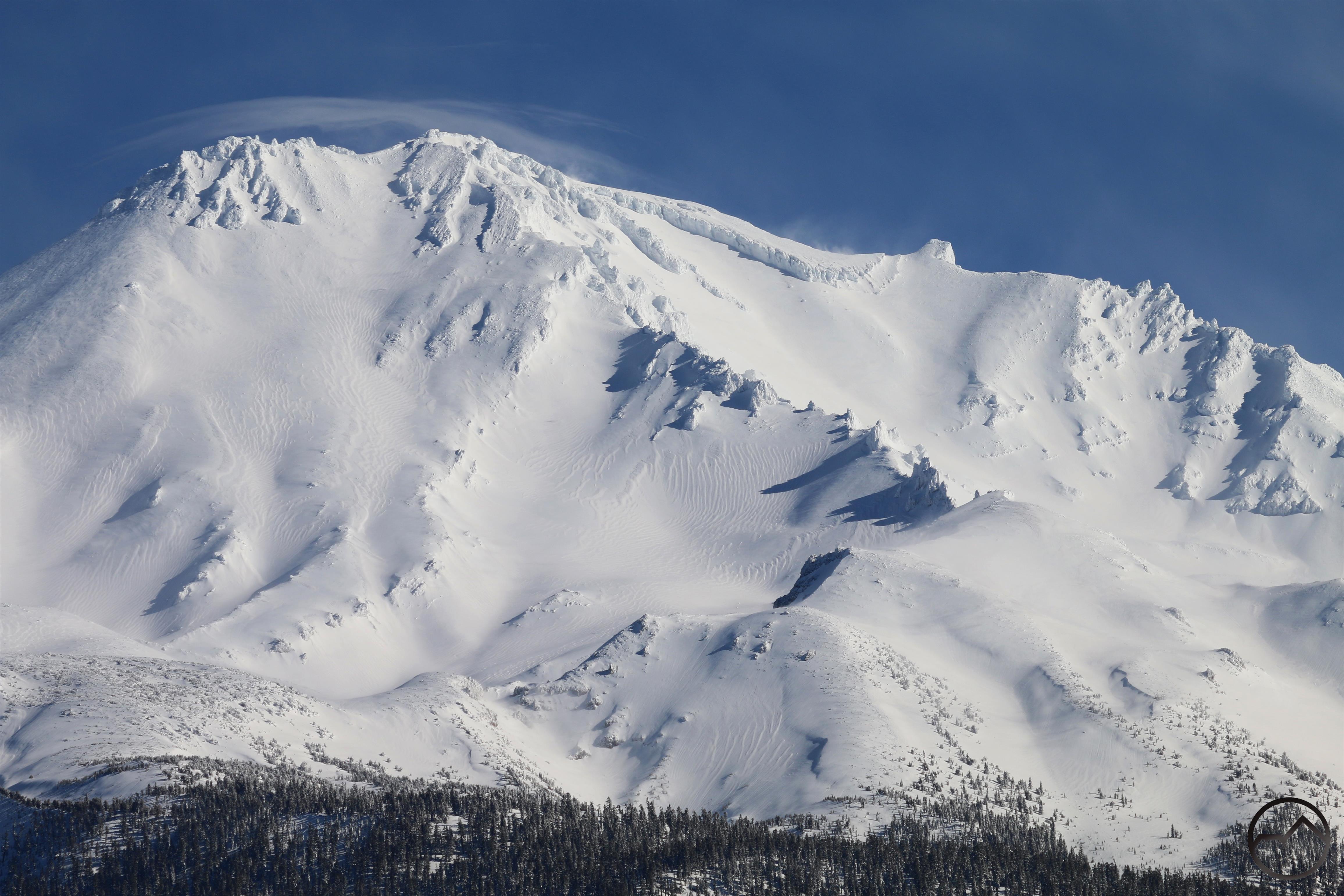
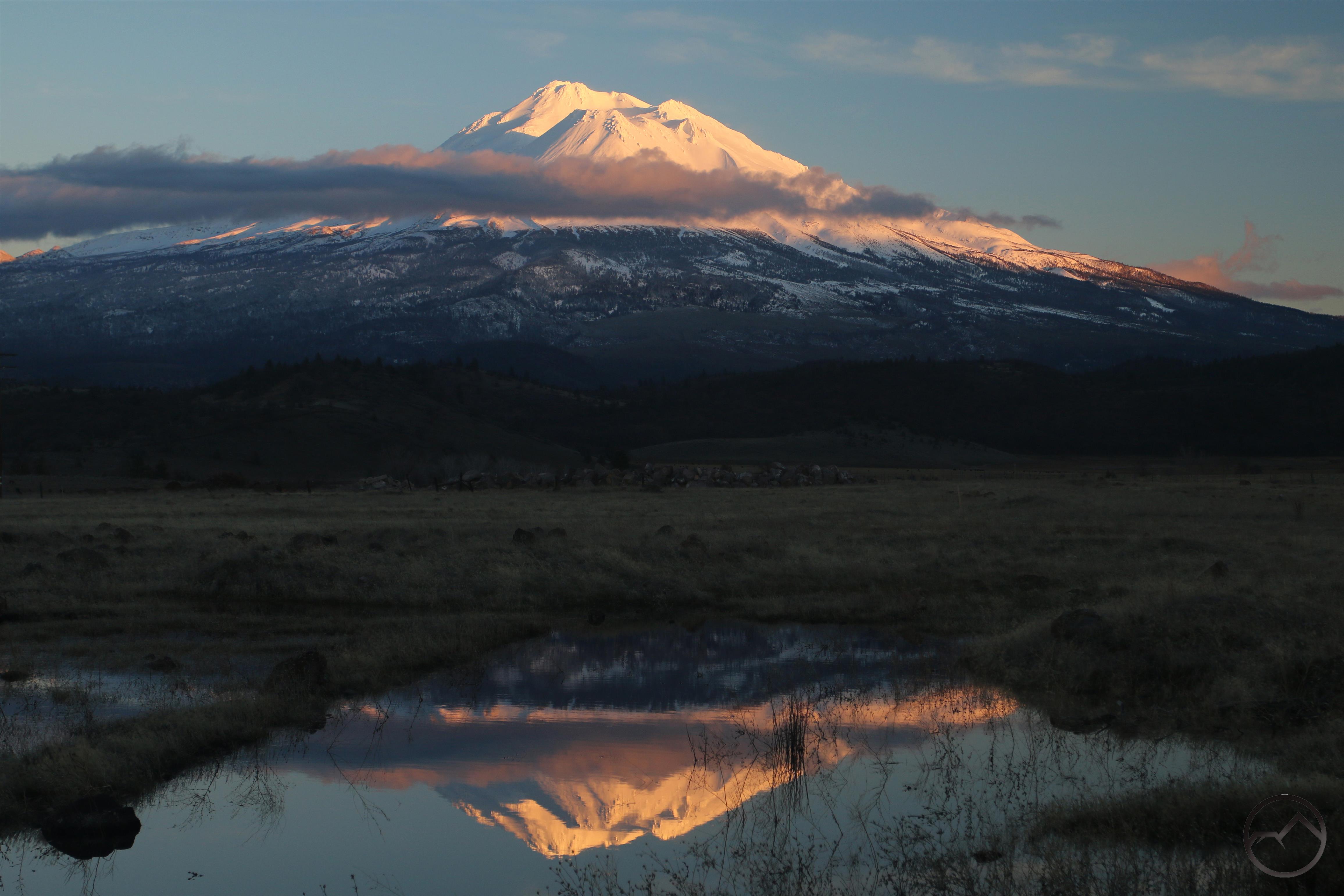
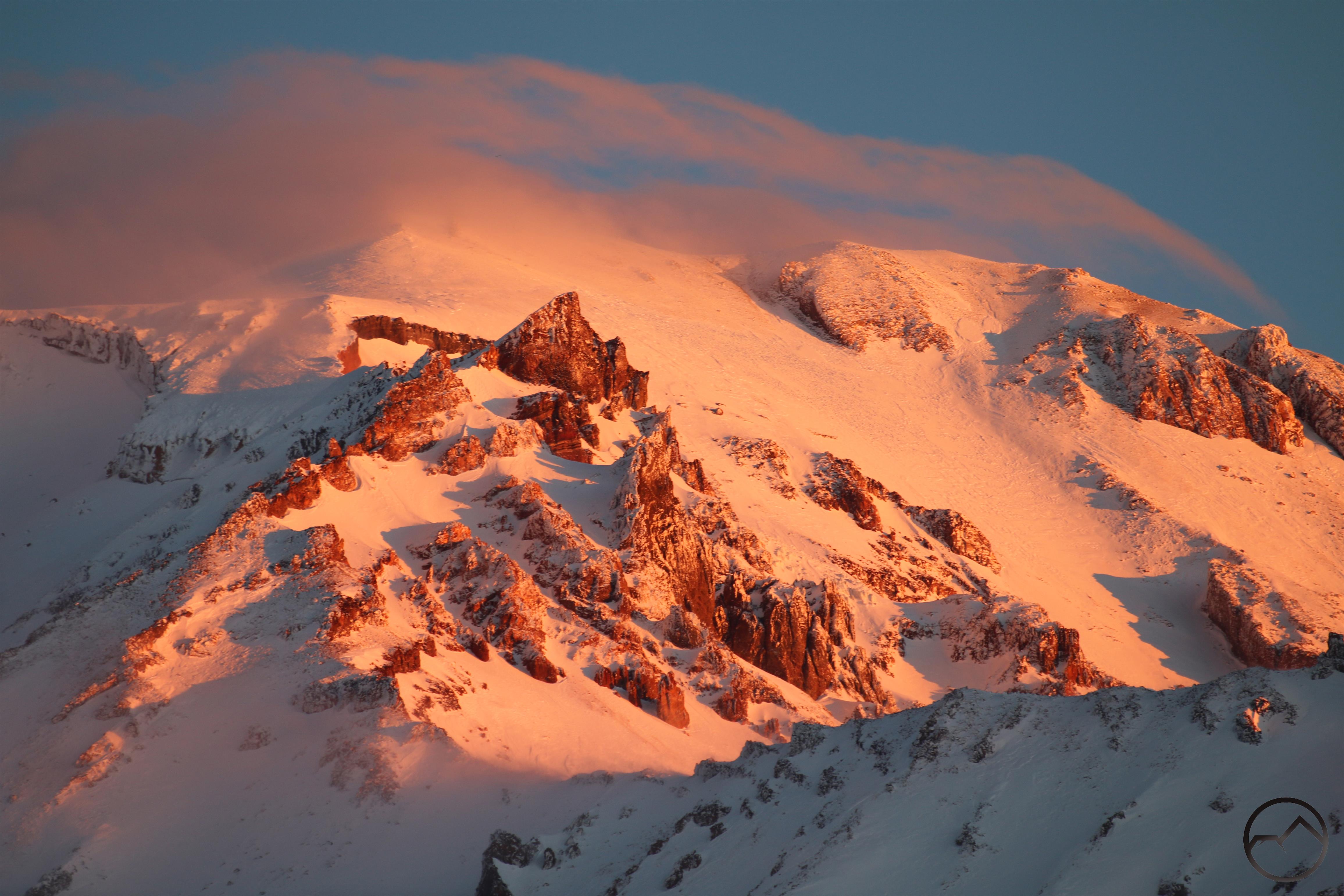
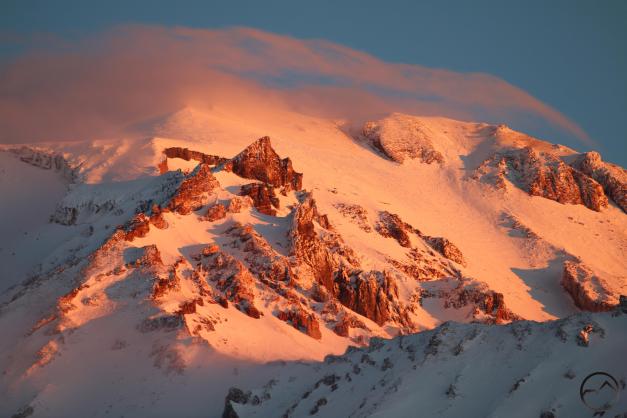
Winter light baths a very frozen Mount Shasta.

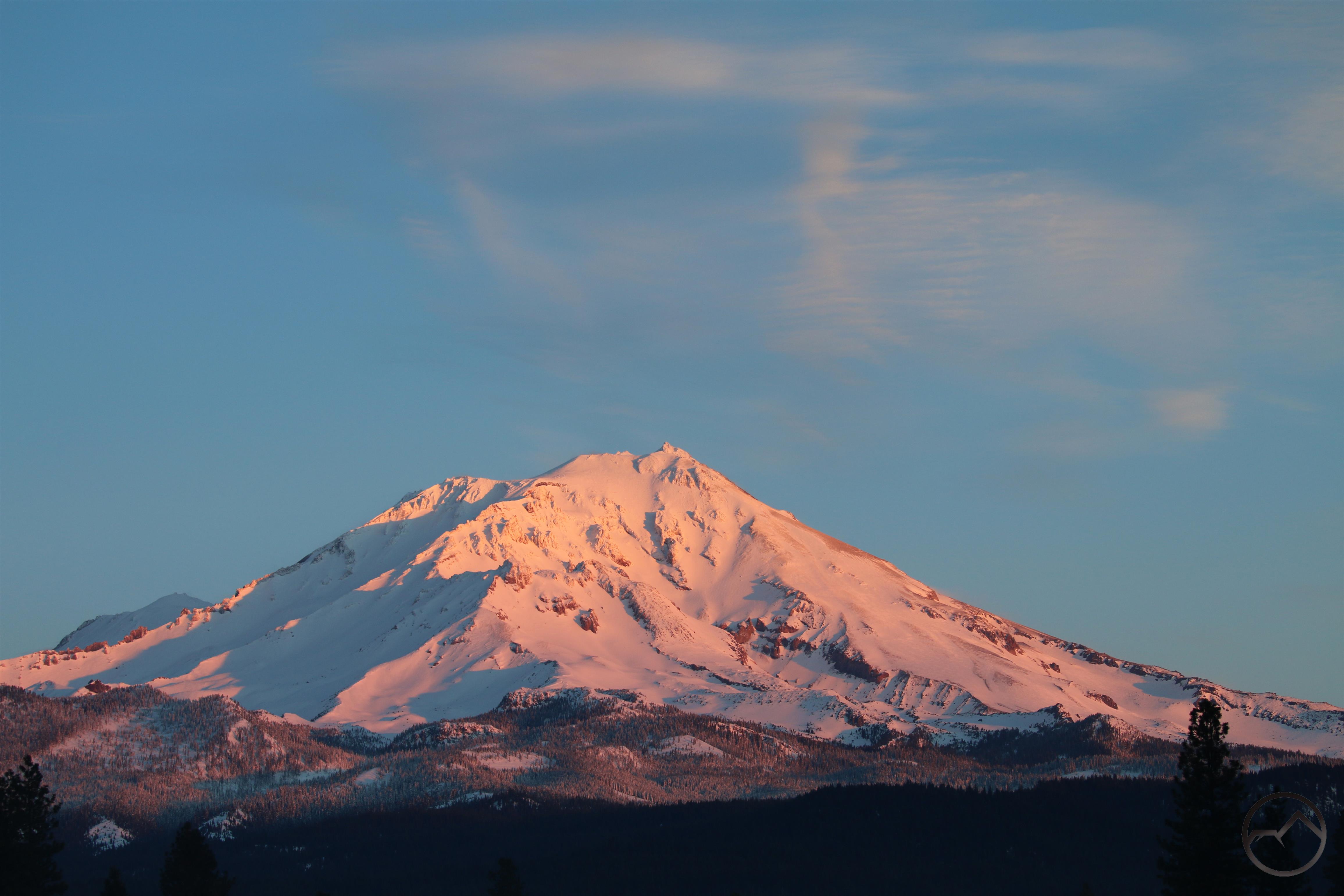
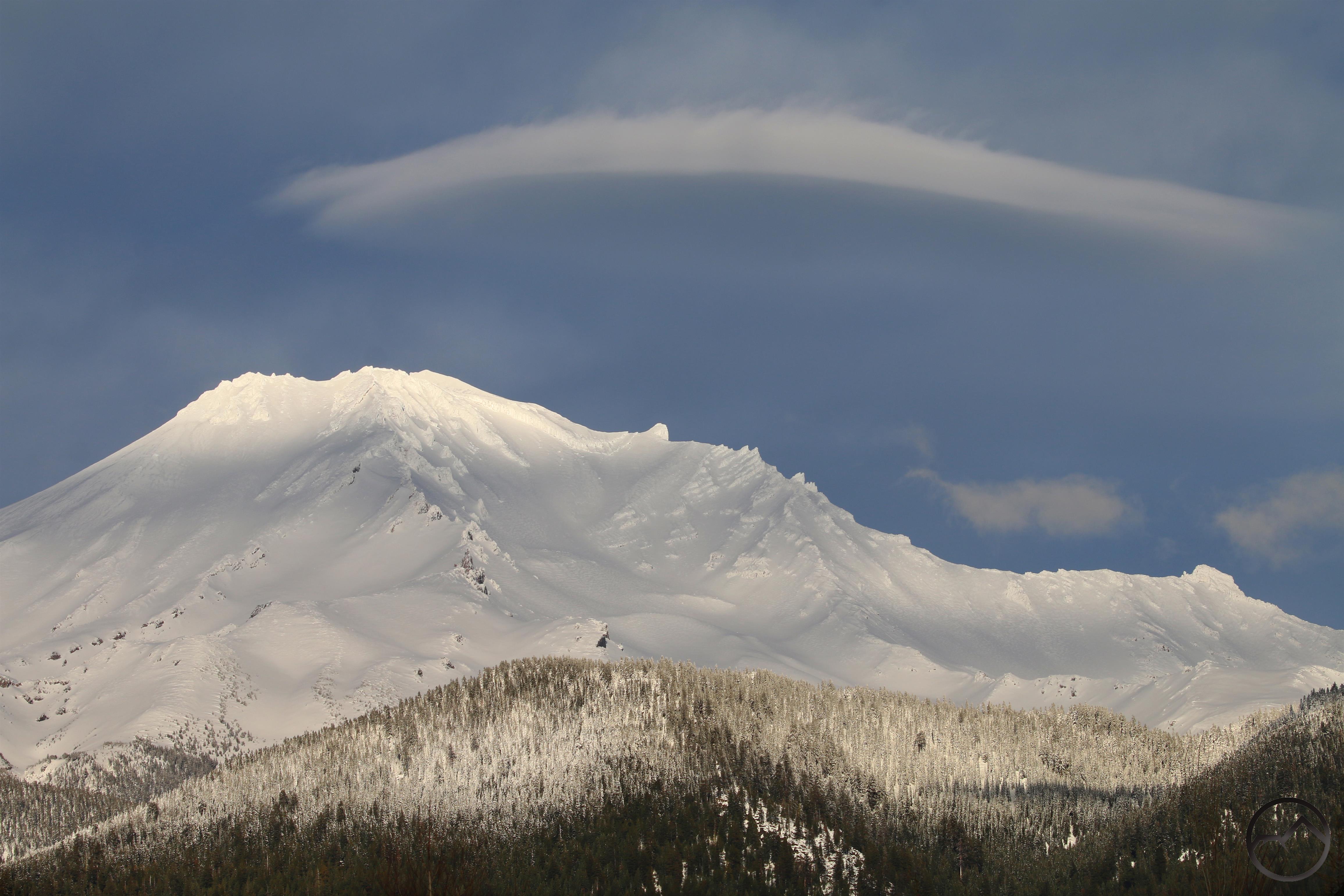
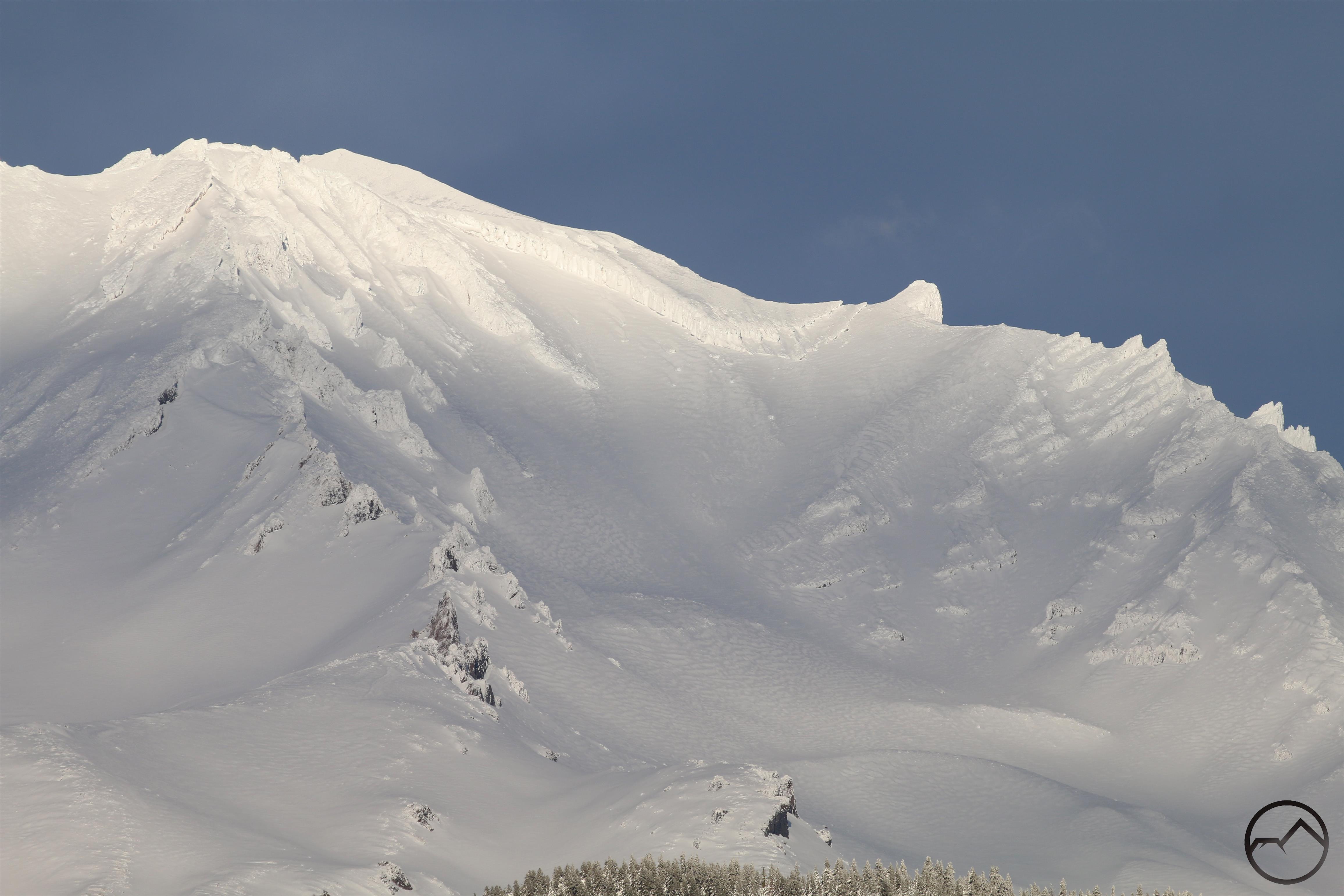
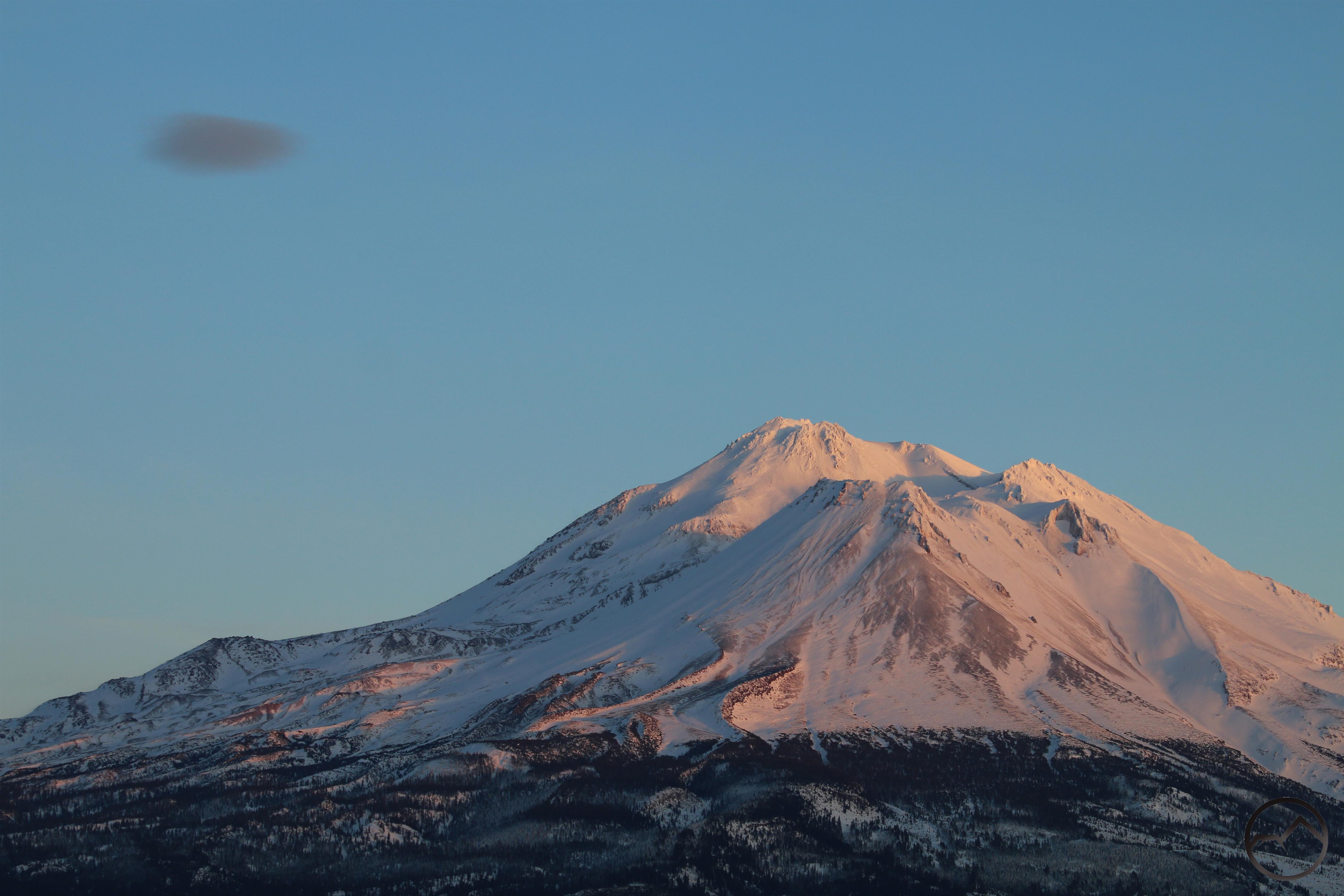
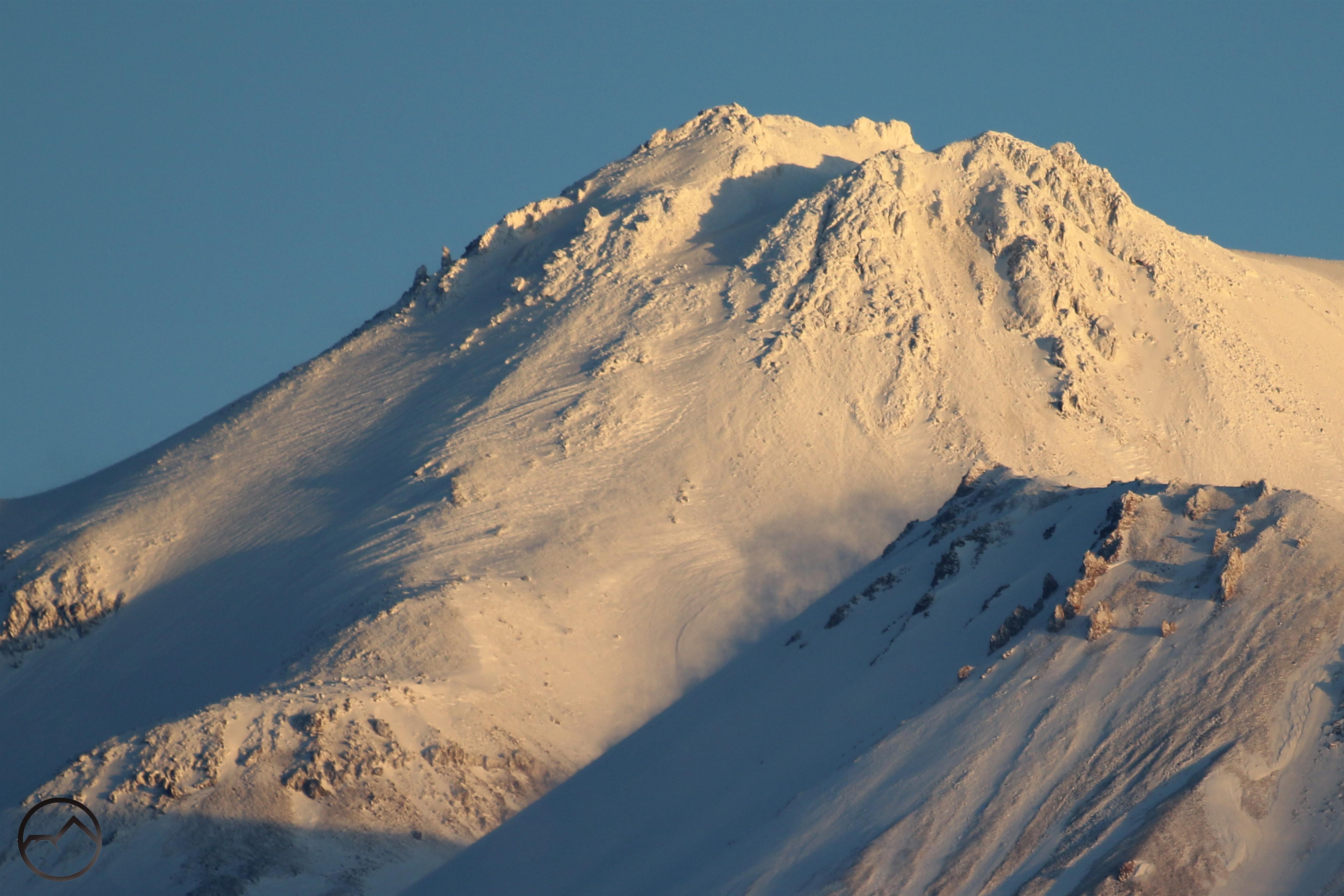
After a week of solid precipitation, the clouds finally parted and Mount Shasta was, at seemingly long last, revealed to its admirers once again. It seemed like much longer than it it really had been since I had seen the mountain. It was a bluebird day up on the massive cone.  The sun was bright and the great volcano was showing off a shiny new mantle of snow and ice. Even the numerous crags were thickly coated with snow and rime ice, making it so that no other color appeared on the mountain but white and shadow. I especially love it when Mount Shasta is covered this way. It is a frigid but spectacular spectacle. This is particularly the case around the towers and spires that protrude from the mountain’s flanks. They cast shadows on the snowy expanse.


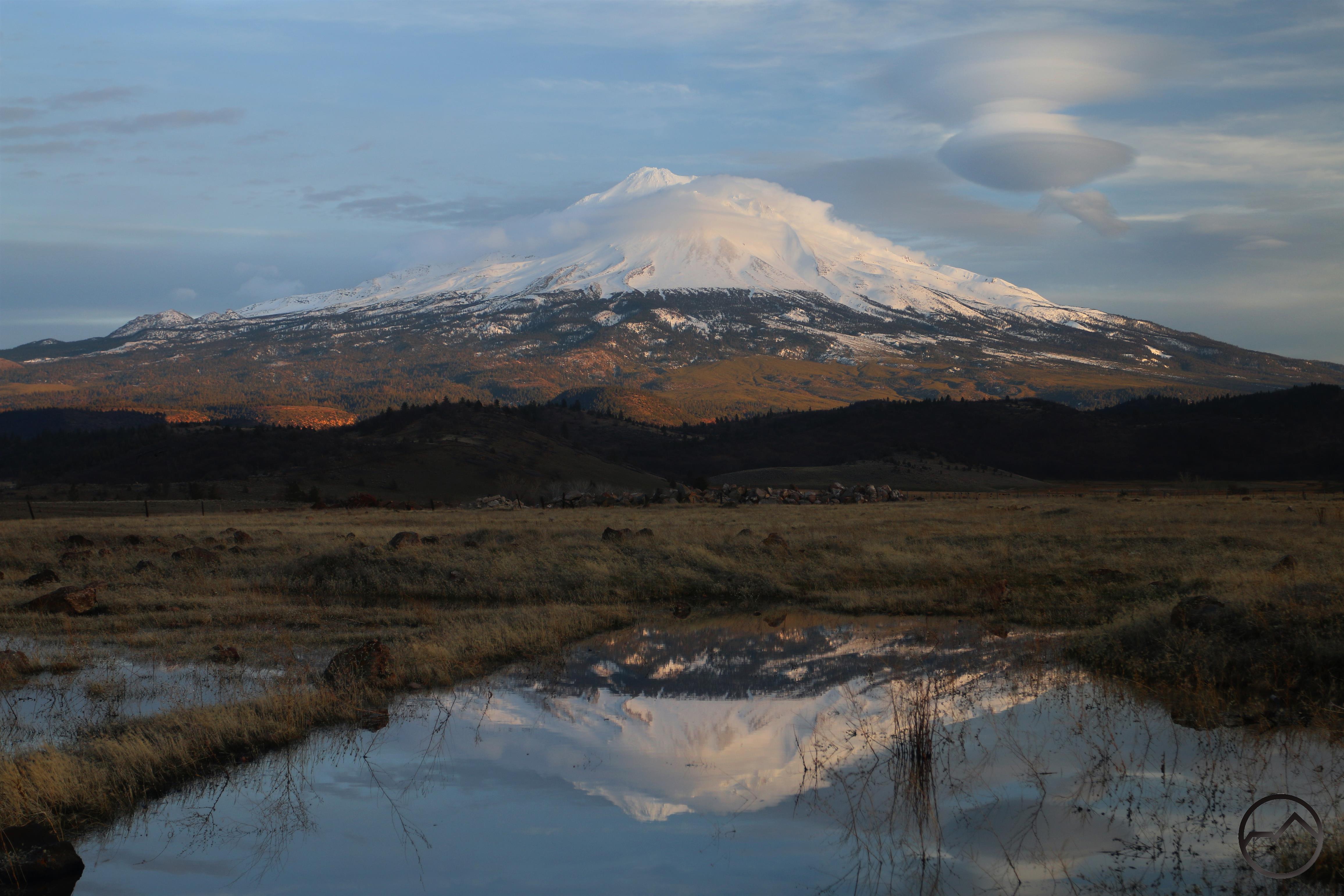
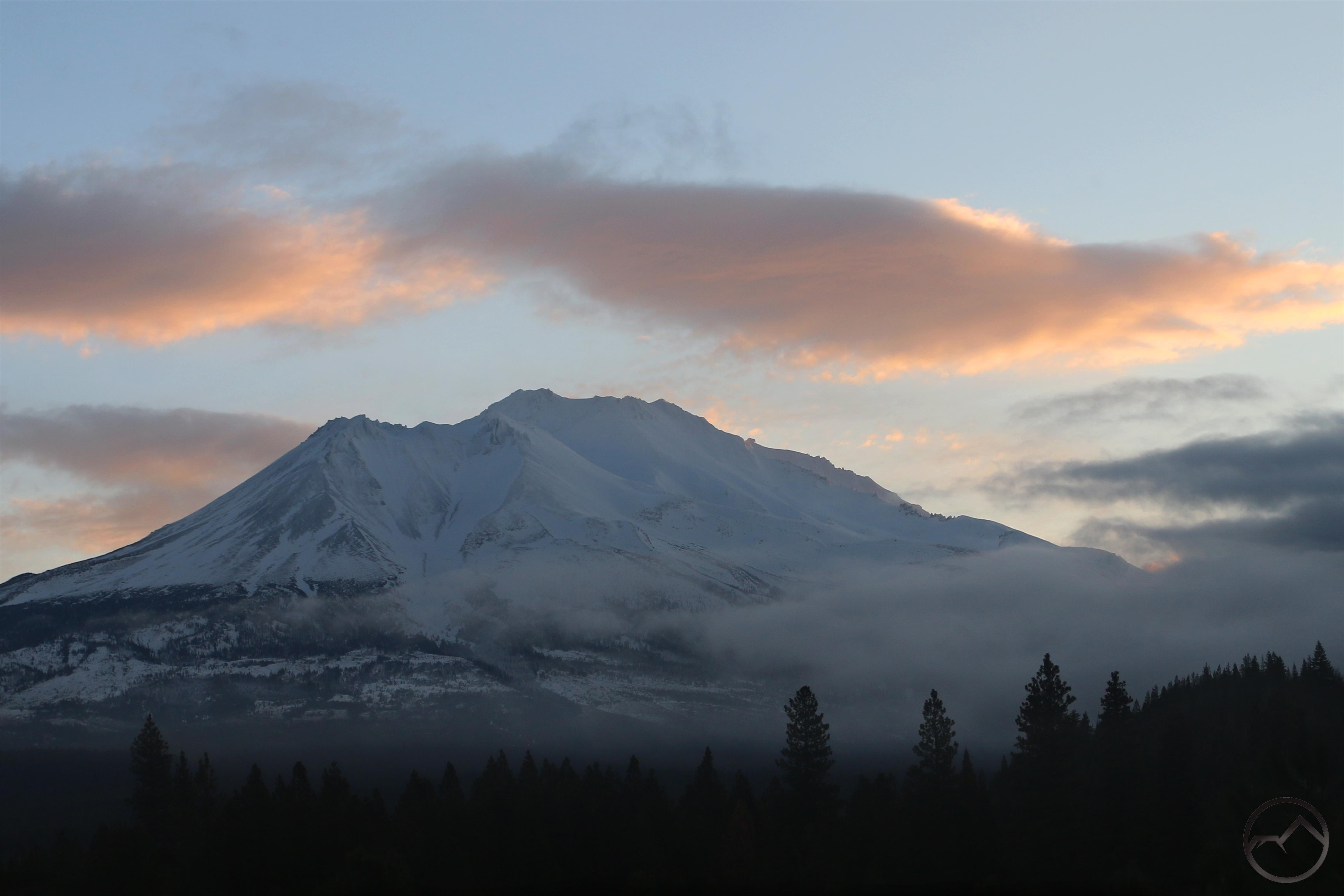
It was a pleasure to behold, both midday and also again as the sun began to set. With all the rain that fell, my favorite pool in the Shasta Valley finally returned after two year absence. I can finally get a few reflection shots from the north. Tonight’s sunset was especially spectacular by Mount Shasta standards but it was magnificent nonetheless. With all a sunny outlook for the weather, the next week promises a great opportunity to hit the area’s trails and enjoy several tremendous sunrises and sunsets!

Mount Shasta, The Castle Crags And The 1838-42 United States Exploring Expedition

Posted by bubbasuess on January 21, 2019
Posted in: Cascade Range, Castle Crags, Hiking, Mount Shasta. Tagged: United States Exploring Expedition. 2 Comments

Mount Shasta from the west. This was the unlikely perspective of the first known depiction of the mountain. 

In my last post on Castle Dome, I included an image of the first known representation of the Castle Crags. This sketch of Castle Dome and the Crags was one of the many contributions of the little known and largely forgotten United States Exploring Expedition. This expedition was easily the largest scientific effort made by the United States prior to the Civil War. The scope and achievement of this group of soldiers, sailors and scientists is astounding and it is remarkable that this grand adventure has lapsed into obscurity. The scientific discoveries and its effect on the antebellum geopolitical situation in North America were extremely influential. While there is much to recount about the expedition, the reason it is relevant to Hike Mt Shasta is its connection to Mount Shasta. It was on this journey that the first known depiction of Mount Shasta was made, introducing the mountain into the American psyche and establishing its reputation as one of the grandest mountains in the west.

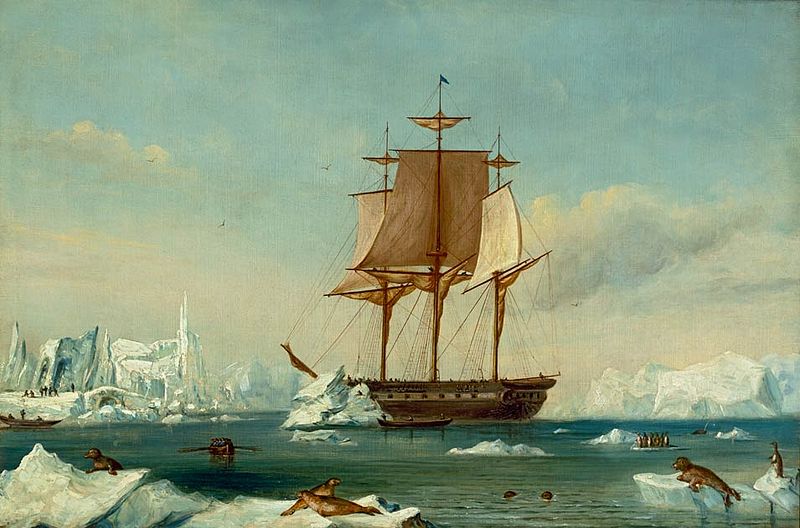
The USEE flagship USS Vincennes in Antarctica.

Although the entirety of the United States Exploring Expedition’s is worth recounting, that is not the purpose of this post. However, some brief details are important for context. The USEE consisted of 7 ships. They were staffed by military personnel but were accompanied by a scientific corp of 9 individuals, each with a particular specialty. This group set out from Virginia in 1838 and proceeded to cross the Atlantic before recrossing back to the southwest and an traveling around South America. Once in the Pacific, they continued up the west coast of South America to Peru and then turned west. The ships crossed the Pacific and traveled south to Antarctica before arriving at Australia. From there they explored several islands of Micronesia before reaching Hawaii.

It is at this point that the USEE’s journey becomes relevant to Hike Mt Shasta. From Hawaii, the expedition continued to Washington, where they explored Puget Sound. They then traveled to the Columbia River. Here the group split up. The ships proceeded to San Francisco Bay while an overland party headed south through the Willamette Valley. This group, which included artist Alfred Agate and geologist James Dana eventually reached Mount Shasta. From there they followed the Sacramento River down to Sutter’s Fort and hence to San Francisco Bay, where they rejoined the main part of the expedition. Having completed this survey, the USEE headed west across the Pacific again en route to the Philippines. From there, they passed through the South China Sea, across the Indian and Atlantic Oceans and ending their journey in New York.

The remarkable route of the United States Exploring Expedition.

Obviously the relevant part of this story is the overland expedition’s encounter with Mount Shasta and the Castle Crags. This was the first sighting of both landmarks by a scientific body. It is fitting then, that the first images of both the Crags and Mount Shasta are a result of the groups passage beneath these mountains. It was in the journal of geologist James Dana that we see the Crags depicted and it is the work of artist Alfred Agate that yielded the first image of Mount Shasta. Though these were sketches of the these two excellent features and not photographs, it was an important first step in recording their existence and making peoples in the eastern United States aware of them.

As is often the case with older drawings and paintings, the peaks are interpreted by the artist and our modern eyes may not always see them the way the original artists perceive them. However, I have a knack for recognizing geographic features and I reckon this might be a good place to put that to use. Having already included the image of Castle Dome in a previous post, that seems like a good place to start.

The Castle Crags as drawn by James Dana, 1841.

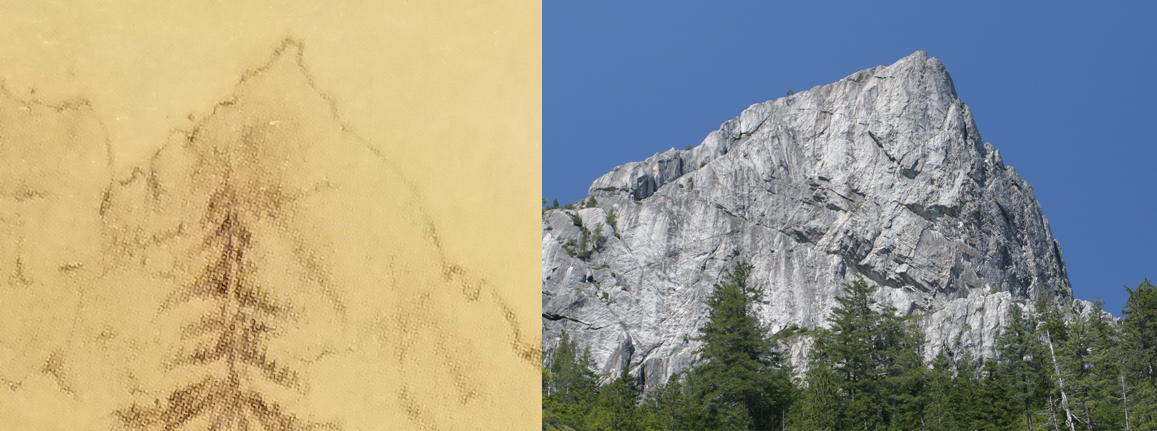
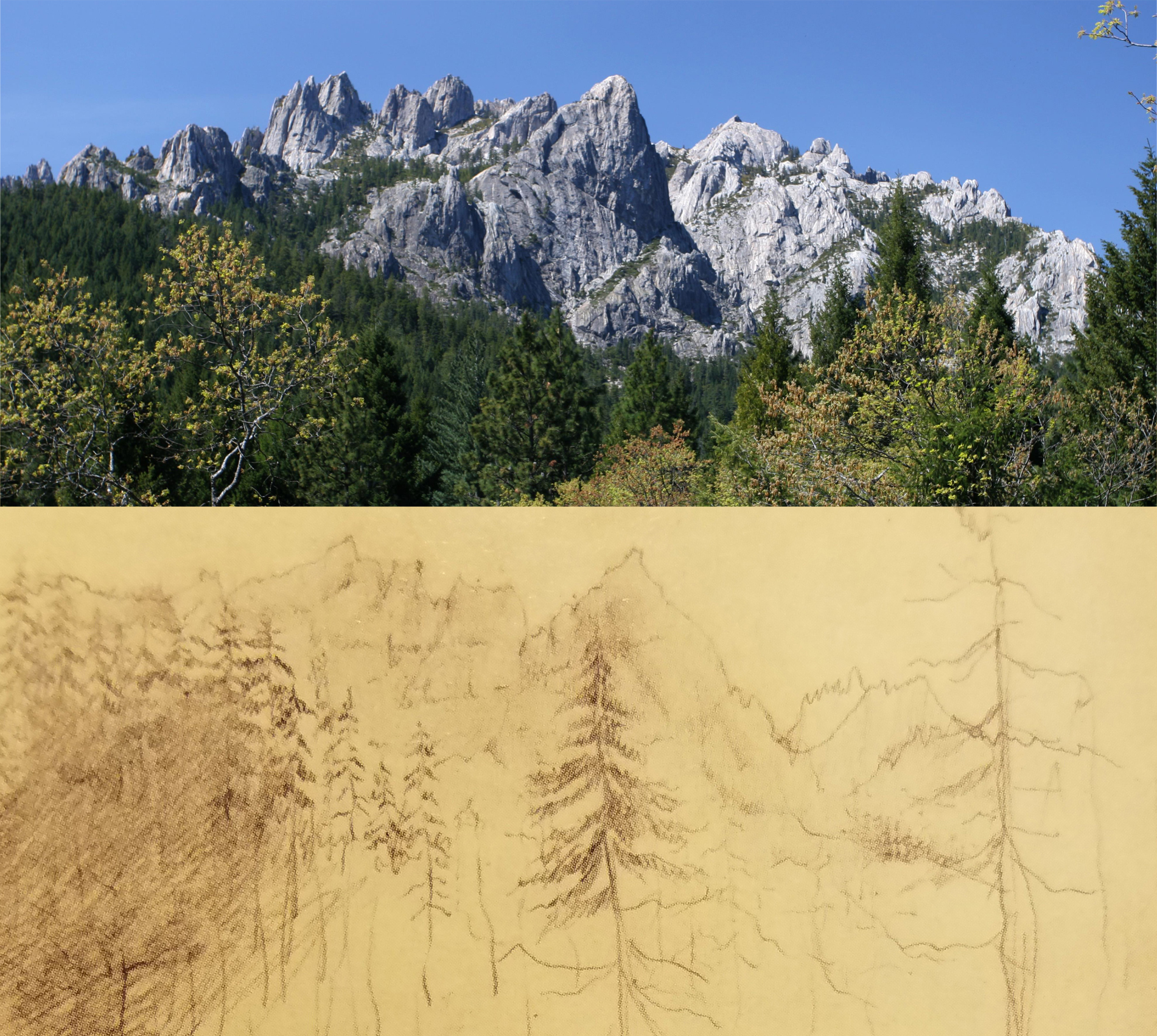
In some ways, recognizing Castle Dome and the Castle Crags in the image is easy. The particular giveaway is the shape of Castle Dome. The peak appears quite differently depending on which angle one views it. However, it is obvious that Dana was looking at the dome and the rest of the peak from somewhere near Root Creek. It seems likely to me that it was near that creek’s confluence with the Sacramento River. The shape of the peak from that perspective in unmistakable.

Though somewhat exaggerated, the contours of the peak are readily identified. The pointed summit, the bulge on the right side and the crags on the left side all match the sketch by Dana.

The rest of the spires of the Castle Crags also match those drawn by Dana. Especially apparent is the tower of Mt. Hubris (aka the Ogre) on the left. Even Six-Toe Rock, the lower peaks on the far left, are represented in the sketch. However, it should be noted that the peaks to the right of Castle Dome are not in proportion to the rest of the peaks in the sketch. Despite this, the drawing by James Dana is a fascinating piece of the region’s history.

The Castle Crags aren’t the only fantastic geologic feature noticed by the USEE. Mount Shasta obviously drew their attention and it was inevitable that one of them would have drawn the awesome peak. Unfortunately, at first glance, the representation of Mount Shasta seems to leave something to be desired. It does not seem to be the most impressive depiction of this most singular and majestic mountain.

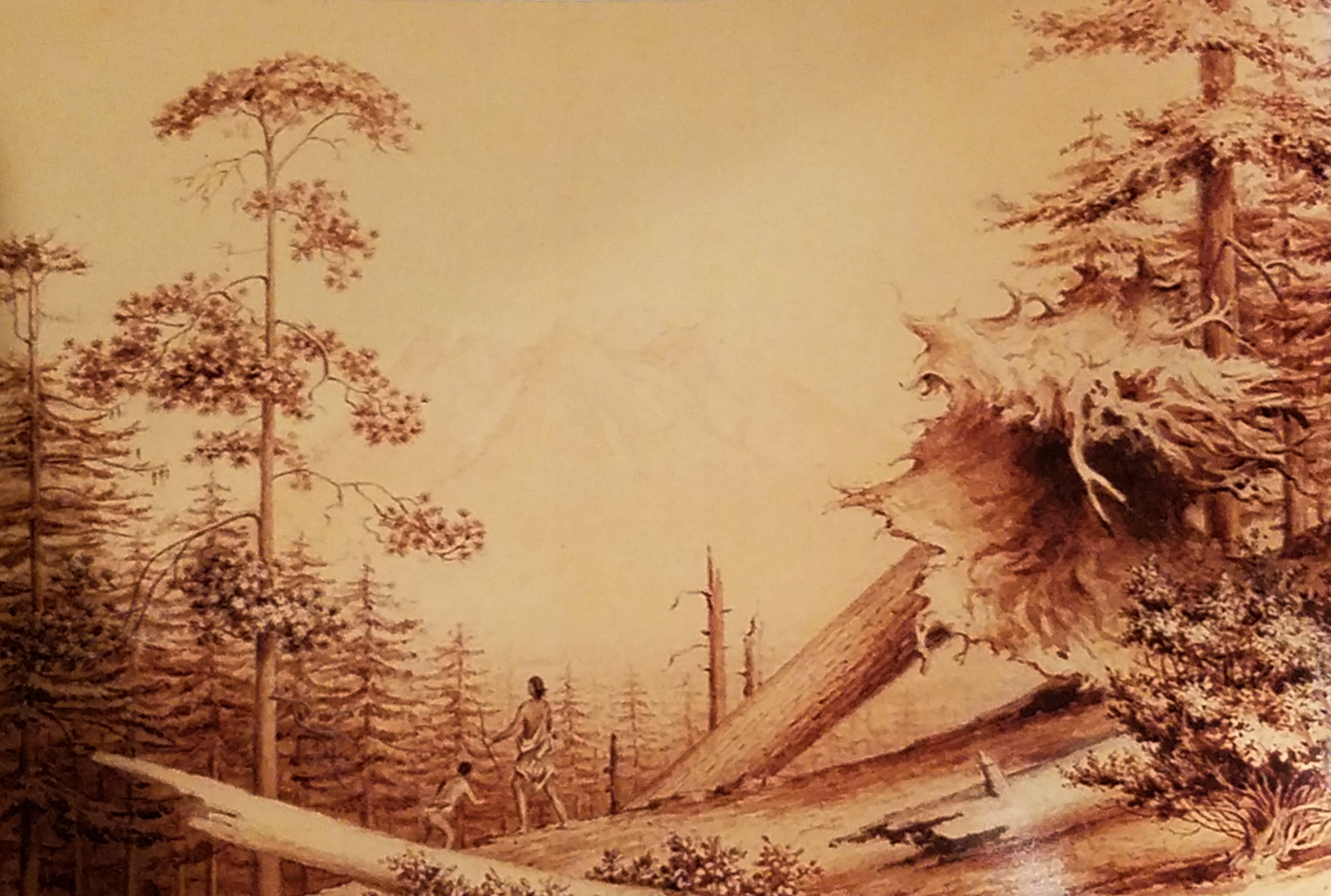
The first drawing of Mount Shasta by Alfred Agate, 1841.

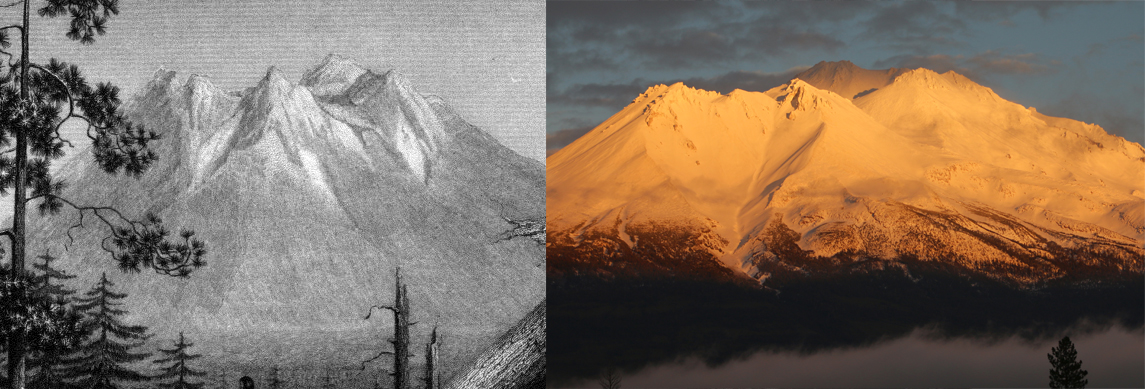
The drawing, which has shockingly detailed foreground, depicts a mountain that appears tall but somewhat unimpressive. This is compounded by the drawings again, which has caused the peak to fade somewhat. Moreover, the perspective on the mountain does not, at first blush, appear to look like Mount Shasta. These attributes tend to leave the image, as a whole, a bit underwhelming.  Thankfully, the image was recreated as an engraving with the help of Agate. The engraving, which identified the mountain as “Shasty Peak”, made the features of the original drawing more discernible.

With the mountain darkened and more obvious, it is possible to identify landmarks. There are 4 peak-areas in the sketch and without a sense of depth and scale which the sketch seems to lack, they all seem to be roughly the same elevation. Once aligned with an image from a similar perspective, things become clearer though. The two peaks on the left are the rugged outcroppings and spires of Shastina. The V-shaped canyon between them is large Diller Canyon. The two peaks on the right are the summit of Mount Shasta and the formation known as the Misery Cone. There is some staggered proportions amongst these peaks and, though it is not readily apparent in the engraving, it fairly straight forward which part of Mount Shasta is which.

This perspective on Mount Shasta is viewed from just north of Black Butte, near south Weed. Though I like to photograph Mount Shasta from there, it is generally not one of the more common views of the mountain. However, it is the first perspective of Mount Shasta to be documented and because of that, it has some historical value, however minor. Interestingly enough, there is some city land in that area that holds this view. It would be neat if a vista point with some interpretive displays and some picnic tables could be installed recognizing the historical value of this perspective on Mount Shasta.

The next time you are driving along I-5 and passing the south Weed exit, be sure to look up at Mount Shasta and remember that this was the area where the United Stated Exploring Expedition stopped in 1841 and observed the mountain. It is beautiful from every perspective but historical value of this vantage makes it noteworthy!


Castle Dome: Steadfast And Staggering

Posted by bubbasuess on January 19, 2019
Posted in: Castle Crags, Hiking, Mount Shasta, Trinity Divide. 5 Comments

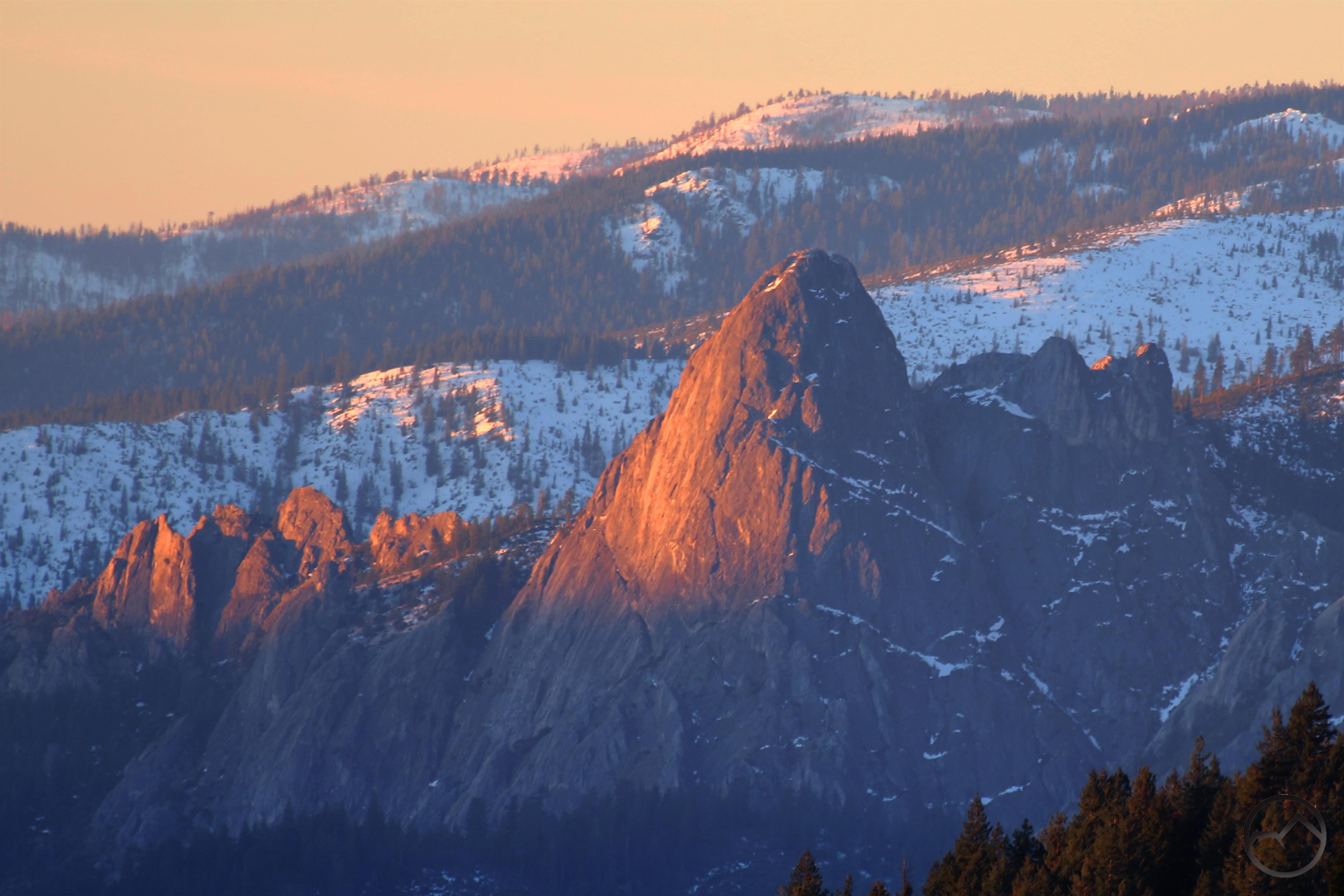
The awesome east face of Castle Dome catches the light of the rising sun.

After Mount Shasta, the Castle Crags are the most stunning feature in this part of California. The rugged collection of towering granite spires and domes is an awe-inspiring edifice looming majestically above the Sacramento River. Travelers coming up the Sacramento River Canyon on I-5 are treated to magnificent views of the Crags, seeing them close-up well before getting more than a peek at Mount Shasta. It is a grand introduction to the area and one that would be a premier attraction on its own, if a massive 14,000 foot volcano didn’t lie just to the north.

Though there are higher and more rugged peaks and spires withing the Castle Crags, only Castle Dome has earned itself and official name. It alone, of all the Castle Crags has the privilege of a distinct and universally agreed upon identity. Many other towers, walls and points withing the Crags have unofficial monikers, often bequeathed by climbers who scale the granite cliffs. These, however, are not widely known and not always widely accepted. Castle Dome, on the other hand, has long held its name and it is one that is known casually by locals, even by the non-climber and non-hiker. The reason for Castle Dome’s singular recognition is self-evident: it is spectacular tower that, though relatively short compared to the rest of the Crags, stands apart from the rest of the formation, has a distinct appearance and boasts an incredible wall on its east side. This is perhaps best enjoyed from the ought-to-be-iconic view at the base of Root Creek Falls, where the awesome waterfall plunges over a series of tiers while Castle Dome looms majestically overhead.

Castle Dome caught the attention of the first scientific expedition that passed through the Mount Shasta area in 1841. This sketch was drawn in 1841 by James Dana, the United State Exploring Expedition’s geologist. Castle Dome is the pyramidal peak above the tree in the center. It is a similar view to that to be had in the Root Creek Drainage.

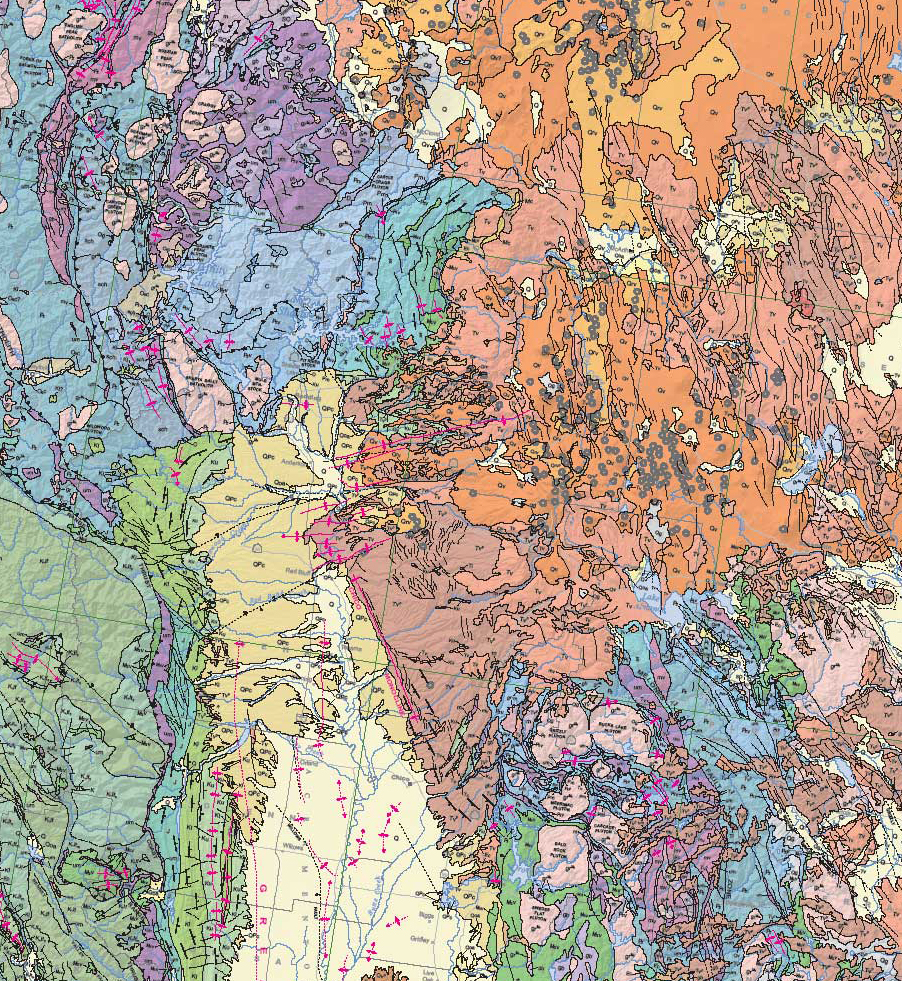
Castle Dome, and the rest of the Castle Crags, are a large granite pluton that has been extruded from within the earth amidst a sea of rocks composed of marine sediment. Consequently, Castle Dome’s appearance stands in sharp contrast to the other peaks of the Trinity Divide, the large mountain range that rises west of Mount Shasta. The appearance and composition of these peaks is very similar to the highest parts of the nearby Trinity Alps as well as to much of the Sierra Nevada. Indeed, it is to these famed mountains that the Castle Crags draw their most favorable comparisons. The northern part of the Sierra and the Klamath Mountains, of which the Castle Crags are a part, or nearly identical geologically. Whether a climber, hiker or general lover of mountains, the similarities between the Crags and the Sierra Nevada is almost unavoidable. This is certainly the case with Castle Dome. The Sierra is known for its domes (among many other excellent attributes) and Castle Dome would fit right into that notable company. Its contours are reminiscent of famed Sierra domes like Fin Dome or the giant Tehipite Dome. Though not as large, Castle Dome’s lines are equally pleasing.

In this section of the Geologic Map Of California, the similarities between the Klamath Mountains (upper left) and the Northern Sierra Nevada (lower right) are easy to spot. The blue areas with the large pink regions are seen in both ranges. The blue is marine sediment while the pink areas are granite plutons.

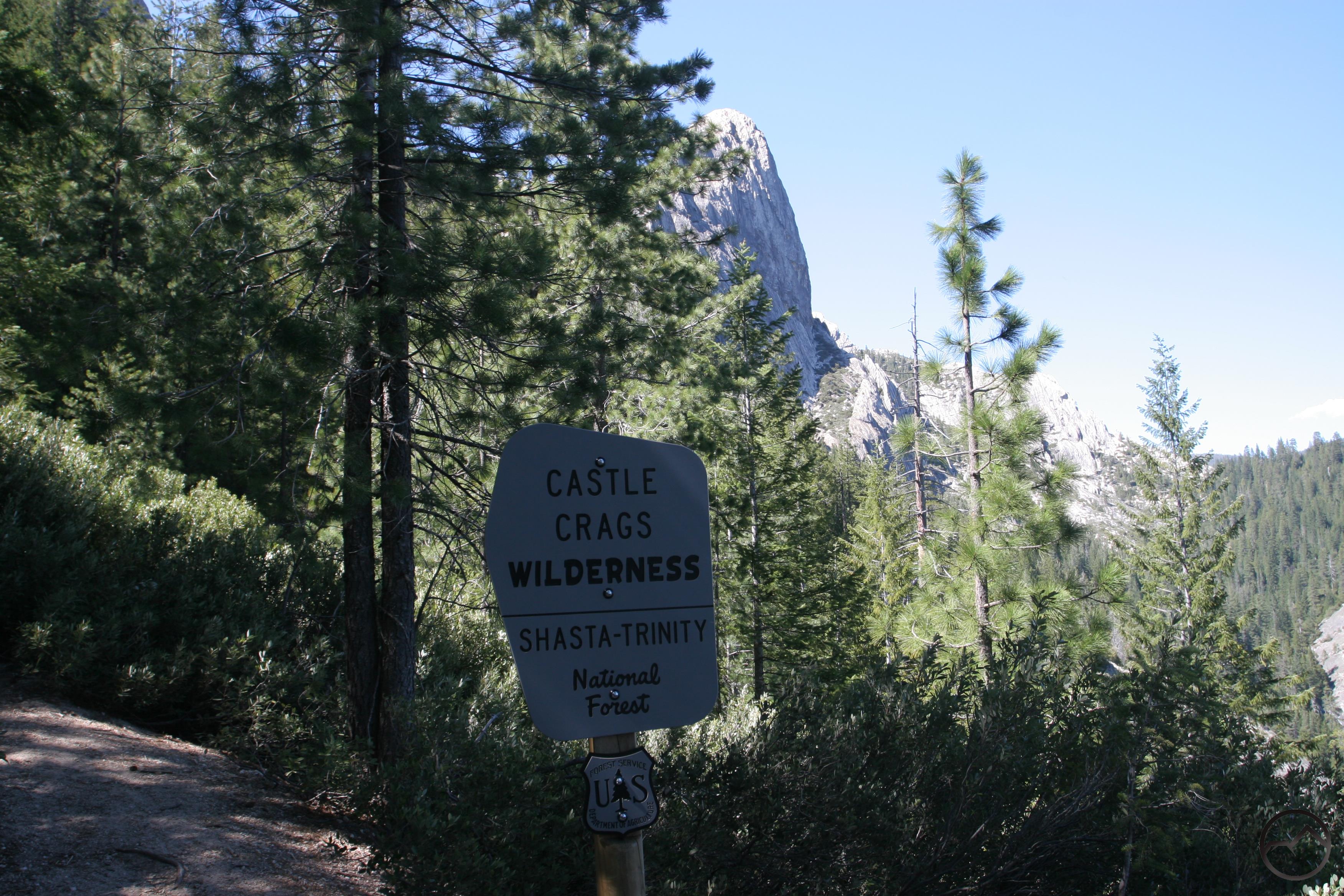
It is worth noting that, other than Mount Shasta and its subordinate peaks like Shastina and Red Butte, Castle Dome is the only officially named peak in the area that is located in a wilderness area. It is often thought of as being inside Castle Crags State Park. This misconception is easy to understand since all the approached to the Dome pass through the state park. In truth, Castle Dome and the vast preponderance of the Castle Crags are a part of the Shasta-Trinity National Forest. Consequently, the Crags and many nearby peaks and lakes were made a part of the 12,232 acre Castle Crags Wilderness. This wilderness consists of 2.5 alpine lakes basins and the incredible jumble of granite towers that is the Castle Crags. Its elevation extends from 2,600 feet along Root Creek to 7,200 feet at the summit of Harry Watkins/Soapstone Peak.

Due in part to the peak’s lower elevation and its separation from the rest of the towers of the Castle Crags, Castle Dome is easily the most frequented tower in the Crags. The Castle Dome Trail is the only maintained trail that accesses the granite high country of the Castle Crags. A large open bench separates the dome from the rest of the Crags. This trail offers hikers access to the base of Castle Dome as well as rock climbing areas on the spires that lie immediately to the west, on the far side of the bench. The iconic view of Mount Shasta from the trail up to Castle Dome is one of the most memorable images of the region. Hikers aren’t alone in appreciation of this area. Castle Dome has an almost legendary status with rock climbers, offering a variety of climbing routes that include the classic 8 pitch Dike Route. For more information on the climbs around Castle Dome, check out Grover Shipman’s excellent Mt. Shasta Area Rock Climbing.

Castle Dome deserves a larger reputation that it currently does. This is in large measure a product of the fact that the dome is a small part of a greater, spectacular whole. The Castle Crags as a single entity will always be greater than any one of its domes or spires. Nonetheless, Castle Dome stands apart, both physically but also in many other ways. It alone of all the peaks in the Castle Crags can be appreciated by hikers as well as climbers. It can be viewed from many trails, both around the Crags but also from other peaks, especially Mount Shasta. Its beauty, accessibility and spectacular features make it one of the most noteworthy peaks in the Mount Shasta area.

A Castle Dome Gallery (click to enlarge):

Dawn on Castle Dome.

Winter at the Castle Crags.
The Castle Crags alight at sunrise.

The Castle Crags are an isolated granite pluton. Castle Dome is on the center right.
Dawn view of the Castle Crags and Castle Dome loom above Castella.

Castle Dome’s awesome east face if a classic climbing route.
Vista Trail view of Castle Dome.

Classic view of Mount Shasta and Castle Dome.
Castle Dome looming large.

The back side of Castle Dome.
Granite slopes at the foot of Castle Dome.

The confluence of the Sacramento and Castle Creek. Castle Dome on the far right.
Summer at the confluence. Castle Dome on the far right.

Winter at the confluence. Castle Dome on the far right.

Castle Dome and the Castle Crags from the Sacramento River
The back side of Castle Dome (far right) is visible from the summit of the Grey Rocks.


Sunset view of Castle Dome and the Castle Crags.
Beyond Castle Dome and the Castle Crags, smoke billows up from the Delta Fire.

2019 Mount Shasta Winter Hiking Round Up

Posted by bubbasuess on January 17, 2019
Posted in: Cascade Range, Hiking, Klamath Mountains, Mount Shasta, Off Season Trails, Trinity Divide, Winter Trails. 6 Comments

Winter sunrise on Mount Shasta.

The winter season of 2018-2019 has been with us for a few months now. The cold has been consistent but the precipitation has been more erratic. That being the case, we have still gotten one large shot of snow, though this all melted off rapidly due to the warm rain that came immediately after. However, the amount of snow in the high country is copious right now so winter sports are in full swing in the mountain. This also means, of course, that the trails in the high country are snowed in. Thankfully, hikers looking to hit the trail still have numerous options for getting outside. The low country around Mount Shasta is filled with trails that offer spectacular views, interesting terrain and beautiful scenery. We are fortunate to have the unique positioning we have here in Mount Shasta, where many winter hiking opportunities abound. Many other mountain communities are not so lucky.
Scene along the Lake Siskiyou Trail.

This good fortune is, in large measure, a reflection of Mount Shasta’s geology. The volcano rises out of low valley that lies between the high mountain areas of the Cascade Range and Klamath Mountains. The valley floor itself is low enough that it often escapes the snow that falls at higher elevations. The rivers then rush south, falling lower in elevation still and avoid even more snow. Yet, too the north lies the rain shadow of Mount Shasta. Rather than great conifer forests, the area is desert, thanks to the mountain wringing moistures from the storms that move through. Here, the snow falls infrequently and the trails that explore this area offer hikers great views, lots of sunshine and a strikingly different kind of environment from the alpine areas immediately to the south.

Whatever you are looking for in a winter trail, it is hard to find a more diverse and spectacular setting than those around Mount Shasta!

The following are all articles that discuss off-season hiking opportunities in Mount Shasta. They can also be accessed from the “trails” drop down menu. Click to enlarge all images.

Three Winter Trails Near Mount Shasta City 

Mount Shasta City is blessed with a number of great paths within and just outside of its city limits. Three of the best are the Box Canyon, Ney Springs and Spring Hill Trail. These offer solitude, Mount Shasta Vistas, unique history, spectacular geography and even some excellent waterfalls. These all lie just minutes outside of town. Also, don’t forget that Mount Shasta City has some great short trails right in town! Read more here.

Box Canyon of the Sacramento River.
Inside the Box Canyon of the Sacramento
Faery Falls at high water.
Rocky Point on the Spring Hill Trail.

Winter Hikes On The Lake Siskiyou Trail

The Lake Siskiyou Trail is an incredible recreational resource just a couple minutes outside of Mount Shasta City. During the summer and fall, a loop trail encircles the lake. However, in winter the seasonal bridges over the Sacramento River are removed. While the loop can’t be hiked without fording the river (extremely dangerous after storms and during high runoff), several sections of the trail still make great out and back hikes. They feature beautiful forests, the lake itself and incredible views. Read more here.

Mount Eddy at the Sacramento River inlet.
Hiking along South Shore
Views from North Shore.
December

Winter Hikes On The Sacramento River

Most people in California think of the Sacramento River as the wide, winding waterway that lazily flows through the Central Valley. Here just below the headwaters, however, it is a swiftly flowing mountain river. Deep in its canyon, the lower elevation means it is often free of snow and the trails are easily accessed. Hiking along the river in winter is a treat that offers a taste of wild mountains for minimal effort. Read more here.

Hedge Creek Falls
Behind Hedge Creek Falls
Rapids Along the River Trail.
Along the Sacramento River Trail.

Winter Hikes In The Shasta Valley

North of Mount Shasta, the desert landscapes of the Shasta Valley offer a strikingly different environment than what is found along most trails in the region. The only conifers here are junipers and sagebrush is ubiquitous. For those that like the desert, the beauty of this area needs no explanation. For those less familiar, there is ample wildlife, beautiful rock formations and magnificent 360 degree views, crowned by some of the best views of Mount Shasta to be found anywhere. Unfortunately, part of the Yellow Butte Trail has been fenced off. There is still a lot of interesting terrain to explore on the Butte but be aware of land boundaries. Read more here.

Mount Shasta from the Haystack.
Herd Peak, Sheep Rock and Yellow Butte
Pluto Cave
Mount Shasta rises above Pluto Cave

Winter Hikes In The Shasta Valley Wildlife Refuge

At the northern end of the Shasta Valley lies a large parkland administered by the State of California. The Shasta Valley Wildlife Refuge was once a working ranch but is now a haven for a variety of wildlife, especially birds. It is also a refuge for hikers looking for incredible vistas. Though it can be closed at times during winter, there are still opportunities to explore it and once it is reopened completely, it is a place of great beauty, beckoning to be explored! Read more here.

Mount Shasta reflects in a pool by Steamboat Mountain.
Looking north toward the Siskiyous
The Cascade Crest seen from Trout Lake
Mount Shasta looms far beyond Trout Lake

Other parts of the Mount Shasta area are best hiked in spring, but often, during drier winters with less snow, some of these areas are also easily accessed during winter and offer stunning hikes for those looking for longer and more rugged outings. It must be noted that these areas have a higher chance of being inaccessible during snowy winters.

Spring Hikes In The Castle Crags

The Castle Crags are one of the most majestic mountain features in California. However, their lower elevation means they are often accessible when higher terrain is still smothered in snow. Still, the granite spires and great rock walls stand shoulder to shoulder with some of the most rugged terrain in the state. Though best hiked in spring, when the creeks are gushing and the weather, especially on the south side where most trails are found, is perfect, the winter may still be a good time to get out and enjoy this gorgeous mountain playground. Read more here.

Spires of the Crags
Mount Shasta seen from the Castle Crags

Spring Hikes On The Upper McCloud River

The McCloud River is one of the great attractions of the Mount Shasta area. With great fishing, a trio a awesome waterfalls, and beautiful forest surroundings, it is a popular destination. The waterfall along the river is a great hike and ought to be considered during winter if the access road is open. However, the McCloud River Trail follows the river for 15 miles and any section of this makes a great hike as long as snow is not covering the ground. Read more here.

Basalt gorge on the McCloud River
The McCloud River downstream from Cattle Camp.
McCloud River from the top of Middle Falls
Middle McCloud Falls

Spring Hikes On The Lower McCloud

The Lower McCloud River sees far less activity than the upper section. Separted by Hearst property and the McCloud Reservoir, the two areas are strikingly different. The upper section flows through volcanic terrain while the lower part passes through an outlier of the Klamath Mountain. The terrain is very rugged and can be difficult access during winter. However, when it can be reached, solitude a beautiful scenery await! Read more here.

Large cataract on the McCloud River
The McCloud River from the PCT crossing.
In the McCloud River Canyon
Squaw Valley Creek Falls
Some Interesting Goings-On In The Shasta Valley

Posted by bubbasuess on January 14, 2019
Posted in: Cascade Range, Hiking, Lenticular Clouds, Mount Shasta. Leave a comment

I had not planned on posting any more images of, well, anything around Mount Shasta until next weekend. I actually have a few hiking blog posts to put up, rather than the usual weather blogging I tend to do in the winter. I know it is lame to constantly put up pictures of snow and lenticulars but I love that stuff and I am always eager to write about it. So, that caveat having been issued, I just wanted to quickly put up some images of the neat clouds that were scattered over the Shasta Valley. More accurately these clouds were focused on the Cascade Crest but they were generally best viewed from the Shasta Valley. This great arid valley often offers clearer skies and makes a good place to see what kind of weather is going on even when the higher, lusher country is covered in clouds.

I knew there was a chance for another lenticular display when I saw the mountain that formed on Mount Shasta this morning. It was small but beautiful and made for a spectacular morning at the ski park. Sunrise on the mountain is a magical thing. The little lenticular present at sunrise grew to pretty impressive size by midday but it was consumed by low hanging clouds. Nonetheless, I was in the valley for the sunset and could see most of Mount Shasta below the clouds. It had a large “lenitculish” cloud hanging just to the north. More interesting however, were the large lenticulars that were in position over the other major peaks of the Cascade Crest. Willow Creek Mountain, the Goosenest and the Whaleback all boasted an array of interesting formations. The Goosenest in particular had a terrific lenticular tower sitting right overhead.

It was a nice display to close out this period of nice weather. Now we are supposed to get some more snow. It probably won’t be as much as the last round and will likely last about as long but I am eager for it to fall nonetheless!

Click to enlarge:

A nice stack over the Goosenest.
A variety of formations around Willow Creek Mountain.

The Whaleback is surrounded by volatile clouds.
A bulbous formation hovers above Mount Shasta.

36 Hours In The Life Of A Mount Shasta Lenticular

Posted by bubbasuess on January 12, 2019
Posted in: Cascade Range, Hiking, Lenticular Clouds, Mount Shasta. 9 Comments

Shadow and light dance around the lenticular above Mount Shasta.

The last 36 hours have seen some extraordinary lenticular activity around Mount Shasta. The clouds that formed around the mountain, beginning Thursday afternoon, produced some of the most impressive formations I have seen in a while, and are easily the most spectacular that have formed thus far this lenticular season, though there have been some excellent manifestations prior to these most recent specimens. However, despite the incredible nature of these clouds, for the most part, they proved extremely frustrating for photography. Their timing, the constant filtering of light and their seeming knack for dissipating at critical moments made them quite vexing. Nonetheless, it is better to have witnessed them, appreciated them and recognized the grandeur of Mount Shasta than for the days to quietly slip by without momentous events such as these.

I want to document how things manifested. As I have done in the past, I want to do so mostly through images and captions and try to limit the amount of prose. I hope this works and is an enjoyable read!

January
Unfortunately, around sunset the cloud dissipated to just a remnant of what had just an hour earlier dominated the view of Mount Shasta.

That evening, looking at the weather reports, I had a suspicion that the clouds might continue and build through the night. I got up early to check out what was there in the morning. I was not disappointed with what I found…at first.

By morning, the lenticular from Thursday had grown to an impressive stack hovering above the mountain. I expected a grand sunrise but it never came, since clouds to the southeast block all but just a trickle of the morning light. The scene never lived up to my hopes.

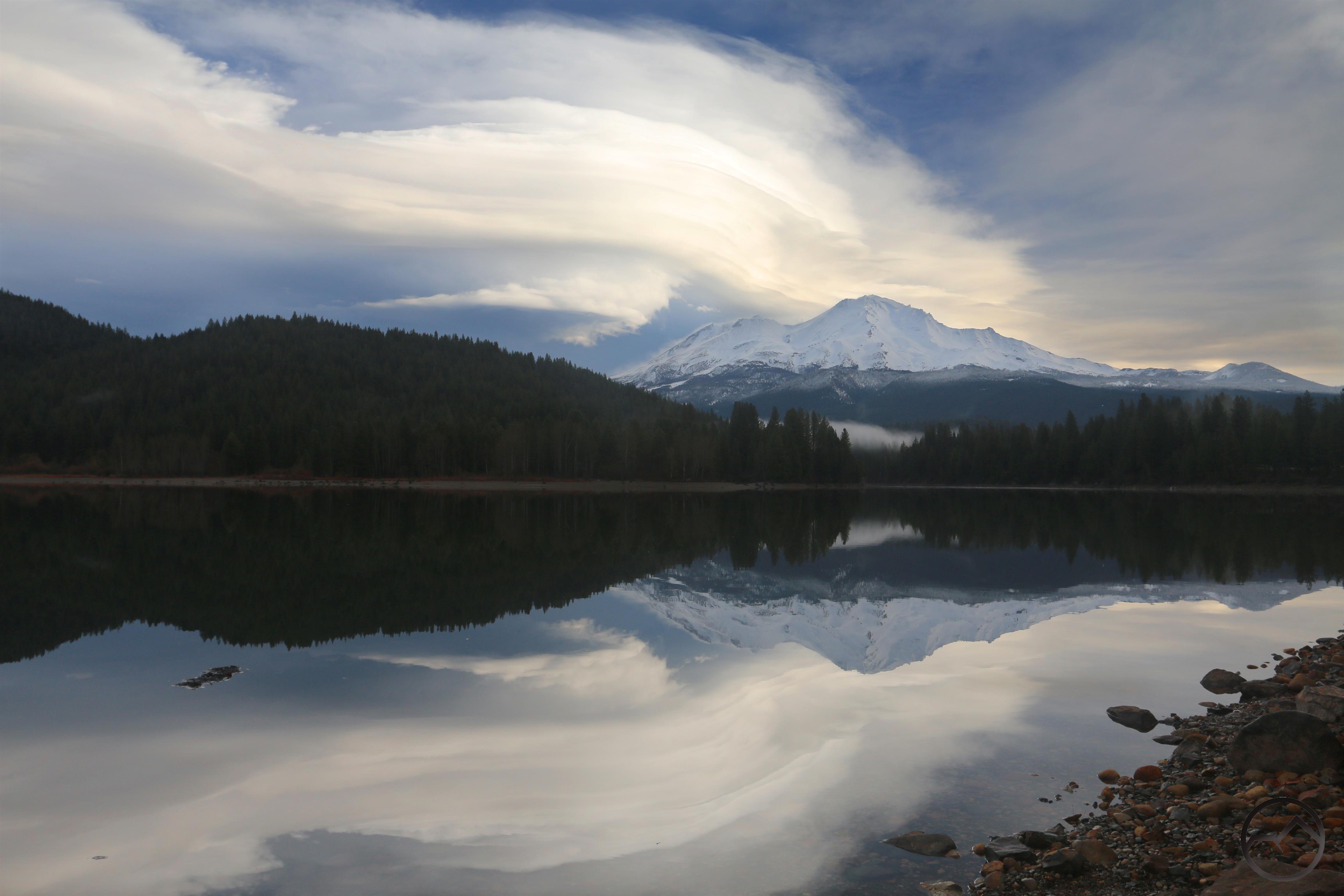
The cloud was redeemed in grand fashion as it neared midday. Though Mount Shasta never really caught any light, the cloud itself continued to grow and it glowed in the light of the sun, still climbing toward its noon apogee. I thought of heading up to Castle Lake to get some images of it but, seeing the stillness at Lake Siskiyou, I knew that a magnificent reflection awaited. I was not disappointed with what I saw.

From that point on, I headed out to Burney Falls with the outdoor education class I teach on Fridays. Even from out there, I could see the massive clouds above the mountain. On the way back Mount Shasta was lit up and the clouds were filled with light. I toyed with stopping in McCloud and capturing a shot. I opted not to in order to get the class back on time but now I wish I had.

After dropping the outdoor education class off, I decided to head up to Castle Lake for the sunset. On the way up there I paused to capture some images of Mount Eddy, which had its own set of interesting clouds.

While these could not compare with what was going on around Mount Shasta, the formations above Eddy were still worth noting. These were obviously connected to what was going on around Eddy’s larger neighbor. From there I headed up to Castle Lake. I was quite put out to find, upon my arrival, that Mount Shasta was no longer bathed in light. The lenticulars still looked excellent though. My hope was that, as the sun set, Mount Shasta would catch alpenglow briefly when the sun sank below the clouds currently obstructing its light. We’ll see…

With little warning, a stream of narrow clouds began coalescing as the current pushed it past Mount Shasta.

The stream of clouds, indicative of some serious turbulence, began expanding, blocking out the lower stack of lenticulars.

The alpenglow lingers on the the highest reaches of Mount Shasta.

The last vestiges of alpenglow.
The light totally gone from the mountain, the lenticular lit up again, though the view of it was heavily filtered. Strangely, a spot beneath it also glowed with purple light.

The whole spectacle was undoubtedly awesome but still frustrating. This was one of the twice-per-year lenticular events and I had missed really capitalizing on it. In spite of the missed opportunity, I am truly grateful to have been present for the majestic display of grand creativity.

The show over, I had a suspicion that the lenticulars might still be there in the morning once again. Since I am a glutton for frustration, I got up early once again, this time heading over to McCloud. The cloud was indeed still there. Its diameter was much smaller but it still formed a fantastic stack. However, the sun was not up and I did not know the disappointment that lie ahead.

Still, if the sun came up, the single disk would still be a nice image.

Of course, the cloud had other ideas and continued to shrink.
The last pitiful remains of a once staggering lenticular quickly disappear.

Adding insult to injury, the light was extremely filtered and the glow of the rising sun that should have lit up Mount Shasta was barely discernible. I was just about to pack up my camera when the sun finally climbed high enough for its light to shoot over the clouds. Mount Shasta erupted in light. Glad to at least see that, I was also hopeful some newly formed clouds might pull together to form another lenticular. This was not to be but I did not feel too gypped, as the entire spectacle the last 36 hours was grand. I am grateful to have been present for it and been witness to the birth, life and death to so sublime a phenomenon.

After Dance Lessons, One Fine Evening In Mount Shasta

Posted by bubbasuess on January 10, 2019
Posted in: Cascade Range, Hiking, Lenticular Clouds, Mount Shasta. Leave a comment

Awesome winter light, fresh snow and a lenticular cloud make for a spectacular mountain.

The storm that dumped snow and drenched the area in a deluge of rain having passed, today revealed a stark white Mount Shasta. Low clouds drifted through the area constantly and it wasn’t until the afternoon that the skies around the mountain really opened up, but once it cleared, the mountain glittered in the sunlight.

The real highlight came in the mid-afternoon. I took my daughter to her dance class and I had an hour to kill with her brothers before picking her up. As the kids ran around Sisson Meadow, a nice lenticular formed over the mountain. Making the scene even more interesting was the filtered light that gave Mount Shasta a dappled appearance. The light also highlighted a lot of Shasta’s features, especially those around Avalanche Gulch. Snow covered everything and the features that jutted out of the flanks to for the jagged landscape were thickly coated with rime ice.

Click and enlarge this one to see the detail.

After picking my daughter up, I thought it might be good to head north and check out the sunset from the Shasta Valley. The storm has resuscitated one of my favorite sunset spots where, during wet winters, it is possible to get reflections of the mountain when the wind is not blowing. Unfortunately, the wind is often blowing in the valley and this was the case tonight. Even more frustrating, the lenticular had faded into an uninteresting splotch in the sky. There would be no distinctive sunset tonight.

The lenticular was still there, but not much was left.

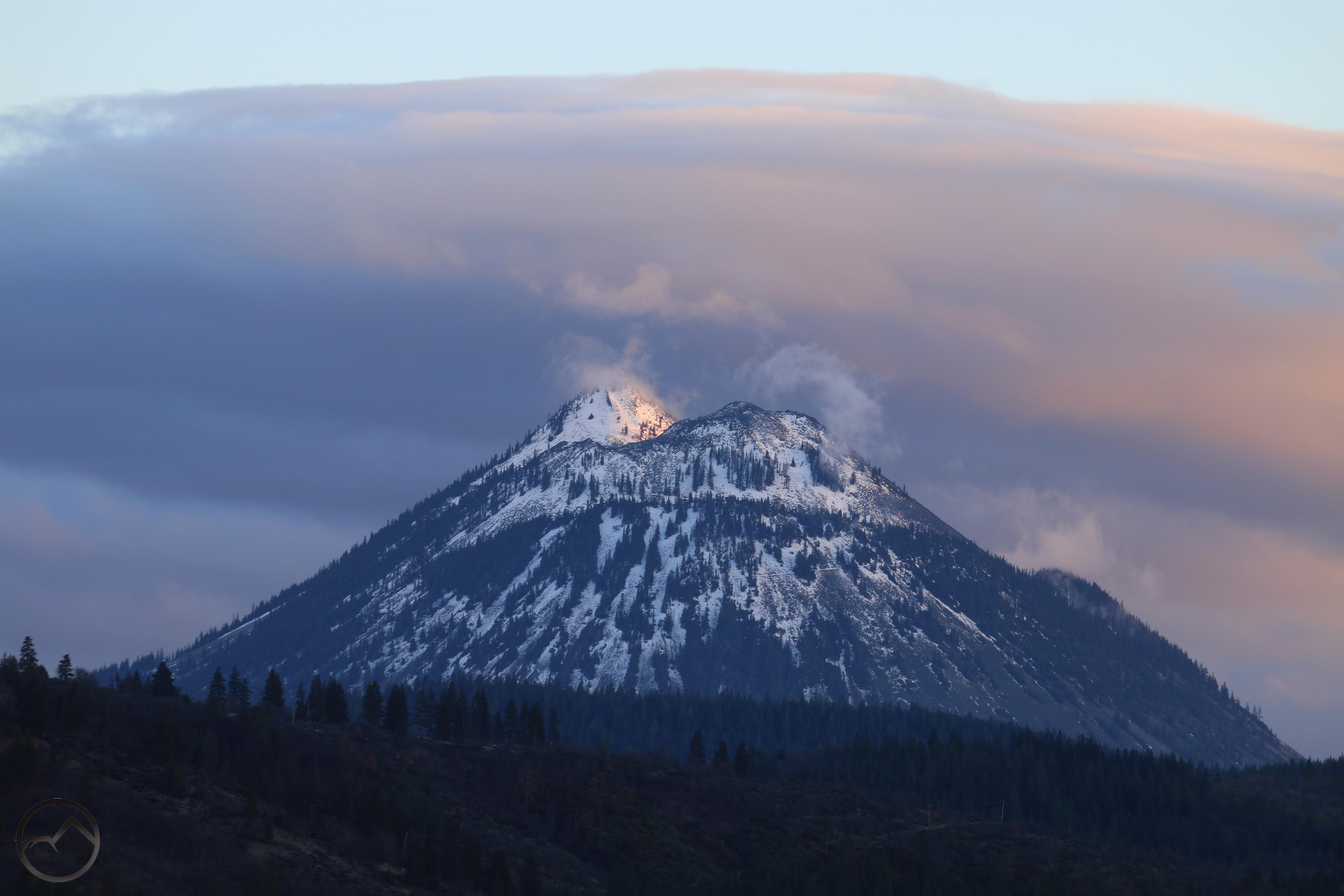
Despite the disappointment in not getting either a lenticular sunset or a nice reflection (or both), the conditions were still beautiful. Even Black Butte was looking unusually scenic, with just a hint of alpenglow on the highest point of the little mountain.

While all the other features were absent, Mount Shasta itself never fails to disappoint. In this case, the mountain was showing off its new snow with a billow plume being blasted off of Shastina. The plume itself was in Shastina’s shadow but it contrasted dramatically against the fledgling alpenglow that now drenched the higher flanks of Mount Shasta itself.

It was one of those scenes that just looked big. I was grateful to have a chance to watch it while all my kids climbed on rocks, through stones in the puddles and just ran around noisily in the Shasta Valley wind. It was nice break from the stormy weather and, all in all, a nice reminder of how awesome Mount Shasta really is.

Heavy Rain, Melting Snow And Awesome Mount Shasta

Posted by bubbasuess on January 10, 2019
Posted in: Cascade Range, Desert, Hiking, Mount Shasta. Leave a comment


Thursday morning at Mount Shasta. It was obscured from the south but the north offered a nice view.

While it snowed over the weekend, the last few days have seen a heavy rain in the low areas around Mount Shasta. The warmer temperatures plus the rain has resulted in a very rapid melt of the snow that fell just a few days before. It is actually quite shocking just how swiftly it has all gone:

Sunday afternoon
Wednesday afternoon

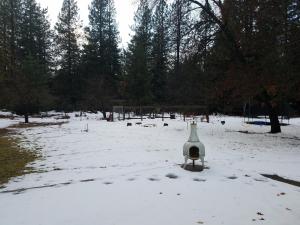
Incidentally, the tracks in front of the stove are from a bear that dropped by Tuesday night.

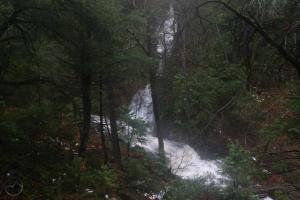
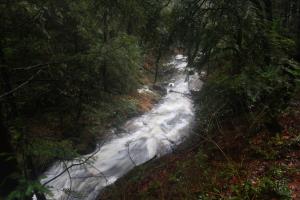
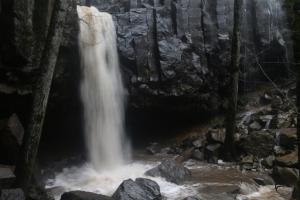
That much rain and the commensurate amount of melted snow means the creeks and rivers are very full right now. I decided to take my kids out on Wednesday to check the rivers out and see how things look. They were glad to get out of the house, especially if it meant getting soaked on a trail somewhere. The place to take kids and check out the river is naturally Hedge Creek Falls. The easy, action packed trail offers an opportunity to see a waterfall, a creek and the Sacramento River. All three were full and flowing in fine form. However, in the case of the dumping rain and making sure the kids weren’t doing anything to crazy, I forgot to take my camera off manual focus. Please pardon the crudity of these images.

Hedge Creek
Hedge Creek

Hedge Creek Falls
Sacramento River

The falls in particular were pretty impressive. Hiking behind them was a harrowing experience for my youngest, who was happy to have dad carry him through the cave. My other kids made the passage with aplomb and loved the roar of the fall.

20190109_104633

20190109_104633

After getting thoroughly soaked, we loaded back into the vehicle and headed north, back to our house. One of the things I love about Mount Shasta is how close we are to the high desert. I love the arid environment, in large part because there is a beauty all its own there and it invokes memories of New Mexico. Another, more practical reason, though, is the way the storms are often held back by Mount Shasta and the the rainshadow means clearer skies and sunlight. Wednesday was a classic example of this.

Mount Shasta is normally visible from this spot.

While it was storming violently around Mount Shasta and the rain coming down in a deluge, it was sunny in the Shasta Valley. The clouds were halted right around Mount Shasta and so, forming a dark rampart along the high country, left the valley in an arid rainshadow. The large puddles were obvious evidence of recent rain there but I was not surprised at all to find the sun shining down on the beautiful valley.

We set out to investigate the Shasta River, the smaller, northern counterpart to the Sacramento River. Not surprisingly, it was flowing quite well.


All this water is heading into Lake Shastina, recharging the much diminished reservoir. The water from the Sacramento is pouring into Shasta Lake, which has come up about 4 feet in the last few days.

This morning, the sky was blanketed by thick clouds south of Mount Shasta but once again, it was clear to the north and offered a nice glimpse of Mount Shasta. Skies are forecasted to clear for the rest of the day and then there will be a pause in the rain before it sets in again. It is a nice respite as the snow around the house continues to melt but we get some much needed precipitation. If you are itching to get outside, this afternoon might provide a window of clear sky and no rain. Take advantage while you can!

We Finally Got A Good Dose Of Snow In Mount Shasta

Posted by bubbasuess on January 8, 2019
Posted in: Cascade Range, Hiking, Mount Shasta. 2 Comments

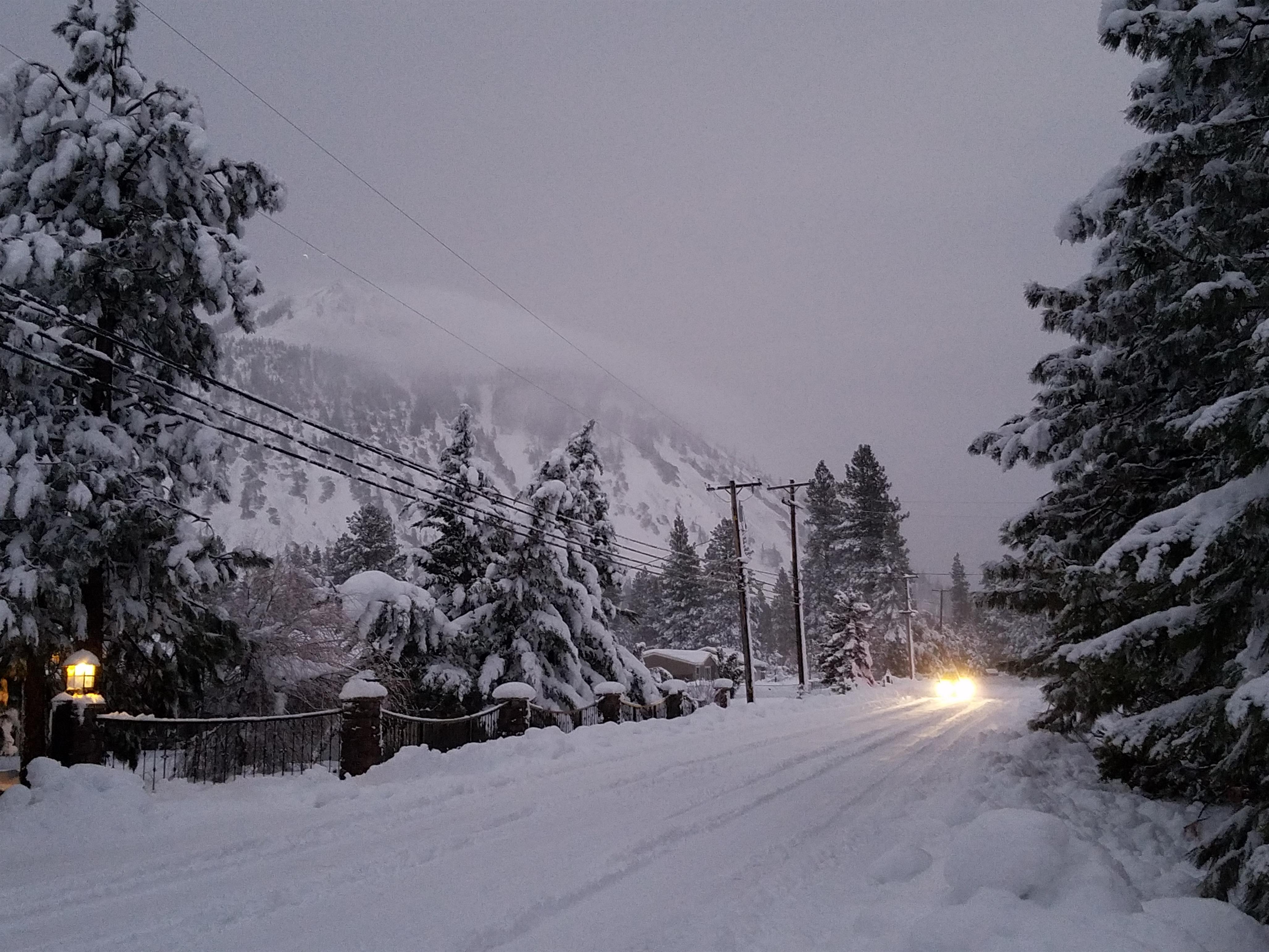
Black Butte presides over a wintry scene.

We got a little snow here in Mount Shasta over the weekend. Saturday started off blustery but dry and not a speck of snow on the ground. By the end of the day there 10 or so inches. Over the course of the night and the next day another 10 inches fell. It certainly was a good start to the winter season!

Saturday morning
Saturday afternoon
Sunday afternoon

We were socked in pretty good and the snow was heavy and wet. The kids were naturally excited to get out and play in the snow while I had the pleasure of clearing it off all of the surfaces that we need for life to function normally. This was made more difficult due to some technical difficulties but we got it done.


The snow level was down below Dunsmuir, so the whole south county got hit pretty good by the storm. When I was in town the cloud level lifted a bit and parts of Mount Shasta were just barely peaking out from under the canopy. It was a very white three days. Now, however, it is raining and the snow is already melting pretty rapidly. Up to 2 inches of rain are forecasted for today and possibly for tomorrow as well. With that much rain, plus melting snow, keep an eye on the rivers. They are going to be wild. Naturally, the higher elevations will continue getting snow even if it is raining down here. That much rain, falling as snow, bodes well for a solid snowpack this year. Let’s hope this is just the beginning of a wet winter!

When the clouds clear, I will try to get out and get some shots of the mountains, so we can see how the high country looks. Hopefully that will be soon!

December Was A Gorgeous Month Around Mount Shasta

Posted by bubbasuess on January 5, 2019
Posted in: Cascade Range, Hiking, Mount Shasta. 1 Comment

I don’t want to go to far into 2019 without pausing to look back at the last month of 2018 and recognize just how beautiful it was here in Mount Shasta. We didn’t get much snow but the mountain was white and the skies around it seemed to glow all the way across the spectrum. Moreover, we had some excellent clouds, both lenticular and other. I recognize that I was able to get out a little more often than I normally do but that does not change the fact that there were more reasons for me to get and capture the conditions around the mountain. I am sure that we have had months that were more consistently beautiful but this past December certainly ranks among the best in my memory.

I have gathered together a number of the images I took and arranged them chronologically. I hope everyone who sees this finds as much value in the beauty as I do!

Click to enlarge:

December


December

December


December
December


December

Posts navigation

← Older Entries
Newer Entries →
    • Recent Posts

      • Winter Shows Up When It Will
      • January Rolled By With Mud, Then Very Dry
      • Mount Shasta 2025 – A Year In Images
      • Mount Shasta On Either Side Of Christmas
      • Adrift In An Ocean Of Fog
      • December Has Been Spectacular Thus Far Pt. II (A Magnificent Lenticular)
      • December Has Been Spectacular Thus Far Pt. I
      • Lenticular Interrupted
      • A Stormy Wave And A Truchas Sunset
      • Aurora Lenticularis
    • Enter your email address to follow Hike Mt Shasta and receive notifications of new posts by email.

    • Archives

      • February 2026
      • January 2026
      • December 2025
      • November 2025
      • October 2025
      • September 2025
      • August 2025
      • July 2025
      • June 2025
      • May 2025
      • April 2025
      • March 2025
      • February 2025
      • January 2025
      • December 2024
      • November 2024
      • October 2024
      • September 2024
      • August 2024
      • July 2024
      • June 2024
      • May 2024
      • April 2024
      • March 2024
      • February 2024
      • January 2024
      • December 2023
      • November 2023
      • October 2023
      • September 2023
      • August 2023
      • July 2023
      • June 2023
      • May 2023
      • April 2023
      • March 2023
      • February 2023
      • January 2023
      • December 2022
      • November 2022
      • October 2022
      • September 2022
      • August 2022
      • July 2022
      • June 2022
      • May 2022
      • April 2022
      • March 2022
      • February 2022
      • January 2022
      • December 2021
      • November 2021
      • October 2021
      • September 2021
      • August 2021
      • June 2021
      • May 2021
      • April 2021
      • March 2021
      • February 2021
      • January 2021
      • December 2020
      • November 2020
      • October 2020
      • September 2020
      • August 2020
      • July 2020
      • June 2020
      • May 2020
      • April 2020
      • March 2020
      • February 2020
      • January 2020
      • December 2019
      • November 2019
      • October 2019
      • September 2019
      • August 2019
      • July 2019
      • June 2019
      • May 2019
      • April 2019
      • March 2019
      • February 2019
      • January 2019
      • December 2018
      • November 2018
      • October 2018
      • September 2018
      • August 2018
      • July 2018
      • June 2018
      • May 2018
      • April 2018
      • March 2018
      • February 2018
      • January 2018
      • December 2017
      • November 2017
      • October 2017
      • September 2017
      • August 2017
      • July 2017
      • June 2017
      • May 2017
      • April 2017
      • March 2017
      • February 2017
      • January 2017
      • December 2016
      • November 2016
      • September 2016
      • August 2016
      • July 2016
      • June 2016
      • May 2016
      • April 2016
      • March 2016
      • February 2016
      • January 2016
      • December 2015
      • November 2015
      • September 2015
      • August 2015
      • July 2015
      • June 2015
      • May 2015
      • April 2015
      • March 2015
      • February 2015
      • January 2015
      • December 2014
      • November 2014
      • July 2014
      • June 2014
      • May 2014
      • April 2014
      • March 2014
      • February 2014
      • January 2014
      • December 2013
      • November 2013
      • October 2013
      • September 2013
      • August 2013
      • July 2013
      • June 2013
      • May 2013
      • April 2013
      • March 2013
      • February 2013
      • January 2013
    • Categories

      • Boy Scouts
      • Cascade Range
      • Castle Crags
      • Desert
      • Echo Point
      • Glaciers
      • Hiking
      • How things came to be…
      • Klamath Mountains
      • Konwakiton Outdoor Designs
      • Lakes
      • Lenticular Clouds
      • Maps
      • Marble Mountains
      • Meadows
      • Mount Eddy
      • Mount Shasta
      • Mount Shasta History
      • Napa County
      • Off Season Trails
      • Pacific Crest Trail
      • Peaks
      • Rivers
      • Rock Climbing
      • Scott Mountains
      • Seldom Seen
      • Shasta Valley
      • Sierra Nevada
      • Siskiyou Mountains
      • Sonoma County
      • Spring Trails
      • sunrise
      • sunset
      • Trinity Alps
      • Trinity Divide
      • Truchas Ridge
      • Uncategorized
      • Water
      • Waterfalls
      • Wilderness
      • Wildflowers
      • Wine Country
      • Winter Trails
      • Yosemite
    • Meta

      • Create account
      • Log in
      • Entries feed
      • Comments feed
      • WordPress.com
    • Copyright © 2013-2024 by Bubba Suess

      DISCLAIMER: Any use of the information contained in this site by any and all persons is done at their own risk. The operator of this site shall be held harmless from any and all alleged claims, demands, causes of action, liability, loss, damage and/or injury to property or persons whether brought by an individual or other entity. This indemnification applies, without limitation, to all actions by an individual or other entity as a result of their use of information contained in this site.

    Blog at WordPress.com.
    Hike Mt. Shasta
    Blog at WordPress.com.
    • Subscribe Subscribed
      • Hike Mt. Shasta
      • Join 983 other subscribers
      • Already have a WordPress.com account? Log in now.
      • Hike Mt. Shasta
      • Subscribe Subscribed
      • Sign up
      • Log in
      • Report this content
      • View site in Reader
      • Manage subscriptions
      • Collapse this bar
     

    Loading Comments...