Hike Mt. Shasta

Exploring the Mount Shasta Region

  • Home
  • Trails
    • Mount Shasta Trails
      • Brewer Creek Trail
      • Clear Creek Trail
      • Gray Butte Trail
      • Green Butte Ridge Trail
      • Horse Camp Trail
      • North Gate Trail
      • Old Ski Bowl Trail
      • Panther Meadow Trail
      • South Gate/Squaw Meadow Trail
      • Whitney Falls Trail
    • Trinity Divide Trails
      • Blue Divide Trail
      • Castle Lake Trail
      • Castle Lake Shore Trail
      • Cliff Lake Trail
      • Deadfall Lakes Trail
      • Gray Rock Lakes Trail
      • Gumboot Trail
      • Heart Lake Trail
      • Porcupine & Toad Lakes Via Pacific Crest Trail
      • Seven Lakes Basin Via Pacific Crest Trail
      • Sisson-Callahan Trail
      • Soapstone Trail
      • South Mumbo Scramble
      • Tamarack Lake Trail
      • Toad Lake Trail
    • Castle Crags Trails
      • Burstarse Falls Via Pacific Crest Trail
      • Castle Dome Trail
      • Flume Trail
      • Lower Castle Crags Via Pacific Crest Trail
      • Root Creek Trail
    • Scott Mountains Trails
      • Bluff Lake & Cement Bluff via Pacific Crest Trail
      • Caldwell Lakes Trail
      • China Mountain Scramble
      • Cory Peak and Bull Lake via Pacific Crest Trail
    • Cascade Crest
      • Ash Creek Butte Scramble
      • Goosenest Trail
      • Juanita Lake Trail
      • Orr Lake Trail
    • Mount Shasta City Area Trails
      • Black Butte Trail
      • Box Canyon Trail
      • Gateway Trail
      • Lake Siskiyou Trail
      • Mount Shasta City Short Trails
      • Ney Springs Canyon Trail
      • Spring Hill Trail
    • Shasta Valley Trails
      • Black Lava Trail
      • Haystack Trail
      • Lake Shastina Trail
      • Pluto Cave Trail
      • Trout Lake Trail
      • Yellow Butte Trail
    • Sacramento River Trails
      • Dunsmuir Trail
      • Hedge Creek Falls Trail
      • Sacramento River Trail
      • Sims History Trail
    • McCloud River Trails
      • Ash Camp To Ah-Di-Na Via Pacific Crest Trail
      • McCloud River Falls Trail
      • McCloud River Preserve Trail
      • Squaw Valley Creek Trail
      • McCloud River Trail: Algoma Camp to Nitwit Camp
      • McCloud River Trail: Nitwit Camp to Cattle Camp Swimming Hole
      • McCloud River Trail: Cattle Camp Swimming Hole to Camp 4
      • McCloud River Trail: Camp 4 to Upper McCloud Falls
      • McCloud River Trail: Pine Tree Hollow Loop
    • Trails Further Afield
      • Trinity Alps Trails
        • Bear Lakes Trail
        • Billys Peak Trail
        • Boulder Creek Lakes Trail
        • Boulder Lake Trail
        • Canyon Creek Trail
        • Caribou Lakes Trail
        • East Boulder Lake Loop
        • East Weaver Lake Trail
        • Four Lakes Loop
        • Granite Peak Trail
        • Grizzly Creek Trail
        • Gulch Lakes Loop
        • Hidden Lake Trail
        • South Fork Lakes Trail
        • Stoddard Lake Trail
        • Stoney Ridge Trail
        • Tangle Blue Lake Trail
      • Warner Mountains
        • Emerson Creek Trail
        • Highgrade Trail
        • Patterson Lake Via Warner Summit Trail
        • Pine Creek Trail
        • Squaw Peak Trail
  • Articles
    • Trails By Area
      • Mount Shasta
        • Vistas, Meadows And Waterfalls: Three Best Hikes On Mount Shasta
        • The End Of The Road: Three Hikes In The Old Ski Bowl Area
        • Two Trails From Bunny Flat
        • Three Trails On Mount Shasta’s East Side
        • Mount Shasta’s Hummingbirds
      • Trinity Divide
        • Great Lakes: Top Five Lake Basins In The Trinity Divide
        • The Headwaters Of The South Fork Of The Sacramento River
        • Neglected Headwaters: Two Lesser Lake Basins On The South Fork
        • Gumboot Saddle: Two Hikes On The PCT
        • Descent Into Mystery: The Sisson-Callahan Trail
        • Mumbo Basin – Overlooked On The West Side
        • The Headwaters Loop: A Proposed Backpacking Loop In The Trinity Divide
      • The McCloud River
        • The McCloud River Trail
      • Shasta Valley
        • Jewels In The Desert
      • Scott Mountains
        • Great Scott! Two Scott Mountains Hikes On The PCT
      • Trinity Alps
        • Carubou Lakes: Trinity Alps On A Grand Scale
        • Switchbacks To Heaven: The Trinity Alps’ Stoney Ridge Trail and Four Lakes Loop
        • Trinities In Proximity: Two Trinity Alps Trails With Easy Access From Mount Shasta
        • Trails in the Carter Meadows Area
        • Trinity Alps Views of Mount Shasta
        • The Psychological Value Of The Trinity Alps
    • Waterfalls
      • Three Waterfalls On Mount Shasta
      • McCloud River Waterfalls
      • Sacramento River Waterfalls
      • Trinity Divide Waterfalls
      • Trinity Alps Waterfalls
      • Avoiding A Dry Whitney Falls
    • Off Season Trails
      • Three Winter Hikes Near Mount Shasta City
      • Winter Hikes In Shasta Valley
      • Winter Hiking In The Shasta Valley Wildlife Refuge
      • Winter Hikes On The Sacramento River
      • Winter Hikes On The Lake Siskiyou Trail
      • Spring Hikes In The Castle Crags
      • Spring Hikes On the Upper McCloud
      • Spring Hikes On The Lower McCloud River
    • Points Of Interest
      • Mount Eddy: Overshadowed, Underrated
      • Black Butte: Hiding In Plain Sight
      • Castle Dome: Steadfast And Staggering
      • Mount Shasta Hoodoos
      • Sacramento Scrambling
      • The Shasta River
      • The Castle Creek Watershed
      • Mount Shasta East Side Glacier View
      • 5 Fantastic Mount Shasta Vistas
      • 5 Highest Peaks Around Mount Shasta
      • 5 Best Hikes On Creeks And Rivers
      • 5 Interesting Footbridges
      • Three Spectacular Drive-To Sunset Vistas
    • North State Geography
      • Introduction
      • Seven Major Regions
      • The California Cascades
      • Klamath Mountains Pt. I
      • Klamath Mountains Pt. II
      • The Great Canyons Of Mount Shasta
      • Mount Shasta, Timberline, And The Relative Size Of Cascade Volcanos
      • Four Eruption Cones Of Mount Shasta
      • Mount Shasta’s Medial Moraine
    • Northern California Review
      • North Table Mountain
      • Lakes Basin Recreation Area
      • Eastern Sierra Fall Color
      • Sonoma County
      • Central Sierra Nevada
      • Orland Buttes
    • Seldom Seen
      • Ash Creek Falls
      • Mud Creek Canyon
      • Lower Mud Creek Canyon
      • Diller Canyon
      • Lower Cascade Gulch
      • The Grey Rocks
      • Castle Creek
      • Upper Wagon Creek
      • Fawn Creek Canyon
      • Confluence of the Sacramento River and Castle Creek
      • Upper Klamath River Canyon
      • Hole In The Ground Geologic Area
      • Ash Creek Butte Fossil Rock Glacier
    • Mount Shasta History
      • Vantage Lost: The Everitt Memorial Vista
      • A Yosemite-Mount Shasta Connection
      • Whitney – What’s In A Name?
      • Mount Shasta Area and the 1838 Exploring Expedition
      • A 19th Century Engraving Of An Epic Mount Shasta Vista
      • Vintage 1907 Color Photos
      • A Misleading Painting
      • A Mysterious Painting
      • A Mysterious Painting Pt. II
      • Stereographic Mt. Shasta
      • Year One Of Hike Mt Shasta
      • Year Two Of Hike Mt Shasta
      • Year Three Of Hike Mt Shasta
      • Year Four Of Hike Mt Shasta
      • Year Five Of Hike Mt Shasta
      • Year Six Of Hike Mt Shasta
      • Year Seven Of Hike Mt Shasta
    • Image Galleries
      • Mount Shasta Trails Gallery
      • Mount Shasta Sunrise Gallery
      • Mount Shasta Sunset Gallery
      • Lenticular Cloud Gallery
      • Mount Shasta NON-Lenticular Clouds
      • Mount Shasta Reflection Gallery
      • Telephoto Gallery
      • Mount Shasta Area Fall Color
      • Castle Crags Gallery
      • Waterfalls Gallery
      • Trinity Divide Lakes Gallery
      • Mount Shasta Area Rivers Gallery
      • Shasta High Desert Gallery
      • Mount Shasta GIF Gallery
    • Random Notes
      • Revew: Three Mount Shasta Trail Maps
      • A Mount Eddy Wilderness?
      • New Land Additions For The Castle Crags
      • Book Plug: Mount Shasta Area Rock Climbing
      • Exile: How I Came To Love Wilderness
  • Mt. Shasta Trail Map
  • Blog
  • About/Contact
  • Links
  • Truchas Ridge

Triumph Of The Forest Service Wilderness Aesthetic

Posted by bubbasuess on November 6, 2018
Posted in: Cascade Range, Hiking, Mount Shasta, Wilderness. 8 Comments

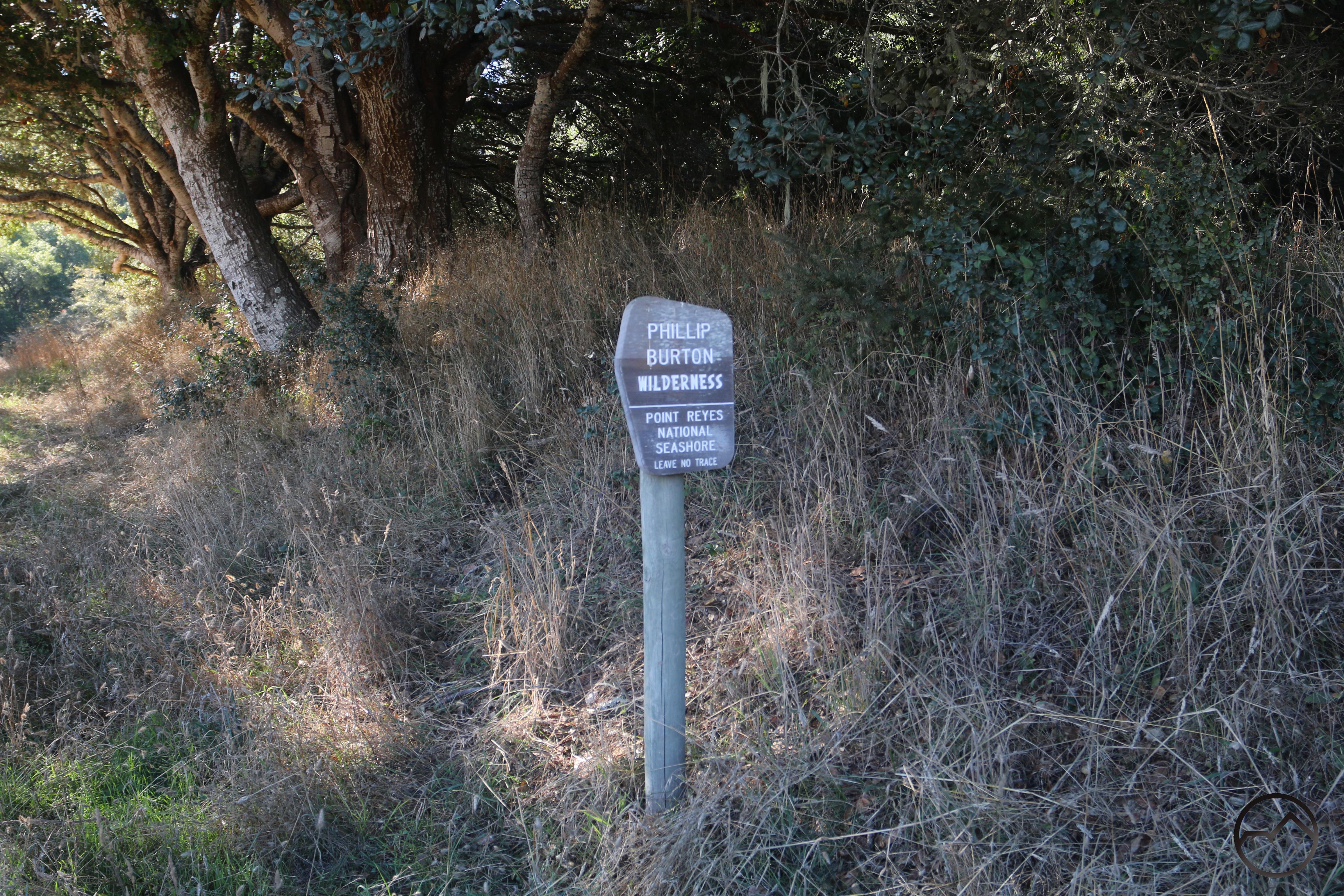
A sign along the Bear Valley Trail at Point Reyes National Seashore marks the wilderness boundary.

In 1964, Congress passed the Wilderness Act, which enshrined as law the ability of congress to designate land as official wilderness areas, which were to, henceforth, remain in the natural, primeval and wild state. The law defines wilderness as such:

A wilderness, in contrast with those areas where man and his own works dominate the landscape, is hereby recognized as an area where the earth and its community of life are untrammeled by man, where man himself is a visitor who does not remain.

When the law took effect, it was initially limited to lands that were administered by the United States Forest Service. With a few exceptions, most of the first class of wilderness designations were small (in California, what is now the John Muir Wilderness was a major exception to this rule) and they were fairly few and far between. The sparseness of the wildlands was corrected 20 years later by the 1984 California Wilderness Act. Many other states had similar wilderness legislation moved through Congress, adding many new wilderness areas and expanding several pre-existing ones. Here in the Mount Shasta area, this included the Mount Shasta, Castle Crags and Trinity Alps Wilderness Areas.

Along with this came the addition of wilderness areas that were not administered by the USFS. Land in national parks, as well as as tracts administered by the Bureau of Land Management and Fish and Wildlife Service were all brought into the wilderness system. However, while the lands were to be managed the same way, each agency was left to their own devices to determine how they would mark the boundaries of the wilderness areas.
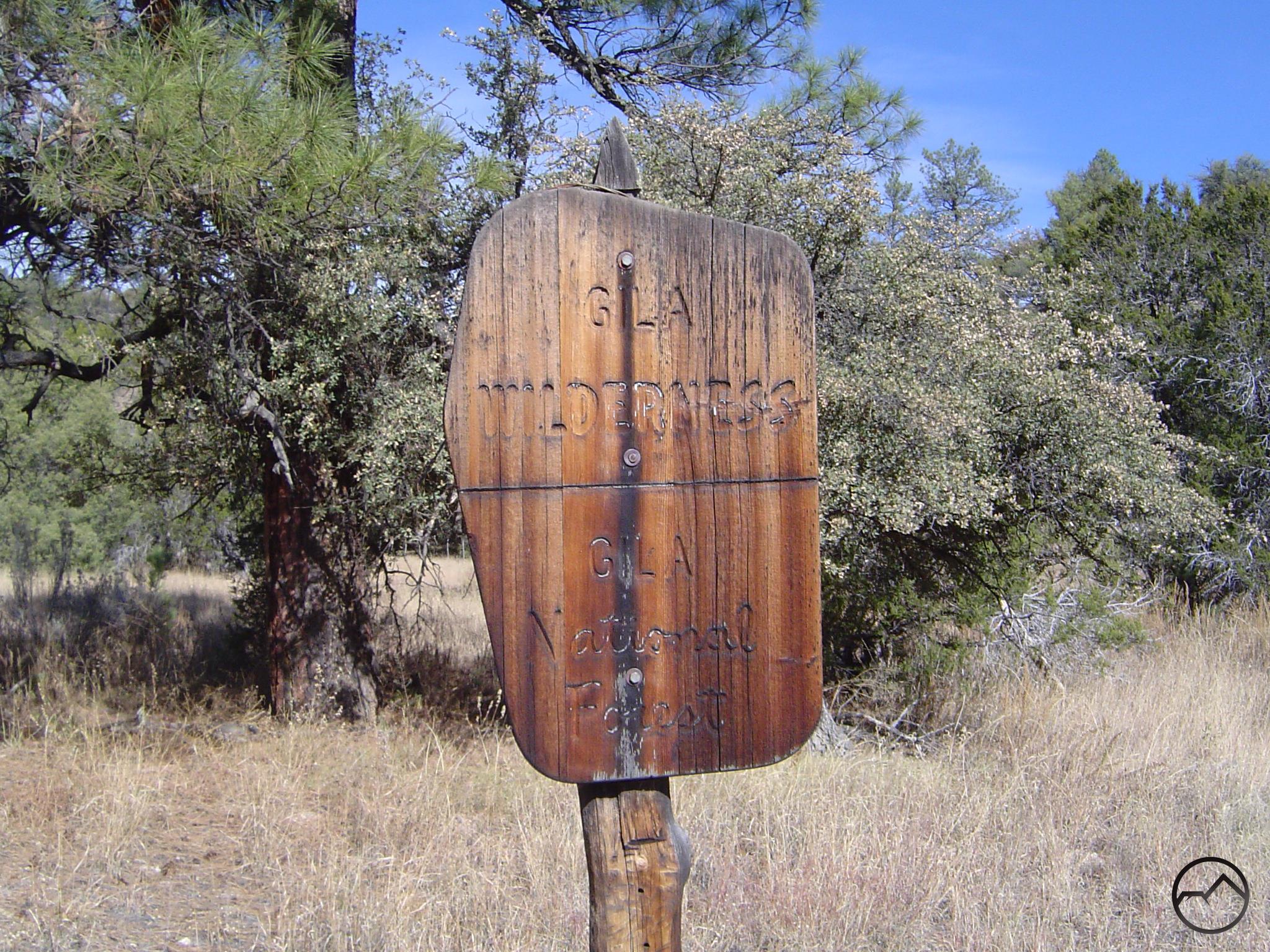
Gila Wilderness, New Mexico

Having had a head start, the USFS had developed a unified aesthetic no matter which national forest or wilderness area one was in. All the wilderness signs were pentagonal in shape, used the same font and generally contained the same information, which consisted of the name of the wilderness area and the national forest that administered it. These signs were typically wood, though metal and even some weather-resistant plastics have been used. Whether hiking in California, New Mexico or Minnesota, the hikers entering a wilderness area administered by the USFS are all greeted by similar signs marking the arrival at the wilderness area. Over time, these signs have developed a following of their own and are welcome sights for hikers looking forward to the beauty that lies within the wilderness.

This is definitely not the case for signs marking wilderness boundaries on lands controlled by other agencies. If they even have a sign, it is often with a paucity of words or is often too wordy and waxing needlessly on what lies beyond. Overall, they lack an aesthetic. This is a great to frustration to some, who look forward to the journey through fabled wildlands like Yosemite and want to see the visual appeal of the famous USFS mark the beginning of their path through the wilderness.
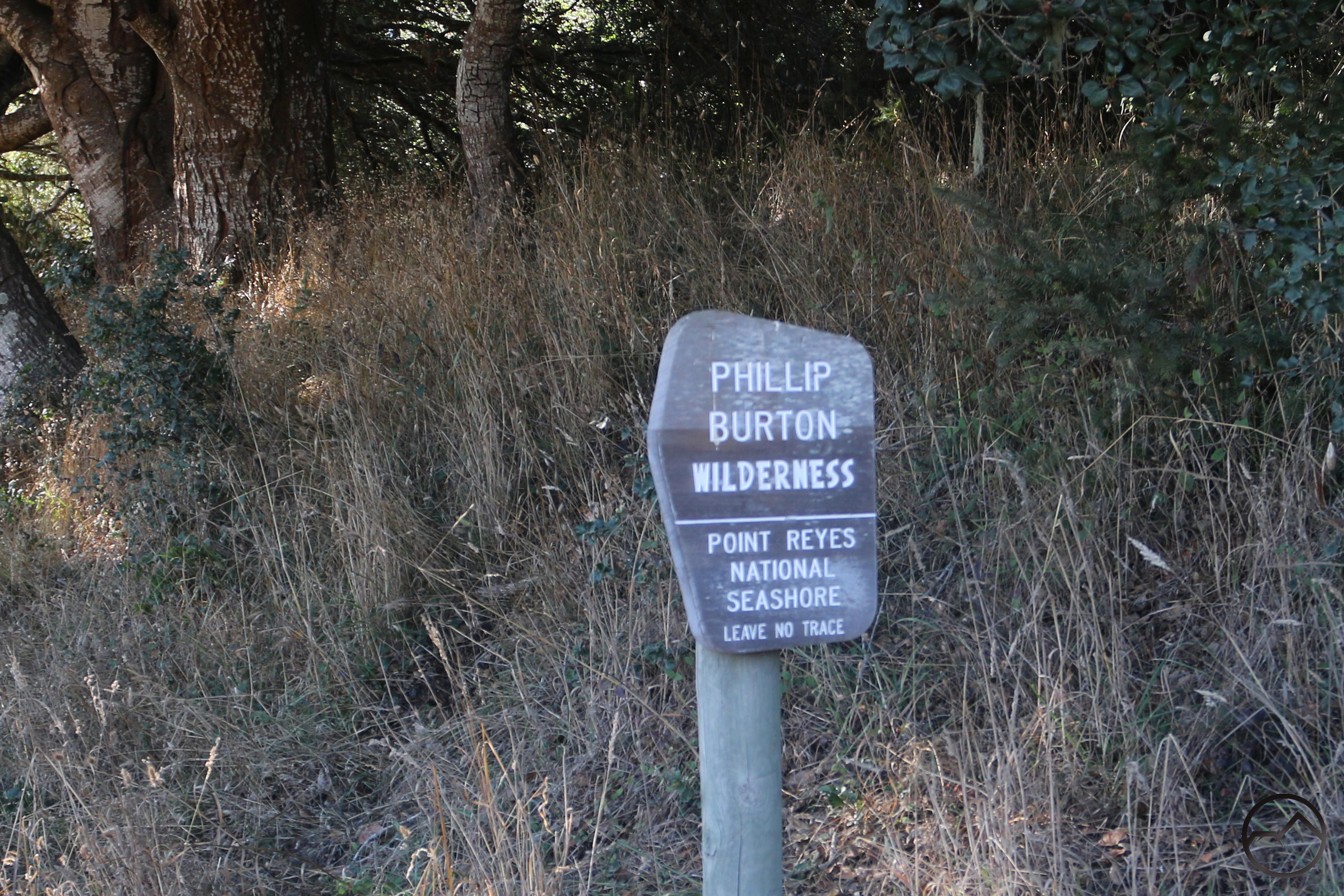
All of this is to say that it seems, finally, that the USFS wilderness aesthetic may finally be winning out. At Point Reyes, the sign marking entry into the Phillop Burton Wilderness (named for a congressman instrumental in bringing about Point Reyes National Seashore) is now modeled after those used by the USFS. For those of us idiosyncratic types who look for these kinds of things, it comes as a bit of a shock to see such a sign at a place operated by the National Park Service. It is a happy development in spite of its unexpected nature. What remains to be seen is whether this is the work of a lone wilderness nut (like me) or is the beginning of a policy executed throughout the lands administered by the NPS. Hopefully it is the latter. This type of sign is in keeping with the NPS Rustic aesthetic that has dominated the national parks for almost a century.

While the signs are fun to keep track of, what is most important is that the wilderness be protected and that it retain its wild character. This requires strong enforcement, robust education in wilderness and Leave No Trace ethics and responsible use of social media. The irony of this last is not lost on me…

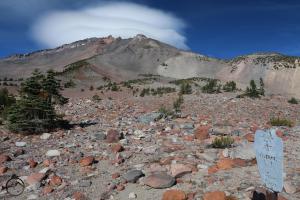
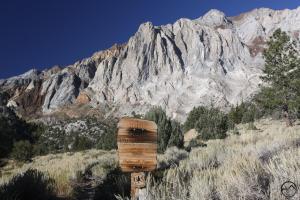
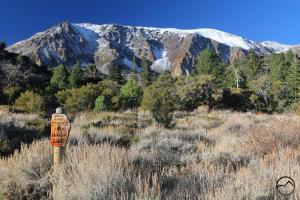
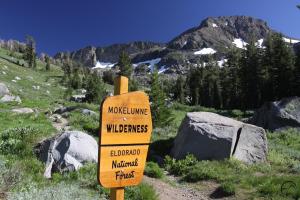
For those interested, here is my gallery of some of the wilderness signs I have seen in the last few years. For those who are extra curious, here are my four favorites I have observed thus far. While many are located in forests, marking the boundary set via political means, every now and then the trail and boundary meet in a spectacular setting. I would be interested to hear which you think is the best!

Mount Shasta Wilderness
John Muir Wilderness

Ansel Adams Wilderness
Mokelumne Wilderness


About The View From The Old Ski Bowl: Most Of It Burned

Posted by bubbasuess on October 28, 2018
Posted in: Boy Scouts, Cascade Range, Hiking, Mount Shasta. Tagged: Carr Fire, Delta Fire, Hirz Fire. 1 Comment

The magnificent view south, from the Old Ski Bowl.

Last weekend, after leading the Cub Scouts on a hike through Panther Meadow, we headed up to the Old Ski Bowl to watch the sun set, drink hot chocolate and enjoy the spectacular scenery. It was spectacular as always but it was made even better by the thin layers of smoke from the still smoldering fires. The slight haze allowed each layer of the mountains to be highlighted. Even better, it caused the color gradient in the sky to be especially dramatic.

While everyone was drinking their hot chocolate, staying warm and enjoying the scenery, a ran up to the edge of the Old Ski Bowl’s picnic area, set up my tripod and captured this fantastic shot of the mountains. Two thoughts occurred to me while standing there. First, this complex tangle of mountains was what I believe John Muir was referring to when he said this:

“When I first caught sight of it over the braided folds of the Sacramento Valley, I was fifty miles away and afoot, alone and weary. Yet all my blood turned to wine, and I have not been weary since.”

These are braided folds indeed.

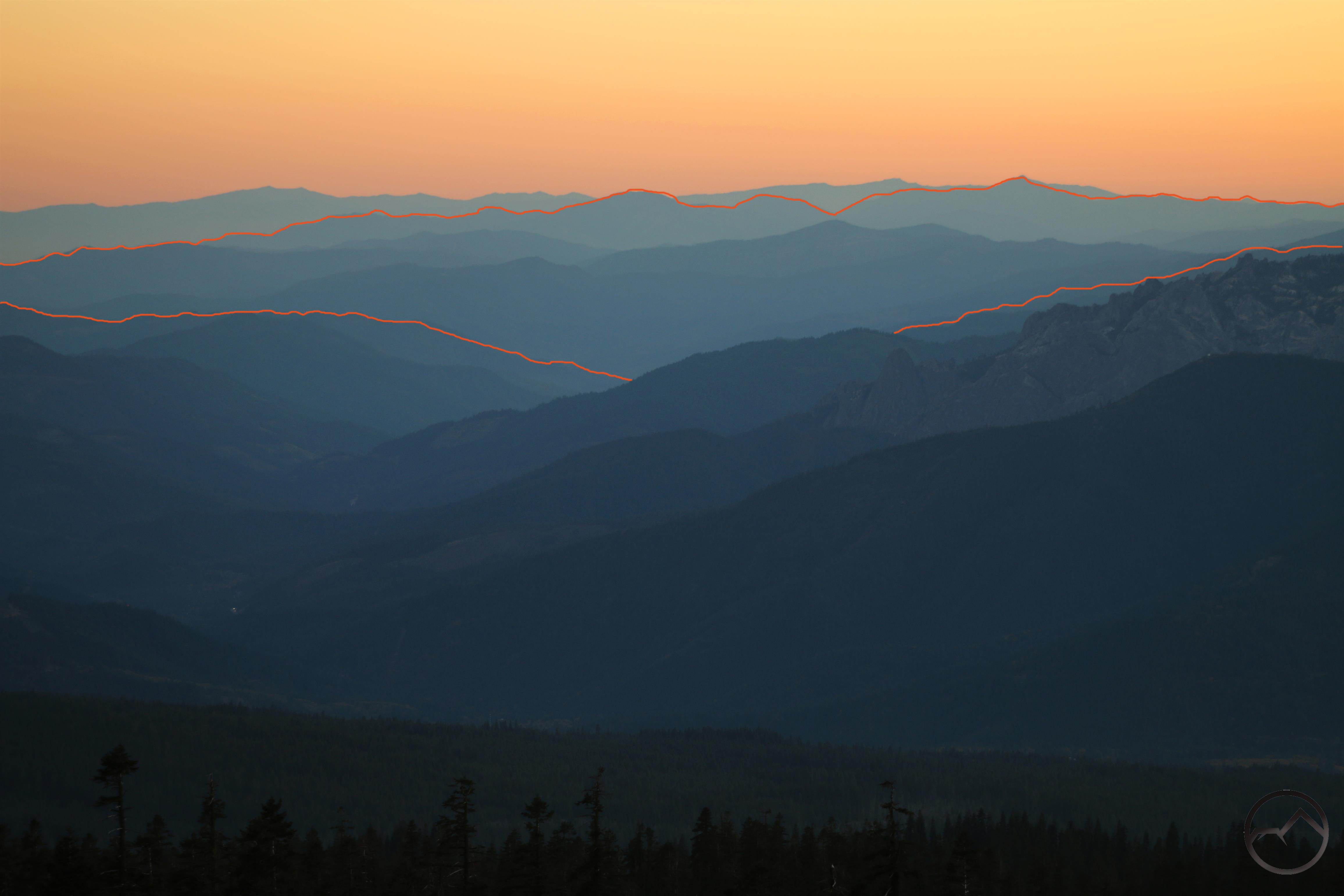
The second thought that occurred to me was that most of this area burned this summer, between the Carr, Hirz and Delta Fires. You can see the burned area (part of it, at least) below, highlighted by the orange line:

It may only look like a sliver of the image but it is a bit deceiving. The zoom lens compresses the image, making the area appear smaller than it is. In truth, the area within the lines covers a distance of over 40 miles from north to south. It is stunning that so much territory burned.

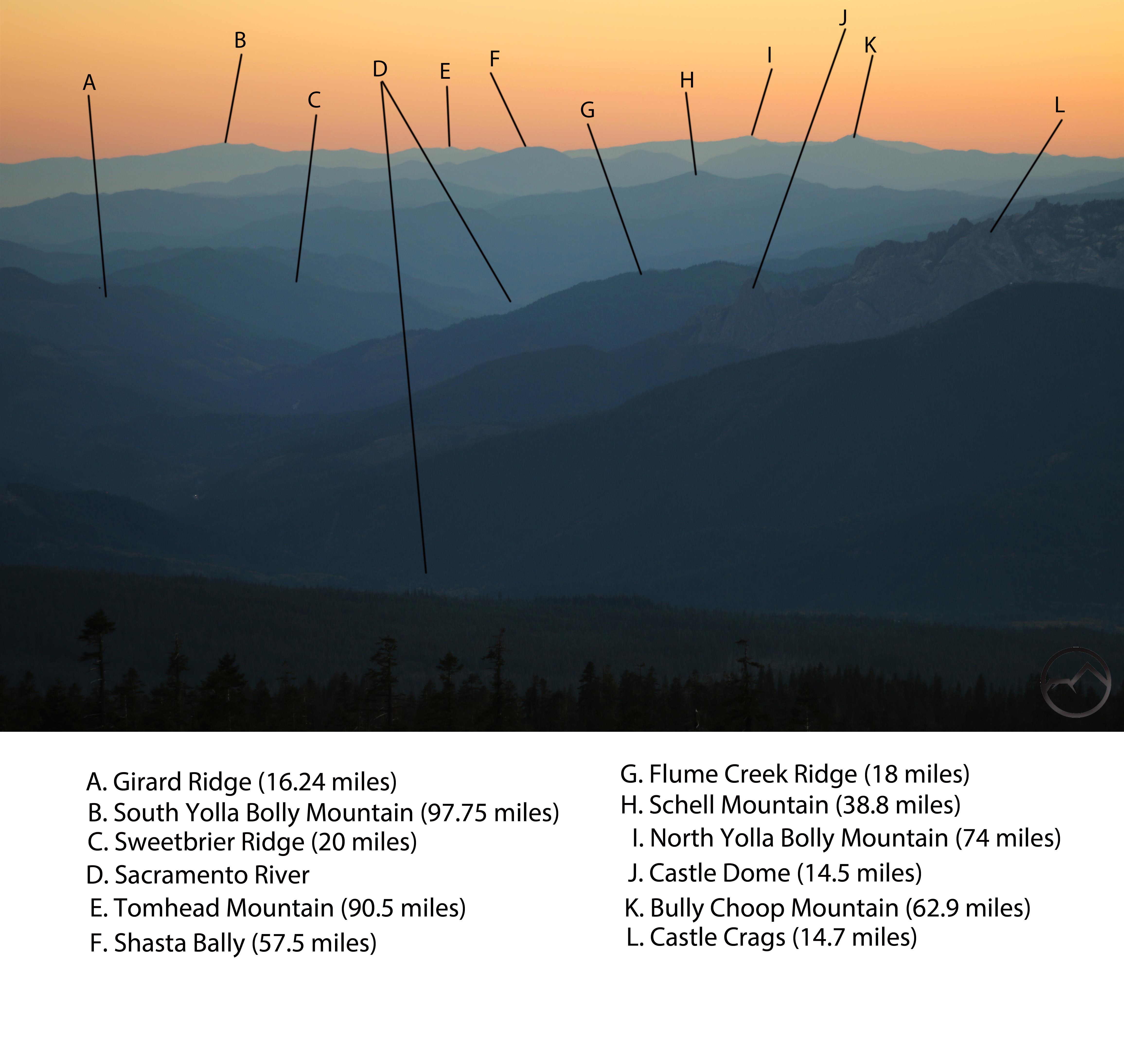
In spite of the destruction, the region remains beautiful and vistas from Mount Shasta like this one remain tremendous. The views from this spot reach further than just about anywhere else in California reachable by car. I may be wrong about that but if there are accessible vistas that reach further than this I’d like to know what they are. Worth noting, Snow Mountain was visible 135 miles to the south, but was out of frame in this image. To give some context to the image and to help give context to the image, I identified many of the landmarks and listed how far away they are from the Old Ski Bowl.

We are blessed that, in spite of the destruction, this is still a beautiful and remarkable world!

Three Lenticulars In Three Days

Posted by bubbasuess on October 27, 2018
Posted in: Cascade Range, Hiking, Lenticular Clouds, Mount Shasta. 1 Comment

Old Ski Bowl view of a large lenticular stack sitting majestically above Mount Shasta.

A couple of days ago I reported the first good lenticular Mount Shasta has had this October. We are now getting into the heart of a really active season for these majestic cloud formations and it is exciting to see what new marvels are going to unfurl above the mountain. The two days following that first event has witnessed two additional lenticular formations over Mount Shasta. While never quite rising to the epic level, it has been a remarkable sight to witness, one that once again emphasizes the incredible, unpredictable beauty of Mount Shasta.

Lenticular day 1

The first lenticular was a beautiful but frustrating cloud. While at times that first event had a well-defined disk formed over Shastina, it was, in many ways a bit of a mess. In spite of the disk, it could not quite shake the blob of cloud that hovered just above. Nonetheless, it remained extremely scenic and was fun to watch as it changed and morphed throughout the day.

Lenticular day 2

The second day of lenticular activity was more subtle. The clouds that formed above Mount Shasta lacked the distinct lens shaped form. Instead, the mountain was capped with a succession of long waves. This proved a fairly stable lenticular and didn’t change too much for quite a while. Instead, there was quite a bit of other cloud activity in the sky, with cirrus and other types passing higher up over the mountain. Adding further interest to the day was the shadows cast by these clouds upon Mount Shasta and the lenticulars above it. While not colored by the rising or setting sun, it was a fascinating light show nonetheless.

Around noon on lenticular day 3.

The third day of lenticular activity over Mount Shasta proved the most dramatic and diverse. In the morning there was just a slight wave present over the mountain, one that gave little indication of what would form later in the day. There were many other clouds, some threatening to take a lenticular shape but none of these were right around the mountain. By the middle of the day the sky had filled in considerably and a large lenticular stack had formed above Mount Shasta. The stack was not composed of extremely distinct layers but it was quite impressive anyway.

In the afternoon the sky had largely cleared but the stack of disks had become larger and more well-defined. Though more distinct, the shape remained in flux, changing its outline constantly. The view from up on Hummingbird Saddle was particularly awesome:


By evening the stack had dissipated, leaving only a small wave, just as there had been in the morning. Thin clouds hovered higher up but nothing that gave the impression that the awesome formation that had crowned Mount Shasta earlier in the day would return. However, just before sunset, a small disk did form high above the mountain. While not the most inspiring event, it was at least a respectable finish to an otherwise compelling day of lenticular activity.

Lenticular day 3, at sunset.

Mount Shasta Had A Fine (And Frustrating) Lenticular Today

Posted by bubbasuess on October 24, 2018
Posted in: Cascade Range, Hiking, Lenticular Clouds, Mount Shasta. 1 Comment

A nice lenticular forms with a pronounced disk over Shastina .

The changing weather patterns that begin on Tuesday have already brought the first lenticular. While yesterday morning was the first intensely colorful sunrise, so did Wednesday bring the first real lenticular of the fall season. After many weeks of cloudless conditions, autumn is finally taking hold of the sky and bringing clouds, winds and interesting phenomena above Mount Shasta.

Today started off rather overcast but by the afternoon the clouds had coalesced around the mountain and the classic disk of a lenticular was evident. It had a particularly distinct shape over Shastina, while vague stacks formed over the rest of Mount Shasta. It was not an epic lenticular event but it was beautiful and interesting nonetheless and demanded some attention. I popped out to one of my closest spots from which to photograph Mount Shasta and set my camera up. I captured the disk in strong form before the lenticular’s lines began to blur and the cloud grew over the area. Soon there were interesting mottled shadows all over the mountain’s lower flanks. As is often the case, it was fascinating to watch the evolution of the weather above the great volcano.

Later in the evening I had to run some paperwork into town. I just happened to time it so that the sun was setting when I was headed in. It proved to be a frustrating exercise. Clouds above Mount Eddy in the west filtered out much of the light on Mount Shasta, leaving everything rather drab. Even more frustrating, the lenticular had evolved into a stack sitting right on the summit of the mountain but didn’t really stand out like it had earlier in the day. Fortunately, as the sun dropped behind Mount Eddy the light was able to pass underneath the cloud cover and finally lit up Mount Shasta. For a few fleeting moments it was bathed in crimson glory before fading out altogether for the night. This left the clouds above Mount Eddy, now dissipating rapidly themselves, as islands of color in the sky. This too was quite beautiful.

In the end, this was a fine lenticular, but hopefully it is just heralding greater and more complex events in the near future!

A progression of todays clouds. Click to enlarge:


Alpenglow And Aspens: A Morning On The East Side

Posted by bubbasuess on October 22, 2018
Posted in: Cascade Range, Hiking, Mount Shasta. Tagged: Aspens, Fall Color, Orr Lake. Leave a comment

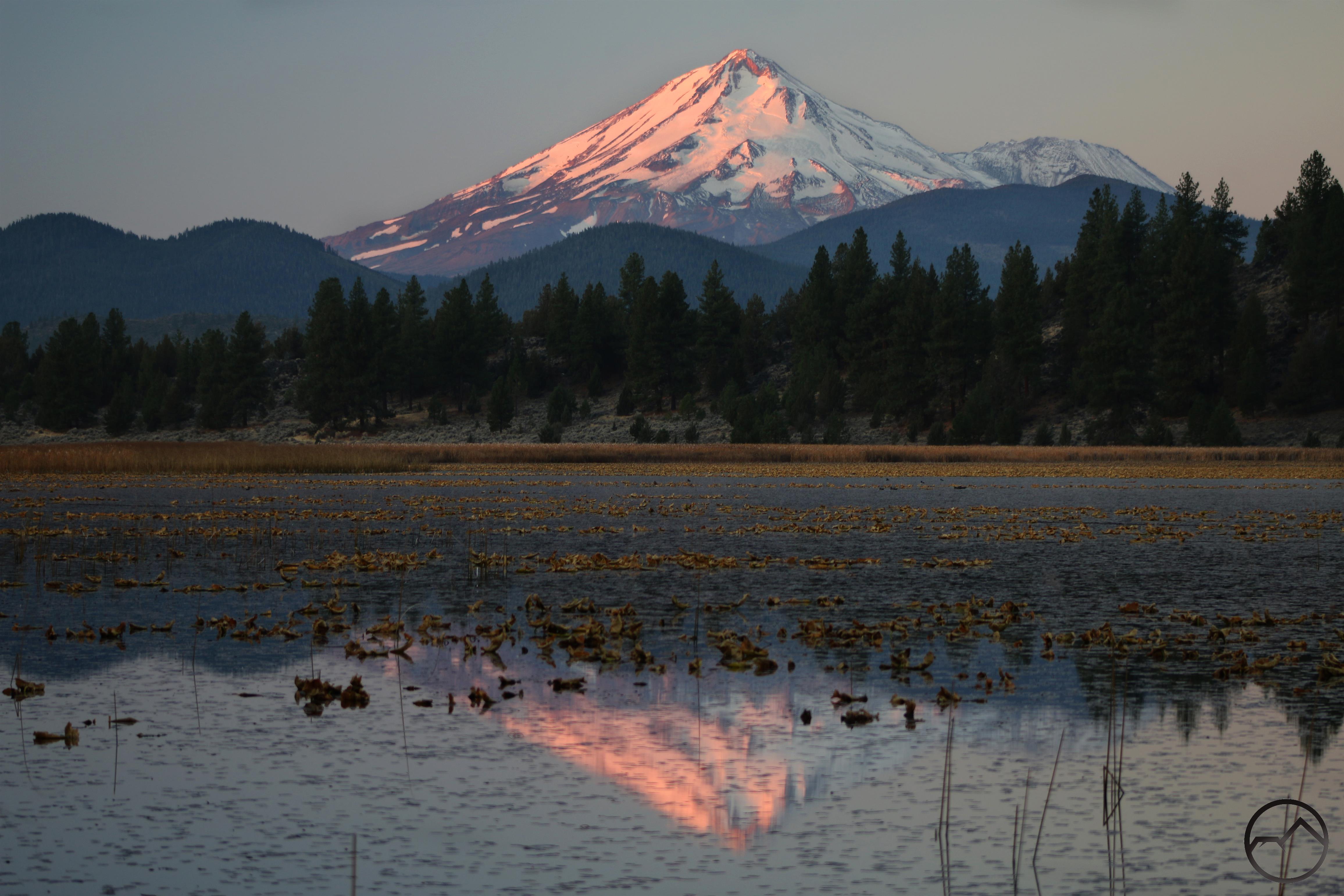
Lit up by the rising sun, Mount Shasta reflects in the water of Orr Lake.

The east side of Mount Shasta is the loneliest side of the mountain. The area is sparsely populated despite being exceedingly beautiful. In particular, the area to the northeast is particularly notable. Watered by two perennial creeks, Butte and Antelope Creeks, there are many large meadows set amidst rolling hills. Vast stands of ponderosa pine are dominant though high desert influences are strong and juniper is found in many areas. Over all of this, the great icy cone of Mount Shasta looms majestically. This perspective on the mountain is especially satisfying, boasting a great view of the Wintun, Hotlum, Bolam and even a sliver of the Whitney Glacier, the four largest glaciers in California.

This morning I got up early to head over to this remarkable area to watch the sunrise on ice-clad Mount Shasta. On the west side the snow that fell a couple weeks ago is mostly melted but on the north and east side and significant amount of fresh snow remains, complementing the glaciers. My destination was Orr Lake, one of my favorite spots in the Mount Shasta area. The large lake has a beautiful campground as well as a large group campground, fishing piers, a small boat launch and a great trail.

Though it has been getting cold, I was still surprised to find the campgrounds empty. With the entire area to myself, I set up my camera by the lake and watched the mountain change colors as the sun came up. Typical of Orr Lake, the bird activity was immense and included pelicans and a bald eagle. The entire scene was sublime.

Sunrise at Orr Lake.

After the sun was well and up, I packed up my camera and headed a few miles away to a beautiful aspen grove, looking to check out what condition the fall color was in. Aspens are not common in this part of California but there are a few groves on the east side of Mount Shasta. The drier conditions are likely one of the reasons these trees have established themselves in the area. Despite having taken root in this area, they remain rare, especially in large groves.

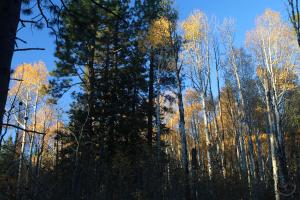
Thankfully, there is a grove near Orr Lake that lies on public land. It is one of the largest in the Mount Shasta area and, to my knowledge, the largest one on public land. It is also very easy to get to. Not surprisingly, I was the only person at the aspen grove. I spent the next hour wandering around the grove, enjoying the morning light striking the gold leaves. The color was a little past its prime but the color was still quite attractive. It was a gorgeous morning.


Considering the paucity of aspens in this area and the ease of access, I am surprised that a trail has not been developed through the aspen grove. Indeed, very little in this area has been developed for recreation despite the splendid scenery. Orr Lake is the most significant site but it remains obscure and lightly used. I really want to work with the Goosenest Ranger District to develop a trail through the aspen grove. It would be a nice path in summer but in fall, it could be a destination trail, drawing people from Mount Shasta who want to come and see the great color. For now though, absent a path, it is a remote, magical forest.

The east side is great any time of year but right now, with the chance to enjoy fall color and great views of Mount Shasta, it is a place of singular beauty.


Lake Siskiyou Autumn Idyll

Posted by bubbasuess on October 20, 2018
Posted in: Hiking, Mount Shasta, Trinity Divide. Tagged: Lake Siskiyou. 6 Comments

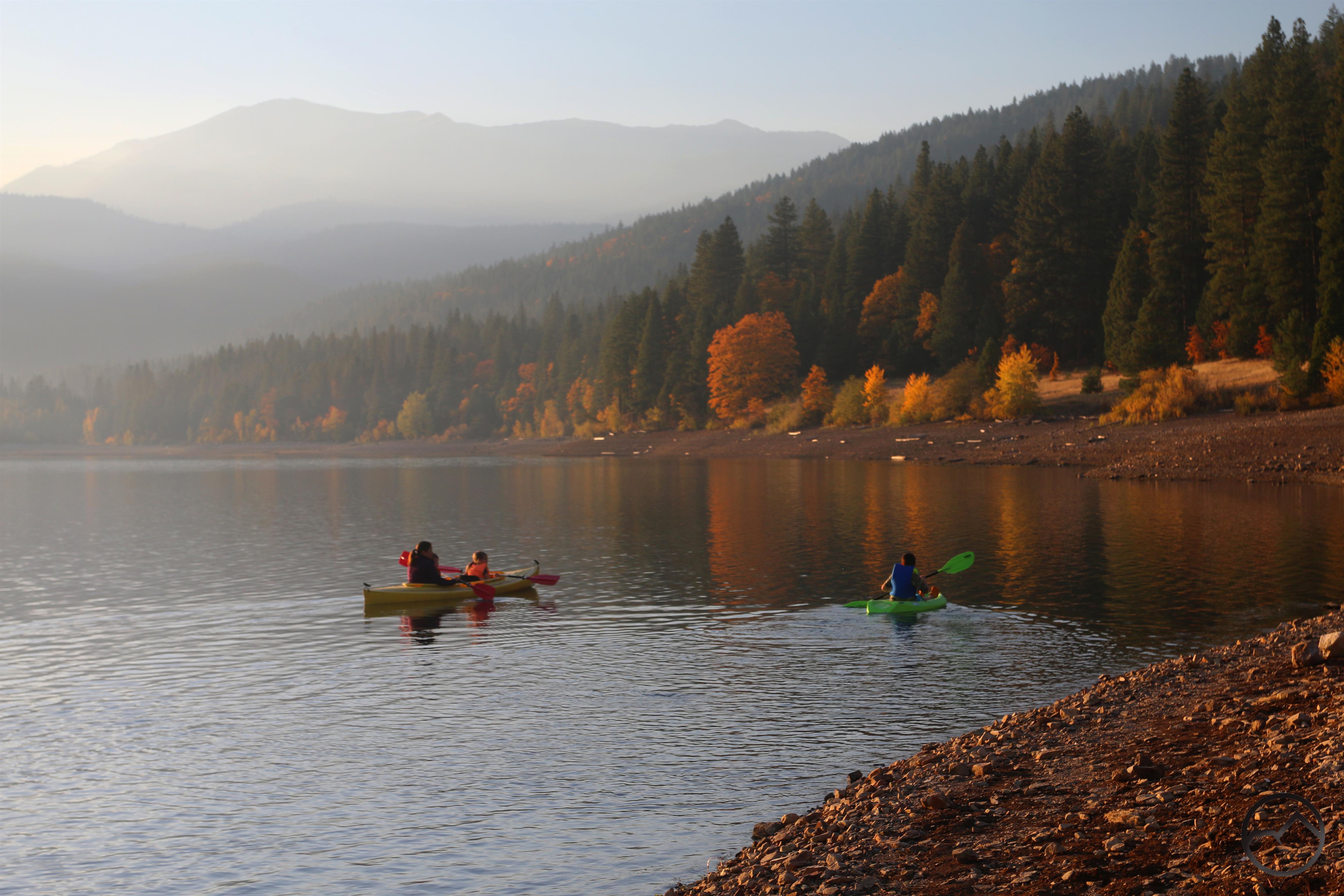
Autumn glow along Lake Siskiyou while my family paddles toward the inlet.

Though it has been getting cold at night, the days have been perfectly warm. The forecast portends a change in weather next week, with temperatures dropping. My wife and I gave our son a paddle board for his birthday and yesterday was the best day to take it out and give it a try. Our younger kids rode with my wife while our son took his board for a cruise. They had a great time, though my son was already exhausted from hanging out with grandparents and hiking with the outdoor education class I teach on Fridays. Nonetheless, he took off around the lake on the board’s maiden voyage.

While my family was having fun on the water, I enjoyed the view of the setting sun from the lake. While the fall color in the area has been erratic, it is in full force at Lake Siskiyou right now. It is absolutely gorgeous. All the oaks and willows are turning shades of red, orange and gold. In the afternoon light all the trees just glowed. If you have the opportunity over the weekend, be sure to hike around the lake. The color is good in many places but it is particularly good along the north shore.

As my wife and kids paddled, I got to enjoy the sunset from a location I don’t often take advantage of. Normally, if I observe the sunset from Lake Siskiyou, it is from the south shore, where there is a great view of Mount Shasta. This time, on north shore, the best view is to the west, where Mount Eddy, Porcupine Peak and the braided folds of the Trinity Divide dominate. Naturally, these were not lit up with alpenglow the way Mount Shasta is at sunset since the sun set behind these mountains. Nonetheless, the sinking sun put on a brilliant display of light beams and contrasting shadows.


Of course, we eventually had to head home, but did so just in time to see the alpenglow on Mount Shasta come to an end. I was able to grab a quick shot before it was completely gone. It was a perfect evening. Now, tonight, I am taking the Cub Scouts up for an evening hike at Panther Meadow then we’ll watch the sunset from the Old Ski Bowl. That sounds like two ideal autumn evenings in a row!

An Awesome Sight On Black Butte From My Front Yard

Posted by bubbasuess on October 17, 2018
Posted in: Cascade Range, Hiking, Mount Shasta. Tagged: Black Butte. 6 Comments

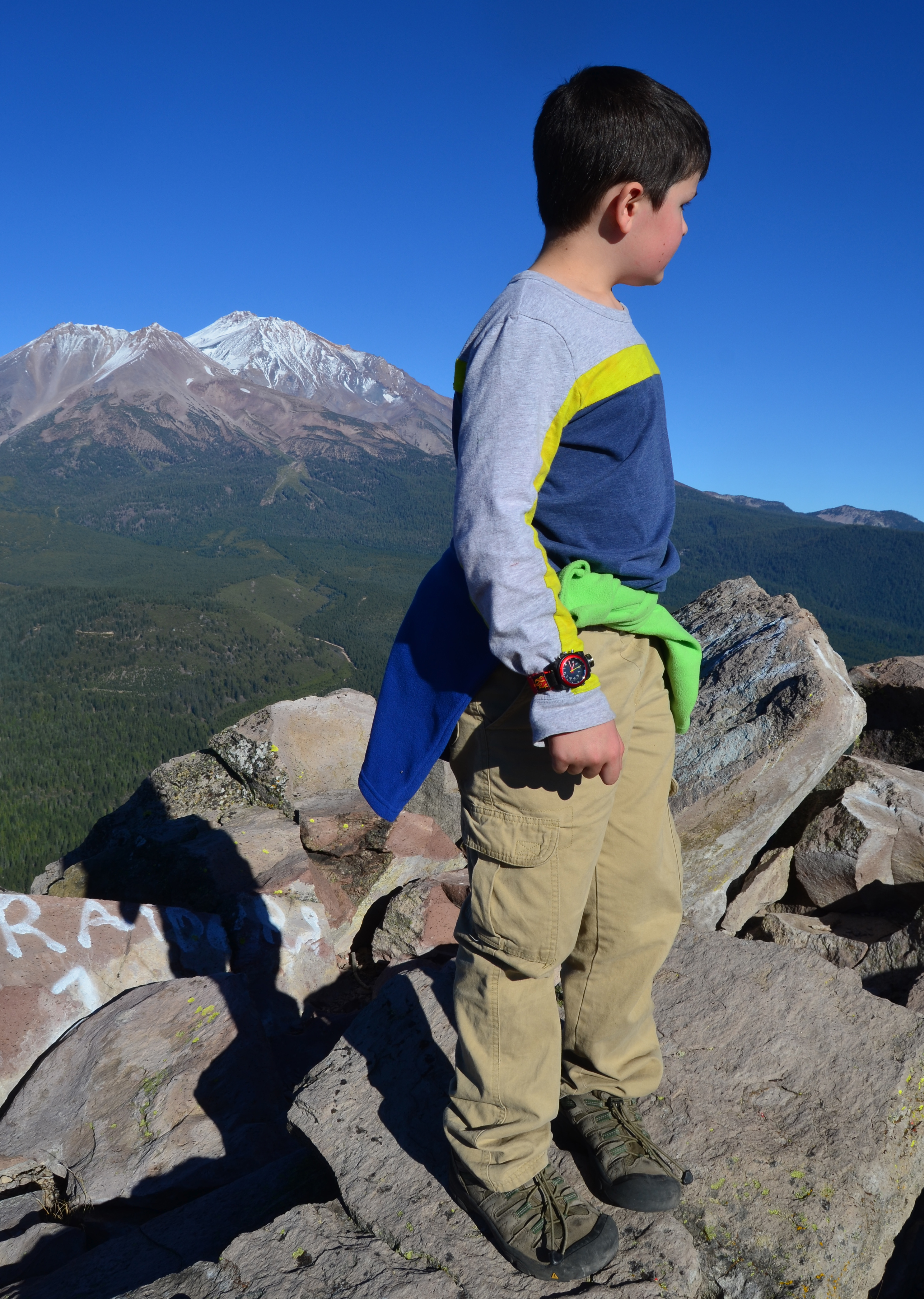
My son arrives on the summit of Black Butte.

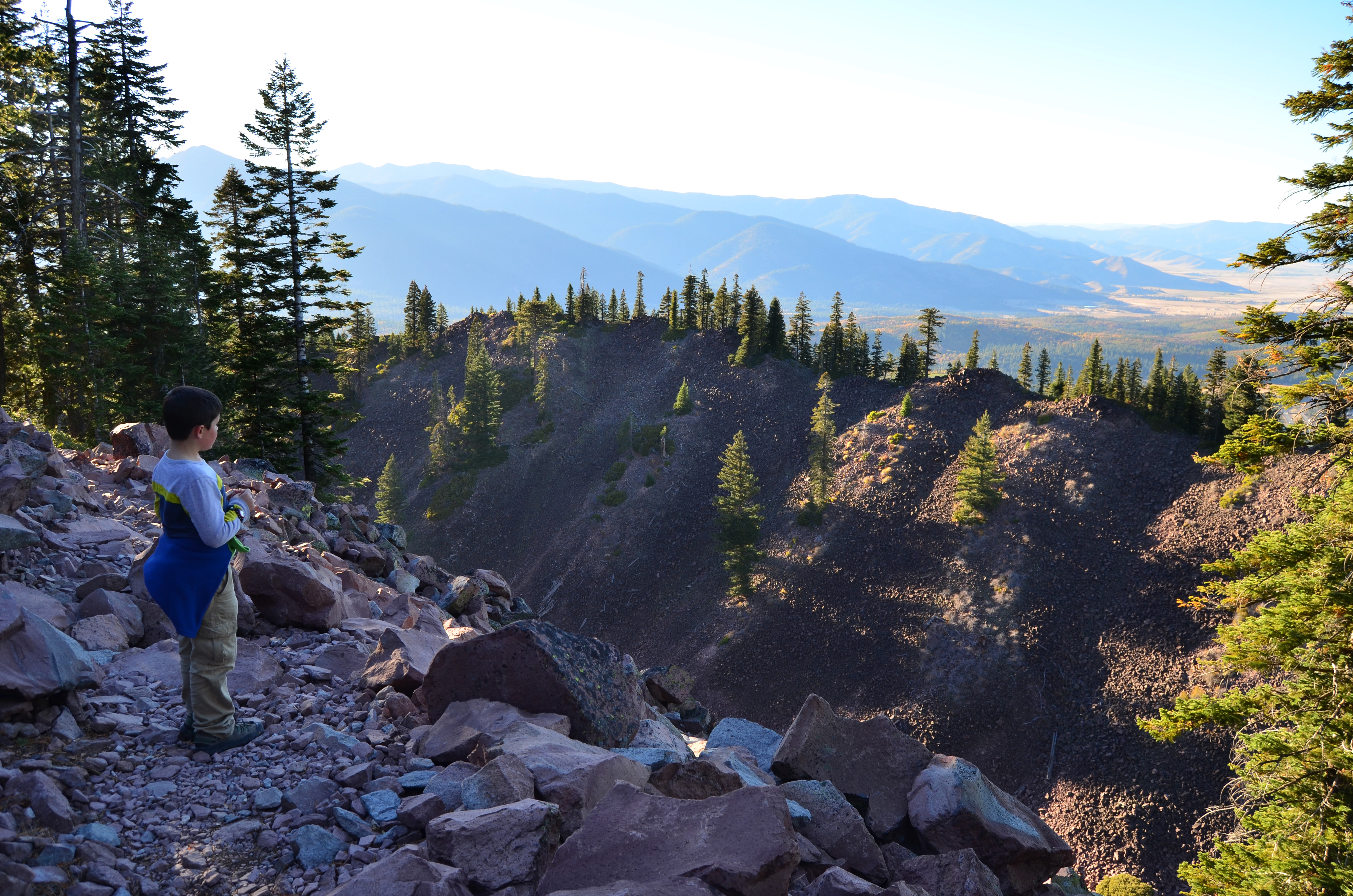
My eldest son turned 9 a few days ago. Among the many milestones he achieved around his birthday was his first ascent of Black Butte. My wife hiked with him while I stayed home with our two younger kids. He has been wanting to climb Black Butte for a while now and was quite excited to make the journey. He has made longer hikes (including the 8.5 mile Panorama Trail in Yosemite at age 6!) but this was the first longish hike with a sustained grade that he has done. My wife reported that he handled the trail with ease. I am thinking next year will be Mount Eddy!

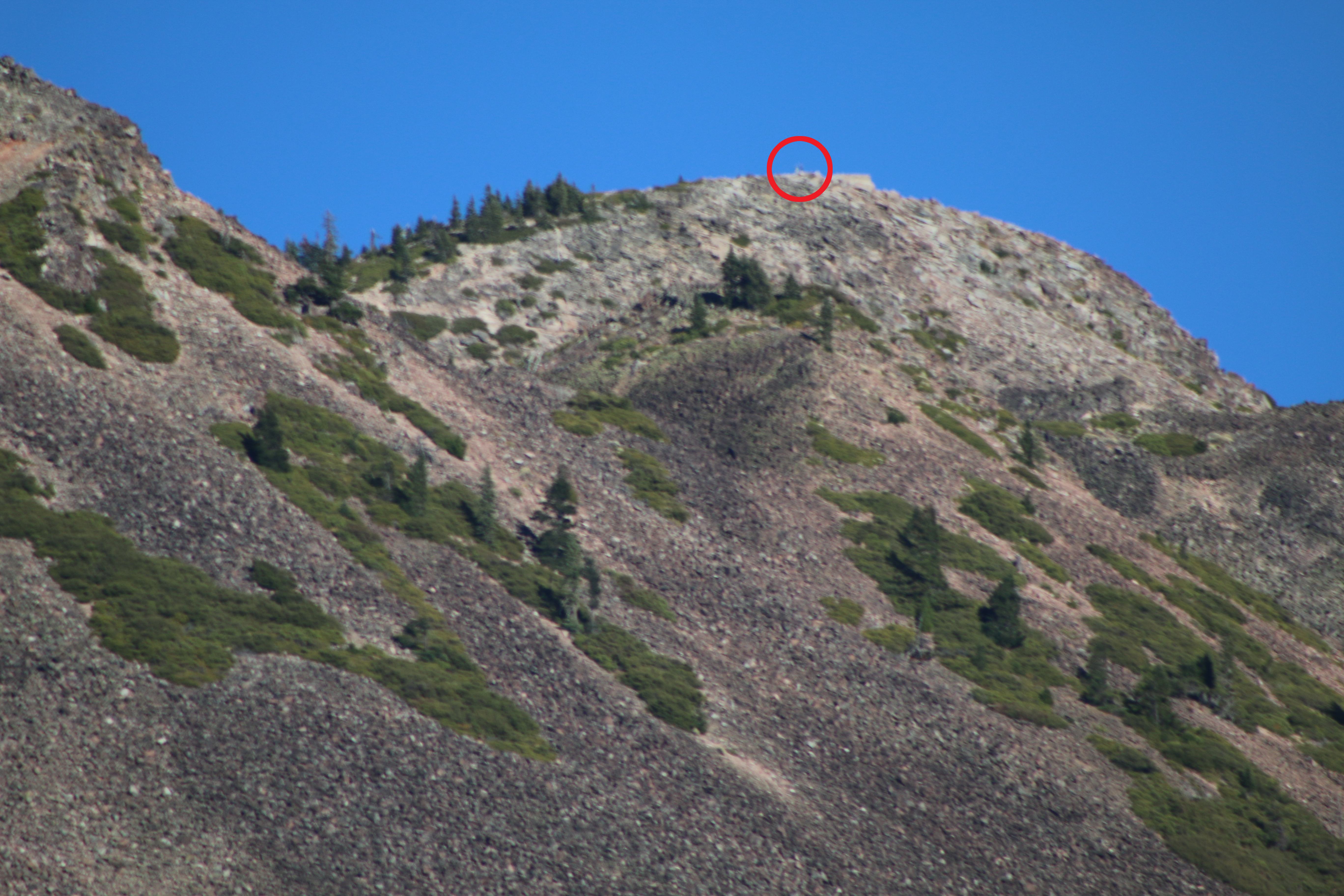
My wife and I live outside of Mount Shasta City, up on the crest of the Black Butte Summit pass. Unfortunately our line of sight on Mount Shasta is blocked by Black Butte but we do have a great view of this lesser mountain. Since we have a good view of Black Butte (including the old lookout tower’s foundation, which is visible to the naked eye) my wife and I coordinated the timing so that, as they approached the summit, I was able to set up my tripod and camera with my zoom lens. While not high quality optics, this lens was good enough for me to see my wife and son on the summit of Black Butte! They were small specks, but their motion and the even the color of their clothes was discernible. You can see them in the image below. Be sure to enlarge the image so you can just make them out.

I know they appear tiny, but I still think it is really, really cool that I could see them all the way up on the summit of Black Butte, 2,500 feet and 2 miles away from our house. You can see them (barely, of course) in the video below:

While they were up there I tried signaling them with a mirror. While they did see a couple of flashes, the sun was essentially behind me and made catching it just right very difficult. This got me thinking about putting an event together with the Boy Scouts, having groups ascend Black Butte, Mount Eddy and up to Hidden Valley on Mount Shasta and conduct mirror signaling to each group. That would be a grand event, one that could be witnessed from in town too!

All in all, I think it was a very cool event. Of course, I am very proud of my son for making the hike up in such fine form. He is growing into quite the outdoorsman. He is hungry to get on the trail and explore more. Of course, we’ll have to get him out a little further from home next summer. The summit of Mount Eddy is only 6 miles from our house!

I’m a proud dad!

Northern California Review: Eastern Sierra Fall Color

Posted by bubbasuess on October 15, 2018
Posted in: Hiking, Mount Shasta, Sierra Nevada, Uncategorized. 4 Comments

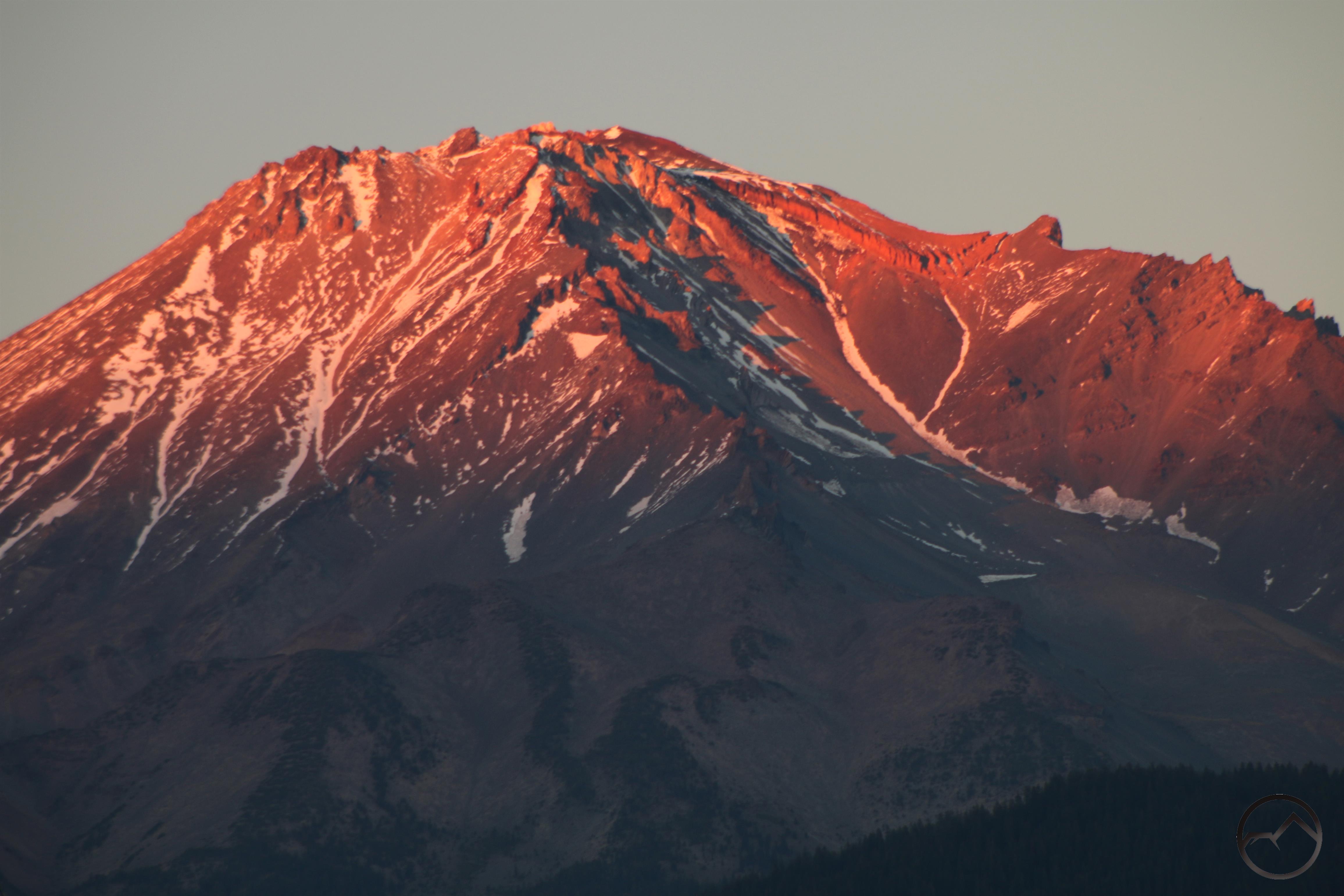
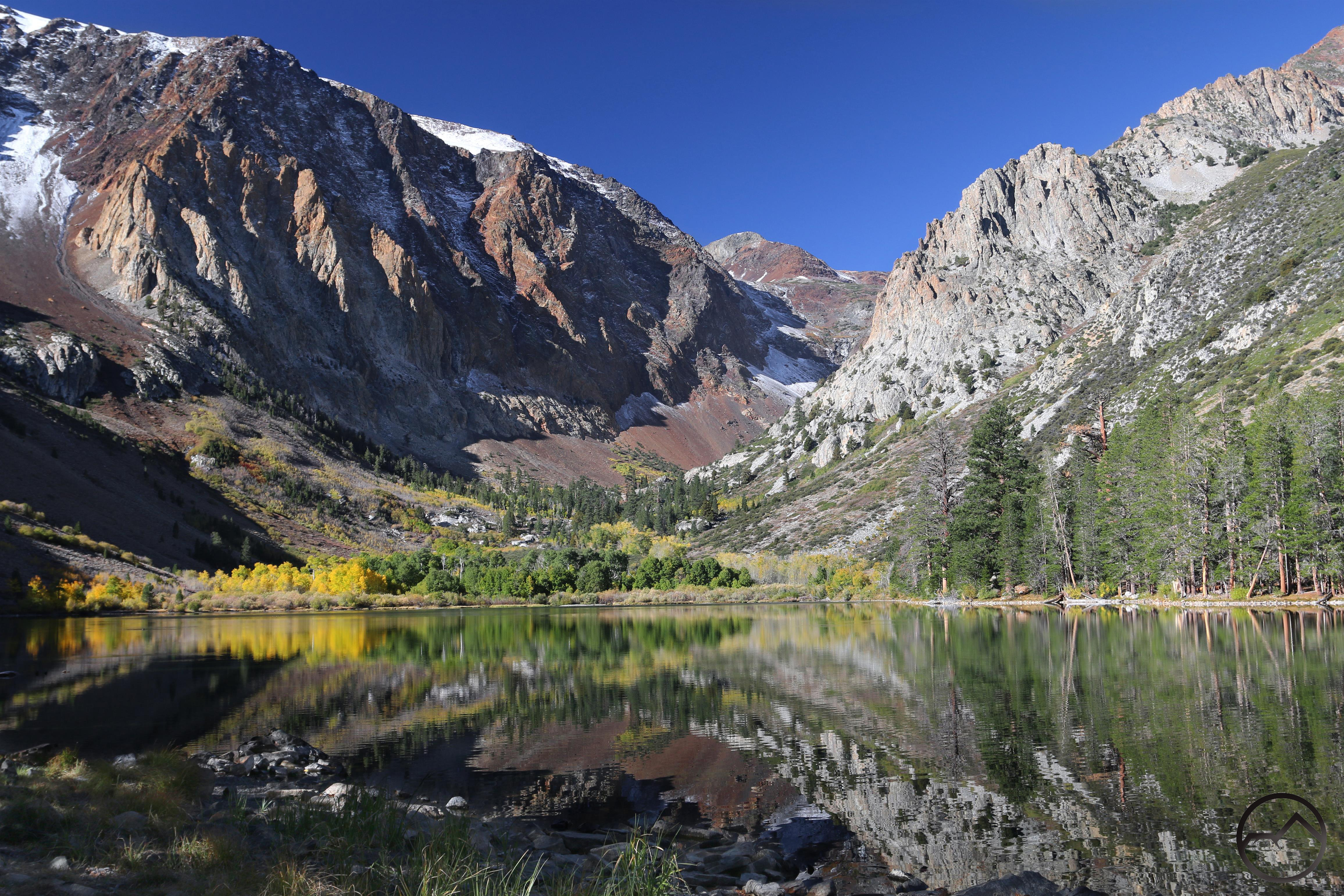
Bright fall color at Parker Lake is overshadowed by the massive cliffs of Parker Peak.

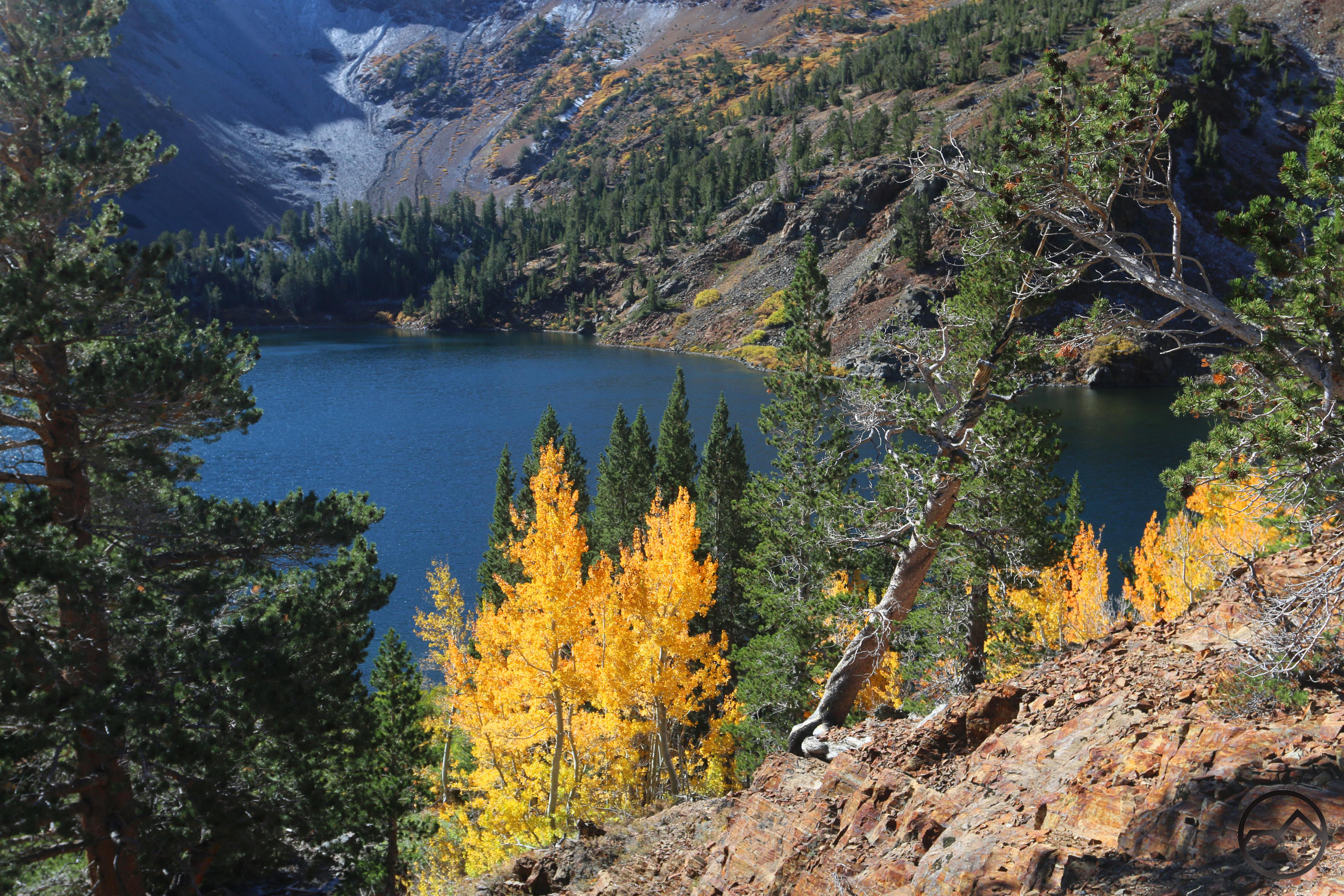
Autumn can be a magical time of year. With the lowering of the sun’s position in the sky and changing palette of the forests, it often seems to glow. When thinking of fall color, New England is often the the go-to destination, with Colorado and its great aspen forests are often the most recognized locations. Other areas, like the larches of the North Cascades or the vast brushy panoply of aspens, serviceberries, hawthorne, maple and oaks that make up the kaleidoscope of the Wasatch Mountains offer unique and spectacular scenes that may not be as well known to the general public. California, however, is generally not as well known for the turning of the leaves. Great scenes may unfold in places where there are lots of vineyards but for the most part, autumn brings a sprinkling of beautiful color but not overwhelming scenes. However, for those who hunger for fall color in the Golden State, the one place to go for a chance to catch spectacular scenes punctuated by gold and orange and red is the Eastern Sierra Nevada. The remote side of California’s grandest mountain range, influenced by the presence of the Great Basin Desert, is loaded with aspens, cottonwoods and willows and offers a chance to see magnificent autumn scenery amidst even grander mountains. It is a sight not to be missed!

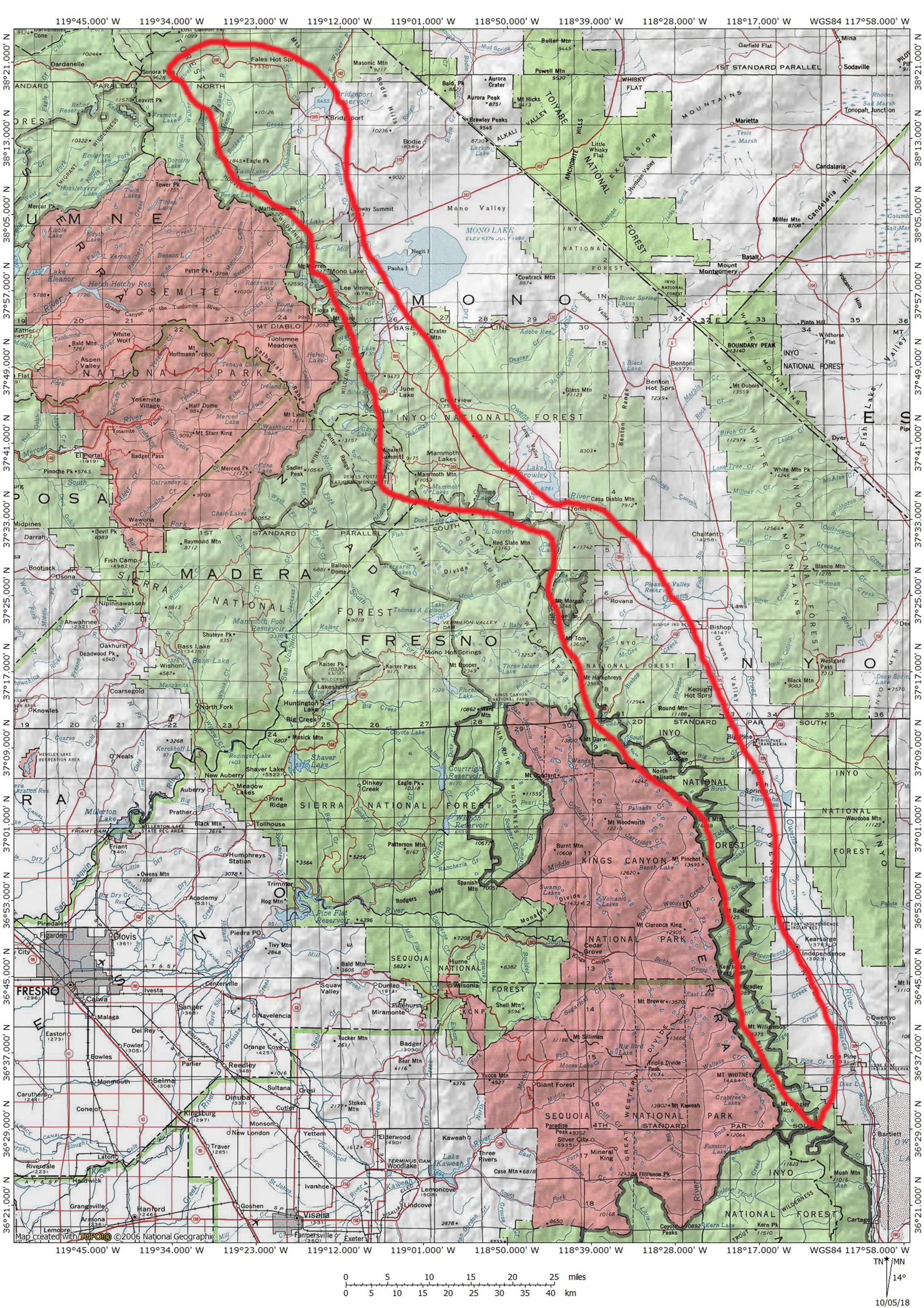
While there are pockets of beautiful color throughout the Sierra Nevada, the area that yields the best scenery and the best conditions lies south of the Walker River Canyon, along the route of Highway 395. North of this area there are still good spots that deserve to be sought out, especially Hope Valley near the Mokelumne Wilderness. Nonetheless, the best aspen groves and the most fantastic scenery all lies south of the Walker River, along the great eastern escarpment of the Sierra.

The area circled in red is where there is a good chance of seeing excellent fall color.

Fall color, surrounded by desert, thrives along Laurel Creek.

The conditions in the Eastern Sierra are just right for groves of aspens and cottonwoods – two of the best trees for fall colors – to grow. The tall Sierra Nevada wring moisture coming inland from the Pacific Ocean, layering the range with deep snow in the winter. The vast region to the east is the Great Basin Desert, one of the four great desert systems of the United States. There is little moisture left in storm systems to provide much water for this extensive area. Consequently, the arid landscape dominates everywhere except where mountains reach high enough to ciphon water out of recharging storms. In these areas aspens and conifers thrive. These high elevation oasis also produce small rivers and creeks that flow into the desert below. Along these slender watery corridors thrive cottonwood trees. These deciduous trees were referred to as the “tree of life” by pioneers due to their proclivity to grow in parched environments. Their presence meant that water for thirsty travelers had been found. Thus, the Eastern Sierra is a combination of the alpine environment of the high elevation and the desert environment of the vast Great Basin. The alpine environment produces large, lively creeks and rivers flowing into the desert landscape, around which aspens and cottonwoods thrive. Consequently, this area has the promise of great fall color.

Fall color at Upper Chocolate Lake.

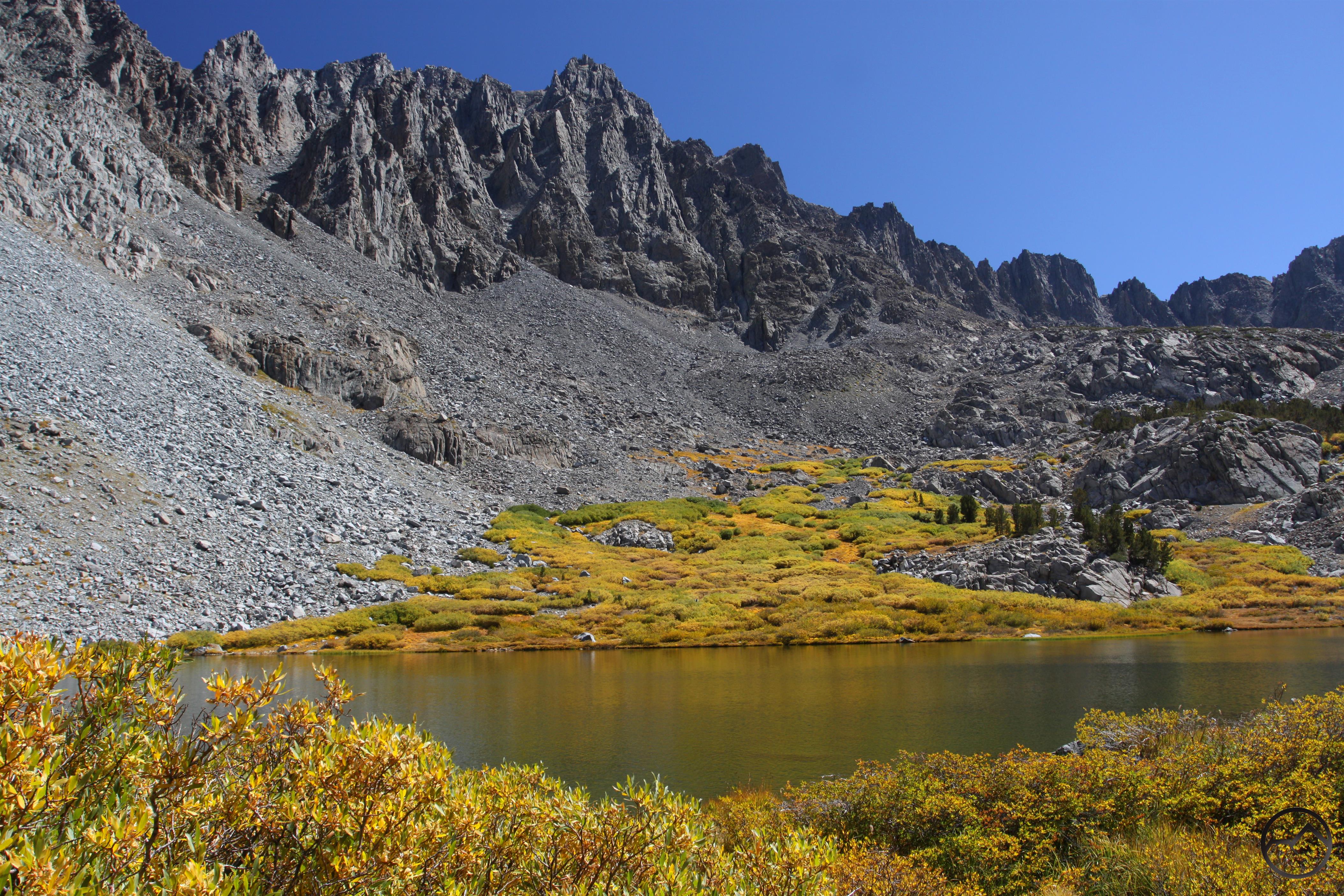
It should be noted that, while the meeting of the alpine and desert landscapes is where most of the fall color will be found, there are many locations at the higher, alpine elevations where there is a surprising amount of color splashed amongst the magnificent spires of the High Sierra. In these places the color generally comes from willow. These are not the tall, stately weeping willow trees but smaller, bush-like willows that are found along lakes and creeks near treeline. This is not a landscape one may expect to find vivid color from turning leaves but it occurs nonetheless. It should be noted, however, that the color at this elevation usually comes much sooner than it does lower down. As a rule of thumb, the summer ends earlier the higher the elevation.

Virginia Lake

While the color in the Eastern Sierra may generally come in smaller pockets than one would expect to find in more well-known autumn destinations, few places can compete with the grandeur of the scenery. The eastern escarpment of the Sierra Nevada is possibly the grandest mountain vista in all of America. The massive fault block mountains boast enormous canyons, towering rock spires, great cliffs, crystalline lakes and rushing creeks. It is an ideal mountain landscape. It is spectacular in any season but the fall color that covers the land and punctuates the cliffs only enhances the scenery, crowning the mountains like a bejeweled crown before winter’s snowy blanket descends.

Fall is also a great time to visit the region. While there is a chance that the weather can turn cold or a storm can move in, there is even greater odds that the conditions will be absolutely idyllic. The days are often perfectly warm and not hot with cool to cold nights, perfect for getting out and hiking the seemingly unlimited number of trails that course through these amazing mountains. The pace is also significantly slower than during the summer months (and at Mammoth, during the winter as well!). This makes visiting during the fall color season even more enjoyable.

All in all, the Eastern Sierra Nevada is one of the most spectacular destinations in the world. When autumn comes, the color only enhances the beauty even further. It is the perfect time to explore.

Eastern Sierra Fall Color Gallery (click to enlarge. These are poor images, but hopefully the convey the regions beauty!):

Parker Lake
Conway Summit
Conway Summit

Lundy Canyon
Lundy Canyon with beaver dam
Lundy Canyon

Virginia Lake
Convict Lake
Fall color, surrounded by desert, thrives along Laurel Creek.

Gull Lake
Devil’s Postpile
South Fork Bishop Creek

Fall color at Upper Chocolate Lake.
Lower Chocolate Lake
Lake Sabrina

Leavitt Meadow
Hope Valley
Little Last Chance Creek


Fall Color Is Very Erratic This Year

Posted by bubbasuess on October 14, 2018
Posted in: Cascade Range, Hiking, Mount Shasta. Tagged: Fall Color. 1 Comment

Mount Shasta in the fall. This is from a year ago, not this year.

Hi everyone. This is a bit of a more informal post and I have no current pictures to augment it because I have been pretty swamped with a variety of other things lately. That said, I wanted to discuss the fall color around Mount Shasta this year. It seems we didn’t get the right conditions to bring about really vivid colors this fall. Trees are turning at different times, some are peaking right now, other have not yet begun to turn. Many that are turning now have not really had color that popped. While frustrating, this is just part of the cyclical nature of nature.

Despite this not being a banner year for fall color, I wanted to compile a list of trails where you might expect to find some good color, be that oaks, cottonwoods, willows or other types of trees. Many of these are along rivers or creeks but not all of them. Despite the color not being the greatest this year, there are still areas of great beauty and the weather is fantastic, so we ought to get out and enjoy the views that we can. I have another fall color post in the works too, but for out of this area, so there will be a bit more to say on the subject yet.

The following are trails that I would recommend hiking if you are in search of fall color:

Castle Lake Shore Trail

Cliff Lake Trail

Lake Siskiyou Trail

Box Canyon Trail

Ney Springs Canyon Trail

Spring Hill Trail

Sisson Meadow Trail

Hedge Creek Falls

Dunsmuir Trail

Sacramento River Trail

McCloud River Falls Trail

Pine Tree Hollow Loop

Squaw Valley Creek

Sonoma County Fires – One Year Later

Posted by bubbasuess on October 10, 2018
Posted in: Hiking, Mount Shasta. Tagged: Sonoma County, Tubbs Fire. 7 Comments

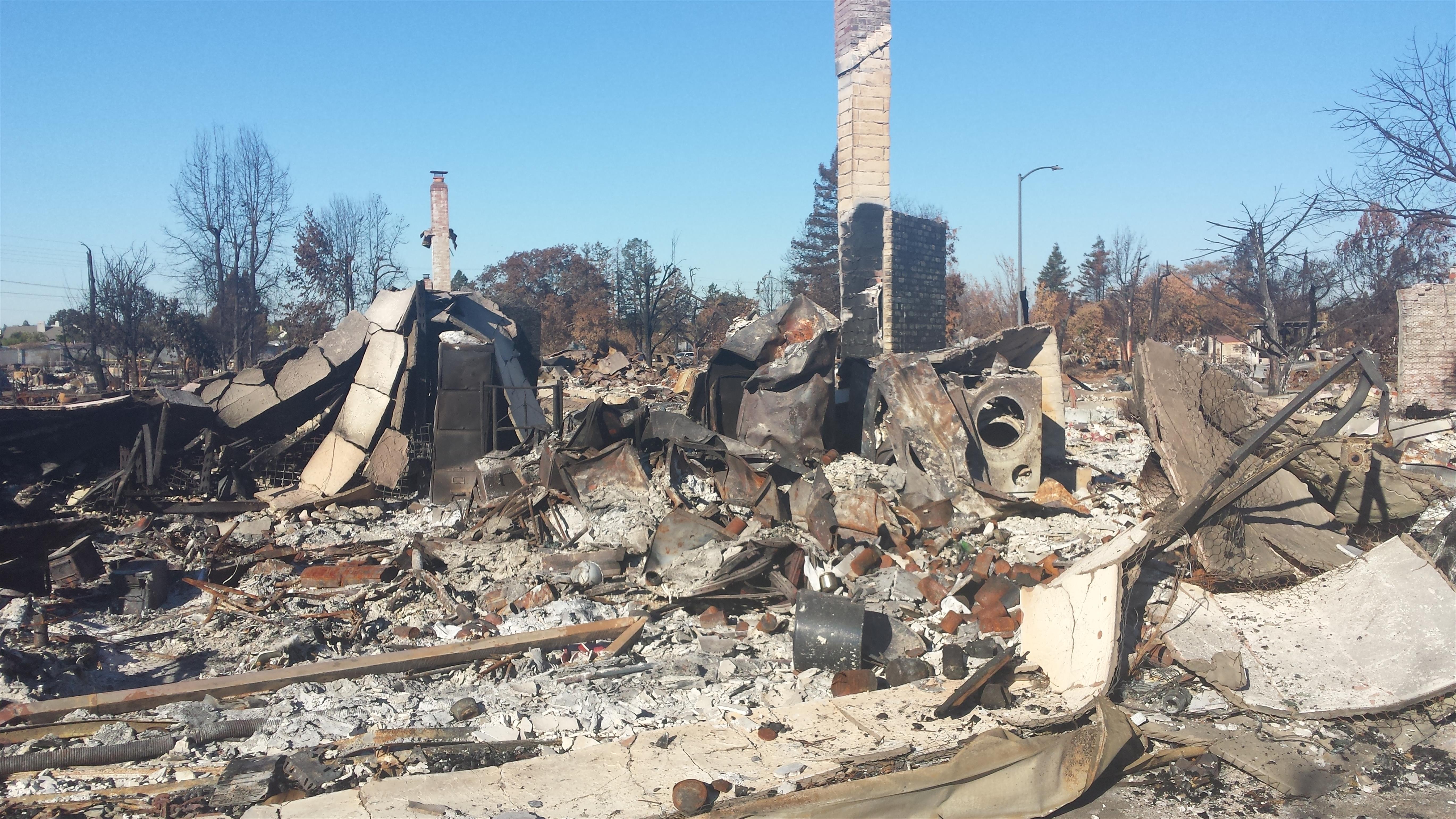
My parent’s house in ruins.

Yesterday marked one year since the catastrophic Tubbs Fire exploded through Napa and Sonoma Counties, consuming thousands of homes as it spread. My parent’s home, the house I grew up in, was among those that were lost. The journey through the last year after the fire has been a memorable one and, thankfully, one that has generally been a positive experience given the circumstances.

Considering what the last summer has wrought in terms of fire here in the North State, I reckon it might be a good time to look back on what happened in Sonoma County and recount a bit what has happened to family in the aftermath. Hopefully it will offer some optimism in the wake of what has transpired over the last year.

I don’t want to descend into a long bit of prose, so I think the best way to do this is to put up a number of pictures and include a lot of captions. Hopefully this format works well.

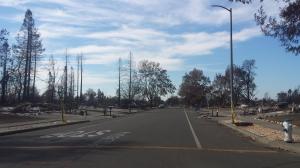
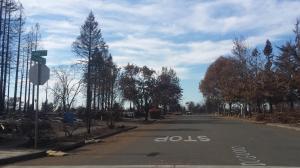
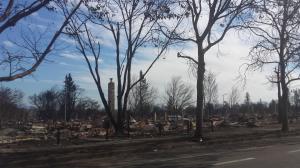
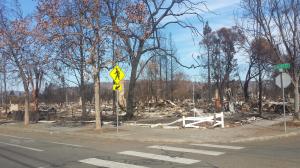
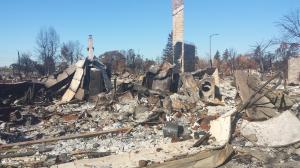
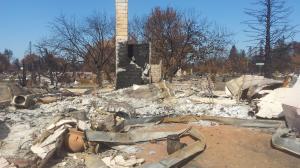
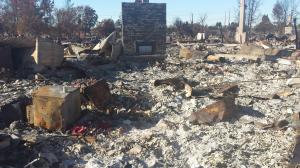
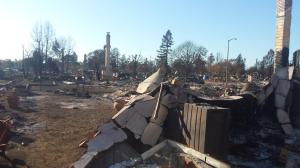
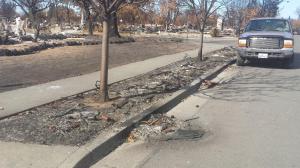
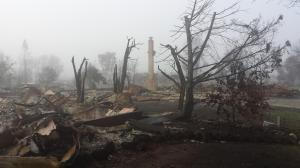
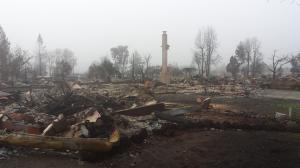
The old neighborhood gone:

Driving around, the thing that struck me the most was how small everything seemed without the houses. I drove past turns I was used to making but they came too quick without visual landmarks.
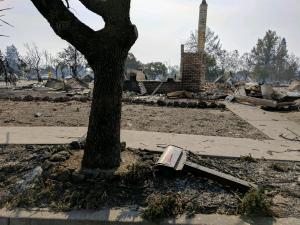
I have no idea what will happen to the trees. Many have not been removed.

The flames left an unusual ghost forest.
This was the most striking view to me. When I was a kid, this area was a big swamp and I used to “hunt” black birds. The hill in the background was a constant vista. When the houses went up, the view was gone, presumably forever. Now it has returned, at least for a time.

Our house in ruins:

The devastation was complete. It was a real mess.
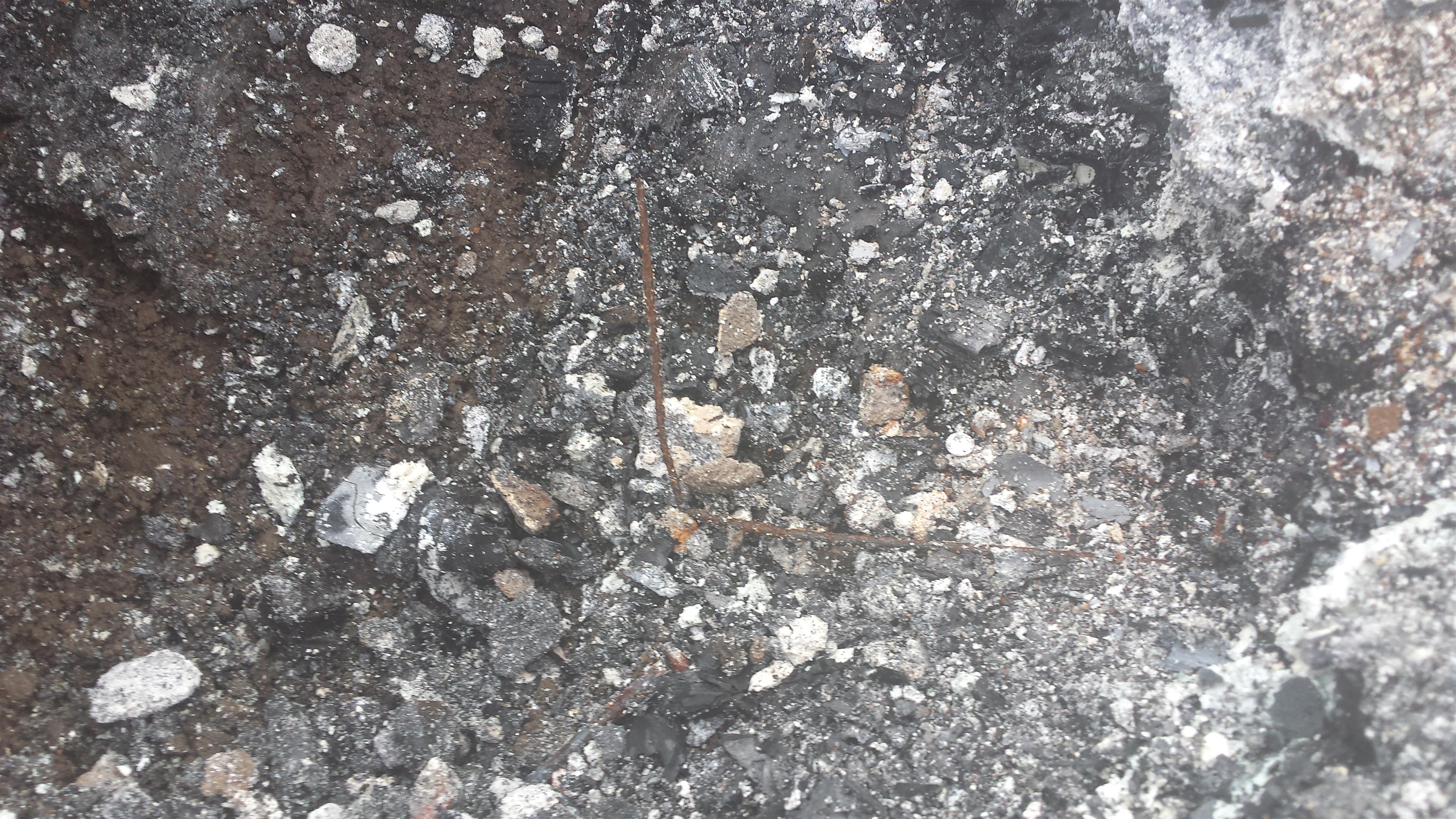
It was remarkable how the properties of all the materials were altered. The metals were useless, the concrete was weak and crumbly. Everything else was ash.

The only glass in the whole house that was not melted or broken was the fireplace.
The house was stucco, which meant that it was a real effort to sift through things. Other houses were piles of ash but ours was just a pile. We had to cut through the wire withing the stucco in order to pull the ruins apart and look through the mess.

The splotch on the street was a garbage can waiting to be emptied.
The burning shrubbery burned the mailbox’s post but the rest was intact.

Sifting through the detritus:

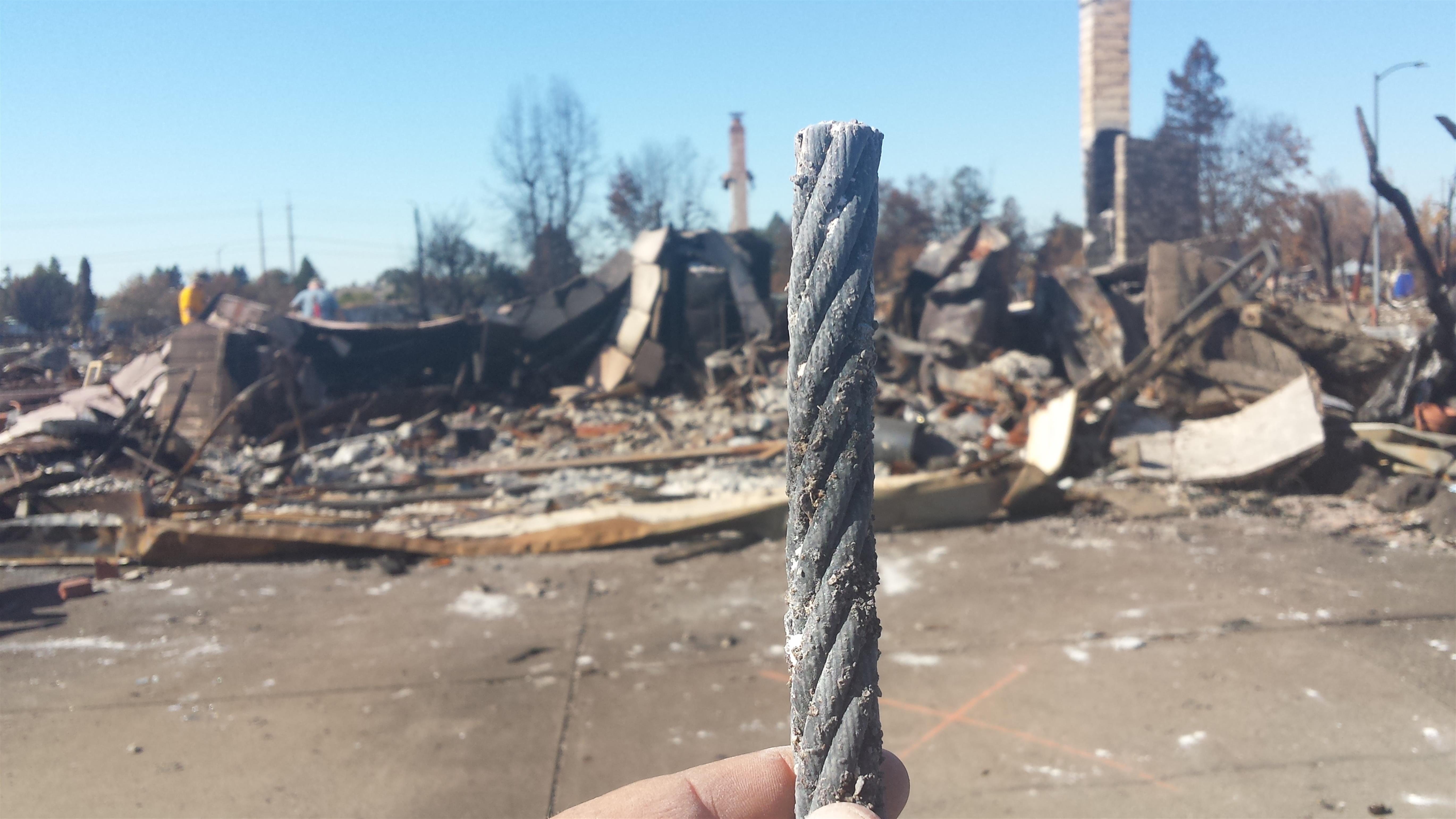
We naturally wanted to look for things to salvage but were aware that there was not likely to be much. Many things were found but the flames had left them worthless. Perhaps most heartbreaking was my dad’s extensive tool collection. Everything was burned or altered and nothing was useful any longer, though many of the tools remained. The metal was brittle and the handles often melted away. One of the few things we found that was worth keeping was a length of the original cables on Half Dome. These had been taken down and replaced sometime in the late 80’s or early 90’s, cut up into short sections and then sold off as a fund raiser for the Yosemite Association. My parents, being longtime members and having met climbing Half Dome in 1963 naturally bought a section. My dad had it in his library, on a shelf full of theology books. After the fire, many of the books still looked like their pages were intact. In reality, it was really just page-shaped ash. He told me about where it was on the shelf, I stuck my hands into the “books” and they quickly dissolved into a powdery mess. I sifted through the ash blindly until I finally felt the cable, unharmed by the fire. It was our first salvageable find of the day.

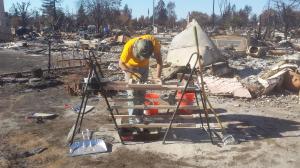
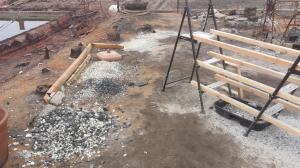
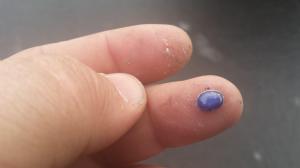
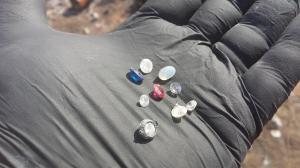
We eventually settled in to look for that which had value that could withstand the flames: jewelry. Melted gold and silver still has value and the precious stones withstood the flames. We set up a sifting station with three grades of screens and a collection tub at the bottom. Fortunately my parents knew where all the jewelry and gemstones were located and got to work in strategic spots. We were quite successful.

My brother working through our sifting contraptions.
Different grades of leavings from the different grades of screens.

A star sapphire.
A nice diamond.

A good haul from a few hours of work.
We knew right where to dig!

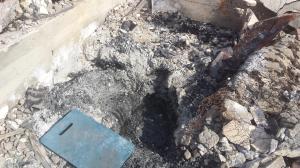
After sifting for a couple of days we broke camp and returned to our homes (or in my parent’s case Honor Mansion, where the owners, good friends of my parents, put them up for three months following the fire!). Before leaving, we shoveled the ash around the excavation site into almost a dozen 5 gallon buckets with the intent to sift through them at a later date. We then covered the area up, unsure what, if anything we were going to do in the future. I came back down a few weeks later to cut the trees down and toss them into the ruins so they would be hauled away when the site was cleaned up. I removed the metal and looked down in the hole. Sitting right on the surface of the ash was a huge diamond! What were the odds! I snapped a quick image before grabbing the nifty little rock.

Can you spot the diamond? Click here to see it.

I then cut many of the trees down with my chainsaw and threw them into the debris as planned. When the Army Corps Of Engineers cleaned up the site, they hauled the trees away gratis.

Before
After

A ghostly sight during clean up:

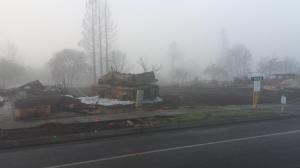
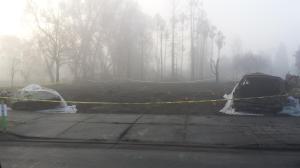
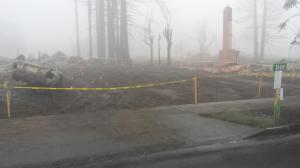
Once the clean up began, the sites were cleared fairly quickly. Driving around in the Sonoma County fog, the neighborhood seemed like an apparition. The home debris was cleared but the burned cars were left stacked because they would be handled by auto insurers rather than homeowners insurance. Once they were assessed by adjusters, they would eventually be hauled away.


All gone now:

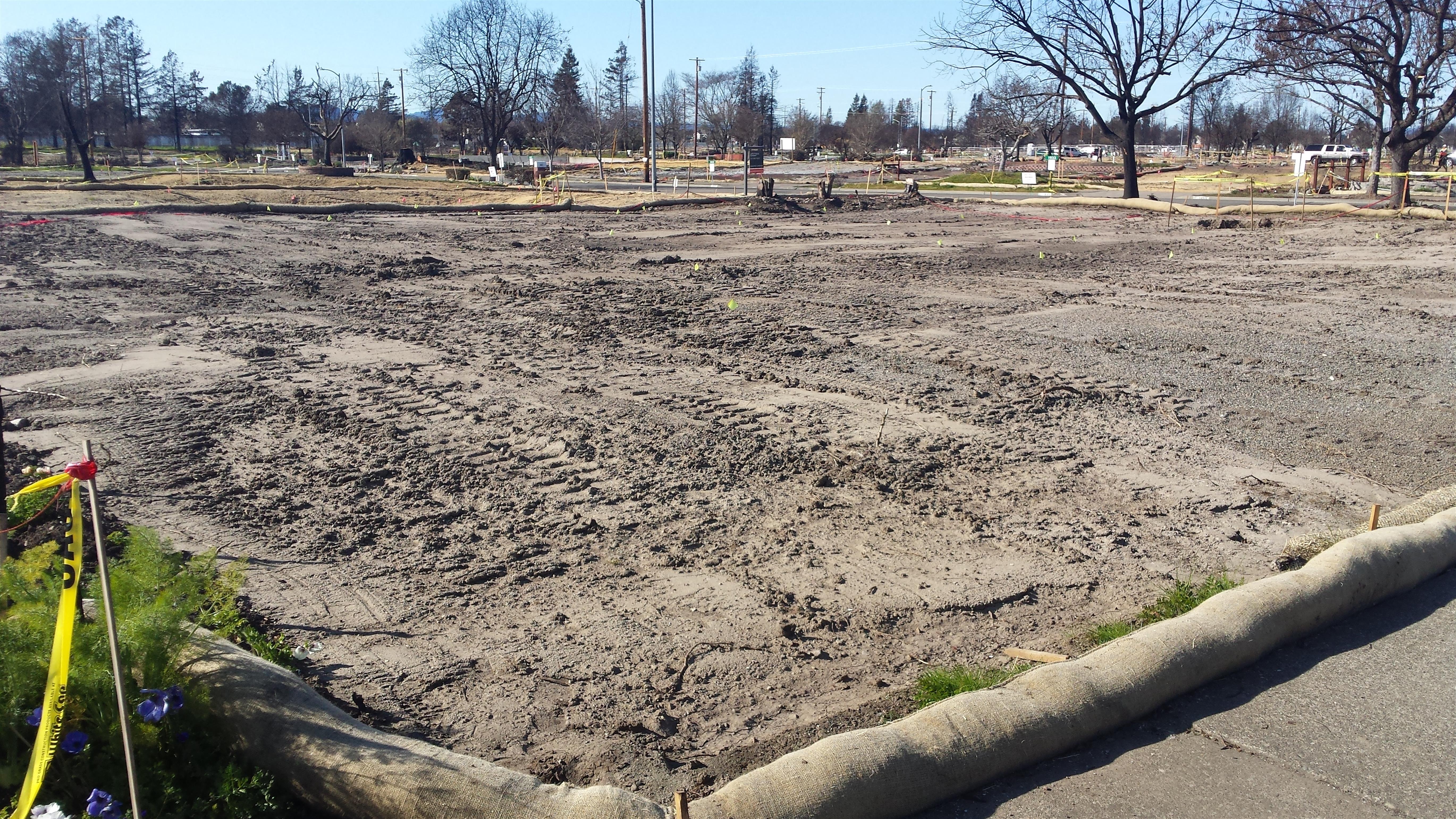
As with all the others around it, my parents house was eventually cleaned up, the debris hauled away and several inches of topsoil scraped off, to be hauled away as well. Now it is a nice dirt pad, awaiting the future:

Aftermath:

My folks did not feel the need to remain in limbo indefinitely, waiting for the uncertain rebuild process. Fortunately, they were positioned financially to be able to buy a new home. They were willing to look beyond Sonoma County but ultimately found the perfect home (truly, my mom quickly testifies she likes the new house better than the old one) in Santa Rosa. They pounced on it in December and were able to move in early in 2018. It was just in time too. Within 3 weeks of escrow closing, the house was reappraised for new insurance and had already appreciated well over 100,000 dollars. Thus is the dividend of losing over 6,000 houses to fire in a market already short on housing. The good fortune of finding a great house in an exceedingly tight market was compounded by the fact that the insurance company could only find like housing for people who lost houses 2-3 hours away. The reality of just how short housing now is in Sonoma County was quite stark.

As I write this one year after the fire, they are pretty much settled and have moved on. My parents are resilient people and were not going to sit around once the fire hit. It was time to move on and move on they did. Despite all the loss, I look back fondly at the days spent at the old house with my parents and my brother. The four of us, the old nuclear family that once lived there, spent the days sifting and rummaging through the debris but also laughing, reminiscing and enjoying each others company one last time at the place where we had lived our lives. It was a lot of fun and a healthy act of closure as we turned the page from one phase of my parent’s lives to another. I am grateful for my family and I am grateful that life is still good, in spite of the flames.


Posts navigation

← Older Entries
Newer Entries →
    • Recent Posts

      • Winter Shows Up When It Will
      • January Rolled By With Mud, Then Very Dry
      • Mount Shasta 2025 – A Year In Images
      • Mount Shasta On Either Side Of Christmas
      • Adrift In An Ocean Of Fog
      • December Has Been Spectacular Thus Far Pt. II (A Magnificent Lenticular)
      • December Has Been Spectacular Thus Far Pt. I
      • Lenticular Interrupted
      • A Stormy Wave And A Truchas Sunset
      • Aurora Lenticularis
    • Enter your email address to follow Hike Mt Shasta and receive notifications of new posts by email.

    • Archives

      • February 2026
      • January 2026
      • December 2025
      • November 2025
      • October 2025
      • September 2025
      • August 2025
      • July 2025
      • June 2025
      • May 2025
      • April 2025
      • March 2025
      • February 2025
      • January 2025
      • December 2024
      • November 2024
      • October 2024
      • September 2024
      • August 2024
      • July 2024
      • June 2024
      • May 2024
      • April 2024
      • March 2024
      • February 2024
      • January 2024
      • December 2023
      • November 2023
      • October 2023
      • September 2023
      • August 2023
      • July 2023
      • June 2023
      • May 2023
      • April 2023
      • March 2023
      • February 2023
      • January 2023
      • December 2022
      • November 2022
      • October 2022
      • September 2022
      • August 2022
      • July 2022
      • June 2022
      • May 2022
      • April 2022
      • March 2022
      • February 2022
      • January 2022
      • December 2021
      • November 2021
      • October 2021
      • September 2021
      • August 2021
      • June 2021
      • May 2021
      • April 2021
      • March 2021
      • February 2021
      • January 2021
      • December 2020
      • November 2020
      • October 2020
      • September 2020
      • August 2020
      • July 2020
      • June 2020
      • May 2020
      • April 2020
      • March 2020
      • February 2020
      • January 2020
      • December 2019
      • November 2019
      • October 2019
      • September 2019
      • August 2019
      • July 2019
      • June 2019
      • May 2019
      • April 2019
      • March 2019
      • February 2019
      • January 2019
      • December 2018
      • November 2018
      • October 2018
      • September 2018
      • August 2018
      • July 2018
      • June 2018
      • May 2018
      • April 2018
      • March 2018
      • February 2018
      • January 2018
      • December 2017
      • November 2017
      • October 2017
      • September 2017
      • August 2017
      • July 2017
      • June 2017
      • May 2017
      • April 2017
      • March 2017
      • February 2017
      • January 2017
      • December 2016
      • November 2016
      • September 2016
      • August 2016
      • July 2016
      • June 2016
      • May 2016
      • April 2016
      • March 2016
      • February 2016
      • January 2016
      • December 2015
      • November 2015
      • September 2015
      • August 2015
      • July 2015
      • June 2015
      • May 2015
      • April 2015
      • March 2015
      • February 2015
      • January 2015
      • December 2014
      • November 2014
      • July 2014
      • June 2014
      • May 2014
      • April 2014
      • March 2014
      • February 2014
      • January 2014
      • December 2013
      • November 2013
      • October 2013
      • September 2013
      • August 2013
      • July 2013
      • June 2013
      • May 2013
      • April 2013
      • March 2013
      • February 2013
      • January 2013
    • Categories

      • Boy Scouts
      • Cascade Range
      • Castle Crags
      • Desert
      • Echo Point
      • Glaciers
      • Hiking
      • How things came to be…
      • Klamath Mountains
      • Konwakiton Outdoor Designs
      • Lakes
      • Lenticular Clouds
      • Maps
      • Marble Mountains
      • Meadows
      • Mount Eddy
      • Mount Shasta
      • Mount Shasta History
      • Napa County
      • Off Season Trails
      • Pacific Crest Trail
      • Peaks
      • Rivers
      • Rock Climbing
      • Scott Mountains
      • Seldom Seen
      • Shasta Valley
      • Sierra Nevada
      • Siskiyou Mountains
      • Sonoma County
      • Spring Trails
      • sunrise
      • sunset
      • Trinity Alps
      • Trinity Divide
      • Truchas Ridge
      • Uncategorized
      • Water
      • Waterfalls
      • Wilderness
      • Wildflowers
      • Wine Country
      • Winter Trails
      • Yosemite
    • Meta

      • Create account
      • Log in
      • Entries feed
      • Comments feed
      • WordPress.com
    • Copyright © 2013-2024 by Bubba Suess
      DISCLAIMER: Any use of the information contained in this site by any and all persons is done at their own risk. The operator of this site shall be held harmless from any and all alleged claims, demands, causes of action, liability, loss, damage and/or injury to property or persons whether brought by an individual or other entity. This indemnification applies, without limitation, to all actions by an individual or other entity as a result of their use of information contained in this site.
    Blog at WordPress.com.
    Hike Mt. Shasta
    Blog at WordPress.com.
    • Subscribe Subscribed
      • Hike Mt. Shasta
      • Join 983 other subscribers
      • Already have a WordPress.com account? Log in now.
      • Hike Mt. Shasta
      • Subscribe Subscribed
      • Sign up
      • Log in
      • Report this content
      • View site in Reader
      • Manage subscriptions
      • Collapse this bar
     

    Loading Comments...