Hike Mt. Shasta

Exploring the Mount Shasta Region

  • Home
  • Trails
    • Mount Shasta Trails
      • Brewer Creek Trail
      • Clear Creek Trail
      • Gray Butte Trail
      • Green Butte Ridge Trail
      • Horse Camp Trail
      • North Gate Trail
      • Old Ski Bowl Trail
      • Panther Meadow Trail
      • South Gate/Squaw Meadow Trail
      • Whitney Falls Trail
    • Trinity Divide Trails
      • Blue Divide Trail
      • Castle Lake Trail
      • Castle Lake Shore Trail
      • Cliff Lake Trail
      • Deadfall Lakes Trail
      • Gray Rock Lakes Trail
      • Gumboot Trail
      • Heart Lake Trail
      • Porcupine & Toad Lakes Via Pacific Crest Trail
      • Seven Lakes Basin Via Pacific Crest Trail
      • Sisson-Callahan Trail
      • Soapstone Trail
      • South Mumbo Scramble
      • Tamarack Lake Trail
      • Toad Lake Trail
    • Castle Crags Trails
      • Burstarse Falls Via Pacific Crest Trail
      • Castle Dome Trail
      • Flume Trail
      • Lower Castle Crags Via Pacific Crest Trail
      • Root Creek Trail
    • Scott Mountains Trails
      • Bluff Lake & Cement Bluff via Pacific Crest Trail
      • Caldwell Lakes Trail
      • China Mountain Scramble
      • Cory Peak and Bull Lake via Pacific Crest Trail
    • Cascade Crest
      • Ash Creek Butte Scramble
      • Goosenest Trail
      • Juanita Lake Trail
      • Orr Lake Trail
    • Mount Shasta City Area Trails
      • Black Butte Trail
      • Box Canyon Trail
      • Gateway Trail
      • Lake Siskiyou Trail
      • Mount Shasta City Short Trails
      • Ney Springs Canyon Trail
      • Spring Hill Trail
    • Shasta Valley Trails
      • Black Lava Trail
      • Haystack Trail
      • Lake Shastina Trail
      • Pluto Cave Trail
      • Trout Lake Trail
      • Yellow Butte Trail
    • Sacramento River Trails
      • Dunsmuir Trail
      • Hedge Creek Falls Trail
      • Sacramento River Trail
      • Sims History Trail
    • McCloud River Trails
      • Ash Camp To Ah-Di-Na Via Pacific Crest Trail
      • McCloud River Falls Trail
      • McCloud River Preserve Trail
      • Squaw Valley Creek Trail
      • McCloud River Trail: Algoma Camp to Nitwit Camp
      • McCloud River Trail: Nitwit Camp to Cattle Camp Swimming Hole
      • McCloud River Trail: Cattle Camp Swimming Hole to Camp 4
      • McCloud River Trail: Camp 4 to Upper McCloud Falls
      • McCloud River Trail: Pine Tree Hollow Loop
    • Trails Further Afield
      • Trinity Alps Trails
        • Bear Lakes Trail
        • Billys Peak Trail
        • Boulder Creek Lakes Trail
        • Boulder Lake Trail
        • Canyon Creek Trail
        • Caribou Lakes Trail
        • East Boulder Lake Loop
        • East Weaver Lake Trail
        • Four Lakes Loop
        • Granite Peak Trail
        • Grizzly Creek Trail
        • Gulch Lakes Loop
        • Hidden Lake Trail
        • South Fork Lakes Trail
        • Stoddard Lake Trail
        • Stoney Ridge Trail
        • Tangle Blue Lake Trail
      • Warner Mountains
        • Emerson Creek Trail
        • Highgrade Trail
        • Patterson Lake Via Warner Summit Trail
        • Pine Creek Trail
        • Squaw Peak Trail
  • Articles
    • Trails By Area
      • Mount Shasta
        • Vistas, Meadows And Waterfalls: Three Best Hikes On Mount Shasta
        • The End Of The Road: Three Hikes In The Old Ski Bowl Area
        • Two Trails From Bunny Flat
        • Three Trails On Mount Shasta’s East Side
        • Mount Shasta’s Hummingbirds
      • Trinity Divide
        • Great Lakes: Top Five Lake Basins In The Trinity Divide
        • The Headwaters Of The South Fork Of The Sacramento River
        • Neglected Headwaters: Two Lesser Lake Basins On The South Fork
        • Gumboot Saddle: Two Hikes On The PCT
        • Descent Into Mystery: The Sisson-Callahan Trail
        • Mumbo Basin – Overlooked On The West Side
        • The Headwaters Loop: A Proposed Backpacking Loop In The Trinity Divide
      • The McCloud River
        • The McCloud River Trail
      • Shasta Valley
        • Jewels In The Desert
      • Scott Mountains
        • Great Scott! Two Scott Mountains Hikes On The PCT
      • Trinity Alps
        • Carubou Lakes: Trinity Alps On A Grand Scale
        • Switchbacks To Heaven: The Trinity Alps’ Stoney Ridge Trail and Four Lakes Loop
        • Trinities In Proximity: Two Trinity Alps Trails With Easy Access From Mount Shasta
        • Trails in the Carter Meadows Area
        • Trinity Alps Views of Mount Shasta
        • The Psychological Value Of The Trinity Alps
    • Waterfalls
      • Three Waterfalls On Mount Shasta
      • McCloud River Waterfalls
      • Sacramento River Waterfalls
      • Trinity Divide Waterfalls
      • Trinity Alps Waterfalls
      • Avoiding A Dry Whitney Falls
    • Off Season Trails
      • Three Winter Hikes Near Mount Shasta City
      • Winter Hikes In Shasta Valley
      • Winter Hiking In The Shasta Valley Wildlife Refuge
      • Winter Hikes On The Sacramento River
      • Winter Hikes On The Lake Siskiyou Trail
      • Spring Hikes In The Castle Crags
      • Spring Hikes On the Upper McCloud
      • Spring Hikes On The Lower McCloud River
    • Points Of Interest
      • Mount Eddy: Overshadowed, Underrated
      • Black Butte: Hiding In Plain Sight
      • Castle Dome: Steadfast And Staggering
      • Mount Shasta Hoodoos
      • Sacramento Scrambling
      • The Shasta River
      • The Castle Creek Watershed
      • Mount Shasta East Side Glacier View
      • 5 Fantastic Mount Shasta Vistas
      • 5 Highest Peaks Around Mount Shasta
      • 5 Best Hikes On Creeks And Rivers
      • 5 Interesting Footbridges
      • Three Spectacular Drive-To Sunset Vistas
    • North State Geography
      • Introduction
      • Seven Major Regions
      • The California Cascades
      • Klamath Mountains Pt. I
      • Klamath Mountains Pt. II
      • The Great Canyons Of Mount Shasta
      • Mount Shasta, Timberline, And The Relative Size Of Cascade Volcanos
      • Four Eruption Cones Of Mount Shasta
      • Mount Shasta’s Medial Moraine
    • Northern California Review
      • North Table Mountain
      • Lakes Basin Recreation Area
      • Eastern Sierra Fall Color
      • Sonoma County
      • Central Sierra Nevada
      • Orland Buttes
    • Seldom Seen
      • Ash Creek Falls
      • Mud Creek Canyon
      • Lower Mud Creek Canyon
      • Diller Canyon
      • Lower Cascade Gulch
      • The Grey Rocks
      • Castle Creek
      • Upper Wagon Creek
      • Fawn Creek Canyon
      • Confluence of the Sacramento River and Castle Creek
      • Upper Klamath River Canyon
      • Hole In The Ground Geologic Area
      • Ash Creek Butte Fossil Rock Glacier
    • Mount Shasta History
      • Vantage Lost: The Everitt Memorial Vista
      • A Yosemite-Mount Shasta Connection
      • Whitney – What’s In A Name?
      • Mount Shasta Area and the 1838 Exploring Expedition
      • A 19th Century Engraving Of An Epic Mount Shasta Vista
      • Vintage 1907 Color Photos
      • A Misleading Painting
      • A Mysterious Painting
      • A Mysterious Painting Pt. II
      • Stereographic Mt. Shasta
      • Year One Of Hike Mt Shasta
      • Year Two Of Hike Mt Shasta
      • Year Three Of Hike Mt Shasta
      • Year Four Of Hike Mt Shasta
      • Year Five Of Hike Mt Shasta
      • Year Six Of Hike Mt Shasta
      • Year Seven Of Hike Mt Shasta
    • Image Galleries
      • Mount Shasta Trails Gallery
      • Mount Shasta Sunrise Gallery
      • Mount Shasta Sunset Gallery
      • Lenticular Cloud Gallery
      • Mount Shasta NON-Lenticular Clouds
      • Mount Shasta Reflection Gallery
      • Telephoto Gallery
      • Mount Shasta Area Fall Color
      • Castle Crags Gallery
      • Waterfalls Gallery
      • Trinity Divide Lakes Gallery
      • Mount Shasta Area Rivers Gallery
      • Shasta High Desert Gallery
      • Mount Shasta GIF Gallery
    • Random Notes
      • Revew: Three Mount Shasta Trail Maps
      • A Mount Eddy Wilderness?
      • New Land Additions For The Castle Crags
      • Book Plug: Mount Shasta Area Rock Climbing
      • Exile: How I Came To Love Wilderness
  • Mt. Shasta Trail Map
  • Blog
  • About/Contact
  • Links
  • Truchas Ridge

Breaking Down The North State: The Klamath Mountains Pt. I

Posted by bubbasuess on February 9, 2017
Posted in: Castle Crags, Hiking, Klamath Mountains, Lakes, Mount Shasta, Scott Mountains, Trinity Alps, Trinity Divide, Wilderness. 7 Comments

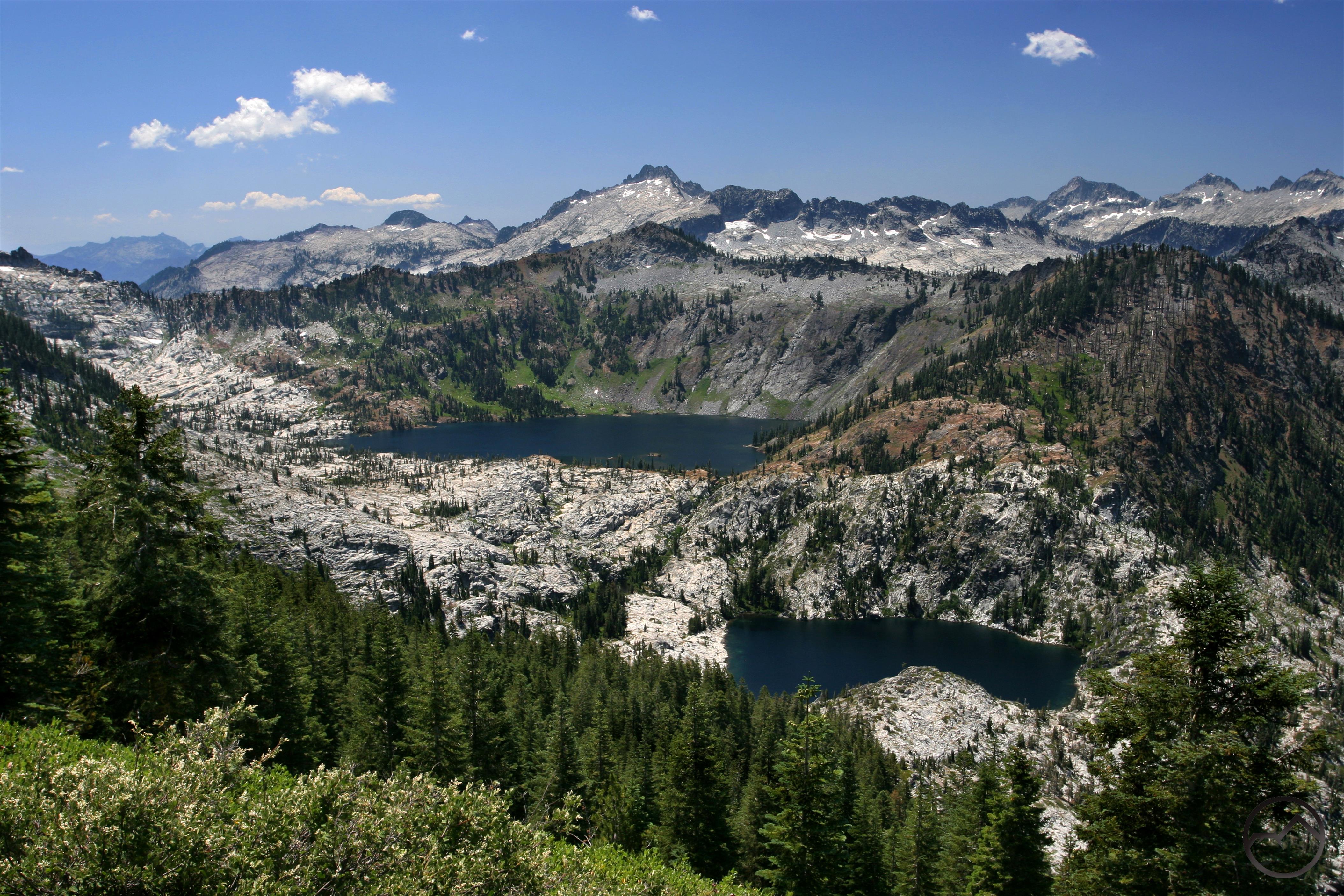
Trinity Alps, Caribou Lakes - July2009 113 copy (Custom)

The Trinity Alps are one of the most spectacular regions in the Klamath Mountains.

Hidden away in the extreme northwest corner of California, the vast Klamath Mountains are California’s least known major mountain range. While the Sierra Nevada, the Cascades, the Transverse and Peninsular Ranges and the Coast Ranges are all well known for both iconic scenery and because of their relative proximity to population centers, the Klamath Mountains are essentially lost to the public mind. For most people, the large chunk of California amounts to little more than a big blank spot on the map. Yet that which is largely unknown to most is beloved to the relative few who have the pleasure of exploring this region. Here there are great forests of incredible proportions and diversity, large rivers surging through deep canyons, razor-edge peaks towering above glittering alpine lakes and thundering waterfalls, commanding awe and admiration. In short, these are grand mountains, ranking among the finest and most beautiful in the country. The only attribute they lack is fame.
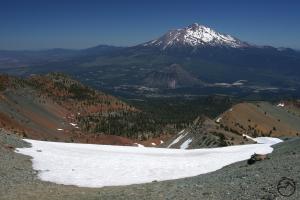
Mount Shasta and the Cascades seen from Mount Eddy in the Klamaths.

Mount Shasta and the Cascades seen from Mount Eddy in the Klamaths.

Unlike most mountain ranges in California, the Klamath Mountains have somewhat amorphous borders, connecting to other mountain ranges on almost all sides as well as being bisected by the border with Oregon. Broadly speaking, the range extends east for 80 miles from the narrow margin of the Coast Range’s hills just inland from the Pacific Ocean to where the range encounters the Cascade Range. In the south, it once again abuts the Coast Range and proceeds northward over 120 miles to the Oregon border. Geologically, the Klamath Mountains continue into Oregon but north of the state line, the range is recognized more readily by one of its subranges, the Siskiyou Mountains and the Kalmiopsis Wilderness. In total, the Klamaths encompass just under 10,000 square miles, the preponderance of which lies in California. The California portion contains the highest and most rugged terrain, the most dramatic mountains, the vast majority of the lakes and most of the rivers.

While other major mountain ranges in California like the Sierra Nevada have distinct regions, they are still best known as a cohesive whole. The opposite is true of the Klamath Mountains. The range is better known by its major subranges. Most well-known are the Trinity Alps, the Marble Mountains and the Siskiyous. Other less well-known subranges include the Trinity Divide, the Scott Mountains, the Russian Wilderness, the North Yolla Bollys, the Trinity Mountains and the Scott Bar Mountains. There are also substantial regions that are not identified as distinct subranges. The most notable of these lies at the southern end of the Klamath Mountains, found between the North Yolla Bollys and the Trinity Alps and Trinity Mountains. Though some of these subranges are not famous or well-known, there is at least some awareness of them amongst people interested in outdoor recreation or ecology and geography. By and large, however, this area is unfamiliar to most people.
klamathmt

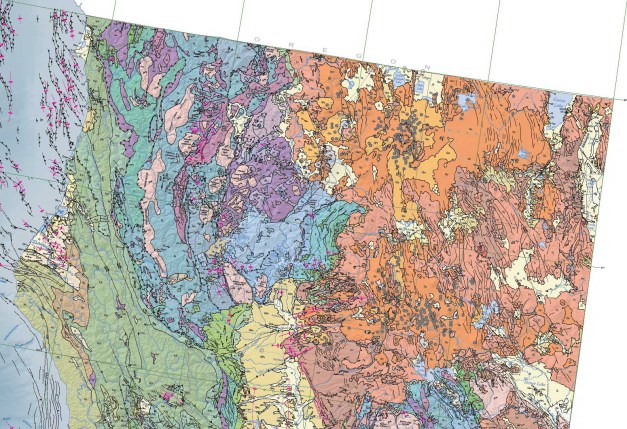
The blue, purple and pink colors mark the geologic extent of the Klamath Mountains.

The number of subranges in the Klamath Mountains is indicative of the exceptional geologic complexity that characterizes these mountains. Numerous, seemingly unrelated rock types are jammed together in what appears to be random patterns. Rocks from the bottom of seafloors are punctuated by great batholiths of volcanic rock while other types of marine rock swirl around in great waves the scope of which is difficult to fathom without the aid of maps. The complex geology of the Klamath Mountains is one of the two primary metrics by which the extent of the Klamath Mountains is determined. When looking at the geologic map, the range is easy to identify. The Klamaths are predominantly composed of sedimentary and ultramafic rocks with significant granite intrusions. Other types of rock like limestone and metavolcanic rocks also have notable intrusions scattered around the range. This is in sharp contrast with the recent volcanic rocks that are adjacent on the east side and the large block of marine sediment and sandstone conglomerates that form a large block of the North Coast Range to the west and south.

It is worth noting that the Klamath Mountains are almost geologically identical to the northern Sierra Nevada. The presence of large blocks of sedimentary and ultramafic rocks punctuated by significant intrusions of granite is typical of both regions. Looking at the Geologic Map of California, it appears that the Klamaths were once part of the Sierra Nevada but were wrenched away from the main range, cut off by major volcanic flows from the Cascades or both. Either way, the regions closely resemble each other and hikers who are familiar with both often comment on the striking similarities. A third region, the Blue Mountains of eastern Oregon also seem to be composed in a similar fashion, leading some to speculate that these mountains were also part of same cordillera.
klamathwatershed

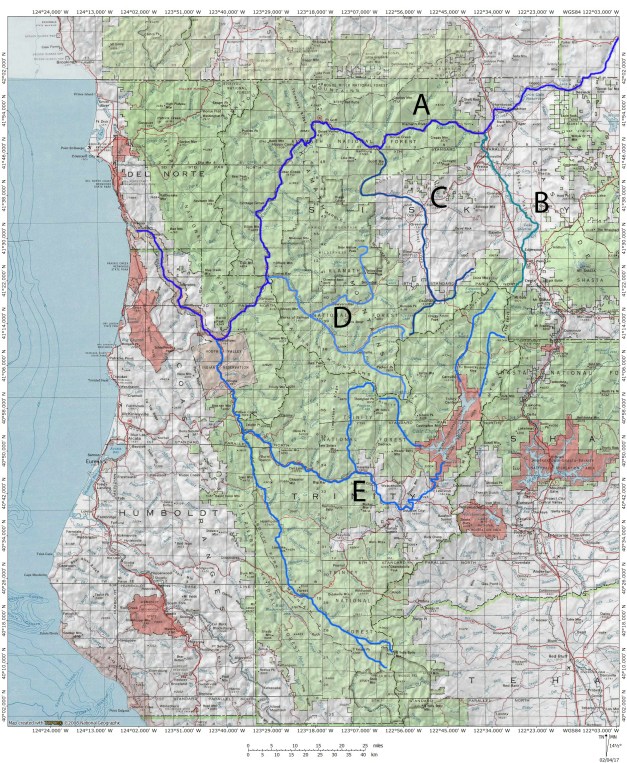
Major rivers of the Klamath Mountains: (A) Klamath River, (B) Shasta River, (C) Scott River, (D) Salmon River, (E) Trinity River

The other distinct element of the Klamath Mountains, particularly in the California section of the mountains, is the rivers that course through the range. Amazingly, the watersheds of these rivers align almost perfectly with the geologic borders. Several large mountain rivers are found here. Chief among them is the Klamath River, from which the range gets its name. This large river’s headwaters are located in central Oregon, where the Sprague, Williamson and Sycan Rivers all flow southward and join around Upper Klamath Lake, where the Klamath River itself begins. The river then flows through the Klamath Basin and the Cascade Range before passing just north of the Shasta Valley. Beyond the valley, the river enters the Klamath Mountains province. While already a large river, it is here that it begins to gather the waters of the numerous rivers that arise in the mountains of the Klamaths. First to join is the Shasta River, followed by the Scott, Salmon and Trinity Rivers. This last is a large, long and mighty river in its own right and drains the almost the entire southern half of the Klamath’s California portion. Major creeks, including Clear, Wooley, Gridder, Canyon and Hayfork Creeks all have significant watersheds of their own. The watersheds of these rivers all correspond to the geologic extent of the range. Equally amazing, with the notable exception of the dam that forms Trinity Lake, all of these rivers are undammed and wild as they flow through the Klamaths (three dams are found on the Klamath River as it passes through the Cascades but none lie downstream).
The Trinity Alps boast vast alpine expanses.

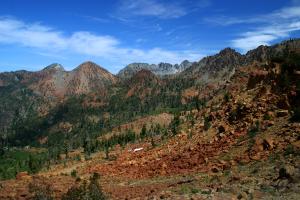
The Trinity Alps boast vast alpine expanses.

In keeping with the forgotten nature of the Klamath Mountains, it is also one of the wildest regions of California. There roughly 1,000,000 acres of wilderness in the California section of the Klamaths, making it the second largest alpine wilderness block in the state. Only the Sierra Nevada has more montane wilderness. The most notable wildlands in this part of the Golden State is the massive Trinity Alps Wilderness. Boasting and amazing 537,363 acres, it is one of the largest wilderness areas in California and the second largest administered by the U.S. Forest Service (after the magnificent John Muir Wilderness, which encompasses 652,790 spectacular acres). The large block of wildlands is complemented by low regional population and significant distance from population centers. Consequently, much of this area is wild with a capital “W”.
klamathwild2

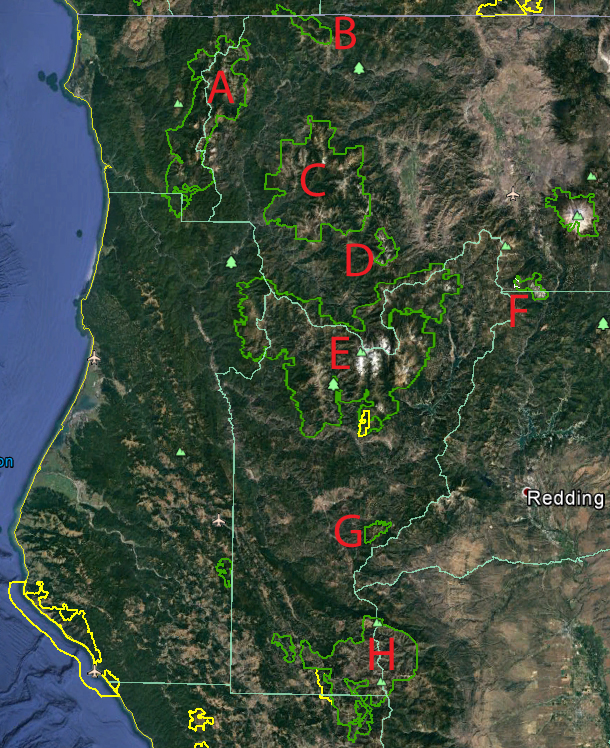
Klamath Mountains Wilderness Areas:(A) Siskiyou Wilderness, (B) Red Buttes Wilderness, (C) Marble Mountains Wildernss, (E) Trinity Alps Wilderness, (F) Castle Crags Wilderness, (G) Chanchelull Wilderness, (H) Yolla Bolly-MIddle Eel


There are 7 wilderness areas entirely within the Klamath Mountains. As mentioned previously, the northern portion of the Yolla Bolly-Middle Eel Wilderness falls within the Klamath province, bringing the total up to 8. Most of the acreage is focused on the 3 largest areas, the Trinity Alps, the Marble Mountain and the Siskiyou Wilderness areas. Four more, smaller areas are scattered around the range. While there are notable exceptions (Mount Eddy, Scott Mountains), most of the best scenery and recreational opportunities fall within the boundaries of these wild areas. In some cases, these wilderness areas correspond to the major subranges within the Klamath Mountains but for the most part they are only taking in isolated portions of larger geologic blocks. The scale of the areas ranges from over half a million acres in the Trinity Alps to the tiny Chanchelulla Wilderness, which has less than 10,000 acres. The heart of the Klamaths is dominated by the Trinity Alps, Russian and Marble Mountains Wilderness areas. These three wildlands form a nearly contiguous nucleus that accounts for 75% of the protected wilderness in the Klamath Mountains.

Siskiyou Wilderness
Fall at the Devils Punchbowl.

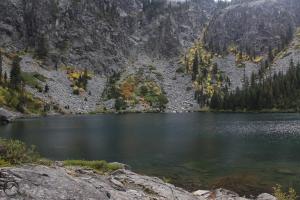
Fall at the Devils Punchbowl.

The largest block of wilderness in the Siskiyou Mountains, the 179,847 acres of the Siskiyou Wilderness contain a beautiful collection of alpine lakes and rugged peaks. Located at the southern end of the long crescent of the Siskiyous that runs from Interstate 5 in the northeast to the confluence of the Klamath and Trinity Rivers in the southwest, the Siskyou Wilderness is easily the most rugged stretch of mountains in the entire range. The wilderness is dominated by spectacular Preston Peak, which looms 1,000 feet or more above any mountain within a 20 mile radius. Though not as tall, other peaks, including Bear Mountain, El Capitan, The Lieutenants, and Black Butte also provide rugged interest to the range’s skyline. The principle watershed within the Siskiyou Wilderness is Clear Creek. Fed by several alpine lakes and meadows, this large waterway rises at the north end of the wilderness and flows 25 miles to the southeast, where it meets the Klamath River. Numerous trails provide access to the interior of the wilderness. The most popular trails generally lead to lakes, the most notable of which is the awesome Devils Punchbowl.

Red Buttes Wilderness
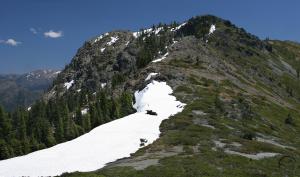
Figurehead Mountain in the Red Buttes Wilderness.

Figurehead Mountain in the Red Buttes Wilderness.

One of the smaller wilderness areas in the Klamath Mountains, the Red Buttes Wilderness encompasses 20,133 acres, of which 16,356 are within California, the rest falling just north of the Oregon border. The name comes from twin towers of the Red Buttes, the highest and most interesting peaks in the wilderness. Like much of the wilderness, the buttes lie along the crest of the Siskiyous. The north side of the mountains drain into the Rogue River via the Applegate River. On the south the water makes its way into the Klamath River. Much of the wilderness is composed of sedimentary rock but the Red Buttes themselves are part of an isolated block of ultramafic rock, one of the major rock types present in the Klamath Mountains. A few small lakes are found throughout the wilderness, Azalea Lake being one of the prettiest and most popular. Access to the Red Buttes Wilderness is best coming south from Oregon. The Pacific Crest Trail’s steep climb out of Seiad Valley is the only good access from the California side.

Marble Mountains Wilderness
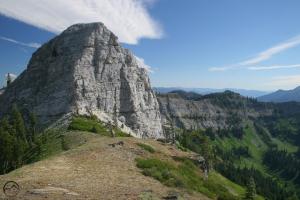
The Marble Mountain in the Marble Mountains Wilderness

The Marble Mountain in the Marble Mountains Wilderness

Divided between the watersheds of three of the Klamath Mountains’ major rivers, the Marble Mountains are the second largest wilderness area in the Klamaths. This incredible 225,114 acre wildland feeds water into the Klamath, Salmon and Scott Rivers. The creeks that flow into the rivers originate in the dozens of alpine lakes scattered around the wilderness. Many of the lakes are large, deep and set in heavily glaciated cirque basins. Indeed, the lakes of the Marble Mountains are one of the star attractions for hikers. Several prominent peaks also dot the landscape. The most memorable being the wilderness area’s namesake, the Marble Mountain. One of the more unique mountains in the west, the stark white marble of this unusual mountain stands out against the green forests and meadows and the ruddy peaks that surround it. Trail access to the Marble Mountains is excellent. Numerous trailheads on all sides of the wilderness create numerous hiking and backpacking opportunities.

Russian Wilderness
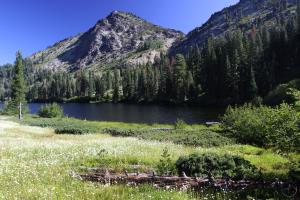
Taylor Lake.

Taylor Lake.

The diminutive Russian Wilderness occupies the easternmost fringe of the unsung Salmon Mountains. While it may be small in stature it is not small on scenery and ranks among the most beautiful in the Klamath Mountains. Composed almost entirely of granite, the Russian Wilderness occupies the highest part of the Salmon Mountains and forms the divide between the Salmon River and the Scott River. In terms of wilderness preservation, this primeval land forms a bridge between the massive Marble Mountains and Trinity Alps Wilderness Areas. Granite basins are found on both sides of the crest and are home to several large, beautiful alpine lakes. Most of these are accessed by a good network of trails which includes several miles of the Pacific Crest Trail. The wilderness takes its name from Russian Peak, the highest point in the Salmon Mountains and among the highest in the Klamath Mountains.

Trinity Alps Wilderness
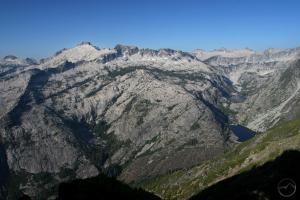
Rugged mountains of the Trinity Alps.

Rugged mountains of the Trinity Alps.

In many ways the vast Trinity Alps Wilderness is the heart of the Klamath Mountains.  While they are located near the center of the California part of the Klamaths, it is the scale of the mountains, lakes, canyons and waterfalls within the wilderness that places them at the apex of this large mountain range. Here is the most spectacular scenery, where granite towers soar thousands of feet above deep canyons, where thundering waterfalls pound against the unyielding stone and large, deep alpine lakes glitter in massive glacial cirques. The scale of the mountains and scenery is only matched by the scale of the wilderness area that protects it. It is only in the Trinity Alps that hikers and backpackers get the since of magnitude that is found amidst the great spires of the Sierra Nevada. It is here where the vastness is felt with every step. For hikers, the attractions of the Trinity Alps are legion. Fortunately an excellent trail system offers countless trip possibilities. Trips of a week or two in length are easily feasible in this awesome wilderness. While the core of the Trinity Alps falls in the Trinities proper, portions of other Klamath Mountains subranges are included within the wilderness boundary. This notably includes the southern stretch of the Salmon Mountains and the entire western half of the Scott Mountains. Consequently, the Trinity Alps Wilderness contains the headwaters of many forks of the Trinity River as well as the South Forks of the Salmon and Scott Rivers.

Castle Crags Wilderness
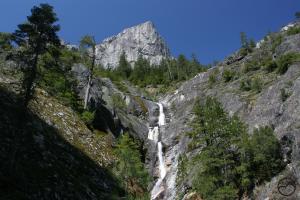
Root Creek Falls and Castle Dome.

Root Creek Falls and Castle Dome.

Covering much of a central rib of the Trinity Divide, the small 10,609 acre Castle Crags Wilderness is epic in terms of scenic qualities. The obvious centerpiece of the wilderness is the chaotic jumble of granite spires that makes up the Castle Crags. The crags are a major granite pluton that has intruded into the sea of ultramafic rock that makes up the Trinity Divide. Polished by glaciers, the Crags are favorably to parts of the Sierra Nevada in terms of appearance. However, the wilderness area is not limited to the Castle Crags alone. The western part of the wilderness includes a cluster of high peaks and all or part of two alpine lake basins. The Gray Rock Lakes are set in a deep valley over 1,000 feet below a pair of rugged summits. A little to the west, the wilderness area includes the higher reaches of the Castle Lake basin, including vista-rich Heart Lake and beautiful Little Castle Lake. The lake basins are accessed by good trails but the Castle Crags themselves are wilderness in the truest sense of the world, unpenetrated by trails and the domain of the hearty souls who scramble the steep slopes in order to scale the magnificent cliffs. Hikers have to content themselves with enjoying the view from the Pacific Crest Trail and a few other paths that travel along the base of the Crags.

Chanchelulla Wilderness

The smallest wildland in the Klamath Mountains, the Chanchelulla Wilderness is centered around its namesake peak. At only 8,062 acres, there is barely room into include Chanchelulla Peak and its lower flanks. This is also one of the least visited wilderness areas in the Klamath Mountains. Tucked away at the far southern end of the Klamaths, it is far from population centers, suffers from lack of trails and requires a long and bumpy drive to get to Deer Lick Springs, the only good access point. Nonetheless, for those seeking a truly wild and remote experience, this is a good place to explore.

Yolla Bolly-Middle Eel Wilderness
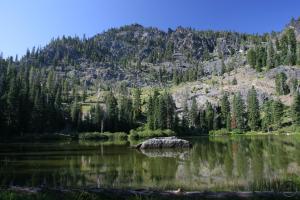
Block Rock Mountain and Black Rock Lake.

Block Rock Mountain and Black Rock Lake.

Most of the 182,299 acres of the Yolla Bolly-Middle Eel Wilderness protects a large swath of the North Coast Range’s highest terrain. The northernmost section of the wilderness contains the North Yolla Bolly Mountains, the southernmost set of peaks that belong to the Klamath Mountains. This collection of peaks is arguably the prettiest corner of the entire wilderness. It contains rugged peaks, sheer cliffs, huge fields of wildflowers and a pair of small but very scenic lakes. The North Yolla Bollys are also the headwaters of the South Fork of the Trinity River. This river, along with the geologic transition that takes place at the North Yolla Bollys, marks the southern end of the Klamath Mountains. Though it is remote, there is good access to the Klamath corner of the Yolla Bolly-Middle Eel Wilderness. A well-maintained trail system leads to all the major points of interest and beyond, into the interior of the wilderness.

Part Two of the Klamath Mountains Geography will take a different approach to the Klamaths and break the entire range down by subranges. This will hopefully bring further clarity to this mysterious mountain region.

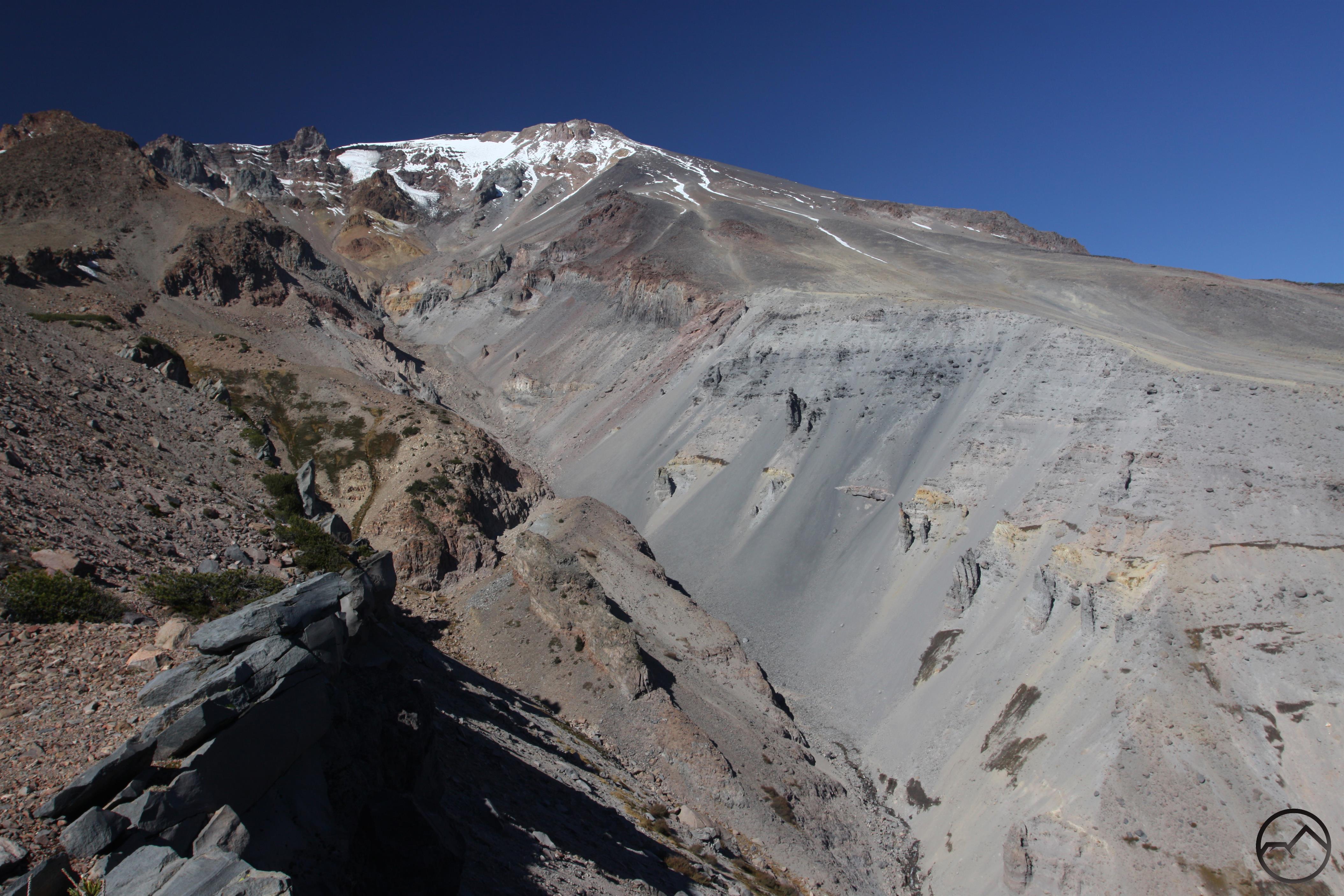
Turbulent Towers Above Mount Shasta

Posted by bubbasuess on February 4, 2017
Posted in: Hiking, Lenticular Clouds, Mount Shasta. Leave a comment

cascades-mt-shasta-feb2017-143

Tumultuous lenticular clouds form above a cloud-shrouded Mount Shasta.

The first few days of February have proven to be stormy around Mount Shasta. Fortunately, the stormy canopy above the southern end of the Shasta Valley broke open at sunset on Saturday and offered a glimpse of an incredible array of lenticular clouds that had formed over Mount Shasta and the nearby Whaleback. While Mount Shasta itself was obscured by clouds, the aerial display was nonetheless spectacular. Dark clouds still covered the rest of the Shasta Valley and the surrounding mountains but the one opening in the storm proved to be ideal, contrasting the black clouds with the towering, glowing lenticulars. It is not often that the Whaleback takes center stage over Mount Shasta, but with the great mountain lost in the storm, the broad-shouldered Whaleback was the most obvious, visible landmark. Crowned by swirling, illuminated clouds, it was a stunning sight. If it were necessary to confirm that, yes, Mount Shasta was indeed there behind the lenticular tower, the North Gate Plugs, a collection of volcanic domes on Mount Shasta’s northeast flank, were visible. It was a fortuitous parting of the storm that revealed this amazing spectacle and leads one to wonder just how many other marvels are hidden away by low storm clouds.

Click to enlarge:


Mount Shasta Landmark Locator: North Side

Posted by bubbasuess on January 29, 2017
Posted in: Hiking, Mount Shasta. 4 Comments

As you driving south on Interstate 5 from Oregon, you are greeted with a magnificent spectacle as the freeway descends into the Shasta Valley. Mount Shasta, towering 11,500 feet over the level valley floor is the unchallenged ruler of California’s North State region. It is an unforgettable sight. It is a particularly memorable view and one of Mount Shasta’s most aesthetically pleasing profiles  for a number of reasons. First, the mountain rises to its incredible heights very abruptly from a flat plain. Its magnificent stature is put on full display. Second, the great bulk of Shastina is arranged in balance with the main cone of the mountain. From the west, the mountain is somewhat off balance because of Shastina’s great size. Lastly, this is an incredible view of the mountain because of the presence of two of Mount Shasta’s 4 large glaciers. The Whitney and Bolam Glaciers, massive sheets of living ice, grace the upper flanks of the mountain, blanketing the volcano in a perpetual blanket of ice.

The image used for this landmark locator was chosen because it gives great detail on the glaciers. Many features, including bergschrunds and crevasses are easily discernible with the naked eye during summer, when the winter snow has melted away and the permanent ice has been revealed. The only major landmark missing from this view is the North Gate and the North Gate Plugs, a series of minor but prominently visible volcanic peaks on the northeast side of Mount Shasta.

View West Side Locator here.

Click to enlarge:

cascades-mt-shasta-oct2012-018-custom

cascades-mt-shasta-dec2013-002


Bluebird Day In Mount Shasta

Posted by bubbasuess on January 24, 2017
Posted in: Hiking, Mount Shasta. 8 Comments

mount-shasta-bluebird-4

Fresh snow blankets Mount Shasta and the surrounding land. 24Jan2017

After posting on the amount of snow that fell here in Mount Shasta, I can’t resist putting up some images of what the mountains around here look like after the big storm. Tuesday proved to be a gorgeous bluebird day and it was impossible not to rejoice at seeing so much snow smothering pretty much everything. The depth varied as you headed north or south from my house (which sits up on a pass) but no matter where you went it was a substantial amount. I can only imagine all the skiers at the ski park or climbing various mountains and cutting up some backcountry powder. I am eager to get some snowshoes on and head out into the woods! Enough of my thoughts though, I want to put up some pictures to show how spectacular the conditions are right now!

Click to enlarge:

Mount Shasta presides over the snow landscape.
Snowy mountain
Afternoon on Mount Shasta.

Mount Eddy looking magnificent.
Another view of Mount Eddy.
Black Butte looking not so black.

Harsh conditions evident on the summit of Black Butte.
Rime ice on the flank of Black Butte.
Ski trails on the slope of Black Butte.

20170124_094911-customBack on the home front, I had an unusual experience. The road I live on has had so much snow piled up on it that it had pretty much narrowed down from two lanes to one. The wide margins were gone and much of the pavement was swallowed up by towering ice berms. Though two cars could carefully pass, that was becoming a precarious proposition. Today, however, the county pulled out its giant rotary snowplow. This incredibly powerful machine is essentially a giant snow blower. It inched its way down both sides of the street and effortlessly ate away at 6 feet of ice on either side of the road. The sheer icy walls on either side of the pavement were 10-12 feet high! It was an inspiring sight!

Before
After

20170124_100200-customAs things settle down and get back to normal, the forecast already shows signs of more snow on the horizon. My kids continue to love playing in the snow. In particular, my 7 year old son has taken to using small, claw-shaped shovels to do some basic ice-climbing onto the roof of the garage. I am impressed with just how much this kid loves the snow. He seems to be a natural. Although he has been through storms in the past, since there has been a prolonged drought, this is the first big one he has lived through and he (as well as his younger siblings) have handled it with aplomb. The drought is essentially over, thankfully. Check out the satellite images of the state from 2014 and 2017 here to get an idea how the conditions have changed. Those images are not including this latest, massive storm!

OK, more hiking posts coming soon. Until then, stay blessed!

Big Storm Dumps Several Feet Of Snow In Mount Shasta

Posted by bubbasuess on January 23, 2017
Posted in: Hiking, Mount Shasta. 16 Comments

cascades-mt-shasta-jan2017-289_edited-1-custom

Sun shines on Mount Shasta after a major storm system moved through the area. 23Jan2017

Well, that was fun. When I last posted on the conditions here in Mount Shasta, I speculated that the storm system passing through could drop up to 3 feet of snow. Instead, it turned out to be about 5 feet. The last 6 days have been a mix of great beauty and serenity coupled with a significant amount of work clearing the snow. While it was exhausting at times, the beauty of the landscape after a healthy dose of snow and the fun my kids had made it a wonderful and memorable week. This has easily been the biggest storm to hit the Mount Shasta area since March of 2011, so in many ways it was a reintroduction to real winter weather after the drought that has plagued California the last few years. Needless to say the drought is over. There may be more dry spells ahead but for the time being, Northern California is inundated.

Knowing that this was going to be a big storm, I tried to document the storm’s progress. One of the best places to do this was in my backyard, where there are a few good landmarks by which to gauge the depth of the snow.

Click to enlarge:


I also took a few shots of my driveway:


Here are a couple of shots of my trailer by the back barn, showing the snow’s progress:

Midway through storm, 2017
End of storm, 2017

20170119_085645-customMuch of the snow fell at night so waking up each morning, we were able to ascertain how much work lie ahead plowing out all the white stuff. I found during the big storms of 2010 and 2011 that if I did not maintain the paths and roads on my property each day there is significant snowfall, I could lose access to areas for the duration of the winter. Since this was the first big storm for many years, there were plenty of branches waiting to be broken under the load of the heavy snow. One morning I went out to my garage to fire up my snow blower and found my path impeded by a large chunk of maple tree. I fired up the chainsaw and cut it up, moved the pieces out of the way and then proceeded to clear out the back driveway.

20170121_100557-customI love the peace and quiet that comes with a snow storm. The snow muffles sounds and what is already quiet is made quieter. The hush that falls on the forest edifies. Of course, the kids then head out and the sounds of laughter and fun fill the air as they slide, sled, dig, throw and otherwise frolic. Kids, of course, mean kid toys and that means more work. Specifically, the trampoline must be cleared of snow. While out there shoveling off the large surface, I was joined by our intrepid cat Duncan, who, though he enjoys lying by the warm fire, is the only one of our felines who is excited to head out into the forest to hunt and follow his people around.

So now the storm passes and sunshine returns to the land. One more once with the snowblower to clear out the remnants of snow in the pathways and the driveway and I think I will have everything tidy and functional. Then I am left with the beauty until it gets warm or it rains (or both). We’ll enjoy it while it lasts. Here are a few shots from around my house and the guest cabin:

Before


cascades-mt-shasta-jan2017-325-customIn town, there is a flurry activity as snow removal remains a constant endeavor. Tractors great and small, snow blowers, ATV’s with plows and shovels all work to get life back to normal. Of course, watching my neighbor drive his snowmobile up and down the street is not normal, but then having 18 inches of snow on the street is not typical either. Nonetheless, normal is where things are headed. It is obvious there are lots of visitors in town, both to enjoy playing in the snow and also for the skiing, which should be fantastic this next week.

I have stated that HikeMtShasta is not going to become a weather blog, but this storm was too big not to post some pictures of what it has wrought. But to keep this on the point of hiking and the mountains which is, afterall, what this is supposed to be about, it is worth noting that there is now a significant snowpack in the mountains. Even if this were the end of the precipitation for the winter (doubtful) it would still be the best snowpack since 2011. This means that trails in the high country will not open up as early as they have been the last few years. It may also mean that the road up to the Old Ski Bowl and the trailheads that are located there may not open until later in July, well beyond the customary opening date of July 1st.  I will update on that when it is relevant.

Thanks for checking in on how things have gone up here in Mount Shasta. I do have a couple of hiking posts in the works. I should be able to start putting them up later this week. Until then, enjoy the winter and stay blessed!

cascades-mt-shasta-jan2017-320c-custom

Thoughts On Winter In Mount Shasta

Posted by bubbasuess on January 16, 2017
Posted in: Desert, Mount Shasta. 8 Comments

cascades-mt-shasta-jan2017-230-custom

A small lenticular cloud rests on the summit of Mount Shasta. 16Jan2017

Here in Mount Shasta we have had a nice lull in the winter weather. Some sunny skies and slightly warmer temperatures have given us a respite from plowing snow and a more housebound life. The intensity of the storms working through Northern California has been pretty hard. The precipitation has come as both snow and rain, meaning that a healthy snowpack is already in place while the rain is bringing immediate relief to the thirsty land.

20170112_081338Reservoirs around the northern part of the state have been filled and are releasing a lot of water, making room for more storm runoff and also the spring thaw, which is still a few months away. As I write this, Shasta Lake, the largest reservoir in California, is only 30 feet from its crest. Its level has been dropping since so much water has been released. In Redding, the Sacramento River is running wide, deep and swift, a ferociously large watery snake winding through the city. I can only imagine how big it is by the time it hits the delta.

The other day I saw a report on the state of the drought in Northern California. Who knows what lies in the future but between the decent winter last year and the heavy precipitation we have had now, the drought is, for all intents, over for the time being. It now comes down to managing the water for drier times that no doubt lie ahead. Of course, after reading Cadillac Desert, one is not filled with a lot of optimism on that account.  Nonetheless, the report I was looking at should give some hope, especially via the comparison of NASA’s satellite images of Northern California (which can be seen here).

Click to enlarge:

14Jan2014
13Jan2017

Note how much greener the state is and the vast snowpack that is evident in the image from a couple of days ago. In the older image the North Coast Range, especially the higher regions like the Yolla Bollys and the Snow Mountain area are almost devoid of snow. This year, there is a vast area with a deep snowpack. The Sierra Nevada, Klamaths, and the Cascades all have substantially larger snowpacks that extends down to much lower elevations. The spring thaw will be something to behold. Also note the Sacramento River overflowing its banks between Sacramento and San Francisco Bay. Large swaths of the Delta have been inundated. Interestingly, the coastal waters are much foggier as the discharge of the rivers into the Pacific Ocean. The outlets of the Russian, Eel and Klamath Rivers are all easily discernible. The vast amounts of sediment carried by the Sacramento and San Joaquin Rivers, the largest river system in California, are impounded in San Pablo Bay, and do not reach the open sea through the Golden Gate.

16jan2017weather2Of course, the winter is far from over. Only halfway through January, there is still at least two months of wintry ahead of us. Even now, a new storm, possibly more powerful than the last system, is brewing. If the weather report is accurate, there is the possibility of three or so more feet to fall at lower levels. I am not sure if anyone wants me to blog through that storm too (I swear I am not turning this into a weather blog. It’s winter and there is not as much to write about!).

So, with more snow on the way, I hope everyone is enjoying the winter weather and the relief from the drought that it is bringing. Living up here in Mount Shasta, it is a lot of work, clearing all the white stuff that falls around the house. Nonetheless, it is a provision for our thirsty world. Stay blessed out there and I will see y’all on the other side of the storm!

cascades-mt-shasta-jan2017-201-custom

Mount Shasta Storm Follow-Up

Posted by bubbasuess on January 11, 2017
Posted in: Hiking, Mount Shasta. 7 Comments

cascades-mt-shasta-jan2017-017-copy-custom

Mount Shasta reigns in icy solitude (11Jan2017).

California has seen a massive series of storms come rolling through over the past 10 days or so. Much of the northern part of the state has been inundated with rain and snow. Here in Mount Shasta, we have had something of a split experience with both forms of precipitation. A week ago I posted on the first part of the storm, which dumped about 2 feet of snow at my house. After that post we had a couple of cold, sunny days to enjoy the newly fallen snow before the next storm moved in. Last Saturday was forecasted for up to 8 inches of snow. At my house (which is several hundred feet higher than Mount Shasta City) we had about a foot.

A Narnia morning before the storm passes through.
The sun rises before the snow starts falling.

The guest cabin is icy and boasts an impressive icicle display.
My truck shows off a nice snow load in our driveway.

This turned out to be the high watermark of the storm. This snow, on top of what had previously fallen, left more snow on the ground than at any point since March of 2011, when we had a major (and much bigger) storm hit the area. I popped into town in the afternoon and though not as much snow had fallen there was still quite a bit on the ground.

The snowy aftermath in town.
An awesome snow sculpture in downtown.

The following day (Sunday) the temperature went up and the snow turned to a heavy rain. The nicely groomed, fresh snow from the day before liquefied and turned into a nasty slush. What was a beautiful winter scene turned into a sloppy mess.


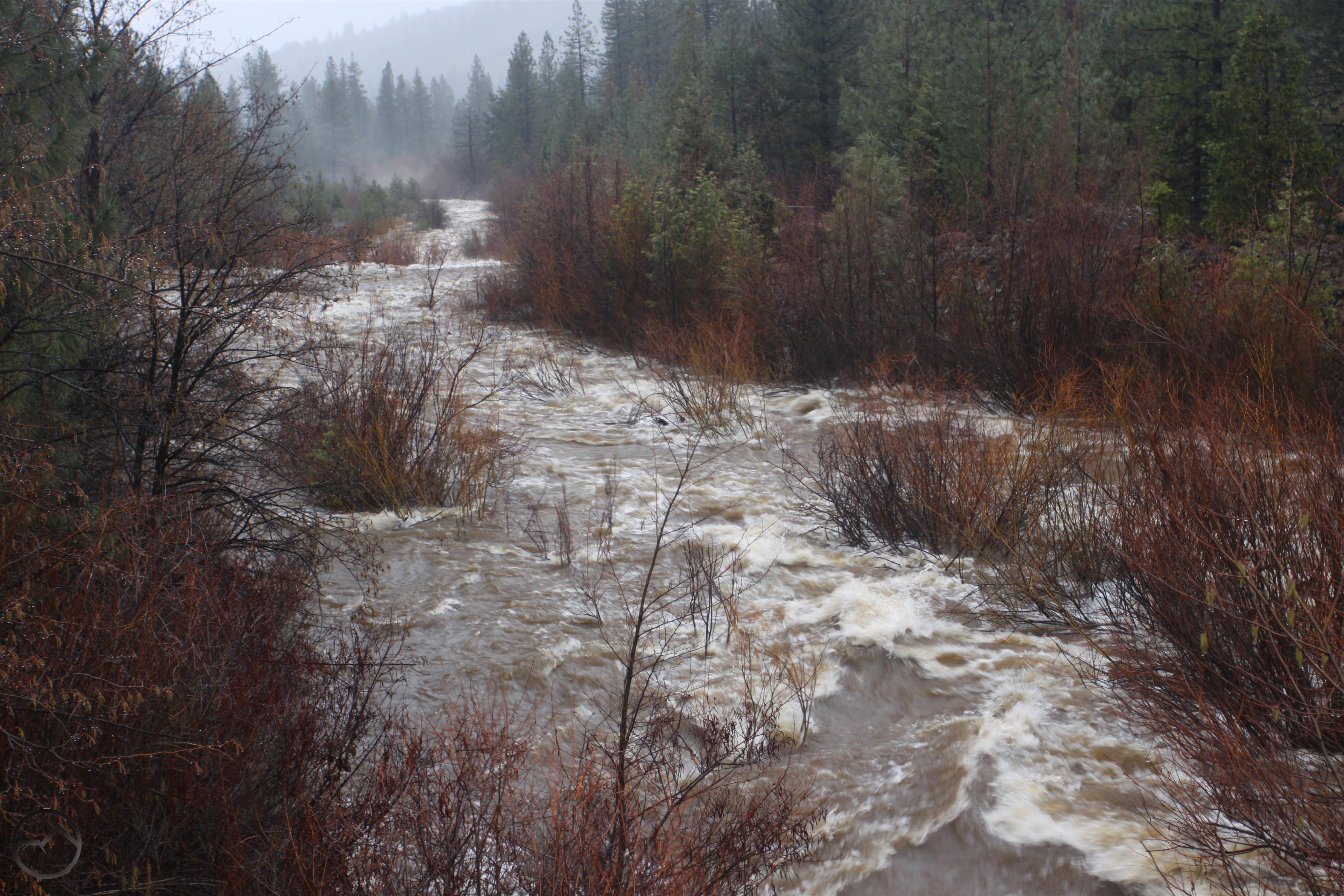
With an enormous amount rain falling and the snow melting, I knew the creeks and rivers were going to be overflowing. I checked on the Shasta River to see how much water was in the channel and was quite impressed. I can’t remember the last time I saw the river this full.


Monday brought about 4 or 5 more inches of now but the rain had melted off so much that it hardly seemed to help at this point. More rain followed on Tuesday before clear skies graced Mount Shasta on Wednesday morning. It was nice to see the sunshine again, as well as the mountains a glitter in their snowy blanket.


Though it is snowing as I write this, sun is coming for the next several days before another storm comes through Mount Shasta next week.  This winter is just getting started and it has already been a drought buster. Let’s hope for more yet more snow!


2017 Begins With A Bang: Big Storm Hits Mount Shasta

Posted by bubbasuess on January 4, 2017
Posted in: Hiking, Mount Shasta. 7 Comments

cascades-mt-shasta-2017-001-8-custom

A fresh layer of snow blows off of Mount Shasta.

As predicted, a large storm moved through the Mount Shasta area over the last few days. I am not sure of the precise amount of snow that fell but it looks like a foot or so in town. My house is higher up and we always get significantly more snow. All told, we got about 2 feet. This was easily the best storm that has passed through since March of 2011. It is blue sky and sunshine right now and will be for the next couple of days. After that, the forecast is saying another heavy storm is going to come in and dump even more snow. If the forecast is accurate then we could get even double what we got the last couple of days. Yikes!

Around my house, things are pretty inundated (click to enlarge):


In town, there was a flurry of activity as tractors and plows dug everyone out. There was not as much snow in town but there was still a significant amount. It was a great sight, considering how bad the drought has been over the last few years. With last winter being moderately good and the heavy rains filling Shasta Lake this past autumn, I would suspect that this storm alone may be enough to push the lake back up to its maximum capacity. And there is still more on the way!


If you have the opportunity, get out to the Ski Park. Conditions must be perfect! Time to get myself dug out again. I will post some more pictures and report on conditions after the next storm passes through.

cascades-mt-shasta-2017-001-4-custom

Mount Shasta 2016: A Year In Images

Posted by bubbasuess on December 31, 2016
Posted in: Hiking, Mount Shasta, Sierra Nevada. 3 Comments

cascades-mt-shasta-oct2016-027-custom

A large lenticular cloud forms over Mount Shasta, October 2016.

Well, 2016 is just about over. It has certainly been a pivotal year in many respects. Without going into politics or anything of that nature, it proved to be an important year around Mount Shasta as well as for Hike Mt. Shasta. Last winter was a solid one, which provided much needed relief for the drought. This is especially true for areas downstate, that rely on the water that falls here as precipitation and is store in Shasta Lake and other parts of the California and Central Valley Water Projects. This past fall was also extremely wet, adding to the bounty. For this website, it got significantly more traffic than it has in years past and is now approaching the 1,000,000 hit mark. Not too shabby for a little one man do-it-yourself operation, I think. On a more personal note, it was an exceptional year for me, as I hit the trail throughout Northern California in preparation for my latest book. Though may journey took me on trails on the North and Central Coasts, the Klamath Mountains, the Cascades and the Bay Area, the majority of my time was spent in the greatest mountains in the world, the Sierra Nevada. For the book, I had the opportunity to hike the range from top to bottom, hitting many of the range’s highlights. It was an opportunity I never thought I would have. However, it did have one consequence that is reflected in this blog post. For the first time since I moved up here, there are many months where I took no pictures of Mount Shasta or the other mountains in this area. This means I do not have an image for every month of 2016. I try to keep this site focused on the land, and not on me, so it frustrates me to include a few images from my travels this summer to fill out a whole year. I hope you can forgive me.

Cascades, Mt. Shasta - Jan2016 177 (Custom)

Cascades, Mt. Shasta - Jan2016 210 (Custom)

The year started off with some serious rain. Though we wanted snow, it was still great to get copious amount of precipitation in whatever form it came. The creeks and rivers were full, the higher elevations were white and there were some pretty epic rainbows.

Cascades, Mt. Shasta - Feb2016 143 (Custom)

Cascades, Mt. Shasta - Feb2016 205 (Custom)

February was cold and had more rain, though not too much snow fell. Fortunately the Ski Park got snow and was in great shape for some excellent winter sport. There were also some excellent lenticular displays.

Coast Range North, Point Reyes - March2016 024 (Custom)

Coast Range South, Mt. Diablo - March2016 044 (Custom)

March was the first month I failed to take any pictures of Mount Shasta. Lots of family business kept me down in Sonoma County throughout the month. Fortunately, this was the perfect time to hit the trails around the Bay Area that will appear in my latest book. Highlights included Alamere Falls at Point Reyes and the Grand Loop around Mount Diablo.

Coast Range South, Ewoldsen - April2016 072 (Custom)

Coast Range South, Pinnacles - April2016 054 (Custom)

Spring weather dominated April and I got away down to Big Sur to hike several trails in that area and a few more in the Bay Area. My brother lives in Carmel, so I was able to stay with him and spend some time with his family. Spring in Big Sur is paradise and the amazing geography was complimented by lots of wildflowers. There are an impressive number of waterfalls down here and they were all flowing with vigor. At Pinnacles National Park, I had a run in with an amazing array of California Condors. Those birds are big!

Coast Range North, Redwoods - May 2016 048 (Custom)

Cascades, Iron Canyon - May2016 048_edited-1 (Custom)

Things were a little disjointed in May, with trips down to Visalia and the Redwood Coast. Both trips netted hikes the will be included in the book. The trail down on the San Joaquin turned into a death march, while the hikes through the redwoods were peaceful, travels through natural cathedrals. I was also able to fill in some gaps on local hikes including Iron Canyon and the Lava Beds.

Sierra Nevada South, Kings Canyon - June2016 082 copy (Custom)

Sierra Nevada North, Lakes Basin - June2016 042_edited-1 (Custom)

In June, I hit the Sierra Nevada hard for the first time and this is where it starts to get really difficult to pick just one image. I journey along the western slope of the Sierra, beginning at Sequoia National Park and working my way north through Kings Canyon, Yosemite and up to Lake Tahoe. I finished the trip with hikes in the far northern part of the Sierra Nevada, in the Lakes Basin area and the Bucks Lake Wilderness.

Sierra Nevada, July2016 181 (Custom)

Sierra Nevada, July2016 448 (Custom)

I traveled back to the Sierra Nevada again in July and finished off the northern part of the range, including trails in Sierra Buttes and the Yuba River headwaters. I immersed myself in the Desolation Wilderness for a few days before heading south and making my first foray into the High Sierra. It was rough, let me tell you.

Sierra Nevada South, John Muir Wilderness - Aug2016 679 (Custom)

Sierra Nevada South, Ansel Adams Wilderness - Aug2016 774 (Custom)

I August, I spent a couple days mopping up in the Central Sierra, before I headed down to the Sequoia area again and then swung south to Mojave. From there I worked my way up the Eastern Sierra Nevada, delighting in the the treasure that is the High Sierra. This was an exceptional trip.

sierra-nevada-south-john-muir-wilderness-sept2016-869-custom

sierra-nevada-south-john-muir-wilderness-sept2016-700-custom

In September I made one last solo trip down to the High Sierra and had a great time hiking some phenomenal trails. Fall color was just beginning to appear in the higher elevations. Nonetheless, the days were clear and crisp and the scenery utterly spectacular.

sierra-nevada-south-hoover-wilderness-oct2016-141-custom

cascades-mt-shasta-nov2016-098-custom

Most of October was spent wrapping up the writing of my book. I was nonetheless able to take a trip back down to Mammoth with my wife and kids to enjoy the fall color that manifests so magnificently down there. After that, it was back to Mount Shasta, where several great lenticulars made adjusting to photographing the sights up here a lot easier.

cascades-mt-shasta-nov2016-275-custom

cascades-mt-shasta-nov2016-119-custom

Mount Shasta once again became to focus of my attention in November. My book was done and I could get back to early morning sunrises on the mountain. I already miss being on the road but it nice to be back home, in the shadow of the mountain, enjoying its splendid vistas.

cascades-mt-shasta-dec2016-120-custom

cascades-mt-shasta-dec2016-137-custom

December has seen lots of rain and snow and once again the rivers are full and the land blanketed in beautiful white. Winter seems to have gotten off to a great start as we close in on 2017. It was an exceptional year, one that I will never forget. I am already starting to miss it.
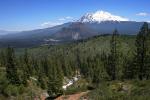
Have a blessed 2017 everybody. I will see you on the trail!

Snow! (Merry Christmas from HikeMtShasta)

Posted by bubbasuess on December 23, 2016
Posted in: Hiking, Mount Shasta. Tagged: Christmas. 3 Comments

20161223_080428-custom

It is snowing like gangbusters outside right now so I guess we will be having a white Christmas here in Mount Shasta! Here are some shots from the storm as it is going on:


I particularly love Christmas in the theological sense but also in the Dickens sense. Even in this cynical age, there is more kindness evident in people and more good will on the streets. I hope that is experienced by everyone who reads this. Truth be told, I even love the commercialized, cultural sense of Christmas. The lights, the trees, the decorations, the giving of gifts are all part of the experience. As a kid it was magical and now I love giving that experience to my children. Hopefully memories will be warm for them:


On that note, and not to be too sentimental, this gets me every time. With that, I pray that everyone is blessed at this time. Merry Christmas!

cascades-mt-shasta-dec2016-158-custom

An almost Christmas sunset on Mount Shasta, 22Dec2016.


Posts navigation

← Older Entries
Newer Entries →
    • Recent Posts

      • Four Sunsets From Truchas Ridge
      • April Flew By…Again
      • Light In The Layers
      • Winter Shows Up When It Will
      • January Rolled By With Mud, Then Very Dry
      • Mount Shasta 2025 – A Year In Images
      • Mount Shasta On Either Side Of Christmas
      • Adrift In An Ocean Of Fog
      • December Has Been Spectacular Thus Far Pt. II (A Magnificent Lenticular)
      • December Has Been Spectacular Thus Far Pt. I
    • Enter your email address to follow Hike Mt Shasta and receive notifications of new posts by email.

    • Archives

      • May 2026
      • April 2026
      • March 2026
      • February 2026
      • January 2026
      • December 2025
      • November 2025
      • October 2025
      • September 2025
      • August 2025
      • July 2025
      • June 2025
      • May 2025
      • April 2025
      • March 2025
      • February 2025
      • January 2025
      • December 2024
      • November 2024
      • October 2024
      • September 2024
      • August 2024
      • July 2024
      • June 2024
      • May 2024
      • April 2024
      • March 2024
      • February 2024
      • January 2024
      • December 2023
      • November 2023
      • October 2023
      • September 2023
      • August 2023
      • July 2023
      • June 2023
      • May 2023
      • April 2023
      • March 2023
      • February 2023
      • January 2023
      • December 2022
      • November 2022
      • October 2022
      • September 2022
      • August 2022
      • July 2022
      • June 2022
      • May 2022
      • April 2022
      • March 2022
      • February 2022
      • January 2022
      • December 2021
      • November 2021
      • October 2021
      • September 2021
      • August 2021
      • June 2021
      • May 2021
      • April 2021
      • March 2021
      • February 2021
      • January 2021
      • December 2020
      • November 2020
      • October 2020
      • September 2020
      • August 2020
      • July 2020
      • June 2020
      • May 2020
      • April 2020
      • March 2020
      • February 2020
      • January 2020
      • December 2019
      • November 2019
      • October 2019
      • September 2019
      • August 2019
      • July 2019
      • June 2019
      • May 2019
      • April 2019
      • March 2019
      • February 2019
      • January 2019
      • December 2018
      • November 2018
      • October 2018
      • September 2018
      • August 2018
      • July 2018
      • June 2018
      • May 2018
      • April 2018
      • March 2018
      • February 2018
      • January 2018
      • December 2017
      • November 2017
      • October 2017
      • September 2017
      • August 2017
      • July 2017
      • June 2017
      • May 2017
      • April 2017
      • March 2017
      • February 2017
      • January 2017
      • December 2016
      • November 2016
      • September 2016
      • August 2016
      • July 2016
      • June 2016
      • May 2016
      • April 2016
      • March 2016
      • February 2016
      • January 2016
      • December 2015
      • November 2015
      • September 2015
      • August 2015
      • July 2015
      • June 2015
      • May 2015
      • April 2015
      • March 2015
      • February 2015
      • January 2015
      • December 2014
      • November 2014
      • July 2014
      • June 2014
      • May 2014
      • April 2014
      • March 2014
      • February 2014
      • January 2014
      • December 2013
      • November 2013
      • October 2013
      • September 2013
      • August 2013
      • July 2013
      • June 2013
      • May 2013
      • April 2013
      • March 2013
      • February 2013
      • January 2013
    • Categories

      • Boy Scouts
      • Cascade Range
      • Castle Crags
      • Desert
      • Echo Point
      • Glaciers
      • Hiking
      • How things came to be…
      • Klamath Mountains
      • Konwakiton Outdoor Designs
      • Lakes
      • Lenticular Clouds
      • Maps
      • Marble Mountains
      • Meadows
      • Mount Eddy
      • Mount Shasta
      • Mount Shasta History
      • Napa County
      • Off Season Trails
      • Pacific Crest Trail
      • Peaks
      • Rivers
      • Rock Climbing
      • Scott Mountains
      • Seldom Seen
      • Shasta Valley
      • Sierra Nevada
      • Siskiyou Mountains
      • Sonoma County
      • Spring Trails
      • sunrise
      • sunset
      • Trinity Alps
      • Trinity Divide
      • Truchas Ridge
      • Uncategorized
      • Water
      • Waterfalls
      • Wilderness
      • Wildflowers
      • Wine Country
      • Winter Trails
      • Yosemite
    • Meta

      • Create account
      • Log in
      • Entries feed
      • Comments feed
      • WordPress.com
    • Copyright © 2013-2024 by Bubba Suess

      DISCLAIMER: Any use of the information contained in this site by any and all persons is done at their own risk. The operator of this site shall be held harmless from any and all alleged claims, demands, causes of action, liability, loss, damage and/or injury to property or persons whether brought by an individual or other entity. This indemnification applies, without limitation, to all actions by an individual or other entity as a result of their use of information contained in this site.

    Blog at WordPress.com.
    Hike Mt. Shasta
    Blog at WordPress.com.
    • Subscribe Subscribed
      • Hike Mt. Shasta
      • Join 968 other subscribers
      • Already have a WordPress.com account? Log in now.
      • Hike Mt. Shasta
      • Subscribe Subscribed
      • Sign up
      • Log in
      • Report this content
      • View site in Reader
      • Manage subscriptions
      • Collapse this bar

    Loading Comments...