Hike Mt. Shasta

Exploring the Mount Shasta Region

  • Home
  • Trails
    • Mount Shasta Trails
      • Brewer Creek Trail
      • Clear Creek Trail
      • Gray Butte Trail
      • Green Butte Ridge Trail
      • Horse Camp Trail
      • North Gate Trail
      • Old Ski Bowl Trail
      • Panther Meadow Trail
      • South Gate/Squaw Meadow Trail
      • Whitney Falls Trail
    • Trinity Divide Trails
      • Blue Divide Trail
      • Castle Lake Trail
      • Castle Lake Shore Trail
      • Cliff Lake Trail
      • Deadfall Lakes Trail
      • Gray Rock Lakes Trail
      • Gumboot Trail
      • Heart Lake Trail
      • Porcupine & Toad Lakes Via Pacific Crest Trail
      • Seven Lakes Basin Via Pacific Crest Trail
      • Sisson-Callahan Trail
      • Soapstone Trail
      • South Mumbo Scramble
      • Tamarack Lake Trail
      • Toad Lake Trail
    • Castle Crags Trails
      • Burstarse Falls Via Pacific Crest Trail
      • Castle Dome Trail
      • Flume Trail
      • Lower Castle Crags Via Pacific Crest Trail
      • Root Creek Trail
    • Scott Mountains Trails
      • Bluff Lake & Cement Bluff via Pacific Crest Trail
      • Caldwell Lakes Trail
      • China Mountain Scramble
      • Cory Peak and Bull Lake via Pacific Crest Trail
    • Cascade Crest
      • Ash Creek Butte Scramble
      • Goosenest Trail
      • Juanita Lake Trail
      • Orr Lake Trail
    • Mount Shasta City Area Trails
      • Black Butte Trail
      • Box Canyon Trail
      • Gateway Trail
      • Lake Siskiyou Trail
      • Mount Shasta City Short Trails
      • Ney Springs Canyon Trail
      • Spring Hill Trail
    • Shasta Valley Trails
      • Black Lava Trail
      • Haystack Trail
      • Lake Shastina Trail
      • Pluto Cave Trail
      • Trout Lake Trail
      • Yellow Butte Trail
    • Sacramento River Trails
      • Dunsmuir Trail
      • Hedge Creek Falls Trail
      • Sacramento River Trail
      • Sims History Trail
    • McCloud River Trails
      • Ash Camp To Ah-Di-Na Via Pacific Crest Trail
      • McCloud River Falls Trail
      • McCloud River Preserve Trail
      • Squaw Valley Creek Trail
      • McCloud River Trail: Algoma Camp to Nitwit Camp
      • McCloud River Trail: Nitwit Camp to Cattle Camp Swimming Hole
      • McCloud River Trail: Cattle Camp Swimming Hole to Camp 4
      • McCloud River Trail: Camp 4 to Upper McCloud Falls
      • McCloud River Trail: Pine Tree Hollow Loop
    • Trails Further Afield
      • Trinity Alps Trails
        • Bear Lakes Trail
        • Billys Peak Trail
        • Boulder Creek Lakes Trail
        • Boulder Lake Trail
        • Canyon Creek Trail
        • Caribou Lakes Trail
        • East Boulder Lake Loop
        • East Weaver Lake Trail
        • Four Lakes Loop
        • Granite Peak Trail
        • Grizzly Creek Trail
        • Gulch Lakes Loop
        • Hidden Lake Trail
        • South Fork Lakes Trail
        • Stoddard Lake Trail
        • Stoney Ridge Trail
        • Tangle Blue Lake Trail
      • Warner Mountains
        • Emerson Creek Trail
        • Highgrade Trail
        • Patterson Lake Via Warner Summit Trail
        • Pine Creek Trail
        • Squaw Peak Trail
  • Articles
    • Trails By Area
      • Mount Shasta
        • Vistas, Meadows And Waterfalls: Three Best Hikes On Mount Shasta
        • The End Of The Road: Three Hikes In The Old Ski Bowl Area
        • Two Trails From Bunny Flat
        • Three Trails On Mount Shasta’s East Side
        • Mount Shasta’s Hummingbirds
      • Trinity Divide
        • Great Lakes: Top Five Lake Basins In The Trinity Divide
        • The Headwaters Of The South Fork Of The Sacramento River
        • Neglected Headwaters: Two Lesser Lake Basins On The South Fork
        • Gumboot Saddle: Two Hikes On The PCT
        • Descent Into Mystery: The Sisson-Callahan Trail
        • Mumbo Basin – Overlooked On The West Side
        • The Headwaters Loop: A Proposed Backpacking Loop In The Trinity Divide
      • The McCloud River
        • The McCloud River Trail
      • Shasta Valley
        • Jewels In The Desert
      • Scott Mountains
        • Great Scott! Two Scott Mountains Hikes On The PCT
      • Trinity Alps
        • Carubou Lakes: Trinity Alps On A Grand Scale
        • Switchbacks To Heaven: The Trinity Alps’ Stoney Ridge Trail and Four Lakes Loop
        • Trinities In Proximity: Two Trinity Alps Trails With Easy Access From Mount Shasta
        • Trails in the Carter Meadows Area
        • Trinity Alps Views of Mount Shasta
        • The Psychological Value Of The Trinity Alps
    • Waterfalls
      • Three Waterfalls On Mount Shasta
      • McCloud River Waterfalls
      • Sacramento River Waterfalls
      • Trinity Divide Waterfalls
      • Trinity Alps Waterfalls
      • Avoiding A Dry Whitney Falls
    • Off Season Trails
      • Three Winter Hikes Near Mount Shasta City
      • Winter Hikes In Shasta Valley
      • Winter Hiking In The Shasta Valley Wildlife Refuge
      • Winter Hikes On The Sacramento River
      • Winter Hikes On The Lake Siskiyou Trail
      • Spring Hikes In The Castle Crags
      • Spring Hikes On the Upper McCloud
      • Spring Hikes On The Lower McCloud River
    • Points Of Interest
      • Mount Eddy: Overshadowed, Underrated
      • Black Butte: Hiding In Plain Sight
      • Castle Dome: Steadfast And Staggering
      • Mount Shasta Hoodoos
      • Sacramento Scrambling
      • The Shasta River
      • The Castle Creek Watershed
      • Mount Shasta East Side Glacier View
      • 5 Fantastic Mount Shasta Vistas
      • 5 Highest Peaks Around Mount Shasta
      • 5 Best Hikes On Creeks And Rivers
      • 5 Interesting Footbridges
      • Three Spectacular Drive-To Sunset Vistas
    • North State Geography
      • Introduction
      • Seven Major Regions
      • The California Cascades
      • Klamath Mountains Pt. I
      • Klamath Mountains Pt. II
      • The Great Canyons Of Mount Shasta
      • Mount Shasta, Timberline, And The Relative Size Of Cascade Volcanos
      • Four Eruption Cones Of Mount Shasta
      • Mount Shasta’s Medial Moraine
    • Northern California Review
      • North Table Mountain
      • Lakes Basin Recreation Area
      • Eastern Sierra Fall Color
      • Sonoma County
      • Central Sierra Nevada
      • Orland Buttes
    • Seldom Seen
      • Ash Creek Falls
      • Mud Creek Canyon
      • Lower Mud Creek Canyon
      • Diller Canyon
      • Lower Cascade Gulch
      • The Grey Rocks
      • Castle Creek
      • Upper Wagon Creek
      • Fawn Creek Canyon
      • Confluence of the Sacramento River and Castle Creek
      • Upper Klamath River Canyon
      • Hole In The Ground Geologic Area
      • Ash Creek Butte Fossil Rock Glacier
    • Mount Shasta History
      • Vantage Lost: The Everitt Memorial Vista
      • A Yosemite-Mount Shasta Connection
      • Whitney – What’s In A Name?
      • Mount Shasta Area and the 1838 Exploring Expedition
      • A 19th Century Engraving Of An Epic Mount Shasta Vista
      • Vintage 1907 Color Photos
      • A Misleading Painting
      • A Mysterious Painting
      • A Mysterious Painting Pt. II
      • Stereographic Mt. Shasta
      • Year One Of Hike Mt Shasta
      • Year Two Of Hike Mt Shasta
      • Year Three Of Hike Mt Shasta
      • Year Four Of Hike Mt Shasta
      • Year Five Of Hike Mt Shasta
      • Year Six Of Hike Mt Shasta
      • Year Seven Of Hike Mt Shasta
    • Image Galleries
      • Mount Shasta Trails Gallery
      • Mount Shasta Sunrise Gallery
      • Mount Shasta Sunset Gallery
      • Lenticular Cloud Gallery
      • Mount Shasta NON-Lenticular Clouds
      • Mount Shasta Reflection Gallery
      • Telephoto Gallery
      • Mount Shasta Area Fall Color
      • Castle Crags Gallery
      • Waterfalls Gallery
      • Trinity Divide Lakes Gallery
      • Mount Shasta Area Rivers Gallery
      • Shasta High Desert Gallery
      • Mount Shasta GIF Gallery
    • Random Notes
      • Revew: Three Mount Shasta Trail Maps
      • A Mount Eddy Wilderness?
      • New Land Additions For The Castle Crags
      • Book Plug: Mount Shasta Area Rock Climbing
      • Exile: How I Came To Love Wilderness
  • Mt. Shasta Trail Map
  • Blog
  • About/Contact
  • Links
  • Truchas Ridge

Life And The Lava Fire Pt. I

Posted by bubbasuess on August 4, 2021
Posted in: Boy Scouts, Hiking, Mount Shasta. Tagged: Lava Fire. 12 Comments

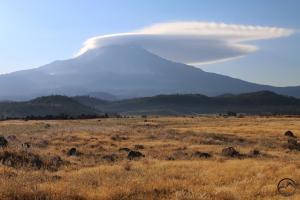
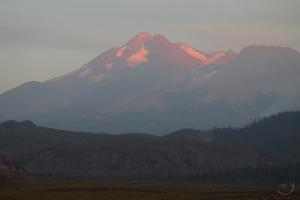
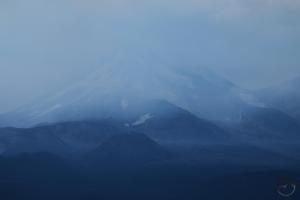
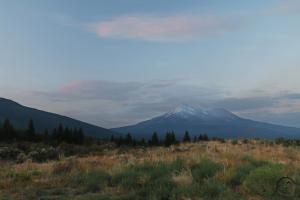
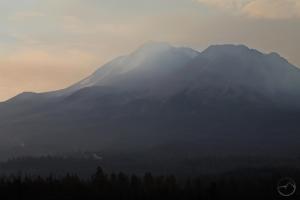
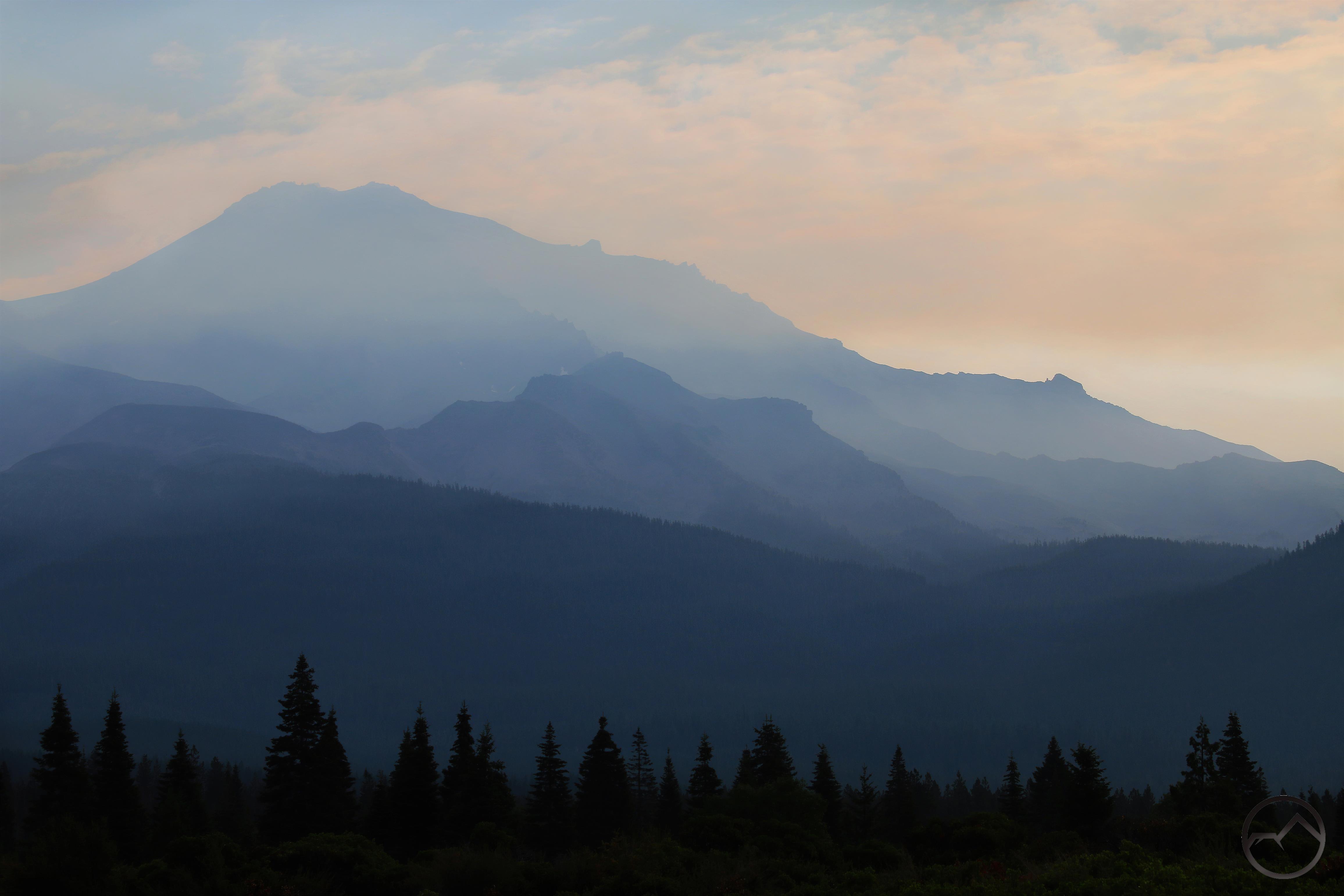
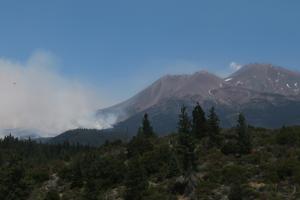
Smoky haze obscure Mount Shasta but reveals the mountain’s many layers.

Yikes. I haven’t posted anything at all in nearly two months. It’s the longest lacuna I’ve had since starting this site at the beginning of 2013. A lot happened in that time, some of it good, some of it not so good but it seems that I have come through to the other side and things are well, which is a tremendous blessing.

I’ll recap, briefly, some of the goings on as they relate to the lull in activity on Hike Mt Shasta but I really want to focus on the Lava Fire. I know I am late to that party but I have some shots and thoughts of my own that I want to document. So, to start things off…

In the latter half of June, I headed off to Camp Fleischmann with my boy scout troop. The camp is located between Chester and Lassen Volcanic National Park, on the road into Juniper Lake. We were there for a full week and it was exhausting but great. It was especially satisfying to see the troop’s new senior patrol leader realizing the difficulties that come with leadership and rising to the challenge of meeting them.

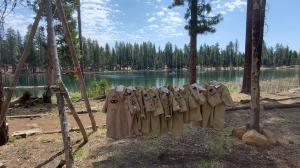
The troop’s uniforms hung on a line at the entrance to camp.
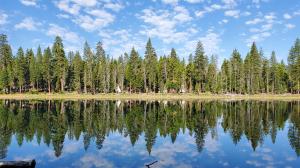
A view of our camp from across Lake Fleischmann.

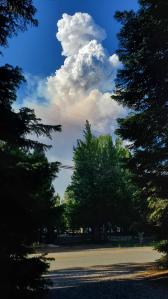
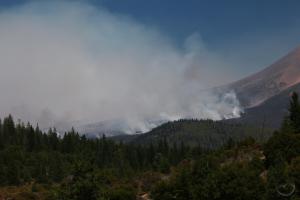
Towards the end of the week there was some thunderstorms. Little happened at camp, but little did we know the reckoning the storm would bring when we returned home. By the end of the week we were all exhausted and ready to hibernate for a few days. However, as we returned to Mount Shasta, we were greeted with a towering plume of smoke rising above the mountain’s northwest flanks.

Unforunately, that was not the worst problem I met upon my return. My parents, who had been watching my younger kids while I was away were extremely sick and worsening. I finally convinced them to let me take them to the ER and, sure enough, they had covid. That set off a long journey through the sickness that ultimately saw my entire family get it as well, but, eventually, we all recovered. My folks are hearty but it really laid them low. It took a lot of work from my wife and I to get them back on their feet and, thankfully, their recovery has been very good. I recognize how fortunate they are and I thank God for their return to health.

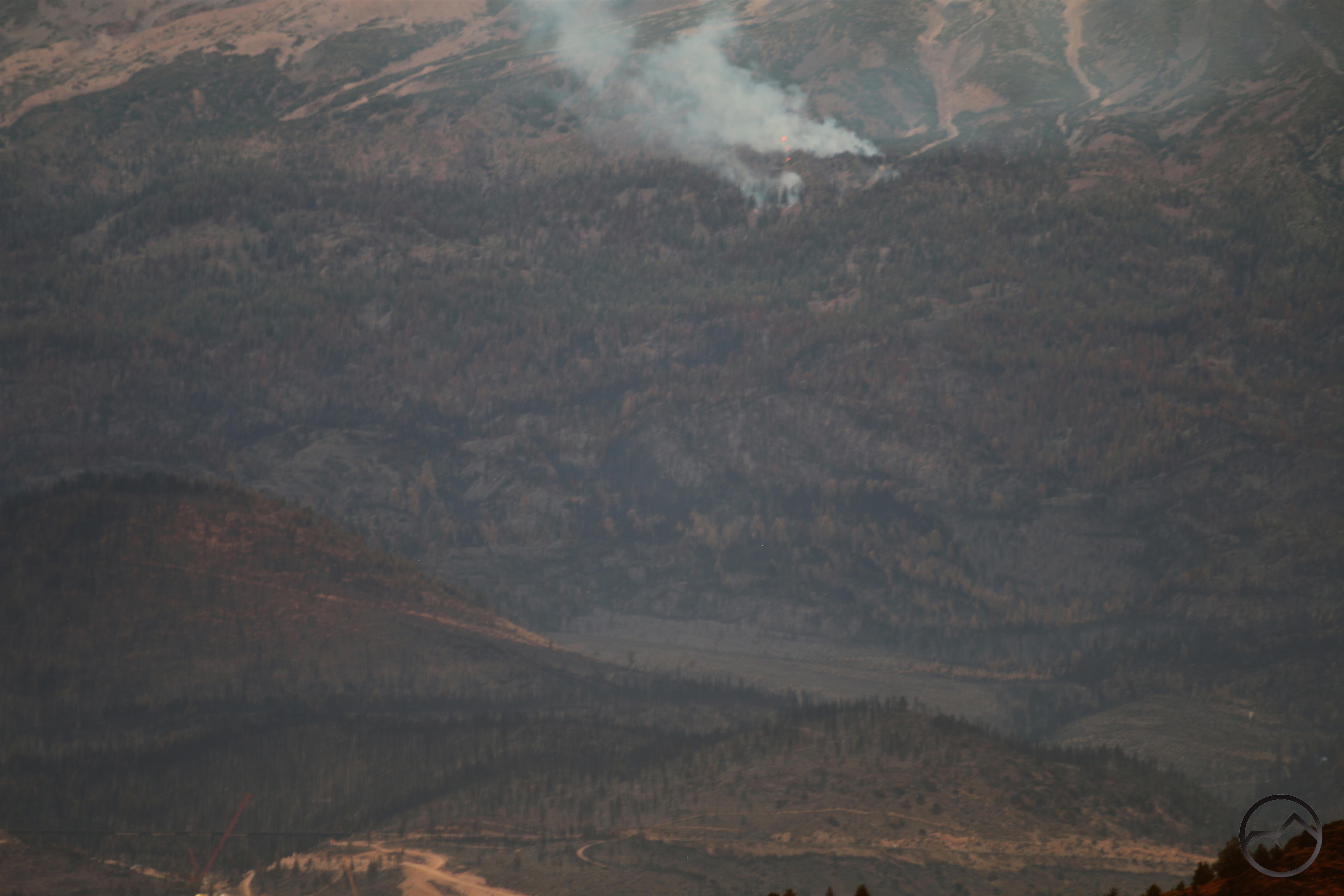
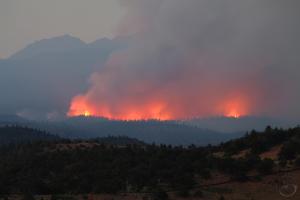
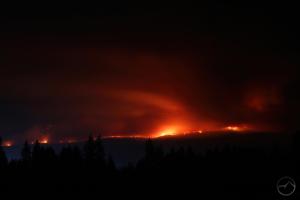
Meanwhile, in the midst of dealing with this challenging illness, the Lava Fire was growing, just a few miles from my house. I’ll let the pictures do a lot of the talking on this one.
Click to enlarge:

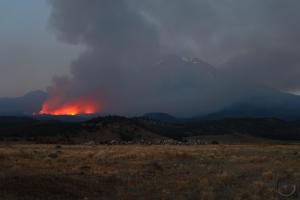
I returned from camp on Saturday. By Sunday evening the fire was definitely a lot worse than people had originally thought it would get. It had moved off the northwest flank and was burning to the east, as well as upward, up the mountain.
It was fascinating to watch the flames from the Shasta Valley but I was exhausted and concerned about my parents, so I felt strangely detached as I watched Mount Shasta burn.

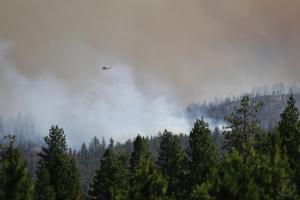
During the day, I could see the aerial attack on the flames. Helicoptors and planes both sortied into the conflagration.
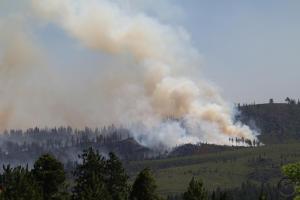
A lot of what burned was brush, especially at the lower elvevations. I suspect a lot of this will return fairly quickly. Still, it was strange to watch it all go up in smoke.

On Monday a pyrocumulus cloud exploded over the Lava Fire, indicating a new birth of life for the fire. It was getting out of control, again.
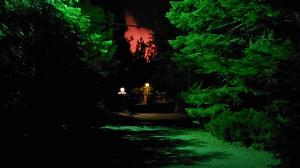
The view from my house on Monday night. The eerie glow was from an outdoor streetlamp. The fire lit up the night sky only a few miles to the north.

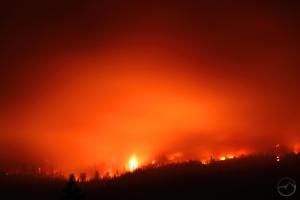
On Tuesday, the fire worsened and made a run to the south. Initial plans were to halt it at Diller Canyon but the blaze pushed past this natural barrier. It was intense to watch. The large patch of fire on the far right is Diller Canyon.
Mount Shasta ablaze. I was exhausted from helping my parents out and still felt pretty detached from the inferno.

A C-130 approaches the fire and readies to make a retardant drop (far left).
This was about as far south as the fire got. It made it past Diller Canyon but too far.

Eventually, the fire burned out (mostly) and we all recovered from the virus (not only my parents, but my whole family ended up with it). We eventually reentered society after a long isolation and were prepared for what lie ahead…Yosemite and Lake Tahoe. Yet the question remains: we recovered, but how will Mount Shasta recover?

A June Lenticular On Mount Shasta

Posted by bubbasuess on June 13, 2021
Posted in: Cascade Range, Hiking, Lenticular Clouds, Mount Shasta. 1 Comment

This past lenticular season, as with much else from the winter, was an odd one. There were a few exceptional specimens of the odd-shaped clouds but, overall, we did not get a bunch of them like we normally do. The snowfall was also unusual, developing a decent (but still below average) snowpack in the Trinity Divide but never building up on Mount Shasta. Indeed, I have never seen the mountain this bare this early in the year. Nontheless, Mount Shasta still manages to surprise me in the midst of the challenging conditions.

June is not known as a strong lenticular month but the mountain produced a quality event yesterday, even as small bits of snow managed to fall around the summit. While it does nothing to abate the rapid loss of snow, it is good to know that Mount Shasta still has a few tricks up its proverbial sleeve.

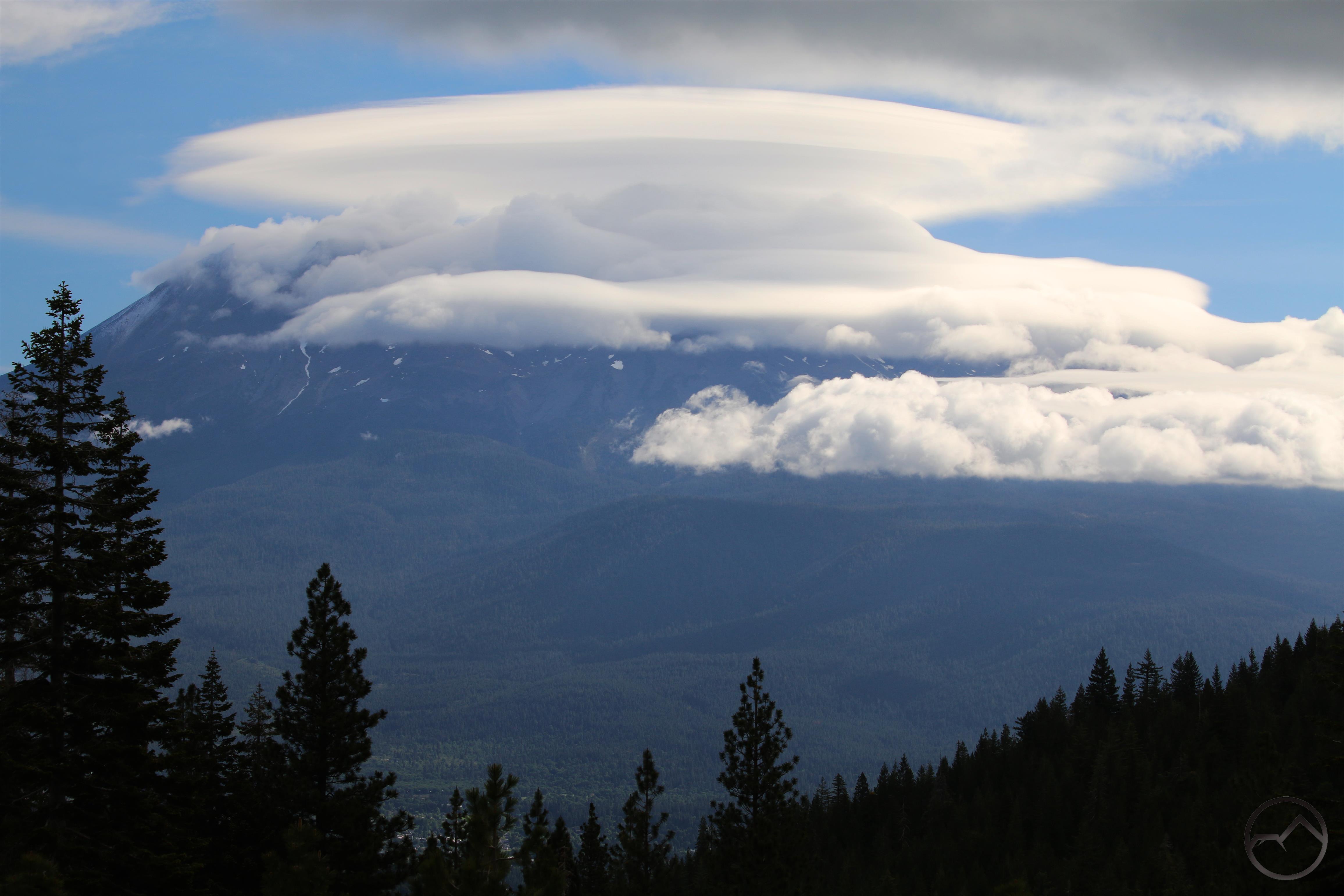
The morning began with non-descript clouds around the summit. However, by the time I left to join the Mount Shasta Trails Association for a morning of work on the Heart Lake Trail, a nice cloud stack had manifested. Of course, I had to stop and capture an image of it on my way to the Castle Lake trailhead.


From there I headed off to work on the trail, which mostly consisted of decomissioning old trails so that the new route to Heart Lake was obvious. Given that it was a Saturday in the summer, the trail was packed with people but I was still shocked at the numbers headed up to the lake. This is indicative of the increase in use of the Mount Shasta area over the last few years but especially since the virus hit last year. I was even more shocked, when, on my way down from the lake, I saw a massive tour bus turn down the road and head towards Ney Springs. That is not and area that needs to be mobbed by tourists like that. I will have more to say on all of this in the near future, as it portends some coming changes to HikeMtShasta.


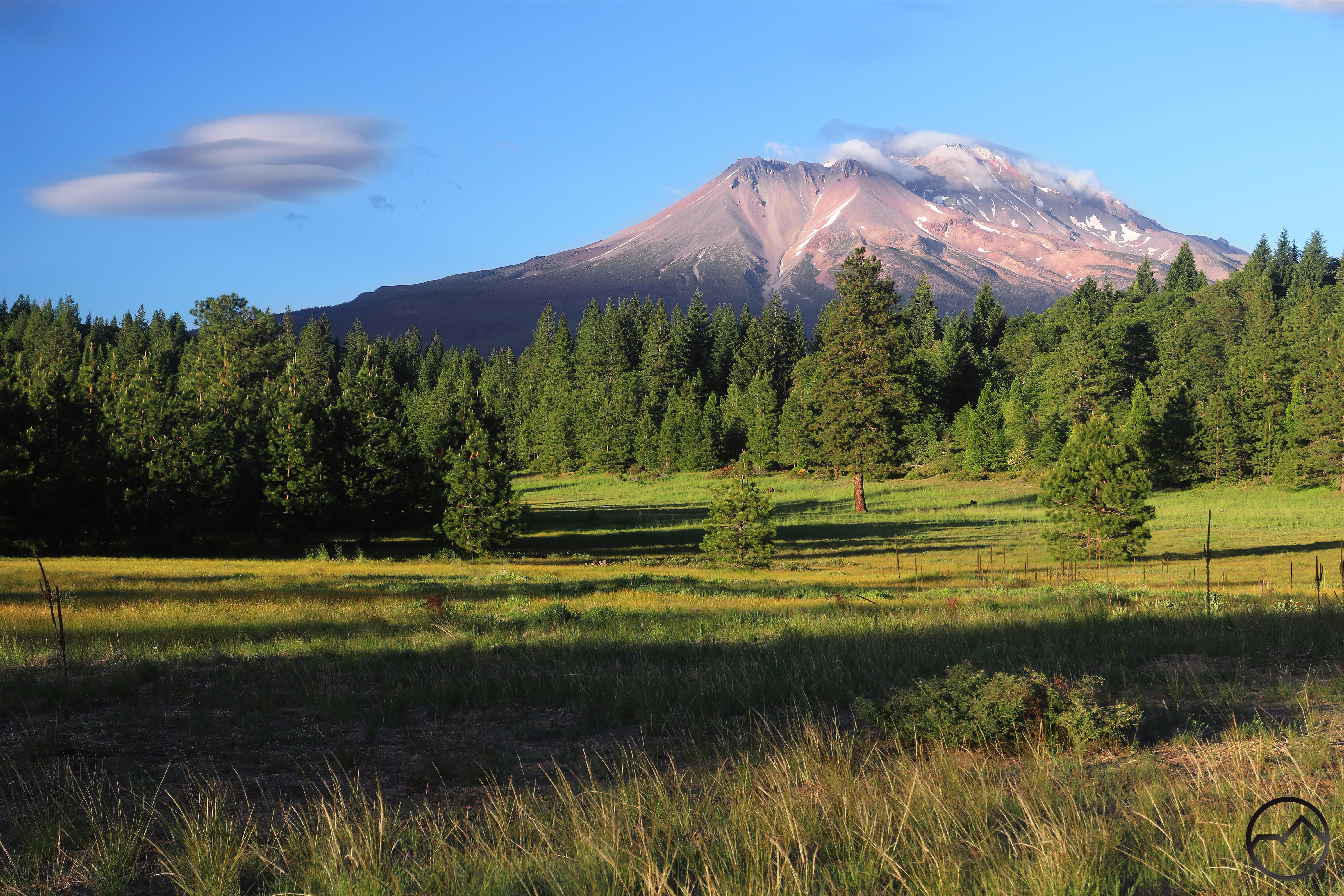
Clouds swirled around Mount Shasta all day but the large stack disintegrated by the afternoon. However, as the sank toward the eastern horizon, a new stack appeared to the northeast of the mountain. Very unstable, it constantly changed shape, growing and shrinking and collapsing then reforming again. I headed out to capture some images of it and Mount Shasta. Of course, lenticulars in this particular spot are always frustratingly difficult to photograph. The best place to get a good image of it would have been to head up onto Girard Ridge but I did not have the time to invest in that endeavour, so I had to settle for a less-than-optimal spot to try to capture the cloud together with Mount Shasta. The meadow worked well, but it still felt like something of a wasted oppotunity.


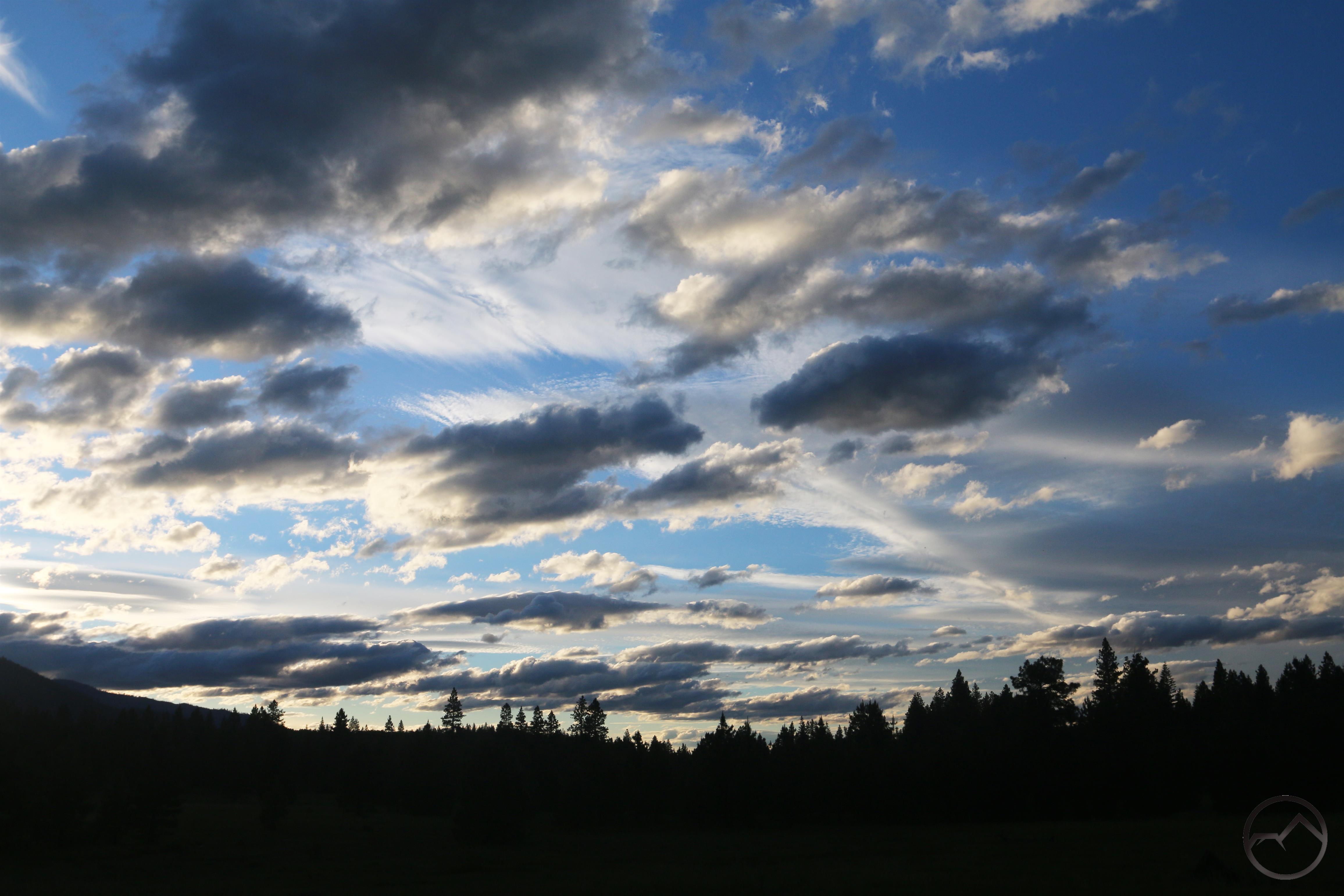
As can often be the case, other than the lenticular around Mount Shasta, the sky was spartan around the mountain but elsewhere, the heavens were filled with beautiful and many-layered clouds. While beautiful, I was concenered that they might block any good light from hitting Mount Shasta at sunset.


This turned out not to be the case. Moreover, the lenticular decided to grow as the sun sank beneath the horizon. The original core was still present but it suddenly expanded in multiple directions. The warm alpenglow set both mountain and cloud alight and then it was gone, and darkness began to set in (which takes quite a while, this time of year). It was a good day in Mount Shasta.

Recalling My Pinnacles Condor Encounter

Posted by bubbasuess on June 10, 2021
Posted in: Hiking, Mount Shasta. Tagged: Pinnacles National Park. 4 Comments

The Pinnacles present a dramatic pageant of rock from the Chapparral trailhead.

This past weekend my family and I went down to Carmel to attend graduation parties for my brother’s oldest and youngest kids. His daughter completed high school and is heading off into the world. Meanwhile, his oldest son was in Carmel fresh from his graduation the previous weekend from the United States Naval Academy and his commissioning as a 2nd lieutentant in the United States Marine Corp. To say I am a proud uncle is an understatement (and it is worth noting that my brother’s younger son is entering his final year at the United States Air Force Academy).

The weekend was a fantastic one, filled with multiple graduation parties, lots of family and celebration. The balance between the excitement and merriment and the quieter moments appreciatating the beauty of the Carmel area made it a memorable time for my kids.

Sunrise over Carmel Valley from a vista on my brother’s property.
My sister-in-law gardening with my son.
Enjoying a structure and various beach treasures.

While these were all great features of an excellent trip, one of the most memorable for me was taking the family hiking at the Pinnacles. I had not been here for 5 years and my kids had never been there. The Pinnacles are a stunning collection of rock towers and spires, that also feature some excellent talus caves. However, to me, one of the best parts of Pinnacles National Park (I think it should still be a national monument, but that’s water under the bridge at this point) is hiking on the High Peaks Trail. This path features some of the most interesting, unusual and exciting trail engineering I have experienced and I was excited to get my family on it.


Examples of the unusual trail construction on the High Peaks Trail.

As the trail traverses the very top of the Pinnacles formation, it has been cut into the rock and routed through cracks, crevices and along ledges one would not ordinarily expect a trail to go on. This, coupled with the fascinating rock formations and the fantastic views of the Gabilan Range and the distant Santa Lucia Mountains make hiking this trail a joy.

However, the most memorable aspect of this hike, for me at least, was the recall of the encounter I had with multiple California condors 5 years ago, in April of 2016. I was rehiking the trail in order to include it in my guidebook “Hiking Northern California“.

I had just spent a few days hiking down in Big Sur, exploring a number of trails, 3 of which would ultimately find their way into my book. I left my brother’s house early in the morning and got a good start on hiking in the Pinnacles. I reached the junction of the Juniper Canyon Trail and the High Peaks Trail fairly swiftly, climbing 1,000 feet in short order. On the climb up, the views of the rugged spires of the Pinnacles get better as you climb and the Santa Lucia Mountains begin to make an appearance to the west. However, once on the High Peaks Trail, the hike gets far more interesting.

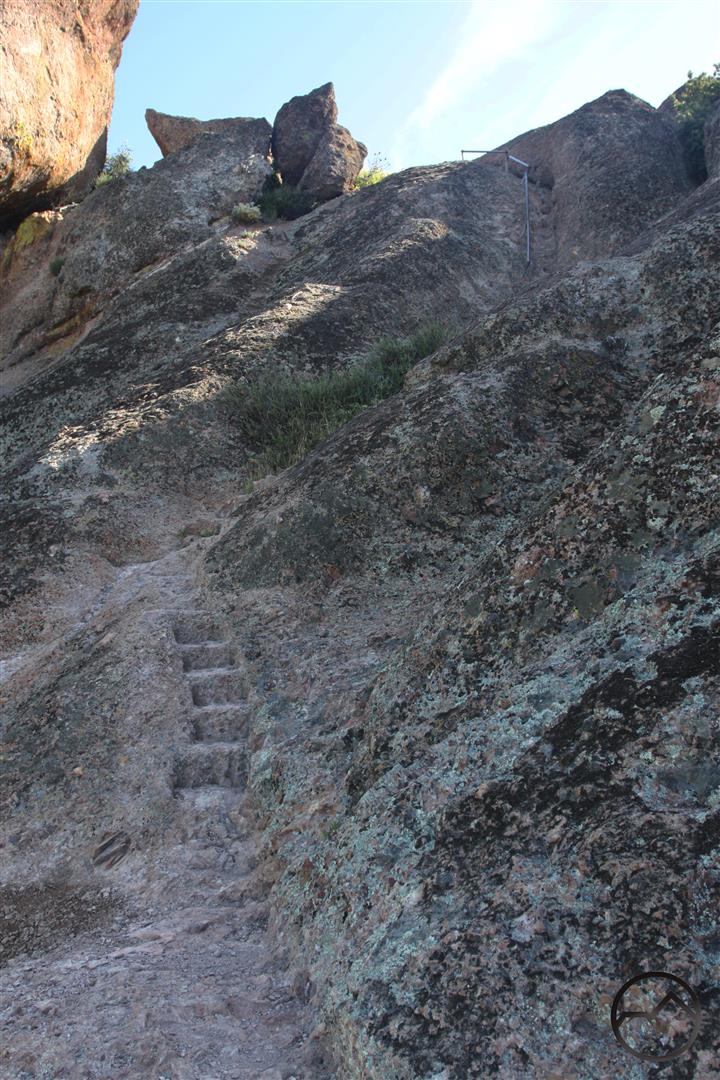
The High Peaks Trail at Pinnacles National Park is one of the most cleverly engineered trails I have been on. It weaves its way through the highest reaches of the rock towers, passing over, under, around, through and alongside the rocks. In many cases the trail consists of steps cut into steep rock and augmented with handrails because of the precarious falls that keep one falling into the deep ravines that radiate out from the crags. It is a fun hike and great for both serious hikers or families with kids. There are several ways the High Peaks can be reached, creating shorter lollipop options or long hikes that descend down to the east side of the Pinnacles and require unusual routes to return to the trailhead (including one that passes through 0.25 miles of cave!).

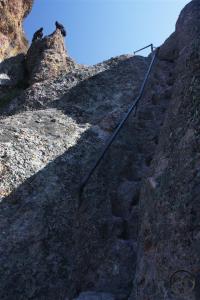
About midway through this section of the High Peaks Trail, I approached a series of steps cut into the rock that reached a bench about 100 feet below the highest crags in the entire Pinnacles formation. As I began climbing up the steps, I was buzzed by a black object swooping fast toward the rocks that rose above me. Initially I paid it no mind, assuming the dark blur was a raven that had swooped in to investigate me. However, a few steps later, a second dark blur flew passed and cause me to pause. The sound of small rocks clattering drew my attention to the crag above me and that was when I noticed the two large condors that had landed just a few yards overhead.

It is worth pausing here to discuss the California Condor. These incredible birds are the largest land birds in North America. Their wingspan is generally around 10 feet and they average about 25 pounds. Over the course of the 19th and 20th century their numbers dwindled until the last few condors, a total of 12, were rounded up and brought into captivity in 1987. Since that time, the number of condors have been stabilized and returned to the wild and now number somewhere around 600 birds. While they are still threatened, it is a remarkable tale of recovery and optimism. Many of the California Condors have been released in Pinnacles National Park, the northernmost point in their current territory.

On previous visits to the Pinnacles, I was aware of the condors but my interest lay primarily with the rocks, the trail and the scenery. On this occasion, however, I was destined to have a much closer encouter with them, an encounter better told through pictures:

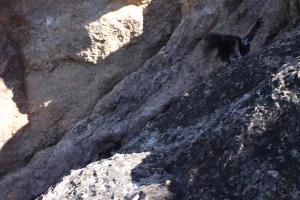
My initial observation of the condors. Two birds flew into the rocks above me was just a blur. I did pull my camera out, once I realized they were condors and not ravens.
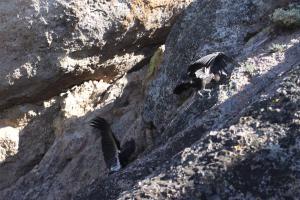
The birds moved around a bit, ultimately settling into some rock ledges. I could not see if there were nests present, but it did not seem so.

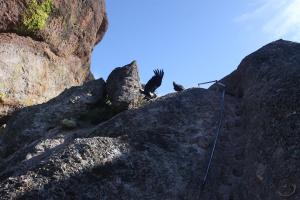
Soon a few more birds landed at the top of the trail’s short climb up the stairs. These condors repeatedly took flight and then circled back and returned to the same spot along the trail.
The condors finally settled in on the rocks. One or two more birds kept flying in and then leaving again but they never seemed to stay. Nonetheless, there were now up to 6 or 7 condors along the trail.

Now I was uncertain what to do. If there were nests or any other considerations that might disturb the condors, I certainly did not want to have a negative impact on them. On the other hand, I was laying down a GPS track to use in for the map in my book and I wanted to complete the hike and not turn back. I also needed to update my notes and get good images to use. Looking over the park’s brochure, I found nothing giving direction for a condor encounter. Looking for input, I went back down the trail a short distance to a spot where I had reception and I called the National Park Service’s visitor center. I explained the situation to them and asked their advice what to do. As it turned out, the NPS ornithologist who was responsible for the park’s condors happened to be out in the crags trying to locate condors and assess their condition. I gave my location and asked to wait for her to arrive.


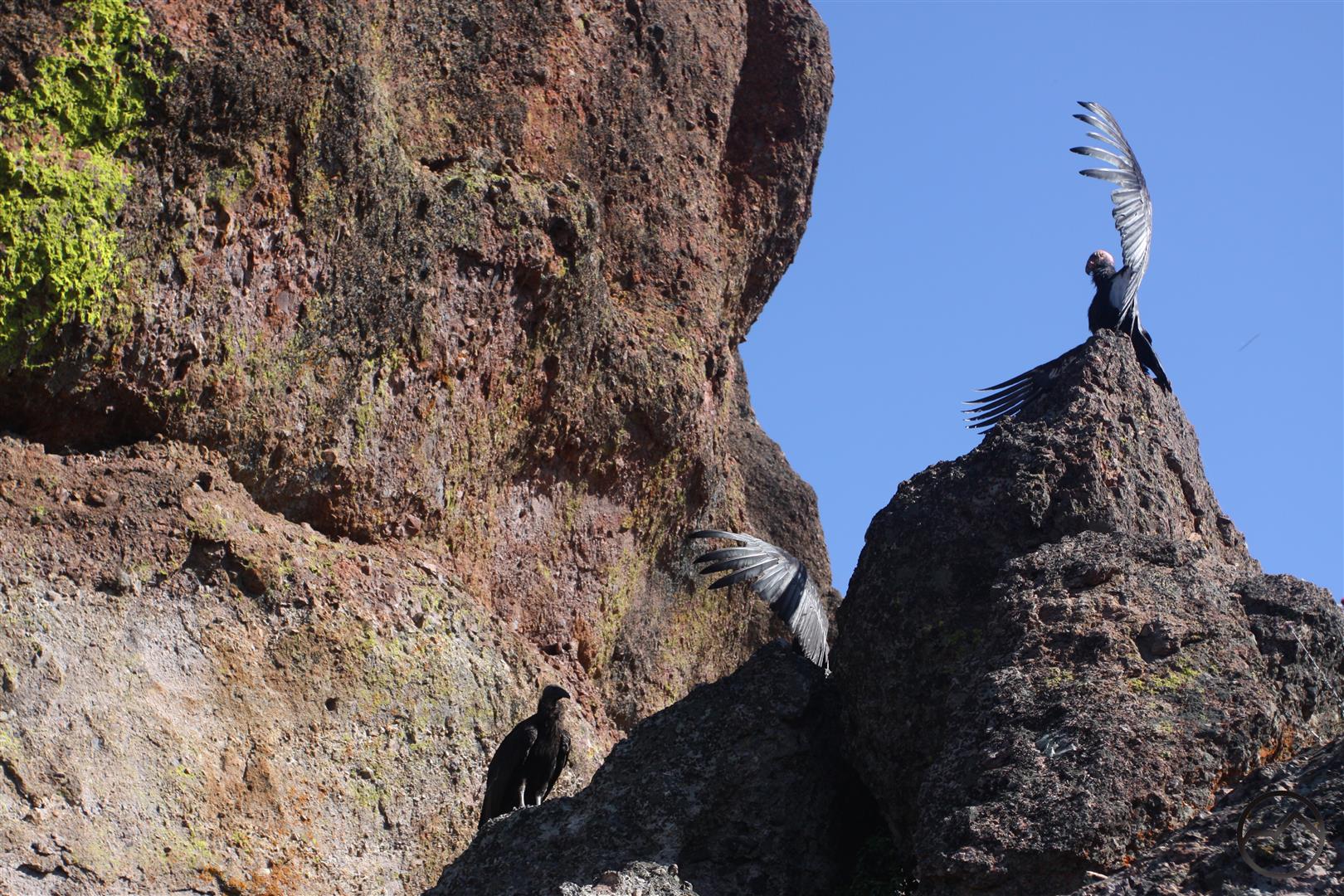
While I was waiting for the ornithologist, some of the Condors opened up their wings and began warming themselves in the morning sunlight. Seeing their long wings outstretched gave me a new appreciation for these awesome creatures. Rather than being impatient to continue the hike (which I initially was), I stood quietly and enjoyed the silent spectacle.

In about 20 minutes, she showed up breathless but excited. When she heard there was a large collection of condors right on the trail, she headed over straightaway. She was stunned when she got there, seeing all the birds collected right around the path and assured me that this was a very rare gathering of condors. We talked for a while and watched the birds. Finally, I asked how I should proceed. She said that this was somewhat unprecedented to find them on the trail and suggested we climb up to them. She explained that most of these birds were born in captivity and had no fear of people and would likely be calm and unconcerned with our presence.


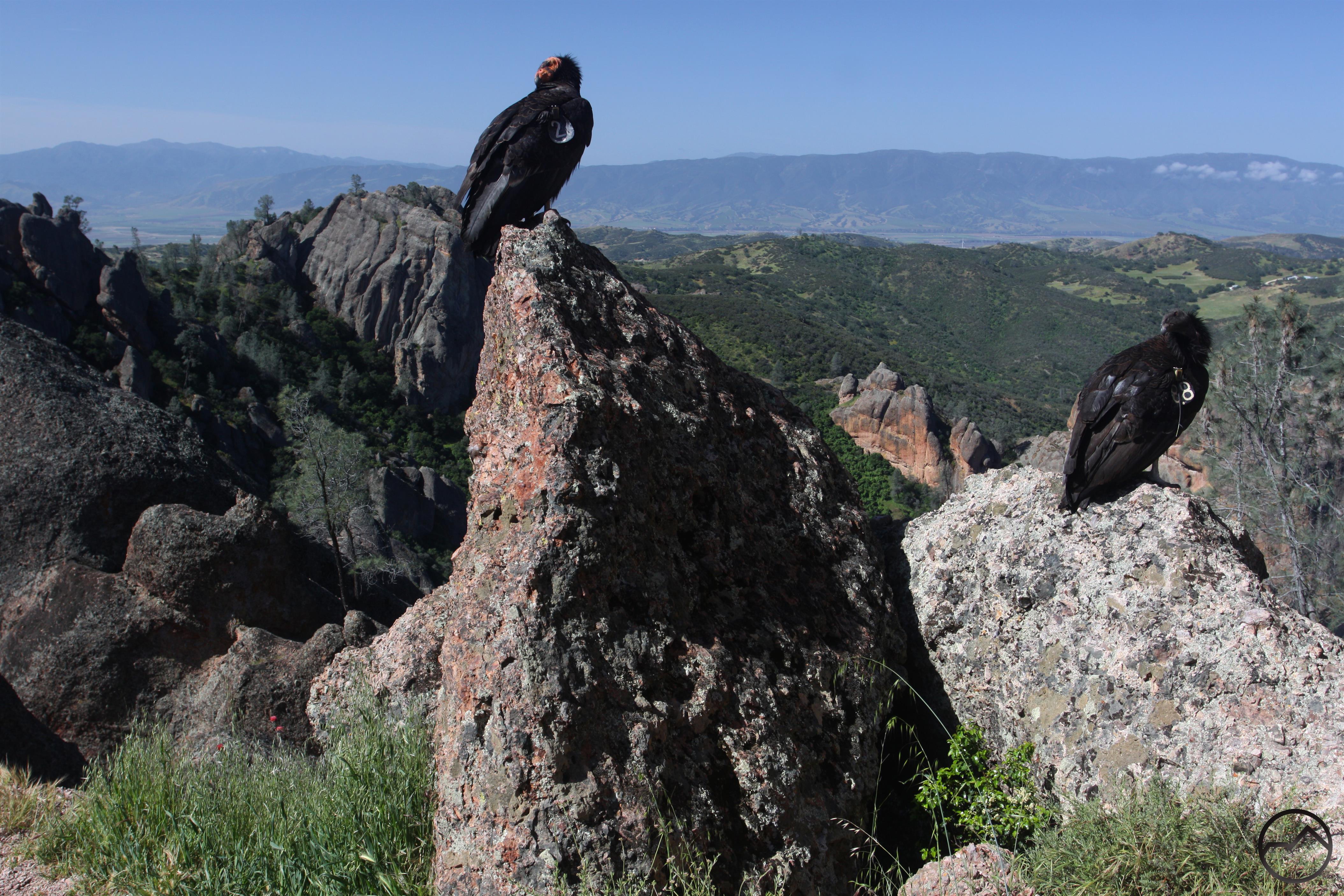
We climbed up the steps and to the bench where some of the condors had decided to take up positions. We walked within 5 feet of a pair them perched on rocks. As I passed them, I had my camera at the ready and made sure to capture a shot of them. It was a rather astonishing experience.

After getting to the other side of the condors, I talked to the ornithologist a little longer before leaving her to take notes and continue her observations. I headed down the High Peaks Trail until I reached Chalone Creek. From there I followed the creek upstream for a few miles until I reached the Balconies Cave. Passing through the talus cave, I emerged back onto the west side of the Pinnacles and made the short walk to the Chapparral trailhead. The encounter with the condors had lengthened my hike by an hour or so but I was grateful and humbled to have had the experience. When it came time to layout the book, I made sure to include the image of the condors perched on the rocks. In a way, it sums up the entire Pinnacles experience: distant views, rugged crags and condors.

That was the last time I had been to the Pinnacles until this past weekend. Though 5 years have elapsed, I can still see the birds vividly and knew the spot where I encountered them when I arrived there with my family. Unfortunately, we saw only one condor on this hike, and only from afar (distinguished from vultures by the white plummage on the underside of their wings). That glimpse was enough to satisfy my wife and kids…for now. We plan to return to Pinnacles again, possibly next spring and do the entire hike up and over the rocks and down through the caves. Maybe then we will see more of the incredible condors.

Shasta Spans: Five MORE Interesting Foot Bridges

Posted by bubbasuess on June 3, 2021
Posted in: Hiking, Mount Shasta, Rivers. Leave a comment

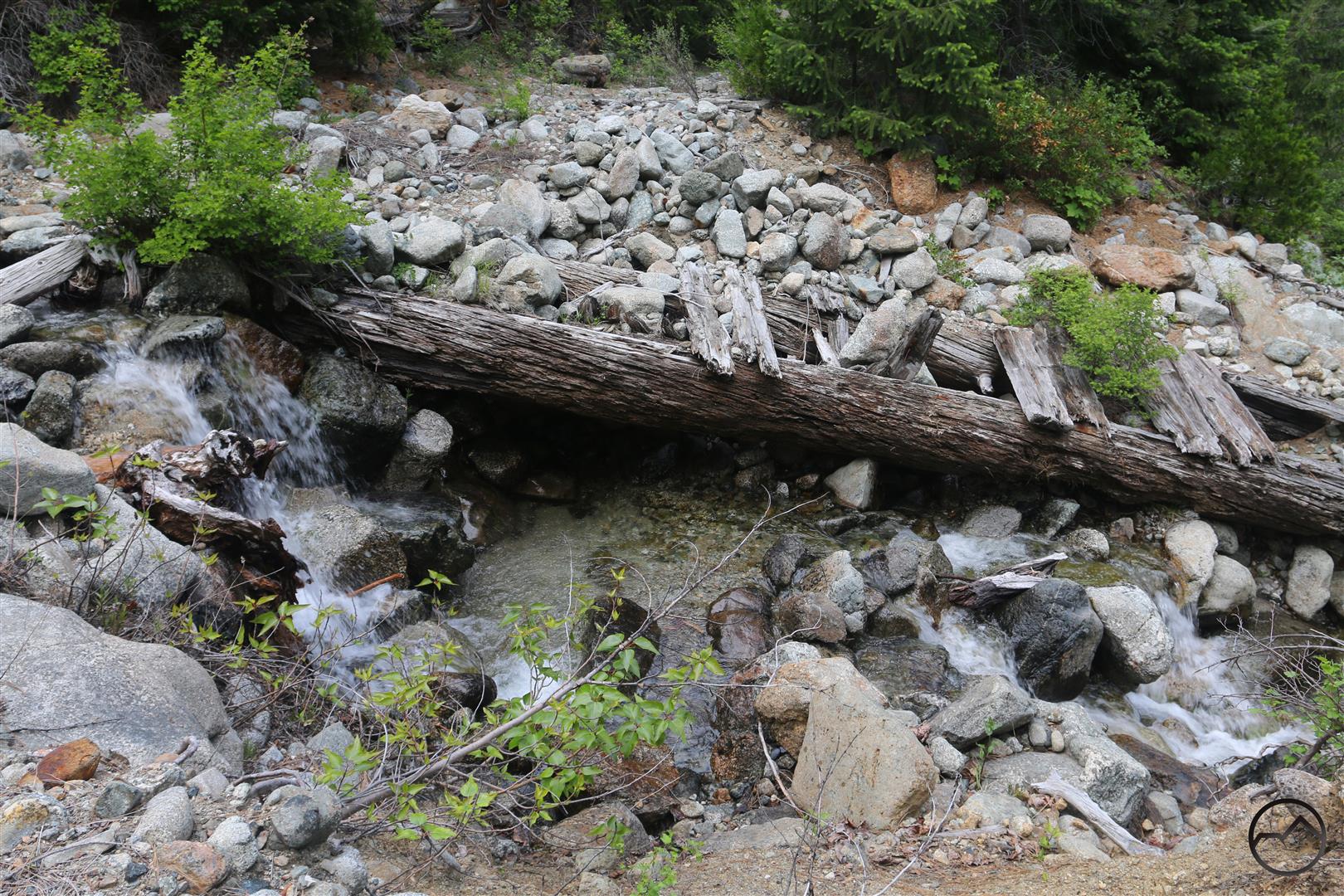
A ruined footbridge over an unnamed creek somewhere near Mount Eddy.

Several years ago I wrote an article highlighting 5 footbridges in the Mount Shasta area that stood out to me as distinct and interesting. I recently stumbled across that post and, after reading it, decided it was time to write a follow-up, highlighting 5 more interesting footbridges in the area.

This kind of infrastructure interests me, both because of its obvious connection to hiking but also because the bridges sometimes represent an effort, and at times failed, at integrating human infrastructure with the natural world. Some bridges, like the Wagon Creek Bridge at Lake Siskiyou offer a more overwhelming collision between those two entities, while others, such as the PCT bridge over Squaw Valley Creek, yield a more peaceful meeting of the man and nature. I think the successes and failures of trail bridge engineering ought to be reviewed so that the mind is focused on what, exactly, ought to be pursued when constructing new bridges for the inevitable (though seemingly distant future) new bridges that will be constructed in the Mount Shasta area (especially the ones to Mossbrae Fallsa and over the Sacramento River, upstream from the inlet at Lake Siskiyou).

Unlike my previous list of bridges, these are not in a particular order.

Indian Creek


There are two small but interesting bridges over Indian Creek in Castle Crags State Park. The creek starts over 1,000 feet higher up in the Crags, its source a productive spring nestled in a granite grotto. A longer branch originates in one of the must rugged canyons in the Castle Crags. The creek cascades down through a rocky channel until it meets gentler terrain as it nears Castle Creek. The Indian Creek Nature Trail, which connects to the longer Flume Trail, crosses over the creek twice, the pair of bridges are quite different from one another. The first a classic footbridge, incorporating river rocks to build a foundation upon which the bridge spans the creek. The river rock construction helps the bridge blend into its surroundings. The second crossing over Indian Creek is accomplished via unuaully built bridge. It incorporated an iron foundation that is overlaid with short planks. Poles connected to the foundation rise up a few feet on both sides of the planks and are connected via a steel cable, which serves as a handrail. Though simple, it also blends into the natural landscape in an attractive fashion, perhaps because of the subdued design. Together, they make an attractive set of spans that complement the hike on the Flume Trail quite well.

Fall Creek

Another bridge located in Castle Crags State Park offers one of the best integrations into the natural landscape I have seen in the Mount Shasta area. This bridge, located on the Sacramento Trail and spanning small but constant Fall Creek, is one of the most scenic sections of this beautiful trail. Fall Creek begins high up on Girard Ridge and tumbles down a remote canyon until it flows into the Sacramento River. It is here, just a few yards above the confluence that the trail crosses the creek. The center of the bridge is supported by a single pier constructed of large boulders. However, the crossing is located at the point where a large Douglas fir toppled alongside the creek. The bridge was constructed over the fallen tree, part of which was notched to provide a stable anchor point for the steel structure. The presence of bridge, tree, stone pier and cascading creek, along with the Sacramento River just a few yards away represents a beautiful harmonizing of trail, bridge and landscape.

Sacramento River


South channel, April 2015
South channel, May 2017

One of the more interesting bridgings over water in the Mount Shasta area are the seasonal bridges over the Sacramento River at the Lake Siskiyou inlet. Installed to provide a crossing for the Lake Siskiyou Trail, these bridges have a surprising tumultuous relationship with the river they span. First, it is important to note that there are two sets of bridges, since the river, at times, is split into two different channels as it enters the lake. However, the course of the river fluctuates and often alter the landscape substantially, making installing permanent bridges difficult. One example of this is how the water has alternated between the north and south channels. Though it had recently been the main course for the river’s flow, the south channel was dry for many years after a large storm produced flooding that blocked up that channel and funneling all the water into the north channel. The same flooding destroyed the gabions that supported the bridge over the north channel, making the bridges’ future location and ever-changing proposition. After a few years of being almost completely dry, more flooding during the thaw of a particularly heavy winter reopened the channel. Read about some of the changes experienced at these bridges here, here, here, here, here, here, and here. It’s pretty amazing how the river continues to mould the land around it.

McCloud River

The Pacific Crest Trail’s crossing of the McCloud River is one of the larger river crossings the epic trail makes, especially since its transitioning from the Sierra Nevada to the Cascades. Consequently, the bridge over the river required a larger-than-normal scale of construction. Over 100 feet across, it is among the longest bridges in the Mount Shasta region. However, its length does not mean that it is garish or obtrusive. On the contrary, the simple wooden construction makes the bridge’s presence subtle. It almost appears to just fade into the background, allowing the McCloud River to be the dominant presence. Unfortunately, the road that connects nearby Ash Camp to the McCloud Dam is closed, making hiking across the dam a little more difficult than it once was. If you want to hike this area, park at the dam and walk the 1.25 miles down the road to Ash Camp and then across the bridge. From there the PCT continues to Ah-Di-Na.

Unnamed Creek Near Mount Eddy

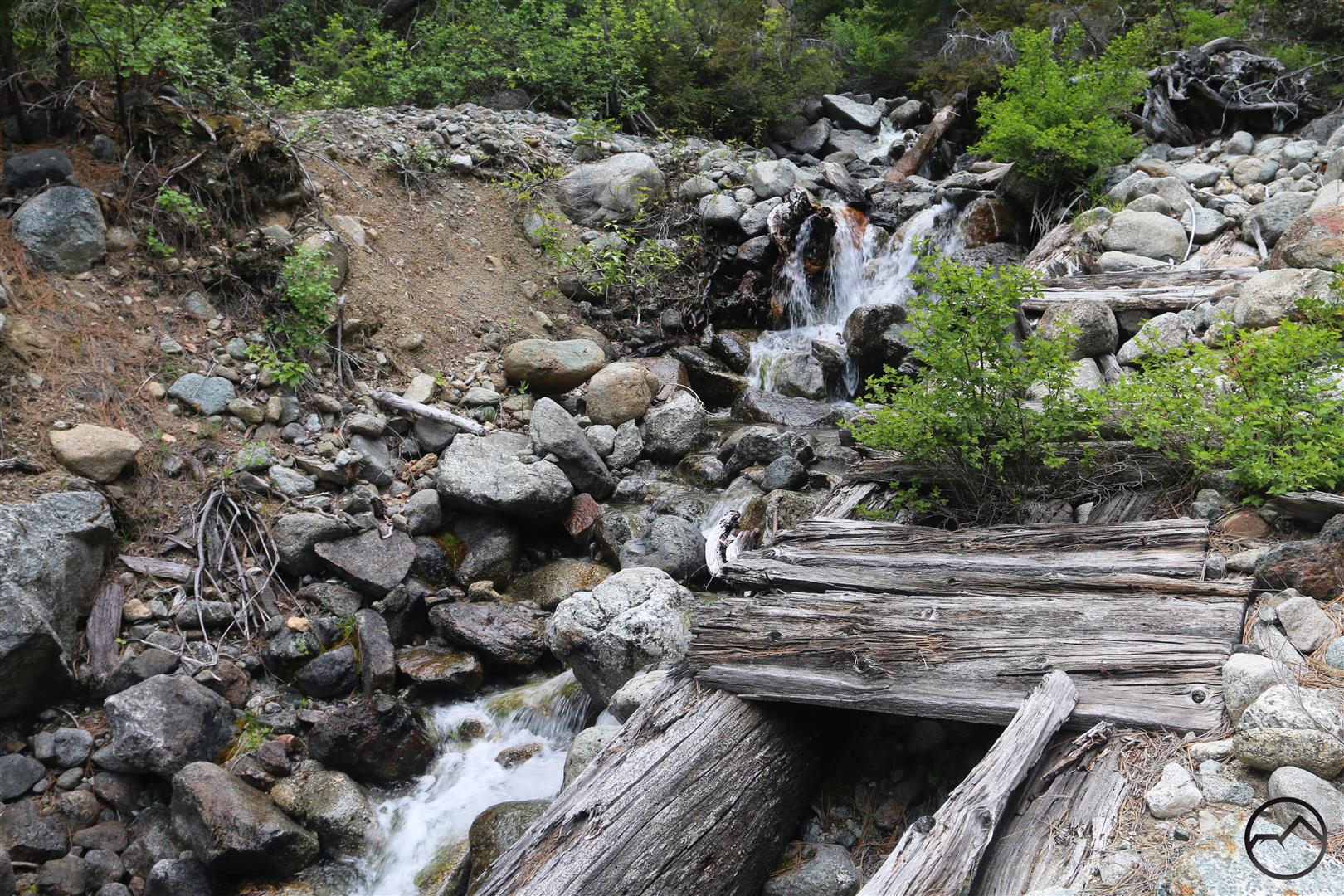
Perhaps my favorite bridge in the Mount Shasta area isn’t even a functioning bridge any longer. Indeed, it may have been over a century since this creek was crossed on this impressive span. Located on what was once a significant route over the mountains to connect the Mount Shasta area to the Trinity River and beyond, the bridge has long sience been washed out by massive flooding. It’s simple construction consists of two large trees toppled over the creek’s channel and then covered with large, rough-hewn planks. That such a bridge was built indicates the importance of the route but its lack of reconstruction also indicates that the route eventually fell into disuse as other roads, likely intended for use by cars, became the dominant transportation lines. Now this lost bridge is overgrown and forgotten, except by the very few who try to follow this 19th century route. Its presence next to a small cataract makes the location quite sublime and worth a sit on the large logs to contemplate bygone days and the beautiful setting.

Sunset On Parks Peak

Posted by bubbasuess on May 29, 2021
Posted in: Hiking, Klamath Mountains, Mount Shasta, Scott Mountains, Shasta Valley. 2 Comments

Thursday evening the sky around Mount Shasta had some rather interesting clouds, many of which were vaguely “lenticulish”. I headed out into the Shasta Valley in the hope that it would be a spectacular sunset. The clouds were not ideal, but if they lit up as the sunset went down it would still be a very impressive sight. I got in position while my kids ran around in the field and shrieked like banshees. It was not the most peaceful conditions but I was grateful to be out nonetheless.
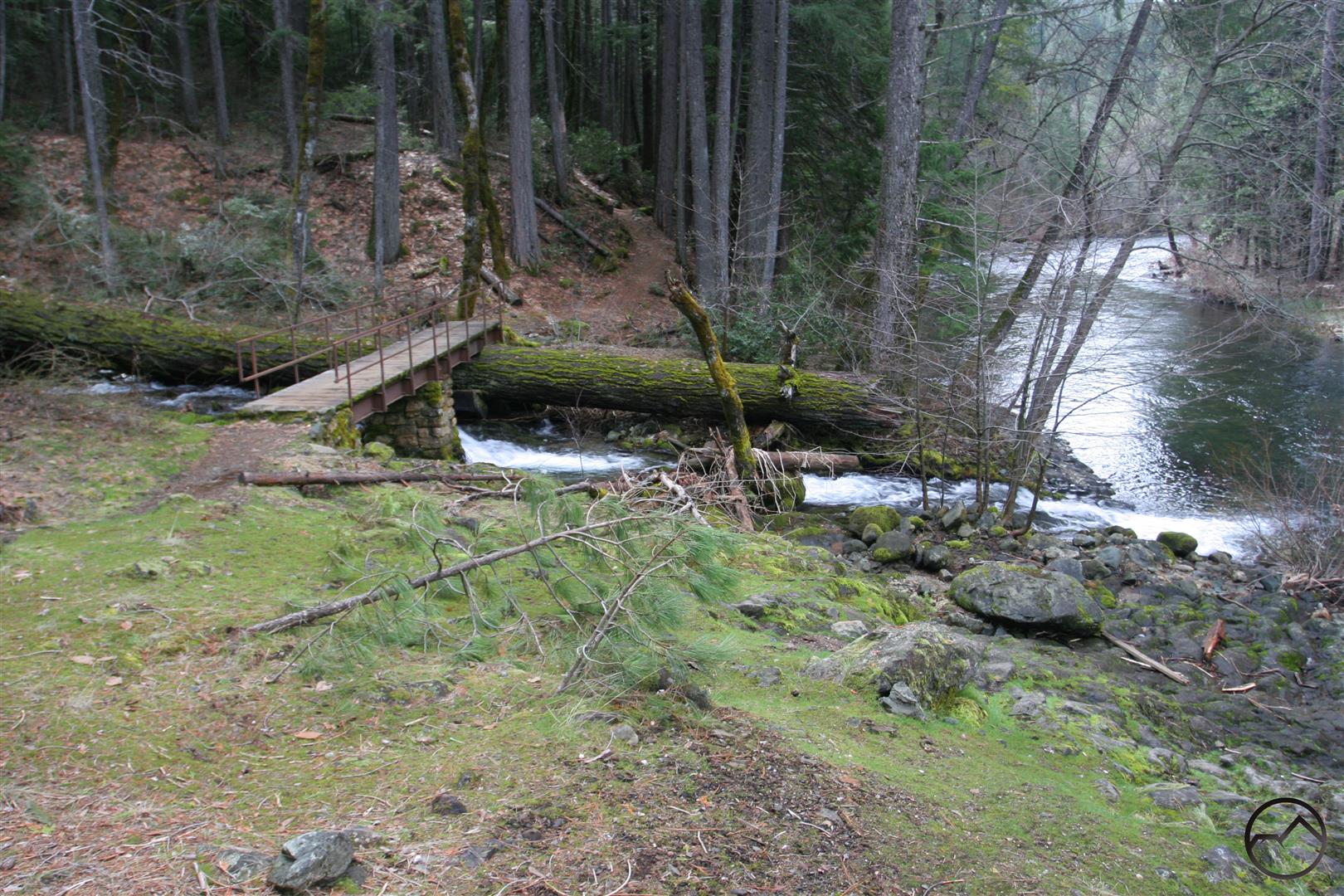
Layered clouds between Mount Shasta and Black Butte could be good at sunset.

Unfortunately, the clouds directly behind Mount Shasta drifted in front of the layered, lenticular-like formation and completely blocked them from view. As frustrating as this was, I soon found that it would not have mattered because clouds further to the west blocked a lot of the light as the sun set behind the Scott Mountains and the clouds around Mount Shasta never really glowed like I was hoping they would.

Mount Shasta, alight in alpenglow.

While the sky was lackluster, Mount Shasta still managed to burst into a bright orange glow. A single band of shadow ran across the magnificent mountain right at treeline. It was a great scene, but I was still frustrated that it was not as good as I wanted. I should have been grateful and left it at that! However, I was frustrated that things never really pulled themselves together so I packed things up (kids included) and headed out before the light had even faded off the mountain.

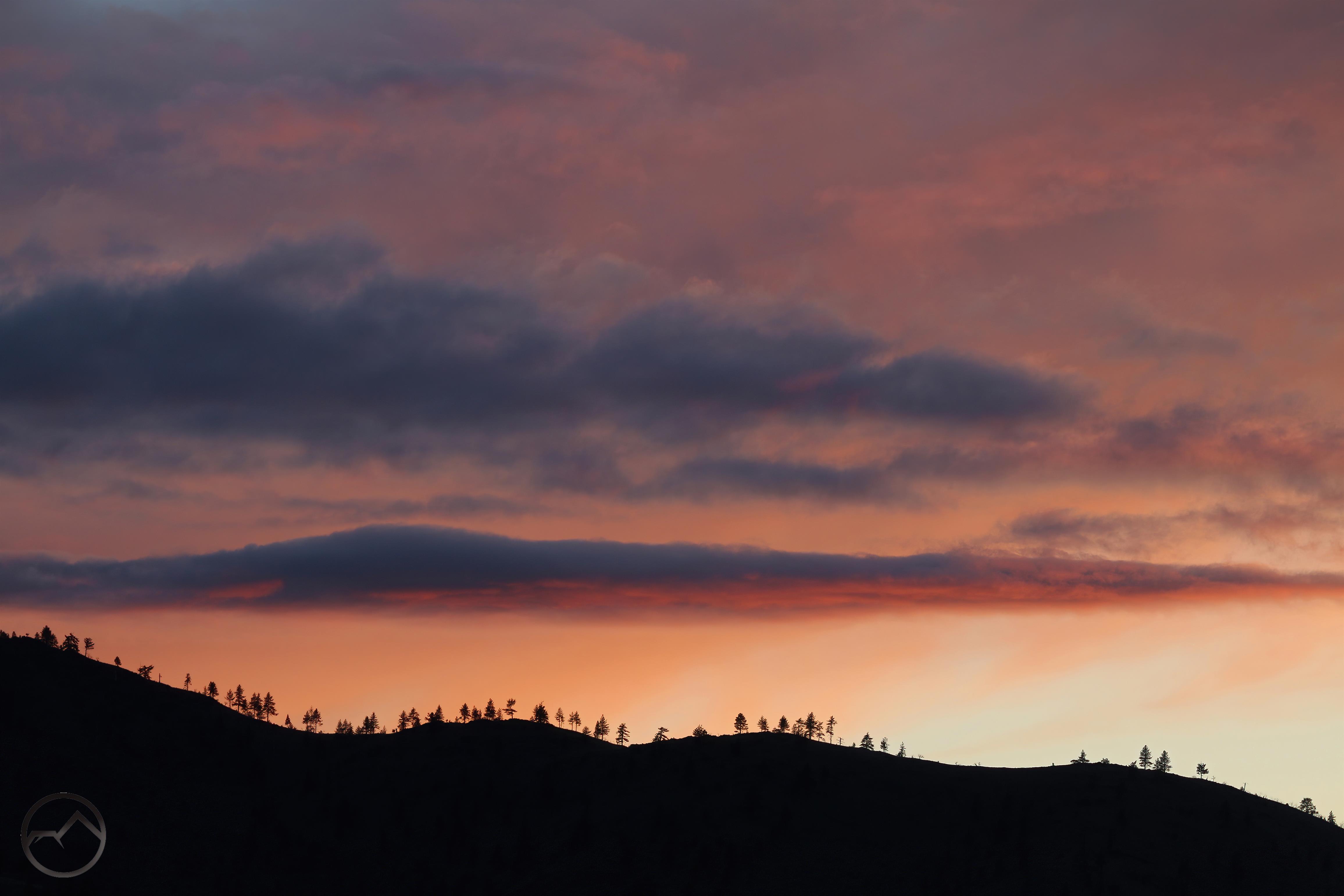
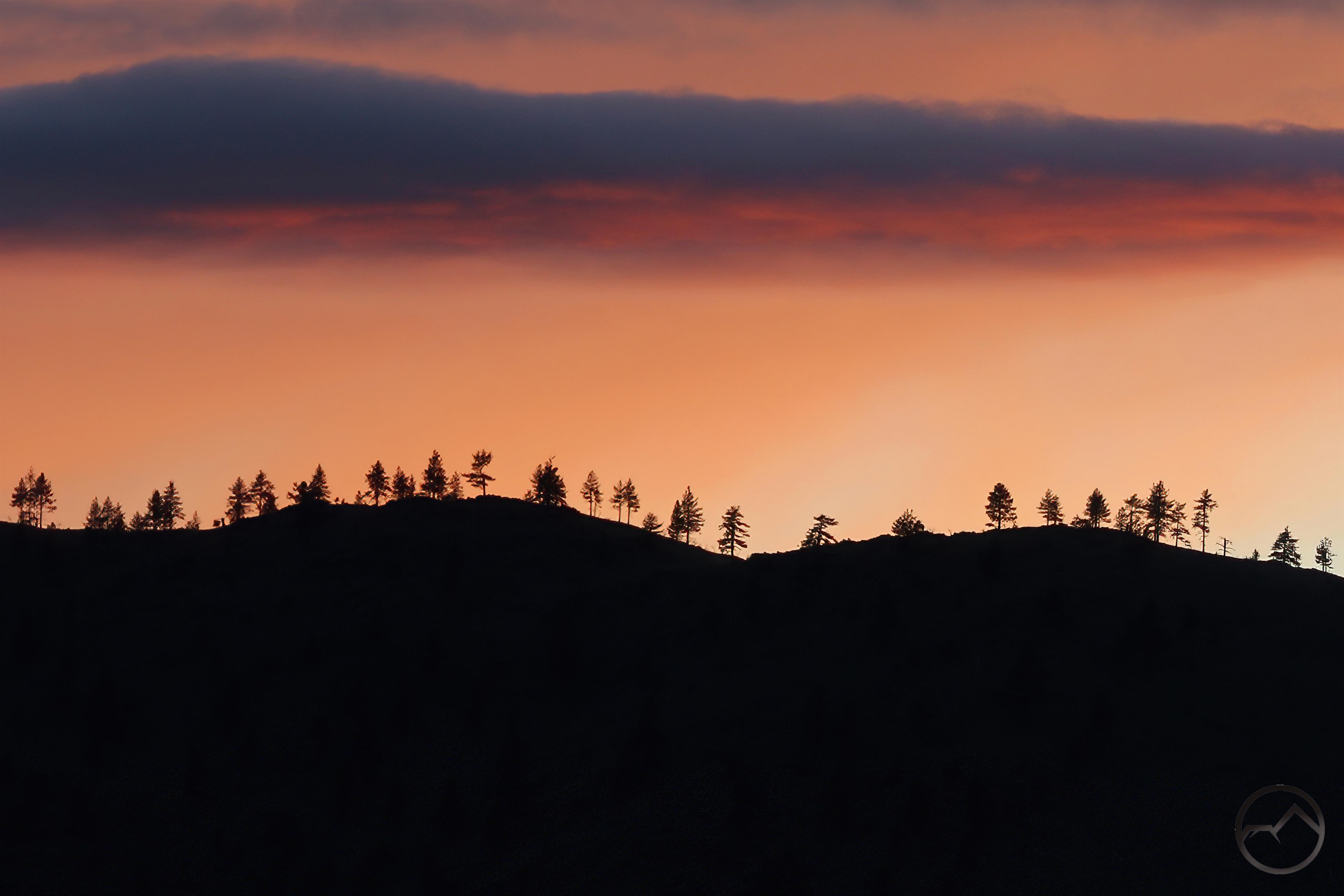
As I left, I headed west, just in time to see some really beautiful color over Parks Peak, one of the Scott Mountains’ prominent peaks that loom over the Shasta Valley. Immediately north of the summit is a ridge that once burned in a fire. As a consequence, most of the ridge is just grass but there is a nice lince of trees on the crest of the ridge. With the trees silhouetted against the colorful sky, it was an beautiful spectacle so I stopped, pulled out my camera and captured a couple of shots.

The ridge in question has always interested me. Its mix of montane forest and high desert has always reminded me of the hills above Reno and I have had some good hikes in that area and always had a fondeness for it. The view of the trees against the technicolor sky hearkend back to some of those hikes from when I was younger. I appreciated the moment and the excellent sunset as the light faded.

I am not normally inclined to capture images like this, as my tastes usually run to the grand and sweeping, rather than the smaller scale of trees on a ridge. The beauty of the sunset on Parks Peak was undeniable and was quite glad I had stopped and captured the images I did. One of these days I would like to hike up on those ridges. I imagine the views of Mount Shasta are excellent. The land is on private property though, so it will be a while before I have the opportunity to enjoy the sights from that vantage point. Until that time, there are plenty of other great places around Mount Shasta to hike and to enjoy the grandeur of this land!

Lovejoy Basalt: A Unique And Beautiful Northern California Landscape

Posted by bubbasuess on May 25, 2021
Posted in: Hiking, Mount Shasta. Tagged: Lovejoy Basalt. 6 Comments

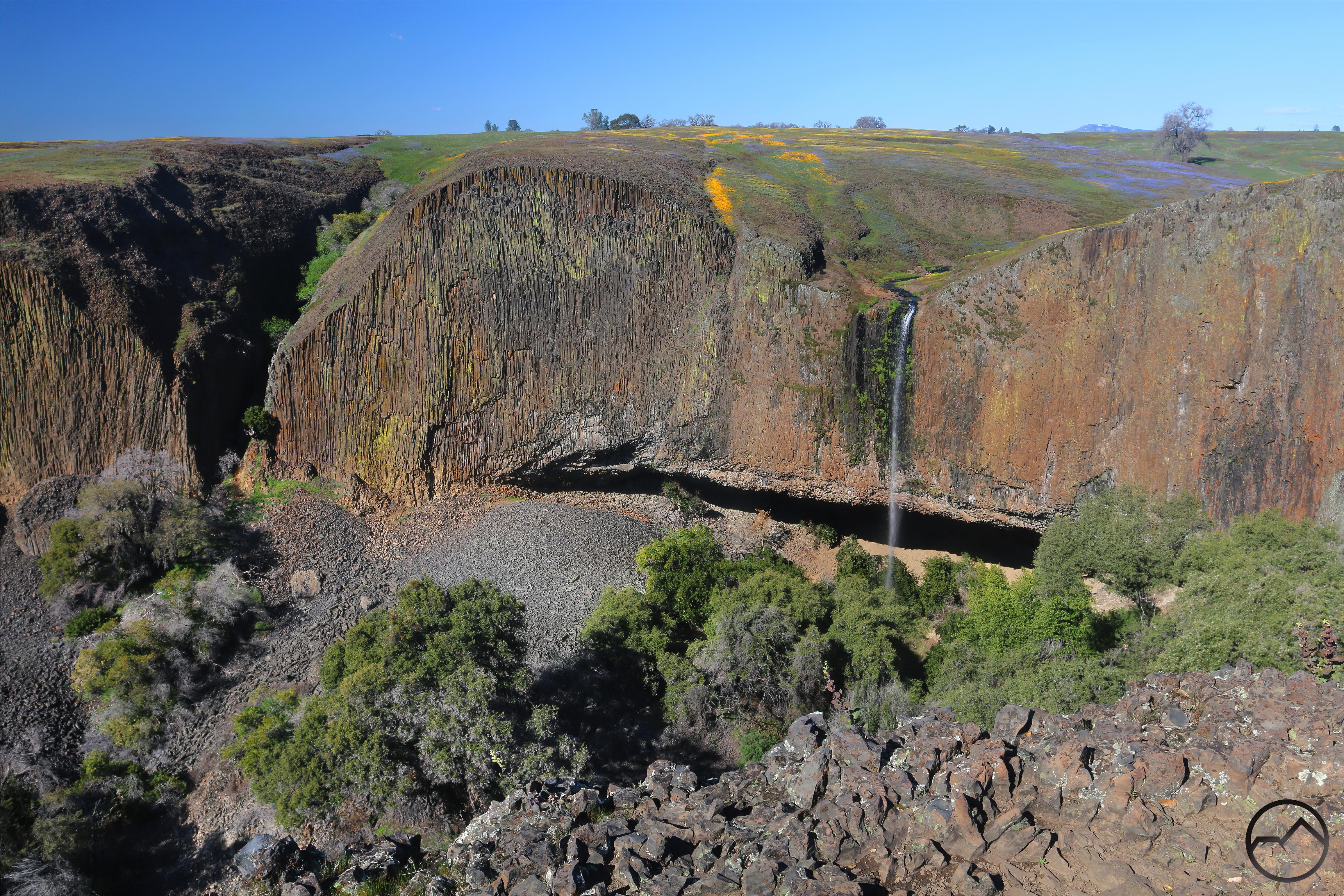
Phantom Falls pours over a Lovejoy Basalt ledge.

A few things have happened over the last couple of months that have refocused my attention on Northern California’s Lovejoy Basalt formation. First, my family and I took our somewhat-annual trip down to North Table Mountain to enjoy the epic wildflowers that erupt there every spring. Second, I wrote my recent article on the Orland Buttes, a key site containing this geologic marvel. In addition, I have gone through Chico numerous times this spring, which inevitably brings to mind Bidwell Park, which was the place I first encountered this unusual rock.


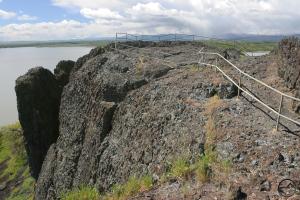
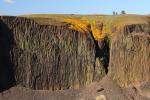
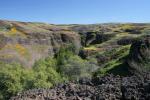
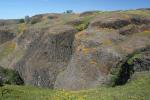
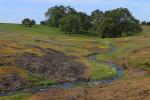
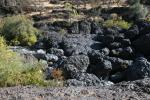
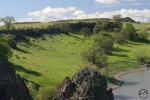
Classic examples of Lovejoy Basalt along Big Chico Creek and the Orland Buttes.

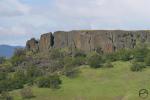
This naturally raises the question, just what is Lovejoy Basalt? First, basalt is a dense igneous rock that is produced through volcanic activity. Northern California, which contains the southern end of the Cascade Range, is home to numerous basalt formations. However, Lovejoy Basalt is distinct among these for a few reasons. First and most obvious, its appearance is quite unmistakable. It manifests as a blocky conglomeration of rock, welded together and very dense. The rock itself is aphyric, showing no granular composition. Less obvious but still distinct is the way the rock tends to break apart in along rather stark fault lines. This is not as obvious when hiking among it but looking from above, or in some rather dramatic places where the faulting is pronounced, it is a tell-tale clue that the rock is Lovejoy Basalt.

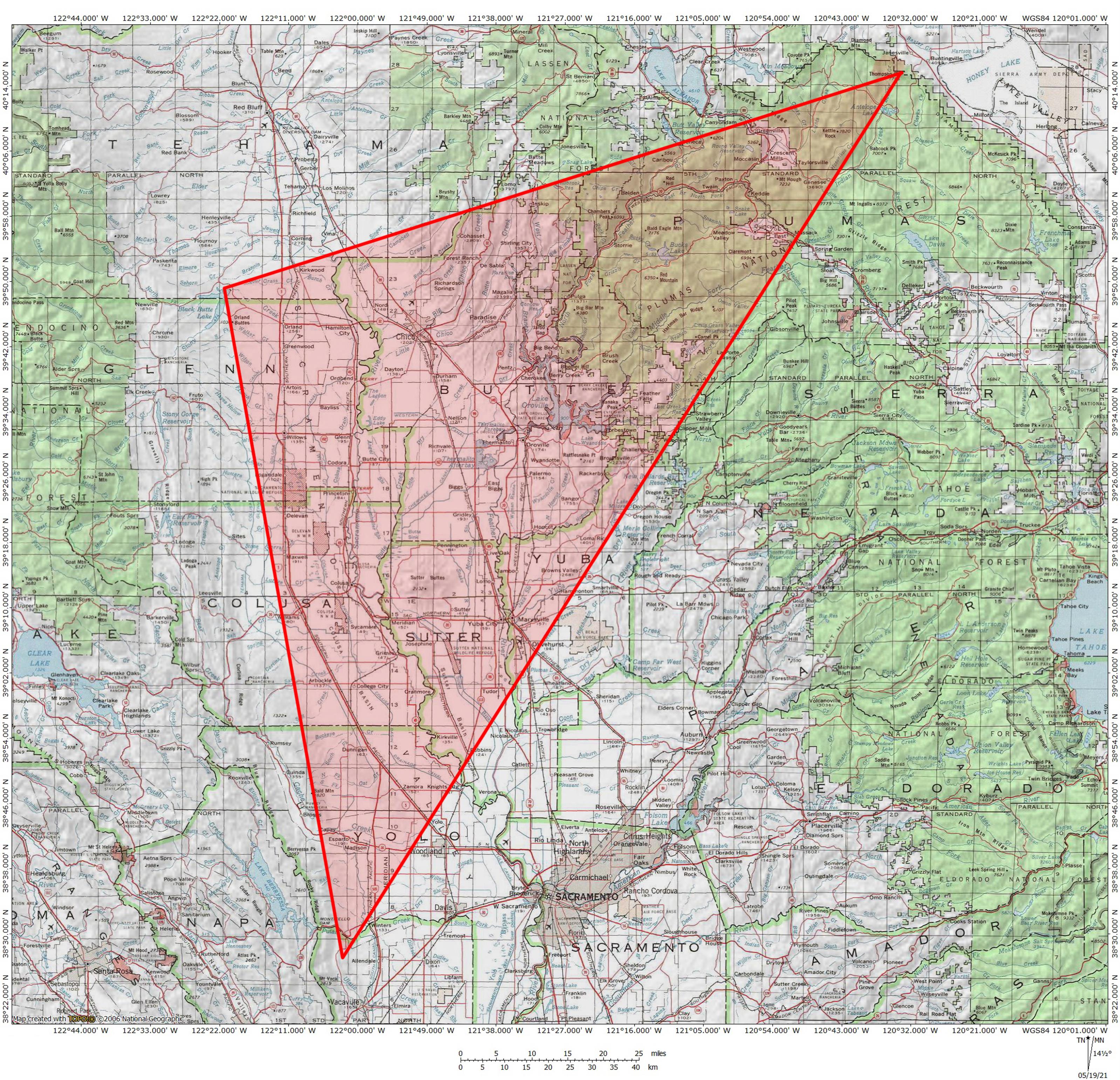
The Lovejoy Basalt zone.

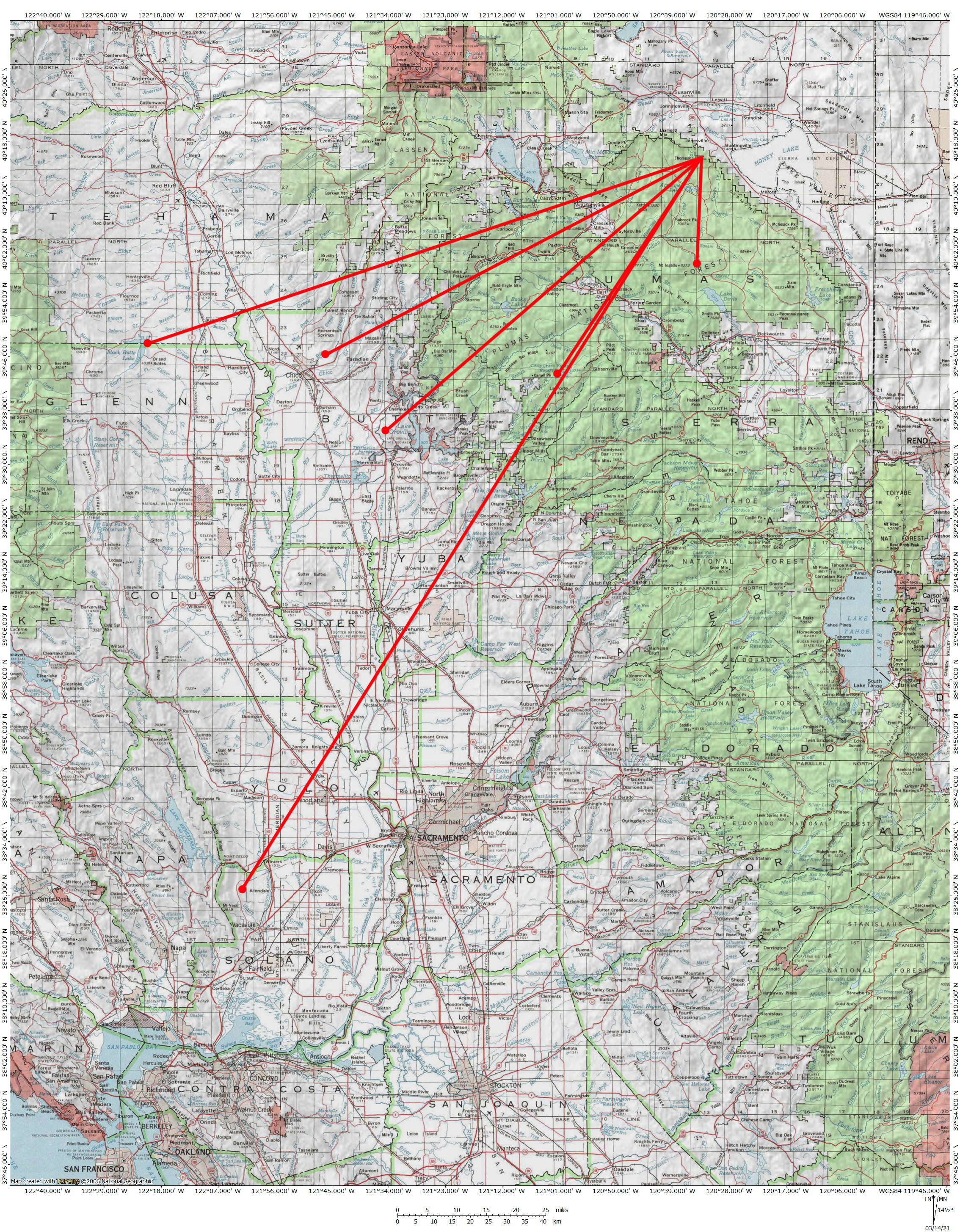
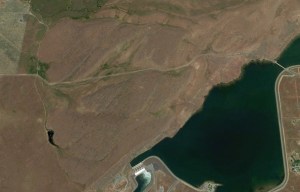
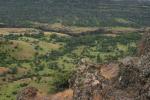
Lovejoy Basalt is believed to have originated out of large volcanic vents near Thompson Peak in the Diamond Mountains, a range marking the far northeast corner of the Sierra Nevada. The Diamond Mountains are something of a transitional range, being primarily volcanic in nature but still in the sphere of the Sierra. The basalt was laid down in a vast sheet as a lava flow at some point in the past. It was subsequently broken up and washed away, both down creeks and rivers in the Sierra and ultimately out to San Francisco Bay. At its greatest known extent covered a vast area that is roughly triangular in shape. Apices of the triangle are located at Thompson Peak, the Orland Buttes and Putnam Peak in the Vaca Mountains. This last is particularly noteworthy, since it is located 150 miles away from the source of the Lovejoy Basalt lave flow.

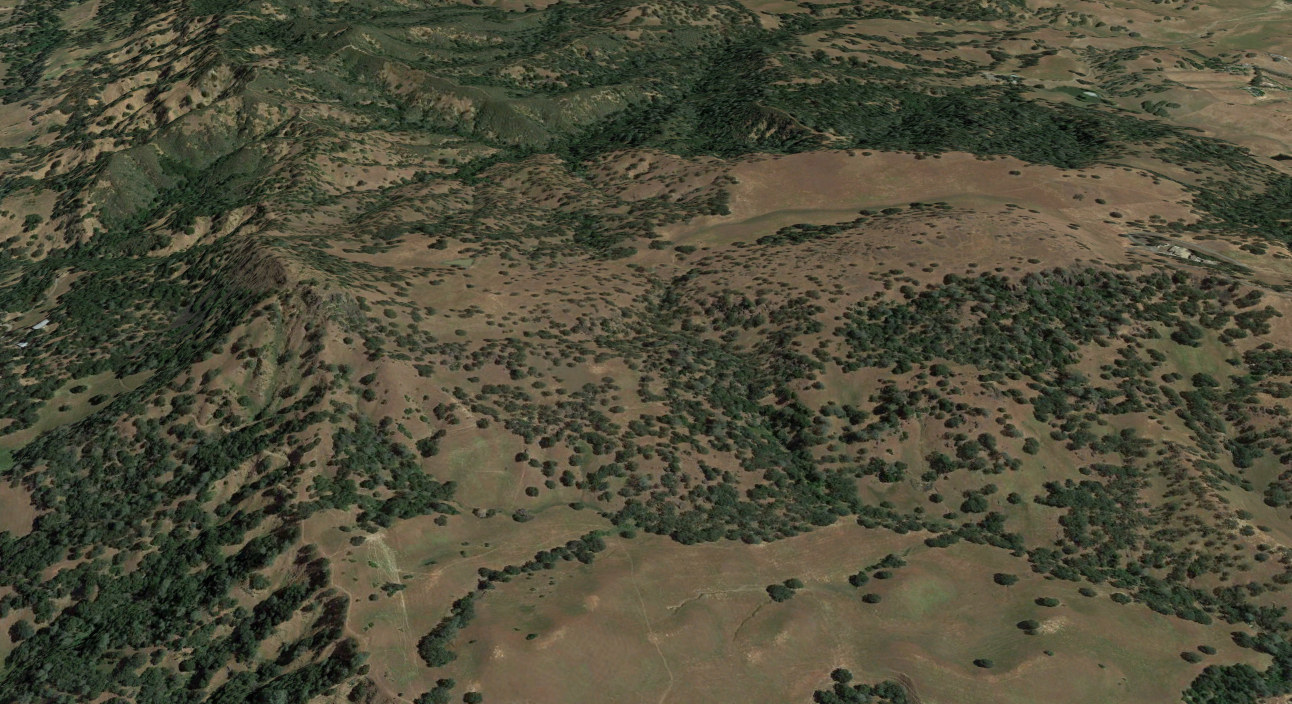
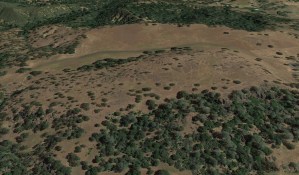
The Putnam Peak area. Click on the image to enlarge it.

Unfortunately, the Putnam Peak is difficult to study. The area is on private land and access is very limited (consequently, google earth images will have to suffice). In addition, 2020’s Hennessy Fire burned the entire area. Nonetheless, the area offers a surprisingly large but extremely isolated Lovejoy Basalt formation.

Basalt boulders on Putnam Peak.
Faulting on the nearby massif.

The basalt in this area manifests in two distinct manners, both of which are exhibited at other Lovejoy Basalt sites. First, on Putnam Peak itself, there are large rocky outcroppings and massive boulders. These run eastward along a vein before meeting a massif composed of the rock. Here the Lovejoy Basalt exhibits the mounding, faulting and fracturing that is also evident at other locations. This location, 75 miles away from the nearest similar Lovejoy basalt formation, sets the furthest limit of the rocky type.


The northern apex on the Lovejoy Basalt Triangle is the Orland Buttes. Running against the North Coast Range that hems in the western side of the Sacramento Valley, these are also an isolated formation, though not quite so remote as Putnam Peak. These are located roughly 100 miles from the source near Thompson Peak and 30 miles away from the nearest similar formation in Chico’s Bidwell Park, the Orland Buttes are a surprising outpost of basalt, especially when considering there is nearly no other evidence of volcanic activity in the vicinity.

Lovejoy Basalt formations radiate out from the Thompson Peak area.

While the outer points of the Lovejoy Basalt zone are isolated, the highest concentration of the formation is located at the western edge of the Northern Sierra Nevada. With occurrences found along Big Chico Creek, North Table Mountain and the Campbell Hills, the area between Chico and Oroville yields the most extensive and dramatic examples of this unusual rock formation. Even better, most of the formations are on public land and access to these landmarks is easy.

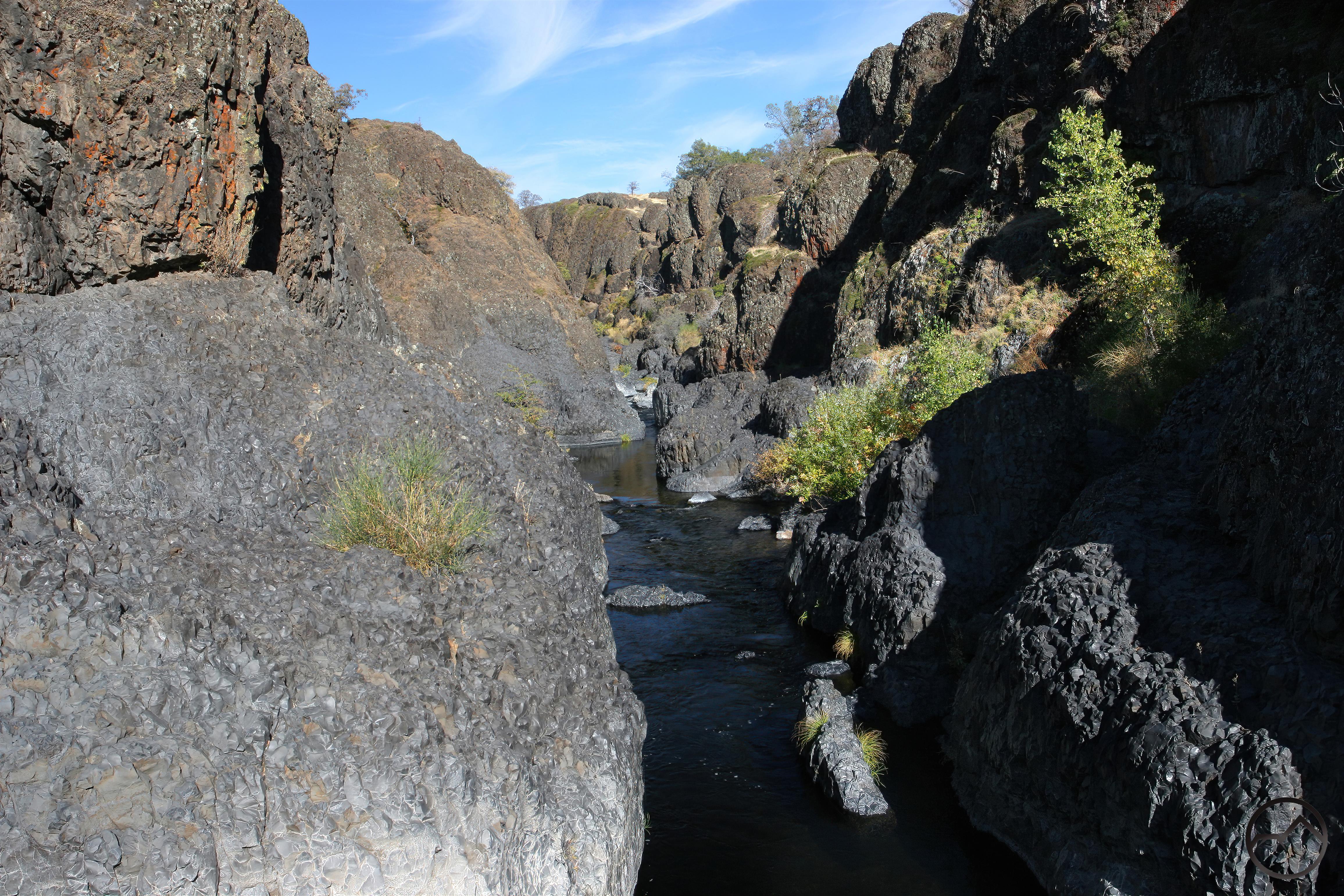
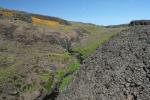
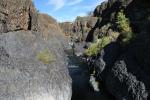
A chasm along Big Chico Creek composed of Lovejoy Basalt.

The northernmost occurrence in this high concentration is in Chico’s superlative Bidwell Park. Through this 3,670 acre park flows Big Chico Creek, a significant waterway in the northern Sierra Nevada foothills. Most of the immediately visible rock in the park is part of the Tuscan Formation, a layer of volcanic rock initially formed by a series of mudflows that resulted from large eruptions. However, underlying much of the park is a layer of Lovejoy Basalt. This is most readily visible in the narrow gorge that Big Chico Creek has carved through the basalt.

Looking down on the narrow gorge carved into the Lovejoy Basalt.

Within the gorge, the blocky basalt is exposed in the form of walls, spires and boulders. The rock in this location appears somewhat different from the other areas where Lovejoy Basalt is evident since most of rock along the creek has been scoured smooth by the water. Furthermore, a significant number of Lovejoy Basalt boulders have fallen into the creek, giving Big Chico Creek a unique and beautiful appearance. Indeed, while Bidwell Park has many excellent features, it is often this unusual, rocky channel that is the signal memory of those who have spent time there, hiked along the creek or cooled off on one of the swimming holes during the hot summer.

A few miles to the south is magnificent North Table Mountain, perhaps the single greatest example of Lovejoy Basalt. In terms of natural beauty, this area is worthy of great acclaim, though it is not well known outside of the local area. In spring, it is paradise on earth, with riotous wildflower displays and a surprisingly high concentration of awesome waterfalls. It is also the site of the most extensive Lovejoy Basalt formation, stretching over a broad expanse for several miles, it reveals many details about this kind of rock that is obscured at other sites.

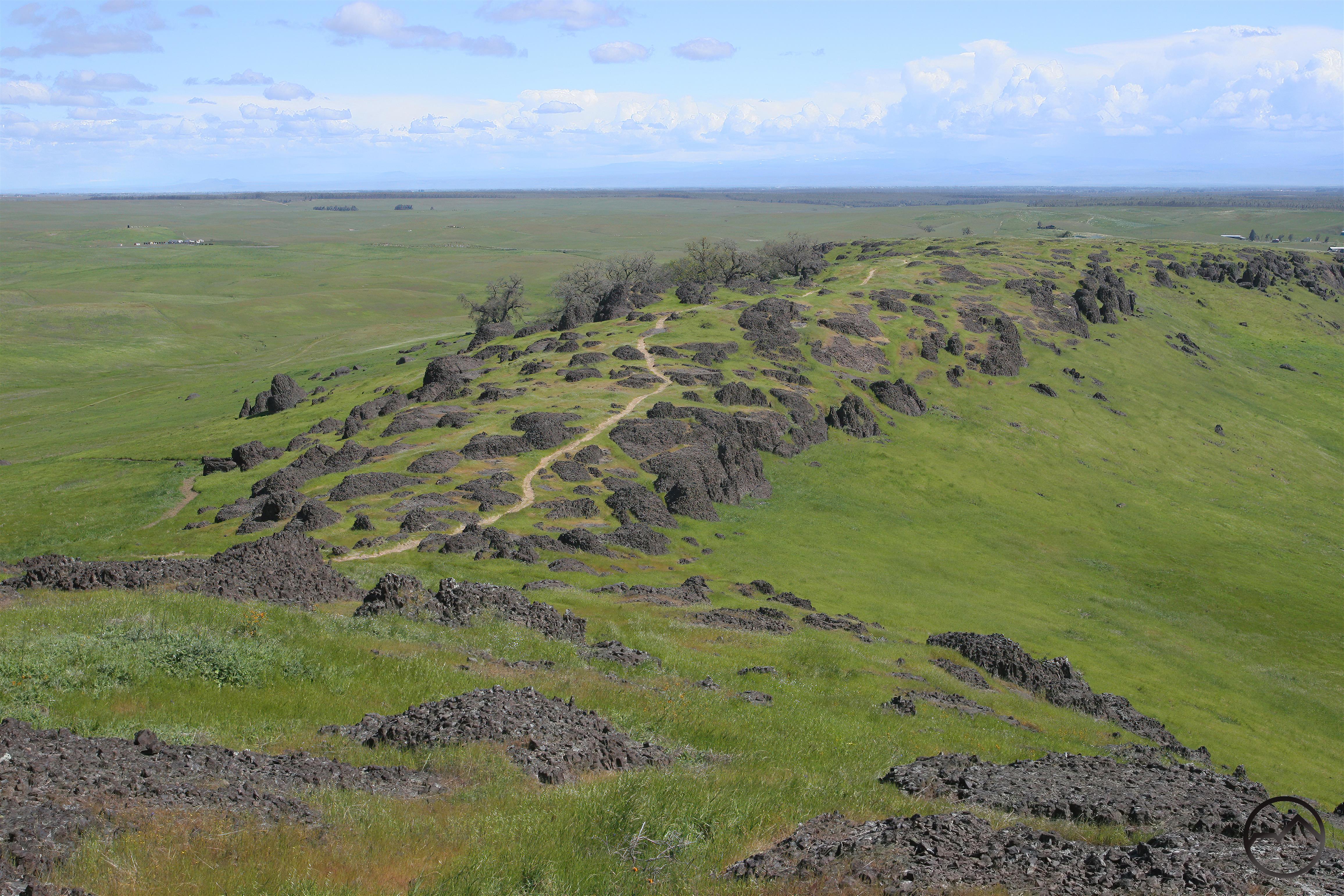
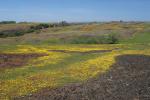
Lovejoy Basalt and amazing wildflowers at North Table Mountain.

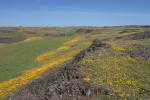
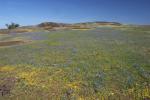
North Table Mountain is a large, remnant chunk of the original Lovejoy Basalt flow, now isolated as most of the flow has been washed away. What is left is a broad, flat-topped mesa surrounded by cliffs of exposed basalt on the north, west and south sides. The top of the flow is gently undulating, with a sporadic protrusions of the tell-tale dark basalt. These protrusions feature the classic, dark, blocky composition that is the calling card of Lovejoy Basalt. The area between the protrusions has filled in with loose soil, providing the necessary for the flourishing of wildflowers.

In a few places, springs on the eastern edge of the plateau have cut channels extending westward across the flat-topped mountain. They deepen as they progress and eventually spill over high cliffs. It is here, at these cliffs, that some of the most fascinating aspects of Lovejoy Basalt is revealed. The blocky composition that is a classic component of the rock’s appearance is, in fact, the result of a columnar cooling process similar to what is seen in columnar basalt formations at places like Devil’s Postpile. The Lovejoy Basalt is darker and the columnar formations tend to be smaller in diameter but the comparison is obvious. Moreover, the height of some of these columnar formations is really impressive, reaching over 100 feet.

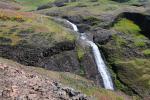
Phantom Falls blows in the wind, alongside a large, exposed portion of columnar Lovejoy Basalt.

In some places at North Table Mountain, the Lovejoy Basalt layer has been undercut by the creeks, leaving the flow overhanging the the more erosion-prone layers underneath. The areas with large columnar formations tend to peel away and collapse, leaving a large pile of broken columnar chunks below. It once again exhibits classic basalt behavior.

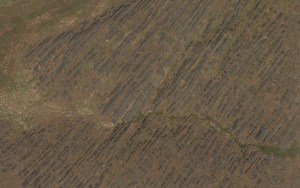
North Table Mountain is also an excellent place to observe the faulting and cracking that can happen with Lovejoy Basalt. In the areas where the broad expanse has been unbroken by erosion or other forces, the rock still has a tendency to break along linear joints. This creates a collection of long, linear gullies that run parallel to each other. This is particularly evident in the flat areas in the southern half of North Table Mountain.

Water flows through a gap in the Lovejoy Basalt formed by a joint in the rock.

A little further south from North Table Mountain is the Campbell Hills. This area is rather obscure but is still a fantastic example of Lovejoy Basalt. Though it lacks the dramatic cliffs and waterfalls of its northern neighbor, it still exhibits a fantastic collection of joints and fissures. Indeed, there is more rock exposed here than in the joint/fault areas of North Table Mountain.


The land is located on state land adjacent to the Thermolito Forebay. In theory, there should be public access, but there are no amenities like parking areas or trails. It is Lovejoy Basalt in its primeval state, waiting to be explored and appreciated!

There are more sites consisting of Lovejoy Basalt higher up in the Sierra Nevada, but none are as extensive or impressive as those found in the Central Valley or along its perimeter. Most of these higher formations are exposed through the work of creeks that flow by them. Located on Forest Service land, they can be accessed freely but they are remote.

For those inspired or interested in this unusual, distinctly Northern California landscape, spring is the ideal season to explore Lovejoy Basalt. All the sites that are open to the public are at their best this time of year. The grass is green and lush, wildflowers are brilliant (or beyond brilliant!) and the creeks and waterfalls are full and impressive. When the high country is still snowed in, these rugged formations and all their attendant beauty make great hiking adventures and are sure to embed great memories, just as this strange and beautiful landscape was embedded in California long ago.

A Lovejoy Basalt Gallery (click to enlarge):


Hollow Falls


Black Butte Lake.

An Afternoon With The Survey Creek Cascades

Posted by bubbasuess on May 18, 2021
Posted in: Hiking, Klamath Mountains, Mount Shasta, Scott Mountains, Waterfalls. Leave a comment

An afternoon view of Mount Shasta from a bluff near Survey Creek.

The last month has been an odd one for me. Normally I am out all over the area, hunting waterfalls, climbing peaks and generally exploring. This year most of my attention has been focused on one spot and a lot of time has been spent there, exploring, photographing, investigating and imagining. I will be writing more about this area in significant detail soon, I hope. In the meantime, I finally got my family up to Survey Creek over the weekend and we all enjoyed one of our favorite spring hikes. There’s no trails here but there are fantastic cascades, awesome rocks, a great view of Mount Shasta and a few other hidden and surprising delights hidden away in the mountains.

The highlight is a long series of cascades pouring down off the mountains. They flow through chutes and over small cliffs, making it one of the most precipitous and active waterways in the area. Adding to the enjoyment is the beautiful rock that lines the stream. While loaded with interesting features, its texture is its real delight. It is the tackiest rock I have ever experienced, even better than Sierra granite or Moab sandstone. This makes scrambling the rocks along the cascades a joy and one my entire family is always excited to undertake.

20210517_172815

20210517_172815

20210517_172958

20210517_172958

20210517_173138

20210517_173138

20210517_173357

20210517_173357

20210517_173725

20210517_173725

I think it would surprise everyone just how much snow is left up in the mountains. I know Mount Shasta looks bare and I wish it were better but the Klamaths did much better last winter and there is still quite a bit of snow to melt off up in the high country. This was certainly the case along Survey Creek. I was surprised just how much water there was, given how late in the spring we are. It was encouraging.

These are tough camping conditions!

On the way home, we stopped to check on the conditions at one of the most idyllic campsites in the Mount Shasta area. Not surprisingly, it was unoccupied and we had the entire valley to ourselves. It was another great afternoon in Mount Shasta.

Northern California Review: Orland Buttes

Posted by bubbasuess on May 13, 2021
Posted in: Hiking, Mount Shasta. Tagged: Orland Buttes, Sacramento Valley. 2 Comments

The Orland Buttes offer a rugged break from the exceedingly flat Sacramento Valley.

When driving along Interstate 5 through California’s Sacramento Valley, the landscape the freeway is unrelentingly flat. Only in the distance is the valley interrupted and mountains can be seen hemming in the flat land. Indeed, for 430 miles, the Great Central Valley of California (of which the Sacramento Valley is the norther third) there is, seemingly, only the solitary interruption of the Sutter Buttes, an old volcanic core often referred to as “the world’s smallest mountain range”. That will be the subject of another Northern California Review someday. However, the Sutter Buttes are not the only bit of topography in California’s great agricultural heartland.

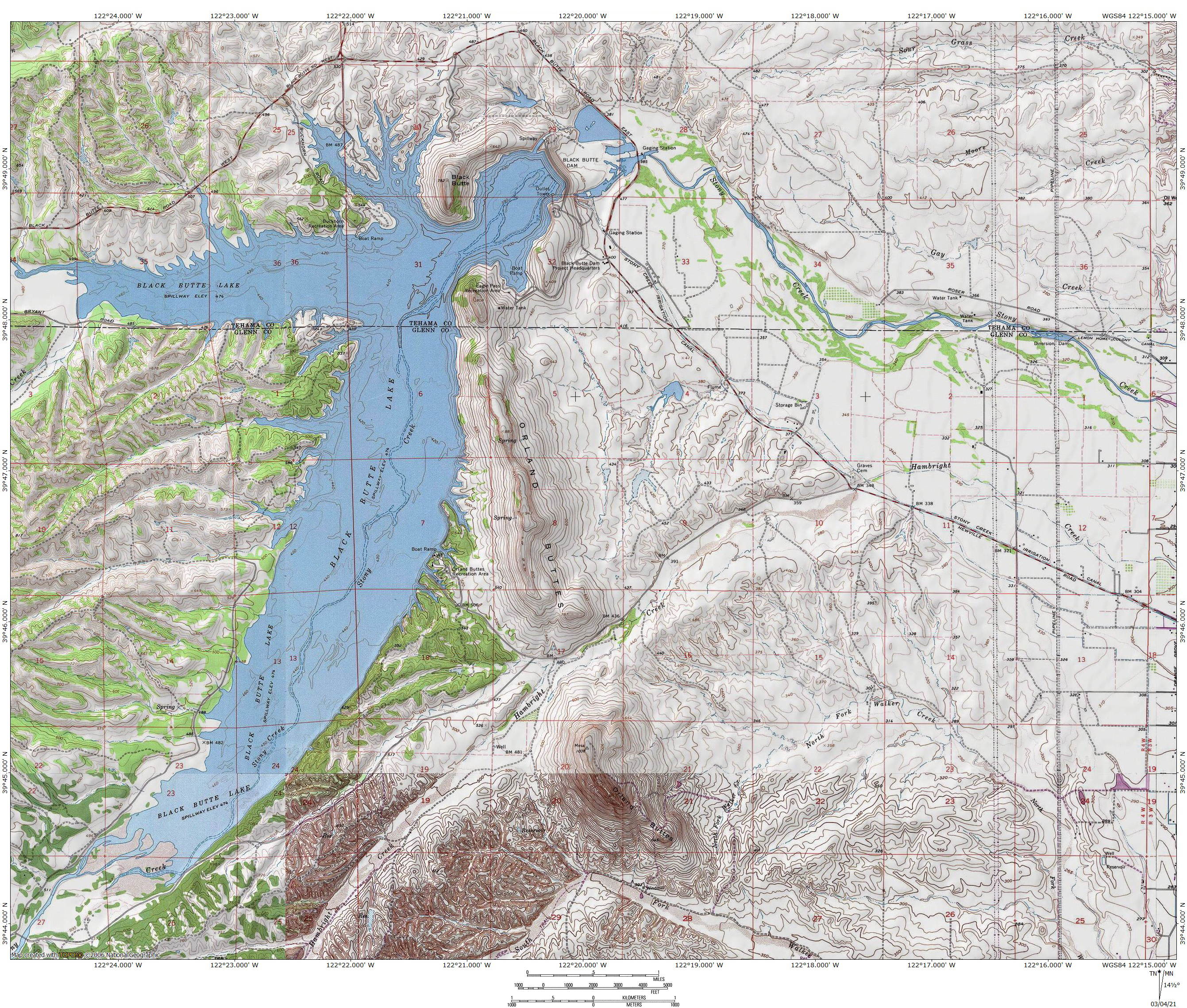
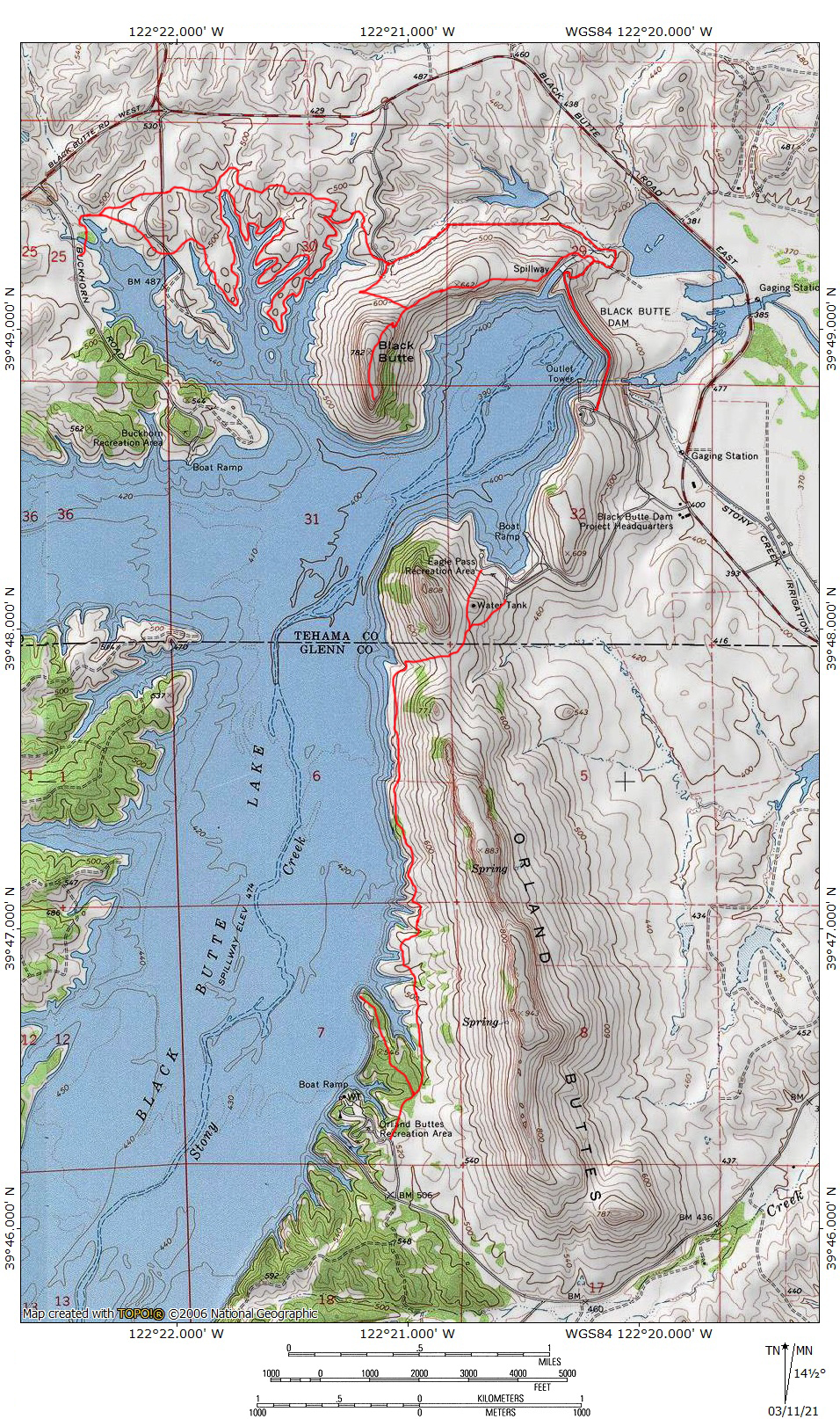
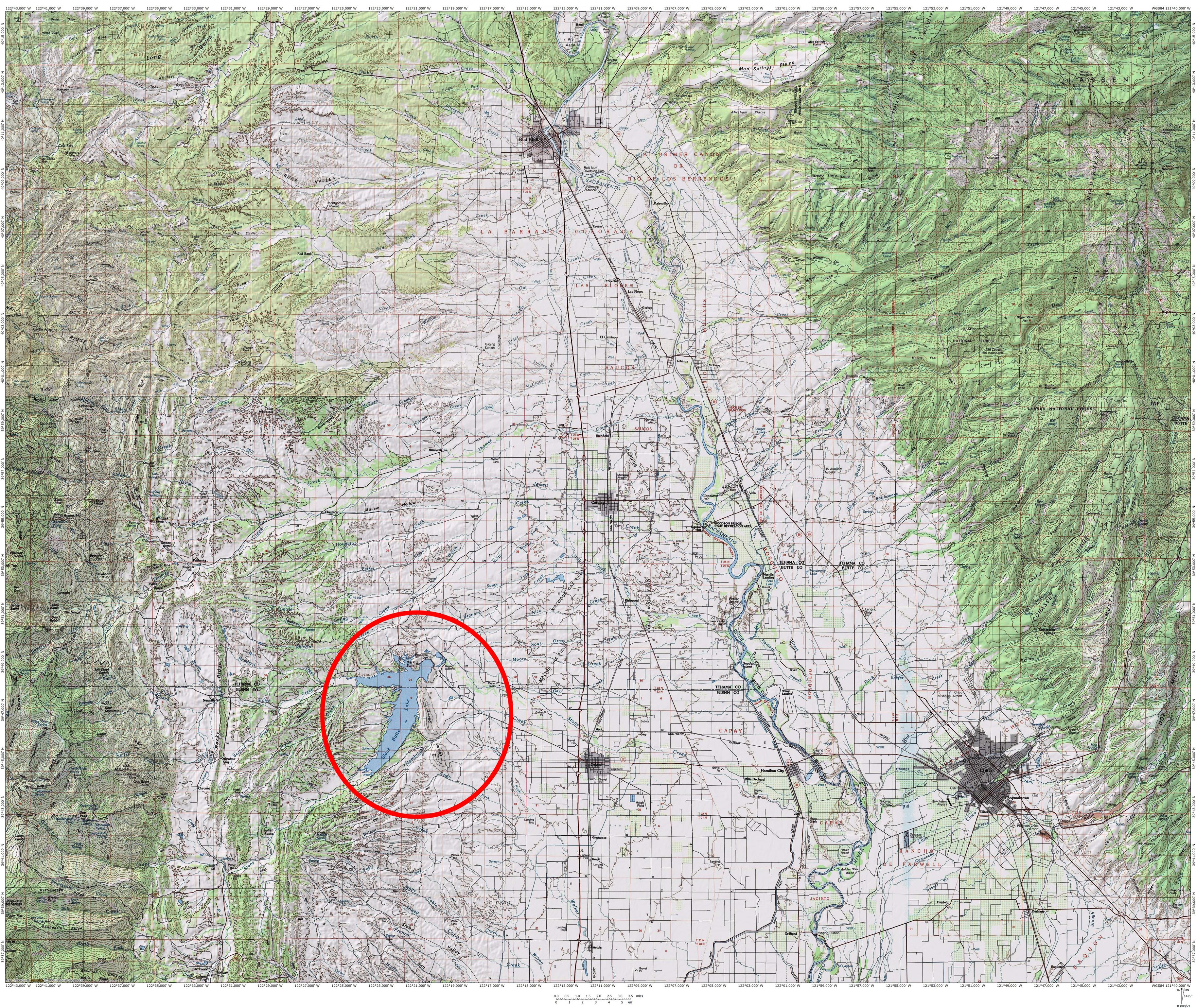
50 miles south of Redding, along the western edge of the valley is a little known formation named the Orland Buttes. The agricultural town of Orland, located along I-5 lies 7 miles to the east. The buttes are not tall, but they do offer an extensive, rocky series of outcroppings that break up the monotony of the valley. While speeding along on the freeway, they tend to blend in with the mountains of the coast range that rise to the west. Although they are often lost amidst the landscape, they remain an attractive and unusual feature that are worth exploring. Even better, much of the Orland Buttes lie on public land and are traversed via several interesting but little known trails, making them a good springtime hiking destination.

As noted, the Orland Buttes are located on the western side of the Sacramento Valley, roughly 50 miles south of Redding and 7 miles east of Orland. They suit on the edge of a transitional region, where the farms of the valley give way to the oak savannah that covers the Coast Range foothills. Further west, the valley floor begins to buckle and small ridges form along a north/south axis. However, the Buttes are distinct from this area, both in terms of geology and the physical space that separates them.

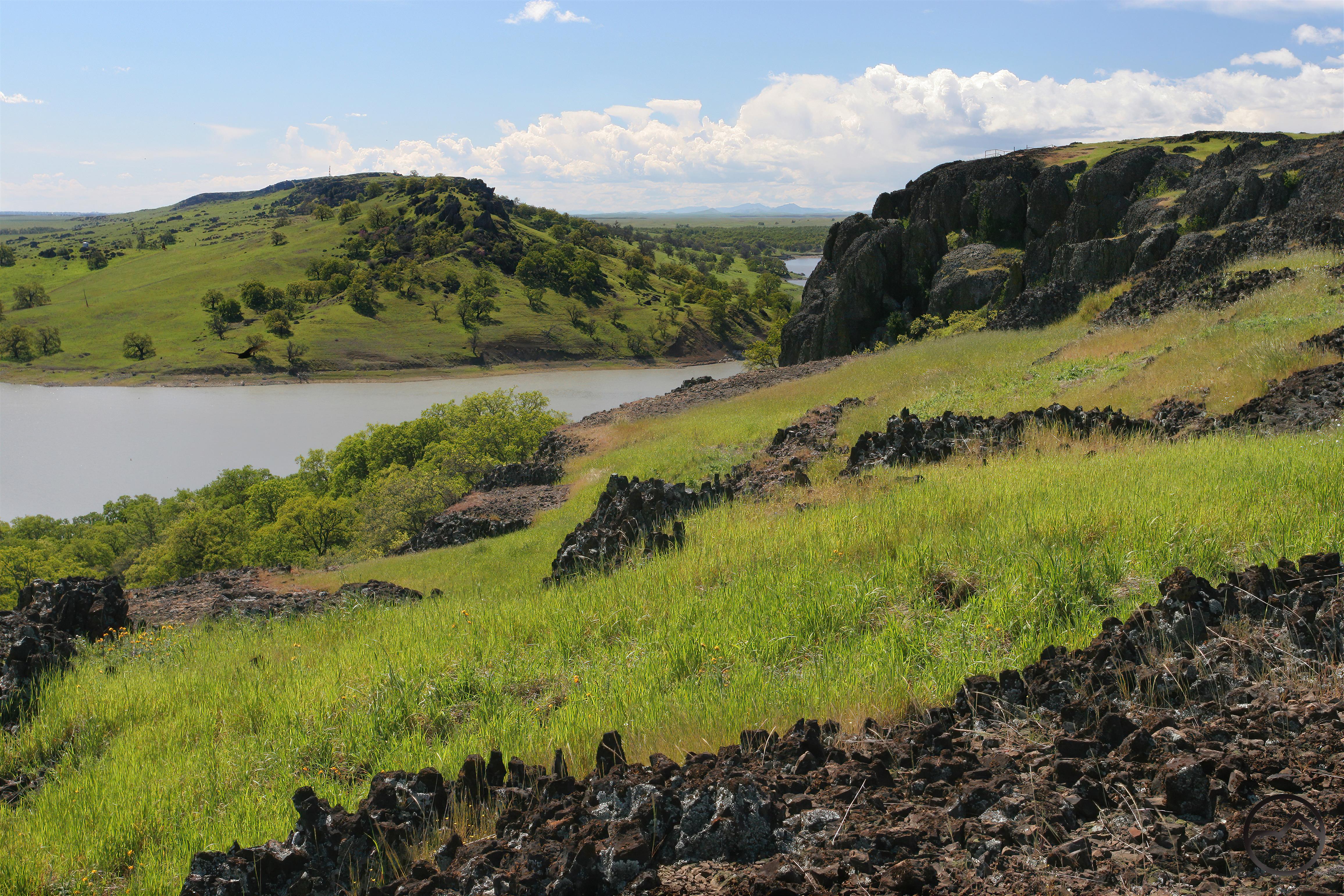
The area between the Buttes and the Coast Range foothills is now occupied by Black Butte Lake, an impounded reservoir on Stoney Creek. This creek begins high up on Snow Mountain, the Coast Range’s southernmost 7,000 foot peak. It flows roughly northeast, through rugged canyons and through the buckled ridges of the valley before reaching the Orland Buttes. A dam in Eagle Pass backs the water up and forms the lake. From there, the creek continues a short distance to the east before joining the mighty Sacramento River. It’s total journey is nearly 90 miles and drains an area of over 700 square miles. While the sight of Stony Creek passing between the ramparts of the Orland Buttes would have been a beautiful sight, especially in its spring fury, the truth is, Black Butte Lake is a beautiful addition to the Orland Buttes and does add a fair amount of interest to the area. The land around the lake, and therefore the Buttes themselves, is administered by the Bureau of Reclamation. This means that the land is open to the public and exploring the Buttes is welcome.


The Orland Buttes are broken up into three main formations. Anchoring the southern end is the Orland Butte, the largest and tallest of the three rock outcroppings. Rising 700 feet around the surrounding farmland, it is the most noticeable of the buttes from the freeway. Visible from far to the south as one drives north, it is a distinct landmark, if you are aware of its presence.

The central part of the Buttes is the longest, unbroken portion section of rock. This long ridge, called Eagle Ridge, is a nearly three mile long wall of basalt that, at its highest point, rises nearly 600 feet around the farms on its east side. The lake that occupies the area to the west, is 100 feet higher than the farmland, so the relief on the west side is a little less. Notably, Eagle Ridge is bookended by recreation areas at its northern and southern termini. Though the recreation areas are connected by one of the Orland Butte’s trails, these are primarily focuses on the lake and the aquatic activities that usually draws people to this destination. Some of the ridge is on private land but the western half is still with the land administered by the Bureau of Reclamation and can be explored legally.
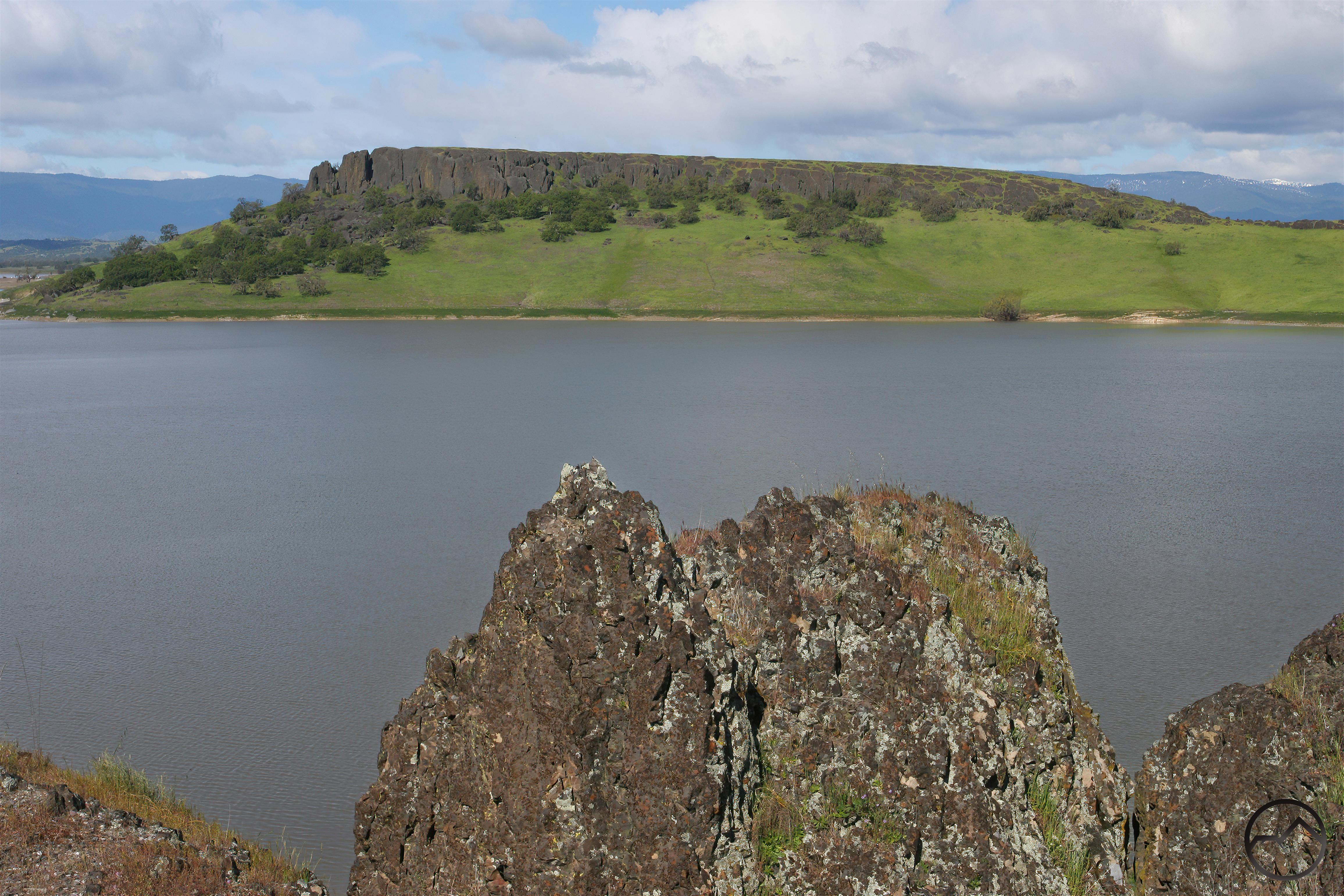
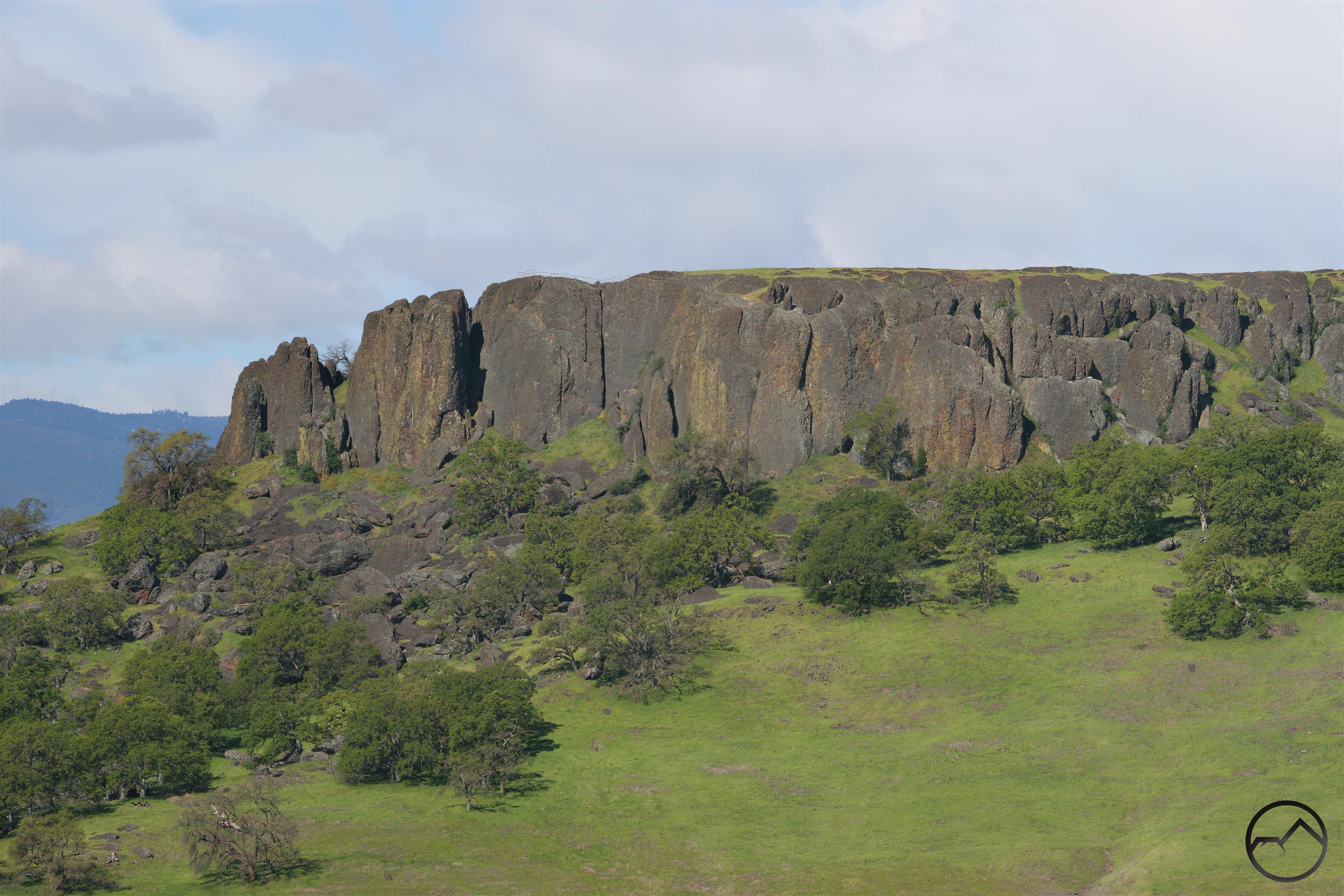
The northernmost of the three Orland Buttes is named Black Butte and it is both the smallest and most geologically interesting of the three buttes. While the other buttes have plenty of exposed rock, none have it such extensive and easily explored proportions as Black Butte. It is also the only one of the three Orland Buttes that is entirely on public land. Forming a crescent reaching to the northeast, it has extensive basalt outcroppings that form an impressive series of walls, giving it an elevated feeling high above the water. A lower section, arcing to the northeast does not have the impressive basalt walls but it has numerous outcroppings, making this an intriguing area to hike through.

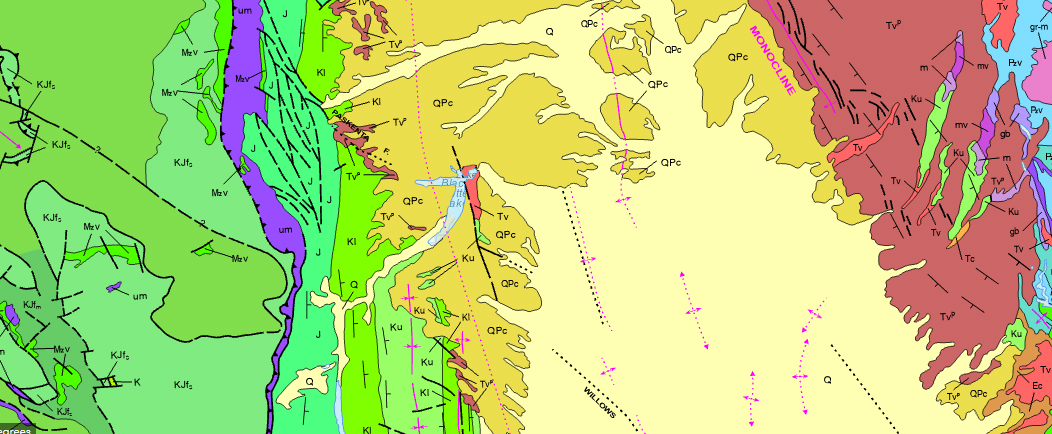
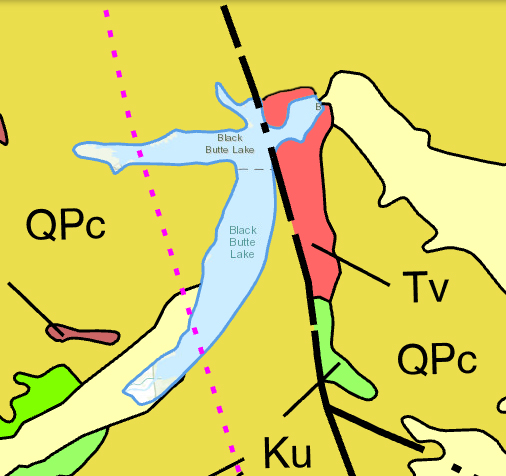
The geologic map of California begins to tell the tale of the Orland Buttes’ fascinating geology. Though there are a few isolated volcanic areas on the west side of the Sacramento Valley, the Orland Buttes are the only exposed basalt in the region. The other volcanic presence, which is very little, is of a completely different rock composition. This is indicated on the map by the color of the rock (it is identifiable next to Black Butte Lake), which indicates its volcanic origin but its distinction from the nearby volcanic extrusions.

The formation of the Orland Buttes is quite unusual. It lies along a fault, and was likely, in some fashion, created by it. However, the type of basalt that composes the Buttes is part of a larger story, one that is both mysterious and fascinating and plays a larger part in the formation’s beauty. The Orland Buttes are composed of Lovejoy Basalt. This dense rock is particular to Northern California and is believed to have been produced by a volcanic vent near Susanville but flowed westward, covering a significant swath of the North State. It was subsequently eroded until only isolated islands of Lovejoy Basalt can be found. The Orland Buttes are the second furthest west and second most isolated occurrence of this rare rock type.

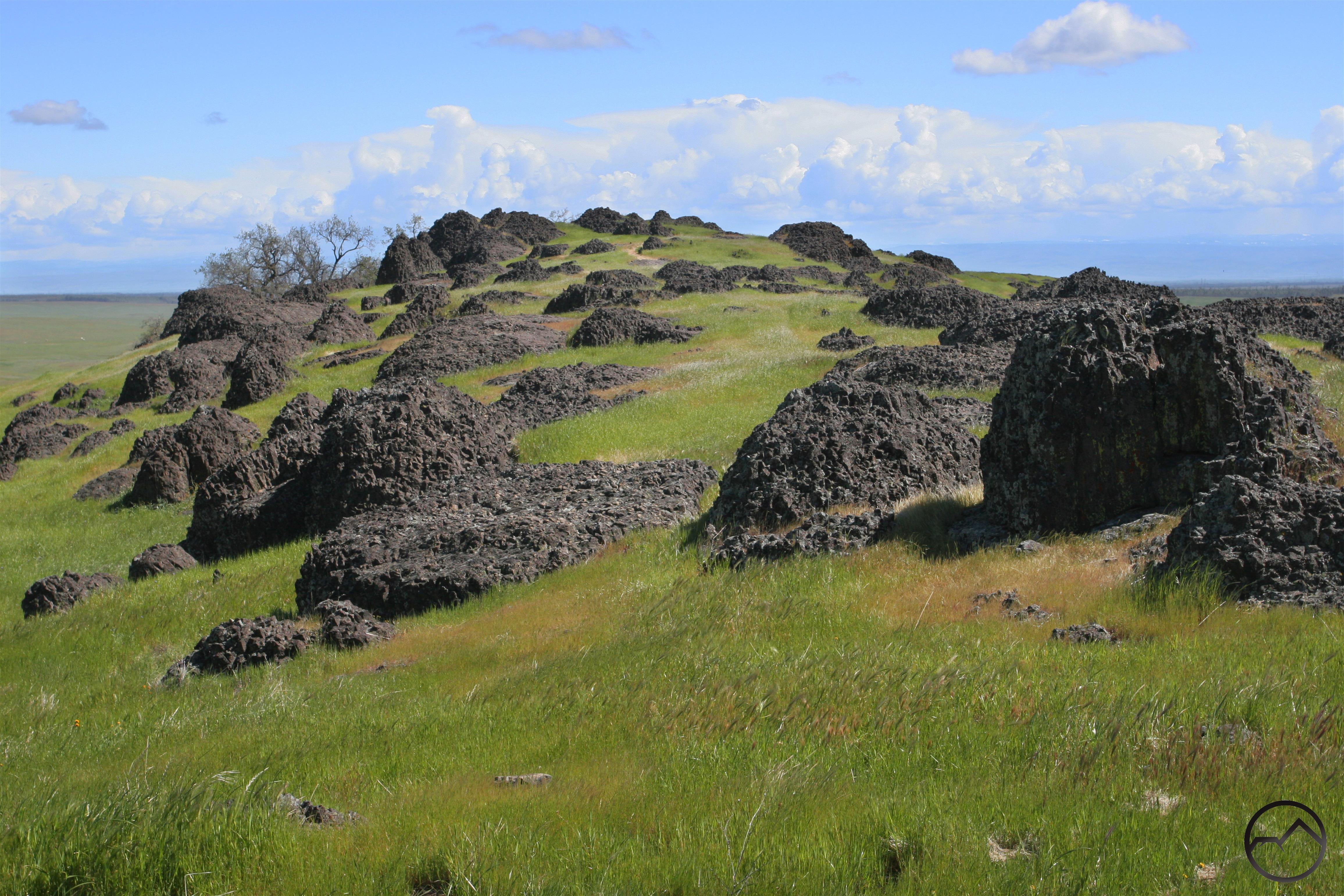
Lovejoy Basalt has a distinct appearance. It looks as though it is an agglomeration of chunks or blocks of rock. Blobs or blocks of rock seem to all be stuck together haphazardly. However, the chaotic appearance belies a solid strength, with the chunks welded together making the rock far more solid than it appears. It also make the appearance of the Orland Buttes very distinct, since this rock type can only be appreciated in a small handful of other places around Northern California. Indeed, the Orland Buttes are one of the easiest places at which to examine and enjoy the unique beauty of Lovejoy Basalt.


Examining and enjoying the beauty of the Orland Buttes is surprisingly easy to do. It is easy to get to off of I-5 and is served by a well-developed trail network. Three trails are spread throughout the area administered by the Bureau of Reclamation:

  • In the south is a trail the follows the narrow strip of land between Black Butte Lake and Eagle Ridge. It is about 2.5 miles long and offers opportunities to explore some of the crags along the ridge and some of the peninsulas that extend out into the lake.
  • At the northern end of the lake is a jumble of trails following the finger-like shoreline of the northernmost part of Black Butte Lake. This trail is furthest from the Buttes themselves but the formations are prominently visible, as is the looming presence of the Coast Range. Access to this trail is from the Buckhorn Campground or the Black Butte Trailhead.
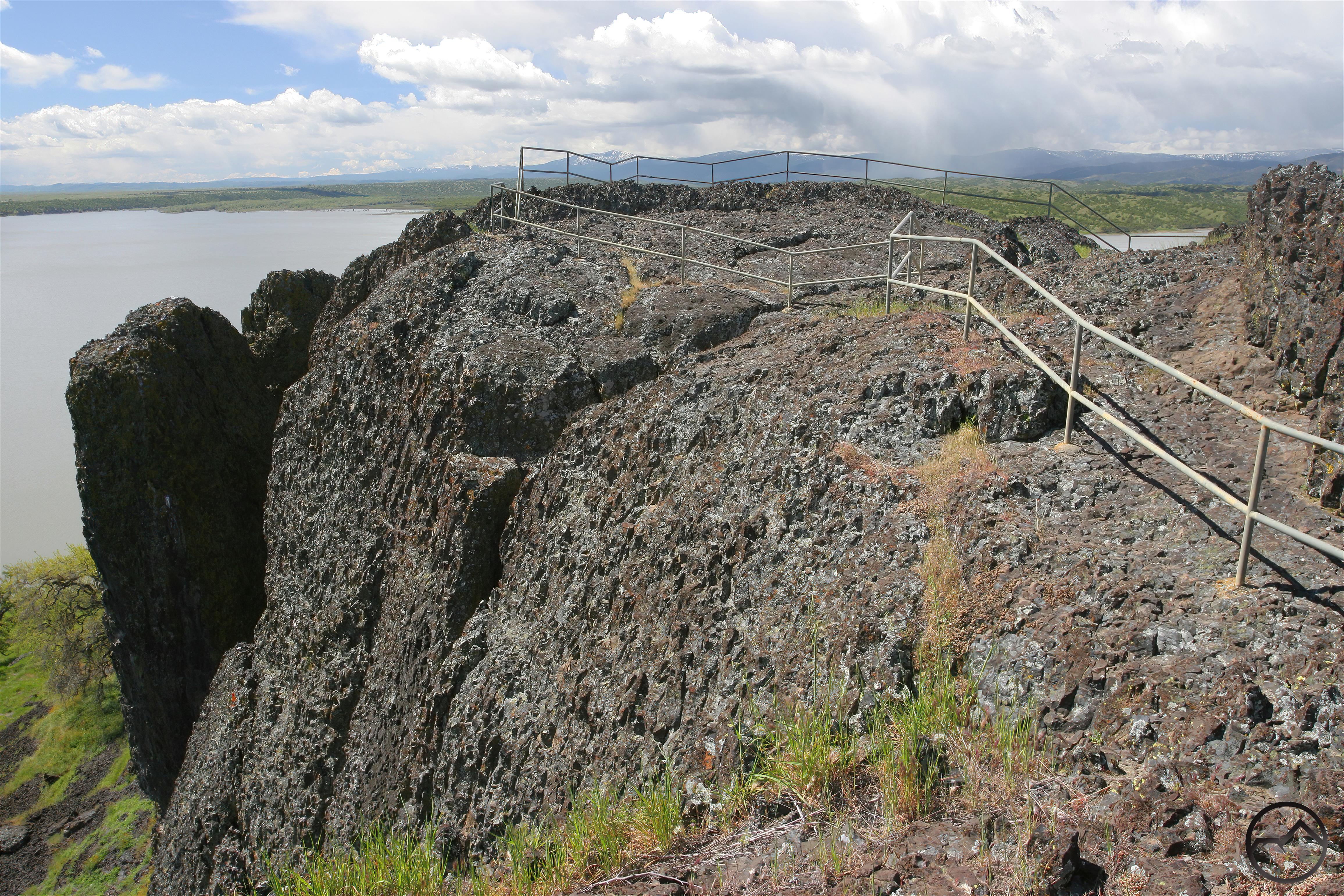
  • The best trail at the Orland Buttes is the one that ascends Black Butte. The hike features a 5 mile lollipop that begins at the Orland Buttes Vista next to the dam that forms the lake. It crosses the dam and ascends the northeast corner of Black Butte and then proceeds to follow the formation’s spine, weaving through Lovejoy Basalt outcroppings. It then crosses a narrow neck, where it intersects a trail coming up from the Black Butte Trailhead. From this point it climbs to the highest part of the Butte, composed of solid outcroppings of Lovejoy Basalt, where a railing marks the end of the trail and a spectacular view of much of Northern California, stretching from Mount Shasta to almost down to peaks that border the northern end of San Francisco Bay (well, where the Bay meats the Delta, at least). The Coast Range foothills, occasionally dotted by clusters of oaks and nearly wild and undeveloped in this area, add a richness to the view from the summit.  You can return the way you came or take a northern part of the loop and follow along the foot of Black Butte back to the dam.


The Orland Buttes are not California’s grandest monument or its most well-known hiking destination. Yet, if a region has a destination like the Buttes as an obscure destination, it is richly blessed with natural beauty! When the mountains are covered in snow and inaccessible, the Orland Buttes are a perfect destination for a day of hiking. This is particularly true in spring, when the grass is lush and green, the lake is full and wildflowers abound. Then, hiking out onto the summit of Black Butte and observing the snow-covered mountains to the north, west and east, one feels like you have really seen and appreciated the Sacramento Valley anew, with a unique and unusual perspective on one of California’s most impressive natural features.

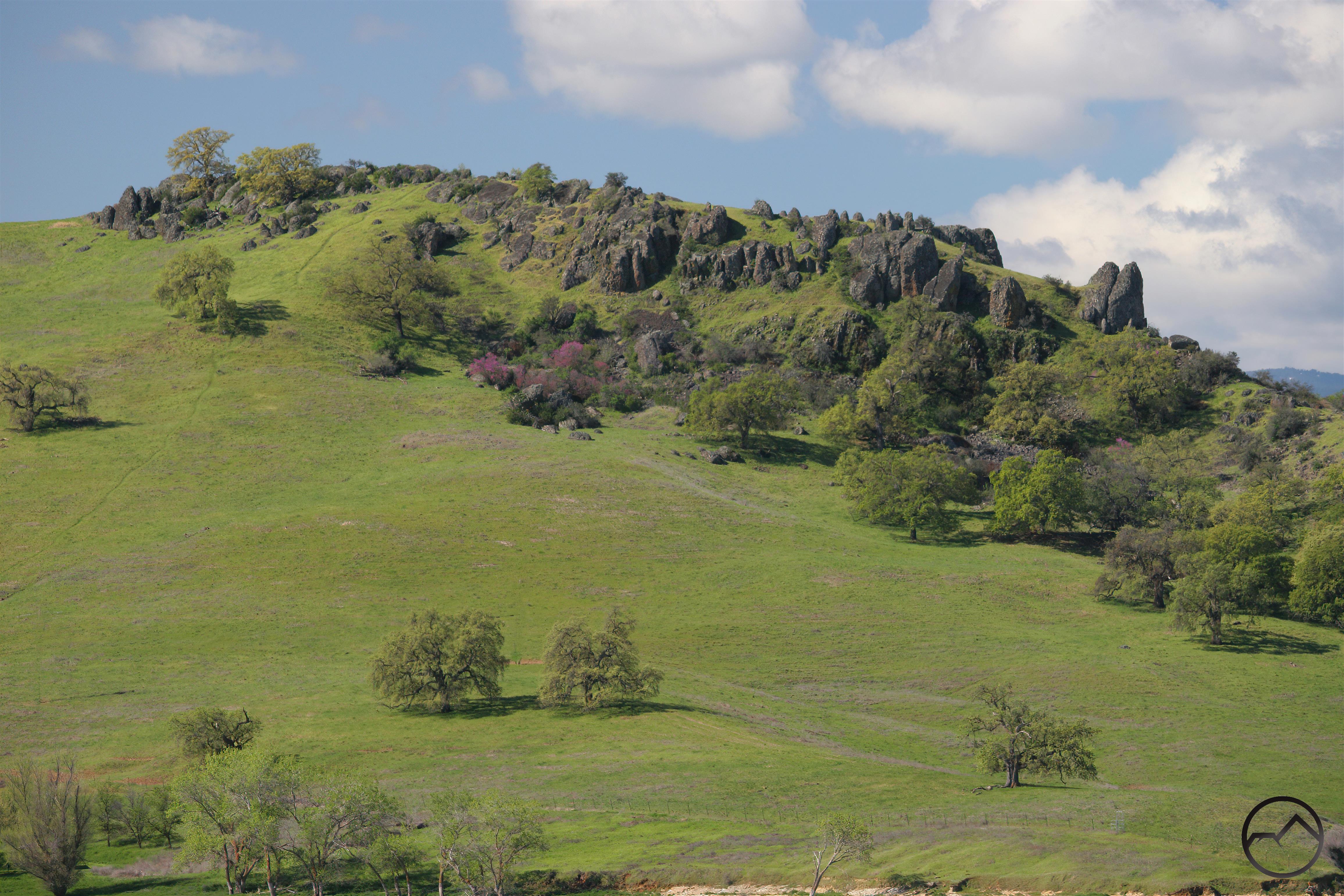
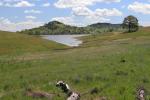
Orland Buttes Gallery (click to enlarge):

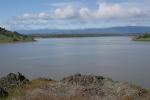
Black Butte Lake.


Fascinating Evidence Of A Deluge On A Creek

Posted by bubbasuess on May 7, 2021
Posted in: Cascade Range, Hiking, Mount Shasta, Trinity Divide, Waterfalls. 4 Comments

May is a month that I typically spend hunting for waterfalls. With the snow melting and the mountains opening up, yet the temperatures comfortable, it is the perfect season to track cataracts. It is surprising just how many creeks in the Trinity Divide are largely unexplored and unappreciated, especially when there is some pretty spectacular scenery waiting to be discovered. In many cases, though people have no doubt been there in the past, I often feel as if it has been a long while since anyone has set foot in these canyons and along these creeks. Such was the case recently, when a friend and I explored one of the Trinity Divide’s obscure waterways.

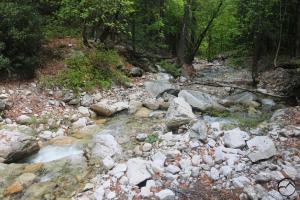
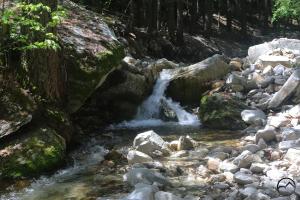
The creek in question was quite beautiful, flowing through primeval forest and choked with rocks of every imaginable size. Indeed, it was this rock that really caught our attention. At first something just seemed amiss but it soon came into focus that all the rocks were loose. They had not found a locked repose as riparian boulders typically do. Nonetheless, the creek was vigorous, wild and refreshing.

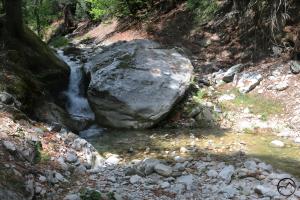
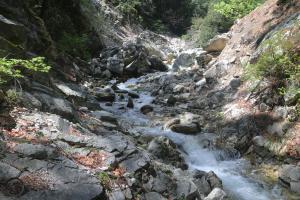
The creek flows through a beautiful channel filled with loose, white rock.
Small cataracts characterized much of the waterway.

The channel narrows and becomes rockier, but the loose rock persists.

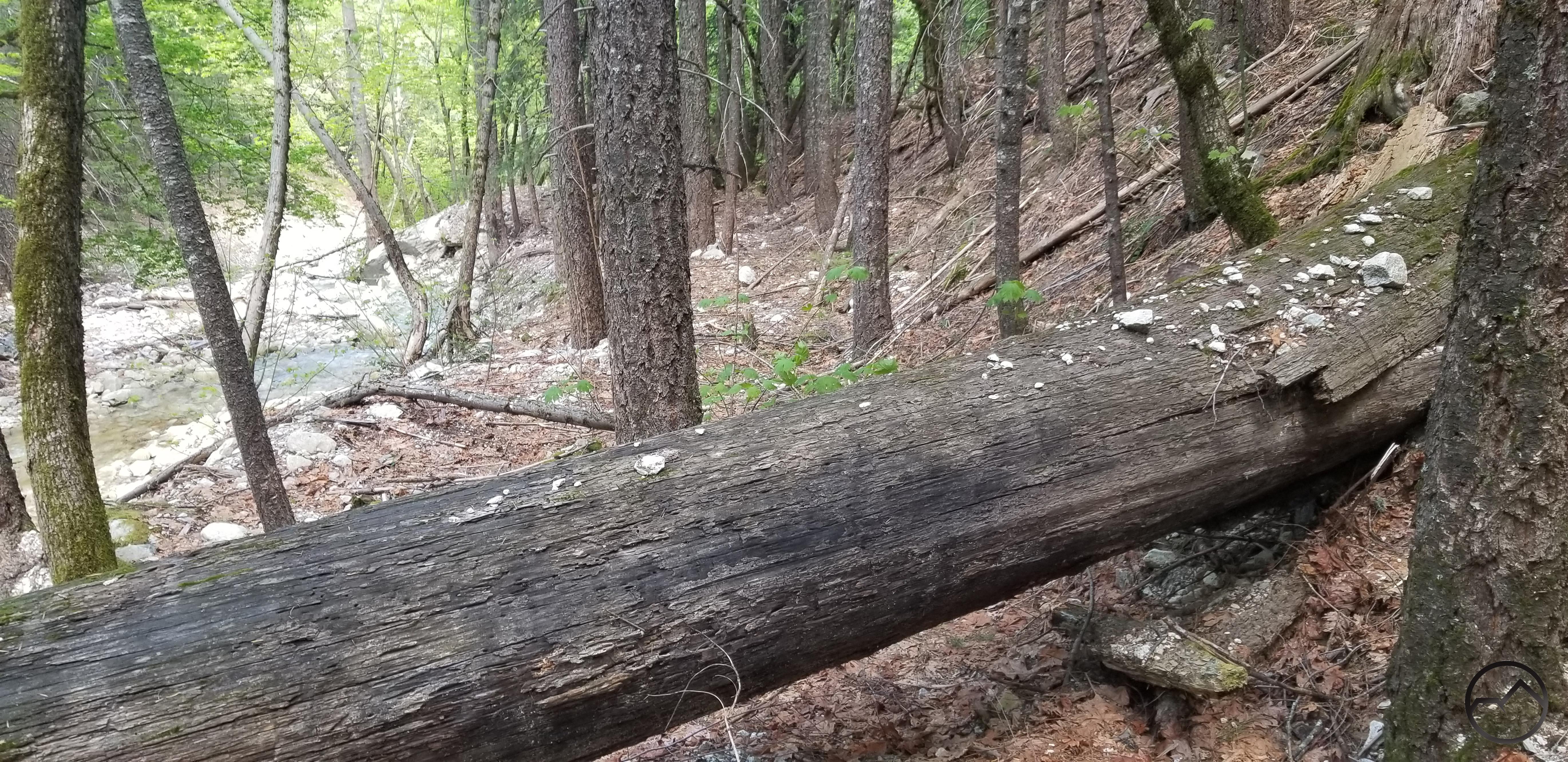
Eventually it became obvious to us that the creek had endured a massive deluge at some point in the not-too-distant past. Not only were the rocks loose along the creek but we began to notice the same rocks higher up the banks and in places where it would seem the water wouldn’t typically flow. This soon became so pronounced that we could see rocks on logs well above the creek’s channel:

Rock deposited on a log high above the creekbed.

Moreover, this was not limited to small pebbles or larger, fist-sized rock. Indeed, larger boulders had also been left stranded high above the creek:

Boulders left beyond the creek’s typical high water line.

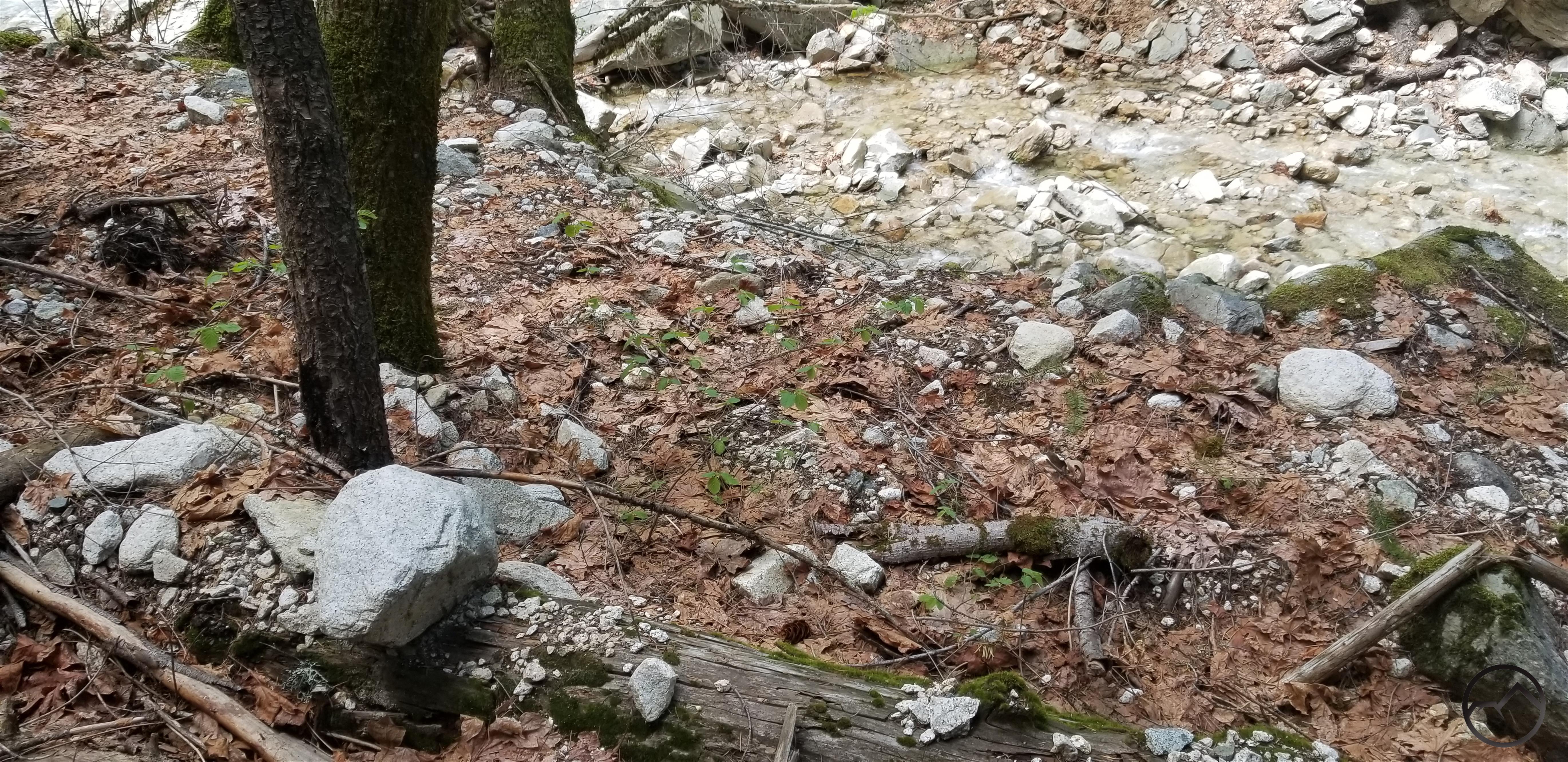
We surmised that the creek had experienced an incredible flashflood at some point not too long ago. However, what mystified us was that the rocks often appeared to have been left on top of the leaves and duff of the forest floor. We assumed that this normal forest detritus would have been scoured away by the torrential waters. This was seemingly not always the case and rocks were left on top of the “leaf layer”:

Rocks seen lined up on a log that was already buried beneath the leaves.

It remains a mystery exactly what happened along this creek and when it occurred. What is certain is that the creek is a beautiful waterway that does great credit to the Trinity Divide and the Mount Shasta area. And yes, there were waterfalls:

20210501_141747

20210501_141747

High Desert Oasis: A Mount Shasta Sunrise And Sunset At Orr Lake

Posted by bubbasuess on April 22, 2021
Posted in: Boy Scouts, Cascade Range, Hiking, Mount Shasta. Leave a comment

Last weekend I had the opportunity to take the Boy Scout troop out for a weekend of camping at Orr Lake. The lake is on the northeast side of Mount Shasta and, for my money, one of the nicest places to camp in the area. Though the environs are a mix of high desert and ponderosa forest, the area around the lake is surprisingly lush. In addition to large meadows and and the meandering flow of Butte Creek, Orr Lake itself is an oasis amidst the sage and juniper that surround it. Large ponderosa also grow amidst the volcanic rocks that crop up on the slopes of Orr Mountain and the ridge that rises above the west side of the lake. Above all of this rises the awesome, icy tower of Mount Shasta’s Hotlum Cone, the massive eruption cone that composes the mountain’s entire east side (and summit). It is a beautiful place with an awesome view and perfect for taking a bunch of boys on a spring camp out.

Of course, I had to take the opportunity to capture sunrises and sunsets, given that I am not out there too often during that time of day. The results were quite pleasing.


From our campsite, we could look out across the lake at Haight Mountain (left) and West Haight Mountain (right). They were good gauges for where the sun was and when it was time to head over to the east side of the lake where the view of Mount Shasta was a little better.


With Mount Shasta in view, and augmented with a nice band of cloud, the sunset was sublime. Just enough color was visible on Shastina and the Bolam Glacier that the shadow on the east side did not diminish the incredible beauty of the sunset. I always associate Orr Lake with sunrises but this sunset made me rethink that as the best time to view the mountain from this position!


In the morning I headed back to the east side and caught the mountain in all of its sunrise glory. The birds (which are ubiquitous at Orr Lake) were already up and active and were cacophonous. There was just enough wind to keep the reflection getting too clear but the bright color of the sunrise still looked great against the water.

Cascades, Mt. Shasta – April2021vid (1)

Cascades, Mt. Shasta – April2021vid (1)


A wispy layer of fog swept over the water, dramatically waving across the lake’s surface. It added a ghostly quality to the reflection that really embellished the spectacle.

The weekend was filled with a ton of fishing, as well as groups hiking to the summit of Orr Mountain as well as out to Butte Creek in the vast meadow south of the lake. Bird watching, especially of a pair of bald eagles occupying a nest near the lake, was also a welcome activity throughout the weekend. Plenty of other camp hijinks were afoot and a great time was had by all.

The red line is existing trail. Yellow lines are proposed routes.

Time spent camping at Orr Lake over the weekend set me to thinking about the recreational opportunities at the site. It is a place that is generally off the radar, as are most places in the Klamath National Forest’s Goosenest Ranger District. There is one trail, which leads from the group camp out toward Butte Creek. While cross country travel and road hiking are pretty easy, given the excellence of the location and quality of the campgrounds, I think the area could benefit from a few more trails. In particular, a route up the ridge on the west side of the lake, forming a loop with the Butte Creek trail would be fantastic. A well-graded trail up to the summit of Orr Mountain would also be a great addition to the area. Between those hikes, exploring the meadow and fishing or kayaking the lake, I think Orr Lake would be a first rate destination. As it is, it is already fantastic.

Posts navigation

← Older Entries
Newer Entries →
    • Recent Posts

      • Winter Shows Up When It Will
      • January Rolled By With Mud, Then Very Dry
      • Mount Shasta 2025 – A Year In Images
      • Mount Shasta On Either Side Of Christmas
      • Adrift In An Ocean Of Fog
      • December Has Been Spectacular Thus Far Pt. II (A Magnificent Lenticular)
      • December Has Been Spectacular Thus Far Pt. I
      • Lenticular Interrupted
      • A Stormy Wave And A Truchas Sunset
      • Aurora Lenticularis
    • Enter your email address to follow Hike Mt Shasta and receive notifications of new posts by email.

    • Archives

      • February 2026
      • January 2026
      • December 2025
      • November 2025
      • October 2025
      • September 2025
      • August 2025
      • July 2025
      • June 2025
      • May 2025
      • April 2025
      • March 2025
      • February 2025
      • January 2025
      • December 2024
      • November 2024
      • October 2024
      • September 2024
      • August 2024
      • July 2024
      • June 2024
      • May 2024
      • April 2024
      • March 2024
      • February 2024
      • January 2024
      • December 2023
      • November 2023
      • October 2023
      • September 2023
      • August 2023
      • July 2023
      • June 2023
      • May 2023
      • April 2023
      • March 2023
      • February 2023
      • January 2023
      • December 2022
      • November 2022
      • October 2022
      • September 2022
      • August 2022
      • July 2022
      • June 2022
      • May 2022
      • April 2022
      • March 2022
      • February 2022
      • January 2022
      • December 2021
      • November 2021
      • October 2021
      • September 2021
      • August 2021
      • June 2021
      • May 2021
      • April 2021
      • March 2021
      • February 2021
      • January 2021
      • December 2020
      • November 2020
      • October 2020
      • September 2020
      • August 2020
      • July 2020
      • June 2020
      • May 2020
      • April 2020
      • March 2020
      • February 2020
      • January 2020
      • December 2019
      • November 2019
      • October 2019
      • September 2019
      • August 2019
      • July 2019
      • June 2019
      • May 2019
      • April 2019
      • March 2019
      • February 2019
      • January 2019
      • December 2018
      • November 2018
      • October 2018
      • September 2018
      • August 2018
      • July 2018
      • June 2018
      • May 2018
      • April 2018
      • March 2018
      • February 2018
      • January 2018
      • December 2017
      • November 2017
      • October 2017
      • September 2017
      • August 2017
      • July 2017
      • June 2017
      • May 2017
      • April 2017
      • March 2017
      • February 2017
      • January 2017
      • December 2016
      • November 2016
      • September 2016
      • August 2016
      • July 2016
      • June 2016
      • May 2016
      • April 2016
      • March 2016
      • February 2016
      • January 2016
      • December 2015
      • November 2015
      • September 2015
      • August 2015
      • July 2015
      • June 2015
      • May 2015
      • April 2015
      • March 2015
      • February 2015
      • January 2015
      • December 2014
      • November 2014
      • July 2014
      • June 2014
      • May 2014
      • April 2014
      • March 2014
      • February 2014
      • January 2014
      • December 2013
      • November 2013
      • October 2013
      • September 2013
      • August 2013
      • July 2013
      • June 2013
      • May 2013
      • April 2013
      • March 2013
      • February 2013
      • January 2013
    • Categories

      • Boy Scouts
      • Cascade Range
      • Castle Crags
      • Desert
      • Echo Point
      • Glaciers
      • Hiking
      • How things came to be…
      • Klamath Mountains
      • Konwakiton Outdoor Designs
      • Lakes
      • Lenticular Clouds
      • Maps
      • Marble Mountains
      • Meadows
      • Mount Eddy
      • Mount Shasta
      • Mount Shasta History
      • Napa County
      • Off Season Trails
      • Pacific Crest Trail
      • Peaks
      • Rivers
      • Rock Climbing
      • Scott Mountains
      • Seldom Seen
      • Shasta Valley
      • Sierra Nevada
      • Siskiyou Mountains
      • Sonoma County
      • Spring Trails
      • sunrise
      • sunset
      • Trinity Alps
      • Trinity Divide
      • Truchas Ridge
      • Uncategorized
      • Water
      • Waterfalls
      • Wilderness
      • Wildflowers
      • Wine Country
      • Winter Trails
      • Yosemite
    • Meta

      • Create account
      • Log in
      • Entries feed
      • Comments feed
      • WordPress.com
    • Copyright © 2013-2024 by Bubba Suess

      DISCLAIMER: Any use of the information contained in this site by any and all persons is done at their own risk. The operator of this site shall be held harmless from any and all alleged claims, demands, causes of action, liability, loss, damage and/or injury to property or persons whether brought by an individual or other entity. This indemnification applies, without limitation, to all actions by an individual or other entity as a result of their use of information contained in this site.

    Blog at WordPress.com.
    Hike Mt. Shasta
    Blog at WordPress.com.
    • Subscribe Subscribed
      • Hike Mt. Shasta
      • Join 983 other subscribers
      • Already have a WordPress.com account? Log in now.
      • Hike Mt. Shasta
      • Subscribe Subscribed
      • Sign up
      • Log in
      • Report this content
      • View site in Reader
      • Manage subscriptions
      • Collapse this bar
     

    Loading Comments...